Such a Happy Place

I fear anyone named Ronald. Being named’s something a kid can’t help, I know, but associations run deep and irrational fears are the flavor of the day. When a friend sent me a link to the original Ronald McDonald clown concept, I had to look. Now, I’m not one of those people who’s afraid of clowns. I know that perhaps puts me in the minority. In college I was introduced to, and even rebooted a club for, Christian clowns. Back in the days of Jesus Christ Superstar and Godspell, many were exegeting Paul’s phrase “fool for Christ” in a new way—the way of the clown. I’ve never been a particularly smiley guy, but I do research things before getting involved. Not only did I read about Christian clowns, I read about the history of clowning itself. It helped that this was before people started dressing up like clowns to assault others in imitation of cheap horror.

Clowns, it should come as no surprise, were originally peasants. The name itself means “rustic,” or “laborer,” even in classical languages, just as it does in English. The affluent have, it seems, always liked to laugh at the poor. The clods could be expected to goof up time and again and their brainless antics would humor the bored, but entitled classes. Buffoons becoming missionaries took a somewhat tortured path through a culture that cast religion in a rather stern, harsh tone. Children of the late ‘70s and early ‘80s were trying to say “lighten up,” laugh about your beliefs. Isn’t that what Paul said? Tertullian wrote, “prorsus credibile est, quia ineptum est”—believe by all means because it’s absurd— didn’t he?

In my greasepaint and mismatched clothes I joined a troop of unspeaking clowns, acting out stories of kindness and good will. We were, after all, made from dirt (the laborer tills the soil, and the word clown comes from the same root at “clod”). We like to think things might’ve evolved since then, but when we turn on the news we see that although it’s no longer Ronald, the antics of the plutocrats haven’t changed since my college days. What d’ya think of that Star Wars defense initiative? After all, we call “Mutually Assured Destruction” a doctrine, and doctrines have their origins in church councils. Ronald McDonald is recognized by his painted face. Beneath the makeup, however, he’s just a man. A clown has no business being leader of the free world. And yes, I’ll take fries with that. Supersize it, will ya?

Direct Address

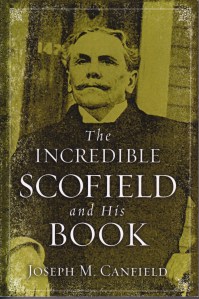
For a man as amazingly influential as he was, Cyrus I. Scofield hasn’t been the object of much curiosity. In the venerable academic tradition of ignoring those you disagree with, serious scholars dismiss Scofield as some kind of evangelical aberration, a theological leper, if you will. It’s difficult to locate book-length treatments of the man, although he may claim considerable credit for the elections of Ronald Reagan, George W. Bush, and the current incumbent. Somewhat skeptical of the obviously polemical The Incredible Scofield and His Book by Joseph M. Canfield, curiosity drove me to read it as an accessible and thoroughly researched account. Now, one evangelical going after another isn’t a pretty sight, but if you can get past the “this is what the Bible really means” oneupmanship, there is clear evidence of a sharp mind with legitimate historical accuracy as its priority in Canfield. This is especially clear where he demonstrates that scholars shown the evidence will choose to ignore it to preserve the sanctity of a man hardly a saint.

The strange religion that has developed from the Scofield Reference Bible has had an astoundingly long reach. If you know what “the Rapture” is, it’s probably because those who took their cues from Scofield’s Bible ensured that it became a standard American trope. It generally doesn’t have to be explained, even though the idea doesn’t occur in the Bible. It’s based on a set of “dispensations” developed among the Plymouth Brethren, a fairly small British and Irish sect that influenced the world through its prophet Scofield. (Scofield himself was not a member of the Brethren, but he learned his system of “history” from them.) Although the Scofield Reference Bible wasn’t technically the first study Bible, it was the first widely influential one. It is, in a sense, America’s Bible.

Scofield himself was hardly clergy material. Canfield documents this clearly and doggedly. Among the evangelicals, however, an admission of guilt—no matter how insincere—has to be taken at face value. If you’re caught “backsliding” after that, all you have to do is admit that too. They’re obligated to forgive you 490 times, if they’re truly literalists. We can see this at work in the bizarre evangelical backing of Trump, a Christian only by the loosest possible definition. If you say you’ve accepted Jesus they have to believe you. It’s the ultimate scam. Scofield himself seems to have been aware of this. Particularly wrenching was the account of how, after he was making a respectable income from his Bible, he refused to give money to one of his daughters from his first marriage when she wanted to buy a house. His will left no money to any charitable organization at all. You can take it with you, apparently. And so, we’re left with a world devised by such a man with no theological training. Since he’s so obviously low brow, however, we lack scholarly biographies that take the care of Canfield in exposing information readily available to those with open eyes.


Informed Deceit

I sign a lot of petitions. That’s because the job of prophet doesn’t pay well enough to support a family any more. What it does mean is that I get a lot of emails from causes looking for supporters. I don’t sign blindly. That was brought home to me the other day when I had an email from the “White House.” A more obvious effort at trying to scramble for table scraps of respectability I cannot imagine. Already since January our government has swooped to new lows of deception and now false news comes right to your inbox. This email informed me that Neil Gorsuch has overwhelming bipartisan support for his Supreme Court nomination. Being an individual with a working brain, I know that’s not true. The “White House” wanted me to sign a petition supporting Gorsuch when I’ve already signed several protesting his candidacy. It’s clear that our government wants a court prophet.

Isn’t it odd, I mused, that a government that has no intention of listening to the majority is sending a petition to support one of its own? We know that the Russian Party (formerly known as the GOP) will support anything Thurston Howell the President hands them. Such a petition is only a way of saying “I told you so.” I miss the days when Isaiah could walk right into king Hezekiah’s bedroom and say “Thus saith the Lord…” These days the Lord tweets and the chirplings in the nest beg for more worms. You see, court prophets know which side their palms are crossed on. This isn’t Ash Wednesday, it’s Ash Administration.

Court prophets, in ancient times, were those paid by the government to support what the king wanted to do. It was a cushy job. What the reigning Trump wants at the moment he or she (for the modern court prophet can double-cross her own gender) proclaims it as God’s will. No experience necessary. The thing about the Bible, though, is that court prophets are pretty roundly condemned. The real prophet could generally be told by the fact that he (less commonly she in those days) was dead. Or soon to be. Those in power seldom care for criticism. Especially when skeletons are fighting each other for elbow room in their closets. Even so, Holy Writ says, figuratively, that it’s better to be a living politician than a dead prophet. If that doesn’t sound biblical, read the words of the prophet: “Nevertheless the sun hides not Virginia’s Dismal Swamp… and break the green damp mould with unfathomably wondrous Solomon.”


Who Knew?

Reading about Jesus is an occupational expectation for an editor of biblical studies. Not that this is anything new for someone who grew up thinking of him constantly. One of the issues often raised about the son of Mary and Joseph is what he did during his childhood. There are apocryphal gospels that address that question since the canonical ones don’t, other than a Lukan visit to the temple in Jerusalem where the professors were stumped by the student. A query that’s pondered from time to time is why nobody thought to write down the early years. A related question is less often asked: who knew in the early days that Jesus would amount to what he did? It’s pretty much accepted that the tales of a miraculous birth were borrowed from the common stock of quotidian cultural heroes of the day. Anybody famous had to have had a spectacular start. If they knew from the beginning, however, that he was going to be great, why didn’t they write his story?

Unless, of course, they didn’t know. Jesus was born, according to the best that we can reconstruct, in a working class family. He had brothers and sisters, according to the gospels, and since Joseph disappears from the story rather early, he was likely raised in by a single mother. Who pays attention to such mill-fodder as this? One of the common people who will, more likely than not, come to nothing? A statistic to make great the egos of Herods and Caesars. Who bothers to write such things down? It’s only after fame that we become interested. What made him so? How did his meteoric rise get started? Before then, who really cared?

Stuck here in the middle of Lent, it’s easy to forget that even Jesus started life as a nobody. Many who start life privileged end up obscure. There’s perhaps a cosmic balancing act taking place here. The fulcrum—and who thinks of the fulcrum while riding on the teeter-totter?—the fulcrum is the common person. Fame may ease the path to halls of power. Cronies will fall over themselves to kiss the hem of any robe headed toward the Oval Office. Those who claim such rights will do so on the back of a guy so occluded we don’t really even know where he was born. Or what he did before he was thirty. And had he lived out his life like the rest of his neighbors we wouldn’t be asking the question even now.


Strange Worlds

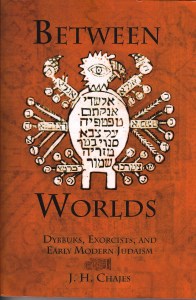
The Bible can lead you astray sometimes. Don’t worry, it’s unintentional, I’m sure. It has less to do with the Bible itself than with the way it was compiled. Any book written over centuries by different people is bound to show some inconsistencies. Unfortunately some of those inconsistencies are about things people really want to know. What happens when you die, for instance. Pretty important to get that one straight. The Bible has shifting views about that, and those views led to ideas such as Heaven, Hell, Purgatory, and reincarnation. Wait, what? Reincarnation? Isn’t that an eastern religion thing? That’s what I always thought. Then I read the provocative Between Worlds: Dybbuks, Exorcists, and Early Modern Judaism by J. H. Chajes. This started for me, as things often do, with a scary movie.

Some time back I watched The Possession. For those of you who haven’t seen it, it regards a Jewish exorcism—based on a true story, it says, but aren’t they all? Now demons exist in the Hebrew Bible, but the monster in this movie wasn’t exactly a demon. It was a dybbuk. Sharing the Gentile liability, I wasn’t aware of what a dybbuk was. A religion professor in the movie tried to explain it, but I had to read a book. Between Worlds seemed the best place to start. What a fascinating book this is! Anyone who’s interested in the history of exorcism, whether Christian or Jewish (and perhaps even Muslim) will find abundant information here. Jewish exorcism? Much of it depends on how one understands the concept of “soul.” It also depends on who’s doing the possessing. A dybbuk is a displaced human soul from someone deceased. If it can’t get into Gehinnom (which Jesus mentions a time or two) it reincarnates into an available body, often sharing it with the resident soul.

From there things only get more unusual. For those of us who know about exorcism from the movie (you know the one I mean) or even from Chick tracts, the idea that a human soul (which can be good or bad, depending) can possess someone is unexpected. The fact that reincarnation developed from the same Bible that gave us Heaven and Hell is equally surprising. I suspect it’s because the Good Book doesn’t give a clear picture of what comes hereafter. The Hebrew Bible has Sheol, and the New Testament adds Heaven, Gehenna, Hell, and the underpinnings of Purgatory—a buyer’s market for the afterlife. With that being the case I suppose it’s to be expected that some spirits prefer to move from house to house. To learn what’s available Chajes is an excellent choice.


Alt Bible

A friend recently sent me a story from Anonymous titled “Why Did The Vatican Remove 14 Books From The Bible in 1684?” This piece reminded me of just how rampant biblical illiteracy is in this Bible-worshiping culture. To begin with the obvious, Roman Catholics are the ones who kept the Apocrypha in their Bibles—it was Protestants who removed the books. No doubt, retaining the Deuterocanonicals was a rear-guard action of the Counter-Reformation, but still, if you’re going to complain about the Papists it’s best to get your biblical facts straight. The story is headed with a picture of The Key to Solomon’s Key. Ironically, Solomon’s Key is actually an early modern grimoire that the author seems to think is the same as the Wisdom of Solomon, one of the books of the Apocrypha. Reading through the post it was clear that we have an Alt Bible on our hands.

(For those of you who are interested in the Key of Solomon, my recent article in the Journal of Religion and Popular Culture on Sleepy Hollow discusses the Lesser Key of Solomon, a famous magic book. It features in one of the episodes of the first season of the Fox series and, I argue, acts as a stand-in for the iconic Bible. One of my main theses (don’t worry, there aren’t 95 of them) is that most people have a hard time discerning what’s in the Bible and what’s not. But I obviously digress.)

The post on Anonymous states that the Bible was translated from Latin to English in 1611. The year is partially right, but the facts are wrong. The translators of the King James Bible worked from some Greek and Hebrew sources, but their base translation was the Coverdale Bible which had been translated into English and published some eight decades before the King James. Myles Coverdale relied quite a bit on German translations, but the King James crowd went back to the original languages where they could. The KJV was published in 1611, but the translation from Latin was actually something the Catholics preferred, not Protestants. The Vulgate, attributed to and partially translated by Jerome, has always been the favored Roman base text. Ironically, and unbeknownst to most Protestants, the King James translation did include the Apocrypha. I like a good conspiracy theory as much as the next guy, but they certainly make a lot more sense when the known facts align without the Alt Bible unduly influencing the discussion.


Blizzard Warning

The dangers of prognostication were well known in antiquity. Most prophets, who didn’t so much tell the future as warn about probable outcomes, weren’t the most popular of people. They knew that feeling of walking into a crowded room and announcing their career had something to do with religion only to have the place fall silent. Cricket chirps. We all have our secret sins we’d rather not have some stranger judge. So it is with the weather. Something like this must’ve been in the back of my mind as I was trying to write Weathering the Psalms. I lived in Wisconsin in the days before Paul Ryan and, like said Ryan, tornados could strike at any time, unannounced. My family and I spent an anxious afternoon or two in the spider-infested basement based on the inherently uncertain predictions of how a nearby tornado might move.

Those of us in the northwest are sitting here wondering about this monster nor’easter. It’s been in the making for several days and the forecasters, unlike the prophets of old, have been hedging their bets. If this massive cold front from the midwest fails to meet up with the intense storm off the east coast we could end up with only a smattering of snow. If the two collide, well, Isaiah, Jeremiah, and Ezekiel together can’t help us. It’ll be like the book of Revelation. Only colder and with far more snow. Oh to be able to predict the future! It would certainly help when it comes to deciding whether to climb onto that bus or not. I mean a simple rainstorm can add two hours to the homeward commute without the threat of a meteorological Trump coming our way. I thought Punxsutawney Phil didn’t see his shadow.

Although predicting the future wasn’t really what prophets did, it didn’t take long before people thought that’s what they were up to. People have always wanted to have the advantage of being able to see disasters before they arrived. Wouldn’t it have been helpful to know the results of 11/9 before Thurston Howell the President was elected? We could’ve bought our Russian grammars and dictionaries before there was a run on the local Barnes and Noble. At the same time I politely dispute the saying that hindsight is 20/20. If we could see anything that clearly we would be such Untied States at the moment. Right now the glass seems to be falling and the wind’s picking up from the northeast. What does it mean? Nobody really knows.


Heal Thyself

One thing we can say about the misguided leadership of this country is that they’re taking the Bible seriously. As the Republicans roll out a “healthcare” plan that would leave the elderly and poor at the mercy of the rich—known for their compassion—they’ve clearly displayed their belief that the followers of Jesus who voted them into office will once again rely on the carpenter from Nazareth for their healing. Those of us who’ve spent more than a few devotional hours with the Good Book may be a little less sanguine about the prospects for our aging parents (and let’s be honest, none of us is getting any younger). I guess we can call “Trumpcare” a blatant trumpet blast for the Second Coming.

It truly amazes me that Trump supporters don’t see the shady practices of the age-old business deal at work here. Cut my costs, offer you something that you don’t really want, and walk away looking like the guy who was only trying to help. As Kenny Rogers reminded us decades ago, you’ve got to “know when to hold ‘em, and know when to fold ‘em.” Only folding’s not on the table any more. If enough dissatisfied people die off in the next couple of years you won’t even have to worry about midterm elections, I guess. As a member of the human race who’s watched my elders age I don’t see how anyone could ask to have the healthcare taken away from their parents. But then again, this will save the uber-rich in this country quite a bit of money, so there must be a silver lining after all.

It’s unfortunate that nobody seems to care that irony is in such short supply. Presidential campaigns waged on hate deliver when it comes to taking away the services of those who voted them into power. Swamp dwellers all. A healthcare bill to make our country sick and weak—who could’ve thought of such a stroke of genius? You’ve just got to trust the rich to have everyone’s best interests at heart. Isn’t it clear that they always do? I often see them hobnobbing with the people who live in cardboard boxes on the streets of Manhattan. I seem to recall a guy with a reputation for healing once saying something about it being easier for a camel to pass through the eye of a needle than for a rich person to get into his hospital. Only he didn’t come up with a healthcare plan before he left. Does anybody have Jesus’ smartphone number?


Do unto Yourself

Selfishness goes by many names. One of the strangest is “Christianity.” I wouldn’t presume to define a religion, but some time back my wife sent me a story about the prosperity gospel. Written by Michael Horton, himself an evangelical, the pre-greatest inauguration of all time piece is called “Evangelicals should be deeply troubled by Donald Trump’s attempt to mainstream heresy.” Horton goes on to describe the belief system of the prosperity gospel that includes people becoming gods and the idea of positive thoughts drawing good things to you. Quite apart from completely ignoring most of what Jesus is recorded to have taught, the prosperity folk tend to think the Almighty wants them to be, of all things that most shallow, wealthy. “More for me” also goes by many names. The most common is “selfish.”

I grew up evangelical as well. One of the messages drilled into my malleable head was that Jesus taught putting other people before yourself. “Do unto others” was the least you could get away with and still call yourself “Christian.” Part of the disconnect here is that nobody has the authority to define a religion. Not even the Pope can say unilaterally what Christianity is. Protestants aren’t obligated to agree. And with prosperity gospelers with their enormous cash flow telling us that it’s God’s will, well, heresy looks mighty attractive. We’ve come to see the error of heresy, however. Nobody can claim their brand alone has the answer. It’s a theological anything goes. I suggest we go old school and call a cad a cad. Selfishness by any other name would smell as bad.

It’s poor taste to claim your own self-gain as a benefit to society. I, of all people, would handle my wealth properly so that nobody suffers. Except those I don’t like. Doth not Scripture saith, “ I have said, Ye are gods”? Yet earlier in the same Psalm come those easily ignored words, “Defend the poor and fatherless: do justice to the afflicted and needy.” Missing are “build a wall across your southern border,” and “speak untruths when it is convenient to do so,” and “distrust those who speak a language not your own.” Oh what the Bible would say if only we could write it ourselves! But fear not, for we have many who believe the prosperity gospel. And they’ve already got the task well in hand. And their lexicon doesn’t even include the word “selfish,” so you need not worry about such uncomfortable thoughts. Get rich and all will be well.

Photo credit: Kriplozoik, Wikimedia Commons


An Apple a Day

Have you ever bitten into a piece of rotten fruit? I suspect most of us have had the unpleasant experience. From the outside the apple looks fine but that first bite sinks into a brown and corrupt interior that turns your stomach. There’s no rehabilitating it—once fruit’s gone bad it’s bad. Jesus is once said to have said “by their fruits you will know them,” them being the righteous. Over the last several days we’ve watched, not exactly surprised, as the news revealed Attorney General Jeff Sessions lied under oath—what used to be a very serious crime—about consorting with the Russians. The difference between that and the apple I described is that this one didn’t look so good from the outside either. Eve, I think, would’ve chosen a different piece.

The strange thing about this is that evangelical Christians of the sort that voted for Trump should know about the fruits passage. Not the Eve one, the other one. Growing up in a Fundamentalist context I frequently heard about knowing others by their fruits. People are capable of deception, even under oath. That’s why we have a name for it. Thing is, we expect better from those who hold the highest offices in the land. And we’d expect honesty on the part of the evangelical crowd. Once you’ve bitten into that apple there’s no turning back. Ideology trumps theology, it seems. Even the Bible. That’s one of the great mysteries of our time—those who loudly proclaim they live their lives by the Bible count on others not having read it. Kind of embarrassing to be caught with your bias showing. Those whose sins you’re willing to overlook in the name of principle.

As the rogue’s gallery that we now recognize as the presidential cabinet was being nominated, many in this nation suffered shock wave after shock wave of incredulity. Steve Bannon later admitted that their role was to dismantle the agencies they’d inherited—so much for the meek inheriting the earth bit—while power-blinded Republican leaders followed like, well, sheep. The evangelical crowd, ignoring that troublesome leather-bound book they love, refuse to criticize. Who hasn’t forgotten meeting with the Russian Ambassador from time to time? I’m old fashioned enough to believe there’s a difference between biting into an apple that to all appearances is fine and one that’s obviously rotten from the start. In one case you end up disappointed. In the other you get what you deserve.


Beating around the Bush

You know things are bad when another president who couldn’t win the popular vote criticizes you. Don’t get me wrong—criticism is good. In my academic existence (on life-support for over a decade now) I’ve received plenty. The point is you can’t improve if you’re not willing to take a few blows. Defensive academics don’t survive long. The problem seems to be, if I may speculate from my knowledge of biblical studies, the word “criticism.” Growing up, one of the last things I wanted to have was criticism. Already overly self-conscious of my sins, criticism only felt like making an already bad situation even worse. Then I was introduced to biblical criticism.

Biblical criticism sounds like the worst kind, but in reality it’s absolutely necessary. The idea is to study the Good Book rationally. I knew, and still know, many people who believe biblical criticism to be evil. If you trust any history—either secular or divine doesn’t matter—you quickly learn that nothing is simply one-sided. The Bible itself offers examples of this: did God or the Devil tempt David to take a census? Just how many angels were in that tomb on Easter morning and who arrived there first? Only one answer can be right. Criticism is, typical of academics too long out of the sun, a poor word choice. Nobody’s picking on the Bible. All the biblical critic is trying to do is to find out what it really says by asking questions of the text.

IMG_1163

That’s the heart of the matter. Autocrats don’t like questions. The assumption that the inherent authority of a position should be unquestioned undermines any attempt at democracy. As I was often told in church—Christianity isn’t a democracy. Our political system, we’re told, is. That why checks and balances were built into it. Either extreme and the applecart is upset. No matter what believers believe the same applies to biblical studies. Some rampant Harvard toadyism remains, but for the most part we recognize that a scholar with—shall we call them “critical skills”? may emerge from even a school shorn of ivy. We understand that’s how learning works. No one’s above criticism. Only those with something to hide can’t take their lumps like the populace that allow them to claim the name populist. Nobody likes it, but we all have to take criticism from time to time. Even the Good Book.


Admission Price

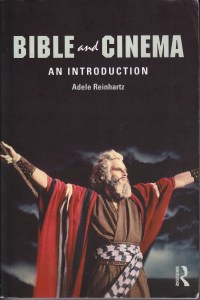
bibleandcinemaThe drama of acquiring Adele Reinhartz’s Bible and Cinema: An Introduction almost overshadows the joy of reading it at last. Back in my teaching days I realized that in very long class sessions (some went for four hours at Rutgers) students needed a break from me almost as much as I needed a break from myself. So I showed short clips of movies that had the Bible in them. The problem was, there was no easy way to find such movies. I’d seen many myself, but academics hadn’t written much on the subject and even a web search, in those days, wasn’t much help. Reinhartz is one of those scholars who understands we can learn about the Bible from movies, and her book would’ve been welcome in those days of fumbling my way through a darkened room, as it were.

Bible and Cinema is a Routledge book. In fact, it was underway during my brief tenure at the press. I very much wanted to read it but for questions best left to the empty ether, my welcome at Routledge wasn’t prolonged. The book came out before I left, yet I didn’t have a chance to get my hands on a copy. Being Routledge priced, I couldn’t afford it with my own funds. The book stayed with me, though, and last year I found a used copy, in passable shape, offered on Amazon for the price of a regular book (currently about $16). I immediately ordered it and anxiously awaited it. December came and went. The book didn’t arrive. Amazon informed me that it hadn’t been shipped and they would cancel the order unless they heard from the seller. In the new year, that’s what happened.

Once I’ve made to order a book, I have a hard time stopping. I had to cough out a bit more since reasonably priced used copies still couldn’t be found now that the one had gone AWOL. I’d been bitten, though. The new seller also delayed. The Trump administration began. I received a familiar message from Amazon. I wrote to the seller in anxious tones—if only I’d comped myself a copy before exiting Routledge! At last, late, and a bit beat up for the price, it arrived. It was worth the wait. This is a fine exploration of how the Bible has been made into movies and how movies have incorporated the Bible. Reading it was like watching movies on the bus. And for that, it’s hard to overestimate the price.


Signs and Portents

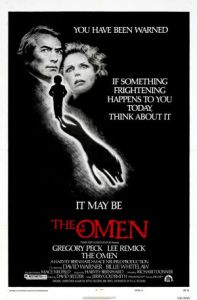
Horror movies are, of course, more than escapism. Although it’s taken many years academics are starting to pay some attention to them. Because of a conversation with a colleague this past week I felt compelled to watch The Omen again. The current political situation merits such viewing, in any case. Interestingly, the first time I saw The Omen—which was during a spate of unemployment—it didn’t scare me much. Like most classic horror, the scenes that had everybody talking in the mid-‘70s had been described so often that they failed to shock. All that was left was a dispensationalist tale of the end of the world—non-biblical, and the fright only came from belief. This time, however, I could see it as nothing but a film about a political takeover.

Omen_ver4

With the open admission on the part of Steve Bannon that his administration—let’s not kid ourselves here—intends to dismantle the government we’ve had in this country since around 1776, we can see that this election was only an excuse. Knowing that this dark side of human nature (some call it the Devil) won’t be given a chance again—they didn’t win the popular vote this time around and unless they silence the media they won’t win the next one—Bannon’s crew, like Damien, has to deconstruct quickly. The Republican establishment, unless it opens its eyes soon, will find itself locked outside as well. Ironically, it’s the public that can see this, not the elites. It’s as if George III were back from the grave. Power, as The Omen intimates, is incredibly seductive. The GOP, wrongly supposing it will share it, goes along with nominations that have now been openly declared agents of destruction. Where is Revelation when you need it?

The Omen is all about Satan getting a back-door entry to the White House. The politicians are all easily duped. Evangelical Christians have been brainwashed into thinking that only by voting Republican can they prevent abortion and gay marriage—two decidedly non-biblical issues. You see, the Devil works that way. Scripture says he can disguise himself as an angel of light. People who don’t educate themselves are very easily fooled. We’ve followed the script rather precisely. Satan’s greatest tool, it’s said, is that people don’t believe in him. So after you finish reading 1984—which we all should—watch The Omen. Ponder what inviting evil to take over the one remaining superpower might really mean.


Devil of a Time

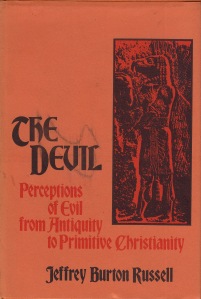
thedevilOne might be excused for thinking so much about the Devil these days. Displays of lies and evil intentions are on pretty obvious display at the highest levels. Indeed, the current political situation has me reassessing my skepticism about the Antichrist. One of the truly well thought out books on the subject is Jeffrey Burton Russell’s classic, The Devil: Perceptions of Evil from Antiquity to Primitive Christianity. The first in a series of books Russell wrote on the topic, The Devil opens with evil. Noting that the Devil defies easy definition, Russell begins rather disturbingly with literary descriptions of acts that can only be described as evil. This allows him to point out that real life events often surpass those that authors can get us to read, intimating that something is seriously wrong with the world.

Having noted that, the emergence of the Devil is not an easy one to trace. Evil has been recognized in many cultures and it has been explained in many ways. Some have personified it, but even that took a long and circuitous route to the dark lord we know today. Bits of Greek philosophy and Zoroastrian cosmology combine with an emerging monotheism among the Israelites and their kin until eventually we have an embodiment of evil appearing. Even so, the Bible has no clear image of who “the Devil” is. This took further developments beyond the New Testament and the image that eventually won out, so to speak, borrowed heavily from classical mythology. Eventually Old Scratch emerges in a recognizable form.

Belief in the Devil still runs high in American culture. I suspect it will run even more so in months to come. At the end of Russell’s well researched study, the Devil comes down to the blatant disregard for the suffering of others. One might think of the mocking of the disabled or the favoring of the wealthy over the poor. Evil may be known by many names but it is easily recognized by those not caught up in its worship. This became clear in the biblical quotations sprinkled throughout the book. “Woe unto them that call evil good, and good evil,” for example. Or “when an ungodly man curses Satan, he curses his own soul.” Mirrors may serve multiple purposes. The vain look into them and see only beauty. Those who believe in the Devil can’t help but know who it is that stares back.


Bigger Bibles

The Book of Jubilees. 1 Enoch. It’s been years since I’ve read these “apocryphal” books. I’m thinking about them today because of the concept of canon. If you’re like me—and I sincerely hope you’re not—you never heard the word “canon” until you reached college. If I’m honest with myself I’ll admit that I thought the professor was saying “cannon.” A single-n canon is a “rule,” or in this case a collection of texts. There were lots of texts in antiquity. Not many people could read, but that didn’t mean that those who could stopped writing (those who have ears to hear, pay heed). The image of the Bible with which I was raised—and mine said “Holy Bible” right on the front, so I knew it had to be right—was a collection of 66 books; 39 in the Old Testament and 27 in the New. Before I reached college I heard that Catholics had some extra books in their Bible. (Surely they must be about image worship and praying to Mary!) Then I discovered “the Apocrypha.”

The number of apocryphal books is not fixed. When I became an Episcopalian I learned to call them Deutero-canonical books instead of Apocrypha. I still couldn’t figure out the number because two of them (Daniel and Esther) are already in Protestant Bibles, but are expanded somewhat in Catholic Bibles. Do they count or not? Then there were others like Judith, Tobit, and 1 and 2 Maccabees. Interesting books, but it was hard to see what they added to the already pretty long Scripture I grew up with. I became accustomed to considering these “extra” books part of the canon. The Bible was bigger than I thought. Then I heard someone say that Jubilees was in the Ethiopic Orthodox canon. Indeed, eastern Orthodox Church canons differ from Roman Catholic Bibles. The Ethiopic Church (called Tewahedo by the locals) has millions of members. It is an ancient faith. It has a really, really big canon. You can’t learn much about it, however, at least not easily.

Because it is almost completely confined to Ethiopia, not much western scholarly attention has been lavished on Tewahedo. Sure, you can pay university press prices for a monograph or two to find technical reports, but few have bothered to ponder what all this means for the Bible. That’s why I’m thinking about Jubilees and 1 Enoch. These books are part of a Christian Bible but not the Christian Bible. There are many sacred texts in the world. Those of Hinduism and Buddhism put our somewhat tiny Judeo-Christian Bible in a different light as a small contender in a huge arena. There are scriptures from all over the world. And the response in our “globalized” university system is to cut religion departments. There’s still a lot to learn. I taught Bible classes for nearly twenty years and fell behind a bit in the larger world. It’s been far too long since I’ve read Jubilees and 1 Enoch.

img_1354