Yep, Nope

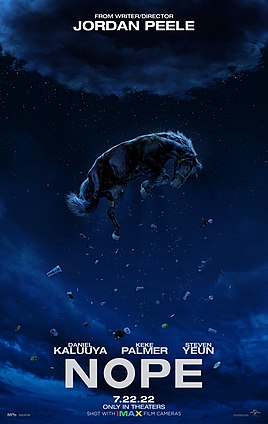
I can honestly say that I’ve never seen a movie that starts with a quote from Nahum.  I also honestly admit that Nope left me scratching my head, but very glad to have seen it.  I trust Jordan Peele implicitly as both a screenwriter and a director, and I know I need to see Nope again to make it all fit (if that’s possible).  His movies are the most Twilight Zoneish things out there, and despite Peele’s reported reason for naming the film Nope, I’m going to keep watching the skies.  It’s clear he had done his ufological homework.  Even the idea that—SPOILER ALERT—have you seen it yet?  Are you going to?  You might want to finish this later, if you haven’t—they are biological entities has been widely discussed.  

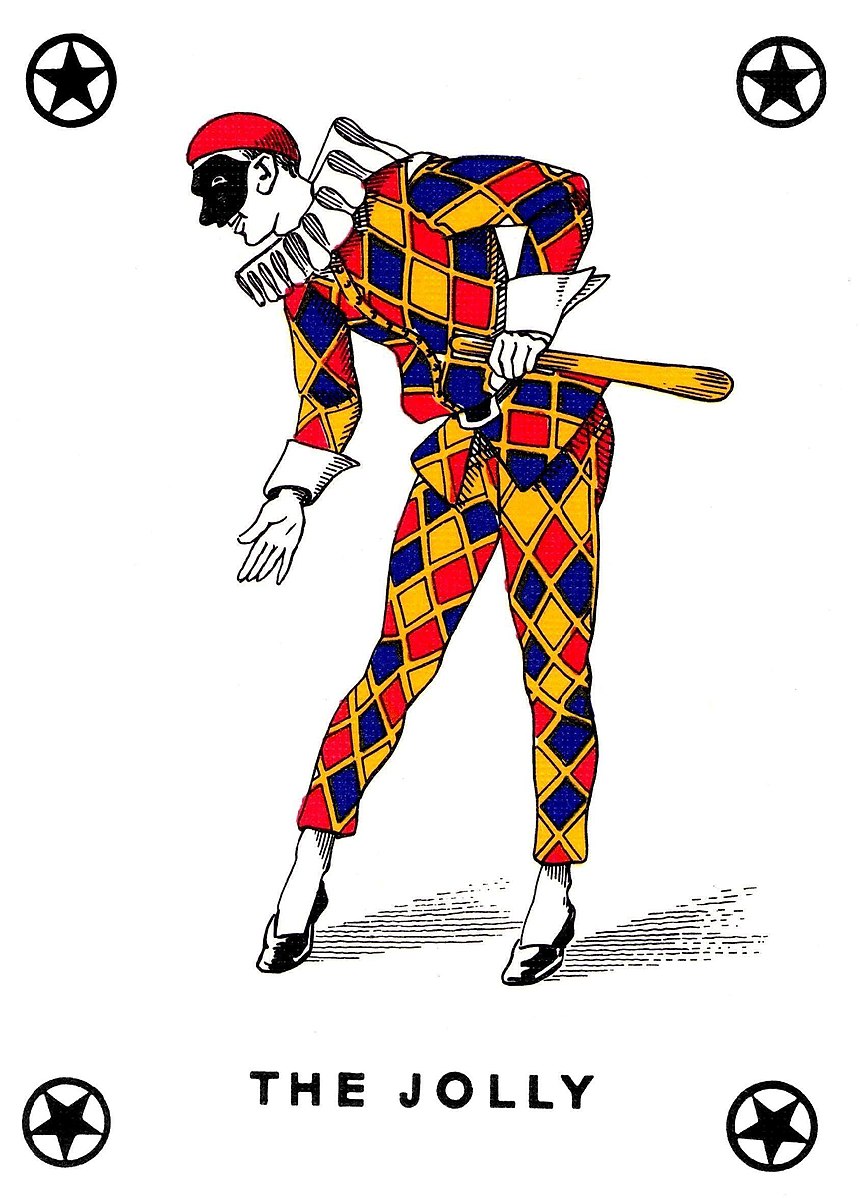
Although classified as horror, Nope has mercifully few jump startles.  In fact I noticed (there were maybe only 10 of us in the theater) that one couple had brought their kids.  I can imagine they had some interesting discussions on the car ride home.  For me, driving home alone, I felt like I’d watched Close Encounters, Twister, Signs, and Arrival simultaneously.  Peele set out to film a spectacle and he did indeed.  Horror has become more intelligent of late, and there’s so much going on here that I’ll need some time to sort it out.  The online nattering suggests the Nahum quote (“I will cast abominable filth upon you, make you vile and make you a spectacle”) reflects Peele’s thoughts on the Bible.  A more literal take might see the evacuation of waste creating a spectacle, which it does.  How to explain the angel form of the creature?

Alien horror works.  Alien sees them deep in apace, but many films, such as Fourth Kind, see them closer to home. Fourth Kind, also by an Africa American director (Olatunde Osunsanmi) never received critical acclaim, but I thought the first half was impossibly scary.  It’s natural enough to fear those we don’t understand.  Perhaps that’s one reason we tend to deny their existence.  If we deal with them in fiction we can call it horror and go home happy.  Nope asks us to consider whether our differences matter so much in the face of a non-discriminate predator that eats any human that enters its territory.  Even if they were there first.  I still have a lot of questions about the movie.  Some of them will likely never be answered.  One that will is “Do you plan on seeing it again?”  The answer is yep.


Odd Getaway

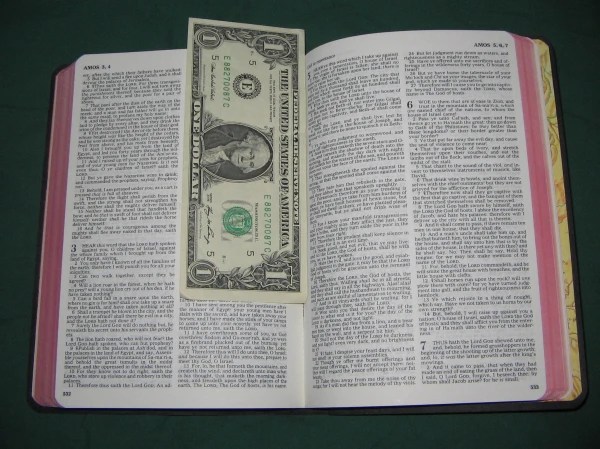
It’s small.  Almost cramped, you might say.  But then again, a Pennsylvania Railroad caboose wasn’t really designed to be a two-bedroom apartment with en suite bath.  Why the Gideon Bible was laid open to Ezra 2.62–4.19 I couldn’t fathom.  I suppose the story begins in Wisconsin, and ends up with me deep in Trump territory for an overnight getaway.  Let’s start at the Badger State.  I’ve always been a sucker for the unusual.  In that regard, I suppose getting a job at Nashotah House was inevitable.  When I spied Weird Wisconsin in Books & Company in Oconomowoc, it became an obvious birthday ask.  When we moved to New Jersey I learned that Weird NJ was a magazine as well as a book, and I bought, and read, every issue.  I also bought both volumes of the book and those of nearby New York and Pennsylvania.  It was in the latter that I first read about it.

The Red Caboose Motel began as a kind of a lark in the late sixties.  A Lancaster county man bought a bunch of cabooses at an auction and then had to figure out what to do with these tons of steel.  He settled on refurbishing them as individual hotel rooms.  I read about them in Weird Pennsylvania and hoped that someday I might stay in one.  My family, feeling restless after more than two years of pandemic isolation, wanted a short staycation.  Hotels involve corridors and breakfast rooms, often tiny, and too many Americans just won’t get vaccinated.  This seemed an ideal opportunity to spend a night in a discrete, self-contained caboose.  And, I admit, to tick something off my bucket list.

Driving behind Amish buggies to get there after a hot day on the streets of Lancaster—a surprisingly busy and loud city—the Red Caboose felt like a good getaway.  Given the number of cars parked outside cabooses, we weren’t the only ones with this idea.  Lancaster is more than just Witness territory.  Known for its boutique shops and pretzels, as well as its thriving Central Market, it’s a busy place in July.  Bumper stickers and loud, aggressively roaring pickup trucks indicate that outside the city the Trump myth reigns supreme.  In town we visited two independent bookstores, one of them quite large.  With at least seven to choose from, Lancaster feels like a readerly place.  Indeed, I could, had I the money and time, envision renting a caboose for a month or two to do nothing but write.  Why they wanted me to read about rebuilding the Jerusalem temple I just don’t know.  I’ll chalk it up to being weird in Pennsylvania.


Capital Idea?

One of the most difficult parables in the New Testament is the one where Jesus praises the fraudster (in Luke 16).  In case you’re a little rusty it goes like this: a steward of the king learned he was losing his job.  Knowing his employment prospects were like those of a mid-career religion professor, he called in his masters’ debtors and slashed the amounts they owed so that they’d think kindly of him.  When the king finds out, instead of growing more angry, he praises the steward for his shrewdness.  The parable seems to not condemn deceit and his left both scholars and laity scratching their heads ever since.  I’ve never, in my long church going career, heard a sermon extolling fraud.  The good book can be tricky some times.

The parable came to mind because I’ve been the victim of the fraudulent use of one of my few credit cards.  I only have two.  One of the reasons for this is that it’s difficult to keep track of everything as it is.  Life is busy.  I have most of my bills set to autopay so that I don’t forget to do it when an email reminder comes.  I don’t remember the last time I used actual money.  Writing a check is a rarity.  How my credit card was hacked I don’t know.  I didn’t notice right away because the charges were always small and spaced out.  I caught on when I hadn’t been using the card in that lull after Christmas and the exact same amount was charged two months in a row.  I called the company and they confirmed that similar small charges had been going on since December.

Now I picture in my head a scene where the criminal is caught and in court they use the Bible in their defense.  I’m sure it wouldn’t happen that way, but it’s an interesting idea.  Who’s going to argue against the Bible?  Heck, most courts can’t get those who know Trump’s many crimes to get their cases ever heard!  What do we do when the Bible distorts the moral narrative?  The fraudster, after all, is breaking at least one of the ten commandments.  Of course, those are negotiable these days.  The right wing’s endorsement of violence to maintain power shows that.  So it seems a prudent time to consider the parable of the fraudster.  We might still have something to learn from the Good Book after all.


Pure Fear

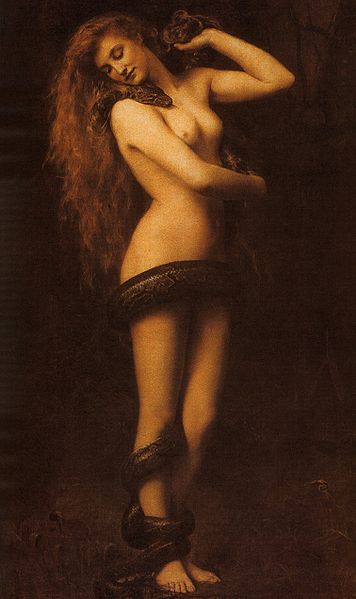
At work we have the opportunity to say a little about ourselves on a shared document for our teams.  This is a fairly new thing, so people I’ve worked with for years have no reason to look at it.  A couple of new hires, however, have noted that I watch horror movies and this has led to some budding friendships.  Since we’re all remote workers it’s mostly a matter of a line or two in an email about whether I’ve seen this or that film.  One of those recommended was the Hulu original Pure.  It’s actually pretty good.  The idea is a bunch of teenage girls are brought to a retreat center for a purity ball with their fathers.  This kind of thing can get very creepy very fast, given the incestuous overtones for such a thing.  Not only is it a religious event, it’s based on the story of Lilith.

Collier’s Lilith

The pastor preaches his first sermon about Lilith, but the girls from cabin 4 sneak out at night to meet some guys.  (Their presence is explained at the end of the movie.)  That night the girls summon Lilith, whom the minister’s daughter says is a demon.  The summoning works.  Lilith begins to interfere with services as the girls are tempted by the guys who are hanging around.  At the end, Lilith “possesses” Shay (the lead girl) and frees them from being controlled by the men in their lives.  The message is a refreshing one, and Lilith ends of being, well, somewhat as Shay puts it, “One man’s demon is another’s angel.”  

Religion and horror make a good couple.  I’ve never seen a movie that features the story of Lilith before.  The thing is, she’s not the scary part of the movie.  The religious believers, the fathers who try to control their daughters rather than giving them support after listening to them, are.  Parenting is tough, no doubt about that.  None of us are born into life with all the answers.  We quite often find ourselves not knowing for sure what we should do.  I couldn’t imagine being a parent claiming to have the solutions for all problems.  I’m a guy who watches horror for a form of therapy!  What I do think, however, is that we can try to be reasonable, loyal, and supportive.  I learn as much from being a parent as I teach.  The same was true of being a professor.  Humility, along with a willingness to continue learning your entire life is the only way that makes sense to me.  Although not a major studio production, this was one of the scariest movies I’d seen in a long time.


Shaping Water

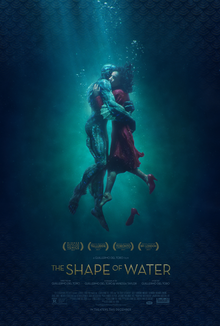
When I write fiction the genre’s difficult to define.  The other thing is I tend to be behind when it comes to pop culture.  It can take me years to find the time to watch a movie.  This preface is an excuse for why I’ve only just seen The Shape of Water.  Is it a horror movie because it features a monster?  It is, of course, primarily a love story.  As a parable the story has many gaps but it’s so enjoyable to watch that you don’t even mind.  In the rare event that you missed the hype, it’s a tale about a woman who falls in love with a somewhat more modern version of the Gill-man.  Indeed, one of the captors, Strickland, mentions finding him in the Amazon—certainly a nod toward the Black Lagoon.

There’s much you can say about a story like this, but one standout feature was that the antagonist (Strickland) frames pretty much the entire movie with the Bible.  He’s not a good man, but he uses the story of Samson to keep Zelda, the Black cleaning woman, in her place.  He uses her namesake Delilah (middle name) to note how she betrayed Samson.  He goes on to say that God is in the image of man, either him or her.  But then he adds, “Maybe a little more like me, I guess.”  This gives you an idea of his character.  He also notes that the creature was thought to be a god in the Amazon.  At the end, as Strickland sets out to kill the creature, he again uses Samson to tell Zelda that he’s going to bring “this temple” down on all of them.  That’s a healthy dose of religious imagery for a species of horror film.

The Creature from the Black Lagoon also begins with a biblical quote.  And like in this movie, the real monsters are the white men who insist on destroying what’s not like them.  Monsters and religion have similar pedigrees and share a number of features.  A concern for those marginalized by society pervades true religion as well as monster movies.  Nevertheless, the academy has trouble giving awards to any movie labelled horror.  There are definitely elements of it here.  It isn’t unusual to see horror defined as a movie that features a monster.  This monster is a god. Interesting, how often that happens. The film’s mood, however, is also romance and a very real concern for the other.  We can all learn from movies like this, even if five years late.


Falling Usher

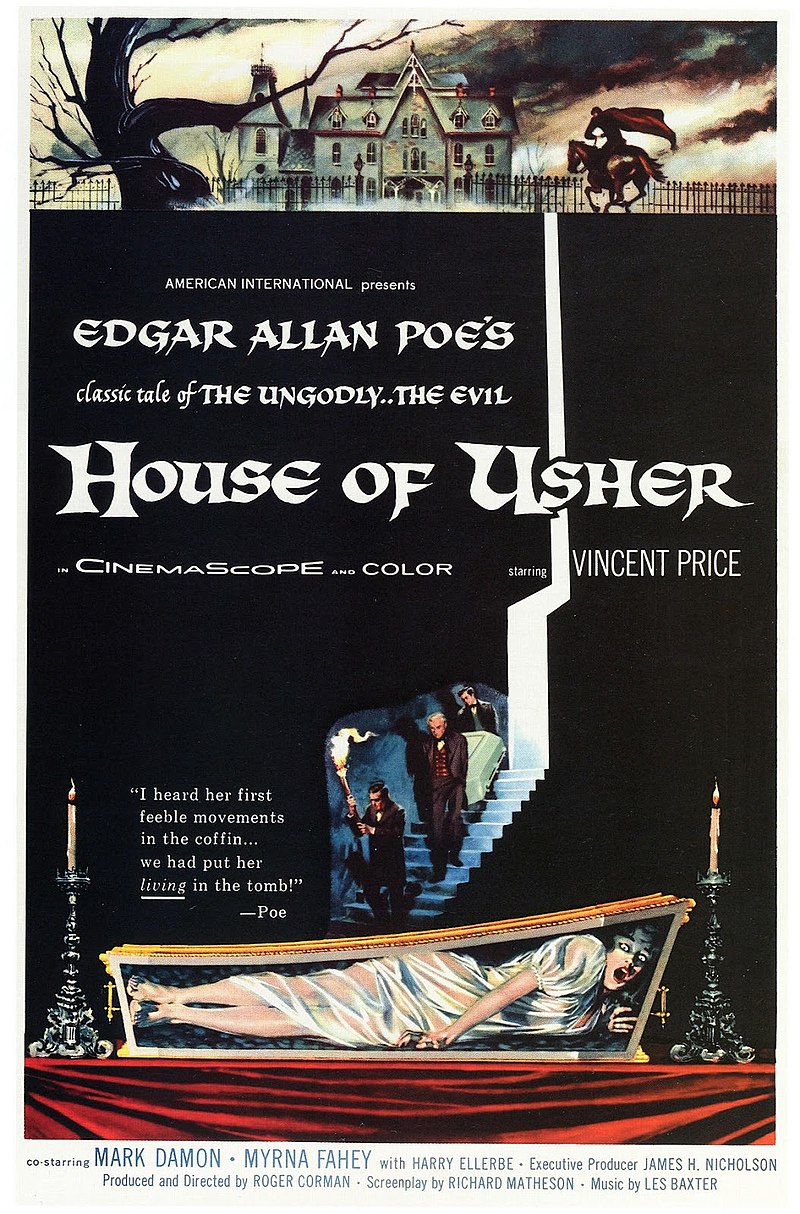
Roger Corman is a name well known to film buffs.  The producer of many low-budget, obviously cheaply filmed movies shot over a matter of days, his early career was prolific.  Often working in genre films, he directed horror (among other projects), occasionally drawing on Edgar Allan Poe.  The problem of adapting a short story to a length required for cinema release could be solved in a number of ways, but padding out the story was common.  I had only a few minutes to watch a horror movie over the weekend, so I pulled out a Vincent Price collection I’d bought some time ago.  A number of them are Corman films and I may have seen them when I was younger, but if so the path recall is completely eroded.  I decided to watch The Fall of the House of Usher.

This story by Poe remains my favorite for its sheer moodiness and imagery.  The premise is brief and the action little.  I knew Corman would have had to have changed quite a bit.  It turns out that he’d brought Richard Matheson in as the writer.  Many films can be made or broken by the writer.  While it doesn’t improve on Poe it is certainly a watchable effort that develops a mood in its own right.  The low budget is evident, but despite that the story is a slow build using many of Poe’s famous concerns such as premature burial and isolation in dangerous locations.  While not scary in the same way as modern horror, and stretched out by a dream sequence and overture, it nevertheless works.

Given my particular angle on horror, I noticed the introduced religious aspects.  While identification is difficult due to the lack of focus, there seem to have been two large, iconic Bibles in the story.  Indeed, the Ushers have a private chapel in which Roderick prays over his dead (?) sister.  The curse of the Ushers has to do with family evil that is being punished, causing Philip Winthrop to quote the Bible in his denial of the passing down of divine wrath.  The paintings of the Usher ancestor as Roderick explains this are the scariest part of the movie.  Not all Corman adaptions of Poe work well, but with the ministrations of Matheson and the rich ground for development from the original story, this is an atmospheric contribution to early horror.  And it works if you only have a few minutes on a busy weekend for your favorite avocation.


Free Research

I’ve lost track of how many times it’s happened, but it has been relatively few.  Someone I don’t know will approach me and ask me to post about something on my blog.  Sometimes they’ll even send me a book to highlight.  Perhaps not the most effective way to build a library, I’ll admit.  And some of the books haven’t been great.  I admire them nonetheless.  It takes great effort to write a book.  And not a small amount of faith, too.  Many books—perhaps most—never get published.  A great many are self-published.  (Those who work in publishing can be a stuck-up lot sometimes.)  Even those professionally published can use a push from time to time.  On this blog I’ve actively resisted the urge to make it about one thing.  Why?  Is life just one thing?

In a recent conversation I laid out for someone new what had been my research agenda as a young professor.  It had a direction still reflected in some of the categories you’ll find on the right column of this blog.  After writing on Asherah, I was going to give similar treatment to the other ancient goddesses attested at Ugarit.  This was perhaps ambitious for an academic waif at Nashotah House, but it was well underway.  My book on Shapshu was making good progress when the market (that dragon to every St. George) led friends to suggest turning biblical, which led to Weathering the Psalms.  A new research agenda—explore the weather terminology (the meteorotheology) of other biblical books—arose.  There were storms, after all, becalmed over lakes.  Horror entered in the jobless period and beyond.

And social justice.  I’m not a thrice-failed minister for nothing!  In fact, a recent freebie was a book on social justice.  I have a colleague as interested in monsters as me.  This particular scholar had decided to focus on the cause of the poor.  Even economists are starting to say the unequal distribution of wealth is hurting us.  While the rich fly to space on personally owned rockets, the rest of us have trouble filling up at the service station, even if we have jobs.  So it is that this blog is eclectic.  A friend told me early on that it would be more popular if I just stuck to one topic.  That’s probably true, but my mind can’t settle down like that.  And when people send me things to talk about, I’m happy to do so, if it fits somewhere in my mind.


For Sale for Free

It’s one of the signs of spring.  Although it may be more appropriate for winter when we’re holed up inside for much of the time, the library book sale often takes place when it’s a bit more conducive to being outdoors.  When we travel, which isn’t frequently these days, we often spontaneously stop into an advertised library book sale.  Most of the fare is fairly pedestrian, but sometimes you find something you simply didn’t expect.  On one such recent outing, that’s just exactly what happened.  Back when we lived in New Jersey the Friends of the Hunterdon County Library book sale was a much-anticipated event.  It remains, in my experience, one of the largest of such sales.  (Believe it or not, there are websites dedicated to pointing inveterate readers to book sales and that’s how I found this one.)  That’s not the surprising part, however.

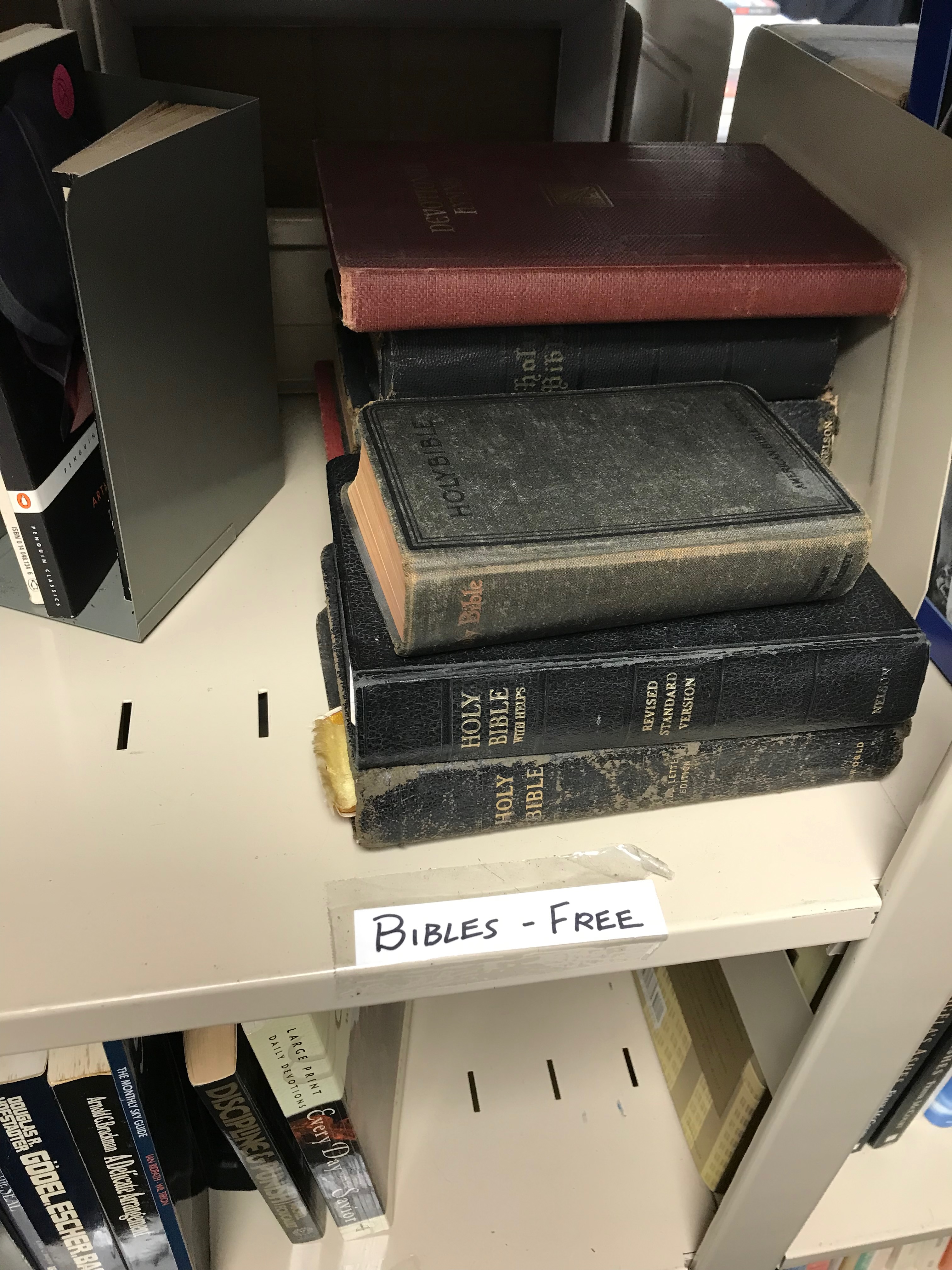
One year when I went, one of the library friends was working the pre-entry crowd, proclaiming some of the treasures inside.  One of them, he announced, was a Bible from the nineteenth century.  They were asking more than the usual one or two dollars for that one.  If I recall, it was $100.  No, I didn’t buy it.  I have dozens of Bibles right behind me at this moment and if I had a Franklin to spend I’d load up on books I don’t already own.  Many of the books mentioned on this blog came from just such sales as these.  That big Bible’s not the surprising thing either.  Here it is: on a recent library book sale day, I saw a shelf with Bibles.  They were free.  Library book sales are intended to raise money, but Bibles for free?  Unexpected, no?

America is the land of free Bibles.  They are printed in vast quantities and sold cheaply, without a thought to what this says in a capitalist world.  Some Christian rock groups were famous for throwing free Bibles from the stage—you’ve got to think those in attendance already had one—and any county fair will usually have at least free New Testaments for the taking.  Ironically, most of those who distribute free Good Books are also the staunchest supporters of capitalism, one of the most exploitative economies ever invented.  Attending library book sales entails more than just finding books that you perhaps didn’t know about.  It’s more than being tempted by something for which you’d rather not pay full-price.  It is, perhaps surprisingly, a learning experience in and of itself.


Tax Season

And it came to pass in those days, that there went out a decree from the Internal Revenue Service that all the world should be taxed.  (And this taxing was first made when Penn was governor of Pennsylvania.) And all went to be taxed, every one into his own city. And Steve also went up from Galilee, out of the city of Nazareth, into Northampton, unto the city of David, which is called Bethlehem; (because he was of the county and district of Northampton:) To be taxed with Kay his beloved wife, being great with patience.  Well, not exactly biblical (with apologies to Luke), but this came to me upon having to go to Bethlehem to collect our tax documents from our accountant.  There’s something biblical about living in the Lehigh Valley.

Photo by Olga DeLawrence on Unsplash

I don’t complain about having to pay taxes.  I only wish far less of the money went to pay congressional salaries.  And far less to the military.  Otherwise, I realize that in order for infrastructure to be up-kept, for the many services that make life possible for so many people, those of us who earn enough—even if not exactly flush—owe something to the system.  I’m saddened that the very wealthiest feel they’ve earned the privilege of not paying taxes. Modern-day Herods, I think, ready to kill babies in order to maintain personal power.  Still, those of us who pay participate in the most basic kind of charity.  So we make our annual trip to Bethlehem.

These days many people feel that if they don’t like other people they shouldn’t cooperate with them at all.  Even finding out that a certain Trump has been defrauding the very government which he purported to lead, and has been doing so for many years, doesn’t dissuade some of them.  I think our accountant, who looks gaunt and who doesn’t overcharge, could fairly claim a bit of back taxes that might be due.  Community is an endangered concept.  It’s a place where people support one another, and perhaps even care about others.  When I logon to Nextdoor.com I’m distressed to see the trolling and inappropriate emojis that show up.  The internet makes us all think we’re clever, ready with the snappy comeback.  Even to a recent story about a dead homeless man found in a park.  We need each other.  Society can’t move ahead if everyone keeps everything to themselves.  So it was we drove our rusty, four-cylinder donkey even unto Bethlehem.


1 April

Image credit: Trocche100, public domain via Wikimedia Commons

The funny thing is nobody knows how it got started.  In living memory, and indeed back a century or two—even more—people have considered April 1 a day for jokes and fooling.  Perhaps it was a kind of relief after winter was finally beginning to show its tail, or perhaps it was some distortion of Hilaria, the Roman festival of the goddess Cybele.  Some have speculated that it had to do with switching from the Julian to the Gregorian calendar when many were confused as to what the actual date was.  No matter what its origins are, April Fools has stuck.  It has such resonance that even legislation passed on this date is sometimes questioned as to whether it is serious.  Some locations have grand pranks planned and budgeted.

Nobody, as noted, knows how this got started.  One of my personal favorites posits a biblical origin.  Things tend to go back to the Bible in western culture, don’t they?  This idea takes it all the way back to the tenth generation of the human race: Noah’s flood.  Back in the eighteenth century it was suggested that Noah sent out his first dove before the waters abated on April 1 (this, of course, is based on knowing the exact days of creation—something that was of considerable interest in the seventeenth and eighteenth centuries).  Since the dove was sent on a “fool’s errand”—there was no dry land visible—well, April fools!

With rare exceptions this isn’t a day off work.  It’s not a holiday with any religious implications, despite speculations about Noah and his dove.  It’s really a day highlighting uncertainty.  Practical jokes can, of course, be harmful.  There can be those, such as yours truly, who might be slow to catch on.  Indeed, almost always the victim of a “practical joke” doesn’t find him or herself in an appreciative mood.  I’ve always personally thought the reference was to the weather.  Snow isn’t unusual into mid-April in parts of the northern tier.  In fact received wisdom suggests not planting annuals until May arrives.  April’s weather, in other words, fools.  Around here we’ve whiplashed through March with days in the seventies and others the coldest of the winter (or so it seemed).  Now we’re into the first full month of spring.  The early flowers are out (some of which succumbed to the cold of this week’s weather) making fools of us all.  My hope is that none of us take this day’s unknown-origin holiday too seriously.


Leathers

It’s an occupational hazard for the vegan Bible editor.  Leather.  Leather Bibles, although expensive, are popular.  If you want free fetishistic deliveries of colored leather to arrive at your door, well, it’s part of a Bible editor’s life.  Morally I’m opposed to leather and I eagerly await the day when cactus leather is considered a suitable alternative.  Leather began being used in bookbinding early on, when books were treasured possessions.  It was readily available because animal slaughter was a part of everyday life.  It’s also extremely durable.  These days it’s just a status symbol.  When Bibles are produced there’s generally a market for whatever translation in leather.  In my time I’ve seen some well enough used to perhaps justify such extravagance, but not very often.  Usually it’s merely for show.

There’s an entire vocabulary associated with leather bookbinding.  Tooling, or engraving the smooth leather to look like something else, embossing, or pressing a design in the leather, gilding, or the use of gold paint on leather, and dentelle, or having a border run around the outside edge.  All of these were (and still are) signs of the artistry of the binder.  The practice dates back to before the nineteenth century when books were bound by booksellers, not publishers.  Perhaps this is why we shouldn’t judge a book by its cover.  In any case, apart from tradition there’s no need to kill animals to bind books any more.  Law books and Bibles are the major purveyors of leather binding.  It continues simply because it continues.

One term used for traditions unwilling to change is “hidebound.”  While this seems originally to have referred to emaciated cattle, it has come to be associated with codified, as in leather books.  Pigskin, or other cheaper hides, are often used.  Or “bonded leather,” which is as much plastic (if not more) than actual leather.  The Bible isn’t a terribly animal-friendly book.  Dogs are unclean and cats aren’t mentioned at all (except the large, wild kinds).  Yes, there are shepherds—both good and bad—but sheep were kept to be exploited.  And perhaps turned into leather.  There’s something strangely symbolic about this.  And not in a propitious way.  Where does obeying the rules get you?  Sheep are praised for their docility, their willingness to be thoughtlessly exploited, slaughtered, skinned, and eaten.  To do the job, a Bible editor must learn about leather.  Perhaps its a profession best left to carnivores.


D Evil

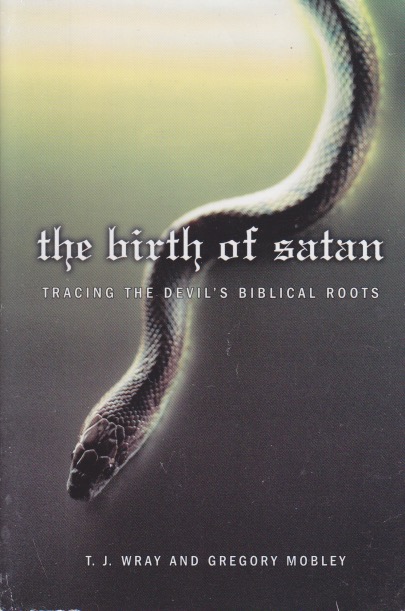
The Devil, they say, is in the details.  T. J. Wray and Gregory Mobley look into those details in The Birth of Satan: Tracing the Devil’s Biblical Roots.  It’s often a surprise to Christian readers that the Devil clearly evolves in the Bible.  From being virtually absent in the Hebrew section, he appears, almost full blown, in the New Testament.  This, of course, flies in the face of the idea that the truth was pretty much revealed from the beginning and that it’s consistent throughout.  The Devil in the details proves that it’s not.  The Bible has multiple suggestions of whence evil arises, God among them.  The Devil came to be one explanation of the origin of evil, but he’s not the only biblical one.

One of the things I found fascinating here, however, was that the authors often refer to popular culture to illustrate their point.  They particularly favor movies.  The authors are biblical scholars and it’s not at all unusual to find movie fans among them.  I suspect that since biblical scholars (apart from the linguists) specialize in stories it’s only natural that movies appeal.  They aren’t given extended discussion here, and indeed, a book about the Devil in the movies would be very thick if it attempted to be comprehensive.  Satan is a movie star.  Since he evolves into the embodiment of evil this is probably not surprising.  A good plot needs some evil in it, and one character in the western canon is the granddaddy of all evil.

Those looking for a fuller biography of the Prince of Evil may be disappointed that this book keeps to its remit—the biblical Satan.  There are, however, many more books about the Devil.  Maybe even more than movies in which he appears.  Scholars and laity both seem interested in this character.  He appears late on the scene, only within the last century or so of the biblical writing period.  His fullest portrait there is the highly symbolic book of Revelation.  And no matter what else you say about it, we can all admit Revelation is tricky to understand.  Since we take the Bible so seriously, one aspect of Satan that isn’t addressed here is his role as trickster.  Folkloric characters who cause chaos (which the Devil does) are often tricksters doing it for no particular reason.  We don’t know why the Devil is bad.  The Bible has no clear origin story for him, since he’s built up from several other cultures’ ideas of bad deities.  To sort it all out requires, well, the details.


When Bible Met Horror

My colleague (if I may be so bold) Brandon Grafius has recently published a piece titled “What Can Horror Teach Us about the Bible?” in Sojourners.  Brandon and I have never met in person, but we’ve worked together a number of times.  We share an interest in horror and we both teach/taught Hebrew Bible.  We’re not the only ones who’ve got this fascination.  When I was able to attend the American Academy of Religion and Society of Biblical Literature annual meetings in person, I would often meet up with others who, apart from their respectable jobs, have a real interest in horror.  There are quite a few of us.  Some journals, like Sojourners, are starting to ask the obvious question: what do these things have in common?

I can’t claim to have watched all the horror movies ever made.  It’s actually pretty difficult to access some of those I’d like to see and, believe it or not, I’m actually a selective viewer.  Often my choices are dictated by research.  Back when I was young, in college and seminary, I’d go to see horror movies with friends.  Since I was living alone in seminary that sometimes led to sleepless nights.  I recall vividly being unable to sleep after watching David Cronenberg’s remake of The Fly.  (To this day I still haven’t seen the original with Vincent Price.  I see that it’s available to stream on Amazon Prime, and since we’ve got the internet back perhaps it’s time I do that.)  What I can claim is that I’ve always watched movies for religious elements and that I often find horror isn’t lacking in that department.

The point of Brandon’s article is that there are horror stories in the Bible.  Indeed, the more I ponder the Good Book the more I see that makes it a frightening text indeed.  Once you get past the sugar coating, there’s fear of substance inside.  Funnily enough, it seems Jesus didn’t often play the fear card, although even he did so from time to time, according to the Gospels.  Religion, which gives us such hope, also makes us so very afraid.  I’m really glad to know that I’m not the only one who’s started to come to that conclusion.  So maybe it’s natural for those raised religious to be fond of monsters.  Getting others to admit it can be tricky, and I’m sure some genuinely don’t like them.  Still, when you’re in a scary place, it’s best not to be alone.


First Books

It was back in the day when I believed a book was the final word.  Remember those times?  (I have a suspicion that many Republicans really are longing for the days of simple answers: “Smith wrote it in History of Everything so it must be true,” and such.)  You’d read a book assigned in college and assume that since the author wrote a book s/he (but generally he, in my day) must be right.  If college really caught on, however, you’d start comparing sources.  Still, there was that one book that got you started thinking in a new way.  Back in the day when I believed a book was the final word I read J. Alberto Soggin’s Introduction to the Old Testament.  I remember the context well: Harrell Beck’s intro course at Boston University School of Theology.  We were given a list of texts and allowed to pick.  I chose Soggin.

Reading that book I realized for the first time that ancient Israel had borrowed from its even more ancient neighbors.  The fact that I’d attended Grove City College and majored in religion without ever having been introduced to the idea says volumes.  (Some parties, it seems, have always preferred to suppress information.)  I followed it up with Helmer Ringgren’s Israelite Religion.  I was hooked.  If we knew that there were ancient sources, and if we knew their languages and their cultures, why hadn’t it been obvious to the general public?  I started on a doctorate to uncover the truth since I couldn’t find courses on it at seminary.

We didn’t take many books with us to Edinburgh, but Ringgren was one.  By then I’d begun to realize that introductions weren’t really research books.  I spent my years digging deeper and deeper into ancient West Asian culture.  If it’d been possible I’d be there still.  Soggin and Ringgren, I realized by this point, were clearly biblical scholars, and not students of the specialized field that’s still called Ancient Near Eastern studies.  But still, their books had started something.  My copy of Soggin has followed the socks in the dryer, and I now realize the politics of introductory texts (if you believe it’s innocent you may be happier remaining in your bliss).  Still, I owe a debt of gratitude to those scholars who wrote in accessible words aimed at the novice.  Time has passed and nature has begun its own tonsure process, but this fallen monk has learned that many books are the only way of getting to the truth.


Thinking about Thinking

I’ve been thinking about thinking quite a bit.  My lifelong fascination with religion is part of this, of course.  So when someone pointed out Bridget Alex’s article “The Human Brain Evolved to Believe in Gods” in Discover, I had to ponder it.  The idea, here supported by science, is that people evolved survival traits that lent themselves to religious belief.  That religious thinking was a byproduct that eventually took on a life of its own.  Evolution works by giving a reproductive advantage to one trait over another—which is how we get so many types of dogs (and maybe gods)—and those that disposed people to be religious did just that.  Elaborate religions evolved from these basic traits.  Alex suggest there are three: seeing patterns, inferring intention, and learning by imitation.

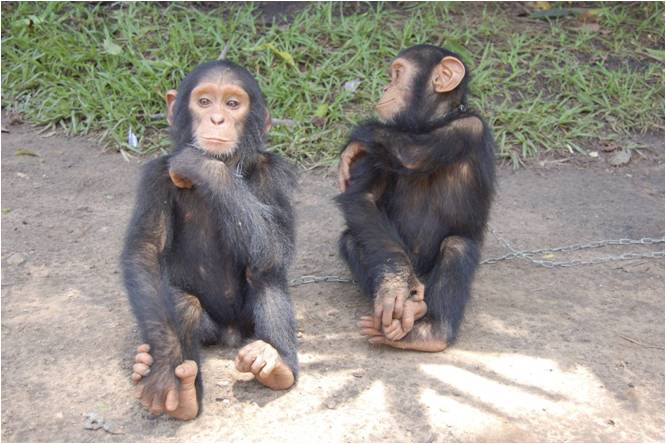
While there’s a lot of sense here, the reductionism doesn’t ring true.  The need to explain away religion also seems uniquely human.  Ironically, the idea that we are somehow special compared to other animals derives from a biblical worldview from which science has difficulty divorcing itself.  One of the greatest ironies of the science versus religion debate is that scientific thinking (in the west) developed within a worldview formed by Christianity.  Many of the implications of that development linger, such as the supposition that animals can’t have consciousness, or “souls.”  We watch a chimpanzee in an experiment and deduct points when they don’t do things the way a human would.  We thus confirm the biblical view in the name of science and go home happy.

Photo credit: Afrika Expeditionary Force, via Wikimedia Commons

I have no doubt that people evolved to be religious.  There are certainly survival benefits to it, not least group building and shared purpose.  I do wonder that science doesn’t address the elephant in the room—that we have limited receptors for perceiving specific stimuli, such as light and sound, but that there are other phenomena we don’t perceive.  We build instruments to measure things like x-rays and neutrinos and magnetism, but we don’t sense them directly.  How can we possibly know what we might be missing?  I suspect the real problem is we don’t want to admit willfulness into any other part of the universe.  Humans alone possess it.  Some scientists even argue that our own sense of will is an illusion.  It’s not difficult to believe that we evolved to be religious.  It’s also not difficult to believe that we pick up hints of forces that have yet to be named.  An open mind, it seems, might lead to great rewards.