Who Owns It?

Who owns the Bible?  No, you can put your hands down.  I mean who owns the concept of the Bible?  This question occurred to me while thinking about the Apocrypha.  Does the Apocrypha belong or does it not?  This became a polarizing issue with the Reformation and subsequent Protestant ownership of the concept of the Bible.  The Apocrypha was mostly written by Jews, but has never been part of the Hebrew Bible.  The process of narrowing down the books to include wasn’t straightforward and since God hasn’t spoken on the topic, has never really been settled.  The books of the Apocrypha circulated with the Bible, as did a few other books.  Sometimes they were even bound together inside one cover with the standard Protestant 66 books.  Obviously I’m discussing the Christian canon here.

I’m sure you’ve known someone this has happened to, if it hasn’t happened to you personally.  This person is an actual expert on a topic.  S/he goes to a place where an unexpected discussion on their specialization breaks out but nobody asks them to speak to it.  This person then becomes offended, sometimes even speaking out, loudly, that this is their area, they have expert knowledge of it and should be consulted, at the very least.  More likely than not, their opinion should be considered definitive.  This is the image I have in my head with Protestants and the Bible.  Sure, the Catholics had it long before, but they didn’t encourage individual study.  In fact, they discouraged laity from reading it.  Only when they, the Protestants, came along did anyone really pay attention to the Bible, and, it must be admitted, they do have a point.  All the Bible study that goes on today, no matter what faith tradition (if any) would not have happened without the extreme Protestant reverence for the Good Book.

But still, there are other branches of Christianity that disagree.  There are more Catholics than any single sect of Protestants.  And a great many Orthodox Christians as well.  Some of the latter include the books of 1 Enoch and Jubilees in their Bibles.  Even so, any publisher that wishes to make inroads on selling the Bible must defer to the Protestant canon.  This is the case even though the King James Bible included the Apocrypha.  So as I ponder who it is that owns the image of the Bible, my mind keeps coming back to the same place.  Those who make the loudest, and most prolonged claim are the Protestants.  They own the Bible, in the public eye.

Non-Saints

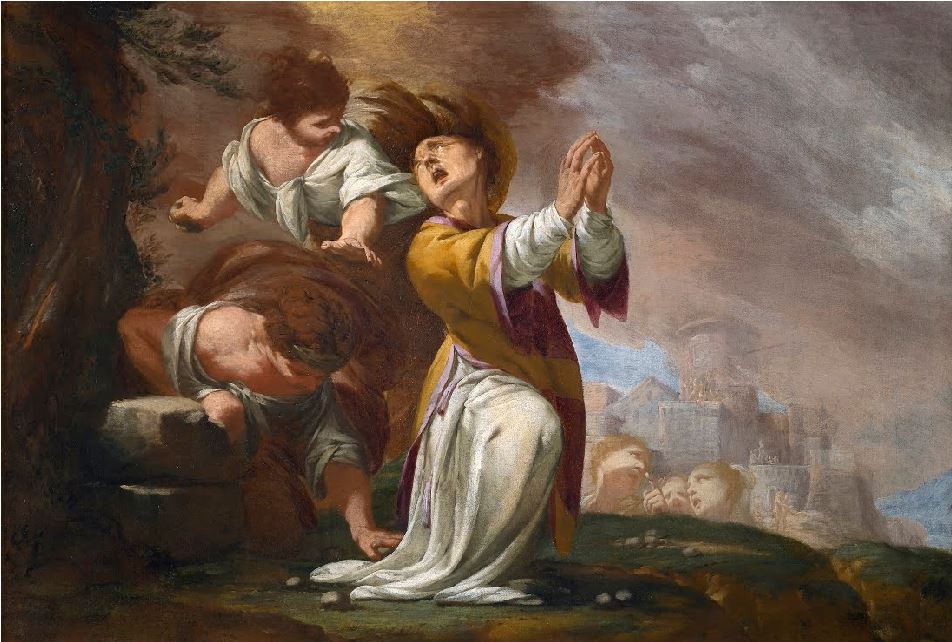
It was an epiphany.  My wife has, on more than one occasion, accused me of playing the martyr.  I know very well that I let other people step all over me.  The epiphany came when I was reading about Stephen’s martyrdom in the Acts of the Apostles (in the New Testament).  Unbidden by me, a memory—more of a distinct impression, a deeply planted feeling—arose.  I started reading the Bible at a young age.  The story of Stephen is disturbing to a child.  The thought of being stoned to death for saying what you believe is a species of horror.  The memory, or impression, was of my mother pointing out how good it would be to be like Stephen.  He is not technically my namesake, but since there were no male role models in my family, I subconsciously made the connection: Stephen the martyr, Steve the martyr.

Giovanni Battista Lucini – Martyrdom of St. Stephen, public domain. Source: https://artsandculture.google.com/asset/martyrdom-of-st-stephen/twGNCf3waLKDvA via Wikimedia Commons

It’s strange to realize this suddenly after half a century of not consciously recollecting it.  What we teach our children stays with them.  If we tell them that it’s good to die for your beliefs, well, we shouldn’t be surprised when they grow up with strong convictions.  (My brother tells me that Virgos think they’re always right and that’s why we’re stubborn; is it the stars or is it the Good Book?)  The Bible puts a positive spin on Stephen’s death.  Formal sainthood isn’t a biblical concept, but he dies forgiving his murderers.  It struck me there in the middle of a working day.  Some of my subconscious personality traits floated to the surface.

My deep desire to avoid Hell also formed my young outlook.  Although my beliefs have to be held accountable to what I’ve learned over decades of study, that fear never departs.  This too was planted in me before I had any real concept to absorb it.  When I grew old enough, the horror became academic, but nonetheless real for it.  I’d studied the history of Hell and I knew New Testament secrets.  To avoid the bad place, be like Stephen.  The dilemma is that as life goes on, we continue to learn.  Young parents don’t know as much as old ones do.  And since we have to teach our children not to run out into the street, or not eat that thing they found, we cast ourselves as The authority.  And that includes things religious.  If we live an examined life, we see shades of nuance where once there was only certainty.  And sometimes we have epiphanies.


End of the Story

You know that feeling?  Like when you’re driving in thick fog and you know you should stop but you’re late and you have to keep going?  There comes a moment as you’re driving when you know that it’s going to end, and probably badly.  Yet you keep on going.  Trump has me thinking of the end of the world quite a bit.  I know there are many evangelicals out there praying for it fervently while the rest of us would like a little more time on this beautiful planet.  I’d be lying if I said I didn’t understand this outlook, because I do.  I grew up with it and I’ve never forgotten the sensation it caused.  And then I pondered that we are story-telling, and story-thinking creatures.  Perhaps other animals don’t think this way, but we constantly tell ourselves stories.

A story has a beginning, a middle, and well, eventually, an end.  We all know, at some level, that we’re mortal.  Life will end, and every completed story has an end.  Why not the world?  It’s a strangely haunting idea, the world continuing on without us here to make it interesting.  Plants will grow in any soil they can find, even microscopic cracks in the pavement.  Every year it’s like one day everything is suddenly green where only the day before we could see the sky through the branches.  And animals continue their quests for food, mates, and shelter.  Some live to hide while others strut.  Each has a role to play and if you watch them closely you’ll find yourself narrating their stories.  That rabbit.  That bluejay.  That fox.  They have a beginning, middle, and end.  If they can’t tell it, we can do it for them.  It comes naturally to us.

Long ago I learned how one version of Bible interpretation came up with the end of the world as we know it.  I also learned that this was contrived, just as all interpretations are.  This particular one has landed, like a seed, in the cracks of our mind.  It grows, just like that weed in the pavement.  This story must have an end.  We can imagine it no other way.  Even when we grow up and realize that the story was only one we told to children—children old enough to handle it, of course—we still have this certainty that an end is coming.  Like driving in the fog, we just know it.  Even when we realize that in reality we should be putting on the brakes.


Thinking of Home

The earth, and even life on it, will, I’m confident, outlive our petty desires for money and being the king of the hill.  Scientists are getting tantalizingly close to demonstrating something that many of us already know—life exists elsewhere.  Chemical signatures of life appear as close as Venus and as far as K2-18b.  I suspect our universe is full of life.  And life is more than just rationality.  We’re creatures driven to survive and that level of will appears to be universal.  As Ian Malcolm says, “Life will find a way,” or something similar.  Earth Day should be a celebration but under too many Republican presidents it has become a plea to please stop intentionally harming our planet.  I grew up in that distorted religion known as Fundamentalism.  I learned that the destruction of the world was necessary to force God’s hand with the second coming.  The planet was here to exploit and waste since he’ll be back any day now.

Unlike many of my cohort, I decided to learn more about that perspective.  The more I learned the more shocked I became.  A warped and twisted message had been passed along as Gospel truth, and that the care the creator bestowed upon creation was merely a smokescreen to hide Jesus’ return.  I still believe we are not capable of completely destroying the planet.  Life will continue with or without us.  Life is persistent and hopeful.  That doesn’t mean we shouldn’t take care of it.  Earth Day has become a rallying point for those who see the world sensibly.  We have so much wonderful life on this planet.  In our arrogance and in our tendency to take mythology literally, we have assumed the worst.  Why not take care of what we were given?  Jesus may not come back, but perhaps the Lorax will.

There are ways to live sustainably on this planet.  It does mean that some of the richest will need to surrender some of their wealth and power.  We need to learn the habits of requiring less and appreciating more what we have.  Like most people born into the world in this era, I struggle against the desire for new things.  Novelty is natural to such curious creatures as ourselves.  But there are other such curious creatures too.  They have a place here, even as those which seem to have no curiosity do.  It’s a planet big enough for all of us.  We just need to be sensible about it.  And remember the earth today and be thankful for our home every day.

Image credit: NASA/ISS Expedition 28, public domain from Wikimedia Commons

Easter Gathering

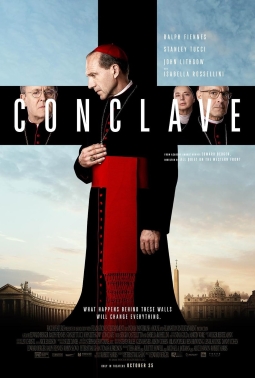
On Easter I’m thinking of Conclave.  My wife had been wanting to see it and we watched it on Good Friday—a work day, of course, in this “Christian” nation.  In any case, it’s fascinating for a couple of reasons.  One is that, as a drama surrounding the election of a new pope, it draws you in.  The politics and intrigue are, I assure you, quite real within in the church.  People are, in seems, incurably political.  Conclave is fiction, of course.  And in reality, very few people are ever admitted to the chambers where a world leader is elected by those priests who’ve risen to the highest levels of church hierarchy.  This fictional reconstruction may give a window into that.  The other reason that I found it so fascinating is that it was quite a box office success for being a movie about a religious subject that isn’t biblical.  Appropriate viewing for Easter weekend.

There were a few striking scenes.  Here’s the outline, though: a pope has died and Cardinal Lawrence is the deacon in charge of the conclave to elect a new one.  Four main candidates exist—one a staunch traditionalist, one a liberal, one an African who is conservative, and the last a moderate American who has a past.  The pope had appointed a new cardinal shortly before his death and some people think he’d make a good pope, despite his relative youth.  One of the striking scenes is Cardinal Lawrence’s homily to open the conclave.  He preaches against certainty.  Not only is this a powerful scene, for some of us watching he is absolutely correct.  Certainty is the death of faith.  That scene alone is worth watching the movie for.  Go ahead, it’s Easter.

The other striking scene is the twist ending, which I won’t reveal here.  Anyone who’s honest and who’s lived long enough to become a pope has secrets.  Not all of them reach to the level of scandal, but the movie also emphasizes that the pope is also a sinner but must be willing to seek forgiveness.  Indeed and amen.  The problem we face today is that, even and perhaps especially in Protestantism, many people look to condemn sinners without realizing their own faults.  The movie points out that even the holiest acknowledged person within Christendom can’t make any claims to perfection.  If we’d all admit that we’re doing the best we can not to offend deity or fellow human being, perhaps there really would be cause to celebrate this Easter.  Even without a conclave.


Seeing the Forster

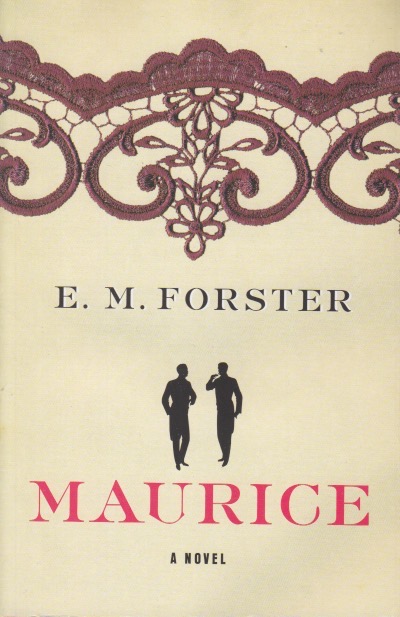
The thing about exploring dark academia is that its recognition is fairly new.  It seems that the “concept” emerged only ten years ago and the longer that it’s around the more sources it gathers, like a dust bunny growing under the bed.  I’ve never read E. M. Forster before, although I’ve seen movies based on his novels.  He was an interesting chap, trying out sci-fi (or at least dystopian fiction) as well as his literary novels.  Maurice was not published during his life because it explored homosexuality.  Forster was gay when it was technically illegal, and this novel reveals much of the struggle faced by homosexuals during the early decades of the twentieth century.  The novel has been cited as an example of dark academia, I suspect because much of the early part takes place in Cambridge.  Although it has a happy ending it’s not an easy novel to read.

Quite apart from the hideous paranoia of society at the time towards any kind of homosexuality, Forster’s style was, for me, difficult to decipher.  I know this is my issue, and not his.  His use of British expressions underscored for me how difficult it is to understand idiom in another culture.  At more than one place I was unsure what the speaker meant because the British slang used was so different from what I encountered living in the UK in the early nineties.  Not that the story is difficult to follow.  It is movingly written, demonstrating the torment of those who realized their orientation as they faced in an intolerant society.  Maurice even tries to “cure” his homosexuality, but efforts fail.  There is a darkness here, appropriate for dark academia.

Forster died in 1970, just when homosexuality was beginning to be understood not as a sickness, but a disposition.  It’s not a choice, and as the animal kingdom tells us, it’s certainly not limited to human beings.  The novel makes note of the fact that Greece, the origin of much of western culture, approved and promoted homosexual relationships.  Maurice is told that he could move to France of Italy where such relationships were not illegal.  There’s no question that the societal stance toward homosexuality was based on particular understandings of biblical texts, some now thoroughly discredited by biblical scholars (Sodom was not destroyed for homosexuality as biblical intertexts clearly show).  Generations of people, including Forster, were put through lives of torment in order to keep a prejudice alive.  Academia may be dark indeed.


The Sin of Syncretism

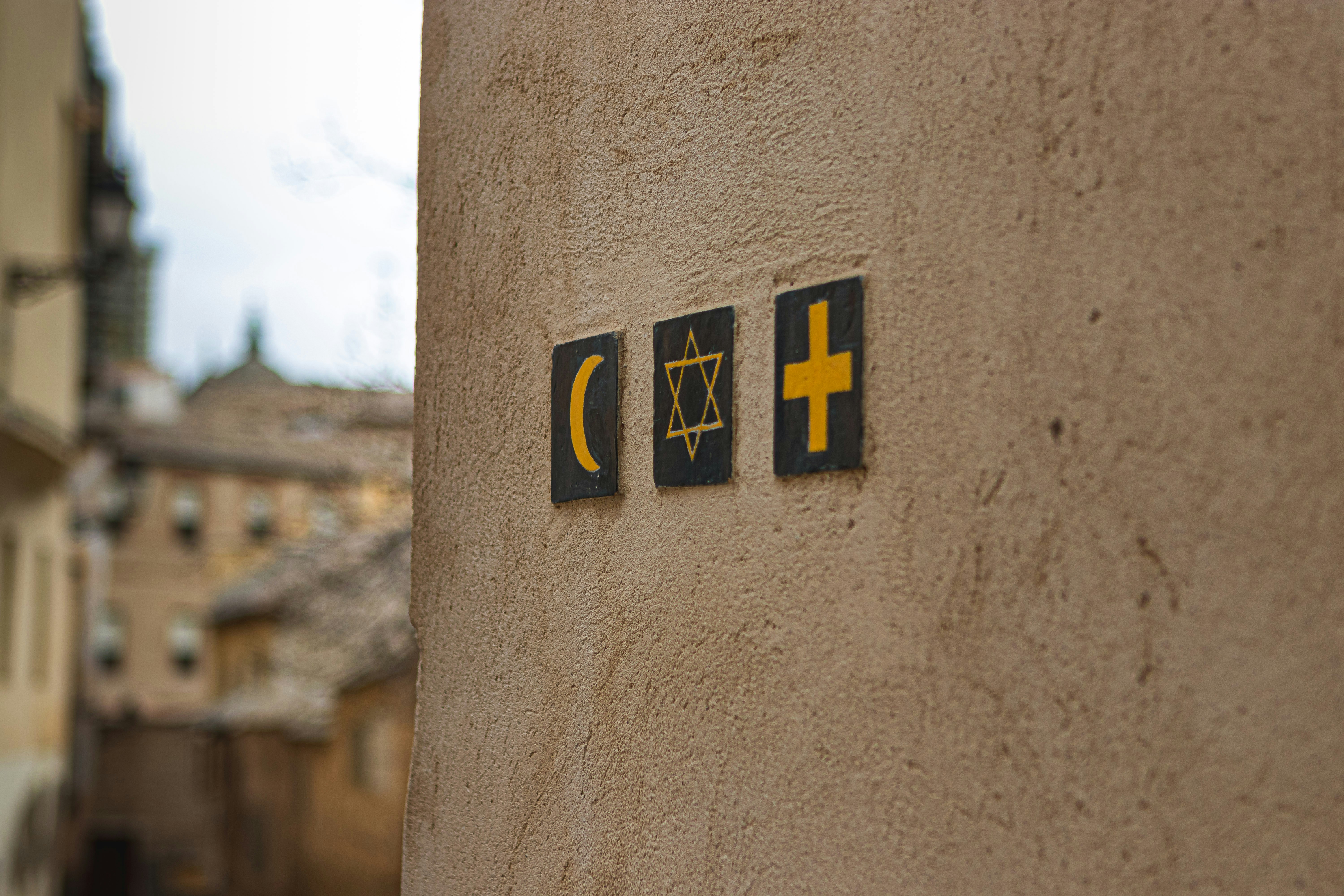
Syncretism may not be dead, but it should be.  What is it?  Well, in my field it means a religion that has been “corrupted” by the adoption of some element(s) of another religion.  The term was all the rage while I was working on my doctorate which involved, of course, comparative religions.  By the time I was being edged out of academia, there was a recognition afoot that the concept of syncretism was itself corrupt.  It depends on the idea that there is a “pure” form of a religion and that foreign elements debase it.  There is no pure form of any religion, and the more we learn of the history of religions the more obvious it is that religions influence each other, and have always done so.

What prompts this post is that I increasingly see clergy using the term “syncretism.”  Now, clergy tend to run behind scholars by a fair pace.  Those of us out there trying to figure out what religion is and how it works have a daily duty to analyze and reassess and theorize.  Clergy have many other things to do and read scholarly tomes as time permits.  Syncretism is now only used by conservative scholars who believe a religion (usually the form of their religion that they personally happen to believe) is pure.  Other religions are corruptions.  Ironically, I once heard a Unitarian Universalist minister use the term.  For a religion that accepts all other religions as valid, it struck me as odd.

Photo by Noah Holm on Unsplash

As I used to tell my students, nobody knowingly believes “the wrong religion.”  By far the majority of people accept the religion that their parents taught them.  Often without question.  I know I did.  Then I studied religion.  I began to realize things weren’t as simple as “that old time religion” pretended they were.  Fundamentalism borrows from other religions just as much as any other tradition does.  Religions don’t have sharp boundaries.  There are fuzzy edges between them.  Those edges are permeable and quite wide.  Syncretism was a concept that religion scholars used, often in the context of monotheistic religions, to show where impurities entered.  The thing is, impurities were there from the conception on.  If one religion were born fully grown from the head of Yahweh, it would be obvious, wouldn’t it?  The Bible describes the religion of Israel and how it borrowed and adapted from other traditions.  Thus it was in the beginning, is now, and ever shall be.  The world would be a much better place if we made our peace with this and buried syncretism in the graveyard of obsolete ideas.


What You Believe

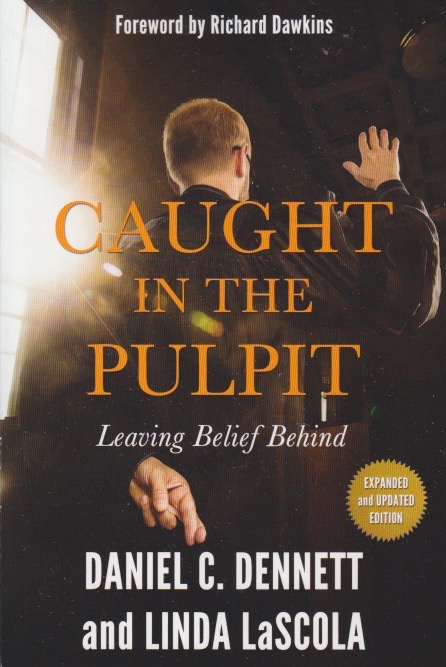
This is an important and frustrating book.  I just can’t figure out if the black-and-white thinking is disingenuous or if it was really believed.  I don’t mean about the subjects of Daniel Dennett and Lisa LeScola’s Caught in the Pulpit.  I wonder that about the near-arrogance of the model they propose while exploring the very real problem of, as their subtitle says Leafing Belief Behind (for clergy).  You see, I’ve read, and even walked a little way with the “new atheists” (my private beliefs are private but one thing I will say is that beliefs constantly change for anyone who seriously seeks the truth.  If you want to know them, get to know me).  This book, which explores clergy and other religious folk who’ve lost their faith, addresses something very real and very important.  It’s just that the framing feels wrong.  I appreciate that the authors exhibit such sympathy for their subjects—it is difficult to change the religion in which you were raised.  But it it’s not black-and-white.

Apart from the “either/or” outlook, there’s also the fact that what many people interviewed lost was not so much a belief in God as it was a belief in the Bible.  These are different things.  No doubt, our love of Bible has caused quite a lot of damage.  Since many believe the Bible to be a magic book, losing that particular lens can make things blurry.  I guess that’s what I missed in this book—a sense of blurriness.  Scientism is a belief system just as fundamentalism is.  Interestingly, I keep coming back to something that should be obvious to scientists—our brains did not evolve to learn “the truth.”  Our brains evolved to help us survive.  There is much we still don’t know.  What’s wrong with being humble about it?  Perhaps it’s sour grapes since I was ousted from a religious career just when this study was taking place, but I didn’t qualify because I believed.  Not that they’d have found me, in any case.

Many clergy, I know, do not believe what their congregations think they believe.  As you go into theological education some things are revealed that it is in nobody’s best interest to broadcast.  It might be good, however, if it weren’t atheists trying to lead the charge.  I was pleased to see Dennett himself suggest this in the book.  I was also glad to see him admit that “the new atheists” do not struggle with the very real issues raised by theological education (whether in formal settings, or through private reading).  There is a very real disconnect here, and this book serves a valuable function in bringing it to public attention.  What’s missing is a solution.


Firebrands

Although I’ve never lived there, I believe I have a fairly good idea of life in Ithaca, New York.  I’ve spent many, many days there over the past few years, often pondering how it is a city that would be an especially good fit for me, despite the fact I’m unhireable at Cornell and Ithaca College has never showed any interest.  It’s a liberal college town where even the street people appear to be educated.  The money of Ivy League students keeps it fresh and evolving.  And the shops in Ithaca Commons are set at eleven.  So it was that a headline in Publishers Weekly some months back caught my eye.  (I’m not behind only on movies, it seems.)  It showed a historical plaque for Firebrand Books, on the Commons.  The story stated that the plaque had to be placed on public land since the owner of the building where Firebrand started has a Christian prejudice against homosexuality.

I suppose I ought to take a step back and give a little history.  Firebrand was established as a feminist and lesbian publisher.  Its offices were on Ithaca Commons, but when the founder, Nancy K. Bereano, retired the press eventually found a buyer in Ann Arbor, Michigan.  (I have also lived in Ann Arbor, but for less than a year.  Likewise, it is the kind of place I felt instantly at home.)  Ithaca, meanwhile, wished to honor its contribution to literature and elected to put up a commemorative plaque.  The objection, however, was based on a particular reading of the Good Book.  (It must be stated that lesbianism is never explicitly forbidden in the Bible.)  To make a statement, the owner forced the plaque to the public domain.

We have a way of letting our prejudices become biblical.  I recently re-read 1 Corinthians—one of the infamous “clobber” texts for any number of people—and realized just how many of the words assumed to refer to “homosexuals” are words of uncertain Greek connotation.  King James, who seems to have preferred the company of gentlemen himself, was apparently not bothered by the text he had translated.  Of course, kings will be kings.  Our concern with sexual behavior is one of the hallmarks of our species.  We’re very concerned about how other people do it, even if it’s no business of ours.  And we consider it one of the highest moral concerns and a source of constant shame.  That was another thing that struck me while re-reading 1 Corinthians.  I wondered why Paul keeps coming back to it.  Maybe he was just being a firebrand.


From God’s Mouth

If book banners would actually read the book they claim to protect, the Bible, they would run across the account of Jehoiakim and Jeremiah.  It’s in Jeremiah 36, if you care to follow along.  Jeremiah was not a popular prophet.  In fact, he was often in trouble for speaking what God told him to say.  He wasn’t wearing a “Make Israel Great Again” cap.  In fact, his message was that the kingdom of Judah had to fall in order to be restored.  So in chapter 36 he dictates his message, straight from God, to Baruch, his secretary.  Baruch reads the words in the temple and this comes to the notice of the royal staff.  They arrange for a private reading and it scares them like a good horror novel.  One of them reads the scroll to the king, Jehoiakim, who cuts off a few columns at a time and burns them in the fire.

My favorite part of this story has always been the coda: “Then took Jeremiah another roll, and gave it to Baruch the scribe, the son of Neriah; who wrote therein from the mouth of Jeremiah all the words of the book which Jehoiakim king of Judah had burned in the fire: and there were added besides unto them many like words.”  Many like words.  So we have book banners around the nation trying to stop children from reading.  The hope is they will become unreading adults because reading expands your mind.  Jehoiakim was a book banner—a book burner, in fact.  But the response from God himself is to write the whole thing over and add many similar words.  

The Bible has been, and still is, fairly constantly abused.  What it seems to be is unread, at least by those who use it to stop other books from being read.  I came to believe, while majoring in religion in a conservative college, that if literalism was truly from God there would be no way to stop it.  I took a route unlike my classmates, who tended to go to the most conservative seminary they could find to have their minds further closed.  I figured that if it was true then testing it by reason couldn’t hurt it.  It’s pretty obvious the way that turned out.  I don’t stand with book banners.  This is Banned Book Week.  Read a banned book.  Stand up to those who do the banning.  And if you need something to convince them that their tactics don’t meet with divine approval, point them to Jeremiah 36.


In Sheep’s Clothing

Evangelicals supporting Trump must experience some cognitive dissonance when they read Dietrich Bonhoeffer, one of their heroes.  Bonhoeffer, who could easily have remained in comfort in the United States, went back to his native Germany because he was deeply troubled by the fascist regime of Hitler.  Involved in Operation Valkyrie, the attempt to assassinate Hitler, Bonhoeffer was hanged for his faith.  He wrote, “If I sit next to a madman as he drives a car into a group of innocent bystanders, I can’t, as a Christian, simply wait for the catastrophe, then comfort the wounded and bury the dead. I must try to wrestle the steering wheel out of the hands of the driver.”  How far we have fallen!  Now evangelicals support someone with all the signs of being a madman.  A man who has said he intends to dismantle democracy itself, if elected.  How quickly Bonhoeffer and his important work is trampled underfoot by his own.

Some people express surprise that I still appreciate evangelicals such as C. S. Lewis and Dietrich Bonhoeffer.  They were believers who stood by their convictions, but who used reason to do so.  And yes, Hitler had messianic delusions as well.  A poor carpenter once warned of wolves in sheep’s clothing, but then, what did he know?  And can we compare Trump to Nazism?  Have you read the Project 2025 agenda?  An agenda so explosive that the publisher for the book on it (HarperCollins, with a foreword written by J. D. Vance) has put off publication until after the election.  You don’t want people to know what they’re voting for, now do you?  Wolves dressed up like what?  You can’t pull the wool over our eyes.

Photo by Tanner Yould on Unsplash

I have no problems with Evangelicals.  Faith is exceptionally important in people’s lives.  My concern is the weaponizing of religion by political cynics.  They select issues that they know will rile up religious conservatives and use them to glean votes.  One of the oldest tricks in the book—known by every stage magician who’s ever stood before an audience—is misdirection.  Get people to look over there so you can pull a trick over here.  I spent my formative years reading Bonhoeffer, and his reasoned evangelicalism made a lot of sense to me.  Of course, this was when the biggest threat we faced was characters like Richard Nixon and Ronald Reagan.  Now even they are trampled under the iron claws of what has become “conservatism.”  Even Dick Cheney has said he’ll vote for Harris.  If Hitler hadn’t had Bonhoeffer hanged, modern evangelicals, it seems, would’ve done the job.


Mustard Monster

Speaking of mustard seeds, as a child something troubled my literalist brain.  Mark 4.31, “It is like a grain of mustard seed, which, when it is sown in the earth, is less than all the seeds that be in the earth…” According to subsequent translations after the KJV “less than all” reads, “the smallest.”  Of course, in Elizabethan English that’s what “less than all” denotes.  Since these words came from Jesus, and since the Bible was factually true on every point, I wondered how this error had crept in.  The mustard seed, I knew as a child, wasn’t the smallest seed.  Not by a long shot.  I knew, for example, that poppy seeds were smaller.  Why had Jesus said the mustard seed was the smallest when it wasn’t?  I was too young for the casuistry called exegesis, so a small crisis of faith emerged.

Pardon the resolution: I don’t have a macro lens any more. Mustard (left) meets chia seed (right).

The mustard seed has other roles in the gospels as well.  I still frequently recite “If ye have faith as a grain of mustard seed, ye shall say unto this mountain, Remove hence to yonder place; and it shall remove; and nothing shall be impossible unto you” (Matthew 17.20).  All of this made me curious as to the history of mustard.  While in Wisconsin we used to visit the Mustard Museum in Mount Horeb.  It’s now the National Mustard Museum and is in Middleton.  It seems that mustard, in its familiar paste form, was developed in China centuries before Jesus.  And people had been using mustard seeds as a spice long before that.  Jesus, like earlier prophets, used nature to make a point.  The problem wasn’t Jesus, it was literalism.  

Jesus also said “For as Jonas was three days and three nights in the whale’s belly; so shall the Son of man be three days and three nights in the heart of the earth” (KJV) in Matthew 12.40.  Modern translations of “sea monster”—for the Hebrew says it was a fish—forced me to dust off my Greek New Testament.  So Jesus said “in the belly of Cetus.”  Cetus was mythical sea monster, not unlike the mythical Leviathan God describes in Job 40.  Good thing I couldn’t read Greek or Hebrew as a kid!  Well, it seems we’ve gone from mustard to monsters.  If you’re familiar with the history of this blog, that shouldn’t surprise you too much.  I wonder what literalists believe about the Loch Ness Monster?  But don’t get me started on that or we’ll be here all day.


Wachet auf

I have a proposition.  Some folks in town have a big “Anti-Woke” (aka, “asleep”) flag on their house, along with various Trump paraphernalia.  Since the Republican Party has largely become reactionary and would, admittedly, still prefer to be asleep, perhaps Democrats should adopt Buddha as a symbol.  I know this would be dangerous in a nation that prides itself as being the city set on a hill, but “buddha” means “awoken one.”  I’m not a Buddhist but I have no problem with it.  The Eightfold Path makes a lot of sense to me.  In any case, a good symbol is something to be cherished.  I think of Gordon Deitrich having a Qur’an in his house, even as a gay man, in V for Vendetta.  Symbols are important.  The anti-woke seem to have forgotten Matthew 24.42 “Watch therefore: for ye know not what hour your Lord doth come.”  The Bible generally advocates wakefulness.

Photo by Mattia Faloretti on Unsplash

Trump-branded Christianity is a strange beast.  Certainly the use of a Buddha symbol would become a cudgel.  Ironically so, for a faith that promotes nonviolence.  The “foreignness” or “not-Christianness” outweighs the positive outlook it entails.  Any religion that advocates violence should reassess its principles.  Buddhism isn’t perfect—no religion is.  The basic ideas of right view, right intention, right speech, right action, right livelihood, right effort, right mindfulness, and right concentration work well enough with Christianity, as Thomas Merton discovered.  For some, however, the Asian outlook (overlooking that Christianity began in Asia) is a deal-breaker.  Strange for a global religion.  Not so unusual for those who prefer to be asleep because Fox News sings them a lullaby.

One of the most stirring Christian hymns is “Wachet auf, ruft uns die Stimme,” based on a Bach cantata.  Perhaps better known as “Sleepers Awake,” the words take their origin from Matthew 25, the parable of the ten virgins.  If I recall correctly, the virgins ready to be woke are those who fare better in this tale.  They’re less concerned with condemning other religions and more interested in being able to wake and trim their lamps swiftly when the time comes.  As I told a friend the other day, I’m an unrepentant idealist.  I do believe that we have it within ourselves to treat all people as having inherent worth and dignity.  The real draw to having Buddha is a symbol would be the introspection.  Instead of telling other people how to live, the principles are applied at home.  Of course, a person has to want to wake up for any of this to work.


Just Ask

I see a lot of headlines, and not a few books, that puzzle over something that there’s an easy way to resolve: why do evangelicals (I’m thinking here of the sort that back Trump despite his pretty obvious criminal, predatory nature) think the way they do.  The solution is to ask evangelicals who’ve come to see things a bit differently.  I’m not the only one, I can assure you.  Many professors of religion (particularly biblical studies) and not a few ministers came from that background.  If they were true believers then, they can still remember it now.  At least I do.  I was recently reading a report in which the authors expressed surprise that evangelicals tend to see racism as a problem of individual sin rather than any systemic predisposition society imposes.  To someone who grew up that way, this is perfectly obvious.

I’m not suggesting this viewpoint is right.  What I am suggesting is that there are resources available to help understand this worldview.  To do so, it must not be approached judgmentally.  (I sometimes poke a little fun at it, but I figure my couple of decades being shaped by it entitle me to a little amusement.)  I don’t condemn evangelicals for believing as they do—that’s up to them—I do wish they’d think through a few things a bit more thoroughly (such as backing Trump).  I understand why they do it, and I take their concerns seriously.  I know that many others who study religion, or write articles about it, simply don’t understand in any kind of depth the concerns evangelicals have.  It’s only when their belief system impinges on politics that anybody seems to pay attention.

Maybe this is a principle we should apply to people in general.  Pay attention to them.  Listen to them.  Care for them.  Relentless competition wears down the soul and makes us less humane.  Religions, for all their faults, generally started out as means for human beings to get along—the earliest days we simply don’t know, but there is a wisdom in this.  In any case, if we really want to know there are people to ask.  Who’ve been there.  Whose very profession is being shoved out of higher education because it doesn’t turn a profit.  Learning used to be for the sake of increasing knowledge and since that’s no longer the case we see guesswork where before it would’ve been possible to “ask an expert.”  I often wonder about this, but as a former member of a guild that’s going extinct, I simply can’t be sure.


As We Know It

The end of the world, as we know it, is really more recent than we think.  Yes, Christians of a certain stripe have been looking for the second coming since the first leaving, but that detailed map of how we’re living in the end times, courtesy Hal Lindsey, is a new thing.  Here are the fast facts.

First and second centuries, Common Era: early Christians tended to think Jesus would “be right back.”  When that didn’t happen they began to look in the Bible for reasons why and started to develop theologies to cover the bases.

Late Antiquity to the Middle Ages: settled in for the long haul, theologians developed eschatology.  Although that sounds like a disease, it’s actually a system for thinking about how the end of the world will come down.  There were conflicting theories.  The two main flavors were premillennialism and amillennialism.

Early Modernism: Protestants came along and searched the Bible for minute clues to make into a system.  In response, postmillennialism became a thing.  Now there were three options.  Various phases were discussed: tribulation, resurrection of the dead, and the already-met millennium.

1820s: William Miller, a Baptist minister, began number-crunching and figured the end of the world would take place by 1843.  His followers, “the Millerites,” continued on after what was called “the Great Disappointment.” 

1830s: John Nelson Darby, a Plymouth Brethren leader, came up with Dispensationalism, a scheme that divides history into eras, or “dispensations.”  He thought we were living near the end of that scheme about 200 years ago.  The idea of “the rapture” was added to the other phases.

1917: Cyrus I. Scofield, published the Scofield Reference Bible.  A man with little formal education (and a “colorful” background), he applied Darby’s dispensations in his Bible, giving the United States a road map to the end times.

1970: Hal Lindsey, a seminary educated evangelical, published The Late, Great Planet Earth.  It became the best selling book (classified as nonfiction) for the entire decade.  New ideas, such as “the Rapture” and “the Antichrist” began to be read back into the Bible.  The book was made into a movie.

1976: David Seltzer, a Jewish screenwriter, penned The Omen.  The movie made use of Lindsey’s adaptation of Scofield’s adaptation of Darby’s ideas.  The wider public, seeing it on the big screen, believed it was about to happen.

2000: the world still didn’t end, either with a second coming or Y2K, as many predicted.  Round numbers will do that to people.  It didn’t stop predictions of the end of the world.

2012: the Mayan calendar gave out.  A movie was made.  People believed. Apocalypse averted.

2024: you fill in the blanks.

Image credit: Albrecht Dürer