Direct Address

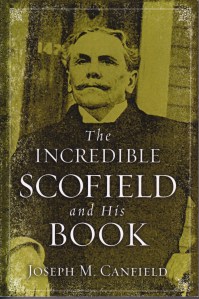
For a man as amazingly influential as he was, Cyrus I. Scofield hasn’t been the object of much curiosity. In the venerable academic tradition of ignoring those you disagree with, serious scholars dismiss Scofield as some kind of evangelical aberration, a theological leper, if you will. It’s difficult to locate book-length treatments of the man, although he may claim considerable credit for the elections of Ronald Reagan, George W. Bush, and the current incumbent. Somewhat skeptical of the obviously polemical The Incredible Scofield and His Book by Joseph M. Canfield, curiosity drove me to read it as an accessible and thoroughly researched account. Now, one evangelical going after another isn’t a pretty sight, but if you can get past the “this is what the Bible really means” oneupmanship, there is clear evidence of a sharp mind with legitimate historical accuracy as its priority in Canfield. This is especially clear where he demonstrates that scholars shown the evidence will choose to ignore it to preserve the sanctity of a man hardly a saint.

The strange religion that has developed from the Scofield Reference Bible has had an astoundingly long reach. If you know what “the Rapture” is, it’s probably because those who took their cues from Scofield’s Bible ensured that it became a standard American trope. It generally doesn’t have to be explained, even though the idea doesn’t occur in the Bible. It’s based on a set of “dispensations” developed among the Plymouth Brethren, a fairly small British and Irish sect that influenced the world through its prophet Scofield. (Scofield himself was not a member of the Brethren, but he learned his system of “history” from them.) Although the Scofield Reference Bible wasn’t technically the first study Bible, it was the first widely influential one. It is, in a sense, America’s Bible.

Scofield himself was hardly clergy material. Canfield documents this clearly and doggedly. Among the evangelicals, however, an admission of guilt—no matter how insincere—has to be taken at face value. If you’re caught “backsliding” after that, all you have to do is admit that too. They’re obligated to forgive you 490 times, if they’re truly literalists. We can see this at work in the bizarre evangelical backing of Trump, a Christian only by the loosest possible definition. If you say you’ve accepted Jesus they have to believe you. It’s the ultimate scam. Scofield himself seems to have been aware of this. Particularly wrenching was the account of how, after he was making a respectable income from his Bible, he refused to give money to one of his daughters from his first marriage when she wanted to buy a house. His will left no money to any charitable organization at all. You can take it with you, apparently. And so, we’re left with a world devised by such a man with no theological training. Since he’s so obviously low brow, however, we lack scholarly biographies that take the care of Canfield in exposing information readily available to those with open eyes.



An Apple a Day

Have you ever bitten into a piece of rotten fruit? I suspect most of us have had the unpleasant experience. From the outside the apple looks fine but that first bite sinks into a brown and corrupt interior that turns your stomach. There’s no rehabilitating it—once fruit’s gone bad it’s bad. Jesus is once said to have said “by their fruits you will know them,” them being the righteous. Over the last several days we’ve watched, not exactly surprised, as the news revealed Attorney General Jeff Sessions lied under oath—what used to be a very serious crime—about consorting with the Russians. The difference between that and the apple I described is that this one didn’t look so good from the outside either. Eve, I think, would’ve chosen a different piece.

The strange thing about this is that evangelical Christians of the sort that voted for Trump should know about the fruits passage. Not the Eve one, the other one. Growing up in a Fundamentalist context I frequently heard about knowing others by their fruits. People are capable of deception, even under oath. That’s why we have a name for it. Thing is, we expect better from those who hold the highest offices in the land. And we’d expect honesty on the part of the evangelical crowd. Once you’ve bitten into that apple there’s no turning back. Ideology trumps theology, it seems. Even the Bible. That’s one of the great mysteries of our time—those who loudly proclaim they live their lives by the Bible count on others not having read it. Kind of embarrassing to be caught with your bias showing. Those whose sins you’re willing to overlook in the name of principle.

As the rogue’s gallery that we now recognize as the presidential cabinet was being nominated, many in this nation suffered shock wave after shock wave of incredulity. Steve Bannon later admitted that their role was to dismantle the agencies they’d inherited—so much for the meek inheriting the earth bit—while power-blinded Republican leaders followed like, well, sheep. The evangelical crowd, ignoring that troublesome leather-bound book they love, refuse to criticize. Who hasn’t forgotten meeting with the Russian Ambassador from time to time? I’m old fashioned enough to believe there’s a difference between biting into an apple that to all appearances is fine and one that’s obviously rotten from the start. In one case you end up disappointed. In the other you get what you deserve.


Beating around the Bush

You know things are bad when another president who couldn’t win the popular vote criticizes you. Don’t get me wrong—criticism is good. In my academic existence (on life-support for over a decade now) I’ve received plenty. The point is you can’t improve if you’re not willing to take a few blows. Defensive academics don’t survive long. The problem seems to be, if I may speculate from my knowledge of biblical studies, the word “criticism.” Growing up, one of the last things I wanted to have was criticism. Already overly self-conscious of my sins, criticism only felt like making an already bad situation even worse. Then I was introduced to biblical criticism.

Biblical criticism sounds like the worst kind, but in reality it’s absolutely necessary. The idea is to study the Good Book rationally. I knew, and still know, many people who believe biblical criticism to be evil. If you trust any history—either secular or divine doesn’t matter—you quickly learn that nothing is simply one-sided. The Bible itself offers examples of this: did God or the Devil tempt David to take a census? Just how many angels were in that tomb on Easter morning and who arrived there first? Only one answer can be right. Criticism is, typical of academics too long out of the sun, a poor word choice. Nobody’s picking on the Bible. All the biblical critic is trying to do is to find out what it really says by asking questions of the text.

IMG_1163

That’s the heart of the matter. Autocrats don’t like questions. The assumption that the inherent authority of a position should be unquestioned undermines any attempt at democracy. As I was often told in church—Christianity isn’t a democracy. Our political system, we’re told, is. That why checks and balances were built into it. Either extreme and the applecart is upset. No matter what believers believe the same applies to biblical studies. Some rampant Harvard toadyism remains, but for the most part we recognize that a scholar with—shall we call them “critical skills”? may emerge from even a school shorn of ivy. We understand that’s how learning works. No one’s above criticism. Only those with something to hide can’t take their lumps like the populace that allow them to claim the name populist. Nobody likes it, but we all have to take criticism from time to time. Even the Good Book.


Celestial Politics

Two things about my childhood: I grew up religious, and I grew up learning you didn’t talk about religion or politics. Now I see that that combination leads to tremendous potential for abuse. Many conservative Christians believe that their faith only ever endorses a Republican candidate, no matter how bad. This is a strange idea and it goes back to some strange people. If I can talk about it.

We live in a cult of celebrity. This is nothing new. People have always admired the individual who could get him or herself noticed. As early as the epic of Gilgamesh, the guy willing to show his bad self managed to capture the public imagination. We’re still reading his story some five millennia later. Of all places this tendency to treat a human being as authoritative should be considered strange is evangelical Christianity. This religion grew out of a largely Calvinistic backdrop where no individual could be assumed to be good. Indeed, total depravity was part of the theological environment. Mix in this stern outlook with the revivalism of the two “great awakenings” and an uncanny alchemy takes place. People, who used to be bad, now found enthusiasm in religion. The first real superstar in the United States was George Whitefield, a preacher. He had a massive following and was, in every sense of the word, a celebrity. This culture became the social substrata of the new nation. Open to all religions, yes, but mostly belonging to this one.

Once American religion became based on popularity, singular figures emerged as defenders of this faith. “Trusted” leaders and authors. Not all of them home-grown either. Names like C. S. Lewis, Dietrich Bonhoeffer, and Francis Schaeffer—not to mention Billy Graham—grew to a status they never had in their lifetimes. Well, Schaeffer and Graham came to be evangelical gurus in their own rights and Graham remains among the living, but Lewis and Bonhoeffer were really adopted by conservatives only after their deaths. The interesting point here is that Lewis and Bonhoeffer often wrote things that directly challenge the easy evangelicalism that accepts them as celebrities. The problem is, we don’t talk about religion any more. We use it for voting, and for feeling good about ourselves. Superior, even. It seems strange to think that Calvinism had some safeguards built in that have been knocked down for the sake of the polls. I can’t imagine John Calvin casting a vote for Donald Trump. But then again, Calvin became a celebrity in his own lifetime, so I might be wrong about that.

calvinjohn


What Rapture

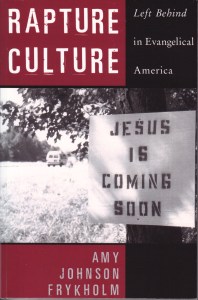
rapturecultureEvangelical culture must be an endlessly fascinating area of study for sociologists. So pervasive that many people who aren’t religious buy into aspects of it, this social movement has shaped American thought in often unexpected ways. Take the rapture, for example. Here is a non-biblical concept, invented in the late nineteenth century and so thoroughly disseminated that most people simply accept it as standard Christian belief. It’s not. Amy Johnson Frykholm pieces part of this puzzle together by focusing on the Left Behind series. Rapture Culture: Left Behind in Evangelical America is one of those books where you find plenty of food for thought as you go along. Not that the novel series itself is profound, but the impact that it has is.

The origins of the rapture go back to a way of thinking called dispensationalist premillennialism. That alone could be why so few people know about it! All this phrase means is that some Christians believe history is divided into distinct periods (dispensations), one of which is the end of the world. Among dispensationalists, there is disagreement on when the rapture will come, and those in the majority believe it will happen before the millennium (not the Y2K millennium, but the millennium of God’s reign on earth before the world ends—the next dispensation). These are the premillennialists. It’s easy to think that since this system is pure mythology it must be simple. It’s not. This is a complex mapping of the future based on an intimate knowledge of obscure verses from the Bible. The Left Behind series, written by Jerry Jenkins under the guidance of the finally departed Timothy LaHaye, brought this idea into mainstream culture. There was even a movie.

Many educated citizens don’t realize that Left Behind has a Harry Potter-like following. Sales of the series are into the millions of units and many of those who read them take them somewhat seriously. Frykholm interviewed such readers to find out what they actually thought about the series and whether it was something they believed in. As might be expected, answers differ considerably on these points. For me one of the real takeaways is that we ignore evangelical culture at our own peril. I learned about the rapture form Chick tracts—I’ve posted about them before—that I read in my childhood. By the time of Left Behind I’d been through enough courses that I knew it was all based on a fictional event. But many don’t realize that. And many of them showed up in the last presidential election.


Can I Get a

Public restrooms have always made me uncomfortable. This has nothing to do with North Carolina. It’s more an issue of being raised to be ashamed of bodily functions and then trying to shift, as it were, in mid-stream. Coming back from the Women’s March on Washington (we have to keep talking about this to give us momentum to move forward) we had an hour layover in Philadelphia. I can’t walk into Philadelphia’s 30th Street Station without thinking of Witness. Indeed, they were announcing the train to Lancaster on our layover. Then I realized coffee before a somewhat long train ride isn’t a great idea. As I headed to the men’s room I remembered what happened there in 1985. After all, with Trump in charge all kinds of carnage can be expected.

img_3158

Witness has a redemptive message. And maybe it’s a parable too. Anabaptists, such as the Amish, take their Bible seriously. Not being conformed to the world, but separating out from it is a kind of Protestant monasticism. Even those who can’t understand their lifestyle choices (so Republican in so many ways) admire their industry and care (so unlike Republicans in so many ways). The problem is, we can’t separate ourselves from the world any longer. We’re all Samuel staring out of that toilet stall. We have seen the truth and we feel vulnerable and violated and unsure of where to turn. When someone’s hurt they reach out to others for help. The others are the world. A community may be self-sufficient, but it shares the planet with aggressive others. You can never truly be alone.

The lifestyle of the mean and corrupt erupts into the calm, peaceful, and contemplative life of those who want to live simply and unmolested. Some mentalities—particularly capitalist ones—see the non-aggressive as chattels. Women, children, men who don’t fight, any minority—these can be exploited for one’s own grandiosity. We’ve seen that already in the regressive and repressive policies an illegally elected president has already started to enact. John Book is not going to come save us this time. We need to take the initiative to protect the way of life we simply wish to lead, without interfering with those who sadly believe money really means something. You and I, my readers, are witnesses. And like witnesses we have the responsibility to make certain that the world knows the truth of what we’ve seen.


Publishing Weakly

Those of you who aren’t professional religionists might not understand the cultural impact of the American Academy of Religion and Society of Biblical Literature annual meeting. Every November a largish city (New York and Los Angeles are too expensive, but many of the other biggies have hosted us) is inundated with religion scholars. Nearly a literal myriad of them. Church attendance spikes, that weekend, as do the takings in the local bars. Restaurants near convention centers are swamped and tips, I expect, aren’t that great. And publishers show up in spades. We tout our recent books, attractively displayed for the book-hungry, and hope the cash rolls in. It’s not a cheap conference to which to send your staff. Books, though, make you think and we have to get our ideas out there.

img_3042

The conference is big enough for the book industry that Publishers Weekly, a standard periodical for the biz, generally has a story about it. Even when people were worried about the election results, we had to get together and discuss what’s God got to do with it. Or so it would seem. In the story by Emma Koonse and Lynn Garrett, it is noted that InterVarsity Press, a stalwart of conservative Christian publishing, has generated its own Trump-like crisis. Owned by InterVarsity Christian Fellowship, the press has been instructed that anyone who disagrees with the parent company’s stance against gay marriage must resign. They hasten to add that this doesn’t apply to their authors. There is such a thing as a double-standard, you know. You need to bring in that money, otherwise you can’t afford to oppress your employees.

The idea behind publishing is that ideas should be—must be—shared. There is an educational imperative. Many IVP readers may be surprised to learn that the Bible says nothing about gay marriage. I’m pretty sure it doesn’t mention Donald Trump either, although reading the account of Balaam I might have to admit being wrong about that. It’s funny what you can make the Bible say when your theology is merely thinly veiled prejudice. Perhaps we should put belief meters on our government houses. Of course, if we did that I’m not sure the national budget could cover the cost of all the lie detectors they’d need to install as well. Publishers, of all people, should be the ones with the most open minds. Unless they find the wallet more compelling than the truth. Let’s just ask Jesus’ wife about that.


Mark of the Beast

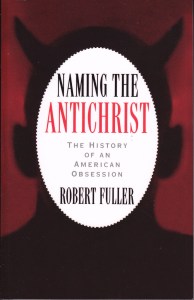
namingantichristI grew up believing in “the Antichrist.” As I came to realize that much of the New Testament pointed to contemporary problems (for them) with the Roman Empire and that what appeared to be predictions were actually safe ways to discuss forbidden topics, I began to worry less. It was about the past, not the future. Recent political events have ratcheted up my anxiety level again—maybe there is such an evil after all. Robert Fuller’s Naming the Antichrist: The History of an American Obsession is an important book in this regard. Although end-time worries have diminished among some now that we’re safely into a new millennium, for the true believer none of that matters. The Antichrist is a great motivator. I hadn’t realized until reading this book just how much of contemporary culture has grown from this fabricated fear.

Let’s get this straight from the beginning. In the Bible there is no figure known as “the Antichrist.” The generalized word antichrist is used only twice and in neither instance is the book in question Revelation. Early Christians speculated that the beast of Revelation might be “the Antichrist” but that identification wasn’t solidified until the beginnings of the Fundamentalist movement in the late 1800s. By the time Fundamentalism was a fully developed system, by about the 1920s, believing in the Antichrist and trying to identify him had become a cottage industry. I grew up in the shadow of Hal Lindsey and the pressing concern that “the Antichrist” was alive in the world today. Face it, The Omen loses something if he isn’t. This strange, non-biblical belief has come to define a large number of true believers.

Fuller’s book is important for the insight he brings into why some “Christians” are avowed enemies of peace, toleration, and the improvement of human conditions. Those who believe their tribe is the only correct one hold the double standard of ethical treatment of those inside and scorn and hatred of those without. This view believes that the world is to be condemned, natural resources used up, wars started, and civil rights suppressed, in the name of Christ. Perhaps you may begin to see why a chill ran down my spine as I was reading this book. We need to try to understand this perverted way of looking at the world in order to understand the forces that would rather see a dictatorial billionaire run the country than an eminently qualified woman. Reason’s got nothing to do with it. It’s all about conviction. Failure to understand that is perhaps the surest way to bring about the end of the world. We ignore religious thought to our own peril.


Love, American Style

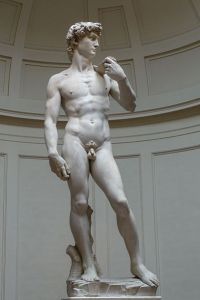
If you’re going to thump the Bible, at least try to read it once in a while! Donald Trump, showing his true colors yet again, degrades women in the crudest terms imaginable and the religious right (what used to be called the Moral Majority) quickly falls in line. Videos swiftly emerged with conservative commentator Sean Hannity saying “King David had 500 concubines, for crying out loud.” Did he? David, I mean. Try to count that high and you’ll run out of fingers. But according to the Bible amorous King David stopped well short of 500. In fact, his affair with Bathsheba almost ruined him politically. And this was in the day when polygamy was supported by the law. I think Mr. Hannity was groping for the story of King Solomon, David’s frisky son. Solomon, famed for his 700 wives and 300 concubines, was underestimated by Hannity by half. And maybe if he’d read to the end of the chapter (come on, it’s only 43 verses) he might’ve stopped to think that the comparison did his candidate no favors.

Back in biblical times things were different. Even a monogamous man might have several wives since childbirth claimed a disproportionate number of young women’s lives. The average fella only lived to be about 40 himself. Lust existed, to be sure, but marriage was a practical affair. For the average citizen, you needed children to help out around the farm where you grew your own food. No golden arches in those days. Attitudes towards women back then were just plain wrong, in any case. The marriages of Solomon were political affairs, not prurient in origin. There are those with Trump signs in their yards that would like to see us return to such days, although they have no idea what such days were like. The consensus is that David had about 8 wives, but who’s counting?

Photo credit: Jörg Bittner Unna, Wikimedia Commons

Photo credit: Jörg Bittner Unna, Wikimedia Commons

Women are more than playthings for men. How have we ever reached the point where someone born in the last century doesn’t know that, and can get to less than a month before the election with that ignorant platform? This should make any American shudder. Make America great again? Treat women as equals. Treat people of color as equals. Treat those of differing sexual orientations as equals. Honor the principles upon which this nation was founded. Don’t just grab someone by the polls. And read your Bible, Mr. Hannity. The point behind King Solomon’s 300 concubines is that he died a sinful, disgraced king in the mere shadow of David. The next time you want to quote the Bible, try reading it first.


Colorful States

red_state_poster

Kevin Smith is one of New Jersey’s own. I’ve always considered it one of life’s great ironies that Loki and Bartleby, the fallen angels in Dogma, move from Wisconsin to New Jersey, the exact same route my career took. (Feel free to read into this.) I was therefore curious when I heard, a few years back now, that Smith had come out with a horror movie. Now I’m not a fan of horror for its own sake as my sensibilities are more towards the ambiguities of gothic, but I finally decided to view Red State. I had no prior idea what the movie was about, but it speaks volumes that the title suggests quite a bit with just a simple adjective and noun. If there’s anyone out there even slower in getting to movies than me, and who is hoping to watch Red State, consider this a spoiler alert. Read further at your own risk.

Red State deals with religious fundamentalists—the Five Points Trinity Church, to be exact. The group is loosely based on the Fred Phelps gang, and the film actually makes reference to Phelps to say that Abin Cooper’s group is even worse. They’re weaponized. You’re probably starting to get the picture already. Cooper’s congregation is his extended family, and they’ve been protesting against homosexuality and other forms of what they consider immorality, but in an extreme way. They lure sinners into one of their sting operations, incapacitate them, and then murder them during church ceremonies. When the Feds discover evidence of a murder, a Waco-like Branch Davidian stand-off occurs with the predictably bloody gun fight that follows. There are moments of humor, but it is a bleak parable—yes, there is a wholesome message here—that speaks loudly about intolerance.

Analysts, well actually just some analysts, have realized that horror movies and religion are very close compatriots indeed. Reading the Bible may be a little easier on the eyes, but even some parts of the Good Book can inspire nightmares. Indeed, as Adin Cooper’s sermon emphasizes, fear of God is very important. As is fear of fear of God. The regression can go back as far as you wish. Religions develop in response to fears. Not only in response to fears, but clearly this is part of the mix. Horror movies show us what we fear the most. Is it any wonder that they cross paths with religion so often? The only unusual aspect for Red State is that it is so explicit about it. It is a traumatizing film in many ways. Maybe because (spoiler alert) the one who concocts the whole religion is alive and well at the end and is the last character that we see. Such are parables.


Behind Left Behind

Now that September’s here, we can begin thinking back over the summer, scratch our heads, and say “huh?” We’ve been so blinded by the Trump that we haven’t had time to reminisce over what’s been happening fundamentally. I mean among the Fundamentalists. This summer Timothy LaHaye went to his reward, followed this week by Phyllis Schlafly. I’m sure they’re basking in an all white, straight, and Protestant Heaven. For those of you unfamiliar with LaHaye’s name, you’ll know his fruits. The Left Behind series was his brainchild and many other aspects of this not-yet-raptured world spun from his squeaky-clean mind. He and Ms. Schlafly spent their lives telling others how to be good. I’m sure their only regret is that they won’t be here to be raptured away so they can see the look on the rest of our faces. No matter, they’ve gone to a better place.

Also this summer Lyle Jeffs, another sort of Fundamentalist, also disappeared. Under arrest for some suspected crime or other, Jeffs escaped from the FBI by worming out of an ankle monitor. His attorney, however, has suggested that Jeffs was raptured instead. Come to think of it, that could explain these other disappearances as well. It’s a regular Bermuda Triangle of Fundamentalists, it seems. The rapture is the ultimate excuse because the Almighty can trump any suit, any hand. Maybe they all just wanted to get off the earth before this fall’s elections. Fundamentalism, it seems, is missing from the political docket this year. Whereas since I’ve been able to vote candidates have been raising issues of concern to the more right-wing contingent, this year the fundies seem to have vanished. Maybe the rapture did occur after all.

teachings_of_jesus_39_of_40-_the_rapture-_one_at_the_mill-_jan_luyken_etching-_bowyer_bible

You see, I’ve read enough of the scenarios to know that those left behind are always confused. They don’t believe in a rapture and the missing people are only part of the problem. Things are going awry (again, look at the politics and differ!). What will life be like in this post-rapture world? How will we survive with our conscience gone? All things considered, it’s going pretty well. Missing the rapture was one of my greatest childhood fears. Like all good Fundamentalists I assumed I wouldn’t be deemed worthy of that first reaping. I’d be left to suffer through tribulation and, hopefully, beyond that salvation might lie. LaHaye and Schlafly got out before the action started. Lyle Jeffs, his lawyer suggests, did too. The FBI found olive oil all over the ankle tag and, perhaps, the signs of a struggle. I’ve watched enough movies to know that when someone is raptured, however, all their clothes are left behind. The only way mortals ever face the Almighty is naked as the day they were born again.


Not Quite Dead

Duria_Antiquior

Extinction is a cause of fear. Having evolved a certain level of self-aware consciousness, we fear becoming the next tyrannosaurus-rex or spinosaurus, or whatever the next top predator turns out to have been. We’re here to stay. So we like to think. Data have been known to interfere with comfort zones, however. Take religion, for example. America has always been a religiously diverse “country,” but many people suppose it has a Christian beginning. Moreover, the historically uninformed suppose that generic Christianity to have been Protestantism (which is not really a single religion) and white (which isn’t really a race). Now, it seems, that white Protestantism is slowly going extinct. An article in the Washington Post by John Sides contains an interview with Robert P. Jones of the Public Religion Research Institute. Jones has written a book about the end of this particular hegemony.

Demographics tell the story. The powerful cultural force of the mainstream Protestant churches hasn’t disappeared, and really isn’t likely to become extinct. It has, however, diminished. As soon as we began to embrace technology this was a more or less inevitable trajectory for the human race. We made oceans smaller and came to see that we’d evolved different religions in different regions. And that Christianity wasn’t quite unique as we’d thought. “Orthodoxy” was actually a form of prejudice for a past that may never have been. We saw the writing on the wall and went on scribbling. Making claims the data don’t support.

One of the drivers—and this is a complex phenomenon—behind this shift has been the ossified positions of religions in the light of increased understanding. For example, most people see no problem with homosexuality. They believe shooting someone because of their race is wrong. Women, they radically suggest, should have the same rights as men. The hold-out positions on these issues have historically been religiously based. Just listen to the rhetoric of televangelists and see if it has changed. Meanwhile, the world moves on. Many religions are holding still. Or racing to see if their diminishing number of feet might make the world spin backwards after all.

Religion is a human invention. Many protect themselves by claiming direct revelation by a God who used to live in a glass ceiling above our heads. Trips to the moon, probes to Mars, and out of our solar system have proven that view false. If the view of something as basic as the universe was wrong, what else might’ve been a mistake? Jones’ new book will no doubt cause some panic. Extinction, at least not imminently, doesn’t seem to be in the cards. Protestantism seems to have reached a stasis. Religion still has an important function in society. When it takes the lead on issues of equality, we may begin to see a miracle.


Simply Complex

What does it mean to be a man? Or a woman? Or intersex? As a society we seem to spend quite a lot of political time thinking about this. We want to regulate something we don’t even understand. An opinion piece by Rabbi Mark Sameth in the New York Times raises this question to a new level. “Is God Transgender?” the title asks. The Bible, which most of the belligerents in this battle claim to follow, doesn’t present as hard and fast a rule on sex as it might seem. As Sameth points out, the language of a number of passages seems “gender confused” and even the gods of olden times could slip from female to male and back. The Ugaritic deity of Athtar could be called Athtart, depending on her or his gender at the time. We human beings prefer our genders to be fixed, but nature doesn’t always agree.

IMG_2578

Not only gender identity, but gender itself occurs on a spectrum. In cases of “ambiguous” gender doctors often make the decision at birth. Gender is assigned, and sometimes made surgically. And lawmakers will use an outdated binary system to assign bathrooms. We make industrial, multi-occupant bathrooms because they’re cheaper. At the same time we raise our children telling them that bathroom use is a private function. Of course, when money’s involved the story changes. We thought we understood what gender was. Like most aspects of life, however, our understanding is only partial. Some species have such complex reproductive techniques that the term “gender” just doesn’t apply. Some species naturally change gender in the course of their lives. Which bathroom should they use? Nature doesn’t support our laws here.

For human beings the experience of gender is no doubt important. More important, it might seem, would be the acceptance of difference. A rainbow doesn’t have sharp divisions of color. Light blurs from one hue to another and we say it’s beautiful. When it comes to sexes we only want two. Black and white. As the rabbi points out, however, nature prefers the rainbow. The acceptance of difference in the face of the evidence would appear to be prudent. But many people read the Bible only on the surface (although even here it’s not as straightforward as it might appear at first). The biblical writers probably thought of gender in binary terms. In those days congenital “defects”—at least those visible to the naked eye—were cruelly set aside as a divine curse. We’re at last learning to see this “curse” as a blessing of diversity. As long as we don’t have to share bathrooms.


Pagan Virtue

We are products of our place of birth. One of the truly amazing things about human culture is how quickly it can evolve. As biologists have noted, populations separated by natural barriers such as mountains, big rivers, or oceans, tend to evolve in different directions. They adapt to their environment. So far the world-wide web hasn’t flattened our differences out completely with a cultural creole, and it may be best to celebrate it while we still can. In an article in The Atlantic, “Why the British Tell Better Children’s Stories,” by Colleen Gillard, answers her titular query with religion. The British, she suggests, are better attuned to their pagan past. In the United States children’s stories tend toward the moralistic, reflecting the Puritan values that some decry as absent from culture. British stories lean toward magic and earthiness in a way that American stories don’t.

Any generalization opens itself for criticism. (Including the generalization I’ve just made, I suppose.) Still, I think Gillard is onto something. Children are magical thinkers and have to be taught not to see what they think they see. We acculturate them into the dull, adult world of making money instead of magic. American kids get started on the entrepreneurial pathway with early moralizing about hard work and attaining goals—just glance at the titles mentioned in the article and see if you can disagree. Christianity arrived in Britain much, much earlier, of course. There it encountered a pagan sensibility that tempered its increasingly harsh edges. Puritanism took the remaining joy from the good news and made it into a very serious belief system, indeed, with eternal consequences that persistently threaten any enjoyment of life. You constantly have to examine and prove yourself. The British allowed their former earthiness to survive, as early epistles to Augustine (not of Hippo) demonstrate.

389px-The_Snake_in_the_Grass_or_Satan_Transform'd_to_an_Angel_of_Light

The article ends by reflecting on recent American dystopian novels for young adults. These, Gillard suggests, reach toward fantasy in a way earlier efforts didn’t. I wonder if a bleak future is the natural consequence of founding a nation under the eye of an ever watchful, and vengeful, deity. Even a Trump may appear righteous with a Pence in his pocket. We’ve got to return to those old Puritan ways of subjecting women to men to make America great again. As this mass insanity continues to grow and infects the internet, dystopian futures appear to be strangely prescient. The C. S. Lewis of real life was not the grinning evangelical that modern-day candy Christians suppose. He knew a faun wasn’t what it seemed.


Ham’s Ark

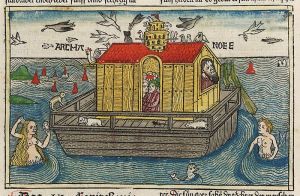
Noah and his ark have been in the news quite a bit over the past several months. A friend recently shared a story on American News X about Ken Ham’s Ark Encounter, soon to open in Kentucky. It may be open already, but I haven’t been down yonder lately. I’m not going to attempt to match the well-deserved snark of Thomas Clay’s article, but I did find the design of Ham’s ark worthy of comment. I’m afraid I’ll have to wait while you check the article since photographs are covered by copyright and, well, I haven’t been down yonder. What first strikes me about Ham’s ark is that it has a rudder (as well as a keel). The Bible does imply that this was the first boat built, but then it also states the plans, like the Bible itself, came directly from God. The Almighty surely understands fluid dynamics, but I was wondering what the rudder was for. Did Noah plan on going someplace? Presumably in his flat world he’d have wanted to just stay afloat over the same place since, to quote another scripture, “there’s no place like home.”

Genesis doesn’t say anything about a rudder. In fact, apart from the inexact measurements in cubits, all we know about the ark are the following features:

•its dimensions (300 cubits by 50 cubits by 50 cubits; RMS Titanic, by comparison, was approximately 548.5 cubits long)
•it had three decks
•it had a door
•it had a window.

The Ham-style ark design is based on that advocated by Sun Pictures some years back as being especially seaworthy. Nobody knows what gopher wood is, but there was plenty of it around since all the plants were considered expendable in the face of a flood that would kill everything. But a rudder?

The biblical ark took its cue, somehow, from the much older tale of Utnapishtim. There are even earlier versions than that in the Gilgamesh Epic, but the parallels between Gilgamesh and Genesis have been known for well over a century now and are pretty remarkable. The original ark, however, was a cube. It had six decks. Now a cube of wood—even gopher wood—would sink like, well, a cube of gopher wood. Such a ship wouldn’t require a rudder to help it find the bottom of the New World Ocean.

Before my academic career took a tumble I was slated to write a book on Noah. Too bad that never happened, what with all the interest these days. A cottage industry in making arks has been launched. As modern-day arks sail, or at least get towed, through the present-day oceans, or are built high on dry ground, we can be glad for a rudder in the prescient mind of the sender of all floods.

Photo credit: Centre for Research Collections University of Edinburgh, via Wikimedia Commons

Photo credit: Centre for Research Collections University of Edinburgh, via Wikimedia Commons