Not Your Father’s Demon

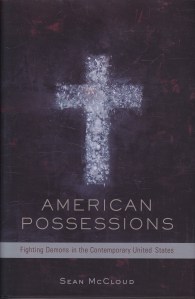
AmericanPossRegan MacNeil is a name that can still send shudders up and down stout spines. Despite advances in CGI and special effects, The Exorcist is consistently rated among the scariest movies of all time. Demon possession, clearly, is a very troubling thing. American Possessions, by Sean McCloud, is not a place to go to find Catholic priests expelling the forces of darkness. Subtitled Fighting Demons in the Contemporary United States, the book, one might suspect, is saying more than it seems to be letting on. This is a book about Third Wave evangelicalism and its demon-fighting manuals. Although the term “Third Wave” may be unfamiliar, the next time you go to a Tea Party you’ll know you’re among them. These born again uber-capitalists believe in a literal demonic world. In fact, demons are so common that Jesus would’ve had a hard time keeping up with their exponential economic growth. These demons are more frightening than those that possessed Regan. The are more akin to a different Reagan.

Especially popular among Pentecostals (the fastest growing form of Christianity) this modern day belief in demons sees them in places Jesus didn’t think to look. Family curses (at places ruled out in the Bible, but still, apparently, possible), addiction, depression, sexual urges—these are all demonic. And once these modern demons are cast out, unlike that of Regan, they can come back. And if they don’t possess you they will oppress you. And they can live in your material goods, your house, and even the land it is built upon. They are everywhere, and they have to be fought against constantly. They also, apparently, vote Republican.

This view of the world, strange as it is to many people with a basic education in science, motivates a large sector of the United States population. Expelling these demons requires a specific view of Christianity—a view that absolutely excludes Catholics. And it is a view that promotes free market economics, blaming the victims of poverty for allowing themselves to be oppressed by demons. Many aspects to this belief system will strike the reader as completely unbelievable, all the more for being so seriously believed. At the same time, we are told, we should pay no attention to religion, at least as educated people. The problem with this is that these true believers vote. And the kingdom they would have come on earth is, in a way they would certainly deny, possessed.

Credit Is Due

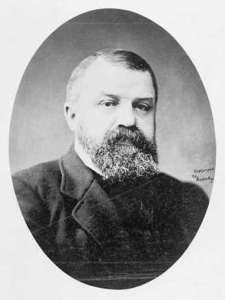
In an article on Nomad by Brandan Robertson, the issue of Larycia Hawkins at Wheaton College is discussed. Hawkins was suspended for stating that Christians and Muslims worship the same God. Robertson’s analysis, in my experience, is right on target. He suggests that when he was a student at Moody Bible Institute he was told that the school was a “discipleship institution” rather than an academic one. This leads Robertson to conclude that the school practices indoctrination rather than education. Although I’ve been saying similar things for years, there is a particular point that stands out here. Institutions like Wheaton and Moody, and others I could easily name, receive the benefits of academic accreditation for non-academic programs. These schools do educate; however, the education is not an academic one. Any faith group that has already declared that it has the final answers has no motivation to promote free inquiry. New information is dangerous, and indeed, is often treated as heretical. Accrediting bodies shrug their shoulders and say, “whatever.”

The purpose of academic accreditation is to ensure that a degree is worth the paper it is (computer) printed on. I could establish myself as an institution of higher education but the reason no one would take me seriously is that I’m not accredited as one. At the same time, schools like Bob Jones and Oral Roberts universities are given the seal of approval while teaching that the standards of higher education as recognized by any non-biased board are wrong. Revelation, not research, has already revealed the truth. And these schools grant degrees that have accreditor’s approval. Some of it is doubtlessly political. Other aspects are more difficult to fathom.

Dwight_Lyman_Moody_c.1900

I’ve known accrediting bodies to visit a campus where faculty and students give intentional and obvious warning signs that the school is not offering what it claims because of some point of doctrine. I have yet to see even a notation to come on a record because of this. And they call it education. Open minds, willing to accept what the evidence indicates, are classified together with those closed to new ideas. Just learn by rote what our favorite spokespersons have said and you’ll get your degree. The nation’s accrediting bodies won’t interfere. If I could only get them to visit my house, I’d start handing out degrees as well. Only to those who pay four year’s tuition, of course.


Factor Fiction

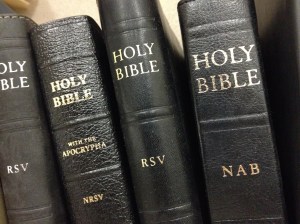
An article on CBS that my wife sent me tells how Costco mistakenly labelled a shipment of Bibles as fiction, setting off a tweet-storm. Some offended, some applauding, a 140-character barrage ensued as Costco apologized. What was the fuss about? As a person who has experience with both fact and fiction, it has become clear to me over the years that these categories are not nearly as sharply defined as they might appear. We make labels to help us categorize a confusing reality. Our brains, nevertheless, easily accept fiction as fact, at least for purposes of getting along in the world. The earth is spinning, right now, at over 1,000 miles per hour. We don’t perceive it, and in fact, it took not a few deaths and apologetic clerics before it was admitted that evidence we don’t feel proved the case. Each day we choose to believe the fiction that we are holding still and the sun goes overhead. Is anybody tweeting about that?

One of the angry bird calls pointed out that Costco (which apparently now has an imprimatur) doesn’t label their Qurans as fiction. How many Christians have read the Rig Veda and not wondered whether its proper label fell on that side of the pricing gun? The matter of fact or fiction is one of opinion. Even those books bearing the label of non-fiction are interpretations of evidence. When it comes down to ultimate truth, where it lies is always a matter of faith. Who buys a Bible at Costco anyway?

IMG_2634

When I was a child and Amazon did not exist, buying a Bible was itself a kind of sacred act. You wouldn’t think of going to Wal-Mart to do such a thing. You went to the Christian bookstore (or, I suppose, if you grew up in a city, a secular bookstore might do). You talked to clerks who knew the differences between versions. The place smelled of leather and velvet. It was a place dedicated to the truth. Costco is a big box store. Buying in bulk implies something. Ironically, those who angrily tweet about the Bible’s label don’t seem to realize that Bible selling is big business. You won’t find much in the way of small publishers’ literature in such a store. Next to your giant cartons of cereal and immense packages of diapers, why not tuck in a Bible as well? When you get home you can tweet about how much money you saved buying eternal salvation in bulk.


As Others Think

As analysts step in where angels fear to tread, we have been given expert opinion on why ISIS’s terror in France was counterproductive to its goals. A few voices have chimed in stating that the result of escalation is just what an apocalyptic group hopes for. Rational people, having no idea how a fundamentalist thinks, are scratching their heads. Long I have wondered why universities and other bastians of higher education haven’t sought the advice of experts. No one can understand fundamentalism who hasn’t experienced it personally. Problem is, most people who have experienced it are experiencing it still. Those of us who thought our way out of fundamentalism are passed over repeatedly for university posts, while those better connected (surely not of fundamentalist stock) are handed influential positions from which to scratch their heads. You want to understand fundamentalists? Ask someone who’s been there.

There is nothing rational, in the common parlance, about fundamentalism. It has, however, its own internal logic. If you believe with every mitochondria in your body that the Bible (or any holy book or doctrine) that you were taught is true, and truly believe it, no amount of reason can convince you otherwise. This is (partially) because the ultimate cause of all events is open to question. Science does not address ultimate causes—it can’t. The endlessly creative human mind, however, can rather simply conjure them. If God is the ultimate ultimate cause, and if God said, x, y, or z, then other interpretations are simply wrong. If God has decided an apocalypse is necessary, what use is reason in the face of the impending certainty? Is there no way out?

There is. Some of us have made it. We, no matter our credentials, are not generally well-connected drones of the middle class. Fundamentalism is prized by the poor. Those who have no future on this earth look for another, better world. This is a perspective I understand very well. Our increase in ease of communication and exploding technology with ease of access have only given new tools to those who think in terms of ultimate causes only. You can’t talk a suicide bomber out of action with reason. You need to know the language of belief. We glory in our lack of belief and rationalism. We, however, close our eyes to the fact that the vast majority of people in the world are believers. And we won’t talk to them because they make us uncomfortable. We have written our own recipe for apocalypse.

From NASA's photo library

From NASA’s photo library


Apocalypse When?

We want to understand what worms through the mind of terrorists, and yet we don’t want to be bothered with religion. For decades universities have been shutting down departments of religion because they don’t make money. Religions aren’t materialistic in that way. In the light of the attacks on Paris over the weekend, many have been turning to the media to learn more about ISIS. A piece in the Atlantic by Graeme Wood, published back in March, pointed out how we have tended to see the movement as political, not religious. Wood, however, demonstrates the apocalyptic intentions of the leaders of ISIS. They are religious. Just because you carry guns and high explosives doesn’t mean you don’t believe.

Apocalyptic thought and politics are a deadly combination. The United States is not immune. Knowing the bent of George W. Bush’s distortion of Christianity, his terms in office were very frightening for many of us. Some Christianities, as well as some Islams, not only anticipate the end of the world but earnestly long for it. Pray for it. In the case of some Fundamentalist Christian sects, world leaders should orchestrate events to force God’s hand in bringing about end times. The fact that we had a president sympathetic to those beliefs should send shudders down anyone’s spine. The idea of an apocalypse is a religious one—there is nothing secular about it. We know the history of the concept, although universities eschew those who look that far back. Zarathustra, also known as Zoroaster, devised a new religion that reflected the basic dualism we all feel: good versus evil. The only way that good could ultimately win in such a worldview was through the complete destruction of evil. And evil wasn’t going down without a fight. This idea influenced Judaism during the Exile, and thus Christianities adopted it. And Islams. No moral relativism here.

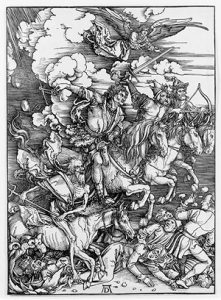
The horsemen close in

The horsemen close in

Religion is not evil. Historically it has attempted to be a moral compass to guide believers toward right over wrong. The fact that any religion faces opposition shoves those weak of mind into an apocalyptic state. Gather the horsemen and try to prod God into action. We don’t see divine activity on any kind of scale that we would recognize. The religious events of the past—the Islamic expansion, the Crusades, the Jewish revolt against Rome—these events are merely political. Those who’ve been conditioned to see God behind human activities, however, view such things very differently. Apocalypses are religious events. No amount of reason will convince a convicted believer to look elsewhere for consolation. Yet we press on with guns and bombs and ignorance of what makes religions tick. And tick they will. No matter how secular we might wish the world to be.


Burden of Democracy

Speaking of revisionist history, I see that I’m negligent on updating my Egyptology. In a year when you need an Excel spreadsheet to keep track of the sheer number of GOP presidential wannabes, I had to ask my wife who Ben Carson was. She sent me a story explaining how the league of presidential dreamers believes that the pyramids were ancient Egyptian grain silos. His reason for believing this has nothing to do with archaeology or with history and everything to do with the Bible. Now, other presidents of too recent memory have had strange biblical beliefs as well. And that raises the intractable question of how you run a democracy with religious freedom. Some people like to claim religious belief is a matter of choice, but that is rarely true. At a young age we are programmed to accept what our parents or guardians tell us is true. Studies of the brain suggest that once wired for concepts of how God works, the circuitry is difficult to displace. In a country where most people can’t tell a Seventh-Day Adventist from an eight-hour clock, they may be surprised that a brain scientist might believe the pyramids were built to biblical specifications.

From WikiCommons

From WikiCommons

The Adventists are a literalist sect. And they are not the only ones who believe the pyramids have something to do with Joseph and the biblical famine that set the stage for the exodus. It is an idea I encountered as a child, and I didn’t even have a denomination to call my own. Religious belief can be, and often is, completely separate from rationality. Some very intelligent people are biblical literalists. The real problem is that the Bible doesn’t mention the pyramids at all, but then most Americans know as much about the Bible as they know about Seventh-Day Adventists. If people actually knew how much incentive George W. Bush had to start Armageddon, the turn of the millennium would have been far more tense than it was. And that’s saying something.

In our democracy, we want freedom of religion, but we don’t want to be bothered with the details of what a religion teaches. Like many, I was shocked by the headlines of a potential president grossly misunderstanding history, but as soon as I learned Carson is an Adventist everything clicked into place. I would suggest that it is a moral responsibility in a democracy to learn something about religion. We like to think we can fudge on that part of the homework. If we want the freedom of having anyone capable of becoming president, we need to learn something about a human being’s deepest motivations. No matter how much reporters and skeptics want to laugh and scorn, religion makes many decisions for by far the largest majority of people on the planet. The thought that a democracy can thrive without learning what truly motivates its leaders, I would suggest, is the most naive position of all.


Camping Out

Garsh-darn-it, I’ve missed the end of the world again! I’ve been so busy lately that I hadn’t bothered to pay attention to that which really matters. So here I find myself in the post-apocalyptic world and still waiting for a bus. Was that all there really was to life? I mean, I just found out that the world was ending on the day of. Couldn’t I get at least 24 hours’ notice? (I wish we’d all been ready?) A group called eBible Fellowship, followers of the late Harold Camping, figured out that his prediction of the end for May 21, 2011 was only the shutting of Heaven’s doors. I’d been wondering where that draft was coming from. According to the Radnor Patch, the actual end of the world, according to eBible’s calculations based on Camping’s spiritual algebra, was yesterday. That could explain a lot.

Apocalyptic groups have often had a problem getting the exact day right. No surprise there, however, since the Bible says even Jesus doesn’t know. Historically, there have been a number of options available to the budding apocalyptist. You can simply go very quiet and hope nobody notices. You can commit mass suicide (not recommended). And others would seem to suggest that you can claim it did happen, but that we just haven’t noticed yet. That was the response of some of Charles Taze Russell’s followers when 1914 saw the continuation of the world, despite a war that has scarred it ever since. Maybe the world has ended many times before. Still, the rest of us still find ourselves too busy to notice.

Here it comes.

Hyakutake, 1996. My first comet.

Apocalypticism is most prominent among those groups that hold to a biblical dating of the world. If it has only been here about 6000 years, then its imminent end seems entirely plausible. Those who take a longer view, more on the order of billions of years, seem a little less worried. That’s not to say that the world couldn’t end. A reasonably sized asteroid could finish it for our species. We wouldn’t need a supernova to do us in. Still, we can learn something from the chiliasts. We can learn that introspection is not a bad thing. We don’t need to hoard weapons, canned goods, and water, but we can stop once in a while and ask if all this insane running around we all do is really worth the effort. Since the world has ended, I’m thinking I might slow down a bit. I’ve got a lot that I still want to accomplish, but given that it’s all over, what’s the rush? I just wonder if they’ll buy this kind of reasoning at work.


Apostle

Apostleposter

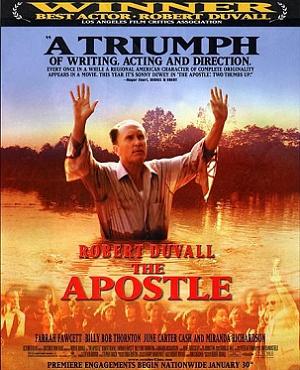
I was teaching in a seminary when Robert Duvall’s The Apostle came out. Seeing the favorable reviews, I put it on my wish-list and somehow it never managed to rise to the top. Perhaps it was because I worked at a religious institution 24/7. Seeing a movie about church felt almost superfluous. Many years on now, my wife bought me the DVD (yes, we’re old-fashioned) and we finally sat down to watch it. I realized, as the preaching started, that I didn’t know what to expect. I assumed that Sonny would be a typical Elmer Gantry-type character, cynical and self-centered, but as I kept waiting for the sneering commentary to come, it never did. The movie didn’t valorize Sonny either—he is a flawed preacher who commits murder out of jealousy and flees the state to start a life elsewhere. Landing in rural Louisiana, he begins building a life doing what he does best—preaching. The local people benefit from his presence, so I was waiting for the cracks to appear, but they never did. The movie is amazingly respectful of Holiness, or Pentecostal religion. It left me quite thoughtful.

Having grown up in a non-denominational setting, the scene of the altar call was one that was familiar to me. Fiery sermons were also something I’d seen before. Theological education, of course, causes one to question much of this, which is why many Fundamentalist churches do not hire seminary graduates to be their clergy. Study tends to refine that ability to let go and have emotion become the substance of the service. Recalling my own childhood, steeped in the Bible and fervent fear of Hell, church was primarily an emotional catharsis for me, not an intellectual enterprise. The problem for me was that I couldn’t stop thinking about it. That’s where it often starts to crumble for those who want to understand emotion-driven religion. It doesn’t mix well with rationality.

The Apostle is made all the more powerful for its use of actual Holiness preachers in the movie. When they’re preaching, they’re not acting. They’re preaching on film. Part of the draw, I suppose, for many viewers is that this is a foreign world. Mainstream church services are often subdued, perhaps even dour, by comparison. They are, however, more rationally driven. The substance of any mainstream liturgy derives in some form from Catholicism. Pentecostalism dismisses all of that, retaining the music and the sermon and the Bible. Otherwise, they are practically different species. The storyline of the movie isn’t anything grand. Preacher commits crime, repents, gets caught. Still, there’s an authenticity to it that makes it compelling. No Jim Jones here. No David Koresh. Just a man, in many ways typical, trying to make his way in the world in the only way he knows how. And that can be inspirational.


Biblical Violence

756px-Winchester_House_910px

Sarah L. Winchester, it is said, was a haunted woman. The widow of William Winchester, she was heir to the tremendous amount of money brought in by sales of the renowned Winchester rifles. Fearing the haunting of all those killed by the weapons, she built what has now become a tourist attraction—an unfinished mansion that was intended to prevent those ghosts from living with her. With the spate of recent multiple shootings, we might wonder how many other gun manufacturers are living haunted nights in their comfortable homes. A recent petition has been circulating to stop Spike’s Tactical from producing The Crusader assault rifle. Predictably, the sales have been so overwhelming that the religious rifle is on backorder.

The Crusader, as the photos reveal, is emblazoned with Psalm 144.1 “Blessed be the Lord my Rock, who trains my hands for war, my fingers for battle.” It also features a Crusader’s cross and trigger setting labeled, Peace, War, and God Wills It. Blasphemy in carbon fiber. I suppose I’m hopelessly naive, not being aware that guns could be purchased online, but the overwhelming demand is nevertheless disheartening. It used to be that the Christians were the good guys. You certainly didn’t have to worry about them shooting you. That was the job of the heathen. So many multiple shootings took place this summer than I couldn’t keep track of them all. I live in a world where guns play no role and I wonder if everyone wouldn’t be happier if we didn’t lay down our arms and learn how to get along.

Of course, the Bible is a book where violence against enemies is permitted, and, in places, even encouraged. Society has repeatedly declared that there is no need for experts trained in how to interpret the Bible, and this is what happens. Psalm 144 is a poem for deliverance from enemies. Historical criticism would likely place the piece as written during a time of war. The era in which the majority of the Bible was written was anything but peaceful. Those parts of the Good Book that are particularly extolled are often those that suggest that the answer to war is peace and that setting aside your own will for the well-being of others is something we should all be doing a bit more often. But we cannot deny that “Peace, War, and God Wills It” aren’t part of the violent worldview we also encounter in sacred writ. I wonder what Mrs. Winchester would have had to say about such mixing of the Bible with guns.


Rainbow Disconnection

The scene can be quite dramatic. A zoom out from a dead or dying Christian martyr as the moving music swells. There’s a sense of poignant heaven in the air as a human being breathes his or her last, lapsing into the hands of an unseen, waiting father. That’s a kind of typical ending to the particular genre of a martyr movie. We’re left feeling sad but somewhat inspired that someone cared so much that they would give up their very life for their belief. I can see the scenes already building as Kim Davis goes to jail for contempt of court. Davis is the Rowan County clerk in Kentucky who refuses to issue marriage licenses to homosexual couples. Although her action violates federal law, she has her conscience for a pillow at night. All she has to do is spend a day in jail before she will become a martyr/cause célèbre for the religious right. I’m sure it’s already started.

Jean-Léon_Gérôme_-_The_Christian_Martyrs'_Last_Prayer_-_Walters_37113

I don’t believe anyone should be made to go against their conscience. I also believe that if you’re an elected official being paid a tax-payer’s salary of $80,000 a year, that you should do your job. I’m sure the case isn’t so simple as all that, but as someone who’s never made anywhere near that much money, I could see myself easily stepping down if asked to do something that I just could not, in good faith, do. Most of us spend our lives compromising a bit here and there when our employment pushes us in directions we feel uncomfortable going. Nobody would consider us spineless for trying to hold onto tenuous jobs in an economy that seems to be endlessly faltering as the wealthy suck up more and more of the free cash. We do what we have to do. Go to confession at the end of the day and live to die another day. The evangelical, however, has a soft spot for martyrs.

Historians tell us that early Christians were probably not killed off as radically as the early records suggest. It seems the numbers might have been exaggerated to make a point. No doubt, many did die, and some in very gruesome ways, but they faced an unspeakable compromise—to deny the creator of the universe and burn in Hell forever. Issuing a license to a couple whose right to marry you question doesn’t seem to fall into the same category. Standing before the great golden throne your defense would easily be, “it was my job. I couldn’t quit because I needed all that money.” If there’s another viable source of income, the argument becomes spurious. I’m sure there are those in Rowan County who feel they’ve got a hero in their jail. The rest of us just get dressed and go to do the job we’re paid to do.


More Blessed to Give

Religions, we are told, are in violent opposition. There’s no denying that sometimes it’s true. It is a sad commentary on belief structures when one way of looking at the world only finds validation in the destruction of other perspectives. Despite all that, religions can, and do, reach beyond their parochial interest to assist others. Recently I mentioned a story in The Christian Century of an Islamic effort to raise funds to rebuild vandalized black churches in the US south. The idea of Muslims helping Christians reestablish their, by nature, heterodox teaching is, I believe, newsworthy. The most recent issue of The Christian Century has a story of a Jewish group in Israel raising funds to help repair a damaged church in the Holy Land. These two stories have made me wonder why we so seldom hear of Christian groups raising funds to help rebuild mosques or synagogues. Surely it must happen, but we, who rely on the mainstream media, so rarely read of Christians helping others that it becomes a surprise when they do. Is this reality or just what we’re taught to see?

Please don’t misunderstand—I’m not suggesting that Christians don’t help others. Indeed, one of the founding principles of the Christian movement was the care of others, be they pagan or orthodox. Still, in my own life I’ve experienced the heartless, cold treatment doled out by “conservative” groups who believe that maintaining their idiosyncratic view is the highest possible mark of faith. Well beyond reaching out a hand to those in need. Far and above the care of fellow human beings. This distortion of any kind of historical Christianity has become what the mainstream media presents as normal. Meanwhile, millions still attend church every week, trying, in some measure, to make the world a better place.

Carnegie-1903

This isn’t the same, all politics aside, as supporting Israel as a nation. Many Fundamentalist groups do. In fact, they insist that our national budget include aid for Israel. Not because they particularly care about the Jews. In some viewpoints, the end of the world cannot come without Israel regaining a status that some read into obscure Gospel passages and the book of Revelation. This is not the same as donating to rebuild a torched synagogue. It is worlds away from restoring a vandalized mosque. It is naive to suppose that there is one normative Christianity. Historians inform us that such a monolithic entity never has existed. Temples, synagogues, churches, mosques—these are all expressions of the deepest of human longings to find and be in communion with that which is beyond the everyday. Any religion can become radicalized. All, however, also have the potential to look beyond themselves. When they do it is newsworthy indeed.


Social Media and Persia

A story appeared on the BBC recently about “sin free Facebook.” The website, which started in Brazil, is based on the idea that users don’t like having swear words and violence among their friends. According to the story some 600 words are banned from use, making me think that I’m seriously behind the times. With an “amen” button and a keyword of “bless” Facegloria has been growing dramatically. Some 100,000 friends are now on board. Of course, the concept of friends in a religious conceptual context goes back to the Quakers, but they tended not to use computers, if I remember my history correctly. The odd thing, to me, is that on social media you get to select your friends already. If you don’t like what they post, why are you friends?

Sin is going through a resurgence of academic interest these days. One of the features that emerges from all this exploration is that sin is not as clearly defined as we might think it is. Wrong and right. White and black. Things in their proper order. In the biblical world the word “sin” seemed to mean missing what you’d aimed at. From there it grew to cover all kinds of infractions. Today most people think of sin in sexual terms—those things you aren’t allowed to do. Ironically we call other things phrases like “hate crimes” rather than “hate sins.” And crime is supposed to make it worse, since sin is often not illegal. Or if it is illegal, it’s not often brought to the law.

800px-Forbidden_fruit

I have a Facebook account, but I have to confess to not looking at it much. My days are busy and although the marketing departments of publishers use Facebook, those of us with editorial roles are seldom encouraged to spend time on it when we could be doing something more valuable. I arrive home so late I don’t even check my email before bed. I guess I haven’t had the time to notice the sin on Facebook. Yes, a few of my friends use what Spock might term “colorful metaphors,” but I seldom feel the need for confession after reading a post or two. My friends, like me, are fallible and many of them are in less-than-ideal circumstances. I really don’t think social media with further restraints would help the situation. Of course, I could use an “amen” button on this blog, I suppose. I think I’d rather have it read “verily,” though.


For the Sake of Fighting

Different opinions can be used for discussion or destruction. In the formal context of government, the declaration of war is—or should be—an option of last resort. Increasingly language of belligerence is status quo ante when religion is the topic. “Culture Wars” is a thinly veiled reference to the profound disagreement between social conservatism, associated with Evangelical Christianity, and progressive policies, often affiliated with nones and mainline Christian traditions that don’t wish to be left behind. For years, decades, no one side can declare victory, for example, in the debate over whether America was founded as a Christian nation. Two news stories I saw this past week addressed just that question. Fox News ran a story about a Baptist Church in Shelby, North Carolina, that has decided to fly the Christian flag over the stars and bars until, well, I guess the Second Coming. Protesting the legalization of gay marriage, the congregation wants the message, aided by Fox News, to spread that in at least this corner of the country, God comes first.

The other story, on CNN, asks the question directly: “Was American Founded as a Christian Nation?” With five professors answering the question there’s bound to be differing opinions but all agree that this isn’t a simple yes or no answer. The even larger question, it seems, is how can the founders’ religious orientations help us to avoid cultural wars? Isn’t the fact that we’re still searching historical documentation over two centuries later an answer in itself? Maybe they didn’t tell us directly because it was none of our business. Washington, Franklin, and Jefferson are quoted on both sides of the debate. Their cultural context was Christian, but as all the five scholars agree, the question didn’t become a live one until the nineteenth century. Seems that we got along a century without knowing.

The “Culture Wars” may have been there, of course, but the need for a term only arose in the late 1980’s and early ’90’s. The divide had been simmering since the end of the ’50’s, however. Leave it to Beaver versus Star Trek: the Next Generation. The media has never been shy about telling us what to think. Difference of opinion is as natural as a pre-frontal cortex. Peaceful coexistence, however, doesn’t sell newspaper or commercial airtime or space. We want the thrill of danger, the chance to declare that, unlike the adversary, we are clearly in the right. Maybe if we changed the metaphor the rhetoric might catch up. In the meanwhile, battle comes to mind. Ironically, the Bible is a place that suggests peaceful solutions to many disagreements, but neither side thinks to look there for guidance.

438px-Husité_-_Jenský_kodex


Ever on a Monday

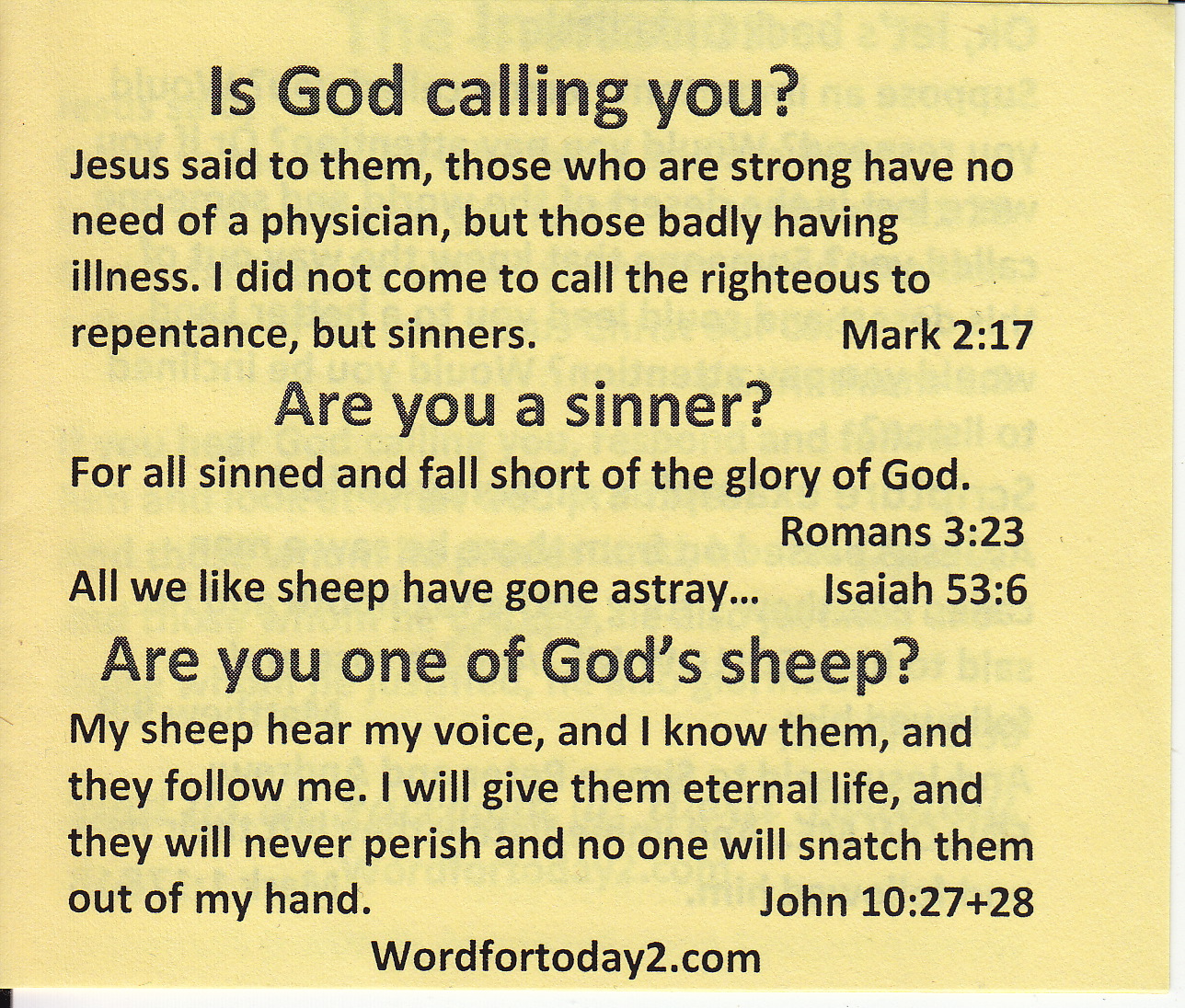
No matter how early you go to bed on Sunday night, Monday morning comes too early.  The only thing that makes my long, penitential commute survivable is the book that will take me away for an hour or more on the way to the city.  At the Port Authority Bus Terminal it’s pretty obvious that people are in no hurry to get to work as they shuffle along at a speed that says, “I’m taking the subway, so why rush?”  The subway doesn’t go near where I’m headed and it is a small hike in the concrete forest.  Actually, parts of Midtown smell more like a zoo on a Monday morning.  I try to get through as quickly as possible.  So when I guy steps in front of me I try to dodge around to catch the light across 8th Avenue.  He doesn’t move, but hands me a slip of paper and recites, “I believe in Jesus Christ.”  First thing on a Monday morning.  He got out of bed to tell frustrated commuters his personal credo.  I stuff the yellow paper in my pocket and try to avoid kamikaze taxis all the way across town.

Word4Today_0002
 
I’m always curious about those who brave the crowds of New Babylon with the news that they have the truth. I pull the paper from my pocket.  I decided to check out the website on the cheap tract.  It seems that the Church of Bible Understanding (it seemed to be all in small caps) has formed a splinter group and is wondering why, despite the grace of God, it isn’t growing like in New Testament times.  I did notice that I was visitor 2429, according to their web counter.  There seemed to be a lot of complicated history to wade through and this was a Monday morning, after all.  The main point seems to be that you don’t need all this churchy stuff, but just belief in Jesus.  Over this, it seems, churches split.
 
I have to wonder about the constantly splintering composition of the Christian tradition.  Recent scholarship suggests that there was no unity at the very beginning.  According to the Bible even Peter and Paul didn’t always agree.  Although there may have been a very roughly unified church under Constantine, the outer-lying reaches started developing ideas that didn’t always sit well with Rome.  And this was well before the Reformation.  Since Luther’s theses, the number seems to have grown exponentially.  Well, maybe not exponentially, but I am concerned for the spiritual well being of my fellow hive animals on this island made of schist.  It might be easier, though, if we agreed to disagree.  Nobody has the truth that will convince all others.  And for evangelization purposes, getting in somebody’s way on a Monday morning may not be the best proselytizing technique.


God, As a Hobby

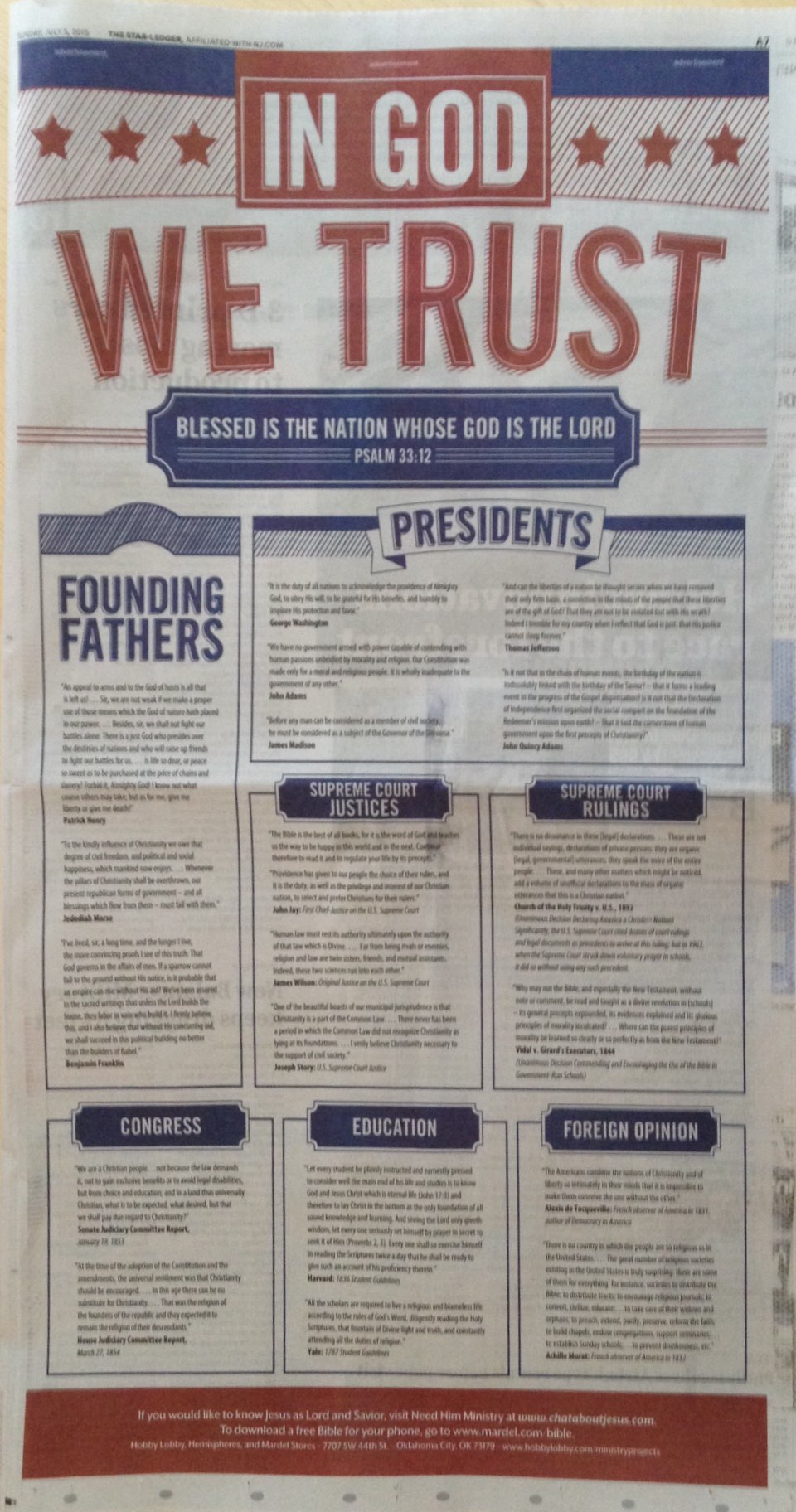
Just as I was awaking from a night of loud fireworks and multicultural bonhomie, my wife showed me a full-page ad in the New Jersey Star-Ledger. A red, white, and blue page entitled “In God We Trust,” the ad wants nothing more than to convert the nation to conservative Christianity. It is sponsored by Hobby Lobby after all. Dividing the quotes that spangle the page into “Founding Fathers,” “Presidents,” “Supreme Court Justices,” “Supreme Court Rulings,” “Congress,” “Education,” and “Foreign Opinion,” prooftexted quotes are given inadvertently showing by their grasping nature that America is a godly country. The Hobby Lobby is not known for its critical reading of either Scripture or history. George Washington, Thomas Jefferson, and Benjamin Franklin, Deists all, are quoted at the height of their rhetoric, making it seem as if they were evangelicals out to build a Christian nation.

new doc 10_1

When I was growing up, there were no Hobby Lobby stores in my area. Although I was a religious child, I would have found it a bit odd that hobbyists were not focusing all their attention on the weighty matter of eternity. Instead, making money seems to be the name of the game, and once you’re comfortably over-compensated the Lobby part of the name comes to play and God reenters the picture. We all know that the Hobbyists wish to have the Bible right next to the capital, if they can’t get it prominently placed in the Oval Office. Policy (the ad cites all three branches of government, as well as education) should be based on the Bible, although we think of ourselves as a land of opportunity. Opportunity for whom?

Starting with a quote ripped from the context of Psalm 33 (“blessed is the nation whose God is the Lord”), the ad doesn’t exegete this at all. Nationalism as we know it did not exist when this Psalm was penned. The author had what would become Judaism in mind, not evangelical Christianity. But then, appropriation of other peoples’ pasts is kind of a hobby. Pick and choose. Take what you find attractive and leave the rest behind. It works for history as well as for the Bible. After all, it doesn’t take historical probity to lobby the government. All that’s required is a surfeit of money. And the best way to achieve that, it seems, is to take up a hobby rather than trying to think through the issues with a mind honed by a solid education in Bible and history.