The Afterthought

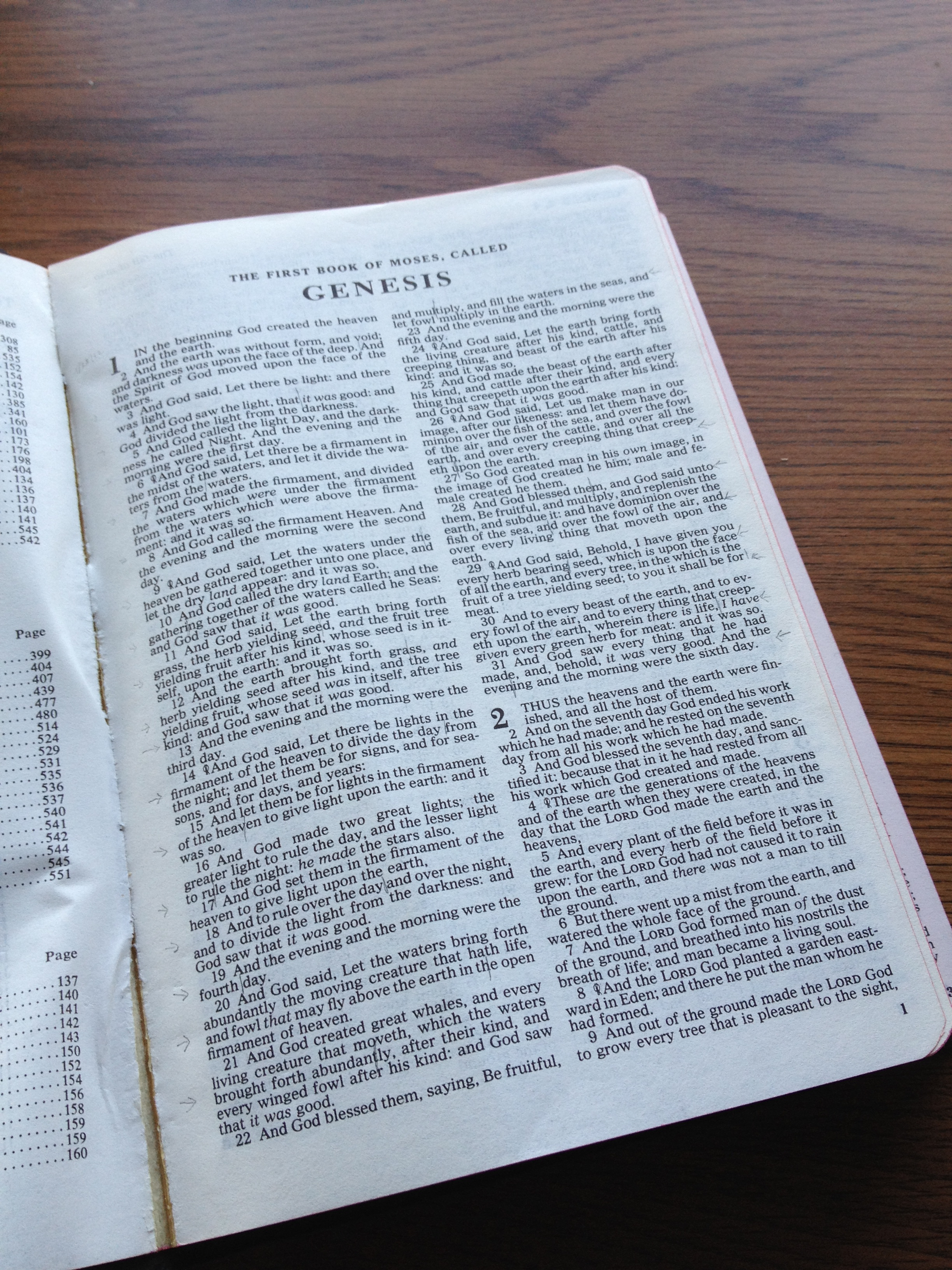
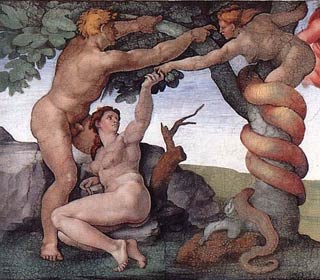
This week I finished Genesis 2 on my venture to tweet the Bible, and even before reaching the famous snake scene in Genesis 3, I blushed. Not in a good way. Reading each word of the text in King James English (ironically, technically Elizabethan English), it becomes clear just how androcentric the text is. As a reader with sensitivity to historical eras, it is important not to judge the past by present standards. Nevertheless, it is difficult not to be offended at the assumed male primacy that had begun to be dismantled, only to be propped up again by sacred writ. As soon as people began to realize that sexual dimorphism did not equate to sexual dominance, the Bible came into the hands of the laity and there, beginning in Genesis 2, became the prooftext that women were made for men. Note: “for Adam there was not found an help meet for him. And the Lord God caused a deep sleep to fall upon Adam, and he slept: and he took one of his ribs, and closed up the flesh instead thereof; And the rib, which the Lord God had taken from man, made he a woman, and brought her unto the man. And Adam said, This is now bone of my bones, and flesh of my flesh: she shall be called Woman, because she was taken out of Man.”
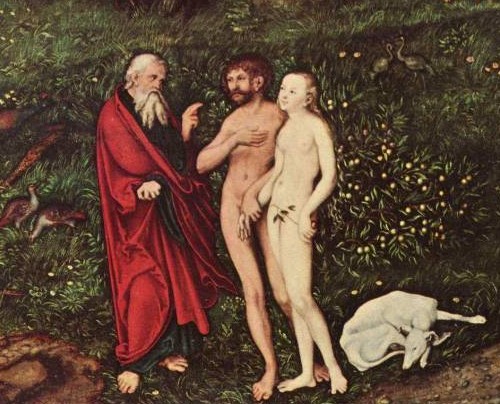
One of these things is not like the others...

This passage is, of course, very familiar. Too familiar. Accompanying the ready availability of the Bible was the concept of divine writing. To a society of chamber pots and horse manure in the streets, the idea that God could write a book was sensible enough. The problem is, as our sophistication grew, our biblical sense couldn’t keep pace. Centuries later with probes soaring beyond our solar system, rovers on the moon, and space stations circling the planet, we still believe God wrote a book. And since God is male, the man’s point of view is normative. Of course, no one knows the reason for the story of Adam’s rib, but there is no doubt that ancient society, at least in this instance, was hopelessly patriarchal. It is society that determined which words would be considered sacred. The tale they chose matched their worldview.

The problem is that worldview gave an excuse to a patriarchal tour de force that has lasted for dozens of generations leaving women in their biblically predetermined place. There may be no sin as insidious as literalism. Those who cling to the King James do so only with special pleading, for anyone who has studied Hebrew (or any foreign language) knows that translation is an inexact science. Even Genesis 1 with man and woman created the same day, both in the image of God, still lists man first. Ironically the literalists miss the humor of a God who thinks man will be satisfied with the animals. Presumably all the animals were guys at this point, although the Bible literally doesn’t say. No religion that claims victims has the right to declare itself universally true.
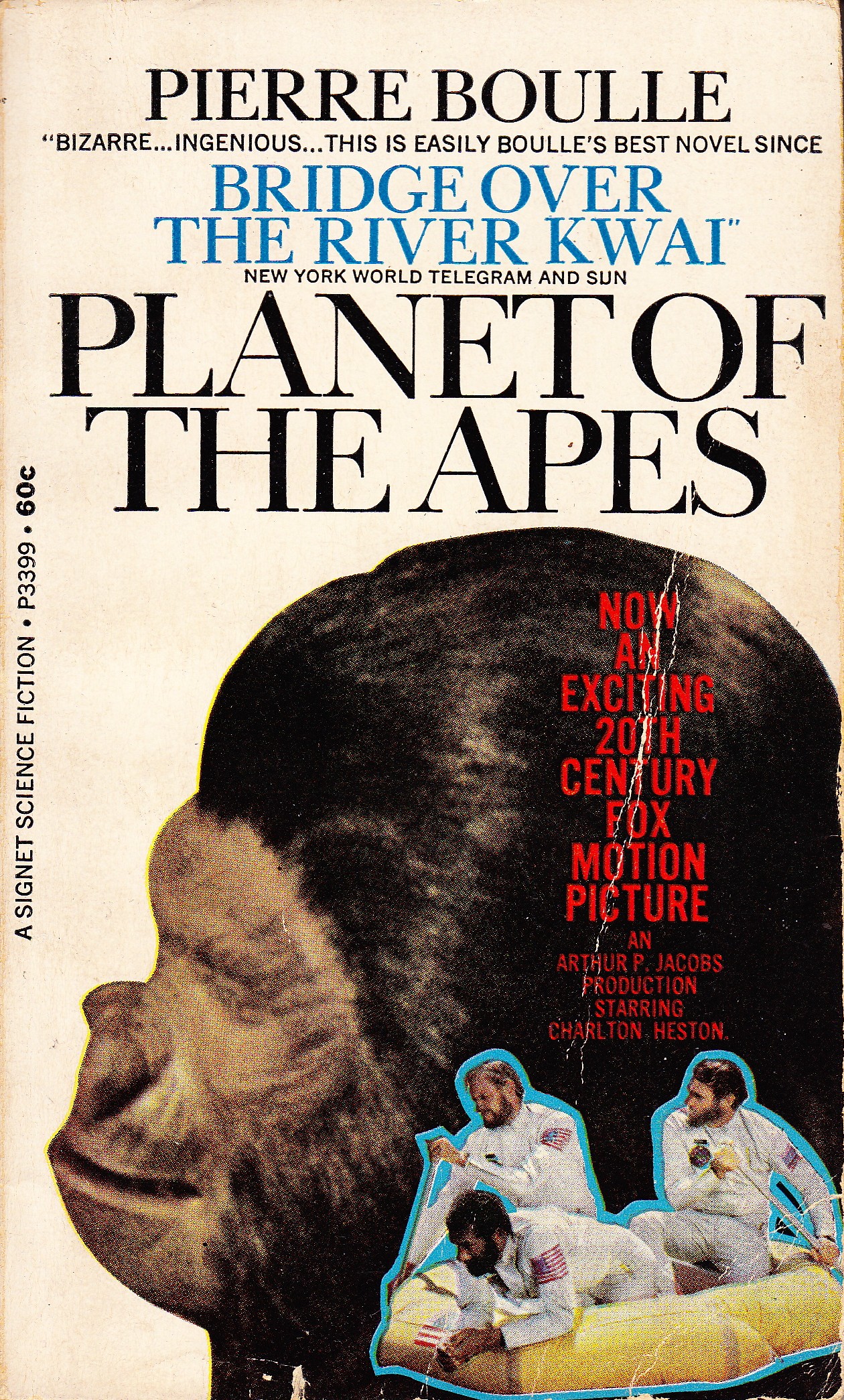

Sh*t Apes Say

Knowing from experience that when I stay alone in a hotel, despite my best intentions, I will get bored and end up watching Mudcats or Dual Survival until my brain feels like a boiled egg, I anticipated my trip to California. I packed Planet of the Apes, the original and best of the lot, hoping for some intellectual stimulation. Having grown up in an anti-evolution household, we were curiously allowed to watch Planet of the Apes, a kind of forbidden zone of the mind. It remains one of my favorite movies of all time. It is also a manifesto of science besieged by religion. Note what Dr. Zaius says, “There is no contradiction between faith and science… true science!” And he is the Minister of Science, and Chief Defender of the Faith. The trial of George Taylor, a thinly disguised parody of the Scopes Trial, has Honorious (read William Jennings Bryan) stating, “It is based on our first article of faith: that the almighty created the ape in his image, that he gave him a soul and a mind, the he set him apart from the beasts of the jungle and made him lord of the planet,” and turning on his fellow apes Zira and Cornelius, he accuses them of being “perverted scientists who advance an insidious theory called evolution!”

Dr. Zira, as one of these “perverted scientists,” asks Cornelius (incidentally, the name of the first non-Jewish Christian, according to Acts), “How can scientific truth be heresy?” This is echoed by Dr. Zaius in the trial where he states, “It is scientific heresy that is being tried here.” Indeed, the entire simian culture is based on the blurring and blending of science and religion. Throughout the film various characters make barbed statements about the human propensity to ignore the obvious. Landon, challenging Taylor about the time change they experienced in space, says—in a line that could come straight from Answers in Genesis—“Prove it! It’s still just a theory.” The exact rhetoric currently used by creationists in school board meetings around the country. To which the most apt reply seems to come from Dr. Zaius, speaking of humanity: “his wisdom must walk hand-in-hand with his idiocy.”

Occasionally even the gun-toting humans get the picture clear. In his opening monologue George Taylor wonders about the world seven hundred years from now, “Space is boundless. It squashes a man’s ego. I feel lonely. That’s about it. Tell me, though. Does man, that marvel of the universe, that glorious paradox who sent me to the stars, still make war against his brother? Keep his neighbor’s children starving?” This seems to be the true measure of heresy—a religion that puts fellow humans on the same level as animals (and even animals deserve far more credit than we are willing to give). Among my favorite lines is Cornelius’ response to Taylor shaving his beard; “Somehow it makes you look less intelligent,” he opines. Endlessly remade, Planet of the Apes is a movie that still answers some of the issues that plague our society nearly half a century later. Perhaps the last line should go to the apes, adjusted of course, for gender sensitivity, “[hu]man[ity] has no understanding.” Well said, Dr. Zaius, well said.

A piece of childhood


Tortured Gospel

Tornadoes? I don't see any tornadoes.

It is a little difficult to force yourself to think of tornadoes when you’re in sunny California. On my flight into Santa Barbara I could see the tail end of the gray whale migration from a few thousand feet in the air. Outside the tiny municipal airport (with its full-body scanner) I see palm trees swaying in the wind. The air smells like flowers. Life is too easy in California for me ever to live here. I need more angst in my diet. I can’t come to the sunny coast, however, without the Eagle’s “Hotel California” replaying endlessly in my head. It was the running joke at Nashotah House that the real Hotel California was located in the woods just outside Delafield, Wisconsin. The haunting lyrics by Don Felder, Don Henley, and Glenn Frey managed to capture the witch’s brew of mind control, humiliation, and desire that laced that little, gothic seminary in the woods. Yet even sitting in California with its full greenery in March, I see that Pat Robertson is blaming the devastation of the recent tornadoes on lack of prayer.

Blaming the victim is a classic fascist technique, and it is very easy to proclaim one’s own righteousness when not in harm’s way. Herein lies the darkest sin of the self-justified; they think themselves specially blessed and therefore not responsible to help the victims. While flying over the Santa Ynez Mountains, seeing the smoke from California wildfires climbing like the terminal flames of Babylon, I could hear a voice like a choir of fascists singing, “Alleluia And her smoke rose up for ever and ever.” Schadenfreude fuels too much of the evangelical worldview. According the Gospel writers, when Jesus foresaw the destruction of Jerusalem, he wept. WWJD, Rev. Robertson?

Tornadoes look so much like divine judgment that it is almost understandable how a naïve believer might see them as coming from God. We, however, are the gods destroying our own planet with the accompanying degradation of the weather. Neo-cons deny the fact of global warming. It is not a myth or a theory, there is inconvertible proof that it is happening. Still, it is more convenient to blame God. After all, chances of him showing up to deny false charges, as history repeatedly shows, are very slim. Ask any innocent woman tied to a stake in Medieval Europe accused of being a witch. Apparently the divine calendar is too full to worry about the troubles of hundreds of thousands, or even a few millions who are falsely accused. Why not send some terror from the sky? It is hard to think of such things in sunny California. Yet as the “good news” of the televangelists spreads to the ends of the earth, even those forever in the sun will need to stand in judgment before a very capricious deity.


Watch Your Tower

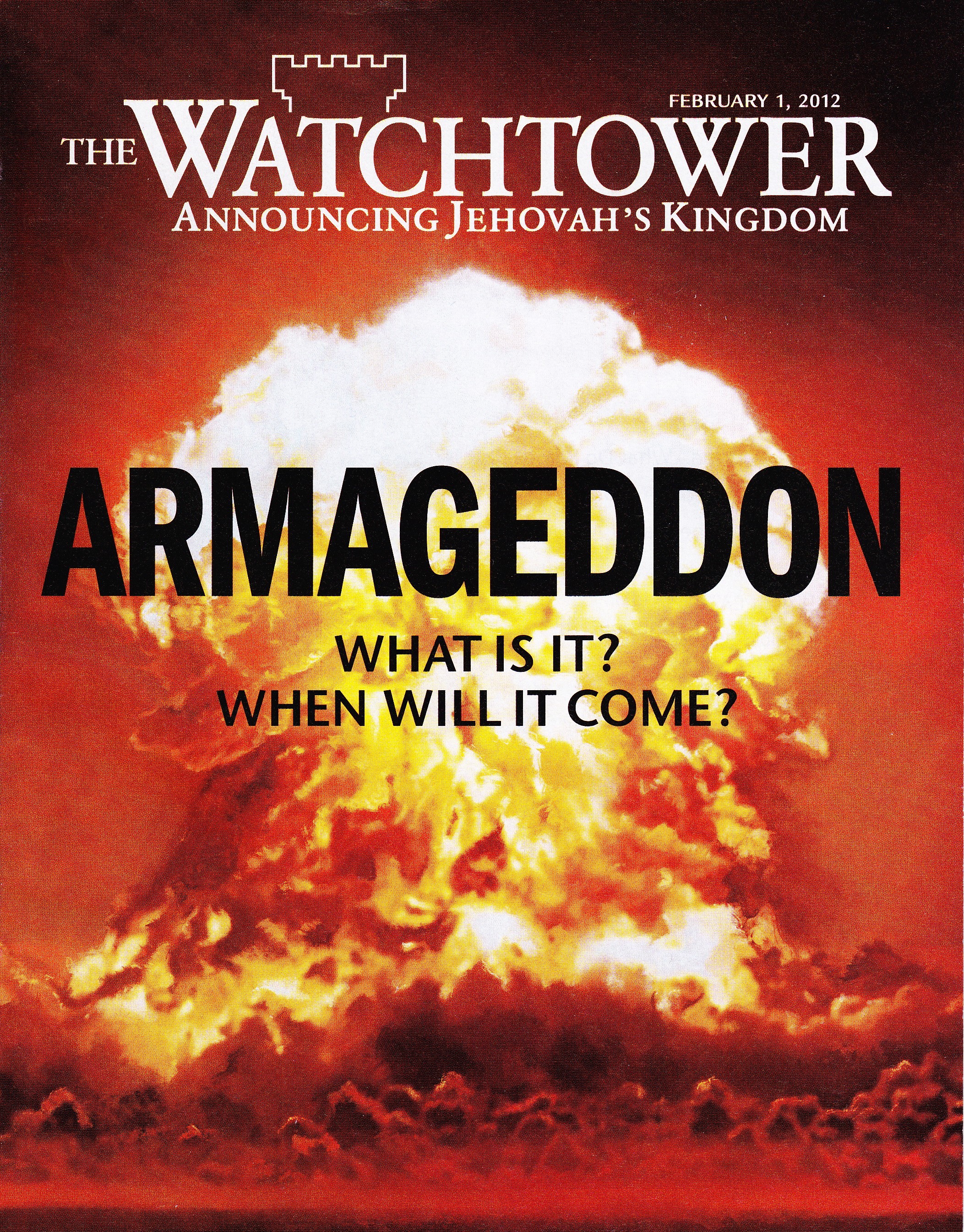
So when the smoke clears from another leap day barely survived, and my Apocalypse calendar tells me about the looming end of all things, and the Jehovah’s Witnesses stop by and leave a Watchtower with the headline “Armageddon” at my door, I start to get a little paranoid. Did I miss the memo on this? I tend to be suspicious of any religion that is less than 150 years old—call me a historical snob in that respect. By the time of the nineteenth century of the Common Era, we were getting industrialization, evolution, and the Whig party sorted out. It was hardly a propitious time to be starting new religions. Well, I was curious about Armageddon, so I read a bit of the Watchtower in any case. It goes best with salt.

“The original Hebrew word Har-Magedon literally means, ‘Mountain of Megiddo.’ Although no such literal mountain existed, a place known as Megiddo does exist.” So I learned. But there was a mountain at Megiddo. Literally. I’ve been there. It’s not an impressive mountain like the Front Range of the Rockies, but it is sufficient for the purposes of the Bible. Megiddo overlooks the broad plain of the Jezreel Valley. In ancient times such valleys were highly valued for fighting because of a basic engineering difficulty with chariots: they don’t work well on hills. Chariots have open backs, so falling out would hamper effective up-hill battles (literal ones), and your chariot bumping into your horses or chasing them downhill would have resulted when the fighting was done. Or when you were fleeing. Valleys like Jezreel were perfect for fighting. And Megiddo has a front-row seat on its little mountain. The site of Megiddo has been excavated by archaeologists and is well worth the time it takes to get there.

By coincidence (or is it?) my apocalypse wall calendar begins March by saying, “Make Archaeology Your Friend.” Hmm, is there a message somewhere in here? When the Jehovah’s Witnesses and the Mayan interpreters agree, should we not at least admit a little doubt? I don’t think so. Both traditions, as certain of special revelation as they may be, are human attempts to make sense of our world. We know of nothing that doesn’t end. The great Eastern religions seem to have caught on more readily to the idea of impermanence than Western cultures have, but they all share this in common—it’s gotta end sometime. I would, however, point out to Mr. Santorum, as he begins to think about his concession speech, that the Jehovah’s Witnesses seem to agree with the amateur Catholic on the part about Satan. My Watchtower says “Satan will marshal the nations for an assault on those who worship Jehovah God.” Perhaps politicians should stick to following the Mayans.


Theomockracy

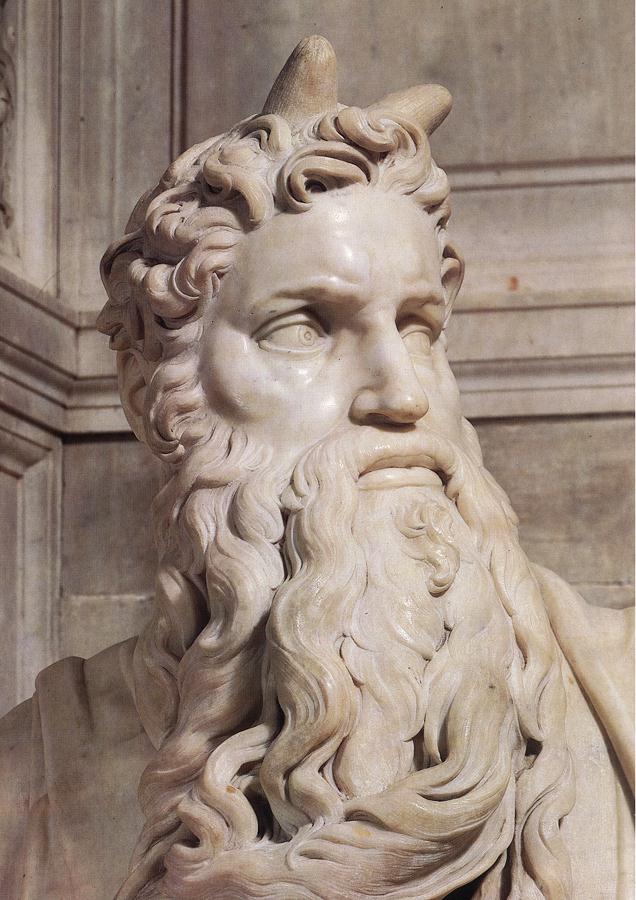
“From Santorum to Graham, the ferociously religious are doing religion no favors at the moment, and it’s beginning to feel as though we may need to save faith from the extreme pronouncements of the faithful,” so writes Jon Meacham in this week’s issue of Time. Theocracy is a scary word. It didn’t work in ancient Israel, and it is difficult to believe that our society is morally more advanced than things were back then. I mean, they had Moses looking over their shoulders, and Amos, Isaiah, Micah, and Jeremiah to point out each misstep. We have Santorum, Bachmann, Palin, and Gingrich. This playing field would be an abattoir, and I have no doubts that the true prophets would be the only ones left standing should it come to blows. The odd thing is, the ancient Israelites, evolving into the Jewish faith, came to recognize that maybe they misunderstood some of what their stellar, if mythic, founders were saying. Rule by God is great in theory, but in practice it leaves a nation hungry.

It is difficult to assess the sincerity of modern day theocrats. We know that politicians are seldom literate or coherent enough to write their own speeches, and we know that they tell their would-be constituents what they want to hear. It shouldn’t surprise us that they belch forth juvenile pietism and call it God’s will, for we have taught them that elections are won that way. My real fear is that one of them might mean what they say. Could our nation actually survive even half a term with a true theocrat at the helm? W may have played that role, but there was a Cheney pulling the strings behind the curtain. Some guys like the God-talk, others prefer to shoot their friends in the faces. Either way it’s politics.

I take Meacham’s point. In all this posturing and pretending, the would-be theocrats are making a mockery of what the honestly religious take very seriously. If they want to get right with God there are conventional channels to do so. The White House is not one of them. They swear to uphold the ideals of the Constitution that, with considerable foresight, protects us from theocracy. The history they prefer, however, is revisionist and their constitution begins with “In the beginning God created the heavens and the earth.” Their use of the Bible offends those who take the document seriously. Theocracies have never worked in the entire history of the world. Those who ascribe to mythology as the basis for sound government should add Thor, Quetalcoatl, and Baal to their cabinet and pray for a miracle.

The implacable face of politics


Hidden in Plain Sight

I have been tweeting the Bible for nearly a month now, and tomorrow—the thirtieth tweet—will see the end of Genesis 1 and the first words of Genesis 2. One of the occupational hazards of having been a biblical scholar for many years is the constant rereading of the same text over and over. I couldn’t even guess how many times I’ve read Genesis 1, in numerous languages, trying to find a key to unlock what is going on there. It is definitely not science—for that it would have had to have been written after science had been invented. Religion and science share that feature: they are human endeavors to understand the matrix in which we find ourselves. Anyone who is truly honest will admit to not being able to trust her- or himself all the time. We have all been betrayed by our convictions now and again. In this day of arrogant religious leaders and arrogant scientists we have little hope of coming to an armistice. Those who claim a special position for the Bible really couldn’t handle the truth in any case.

My twitter verse for today reads, “I have given every green herb for meat: and it was so. And God saw every thing that he had made, and, behold, it was very good. And the even”. Sense units in any text are where we, the readers, draw the limits. Taking this bit as a cue (indeed, the whole of Genesis 1 supports this), God intends humans to be vegetarians. The predatory gleam in the eyes of our religious politicians and televangelists belie their convictions given in public forums. The first rule God instates, after informing our primordial couple to have lots and lots of sex, is not to harm other creatures. At least the sex part seems to have gotten through, although many branches of Christianity repudiate it. The harm part we have received with ambivalence.

In a related development, an op-ed piece in yesterday’s newspaper gives instructions for properly disposing a worn-out Quran. While Christianity has no uniform opinion about where an old Bible goes to die, I find in this question a snapshot of the contradictions inherent in holy writ. We treat certain texts as sacred, and yet, is not the human expression in written form itself some kind of sacred act? Book-burning, no matter the book, strikes deeply at a visceral level those who’ve ever tried to reduce their ideas to what might be replicated on a page. It is our highest human achievement. All texts are sacred. Some may be misguided, and others are blatantly wrong—perhaps even evil—but they are the essence of a human endeavor. Perhaps this is the key I have been seeking all along.

Let there be light


Genesis Too

My Twitter Bible verse yesterday landed on a passage that has been routinely ignored by the church in favor of a different mythic construct in Genesis 2. Assuming the Bible to have been written by a human-like god, the natural expectation is that the manuscript would have been checked for inconsistencies before being sent to the publishers. Any close reading of the Bible, however, reveals a number of contradictions that have crept into holy writ through what seems to be poor editing. The verse to which I’m referring is Genesis 1.27, “So God created man in his own image, in the image of God created he him; male and female created he them.” Readers and commentators have endlessly remarked upon the tripartite structure equating deity-male-female in this passage. This single verse, however, is soon forgot once the need to harmonize with Genesis 2 sets in. There man is given utter primacy and woman comes almost as an afterthought, even after the animals. That is the version fundamentalists consider inspired.

Readings of scripture are done only with the pre-decided outlook of the believer. We do this all the time, unconsciously, when we read. We approach texts with expectations, outlooks, and assumptions firmly in place. When dissonant notes sound, we try to harmonize. We’ve got a whole chapter stating that man was god’s first thought, and woman only comes later. We have only a single verse stating their equality. Before Paul and company distorted the story of Eden into a “fall” narrative—note the words “fall” and “sin” occur nowhere in the account of Eve and Adam—some ancient readers toyed with the idea that maybe the first human was actually intersexed (or hermaphroditic) and the word translated “rib” meant “side.” Genesis 2, in this reading, understood women and men to be equal and of the same creative moment of God.

Some in the early church, however, valued doctrine over equality. Afraid that heterodox teaching might win out—we know there were many early Christianities, not a uniform body only latterly split apart—what came to be orthodoxy rallied around Paul and his fallen humanity with man first and woman second. And thus it has stayed in the sand castles of power for two millennia. Setting aside the unreliable narrator, our present sensibilities for reading are generally to take the first information as correct and later changes to be embellishments. In the case of Genesis, this tendency is overlooked. Too many men have too much invested in male priority to suggest that the Bible actually says what it does. Such is the problem with sacred texts—they are far too serious to be read for its plain sense, which is, after all, its common sense.

We're all in this together


Nevermore

Once in a while an uncanny clarity penetrates this fog of an asphyxiating miasma that passes for a life in higher education. It was a rainy, gray day in February when I stood outside 13 West Range at the University of Virginia, looking into Edgar Allan Poe’s restored room. Poe, who is right up there with Melville and Moses among the greatest writers of all time, lived a life that was short, sad, and silenced. Or so it seemed. Dead by 40, with a career that never really got a foothold, Poe would seem to be the ideal model of a failure. His currency, however, has preserved the voice of unrest that pulses like the very life-blood through American culture. Even as a teenager, I identified with Poe. Knowing that I could never attain his level of polish and perfection, even listening to the cadences of “The Raven” can still reduce me to tears. So, standing outside his room in the gloomy rain was a private epiphany.

13 West Range

Undefined was the sense of loose ends and hopelessly tangled threads of a life I tried to weave without the blessing of Athena. I ended up at a small seminary where my influence was limited to the few students with open minds. It was truly a gothic experience, living at Nashotah House with its medieval mindset and matching physical setting. Daily watching my learning being shredded by the staunch dictates of undying dogma, I never forgot Poe. When my own career was jettisoned by a bloated theology that had no room for questions, I spent many months in a depression so deep that life had almost lost that spark of hope that makes it worth continuing. Again and again the waves crashed over me—this was the doing of the church. Those who putatively followed the teaching of a man who said, “Do unto others—” Fill in the blank.

Poe was forced out of school by an unloving foster parent who valued money more than his adoptive son. Traveling up and down the east coast looking for a place to fit his writings into a slot for a little money, he died from causes that will never be identified. Today we know he was a meteor—a brief, brilliant light in a darkened sky. He is the patron saint of all those whose voices have been silenced by an unfeeling establishment. Even in my wildest dreams, I never hope to approach the depth and grandeur of his pen, but I can stand here in the rain and commune with him. The emblem of the Raven Society stands perched in that room, and its single word is the dying word of hope in the face of an uncaring world. And that one word will be the epitaph of society that refuses, even now, to listen.


Denying Truth, For Profit

Sometimes I’m questioned about why I bother with creationism. Everyone who’s intelligent knows it is religious ideology masquerading as science and people will eventually figure it out. But will there be time? An editorial in yesterday’s New Jersey Star-Ledger pulls the curtain back on creationism’s incestuous cousin, climate-change denial. As the editorial notes, key documents of the Heartland Institute—one of the major propagators of climate change as “just a theory”—have been leaked and show that they have learned their lesson from creationist tactics. They want “debate the question” instilled in science classes in lieu of facts. And much of their money comes from big oil. It is the hope of such institutes that an American public already woefully pathetic at understanding science will be led to believe “just a theory” equals “likely not true.” The data are stacked completely against them and the entire rest of the developed world knows that.

While the issue may seem less religious than creationism—which is based on getting Genesis 1 in the classroom as science, no matter what you call it—it has deep roots in that same insidious cocktail of politics, religion, and dirty money. Biblical literalists tend to believe the world is about to end. The belief has been around for at least two millennia. It is a damning and damaging belief that declares the world was made for raping because it is about to end. This deranged thinking is fueled, literally, by unrestrained economic interests. Sometimes the groups can’t see beyond the Bible to realize that they too are being screwed. Science is objective, and it is science that has been challenged by various religious and political groups since the 1920s. Today, when there is far too much information for anyone to stay on top of it all, and in an American society deeply distrustful of higher education, I smell an explosive amount of methane in the air.

Climate change is real. The “theory” is so well supported by evidence as to be fact. Is anyone really surprised that supporters of the Heartland Institute have also backed Newt Gingrich’s campaign? We have placed ourselves in a very dangerous position as the last remaining “superpower.” I tried to read a book on environmental issues that Routledge published, but was so scared after the first three pages that I had to put it down. What is the lesson here, class? Is it not that money is the root of evil? And that, my dear literalists, is biblical.

The future of human economic evolution


Jefferson’s Legacy

With the gears grinding in the political machine and candidates for the GOP nomination each trying to show they are more righteous than the others, the name of Thomas Jefferson gets used quite a bit. Jefferson’s famous Bible, literally cut-and-pasted together by one of our better presidents, removed miracles from the picture, and Jefferson’s writings leave open the question of whether Deist or Atheist is a more accurate description. I’m in Charlottesville, Virginia right now, home of that paean to Jefferson, the University of Virginia. For a state university, UVA has perhaps the largest religion department in the country. I noted with some irony, that the religion department is housed just above the political science department in Gibson Hall. While waiting for my first appointment, I sat in an alcove where two students began talking about politics. (This was in the religion department.) My chagrin grew as my grin faded with their lament about how poor the Republican candidates are, “but we have to get Obama out of the White House.” In order to do so, they’d elect a man whom they believe unqualified for the office.

Winston Churchill is often quoted as saying a person who doesn’t start out as a liberal has no heart, but who remains a liberal as an adult has no brain—or some such nonsense. The fact is, compassion never should go out of style. It seems to me that somebody changed the terms and what they mean. “Conservative” used to equate to a fiscal position that, while it favored the wealthy, still had sympathy—or even empathy—for those less well-off built in. Now it has come to define “selfish disregard of those different than me.” We see it all the time, not just in political speeches, but in acts passed in the name of Christianity. Jefferson’s Bible is being trampled underfoot. And we are told repeatedly that America was founded as a Christian nation. Of the students discussing politics here, the more conservative of the two was the woman.

Does she not realize that without the liberalizing tendencies of the suffragettes her own future would be limited? That does not excuse in any way the patriarchy that made suffrage necessary in the first place, but it does speak to how quickly we are taught to forget. Even in the land of Jefferson, there are those who would protect privilege and call it divinity. “It does me no injury for my neighbor to say there are twenty gods, or no god. It neither picks my pocket nor breaks my leg.” The words of Thomas Jefferson. In our great universities those who actually do learn are sometimes taught that empathy is weakness and fiscal gain is god. Unless it’s an election year. With great wealth going into the carnival we call the nomination process, we might legitimately ask what’s to become of us if those with no empathy are elected. After all, what are we, apes?

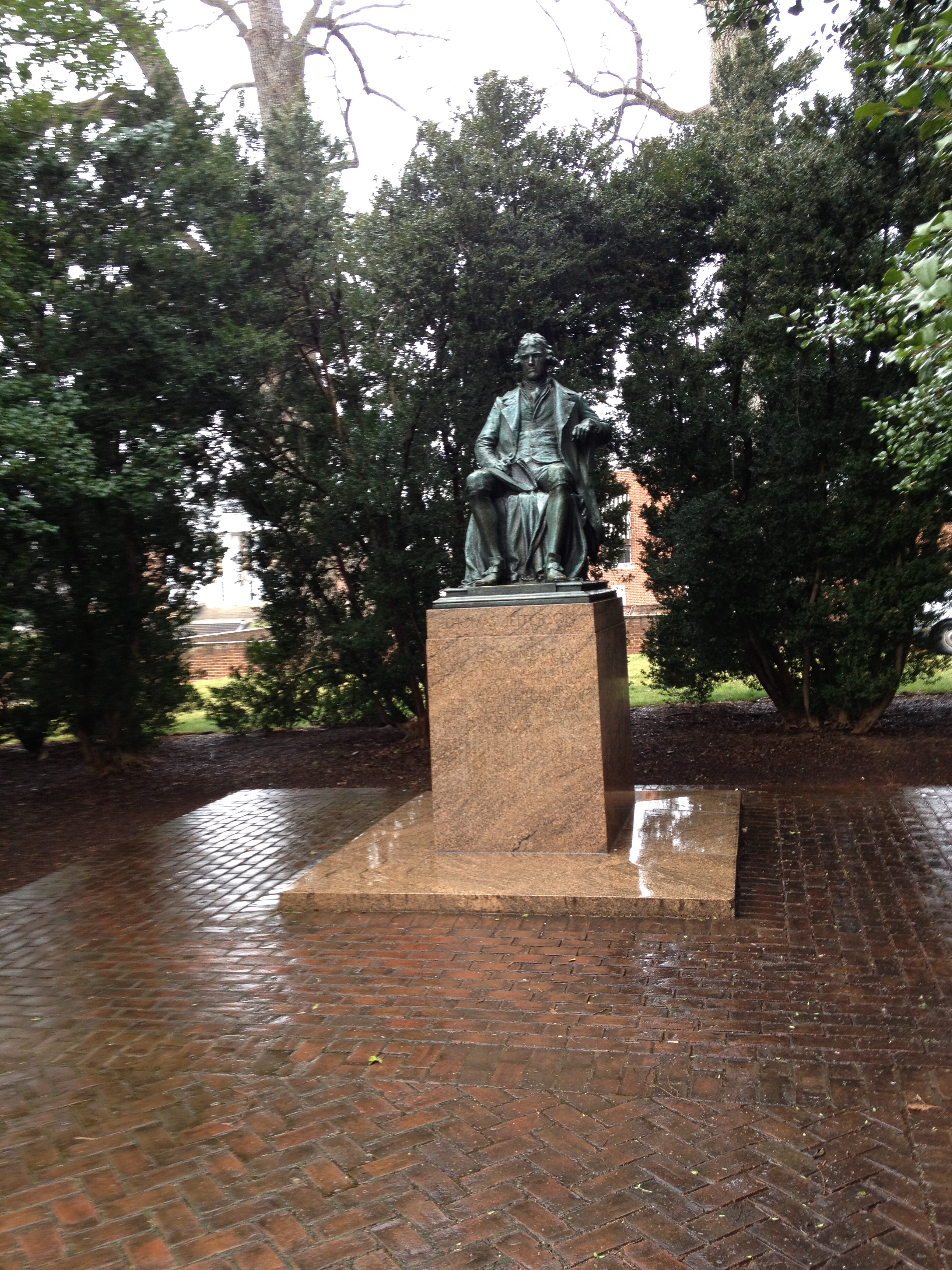
One of the few presidents worth casting in bronze


Love, Factually

Whet has Jerusalem to do with Trenton? As marriage equality is debated in New Jersey—with a governor as compassionate and reasoning as Captain Ahab determined to stop it—three local religious leaders have the courage to lay their cards on the table. When Bishop Beckwith (Episcopal, Newark), Bishop Riley (ELCA, New Jersey), and Rabbi Gewirtz (Millburn) penned a piece entitled “Religion shouldn’t sway Trenton in this debate” in the New Jersey Star-Ledger, it almost restored my faith in religion being capable of some good. The three leaders, from different theological perspectives, agree that the Bible can’t be used for a one-to-one correspondence to modern society on this issue. They correctly point out that theologians disagree and that the remit of the government is not to uphold the view of any one of those traditions. When church leaders start making sense, I begin to tremble.

Politicians are never among the most astute of theological thinkers—and I would include those clergy elected to public office in that number. The rare public official who is qualified to think about such things intelligently frequently has trouble swaying his (almost always his) colleagues who have visions of pork barrels dancing in their heads. Marriage is about commitment, not sexuality. Studies have indicated many sexless marriages exist, yet we applaud them for their consistency. For those with a different orientation, we outlaw formal recognition and call them sinners. In the name of a government sworn not to uphold any one religion. It is time our legislators awake from their snoozes and realize that many mainstream religions have gotten over homophobia, and their religion is discriminated against by such petty power plays.

I applaud the efforts of religious leaders to point this out to a governor who has gone on record saying he’s not one “who changes positions with the grace of a ballerina” (propriety forbids me from finishing that thought). If that chunky ballerina, however, has ended his twirl facing the wrong direction, doesn’t the audience expect him to hike up his tutu and correct his error? I note that our Roman Catholic compatriots did not sign the letter. If ever a church showed the signs of centuries of sexual neuroses, would we trust it to make informed decisions on who might sleep with whom? Is that what marriage has been reduced to in the minds of the celibate clergy? It’s all about sex? Maybe if politicians and unenlightened theologians could pry their minds out of other people’s bedrooms and learn to treat them as complex, descent human beings we might actually see New Jersey leading the world in the right direction for once.

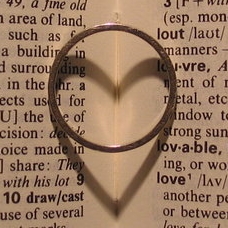
What's love got to do with it?


Fall of the Planet of the Apes

Perhaps it is being under the influence of a head-cold that just won’t go away, or perhaps something deeper, I decided to watch Rise of the Planet of the Apes. Raised in a fundamentalist household, I was enamored of Planet of the Apes (the original one) and watched it and all its sequels repeatedly back before VCRs made owning such chestnuts possible. Perhaps it was that taste of forbidden fruit—evolution—that left such an exotic buzz in my head, or perhaps it was the unforgettable climax. The message that we’ve done this to ourselves. I once even missed seeing a high school friend after several years’ absence on a visit home because an all-day Planet of the Apes marathon was airing on TV. Perhaps it was the subtlety, the Rod Serling feel to it, or the deep level of empathy it evoked, for whatever reason, that original movie remains one of my personal favorites. In Rupert Wyatt’s slick new backstory, something was missing.

The CGI of Rise of the Planet of the Apes is pretty remarkable, except for the occasional jerkiness of violent scenes intended to pump up the testosterone. The subtle emotions visible in Caesar’s every glance conveyed the sense that animals share rights to this planet with us. I’ve been reading about animal intelligence again, and it saddens me that we’ve reached this far in our development only to continue the fiction that homo sapiens are unique among the tree of life. It’s not much of a tree when one of the branches is not and never has been attached. Our animal cousins have much to teach us, and perhaps that’s why I keep returning to Planet of the Apes, despite Charlton Heston. Even the new movie makes several nods to the original with naming the main family Rodman, Caesar building a three-dimensional puzzle of the statue of liberty only halfway complete, calling his mother “Bright Eyes,” spraying Caesar with a hose in his cage and calling the primate center a madhouse, and the cheesy repetition of “Take your stinking paws off me you damn dirty ape!” It simply can’t rise to the level set by the writing of Rod Serling and Michael Wilson.

The box-office success of the film tells us something about ourselves. Ironically, and perhaps intentionally, Wyatt’s version neuters the evolution. The apes don’t rise from an unspeakably long evolutionary track from us, but we create them with the nemesis of twenty-first century humans, the virus. Caesar and his friends are genetically engineered by humans, and God has nothing to do with it. In the original, a theological subtlety lingered as a religious court of orangutans condemned Taylor for religious reasons. His claim of human primacy was heresy to primate sensibilities. The new version takes itself too seriously for that. We can’t jangle the evolution keys anymore because of our own national schizophrenia concerning the raw power of nature. Just when we think we’ve evolved beyond petty superstition masquerading as righteousness, yet another state attempts to guillotine the entire scientific enterprise. It’s a sure thing that if the apes don’t get us, we’ll take care of it ourselves. That was the message already in 1968.


Ultimate God

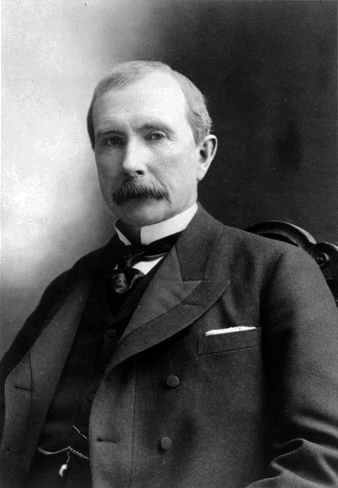
In a recent op-ed piece in the New Jersey Star-Ledger, Ben Krull published a satirical piece entitled “Strategizing God’s election campaign.” While some, no doubt, took offense at the piece, it is less an indictment of God (Krull is a lawyer) than it is a broadside against those who use God to get elected. As portrayed in the Bible, God is not always a likeable character. As Krull points out in so many words, God is a guy with “issues.” Would he ever be elected on a family values platform? What is happening here is that God is being recast as those who most vociferously claim him an ally want him (always him) to be. Using Yahweh as a springboard, they vault over the compassionate Jesus and land firmly at the disapproving God of Jonathan Edwards, who, along with the God of John Rockefeller, wants them to be rich. It’s not as much an election as it is a catalogue where you can order just the deity you want. The God they claim America follows is a god of their own making.

Paul Tillich, a theologian, once famously declared that God is a person’s ultimate concern. While other theologians instantly and continuously disputed this, the idea still has some currency. The distorted versions of Christianity that we constantly see in the political and sports scenes today is a god that adores the free market and loves football, especially when the Broncos are playing. Somehow, incredibly, he couldn’t get tickets for the Super Bowl. If you listen closely you’ll see this god resembles nobody so much as Mitt Romney, Rick Santorum, Newt Gingrich, Herman Cain, Sarah Palin, Michele Bachmann—wait a minute… has god packed up and gone home? Since undisputed God sightings are as rare as undisputed UFO sightings (maybe even rarer) we are free to fill in the enormous lacunae with our ultimate concerns. Ourselves.

At least in the world of polytheism you had a choice of gods and a ready source on which to blame unpleasantness. If Baal’s not answering your prayer, maybe Anat is standing in the way. Ancient folk were not conscious of the fact that they were making gods in their own image, after their own ultimate concerns. But modern Christians, trapped with the God of the Bible, feel that they can at least give the big guy a makeover. This is God on-demand. The beauty of this deity is that he is a poseable action figure who is a picture-perfect image of one’s personal ultimate concerns. A God so malleable, so fluid, and so idiosyncratic should have no trouble getting elected. To find the God of popular politics, just look in the mirror.

Who does your God look like?


A Strange Confirmation

I’ve been tweeting the Bible. Many years ago I lost track of how many times I had read it, but tweeting seems to be a way to examine the text carefully, 140 characters at a time. As a college student who’d recently learned about textual criticism (many years ago), I approached my local pastor and asked him if we could try something at church. I had a big, old, black leather Bible set up in the vestibule and made announcements—and even had it printed in the bulletin—that we were going to copy the Bible. I placed a three-ring binder and a pen next to the Bible, and I asked the parishioners to write down a verse in the notebook on their way in or out of church. I wanted to see how long it would take, and to give the laity an idea of how difficult it was to copy accurately. (Hey, I was young and idealistic!) The Bible sat there many months, perhaps a couple of years. I would occasionally check on progress, and was surprised to see we were still in Genesis. We hadn’t even reached the flood yet. And mistakes? Ye gods! It was like the Bible had been written on another planet. I now see the many problems with the way the experiment was set up, but copying the Bible is a revealing exercise nonetheless.

My tweets are with the King James Version of the Bible, and over the weekend I discovered something. According to the KJV, seed-bearing plants are male. Note Genesis 1.11 “Let the earth bring forth grass, the herb yielding seed, and the fruit tree yielding fruit after his kind, whose seed is in itself.” This corresponds to a post I wrote late last year about the notion of distorted masculinity in the biblical worldview. The operating assumption seems to be that male and seediness go together. Since the Bible is literally right, somebody better get out there and explain the facts of life to the female plants that constitute roughly half the flora on this planet. Herein lies the rub: ancient assumptions no longer hold sway. Trees are not all “hes,” and yet many treat the surrounding context of a literal seven days (only one day in Genesis 2) as worthy to take down science itself.

Once in a while I have my own gripe with science—or at least its cousin technology. I was looking forward, many years down the road, to putting all my Bible tweets together into a seamless whole. The tweet I twittered on Sunday, however, never appeared. I can’t go back and add the missing 140 characters now, because that would throw the order off. And those ancient scribes thought they had it hard! Maybe there is an object lesson at play here. Maybe the utter devotion to a text has the potential to lead the righteous astray. As a society we’ve built a tremendous world of luxury around ourselves (well, most of us), and isolated ourselves from the wild animals and masculine fruits of biblical times. And yet, when we look at the text up close, we often find things we might not expect. Or even support. I will dutifully carry on my Bible tweeting, but like any human venture, my Bible will never be perfect.


Revealing the End

I knew the end of the world was near when I saw the phrase “butt crack” in the Chronicle of Higher Education. As I turn over the February page in my 2012 Apocalypse Survival Guide calendar, I find that the Romans predicted an end of the world to arrive at 634. B.C.E. I’d say the Romans are still waiting, but they are long gone, the only residue remaining of their empire being the Vatican and its spiritual, rather than political, power. So why did the Romans think the end was near? It had, according to my calendar, to do with a dozen eagles being seen at once. In the spirit of Hal Lindsey we can parse that vision a bit. 634 was just 32 years after the infamous 666 B.C.E. Of course, no one knew it was 666, or even B.C.E. for that matter. Nevertheless, when God picks his super-three he stays with it. Thirty-two turns out to be nearly the traditional age ascribed to Jesus, but minus one year. Keep that in mind.

Eagles make occasional appearances in the Bible, but since God is a forward-thinking deity, the reference is surely to the United States! And how many colonies were there originally? Was it not 13? Again, the significant number is off by one. In some cases we might count this up as poor arithmetic, but with the subtle destroyer of the universe we know it is not only intentional, it is also significant. So, Rome saw the 12 eagles—the United States—in 634. What they really meant was the Maya, obviously. That would account for the missing one, since central America is less than the greatness that is the United States. And besides, there were twelve apostles, but when Judas was replaced by Matthias there were 13. What more proof do we need? These dozen eagles were indeed a divine sign. Only the world did not quite end in 634.

Maybe the problem was with the Julian calendar, or maybe the eagles were just confused. As my calendar says, “Antichrists been and gone” and yet we are still here. The transient nature of apocalypses never dampens the truly hateful spirit. We can’t comprehend this cobbled-together doomsday without at least trying to understand the evangelical despising of the world. This view is based on a quasi-biblical determinism that emphasizes God’s ultimate plan to destroy the universe that is only revealed in piecemeal fashion throughout select books of the Bible. But God is like a mystery writer who sadistically leaves out the last chapter of the book. The tension is unbearable. How much more before we begin to crack? But isn’t that what started this whole apocalypse in the first place?

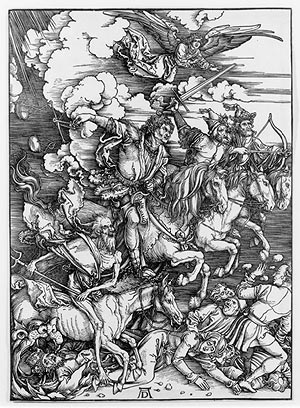
The horsemen close in