In Our Image

Preparing course notes on Ancient Near Eastern religions often sheds light on the religions we practice today. Religious beliefs are organic and, although many religions claim special revelation, their basic components have been around for millennia before they appeared. In the broad sweep of ancient times it becomes clear that religions evolve to fit the viewpoint of the power structures of society. The favorite god of a puissant sovereign became the chief god of a nation. When rulers change, gods sometimes change with them. Without doubting the sincerity of ancient believers, the truth is that gods serve the needs of the state as long as the state upholds the monarch. When gods become too sympathetic to the working class, well, it’s time to shuffle up the pantheon a bit. The story of Akhenaton’s advocacy of Aton worship is a case-in-point.

Somewhere along the way to modernity, symbolism became literalism. Anyone who follows the news of the various theocracies of modern history can see this pattern endlessly repeating itself. Politicians need a power-base and religious believers are often natural followers. By wedding gullibility to expediency a religious right is born. Akhenaton would have been proud. Of course, the message repeatedly doled out by our rapidly evolving, technical society is that studying history and religion (among other arcane subjects) is a waste of time. Look! New toys! We set ourselves up to fall prey to the unscrupulous.

How else do we explain the revelations of hypocrisy that spring up like toadstools whenever an über-religious candidate claims public office? Thank goodness modern religions teach forgiveness! In the empires of days long gone, kings lived a life out of touch with the common worker. They enjoyed luxuries that the laborer couldn’t even conjure. When a challenge arose to that power, all you need to do is bring the gods onto your side and even the most stalwart peasant will back off. When Akhenaton’s young son Tutankhaten inherited his shaky throne, the populace demanded the old gods back. Tutankhamen acquiesced and the balance of power was restored. The gods, apparently, did not seem to notice.
The wise say nothing.

Slash and Burn

Extinction is an evitable part of life in the universe we’ve inherited. Throughout the eons of our planet mass extinctions have occurred several times, and the new world that emerges is strange and unexpected. We as primates owe our existence to such a natural occurrence at the end of the Cretaceous Period. We evolved religion, which, in some species, bestows the right upon us to alter, or even destroy, our environment. The lame reasoning that generally accompanies such amateur theologies is that a deity is about to sweep down and reclaim those “he” (inevitably) likes. All the rest are just part of a hellish charade to make the righteous feel their entitlement more acutely. So we now find ourselves facing, as scientists warn, another great extinction. This one is of our own making.

The causes are not too difficult to discern. For centuries the dominant religions in the western world have preached messages easily mistaken for selfishness. The perverse aberration called the “prosperity gospel” is one such bastard theology. (I use that term in its literal sense here: the prosperity gospel claims false parentage in declaring that Jesus rewards the affluent with material wealth.) An article in Sunday’s New Jersey Star-Ledger points out that the unprecedented human involvement in extinctions. Using Haiti as a test-case, Faye Flam of the Philadelphia Inquirer notes that 99 percent of that nation’s forests have been wiped out as the poorest people in the western hemisphere seek wood for the basic necessities of life. Just over six hundred miles to the north begins one of the most affluent nations in the world where as long as we get our own, the rest of the world can go extinct. We are so blessed. While the loss of forest barely keeps the people of Haiti alive, it drives unnumbered species to extinction.

Entitlement is an odd phenomenon. Without those further down the food chain, the advantages of privilege disappear. When there are no poor to support the wealthy, the comparison fails. The same is true on a species level. As privileged Homo sapiens, we have climbed to the top of the mountain and made ourselves gods. Other species are counted as chattels to be divided up among the wealthy. The rarer they are, the more valuable. Problem is, once rarity reaches extinction there’s no turning back. Our environment placed us in this position and gave us the grey-matter to figure it out. Instead we liken ourselves to gods who do not need this world that gave us birth. Biology disagrees, as time will tell.

Icon of the prosperity gospel.


Monsters Are Due on Elm Street

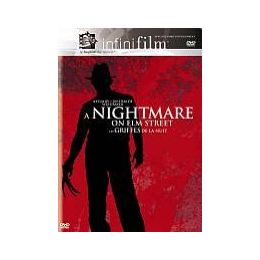
November 1984. George Orwell’s dark vision had not fully emerged, but the veneer had worn off of the fairy-tale world promoted by the evangelical, free-market professors at Grove City College. As a blue-collar kid in a blue-blood institution, I was out of place. The campus was buzzing, however, about a new movie—A Nightmare on Elm Street—for which I finally plucked up the courage to ask a cute coed for a date. I’d never seen a slasher movie before, having sampled mostly traditional monster-flick fare as a child. I felt a sense of accomplishment since some of my college friends had to leave the theater for fear. On the big screen, with no previous knowledge of the plot, the film worked for me on many levels. Last night I decided to watch it again.

My first reaction was a sense of surprise at how much of the movie I still recalled with pristine clarity. For having been nearly thirty years ago, such clarity is a rare phenomenon for many details of life, often reserved for memories of early girlfriends. A second reaction was noticing how religion featured in the film. The girls skipping rope chant, “One, two, Freddy’s coming for you / Three, four, better lock your door / Five, six, grab your crucifix.” Indeed, the crucifix features in several scenes as an ineffectual weapon against Freddie Krueger. The days of defying vampires are over when your own subconscious turns on you. In one of the early chase sequences, Freddie, raising his infamous glove, says, “This is God!” Religion and its overarching concerns with death and suffering come together with horror in that one moment. The traditional power structures of religion have lost their power to defend the troubled teenagers. The only one well adjusted is, ironically, Johnny Depp’s Glen. Even he falls victim to the revenge sought by Krueger.

Surprisingly, the scene I had most trouble recalling was the end. I recollected the bright, hazy sunshine, but couldn’t remember how Wes Craven released his audience from the drama. Of course, there is no end. Freddie came back in countless sequels, none of which I ever watched. Although I wouldn’t know it at the time, Robert Englund based the screen presence of Freddie on Klaus Kinski’s Nosferatu in Werner Herzog’s classic remake of that silent gem. Freddie is the vampire that defies religious cures. Movie villains are among the most adept practitioners of resurrection on the silver screen. The occasional E.T., Neo, or Spock will come back from the dead, but those who repeatedly return are the denizens of our nightmares. As Orwell’s vision continues to unfold in subtle ways, 1984 looks like an age of innocence before the ineffectual god worshipped by the establishment became self-image, writ large, on Elm Street.


In God We Lust

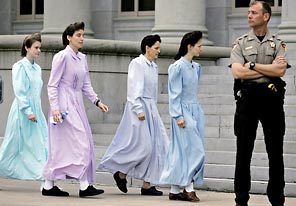
One of the entrenched ironies of human mentality is that reason will not suffice to change religious views. Many studies have repeated demonstrated that faith is impervious to logic, and this has appeared with Ektachrome clarity in the case of Warren Jeffs. Rev. Jeffs, the leader of the Fundamentalist Church of Jesus Christ of Latter-Day Saints, has painted himself into a mental corner that makes the logic of legal proceedings appear as slapping the idiot. Logic and faith do not connect. Any Christian who has read the letter to the Hebrews should know that. Nevertheless, Rev. Jeffs, having illogically dismissed his team of lawyers, has been attempting a divine defense to justify his alleged sexual abuse of minors. He remained silent during his opening statement, despite judicial advice that such a tactic might harm his case. Breaking silence yesterday with a nearly hour-long sermon, faith responded to logic and was found wanting.

Society at large fails to consider that studies of religion have been carried out from multiple angles over many decades. We have erudite studies of the philosophy of religion, the psychology of religion, the anthropology of religion, and the sociology of religion. They all point to the human origins of this phenomenon, often demonstrating that a basic disconnect remains when religious belief is brought into the harsh light of logic. Neurologists and biologists have explored the utility of religion as a survival tactic, and evolution seems to have blessed it. Yet trial lawyers, judges, law enforcement officials, and politicians—often themselves religious individuals—are charged with apprehending and convicting others who simply take their religion to extremes. Religions make untenable demands on adherents. God has a poor record of turning up in the courtroom. His divine statements are absent from the stenographer’s tape.

Not knowing the details, it is difficult to find much sympathy for Rev. Jeffs, should he be found guilty. Yet at the same time, his interpretation of religion differs only in a matter of degree from other religious sexual ordinances. Is it normal for a clergyman to live a lifetime of enforced celibacy? Although signing on the dotted line may indicate a tacit agreement with church policy, what young man can clearly anticipate the pressures of decades fighting biology and psychology? Yet the practice is perfectly legal. Until the nearly inevitable inappropriate results squirm out. Public rancor runs high, as it should, against child molesters. The children are innocent victims. The perpetrators, however, believe themselves to be following divine dictates. It would seem that much suffering would be ended if God would go on the record here, so that we might have solid evidence with which to judge the case. If it please the court.

Photo credit: Tony Gutierrez, AP, from The Seattle Times


Cross Swords

Occasionally the symbol of the Prince of Peace is used as a weapon. A current case playing out in New Jersey revolves around a Livingston man and his convictions. Originally erected for Lent, the homeowner in question placed a wooden cross within a municipal right-of-way zone where signs and potential distractions to drivers are prohibited. When informed of the violation the owner removed the original cross and placed a larger one just within the right-of-way zone. When asked to remove it he contacted the Alliance Defense Fund—a group of Christian lawyers (which sounds apocryphal to me) who advocate the spread of the Gospel. This bizarre case is now being cited as a test of a land-use law that protects religious expression. A few inches would have resolved this entire mess. Had the homeowner placed his second cross beyond the restricted zone, no fuss would have been made.

I don’t really feel safe in a world where bands of renegade Christian lawyers rove about seeking to support the violation of public safety ordinances. Instead of friendly persuasion the cross is here used as a cudgel. Perhaps wearing one’s religion on one’s sleeve ought to be accompanied with a measuring tape. Certainly there are those impressed by the masculine chest-thrusting implied in defying laws to assert one’s particular take on religion. Pushing such issues to the point of public funds being spent to enforce a law throws the action into sharp relief.

Some varieties of Christianity (and other religions too, I’m sure) thrive on the fiction of persecution. Is the quality of life of the homeowner affected deleteriously by not being allowed to place a cross in a no-sign zone? Is it not rather an attempt to set, in H. Richard Niebuhr’s phrasing, Christ against culture? What friends (besides lawyers) does it win to the cause? Having gone through a phase myself where PDR (Public Display of Religion) was considered the only way to be authentic about belief, I think I might understand the original intent of the homeowner. A clergyman, however, long ago set me straight with a frank discussion of subtlety. What I came to realize is that shoving only leads to shoving back. Perhaps moving the cross six inches would be the equivalent of turning the other cheek? But when the other cheek is turned, lawyers don’t get paid.


After the Carapture

When my wife showed me the first news article about “Carmageddon” I shrugged my shoulders with a noncommittal “meh.” Now that the nation has somehow managed to survive the two-day closure of a highway in Los Angeles, commentators are wondering what this reveals about our cardolatry. As a nation, the United States worships cars. Last week predictions were made that traffic jams of biblical proportions would disrupt the second largest city in the country and that not even God would be able to sort out the mess. In Norway, in the meantime, a right-wing conservative Christian decided to tip the scales of justice by becoming a mass murderer. Why do we glory in our own destruction?

Human beings only developed what we recognize as religion after the advent of the city. Cities require temples and temples require religious infrastructure. Priests had much to gain in antiquity by proclaiming the wrath of God—the angrier the deity the more offerings that roll in and the wealthier priests become. Religion has evolved over the five-and-a-half-thousand years of civilization, but it has never had a true conversion. It is one among many ways of coping with the stresses of becoming an urban population. We live in cities and we have traffic jams. We live in cities and learn from those far different from us. We live in cities and bomb our enemies in the belief that God finds those far different from us evil. Apparently God approves of the killing of teenagers. Just ask old Ramesses about that one.

Norway is among the most non-violent and secular cultures in the world. Los Angeles is a liberal city among one of the most religious cultures on earth. They experience the wrath of God in different ways, according to the media. Cities gave us religion. When we had had religion long enough, cities began to withdraw from that particular approach to life. When we can’t get our cars where we want, it is the wrath of God. When we can’t get the government to follow our personal religious quibbles, we take the prerogative to introduce the wrath of God. We long for the end of what we have created. No matter how we achieve such destruction, we’ll find religion planted squarely in the middle.

What's coming to your neighborhood?


Parry Hotter

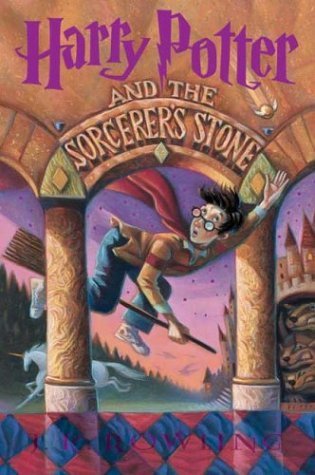
With the final Harry Potter movie opening this weekend, it is clear that the brainchild of J. K. Rowling will live forever. When the books first started to gain popularity numerous Christian groups protested that children would be tempted into witchcraft by the appeal of the young protagonists. Ironically, standard Christian teaching denounces the power of witchcraft, although some groups do still acknowledge a very active devil. Now that the series has run its course–all the movie spin-offs of the novels are complete–many are coming to the realization that the message is profoundly ethical if not downright religious. As usual with knee-jerk protests, the message is missed for the medium, and those with fragile faith clamor for a spell of their own to put an end to opposition.

Joining the bandwagon late, I first started reading the Harry Potter books when the third or fourth volume had been published and public interest was riding high. I haven’t kept up with the movies, however, last watching Goblet of Fire at a theatre in Wisconsin while contemplating my own position at a school like Hogwarts, minus the magic. The books, however, convey the message more clearly–the power of evil is real, good is not always what it seems, and institutions can’t save you. The importance of love (the main thrust, many would contend, of the preaching of Jesus) is the driving force behind the story from the moment Lord Voldemort (the Darth Vader of the twenty-first century) failed to kill young Harry Potter. Perhaps the true concern that many religions have with Rowling’s work is that it has trumped the traditional mythology with a bit more style and panache.

As a regular Protestant Christian, Rowling expresses traditional beliefs in her writing. The fantasy of witchcraft, however, has always maintained a lure for those cut out of society’s pathway to wealth, recognition and ease. In the days before Christianity, the early Israelites believed the power to be real to the point of making witchcraft a capital offence. Of course, omnipotence had not yet been invented. Once a deity becomes all-powerful, why should fear remain concerning magic? More likely protests against Harry Potter had less to do with the witchcraft than with the insecurity that many believers feel about God. The plan doesn’t seem to be unfolding as the Pat Robertsons and Timothy LaHayes are saying it should. Doubt is a much more powerful force, it appears, than magic.


Holy Land Grabs

Civilization began in the “Middle East.” Ever since then, it has been a struggle to keep it together. One of the sad realities of the last century and continuing into this is that peace in this region seems as elusive as a Tea Partier with compassion. Claims to land are among the most complex of human inventions. Having never been a property owner, I’ve only ever watched this from the sidelines, but I know the endless surveying, assessing, and negotiating that goes into drawing invisible lines across the surface of our planet in order to determine who owns what. At least as early as the Code of Hammurabi, the placing of property markers was considered the concern of the gods. Humans are clearly among the most territorial of animals.

When my wife showed me a CNN story about an archaeological dig at Khirbet Qeiyafa in Israel, this old issue raised its weary head once more. The site, whose ancient name is not yet known, is being suggested as “the city of David” by archaeologist Yosef Garfinkel. The evidence for the suggestion, as far as I can tell from news reports, is that the city fits the right time period and lacks pig bones. With the Bible’s great claims for David’s very large kingdom, archaeologists have been unable to find evidence that such a grand entity ever existed. David himself is not historically attested outside the Bible. Those who make land claims based on a putative gift of God, however, must find physical evidence to back it up. This wish hovers like a dove over every excavation.

The death of an archaeologist

Archaeology has frequently been commandeered by special interest groups. The field of study began in the “Middle East” to find evidence for the historicity of biblical stories, some of which were never intended as history. Daunting emotional claims, however, weighed heavily on the minds of those who led the excavations. The Bible made what they supposed to be historical claims, so the physical evidence had to back it up. When Jericho was excavated and found to have been abandoned at the time of Joshua not a few heads were scratched. Archaeologists returned to the city in later excavations to try to question the results. Jericho was a ghost town long before Joshua came along because the story of Jericho has something more important than history to convey. That larger message, applicable throughout the world, seems to be: don’t base claims to special privilege on the Bible. Tea Partiers could even learn a thing or two from that message as well.


Religion Al Dente

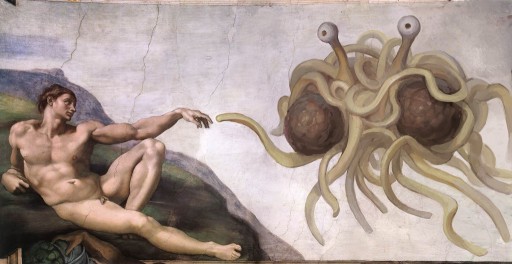
I first learned of the Flying Spaghetti Monster while teaching a course on the Bible and Current Events a number of years ago at the University of Wisconsin Oshkosh. Being freed from the confines of my humorless seminary teaching post, I was free to explore innovative ways to approach my subject matter. When discussing evolution, it was helpful to bring in Pastafarianism as an example of how some highly intelligent—and very creative—people deal with the ridiculousness of Creationism. Lest I be accused of unfairness here, Pastafarianism is also ridiculous. That is precisely the point. The Church of the Flying Spaghetti Monster (FSM) was formed to demonstrate that any inane idea might pass as a religion and should be given equal time with those who use ultra-conservative views on the Bible to effect public policy.

A friend sent me a link to a BBC story of an Austrian man who has finally been successful in his attempt to wear a pasta-strainer on his head in his driver’s license photo. Claiming the headgear to be demanded by the Flying Spaghetti Monster, Niko Alm wished to have his official ID photo taken with the symbol of his faith. I sense an evolution taking place here. The Church of FSM has gone mainstream in many respects; there is a Bible available, you can buy a bumper-magnet to rival a Jesus fish, adherents have designed a slick website, and it boasts many, many followers. While the website of the Church of FSM defiantly refuses to be taken seriously, it makes legitimate claims—religions do not require literal belief, and therefore Pastafarianism is a true religion with believers not being held to any particular doctrine.

The outcry against the FSM movement (which began roughly early in the new millennium) demonstrates its effectiveness. Are there really people who believe this religion? A tour of the website should be proof enough. The claims made by the group have analogues in traditional religion; many major religions teach events and doctrines that are equally unbelievable in the confines of the physical world in which we find ourselves. It is difficult to believe that Niko Alm actually takes this seriously, but who are we to judge? The FSM has moved from making fun of Intelligent Design to casting the very definition of religious belief into sharp relief. Who’s to say we haven’t all been touched by his noodly appendage?

Touched by his Noodly Appendage


Right by the Numbers

Reading about ancient religions helps to focus the long view. I’m brushing up on ancient Egyptian gods for my Ancient Near Eastern Religions class. Seeing how various gods rose to prominence with the fortunes of their patron kings or priesthoods suddenly struck a chord for modern-day religions as well. Many of society’s most conservative like to think that this is the day of Yahweh (or, not to put too fine a point on it, Jesus). This pre-biblical god has come into his own with the rise of the Catholic Church, following on from the conversion of Constantine, into the post-Reformation development of Evangelicalism. With the superiority of numbers and fiscal wealth, there is no disputing the one true god, is there?

What happens when the ultra-selfish free market consumes itself to a point that other cultures rise above it? Already outnumbered in souls by China and India what will Americans say when Buddhism or Hinduism outstrips Christianity? Is religion proven correct purely by the numbers? Cultural dominance has become inseparable from religious truth for many brands of Christianity. If in doubt, check out Andrew Schlafly’s Conservapedia (if any state would like to take him off New Jersey’s hands, you are certainly welcome). Being the right religion means being the might religion. Somewhere along the way it seems that the message of Christianity has become equated with bullying others around. I think Jesus must have gotten pushed around quite a bit as a kid on the playground.

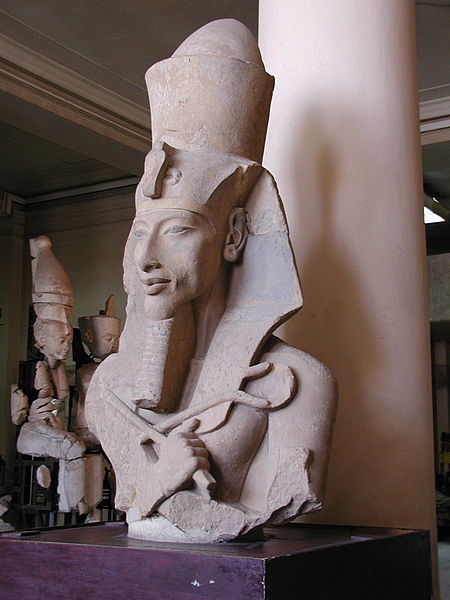
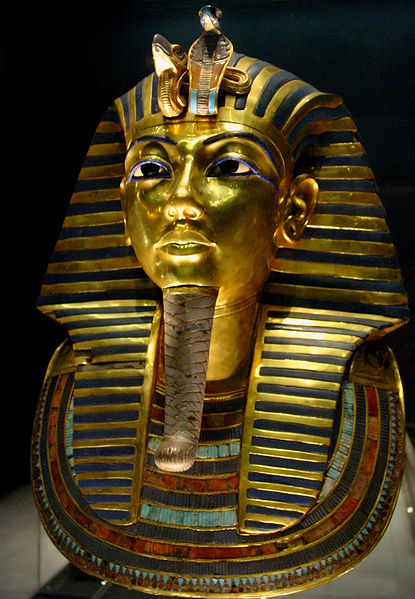
What's behind that self-satisfied smile, Akhenaten?

When Amenhotep IV became king of Egypt, the priesthood of Amun had grown very strong. Probably in an effort to suppress this powerful rival, the king changed his name to Akhenaten and promulgated the sole worship of Aton. Some like to give Akenaten credit for being a monotheist. To me it seems more likely that the old pharaoh was attempting to show intolerant bullies the way to behave: use religion to political advantage. If the opposition disagrees, shut them down. Problem is, this doesn’t work well over the long term. As soon as the unpopular king died, the former religion reasserted itself and things went back to the way they had been. Tut, tut. Seems like religious bullies never learn.


Assyrian Dreamers

And the widows of Ashur are loud in their wail,
And the idols are broke in the temple of Baal;
And the might of the Gentile, unsmote by the sword,
Hath melted like snow in the glance of the Lord!

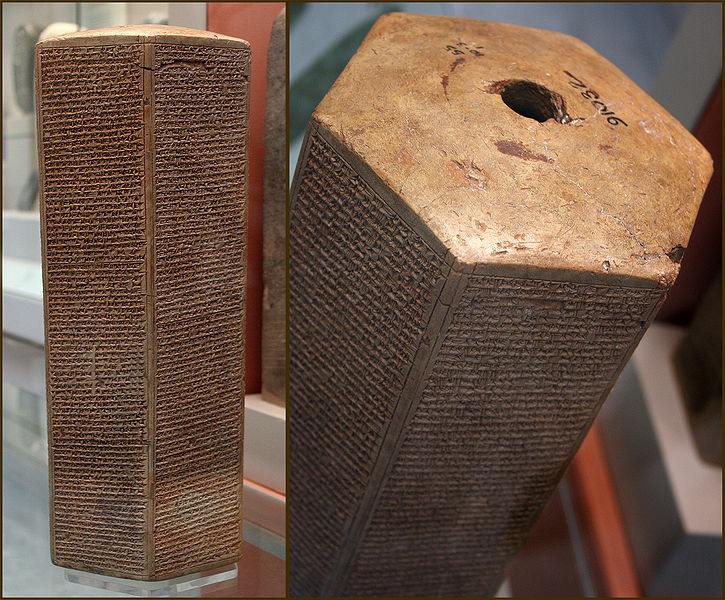
These lines from Lord Byron’s “The Destruction of Sennacherib” were recently quoted to me by one of my relatives who houses a tremendous store of memorized poetry. The poem is Byron’s vision of the siege of Jerusalem, a historical event that is now well understood because the actual annals of Sennacherib were discovered in 1830. The Akkadian version of Hezekiah’s revolt and the subsequent siege of Jerusalem in 701 BCE match the statement in 2 Kings 18 that declares Hezekiah bought off Sennacherib, thus sparing his kingdom. The biblical version then goes on to add the event eulogized by Lord Byron that an angel was sent after a prophecy of Isaiah and the Assyrian army fell decimated outside Jerusalem. The latter event is not historically accurate, but it is much more poetic. Who would write a poem about a king paying off his enemies?

Annals of Sennacherib

The Bible is comfortable with conflicting accounts of events, sometimes laying them side-by-side without comment, supposing that the reader is bright enough to see the obvious contradictions and draw the relevant conclusions. With the birth of Christian Fundamentalism in the 1920s, however, the myth of biblical inerrancy was born. In a world rendered in shades of gray, a distinct comfort lies in having answers in black and white. The Bible, considered the exact (if sometimes dodgy) words of God himself, could not be other than one hundred percent historically accurate. This version of history distorts what actually happened to what must have happened.

Lord Byron, notorious sinner that he was, seems to have been closer to the biblical spirit when he penned his famous poem. Glorying in the bravado of a warrior God who lays waste an entire army without lifting a sword or spear is fanciful, if breath-taking, poetic license.

For the Angel of Death spread his wings on the blast,
And breathed in the face of the foe as he pass’d,
And the eyes of the sleepers wax’d deadly and chill,
And their hearts but once heaved, and for ever grew still!

bears a grandeur lacking in “Hezekiah gave him all the silver which was found in the house of the LORD, and in the treasuries of the king’s house. At that time Hezekiah cut off the gold from the doors of the temple of the LORD, and from the doorposts which Hezekiah king of Judah had overlaid, and gave it to the king of Assyria.”


Patriot Games

Earlier this week I had the occasion to find myself in Newark’s Liberty Airport. I had mentally prepared myself for a government-sponsored groping (I find full-body scanners immoral and, no matter what the Patriot Act says, illegal) but I managed to make it through with just emptying my pockets and walking around in my stocking feet. Once I arrived at the gate area, I was once again struck by the duplicitous use of religion in America. Posted above each gate was a small banner reading “God Bless America” surrounding a stylized flag. I thought of the Hindus, Buddhists, and atheists flying out of that terminal (and in Newark I am certain there were all three species, in spades). Since 9/11 the staffs of the large New York City airports are justifiably cautious, but the blending of nationalism with divine will always makes me nervous. Especially since the weightier implications are so readily ignored.

In the biblical world the ideal was that travelers would be treated fairly. Someone away from home is already at a disadvantage. In ancient times the traveler deserved special consideration, not to be swindled or met with unfairness. Looking around at the prices merchants charge for those who’ve gone beyond the gate and have no choice, it struck me how when religion and economy collide, economy always continues on unscathed. The weary traveler, according to the Bible, especially deserves fair treatment. Charging extra to someone already at a disadvantage violates just about every biblical standard that echoes through those unread pages. God bless America? Only if it fills the coffers.

The sentiment expressed in “God bless America” is vastly at odds with the way we behave. Taking advantage of others is the bane of prophets and messiahs alike. Taking care of the poor, the disadvantaged, the traveler—this is the biblical ideal. Instead it is easier to band-aid over our sins with posters asking God’s blessing on our insincerity. Many people fear Islamic fundamentalists without taking into account the more subtle damage done by our own homegrown variety, giddily holding hands with an unfettered free market. Cheating the traveler may not be as wicked as blowing up an airplane, but both these tangled vines, in the biblical view, spring from the same root.


How Great Thy Art

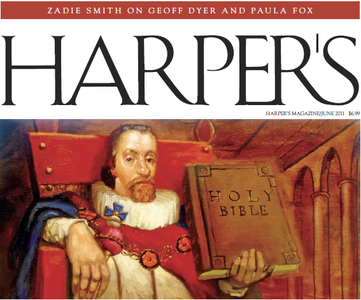
Celebrating the four hundredth birthday of the King James Bible, last month’s Harper’s magazine featured seven popular writers giving their take on various passages from the Bible. Noting the Bible more or less gave the English language its shape, this little exercise in eisegesis represents, in small measure, the power of the Bible even today. While many lament that America is no longer Bible-centered, with its misuse and abuse in the political arena the Bible still seems to be the heavyweight champion of the country, albeit altered through the eyes of certain key players. I was happy to note Harper’s chose novelists and poets to respond rather than theologians, biblical scholars, or—God help us—televangelists or politicians (frequently the same thing). What emerges is a tapestry that alike puts biblical scholars’ teeth on edge and makes fundamentalists wince.

Novelist Howard Jacobson looks at the creation story and takes the angle that God is a lonely artist. Writes Jacobson on the creation of light: “It’s good because it reveals an idea. The artist isn’t obligated to explain what that idea is.” Here, in the words of a non-specialist (can one say “amateur” of an accomplished novelist?) lies the heart of the matter. Art is creation and creation must be interpreted. Anyone who has undertaken a creative enterprise knows the feeling—the casual, disinterested glance at your work hurts. Any artist wants to be appreciated. Once the metaphor of God’s authorship of the Bible is recognized, there is a group of human artists hiding somewhere outside the annals of history. One of the great mysteries of the Bible is that we know very little about who wrote it (with the exception of Paul in the Christian Scriptures.)

The Bible is a work of art on a broad canvas. Today it is frequently criticized for the abuses it endures, but if we allow it its original purpose the view should become more sympathetic. The Bible was composed by individuals struggling with ideas. For millennia it served as a useful guide to the human experience until the church became politically powerful during the reign of the emperor Constantine. From that point on, deep knowledge of the Bible became power. For centuries the church guarded that power, keeping it in the hands of the clergy. Now that the Bible has become democratized, it threatens to take over democracy itself. Out there, somewhere unseen, the original artists are snickering as they chink their glasses and toast their accomplishment—they are writers who changed the world. But I suspect Paul is there too, warning them against partying too much.


Black and What?

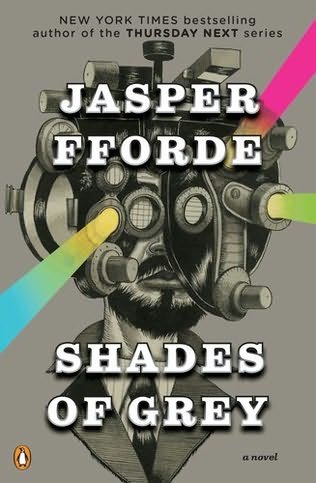
Dystopias are not all of the same stripe, or, in this case, color. Jasper Fforde’s Shades of Grey is perhaps the most colorful look at a bleak future I have ever read. The premise, funny and strangely serious, is that in the distant future color perception ability determines social rank. A cast of odd characters who see predominantly only one color vie for superiority while keeping to the rules of the founder of this society. The hilarious results often carry profound consequences. Those who live within this highly stratified culture fear those who do not, including a mysterious group known as the monochrome fundamentalists. The founder of the social order, Munsell, has achieved god-like status and his writings have the force of scripture.

This dystopia reflects, whether intentional or not, the social impact of many religions. Reading about the prefects, the political leaders of this culture, is like reading about the clergy who mistake spiritual guidance for power. The transition from pastor to politician is simple enough among social creatures like ourselves: we need those with persuasive powers to make decisions in accord with our best interests. Prefects and priests, however, are both eminently corruptible (let us say nothing of politicians) and evolution favors those who look out for themselves. The trick is to make others buy it.

Fforde’s dismal future includes Leapbacks where useful technology from the past is discarded in order to make people more compliant. In a world where color is a rare commodity, a modern usage of the rainbow seems apropos. Everything we are learning from psychology and biology—sciences still in their youth—suggests that sexual orientation is deeply ingrained, more so that just preferences or likes. The mainstream religions, however, have actively discriminated against those who are aware of their deepest needs. I know many excellent, caring individuals who’ve been kept from the ministry because of their orientation. Others who are clearly deleterious to the church climb to positions of power based on their approved sexual appetites. And society falls into lockstep with them. I don’t know Jasper Fforde’s political views, but along with him I would suggest that the ability to see shades of gray might be the best thing for any society, whether in the distant future, or especially, in the present.


Friend of Jonah

Last year a gray whale was spotted off the coast of Herzliya in Israel. As in the days of Jonah. Actually, we need to turn the clock back a little further. According to Arthur Max of the Associated Press, the gray whale was hunted to extinction in the Atlantic already in the eighteenth century. This whale, therefore, had to travel north of Canada from the Pacific Ocean through channels that are normally frozen. Global warming has opened these passageways and plankton last seen in the north Atlantic 800,000 years ago have begun to reappear. If Jonah was smart, he’d have stayed in that whale and would’ve just kept going.

Big business stands to lose the most from cleaning up the environment. It cuts into the bottom line. Happily, if brainlessly, joining the laissez-faire coven are many of the “Religious Right” who see destruction of the environment as part of God’s plan. So much for “and behold, it was very good.” When free market economists first met the conservative evangelicals it seemed that they had little in common beyond similar haircuts and a desire to turn time back to the 1950s. Since then they’ve joined to become a very powerful force in American politics, preventing any headway to improving the globe for others, even if it isn’t a personal concern of theirs. So much for “do unto others as you would have them do unto you.”

Each year in my Prophets class I have students that are far more concerned that a literal Jonah was swallowed by a literal whale rather than hearing the message Jonah proclaimed: repent or face destruction. If we turn the thermostat up a few degrees more each year maybe Jesus will finally jump on that white stallion and split the Mount of Olives. You can’t quite see the Mediterranean from there, but if you could you might spot a lonely gray whale. You don’t need to look for the little man inside. That whale is the sign of Jonah.

Wave to Jonah for me!