Kafkaesque

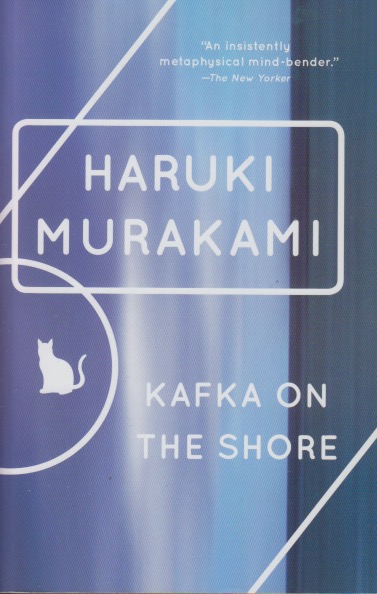
Although it’s a bit early—it’s never really too early—I just finished a banned book.  One of the main reasons I do annual book challenges is to help keep myself well rounded.  The categories often include books I might not otherwise read, although banned books are among those toward which I gravitate.  Lists of banned books are quite long, and so the choices are many.  I read Haruki Murakami’s Kafka on the Shore for this particular category this time around.  As the name Kafka in the title implies, there will be some surrealism here.  It was banned, as many books are, because of the sexual elements.  Anyone who made it through their teenage years without having struggled with that, however, is truly fiction.

Kafka is, in this instance, a fifteen-year-old Japanese boy running away from home.  On his journey, interlaced with that of an older, disabled man, he begins to discover what it is to grow up.  A number of unexpected things happen along the way, and pretty soon you’re not able to tell which world you’re really in.  The story refuses to be tied down to the ordinary.  The writing draws you in, however, and reminds the reader that being a teenager is indeed a liminal state.  Almost larval, to use a Kafka metaphor.  And yes, the metaphor is extremely heavy here.  There’s no denying two worlds bleed into each other as the story progresses.  Becoming an adult, it seems, involves having to make difficult choices.

Woven in with the base story is the Oedipus myth.  American cultural figures also appear.  Questions are raised but never really answered.  I’m not sure that I was fully ready for the mind-bending nature of the narrative.  Especially in these days when it’s considered okay, with a badly distorted moral compass, to hate those who are different, it’s important to read books like this.  There are characters you simply can’t figure out.  There are situations that seem unlikely, but that match some of the inherent strangeness of life itself.  I’m trying hard not to give away spoilers here, but this is a profound book.  I can’t tell if it was written for teenage readers or not—there’s clearly a lot of life experience behind it, and we were all teens at one time.  It was banned for being honest about sexuality, but perhaps, as is the case with most, if not all banned books, the real problem is that it’s simply too honest about being human.
Is This Contact?

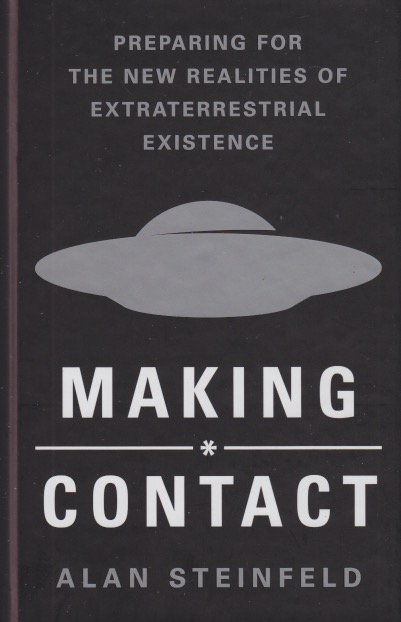
And speaking of the X-Files—but ah, I shouldn’t jest!  In fact, I strongly advocate avoiding the ridicule response when a claim seems outlandish.  A few weeks ago I posted on a review of Alan Steinfeld’s Making Contact: Preparing for the New Realities of Extraterrestrial Existence, a book just out.  The review I’d seen made reference to the aspects of religion and paranormal in the book, and given the mainstream media’s treatment of the topic of UFOs lately, I thought I should see what was being said.  As you might expect for a collection of essays, the tome is a mixed bag.  While ridicule is excluded, a healthy skepticism is necessary.  Amid the contributors with known credentials are those who make claims that are difficult to verify.  Much like the rest of life, you’re left making choices.

Amid all of this, where does religion come in?  Books like this often reveal the deep biblical literalism of our society.  Amid the authors who haven’t held government (although that’s hardly a situation where critical thinking is necessary) or university posts, there is clearly the assumption that the Bible is literally true.  Cherry-picked verses are “explained” by the presence of UFOs or aliens, with the supposition that if it’s in the Good Book it must be true.  This kind of simple credulity is quite common, but it does make you wonder if all the homework’s been done.  I know, I know, biblical scholars spoil all the fun!  If one piece of the puzzle doesn’t fit, however, perhaps the picture hasn’t been put together correctly.

That’s not the extent of the religious—or better, spiritual side of the topic.  Many of the essays are written from a somewhat “New Age” perspective with vibrations, and energy, and universal guidance of spiritual beings.  Other essays deal with government whistle-blowers who seem to tell a coherent story of secrecy and deception on the part of those in power.  No matter how you slice it, reading this book without ridicule is a perception-bending experience.  It may not be the one book everyone needs to read to get up-to-date information on where things stand in public perception, but it will make you think.  Given how much the topic has been in the media lately, and how it has at last been treated without snide asides, may be cause for hope.  “No go” topics may be vanishing, if only because our military admits to taking this one seriously.  And there seem to be, as always, religious implications.


Feeling Bookish

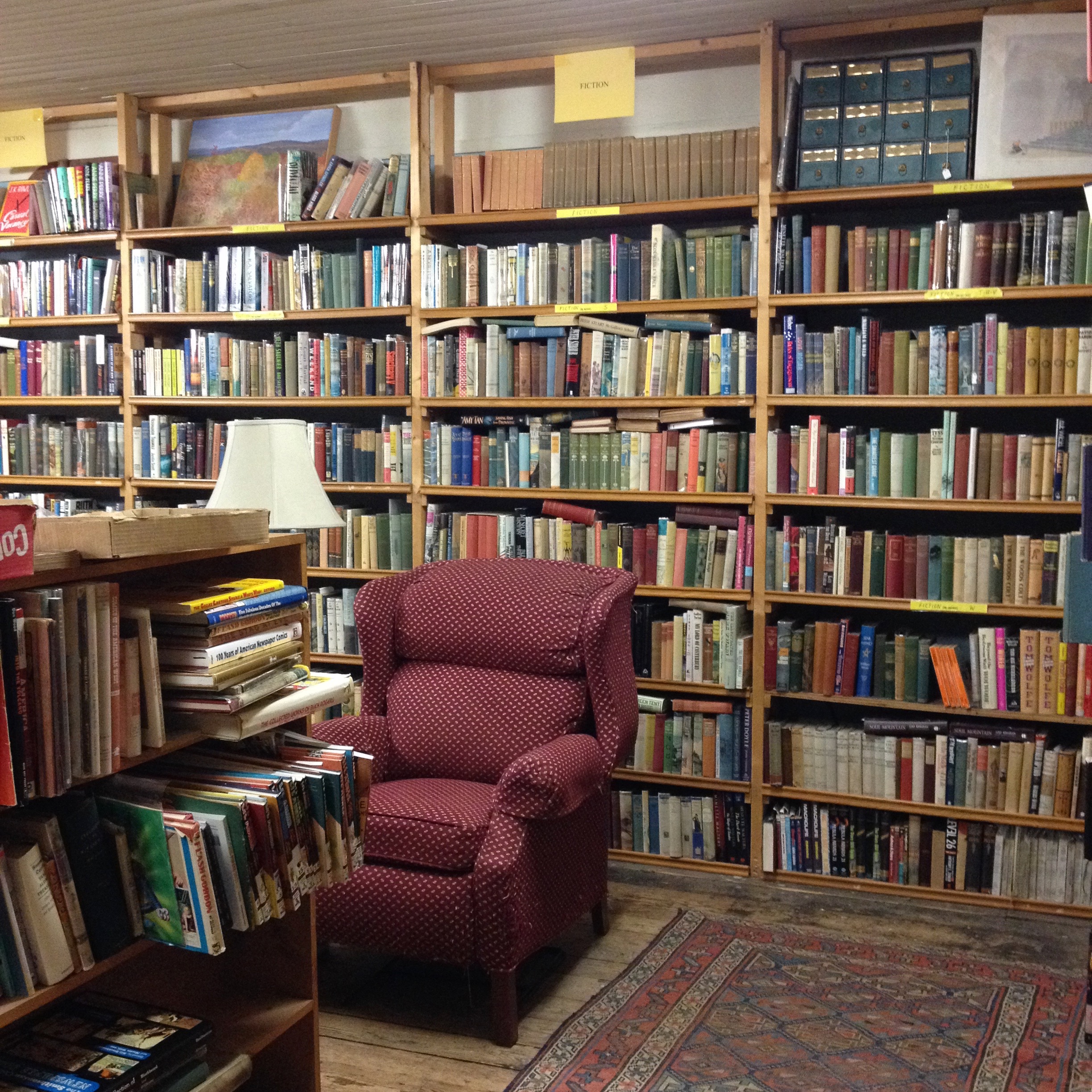
It does my soul good to attend a used book sale.  I recently attended one while on a visit to Ithaca.  Everyone was wearing a mask.  Even though it was May, it was quite cold and rainy, and due to the limited number of people permitted in the space, there was a line that took about half an hour to endure.  This did not deter people and it was this that most lifted my spirits—these people were devoted to books.  At times when the media gets me down, informing me that book culture is dying and that all people want are their devices and their distractions, seeing proof of the love of books is restorative.  The used book sale is a place of discovery.

Although it’s easy to nip over to Amazon (or better, Bookshop.org) and order your book, especially during a pandemic, there are things you only find by being where the books are.  I keep an extensive reading list with me.  Before I go into a sale venue I promise myself I’ll stick to my list.  But what a facile promise it turns out to be—how can you make such a vow without knowing what you might find?  Books you’ve never seen or imagined before?  That’s the discovery aspect that sweetens the in-person experience.  And although I still find crowds scary, I tend to trust people who like books.  Besides, the books I tend to read aren’t always in the most popular sections.

The Friends of the Tompkins County Public Library book sale has a dedicated building with permanent shelving.  While wandering is fine, maps are also available.  I’m occasionally ribbed for having too many books.  One of the reasons I dread any move is knowing the movers’ inevitable comments about the fact.  People who love books are made to feel somehow inferior for it.  Fans of Kindle or other such readers extol the virtues of having lots of books that take up no space.  Such books, however, are limited to those converted to electronic form.  The many thousands of books published before the invention of the ebook, many of them out of print and mostly forgotten, can only be found in libraries, used bookstores, and sales like this.  (Google books hasn’t found everything yet.)  It was cold and rainy outside.  In here there were silent companions that speak loudly.  Books, as my daughter said, are like snacks for the mind.  And sometimes you just don’t know what you’re in the mood for until you go to the kitchen and browse.  It can warm your soul.


You Have the Right to Remain

It’s strange sitting in a meeting where you’ve written a book on the topic under discussion and nobody knows about it.  This is one of the problems of publishing with an academic press.  Books get lost and buried.  Maybe the other way around.  A problem we academic editors frequently run into is that authors tend to think a book is a book.  Publishers recognize several different kinds of books, well represented among them those that are destined for the “library market.”  You can tell them by the way they’re priced.  Now I must confess that I’m behind the times in this regard.  I still tend to think twenty dollars is a lot to pay for a book.  I say this even though my job, day after day, includes pouring over book budgets to see how an academic book can be made not to lose money.

It costs a lot of money—most of it overhead—to produce a book.  In order not to run a publisher bankrupt, it needs to sell enough copies to cover its costs.  Library market books are priced that way because they are expected to sell only to libraries.  Certainly, if they were priced lower some academics would buy them, but the truth is not many academics do.  I realize I was an outlier when I was in the academy.  Without a research budget I would spend my own money on a book priced a hundred dollars if I really needed it for my research.  I was aware, even at that time, that others seldom did this.  As an academic colleague once told me, “I like to buy shoes.”  And let’s face it, there are just too many books out there to buy.  “Publish or perish” has more than one meaning.

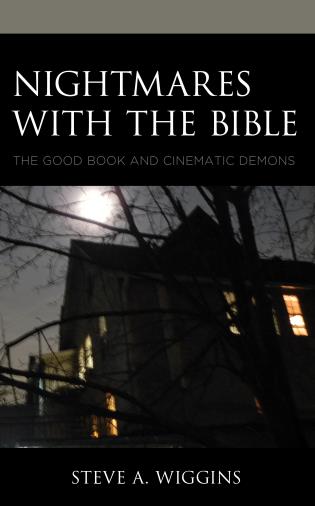
So I’m sitting in a meeting where the topic of discussion is something on which I’ve written a book.  My opinion is not asked—my book is priced for the library market and I know it—so I don’t really expect it to be.  The question is whether general readers will find the subject compelling.  Speaking strictly for me I’m pretty sure they will.  I signed my contract for Nightmares with the Bible before I knew the series would be priced for the library market.  That designation also indicates minimal marketing.  What publisher is going to try to push a book that costs that much when they know individuals can’t afford it?  So I sit in the meeting and keep my mouth shut.


Reviewing Nightmares

If you’ve wanted a copy of Nightmares with the Bible but the cost is a little dear, I might recommend you look on the Reading Religion website where, as of my last look, a free review copy is available.  The catch is you have to write a review.  This is, of course, first come, first served service.  I tried, more than once, to get Holy Horror listed on their website for review, so I’m glad to see one of my books finally made it.  The idea of the horror hermeneutic seems to be catching on.  Technically speaking, however, what I’m doing is more history of religions than hermeneutics.  History of religions, at least part of it, examines whence ideas arise.  Nightmares asks that question specifically about demons.

The specific focus on horror in religion is a fairly new field of study.  Biblical scholars—indeed, those who specialize in very old fields of study in general—must keep looking for new angles.  Unlike any other piece of literature, the Good Book has been the target of scholarly interest from the very beginning of the western academic tradition.  It’s easy to forget, when looking at many secular powerhouse schools, that the very idea of higher education arose from what is now the discipline of the lowest paid of academic posts.  Being so old, religious studies, known at the time as theology, is hardly a venerated field.  I tend to think it’ll come back.  If you look at what’s happening in politics in this country, it’s bound too.  And yes, there will be horror.

Horror studies in the field operates by recognizing that horror and religion share common ground.  Like religion, horror is considered backward and uninformed.  Neither is really true of either horror or religion, but perception becomes reality for most people.  Finding themselves in remedial class together religion and horror have begun to speak to one another.  Horror has quite a following, even if those who like it keep mostly quiet about it.  The same is true of religion.  Many of the most effective horror films bring religion directly into the mix, often making it the actual basis of the horror.  The first books that I know of that brought the two explicitly together only began appearing at the turn of the millennium.  At first there were very few.  Now an increasing number of tomes have begun to appear.  For better or worse, two of mine are in the mix.  If you’d like to review the most recent one, you might check out Reading Religion, and maybe spare a kind word or two for what are, after all, baby steps.


Pricing out of Business

Maybe you’re like most normal people and don’t pay much attention to who the publisher of a book is.  If you read a lot, and can get behind the glitz and glam of an Amazon page, you might come to trust certain publishers over others.  The fact is, despite the difficulty some of us have getting published, there are a lot of presses out there.  Some are clearly self-publishing vehicles, but many are small, independent houses that focus on specialized topics.  The sheer numbers can be bewildering.  I was looking for a reputable book on a certain subject the other day and, given my job, I always check the publisher.  Several in a row came up that I had never even heard of before.  I guess there is money to be made in publishing yet, if only one could find the matching pieces.

With academic publishing you can spend five or more years of your life writing a book and you’ll earn royalties that literally won’t cover a month’s rent when you’re done.  Even while this is happening there are people who make a living publishing books with presses you’ve never heard of.  They know how to get average citizens to buy their books.  I’ve been working in publishing for over a decade now and I guess I still don’t have it figured out yet.  It’s complex, and even with online publishing helps like agent-finding sites or Duotrope, you’ll find that each day brings its own changes.  I’ve learned through personal experience that many publishers simply don’t last.

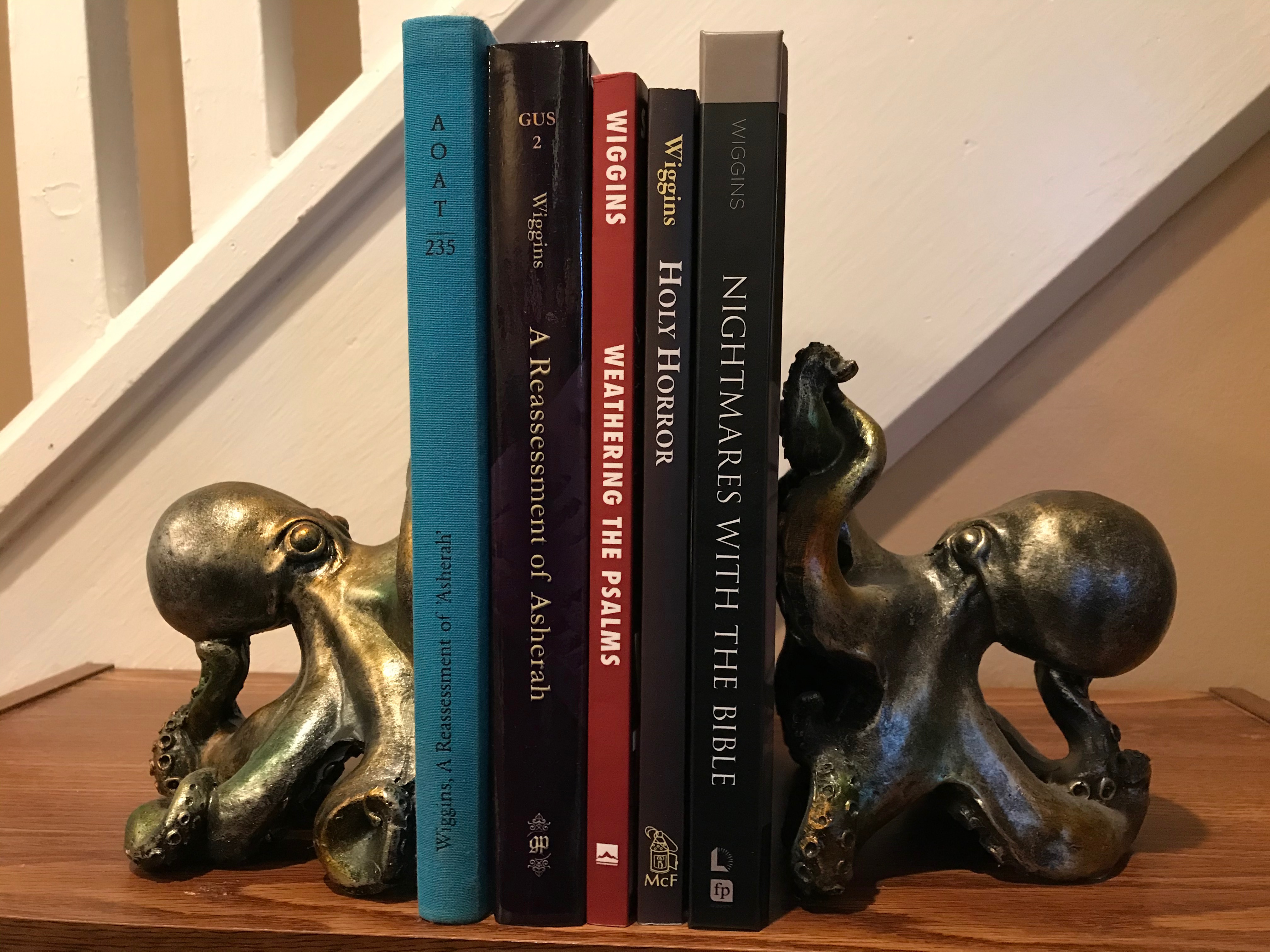
What many of these fly-by-night publishers understand better than established academic presses is that price matters.  Well, let me put that in more precise terms, for all publishers need money—fly-by-night publishers know that average people will buy only the books they can afford.  These presses I’ve never heard of sell books for the industry standard of about sixteen bucks.  My least expensive book sells for about twenty-two and I’ve been told more than once that it’s too expensive for most mortal budgets.  Collectively, my four books cost almost $250, averaging out at sixty per pop.  Two of them were written for general readers who have no hope of being able to afford them.  I tried to find an agent for one of them, and the other was a series book (no agent will touch such a thing).  Perhaps I should’ve tried a lesser-known press that could afford to offer my books at affordable prices.   You could do worse.


Dark and Light

I perhaps have nothing new to say about Ursula K. Le Guin’s The Left Hand of Darkness.  It was published before I was ten, and although I grew up reading science fiction I really didn’t read any of Le Guin’s work until this year.  It wasn’t intentional—in a small town you read what you can get your hands on, and cover art designed to attract young boys often worked on me.  Now having read it, I’m left in a reflective mood.  Everyone, of course, comments on the gender aspect of the novel.  I guess I’ll be forgiven for doing so as well.  After all, it is the most striking feature of the story.  As we know from our lives on earth, gender affects pretty much everything about our lives.  The biological imperative is strong.  It’s no less strong in Left Hand of Darkness, but it is different.

In case you’re like me and haven’t read it (until now), it’s not a spoiler to indicate that it is the story of a male envoy to a planet where the people (and only large mammals) are genderless until once a month they enter “kemmering” when one becomes temporarily male and another temporarily female.  The genders aren’t fixed, but fluid.  Since the kemmering stage comes only once a month, during that time it become an urgent need among those experiencing it.  The novel isn’t about only that, of course, but it is the noteworthy feature that relates to the religion and daily life of the inhabitants of the planet Winter.

It might seem that this idea of shifting genders is itself science fiction, but it is not.  There are species on earth that change change gender, bringing into question the statement taken for universal that “male and female he made them.”  While gender seems to be evolution’s solution of choice for reproduction, that’s not universal either.  In other words, nature provides us with multiple ways in which plants, animals, and things in-between, can continue their existence on this planet.  The writers of the Bible weren’t great observers of nature, nor were they scientifically minded.  At a glance it looks like animals all conform to the model presented by Genesis.  In reality, the world is much more complex than that.  Religions aren’t always as comfortable with complexity as writers of science fiction tend to be.  Left Hand of Darkness is fine world-building and provocative at that.  This may be nothing new, but it is worth pondering again.


Post-1984

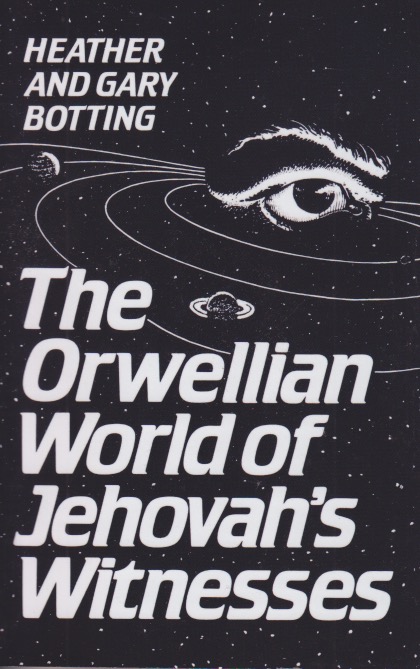
To truly understand a religion, you must be part of it.  This is the dilemma that underlies the entire discipline of religious studies.  And it all comes down to that slippery concept of “belief.”  One of the books that has been on my reading list for years now is Heather and Gary Botting’s The Orwellian World of Jehovah’s Witnesses.  What finally prompted me to read it was the (relatively) recent receipt of an invitation to spend what many call Good Friday (for it is today for the Orthodox) with the local Kingdom Hall crowd.  As I mentioned in an earlier post, the last people to come to my door before the pandemic began were the Jehovah’s Witnesses.  I’ve read about them before, but scholarly literature on the sect is rare, despite their obvious influence.  One reason for this, I suspect, is that to understand you have to partake.

This is where the book by the Bottings comes in.  They were raised as Witnesses and eventually left.  They have been on the inside.  This book takes the interesting hook of comparing that inside world to the vision of the Party in George Orwell’s 1984.  Not only that, but the math regarding the end of the world, or Armageddon, more properly speaking, showed that 1984 was the terminus for the next phase of Witnesses’ history inaugurated by the spiritual return of Jesus in 1914.  It is no accident that this book itself was published in 1984.  The world of the Watchtower is explored creatively and somewhat thoroughly here.  The only problem with reading it nearly forty years later is that I’m left curious for updates.  The Witnesses are, after all, still out there.

The thing about beliefs is that we all have them and we can’t always explain them.  They are part of our rational faculties, but also part of our emotional thinking as well.  No one is totally objective and even Mr. Spock gives in to feelings once in a while.  No system of belief is entirely rational.  Since we don’t have all the data it necessarily can’t be.  We tend to believe what we feel is right.  Those raised in traditions of NRM (New Religious Movements) absorb the beliefs their parents and guardians teach them just as much as Catholic school kids do.  They are often warned about those outside the tradition and what they will inevitably say about it.  This makes them look prophetic.  Once a child has been raised in an exclusionary system, getting her or him out of it is not only difficult, but often damaging to them.  So it is with belief.  This book really made me think.


More about Nightmares

I became aware of TheoFantastique many years ago.  Being new to social media myself, I was impressed at how professional and intelligent the site was.  Eventually I decided to introduce myself to John Morehead, the creator behind it.  (It is possible to be shy on the internet, so this took a few years.)  When Holy Horror came out I asked if TheoFantastique would post a review of it and got an even better response with an interview.  Now that Nightmares with the Bible is out the tradition has been kept going.  If you’d like to see an interview on the book take a look here.  One of the topics that comes up in discussion is how popular culture—TheoFantastique is cleverly named in that regard—influences the way we think about religion.

Religious studies was, not so long ago, a growing field.  Many of us have been trying to understand why interest began to sag, somewhat abruptly, and came to the point that it now feels like an endangered species.  Two of the consequences of this are important: one is that we don’t invest in studying what motivates just about everything in American politics and society, and the second is that the average person gets her or his information about religion from popular culture.  Movies, for example, are impactful, brief, and entertaining.  Humans are visual learners and although books punch above their weight in the learning division, having someone show you something is faster and requires less commitment than reading.  Academics, most of whom love reading, have been very slow to cotton onto this fact.  Society learns by looking.

That observation stands behind both Holy Horror and Nightmares with the Bible.  Both of these explorations look at how people come to understand two aspects of religion: the Bible and demons.  Instead of attempting to tackle all of religious studies (nobody can) or all of cinema (ditto), these books look at the horror genre to see how fans come to understand the Good Book.  As the interview explores, other scholars—mostly younger ones—are beginning to realize this is where people live.  It’s rare to find someone who commits to reading an academic monograph unless they’re in the academy.  Even academics, however, watch movies.  When the locus of information shifts to popular culture we need to start taking seriously what popular culture says.  More people will watch The Exorcist than will ever read an academic monograph about demons.  If we want to understand how people understand religion—what religion is—we need to pay attention.  And TheoFantastique is a great place to start. 


Literary Life

Trying to live a literary life is, I suppose, irresponsible.  Especially if your efforts and writing bring basically no money.  It takes considerable effort to make daily time to read and write, and so much else remains to be done.  At times I feel guilty for trying.  My books have all been published, for various reasons, with academic publishers.  Academic publishers don’t try to sell many copies of an individual book, relying as they do on the long tail philosophy.  Most academics have good paying jobs that expect research and writing in return.  For the outsider, however, there are other pressing matters.  The nine-to-five being the largest among them.  And any social organizations you join to keep you sane and connected.  Then there’s social media to take your time.  And the lawn’s ready for mowing.

I’ve always believed lack of time was (is) a theological problem.  I came up with that when I was an academic and had time to ponder such things.  Unlike many of my colleagues, I did research and write.  Now I want to move into that world where you might earn a little from all the effort.  And yet, that old Protestant guilt has a way of getting its talons around you.  You’re reading?  Shouldn’t you be doing those minor repairs you can handle without a contractor?  (Or at least think you can handle?)  Or maybe shouldn’t you be looking for a job that pays enough to hire someone to do such things?  And don’t you dare let that word “retirement” anywhere near your head.  What are you, irresponsible?

Reading takes commitment.  I try to read, on average, at least a book a week.  It requires a lot of time.  And a literary life includes giving back.  You want to share your writing with the world.  Hoping that either your fiction or nonfiction might eventually bring you some notice.  That’s the plan anyway.  The starving artist paradigm doesn’t feel so comfortable when you’ve got a mortgage.  Still, the imagination refuses to be tamed.  I’ve often said I could be content on a desert island as long as I had a huge stack of paper and never-ending supply of pens.  But that’s not the reality I inhabit.  That mortgage pays for a roof over my books and writing computer, always complaining it’s full.  It may not be glamorous.  In fact, it’s about the exact opposite of that.  But it is, after all, a literary life.


Creepy Houses

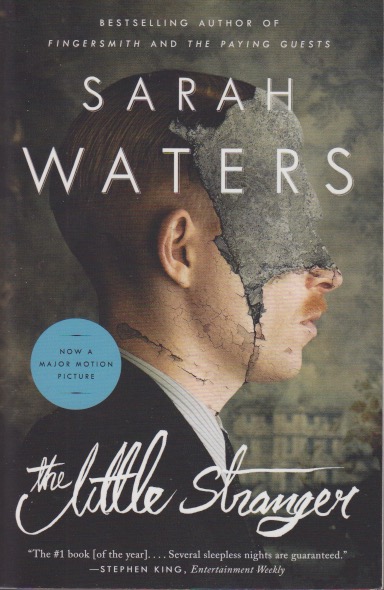
Definitions, I’m learning, are often a matter of one’s experience and taste.  I’ve read a lot of gothic novels and have tried to pinpoint what it is that creates a gothic feel for me.  I say “for me” because other people sometimes suggest works that I would put into a different category.  In any case, it’s clear that The Little Stranger, by Sarah Waters, is a gothic novel by any measure.  A large, isolated house.  A tainted family slowly fading away.  A remorseless, 400-page winter.  Inevitable decay.  The story is ambiguous and moody as Dr. Faraday, the narrator, falls in love with Caroline Ayres, the only daughter of an aristocratic family in decline.  The house may be haunted.  Or the family may be breaking down mentally.  Like The Turn of the Screw, it’s up to the reader to decide.

My preferred gothic has elements of the supernatural in it.  Melancholy without existential threat isn’t really enough to tip the scale for me.  The Little Stranger has enough of both to keep the reader guessing right up to the end.  Reader-response theory—the underlying basis for what’s being called “reception history”—posits that the reader assigns meaning.  The author has her idea of what happened in mind, but the reader contributes their own understanding.  This idea has influenced my own writing.  Once a piece is published the readers will make of it what they will.  In this way I can read Little Stranger as a haunted house story.  Although it was made into a movie I have to confess that I only heard of the novel recently while searching for gothic novels I might’ve missed.

The ambiguity fits the ambiguity of life.  The same circumstances can be interpreted by one person as entirely natural while another will add a super prefix.  No one person has all the answers and reality can be a matter of interpretation.  In that way Sarah Waters’ art follows life.  Interestingly, religion plays very little role in the story.  Church, when it appears, is perfunctory.  The source of tension here is on a rational, medical interpretation of events versus the gloomy lived experience of the Ayres family.  They believe themselves haunted and the scientific answers have difficulty convincing readers that there’s nothing more going on.  This is a gothic novel with a capital G.  Nevertheless, the debased cleric would have been welcome, but you can’t have everything.


Scary Thoughts

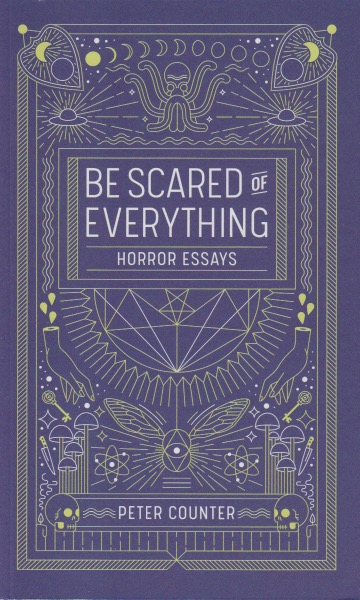
The kinds of places I hang out, online, dictate my reading.  It’s not that I like to be scared, it’s just that I’m honest.  Besides, even when hanging out in person was possible I didn’t do much of it.  So I became aware of Peter Counter’s Be Scared of Everything: Horror Essays.  Like me, Counter’s a blogger (among other things), but unlike me his blog is themed horror.  (This blog has an element of horror but is very roughly themed religion.)  Counter’s book is a fascinating collection of thoughts.  Some of the essays are funny, some are sad, and a few are downright profound.  It’s clear that what gave Counter his crisis was watching his father get shot.  Even those of us who grew up not knowing our dads can see how that experience would traumatize a life.  My own traumas were less focused than this, but we learned the same lesson—it pays to be afraid.

When I was young I never met a phobia I didn’t like.  As I grew older and left home, I came to bring them under control.  You can only get so far in life hiding under your blanket, secretly afraid you might suffocate.  I learned that if I wanted to be a minister—something that never happened—I had to overcome my fears.  Being a parent did it even more.  In order to try to teach your child not to be afraid, you find yourself doing things like scooping up bugs in your bare hands to show that they won’t hurt you.  Like putting a brave face on a truly scary situation.  Like carrying on when everything you’ve built crumbles around you.  Counter’s essays don’t shy away from the difficult things in life.  He’s right: there are many.

I was a monster boomer, but I only really came back to horror after losing my long-term teaching post and longed for career.  Horror helps you cope with trauma.  It gets a bad rap, but mostly from people who don’t understand its therapeutic value.  I don’t like being scared.  Horror, however, reminds me of that cozy childhood feeling of watching monster movies and knowing when it was over the threat would be gone.  Only it never was.  Not really.  Sleepless nights and their febrile dreams may’ve been triggered by the movies, but the realities happening behind the scenes were their real source.  I couldn’t know that at the time, and most of the time I’m not conscious of it now.  Still, I read books like Be Scared of Everything and I think maybe I’m on the right track.


Who’s Upstairs?

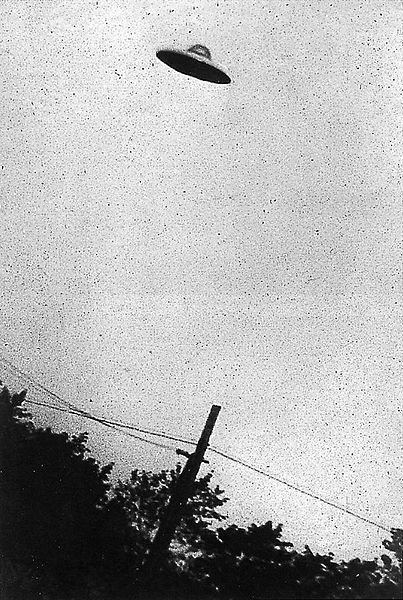
The other day the New York Times ran yet another article on UFOs.  This topic, which has been maligned since the 1940s, is now being discussed without mockery in the mainstream media.  Perhaps following the Trump presidency nothing’s impossible to believe.  There are, interestingly enough, many writers who connect UFOs with religion.  And these aren’t all writing about UFO religions, of which there are many.  Exploring the Outer Edges of Society and Mind ran a piece on biblical UFOs earlier this month.  The topic was taboo, of course, when I was teaching (I remember a colleague laughing when I told him I covered it in a course called Myth and Mystery) but it too is now becoming mainstream.  I don’t need to summarize the Outer Edges piece here since it’s easy enough to follow the link and read, but I would point out that a longstanding connection exists between UFOs and religion.

A spate of books on UFOs came out in the seventies and eighties.  Some of those more or less overlooked by the media focused on religion—often the Bible—and how UFOs play into it.  Quite often the biblicist writers identified these unknown objects in the skies as either angels or demons.  This continues to this day with some congressional leaders (many of whom are too religious for the good of the nation) averring that UFOs are “demonic.”  Frankly, if demons are incorporeal, I wonder why they need to fly around in saucers.  Perhaps they too grew up eating too much Quisp for breakfast.  In any case, the connection was made early and it remains.  When we see something in the sky we used to give it a religious explanation.  Now we chant “drones.”

In his article David Metcalfe begins by noting the forthcoming publication of Alan Steinfeld’s Making Contact: Preparing for the New Realities of Extraterrestrial Contact with the mainstream publisher St. Martin’s Press.  The difference between yesteryear with its Quisp and its flying saucer houses, and today is that people are starting to be serious about the topic.  This, I expect, is one of the benefits of increasing technology.  People are seldom without a camera in their pocket these days and although there are plenty of drones and other strange things flying around, the classic UFO hasn’t gone away.  A generation of people endured ridicule and scorn for being gullible.  Now the gray lady herself is asking questions with nary a smile.  Perhaps we’re becoming more tolerant and perhaps we’re more willing to believe we’re not alone in the universe.  Some would claim that even the Bible got in on the act millennia ago.

Image credit: George Stock, via Wikimedia Commons

Helpful Horror

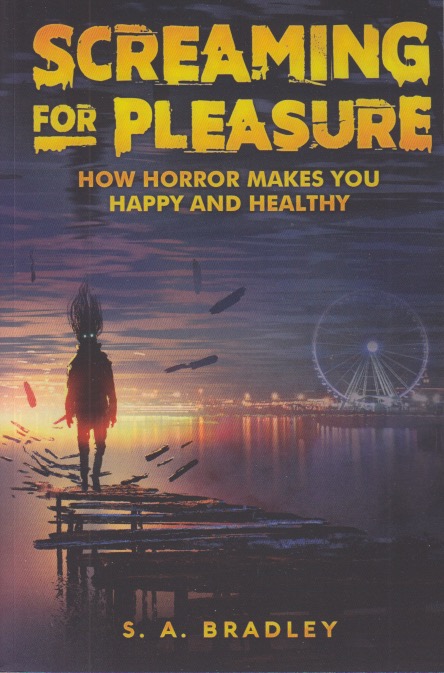
It’s pretty obvious when you meet one.  A horror fan, that is.  For one thing, they’re mostly decent people who often feel like outcasts for their tastes.  They also tend to have a well-developed critical sense for films.  While I’ve never actually met S. A. Bradley, I feel like I know him after reading Screaming with Pleasure: How Horror Makes You Happy and Healthy.  This is a must-read for horror fans and it comes with enticing descriptions of movies you’ll want to see afterward.  Bradley’s range is truly exceptional.  Not only that, but his taste in films leads to an inherent trust that he won’t steer you wrong.  The movies he recommends—the ones that I’ve seen—wholly bear him out.  The man’s a connoisseur.

Perhaps it was because I, like Bradley, was raised in a very religious household, but his recognition that horror and religion are closely related really spoke to me.  With a similar radar toward the religious impact of horror, he notes at several points how the two interact. His discussion includes horror in music and literature as well as cinema.  The benefits of the genre are unapologetically discussed, including the relatively high proportion of women who direct horror compared to other genres.  Unlike other movie genres, horror suffers from a perennial bad image.  Bradley confronts why this is so and also why it is misguided.  The bias is deep and undeserved.  Ironically, many of the same kinds of criticisms are now being leveled at religions as well.

Bradley’s book isn’t about religion and horror.  As someone raised in a religious household and who used horror to cope, however, he understands how the two are related.  Horror can heal.  When those of us in similar settings come to realize that horror is offering a means of getting along in a cruel world, it answers questions in a way that theodicy can’t.  Horror can be an intellectual experience.  It can be thoughtful.  But what comes through here is that it is also honest.  Life is complex and difficult.  Horror doesn’t shy away from that, but brings it out into the open.  I’ve read many books that analyze horror, and there are many more yet to read.  Bradley does something a bit different from many of them—he writes from a broad experience both in life and in the genre and comes up with an eloquent statement about a genre often dismissed.  And those willing to read it come away the better for it.


Rabbit Years

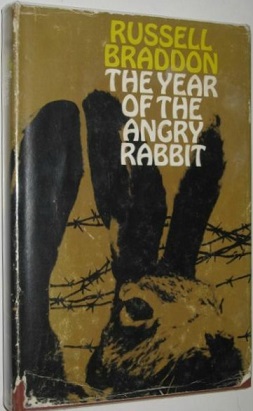
A childhood horror movie that I only recall in the most wispy of fringe memories is Night of the Lepus.  It’s one of those monster movies that involves mutated animals, in this case the unexpected rabbit.  I’m not sure why it’s been on my mind lately, but a little research indicated that it was based on the Russell Braddon novel, The Year of the Angry Rabbit.  This book is out of print and still under copyright, so finding a copy wasn’t easy.  Apart from vague images of giant rabbits, I had no idea what to expect.  The book turned out to be a comedy horror, in that order.  Remembering that the movie wasn’t funny (although it is consistently considered one of the worst cinematic efforts of the time), I wasn’t prepared for this.

You see, I don’t like to read about books before I read them.  I don’t read cover copy.  (I tend not to watch movie trailers either, unless it can’t be helped, like when you’re in a theater.)  I suppose knowing a genre of a book helps, but I just wanted the experience of reading the story behind a movie that won’t completely vacate my memory cells.  The Year of the Angry Rabbit is a satire on government, war, and capitalism.  If you’re not expecting a serious horror story it’s quite funny.  Russell Braddon never became a household name—he was from Australia and a person’s cultural impact tends to be greatest on their own continent—but if you knew this was a satire from the start you’d probably enjoy it as such.  Although written in the sixties, it’s climax takes place at the millennium, now two decades past.  It’s always interesting to see what people thought we might be up to by now.

Although there are elements of humor to our politics, Orwell seems to have been more on the money than Braddon.  Nevertheless it’s important to keep the old stories alive.  There are still people like me who will seek out rather obscure novels from many decades ago.  They might have to have sat on library shelves for years without having been checked out—this used to be the glory of the library, before “evidence-based usage” studies ruined them.  I search for things I want to read in my local small town library and find that my tastes are too obscure.  Besides, old stuff has to be cleared out to make room for the more recent books hoi polloi wish to consume.  I’m glad they’re still reading.  For me, however, I’ll need to stretch back to a time before I was old enough to read to satisfy an unrelenting memory. It was rabbit years ago.