Dark History

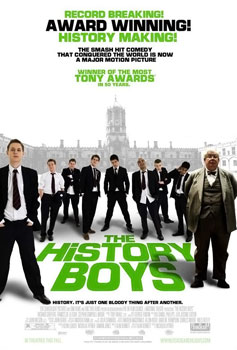
I wouldn’t have watched The History Boys had my current interest in dark academia not emerged.  A comedy-drama based on a play by Alan Bennett, it’s set in a British boys’ school where the seniors who’ve made record-breaking A-levels, are set to try to get into Oxford and Cambridge.  The movie revolves around two teachers, “Hector,” who is unorthodox but full of humanistic spirit and Irwin, who urges the boys to stand out in originality, even if it means bending the truth, or outright lying.  The darkness, although played lightly, is that Hector gropes the boys.  This has led to some criticism of the film since Hector is presented in a positive light.  Bennett, who also wrote the screenplay, pointed out that the “boys” are actually consenting age, and know that Hector does nothing more than fondle them when fully clothed.  This hasn’t protected the film from the furor of those who find the idea offensive.

Beside the divergent approaches of Hector and Irwin’s completely opposite angles, although understated, remains the middle voice of Mrs. Lintott, the history teacher.  She does make the point as the boys prep for their entrance exams, that women have been silenced in history and they should never forget this.  The Cutler’s Grammar School boys all win entry to Oxford, and the movie ends by each of them saying what has become of them.  There’s really too much going on in the movie to chase down every plot line.  For example, the very religious physical education instructor’s story.  He’s brought up short while using Jesus to urge the boys on when one of his students is Jewish and another Muslim.  Of course, school life is all-encompassing, and vignettes are the most that movies might offer.

The History Boys is a film that would bear rewatching for the words alone.  Since the movie is based on a play and the playwright wrote the script, it is naturally very well written.  The dialogue contains many potentially quotable bits.  Dark academia tends to be that way.  At least some of it is.  Often set in educational locations, it recalls how we came to understand our world.  It really is a fraught journey.  Here the coda showing what happened to the boys is a reminder that our fates choose us rather than the other way around.  And that’s what dark academia explores—we may set out to do one thing, becoming an expert, only to find ourselves scratching out a living doing something else.  I know I’d see this again, to continue my own education.


Then Again…

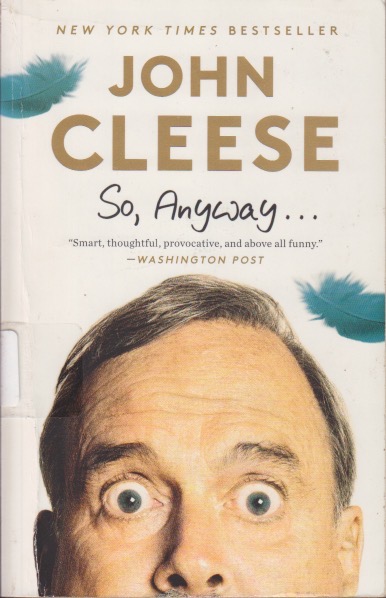
C. S. Lewis wrote somewhere (I can’t recall, but it was probably in Surprised by Joy) that when reading autobiographies, he found the youngest years the most informative.  I found that true for So, Anyway… , John Cleese’s memoir of his life up until the founding of Monty Python.  My wife and I read this book together—I tend not to gravitate towards autobiographies of living persons unless it’s someone I’m utterly fascinated by, but since we both enjoy Monty Python, why not?  It gave me quite a bit to think about.  Some parts are very funny, others more mundane, but mainly it was the path to a writer’s life that interested me.  I typecast Cleese in my mind as an actor, specifically a comedic one.  Of course, comics often write their own material.  Or at least some of it.  What became clear is that Cleese thinks of himself primarily as a writer.  That helps me understand.

It struck me that becoming a writer might’ve been easier had I started trying to get published when I was younger.  Of course, I didn’t have the advantage of attending Cambridge, or any other university where connections might’ve paid off.  Or having my writing encouraged after high school.  Already by college I’d been writing both fiction and non for many years.  In any case, Cleese found a teaching job because he’d attended the school himself, and then studied for a career in law.  Performing, however, and the attendant writing, soon came to be his self-identified career.  Anyone interested in Monty Python would find this an interesting account.  It only goes up to that point in the author’s life, which was, of course, only until he was still a fairly young man.  These days it’s difficult to be taken seriously as a writer without a degree in English or journalism.  The rest of us founder.

Monty Python was a group effort.  My wife and I read Eric Idle’s memoirs a couple years back (for some reason I didn’t post about it).  So, Anyway… was, however, a find at a used book sale, and we’re not actively looking for Michael Palin, Terry Jones, or Terry Gilliam’s reflections.  (Graham Chapman died young, of course.)  Mental typecasting is probably a crime against a fellow creative but the space someone moves into in our consciousness tends to be the same room they will always rent there.  It’s difficult to make a living as a writer and many who declare that as their identity work other jobs to make it possible.  Sometimes, such as the case of the famous, that other job may be the one where all the recognition lies.  Such is the creative life.


Long Tail

There’s a truism in academic publishing (how many of these are actually falsisms!) that a book reaches its sales potential in three years.  After that, the received wisdom says, a sale here or there may occur, but the book has reached the end of its commercial life.  One of the problems with this is that sometimes a topic will experience a resurgence, or, perhaps, pick up for the first time.  Some publishers raise their back list prices every year, making those late sales nearly impossible.  McFarland, however, seems to understand that if you lower prices after the front list sales, a book may live on.  I received a royalty statement for Holy Horror this week.  I’m used to sales being low but I was surprised to see that the lifetime total is now up to 246 copies. Still no bestseller, but more than it was six months ago.  Many of those sales have been in the past year, six years after publication.  I was chuffed.

Academic publishers who price books at around $100 and keep them at that level are killing those books.  Nightmares with the Bible is so priced (and the publisher has no taste for paperbacks), meaning that it has sold less than 100 copies.  Surprised?  I’m not.  Academic pricing models are terribly outdated but the extra revenue from hardcovers priced beyond the reach of the interested reader is just too enticing to leave behind.  Libraries are the main market, in their mind.  Libraries, however, are in the crosshairs.  The Make America Dumb Again crowd is even slashing our copyright library—the Library of Congress—where a copy of each book published in America is kept.  Who else will be left to buy expensive books?

Speaking of libraries, I have an embarrassing confession to make.  I’ve seen (but not been in) the largest library in the United Kingdom, the Bodleian.  The Bodleian is the main library of Oxford University.  I’ve been to Oxford a few times but I don’t know the city well.  The embarrassing confession is that I realized I’d seen the Bodleian only by reading a novel that stated Blackwells, the bookstore, is just across the street.  I know right where Blackwells is, of course, and have been there a time or two.  There’s a kind of irony in that I learned a truth about the world by reading a novel about a place I’d been.  I spend more time in bookstores than libraries these days, but since I make purchases I like to think I’m supporting the growth of knowledge, in my own small way.  And I write books, which, pleasingly, still sell a few copies in a year even when they’re old.


Q’s and P’s

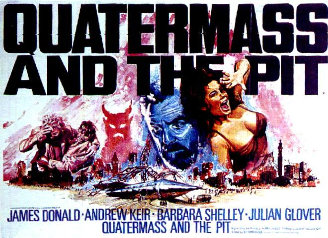
I finally had to break down and buy it.  Quatermass and the Pit has been on my “to see” list probably longer than any other single movie.  I managed to stream the first two of this telinema series for free, so I guess it was like getting three movies for the price of one.  Aired in the United States as Five Million Years to Earth, this isn’t the greatest sci-fi-horror movie ever, but it isn’t bad.  The pacing is a bit slow but the story is intriguing.  Rocket scientist Quatermass gets involved in the excavation of what turns out to be a buried rocket ship from Mars.  Surrounding the ship in the five-million-year-old matrix are the remains of apparently intelligent apes.  The scientists discover that the apes were artificially enhanced by insectoid martians that resemble the devil.  It’s pointed out that any time digging has taken place near Hobb’s End, strange phenomena occur.  It’s noted that Hob used to be a nickname for the devil.

This detail leads to a perhaps unexpected connection to religion and horror.  Quatermass and Barbara, a scientist who has the ability to “see” the creatures via collective memory, realize that the hauntings that have taken place around Hobb’s End for centuries may have been the image of demons, or the devil, emanating from the evil of these would-be invaders.  At one point a priest argues that their influence is essentially demonic, but the scientists realize that these modified apes are actually the creatures from which humans evolved.  All the human tampering with the ship eventually frees the spirit of the martian insects, resembling a devil.  The way to destroy it is with iron, relying on folklore which, in this instance, works.

The four Quatermass movies (I don’t plan on seeking out the last) were theatrical reshoots of television serials.  The last movie is essentially the TV series stitched together as a movie.  From at least the seventies on (Quatermass and the Pit was released in 1967) the first and third installments were considered fairly good horror films.  They aren’t always available in the United States, probably due to digital rights management.  It seems ridiculous that in this day and age that companies still restrict access, even to those willing to pay a modest fee, for movies that are essential parts of the canon.  Hammer (all three Quatermass movies are Hammer productions) films are still difficult to access in the United States.  At least, with the willingness to wait half a century, I’ve finally be able to see Quatermass and the Pit.


Finding Fossils

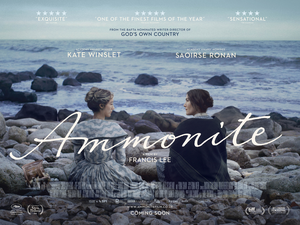
Mary Anning was a real woman.  She made valuable contributions to paleontology in the first half of the nineteenth century, although she wasn’t always credited for her work.  The movie Ammonite is a fictionalized account of her life at Lyme Regis, where she lived and discovered dinosaur fossils.  Being fiction, the movie focuses on how Mary “came out of her shell” by entering into a relationship with Charlotte Murchison (also an historical person, wife of the Scottish geologist Sir Roderick Impey Murchison) who was left in her care when she came down with a fever after trying to recover from melancholy by taking the sea air.  Mary had established a life of independence and wasn’t really seeking relationships; her mother still lived with her and, according to the movie, they had a distant but loving regard for each other.

I was anxious to see the film because it is sometimes classified as dark academia.  Since I’m trying to sharpen my sense of what that might mean, it’s helpful to watch what others think fits.  The academia part here comes from the intellectual pursuits of Anning and the academic nature of museum life (one of her fossils was displayed at the British Museum).  Anning, who had no formal academic training, tried to make a living in a “man’s world,” and in real life she did contribute significantly to paleontology.  The dark part seems to come in from her exclusion from the scientific community, and perhaps in her love for Charlotte, a forbidden relationship in that benighted time.  Of course, this relationship is entirely speculative.

Fictional movies made about factual people make me curious about the lives of those deemed movie-worthy.  Ammonite is a gentle movie and one which raises the question of why women were excluded from science for so long.  No records exist that address her sexuality—not surprisingly, since she lived during a period when such things weren’t discussed.  Indeed, she didn’t receive the acclaim that she might have, had she lived in the period of Jurassic Park.  She was noticed by Charles Dickens, who included a piece on her in his magazine All the Year Round, in 1865, several years after her death.  These days she is acknowledged and commemorated.  This movie is one such commemoration, although much of it likely never happened.  As with art house movies such as this, nonfiction isn’t to be assumed.  Nevertheless, it might still be dark academia.


Belting Beltane

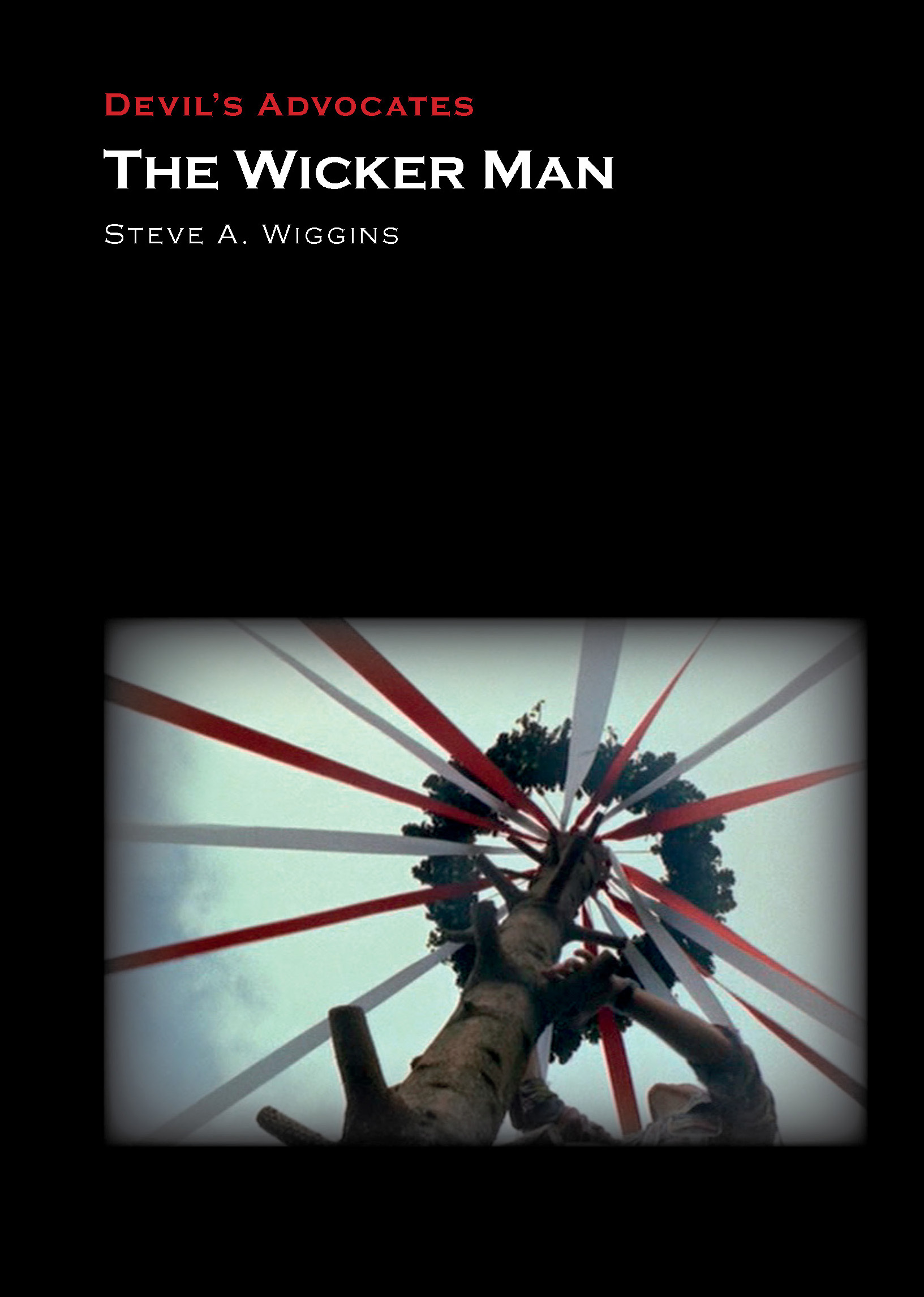
Things have been so busy that I forgot that today is Beltane.  That’s all the more ironic because yesterday I’d been on a panel to address the British Association of Film, Television and Screen Studies special interest group on Horror Studies, about The Wicker Man.  Lest you get the wrong idea, BAFTSS did not approach me to talk about my book (which has largely disappeared, as far as I can tell), but another recent Devil’s Advocate author approached them about having a panel featuring recent titles.  This special interest group has a program called Weekday Night Bites where they gather virtually to have speakers talk about horror.  Yesterday there were seven of us, discussing five books, one of which was The Wicker Man.

The theme of the panel was No Safe Space, about place and space in horror.  This meant I spoke briefly about The Wicker Man as folk horror.  As I told the assembled group, I actually interpret Wicker Man as holiday horror—it’s based on May Day, and I didn’t even think to mention that it was today—instead of folk horror.  One of the the hallmarks of the Devil’s Advocates series is that it tries to approach horror films from unexpected angles.  When I first contacted the editor who started the series at Auteur (who has, unfortunately left), he told me that they didn’t have a Wicker Man volume because everyone was pitching it as folk horror.  He wanted to see a different interpretation.  I’d been writing a book about folk horror and decided to give that a try.  The critics liked it, and thus my book was born.  And here it is, May Day, and I’d forgotten all about it.

There was a reasonably sized group present for the discussion and it was a lot of fun.  It reminded me of my Miskatonic Institute for Horror Studies course on Sleepy Hollow two years ago.  Both of these were efforts to stir some interest in my books.  Horror and religion is a new avenue of approach and there are a handful of us working in this area.  The others, it seems, have a knack for getting their books published in places where you don’t have to take out a mortgage to afford them.  I’m more in the group whose books are relegated to the Summerisle of sales.  Either that, or I’m actually Sergeant Howie, unwittingly flying there to help someone I think is in trouble. Who knows?  Anything’s possible on Beltane. 


Seeing the Forster

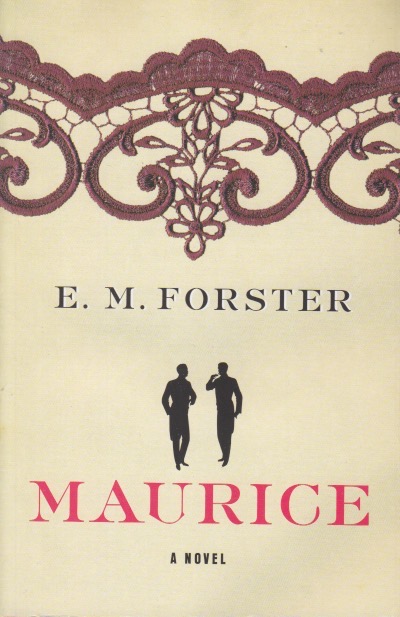
The thing about exploring dark academia is that its recognition is fairly new.  It seems that the “concept” emerged only ten years ago and the longer that it’s around the more sources it gathers, like a dust bunny growing under the bed.  I’ve never read E. M. Forster before, although I’ve seen movies based on his novels.  He was an interesting chap, trying out sci-fi (or at least dystopian fiction) as well as his literary novels.  Maurice was not published during his life because it explored homosexuality.  Forster was gay when it was technically illegal, and this novel reveals much of the struggle faced by homosexuals during the early decades of the twentieth century.  The novel has been cited as an example of dark academia, I suspect because much of the early part takes place in Cambridge.  Although it has a happy ending it’s not an easy novel to read.

Quite apart from the hideous paranoia of society at the time towards any kind of homosexuality, Forster’s style was, for me, difficult to decipher.  I know this is my issue, and not his.  His use of British expressions underscored for me how difficult it is to understand idiom in another culture.  At more than one place I was unsure what the speaker meant because the British slang used was so different from what I encountered living in the UK in the early nineties.  Not that the story is difficult to follow.  It is movingly written, demonstrating the torment of those who realized their orientation as they faced in an intolerant society.  Maurice even tries to “cure” his homosexuality, but efforts fail.  There is a darkness here, appropriate for dark academia.

Forster died in 1970, just when homosexuality was beginning to be understood not as a sickness, but a disposition.  It’s not a choice, and as the animal kingdom tells us, it’s certainly not limited to human beings.  The novel makes note of the fact that Greece, the origin of much of western culture, approved and promoted homosexual relationships.  Maurice is told that he could move to France of Italy where such relationships were not illegal.  There’s no question that the societal stance toward homosexuality was based on particular understandings of biblical texts, some now thoroughly discredited by biblical scholars (Sodom was not destroyed for homosexuality as biblical intertexts clearly show).  Generations of people, including Forster, were put through lives of torment in order to keep a prejudice alive.  Academia may be dark indeed.


A Different Village

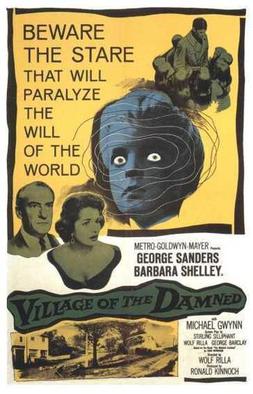
If I’m honest I’ll admit that I first found out about John Wyndham’s The Midwich Cuckoos from The Simpsons.  In one of the episodes, “Wild Barts Can’t Be Broken,” a “clip” is shown of a horror movie called The Bloodening.  A spoof on Village of the Damned, the scene caught my imagination and I was able to learn that it’d been taken from this movie.  This was many years ago, of course.  In any case, I went out and found a DVD of Village and found it less frightening than anticipated, but it left me curious.  It was easy enough to find out the book it was based on (it’s in the credits).  Now, well over a decade later I finally read it, but I’d forgotten nearly everything about the movie but the glowing eyes.  Having read the novel, I had to see the movie again.

Interestingly, the book is generally considered science fiction and the movie horror.  The two genres are closely related, of course.  The explanation for the children in the movie is a little sci-fi, but the framing is horror.  So much so that in Britain in 1960 it was nearly given an X rating (the censors didn’t like the glowing eyes).  As typical, when compared to today’s fare this is a tame little piece about some unruly children.  Of course they do get blown up at the end.  That may have been a spoiler.  I guess I can be unruly too.  In any case, sequences of self-harm, and even suicide, make this a reasonably scary movie.  The film has the same stiff upper lip that the book does, but otherwise it’s a modern horror classic.  I haven’t seen the 1995 remake, but it didn’t get very good reviews.

The movie doesn’t have as much moralizing as the novel does, but it raises the very real issue of how we socialize children.  I do suspect, however, that blowing them up when they’re all together is probably not the message they wanted us to take home.  Although far from a flawless film, this is quite intelligent for horror of the period.  Consensus is that horror “grew up” in 1968, but there were some premies, it seems.  Night of the Demon is another one from the period.  Horror has, I would argue, been intelligent from the start.  Dracula, although not a perfect story, has become a bona fide classic, and Frankenstein before it, had already been a literary touchstone for decades by the time the former was published.  Not bad for watching an episode of The Simpsons.


First Tower

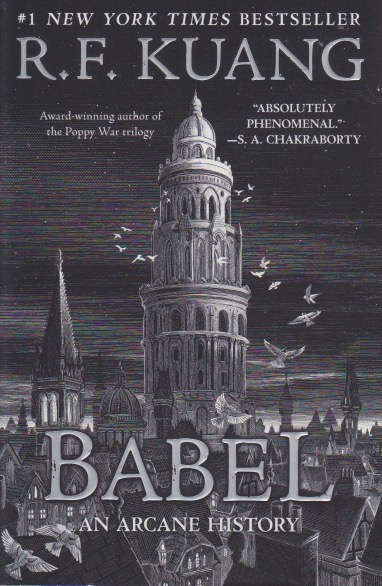
In these days when daring to think feels dangerous, R. F. Kuang’s Babel: An Arcane History feels dangerous to read.  Good literature is like that, even if it’s uncomfortable to read as a “white” man.  A fantasy largely set in Oxford, it’s based on the premise that languages, when placed next to one another, engraved in silver, have enormous power.  The power to run an empire.  This is a post-colonial story, and I took comfort in the working class support, for their own reasons, of exposing the very dangerous world of capitalism.  With its “human capital” as we’re now being called by businessmen.  But I digress.  Four students, three from abroad, are brought to Babel, a tower in Oxford that houses the Royal Institute of Translation.  Their use of their native tongues helps build immense power in this Oxford tower.  Power that fuels Britain’s imperial goals.  But all is not well in academic paradise.

Slowly three of the four scholars come to realize that their home countries are being exploited for purposes of yet further exploitation.  The wealth always flows back to England, and even the small emoluments it offers to those other nations cannot negate the fact that the end goal is British superiority.  The protagonist is Chinese, taken from poverty to live in academic luxury, in exchange for what was his birthright—his linguistic ability.  It doesn’t end well.  This is not a happy novel.  But it does highlight something we seldom consider; our language ability is truly an amazing thing.  We try to convey a fraction of what’s going on in our heads to another person, and that person has some ability to understand it.  And languages are ways of thinking.  I used to tell my students that all the time.  It’s more than just words.

This is also a fairly long book.  As with most fairly long books, you’re left feeling it once the story concludes.  Even though language allows us to communicate, it’s sometimes uncomfortable to hear what someone else is thinking.  We don’t have to be woke to realize that Black, or Asian, or indigenous experience is quite different from what we call “white.”  And such voices deserve to be heard.  We live in a time when white men don’t like to be told that they’ve participated in oppressive behaviors.  Probably most of them (for I believe people are generally good) are not intentionally evil, but they participate in a system which can be.  And often unthinkingly so.  Thus these days thinking feels dangerous.  And this book will make you do so, nevertheless.


Prey Again

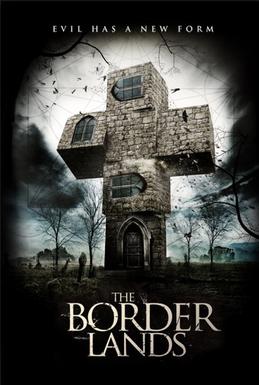
Let’s begin with the title.  Final Prayer was released in the United States as Borderlands.  I still found it on a free streaming service under its UK title, and I’m glad I did.  The movie falls under a a few different categories—cinéma vérité, found footage, and folk horror come immediately to mind.  The story follows a set of three very different Vatican-sent investigators, promotors of the faith, to check out a miracle claim in Devon.  I was a little confused at first, assuming this was an Anglican church, being in England.  One of the investigators, Deacon, a religious brother (monk not associated with a monastery), Gray, a techie who has some basic beliefs, and Mark, a priest technically in charge.  There’s tension between the men and between them and the locals.  The parish priest believes God appeared during a baptism at the parish that was being filmed by a family member.

The investigators come up with plausible explanations for the “miracles” caught on tape, but they also find some phenomena that are difficult to explain.  The local priest, distraught that they are disproving the “miracle,” jumps from the church tower, killing himself.  Mark, taking this as an admission of guilt for a hoax, closes the investigation.  Deacon, however, refuses to give up and calls in Fr. Calvino, who mentored both he and Mark.  Calvino believes the church was built on pagan sacred ground and it must be purified.  The ceremony, however, doesn’t end the way it was expected to.  All the while, the locals are—mostly passively, but at times overtly—hostile to the team.  Calvino’s revelation of the pagan background, however, makes clear that at least some of the locals haven’t given up pagan ways.

There are a number of elements worthy of commentary here.  It seems likely that a longer piece will be necessary to cover much of it.  A discussion in the local pub between Deacon and Gray, before calling in Calvino, raises the central question.  Gray, as a layman, suggests that pagans had to be worshipping something they believed was real before Christians came along.  He wonders if intruders (Christians, in this case) were unwelcome by this earlier deity.  Deacon, who is skeptical, but who’s come to believe that a former priest was involved in pagan worship, resists such thinking.  The ending makes clear what’s been going on, but getting to that point does involve quite a lot of religious discussion.  Horror and religion go naturally together, as I often opine, and this is a particularly good example of their common labor.


Singing Darkly

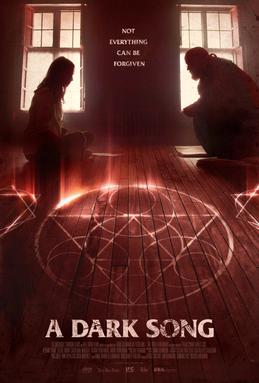
Euro-horror has become one of the more profound sub-genres of film.  I can’t recall who it was that recommended A Dark Song—set in Wales although filmed in Ireland—but it was immediately obvious I was in for a treat.  Dealing with Gnosticism, occult, and demonic manipulation (I wish I had the script!), it takes on the big issues of death, loss, and forgiveness.  The premise begins chillingly enough.  A woman rents an isolated country house for an entire year, paying in advance so there will be no disturbances.  She brings in an accomplished occultist to let her speak to her dead son again.  The two don’t know each other and this ritual will take many months, during which they will not be able to leave the house.  Neither really trusts the other, but Joseph (the occultist) tells Sophia that she must obey everything he says if she wants the ritual to work.  Once they begin they cannot stop until it reaches its conclusion.

Sophia hasn’t revealed the real reason she wants to summon her guardian angel.  She wants revenge on those that used the occult to murder her son.  The truth Sophia kept from Joseph requires them to restart, so he drowns her in the bathtub and then uses CPR to revive her.  As they grow increasingly tense, a fight breaks out where Joseph is accidentally impaled on a kitchen knife.  With only bandages and whiskey to treat the wound, they press on, but Joseph dies leaving the ritual unfinished.  Sophia can’t escape but after being tormented by demons, her guardian angel arrives.  Her request is actually wanting the ability to forgive.

This profound story has many twists along the way, but a scene that I would like to consider is where Joseph tells Sophia “Science describes the least of things… the least of what summat is. Religion, magic… bows to the endless in everything… the mystery.”  The suggestion that science is indeed correct, but limited.  Religion goes beyond science, however, to the world of possibility.  The movie suggests these two worlds intersect.  After Joseph dies Sophia can’t escape that other world until its rules have been met.  And when she does reenter the world of science, what happened in the world of magic has lasting effects on her.  A Dark Song is one of those movies that will haunt you after watching.  The Euro-horror of the last decade or so has been incredibly profound, showing the promise of what horror can be.


Happy Beltane!

They creep up on you, these holidays with no official recognition.  I’ve been so busy that it didn’t even occur to me that today was Beltane—May Day—until my wife mentioned it to me before I headed up to bed last night.  Why is that important?  It’s not a day off work, so why bother?  Well, for one thing it’s the fuel behind my book published in the summer of last year.  Or, according to the Celtic calendar, the fall (just before Lughnasadh).  In other words, this is the first May Day for The Wicker Man.  I should’ve been trying to drum up a little interest, but things have been busy.  Besides, my profile hasn’t grown since its publication.  Nobody even cites it on the Wikipedia page for the movie, although it takes a distinct angle.  So I’ve been busy with other things.

I’ve been trying to find a publisher for my next book.  A couple friends know what it’s about but mostly nobody else because it’s time-sensitive.  Agents haven’t nibbled.  Well, one did.  He had me rewrite the book and then decided he couldn’t sell it after all.  Back to square one.  Even presses that publish mostly non-PhDs weren’t even interested enough to respond to queries.  Nothing like writing a book to make you realize how insignificant you are.  Like Sgt. Howie, I’m caught on Summerisle.  Ironically, I didn’t even think of writing a post for my book today when I was jogging yesterday and a haze over the moon (I know the movie ends with the sun—I’ve seen it a time or two) made me think, “That sky looks like the ending of The Wicker Man.”  Well, when I get back from my jog I have to start right in to work.  And Beltane’s not a holiday in these parts.

May Day used to be celebrated, even in the United States.  Now it’s just disappeared into the haze of work days.  And we don’t have time even to watch movies on work days.  That’s a weekend activity.  Of course, my weekends are full of trying to find publishers.  Two are currently considering my unagented book.  Four have already rejected it.  I’m thinking that I could use a trip to the Green Man with Howie.  At least on Summerisle they know how to celebrate May Day.  Of course, it’s the ending that makes it horror.  And Beltane snuck up on me this year.  Without it, The Wicker Man wouldn’t even exist.


Monopoly by Statute

The Bible is an odd book.  It is foundational for the modern world, no matter how much we might want to deny it.  Even so it’s a strange book.  The King James Version (KJV) of the Bible is a masterpiece of English literature.  There’s not one King James Version, however, as several variants exist.  Nevertheless, the KJV remains quite popular among some religious groups and it is still studied in English Departments as part of our cultural heritage.  It is also in the public domain, which means anyone can print and sell it.  Unless, of course, you wish to do so in the United Kingdom.  Here’s where the story gets interesting.

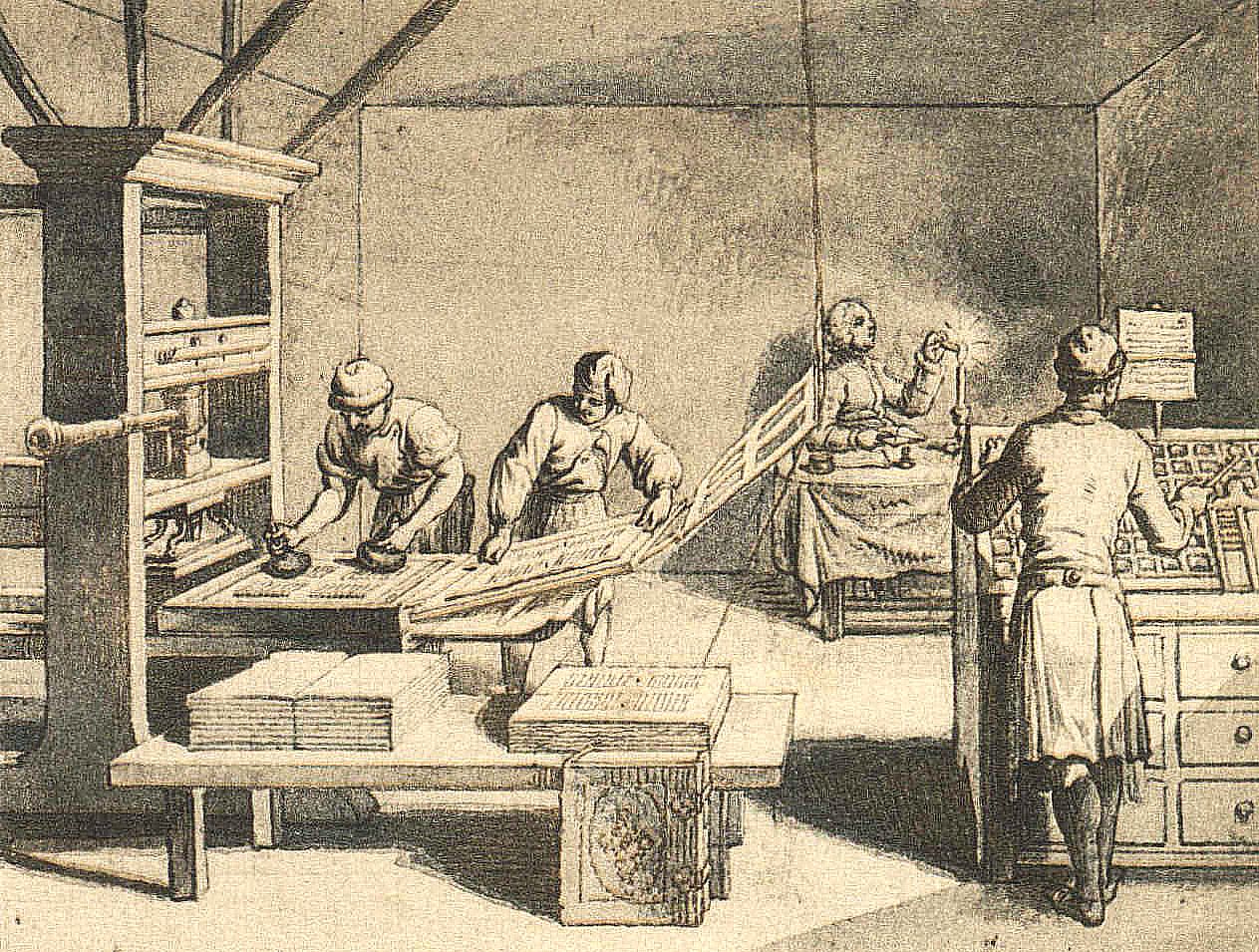
Because of England’s troubled religious history—remember the whole Catholic v. Protestant monarch thing?—the printing of religious books became a contentious issue shortly after the adoption of the printing press.  In 1577 a monopoly on Bible printing went to one man, Christopher Barker, the Royal Printer.  Ostensively to control the version of the Bible approved for use in the Church (of England), this royal privilege became law.  In perpetuity.  Now rights, as commodities, can be bought and sold.  And this happened from time to time.  Cambridge University, however, had been granted a royal charter earlier—also perpetual—to print “all manor of” books.  Since this arguably included the Bible (a lucrative business) it wasn’t prevented from printing them as well.  Oxford University was granted a similar charter some years later and so the two ancient universities and the Royal Printer were the only ones allowed to print the Bible for sale in the United Kingdom (except Scotland, but that’s a story for a different time).

Image credit: Daniel Nikolaus Chodowiecki, public domain via Wikimedia Commons

This privilege, which still exists on the books, did not apply to later versions of the Bible.  The KJV became wildly popular and really wasn’t challenged much for over two centuries.  By the nineteenth century British lawmakers, presumably, had better things to do than argue about who could print the Bible.  Meanwhile other translations divided and conquered the profits coming in from the sale of what had been, in essence “the” English Bible.  As late as 1990 the Royal Printer status landed with Cambridge University, so the sale of rights continues.  A similar story accompanied the Book of Common Prayer, which has always been in the public domain but can only be printed in the UK by the two major university presses.  The story of the Bible is a fascinating one, and since it has shaped western civilization, it seems appropriate to give it the last word: “where your treasure is, there will your heart be also.”


Not a Peep

Time changes everything.  Peeping Tom, which has been on my list for some years, was castigated when it was released in 1960.  Now it’s considered a classic.  Indeed, it’s frequently discussed in books analyzing horror films, and it had a bit of influence on Alfred Hitchcock.  Films like this must be watched as period pieces, of course, but there’s so much psychology here to unpack that I wonder if it’s used in mental health courses.  Mark Lewis is a loner who inherited a spacious London house from his father.  He lets out the downstairs rooms but keeps to himself upstairs.  One of the reasons is that he realizes that he’s mentally unstable.  He’s a serial killer, in fact.  His young downstairs neighbor takes a shine to him and he reveals, via film, that his father tormented him as a child to film his fear reactions.

As an adult, Mark works in the film industry.  He also kills women while filming them to capture their fear reactions—taking his father’s work a step further.  Although shy, he is charming enough to others.  When he sees a fear reaction, however, he feels compelled to murder.  The neighbor downstairs doesn’t suspect him, but her ocularly challenged mother does.  Thinking back over it, many moments reminded me of a racier version of Hitch.  Racy because Mark picks up money on the side by taking boudoir photographs that the local news shop sells to certain customers.  This is a creepy film and perhaps the creepiest scene is where a local girl, well underage, comes into the news shop to buy a candy bar just after the owner sells an older man a pornography book.  We don’t like to admit that such things could happen.

There is so much going on in this movie that it’s clear, at least to me, why it has garnered such acclaim.  I spent the first twenty minutes or so wondering whether I should really be watching, but as I stayed with it I couldn’t look away (which is one of the very self-reflective issues that the film addresses).  The analyses I’ve read never really went into detail regarding the plot, so there were plenty of places where I wondered what would happen next.  The pacing is more in keeping with the turn of the sixties, but the mind work seems ahead of its time.  Some call it a precursor to slashers, but it doesn’t linger on the actual bloodshed (which is minimal, considering).  It does take its time to make you think while you watch.  And somehow it makes viewers complicit, it feels, with what they’ve seen.


Iron Age Angst

Browsing can lead to unexpected finds.  Such is the magic of bookstores.  Most of the books I read are recommended to me either through online sources or from people who have an inkling of my tastes.  Often such books are on the long side.  While I don’t object to really getting into a book, like most people I wonder where the time goes and a short read gives you a sense of accomplishment.  So it was that I was browsing a local bookstore for something brief.  I came across Ghost Wall by Sarah Moss.  The back cover bore no BISAC info telling the genre, but in this case the blurbs convinced me that I’d find this a rewarding read.  It’s not horror, but it has a sense of doom about it.  There may be some spoilers below but I won’t give away the ending.

Told from the point of view of Silvie, a teenage minor, it recounts a college anthropology experiment on the moors of northern England.  Silvie isn’t one of the students, but rather a high-school-aged daughter of a bus driver enamored of Iron Age Britain.  A professor has three students set to live part of the summer like Iron Agers, and Silvie’s father has brought her and her mother along to do “the women’s work.”  Yes, he’s a chauvinist and he has violent tendencies.  He clearly wishes he’d lived in “simpler” times.  I suspect what makes a novel like this work is that many of us know people like the father.  Hard, angry men.  As the story unfolds we witness his abuses and the clueless professor simply continues play-acting Iron Age.  Until they get the idea of sacrificing a victim like the bog people of northern Europe.

The style is spare, like Cormac McCarthy’s The Road.  As one of the blurbs says, there are echoes of Lord of the Flies as well.  What do groups of men get up to when unleashed from civilization?  It took me some time to figure out, since this is entirely first-person narrative, that there are only three students—one woman and two men.  With the chaperones it’s two men and a woman.  This uneven power structure raises its own questions.  Meanwhile Silvie is coming of age, beginning to realize her own sexual awakening.  Her best role model is the co-ed among the group since her working-class mother lives in fear of her husband.  The story is compelling and a bit scary.  It’s also a rewarding read that won’t take a month or more to finish.