Drac Ops

Just don’t ask, okay?  Like most things in my life, I discovered Dr. McNinja way past when it was popular.  Who knows?  Maybe it’s still popular.  I’m not the best judge of that kind of thing.  I’ve read a few graphic novels in recent years, generally when someone lends them to me, or when a movie I like is based on them.  Now, the thing about Dr. McNinja is that it started out as a webcomic.  People younger and more with it than me have shown me other people younger and more with it than me making a good living web cartooning.  They don’t have 9-2-5s and they live, going by their videos, in nicer houses than I do.  So when someone suggested I look up Dr. McNinja I found an old-looking website saying it was no longer online.  The author had published it in book form.

Even though I work in publishing, I find it difficult to tell if a book is out of print.  We live in that strange purgatory where IP (intellectual property) can be kept on life support until copyright expires without ever really having to print more books when they run out of stock.  They’re never truly out of print.  I’m guessing that’s what happened when on Amazon you see that only used copies are available.  So which McNinja to select?  The one with a cover that riffs off Plan 9 from Outer Space, of course.  That movie keeps coming back into my life.  It’s one of Fox Mulder’s favorites on the X-Files.  In any case, I was hardly prepared for the amazingly creative imagination that Christopher Hastings has.  If you start with Operation Dracula! From Outer Space you’re entering the story in media res, as the academics say.

I confess to liking Teenage Mutant Ninja Turtles when it first came out.  These days the exoticism of eastern Asia is frowned upon by academics, but it’s still there in Christopher Nolan’s Batman Begins, so why not?  In case you’re wondering, there is a reason behind all this.  I can’t tell you at the moment, however.  I can say that if you’re looking for a wild, wild story with lots of unexpected twists and turns, Dr. McNinja will not fail to win approbation.  I’m dithering on whether to go back and start from the beginning—these print volumes are becoming collectors’ items, it seems.  And no matter how much fun it is, reading graphic novels always feels like cheating to me.

Self Reflection

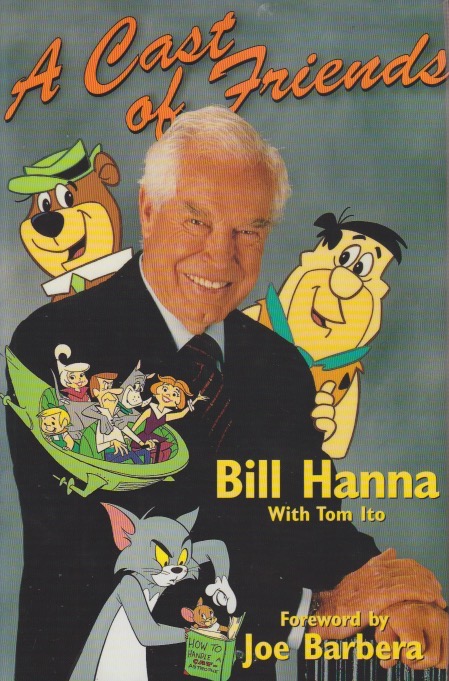
The desire, for some people, is very strong.  The need to record one’s life in words can be undertaken for any number of very human reasons.  Perhaps we want our descendants to know who we were.  Maybe we have a message that we’re trying to give to a world reluctant to listen.  Some may just want to brag.  Now I have to confess that, like most kids of my vintage, Hanna-Barbera cartoons were standard fare in my childhood.  I personally preferred those of Warner Bros., but like a typical addict, any fix will do.  I watched The Flintstones, The Jetsons, but preferred Scooby-Doo and Johnny Quest.  They all had Hanna-Barbera in common.  Bill Hanna published his autobiography, A Cast of Friends, in 1996 and I was curious.  I located a used copy and realized something right off—here was a guy who had a knack for leaving out the best parts of the story. Perhaps it was a cartoonist’s desire to look for the fun?

We generally read autobiographies to learn about the struggles faced, the odds stacked against someone that they somehow overcame.  Often with lingering trauma.  To hear Bill Hanna tell it, his was a bland life with a stable upbringing, good career breaks, and commercial success that led to wealthy old age.  Throughout the narrative there are hints that more was going on behind the scenes, but the carefully controlled image of the Boy Scout who ended up accomplishing much with few obstacles to face prevails.  Image control is also, I suppose, a major reason for indulging in autobiography.  Getting the job you want with minimal drama, however, makes me think there’s something more to why this autobiography was written.  That said, I learned quite a bit about the early animation business—my reason for reading it in the first place. 

Before my mother’s death, I had urged her to write her life story.  There was plenty of drama there, and a strong desire to keep going, for her kids.  Her father, her personal hero and therefore one of mine also, led an interesting life that he summarized in about four pages for his children.  Apart from one or two words I can’t make out in his handwriting, I devoured it with fascination.  He pointed out the oddities, the unexpected things.  Elements that make for an interesting life.  I got the sense from this brief book that more was left unsaid than was being revealed.  Of course, some personality types tend to remember only the positive.  And I suppose that’s cause for rejoicing.  Some of the rest of us, however, wonder about what’s beneath the surface.  Unless someone records it, however, we’ll never know.


Hidden Talent

It’s difficult to imagine any corporation with a more powerful influence on children than Disney.  It catches us early and forms our first impressions on plenty of things.  And, of course, Disney was started by Walt Disney, right?  Well, partially.  I recently became interested in Ub Iwerks (born Ubbe Iwwerks), the man who originally came up with Mickey Mouse.  Ub Iwerks and Walt Disney got their start in animation together.  They both worked for the same Kansas City ad firm as illustrators and then went into business together.  This was in the early days of film—silent and black-and-white—when few took cartoons seriously (they hadn’t made much money yet, and that’s the true mark of seriousness).  The major studios were starting to come together in Hollywood, so eventually Disney moved to California where, with his brother Roy, they began Disney Studios.  Ub came to work with them.

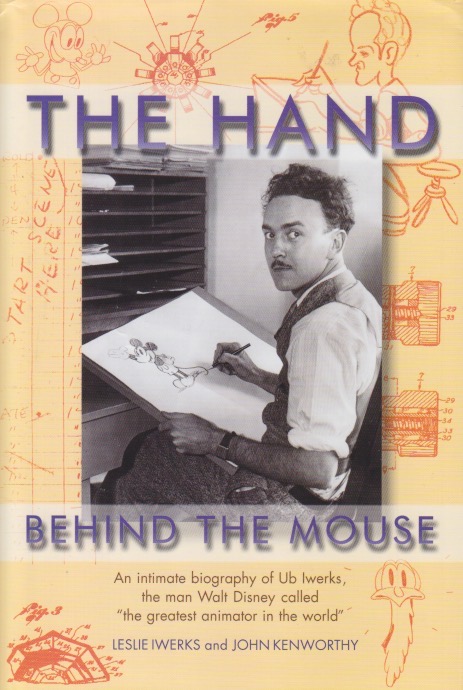
The Hand behind the Mouse, by Leslie Iwerks and John Kenworthy, is a brief account of the life of Ub Iwerks, who was famously quiet but who went on to develop special effects that were far ahead of their time.  Iwerks never really took his deserved credit for Mickey Mouse, noting that what you do with a creation is just as important as coming up with it.  Walt Disney, he opined, was the one who did something with Mickey.  At the same time, Disney claimed that Iwerks was the world’s greatest animator (as the subtitle proclaims).  The two eventually split, with Iwerks forming his own studio and hiring some of the most famous cartoonists of his day.  Hard times came, however, with the Depression and Second World War.  Iwerks closed up shop and went back to work for the by now very powerful Disney.

His move back saw him increasingly in “special processes”—essentially engineering special effects—and he was innovating literally until the day he died.  His imprint on not only Disney, but the film industry (he worked with Alfred Hitchcock on The Birds), was substantial.  He never, however, sought the limelight.  All of this makes him a remarkable individual.  He recognized Disney as the one with a vision and a brand, and also a business-savvy brother (Roy) who could help it all come together.  Walt Disney died at 65, a couple years after I was born.  Ub Iwerks died five years later.  Together they had invented American childhood.  Everyone knows Disney.  It’s the top name in children’s entertainment, a corporate giant.  I’m drawn to those, however, who fall between the cracks of history.  This brief book tells the story of one such individual who should, in all fairness, be better known.


Seaing 2020

It’s funny what sticks in your head.  As a ten-year-old 2020 seemed impossibly far in the future.  And it was very wet.  Not because of global warming, but because of a Saturday-morning cartoon called Sealab 2020.  Suffering from thalassophobia, the idea of living under the ocean was both intriguing and terrifying to me.  I recall that these underwater scientists had “aqua-gum” that they could chew so they’d be able to breathe and talk when not in the giant domes of the lab itself.  While checking out the series online, I was surprised to learn it only had 13 episodes and lasted but three months.  I’ve been thinking about it for over 40 years now, silently waiting to see if we would have such places as the deadline drew near.

This image is protected under copyright by the owner. It is reproduced here under the fair use doctrine, in low resolution. From Wikimedia Commons.

Instead in 2020 we have a record low of scientific projects being supported by a science-denying government.  Ironically the sea levels are rising because of global warming.  We haven’t done our homework and we’re pouting that things aren’t turning out the way we wanted them to.  Ours is no longer an evidence-based reality, but one where a tweet of “fake news” is all we need to make the truth a lie.  And as the water laps our ankles my thalassophobia starts to kick in.  The thing about Sealab is that they had kids there too.  Kid scientists.  Even more ironically, Richard Nixon was president.  His downfall was Watergate—coincidental?—and now we have a president caught red-handed (very Red-handed, even) in crimes while in office and Nixon’s beginning to look like a saint.  When did the water get up to my knees?

They wore wetsuits and swim fins quite a lot in the show.  Moving under water looked so natural—unlike my flailing when I attempted to swim.  It was all about not being able to breathe, in my case.  They showed us all kinds of strange animals under the water in Sealab 2020.  Animals that we could drive to extinction, it seems, if they got in the way of unbridled greed.  I have to admit that I’m a bit disappointed that Sealab misled me.  We were heading for an optimistic future back then, even with Nixon justifying the Vietnam War and spying on his political opponents.  People were still able to look forward four decades ago, in hopes of a better future.  For all these years I’ve been awaiting 2020 only to find the world back behind where it was in 1972.


What’s Wrong with Heroes?

There can be no doubt that under Trump conservative Christians have been flexing their muscles.  Few things corrupt so readily as political power, and evangelicalism—already an unrealistic way of looking at things—is itching to throw punches.  A story on For Reading Addicts that my wife sent to me bear the title “DC Comics cancel latest comic after backlash from conservative Christians.”  The piece by Rowan Jones notes that Second Coming was cancelled due to pressure from evangelicals with the cultural sensitivity of the Kouachi treatment of Charlie Hebdo.  Cartoons, it seems, are a real threat to true believers in a way that reason is not.  Jones notes that the comic was actually largely supportive of Christian values, but like an evangelical Brexit the reaction was taken without understanding the issue.

The anger of conservative religions—it hardly matters whether they are Christian, Muslim, or Aum Shinrikyo—often plays itself out in displays of violence.  I wonder if part of this insecurity comes from the fact that the expectations of their faith don’t work out they way they’ve been led to believe they will.  The myth of the blessed existence of the true believer is given the lie by life in a secular world.  While the evangelicals support Trump, 45’s tax plan takes money from their pockets and hand it to the ultra-wealthy.  This raises no objections, but a cartoon showing Jesus helping the poor?—now that’s offensive!  And still no second coming takes place.  It’s difficult to retain a fantasy view in the face of cold reality.

Who doesn’t like a hero?

Religious beliefs are a deeply personal matter.  It is a dicey business to try to get someone to change their outlook when they’ve been convinced that the consequences are eternal.  Although vaguely aware of other religions all along, Christianity in the “new world” was taken quite by storm at the 1893 World’s Parliament of Religions in Chicago.  Suddenly it was clear that other moral, decent religions had developed similar ethics to what had largely been supposed to have been Christian innovations.  It’s difficult to feel superior when others in the same room seem just as intent on improving the lot of humankind as you do.  Even when a particular religion holds all the political power of a nation it’s overly sensitive to cartoons.  This is a curious situation indeed.  I’m not a comic book reader—I don’t even have time for internet articles unless someone sends them to me with the suggestion that they’re worth my time.  And I, for one, think a little more humor might just make the world a better place.  Either that or we need a hero.


Credulity

So I went to see The Incredibles 2. Like the first movie, it deals with the complexities of family life amid the feelings of inadequacy when people are kept from their full potential. The idea of humans being enslaved by their screens seemed real enough. If you’ve ever tried to walk through Manhattan in a hurry you know that one of the clearest dangers is the pedestrian staring at his or her phone. People used to come to New York to see the scenery. Now you can get the full experience all online. There’s little doubt that we do need to be saved from our screens. Meet virtual reality. After only one encounter you can drop the “virtual.” Ironically, we were all sitting in a theater looking at a great big screen.

What was even more interesting was the fact that the film began with an apology for taking so long to make a sequel. An actual apology. As if no movie ever could, or should stand on its own. It’s common knowledge that sequels seldom live up to the originals. Interestingly, the villain in the movie states that people will always choose convenience over quality. That much is certain, and in an ironic way it applies to the film in which it’s uttered. I don’t believe in the crisis for creativity. It’s still out there. Original ideas are endemic to human nature. Ideas that bring in lots of money are more rare, and so we rely on the sequel. Sure things.

Publishers play this same game. Books that are completely new ideas frequently find their way from editors’ slush piles to their rejection piles. Publishers want something similar to what they’ve done before. Even better, something similar to something that sold well last time. The odds, in a capitalistic society, are stacked against creativity. It’s money that’s important, not originality. Yes, there have been books written extolling the wonders—virtues even—of originality. Such books are more easily published if they’re written by somebody already famous. So here was the dilemma in the theater: enjoy the movie or accept the message of the movie? The rare days I’m away from the screen, I’m old enough to admit, I don’t really crave it. When I come back in the door, however, the first thing I do is login to see if I’ve missed anything. Screens can lead to a strange uniformity. As long as we’re willing to pay for it, nobody will complain.


Church Vampires

For people my age manga is a new form of reading that is easily ignored. Although I’ve read a graphic novel or two, “comic books,” no matter how adult the theme, seem juvenile. Note that word “seem.” I do know some younger folks, and one of them insisted that I read Kouta Hirano’s Hellsing. This particular friend is as interested in vampires as I am, and, knowing my history with religion, suggested this might down my alley. Dubious, I gave it a try. In this manga universe Hellsing is a Protestant organization for fighting vampires and ghouls (non-virgin vampire victims who come back as zombie-like creatures who are very hard to stop). Their activity is in England, but when they cross into Ireland they encounter a Catholic organization that kills all vampires, including the “secret weapon” of Hellsing, who is indeed a vampire.

What made reading this tale so interesting is that the reader’s sympathy is drawn to the Protestant sect. The Hellsing characters are engagingly drawn—handsome or beautiful, resilient, and naturally good fighters. The Catholic characters are ugly and maniacal. They kill all monsters, regardless of their “heart.” In this the direction from the movie Van Helsing is reversed. There Van Helsing is a hireling of the Catholic Church who won’t kill a monster unless it’s evil. The idea of the graphic novel is that religious rivalry runs deep between these two Christian organizations. Thinking about this, I wondered how Christianity might look to someone from Japan. In this context, it makes sense. Christian missionaries penetrated east Asia from both Protestant and Catholic evangelistic efforts. Although they worship the same deity, they are quite different religions. At least it must look so to anyone not raised in this strange milieu.

Colonialism, in all its forms, has forced peoples to make decisions about new religions in a somewhat violent way. Imagine someone confronting you with your way of life and warning you that you’re going to suffer never-ending torment unless you accept a faith of which you’ve likely never heard. Then you discover that there are two very different versions of that faith that mutually condemn each other. The natural result, if you acquiesce at all, would be to choose the one that either makes the most sense, or the one that got to you first. Hardly the way to gamble with eternal life. I’m not sure Hellsing is intended as commentary on the experience of the colonized. It seems reasonable to me. And if vampires are a problem, you’ll want to be sure to select the right belief system the first time around.


Beautiful Beast

Like most kids in America I grew up with some form of Disney. We couldn’t afford to see many movies, but those we could often originated from the acknowledged master of childhood viewing. When I became a parent I naturally turned to Disney as one of the components of constructing a happy environment for my own child. Who doesn’t want better for their children then they had themselves? This was, however, in the days of VHS tapes. Disney frustrated more than one attempt to see a movie that was currently “locked in the vault”—a marketing tool used to glut the already overflowing coffers on demand. The heart wants what the heart wants, as the saying goes, and you knew that if you didn’t purchase the movie when it was available you might never see it again. Regardless, Disney does produce memorable work.

One movie that we missed until the vault unlocked was the animated Beauty and the Beast. We didn’t want to send the message that girls should be the captives of men, but Belle is a strong character, and we eventually realized that withholding much of childhood culture would isolate our daughter from what everyone else knew. Old habits die hard, as Disney knows. Our daughter is now grown, but a new Beauty and the Beast is in theaters and what was once vault material has softened into nostalgia. Recently I’ve begun to notice differences between original films and remakes when it comes to religion. In the new Beauty and the Beast there are only a couple of such instances, but they did make me wonder. In the opening sequence, as Belle is returning her book to Père Robert, a large crucifix stands in the background. Indeed, the camera keeps Belle off-center so as to make the cross obvious in the scene. Clergy and books make sense, and, of course, Belle offers to sacrifice herself for her father—a biblical trope.

When Gaston riles up the angry villagers, Père Robert is once more shown, objecting to the growing violence. Then, unexpectedly, as the castle transforms at the end, a gold finial of Michael the archangel slaying the dragon appears atop one of the towers. Again the symbolism is clear as the beast has allowed Gaston to escape, but the 45-inspired antagonist, unwilling to let grudges go, shoots the beast anyway. As the movie opens the famous Disney castle shows itself topped with that same finial. Is there a deeper message here? It’s just a children’s movie after all. Yet Père Robert is black and there are two interracial couples in the film. We should be, if I’m viewing this correctly, entering into a more tolerant and accepting world. Prejudice has no place in fantasy. Or reality. There are dragons to be slain here. If there is a deeper conscience at play it’s likely only to be found locked away in a vault.


Terms of Interment

In an early episode of The Simpsons Marge is commissioned to paint a portrait of Montgomery Burns. Angry with him because of his constant treatment of others as beneath him and his glib superiority granted by wealth, she paints him old and feeble, naked as he climbs from the shower. The crowd present for the unveiling is appropriately shocked. Marge explains her motivations for the painting and one of the voices in the crowd affirms, “He is evil, but he will die.” That scene was brought back to mind by an article a friend sent me on Archaeodeath. As someone who’s volunteered on an archaeological dig, I understand that the past is a history of death as well as of life. We read what historians choose to preserve. And, as Professor Howard M. R. Williams points out, the tomb often tells a tale that requires some subtlety in reading.

Never a great fan of the wealthy, some years ago I visited Sleepy Hollow. It was before the television series began, back in an October when the mind begins naturally to turn to death. I’d always liked the story by Washington Irving that had made this quiet town famous and it’s really not hard to get there from New Jersey. While in town we visited the famous cemetery, in search of Irving’s grave. Others are buried there, too. High on top of a hill stands a palatial tomb to some Rockefeller. As Prof. Williams makes clear, all must die and all tombs lie. Those who insist on the most opulent tombs are those who routinely overestimate their personal importance. So it is my mind turns from Montgomery Burns to Cyrus the Great.

There was a time when world conquerors possessed a dose of humility. It may seem strange in today’s world that an Iranian (in the days before there was an Iran, designed as it was by Europeans) would be considered a benevolent dictator. Cyrus reversed the deportation rules of the Babylonians and Assyrians. Subject peoples were permitted—encouraged even—to return to their lands. He even federally funded the building of temples and, to translate, centers for the arts. Cyrus understood that grateful people make good subjects. When Cyrus died, after being king of the world, he was interred in a decidedly understated tomb outside Pasargadae where, according to one account his inscription read, “I am Cyrus, who founded the Persian Empire. Grudge me not, therefore, this little earth that covers my body.” Archaeologists uncover the dead. Those who bill themselves grandly, as the diggers understand, seldom deserve the glory bestowed by their own minds. Marge Simpson, as usual, is a voice of wisdom.

Some president’s tomb


We Are an Island

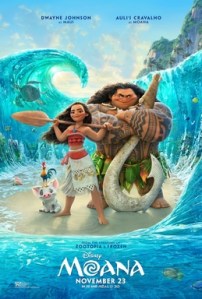
moana_teaser_posterApropos of both building your own deity and Disney, my family went to see Moana. Now, I have to admit up front to being a bit behind on my Polynesian mythology. Scholars of the history of religions feel terribly insecure if they don’t read the languages or haven’t spent time with the culture first-hand. I’ve seen the Pacific Ocean a few times, but never from the point-of-view of an islander. In fact, one of the areas of growing interest in biblical studies is the interpretation of Holy Writ by islanders. Their perspective, it seems clear, is different from others in more populated land masses. So Moana, which delves into Pacific islander mythology, was a brand new world for me. More than hearing about the demigod Maui, it was a chance to consider what destruction of our ecosystem looks like to those who have more limited resources at hand. Those who, when global warming really kicks in, will be the first to become homeless.

One of the strange things about living in the post-truth world (defined as the world after 11/9) is that many movies, novels, and other creative explorations I encounter seem to underscore the demon we’ve invited in. Moana is about a girl who saves her people, but she only does so by defying the man in power. Had she not journeyed beyond the reef, her people would’ve starved on their island. Meanwhile the big white man prepares to assault the White House and all that our founders held dear: an educated leadership. Progress. Fair treatment for all. Someone needs to remind these short-sighted individuals that every landmass is an island.

As we approach the end of 2016 it’s time to think of where we’ve been. At the theater, an ad by Google showed the newsworthy events of the year. There could not have been a better rendering of the high hopes with which we began and the sorrow with which we’ve come to an end. Our scorn of education has caught up with us and we’ve asked “the man” to please destroy our world and enslave our women and deport anyone who’s different. We need a lesson in how to build better deities. We need to be willing to admit that a girl might know more than her father. We need to learn the wisdom of the islanders.


Lions and Lambs

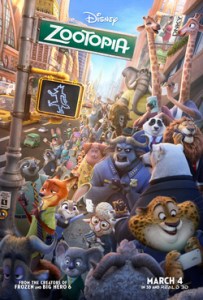
This brief break between Christmas and New Year’s Day, taking into account the vacation days expended to enjoy it, is a time filled with movies, reading, writing, and sufficient sleep. In short, it’s like a dream. I’ll get around to addressing the movies eventually, but right now one in particular is on my mind: Zootopia. Disney movies weren’t a big part of my childhood. We did watch the Wonderful World of Disney on Sunday nights, but movies were an expensive treat. I remember seeing The Jungle Book, Bedknobs and Broomsticks, and Herbie the Lovebug. When we could afford a movie, it was frequently at a drive-in where a carload was cheaper than individual seats. I missed several of the childhood western canon—I never saw Mary Poppins until I was in college. Becoming a parent in the 1990s meant becoming conversant with Disney.

zootopia

Oh, I’ve heard the conspiracy theories: Disney is “the evil empire,” part of the Bilderberg Group, the Illuminati, and any number of other collectives that want to run the world. They have access, we are told, to the young and a reach that excludes few before the age of ten. I know little of Disney’s business practices, but Zootopia suggests to me that they are telling our children the right message. The movie follows the ambitions of Judy Hopps, a bunny that want to be a police officer in Zootopia, the largest city in the animal world. Threatened and bullied because she’s a girl, and small—traditionally prey—she nevertheless overcomes the obstacles necessary to meet her dreams. Once she meets success, however, she finds herself engaging in prejudice against predators. Species profiling takes over and the white sheep (literally) take over.

The message of not assuming someone is a slave to their “biology” is a powerful one. Nick Wilde, the fox that assists Judy to her goal, becomes a victim. The only way forward for Zootopia is to recognize that profiling—gender or species—is wrong. Since the story isn’t preachy, it’s all the better. Watching unchecked prejudice surging through our political machinery today, it was difficult to believe that this movie was released all the way back in March. The prey animals are the majority, and they feel threatened and so follow the leadership that controls, deports the predators who’ve been law-abiding citizens all along. Only when we once again see shrews living peacefully next to elephants, rabbits, lions, and polar bears, do we get the sense that everything’s as it should be. I know nothing of Disney’s business practices, but with messages as important as this, I have but few worries.


Charlie Grinch

There were probably about half-a-dozen animated Christmas specials I recall watching as a child. The two that became fixtures, and remain part of my present holiday ritual, are It’s Christmas Charlie Brown and How the Grinch Stole Christmas. I remember watching them from early days—of course you had to wait until their respective channels announced their advent in TV Guide (just writing that makes me feel older than the Grinch). Commuting wasn’t an issue then, so watching television was as common as candy canes and hopeful stockings. As an adult, though, you see things you overlooked, or simply accepted, as a child. I guess that’s what “believing in Christmas” is all about. The willful suspension of disbelief.

I’ve commented on these Christmas specials before. Charlie Brown has so many inconsistencies that an old biblical scholar can’t help but think of J, E, D, and P. What does the signage on Lucy’s Psychiatric Help booth really say? How many branches are on Charlie Brown’s Christmas tree? How does Sally get to the school before her big brother? The animation is clearly a little off—Lucy appears to emerge from the center of her booth’s wooden top as she gives advice to the woeful Charlie Brown with his Trump’s-been-elected-type depression. Still, Linus’ rendition of Luke’s Christmas story brings it home every time. Compare that with the Grinch.

Those who see a war on Christmas (there’s not) seldom cite the Grinch. How the Grinch Stole Christmas is entirely secular. No mention of a special birth. No angels or shepherds. Just a mean old man and his dog. The Grinch shares with Charlie Brown its message of looking beyond the commercialization of Christmas. In the case of the much better animated Grinch (although I still can’t figure out why that one Who’s hat repeatedly flashes from white to blue and back) it would seem that religion matters less than spirit. The Who’s Christmas song with its strange, non-English words, is a celebration of difference. Diversity. Even that angry old man who would steal Christmas itself is welcome in the end. The only war on Christmas is one that has been spawned in the imagination of those who fit the Grinch’s description in Thurl Ravenscroft’s rendering of Dr. Seuss’s lyric. Those my age will understand, and unless you were born yesterday, I suspect that you’ll get my meaning.


Comic Culture

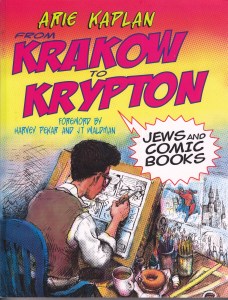
KrakowKryptonPerhaps the most obvious deviancy in my otherwise conservative childhood was MAD Magazine. I honestly suspect my parents didn’t know that it wasn’t just another comic book. I read it—like I read everything—religiously, and I was fluent enough in the lingo to discuss it intelligently with my sixth-grade teacher, a fellow fan. Having made that admission, my reading of comic books was muted since we lived in a town with no literary aspirations or conveniences. There was no book store, or even magazine shop, let alone a public library. We were one of the towns Carnegie left behind. Still, I was draw to MAD contributor Arie Kaplan’s From Krakow to Krypton: Jews and Comic Books. Over the past few years I’ve been reading academic treatments of comics as, with my beloved monsters, the high-brow academy has come to view low-brow as “culture.” (I learned the term “high-brow” from MAD, by the way.) As I grew into an Episcopalian, I tended to leave these markers of my shameful past behind, but now I’ve come once again to embrace them.

One of the odd things I’ve noticed about Jewish (and other “outsider”) analyses is just how deeply felt the anti-semitism of our culture is. This always strikes me as odd as, although it is hard to believe, I was raised to be non-prejudicial toward anyone else. (Poor folk are often that way; we know our place, beneath others.) I never felt superior to Jews, African Americans, or women. I was in awe of them. Maybe MAD helped. As Kaplan points out in his treatment, much of the comic industry was Jewish in origin because so many Jews were kept out of other businesses in New York. (Well, there is Diamond District, but let’s stick to publishing.) With few options, poor immigrant kids turned to cartoons. As a child in a humble household I often took out my frustrations by making my own comic books. I can understand the catharsis.

With the current glut of superhero movies, it may be hard to imagine a time when comic books and their denizens were considered utter foolishness. Now they’re big money. It’s not so much that the mighty have fallen than it is the humble have been exalted. I haven’t really read comic books since I was maybe fourteen. Up to that point, however, they got me through many a difficult time with the belief that there was someone out there watching over me. No superheroes ever delivered me from my troubles, but belief was sometimes all I needed. I can understand why those who are discriminated against would turn to this medium for release. Faith and fantasy share more than an opening syllable, for those with eyes to see.


Heroic Gestures

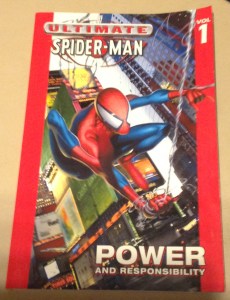
It seems like superheroes have been around forever. They are really, however, the product of comic books from the 1930s on. Adapting well to the big screen, a generation of kids is growing up that may have had their first taste of caped crusaders on the silver screen. I haven’t seen Batman V Superman, only the latest of a long string of the recent procession of such movies. Even so, the character of Superman—among the first superheroes—is less than a century old. Since the meme was conceived, however, it has mushroomed out into all kinds of outsiders offering deliverance. Superheroes are clearly about salvation. Even the anti-heroes. Otherwise they’re a hard lot to classify. Some have super powers. Others have only a lot of money and highly honed physical abilities. Or exceptional intelligence. The one thing they all offer is some kind of salvation. You might have to look for it, but it’s there.

Comic books in general, and superheroes in particular, have recently gained academic credibility. The ivory tower is often a location from which to look down on popular culture—the unwashed crowd—and seek more rarified topics of investigation. Superheroes, however, have proven resilient enough to this academic kryptonite to garner some attention. Comic books can be works of art. More than that, if a meme won’t let go, well, that itch should be telling us something. Sociologically, in a world of near constant uncertainty (who’d have guessed Trump would ever be where he is today?) superheroes seem to offer a stability that daily life lacks. Call it escapism, but what is salvation if not a form of escape? Let somebody else don the cowl and take care of the dangers we never even knew existed.

IMG_0037

Like many kids, I grew up making my own comic books. I invented a couple of superheroes that never found any adoring audiences, but the process taught me something. Looking back at those times in my life, they were periods of extreme crisis. My own superheroes were coping mechanisms. We couldn’t afford a lot of comic books, but once I started working, during junior high school, I started buying Doc Savage novels and consuming them like popcorn. I was trying to get through difficult times. I’ve seen editorials suggesting that the era of superhero movies is dwindling. I doubt that it is. They may eventually fade from the silver screen, but they will still lurk in the graphic novels and recesses of the internet. We need our heroes. We need deliverance.


The Good, Bad, and Human

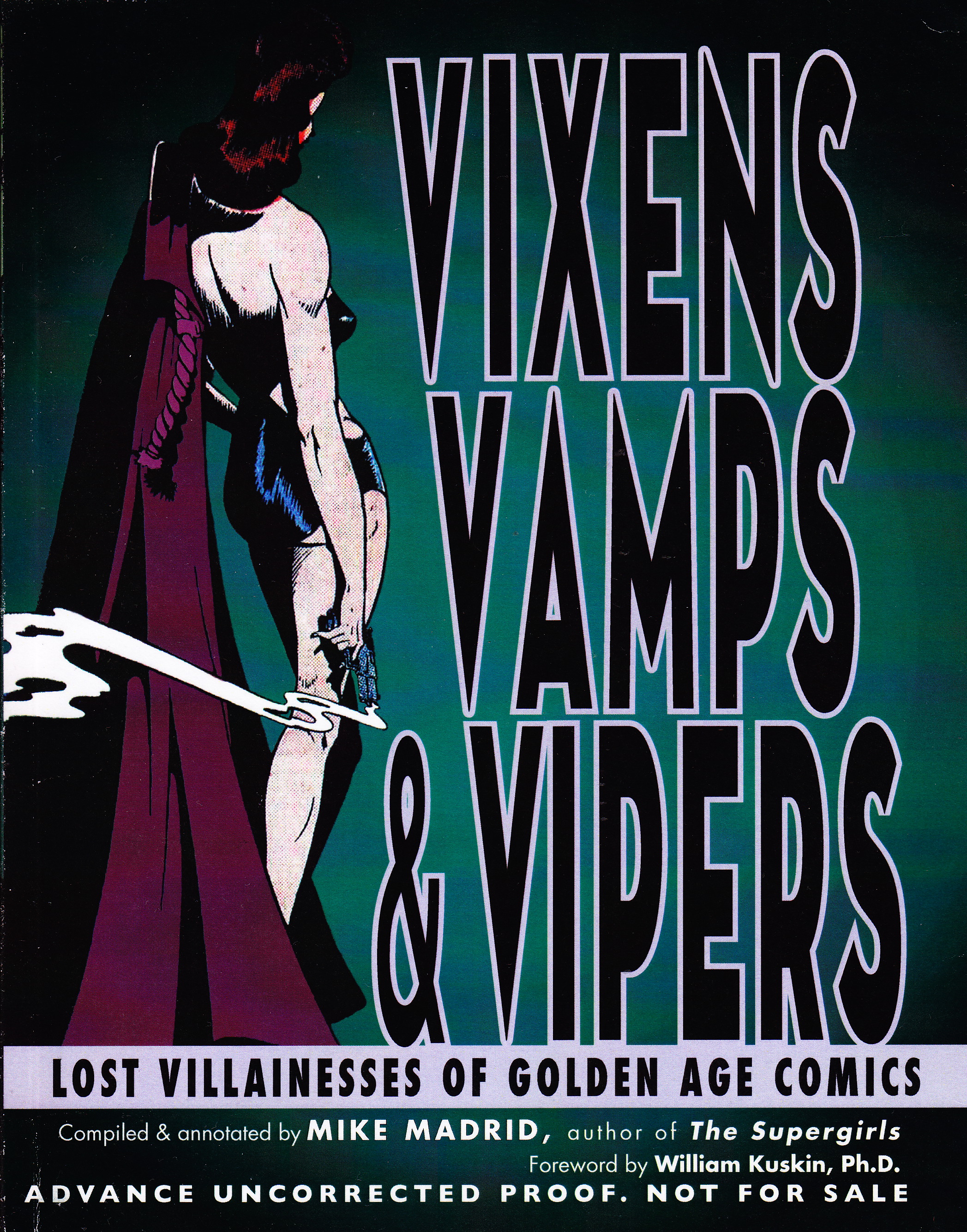
VixensVampsVipwesMike Madrid may know more about women in comics than anyone else alive. I’ve commented about his Supergirls and Divas, Dames and Daredevils, and he’s now followed up his previous successes with Vixens, Vamps and Vipers: Lost Villainesses of Golden Age Comics, due out in October. Despite the lament of many a parent that comic books are a waste of time, Madrid demonstrates through a close reading, that some of the most basic issues of society are featured in graphic format. Psychologists have long known that people are visually oriented. We have to learn to read, but we’re born with the knowledge of how to look. Comics, therefore, appeal to the young reader, illustrating the action with exaggerated pictures to underscore the tale. Although the early heroes were generally male, Madrid showed in his previous two books that girls and women were also superheroes, but, as in real life, competing in a world constructed by men for men.

Vixens, Vamps and Vipers flips the coin to see the role played by villains less known than Catwoman (whom he discusses), and torn between the human impulses to succeed and to be good. In fact, the first few pages of the book offer a profound consideration of the terms “good” and “evil” as they apply to the comic book (i.e., the real) world. As Madrid points out: if there were no villains, we would have no need of such colorful heroes. At the same time, evolution has embedded a desire to protect females in the minds of most males—Poe knew that the death of a beautiful woman was the among the most moving of literary images. Still, as Vixens, Vamps and Vipers points out, some of the villains here considered are beautiful and the allure demonstrates that something much more complex is going on beneath the surface. Despite the image of the hero, all people, male and female, constantly struggle with the impulses to do good and evil.

One of the complexities that religions attempt to codify is human nature: are we born good or evil? Are we totally depraved or inclined to strive for divinity? Any honest assessment of humanity, it seems to me, must take into account that we constantly struggle. Total depravity is totally disproved by the many good impulses shown by those of religions outside Calvinism and Christianity, let alone the tendency of humanists and atheists to help others. In fact, in many circumstances good and evil are intricately intertwined. Madrid explores this conundrum with women put in difficult, if fictional, scenarios who must decide which impulse to follow. He’s honest about this. Some will become superheroes despite the hurdles the male champions put in their way, while others will follow the trail that leads to his latest exploration of humanity through illustrated story. Look for Vixens, Vamps and Vipers and enjoy, if secretly, learning something profound about human nature.