Thor’s Return

Once as I sat in the office of an Ivy League professor of Greek religion, I asked about the myths of the Classical gods. The professor (who knew that I had taught religion as well, but at more like a Noxious Weed League school) appeared genuinely insulted and told me in no uncertain terms that scholars of religion didn’t take that nonsense seriously. The study of “myths” was left to Classicists, not actual scholars of religion. Is it any wonder, then, that we don’t really have a grasp on what the average person believes? Being a blue-collar scholar, I always took seriously what students told me about their beliefs. It wasn’t really a great surprise, then, when my wife pointed me to a story in The Guardian about a temple to the Nordic gods being built in Iceland. According to the story, the modern adherents of Ásatrúarfélagið (thank you unicode) don’t really believe in a literal Odin or Thor or Frigg, but see them as metaphors to help them face the way life is. A millennium after becoming Christian, some Icelanders are apparently getting back to their roots.

There has always been, to me, a fascination with the Nordic gods. These rough-and-tumble deities inhabited the harsh and snowy regions where daily life was often a struggle to survive against the elements. Frost giants were enemies and nobody really emerges as the winner after Ragnarok. In the Bible Yahweh does sometimes come out swinging, but for the most part he seems a deity content to sit on his throne and issue commands. The Scandinavian gods were characters of action. In some sense they seemed to struggle just like the rest of us do. They are, of course, more powerful and as the movie makes clear, Thor has a charisma that more self-righteous deities appear to lack. Lest anyone be ready to run to their priest at this point, please be aware that this too is a metaphor.

On the other side of the equation there are sure to be critics who argue that building a temple to fake gods in this day and age is obviously a waste of human talent and resources. Such are people with no imagination. Religious belief, metaphor or not, has been part of the human psyche from the very beginning. Elsewhere I have suggested that animals show the same behaviors as what we Homo sapiens would declare rudimentary religion. Rationalism has not provided a reasonable alternative to religious expression. Even a Stoic knows to appreciate art, although beauty provides no essential element to simple survival. Simply put, humans enjoy the finer things of life. Perhaps unappreciated since long sublimated, among those finer things are the old Nordic gods. And their return is a kind of resurrection.

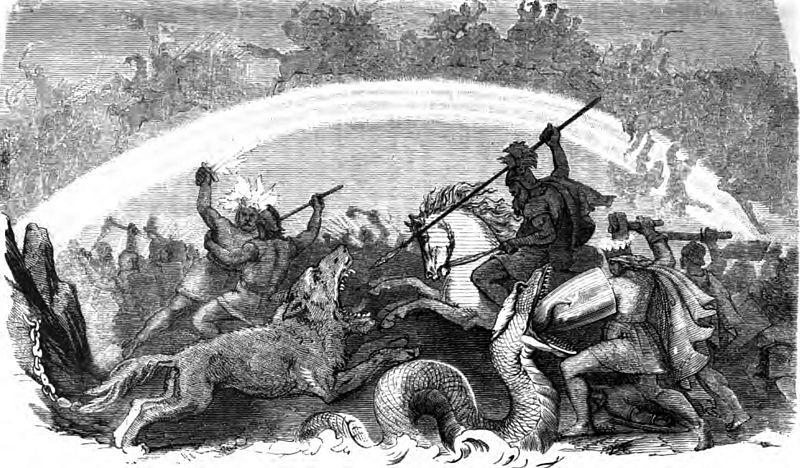
The Battle of the Doomed Gods

The Battle of the Doomed Gods


Like a Virgin

Having more than two days in a row when I could be both home and awake, led to some premature spring cleaning over the last few days. One of the artifacts discovered among the piles of “deal with it later” things was a booklet that was likely an impulse buy—a stocking stuffer or perhaps a whimsical birthday giftie. In our house it could have only been directed at me since it was a little book about Virgo. I have never, even in my most experimental modes, considered astrology to be anything but pure fantasy. I do, however, realize that it is just as old as astronomy, and ancient peoples firmly believed that the sky had unseen influences on everyone. Still, the calendar dates during which you are born can’t provide personality traits any more accurate than gross generalizations. Two of my brothers and I are Virgos, and we are very different personalities, despite having grown up together.

Still, curiosity compelled me to take a few minutes to look at the guide by Teresa Celsi and Michael Yawney. It begins with a brief introduction to astrology, and as I thought about it, I realized that there are indeed people who take it seriously. Long ago I recognized that the criticism “ridiculous” (apart from being offensive) is never an adequate antidote to religious belief. Many elements in conventional Christianity, and other mainstream religions, fall into the similarly implausible realm. There is a kind of science to astrology—labeling and categorization, observation and recording. I still don’t believe it, but I can see how it might appeal. And I thought I could recognize myself in the Virgo the booklet described. Yes, some of that was definitely me. Then I got to the bit about a Virgo’s house being neat and tidy, and how people appreciate it. We live in a small apartment and visitors (who are few) are more inclined to make sure their immunizations are updated after leaving, rather than praising our housekeeping skills. Fact is, clutter doesn’t bother me that much.

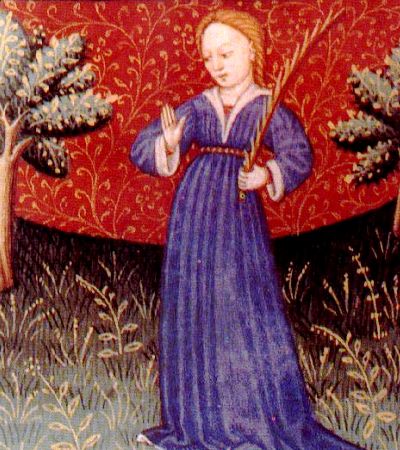
Virgo2

The majority of the little novelty book was about relationships, of course. I still remember the days when “what’s your sign” was considered an acceptable pick-up line, at least if movies are to be believed. I couldn’t remember my wife’s sign, and was surprised to read, when I found it, that we might encounter some conflict, should we decide on a permanent relationship. We’ve been married for 26 years with barely a raised voice in all that time. Maybe it’s because I’m a Virgo. Or maybe it is because we are more the agents of our own destiny than the stars. Nevertheless, it would be a comfort if we could pick up a chart and know what our lives might be like. It’s easy to see why astrology has taken on the quality of a religion for many. Please excuse me but, according to my nature, it is about time to get back to my cleaning.


Bible Stories

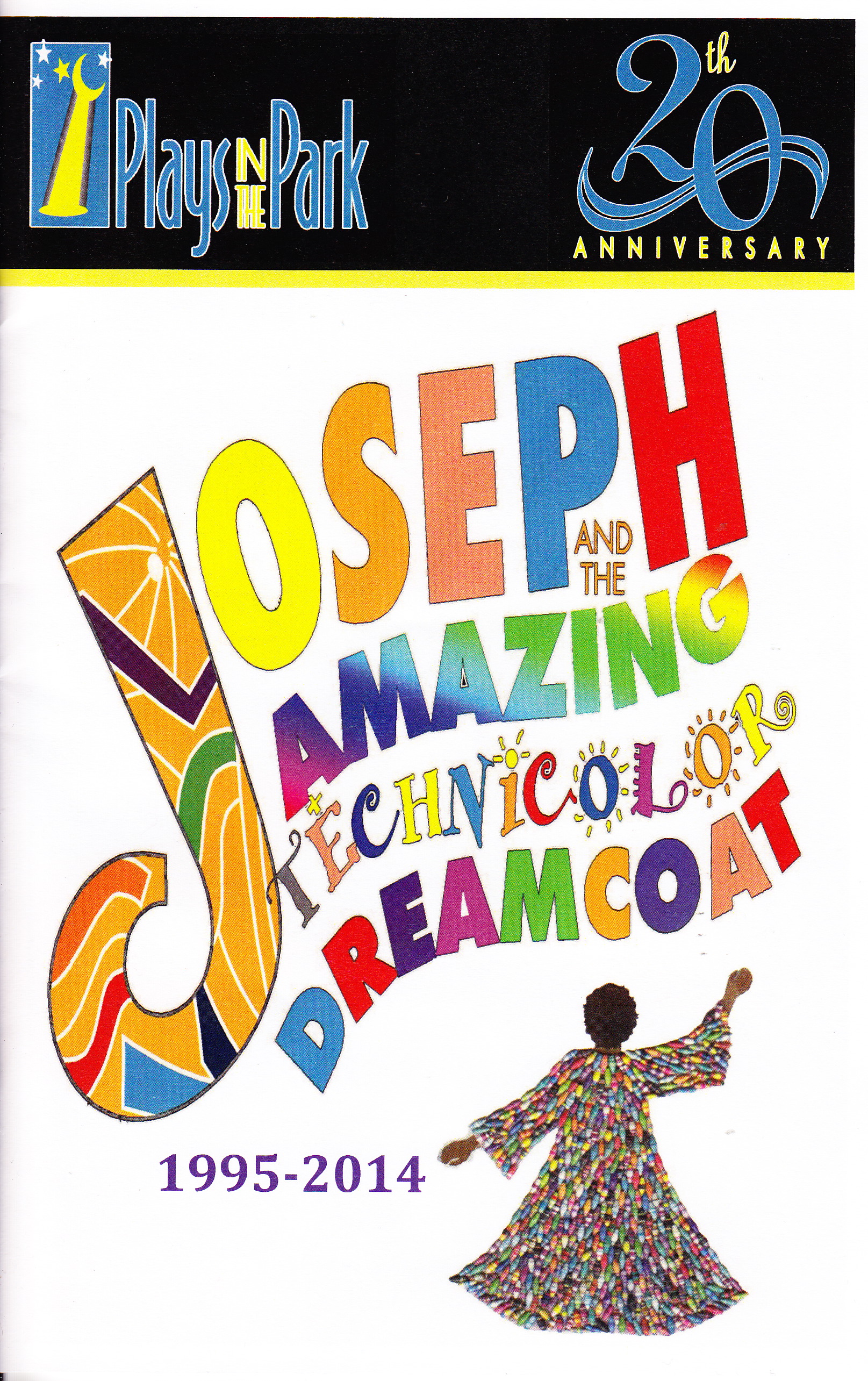
JosephSay what you will about it, but the Bible has some great stories. Based on classical measures of what makes a good tale, the Bible ranks up there with Greek mythology and other ancient fiction that is meant to teach us about being human. Stories do teach, and literature is among the greatest of pedagogues. For the past two decades, Plays in the Park here in the New Brunswick area of New Jersey, has been putting on a post-Christmas, pre-New Year production of Joseph and the Amazing Technicolor Dreamcoat (indoors, due to the time of year). With the kinds of production values you expect of many off-Broadway venues, the show is exceptionally well done, and due to the local color, never too serious. And they play before a packed house. The reasonable prices, I’m sure, have something to do with it, but the fact is the story of Joseph is classic. Full of radical reversals, dreams that come true, and reconciliation, the Joseph novella is one of the great stories of humankind. Unlike many tales of Genesis, God is rather in the background here, perhaps overseeing the event, but not interfering in the human drama.

Although the musical, like most adaptations, takes liberties with the story, it remains fairly true to the Bible. Andrew Lloyd Webber and Tim Rice also had success with Jesus Christ Superstar, showing that, despite its detractors, the Bible still has some appeal. Negative sentiment directed toward the Bible largely derives from the wooden insistence of literalists that everything must be taken at face value. The Bible isn’t allowed its symbolic resonance. Perhaps we can get beyond a worldview where the sun literally goes around the earth, and pay attention to the very human dimensions of the stories it tells. Truth may be of scientific nature, but it may also be—indeed, it must be—human. The very concept of verity is human. We are the ones making up the story.

Scholars point out that even the colored coat of Joseph is based on a translation decision in the Septuagint (the Greek Hebrew Bible). For many people, however, who’ve never read biblical scholars, the truths of Joseph and the Amazing Technicolor Dreamcoat as just as legitimate. The rivalry between siblings is something many of us have experienced firsthand. While not many of us get promoted from prison to vice-president, we still dream that our lives could get better. Our dreams could come true. The upbeat score, of course, helps to reinforce the message—one might say it makes the message believable. That doesn’t mean that the tale is not true. There was no historical Joseph. The colored coat may be a translation error. The story is nevertheless true. Doubters should watch the show. Next year in the State Theater in New Brunswick just after Christmas would be an excellent opportunity to do so.


Manitous

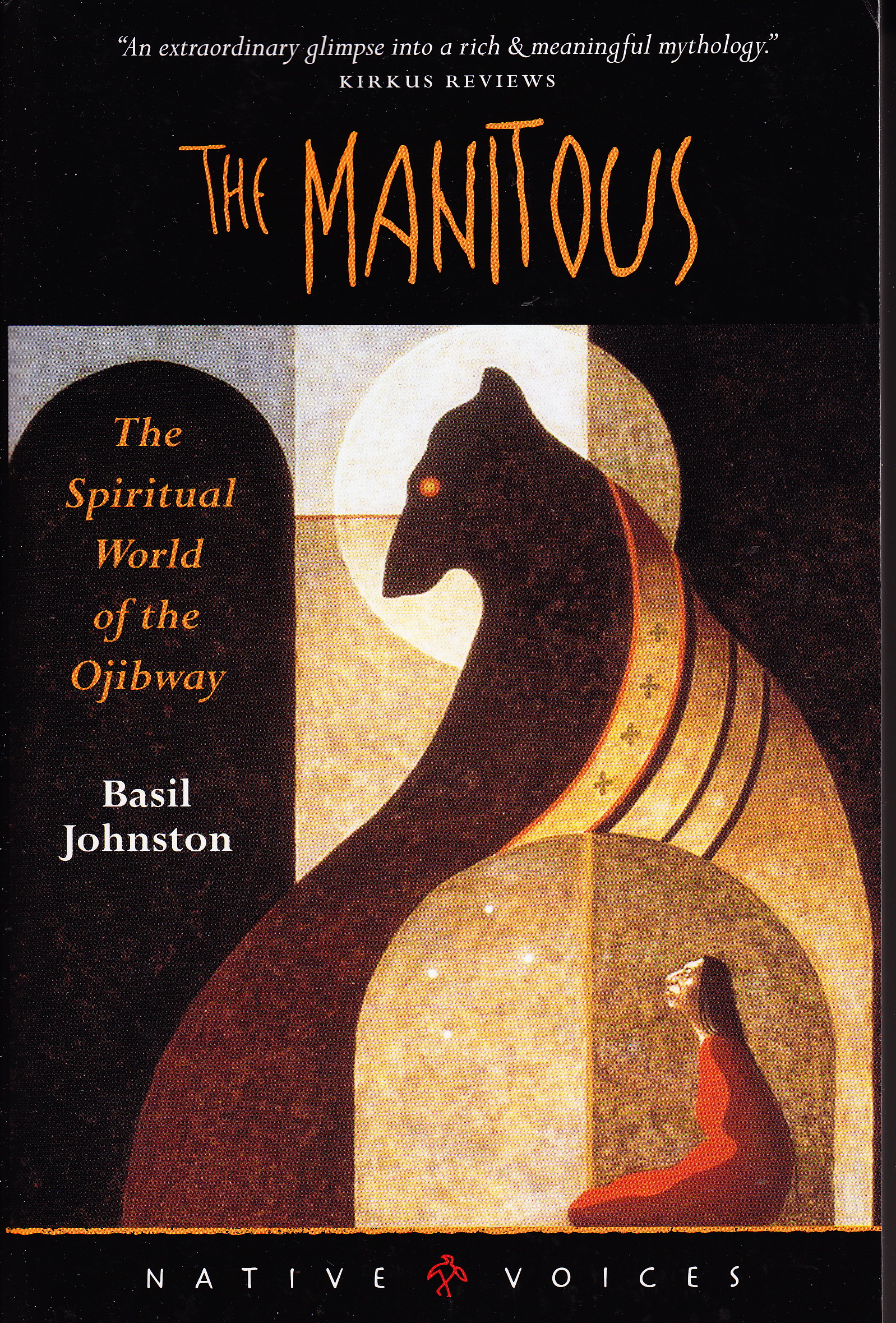
ManitousOne of the yearly autumnal rituals we’ve established is the watching of Escanaba in da Moonlight. It is a silly, crude, and profound movie that revolves around Native American lore—namely, the creature known as the bearwalk. Despite the high level of interest in monsters on the internet, the bearwalk continues to be elusive. Robert C. Wilson wrote a novel, Crooked Tree, about this Ojibwa legend, but academics have seldom explored it. The few resources I found pointed me to the wendigo. Wendigos are frightening spirits of the forest, sometimes presented as skinwalkers, or shape-shifters, who prey on unwary human beings. Some writers call them werewolves, but this isn’t exactly correct. Frustrated at finding no solid information, I picked up a copy of Basil Johnston’s The Manitous: The Spiritual World of the Ojibway. Johnston, who is Anishinaabe, writes to preserve the heritage of his people.

Manitous don’t have a direct equivalent in English. Some have been inclined to designate them as gods or spirits, but they inhabit that strange realm that overlaps with humans as well. The Ojibwa viewed the world as more animate than western science allows. People were part of this larger universe, but were not the sole end of intelligent life. The tales in this book map out an unseen territory where manitous may be found in lakes and streams, in the hearts of trees, in the early prototypes of humankind, and yes, in the wendigo. The wendigo (also spelled windigo or weendigo) is a representation of excessive acquisitiveness. They often begin life as humans, but become cannibals. As they eat other people their hunger grows, along with their bodies, and they cannot be satisfied. The more they eat the more their hunger remains. They are, therefore, extremely destructive, roaming the woods seeking human victims.

Throughout The Manitous, Johnston gives little in the way of editorial comment. One of his stories is a parable for the coming of Europeans and their subsequent treatment of Native Americans, but most of the tales are of the natural world. The wendigo occupies the last chapter of his book. Before putting the matter to rest, however, Johnston makes a poignant and valid point. Although the Ojibwa no longer believe in a literal wendigo, the treatment of the earth by corporations has taken its place. Always hungry, excessively greedy for more to be taken from the earth, industrialists have made the wendigo look as if it were an amateur slaughterer. Living lightly on the land, the Native Americans tried to take only what they needed. Europeans, on the other hand, created new things in order to keep the hunger going. And those who constantly create new needs grow wealthier and wealthier. Instead of naming this inherently destructive system the wendigo, we call it progress and happily invite it to live among us.


Monsters of Science

ScienceOfMonstersMaybe it’s the ebola in the air, or perhaps the gas from all the midterm elections verbiage, but I’ve been on a monster run this October. I just finished Matt Kaplan’s The Science of Monsters: The Origins of the Creatures We Love to Fear. It is a charmingly written book, at parts approaching the finesse of Mary Roach. Beginning with the ancient Greeks (and sometimes stepping back into the world of the Bible or the Mesopotamians) Kaplan examines the major categories of monsters and tries to offer scientific explanations for why people came up with them. It is a keen conceit and it is deftly handled. Noting that animals sometimes got jumbled in the fossilization process, he offers explanations for creatures such as the Chimera, Griffon, and perhaps even the Sphinx. Some of the unlikely episodes are quite fun to visualize as well, as when a snake slithers over a tar pit where a goat got stuck and was eaten by a lion that also got stuck. Beast after hideous beast he brings down to analytical size, sometimes convincing even this old monster lover.

One of the problems, however, is that science often doesn’t comprehend the symbolic nature of mythical thought. Quite apart from sheer creativity—and it does exist!—some of the material in Kaplan’s analysis would have benefited from having a mythographer’s look. For example, demons do not suddenly appear as monsters in the Middle Ages. Kaplan knows this, but that’s where he starts. The ancient Mesopotamians knew of them very, perhaps, too, well. And Lilith isn’t even mentioned when discussing succubi. Still, there’s a great deal of interesting conjecture here, and some scientifically, if not mythographically, viable suggestions on whence vampires and werewolves. As expected, modern sightings of cryptids are simply swept off the table, but I almost shouted aloud when I read that he gave credence to Wade Davis’s work on Haitian zombies.

The larger question here is one of approach. Do monsters lend themselves to scientific explanations at all? The case that elephant/mammoth skulls might suggest a cyclops seems reasonable enough, and the occasional dinosaur bone that represented a giant in ancient times is entirely possible. (Who can tell one femur from another anyway?) But the monster is primarily a creature inhabiting the shadowy realms of religion and psychology. Our fears are seldom directed toward science, although, now that I’ve read his chapter on “The Created” I’m not so sure. Constructing backward toward the unknown is always a dicey proposition, as those of us who’ve studied history of religions know. We may be able to find the genesis of modern monsters, but, admittedly, the fun for most of our scary friends is that they are mysterious. Impervious, as it were, even to science.


Write the Truth

XalliopePublication is a tricky business. Just ask my friend, K. Marvin Bruce. Marvin and I have known each other for years as he’s been trying to break into fiction publishing. I don’t envy him. His novel, Passion of the Titans, was under contract with an indie publisher who eventually reneged on their agreement. What can you do? As a supporter of publishers you don’t want to sue, so the novel is floating around again, looking for a home. Meanwhile, I was flattered to receive in my mailbox a copy of Calliope magazine. Calliope is published by the Writer’s Special Interest Group of American Mensa, Ltd. Marvin’s story, “Initiating an Apocalypse,” won third place in their fiction open. Not only am I pleased for my friend, but I was glad to see his story was about gods. Zoroastrianism doesn’t get much attention these days, but Marvin’s tale is about a hapless professor who wants to start an apocalypse by using Zoroastrian deities. I won’t give any spoilers since I’m sure few people have read the story.

His tale has me thinking of gods in fiction. I suppose mainstream literary fiction avoids deities, but fantasy, science fiction, and horror all make good use of them from time to time. Neil Gaiman’s American Gods made quite a splash, and although Marvin has no hope of becoming a widely recognized name, his novel also features gods. It is a literary incarnation. We like to see gods in some ways limited to human circumstances. Omnipotence rarely makes for a good plot. In many respects the Bible attests to this. If God is omnipotent (which is not a claim the Bible actually makes) why can’t the world be a happier place? Indeed, the solution most fondly groped by theologians is either free will or a version of the Zoroastrian solution: a god who is evil. Enter the Devil.

The Devil is also undergoing a kind of literary renaissance. We find a plethora of books and movies starring the prince of darkness. Despite the panegyrics of rationalism delivered by angry atheists, nothing salves the human soul like a good supernatural entity. Fiction writers have long recognized that. Gaiman was not the first to make the gods do his bidding in literature. There is a likelihood that even Homer knew the appeal. Many people can accept that gods might exist, and they certainly don’t object to stories in which they cavort. Fiction, as literary analysts know, teaches us about reality. The characters may not be literally true, but the fact is that in our minds there is still plenty of room for gods. And, if you one of the rare ones to read Marvin’s story, you’ll see that, true to human experience, deities don’t act as we expect them to. Savvy publishers, it seems to me, would do well to recognize the appeal of the gods.


Pagan Paean

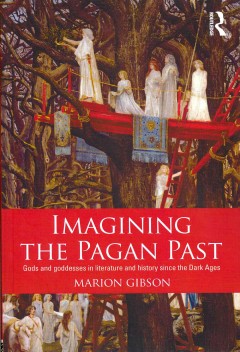
ImaginingPaganPastThe old gods still live. In literature. The modern world with its open spirituality has continued the process of rediscovering ancient deities. Marion Gibson’s Imagining the Pagan Past: Gods and goddesses in literature and history since the Dark Ages offers a glimpse into how British writers since the earliest days have wondered about the gods. Of course, many of those early writers were already Christianized, and treated the old gods as curios that might be placed on an intellectual shelf of bygone days. Some, however, came up with an idea that can still be found, on occasion, among dwellers in the British Isles—the idea that the original British religion was monotheistic. Indeed, some believed that the religion of Noah made its way to Britain, establishing a debased, but yet roughly correct worldview that was only contaminated by Roman polytheism. There are books suggesting, a la Latter-Day Saints, that the lost tribes of Israel found their way to Britain. Joseph of Arimathea planted his staff at Glastonbury, after all. Nothing satisfies like being the chosen people.

Gibson explores both the Celtic gods and the Norse gods. British literature has drawn upon both deity pools to populate a literature with colorful, if sometimes dark, deities. Beyond the literary, many of these gods survived in popular culture throughout the ages. Some of my fondest memories of the UK are driving to prehistoric sites with friends and finding the gods alive and well. As the sun, feeble at best in a British December, sank one afternoon we pulled into Wayland’s Smithy, a neolithic long barrow. I’d never heard of Wayland before. Gibson reveals the story of Wayland, as well as Woden and Thor, as the gods jumble in a Gaimanesque celebration of cultural diversity. Even on hikes to obscure sites the locals often knew the stories of the gods that had once passed this way.

There’s a virtual Sutton Hoo’s trove of information in Gibson’s brief study. At many points I found myself pausing to think, “that’s where that idea came from” as I followed the trajectory of her explorations. Even some of the deities she does not explore found their place in my three short years in the enchanted countryside where pagan Celt met pagan Saxon met pagan Roman, leading to a heady brew from the well-known Diana to Julian the obscure (there is some witchery afoot here). Even that Anglicanism that once circled the globe did not rid itself of this great cloud of witnesses. We keep our deities alive by preserving them in scripture, whether sacred or secular, and we have done so for hundreds of years. And the old gods, in this monochromatic world of science and industry, remind us where the rainbow really originates. Imagining the pagan past is sometimes the most human thing to do.


New Gods

The new gods are the old gods, apparently. Increasingly I feel myself to be in the old category, but I do glance at Wired once in a while in a vain attempt to recapture my decidedly low-tech youth. I was halfway through July’s edition when I saw “Worship More Gods!” near the top of the page. Of course, gods aren’t what they used to be. The short column, Angry Nerd, was on about all the movies out there featuring Greek gods. Classic gods. Although they’ve been around for a couple of millennia or more, they had apparently fallen into the obsolescence pile for a number of centuries, staring around 1700 years ago. When I was in fifth grade I first heard about these gods (okay, I had watched that ridiculous cartoon Hercules—pre-Disney—as a child, but does that really count?). Mrs. McAlevy (and I sure hope I spelled that right!) felt that kids in my redneck little town needed to know about the gods and heroes. It was some of the most fun I ever had in school. I took a reprise class in college, just for good measure. After all, Clash of the Titans had just shown that gold can rain down like that in Danaë’s secret chamber, if you hit that sweet spot. Myth movies have flourished ever since.

Gods

Can we ever have enough of the old gods? There are lessons to be learned there still. It is safe to say that one of those lessons is that we should not act as the gods do. Almost always they do not stand as moral exemplars. Lest we feel too superior on that point, it is worth pointing out that the God of the Bible sometimes pulls some tricks that we would consider a little less than moral, right, Abraham? The role of the gods is to tell us what to do, not to show us. Impossibly high moral standards, after all, are difficult even for the mighty ones to keep. With great power and little accountability, well, we don’t need to have gods to show us what happens.

I’m not intending to put words in the mouth of the Angry Nerd. The point of the article seems to be that we should share the wealth. There are plenty of other cultures out there with very colorful gods (sometimes literally colorful). In the cultures I’ve studied those gods pretty much fall into the same category as my step-father’s mantra “do as I say and not as I do.” Rank hath its privileges. There’s no doubt that the gods provide some good moral guidance—even the deities of the Canaanites seem to have had pretty clean expectations for humankind. But when it comes to behavior, well, let’s just say they don’t behave like a bunch of nerds. These are the frat boys of the universe. We obey because we know it’s dangerous to do otherwise. So in this day of religious sensibility, perhaps having a few more gods wouldn’t hurt. As long as we keep in mind that every deity has his or her limitations.


Myth of Infinity

There are only five major trade publishing houses left. Despite the bewildering number of publishers around, five corporate giants own most of the industry labels that make really big money. Those of us who dabble in the literary arts dream of some day being published by one of these big houses because it might mean some success is involved. There are, of course, hundreds of indy publishers who are more author friendly, but you might never get noticed. So when I attend meetings and see the zig-zag that represents the EKG of capitalistic vital statistics, I often wonder about the myth of perpetual growth. A business isn’t really considered a success unless it can chart continued growth, year after weary year. And this in a finite world of shrinking resources. How long can perpetual growth last? In the publishing industry, if you get too successful you’ll be purchased by an even bigger company. Remaining solvent isn’t enough in a hungry, hungry capitalist world. The winner, they say, takes it all.

EndlessThis idea bothers me long after the meeting’s over and the lights have been turned off. Have we truly come to believe in our own mythology? What kind of value is it that can be measured only by acquiring more? I went into higher education unsure of my commitments to capitalism. I’d rather not have some kind of quota hanging like Damocles’ stock report over my head. I want to ponder through the implications and burst out on the other side, hold the whole thing at arm’s length to consider it. If all businesses constantly grow, we run out of material. Don’t we? If all businesses don’t grow, some will shrink, then die. As often as not, they will be the ones I like the best. Infinite growth in a finite universe. Or is it really infinite and the capitalists are mining the very stars we can’t yet reach?

Glancing over my bookshelves, I see publisher’s names I’d never noticed before. Long before I was forced out of academe, I had purchased books on esoteric aspects of religion from publishing houses most consumers would never recognize. I even surprise myself sometimes. Some of these publishers haven’t survived. The self-published never outlast the death of the author. This is not a world of perpetual growth, but some of the ideas are nevertheless very fruitful. Can infinity grow from a finite stock? I think we all know the answer to this deep down. But mythologies thrive when not examined too closely. So perhaps it is better just to keep on pretending. And if you ever find someone who works for an independent publisher, give that person a hug.


East of Nowhere

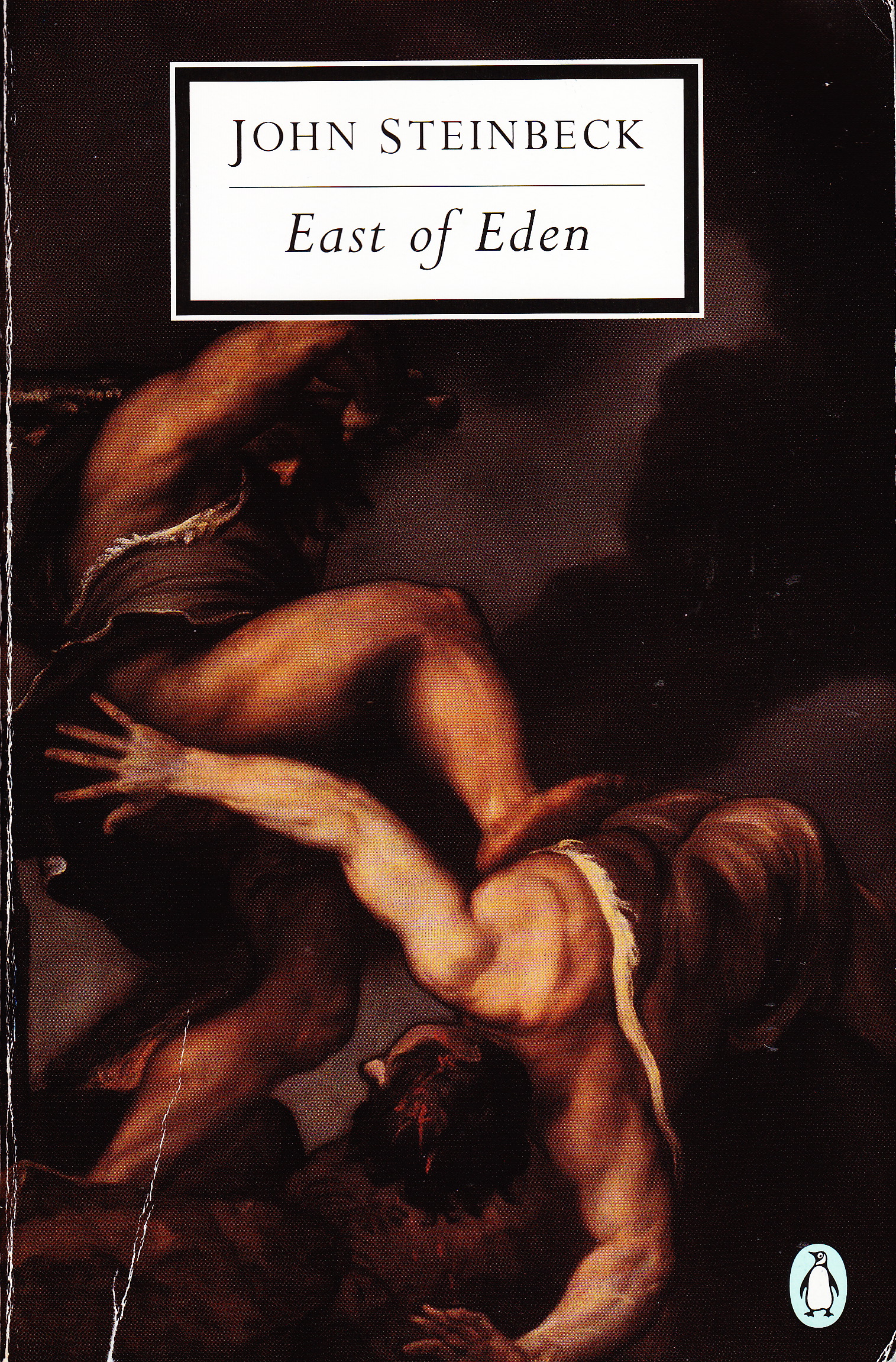
EastOfEdenThere was a time when you could assume a lot about your readers. Although it was only a little more than a half century ago, John Steinbeck could assume a biblically literate readership. East of Eden is so thoroughly pervaded with, one might say interlarded with, the Bible that the key scene could have three men sitting up half the night discussing 16 verses of Genesis, and not one of them being a priest or preacher. The earnestness of their conversation is haunting in its intensity. You know the boys will be named Cain and Abel and that only one of them will come out of this alive. Okay, so they decide on Caleb and Aron, but you get the picture. Of course their father is Adam. Even the title of the book is drawn from the last words of the 16th verse.

Ironically, this biblically literate author is one of the most frequently banned from high schools. Some censors can’t get beyond thinking that being good is the same thing as being a realist. In East of Eden, characters are flawed, and they tramp out the course laid in the Bible with an unwitting solemnity. The entire book hinges on the ability to change one’s fate, and yet, the characters dutifully enact their parts. Those who watch over the morals of youth are bothered by an occasional word with four letters, which, I must say, Steinbeck uses with moderation. They mistake the packaging for the message.

But why should we care? Hasn’t the world moved on inexorably these past sixty years? It is the wisdom of Lee, the Chinese servant, who answers this. “Any writing that has influenced the thinking and the lives of innumerable people is important.” This does not refer to the Bible alone—although at this juncture in the story it does—but it is a message that many who simply dismiss the Bible as just silly myths would do well to remember. Lee is a literate character who turns to Marcus Aurelius for comfort as well as other classics. Sometimes the Bible is regarded as so holy that we forget it too is a classic. Classics become what they are through the impact they have on innumerable people. East of Eden is considered a classic although the author walked this earth just half a century ago. And those who reject Steinbeck for their children would do well to read the Bible they would put back into schools in his place, if only to consider the irony.


Fire Bearer

Prometheusposterfixed

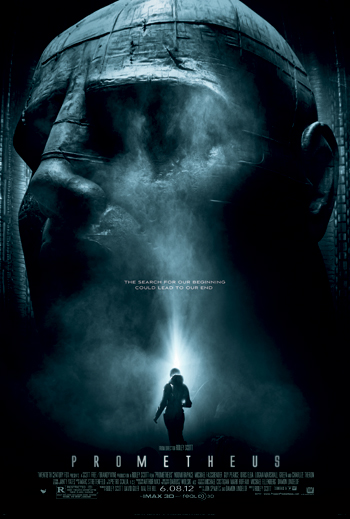
Part prequel and part religious odyssey, Prometheus both treads familiar ground and explores new territory. In keeping with my invariable sense of timing (I saw none of the Alien trilogy in theaters), I waited until well after the fact to see the movie. I had heard Prometheus called a prequel, but even if I hadn’t some of the Ridley Scottish touches might’ve given it away: a large ship bound for a distant planet, evidence of unexpected inhabitants—yes, they knew about the “engineers” (we could call them “watchers”) but not the proto-Aliens they were breeding. We even have the android that understands science’s need to be greater than that of human need. Déjà vu. Still, there’s something very different here—direct discussion of religion and how faith plays into the work of scientists. Elizabeth Shaw, the sole survivor, wears a cross as she tries to work out what her father’s teaching about religion might mean. The cross isn’t hidden in the background—it is brought out into the open and discussed.

If you haven’t seen the movie, the premise is that ancient artifacts (including the ubiquitous Sumerian, Egyptian, and Mayan templates) added to a new discovery in Scotland, demonstrate that a race of giants have been inviting us to their planet for thousands of years. In fact, they had engineered us. (Ironically, the biologist who espouses Darwin is among the first to die.) Peter Wayland, industrialist billionaire who doesn’t want to die, funds a trip to meet these engineers. The engineers, save one, died long ago. Apparently of some plague (cue the aliens!) that were created to destroy humans. They were about ready to send the nasty beasties to earth when they were overcome, with only a single survivor. No coincidence that this planet was reached on Christmas day. It becomes clear to Dr. Shaw that these engineers were intent on destroying the human race they created. And still, she slips her cross back on before facing the engineers of life and death. This was Noah without all the water (and much better writers).

Of course we think we know the rest of the story. Sigourney Weaver bravely led us through three alien attacks before sacrificing herself in a New Testament kind of ending. But what about Elizabeth Shaw? She who bore and aborted the mother of aliens in a very maculate conception? She is off to a prequel’s prequel to find out why these engineers wanted to destroy us. Rumor tells of Prometheus 2, and I wonder if we will get to meet our maker’s makers. Although Scott is an atheist, he brings us Moses later this year, and has already given us Mary and Jesus wrapped up into one with Ripley and her spiritual mother, a sci-fi St Anne, in Elizabeth Shaw. After all Elizabeth was cousin to Mary, and now that the question of faith has been openly discussed, it will have to be more fully addressed. Among the unanswered questions is whether I be able to make it to the theater on time to see this one, or will two years vanish before I find the time to address the eternal questions that Ridley Scott always seems to pose.


The Plague

Plagues&Peoples Sitting on the bus next to some guy with a consumptive cough may not be the best place to read Plagues and Peoples. But William H. McNeill’s book is considered a kind of modern classic, and since the Middle Ages have been on my mind, I persisted anyway. I did wrap my scarf around my face, though. Plagues and Peoples isn’t just the story of the Black Death, however. It is a sweeping account of pandemic and endemic outbreaks and how they form recognizable patterns with human populations. Perhaps the most striking aspect of McNeill’s study is how determinative plagues have been for many decisive aspects of human history, including religious ones. Indeed, religion keeps cropping up in the book. One reason is because of the roles religions play in human suffering—to be more precise, I should say in trying to alleviate human suffering. (Yes, some religions definitely cause it as well, but that’s a story for another time.) McNeill even suggests that fear of disease might have led to the parting of the ways between Swiss and German Reformers, playing a role in the divergence of what would become the Presbyterian and Lutheran flavors of Protestantism. The spread of some religions was facilitated by the ravages of disease.

During the period of the spread of the Plague, however, McNeill notes that those cultures attended by Christian and Buddhist institutions managed to fare better than irreligious, or, perhaps more accurately, folk-religion ones. Once people figured out Plague was contagious, they sensibly kept away from the sick, but the moral teachings of Christianity and Buddhism compelled the religious to tend to the ill, with the result that more people in those religious traditions survived. That’s not a universal declaration on McNeill’s part, but it is a fact worth bearing in mind. The risk to self paid off when more individuals cared for each other rather than just heading for the hills when the Black Death came along. On the other hand, religions frequently insist on behavior that spreads disease as well. The great pilgrimages to Mecca or the Ganges often brought great crowds together where disease could quickly spread. The passing of the peace in some churches is more like the passing of the plague.

In ancient, pagan times, disease had its own deities. In ancient Ugarit, Resheph, the archer, was also the god of pestilence. Pestilence frequently accompanied the horrors of warfare, and even Apollo opens the Trojan War by firing his arrows at the Greek troops. Gods are the source of disease. One of the ancient truisms, which may not be taken as true today, is that the force that wounds is also the force that heals. Instead of ignoring Resheph, you pray to him, make offerings to him. He can slay, but he can also heal. In the monotheistic and even non-theistic traditions McNeill mentions, the focus shifted to the care of those suffering rather than the offering of sacrifice to unhearing gods. Even the Romans were impressed by Christian care for one another. Of course, that was well before Obamacare offered the hope of medical treatment for those cut off from lucrative employment. The Christian response now, it seems, is to complain about others taking advantage of my surplus cash made over to a program to prevent illness in one’s fellow citizens. Take the bus to work, you’ll see what I mean.


Clash of the Watchers

NoahMovie

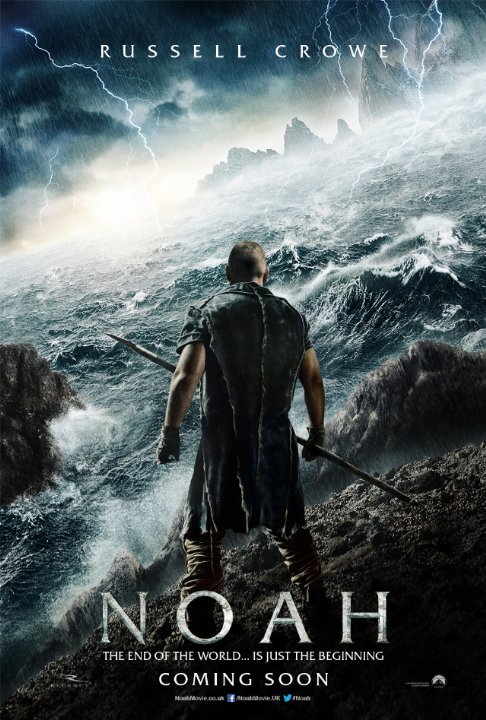
I don’t know about you, but I think I got gypped with my Bible. I have just come out of Noah where I saw amazing sights and a seriously troubled Noah to whom God refuses to say a single word. Controversy still swirls around the web concerning the movie, but I honestly have to say that it was more like Clash of the Titans (2010) than anything else. Except a thin part of the plot—and a few character names—that were borrowed from the Bible, this could have been Herodotus rather than Moses. I don’t recall finding any exploding lava angels in Genesis 1-11, and magic rocks that seem to fit better into a Mormon worldview than a biblical one. Gopher-wood trees grow incredibly fast, and Noah sure fights very well for being a six-hundred year-old man. So why all the fuss? This is a movie folks, not scripture. For the price of the ticket you can buy yourself a new Bible and read the entire story in fifteen minutes (it’s just over two chapters long). If it’s an action movie you’re looking for, I thought The Avengers was better.

What struck me most about the movie, apart from the watchers, which were admittedly an improvement on Holy Writ, was the subtext of evangelicalism. Noah, when he decides to build the ark appears suddenly with an evangelically approved haircut. He also had grown decided misanthropic, insisting that the ark is only for the animals’ sake, and that he only allows Shem to have a wife because he thinks she is barren. When he considers finding wives for Ham and Japheth, there is a huge meat for sex kind of deal going on in Tubal-Cain’s city that disgusts Noah so much that his vegetarian righteousness declares that all people will die off once the ark runs aground. And, of course, he will have to kill his granddaughters. This is a dark and tormented Noah who drinks to forget his problems in a world where God only speaks in cryptic dreams and one gets the sense that Noah is very Republican in his lack of compassion. Take out the whole human race while you’ve got the chance.

The movie is filled with mixed messages. Noah certainly doesn’t appear to live up to his name (“comfort,” by simple translation), and although the supernatural is everywhere, a compassionate deity is utterly lacking. Species die off when Tubal-Cain gets hungry. And the very sign of blessing is the skin shed by the serpent that led to the fall. What are we supposed to learn from this? A vague, Avatar-esque “the planet is good” message does give me a little hope, but seeing Noah poising a knife above an infant’s head only because she’s female makes me a bit squeamish. Noah obeys simply for obedience’s sake and people are mere stains on an otherwise ideal world. Before the fall Adam and Eve veritably glowed. Adam stoops to pick up the serpent’s skin while Eve engineers the fall of all. The special effects are good, but the story, it seems to me, is all wet. That’s the gospel truth.


Baptizing Virgil

Dante Alighieri was curious as to Heaven and Hell. Like most mortals, he wasn’t sure of his way around and so he needed a guide. Descending to the nether regions, he enlisted the services of Virgil. Virgil is best know for his epic poem The Aeneid, the early Latin account of the Trojan War. I’ve often wondered why Dante chose this particular writer as the “good pagan” who might lead him through the inferno without becoming ensconced within it. Then I found out about Virgil’s Fourth Eclogue. In addition to The Aeneid, Virgil wrote The Eclogues, or idylls of rustic life. In the fourth of these he included what some early Christians considered to be a pagan prophecy of the birth of a special child, although Virgil was never a Christian and indeed overlapped with Jesus by a decade or two. He is the author of the Roman national epic, as Aeneas was believed to have escaped Troy and gone on to found Rome. Virgil tells the tale. What would he be doing, predicting Rome’s spiritual conqueror?

Virgil; photo credit, A. Hunter Wright, Wikicommons

Virgil; photo credit, A. Hunter Wright, Wikicommons

When Rome became Christian, under the knowing gaze of Constantine, the fourth Eclogue of Virgil was reinterpreted as a prophecy of Jesus’ birth. You see, the special child born ushers in a golden age, and what could be more golden than imperial Rome? Virgil’s foresight suggested him to Dante as a reliable guide through the infernal regions where, despite his suspect religion, he never falters. This whole episode once again highlights just how influential Christianity was to become even in the secular world. Prophecy can be read back into any significant passage, biblical or not, and new religions are founded all the time on such a basis. Such is the power of the written word. It is not just Mormons who baptize those who don’t believe.

Rationally we know that Virgil did not predict the coming of Jesus some three decades in advance. Yet, even such a brilliant scholar as Dante Alighieri was swept along by the tide of belief that had convinced the eternal city of its heavenly pedigree. All roads lead to Rome, and all prophecies point to Bethlehem. Beatrice was, however, a real woman, who, Dante believed, was tasked with revealing Heaven to him. He fell in love with her when he was but nine, and when he married it was to another woman, pre-arranged by his family. Beatrice was married to different man and yet she would succeed where Virgil had failed. Ever after it would be known as the Divine Comedy indeed.


Shining Meaning

AllThingsShiningWriting with the hopes of eventually being included in the Western Canon, I suspect, is often somewhere in the back of an author’s mind. We want our efforts to be noticed and our voices to be heard. The Western Canon, however, is a very exclusive club, and the members don’t get selected easily or quickly. We value our classics. More amorphous than the biblical canon, the list of books that define western culture is slightly different with every analyst, but the biggies always make the cut. Hubert Dreyfus and Sean Dorrance Kelly see the great classics as a source of meaning in an increasingly secular world. All Things Shining: Reading the Western Classics to Find Meaning in a Secular Age is a fascinating consideration of how the writing we’ve turned to for inspiration has changed over time. Older members—including the Bible—don’t drop off the list, but newer ones are continually added. According to Dreyfus and Kelly the polytheism of Homer shone with possibilities, and monotheism led to necessary changes where the shining shifted to new characters and new stories. It is an intriguing concept.

Reading about writing generates a fire within. Some of the classics All Things Shining discusses are those you’d expect: The Divine Comedy and Moby Dick. Others are more personally meaningful, such as the work of Elizabeth Gilbert or David Foster Wallace. We all have the authors that shine for us. Moby Dick, of course, has been on my personal canon since seminary and the chapter on Melville helps to bring the thesis of this brief book together. We all know the white whale is more than an albino cetacean, and the world has benefitted from that fact ever since Melville put pen to paper.

As enjoyable as All Things Shining is to read, I was left with the impression that meaning itself has become greatly fragmented in the modern world. Without the social glue of religion, we’ve been left to chart our own course through parts of the universe yet unexplored. We select our crew by the books we read, and we decide whether Jesus or Captain Ahab is better able to guide us through such dangerous waters. They both, in their way, captain ships. Since this is an exercise in fragmentation, we don’t know upon which shore this craft will ultimately land. While Dreyfus and Kelly are philosophers, many of us have followed other paths and have come to our amateur ways of finding meaning. Some of our ships never come ashore at all. “One does not have to believe that the Greek gods actually exist in order to gain something deep and important from Homer’s sense of the sacred.” Well said! If only we could learn the lesson to be literary rather than literal, religions would allow for many ships upon this vast ocean. And still we hale each other with the words, “Have ye seen the great white?”