Vampires Versus Science

Blade_movie

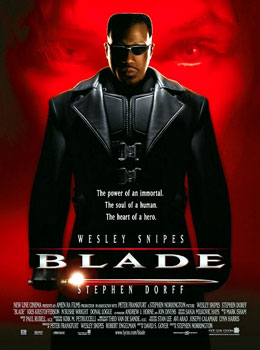
In keeping with my current explorations of vampire religiosity, I watched Blade for the first time. I’m aware that the figure of Blade is based on a comic book hero, but it is a series with which I’m unfamiliar. The movie is the basis of my knowledge here. The first interesting connection, or more properly, disconnect, between religion and vampires is the fact that in Blade’s universe crosses and holy water do not work. Vampires do respond to garlic and silver, and even to chemicals developed in medical labs. The faith-based origins, however, have disappeared. At one point Karen tells the vampire Frost that he’s just infected, like with a virus. Vampirism was, historically, based on diabolic influence and the signs of the “one true faith” had the ability to destroy them. In the modern worldview, however, organic chemistry holds greater promise. These seem to be secular vampires.

Still, not so fast—religion is not completely absent from this world. Frost conspicuously bears the cognomen Deacon, and he plans a revolution that will bring about the incarnation of “the blood god.” This is because of a prophecy in the book of Erebus, “the vampire Bible,” shown hanging in strips like so many Undead Sea Scrolls. Erebus, of course, is borrowed from one of the many Greek terms for sections of the Underworld. Hades is a general term, but an entire geography of the realm of the dead was speculated. Erebus may be translated as “deep darkness,” and thus is appropriate for vampiric faith. Religion is not absent, it is just that Christianity is irrelevant for vampires. They do, however, borrow the concepts of sacred scripture, sacrifice, incarnation, and even twelve disciples.

When Blade has his final showdown with Frost—now the blood god incarnate—it is the EDTA, the scientifically developed anticoagulant, that destroys him. A fascinating subtext lurks here. Although clearly intended as an action movie, the plot undermines the vampire religion with science. Frost believes that the ancient ritual, decoded from a forgotten language, will turn him into a god. When you need to bring down a god, science seems to be the best weapon. Vampires—Frost anyway—are believers. Karen is confronted with the existence of vampires by accident, yet she discovers the most effective means of killing them scientifically. In the bloody battle between science and religion, it is clear which side is most powerful in the vampire universe of Blade.

Final Frontier?

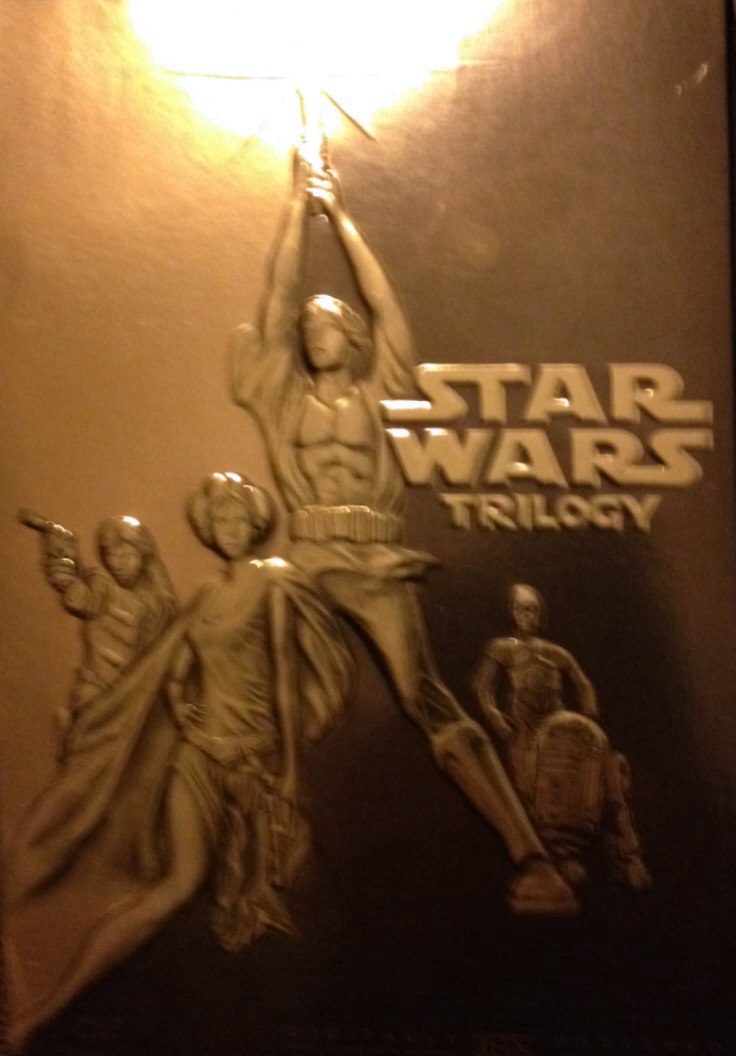
Stay away from the dark side. That’s generally good advice. Ironically, new religious movements (NRMs, in the biz) have come up in my conversations quite a bit lately. Some of my friends have suggested that I start a new religion—job security would no longer be an issue. I’ve been studying religions my whole life, and at times I’m sorely, sorely tempted. Meanwhile a friend pointed me to a story on Details.com about Jediism. Yes, there is a religion based on Star Wars—actually, I shouldn’t be too hasty here. There is at least one religion based on Star Wars; likely there are many. The question that is indubitably raised is okay, so do these people actually believe this stuff? Don’t they know Star Wars was written by George Lucas? How can it be a religion? I can only respond with: Have you ever heard of Scientology? Religions do not have to be believable to be believed in. History has shown that time and again.

StarWars

Jediism is based on the teachings of saints like Yoda and Obi Wan Kenobi. What they are teaching is straight Joseph Campbell. Served neat. Good versus evil. A sense that a cosmic force surrounds us. The hero’s journey. The same thing can be found in the Bible. Wrap it up in a Jedi cloak or in a Galilean robe and the end result isn’t much different. I’ve seen bumper stickers suggesting that Obi Wan died for my sins. Just as long as good wins out in the end, who’s to complain? Does it really matter if it happened a long time ago in a galaxy far, far away or just away in a manger?

The problem with religion is that we lack a proper definition. Christianity clearly uses the word to describe itself. When looking at those who thought differently (adherents of Judaism, Roman paganism, the great goddess of Syria) early Christians had to call them something. If Christianity is a religion, so must they all be. Some religions, however, are not based on belief, but practice. To be is to do. Some religions are based on historical people, some on fictional people. Some are very serious while others are difficult to tell. Some religions are ancient, but looking at the state of the world it’s hard to say that they’ve been terribly successful. So when a bunch of sci-fi fans think they’ve discovered the truth in the mind of George Lucas, who’s to argue? And I really do mean that about keeping away from the dark side.


Phoenix Rising

As a bird with the incredible gift of resurrection, the Phoenix is one of the most enduring symbols of Greek mythology. We, as people, are pretty accustomed to messing things up and the hope of renewal is something we earnestly crave. The Phoenix, when its long life is over, goes up in a burst of flames only to be reborn from its own ashes. Christians early latched onto this poignant symbol, as have many other religions. In origin the Phoenix is likely related to the sun mythos. Isn’t there always a small shadow of fear that somehow it might fail to rise tomorrow morning, plunging us all into interminable darkness? The Phoenix is a harbinger of hope. These are my thoughts as I soar, birdlike, toward Phoenix, Arizona. A city named after the resurrecting bird. I’m not certain what awaits me here—I’ve never been to Arizona before, but I do know it is desert, and that life in the desert is always precarious. I’m glad to have brought my mythology with me.

Phoenix was, appropriately enough for October, first named Pumpkinville. It is difficult to imagine this sixth most populous city in the United States coming to prominence under that moniker. Since it is October, however, there is an aptness to such history. My trip, as most of my travel, relates to business rather than pleasure—there is a kind of hope in resurrection here as well. As a city in the desert, resurrection would seem to be central to those millions who call Phoenix home. Indeed, the concept of the gods as we know them seems to have been conceived and born in the harsh environment of desiccated lands. Some suggest the Phoenix was originally taken from Egyptian lore. Egypt was, outside the Nile delta, a nation only a few miles wide, snaking alongside a life-giving river in the wilderness.

Phoenix

What is it about deserts that brings the spiritual to mind? It always seemed to me that it was an issue of utter dependence. People living in a harsh environment need all the help they can get. It is difficult to suppose that harsh deities might arise in perfect circumstances. Today Phoenix depends more on engineering and control of the environment than on providence. The gods of the desert nevertheless find a home here. Even if they have adapted to an affluent lifestyle. As go the experiences of people, so go the fortune of the gods. And resurrecting birds.


Twilight Zones

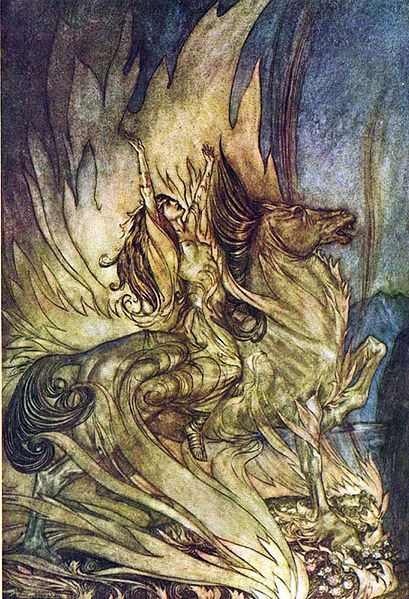
It was twilight last night when I drove into Binghamton. My thoughts naturally turned to The Twilight Zone since one of my childhood heroes, Rod Serling, had grown up here. Binghamton University was also the professional home of novelist John Gardner, of Grendel fame. Seeing the colorful leaves fading to the gray of a falling evening, I thought of how evocative a word “twilight” is. We are creatures with an in-born fear of the dark and twilight is our last hope of light before the night settles in. Maybe it was having just so recently read Grendel, but twilight and gods together brought “the twilight of the gods” to mind (it might have helped that a sudden thunderstorm broke out at the moment). When I first saw the word Götterdämmerung, in junior high school, I thought it must be a potent swear word, what with all those doubled letters and umlauts. My German teacher calmly explained that it was the fourth and final cycle of Richard Wagner’s opera, Der Ring des Nibelungen and it translated to Twilight of the Gods. It is itself a translation of the Norse word Ragnarök, with its single umlaut. Even though it wasn’t swearing, the concept sent a shiver through me anyhow.

I’ve never sat through a performance of The Ring, but I have heard the music with its famous Ride of the Valkyries. Based on Norse and Germanic mythologies, The Ring has deep roots in a pagan mythology where night plays a prominent role. Although J. R. R. Tolkien denied having been inspired by Wagner’s work (there was a certain political incorrectness to it, along about the early-to-mid-1940s), both four-part cycles draw on the Norse mythology that continues to fascinate us with movies like Thor and The Avengers. What impacted my young mind the most, however, was the very concept that the gods could be defeated. How was such a thing even possible? We were raised to believe good conquers evil. How can the gods—even pagan ones—lose? It was a world-distorting concept for someone yet to face high school.

Last night I was literally in the twilight zone. Having driven through the Endless Mountains region where autumn’s reds and yellows inspired me with just how colorful death can be (a European friend once confessed to me that driving along a wooded road in Pennsylvania his first autumn here he had to pull over and weep for the beauty), twilight was already on my mind. October fades into the twilight of the year. The mythologies of the northern races, the Norse and the Celts, seem almost obsessed with the ominous, growing darkness. There is a beauty to it, but also an abiding fear. Are the gods powerful enough? It was a question first raised when my eye fell on that striking word Götterdämmerung that somehow became a part of me.

409px-Ring63


Back to the Future

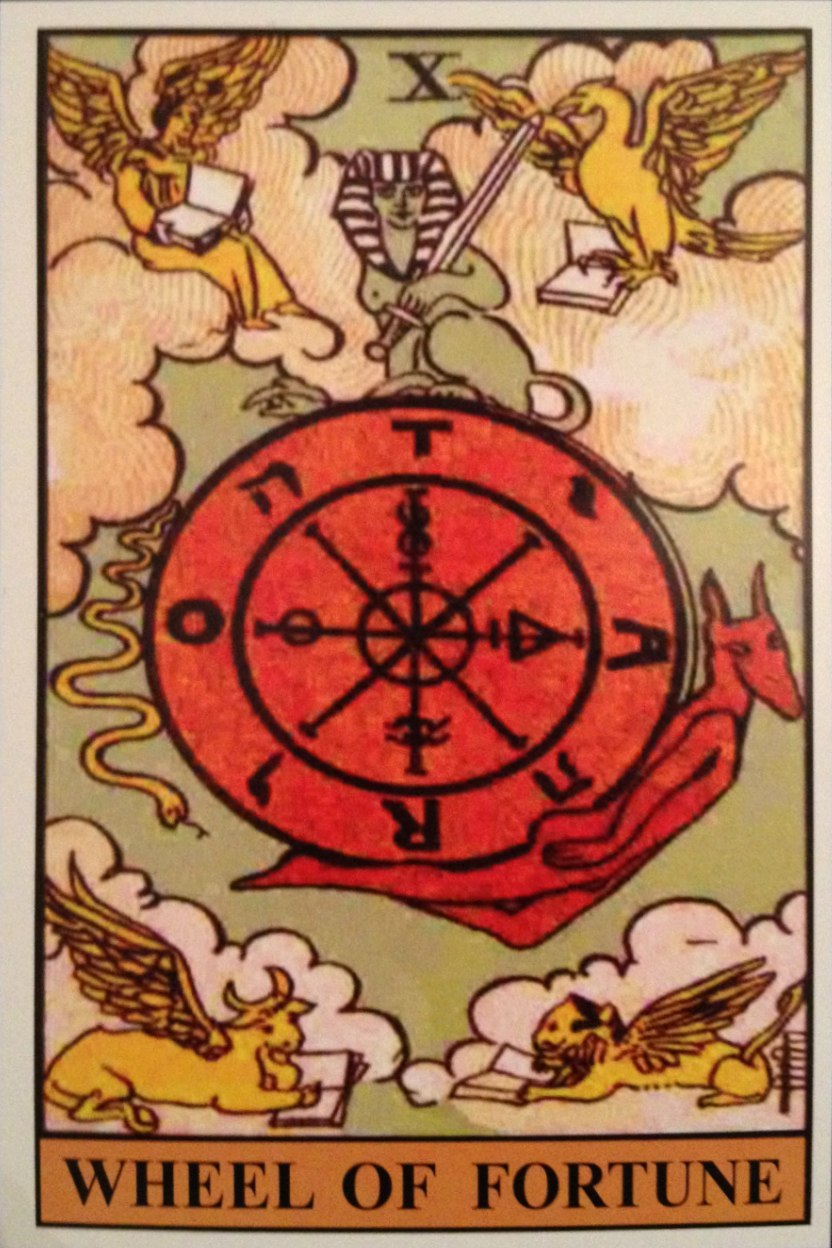
When I leave work, I’m in a rush. It would seem that Third Avenue and Eighth Avenue shouldn’t be that far apart, but you can’t see from one to the other. I’m a pretty fast walker, and I’ve negotiated city crowds since my graduate student days. If you get caught at a light on one of Midtown’s avenues, you get into a cascading series of minute-long delays and you could miss your bus. Since I do this nearly every day, I know the lights are on timers, and getting through one light may make all the difference in having to wait another half-hour in the Port Authority Terminal for a missed bus. So when the woman held out her hand in front of me, I was ready to pull a dodge, but then I saw the tarot card printed on the slip of paper she held toward me. I took it at nearly a run with an acknowledging nod of thanks. New York has any number of psychic readers, and I’ve noticed that different ones advertise in different street corners in town. Unlike the competition, this psychic doesn’t announce who s/he is (I always assume “she” but the chit doesn’t say). “Clairvoyant Consultant” is the only identity, along with a street address. “Gifted European Spiritual Psychic” also occurs. I will get a five dollar discount if I go in. Tempting.

Clairvoyant

On the bus I noticed something about the colorful print of the tarot card. I’ve never in my life touched a real tarot card. I’m not really superstitious, but why take chances? The Bible can be pretty harsh about such things. This card says, “Wheel of Fortune.” The wheel, with its runic (and Hebraic) symbols, is surrounded by clouds. On each of the clouds in the four corners is—and this caught me off guard—an iconic symbol of each of the evangelists. Matthew’s winged man is in the upper left, and Luke’s winged ox in the lower left. Mark’s winged lion is in the lower right and John’s eagle claims the upper right. On the wheel itself rest a sphinx, a la Oedipus, a serpent (a la Eden?), and what appears to be a recumbent devil. Clearly clairvoyants see some value in traditional religious symbols.

New York is quite a religious city, for all its secular trappings. Not all of the religions are traditional—many, in fact, would start a literalist’s blood on its way to a low simmer. It is a city of seekers. The wheel of fortune may be a more apt symbol than I realized. The earlier bus gets caught in traffic today, and at one of the common stops I see the later bus whizzing by, and I know that it will arrive at my home stop long before I will. Of course, I had no way of foreseeing that. Each day as a commuter is another spin of that wheel of fortune. It is not a surprise New York is such a religious city. Your fate is never really in your own hands. But this flyer is, and it entitles me to five dollars off a peek into the great unknown. I think maybe I got this card about two decades too late.


Super Women

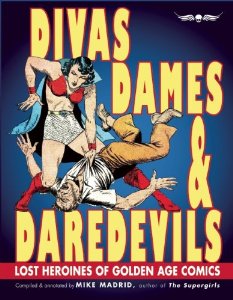
DivasDamesDaredevilsDivas, Dames and Daredevils: Lost Heroines of Gold Age Comics, by Mike Madrid, is a stroll down a memory lane that many of us never previously walked. My imagination is such that I no longer read comic books, but as a child they provided a cheap escape from a reality that didn’t feel so different from the crime-infested world that superheroes inhabited. For young boys reading these stories the absence of women was normal—there were some things of which Mom didn’t approve, and that was because she just didn’t understand. Boys will be boys. Still, Mike Madrid has ably demonstrated a secret knowledge that the 1950s would deem arcane—female characters once held a position nearly equal to that of men in the world of comics. Prior to Comics Code Authority in 1954, the women who helped win the Second World War were portrayed as tough, independent, and in charge (to an extent) of their own destinies. In the conservative backlash of the ‘50s, however, women were diminished, relegated to the home and domestic life. Comic books presented them as secondary to men. That myth has proven pernicious, even now, six decades later.

One of the perks of blogging is having someone you’ve written about contact you. Mike Madrid has been the subject of a previous post for his book The Supergirls: Fashion, Feminism, Fantasy, and the History of Comic Book Heriones. Madrid’s agent kindly sent me an advance proof of Divas, Dames and Daredevils, and I was once again struck by the historical scope of knowledge that these books present. Academics are—let me correct that—some academics are becoming aware of the fact that popular culture defines reality for many people. We find our troth in those who live on the big screen or on the pulp paper, those who rise above the constant threats of an uncaring world. We’ve seen that business can be its own evil empire, and superheroes, and everyday people, do have it within their power to act. Madrid shows that we were well on our way to equality of the sexes when the haircut and horn-rim crowd of the clean-cut 1950s insisted a return to Stone Age ethics in the treatment of women was appropriate.

In keeping with the general theme of this blog, the book has a chapter on the goddesses who became heroes. We all know Thor, but what of the forgotten Fantomah, Amazona, Marga the Panther Woman, Wildfire, Diana the Huntress, or Maureen Marine? Madrid’s book presents a story from several of the animated heroines of the days before censorship tamed the feminine mystique. More than that, he clearly shows how women—even ordinary women—were once deemed incredible and awe-inspiring. Then the titanium gate of male inferiority complexes and the vaunted “old ways” crashed down, trapping us all in a world fit to be ruled by men alone. I congratulate Madrid for resurrecting so many forgotten figures who never had a chance to become cultural icons. All women are heroes, and I know there is a hero that I miss very much, although even Mike Madrid didn’t mention her in his wonderful book.


Esoteric Goddesses

250px-Statuette_Goddess_Louvre_AO20127One of the nice things about the internet is that you can indulge your unorthodox interests and nobody will much care (except, of course, the US government). The other day, while reading about monsters, I found a fellow WordPress site, EsoterX. More specifically, I found a blog post on Ashtaroth. Those who have more than a passing interest in my background know that I spent a few years of my life writing about the goddess Asherah. Asherah and Ashtaroth are sometimes easily confused by anyone not reading about them in the original languages, but I settled on Asherah because we simply don’t have much textual information on Ashtaroth. Ashtaroth has gone by a number of names over time: Athtart, Astarte, and, as I just learned from EsoterX, Lord Treasurer of Hell. I won’t try to repeat the clever observations of EsoterX, but I can’t help myself add my own two shekels’ worth.

Ashtaroth is clearly one of the bad girls of the Hebrew Bible. She tempts the upright astray, and she seems to have been a perennial favorite among the less-than-orthodox Israelites. The Bible doesn’t take much care to flesh her out fully, and she appears only in minor roles in the Ugaritic texts. Some in the ancient world easily associated her with Ishtar, and their names do seem to bear some kind of relationship. Ashtaroth is connected to the planet Venus, as was the latter goddess Aphrodite—named, appropriately enough by the Romans, as Venus. Ashtaroth was also a militaristic goddess associated with horses. That girl got around.

Unfortunately, in the literature that survives from the earliest period, we are left with only the sketchiest of outlines of this once important goddess. Many of the Semitic deities have been revived in popular mythology of the modern age, and Ashtaroth, with her sexy, yet belligerent nature, is always appealing to the puerile imagination of pubescent boys. She was taken with great seriousness long ago, however, although her origins are lost to history and her attributes have become general enough to fit just about any old generic goddess. I’m glad to see that EsoterX has given her a shout-out and has traced a brief history of the goddess through the ages. Maybe someday we’ll find some accurate information on her early days. If we do, will somebody please give me a poke? I will probably be busy reading EsoterX.


Resurrinception

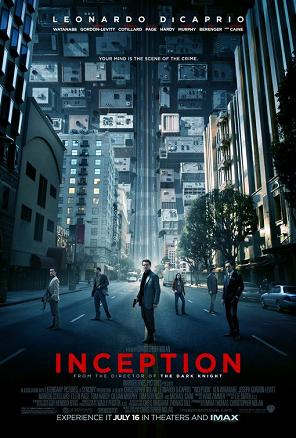
Inception_ver3Like most profound movies, Inception keeps me coming back repeatedly. I’ve already written a post on how the Theseus and minotaur myth lurk deep within the labyrinths of this film, but upon my most recent viewing a new angle caught my attention. In the first level down into Fischer’s dream, when Saito is unexpectedly shot, Eames asks Cobb, “What happens when we die?” It could be the question of a child faced with a dead pet for the first time. Of course, Eames refers to death in a dream under sedation, and limbo is the closest thing to spiritual death that a person can experience. The timing of that question, however, triggered in my head the number of resurrections that take place in the movie. I have frequently noted here that resurrection is a standard part of the tool kit for western movies, particularly American ones. We expect resurrection. So, finally, three layers down, a dream within a dream within a dream (even Poe would be proud), Saito dies. He is lost in limbo.

Limbo is a fuzzy theological construct thought up by the church for those who don’t deserve Heaven, or Hell, or even Purgatory. Some, it seems, end up in limbo. In Inception limbo is unconstructed sub-conscious, an area even Freud would fear to tread. Saito dies and goes to limbo. Fischer, meanwhile, also ends up in limbo because Mal shoots him dead in the third-level dream. Mal is already in limbo because she killed herself in real life—or was it a dream? Cobb, of course, must die to return to limbo to retrieve Saito so that he won’t be arrested when the plane lands. In limbo, three of the four escape, riding the kick back up to consciousness. Only after baptism in the first level dream, when the van plunges into the river, do the lost souls emerge. What happens after we die? Resurrection.

I’m not suggesting that Christopher Nolan planted a Christian idea in the viewers’ subconscious mind. Resurrection is part and parcel of our culture. Perhaps, however, this helps to explain the durability of some religious concepts. We long for resurrection on such a deep—maybe subconscious—level that we want to see it on the big screen. Even ghosts, we’re told, haunt because of unfinished business. It is Saito, the Japanese business mogul, however, who undergoes the most resurrections. He dies in the van underwater, in the fortified mountain hospital, and in limbo (perhaps in the elevator as well, but this is uncertain). His is a regular reincarnation of resurrections. Inception, I’m sure, will keep me coming back for more. One of the questions that none of us escapes while alive, is that uttered at the level of the dream.


By Jove!

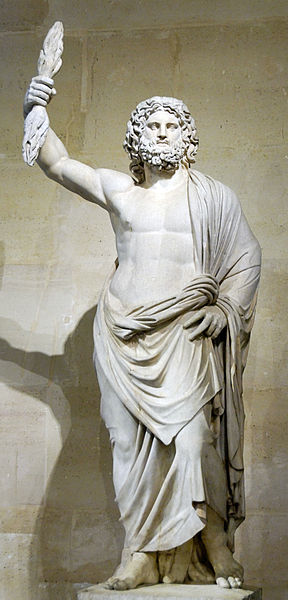
When Zeus is taken seriously in the New York Times, even the open minded scratch their heads. It’s not because any of us really believe Zeus is up their hurling thunderbolts, but because anyone would even dare raise the question. Yes, Gary Gutting’s Opinionator article is lighthearted and perhaps even a little cynical, but it does raise serious questions. Did our ancestors believe in the gods with no “proof”? I can’t help but think of the phenomenally expensive video, I Still Worship Zeus. There are, in this day of high technology and low tolerance for non-scientific outlooks, people who continue to believe in Zeus. Well, his name does come from the same root as the old Indo-European word that gives us the Latin Deus, or “God.” And, let’s face it, the stories of the Greek gods can be pretty cool (despite sub-par big screen renditions). But to take any of this seriously…Seriously?

Jupiter_Smyrna_Louvre_Ma13

As Gutting points out, some of the great minds of Greek science didn’t question the existence of Zeus. I certainly wouldn’t care to pit my puny wit against that of Plato. Those scientifically minded Greeks, apparently, believed in the gods because of their explanatory value. Too many coincidences and synchronicities and epiphanies suggest something more than meets the eye. We don’t see gods today, so Gutting asks how we know the world hasn’t changed. Now, I take uniformitarianism seriously. It is the basis for geology and much of evolution. Our old, old earth shows no evidence of a sudden change in the way things happen. What is malleable is human interpretation. As recently as a century ago, belief in some kind of divine world was very pervasive. Only in the past few decades—since World War Two, I would guess—has the premise of the Judeo-Christian god become suspect. The daily experience of living in a world where theodicy just can’t explain all the suffering has led us to a kind of stalemate with the gods.

I once had a scholarly exchange with a colleague over the nature of the word “evidence.” Our little tiff was published in the Journal for the Study of the Old Testament. My colleague had suggested that Yahweh—the god of Israel—was considered a solar deity. I averred that evidence did not exist. With rejoinder and riposte, we had to agree to disagree. The evidence I was seeking was stringent, but as we all know, absence of evidence is not evidence of absence. And that is the point that Gutting makes, whether seriously or not. The question is not “Is Zeus there?” but “Was Zeus there?”. I decline to offer an opinion. I do applaud the New York Times, however, for attempting to get us thinking about serious issues once again. If Zeus did exist, then it behooves us to consider all the implications. And perhaps to reconsider home-owners’ insurance in a world where gods may roam at large.


Firelands

BayardFirelandsPiper Bayard has been a long-time blogging buddy of mine. She’s kind enough to comment on many of my posts and even kinder to like even more. Piper recently published her novel Firelands, and she sent me a copy that I began reading right away. My schedule this entire month has been unfriendly to literacy, but I was always glad to have a few minutes to read a few more chapters of an intriguing post-apocalyptic future. What’s more, Piper is keenly aware that religion is behind much of politics—a point she boldly makes by constructing a dictatorship based around a miracle-claiming prophet-king who oppresses those who don’t believe—the Seculars, or “Secs.” Interestingly, Piper decided on the name Josephites for the religious rulers, and there are dark undertones here for those who know their religious history. As an unabashed fan of allegorical writing, I saw quite a lot here that was, well, apocalyptic, in the literal sense of the word.

In a misogynic future, the Josephites, who dwell in cities, burn many women for various heretical crimes in autos-da-fé entitled Atonements. These human sacrifices ensure fertility and also help to explain the trials of life in a post-cataclysmic world. The protagonist, Archer, has to not only survive, but to try to save her cousin, a grandchild of the eponymous Joseph, from the flames. The Josephites live in a society of thinly rooted but strongly mandated religion. There is an underground of true Christians, and Archer, although a Sec, acts with more compassion than any of the Josephites, except perhaps her cousin. In a world that has lost its bearings, religion both undergirds and undermines a dystopian society where differences of faith have come to define everyone’s role in a harsh world. (Those who have ears to hear, let them hear.)

In this world where heaven is a fiery hell, I realized that Archer was more familiar than she first seemed. A female warrior, she opens the book by tracking a large stag to feed her starving people. Nevertheless, it took me many chapters to realize that she was a hypostatic Artemis, the goddess of the hunt. No wonder she couldn’t convert to the standard religion! Her example leads the way toward a renewable and sustainable future, in touch with nature, while the “religious” in their urban environment are dying on the vine as they appear to thrive. This is a world where old gods are more authentic than an enforced religion that few believe and that only rules through fear. There is much more I could say about Piper’s fascinating book, but I want you to read it for yourself. Visit Piper’s website for more information, and support the work of an author who really has something to say!


Scholar Universe

One of the resources that editors use to find scholars of obscure fields of study is a website called Scholar Universe. Now, before you all rush to the site and crash the system, I should warn you that you’ll need to purchase an account and get a password to use it. Frankly, for our society it really isn’t worth the effort or expense for most people. The information on Scholar Universe is often outdated, and not always accurate. Once, when searching for who’s who in classical mythology, I was surprised to find my own name. I did teach classical mythology at Montclair State University for three semesters, but my longer and more complete career of teaching biblical studies was nowhere to be found. How quickly our contributions, meager though they be, disappear. In any case, when a contact breaks down, the website lists the position of a scholar as “Last Known.” More than once I’ve searched for a more updated record to find “Last Known” as a circumlocution for “deceased.” There are a few things I think I’d like to ask some dead religion professors.

I recently came across a couple of academics who had, in separate instances, been murdered. One, rather gruesomely, attacked with a hammer as he walked home from the train. We tend to think that education will somehow protect us from the vicissitudes of a world caught up in its own madness. Some of us came to this profession grasping for some sort of immortality. Higher education, while based on great ideals, is nevertheless just as susceptible to taint as any human enterprise. I have been watching as higher education has followed after the role model of business for the past few decades. There was a time when learning was thought to be worth the investment, no matter what the cost. Now a pleasant deception will do, thank you, as long as there’s cash in it.

The history of higher education has been, from the beginning, tied up with religion. The earliest universities coalesced around theological faculties, while others studied law. The two are never far apart. Even in the “New World” our early universities were formed, initially, in the service of the church. Harvard, Yale, Princeton, William and Mary, and many other colleges and universities were founded with the ideal of theological education firmly in mind. Concerns for the affairs of the world, however, inevitably came to preoccupy higher education. Secular schools have little time to study real world phenomena such as religion and spirituality. Unfortunately, those are the areas, our news sources often inform us, that would benefit the most from a bit of sensible learning. But not as long as there is money to be made elsewhere.

IMG_0684


Girls Rising

While I was home watching Bruce Almighty, my wife was attending a local screening of the documentary Girl Rising. (There was a good reason for this discrepancy; you’ll need to trust me on this one.) Chances are that many readers haven’t heard of Girl Rising; I know that if I weren’t the husband and father of Girl Scouts, I’d likely have missed it myself. Isn’t that part of the problem? Why does our society make females invisible, unless sex objects? Tabby Biddle has a thoughtful observation about this in the Huffington Post. She notes the importance of the film, but laments that the only way to make it through to the masculine mind is to pose the argument that educating girls will increase the GDP of less fortunate nations. Girls should be educated for their very humanness, Biddle suggests, but our view of a masculine God often prevents this from happening. While Biddle may have fallen a little under the spell of Marija Gimbutas, she makes a very valid point: there is no human reason that girls should not receive equal opportunities with boys. The fact that I even have to write that in the twenty-first century saddens me. It is not just “Third World” girls that have to struggle to gain what is rightfully theirs.

In my career I have been passed over more than once so that a woman might take the advertised position. (I have even been informed of this fact by friends on search committees.) Somehow I can’t find any injustice in this situation, as much as it has personally disappointed my hopes and dreams. Men have been frustrating female hopes and dreams for millennia. Maybe the matriarchy that Gimbutas envisioned never really existed, but the concept is sound: women and men both contribute to this thing we call civilization. Our religions, as they developed in our societies, have held the mirror up to the might-makes-right paradigm from the very beginning. Wouldn’t a male god with a more muscular upper body shove a fair, and giving goddess out of the way every time? Just ask Zeus. Or Odin. Or El. Divine civilization is only human projection, and we just can’t relate to a genderless God. So he becomes the excuse for female repression.

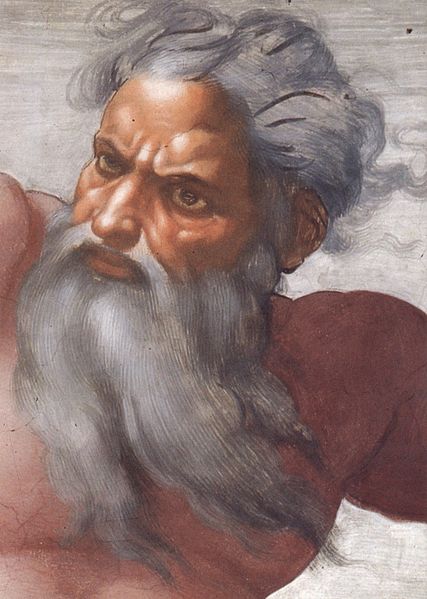
The face of divinity?

The face of divinity?

We’ve firmly entered a new millennium, and, looking at our treatment of half of our species, we still have an incredibly long way to go. In much of the western world, traditional religion has lost its grip, but I’m a little frightened by what I see taking its place. There are a few pockets of female-friendly religions awaking, but there are many more backlashes from the traditional male preserves of conservatism, patriarchy, and free enterprise. It is time for all men to consider that none of us would be here without our real-life goddesses. Some may rail against unorthodoxy, but unfair structures must be imploded for a new, and true, orthodoxy to be established. Women and men—not women for men, not women for profit—that is the only right teaching. So we should promote Girl Rising, and we should seek to move beyond the mere financial benefits for a free market to find the divine spark that masculine interest seems to have lost.


Holding out for a Hero

Over at Religion Link, a story about superheroes and spirituality was posted recently. I guess it should’ve been clearer to me as a child with his head in the clouds that the superheroes buzzing around up there were really gods. Well, in an ultra-thou-shalt-have-no-other-gods setting, that wasn’t really a possibility my young mind could even comprehend. They were just guys (almost always) with super powers. In the Bible they would have been miracle workers. I dared not think of Samson in the same thought as the Incredible Hulk. Heroes, after all, are about wish-fulfillment. We all want to be more than we are—I can imagine a better me (speaking strictly for myself), so why not present that self in the form of a hero? The Greeks, and before them the Mesopotamians did it. Heracles was a Europeanized Gilgamesh, perhaps through the mediation of a Levantine Melqart, after all.

Gods or heroes?

Gods or heroes?

The brief article on Religion Link points out that young people identify with gods in popular culture more than a God in the pew. A veteran of many, many hours in church, I think I can understand that. What adults say is going on in the service is arcane and not prone to any empirical verification. What child sitting in church hasn’t wanted to be home watching real superheroes fight evil on television instead? The movies of the past decade or so have shown us flawed gods. Heroes with troubles. These are the gods for the twenty-first century. Omnipotence isn’t all that it’s cracked up to be.

Scholars of religion are beginning to pay serious attention to superheroes. Books are beginning to appear offering analyses of these god-men, and a few god-women, among us. Funnily enough, some people find them more believable than the traditional gods. Perhaps that is the draw of heroes from the very beginning. Gilgamesh, after all, is asking the very human questions we still ask today. Where can I find a true companion? Why can’t it last forever? Why must we die? To find the answer Gilgamesh is sent off on an impossible task. He has fought monsters, he has defied the very gods. And when he finds the plant that offers a kind of immortality, it is stolen away by a snake. The story clearly influenced the tale of Eve and Adam in Eden. It has also inspired the more recent incarnations of superheroes, and we are beginning to realize that they often fly in the face of the divine.


Tell-Tale Hearts

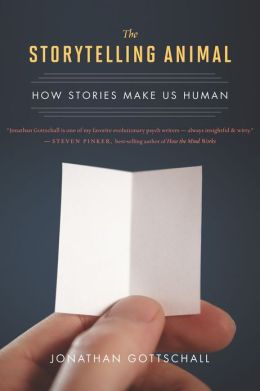
StorytellingAnimal As a sometime dabbler in the fictional arts, I was intrigued by Jonathan Gottschall’s The Storytelling Animal: How Stories Make us Human. I read the book because of my own fascination with fiction—it is a transcendent activity to read it, but more so to write it. I‘ve always wondered why. Gottschall, a fellow academic making a living as an adjunct instructor, is a lucid writer and a great storyteller. His book opens with the unusual fact that even the most logical and rational of humans are addicted to stories. Our brains work to spin unrelated events into narratives. Even while we sleep, our minds continue to tell fictitious accounts of weird adventures. To be human, Gottschall clearly demonstrates, is to be in love with stories.

In chapter 6, “The Moral of the Story,” Gottschall turns his attention to religions. That far into his book it is no surprise that we find religions are largely based on story. Those who’ve studied mythology plainly see the story-ridden origins of religions. Religions, after all, have nothing if not great explanatory value. They tell the tales of why we’re here—the technical name is “etiology,” stories of origins, but also tales of what the gods, the tao, or the force demand of us. Believers often take such fanciful narratives literally, missing the point of it all, the proverbial moral of the story. The story is the moral. We find the deepest truths in fiction.

Many of my friends are fiction writers. Most have never been published or struggle to find representation. None simply give up. The draw of narrative is as palpable as the need to eat or sleep, as strong as the urge for sex or recognition. It is far stronger than the desire for money since nothing material can substitute for our desire for stories. After a busy day we send our children off to bed with a nighttime tale. Many of us climb into bed with a book—the more fictional the better—to end our conscious hours each day. We dream our way through the night and spend our long days fabricating a narrative we call “my life.” Those of us who indulge in fiction are sometimes solitary individuals, but we crave the awareness that we are not alone. Others too, as Gottschall clearly proves, are alone with us. In fact, all humans are gathered around this campfire of the storyteller. Thank you, fiction, for coming to the rescue.


Campbell’s Swansong

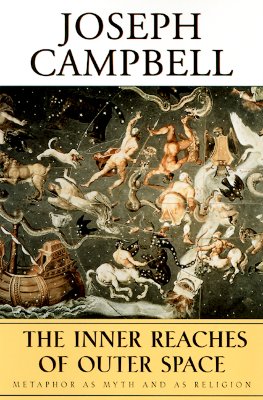
InnerReachesofOuterSpace Joseph Campbell may not be the best reading for the bus. Despite the many signs and placards gently suggesting to passengers both in the Port Authority Bus Terminal, and on the buses themselves, that keeping quiet is courteous, we are a people in love with noise. We are used to annoying electronic beeps, squawks, and farts. People find it difficult to sit more than 20 minutes without talking. I’m trying to read. At the Hunterdon County Library Book Sale I picked up Joseph Campbell’s last book, The Inner Reaches of Outer Space. It requires some concentration. Campbell was a brilliant comparative mythologer. I was reared in the scholarly hermeneutics of doubt, however, especially when it comes to comparing myths from different cultures. Campbell has a great appreciation for Jungian concepts, and soon minor details are blurred and the similarities stand out in stark relief. Still, as I always do with Campbell, I came away with plenty of rich concepts over which to mull.

Campbell, the great inspirer of Star Wars, the original series, was that rare breed of scholar who appreciated without participating. He is recorded as stating he was no mystic, and certainly not any kind of conventional religionist, but he couldn’t get enough of mysticism or mythology. Religion, he implies, is just mythology taken literally. He is, I believe, very close to the truth here. What we know of indigenous peoples today is that they don’t have that sharp and hard line between literal reality and story that marks much of western civilization. We tend to think fact and fiction cannot be of a kind. Looking around, we find no gods, so our choices are not to believe, or to believe too literally. And those who believe literally differently, we tend to want to kill. This is the history of religion in the western world, in a Campbellian nutshell.

Apart from the little gems I located scattered throughout The Inner Reaches of Outer Space, the main theme I found applicable was the driving force of chapter two, Metaphor as Myth and Religion. Metaphor is our way of interacting with a reality we just can’t experience directly. As human beings, we experience the physical world through the mediation of our senses, filtered by our brains. If there is something deeper, more profound than nature, we are even further removed. Our experience of meaning is metaphor. Joseph Campbell may have been a little too swift to spot congruities that are probably best left apart, but he clearly recognized the fact that our religions are not so different from our mythologies, and that both are narrated in the form of metaphor. This is not to devalue them, for metaphor is one of the most potent substances in our chemistry set. Now if only I could find the vial that has the stuff to make people want to keep quiet on the bus, we might all be able to get a bit more reading done.