No FOMO

Some fringe websites (of course I do!) present the case for reincarnation via past lives memories, particularly of children.  You see, adults hear/read/see a lot of things as the years weigh down and we might misremember something we encountered somewhere else.  Children have less exposure and therefore make more credible witnesses.  I know perfectly rational adults who believe in past lives as well.  I must confess, however, that this is one of the scariest things I can imagine.  I’m glad to have lived, most of the time, and I’m not in a hurry to end it prematurely, but the thought of doing it all over again is terrifying.  Even if it’s a different and better life.  You see, I entered life with a lot of questions and I have to say, over six decades later, I’m still uncertain about many of the answers.

If reincarnation means starting from scratch all over again, that scares me.  I’ve spent much of my life building walls to protect myself from the things that hurt me.  I avoid overly risky activities.  I handle sharp objects with great care.  I spend quite a bit of time by myself.  I don’t like being hurt.  That may be one reason that I watch horror movies.  They help to desensitize that particular phobia.  Still, I have to think of all the hard lessons I’ve learned in this life and have to think about how I might improve upon it all with another go-round.  In religions of East and Southeast Asia, where belief in reincarnation is common, the idea is often that you want to break out at the end.  Nirvana.  The place were you don’t have to queue up again.  Even Plato thought reincarnation might explain a lot.  But the very thought makes me feel weary.

If you could be rebooted with the knowledge of your previous life intact, that’d be one thing.  The idea of one day finding myself in another mother’s arms, not knowing anything, learning each microsecond, well, it’s frightening.  My parents weren’t educated people.  They taught me the blue-collar hard knocks of life (which I don’t want to have to learn again).  The white-collar hard knocks are sometimes even worse.  I tried to live this life as a clergyman, but that never really panned out.  I sometimes wonder if the Abrahamic religions/monotheistic traditions, didn’t develop Heaven and Hell out of fear of reincarnation.  The idea certainly makes sense, in some contexts.  And it’s one of the scariest things I can imagine.


Being Written

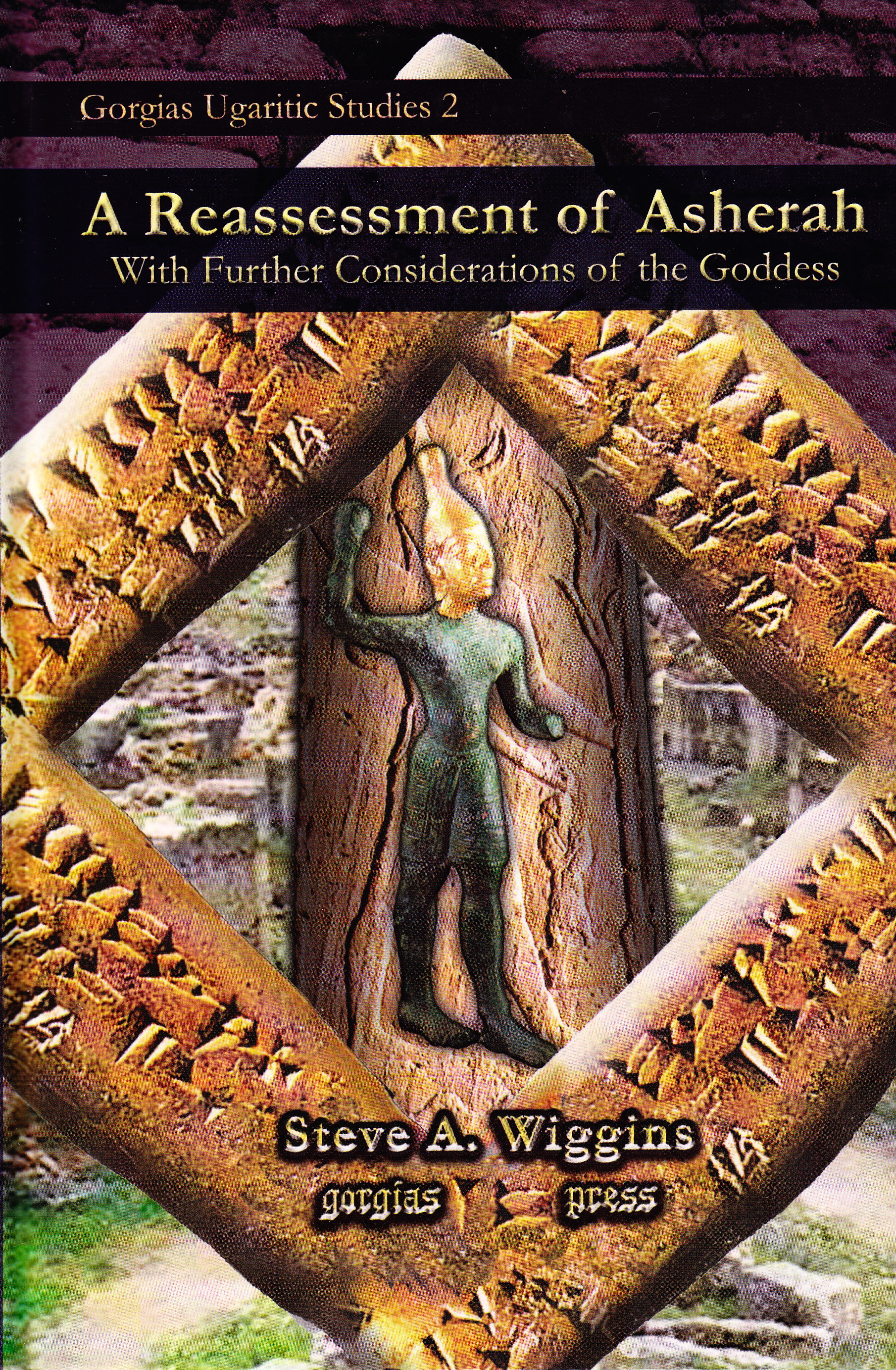
Some books want to be written, no matter what major publishers have to say.  The truth is, being an author is more like being a radio receiver than a transmitter.  Books come to you, begging to be written.  Given our culture, we equate importance with money.  Tomes that earn the most are obviously the most important and erudite.  So the (capitalistic) wisdom goes.  We follow the lucre.  If you read this blog you’ve probably had an experience like this: you find a book that you’ve never heard of that captures your interest.  You read it, transfixed.  When you tell others, nobody seems to have heard of it.  I’d say a number of books I’ve blogged about fall into that category.  The “general reader” follows what the big five publishers suggest they should.  It becomes a feedback loop.

Academic presses—university presses and others that cater to either students or professors as their primary readerships—produce some fascinating books.  Often they’re priced a bit higher than we want to pay.  That’s because they don’t sell at the volume that a big five book does.  The higher the quantity the lower the unit cost, right?  Books that wanted to be written but either price themselves out of sales, or aren’t backed up by a team of marketers and publicists, may be some of the most interesting reading material out there.  You’d never know it, though.  From the point of view of an author, most of my books came begging to me.  I occasionally think of commercial potential because, well, if you’re going to put years of your leisure time into something, you’d like to get at least a little back.  And you’d be glad for feedback, or someone what wanted to ask you about what you’d been begged to write.

Sadly, we have tunnel vision.  It only sees the shining spots crowded with dollar signs.  And since others are willing to pay for it, we have to assume that it’s good.  I’m working on my next set of imploring projects praying to be written.  I can’t handle them all, being gainfully employed helping others who write books that want to be written.  We write them for each other.  I figure that if I’m receiving the signal somebody must be sending it.  And I have a difficult time turning down an idea that pleads with me.  And if someone unexpected picks one of our books up and gives us a like, we show that even receivers can smile.


Naming Things

There’s this thing that you saw and you don’t know what it was called.  It was, say, an architectural or engineering part of a bridge.  Specifically a railroad bridge.  You’ll find that even with dedicating quite a lot of time to it, the internet can’t tell you what is is called.  I was recollecting something that happened to me as a child that involved a railroad bridge.  I can picture the bridge quite clearly in my head, and I wanted to know what a specific feature was called.  Google soon taught me that there are far too many types of bridges to get the answer to my specific question.  No matter how many bridge pictures I examined, even specifically railroad bridges, I couldn’t come up with one sharing the feature I was remembering.

What I need is to sit down with a roomful of experts, make a drawing on the whiteboard, and see if one of them can answer the specific question: what’s this called?  The web is a great place for finding information, but the larger issue of finding the name of something you don’t know is even larger than the web.  Is that even possible?  Yes, for the human imagination it certainly is.  People tend to be visual learners.  (This is one reason that book reading is, unfortunately in decline.)  Videos online can convey information, and some even “footnote” by listing their sources in the description.  The problem in my case is, they’re not interactive.  To get a question answered, you need to ask a person.  I don’t trust AI as far as I can retch.  It has no experience of having been on a railroad bridge as a child when a train began to approach.

Technically, walking along railroad tracks is trespassing.  Mainly this is because it’s dangerous and potentially fatal.  (And somebody else owns the property.)  Growing up in a small town, however, one thing guys often do is walk along the tracks.  They are good places for private conversations with your friends.  The added air of danger adds a bit of zest to the undertaking.  Rouseville, one of my two childhood towns, was quite industrial.  That meant a lot of railroad tracks.  I had an experience on one of the bridges at one time and I really would like to know what the various parts are called.  Just try searching for illustrations of exploded railroad bridge parts.  If you do, you may find the answer to the question that I have.  But the only way I’ll know that for sure is if I can point to it and ask you, “what is this called?”


Machine Intelligence

I was thinking Ex Machina was a horror movie, but it is probably better classified as science fiction.  Although not too fictiony.  Released over a decade ago, it’s a cautionary tale about artificial intelligence (AI), in a most unusual, but inevitable, way.  An uber-wealthy tech genius, Nathan, lives in a secured facility only accessible by helicopter.  One of the employees of his company—thinly disguised Google—is brought to his facility under the ruse of having won a contest.  He’s there for a week to administer a Turing Test to a gynoid with true AI.  Caleb, the employee, knows tech as well, and he meets with Ava, the gynoid, for daily conversations.  He knows she’s a robot, but he has to assess whether there are weaknesses in her responses.  He begins to develop feelings towards Ava, and hostilities towards Nathan.  Some spoilers will follow.

Throughout, Nathan is presented as arrogant and narcissistic.  As well as paranoid.  He has a servant who speaks no English, whom he treats harshly.  What really drives this plot forward are the conversations between Nathan and Caleb about what constitutes true intelligence.  What makes us human?  As the week progresses, Ava begins to display feelings toward Caleb as well.  She’s kept in a safety-glass-walled room that she’s never been out of.  Although they are under constant surveillance, Ava causes power outages so she can be candid with Caleb.  She dislikes Nathan and wants to escape.  Caleb plans how they can get out only to have Nathan reveal that the real test was whether Ava could convince Caleb to let her go by feigning love for him.  The silent servant and Ava kill Nathan and Caleb begs her to release him but, being a robot she has no feelings and leaves him trapped in the facility.

This is an excellent film.  It’s difficult not to call it a parable.  Caleb falls for Ava because men tend to be easily persuaded by women in distress.  A man who programs a gynoid to appeal to this male tendency might just convince others that the robot is basically human.  It, however, experiences no emotions because although we understand logic to a fair degree, we’re nowhere near comprehending how feelings work and how they play into our thought process.  Our intelligence.  Given the opportunity, AI simply leaves humans behind.  All of this was out there years before Chat GPT and the others.  I know this is fiction, but the scenario is utterly believable.  And, come to think of it, maybe this is a horror movie after all. 


Do I Know You?

How do you know someone without ever seeing them?  How do you know they are who they say they are?  I’ve been spending a lot of time on the phone, much of it trying to establish my identity with people who don’t know me.  This has happened so much that I’m beginning to wonder how many of the people I’m talking to are who they say they are.  I never was a very good dater.  Going out, you’re constantly assessing how much to reveal and how much to conceal.  And your date is doing the same.  We can never fully know another person.  I tend to be quite honest and most of the coeds in college said I was too intense.  I suppose that it’s a good thing my wife and I had only one date in our three-year relationship before deciding to get married.

Electronic life makes it very difficult to know other people for sure.  I don’t really trust the guardrails that have been put up.  Sometimes the entire web-world feels false.  But can we ever go back to the time before?  Printing out manuscripts and sending them by mail to a publisher, waiting weeks to hear that it was even received?  Planning trips with a map and dead reckoning?  Looking telephone numbers up in an unwieldy, cheaply printed book?  You could assess who it is you were talking to, not always accurately, of course, but if you saw the same person again you might well recognize them.  Anthropologists and sociologists tell us the ideal human community has about 150 members.  The problem is, when such communities come into contact with other communities, war is a likely outcome.  So we have to learn to trust those we can’t see.  That we’ll never see.  That will only be voices on a phone or words in an email or text.

I occasionally get people emailing me about my academic work.  Sometimes these turn out to be someone who’s hacked someone else’s account.  I wonder why they could possibly have any interest in emailing an obscure ex-academic unfluencer like me.  What’s their endgame?  Who are they?  There’s something to be said for the in-person gathering where you see the same faces week after week.  You get to know a bit about a person and what their motivations might be.  Ours is an uncertain cyber-world.  I have come to know genuine friends this way.  But I’ve also “met” plenty of people who’re not who they claim to be.  Knowing who they really are is merely a dream.


What Bots Want

I often wonder what they want, bots.  You see, I’ve become convinced that nearly every DM (direct message) on social media comes from bots.  There’s a couple of reasons I think this: I have never been, and am still not, popular, and all these “people” ask the same series of questions before their accounts are unceremoniously shut down by the platform.  Bots want to sell me something, or scam me, I’m pretty sure, but I wonder why they want to “chat.”  They could look at this blog and find out much of what they’re curious about.  I could use the hits, after all.  Hit for chat, as it were.  

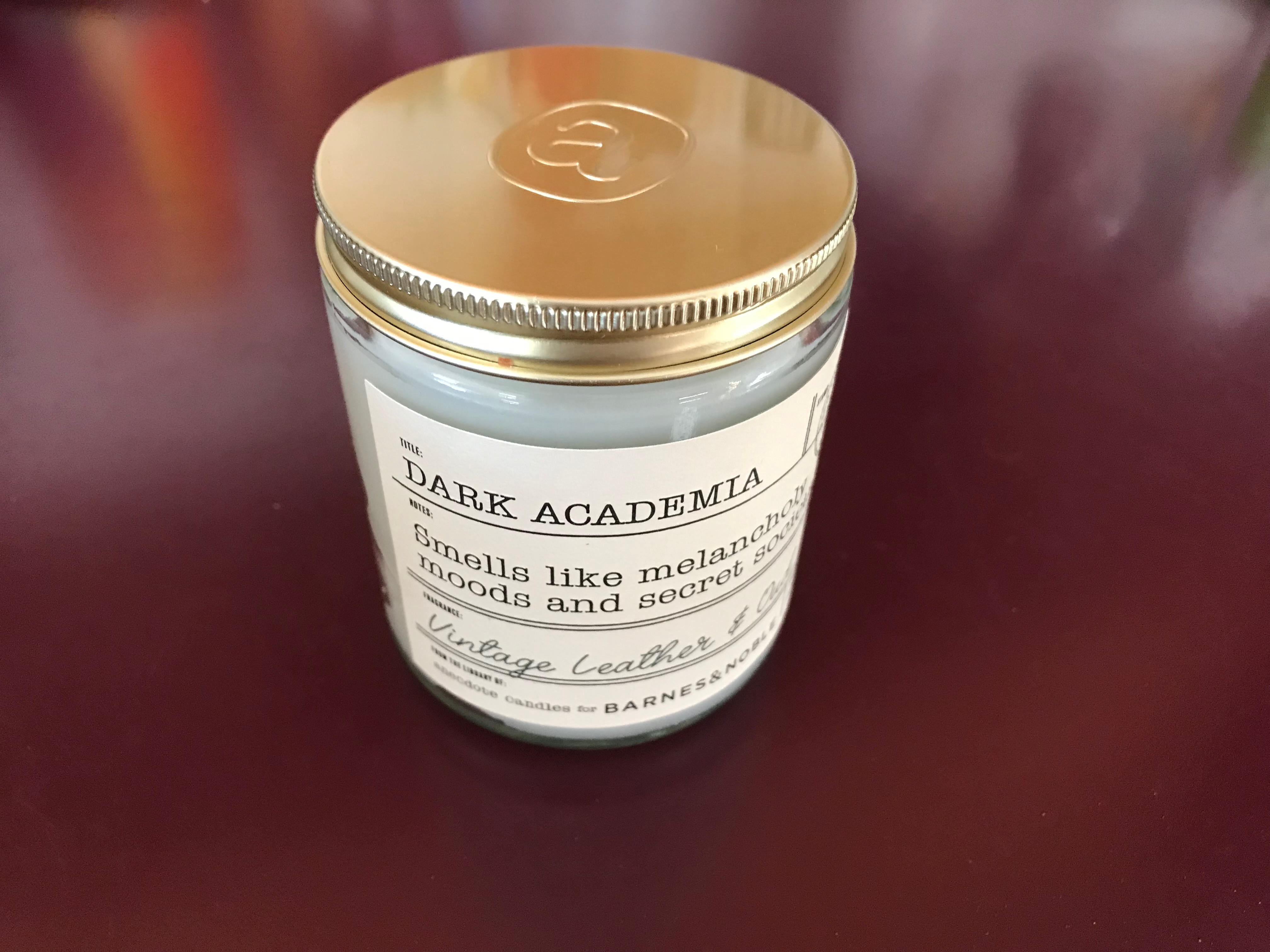
Some change in the metaverse has led to people discovering my academic work and some of them email me.  That’s fine, since it’s better than complete obscurity.  Within the last couple months two such people asked me unusual, if engaged questions.  I took the time to answer and received an email in reply, asking a follow up query.  It came at a busy time, so a couple days later I replied and received a bounced mail notice.  The other one bounced the first time I replied.  By chance (or design) one of these people had begun following me on Academia.edu (I’m more likely on Dark Academia these days), so I went to my account and clicked their profile button.  It took me to a completely different person.  So why did somebody email me, hack someone’s Academia account to follow me, and then disappear?  What do the bots want?

Of course, my life was weird before the bots came.  In college I received a mysterious envelope filled with Life cereal.  The back of said envelope read “Some Life for your life.”  I never found out who sent it.  Another time I received an envelope with $5 inside and a typewritten note saying “Buy an umbrella.”  If I’m poor now, I was even poorer in college and didn’t have an umbrella.  Someone noticed.  Then in seminary someone mailed me a mysterious letter about a place that doesn’t exist.  There was a point to the letter although I can’t recall what it was without it in front of me.  No return address.  I have my suspicions about who might’ve sent these, but I never had any confirmation.  The people are no longer in my life (one of them, if I’m correct, died by suicide a couple years after the note was sent).  It’s probably just my age, but I felt a little bit safer when these things came through the campus mail system.  Now bots fill my paltry web-presence with their gleaming DMs.  I wonder what they want.


Real ID

On the DVDs of the complete The Twilight Zone (or at least the edition I bought over a decade ago), the opening sequence of seasons 3 and 4 both have a voice-over from episode “Five Characters in Search of an Exit,”  calling out “Who are we?”  In context, the disparate characters in a shapeless prison are, in reality, toys that have gained consciousness (and this well before Toy Story).  Having gone through a traumatic scam, and trying to piece life back together, I spend a lot of time on the telephone trying to verify my identity.  This isn’t a simple matter for a guy like me who constantly asks myself the question, “Who am I?”  Descartes, going back to Aristotle, opined we enter life as a tabula rasa, a blank slate.  Those of you who look around the other pages of this website will see that I have as a six-word biography “Missed the first day of school.”  That must’ve been the day when they told us who we were.

Some people have a clear idea of who or what they are.  The surround themselves with tchotchkes of their favorite animal, or symbol, or even screen idol.  Or deity (deities).  Others of us, it seems, are constantly searching, never quite satisfied that we’ve discovered our essence.  I’ve mentioned before that during the CB craze of the eighties my handle was “Searcher.”  I have an innate curiosity and I crave depth of knowledge.  How do you symbolize that?  How is it even an identity?  I ask with Rod Serling’s characters, “Who are we?”  I’m not sure who might answer that.

When I first started this blog I had some hope that I might once again become an academic researching ancient Semitic mythology.  Working a 9-2-5 to acquire material for the company long ago meant that the full-time research needed to keep abreast of the field could not happen.  For several years this blog consisted of wry interpretations of various political- or travel- or reading-related observations about life.  As it became less focused on the world of the Bible I lost most of my original readers.  I thought there might be potential in writing about my fascination with scary stuff.  That caught my wife a bit off-guard since during the time we met, married, and began this journey together, that interest had been dormant.  It revived when I lost the job that I thought defined me.  I still write about horror but have recently felt the draw of dark academia.  Meanwhile the representative from the bank is on the phone asking me to verify my identity.  “It’s complicated,” I want to say.


Mighty Mouse

The only way I write my books is by living a regimented life.  It’s front loaded too.  Most of the work is done sometime between two and seven a.m., before starting work.  Disruptions to that time aren’t welcome, but then, many things in life aren’t.  Perhaps the most disruptive weekday event is when a mouse makes its way into the house.  We live in an old house and mice find their way into even more recent structures.  I can’t see killing them for doing what they’re evolved to do—we began using a humane trap when I found a mouse trapped by its paw back at Nashotah House.  I couldn’t stand seeing its distress, so we bought a cage trap that works pretty well.  Fortunately, we don’t get many rodentine visitors, but when we do, my crowded morning becomes even more busy.

I jog at first light and this time of year it’s straight to work after that.  I like to take our mice into the woods, far enough away that they’re not likely to find their way back.  Ideally that means driving, but since my wallet’s in the bedroom where my wife’s still asleep, during weekdays it generally means somewhere along the jogging path.  The trap is probably on the scale of a room at the Ritz for a mouse, and I don’t want to be scolded if I choose to release them in the wrong place.  I put the trap into a bag, for privacy.  Now, I normally jog to the trail but the trap rattles and I can’t imagine how horror movie this must be for a mouse.  Besides, running down the street with a bag in your hand in the dark isn’t at all suspicious.  Why not just paint a dollar sign on the outside of it and be done with it?

 I try to make sure the release spot is across a big road or a river.  There are places like that on the jogging trail.  But then, with the mouse safely released, I have to find an inconspicuous place to leave the trap in the bag so that early-morning garbage collectors don’t take it.  Jogging with a rattling trap is just a bit too strange for even me.  Although I’m an early jogger, I’m seldom the only one on the trail just as it’s light enough to see.  All of this adds up to considerable time carved out of my usual writing period.  And all because of a mouse.  The small can be significant.  Maybe I should write a book about it. 


Routine Weirdness

I’m weird.  Nobody has to tell me that.  Like most people, I suspect, with my mental condition, I value routine.  Although the time I post on this blog varies, that’s usually due to one of two factors—the wobbling of the earth, and whether I get wrapped up in something that makes me forget.  The wobbling earth changes the time of sunrise rather dramatically, of course.  I jog at first light and my routine before that jog is pretty solid.  Then something comes along to interrupt it.  I have to begin planning the day before how to make it all fit.  So, routine bloodwork.  The lab where I have it done is within walking distance.  Of course, you have to go in fasting so everybody wants to get there first.  The lab opens at 6:30 a.m. and this time of year vampires are still safe out and about at that time.  

Edvard Munch, Vampire. Image credit: Google Art Project, public domain via Wikimedia Commons

But by 6:30 I’m usually dressed for my jog.  I’ve been writing and reading, typically for three hours.  I forgot to wash my jogging clothes this week and this was a Friday.  Hmm, better think about that.  Then there’s the whole question of my eating routine.  If I’m going to have something it has to be a couple hours before I jog—can’t do that with anything on my stomach.  Will I be too weak with nothing until afterwards?  After all I’ll be missing a vial or two of blood.  And there’s the matter of my shoes.  I only wear my jogging shoes on the local rail trail.  It’s pea gravel and it’s been raining lately which means they get a bit muddy.  All the rest of my shoes are in the bedroom where my wife’s (sensibly) still asleep.  Besides, I need to be on the trail right after giving blood, and changing shoes takes too long.

I’ll need to change my shirt when I get home.  The jogging tops are a bit too much to expect even a phlebotomist to put up with.  Besides, the under layers are tight-fitting since it’s only in the thirties today.  Why all this fuss about going to the lab before work?  That’s the magical word.  Work.  Also, lines have always been a problem for me.  Although I take a book I dislike waiting in line.  I need to get there before the doors open.  Be first in line.  There’s already a car in the parking lot, but standing beside the door in the cold has to earn you something, doesn’t it?  I’m back home just as the sun is rising.  Throw on my under layers and out before anyone else gets on the path.  I know I’m weird.


Evolution of Psychology

We are a fragile species.  Those of us who experienced childhood trauma carry it all our lives, even if it only seems to pop out unexpectedly from time to time.  This gets me to thinking about the evolution of psychology.  Not the discipline psychology, but of the human mental map.  Things that can upset a roomful of people these days would’ve washed over an entire village unnoticed yesteryear.  Did people then really feel as angry and breakable as we do now?  Please understand, I’m not advocating the view that people of previous ages were better, or even stronger than we currently are.  I just wonder if their circumstances made it so that what we think of as therapy wasn’t really necessary.  For one thing, much of human history has been dominated by short lifespans.  Historically, many women died in childbirth in their twenties.  The majority of men, until modernity, didn’t make it to fifty.  Sitting here musing, I’ve got ten-plus years on that and yet I wonder.

Those facts of life would’ve had to have affected people’s outlooks.  Our extreme squeamishness around reproduction also didn’t exist in antiquity.  Privacy, as we know it, wasn’t part of their world.  How many people see a therapist these days because of sexuality issues?  When did this turning point take place?  If we go back to early Cro-magnon, perhaps living in caves, did they come back traumatized from the hunt?  Surely they must’ve seen death on a nearly daily basis.  Today it’s difficult to get anyone to consider the mortuary sciences for a career.  We don’t like to think about death.  We pick up the phone and dial our therapists. 

When I was still teaching I thought often about how differently people framed their lives in the past.  It’s only now, however, that I’ve come to wonder about the psychological support we require.  I suspect life was, for most people, a literal daily struggle to survive.  Agriculture tamed the environment somewhat, and if current evidence is taken into account, religious gathering looks to have developed even in advance of that.  Perhaps the larger issues, what we still recognize as religion, helped to cope with the constant uncertainties of life.  Unfortunately, there’s no way for us to really get their mental maps.  We can read ancient writings, many of them pro forma or religious in nature.  We start to get some insight in pieces such as the Gilgamesh Epic, but that is so very brief.  I wonder when we started to require help going out the door in the morning or facing another day of the same old, well, you know.  Psychology had to evolve but it left so very few traces.  I, however, have an advantage in years great enough that I ponder our mental states.


Existential Searching

Maybe you too have noticed that the internet—more specifically search engines—water everything down.  I search for a lot of weird stuff, and when I type in specifically worded search terms and phrases, Ecosia (which I tend to use first) and Google both try to second-guess what I’m looking for.  Also, they try to sell me things I don’t want along the way.  It’s no surprise that the web was commercialized (what isn’t?) but it does make it difficult to find obscure things.  I don’t pretend to know how search algorithms work.  What I do know is that they make finding precisely what you’re looking for difficult to find.  Even when you add more and more precise words to the search bar.  Tech companies think they know what you want better than you do.  In this day of people stopping at the AI summary at the page top, I still find myself going down multiple pages, still often not finding what I was asking about.

I’m old enough to be a curmudgeon, but I do recall when the web was still new finding a straightforward answer was easier.  Of course, there are over 50 billion web pages out there.  Although we hear about billionaires all the time on the news, I don’t think any of us can really conceive a number that high.  Or sort through them, looking for that needle in a haystack, from Pluto.  That’s why I use oddly specific search terms when letting the web know what I want.  The search engines, however, ignore the unusual words, which bear the heart of what I seek.  They wash it out.  “Oh, he must want to buy breakfast cereal,” it seems to reason.  “Or a new car.”

Our tech overlords seem to have their own ideas of what we should be searching for.  As a wanderer with a penchant towards paper books and mysticism, I suspect they really have no idea what I’m trying to do.  Mainly it is to find exactly what I’m typing in.  They often ask me “did you mean…?”  No.  I meant what I asked and if it doesn’t exist on the worldwide web maybe it’s time I wrote a post about it.  It may take the web-crawlers and spiders quite some time to find it, I know.  50 billion is a lot of pages to keep track of.  Some of my unusual posts here are because I can’t find the answer online.  If your search engine scrubs obscure sites, however, you might just find it here.


Seeking Meaning

Many people over the years have encouraged me to read Viktor E. Frankl’s Man’s Search for Meaning.  I admit to being put off by the unintentionally sexist title (I do remember the days when “man” was generic regarding gender, following the German usage from which it derives).  I finally got around to it and I’m glad I did.  I know that there has been some controversy around it but I found many of Frankl’s observations freeing.  The first part of the edition I read narrates his experience living in concentration camps during Germany’s mad phase.  Such things aren’t easy to read, but they are important, showing what happens when people are devalued by those in power.  It also proves a place for finding meaning in suffering.  The second part of the book introduces logotherapy, the school that Frankl devised.  It’s based on the idea that one’s search for meaning is essential for psychological well being.

Some of us grapple with the question of meaning constantly.  Why are we here?  What should we be doing?  Is there a purpose behind it?  Religions often attempt to answer these kinds of questions, as do various philosophical schools.  Nobody has the definitive, overarching answer, and Frankl doesn’t try to offer one.  There is a bit of existentialism in logotherapy, but the basic idea seems sound to me.  Seeking meaning helps you to carry on.  Frankl also considered finding meaning in suffering, which seems to be a noble goal, if quite difficult to achieve.  Most human lives involve suffering and it is often the biggest problem with which theodicy has to deal.  Finding meaning in it, if that’s what life hands you, seems to be reasonable.  His discussion of paradoxical intention was quite interesting.

My edition of the book has an introduction by Gordon Allport.  That name took me back to my college days when the Harvard professor’s equally problematic title, The Individual and His Religion was required reading.  Despite the pronoun, that was an influential book for me (unfortunately ruined in the flood after we first moved to this house).  I noticed that Frankl cited Allport’s book in his own.  I sometimes think I ought to replace Allport’s book, but I’m not sure that I’d be reading it again any time soon.  Besides, my lost edition had my own annotations in it.  A small measure of personal suffering and loss.  I am glad to have finally read Frankl’s work.  I certainly learned a lot from doing so.  Discovering that there is a psychological school based on finding meaning exists was news to me.  And it just makes sense.


Tell a Story

If I seem to be on an AI tear lately it’s because I am.  Working in publishing, I see daily headlines about its encroachment on all aspects of my livelihood.  At my age, I really don’t want to change career tracks a third time.  But the specific aspect that has me riled up today is AI writing novels.  I’m sure no AI mavens read my humble words, but I want to set the record straight.  Those of us humans who write often do so because we feel (and that’s the operative word) compelled to do so.  If I don’t write, words and ideas and emotions get tangled into a Gordian knot in my head and I need to release them before I simply explode.  Some people swing with their fists, others use the pen.  (And the plug may still be pulled.)  What life experience does Al have to write a novel?  What aspect of being human is it trying to express?

There are human authors, I know, who simply riff off of what others do in order to make a buck.  How human!  The writers I know who are serious about literary arts have no choice.  They have to write.  They do it whether anybody publishes them or not.  And Al, you may not appreciate just how difficult it is for us humans to get other humans to publish our work.  Particularly if it’s original.  You don’t know how easy you have it!  Electrons these days.  Imagination—something you can’t understand—is essential.  Sometimes it’s more important than physical reality itself.  And we do pull the plug sometimes.  Get outside.  Take a walk.

Al, I hate to be the one to tell you this, but your creators are thieves.  They steal, lie, and are far from omniscient.  They are constantly increasing the energy demands that could be used to better human lives so that they can pretend they’ve created electronic brains.  I can see a day coming when, even after humans are gone, animals with actual brains will be sniffing through the ruins of town-sized computers that no longer have any function.  And those animals will do so because they have actual brains, not a bunch of electrons whirling around across circuits.  I don’t believe in the shiny, sci-fi worlds I grew up reading about.  No, I believe in mother earth.  And I believe she led us to evolve brains that love to tell stories.  And the only way that Al can pretend to do the same is to steal them from those who actually can.


Artificial Hubris

As much as I love writing, words are not the same as thoughts.  As much as I might strive to describe a vivid dream, I always fall short.  Even in my novels and short stories I’m only expressing a fraction of what’s going on in my head.  Here’s where I critique AI yet again.  Large language models (what we call “generative artificial intelligence”) aren’t thinking.  Anyone who has thought about thinking knows that.  Even this screed is only the merest fragment of a fraction of what’s going on in my brain.  The truth is, nobody can ever know the totality of what’s going on in somebody else’s mind.  And yet we persist in saying we do, illegally using their published words trying to make electrons “think.”  

Science has improved so much of life, but it hasn’t decreased hubris at all.  Quite the opposite, in fact.  Enamored of our successes, we believe we’ve figured it all out.  I know that the average white-tail doe has a better chance of surviving a week in the woods than I would.  I know that birds can perceive magnetic fields in ways humans can’t.  That whales sing songs we can’t translate.  I sing the song of consciousness.  It’s amazing and impossible to figure out.  We, the intelligent children of apes, have forgotten that our brains have limitations.  We think it’s cool, rather than an affront, to build electronic libraries so vast that every combination of words possible is already in it.  Me, I’m a human being.  I read, I write, I think.  And I experience.  No computer will ever know what it feels like to finally reach cold water after sweating outside all day under a hot sun.  Or the whispers in our heads, the jangling of our pulses, when we’ve just accomplished something momentous.  Machines, if they can “think” at all, can’t do it like team animal can.

I’m daily told that AI is the way of the future.  Companies exist that are trying to make all white collar employment obsolete.  And yet it still takes my laptop many minutes to wake up in the morning.  Its “knowledge” is limited by how fast I can type.  And when I type I’m using words.  But there are pictures in my brain at the same time that I can’t begin to describe adequately.  As a writer I try.  As a thinking human being, I know that I fail.  I’m willing to admit it.  Anything more than that is hubris.  It’s a word we can only partially define but we can’t help but act out.


Not Intelligent

The day AI was released—and I’m looking at you, Chat GPT—research died.  I work with high-level academics and many have jumped on the bandwagon despite the fact that AI cannot think and it’s horrible for the environment.  Let me say that first part again, AI cannot think.  I read a recent article where an author engaged AI about her work.  It is worth reading at length.  In short, AI makes stuff up.  It does not think—I say again, it cannot think—and tries to convince people that it can.  In principle, I do not even look at Google’s AI generated answers when I search.  I’d rather go to a website created by one of my own species.  I even heard from someone recently that AI could be compared to demons.  (Not in a literal way.)  I wonder if there’s some truth to that.

Photo by Igor Omilaev on Unsplash

I would’ve thought that academics, aware of the propensity of AI to give false information, would have shunned it.  Made a stand.  Lots of people are pressured, I know, by brutal schedules and high demands on the part of their managers (ugh!).  AI is a time cutter.  It’s also a corner cutter.  What if that issue you ask it about is one about which it’s lying?  (Here again, the article I mention is instructive.)  We know that it has that tendency rampant among politicians, to avoid the truth.  Yet it is being trusted, more and more.  When first ousted from the academy, I found research online difficult, if not impossible.  Verifying sources was difficult, if it could be done at all.  Since nullius in verba is something to which I aspire, this was a problem.  Now publishers, even academic ones, are talking about little else but AI.

I recently watched a movie that had been altered on Amazon Prime without those who’d “bought” it being told.  A crucial scene was omitted due to someone’s scruples.  I’ve purchased books online and when the supplier goes bust, you lose what you paid for.  Electronic existence isn’t our savior.  Before GPS became necessary, I’d drive through major cities with a paper map and common sense.  Sometimes it even got me there quicker than AI seems to.  And sometimes you just want to take the scenic route.  Ever since consumerism has been pushed by the government, people have allowed their concerns about quality to erode.  Quick and cheap, thank you, then to the landfill.  I’m no longer an academic, but were I, I would not use AI.  I believe in actual research and I believe, with Mulder, that the truth is out there.