Feathers and Flight

Bird identification must be one of the trickiest activities known to humankind.  My office window overlooks a small segment of a porch roof that is popular with birds.  Whether it’s pecking at some invisible specks on the shingles or dipping a sip from the gutters, they stop by often during the day.  Maybe my brain wiring is odd, but since I was a child I wanted to be able to identify correctly any animal I saw.  We had a few of those Zim Golden Nature Guides that I poured over like a second Bible.  I would study page after page, repeatedly, until I could identify just about any critter I came across.  It seemed, in those days, that all birds were sparrows, starlings, or robins.  There was the occasional blue jay or cardinal, but usually it was the more ordinary, less colorful variety.  Birds are symbols of hope.  Their lightness and ability to fly are what human dreams are made of.
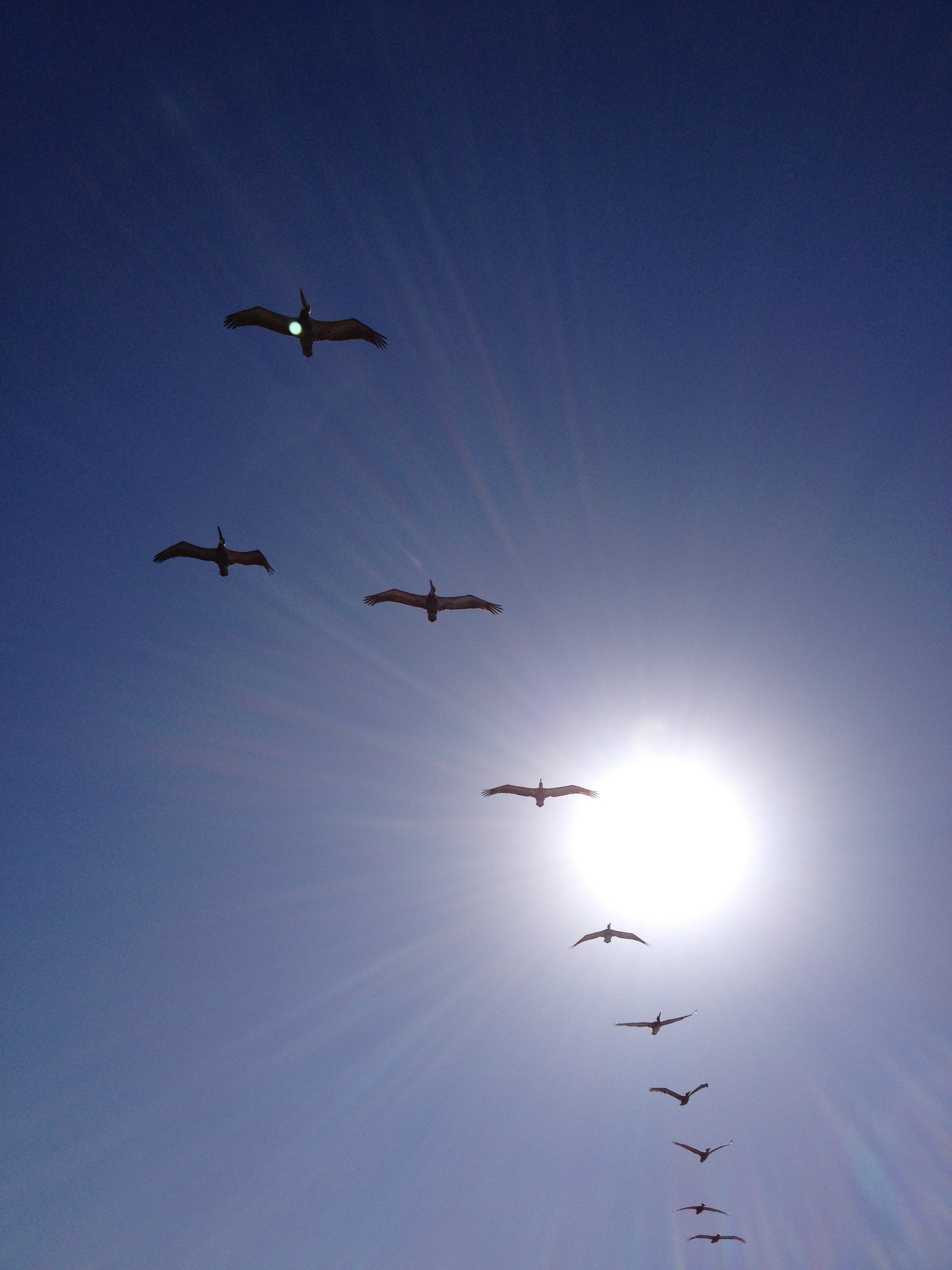
I’m not an avid bird watcher, but I do try to identify them.  I see bald eagles occasionally, several times a year usually, and plenty of red-tailed hawks.  Once in a while, however, a smallish bird hops by that resembles nothing in my field guides.  In frustration I turn to Cornell University’s bird identification app, Merlin.  Almost never can they find anything like what I saw.  Maybe it’s because the app asks the wrong questions.  Never do they say “was the tail long, medium, or short?” for example.  Things you’d actually notice.  They do ask where you saw it, and “on the roof” isn’t an option, let alone “on the roof overlooking my porch.”  I saw an interesting bird the other day that was all gray.  Bill and all.  I saw it next to a starling, from which it was clearly distinct.  It wasn’t in my book and it wasn’t on Merlin.  What could it have been?

This isn’t the first time this has happened.  Strangely, bird color isn’t always a reliable indicator of species although this is what the viewer tends to notice first.  To make positive identification takes close observation of details most people don’t immediately catch.  The more common species are seldom an issue, but the less showy kind are often more difficult to identify.  This strikes me as a life lesson.  We may all know who the showiest are, but those more modest of our avian friends likely live lives of greater satisfaction without people constantly chasing after them.  At least I imagine it so, since I can’t find a write-up about them in my identification guides.  But I can still watch them and gain hope.

Half Full

Is the glass half full or half empty?  Perhaps trite, this is the textbook example of optimism.  In times when hope is important—and that may be always, but at times it’s really much more keenly felt—we need to see the glass filling again.  Emily Dickinson famously wrote “‘Hope’ is the thing with feathers.”  Although published posthumously, many refer to this poem when the glass starts to look empty.  Recently a friend pointed us to a more realistic version of this by the contemporary poet Caitlin Seida titled “Hope Is Not a Bird, Emily, It’s a Sewer Rat.”  It’s easily found with a web search but I’m hoping to buy Seida’s book because most poets have a difficult time of things.  The gist of it is that hope is a scrappy, gritty rodent that knows how to survive in a dark, noisome world.

Of course, the Bible has a lot to say about hope as well.  Sometimes we tend to see the half-empty glass of the judgment verses, but what truly makes it Scripture is the hope.  In fact, hope is all around if we look for it.  For example, I recently had to get a new set of glasses.  I really liked my old frames and they had stopped being produced.  I had to try something new.  This pair, instead of screw-hinges holding the arms on, has a mechanism that uses tension between the two pieces of metal so they retain their shape but can also be folded.  The end result is they don’t have a solid fixed “normal” position, but one which can be slightly adjusted because they’re more pliable than fixed screws (it’s clear why I’m not a technical writer).  In any case, their ability to adjust is a sign of hope. If things don’t look right, literally, a nudge can fix it.  You can find resilience even in your eyeglasses.

In times of difficulty doubt can be the thing with feathers.  What we need is one of those water-drinking birds.  You know, the kind that’s made of glass filled with a red liquid that bobs its head up and down into a glass of water.  (It turns out they have their own Wikipedia article under the title “Drinking bird.”)  Here is the ultimate symbol of hope that spans both Seida and Scripture.  The bobbing head always dips into the glass even though it can’t actually drink.  We might be tempted to say it’s a foolish waste of time.  With the correct perspective, however, it shows the glass to be half full. At least when seen through the lenses of hope.

This bird knows hope! Photo by Matt Flores on Unsplash

Parthenogenesis

It’s only a matter of degree, isn’t it?  I mean between reptiles and mammals.  While our common ancestor was quite a bit older than Lucy, we’re still fam, right?  I’m not the only one, I’m sure, who read with interest the New York Times story about the female crocodile who recently gave birth without the help of a male.  It’s called parthenogenesis and, according to the article, it’s not as rare as we might think.  Birds and amphibians do it.  Some fish even change gender under reproductive pressure.  And if you’ve seen Jurassic Park you know the implications might be larger by an order of magnitude or two.  My mind, however, wanders to mammals.  Then primates.  Then humans.  If our distant cladistic cousins can do it, can we?

The key appears to be males leaving females alone long enough.  As Malcolm says, “life will find a way.”  Life amazes me.  While we can’t count on it happening for each individual, life has a way of reemerging when you think it’s gone.  Previous owners of our house neglected a green ash tree growing in a location far too close to the house itself for many years.  Granted, it was on the north side where you seldom have any reason to go, but that tree sent out progeny that I’ve had to try to eradicate for five years now.  As much as I love trees, when they’re growing into the foundations of your house, they’re a bit of a problem.  I snip off the water shoots whenever I find them but they keep coming back.  I’m sad to cut them but I admire their persistence.  Life’s persistence. It’s will to carry on.  It continues even when we think it can’t.  Never forget the water bears!

Just a few days later the Times ran an article about the strong possibility of life on Enceladus, one of Saturn’s moons.  Personally, I wouldn’t be surprised.  I’m absolutely certain there’s life elsewhere.  It makes no sense for it not to be.  Life evolves to a point, it seems, where the “intelligent” variety seems to become arrogant.  I embrace our reptilian and amphibious and piscine cousins.  Even our insect and arthropod family.  Our plants and fungi.  Life is amazing and we seldom stop to ponder just how wonderful and mysterious and resilient it is.  A lonely female crocodile decides to have a family.  Phosphates spewing from an ice-cold moon whirling around a colossal planet that wanted to be a star.  Life!  How can we not be stunned into trying to admire it in its many, many forms?


Measuring Humanity

The humanities have fallen in love with data.  Let me put a finer point on it: those who use the humanities as a profession have had to turn to “evidence based” metrics in figuring out what it means to be human.  As an actual human, I’m feeling data fatigue.  Some of us aren’t good with numbers.  Our teachers encouraged us to move into the humanities.  Now, at an age of not young, many of us are being instructed that we now have to get good at numbers because numbers are the only truth.  I have philosophical and spiritual objections to this, but you can’t get a job as a philosophical and spiritual objector.  Numbers don’t, and can’t tell the whole story.  The term “calculating” used to be used to describe a person without feeling.  Now we’re all just calculators.

Whither can we go to experience true humanities again?  Professorships are “measured” by success factors.  “Key performance indicators” are applied to the gods.  There are immeasurables, but they can’t be slotted neatly into our computer’s algorithms, so they are swept off the table.  If you want to wear a white collar, you have to put business first.  The soul is dying, but that’s just fine as long as we can keep the body alive.  You see, the humanities used to be about those things that can’t be quantified with “evidence based” metrics.  How it feels to be in love, or why we cower in the presence of an unseen deity.  How do you put numbers on artistic inspiration?  Sure, we can “measure” aspects of Beethoven’s seventh symphony, but they don’t explain what it’s like to listen to it.

Kowtowing to capitalism feels shameful to me.  But challenging capitalism is like pacifists standing up to those with assault rifles.  Greed derives its power only from getting everyone to agree on its objects of value.  The humanities try to argue the point, but those with control of the money are in charge of hiring.  And they do it with their abacus always close to hand.  I never learned to use a slide rule but calculators were required to graduate from the academic track in high school.  Now when I’m being asked to apply that kind of thinking again, I have to cast my mind back nearly half a century while my human brain dreams of reading and writing novels, viewing paintings, and listening to beautiful music.  But it’s a work day, and when it’s all said and done, data rules.  Look for no empaths in upper management.


A Theory

Do you remember that crazy college professor you had?  Chances are there was more than one.  As a late friend used to say, that’s why we pay good money to go to college.  I have an idea, perhaps even a theory, that the neurodiverse used to be largely institutionalized.  And I don’t mean in mental hospitals or “insane asylums.”  I mean in two well-respected social institutions: the university and the church.  Before you can object to the latter, consider that ministers, and before them priests, derived from shamans.  Nobody would doubt that shamans think differently than most people.  So, my theory is that when neurodiverse people came along in capitalist societies, they were shunted toward jobs in higher education and religion.  Out of sight to most people most of the time.  Then capitalism grew.

Both the church and the university became businesses.  Again, if you doubt me about churches, get to know a few bishops.  You’ll soon see.  In higher education, business people were hired as deans and presidents.  Not knowing how to handle their neurodiverse employee pool, they began hiring more “normal” people.  Those who, with no real insight or ambition, figure teaching is a cushy job.  It pays well, and it’s respectable.  But to do the job right you might just have to be neurodiverse.  Now, I don’t have the means to test my theory, but I suspect if you surveyed students over time as they graduated, you’d find fewer and fewer crazy professors.  As my departed friend would likely have said, they’re not getting their money’s worth.

Money doesn’t compromise.  Many people are driven by it without ever asking themselves why.  Do they want to be able to build private rockets to take them to Mars when capitalism finally destroys this planet?  Do they want private jets and the endless headaches of having to worry about getting even more money?  Studies tend to show that wealthy people are far from the happiest on the planet.  In fact, many of them are privately miserable.  They don’t have to work, true, but what do they think about?  Deeply.  I’ve never been driven by money.  I would like a bit more than I’ve been able to manage with my background and specialization.  Enough not to have sleepless nights over whether we can afford to fix the roof.  And still buy books.  It may be crazy to still read like a professor when I’m no longer in the guild.  I like to think I’m participating in a very old tradition.


Wrong Entity

In one of those weird synchronicities the universe likes to play, the very next day after I watched The Entity (2015) and wrote a blog post on it, this happened.  In yesterday’s post I noted that I couldn’t remember where I’d read about the movie, or who had recommended it to me.  I couldn’t even be sure which The Entity it was, since I didn’t write down the movie’s date.  The next morning I had the privilege of watching Claire Donner, of the Miskatonic Institute, talking about The Entity and it immediately came to mind that it was she who’d suggested I might like it (or might not).  Also, that I got the wrong one.  I haven’t had the opportunity to watch the one actually recommended yet, but it brings back to mind just how the Miskatonic Institute contributes to understanding horror.

The Institute has asked me to present a course this coming October and I will be posting more on that closer to the time.  It got me to thinking about a couple of things.  One is that I missed some major horror films growing up.  When I “got religion” in high school (I always had it, of course, and saw no problem with enjoying monsters too) I began to steer away from horror.  In college I had a dating occasion or two to watch horror, but it really only started again in earnest after being booted out of academia.  I was interviewed in seminary by a sociology grad student interested in why people watch horror, but my watching was (and still is) circumscribed by lack of cash flow.  The Entity made quite a splash in the early eighties, but it took someone in the 2020s telling me about it before I realized I probably should watch it.

The other thing Donner’s talk brought to mind is how religion and horror relate.  Such films are scary because of an existential threat—THE existential threat.  There’s nothing more powerful than God, but in such movies God can do nothing.  I haven’t seen the movie yet, but I suspect that’s true.  It’s certainly true of The Exorcist, with which it’s sometimes compared.  God doesn’t deliver Regan McNeil, no, Fr. Karras does.  And only by sacrificing himself to do so.  The existential threat has to involve a universe entirely out of kilter.  What is a God that’s powerless (it’s implied) to drive out evil?  The exorcism in The Exorcist doesn’t work, does it?  Yet there’s some benevolent force in the universe that gives us synchronicities and, it seems, is looking out for goodness in an often cruel world.


Iron Man?

As a vegan, I sometimes end up thinking more about nutrition than I used to.  Back when I first became a vegetarian colleagues wondered how I got my iron.  I’m one of those apparently rare individuals who really likes broccoli.  I could eat it nearly every day of the week without tiring of it.  In any case, iron is important for health.  I’ve known people with iron deficiencies and it can be a real problem.  Doctors recommend ferrous gluconate as a dietary supplement since the body absorbs iron better from it.  (It’s best on an empty stomach, I’m told, followed by orange juice.)  But I’m no physician.  In fact, I’m quite squeamish, which may seem strange for someone who watches horror.  Still, thinking about iron took me back to my childhood.

I was a sickly child.  Couple this with a tendency to think too much and I must’ve been a handful for my mother.  I remember trying to explain to her once that I didn’t believe reality was real.  I was maybe twelve at the time.  She prescribed ironized yeast.  Now, Mom’s no doctor.  She didn’t even finish high school.  So thinking about broccoli made me wonder about ironized yeast.  First a web search revealed it’s not sold any more.  Further, it was a health food fad beginning in the 1930s.  Although I remember the taste and scent distinctly, I couldn’t find a website saying what it was or how it was made.  More to the point, why did my poor, frustrated mother think that it would help me couple reality with what was happening around me again?  (And was that even such a good idea?)

Questioning perceptions seems to run in my family.  I’ve long known that my thought process is very different from that of other people.  My saintly wife still says the reason she was attracted to me is that she’d never met anyone who thinks the way I do.  My thought process has had plenty of opportunities to drive her crazy since those early days, I suspect.  My brother and I sometimes talk about what it’s like being, I suspect, were we diagnosed, neurodiverse.  It’s easy to fall into the perception that others think like we do.  I suspect all people do that.  Few, at least among those I’ve met, question the reality that their senses tell them really exists.  Physics tells us it’s mostly empty space.  And yet although I still don’t know what it is, maybe I’d better find someone with an old stockpile of ironized yeast to get back to business. It is, after all, a work day.

Who knows what goes on in the mind of others?

Surviving AI

A recent exchange with a friend raised an interesting possibility to me.  Theology might just be able to save us from Artificial Intelligence.  You see, it can be difficult to identify AI.  It sounds so logical and rational.  But what can be more illogical than religion?  My friend sent me some ChatGPT responses to the story I posted on Easter about the perceived miracle in Connecticut.  While the answers it gave sounded reasonable enough, it was clear that it doesn’t understand religion.  Now, if I’ve learned anything from reading books about robot uprisings, it’s that you need to focus on the sensors—that’s how they find you.  But if you don’t have a robot to look at, how can you tell if you’re being AIed?

You can try this on a phone with Siri.  I’ve asked questions about religion before, and usually she gives me a funny answer.  The fact is, no purely rational intelligence can understand theology.  It is an exercise uniquely human.  This is kind of comforting to someone such as yours truly who’s spend an entire lifetime in religious studies.  It hasn’t led to fame, wealth, or even a job that I particularly enjoy, but I’ll be able to identify AI by engaging it with the kind of conversation I used to have with Jehovah’s Witnesses at my door.  What does AI believe?  Can it explain why it believes that?  How does it reconcile that belief with the the contradictions that it sees in daily life?  Who is its spiritual inspiration or model or teacher?

There are few safe careers these days.  Much of what we do is logical and can be accomplished by algorithms.  Religion isn’t logical.  Even if mainstream numbers are dipping, many Nones call themselves spiritual, but not religious.  That still works.  We’ve all done something (or many somethings) out of an excess of “spirit.”  Whether we classify the motivation as religious or not is immaterial.  Theologians try to make sense of such things, but not in a way that any program would comprehend.  I sure that there are AI platforms that can be made to sound like a priest, rabbi, or preacher, but as long as you have the opportunity to ask it questions, you’ll be able to know.  And right quickly, I’m supposing.  It’s nice to know that all those years of advanced study haven’t been wasted.  When AI takes over, those of us who know religion will be able to tell who’s human and who’s not.

What would AI make of this?

Spiritual Alterations

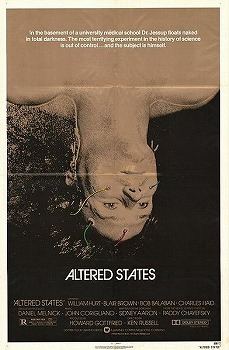
I’d been meaning to watch Altered States for quite a few years.  I suspect the reason (it’s been long enough that I can’t recall for sure) is that I knew it had a story line tied in with religion.  The tale follows Edward Jessup, a psychopathologist, who is attempting to understand schizophrenia.  He’s particularly taken by the religious nature of some schizophrenic delusions, and he uses sensory deprivation on himself to trigger something similar.  A trip among tribal Mexicans leads him to a psychoactive substance that he decides to combine with sensory deprivation to enhance the effects.  Along the way he explains to his girlfriend, and eventual wife, that his father was religious but died a horrible death.  He therefore became irreligious but his altered states of consciousness are often full of images from Revelation.

While the Bible theme eventually gives way to biological regression to pre-Homo sapiens, one of Jessup’s experiences has him coming to his dying father again and dropping a Bible on him which turns into the veil of St. Veronica on his face, which he then rips off and throws, flaming, to the floor.  Another instance of the Bible in horror, the film also uses crucifixes and hellish images to demonstrate the religious nature of these alternative states.  Jessup’s goal is to regress to the original thought, to encounter, as he puts it “God.”  This desire, combined with the potent Mexican drug, transforms him physically, and, in the end, emotionally.  Instead of being dissociated from his wife (whom he is planning to divorce), he realizes that love is the only thing that can save him from the terror of his experiences.

This is some profound stuff.  Paced like a movie from 1980, it has a quality not unlike 2001: A Space Odyssey.  The message seems to be sound—the need for encountering the “divine” ends up convincing Jessup (that may autocorrect keeps changing to “Jesus”) that love is really what it’s all about.  The transformation scenes, while not shown in the detail of An American Werewolf in London, are nevertheless convincing enough.  It’s a rare movie that treats religion respectfully.  Here Ivy-League scientists are motivated to understand it.  In real life, alternative states of consciousness are quite real, if poorly understood.  They’ve been part of religious practice from the beginning and are a far cry from sitting in the pew and singing anodyne hymns week after week.  The more movies I see, the more it seems that a sequel to Holy Horror will be necessary some day.  


Inventing Chaos

A recent (in my personal interaction with time) article from the New York Times recounts two bad inventions by Thomas Midgley Jr.   Namely, leaded gasoline and the practical use for chlorofluorocarbons.  Besides making me interested in Midgley, the article got me thinking about inventors and inventions.  We never know, in real time, if innovations are good ideas or not.  We have no crystal ball and what seems like a good idea now may prove to be a catastrophe.  I’ve given a couple of talks on the Antikythera mechanism.  If you’re not familiar, it is essentially an analogue computer invented in the first century.  Experts suggest there were likely multiple such devices, but they never caught on and transformed society.  Why?  Nobody saw the practical benefits.

A replica of the Antikythera mechanism

The Antikythera mechanism was made essentially to predict eclipses and track the movement of heavenly bodies.  The fact that such a thing existed within a century of when Jesus of Nazareth lived and died is mind-blowing at first.  Still, it makes a point.  We never know when an invention will take off and change the world.  And we never know if that change will ultimately be good or bad.  There are many who suggest that the invention of agriculture was a mistake.  We eat less healthily than our hunter-gatherer ancestors, and they may have been much happier (in general) than we are.  Still, agriculture (despite creating desk jobs) has its benefits.  We live longer.  We have medical science.  And we can entertain ourselves with clever people on YouTube.  While we sit around too much and eat things that really don’t benefit us, we seem to be doing okay.  We’re living longer, at any rate.

The problem, it seems to me, is when capitalism takes an idea and blows it up into a huge money-making venture.  People just can’t take their eyes off that shiny, shiny gold.  And ideas, when they start making unreasonable demands (a new cellphone every other year?  Really, is that necessary?) tend to lead to the same results as leaded gasoline and chlorofluorocarbons.  If they can be monetized, ideas will push themselves into this unbroken feedback loop we call economy.  Often at the price of ecology.  Inventors are both necessary and dangerous.  Their efforts often make the world more comfortable, more convenient.  They might, however, cause immense harm.  Being a vegan, I’d have a difficult time surviving as a hunter-gatherer.  Gathering is more my style, in any case.  If only I had a way of tracking the movement of heavenly bodies, I might just be content.


Planting Knowledge

In an effort not to harm other living creatures, I became a vegan about seven years ago.  Generally it’s not too difficult, although many eateries still think you have to exploit animals to eat anything.  Vegan fare is quite good, and some of it is remarkable.  Then I saw the article in Popular Mechanics, “So It Turns Out Plants Have Had Voices This Whole Time” by Jackie Appel.  Well, “voices” may be stretching it a bit, but they do make sounds.  According to the article, plants “talk” at the same volume as humans tend to, only it’s in a range that we can’t perceive.  Other animals, however, may.  That’s right, your dog may be able to hear the noise plants make.  This is one of the reasons I marvel at scientific arrogance.  Human senses simply can’t perceive all stimuli—how can we claim that what we term “supernatural” doesn’t exist?  We don’t have nearly all the data.

Meanwhile, we live with animals whose sense of smell would send us running even more frequently to the showers.  Animals who can hear plants “talking.”  Animals who can perceive magnetic fields.  We’ve evolved knowing what we need to know.  (At least in part.)  What then do plants communicate?  Can they hear one another?  The sounds plants make, if “translated” to human perception, seem to be “I’m thirsty,” “I’ve been hurt,” or “I’m fine.”  The terminology here is Appel’s but you get the idea—plants broadcast their status.  Can plants scream?  One of my students reminded me a few years back that I once wondered to her what a tomato felt when it was being sliced.  I responded, “That sounds like something I would’ve said.”

They know.

So now I’m a vegan and plants are joining the conversation.  My hope is that they don’t feel pain.  As far as we know, plants don’t have brains.  Even so, heliotropes are smart enough to follow the sun across the sky.  And even fully grown trees move—very, very slowly—to optimize the light they require.  Such intelligence in nature always leaves me in a state of wonder.  We’ve been told for centuries of human exceptionalism.  Sure, we have opposable thumbs and have figured out how to communicate intricate things vocally.  So much so that we can represent them in written form (such as you’re reading right now) and can know what someone’s saying even at great distances.  That doesn’t mean we’re the only remarkable creatures.  But it does leave me with the dilemma of what to eat.


Pondering Origins

I’m not a numbers guy.  I never had any interest in statistics, and I tremble when I see my accountant’s number pop up on my phone at tax time.  But exponential sequences have an inherent fascination.  Think about your ancestry (I recently wrote about genealogy and that got me pondering).  You have two parents.  And they each had two parents.  By the time you get back to ten generations (eight greats before grandparents) you have 1,024 ancestors of roughly the same generation.  That’s a lot of people just to make one individual.  Think of all the circumstances that might’ve led to any two of them having been kept apart—then where would you be?  Of course the numbers double each generation which is where my reasoning capacity shuts down.

At some point, doesn’t it seem, that there wouldn’t be enough people available to make you?  I know that’s not true—you’re reading this and that proves this false—but it does make each individual life a thing of wonder.  Or even at the level of your own parents.  If you have siblings you know how different even biologically similar people can be.  And there are many others who could’ve been conceived instead of you or me.  The chances are astronomical that we’re here at all.  I often wonder if such circumstances are why our minds seek religious answers.  People are meaning-seeking creatures.  And against such long odds, it seems that maybe we’re a miracle after all.  Naturally, a driving force behind it all suggests itself.

Photo credit: NASA

Science has been a real boon for the billions of us alive today.  There’s no doubt that dispassionate, rational thought can lead to amazing outcomes.  At the same time, the doubt creeps in that this is the only explanation.  It occurs to me when watching the birds in the spring.  How do they know their own species and with whom to mate?  Is all of this driven by that notorious fudge factor we call “instinct”?  I have no answer to what the source of that will to keep life going is.  Biology tends to be among the slipperiest of sciences.  Life is difficult to define when we don’t even know everything that’s out there in our infinite but expanding universe.  The numbers are just too massive.  All I know is that by the time you get back to twenty generations (eighteen greats) it took over a million people to make just one of us.  And that’s by the numbers.


Human Humanities

The New Yorker, if it didn’t take so much time to read, would be on my magazine list.  I’m primarily a book man, and there’s so little time these days that magazines seem mere ephemera.  However, someone at work pointed me to a story on the end of the English major that was really about the end of the humanities.  It was most disturbing.  Making the case that college students really prefer the humanities, they nevertheless go to STEM because that, and business, are the only place to find jobs.  In a world where work increasingly demands more hours a day, these young people take employment that kills their souls in order to keep their bodies alive.  The “starving artist” is no joke.  Society has deemed humanity unimportant.

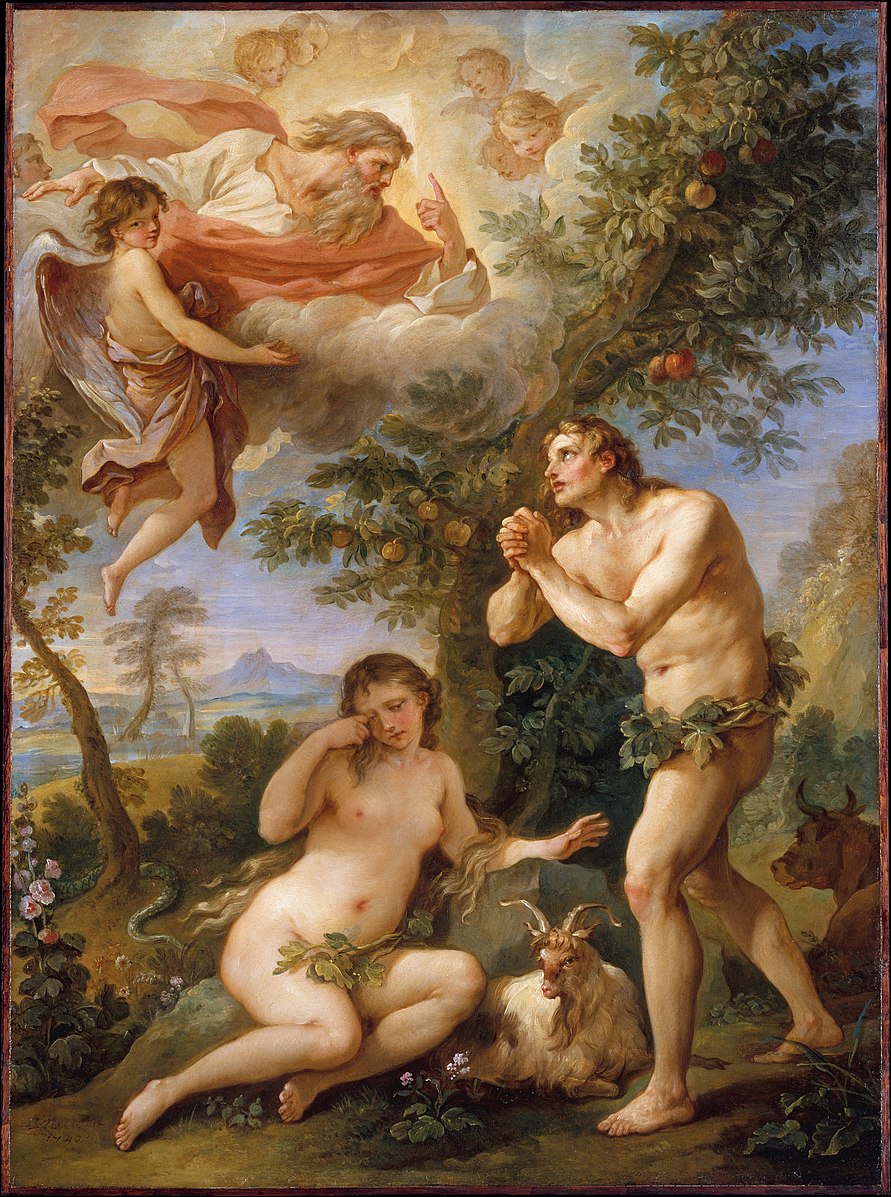
The Rebuke of Adam and Eve, by Charles-Joseph Natoire, Creative Commons CC0 1.0 Universal Public Domain Dedication, via Wikimedia Commons

What happens when we cease to be human?  Artificial intelligence and robots and capitalism.  It’s a cold world where only numbers matter.  I’m not a great one for metrics and “evidence-based” humanities.  No, Romanticism is not dead.  The world where imagination reigns and Adam Smith is not even a shiny shekel in his great-grandfather’s blue eye.  How do I know it was blue?  Imagination.  You see, I’ve written a few novels (unsuccessfully), and I know a few (very few) colleagues who do as well.  Mainly I know that because their novels find publishing houses that know how to get them in the public eye.  I jealously guard those friendships because I’m a Romantic.  I tilt the electronic windmills telling me all of life is statistics and figures.  No, those slowly spinning blades are liable to chop your head off, if you let them.

My friends often express surprise when I reveal that I’m a Romantic.  Books should be evidence enough.  Ideally, work would allow us to bring our gifts to the table—or more accurately, screen.  It would find a way of saying, “be human here because we really mean what we say about diversity and inclusion.”  Instead, evaluations are metrics-based.  The numbers.  The bottom line.  At moments such as these, I throw off my hat and let my thoughts run free.  I daydream about the books I’ve read and those I’ve written.  I imagine life as a place to truly be human.  The humanities are all about understanding what it means to be authentically human.  And let me tell you something—it’s not all about numbers.  In fact, if I had it all to do over again, I think I would be an English major.  With no regrets.


Friends and Dreams

The mind is a labyrinth.  Ever since the time change (especially), I’ve been waking with the weirdest dreams.  One involved someone I haven’t really thought about for years.  Someone I knew in college and who was a close friend, but who’s fallen out of touch.  (And who would likely not approve of my evolving outlook on things.)  Why she came out in a dream is a mystery to me.  It does give me hope, however, that all those things I think I’ve “forgotten” are really still in there somewhere.  A friend once told me that it’s not a matter of “remembering” but of “recollecting.”  He claimed that the memories are still there.  Ironically, I can’t recollect who he was, although I think it was someone I knew in college.

My generation’s ambivalent about the internet.  Most of my college friends I simply can’t find online.  I recall one of my best friends saying he would never use a computer.  I suspect he’s had to backslide on that, for work if for nothing else, but he’s not available online at all.  The same goes for people my age at seminary.  Some I occasionally find through church websites, but honestly, most of them have better pension plans than I do and have retired to become invisible.  We children of the sixties are likely the last generation that might be able to make it through life claiming never to have given in to computers.  It took quite a bit of effort to get me over the reluctance.  One of my nieces set up this blog for me nearly 13 years ago, otherwise I’d still be hard to find.

But minds.  Minds can, and do change.  My mind was dead-set against computers in college.  For one class I was required to do one assignment via computer, and I did that task and that task only.  Seminary was accomplished with a typewriter and snail mail.  Even my doctorate, done on a very old-fashioned Mac SE, was purely a feat of word processing.  Nashotah House was wired during my time there, but that was mainly email.  My mind was slowly changing at each step of the way.  I wasn’t becoming a computer lover, but I was realizing that I was learning something new.  Now I can’t get through the day without writing and posting something on this blog and sharing it on Twitter and Facebook.  And checking email—always email—to see if anything important has come in.  And, perchance, someone I had a dream about might actually email me out of the blue.


Rock the Absurd

Okay, so it was bound to happen eventually.  You see, the internet makes us all interchangeable in a way.  I occasionally lament being confused by various algorithms with other “Steve Wigginses” out there (and there are many).  So while innocently checking my personal email after work the other day I spied a message clearly not sent by one of the many organizations that spam me constantly.  It was an invitation to participate in a conference.  Now, with a 925 job that’s just not possible, but I always appreciate being asked.  Then I read what the conference was about.  Agriculture.  Why were they asking me to attend a conference on agriculture?  Then I recalled, one of the other Steve Wigginses is a professor of anthropology, specializing in agriculture.  Was this an electronic mail mishap?

It also made me wonder if this poor soul (I don’t know him and have never met him) has been receiving email about horror films and wondering why.  His research trajectory has him trying to help people (which is why I wanted to be an academic in the first place) in a real down-to-earth way.  This made me realize the dilemma of other biblical scholars I know who are interested in monsters and horror, but who also realize that we need to help the world.  I can say from experience that it’s a lot easier to do as a professor than it is as an editor.  At least a professor has a platform to stand on.  And all of this brought to mind the theater of the absurd, tying me back to my younger days.

As I started high school I learned about the existentialists.  Looking at my own life, I saw it was absurd.  The times when I start to get down are when I’ve started to take all this seriously.  This Steve Wiggins, in any case, spends his life trying to figure things out.  But he lives in a world where two and two don’t always come to four.  Anyone who’s been inside an organization with open eyes knows the absurdities—large or small—that go on within it.  As old Ecclesiastes says, the race isn’t always to the swift.  That’s biblical and bankable.  So it’s a bit absurd that three (that I know of) Steve Wigginses are or have been professors.  It’s absurd that we don’t all use our full names because most two-name combinations on the web are going to lead to duplicates.  Mix-ups are bound to happen and we should just enjoy the absurdity we see.

Photo by Steven Weeks on Unsplash