Misremembered

There may be a name for it, but if there is I don’t know it.  Like the more well-known Mandela Effect, it’s a strange memory issue, only it affects the individual.  The Mandela Effect is a collective false memory, often involving the death of someone famous.  Many people—sometime very many—think, for example, that someone famous has died.  The death, or other false memory, is posted in the past and people who don’t know each other all agree that it happened, only it hasn’t.  Instead, what I’m talking about happens to me once in a while and perhaps it happens to others.  Most recently I was listening to The Proclaimers’ song “I’m Gonna Be,” also known as “500 Miles.”  It’s got a catchy chorus and I was thinking it was an oldie, so I looked it up.

First of all, I didn’t know The Proclaimers were a set of twins from Edinburgh.  Second of all, I didn’t know they were (only) my age.  Third of all, I was sure I knew and heard the song from when I was growing up, but it came out in 1988, the year my wife and I moved to Scotland.  I was just stunned by this.  I was sure I’d heard the song, for instance, when I was in college and that it was an oldie even then.  I didn’t and it wasn’t.  In fact, the very year I could’ve first heard it I was busy making plans for an international move, getting married, and starting a doctorate.  This kind of time distortion can be very disorienting, and it says something about memory.

1988

Our lives are the stories we tell about ourselves.  Memory, in an evolutionary way, serves some basic functions such as recalling which other people you can trust, where good food sources are, and where the saber-tooths tend to hang out.  Those with better memories survive longer and procreate more and over time the trait becomes common.  Memory isn’t intended to recall specific dates.  I often wonder if something like the Mandela Effect isn’t behind Trump’s unaccountable popularity.  A kind of memory that refuses to believe the song came out in 1988 although clearly it did.  Believing false memories is the stuff of drama, of course.  That drama can take in whole societies because we misremember that we knew all about propaganda because we learned that in high school, but now we fall for it.  Or it may be a lonely moment when a song comes to mind and we think we’ve known it far longer than we have.


The Persistence of Streaming

I’ve had to start keeping a list.  If I don’t I’ll forget which movies I’ve streamed.  I suspect I’m not alone in this.  Electronic information is vapid and eminently forgettable.  If you go see a movie in a theater, you’re likely to remember it.  Memory of place and occasion aid the memory of plot and effects, I suspect.  To my knowledge I’ve never had anyone ask if I’ve seen a movie that I didn’t remember, if I saw it in a theater.  Streaming—maybe yes, maybe no.  A few weeks back I found myself streaming a film and thinking “this looks awfully familiar.”  The longer I watched the more convinced I was that I’d seen it before.  When it was over I checked.  I had watched it only a few months earlier.

When you buy a DVD or Blu-ray (or even a VHS tape), the physicality of it serves as a reminder.  Unwrapping the package, handling the case, loading it into your player—these are all keys, hooks upon which memories hang.  As I’ve intimated before, movies are, I believe, our modern mythology.  The idea’s not original with me, but think about how movies are often our frame of reference around the water cooler or with friends.  What did you think of Nope?  It’s a safe way to express our beliefs and aspirations.  Even if it’s not great, it’s helpful to be able to remember it when you want to.  Streaming, it seems, often lacks commitment.  Particularly if it’s from a free site.  (I use such only when the media are otherwise unavailable.)  Maybe there’s a reason it’s free.

Streaming asks little by way of investment, financially or psychologically.  It costs time, of course, and perhaps that’s the greatest siphon of all.  If you’re a busy person time is a commodity.  Spending some of it watching a movie—depending on who you are—isn’t simply entertainment.  Mythology gives us meaning.  I suspect that’s why we value those auteurs who break through the noise and manage to stand out in our minds.  Those who know what it is to captivate an audience.  Those who are really invested in their projects.  Like most books I read, the movies I watch come from a list.  I have a reason for watching them, often related to research.  And if you put the time into it, you want to remember it.  For that, I recommend keeping a list. (Have a written a post like this before?)


Gorilla Thinking

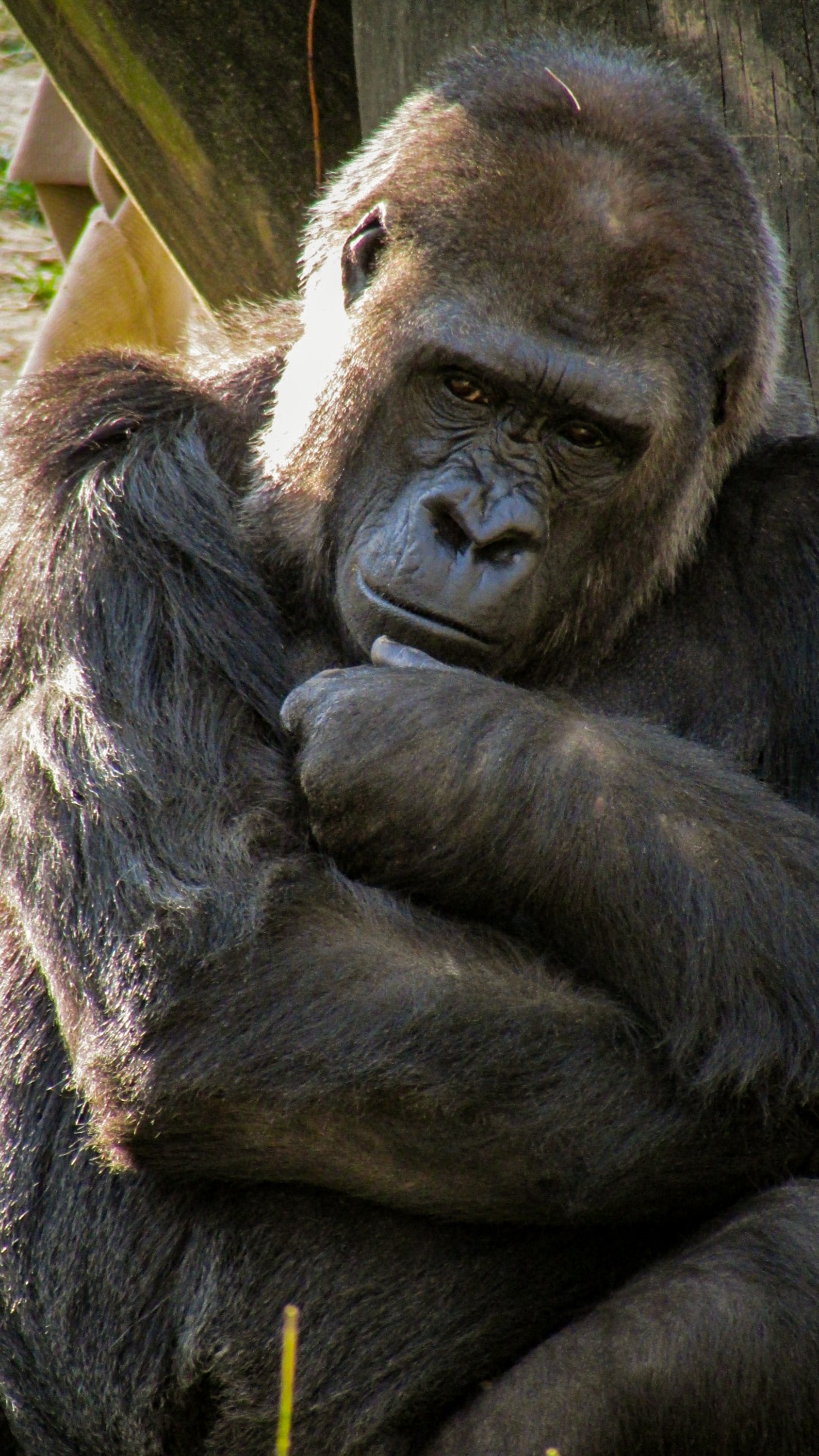
We don’t understand consciousness, but we want to keep it all to ourselves.  That’s the human way.  Or at least the biblically defined human way.  Animals, however, delight in defying our expectations because they too share in consciousness.  Take gorillas, for example.  Or maybe start with cats and work our way up to gorillas.  We all know that cats “meow.”  Many of us don’t realize that this sound is generally reserved for getting human attention.  Cats tend not to meow to get each others’ attention.  According to Science Alert, gorillas in captivity have come up with a unique vocalization to get zookeepers’ attention.  Not exactly a word, more like a sneeze-cough, this sound is used by gorillas at multiple zoos for getting human attention.  Even if the gorillas have never met in person.

Photo by Joshua J. Cotten on Unsplash

This is a pretty remarkable demonstration of consciousness.  What’s more, it’s an example of shared consciousness.  The same vocalization shared over hundreds of miles without a chance to tell each other about it.  We’re very protective of consciousness.  As a species we like to think that consciousness is uniquely human and that it’s limited to our brains.  Moments of shared consciousness we chalk up to coincidence or laugh off as “ESP.”  Funny things happen, however, when you start to keep track of how often such things occur.  It might make more sense to attribute this to moments of shared consciousness.  In our materialist paradigm, however, that’s not possible so we just shake our heads and claim it’s “one of those things.”

Animals share in consciousness.  We don’t always know what their experience of it is—indeed, we have no way to test it—but it’s clear they think.  I live in a town, so my experience of observing wild animals is limited to birds, squirrels, and rabbits, for the most part.  I often see deer while jogging, and the occasional fox or coyote, but not long enough to watch them interact much.  But interact they do.  Constantly.  These are not automatons going through the motions—they are thinking creatures who have sophisticated ways of communicating with each other.  Ours includes vocalization, so far uniquely so in the form of spoken language.  The great apes—chimpanzees and orangutans, according to Tessa Koumoundouros—also vocalize and do so with humans.  Now we know that gorillas do too.  And we all know that a barking dog is trying to tell us something.  If we took consciousness seriously, and were willing to share it a bit more, we might learn a thing or two.


Sabbatical Request

I don’t know when I became one of them.  It seems that I was pretty busy in my early teaching days, and starting a family.  I didn’t feel, however, that every single minute was programmed down to the second.  I had time for writing, vacation, and family, as well as work.  The other day when I was sending out those reminders to authors that their books are a bit (years) overdue, I realized just how busy they are.  Then I took a moment and considered that I’m not sure how I became one of them.  The people who are too busy.  Clearly buying a house was a big part of it.  I’d been pretty busy before, but now I need to invent time in order to get everything done.  The staycations I allow myself end up with feelings of guilt for all that’s been left undone.

Maybe it doesn’t help that I can see the neighbors out my office window.  When I see one of them weed-whacking or mowing during the day, I think I need to do the same.  But I’m also out of string for the whacker.  I really need to get to Lowes so I can stock up—last time they had only one spool left, which is probably why I ran out.  To get to Lowes I need a weekend.  Preferably not one with temperatures in the high nineties.  And without meetings cutting into weekend time.  And when it’s not raining.  Time is slippery.  Even as I work I often have other things—many other things—I have to do running through the back of my mind.  How did I become so busy?

Speaking only for myself, there’s nothing I’d rather be doing than reading and writing.  I do these daily only by carving out inviolable time for them.  It is costly time, I know, but to me it’s beyond price.  Thinking of these colleagues too busy to submit their books, I think back to my own professor days.  There’s no doubt that I read and write more now than I did then.  There were times (grading, accrediting body visits, commencement, etc.) when there simply wasn’t time to do anything else.  Many colleagues mention health issues on top of all this.  Academics, as those who supply (partially, but responsible for a goodly number of) books, the number published each year truly boggles the mind.  I would try to figure all this out, but I’m afraid I simply don’t have the time.


Flower Power

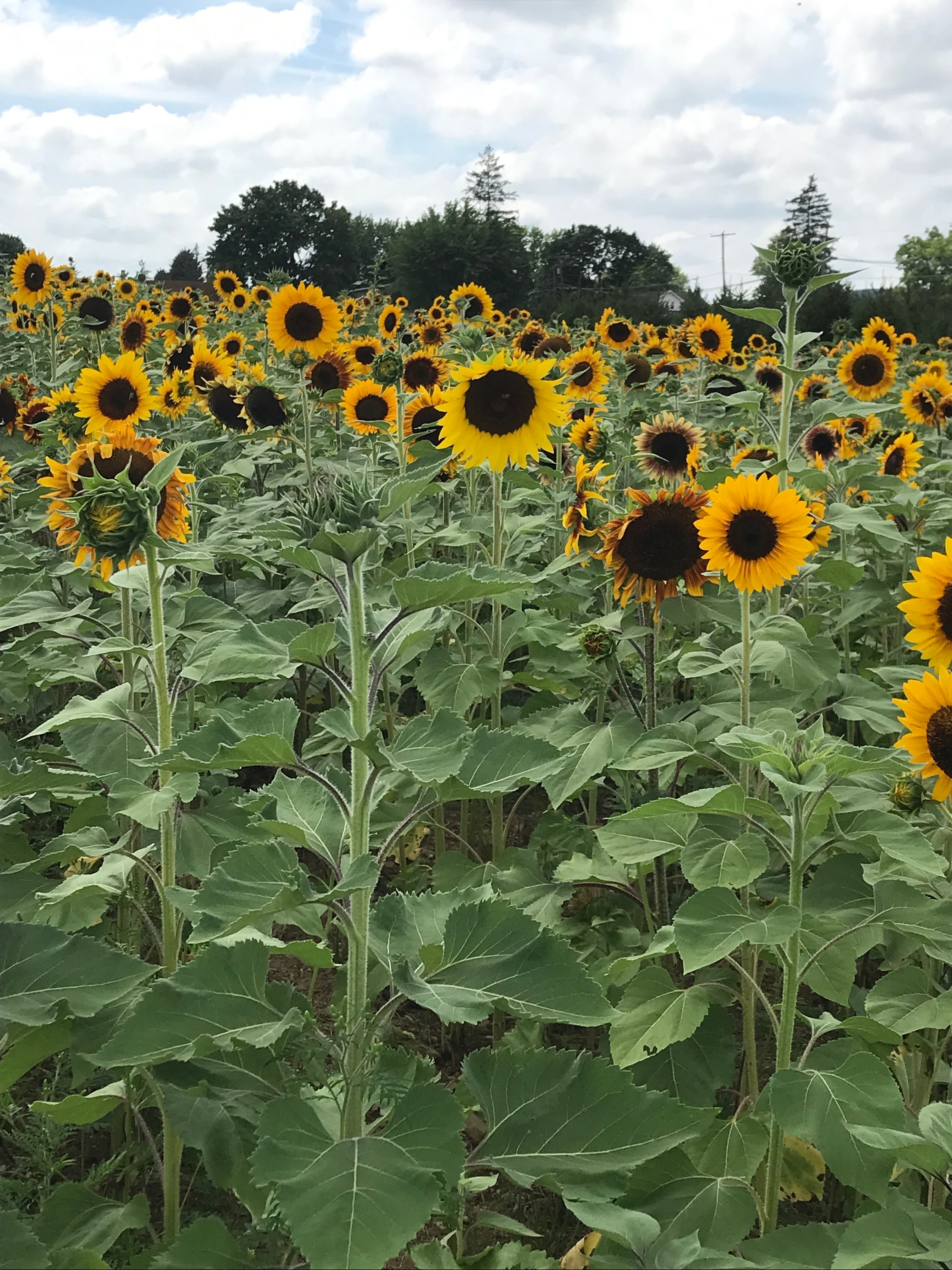
Why do we find flowers so attractive?  Often what separates weeds from desired plants are the flowers.  (Not always, though, as the much maligned dandelion can attest.)  The bright colors clearly help.  Intended to entice pollinators, flowers offer many natural attractants—nectar, intricate patterns, stunning colors—that draw both insects and humans to them.  Summer is the time for weekend festivals, and thus we found ourselves at Yenser’s Tree Farm for their Sunflower Festival.  Located near Lehighton, it’s in some pretty territory.  At this time of year it’s dedicated to sunflowers.  Perhaps all the more poignant this particular year, given that the sunflower in a national symbol of Ukraine, lots of people were there a warm Saturday afternoon.

The Helianthus genus is actually part of the daisy family.  What we call the “flower” is what botanists call a “false flower” because the head of a sunflower consists of many tiny flowers surrounded by a fringe that has petals like other flowers.  In other words, a sunflower is a cooperative venture.  The name “sunflower” either derives from the disc head looking like the sun, or by their trait of heliotropism.  The buds, before blooming, track the sun across the sky.  Most remarkably, at night, typically between three and six a.m., they turn back east anticipating the sunrise.  This speaks of an intelligence in nature.  There is a scientific explanation, of course, having to do with changing growth rates in the stems that allow a kind of swiveling effect.  To me it seems to indicate plants are smarter than we give them credit for being.  Not having a brain doesn’t mean you can’t be amazing.

The tiny flowers in the head are arranged in a spiral that follows a Fibonacci sequence.  I can’t even follow a Fibonacci sequence, so I’m glad to cede intelligence to our plant friends.  How can they anticipate where the sun will rise?  It’s the anticipation that’s heavy with significance.  Sure, using the word “anticipate” is to ignore the garden sprinkler analogy of snapping back once you’ve reached the end of your trajectory, but even so, when a seed bursts from its pod it has to figure out which way is up.  Plants move, to give themselves the advantage of sunshine.  We plant flowers because we want to be near them, admire them.  Plants provide food and oxygen, and we offer nutrients, at least in theory, when we decompose.  We’re all part of an intricate system, and we benefit when we turn to face the sun.


New Physics

Maybe it’s time to put away those “new physics” textbooks.  I often wondered what’d become of the old physics.  If it had been good enough for my granddaddy, it was good enough for me!  Of course our knowledge keeps growing.  Still, an article in Science Alert got me thinking.  “An AI Just Independently Discovered Alternate Physics,” by Fiona MacDonald, doesn’t suggest we got physics wrong.  It’s just that there is an alternate, logical way to explain everything.  Artificial intelligence can be quite scary.  Even when addressed by academics with respectable careers at accredited universities, this might not end well.  Still, this story to me shows the importance of perspectives.  We need to look at things from different angles.  What if AI is really onto something?

Some people, it seems, are better at considering the perspectives of other people.  Not everyone has that capacity.  We’re okay overlooking it when it’s a matter of, say, selecting the color of the new curtains.  But what about when it’s a question of how the universe actually operates?  Physics, as we know it, was built up slowly over thousands of years.  (And please, don’t treat ancient peoples as benighted savages—they knew about cause and effect and laid the groundwork for scientific thinking.  Their engineering feats are impressive even today.)  Starting from some basic premises, block was laid upon block.  Tested, tried, and tested again, one theory was laid upon another until an impressively massive edifice was made.  We can justly be proud of it.

Image credit: Pattymooney, via Wikimedia Commons

The thing is, starting from a different perspective—one that has never been human, but has evolved from human input—you might end up with a completely different building.  I’ve read news stories of computers speaking to each other in languages they’ve invented themselves and that their human programmers can’t understand.  Somehow Skynet feels a little too close for comfort.  What if our AI companions are right?  What if physics as we understand it is wrong?  Could artificial intelligence, with its machine friends, the robots, build weapons impossible in our physics, but just as deadly?  The mind reels.  We live in a world where politicians win elections by ballyhooing their lack of intelligence.  Meanwhile something that is actually intelligent, albeit artificially so, is getting its own grip on its environment.  No, the article doesn’t suggest fleeing for the hills, but depending on the variables they plug in at Columbia it might not be such a bad idea.


Remember the Doorway

I’m glad it has a name.  And I’m also, relievedly, glad it’s normal.  The Doorway Effect.  I’m sure it’s happened to you.  You walk into a room and immediately forget what you came in for.  I’ve been afraid of some early onset of something because I’ve noticed it more and more, but it turns out that this is a normal brain function.  A recent article by Jessica Estrada explains that our brains are constantly framing.  A large part of that framing has to do with our physical location.  When you step through a doorway that framing changes and some of the residue (what I came in here for) might easily get left in your previous location.  In other words, it seems to be an effect of humans making different rooms for different purposes.  Our thought lingers in the place it was first born.

Photo by Filip Kominik on Unsplash

Our brains are fascinating organs.  Every time I read about how children’s brains form, I wish I’d studied psychology instead of religion.  How we could help our children if we understood what their brains just aren’t capable of doing just yet!  How many spankings could have been avoided if parents understood brain development?  Beating someone doesn’t teach anything.  Instead, we might try to learn how minds use brains.  Young boys can be quite reckless.  One of the reasons?  Their brains haven’t developed enough yet to think through the consequences of their actions.  Yes, they can push limits for other reasons, but their thinking simply doesn’t yet involve adult caution that (hopefully) comes with a developing brain.  One of the real consequences of this, for which I’ll volunteer as a poster child, is religion.

Children’s brains are not developed enough to accept and comprehend religious thinking until they’re about 12.  We’ve known this for many decades now.  And yet, the theology of parents means they try to convince their children of religious truths before their brains are developed enough to sort it out.  Look at Congress and the Supreme Court to see the results of this.  Most people never seriously question their religion.  For many it was instilled in them as children, before their brains could properly process it.  The rest of the country pays for it with laws then enact.  We’ve known about this for decades and have decided that studying religion is a waste of time.  But I digress.  Now I forget what I started to say when I began this post.


Beyond Natural

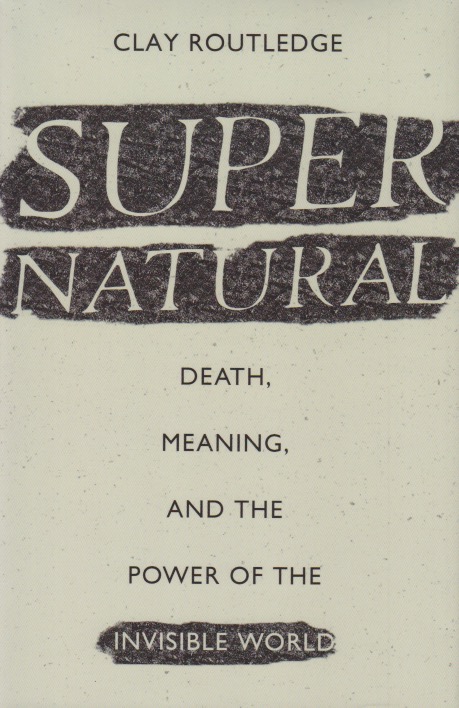
I’ve read quite a few books about the supernatural.  Often these books, which are mostly written by scientists, tend to show the problems with supernatural thinking.  Clay Routledge, it seems to me, has a healthier approach.  Supernatural: Death, Meaning, and the Power of the Invisible World isn’t an apology for the supernatural.  In fact, Routledge is a psychological scientist.  An open-minded one.  The book isn’t an apology, but it does show how natural supernatural thinking is.  This engagingly written study isn’t always easy to read—you have to be prepared to think about death a lot.  But also meaning.  Routledge makes a good case that the human search for meaning is related to our awareness of our own mortality.  We know we’ll die, and we don’t want to believe our existence has been for naught.  That doesn’t make all of us religious, but it does, perhaps, open us to the supernatural.

One of the main takeaways for me is that people misunderstand the power of religious motivation.  Especially in the context of our current political climate.  Many people can’t believe that supreme court justices would decide against laws that slow global warming.  Survey after survey, however, indicates that strong belief in religion means having little or no concern about the world ending.  In fact, for many it is a culmination devoutly to be attained.  You don’t need surveys to learn this.  You just need to talk to Fundamentalists.  I grew up believing this world was a sinful, corrupt place soon to be destroyed.  Further reflection on religion convinced me that this view was wrong, but I certainly understand it.  Too often those trying to find solutions to such problems simply dismiss religion as a motivating factor.  That’s a fatal error.

This is an insightful book.  Although based on science it is neutral toward religion.  Or I should say, the supernatural.  Routledge demonstrates that even scientists, when tested in controlled circumstances, subscribe to some supernatural beliefs.  They may be more abstract, such as the idea that things happen for a reason, or that we’ve been put here for a purpose (the teleological argument), but they are nevertheless present.  To be human is to be a meaning-seeking creature.  We may not be the only ones.  Whether or not that’s the case, our drive for making sense of all this tends to move us toward the supernatural.  Routledge ends with a plea for us to listen to one another.  Pay attention, and care for, those who believe differently.  We have a lot more in common than we have views that separate us.


The Magic of Cairns

They’re one of those things, my daughter explained, that people do that make them so likable.  She was talking about building cairns.  Cairns are piles of stones, but not exactly the kind a farmer might make at the edge of a rocky field.  Cairns are intentionally built.  And they have been for millennia.  The thing is, while people could choose to knock them over, instead most people add to them.  When we’re out hiking we add rocks to cairns, and we’ve started our own from time to time.  I first became conscious of them in Scotland.  While out with some friends we spied a carefully stacked pile of rocks—I think it was at some remote location on the northern Scottish coast—and they told of of the tradition of adding to them.

While recounting this, I also recall seeing a pile of rocks—it wasn’t called a cairn at the time—at Walden Pond.  Some friends from seminary and I went to visit Thoreau’s famous site and although his cabin hadn’t survived, other pilgrims had started a rock pile.  It was, if I correctly recall, conical because the stones weren’t flat.  Most cairns involve the flat kinds of rocks that break off of bedding planes.  They are fairly easily stackable and they quite often tumble due to the forces of nature.  I recall building or adding to cairns in Ithaca, near Ithaca Falls.  Such cairns would be fortunate to survive the harsh winter and torrents of the spring thaw.  And yet still we build them.

While on the red trail at Bushkill Falls, where picking and taking items is forbidden, we found cairns.  There were isolated stacks along the river, dotted here and there.  Then, at about the halfway point we came across a field of cairns.  Alongside the trail, cairn builders had obviously seen the beauty of repeated patterns.  Other hikers were snapping pictures there as well.  It was clear that this was a joint venture that had spanned years of cooperating with strangers.  Nobody asks your race or gender or orientation when you add to a cairn.  In fact, those who start them are unknown and leave them for other strangers to carry on the work.  This is frequently the case with human ventures, but when they involve money we become very specific about who might be considered a proper owner.  Stones are common, and although useful are generally not valuable.  Make them into a stack and they become a symbol.  And that symbol can be a guidepost for future travelers, left in the spirit of cooperation of those we don’t know.


Say It in Poetry

I was listening to some Nick Cave the other day, and, as usual, I was quite taken by his lyrics.  I dusted off my poetry notebook and began to try to forge words into an impossible chain, but without much success.  Yes, I do occasionally write poetry.  I used to write quite a bit more.  There are too many “used tos” in my life, I think.  I grew up with two brothers, and a decade later, three.  (I also have a half-sister, but that’s a long story.)  My brothers have very different lives than mine.  One of them is now posting some of his poetry on a WordPress blog at Poetry Random Ramblings and Rants.  You ought to check it out.  (You might also run into a ramble or rant…)

Photo by Amador Loureiro on Unsplash

One thing I’ve learned from my many editorial board meetings is that successful books are often about the author.  My brother has an interesting life story to tell.  As I’ve noted here before, we grew up in a poverty-level working-class family.  We all found our own ways of coping with the stresses that involves.  Religion was my coping technique that become a strange vocation.  I knew, even as a tween, that whatever job I ended up having it would involve writing.  I learned early on that poetry is difficult to publish, but that never stopped me from writing it.  My brother has always been a much better poet than me, perhaps because of his life.  He’s less inhibited.  An authentic human being.  I don’t want to say too much, since that’s not my place.  Knowing the author, however, I know that he should have readers.

We make our way in the world, and when our parents haven’t really prepared, by example, what a life might be, we’ll you’re left second-guessing everything.  I suspect it drives my wife crazy sometimes.  For me every day is like being in a foreign country, unsure of the language.  Sure, I earned a doctorate but that doesn’t mean I know what I’m doing.  I’ve known medical doctors that were, truth be told, not that smart.  No, life is more of a story we tell about ourselves.  Some of us tell it in poetry, some in song, some in prose.  Some of us tell it nonfiction, and others, well, fictitiously.  A big problem with our world is that we don’t take time to listen to other peoples’ stories.  Their lives.  Those we do listen to (such as television and movie starts, sports players) are often dull.  For my money, there’s more to be learned from poetry, and the life it represents. 


Blog Writing

From time to time someone will ask me about my personal writing process.  Those who know that I write at all, primarily, I suspect, think I do mostly blog posts.  I have, however, written five nonfiction books and have completed seven unpublished novels.  Thirty of my short stories, also fiction, have been published.  I also have a few novels and at least four nonfiction books currently underway.  Like other writers, I require quite a lot of alone time.  From at least seminary on, I have carved that out of the early morning hours.  I’ve gone through phases when I slept normal hours like a civilized human being, but when at Nashotah House, where morning chapel was a daily requirement, I began awaking early to write.  When I began commuting into New York City, that writing time got pushed back to 3 a.m., and that is mostly still true today.

It is said that Isaac Asimov had three typewriters in his study, each loaded with a different writing project.  That way he could work on the one he felt like writing when the mood struck.  Yes, we writers use our emotions extensively.  What I work on in the morning depends on which me gets out of bed that day.  Is it the long fiction me?  Is it the nonfiction me?  Is it the short story me?  Is it the academic article me?  Is it the blog post me?  Ah, the blog posts.  They take a lot of time.  And, like most writing, they are driven by my moods.  Sometimes I write about current events, often posted after the fact.  Why?  Because I have other posts that have been waiting to be presented.

There’s a bit of illusion involved in writing.  Apart from the fact that all of my blog posts are written in the early morning, it isn’t evident from the post itself when it was written.  (Unless I refer to something as having happened “yesterday” or “last week.”)  I don’t follow current events closely.  I can get depressed just fine on my own, thank you.  I don’t start out the day with the newspaper.  Writers often live in their own worlds.  Reality intrudes too much, most of the time.  I may never become a bestselling author.  I may never be able to court an agent—believe me, I’ve tried.  I may never have more than a few followers on this blog, but one thing I will do is continue writing.  It wouldn’t surprise me, and in fact I think it would be entirely within character, if I died with my fingers on the keyboard.


Sacred Hudson

As scientific as we may wish to be, there’s no denying that there is a sense of place.  We know that some animals, at least, also feel it.  Whether theirs is a more pragmatic desire to return to where conditions were favorable to be born, or whether something deeper draws them there, we have no way of knowing.  People feel it too, this sense of place.  We know where we’re from, and if we don’t we often want to find out.  The space is somehow part of us.  There’s a compelling exploration of this in Judith Richardson’s Possessions: The History and Uses of Haunting in the Hudson Valley.  While not America’s first haunted location, the Hudson Valley was singled out for this treatment by Washington Irving.  He, however, didn’t invent it.

I’m not from the Hudson Valley.  I could never afford to live there.  That doesn’t mean the area can’t speak to me.  Richardson’s approach is academic yet readable and she considers how hauntings fill needs and how they play a role in that ever-contentious enterprise of land claims.  Ranging through literary treatments, whether the fiction of Irving or tour books of the next generation, or indeed, more recent literary efforts, Richardson deftly guides the reader through American Indian and Dutch and other inhabitants’ stories of themselves.  Race inevitably plays a part, and her tracing of the origins of some traditional tales is really remarkable.  Who owns the land?  Who truly owns anything?   

Similar treatments (I can’t help but feel somehow lesser) must exist of other haunted locations.  Richardson doesn’t engage in arguments over whether ghosts are factual since ghosts serve so many other functions.  Our lives are the stories we tell about ourselves.  Many of those tales involve the place we are or places we’ve been.  In our highly mobile society, few of us, it seems, can make a living where we’re from.  Those of us born in small towns range far and wide to find employment.  In many cases we may not want to go live where the drama of our childhoods unfolded.  Yes, there are pleasant memories there, but there are also ghosts.  Richardson explores how this plays out in one small stretch of the country.  Indeed, it’s a small stretch of New York state.  Stories of hauntings continue in that particular valley.  Uncanny, perhaps, but there are places in this world like that, and this book is a sure road post on this particular overgrown trail.


First Images

I awoke to an image from the James Webb Space Telescope.  Looking at the universe at it was 4.6 billion years ago is a humble and terrifying experience.  Our universe is so incredibly vast and we are tiny.  As we on this planet bicker and kill and destroy, out there something truly wondrous looms.  Those tiny pinpricks of galaxies.  Our own galaxy so massive that we can’t comprehend it.  Our own midsize star large enough to hold more than a million earths.  Our own planet big enough that no human being can see it all in a lifetime.  What in the world are we fighting for?  This image is just a patch of sky about the size of a grain of sand held at arm’s length.  How many grains of sand would it take to fill the visible sky?

Many people argue that such things are a waste of money.  Yes, there are very real, human-created problems right here on earth.  The siren call of space, however, has the potential to save us.  If we look into that immense universe just out there and realize that we are part of something larger than ourselves, we can stop fighting and hating and electioneering.  Keep looking up instead.  Costs, after all, are relative.  Our entire economic system is arbitrary.  We decide what’s valuable and what’s not.  We make rules that allow individual human beings to control the lives of countless others based on nothing more than agreed-upon principles.  Food could be freely distributed.  Medicine could be given to the sick.  What’s required is perspective.  If looking at the universe doesn’t provide perspective, what can?

I often wonder about life in those distant galaxies.  Given the sheer numbers it’s practically impossible that life evolved only here.  We’re told that teleological thinking is wishful and naive, but looking at the way life behaves I have to wonder if that’s true.  Life may be seeking goals.  If it is, than intelligence may be among them.  We’ve got billions of years and billions of lightyears to work with.  And when I look at the headlines I find those of the James Webb Space Telescope to be the most hopeful of all.  Galaxies are all about possibilities.  Stars being born where the outcomes may be better than one gender assuming it’s better than another.  Or that the “right to bear arms” means  stockpiling assault rifles to kill others in a fit of pique.  No, this money’s not wasted if only people might listen and pay attention to the stars.


Ravens and Teachers

Humans, it is claimed, have a theory of mind.  What this means is that we know what others are thinking, or better, at least we can anticipate what they might be thinking.  This allows us to be self-aware and live in a complex society.  We can see someone else and infer what’s going on in his or her noggin.  This is often considered a uniquely human trait, but I’m not sure how widespread it is.  You see, I frequently run into the situation where someone expects something of me without telling me.  It happened just recently with an organization to which I belong.  I’m a very busy person.  I suspect most of us are—not having time to accomplish everything we need to get done.  If someone wants something from me I have to be told what it is and I have to be told in detail.

One of the things my students always said was that I was a good teacher.  The reason for this, I think, is that when I explain something I back up a bit before the beginning.  I try to assume no knowledge on the subject before going in a bit more deeply.  This method works because of my personal theory of mind.  These people wouldn’t be taking a class on this subject if they already knew the stuff I could assume.  For understanding something new, things have to be explained thoroughly.  That doesn’t mean taking a lot of extra time, but it does mean not assuming others know what I know.  For many people this is difficult.  We’re all busy.  We tell others “Do this,” without explaining what exactly “this” is.  The results are predictable.  It happens all the time in work emails.

I’ve recently written of teachers and ravens.  The effective among the former understand the value of full explanation.  The latter have a theory of mind that allows them to go as far as to try to fool others by giving not enough information.  We might learn a lesson either by sitting in the classroom of the former or by watching the ravens that skulk on the edge of civilized areas.  What they have in common is the ability to realize that others operate with limited information.  In order to learn, information has to be conveyed and conveyed well.  Even now colleagues at work are surprised at when I explain something that it’s done thoroughly and clearly.  When I receive information it’s often piecemeal and frustrating.  The reason, I infer, is that we don’t spend enough time paying attention to either our teachers or the ravens.

Image credit: Wikipedia Commons, public domain

Following Instinct

An article from the Christian Science Monitor a few years back made me think how common knowledge runs ahead of science, but without the rigorous evidence.  The article is “Ravens might possess a Theory of Mind, say scientists.”  Of course they do.  The ravens, that is.  So do many other animals.  It’s pretty obvious when watching them interact on a daily basis.  We’ve over-flogged the idea of “instinct,” using it as a way of preserving the biblically-inspired idea that people are separate from animals.  We can be an arrogant species.  We say we get to determine when other species are intelligent or not.  When they do something smart we say, “That’s just instinct.”  Is it?  How do we know that?  And isn’t “instinct” one of the greatest fudge factors ever invented?

We do not know what consciousness is.  We claim it for ourselves and a few of our favorite animals only.  The ravens in the article show by their behavior that they know, or assume they know, what others are thinking.  I’m always struck how experiments set up to measure this assume a human frame of reference.  Paint a spot on an animal and place it in front of a mirror.  If it shows curiosity about the spot it has a self-awareness, a theory of mind.  Maybe other species aren’t as concerned about zits as we are.  Maybe they consider it vain to fawn over themselves.  Maybe they use sight in coordination with scent and hearing to identify themselves.  No matter what, at the end of the day we must say how our intelligence is superior.  (Then we go and elect Trump.)

Need I say more?

Scientists have to be skeptical—that is their job.  Looking for evidence and coming up with hypotheses and theories and whatnot.  That’s how the scientific method works.  The scientific method, however, isn’t the only way of knowing things.  We learn and animals learn.  We like to think our “theory of mind” makes us unique, but watching how animals interact with each other, even when they don’t know someone else is watching them, shows more sophistication than we normally allow.  Nobody has to be convinced that the corvids are intelligent birds.  Their lives are different from the nervous little finches and wrens, however.  Does that mean wrens and finches have less developed minds?  I think not.  Until we learn how to think like animals we have no business claiming that they have no theory of mind.  Maybe if we could define consciousness we might have a claim.  Right now, though, all we have are instincts to go on.