Welcome to the Labyrinth

Do anything long enough and you’ll produce a labyrinth.  I started this blog back in 2009 with the idea of perhaps continuing in the biblical studies/ancient Near East (actually west Asia) studies, where I began.  I always knew this would be a place to talk about books and movies and sometimes current events.  Often it would address American religion because, well, it’s so bizarre.  Over the years the blog has ranged pretty widely.  My interests are fairly diverse and I tend to get obsessed with a subject for some time and then move on.  I suspect that’s one reason followers are few.  People want the same thing—should I dedicate the site to horror films, religion, or social justice?  The weather?  Instead, it’s what catches my interest at the moment.  Thus the labyrinth.

On the rare occasion when someone actually comments on an older post this blog (there was a healthy chain about the Highgate Vampire some years back), I often have to ask myself, “Did I write about that?” “What did I say about it?”   The human mind is a labyrinth.  And life is too short to ever stop learning.  Even if it means that few will be interested in what you’re doing.  The few who’ve known me a long time and read this blog (I know who you are), might be surprised at the horror themes that have become pronounced.  These were, however, part of my childhood.  When I tried to get away from them, they pursued me.  Monsters are like that, of course.  They like to hide in labyrinths.

But labyrinths are contemplative spaces.  Contemporary spirituality has rediscovered labyrinths.  You walk them in intentional thought.  In the moment.  We might be able to forget for some time that the original labyrinth was built to house the minotaur.  And without Ariadne Theseus would’ve never survived.  When he left her on Naxos his actions spoke louder, much louder than his fight with the monster.  Labyrinths make you forget where you are.  One saved Danny Torrance.  And perhaps one might save your soul.  Those who make enough chairs, or write enough books, or design enough skyscrapers leave labyrinths behind.  Manhattan may be a grid, but it’s a labyrinth nevertheless.  It seems to be a part of every story.  The thing about labyrinths is that they have no one goal.  There is no single answer to this mystery.  When you begin making one you may not even realize it.  Until you stop to contemplate it.
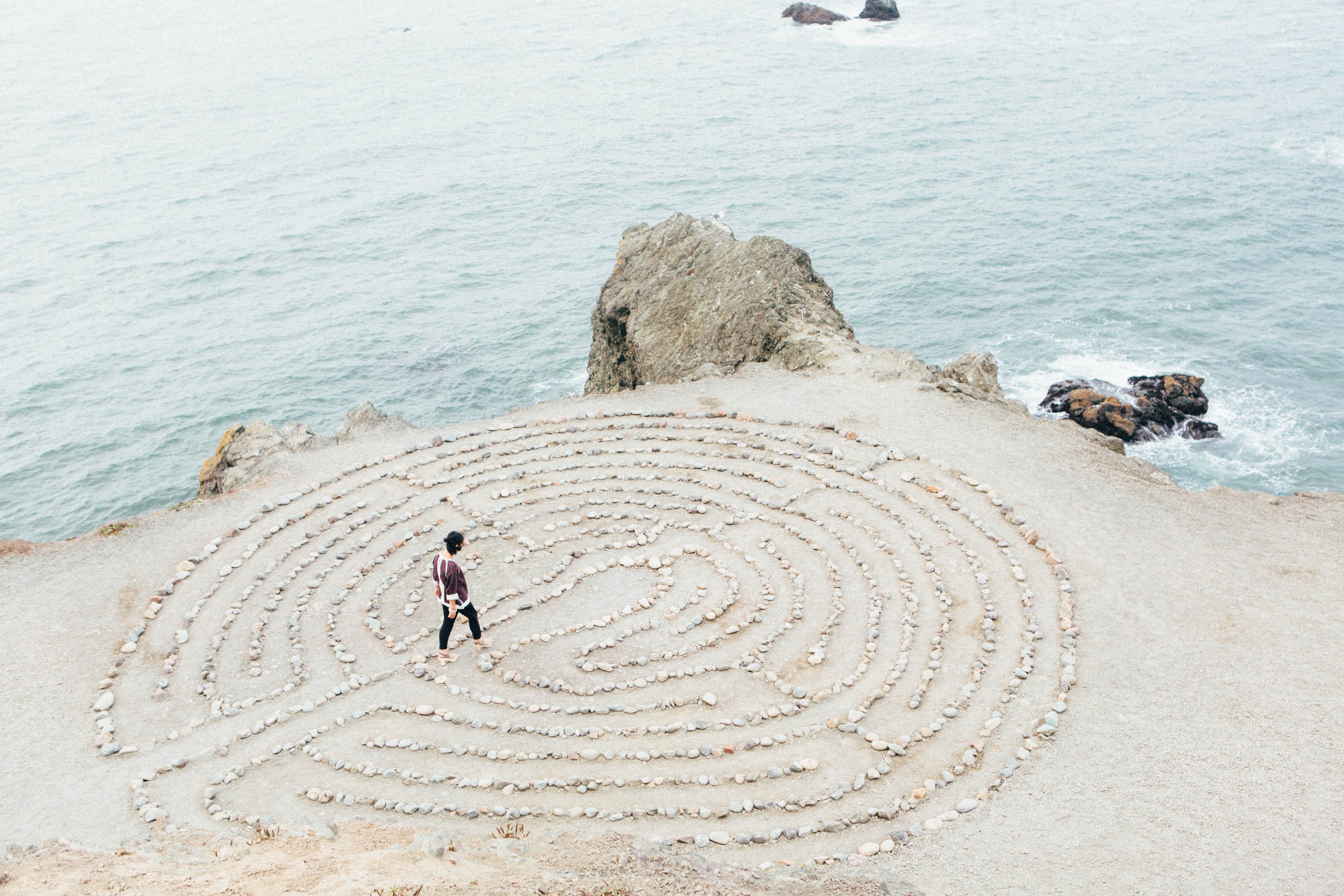
Photo by Ashley Batz on Unsplash

A Bird’s Life

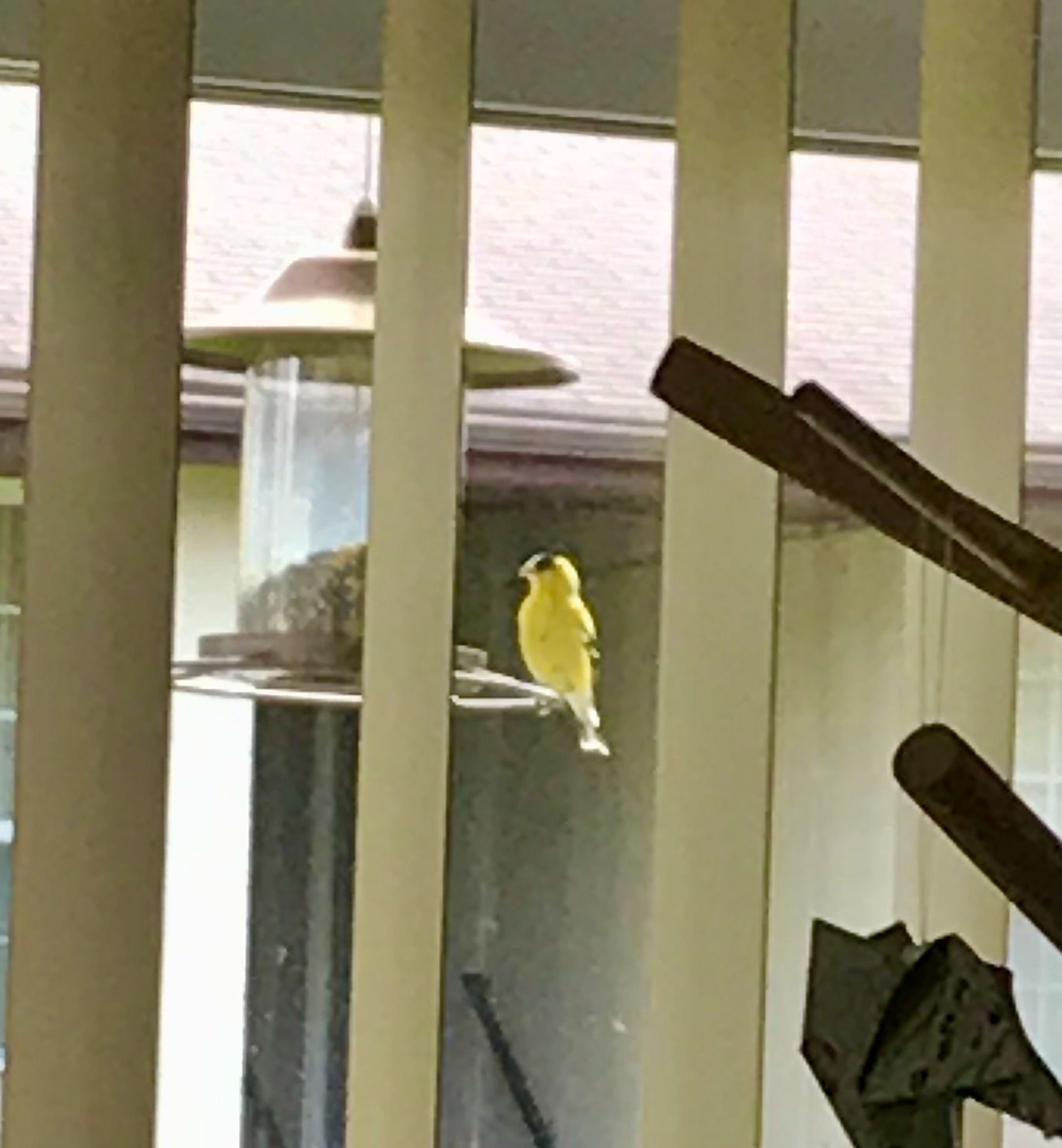
Among the early signs of spring are birds.  Cold and silent, winter mornings have their own form of beauty, but hearing the birds is cause for hope.  The bird world looks cheerful and peaceable but it is a competitive and often harsh place.  My office window looks out onto a porch roof and a stand of trees across the street.  Electric wires constitute a part of the scene as well, giving birds plenty of places to alight and negotiate their bird business.  Like humans, birds are vulnerable, particularly when they’re young.  While teaching at Nashotah House, walking home from chapel one morning after a thunderstorm, I found a baby bird, not yet fully fledged, dying on the sidewalk.  I glanced up and couldn’t see any nests.  I’m not much of climber anyway.  Not knowing what to do I scooped it up and took it home where I could put it in a box.

I didn’t have an early class that day so I called a wildlife rescue center.  Being the days before the internet took over, this was a matter of looking it up in the yellow pages.  We piled the family in the car and drove it down.  They’d told me to keep it warm and try to comfort it.  My daughter held it.  Once we got there they said they weren’t sure if it would survive.  It was weak and chilled, but they would do what they could to revive it.  For several days we all worried about that hatchling.  I thought it might’ve been a finch because of the beak, but otherwise we knew little about it.  Several weeks later the rescue center called.  Our rescue was ready to be released—did we want to do it?

They handed us a brown grocery bag that weighed next to nothing.  “Open it when you’re outside near where you found it,” they said.  Back on campus we opened the bag and our foundling flew off so fast we could barely see it.  Adult birds, confident and socialized, seem more sure of themselves.  They perch out in the open even though hawks scan the area, and even the occasional eagle.  They go about their bird business with a confidence I sometimes envy.  They don’t worry about a 925.  They know what nature’s about.  They may have survived a near-fatal childhood.  They may have pushed siblings out of the nest to have thrived.  They peck and flap at each other in their efforts to mate.  And, above all, they carry spring on their wings.


Ghost History

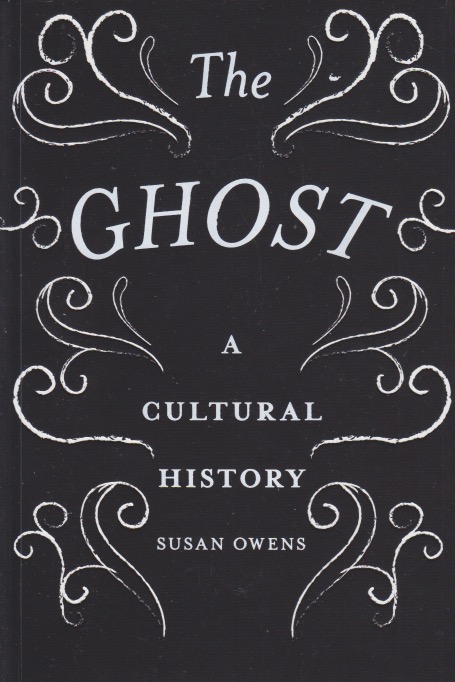
Books on art are often eye-opening to me.  When I was young and trying to escape the working-class hell in which I grew up, I discovered high culture.  This was mostly through local libraries.  I would check out classical music LPs and look at books of classical art.  I did the latter until I could identify several artists by their styles.  (It was probably originally because they’d painted pictures of Jesus and I went to see what else they’d done.)  In any case, I never studied art history.  I recently read an art-historian on the Devil, and now I’ve read one (Susan Owens) on ghosts.  The Ghost: A Cultural History does not address the question of whether ghosts exist, but rather traces the history of how they’ve been portrayed in literature and art throughout time.

Owens quite ably takes us through ancient to modern, pointing out that ghosts change to fit the Zeitgeist—the spirit of the times (not her pun).  In the early modern period ghosts were portrayed as physical revenants.  They were dead bodies that came back to physically harm the living.  We know this fear was widespread because some burials were clearly intended to keep the dead in their graves.  The idea of the physical ghost still comes up in modern horror as the monster you can’t kill because it’s already dead.  It was only gradually that ghosts became spirits and this was largely through emphasis on purgatory, which made it possible for the dead not to be in Heaven or Hell.  Once the idea caught on the literature and art began to focus on the spiritual nature of revenants.  As cultural interests turned towards ruins ghosts inhabited haunted houses.

This is a fascinating study of the way ghosts have evolved over time.  One of the things that struck me was that early commentators often didn’t distinguish clearly between ghosts, demons, and devils.  Demons, as we think of them, really depend quite a bit on The Exorcist.  The use of “devils” in the plural complicates the spiritual geography where we have God v Devil as the main poles of spiritual rivalry.  These ideas, and also those of ghosts, likely blended throughout most of history until a renewed emphasis on literalism came in.  Medieval scholars composed angelologies and demonologies, trying to keep everything straight.  They puzzled over ghosts, however, which don’t fit the scheme very neatly.  They would have benefitted, perhaps, if they had had Susan Owens’ book to help guide them.  It’s an exciting nighttime journey.


Raven about this Book

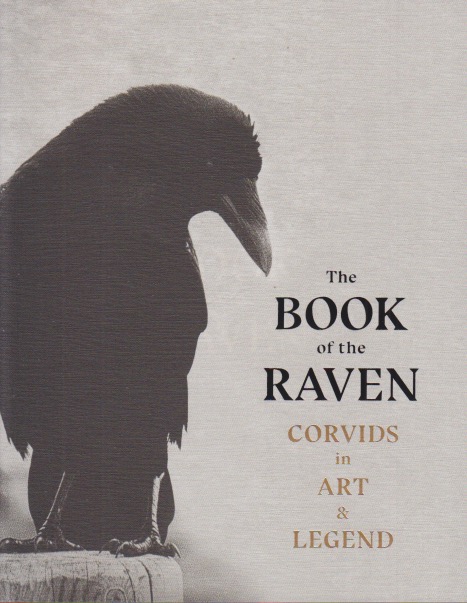
Some books are meant to be looked at.  Being busy most of the time, even on weekends, I’m guilty of not enjoying art enough.  The Book of the Raven: Corvids in Art and Legend is a work of art.  In it Caroline Roberts and Angus Hyland have compiled paintings, photographs, and prints that feature ravens, crows, magpies, and jays, interspersed with facts, poems, excerpts, and bits of lore.  It’s not a comprehensive book, nor is it intended to be.  It is, however, a deeply moving book for a certain kind of person.  It was an accidental find in a visit to The Book & Puppet Company in Easton.  When we’re in town we like to support the independent bookstores.  (I was saddened to discover that Delaware River Books, one of the two used bookstores in town, had recently closed.)

Corvids are, on a scale, about as intelligent as we are.  They think, solve problems, make tools, and recognize human faces.  They remember acts of kindness and reciprocate.  They recognize their dead and they also play.  They’re very much like us.  The book includes, of course, Poe’s “The Raven,” but also other poems that draw inspiration from these smart, magnificent birds.  The artwork is arresting.  One of the great sins of modern life is its busyness that robs us of the time for appreciating art.  And reading.  Learning how to thrive in a world that has become purely about profit and ownership.  Art is intended to be shared.  An artist produces so that others might see.  A author writes so that others might read.  And corvids exist to bring wonder into our lives.

I find the strident call of jays comforting.  I often hear them even on my winter walks.  There are murders of crows in the neighborhood from time to time.  They gather on roofs and in the trees across the street.  Recently I spied a large black bird while on my daily constitutional.  It had left a tree full of crows and was flying straight down the path toward me.  As it flew overhead I had a good look at its tail in flight—one of the best ways to tell a raven from a crow.  It was indeed a raven, and even common ravens are rare in this area.  We live on the edge of their habitat.   I was honored by its momentary attention.  I wished I had more time, perhaps to follow that magnificent corvid and to learn from it.  Instead, I will ponder The Book of the Raven with wonder.


Look It Up

Say you remember something, but imperfectly.  Maybe it’s from years ago.  You have distinct recollection of a word or two, but other details (author’s name, publisher) escape you.  In the case of a book maybe you remember the cover.  If a journal article you’re out of luck there.  Not even Google can help you.  (I use Ecosia regularly, because they plant trees, but sometimes you just need to google.)  This happened to both my daughter and myself recently.  She was trying to remember a childhood book and I was trying to recollect an article I’d read while working on my dissertation.  And although I remember Edinburgh very well, that was, uh, three decades ago.  I tried searching different combinations of key words, but there’s just too much stuff on the internet.

One of the strange features of ancient Near Eastern mythology is that it’s extremely popular online but not in academia.  Departments have been closed down.  Smart people left unemployed.  But just take a guess whose websites come up first when you google a god?  After Wikipedia, it’s often fan and fantasy material for page after page.  Universities haven’t figured out how to monetize this interest, so it remains the purview of those who’ve read a book or two (or done a lot of web surfing) and have popularized the deity.  If universities offered courses that caught people where they lived, there’d be a steady audience.  That fickle lover academia, however, is quite coy.  In my daughter’s case it was fairly easy for my wife to locate the title and bibliographic details.  My case was a little harder.

Most sources I consulted on my dissertation are in my book, A Reassessment of Asherah.  (It is available in PDF form for free on Academia.edu).  Back in the day, I made extensive bibliographies.  I pulled it from the shelf and ran an index card down through the entire bibliography.  Apparently I hadn’t listed it there.  Or I was remembering the title incorrectly.  There’s a distinct possibility that I imagined it.  When you’re an active researcher you keep ideas current by going over them time and again.  I can still remember some individual articles that were used to make a point some thirty years ago, but those beside the point have somehow vacated my gray matter.  In the end I never did find the reference.  Perhaps some day, like bread cast upon the water, it will come back to me.  Like said bread, it too will likely be soggy by then.


Thinking, Critically

A woman—I don’t know her name—photobombed a Russian newscast with a sign telling the Russian people that they’re being lied to.  Detained by police, her whereabouts are unknown.  I admire that woman.  She may pay with her life  in her effort to encourage what is dear to every teacher everywhere: critical thinking.  Many of the world’s problems are the result of the dearth of critical thinking.  There’s no other way to explain the election of Trump and his main squeeze Vlad.  Thick as thieves, the saying goes.  I recently gave a talk to a small group about publishing.  One of the points I was making is that critical thinking is essential in getting to the truth.  Compare sources, use reason, and never trust a snake-oil salesman.

People vote with their feelings rather than with their rational faculties.  Trump openly admires Hitler, as Putin does Stalin.  These should be signs of warning to those who think critically.  The Second World War wasn’t even a century ago and we’ve apparently forgotten all the lessons it should’ve taught us.  In high school we were shown examples of propaganda and told how to avoid it. Now we see it and can’t recognize it at all. Critical thinking is often frowned upon in modern society.  Being comfortable with the status quo is perhaps valued higher than social justice and the necessary work to get us to where it might happen.  It’s easier to hate than to think.  It’s easier to follow than to question what you’re following.  Education teaches us survival skills, and among them are the ability to think through a situation.  Authoritarianism is seldom—I’m tempted to say “never”—the way to a good result.

Perhaps the saddest irony of all is that those who run outlets like Fox News (and its Russian equivalents) are thinking critically of ways to get followers not to.  Realizing that critical thinking will lead to a more fair and equitable world, they decide to keep their positions of privilege by discouraging their followers from engaging with the basic comparison of sources and weighing of facts.  Instead, promoting “alternative facts” and emotionally outraged rhetoric, they are able to stir up crowds to try to take over the government.  Conspiracy theories are easier to believe if you don’t know how to check facts for yourself.  And the internet has made us all experts on everything.  Russia’s narrative about the war is far from the reality on the ground.  Objective observers have seen what is really happening.  One heroic woman in Russia said enough is enough.  In all likelihood nobody in the world will ever see her again.


Lenten Friday

I thought something was on fire when I first saw it.  A plume of black smoke rising against a backdrop of lowering, sullen clouds in a late winter sky.  Then I remembered that there’s a pet crematorium in that part of town.  I was witnessing the end, the smudged spirit of someone’s departed companion.  It made me reflective.  We currently have no pets.  (We can barely afford keeping ourselves going without adding another mouth to feed.)  Having grown up with a variety of animals–dogs, cats, birds, fish, turtles, guinea pigs—and having kept fish, a bird, and a couple hermit crabs for our daughter, I know the connections we make with our animal kin.  They teach children about death.  And they have the capacity to make all of us reflect on what it means to be alive.

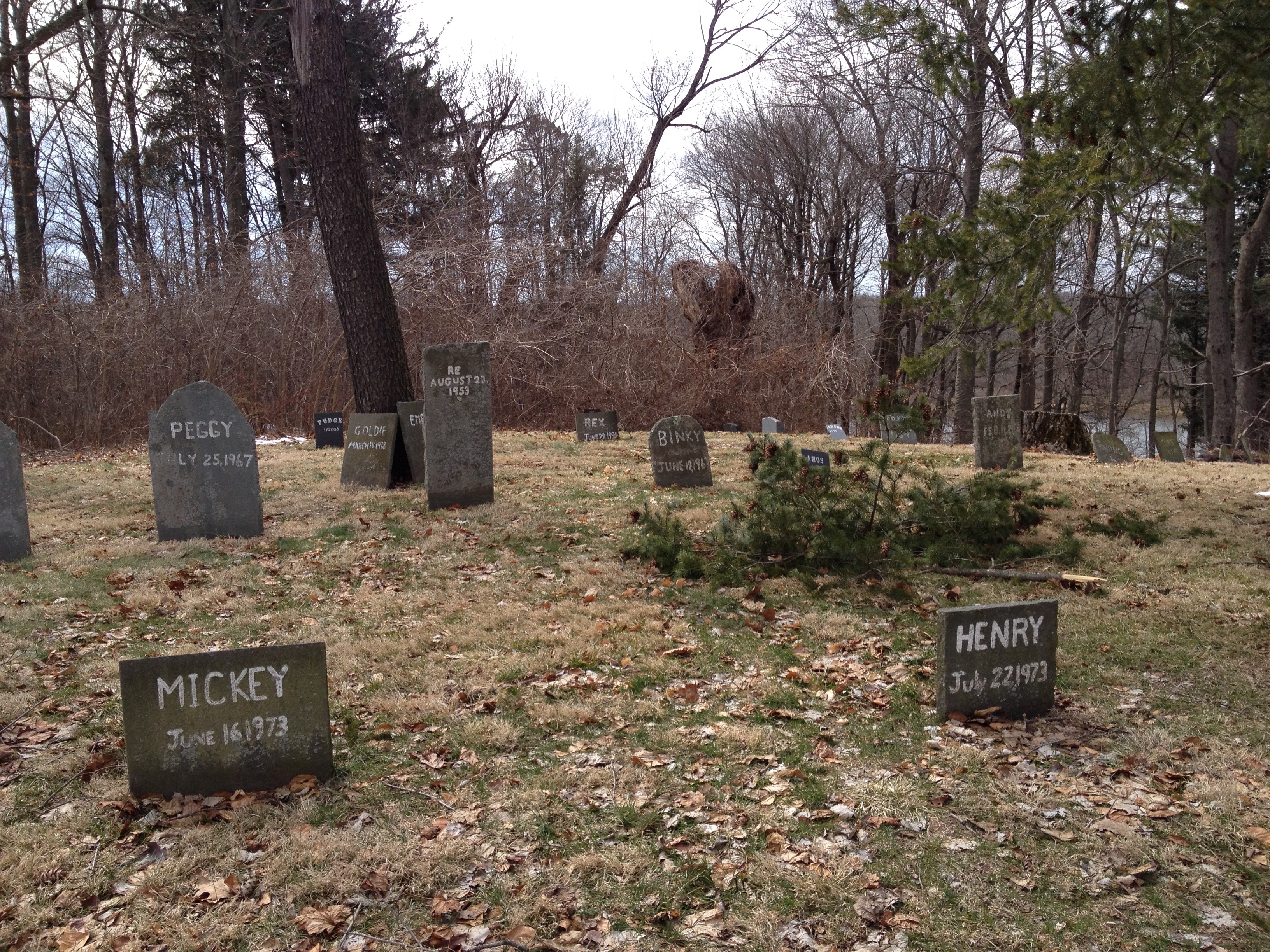
I’ve buried my share of pets, but I have no idea what happened to the larger ones.  The cats.  The dogs.  It was pretty obvious when a dog died.  The cats, which were outside pets, tended simply to disappear.  There were no dog grave markers and I still have no clue what the grown ups did with the carcasses.  I once visited a pet cemetery; it was an oddly moving place.  Although we’re taught theologically that animals don’t have souls, it feels like part of ours dies when they go.  That strange teaching is courtesy of the Bible and it manages to hold sway in both science and religion.  And so another puff of black smoke rises from down the block.

Religion has a tremendous influence on us, whether we’re personally religious or not.  Since humans have always eaten animals, it’s likely that the earliest religions helped to assuage the guilt of killing something that so obviously has feelings and thoughts and could, in other circumstances, have been us.  When monotheism came in there was a great reduction in souls.  Humans alone made in God’s image learned to dominate other animals.  Today we have feedlots that are animal Hells while we pat Fido on the head and mourn his passing.  I somehow doubt that we’ll ever find ourselves back in the natural world.  We’ll likely go extinct before that happens.  Until that day, however, some of our saddest memories will be from when our beloved companions pre-decease us.  You can never be certain which way your thoughts might turn when lowering, sullen clouds fill a late winter sky.


Discovering Diaries

When you move, there are always things that get lost.  I wrote about Nietzsche recently, but one of the puzzles from my latest move, now approaching four years ago, was my college diaries.  (I have to be careful not to write dairies, since my spelling could use some attention.)  I used to keep diaries.  I haven’t done so since early in my married life, and even a little before.  While looking for an empty notebook for use at work, I discovered two diaries in the attic.  I’d been looking for them for, it’s safe to say now, years.  I spend quite a bit of time in the attic, so the fact that I didn’t find them in plain sight—a virtual purloined diary—was odd.  But not nearly as odd as what happened next.  

It was still part of our internet-free weekend.  Unable to get online, and having done my morning writing and reading, and with family listening to things in the background (I can’t read or write with background sounds such as music or talking), I picked up one of the diaries.  It was a lesson in the fragility of memory as well as how reading your own words from the past can make the present seem unreal.  It was a veil, if that’s not too Pauline, that came over me.  Who was that young man?  Was my life really that chaotic?  Were friends really that generous?  Did I really know that many people?  Why have specific ones stayed in mind while others who clearly meant so much of me slipped and fallen in my gray matter?

Like encountering a younger version of yourself, reading diaries opens new windows of self-reflection.  I guess I hadn’t remembered myself being as self-reflective as that man in his mid-twenties was.  Perhaps still is.  If you’ve spent any time on this blog you’re probably aware of my tendency to look at things from different angles.  To think things through.  My own brand of neurodiversity is what I think I have to offer.  I try to save my academic stuff for my published writings, but when as many years have passed, I wonder if I will look back on my early posts here and find myself asking who it was that wrote them.  Youth is a time of acquiring new experiences unlike any other.  Having grown up with so very little, the world itself seemed only days old back then.  If memory serves.


Better Things

It’s only a store brand, but still.  Maybe like me you remember opening a box of Raisin Bran and pouring out the first bowl.  And finding only bran.  Maybe a raisin or two.  By the time you munched your way to the bottom of the box you’d get a bonanza in that last bowlful.  It was more fruit than cereal.  Then they somehow figured out how to suspend raisins so that didn’t happen.  My mind hasn’t caught up yet, I guess.  I was down to the last bowl, and I was eagerly anticipating it.  Especially since the day before I’d only had three raisins and it was clear that the end was near.  Then the last bowl.  One raisin.  That’s a lot of bran to start your day, like C. S. Lewis’ always winter but never Christmas in Narnia.

Speaking strictly for myself, I like to save the best for last.  When I receive snacks in my Christmas stocking, I keep my favorites until all the others are gone.  In my personal myth of scarcity I’m quite aware that good things run out.  And they’re not always easily replaced.  Therefore I tend not to buy the things I like best.  This is the kind of psychology that drives economists mad.   As a child I was taught to put others’ needs before my own and that lesson has dovetailed with the running out of good things.  Of such things monasticism was made.  The raisins are now near the top of the box, but the crumbs are still on the bottom.

I often find breakfast to be the most philosophical of meals.  Perhaps it’s because I write my blog posts in the early morning.  Perhaps it’s because others are awake when I eat lunch and supper.  Perhaps it’s because that valuable things are rare.  It’s the nature of what we find most meaningful.  We live in a culture of largeness and acquisition.  What we truly want, however, may be very small indeed.  Ours is a culture of choice and plentifulness.  Raisin Bran is a choice, as is the store brand.  And it’s even possible to open the box at the bottom and return to my old form of expectation.  I doubt I will ever outgrow the idea, however, of trying to save the best for later.  It’s a form of optimism, after all.  And isn’t it best to start the day with the knowledge that better things are coming?


A Little Fuzzy

Animals don’t obey the law.  As I observed just a few days ago on this blog, they don’t recognize indoors or outdoors.  And they certainly don’t respect private property.  Conflicts are sure to arise.  Mary Roach turns her impressive writing skills to address this, and related issues in Fuzz: When Nature Breaks the Law.  I’ve read an academic book on this subject as well, and I have to say that one wasn’t as much fun.  Roach has a way of bringing the humor out of even potentially trying subjects such as how do we scare carrion birds away from human corpses?  How do we eliminate pests that we’ve accidentally introduced?  (Think of rabbits in Oceania.)  How do we stop birds from getting sucked into jet engines?

Although the book handles these with a light touch, as with most of Roach’s work, it also raises some serious issues.  Solutions to introduced species can involve poisoning that also kills native species it’s designed to protect.  Genetic engineering may have (likely will have) unforeseen effects.  What is a dominating species to do?  We have laws about ownership, after all, and we expect them to be obeyed.  Squirrels, for example, won’t care that you just had to have a sink replaced at great expense.  They’ll gnaw their way in anyway, creating a new crisis right on top of the old one.  Deer cross highways, their brains not yet evolved enough to interpret what a car is—they’ve only been around for just over a century.  (The cars, not the deer.)  They sometimes cross runways too.  (The deer.)  We like animals well enough in the wild— in fact we long to see them.  When they get into our space, however, our rules don’t apply.

As long ago as the Bible, and perhaps before, the question arose of punishing animals.  If your ox gores someone what should you do with it?  I’m not sure Homo sapiens are the best species to be making such decisions.  We’ve shown colossal poor judgment (think of Trump and try to disagree).  We’re actively destroying our own environment, the terrestrial equivalent of defecating in our own fishbowl.  What gives us the right to punish other creatures who are more in tune with what nature tells them to do?  Perhaps the biggest takeaway from all of this is that we may try to make the rules, but the rest of the planet responds to what we might call a higher power.  I’m glad that writers like Mary Roach can show the fun side of it all.


Thinking about Thinking

I’ve been thinking about thinking quite a bit.  My lifelong fascination with religion is part of this, of course.  So when someone pointed out Bridget Alex’s article “The Human Brain Evolved to Believe in Gods” in Discover, I had to ponder it.  The idea, here supported by science, is that people evolved survival traits that lent themselves to religious belief.  That religious thinking was a byproduct that eventually took on a life of its own.  Evolution works by giving a reproductive advantage to one trait over another—which is how we get so many types of dogs (and maybe gods)—and those that disposed people to be religious did just that.  Elaborate religions evolved from these basic traits.  Alex suggest there are three: seeing patterns, inferring intention, and learning by imitation.

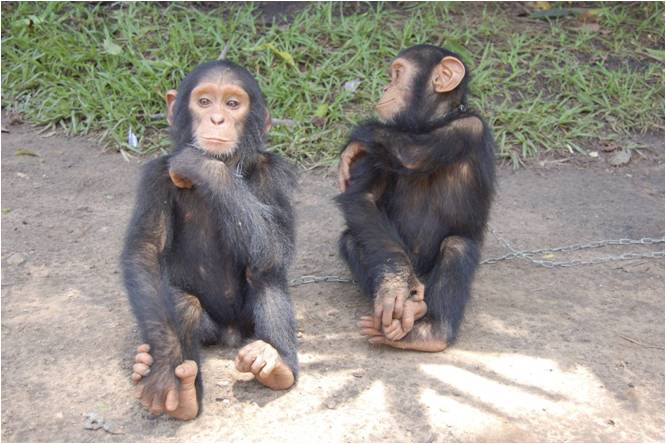
While there’s a lot of sense here, the reductionism doesn’t ring true.  The need to explain away religion also seems uniquely human.  Ironically, the idea that we are somehow special compared to other animals derives from a biblical worldview from which science has difficulty divorcing itself.  One of the greatest ironies of the science versus religion debate is that scientific thinking (in the west) developed within a worldview formed by Christianity.  Many of the implications of that development linger, such as the supposition that animals can’t have consciousness, or “souls.”  We watch a chimpanzee in an experiment and deduct points when they don’t do things the way a human would.  We thus confirm the biblical view in the name of science and go home happy.

Photo credit: Afrika Expeditionary Force, via Wikimedia Commons

I have no doubt that people evolved to be religious.  There are certainly survival benefits to it, not least group building and shared purpose.  I do wonder that science doesn’t address the elephant in the room—that we have limited receptors for perceiving specific stimuli, such as light and sound, but that there are other phenomena we don’t perceive.  We build instruments to measure things like x-rays and neutrinos and magnetism, but we don’t sense them directly.  How can we possibly know what we might be missing?  I suspect the real problem is we don’t want to admit willfulness into any other part of the universe.  Humans alone possess it.  Some scientists even argue that our own sense of will is an illusion.  It’s not difficult to believe that we evolved to be religious.  It’s also not difficult to believe that we pick up hints of forces that have yet to be named.  An open mind, it seems, might lead to great rewards.


Pennsylvania Dreaming

“I finally understand what I’ve come here to learn,” I said.  I was incredibly happy.  I recall the sun was shining, making its way up from my feet to my legs in a symbolic way, soon to reach my head.  I was on the cusp of an epiphany.  That’s when I woke up, needing to head to the bathroom.  Of course, after that it’s difficult to fall back asleep.  I knew that even if I did it would be to a different dream and I wouldn’t learn what it was that I’d come here for.  So it is with the great experiment of consciousness.  Either we’re continuously learning or we’ve already died.  Nobody has all of the answers.  Consciousness may be the true final frontier.  There is no scientific explanation for what it is that is universally accepted.  We all, however, know what it is though daily experience.

Dreams are considered part of our subconscious.  While we sleep we’re said to be not conscious, although we all know that at times we are.  Sleep can be somewhere between.  And we don’t even know what consciousness is.  The study of dreams is still valued in psychoanalysis—it is a form of thinking too—but in our materialist, capitalist society we tend to dismiss dreams.  They generally don’t bring in money.  In ignoring them we move further from understanding consciousness.  Enlightenment, while not a scientific category, still seems possible, even should it come in dreams.  If only we could stay asleep long enough to see it through.

I have a friend who also thinks too much.  He sometimes wonders if this constant focus on what the “they” want isn’t a plan to keep us too busy to think things through.  I often think that the monastics had it mostly right.  At least the part about taking time to contemplate.  When you encounter an idea that feels like a key and you know the door that it opens will be profound, it always seems that work comes to interrupt right at that point.  The job where you can wrestle with ultimate reality and not worry about not producing “product” for which you’re paid, is rare indeed.  That’s why waking from this particular dream was so difficult.  I had a semester break while teaching where I read three books that changed my outlook forever.  It was possible because I had a few weeks before I had to be back in the classroom.  Since then the dream, I guess, has been to return to where you’re paid to learn, for the betterment of all.


Squirrel Wisdom

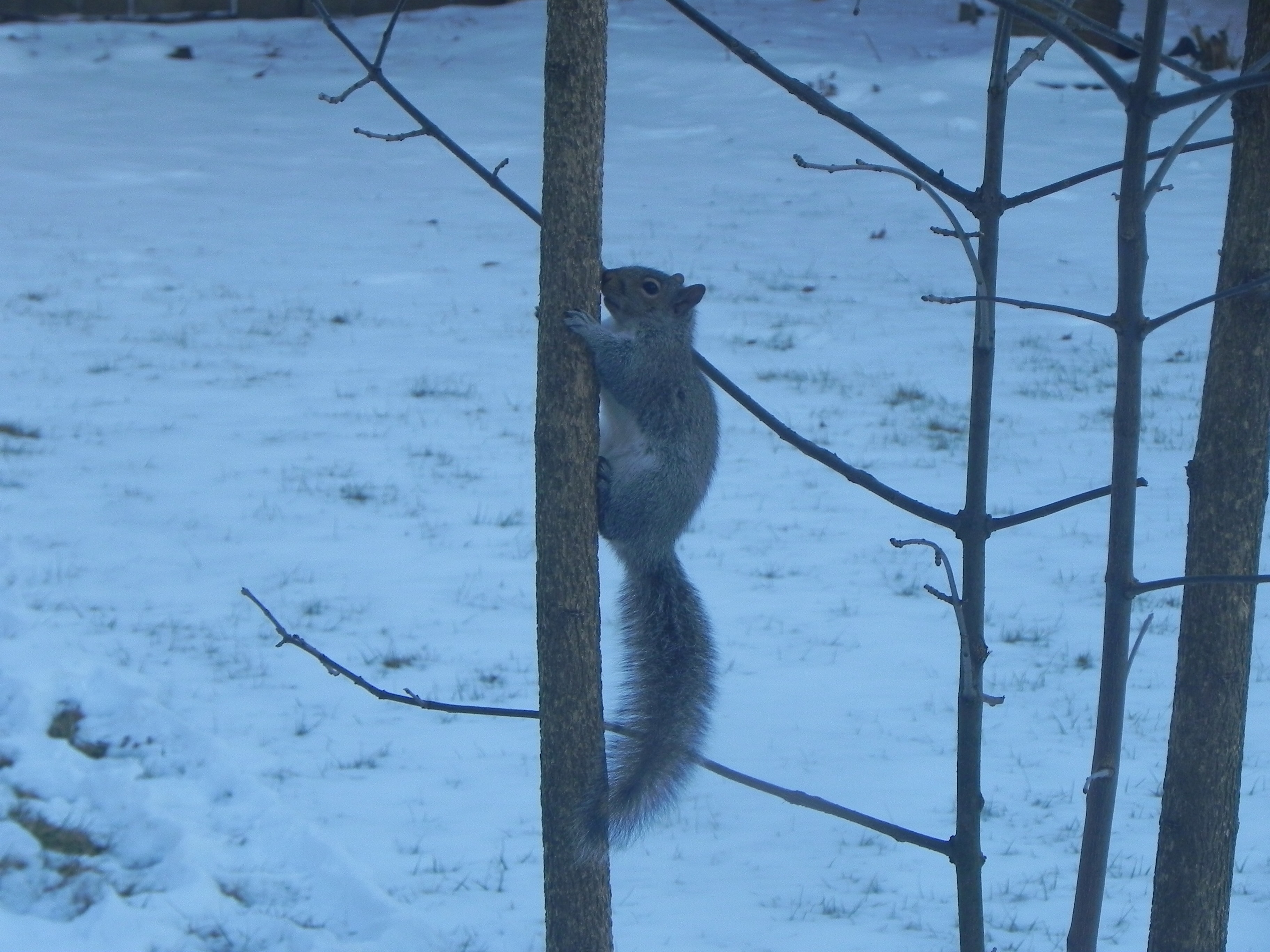
In a dangerous world prey animals have evolved to over-multiply.  That’s clear from watching the gray squirrels from my office window.  There’s a stand of maybe a dozen pine trees across the street, and some days it’s like the bark itself is crawling, there are so many squirrels chasing each other.  Especially when mating season begins.  Of course, squirrels get into everything.  We have a problem with them in our improperly sealed garage.  They have a biological need to gnaw and really animals don’t share the human concept of indoors versus outdoors.  They don’t understand that we want them outside, not in.  This leads to my love-hate relationship with squirrels.  I’m usually on the side of the prey, but they can be a real nuisance.  Still, they’re cute and furry and they take their chances going, well, outside.

So the other day there was a kind of love fest, a Woodstock of squirrels, if you will, in those pine trees.  The sun was out and the hormones must’ve been raging like a high school Friday.  A few minutes later I glanced outside and couldn’t see a single one.  A blur of wings caught my eye as a red-tailed hawk landed on a branch.  All the squirrel play had ceased.  Where there had been dozens just moments ago, not a single individual could now be seen.  The hawk seemed in no hurry, lazily flapping from branch to branch, swiveling its head around, watching.  It might not’ve been in a squirrel mood that day, or the prey might’ve been too well hidden.  Or maybe they knew if you play the game right, predators will just go away.

The squirrels’ conflicting urges both had to do with survival.  In a way from which we could learn, they seem aware that the group outweighs the individual.  Something about their level of consciousness gives them a deep wisdom.  We tend to call flighty individuals among our own species squirrelly, or we can say that we’re feeling squirrelly about something.  Rodents, however, are smart.  In fact, they understand some things better than humans do.  After all, there are so many of them because our species has killed off most of their predators, just as we’ve done for deer.  There’s a reason there’s so much road kill.  Watching the abundance of squirrels it becomes clear that they’re in tune with the ways of nature.  They have to chew or their teeth will grow too long.  And they definitively don’t know the differences between outdoors and in.  Still, they deserve our respect, even if they’re occasional nuisances.


Zones of Twilight

The other day I saw a beautiful twilight moon.  This was in the morning twilight.  I suspect many people don’t realize that twilight comes twice a day.  Twilight is when dayglow either begins or ends but either before or after the sun itself is visible.  Most people are familiar with evening twilight since they stay awake until after dark.  Morning twilight, so full of hope, is beautiful to the point of being painful.  The other day it was twilight as work was starting—the days are beginning to lengthen since I’ve been starting work in the dark for months now.  A waning gibbous moon shown through a gauzy cloud cover in an indigo sky.  It was very cold outside, so I went to the window to take a picture with my phone.

The modern phone camera often misses the point.  I zoomed in on the moon—phone cameras are wide-angle, by default—and it kept sliding in and out of focus.  The sky was getting lighter by the second, and I was losing the opportune moment.  I tried moving the phone closer to the glass, then back a little.  Still out of focus.  Then I realized what was happening.  My phone was focusing on the dirt specks on the window.  (Hey, it’s winter, hardly the time to be out with the squeegee.)  It occurred to me that a life lesson was being offered.

Thich Nhat Hanh recently died.  He was a Zen Buddhist master, and his passing reminded me of the old Buddhist saying that the Buddha is not the moon but rather the hand pointing at the moon.  Religions often confuse the hand pointing for the truly sublime realm to which it points.  Worshipping the person instead of following her or his teachings is a standard feature of religions worldwide.  It is the reason for much of religious conflict.  Those who worship the figure soon come up with their own teachings that are unrecognizable when held up next to those of the departed leader.  They focus on the window, not the glowing moon beyond.  The sky was growing too light to capture the image that had struck me.  The moon was blurry in a way that my eye hadn’t experienced it.  The moment of teaching was past.  The lesson was over.  The best that I could do was spend  a long day working then try to recapture a moment that had occurred in twilight.


Footprints in the Snow

Although my back’s grateful, many of the snowstorms rolling across the country have left just a small bit of snow here so far.  Small bits of snow create their own hazards, however.  A snow covered trail quickly becomes hazardous for jogging, so I walk.  This past week we had a little snow and temperatures low enough to dissuade many of those who normally walk or run the trail.  Those of us with desk jobs really have to make an effort to move.  When I was out I was surprised by a couple of things.  There were no other lunch-time walkers and it was above freezing.  The almost untrodden snow gave under my feet and in the patches where the sun made it through, was actually wet.  I took my usual constitutional and headed back to work.

These short, cold winter days are too treacherous for walking in the dark.  Black ice isn’t a myth unless you can slip and fall on a myth.  The next day it was bitterly cold.  Still, skipping exercise a day is a slippery slope.  I headed back to the trail.  At first my footsteps from the previous day had led to a regular set of tracks where the snow had melted down and the pea gravel had dried out.  Walking was safe here.  As I reached the further, more wooded end of the trail it was quite different.  Sheltered by the trees, my foot prints from the previous day had slightly melted and then refroze, leaving a track of ice that could easily twist an ankle.  I began to think of the concept of following.

We find those whose wisdom compels us.  We hear them in the classroom, the pulpit, or the street corner.  Or we read them in a book.  We might even see them on television or the internet.  They seem to have something we lack, so we follow them.  Their tracks often start out secure enough.  Dry patches in an otherwise slippery covering of snow.  We follow on, thinking we’ve found our way.  Somewhat further down the path, however, the tracks become icy, showing us that even the great leaders have their own hidden secrets.  The places where they too slip and fall.  The wisdom we seek is collective.  No one person has all the answers.  If that were so it should be obvious to us all.  Instead we need to strike out on that nearly unbroken snow to discover for ourselves.