Eating Conscience

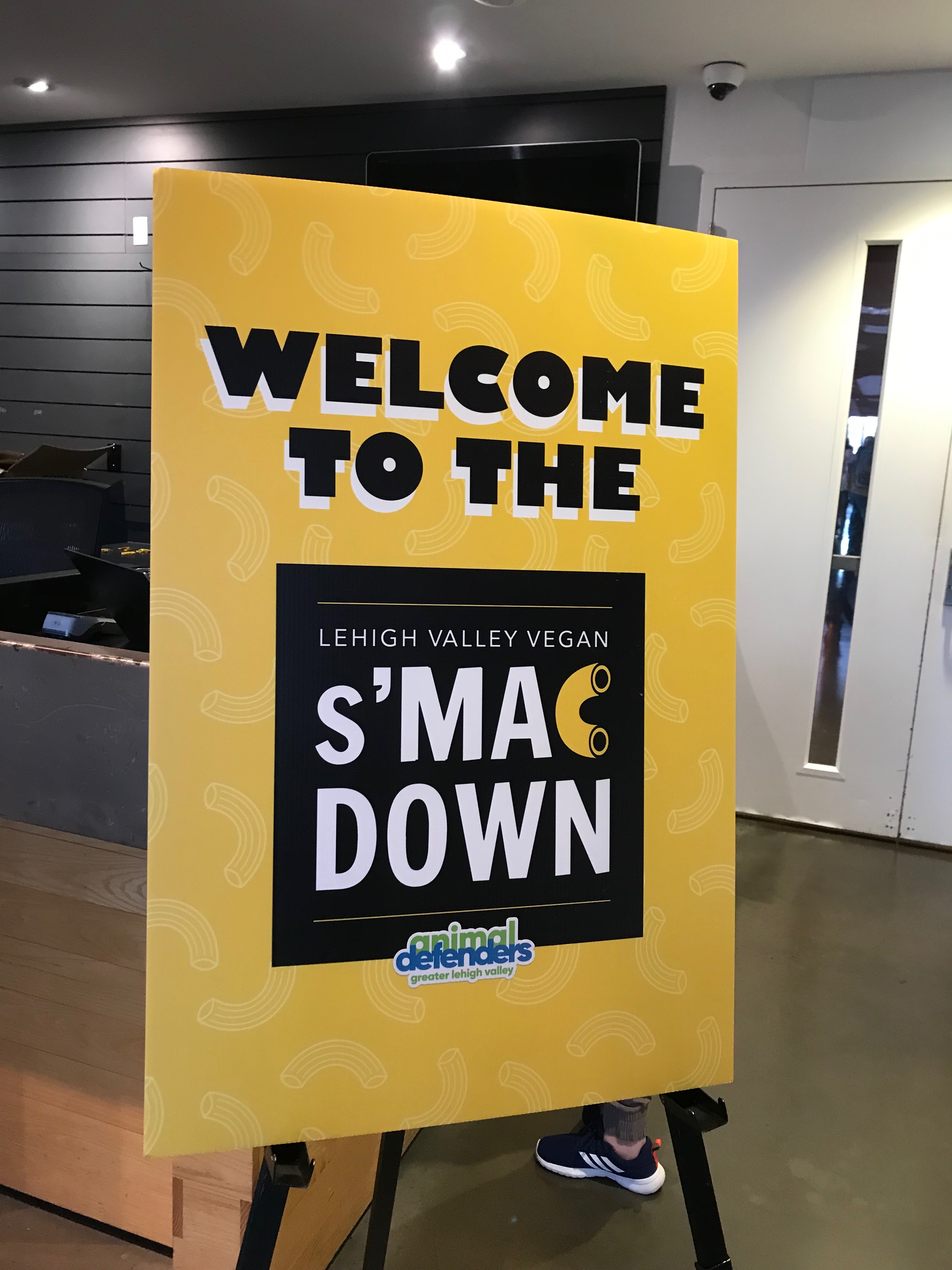
Elections notwithstanding, people—at least many of them—are becoming more accepting of those of us who are different.  Or so it seems on the ground, in some places.  A couple of weekends ago we attended the s’MAC DOWN in Bethlehem.  In case you’re not from the Valley, s’MAC DOWN is an event where hundreds gather to compare vegan macaroni and cheese prepared by area restaurants.  I don’t think that when I was younger—and vegan could’ve been considered a protected category—that there would’ve been a healthy line to get into such an event.  But there was just a couple weeks back.  Even after those who paid extra had been already allowed in and had been given a complementary glass of wine.  It helps, as my family reminded me, that mac and cheese is something people tend to like in general.  Being a vegan myself, I do miss cheese the most but vegan alternatives are getting better all the time.

People are slowly becoming aware that industrial farming of animals simply isn’t sustainable for our environment.  It’s one of the largest pollution-generating capitalistic practices.  It contributes to global warming as well as deforestation.  And how many e coli outbreaks and animal diseases leaping to humans will it take until we realize we’re going about this all wrong?  I became a vegan because it’s very clear that animals suffer as they’re being “processed.”  I don’t want to be part of that.  I understand that others differ in their opinions, which is one of the reasons I don’t write about this often.  But attending events like this can be an eye-opening experience.

It’s safe to say that if eaters didn’t know, they wouldn’t be able to tell that this food was vegan.  Things have come a long way on that front.  Cheese and milk are fairly easy to substitute.  (As is meat, it turns out.)  Butter goes without saying because people warmed up to margarine decades ago and some margarine makers are now putting “vegan” on their packaging.  I’ve been vegan going on a decade now.  There are still places you can’t eat without violating your principles, but events like the s’MAC DOWN show that even non-vegan restaurants are willing to give it a try.  And by and large they do it well.  Of the nine samples we had (in compostable cups with compostable “plastic ware”) there was only one I really didn’t care for.  A couple would’ve been very difficult to pin down as vegan at all.  And then there was the fact that hundreds of people had paid to give this a try, and not all of them were young folks.  It’s good to feel accepted, even when eating by my conscience.


Paranormal Religion

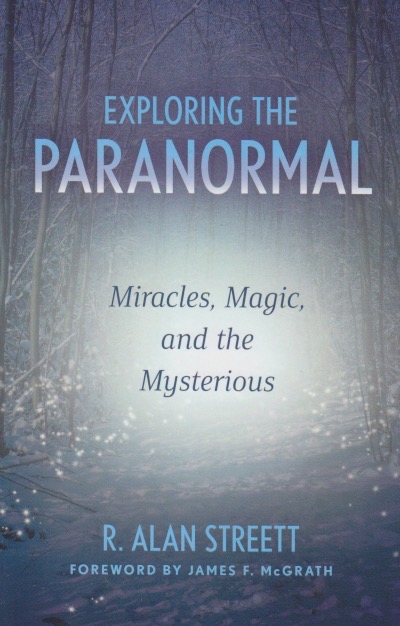
I remember well what it was like to be an evangelical.  Measuring everything by what I thought the Bible said, fearing those things that seemed to come from outside.  Being very concerned with salvation and its opposite.  At the same time, I was fascinated by the paranormal.  As I child I was teased for these interests and subsequently buried them.  Then I had a slow, protracted, and continuing waking from dogmatic slumber.  So it is natural that I would want to read R. Alan Streett’s Exploring the Paranormal: Miracles, Magic, and the Mysterious.  I didn’t know how he would approach the subject, and I didn’t know where on the evangelical spectrum he fell.  Still, I’m always interested to see how others handle what we all know—strange stuff happens and there is no real explanation for it.  Scientific method may one day be able to address some of it, but at the moment it generally falls outside the bounds.

Streett’s book is somewhat autobiographical, from his non-religious childhood, believing in parapsychology, through seminary and having an evangelical awakening, to the point that he stopped supposing such things were demonic, and on to where he stands at the moment—thinking that most such things can be explained by brain science and alternative states of consciousness.  There are a number of interesting situations and concepts described in this book; I learned quite a bit when he discussed different brain states.  I understand his theological rejection of potential realities behind the phenomena he discusses (mostly mediumship, but also reincarnation and faith healing) but don’t always agree with the conclusions.  There is much in the world that theology can’t explain.

Something that is perhaps overt between the covers, is that the paranormal is something that happens to evangelical, liberal, Muslim, Jew, Hindu, Buddhist, atheist, agnostic, and none alike.  What differs is the interpretation, based on various faith traditions and their tolerance for that which is outside.  Evangelicalism is a worldview, perhaps more so than it is a theological position.  Non-divine miracles, or whatever you want to call paranormal occurrences, don’t fit comfortably into that worldview.  Other interpreters, also raised in Christian traditions (Catholicism, for example, is quite open to mystical happenings that can fall into the paranormal category), might approach the question in a different way.  Dialogue is important, however, and trying to make sense of this world we live in, in my humble opinion, has to reach outside the reductionistic view that brains alone account for human experience.  Streett’s account offers a reasonable perspective on the issue from an evangelical outlook.


Consciousness Conscience

Not so long ago—remember, I read old books—living to 60 was considered a full life.  I’ve passed that and while I’m in no hurry to shuffle off this mortal coil, I often think of how improved medical practice has prolonged many lives.  This is a good thing, but it does make death a more difficult fact to deal with.  If there is any good that came from my Fundamentalist upbringing, it was that it taught me early on to think about death with some frequency.  I’m not a particularly morbid person, but since we all have to face this, avoidance seems to lead to grief, shock, and acute mental pain.  I tend to consider watching horror movies a spiritual practice.  Little reminders, in case I forget to consider my own mortality today.

Our faith in science is a little bit misplaced.  Sure, it helps enormous numbers of people live longer, healthier lives.  But it may also detract from the necessity of attending to our spiritual lives.  I don’t care if you call it consciousness, your soul, psyche, or mind, but we have a life we’re accountable to, and it’s not all physical.  Since consciousness feels neutral enough, let’s go with that.  We don’t know what happens to our consciousness after death.  There are plenty of theories and ideas about it, but no certain knowledge.  There may be faith, and there may even be some evidence, but it is always disputed.  It does seem to me that facing death squarely on may help take care of at least some of the anxiety.  Fear of the unknown is probably the greatest fear our species possesses, so pondering it may take the edge off a bit.

Some people claim to remember past lives.  Sometimes I wonder if they might be tapping into the great unknown: consciousness.  Perhaps consciousness survives without a physical body.  Perhaps it’s large—expansive—and encompasses far more than we can imagine.  Maybe some people can access part of that consciousness that includes the past lives of others.  We have no way of knowing, but it seems worth thinking about on this All Souls Day.  Of course, I have the advantage of having lived what used to be considered a full life.  In it I have set aside at least a little time each day to consider what happens after this.  Do I have a definitive answer?  No.  I do have faith and I do have beliefs.  And I’m always reflective on All Souls Day.

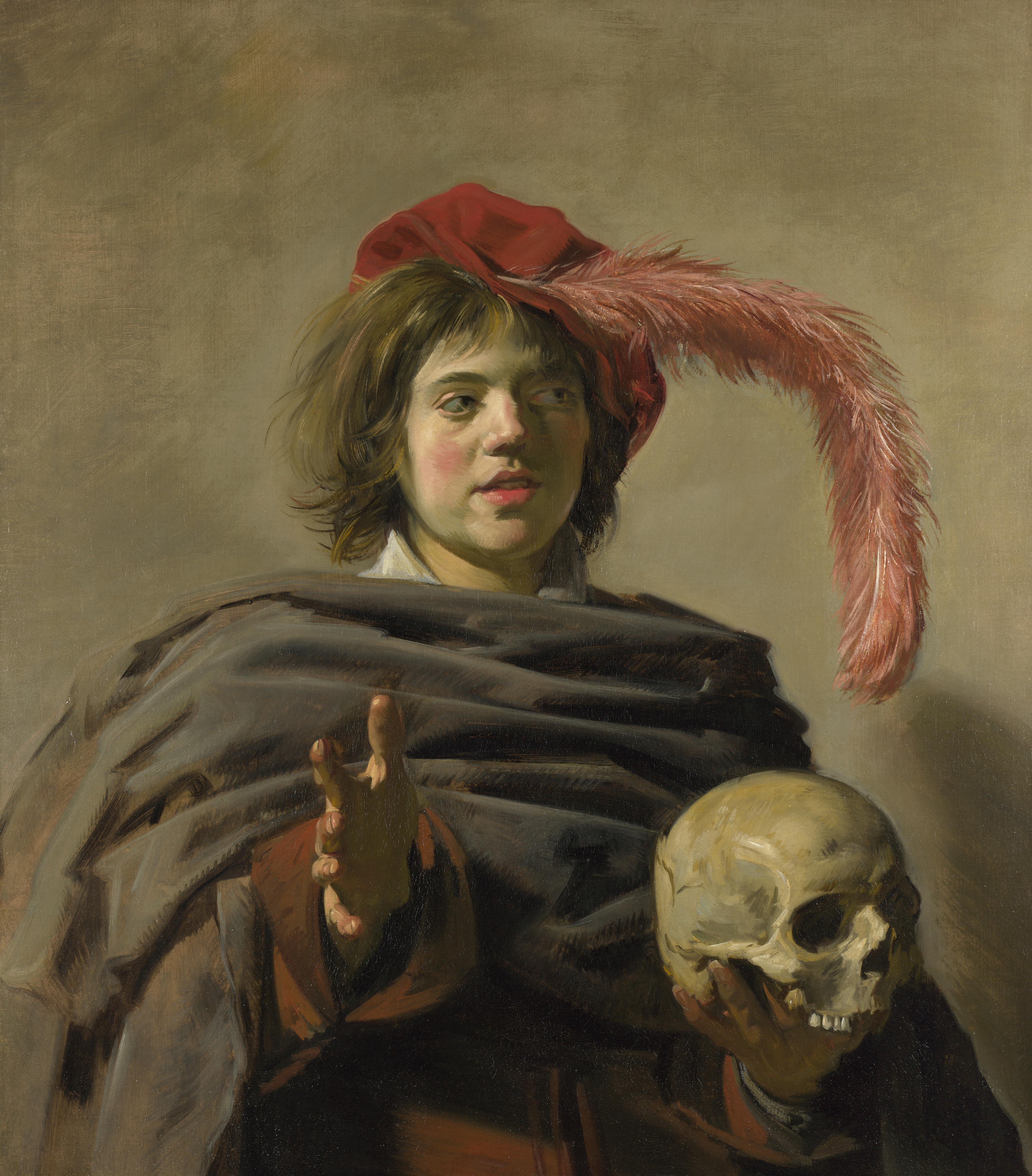
Frans Hals, Young Man holding a Skull (Vanitas), public domain via Wikimedia Commons


National Nightmares

Being drawn into the dream of a madman.  Trump’s dream.  It seems like fiction, doesn’t it?  But, as they say, reality is stranger than.  I didn’t come up with this observation of being drawn into a madman’s dream myself.  It comes from Harlan Ellison via Stephen King.  When asked why he writes what is commonly called horror, Ellison pointed to the things happening at the time: Jonestown, Ayatollah Khomeini, etc., and replied something like the world was being drawn into Khomeini’s dream.  So the United States is being drawn in to the mad dream of Donald Trump.  I believe it’s because many people lack imagination.  There’s a reason I write “horror” stories in my spare time.  I prefer not to live in a madman’s dream.  Even if my stories are read by the few who frequent the journals in which they’re published, they are an attempt at viewing the world through unclouded eyes.

Entirely too much of our collective lives have been eaten up by Trump’s antics.  I was looking for an image on this blog going back some eight years and found, you guessed it, posts about Trump.  And here we are on the precipice again, all to stoke one man’s vanity.  And people ask why some of us write or watch horror?  We tend to treat insanity as if it’s rare.  Any self-aware, reflective person, when alone and honest, will admit that some things we do simply aren’t rational.  We’re not, as Silicon Valley moguls like to think of themselves, Mr. Spock.  (And even he underwent pon farr.)  The evidence of Trump’s manipulations is all over the place, but that doesn’t stop yard signs from popping up like toadstools.

We are far from a “sane” species.  We may wonder why deer step out onto the road and stare blankly into headlights, but we do the exact same thing.  Horror writers tend to be pretty clear thinkers.  I suspect it’s because many of them spend time trying to get into the heads of their irrational characters.  They can recognize the madmen and the dangerous among us.  King’s Twitter posts make no bones about his seeing through Trump.  The latter’s public speeches clearly indicate that his mental capacity isn’t sufficient to be given nuclear codes, let alone the reins of the most powerful country on the planet.  He dreams of his own greatness.  His desires are entirely for his own glorification.  Anyone can see that.  But we are creatures who dream.  And it’s difficult to wake up from a dream, even if it’s a nightmare.


The Unpersistence of Memory

Perhaps this happens to you.  It’s a creepy feeling, regardless.  You’ve heard a lot about a movie and you decide to see it.  Since you’re not rich you decide to wait until it comes to a streaming service to which you already subscribe.  So far I’m sure you’re with me.  One evening, when the timing seems right, you sit down to see it.  You don’t know how it will end, but some scenes look familiar to you.  You nevertheless enjoy it—the jokes are fresh to you and you laugh.  You figure that you must’ve seen the familiar parts in the trailer.  You think the movie is quite good, and your spouse agrees.  Haunted by that uncanny feeling that parts were memories instead of just a trailer, you do some investigating only to learn that you did indeed see it before.  And it was only five years ago.

My memory is still reasonably good, I think.  I can recollect various movies from different ages of my life—including five years ago—but others failed to stick.  I hate to admit it, but this has happened to me more than once.  I’ve watched a movie, written a blog post on it, posted it, only to discover that I’d seen the film before and had even written about it.  Perhaps there’s too much stimulus entering this limited brain I have.  I can’t help but think it has to do with my work schedule; I started having such things happen when I was chained into a 9-2-5 day.  Before that, life seemed much more easily handleable.  As proof I would put forward the fact that my memory for movies, books, etc., before being dismissed from my calling is much better than it is for the years since.  Career malfunctions can have lasting effects.  A therapist once told me I was suffering PTSD.

Of course, I might just be getting older.  Still, it seems that memory works better in some circumstances than in others.  Movies have been an important part of my life, especially since being forced out of academia.  It’s troubling to find myself forgetting them.  As much as I enjoy cinema, I have limited time for watching films, and if one I rewatch wasn’t very good the first time, I’ve just used up a valuable Sunday afternoon when I could be researching my next book.  That’s the human dilemma, I suppose.  I Just can’t get over the idea that it has to do with work.  If it weren’t for that, the next book would be done already.  I’m sure this happens to everyone.  At least those with 9-2-5 jobs, if I remember correctly.

Photo by Denise Jans on Unsplash


Ever Hopeful

Plants are some of the most hopeful entities on the Earth.  As much as I’ve had trouble with houseplants, outside they seem to do fine.  Great, in fact.  Long-time readers will know that I struggle with lawn care.  It really didn’t enter my calculus of house buying—I was rather focused on the actual house, strangely.  We ended up with more yard than we required.  Thus, plants.  I’m not a fan of paving over greenery, but there’s a small strip of land between the sidewalk and the street—technically a “verge”—that’s difficult to mow.  Weed-eating it is also tricky because neighbors park their cars there practically 24/7 and some people don’t want a weed-eater that close to their showroom finish.  A couple years back I hauled some paving stones from our backyard out to the verge.  It decreased the grass by maybe 50 percent, but it still has to be whacked regularly.

I’ve been noticing over the summer into the fall that grass with a strong will to survive had begun growing roots over the top of the paving stones, intent on breaking them down.  That’s what plants do.  They work slowly, steadily, to achieve more room to grow.  This is always amazing to me.  Life is persistent.  Many animals see a stone as an obstacle—something to be stepped on or over.  Some plants see them as opportunities.  Our human obsession with allowing only certain kinds of plants close to our habitations, and those trimmed just so, seems an exercise in futility.  Of course, yard work isn’t my favorite activity, thus the paving stones in the first place.

After our species is done making a mess of the planet, plants will quietly take over again.  Especially anyplace near where someone once planted ivy.  We’ve got some very aggressive ivy in the back yard that I pull down year after year, and no matter how often I do it comes back with renewed vigor the next year.  And crabgrass.  That stuff won’t take no for an answer.  I can tell some former owners were trying to do some landscaping with, well, landscaping fabric and decorative gravel.  If you turn your back for a few weeks, the crabgrass gets in and its roots begin breaking the gravel down into soil.  I wonder how there’s any exposed rock in the world, or maybe my yard is a paranormal plant paradise.  I can imagine that without people here to “maintain” things, paradise (which is a garden) would return.  Perhaps there’s a parable of hope among the plants.


Slow and Spry

Businesses seem to want to move at light speed.  At least some do.  When I see that happening I think, “their strategy must be to make a fortune quickly so that when the unthought-through idea collapses they can move on to the next thing.  When I hear words like “agile” being tossed around I translate “reckless.”  Just over a century ago my ancestors were scraping out a living farming, and they got along okay.  Our acquisitiveness has outstripped our sense.  I read quite a bit about being satisfied with little.  Of course, I work in the “business world” where such ideas are anathema.  Even universities have decided to jump on the Titanic.  What could possibly go wrong?  My experience at Nashotah House was decidedly mixed.  One thing I always appreciated was the contemplative (i.e. slow) pace of things.  I may not be orthodox but I’m hardly reckless.

Perhaps buying the farm isn’t such a bad idea.  I’m afraid that I don’t have enough practical knowledge to raise my own food, even though I’m a vegan.  You see, for the things you can’t raise in the soil you need to sell surplus so that you can buy things.  Or rent movies.  And that takes business sense.  And businesses want to move at the speed of light.  I may be neurodiverse, but it takes me a while to process things.  I watch older movies.  I read slowly.  I think things through.  I do believe that businesses that last a long time have survived by moving a bit more slowly.  Like a tree.  By thinking things through.  The Vatican has been in business for a couple thousand years and they seem to be doing okay.  I could be Catholic were it not for doctrine.

I’m not the smartest guy around—not by a long shot—but I am a strategic thinker.  Strategic thought can be deep.  And counterintuitive.  And it doesn’t always lead to the desired results.  (I don’t even have a small college post, so that much is obvious.)  I’m content to let people pass me on the highway.  I don’t have to be first to market, as the saying goes.  I’m more in it for the long haul.  It hasn’t landed me wealth or fame, but I can spend a little time writing every day.  I get to watch movies that make me feel good.  I even get a book or two out the door.  Being agile is fine, but only, imho, if you think it through.


Unique?

Is it embarrassing, or simply confirmation?  It used to be considered embarrassing to show up at an event dressed identically to someone else, if it wasn’t intentional.  It was considered, in some way, a slight on your personal expression.  This happened to me while still commuting when another employee and I had worn a very similar shirt for an event at work.  (He was more embarrassed than I was, for the record.)  What often feels more embarrassing to me is when I notice something I’ve never seen anybody else write about, get it all written up, and then discover that someone posted something similar on the internet someplace.  It has happened more than once—indeed, many times.  I feel embarrassed for not having known about the observation, no matter in how an obscure virtual a corner it was kept.

Perhaps these are just growing pains for the terminally curious.  Some of us constantly observe things we find curious, and start to connect the dots.  Someone else might’ve gone over this conundrum before, the way you pick up a waiting room magazine only to find the crossword puzzle already done.  What gives me hope in such circumstances are twofold facts: that someone else has spotted this confirms my observations, and that my interpretation is different from theirs.  My great fear, however, is that someone might think I’ve plagiarized.  This is a mortal sin for academics.  I would simply note that many of us read lots of stuff without noting where, and that I would remember if I intentionally lifted an idea from something somebody else pointed out.

I’m sure there are many examples of this on this blog.  Apart from posts that reflect an experience unique to yours truly, that is.  It’s getting tricky to say anything that hasn’t been said.  A recent newsworthy event occurred that called for comment from someone with my background.  By the time I’d scrawled a first sentence about it, others had written, and posted, full articles conveying what I would’ve had to say about the thing.  Embarrassing.  It has also made publishing much harder.  Even small, independent publishers in the non-academic sector only consider books sent from agents.  And agents are nothing if not aloof.  Too many submissions from too many wannabes.  Is there anything unusual, remarkable, here at all?  I’d say it’s my perspective.  Others can string words together.  Others can even buy the same cheap shirt that I purchase.  But they don’t see it from my angle.  Of that I’m certain.  Ask anybody else who’s made a similar observation.  They’ll confirm it.


Finding Poe

A gift a friend gave me started me on an adventure.  The gift was a nice edition of Poe stories.  It’s divided up according to different collections, one being Tales of the Grotesque and Arabesque.  This was originally the title of a collection of 25 stories selected by Poe himself in 1840.  I realized that much of my exposure to Poe was through collections selected by others such as Tales of Mystery and Terror, never published by Poe in that form.  I was curious to see what Poe himself saw as belonging together.  I write short stories and I’ve sent collections off several times, but with no success at getting them published.  I know, however, what it feels like to compile my own work and the impact that I hope it might have (if it ever gets published).  Now finding a complete edition of  Tales of the Grotesque and Arabesque turned out to be more difficult than expected.

Amazon has copies, of course.  They are apparently all printed from a master PDF somewhere since they’re all missing one of the stories.  The second-to-last tale, “The Visionary,” is missing.  I searched many editions, using the “read sample” feature on Amazon.  They all default to the Kindle edition with the missing tale.  I even looked elsewhere (gasp!) and found that an edition published in 1980 contained all the stories.  I put its ISBN in Amazon’s system and the “read sample” button pulled up the same faulty PDF.  Considerable searching led me to a website that actually listed the full contents of the 1980 edition I’d searched out, and I discovered that, contrary to Amazon, the missing piece was there.  I tried to use ratiocination to figure it out.

I suspect that someone, back when ebooks became easy to make, hurried put together a copy of Tales of the Grotesque and Arabesque.  They missed a piece, never stopping to count because Poe’s preface says “25” tales are included, but there were only 24.  Other hawkers (anyone may print and sell material in the public domain, and even AI can do it) simply made copies of the original faulty file and sold their own editions.  Amazon, assuming that the same title by the same author will have the same contents, and wishing to drive everyone to ebooks (specifically Kindle), offers its own version of what it thinks is the full content of the book.  This is more than buyer beware.  This is a snapshot of what our future looks like when AI takes over.  I ordered a used print copy of the original edition with the missing story.  At least when the AI apocalypse takes place I’ll have something to read.


Sleeping and Watching

The older I get, the more flexible my idea of reality becomes.  I’m starting to notice things that may have been happening for decades, but the reflection of age throws into sharper focus.  I’ve mentioned before that a good night’s sleep casts the day in a different light.  Such nights are sometimes hard to come by and unrelenting capitalism doesn’t offer enough “sick days” to sit out the bad ones.  But it’s not only that.  I watch a lot of movies.  Since I’ve been writing books on movies that only makes sense.  Still, I’ve begun to notice how movies stay with you after the credits roll.  Sometimes they remain the whole day until a night’s reboot comes.  This can also happen with reading, but on a slower, and most likely more profound level.

In high school, reading existentialist plays (sometimes in German), I learned to remind myself that watching a play (or movie) is observing an illusion.  Now I’m beginning to question whether that’s entirely true or not.  What enters our minds becomes part of us.  Think of the vast majority of human lives throughout history.  People living out their lives by farming and/or hunting.  Spending every day on the many tasks it takes to stay alive.  No reading.  No watching.  Their daily lives constructed their reality.  How many of us could grow our own food or build adequate shelter?  And God help us if we need a doctor.  Our lives require many other people to ensure we keep on going.  Most of them people we don’t know.  People whose realities are different than mine.

My career trajectory misfired fairly early on, and my reality has been years of trying to make sense of what happened.  From the first days of hurt and confusion I began to cope by watching movies.  For ninety minutes, at least, I escaped reality.  Or did I?  Was I enhancing reality?  What of my existentialist outlook?  Perhaps I was doing what existentialists do best—creating my own meaning.  So if I get out of the wrong side of bed, and the day feels like it really isn’t welcoming me this time around, I await the reboot.  Or when I have a few moments to sit down and watch a movie, I get up from my chair with an alternative reality surrounding me.  Perhaps I have learned something by sleeping and watching.  Maybe I have learned that reality is more flexible than I’ve been inclined to believe.  Maybe somehow this all does make sense.  Or not.


Expectations

Our minds are our most powerful tools.  Some of us wonder what reality is, and David Robson has written a very important book that the title explains: The Expectation Effect: How Your Mindset Can Change Your World.  Now, before your woo-woo meter goes off, Robson is a science writer and everything in his book is backed by evidence.  The basic idea is this: what we expect to happen often becomes our reality due to the “expectation effect.”  The brain, as Robson describes it, is a prediction machine.  And what it expects often takes place.  In other words, belief matters.  Probably the most famous example of this is the placebo.  We all know that patients treated with placebos often recover just as well as patients given the active ingredient.  That pill the doctor gives will heal them, and so it does.  The brain expects it, and it happens.  Belief.

This book also explores the nocebo response.  This is where you expect something bad, and it happens.  The most extreme examples of this, well documented, are when people are convinced an imaginary threat will kill them and they die of it.  In fact, the book opens with consideration of such an occurrence where a cultural expectation led to otherwise unexplainable deaths among healthy Hmong populations fearing a night demon.  Hysteria grew and so did the deaths.  Robson also explores how hysteria leads to expectations that our brains carry out.  He shows how training our expectations can help good self-fulfilling prophecies take place.  Athletes, for example, can seem to do the impossible.  Why?  Partially training, yes.  But also because of their mindsets.  Their expectations.  Their beliefs.

The implications of this are very broad.  Everything from our health, to how we handle stress, to how food benefits our bodies, to how we age as we expect to.  Robson is quick to point out that this isn’t a book to solve all our problems, but it is a book that demonstrates our minds do make things real.  Or at least they can.  It is filled with fascinating examples, backed with science, showing that even how a doctor or nurse introduces a shot “you’ll feel a bit of a sting” versus “you won’t feel a thing” can make a difference to how our body perceives it.  And our brains can make our worries, or our hopeful expectations, real.  Personally, I believe that there may be even more to this than Robson explores.  But then again, I enjoy a bit of mystery.  I believe in belief.  Regardless, this is a life-changing book and I hope, for your own sake, that you’ll read it.


A Touch of Poe

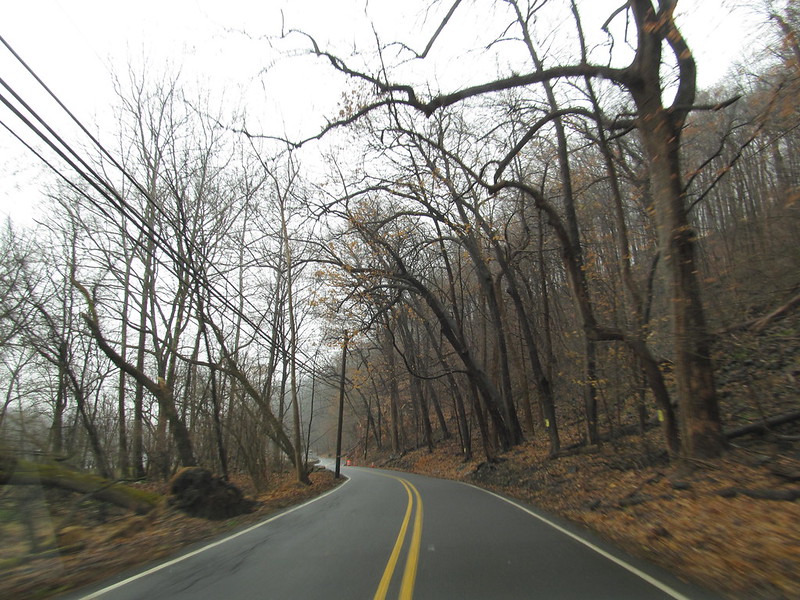
One of the more somber aspects of our staycation in the Poconos occurred on our search for Tanners Falls.  It brought to mind a story by Edgar Allan Poe.  Here’s why:  Tanners Falls is not well signposted.  This is quite a rural area.  We were following our GPS when the signal died right after she said “arrived.”  The problem was there were no signs and although we tried a couple of tick-trails that ended up at a stream, nothing like a cataract was anywhere near.  Finally we realized that a tiny sign reading “Tanners Falls” was posted on a “Road Closed” barricade.  Since to road was actually open to the Falls, my wife brought the car but I wanted the exercise and went by foot. Walking along the way I found a roadside shrine and noted that in addition to the name Laura Lynne Ronning was a small plaque stating “Murdered July 27, 1991.”  Now, there was no signal out here, and I was alone on the road.  And I had no desire to bring my family down so I kept it to myself.

At the hotel (with wifi) I learned that Laura Ronning’s murder was never solved.  She was a counselor at a nearby camp walking to the waterfall on her day off when she was raped and shot and thrown into the woods.  The only suspect was a mentally unstable man (now since deceased) and the evidence was all circumstantial.  He was, unlike some known criminals of high profile, found not guilty.  The Ronning family moved out of the state, not wanting to be where someone could literally get away with murdering an innocent young woman.  This is where Poe came in.  His “The Mystery of Marie Rogêt” is the first detective fiction based on a true case—Poe was often, figuratively, first on the scene.  The murder of Mary Cecilia Rogers, whose body was found in the Hudson, was never solved.  Poe tried his hand at the by then famous unsolved case.

The murder of a young woman was a tragedy that Poe felt deeply, I suspect.  I took some academic flak for including Poe’s observation that the death of a beautiful woman was the most poetic theme in Nightmares with the Bible.  I realize this is a masculinist thing to write, but the fact is that some men feel very protective of women.  I know there’s a psychological name for this, but it isn’t chauvinism.  It is a sense of sadness, for what Goethe tried to express by writing “Girls we love for what they are; young men for what they promise to be.”  On staycations I try to look for literary angles, even when they are, from time to time, sad.


Spirit Storm

Some time ago, we experienced quite a windstorm.  More than wind, there was a dump of rain, thunder, hail, and all that.  My wife and I were attending a Tibetan singing bowls sound-bath with some others in the cancer support community.  I’ve described this practice before, here.  In any case, the meditation is held in a large room with a tin roof—the kind of place you don’t want to be during a tornado.  We’d just got inside when the gust front hit and knocked out the power.  The instructor still went through the meditation, but the storm sounds blended with those of the singing bowls.  Afterwards my wife asked about Job.  Specifically, God speaking from the whirlwind.  I told her that was God on a bad day, but I understood what she was getting at—there’s a spirituality to the weather.  (I was going to suggest Elijah instead, but “but the Lord was not in the wind.”  Alas.

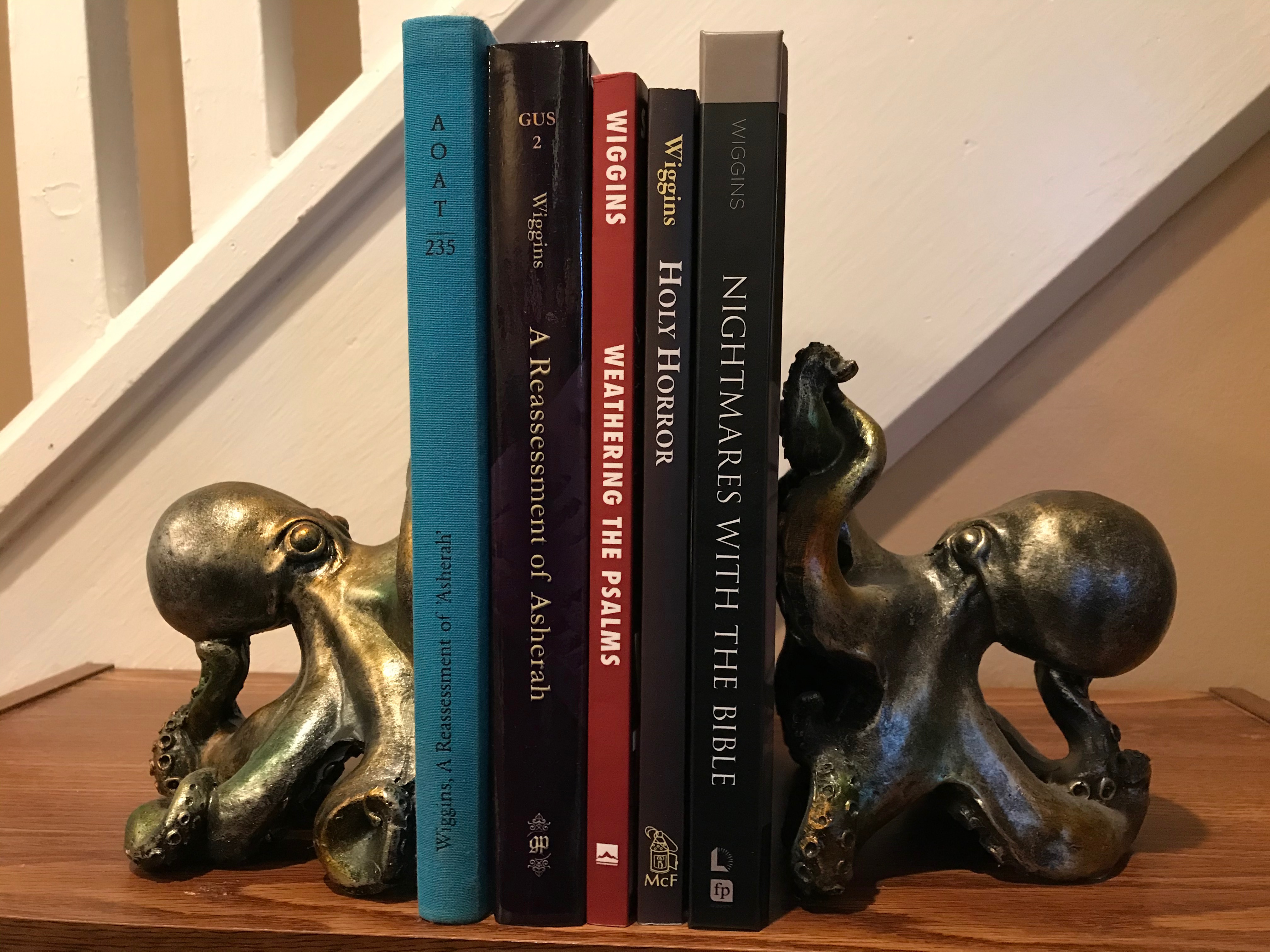
I thought of Weathering the Psalms.  My contribution to biblical studies, had I been allowed to remain in academia, would’ve been further explorations of weather terminology in the Bible.  But the Lord was not in the wind.  I wrote that book because I noticed the juxtaposition of severe weather with daily chapel at Nashotah House.  We were required to attend, no matter what the weather.  (Such is life on a fully residential campus.)  We were reciting the Psalms one day when a storm blew the power out.  It may have happened more than once, since we’re getting on past two decades hence my memory’s a touch imprecise on the point.  In any case, the spirituality of the power of the storm fascinated me.

It still does.  The next morning, out for my jog, I marveled at the number of branches down.  Thousands in the Lehigh Valley were without power.  This is probably why the ancients considered the storm god chief of the rest.  The violence of nature is something that suggests divinity.  Other primates have been observed screeching back at the sky during thunderstorms.  It’s deep in our DNA.  That doesn’t make it any less spiritual.  There’s a lot of weather in the Bible.  I only explored a tiny piece of it by trying to tackle the Psalms.  The Good Book, however, doesn’t say much about the spirituality of weather.  It’s there nevertheless.  Anything that can snap a tree a foot in diameter like a toothpick has a spiritual message for us.  I mused on the way home—we had to take a detour because of downed trees—that had the storm claimed us as victims, dying while meditating is probably not the worst way to go.  Now I wonder, what might God’s nice words from the whirlwind be?


Powerful Belief

Even someone who’s spent a lifetime studying religion can’t know every single sect.  People are far too creative in that regard, and some belief groups are fairly small.  I had never heard of Unarius, for example, before reading this book.  If I had, it simply washed over me, getting lost in the noise.  Part of the trouble with defining Unarius is that it calls itself a science.  Words can be slippery, and Christian Scientists also use that designation in a similar way.  The word “science,” etymologically speaking, denotes “knowledge.”  In our materialist culture we often suppose that means the physical sciences, grudgingly allowing it to be borrowed by the “social sciences.”  There is a science of religion, but this leads to its own set of discussion points.  Let’s look at Diana Tumminia’s title: When Prophecy Never Fails: Myth and Reality in a Flying Saucer Group.  That give you an idea. 

The “prophecy” part concerns a “failed” prediction, or two, of when the spaceships would land.  Being a sociologist, Tumminia’s real interest is what happens then.  And here’s where things get interesting.  Failed predictions generally don’t lead to true believers giving up their convictions.  History has played and replayed this for us—it’s happening around us this very second—and yet “rationality” supposes that when the ships don’t land, people simply move on.  The Millerites outlived “the Great Disappointment,” after all, when the world didn’t end as predicted.  Their heirs include a sizable Christian denomination.  All this talk of AI has muddled our thinking about what it means to be human.  We are emotional.  More than that, we are believing creatures.  Our society is living proof.

Perhaps the most important, and ill-studied facet of being human, is belief.  Belief (no matter what in) is a religious phenomenon.  This study of a fairly small group shows that convinced people cannot be dissuaded, no matter how many facts are presented to them.  One need not look far to find the same phenomenon surrounding Trump.  (I do not condone violence, but history can inform us if we allow it.)  Make no mistake—he is the center of a new religion.  Unarians have absolute belief that their system is right.  Mistaken predictions—even very public ones—will not convince true believers otherwise.  It seems to me that our society, our democracy, cannot survive without intensive study of belief and how it affects the way otherwise completely rational people think.  My study is full of books exploring various aspects of belief, but we are still no closer to any kind of definitive answer.  And voters, at least a great many of them, follow their beliefs.


Doing Without

I’m a creature of habit.  Although I’m no internet junkie (I still read books made of paper), I’ve come to rely on it for how I start my day.  I get up early and do my writing and reading before work.  I generally check my email first thing, and that’s where something went wrong.  No internet.  We’ve been going through one of those popular heat waves, and a band of thunderstorms (tried to check on their progress so I could see if it’s okay to open the windows, but wait—I need the internet to do that) had rolled through three hours ago, at about midnight.  Maybe they’d knocked out power?  The phone was out too so I had to call our provider on my cell.  The robovoice cheerily told me there was a service outage and that for updates I could check their website.  Hmmm.

I can read and write without the internet.  I’m on Facebook for, literally, less than two minutes a day.  I stop long enough to post my blog entry and check my notices.  I hit what used to be Twitter a few times a day, but since people tend to communicate (if they do) via email, that’s how the day begins.  This morning I had no internet and I wondered how tech giants would live without it.  I’m no fan of AI.  I use technology and I believe it has many good points, but mistaking it for human—or thinking that human brains are biological computers—flies in the face of all the evidence.  Our brains evolved to help our biological bodies survive.  And more.  The older I get the more I’m certain that there’s a soul tucked in there somewhere too.  Call it a mind, a psyche, a spirit, a personality, or consciousness itself, it’s there.  And it’s not a computer.

Our brains rely on emotion as well as rationality.  How we feel affects our reality.  Our perspective can change a bad situation into a good one.  So I’m sitting here in my study, sweating since, well, heat wave.  It was storming just a few hours ago and I can’t check the radar to see if the system has cleared out or not.  What to do?  Open the windows.  I’ll feel better at any rate.  And in case the coffee hasn’t kicked in yet, “open the windows” is a metaphor as well as a literal act on my part.  And I don’t think AI gets metaphors.  At least not without being told directly.  And they call it “intelligence.”

Photo by Chris Barbalis on Unsplash