Stonefaced

Railsea Imagine, if you will, life on the open sea. Back in the whaling days. Days before enlightenment really took hold. Transpose that thought onto railroads. In a day of huge moles and other underground creatures. Days when no one can imagine where the rails end. That might give you the slightest glimpse of China Miéville’s Railsea. I haven’t read too much of Miéville’s fiction, but I have read enough to know to expect a reality distorting romp through very interesting places. In this take on Herman Melville’s Moby Dick, Miéville takes some noteworthy risks in providing his characters with a native religion. Fiction authors sometimes find religion a constraining topic. Consider Salman Rushdie. More often the restraint appears to be a lack of imagination on the writer’s part—although we can’t define religion very well, we all know what it is and what it’s supposed to look like. Miéville, although in backstory, provides a new religious world where the gods are called Stonefaces and everybody believes in angels, and the explanation of where the railways came from is “theology.” Even our erstwhile Captain Ahab is chasing after her “philosophy” in the form of a giant mole that seems to have taken her arm.

With a sensitivity I’ve rarely found (the fault could well be entirely mine), Miéville utilizes religion, particularly Christianity, to construct an alternate universe. The gospel therefore appears as godsquabble, and to suggest there is anything beyond the sea of rails is literally heresy. Our protagonist Shamus ap Soorap on his voyage of discovery ends up riding to heaven on the rails only to find that there is yet even more beyond. Although religion itself is not central to the story its adjuncts are, creating an entire mythos of life on the railroad. It this world it is clear that wood and trees are related, but no one quite knows how; some suppose an evil god planted false evidence to deceive them. There’s even a healthy dose of the Odyssey thrown in, with the Medes having to pass through a mountain dwelling monster, the siller, and the Kribbis Hole.

But aren’t we really on the ark once more? For surely the bedeviled Pequod was a shadow of the same. In Miéville’s fantasy world, the open ground unpopulated by islands is dangerous. All kinds of innocuous creatures burrow out and will eat the traveler who is not safely ensconced on a train. As if to underscore the Noahic connection, Sham ends up on an actual boat on an actual endless sea. I’m pretty sure Homer never read Genesis, but the parallels between Greek mythology and the Hebrew Bible were long ago recognized by Cyrus Gordon and his colleagues. Miéville continues the tradition. Stranded on an island, Sham tries walking on the rails (read walking on the water and you’ll get the picture) until his faith fades. There are many who declare that religion has outlived its usefulness, but if an author can bring Melville, Homer, and the Bible into an intensely creative story, I think I’ll have to beg to differ.


Under the Influence

A news story over the weekend—when oddball stories of religion are welcomed by the media—revealed that a judge in Muskogee County, Oklahoma sentenced a youth to a decade of church for a serious DUI crime. An underage drinker, the defendant committed the unforgivable sin of killing another youth while driving under the influence. It is a sad and tragic case. Law makers in Oklahoma are challenging the church decision, according to the video blurb on Newsy, but there is a much deeper flaw in the logic of Judge Mike Norman here. Had the lack of compassion and common sense so blatantly on display during the recent presidential campaign come from other than committed “Christians” it would have been considered downright shocking. We tend to excuse misanthropy when it comes wrapped in doctrinal packaging, a Twinkie in a Cliff Bar wrapper. The judge himself maybe needs a little churching.

There was a time when the moral values of a good, Protestant upbringing were unquestioned. The problem is, we live in a much more diverse world now. What is particularly telling has been the evangelical response to this growing siblinghood of humankind. It is seen as a great evil, perhaps the reverse of Babel itself. We are bringing people of different religions together in what is comprehended as an unholy mix. Thing is, many of these people participate in religions far older than Christianity that have no Babel story to put themselves in proper context. How can they know they’re inferior unless we can get them to read our Bible, attend our churches, learn our religion?

Timothy McVeigh went to church during his youth. Reverend Jim Jones started his own church. Would time in Westboro Baptist Church in nearby Kansas count? There is a reason that church and state should be kept separate. As an institution the church is nearly as diverse as the human race that invented it. Religion has seldom been the solution to crime. Law enforcement officials used to wear a pentagram for a badge, not a cross. But that was back in the days when Oklahoma was the wild west and white-steepled churches didn’t exist to inveigh against the evils of a satanic symbol worn by the representatives of the territory. And since Oklahoma doesn’t believe in evolution, we’ve got to wonder if some things will ever change.

Would this church be all right?


Bedrock

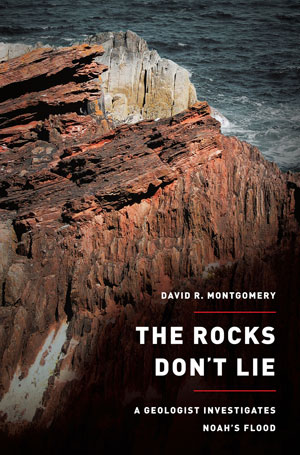
Sadly it is a rare occasion to read a truly stupendous book. There are lots of wonderful books in the libraries of the world, great and small. When I read a tome that brings two of my favorite subjects together in a genteel cotillion, subjects which are generally portrayed as aiming heavy weapons at each other from deeply sunk trenches, it deserves the epithet of stupendous. David R. Montgomery’s The Rocks Don’t Lie: A Geologist Investigates Noah’s Flood is one of those books. By page 8 I was thinking that Montgomery was someone with whom I’d feel comfortable raising a glass and sharing a story. He is a rare, serious scientist who considers that maybe religious stories have something to tell us about being human. The book, as the subtitle indicates, is about the Noah myth. Geology is the science that has taken the brunt of (the relatively new religion of) Creationism’s umbrage. Still, like a rational scientist, Montgomery doesn’t get mad or fly off into hyperbolic denunciations. He takes his rock hammer and taps until the flood myth crumbles.

Unlike many sober writers on the subject, Montgomery considers the possibility that folklore may in fact give clues to science. Those cultures that have flood stories, he patiently explains, probably has reasons to tell such myths. In this one book we are taken on guided tours of the Grand Canyon, bits of the Himalayas, “ancient” Mesopotamia, the scablands of eastern Washington, and even the Creation Museum in Petersburg, Kentucky. At each station, we learn a bit about floods and rocks and fantasies. Although not a biblical scholar, Montgomery obviously did his homework and gives a fresh view of how Christians went from non-literalists in the first centuries of the church, through the scientific revolution, only to become literalists in the geologically very recent twentieth century. Creationism has nothing to do with real floods and quite a lot to do with personal insecurities.

It must be easy for scientists to trumpet bravado throughout the infinite universe. The scientific method is our best testable explanation for the physical world. Montgomery resists that temptation, realizing that religion does count for something after all. Religion evolved for a reason. Maybe it isn’t scientific, but it helps people to make sense of their world. Instead of characterizing religion and science as combatants in a war, Montgomery likens the opposition to a dance where the partners sometimes step on each other’s toes. I read his book dreaming my geological dreams, lost in deep time, and thinking that the world is maybe even more wondrous than miracles could ever convey. And we have occasional floods, and floods sometimes give us reasons for going on. There’s perhaps something religious about that.


Dracula’s Dinosaur

It must be October when a dinosaur with a parrot’s head, porcupine quills, and fangs is announced. Yesterday’s issue of Time online featured a drawing of the creature and a nifty animation of reconstructing the aptly named Heterodontosaurus. Well, that’s actually the genus name. The species goes by the delightful name Pegomastax africanus. Last I checked, however, space on the ark was filling up. Dinosaurs create a unique embarrassment to Creationists. One suspects that if they didn’t have kids they’d dismiss dinosaurs all together, but the troublesome fossils just won’t go away. What’s more, although they’ve been extinct for 65 million years, they keep producing new species for us to recover, describe, and name. When I was growing up (and I have it on good authority that the argument is still used) Creationists told us that no transitional forms had ever been found. Therefore evolution simply could not have occurred. This was generally followed up by a reference to Genesis. Excuse me, a fanged porcupine-parrot? If that doesn’t count as a transition, what does?

Religion loses nothing by admitting to an ancient earth. Nothing but literalness. One of the joys of reading is the exploration of metaphors, similes, and hyperboles—writing delights us with its constant surprises. Even those who claim to read a text literally are engaging in a form of interpretation even earlier than the first wedge mark pushed into clay. Written texts give us something to ponder, to think about, and occasionally, to obey. Just when it looks like the cover has slammed shut on the black book we find a new set of dinosaur tracks running across our clay tablet. The literal-minded might not see these as being a message from God, but surely the endless variety of creatures that have walked this planet more than make up for it.

We used to have a pet parrot. His name was Archie, named after Archaeopteryx, the feathered dinosaur. Although Archie was cut off by disease in the prime of life, he was a curious bird and when I reached into his cage to try to get him on my finger he would dole out what he meant as a painful bite. I always took it as a sign of affection. Had our little friend had the fangs of Pegomastax africanus, I would’ve thought long and hard before risking the finger-perching trick. I like to think it would have reaffirmed my fascination with the amazing adaptability of nature. Evolution, unlike God, has no purpose. An endless tinkerer, it gives us thousands of differing dinosaurs that had been gone many, many millennia before Moses ever even thought of Noah. Pegomastax is safely extinct now, and the only ones who have to worry about this perfect Halloween dinosaur are those who think that one particular view of one particular book is the only way to find truth.

We still miss you, Archie.


Bretz v. Noah

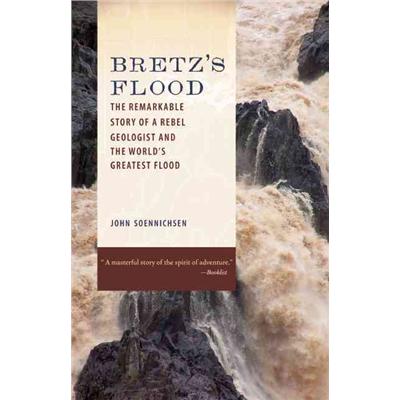
Until I met my wife I’d never been west of the Mississippi. Or even Ohio for that matter. Together we’ve traveled, in a fashion broken by years, from coast-to-coast and even overseas. Nothing in my life had prepared me for seeing the American West. No, I’ve not seen cowboys, but the landforms are so different from the weathered, ancient Appalachians among which I grew up. Eastern Washington is a fascinating landscape and with my occasional flirting with geology, I recently read John Soennichsen’s Bretz’s Flood: The Remarkable Story of a Rebel Geologist and the World’s Greatest Flood. Within the last couple of years I’d read about Glacial Lake Missoula, a juggernaut of an ice age lake that had flooded parts of Idaho and Washington thousands of years ago when its ice dam gave way. J Harlen Bretz was a turn-of-the-(previous)-century geologist who defied convention and insisted that the evidence of eastern Washington proved that a massive flood washed over the area, giving distinct shape to the region that empties into the Columbia River basin. For much of his career he was ridiculed by other geologists. The reason? The Bible.

Geology was the science that gave Darwin the idea for his evolutionary theory. The factor that had been missing from science, before geology, was time. The 6000-year-old earth just wasn’t old enough to account for the slow changes required for one species to morph into another. As scientists came to realize that billions of years were available, it became clear that change occurred even more slowly than the GOP is happy with. For geologists, anything that happened quickly was anathema. As Bretz’s Flood makes clear, a sudden flood sounded far too much like old Noah to be science. Catastrophism had been cleanly rejected by geologists because even if the evidence supported it, it looked like a return to mythology and superstition. Interestingly Bretz began his academic life among the Methodists of Albion College, and continued to quote the Bible to his last days. He was, however, an atheist.

The Bible has shaped our culture more thoroughly than Noah’s putative flood has shaped geology. I’ve read many geological studies over the years and any that are written for non-specialists never mention great floods without at least a nod to Noah. In fact, as Soennichsen points out, Bretz has ironically become a hero of Creationists who see the Missoula flood as Noah’s event. A large portion of Bretz’s career, however, was dogged by geologists duty-bound to deny a sudden flood just because the Bible tells us so. Sudden events are smeared with the residue of the divine.

J Harlen Bretz is hardly a household name, but his career is a microcosm of American culture. Glacial Lake Missoula did exist, as geologists now accept, and long before Noah was a twinkle in Moses’ eye. When the dam burst, the fable did fall, and down came the ark, Noah and all.


Assaulting Pepper

“I’m a Pepper, he’s a Pepper, she’s a Pepper, we’re a Pepper,” so goes a jingle that is still in my head decades after I last heard it. Early in my marriage I learned that Dr. Pepper was my wife’s favorite, and we sometimes purchased it by the case when we felt daring. I seldom drink soft drinks anymore, having converted to a more juice-oriented penchant with the increase of years and poundage. I always found it to be a pleasant flavor, however, and it was a frequent choice in those halcyon days when I could eat or drink without much regard for potential tonnage. My wife resurrected my interest in the cola with a link to Time’s NewsFeed announcing that some Creationists are boycotting the soda because of an ad that looks like evolution. The ad campaign shows the evolutionary progress chart we’ve all seen with the tipping back of a Dr. Pepper making the ape human. Creationists aren’t known for their sense of humor, but boycotting a drink because of implied heresy implies a fascinating study.

Boycotting companies that offend moral sensibilities is not an unreasonable response to ethical dilemmas. I haven’t shopped for some products for years because I don’t like what the company does. My choice, I’m sure, has little impact but it makes me feel better about myself. Sometimes the choice is religiously motivated—if I don’t want to support a particular group I won’t buy a product they offer. Secular companies, however, seldom offend theological sensitivities. I, for one, would seldom know the guilty party: the founder of the company? The current CEO? Someone in upper management? An advertising director? Do all employees have to agree with my religious outlook? Ahh, but then there is the political angle.

This is a presidential election year and the first one since 1980 without a Republican candidate who is a darling of the Religious Right. Not to suggest that Reagan or Bush the First were really as religiously orthodox as they were presented, but the perception of their friendliness to conservative Christian causes went unquestioned. With a “liberal” in the White House and the only viable alternative a mysterious Mormon, frustration must be building. On top of it all, Dr. Pepper is showing a funny image that might be interpreted as suggesting a simian forebear to those who drink the stuff! I think I understand the anxiety, and it might help if they just had a drink to calm down. After all, “wouldn’t you like to be a Pepper too?”

Dare to evolve


Digging Deeper

A propos of apes, I’m not sure whence derives the draw of Planet of the Apes on me. I watched the movie with fascination as a child—since the obviously satanic delusion of evolution was impossible this had to be pure fantasy (and perhaps just a little dangerous). The movies just kept on coming, Beneath the Planet of the Apes, Escape from the Planet of the Apes, and Battle for the Planet of the Apes, each with their new twist on the theme that we are the beasts. Recently I watched the second installment, Beneath the Planet of the Apes. It had been years since I’d seen it, although I remembered the terrible mutants and their possession of an atomic bomb. Although the geography is badly distorted, it is made amply clear that the church where the bomb is stored is St. Patrick’s Cathedral on (beneath?) Fifth Avenue. As Brent makes his way into the partially intact cathedral he finds a priest praying to a missile with the letters alpha and omega inscribed on one of its fins.

Since last seeing the movie I spent a lengthy stint among the Episcopalians. Naturally I became thoroughly acquainted with the liturgy and therefore could appreciate subtleties in the movie I had missed before (nothing is ultimately wasted, it seems). As the mutants prepare to set off the doomsday bomb that will obliterate the entire planet—both apes and humans—they recite many prayers from the mass, substituting the word “bomb” for “God” and “Holy Fallout” for “Holy Spirit.” Okay, so maybe “subtleties” was the wrong word. Of course, back in the early 1970’s this was a very real concern, the arms race was well underway. Despite the overacting and forced script, the movie did offer considerable social commentary. Ironic and iconic Charlton Heston condemns the unadulterated praise of such a lethal weapon (or was it just missile envy?), even as he falls, shot, onto the controls, accidentally destroying the earth.

The fascinating aspect of this social critique is that the players may have changed, but the drama remains the same. Those who protest evolution praise the build-up of native strength so that the true Christians might obliterate their enemies first and better than they will obliterate us. One gets the feeling that destruction is not so bad a fate as being proven wrong. Somewhere along the millennia religion slipped its mooring from being an ethical way of life to become an extreme way of believing. And yet people are still the same. And the Planet of the Apes movies continue to appear, ever evolving. When it comes down to the final scene, however, it is not the evolved apes who destroy us. No, it is the utterly self-righteous humans who decide that if they can’t have it all, nobody will have any of it. In the name of the bomb, and the holy fallout, amen.


Scotland’s Cryptic Evangelist

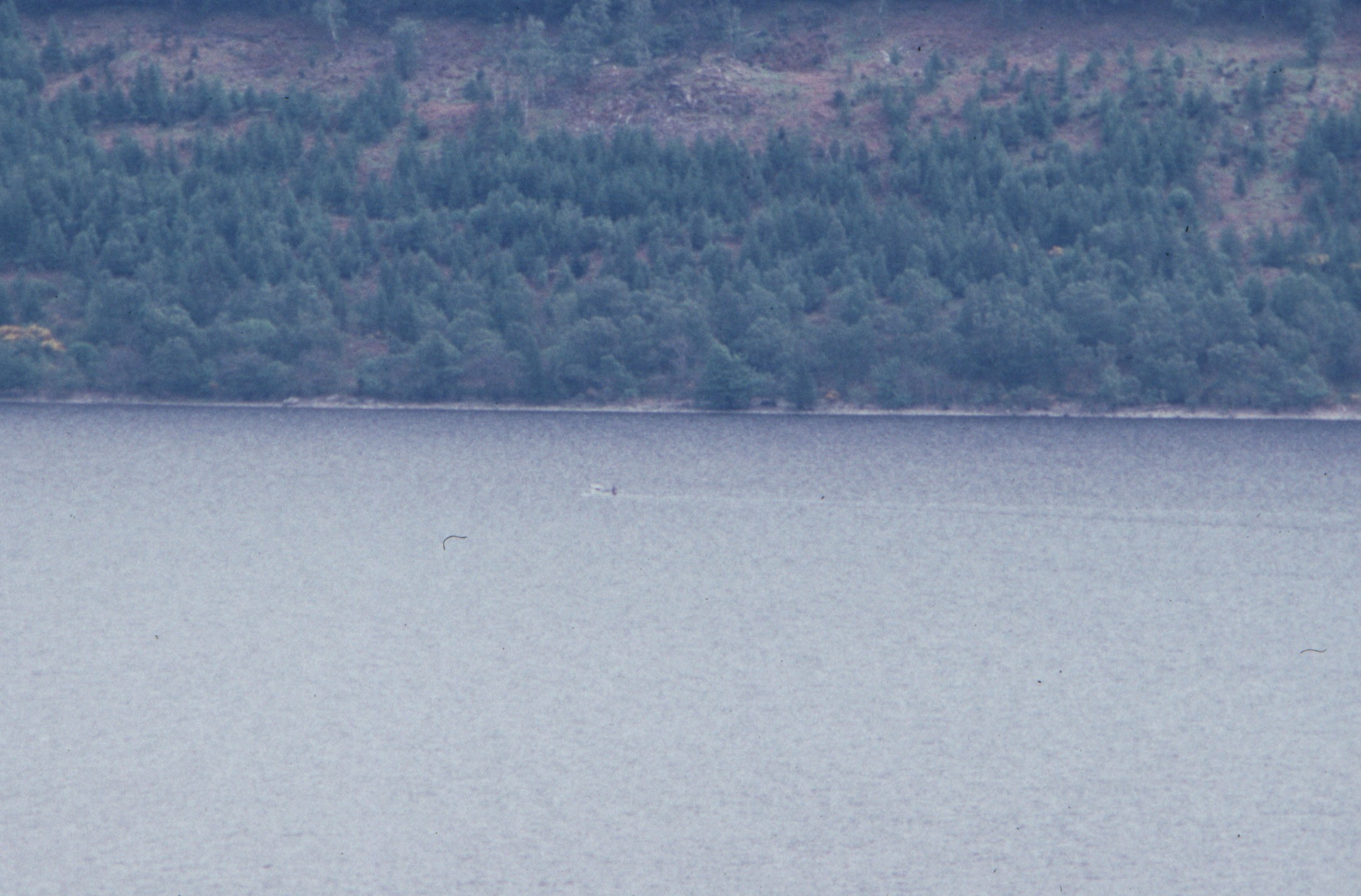
Many years ago it was now, on a Victoria Day bank holiday weekend, my wife and I were on a camping trip with friends in the Scottish highlands. Pitching our tents on the banks of Loch Ness, we joked about the potential danger—after all, Nessie had reputedly attached St. Columba, therefore even the pious had no refuge. Early the next morning, our party still intact, we drove to Urquhart Castle, arriving before it opened. Out on the loch we saw something moving through the water, leaving a wake. It was breaking the surface but was too small to be a boat and it was not a bird. It moved at constant speed until it was out of sight. This was in the days of actual film, and slide processing was “dear” as the Scots say, but I snapped off a photo anyway. The slide is too indistinct to make a diagnosis, but our friends, who had a better camera, came to the conclusion that it was a small boat. After looking at their enlargement, I still have my doubts. I’ve always sat on the fence for the Loch Ness monster. Certainly it seems improbable, but we have only a cursory knowledge of sea creatures and Loch Ness is deep and long and isolated. Is there a Loch Ness monster? Maybe yes and maybe no.

Of course, Nessie has been in the news, as my wife pointed out, backed by the considerable creativity of the creationist camp. Seizing a living dinosaur as the death knell of evolution, Fundamentalist schools in several states are using textbooks that argue Nessie’s existence proves that dinosaurs didn’t evolve and that they still walk (or at least swim) among us. An excellent corrective to this “either evolution or special creation” is Victor Stenger’s book God: The Failed Hypothesis, that I reported on a few weeks back. With apologies to the late Stephen Jay Gould, this tactic puts an entirely new spin on the concept of the hopeful monster theory.

Religion and monsters are thoroughly intermeshed. Often this intermingling comes as the result of revulsion against the unclean or impure aspects of life that monstrosity represents. Numerous analysts have shown that monsters tend to be unholy mixes of elements that religions prefer to keep widely separated—animals that would never have made it onto the ark, yet somehow have arisen since the deluge. Human fear at contamination has an excellent basis in evolution; those who never developed the sense to stay away from the sources of contamination grew sick and died off. Monsters, in this sense, serve as useful reminders for avoiding the “strange fire” that so displeases the Lord. Reading how good Christians are now reaching out the right hand of fellowship to their monstrous brethren, I wonder if a long-held belief is being imperiled. Those who would swim with monsters must be very cautious indeed, for above all things, monsters are notoriously unpredictable.


Sleeping with Darwin

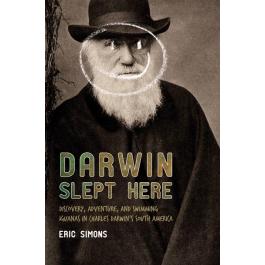
Although I’m hardly capitalism’s biggest fan, it would be difficult to overestimate how much the closing of Borders last year has affected my life. It is formidable to explain, as I sometimes must, to friends who don’t find books as irresistible as I do, how the simple pleasures of knowing a friendly bookstore was in town could make the world seem a little less cruel. There were towns that I instantly identified with the Borders located within their borders. Towns I rarely visit any more. All of this is by way of preface to explain the book I just finished. As the last desultory books lugubriously lined the shelves, my wife and I went through picking up titles we supposed we might have not found any other way. One of those titles was the little travelogue Darwin Slept Here by Eric Simons.

My admiration for Charles Darwin began when I realized that the Creationist venom I’d been bloated with from early days had been misguided. There was a fascination with this “evil” of evolution I’d been taught to shun. As I began to read more objective accounts, I realized Darwin possessed a keen, if tortured, mind that could not rest with half-truths and theological figure-fudging. In his account of following Darwin’s tracks in South America, Simons’ narrative not so much takes evolution any further, but presents a portrait of a world that has continued to evolve. In lives filled with uber-capitalism, where would a young person find five years to sail off on a voyage of discovery? Where would the health insurance come from? The 401K? The dental? As a species, humanity has been utterly domesticated.

Once in a while I dream of the Galapagos. I think of Easter Island and smile. So many places I will never be able to go. I spent three years specializing in Ugaritic studies and I will never make it to Syria—not on an editor’s salary. Not as an American. The world that we’ve constructed opens travel to the young who rarely have the resources to enjoy it. After seminary I spent six weeks in Israel. Young and healthy and heavily in debt, I at least glimpsed the sun setting over Jerusalem before getting hog-tied into the economy. Simons’ little book will not make him a millionaire, but as I read his reflections of rainforests, youth hostels, and rental cars on the Pampas, I thought where our world would be now had Darwin not been of a family of means. So much of our health care is based on understanding evolution. We would not be chained to our desks by threats of a slow, painful, and perfectly legal death without health insurance. We would be subject to biblical literalists who rejected the tenets of science— Come to think of it, perhaps we’d all better make tracks while we still can.


Holy Hypothesis

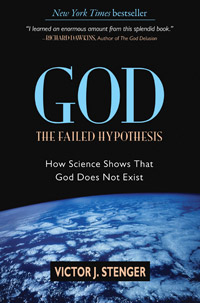
The angry atheists have been center stage in the God debates over the last few years. Many of them have become household names. Often giving sweeping generalizations about what God is, they tear apart this highly improbable image with aplomb. Not that I like to get in the way of somebody’s innocent fun, but their approach to the question only antagonizes the opposition without converting them. I just finished Victor J. Stenger’s God: The Failed Hypothesis. Like many who argue for atheism, Stenger is a highly regarded scientist. Unlike many, he offers a systematic, even-keeled account of his reasons for rejecting the divine. Indeed, the sub-title is straightforward—prosaic even—How Science Shows That God Does Not Exist. As befits a physicist, Stenger is careful to define his terms and is cordial enough to state that his book doesn’t cover the non-existence of deities per se, but the interventionist God of yore in particular.

Although I can’t agree on every single point Stenger makes, he does a compelling job of laying out logically how, if God is taken as an hypothesis (theory is a little too strong a category, implying substantial scientific concurrence), there should be some measurable result in the universe that God created. Choosing to differ from many theologians and scientists, Stenger argues that science can say something about God, given that God reputedly acts in a physical world. Outside these parameters something one may choose to call God may exist, but that kind of God does not answer prayers or oversee evolution.

Like many scientists, Stenger feels compelled to undertake this argumentation at least partially because of the weary insistence that evolution is “just a theory.” Creationists have tried to distort science for nearly a century now and have been successful really only in the United States. As Stenger shows, their method is often science, but wrong science. Just because an idea is scientific does not made it valid science. Stenger also points out that the premises of creationism, no matter how measured, are just plain wrong. Throughout, however, there is no belittling of those who believe in God. What is offered in this little volume is a rational, non-hysterical account of why a physicist who follows the law of the kingdom finds there is no God above it. And like a true scientist, Stenger leaves open the possibility that new evidence could overturn his verdict. Nevertheless, if his work is taken seriously, such a turn of events appears highly improbable.


Stormy Weather

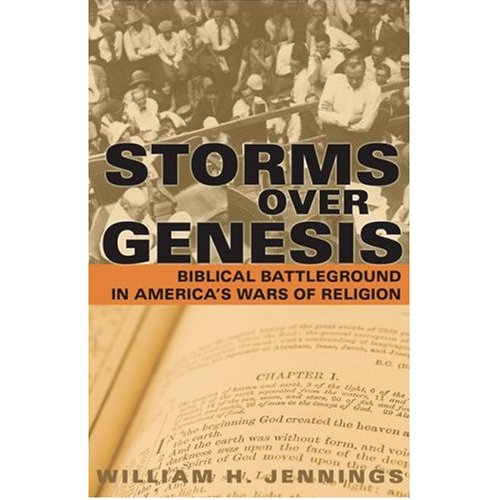
The privileging of one literature over others is problematic. Of course, the entire industry of biblical studies is built around such preferential treatment. And so is a large share of Christianity. I’ve just finished reading William H. Jennings’ Storms over Genesis: Biblical Battleground in America’s Wars of Religion. For someone who has taught Genesis before there wasn’t too much new material in here, but it strikes me as a very good primer for those who wonder about why the issues of gender inequality, global warming, and evolution remain firmly entrenched in evangelical minds, and therefore, our society. Just the first three chapters of Genesis, as Jennings points out, have led to the much of the irrational, at times inane, arguments that just won’t go away. Tea Party kinds of issues.

At the base of it all is the concept that Genesis somehow represents the way the world is supposed to be (rather than the way it actually is). As if seconding my choice of bus reading, The Economist recently published an article on Glen Rose, Texas. I’ve known about Glen Rose since I was a child. There, in a bizarre twist on the Flintstones, locals claim human and dinosaur footprints intermingle in a nearby creek bed. As the article points out, some locals see this as evidence of young earth creationism—seems Fred and Wilma missed the ark along with Dino. For decades paleontologists have tried to explain that the “human” tracks are actually dinosaur tracks as well. Given their size and stride, if they were human Adam must’ve been a giant. Despite the science, the myth persists. Even the article in The Economist doesn’t give the scientific answer.

It would be difficult to find a book more influential than Genesis. It would also be difficult to find one that is less scientific. Anyone who has studied ancient societies knows that they delighted in telling outlandish stories to explain the origin of the world. After all, there were no eyewitnesses. No channel 11 helicopters hovering overhead to bring you the story live. It all comes from mistaking a good story for a good book. In an era when evidence of evolution literally abounds, we still have nearly half the population of this technological nation trying to make room for the Valley of the Gwangi. Jennings may not hold the answers to all the problems Genesis raises, but if people would read Storms over Genesis, we might be able to afford a little more energy to solving global warming rather than running from dinosaurs in Texas.


Darwin’s Descendents

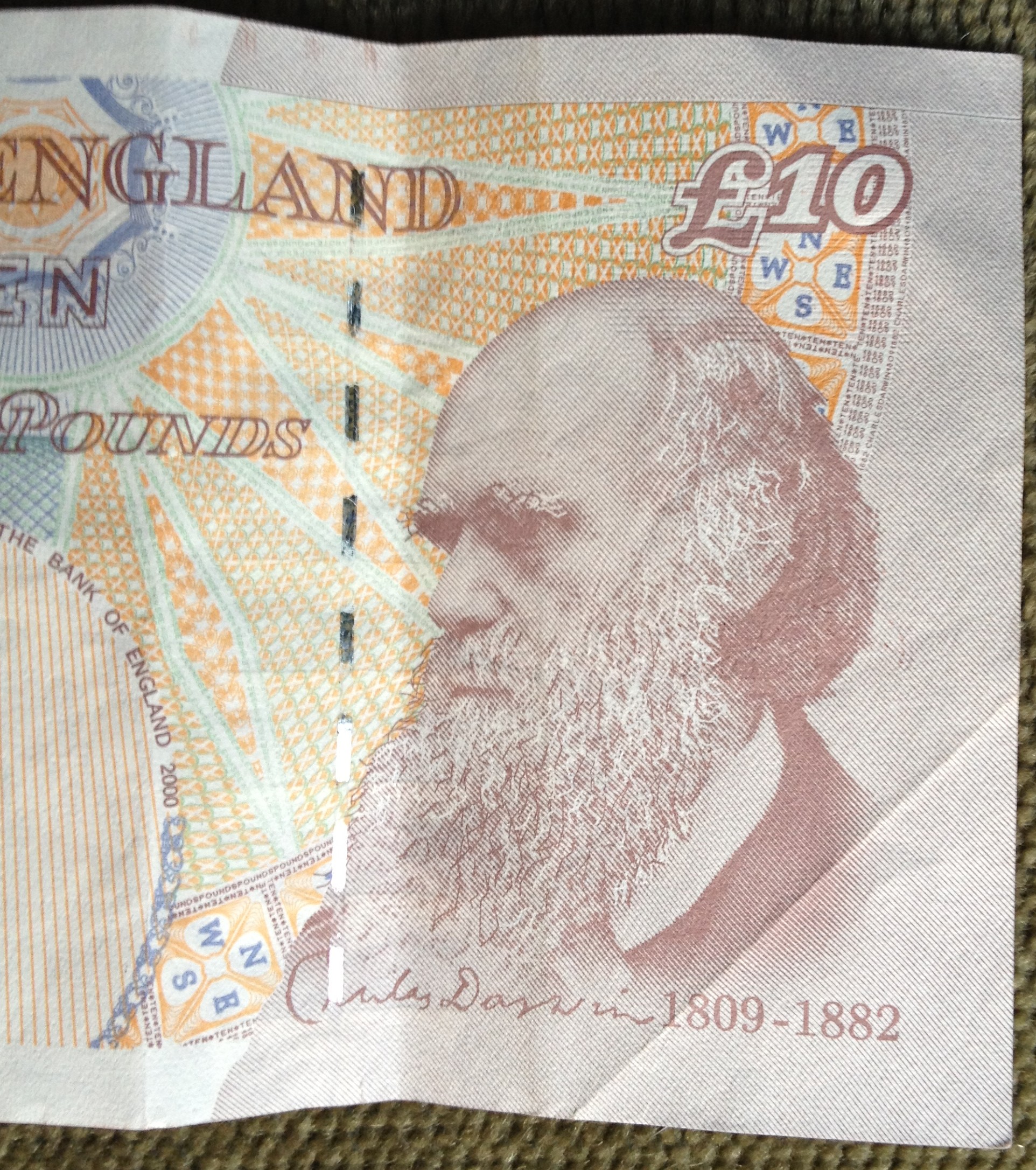
The plague that goes by the name of Creationism has been attempting to spread its reach to the shores of Britain. Proponents of a biblical literalism, whether overt or covert, have championed the idea that the world is terribly young—a mere cosmic toddler, in fact—compared to the vast geological ages of actual fact. When I unfolded my first ten-pound note and found Charles Darwin on the back, I smiled. England may claim a lion’s share of the heritage of one of the great unifying theories of science. In my brief jaunts between bouts of work I came across the tombstone of Herbert Spencer, the man who coined the phrase “survival of the fittest.” On a visit to Kew Gardens I strolled through the Evolution House. When I paid for my lunch, Darwin passed hands as the common currency of the realm.

Ten pound note

A school of thinking exists among many religious believers that insists that if science makes its claims justly then God cannot condemn them. Evolution runs as close to fact as does atomic theory. Those who doubt the latter should visit Hiroshima. Or Three Mile Island. Our literalist companions certainly don’t doubt nukes, but then, the Bible is mum on the subject of what things are really made of. Well, almost. According to Genesis 1, everything is made of chaos and divine words. The Bible doesn’t describe the origin of chaos—it is the natural state of things. God’s word, when it generates uranium, can be very deadly indeed.

Evolution House

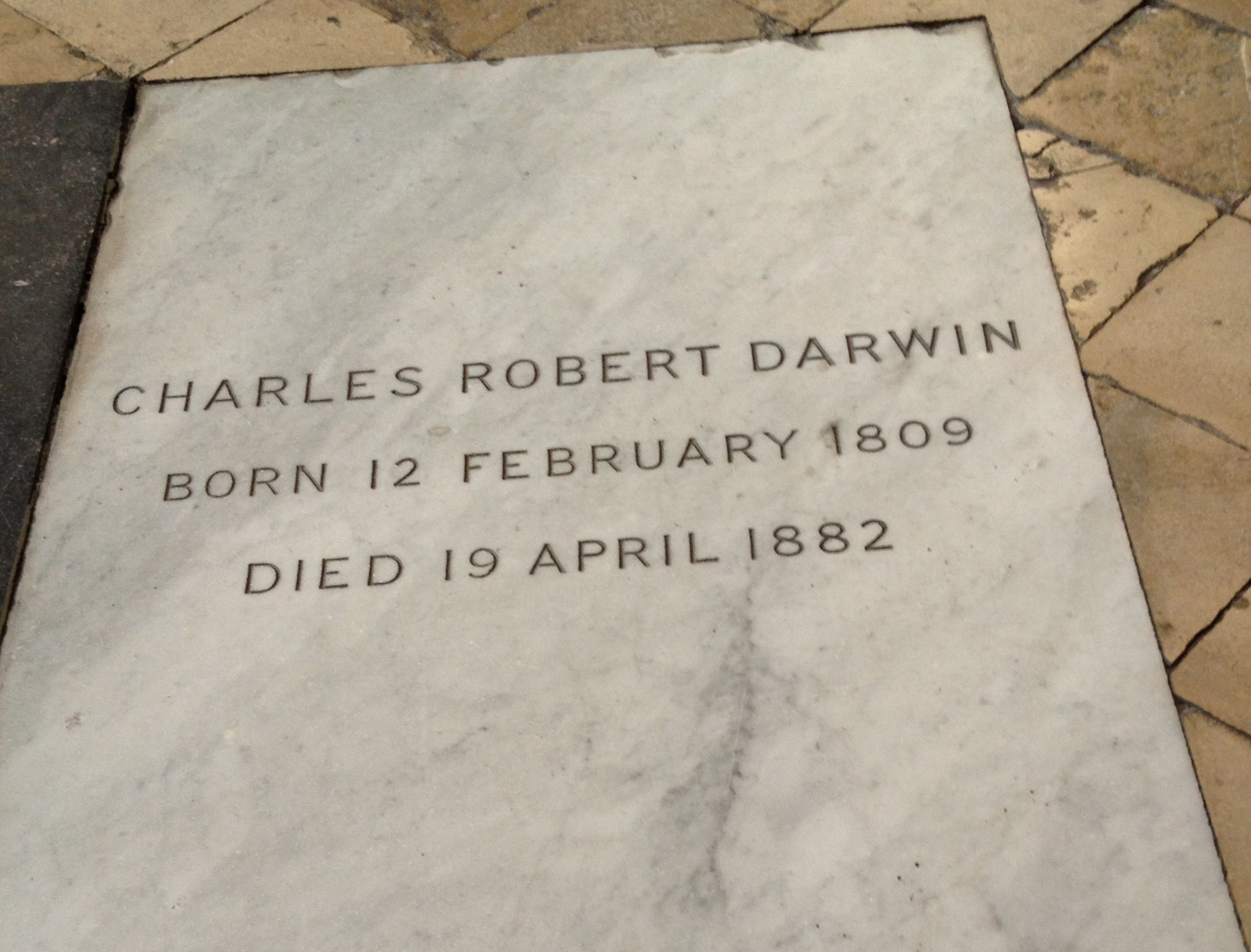
Creationists selectively choose which science to believe and which to reject. Fundamentalism can trace its origins to Britain, but the culture rather quickly outgrew these childish fantasies. In America literalism sank deep roots, roots deep enough to withstand the hurricanes of reason that would otherwise clear the air. Can an American imagine Darwin sharing the money which reads “in God we trust”? And yet, Darwin lies scarcely two meters from Isaac Newton in England’s holiest shrine of Westminster Abbey. Science and religion have here embraced one another. Perhaps when we put all the monkey business aside, we will come to realize that we may still have a thing or two to learn from the nation of our founders. Literally.

Darwin at rest


Battle Billboards

Perhaps the oddest intangible accompanying democracy is the concept that all things are negotiable. Add to that a capitalist sensibility that everything has its price and even truth itself feels like a matter of debate. We see this all the time with Creationists so desperately wanting the Bible to the “true” that they twist science into a fairy tale noose from which to hang their literalist god. The tendency, however, does not stop with them.

Surely one of the most tense stretches of pavement in the country is NJ 495 leading into the Lincoln Tunnel. The aorta pumping countless metallic cells into the heart of Manhattan, drivers and passengers often sit motionless in it for seemingly endless periods to crawl forward like an inchworm entering the Olympics. It is there that Battle Billboards takes place.

I have followed the Atheist billboard development with some interest. In my limited experience with the Lincoln Tunnel, I have noted the digital billboard on the Jersey side bears the message of atheist.org near the major Christian holidays, so as Easter approaches the newest one reads “Celebrate Living Without God” to promote a rally on the Mall in DC. Both religion and science make claims of how to know the truth. Truth with a capital T should be non-negotiable by definition. The problem is that nobody has the Truth. We’re still trying to figure it out. Atheist.org holds a firm conviction that life would be better without religion. Clearly not everyone agrees. Clarity, it seems, is the chimera of debates over Truth.

A few seconds after the atheist.org ad flashes off the big screen, an ad for Wrath of the Titans (coming soon to theaters) flashes on. Irony can be sweeter than honey and as bitter as the Dead Sea. The most recent Clash of the Titans (2010) borrowed little from classical mythology beyond the names and large plot lines. An atheistic Perseus just doesn’t fit the classical taste. In the new film, Zeus—surely one of the prototypes for modern conceptions of God—is captured by Hades and has to be rescued by his unbelieving son. Could any movie be a more thinly disguised Easter story? Atheists? Wrath of the Titans? Which way to jump? Fortunately for me, traffic going into the Lincoln Tunnel in these lanes is one way. That’s the kind of certainty we all can live with.

Light from above or hopeless ambiguity?


Sh*t Apes Say

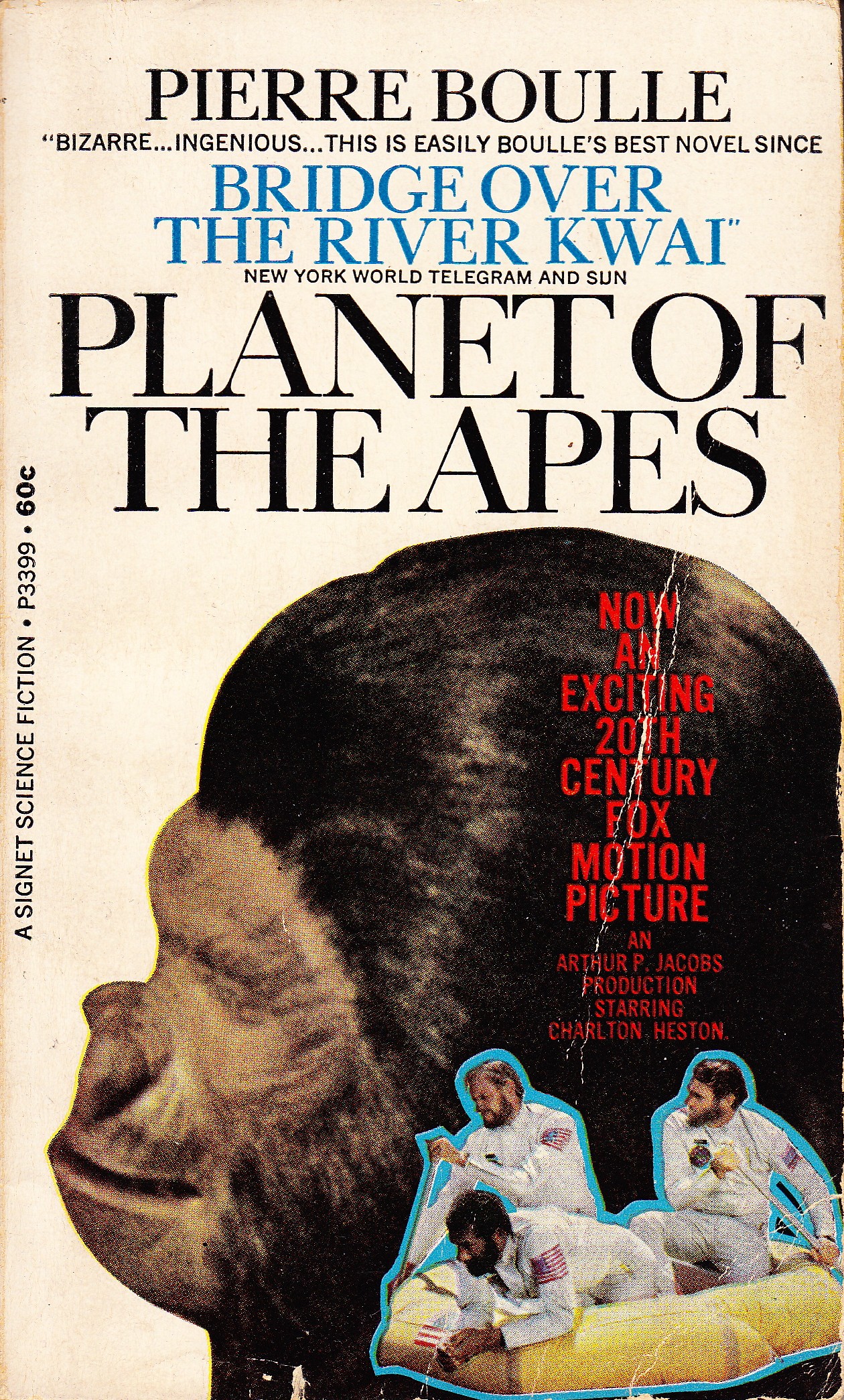
Knowing from experience that when I stay alone in a hotel, despite my best intentions, I will get bored and end up watching Mudcats or Dual Survival until my brain feels like a boiled egg, I anticipated my trip to California. I packed Planet of the Apes, the original and best of the lot, hoping for some intellectual stimulation. Having grown up in an anti-evolution household, we were curiously allowed to watch Planet of the Apes, a kind of forbidden zone of the mind. It remains one of my favorite movies of all time. It is also a manifesto of science besieged by religion. Note what Dr. Zaius says, “There is no contradiction between faith and science… true science!” And he is the Minister of Science, and Chief Defender of the Faith. The trial of George Taylor, a thinly disguised parody of the Scopes Trial, has Honorious (read William Jennings Bryan) stating, “It is based on our first article of faith: that the almighty created the ape in his image, that he gave him a soul and a mind, the he set him apart from the beasts of the jungle and made him lord of the planet,” and turning on his fellow apes Zira and Cornelius, he accuses them of being “perverted scientists who advance an insidious theory called evolution!”

Dr. Zira, as one of these “perverted scientists,” asks Cornelius (incidentally, the name of the first non-Jewish Christian, according to Acts), “How can scientific truth be heresy?” This is echoed by Dr. Zaius in the trial where he states, “It is scientific heresy that is being tried here.” Indeed, the entire simian culture is based on the blurring and blending of science and religion. Throughout the film various characters make barbed statements about the human propensity to ignore the obvious. Landon, challenging Taylor about the time change they experienced in space, says—in a line that could come straight from Answers in Genesis—“Prove it! It’s still just a theory.” The exact rhetoric currently used by creationists in school board meetings around the country. To which the most apt reply seems to come from Dr. Zaius, speaking of humanity: “his wisdom must walk hand-in-hand with his idiocy.”

Occasionally even the gun-toting humans get the picture clear. In his opening monologue George Taylor wonders about the world seven hundred years from now, “Space is boundless. It squashes a man’s ego. I feel lonely. That’s about it. Tell me, though. Does man, that marvel of the universe, that glorious paradox who sent me to the stars, still make war against his brother? Keep his neighbor’s children starving?” This seems to be the true measure of heresy—a religion that puts fellow humans on the same level as animals (and even animals deserve far more credit than we are willing to give). Among my favorite lines is Cornelius’ response to Taylor shaving his beard; “Somehow it makes you look less intelligent,” he opines. Endlessly remade, Planet of the Apes is a movie that still answers some of the issues that plague our society nearly half a century later. Perhaps the last line should go to the apes, adjusted of course, for gender sensitivity, “[hu]man[ity] has no understanding.” Well said, Dr. Zaius, well said.

A piece of childhood


Hope for the Flowers

Resurrection can become a tired trope, but it is the stuff of both religion and science. Last week it was reported that Russian scientists revivified a plant frozen on the tundra 30,000 years ago. Quite apart from proving that Siberia was already in place 24,000 years before God got around to creating the planet, this amazing feat teaches us lessons about life and its resilience, and also of the possibilities beyond the great pale. The scientists regrew the plant without the benefit of using seeds, making this a kind of virgin birth of the florid kind. Using plant versions of stem cells (the kind of science forbidden in the USA: “won’t somebody think of the seedlings!”), the dead plant was rejuvenated and is alive and healthy in a world vastly different than the mammoth-infested, frosty plains of northern Russia where it first saw daylight. Still, that environment was less hostile to science than the Religious Right. This resurrection shows that we don’t need miracles to bring inert matter back from the dead. No doubt there are covert Creationists trying to sneak into Russia with travel-sized bottles of Roundup in their carry-on bags.

Science has brought us to incredible places by its continued, self-critical process. Religion, preferring no critique, has given us characters like Rush Limbaugh, Glenn Beck, and Rick Santorum. And a really big book. Looking at the religious scene today it is difficult to believe that religions began as exercises in optimism—the world could be better if only we’d progress. Regress now characterizes the religion in the public eye—men (occasionally women) claiming that things were better when we were tilting with mammoths than they are now with people advocating equality for people of other genders, races, and sexual orientations. Science represents our progress, and the vocal theocrats claim we should be going backward. Back to when men were measured by the size of their spears.

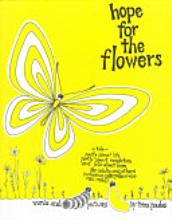
Back when I was a teenager I discovered the book Hope for the Flowers, by Trina Paulus. Not really a graphic novel, and not really a children’s book, it tells the story of two caterpillars with the courage to reject the constant, heartless climbing so often required by the world. In the end, of course, they become butterflies. The story has a religious subtext, naturally, but it was for a religion that believed butterflies should be valued rather than smashed between the pages of a heavy Bible. Butterflies bring the pollen that allows flowers to thrive. We live in a world where butterflies have become soft and defenseless while religion is aggressive and offensive. Science has shown us the way to bring flowers back from the grave, but old-time religion is waiting in the shadows with its rusty scythe.