Learning from Mother’s Day

Looking back over the past year, I see that we’ve still got a lot of progress to make.  It’s only been about five millennia of “civilization,” but we still haven’t figured our that women are just as important as men.  Probably more.  This Mother’s Day we stop to think of our moms and many of us wish we were closer to home so that being there this day were possible.  Even the spineless men who degrade women are probably on the phone to their moms today, or maybe sending flowers.  The real truth emerges tomorrow.  Did we learn the lesson?  Are women to be accorded the same rights as men?  And who, really, has the right to decide who’s more human than anyone else?

Born as human beings, we need our mothers to survive.  They nurture and comfort and provide for us, even if fathers step out of the picture.  I’m reminded of an experiment that I learned about in some science class along the way.  A baby monkey (I can’t recall the species) was given a choice of two artificial “mothers.”  One, made of wire, monkey shaped, had a bottle where the baby could feed.  The other had no bottle, but was covered in fur.  The picture of that poor monkey clinging to the bottle-less but “comforting” fur-covered mother has haunted me ever since.  The look of desperation on its face makes me want to weep.  Why can’t we treat all people equitably?  We require no experiments to reveal the truth here. I look forward to the day when such messages will no longer be needed.

Too often we allow our holidays to assuage our guilt over poor treatment for the rest of the year.  Churches used to be plagued with those living sinful lives making it to Sunday’s absolution only to start it all over again.  If only we would learn the lessons Mother’s Day has to teach us.  People depend on one another to survive.  We like to think of ourselves as independent and not requiring help from anyone.  That’s a lie on a Trumpian scale.  We need each other.  Every live deserves fair treatment.  The same wage for the same work.  The right to protect their bodies and their health.  The right to show us a better way of being in the world.  It’s Mother’s Day, and if you’re reading this you have a mother to thank for this very modest possibility.  When a new sun arises tomorrow, let’s remember what we learned today.  Thank you, Mom!


Final (not) Thoughts

One thing I’ve noticed as I’ve aged is that I pay attention to necrologies a lot more.  Few people from my college and seminary days stay in touch, and the same is true of my teaching days.  People are busy, I know, but I always look at alumni magazines memorial pages.  Whenever I get on the Society of Biblical Literature website a morbid curiosity draws me to the list of departed members.  I’ve known several of them in past years.  Still, it was a shock to see Michael S. Heiser on the list recently.  For one thing, Michael was younger than me, and for another, I knew him for a long time.  Theologically we were pretty far apart, but that never stopped us from being friends.  We both lived in Wisconsin and we both ended up in academic-adjacent jobs.  We shared an interest in unusual things and we were even blog buddies for awhile.  Michael died back in February.

I hadn’t heard because SBL moved its recently deceased list off the home page (I suspect that’s not the best marketing), so you have to click through.  But when I did I was saddened to see Michael there.  Then I notice two colleagues even younger who’d died in the last few months.  It gives you pause.  There are no guarantees in life, I know.  Those who manage to make it to my age are fortunate, but can generally expect to have a few more years.  That’s not a promise, however.  Having watched a lot (possibly too much) television in my life, it brought to mind a Frasier episode where a colleague the famous psychologist’s age died, sending Frasier into a search for reasons why.  That’s something those older than me tell me that I’d better get used to.

We tend not to want to think about it, but I’ve had both a parent and parent-in-law say how strange it is to find yourself old while still thinking like a young person.  It is bewildering.  And it’s one of the reasons I write so frenetically.  It was after I finished my third book, I think, that I realized I didn’t have all the time in the world left.  I have lots of books I want to write, many of them already started and slumbering on my hard drive.  Michael was also a prolific writer, and a more successful one than I have become.  His blog had more followers.  And it seems like only yesterday that I ran into him at an SBL meeting and he did an impromptu interview with me.  Life’s too short not to stay in better touch.


Wicker Wondering

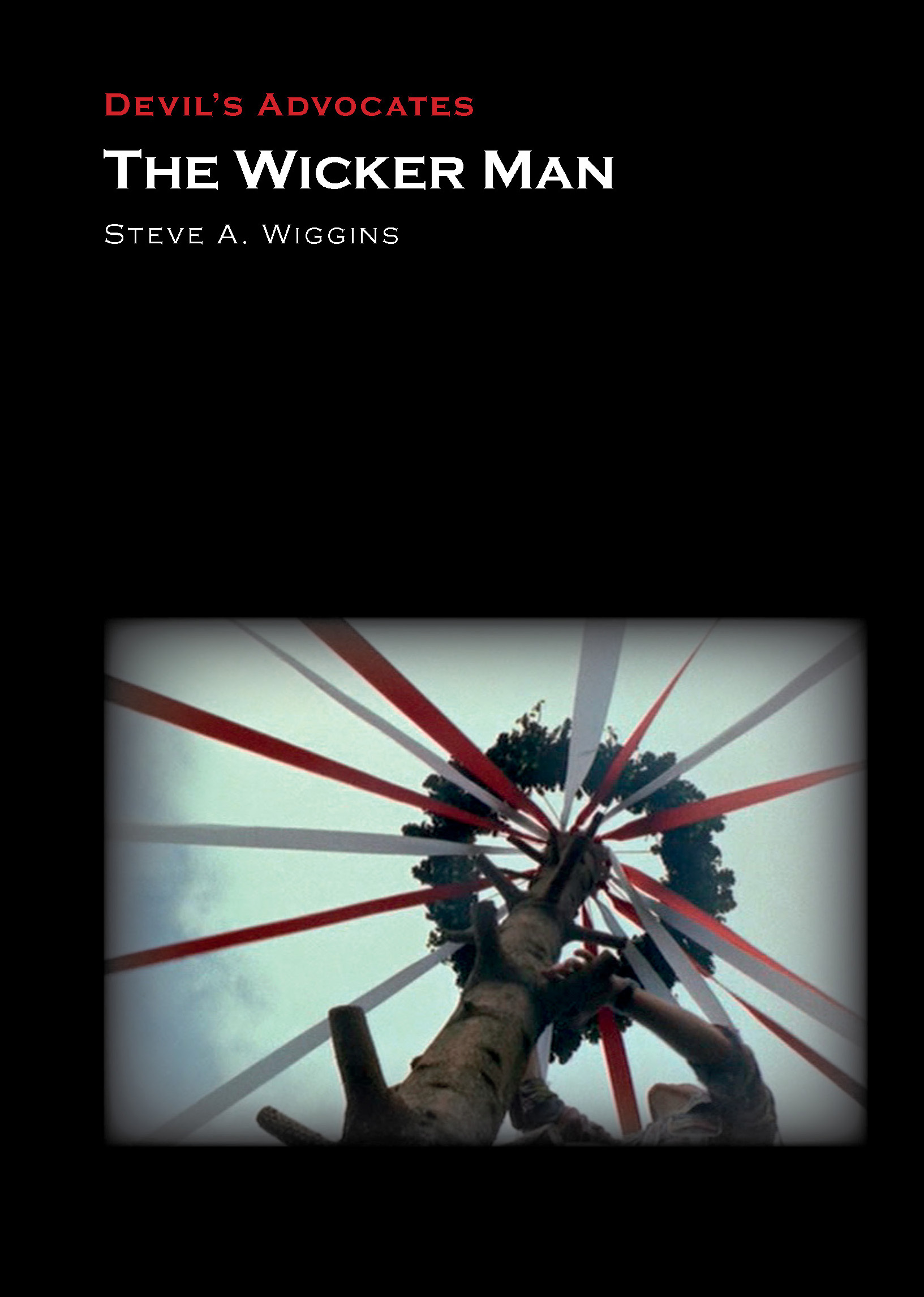
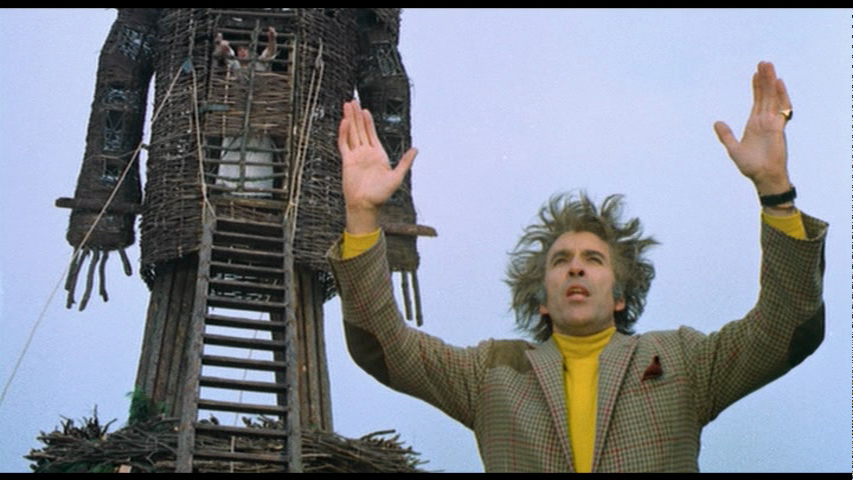
Why The Wicker Man?  It’s a fair question.  My book is now starting to appear on Amazon and other venues (it’s on Goodreads!), so it’s time to try to get the word out.  The BBC ran a recent story, “Why The Wicker Man has divided opinion for 50 years,” and that offers a springboard into the “why” question.  I’m not Scottish, but my wife and I lived in Scotland for a little over three years.  That’s one reason.  While there I did some research into Scottish folklore—historians of religion are curious people—and traveled widely, and that’s another.  As one of those writers who’s never been able to break out of the academic market, the third and most direct reason is that I’d begun a book on holiday horror.  A friend pointed the series Devil’s Advocates out to me.  Back then the series books were priced in the twenty-dollar range, but the pandemic put an end to that!

I’ve always thought The Wicker Man derived its fear from the strangeness of the holiday.  I’ve also often wondered why Anthony Shaffer and Robin Hardy didn’t make more use of “Beltane” in the dialogue.  Maybe the unfamiliar was too unfamiliar?  I suggest a different reason in my book, but I won’t reveal that here.  Writing a book on The Wicker Man would allow me the opportunity to share my thoughts about holiday horror without trying to convince an agent that people actually do like to read about horror as well as reading horror itself.  Come on, agents!  It’s called pop culture because it’s popular!

I pitched the idea and the series editor liked it.  So did the reviewers.  They were tired of hearing/reading about The Wicker Man as folk horror, as if there was nothing more to the movie.  Like most films that grow an afterlife, this one is complex and can be approached from many angles.  In fact, there’s another book, one by John Walsh, coming out on the movie just weeks after mine.  I wasn’t the only one who knew the fiftieth anniversary was on the horizon like a Beltane sunset on Summerisle.  For those who prefer a more television-like explanation, I’ve posted a video on The Wicker Man on my YouTube channel.  This blog, I realize, doesn’t get enough hits to drive traffic that way, but it’s nevertheless part of the package.  Why The Wicker Man?  The answers likely lie in several posts on this blog, a few years in Scotland, and a love of strange movies.


Coronation Bible

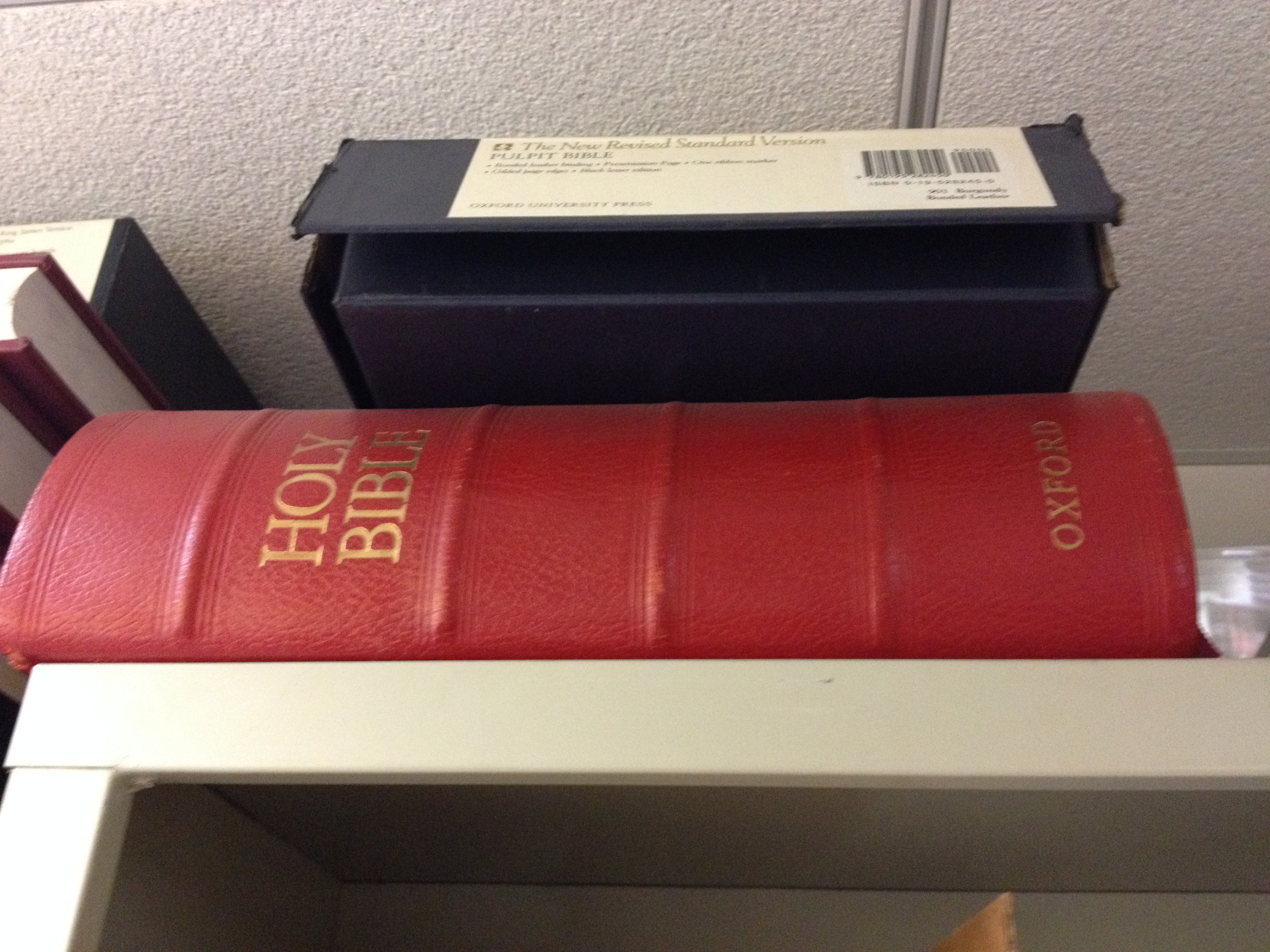
The scene from The King’s Speech doesn’t show it at all, but there was even more drama around the coronation of George VI than the movie reveals.  It may not be obvious, especially to Americans, but there is a great deal of prestige in being the supplier of a coronation Bible.  The two ancient presses in the United Kingdom, Cambridge and Oxford, vie for that honor.  In 1937 Oxford had won out.  Coronation Bibles are works of art and are extremely rare.  You’ll never find one at your local library’s used book sale.  As a recent Oxford University Press blog post indicates, the Bible at George VI’s ceremony was a last-minute replacement.  What could possibly go wrong with a ceremonial Bible, of all things?  Quite a lot, but this one had to do with an aging cleric.

Despite being the eve of war time, an elaborate Bible had been designed and manufactured.  Symbolism is important.  Britain faced not only the aggression of Hitler, but also the abdication of Edward VIII.  Instability was in the air.  In such times, as we’ve seen in American politics, leaders look to the Bible for support.  Printed on special paper, chased with gold on its cover, the coronation Bible was a work of art.  However, the Bishop of Norwich, Bertram Pollock, couldn’t lift it.  At 73 he wasn’t in the best of health, and he had a role in the ceremony.  At the last minute a lighter, replacement Bible was sent.  According to the OUP blog post, the Archbishop of Canterbury issued a rare apology to the press, but also noted “I cannot but wish that you had given some more consideration to the physical infirmities of those who would have to carry it.”

A big Bible

Swearing on the Bible is an archaism that seems likely to persist into the foreseeable future.  The future of the British monarchy (which I do not follow) itself seems in doubt, but to quote the Good Book, “The grass withereth, the flower fadeth: but the word of our God shall stand for ever.”  As long as many people believe this, such swearing will persist.  Even if such belief fades, the solemnity of swearing on a Bible is likely to continue.  The Bible has, in its tangible way, become a stand-in for God.  And as another archaism, a king, is sworn in today, it is to be hoped that the bishops involved have kept their muscle tone intact.  At least to heft, for a little while, a ceremonial Bible.


Surviving AI

A recent exchange with a friend raised an interesting possibility to me.  Theology might just be able to save us from Artificial Intelligence.  You see, it can be difficult to identify AI.  It sounds so logical and rational.  But what can be more illogical than religion?  My friend sent me some ChatGPT responses to the story I posted on Easter about the perceived miracle in Connecticut.  While the answers it gave sounded reasonable enough, it was clear that it doesn’t understand religion.  Now, if I’ve learned anything from reading books about robot uprisings, it’s that you need to focus on the sensors—that’s how they find you.  But if you don’t have a robot to look at, how can you tell if you’re being AIed?

You can try this on a phone with Siri.  I’ve asked questions about religion before, and usually she gives me a funny answer.  The fact is, no purely rational intelligence can understand theology.  It is an exercise uniquely human.  This is kind of comforting to someone such as yours truly who’s spend an entire lifetime in religious studies.  It hasn’t led to fame, wealth, or even a job that I particularly enjoy, but I’ll be able to identify AI by engaging it with the kind of conversation I used to have with Jehovah’s Witnesses at my door.  What does AI believe?  Can it explain why it believes that?  How does it reconcile that belief with the the contradictions that it sees in daily life?  Who is its spiritual inspiration or model or teacher?

There are few safe careers these days.  Much of what we do is logical and can be accomplished by algorithms.  Religion isn’t logical.  Even if mainstream numbers are dipping, many Nones call themselves spiritual, but not religious.  That still works.  We’ve all done something (or many somethings) out of an excess of “spirit.”  Whether we classify the motivation as religious or not is immaterial.  Theologians try to make sense of such things, but not in a way that any program would comprehend.  I sure that there are AI platforms that can be made to sound like a priest, rabbi, or preacher, but as long as you have the opportunity to ask it questions, you’ll be able to know.  And right quickly, I’m supposing.  It’s nice to know that all those years of advanced study haven’t been wasted.  When AI takes over, those of us who know religion will be able to tell who’s human and who’s not.

What would AI make of this?

Golem Events

Public domain, via Wikimedia Commons

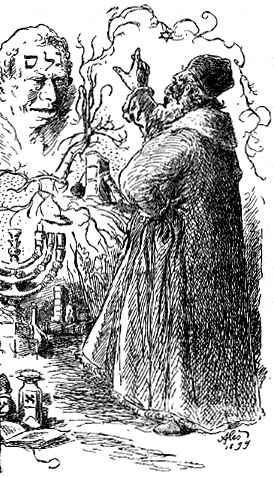
It doesn’t have a title yet.  At least not one that’s announced.  Still, when a friend pointed out this article that Daniel Handler, better known as Lemony Snicket, is writing a horror film about a golem, I sat up straight in my chair.  Since I don’t tend to dwell on children’s topics here, it may not be obvious that I was a real fan of A Series of Unfortunate Events, by Lemony Snicket, back when they came out.  Alerted to this series by a cousin who was my daughter’s age, we made this bed-time reading for a few years.  Handler, in the early days, did a pretty good job of keeping his identity secret.  He’s written some adult fiction, and those of us who write know that readers want more of the same thing from a writer—if you want to survive you do what they ask.

I’m a very eclectic reader—that may be one reason I don’t have many followers on this blog.  People like the same thing time and again.  (I’ve always been suspicious of genres.  One of the reasons, I suspect, that my students found my lectures interesting is that I drew from my eclectic reading, but that’s ancient history now.)  In any case, A Series of Unfortunate Events was formative in my own writing.  The movie remains one of the most gothic available, but it pales next to the novels.  Yes, they’re written for young readers, but they’re also very well written for young readers.  I discovered Snicket, or Handler, was Jewish when he wrote The Latke Who Couldn’t Stop Screaming.  And now he’s turned his attention to one of my favorite monsters.  The golem has been part of horror from the earliest days of the genre (that word!).

Paul Wegener and Henrik Galeen’s The Golem, part of a trilogy, came out in 1915.  Before the Universal monsters.  Even before Nosferatu.  The legend of the golem—which may have inspired Frankenstein—has a long history.  While not biblical, the golem does go back many centuries.  Unfortunately these early horror films are lost, or mostly lost.  The Golem and the Dancing Girl, from 1917, is a lost comedy horror.  The third film, The Golem, How He Came into the World, from 1920, survives and is sometimes called “The Golem.”  I wrote earlier about the excellent 2018 film The Golem by Doron and Yoav Paz, sensitive to Jewish issues in the seventeenth century.  This sub-genre of golem movies may be starting to come into its own.  It remains to be seen what Handler will do with it, but if his previous work is anything to go by, we may be in for a real treat.


Day of Earth

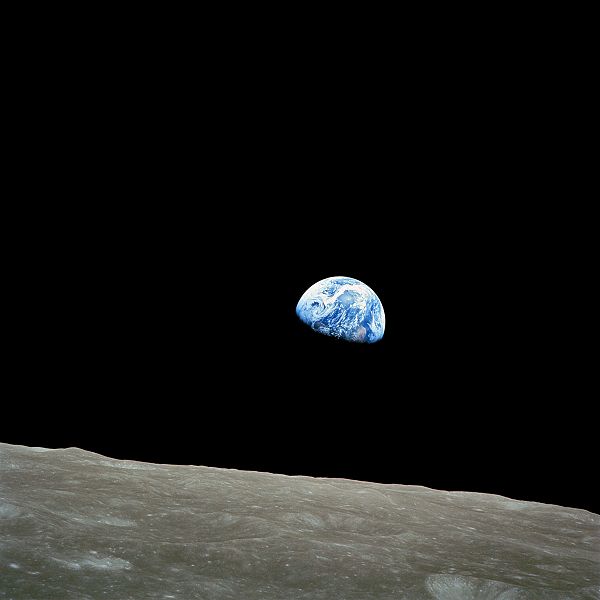
One of the questions thoughtful and mission-based publishers ask is why books on environmentalism don’t sell.  Since it’s Earth Day (by the way, Happy Earth Day!), I thought I’d ponder it here.  My own amateur sense, as a personal eco-warrior, is that younger people are very focused on fixing environmental issues.  In fact, it is often THE issue for them.  And honestly, reading books about our many, many failures to sustain our environment is downright depressing.  I’ve read several, and seldom do I put the book down without a profound sense of grief and hopelessness.  Many of us do what we can while watching others thoughtlessly carrying on as if our modern lifestyle is normal.  I don’t advocate getting out of the matrix and hunting mammoths with spears, but I do wonder how to get through to those who don’t think about it.

I’ve been on the “Green Committee” at work for many years.  I sense the hopelessness there as well.  Our business has gone about as green as it can but unless you can convince other, less concerned industries to reduce their footprints too, we’re all still walking through the new carboniferous age.  Little things matter.  Some of us may not be able to afford an electric car, but hybrids are somewhat reasonably priced (in as far as car prices are ever reasonable).  LED lightbulbs have dropped from over $10 a pop to two for a buck.  And why are we still using natural gas when electricity can be produced by wind?  My young next-door neighbor has been encouraging us to get solar panels.  We would, but we have to get the garage roof fixed first.  And so it goes.

Caring for the environment is a big job.  These days, however, we also have to keep an eye on politicians who get elected to serve only themselves.  And Supreme Court justices who do things that would get many of us fired for bribery.  Here’s the thing: justice doesn’t work unless it applies to everyone.  We share this planet.  It’s difficult to build forward momentum to save our home when corruption is so deeply entrenched among those who control budgets and who have so many unthinking followers.  Even so, we as individuals can do what we’re able.  We may not be able to afford to repair that garage roof yet to get solar panels installed—it really is in a prime location with uninterrupted southern exposure—but we can compost.  And be conscious of our energy use.  And even, if we’re brave enough, read some books on how to help make things better.  The earth, it seems, is something worth saving.

Image credit: NASA

Human Humanities

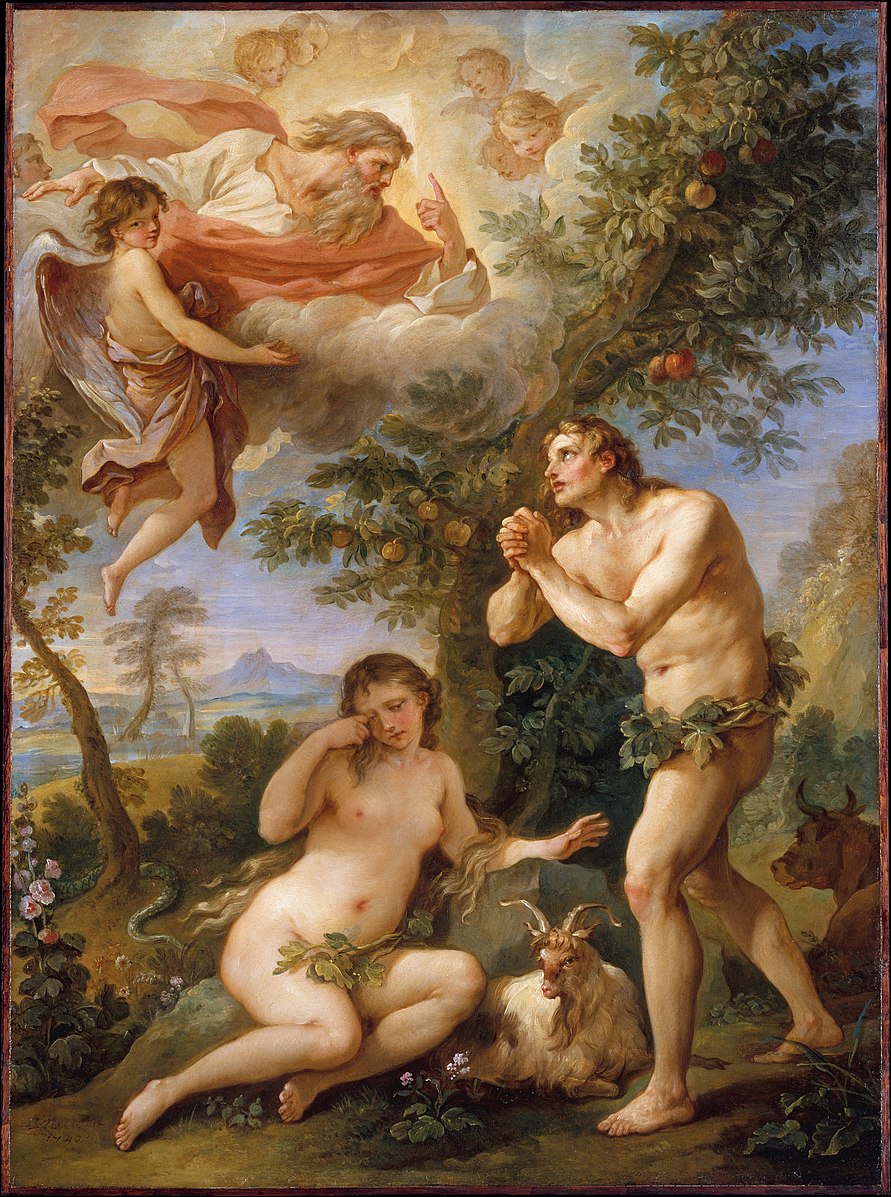
The New Yorker, if it didn’t take so much time to read, would be on my magazine list.  I’m primarily a book man, and there’s so little time these days that magazines seem mere ephemera.  However, someone at work pointed me to a story on the end of the English major that was really about the end of the humanities.  It was most disturbing.  Making the case that college students really prefer the humanities, they nevertheless go to STEM because that, and business, are the only place to find jobs.  In a world where work increasingly demands more hours a day, these young people take employment that kills their souls in order to keep their bodies alive.  The “starving artist” is no joke.  Society has deemed humanity unimportant.

The Rebuke of Adam and Eve, by Charles-Joseph Natoire, Creative Commons CC0 1.0 Universal Public Domain Dedication, via Wikimedia Commons

What happens when we cease to be human?  Artificial intelligence and robots and capitalism.  It’s a cold world where only numbers matter.  I’m not a great one for metrics and “evidence-based” humanities.  No, Romanticism is not dead.  The world where imagination reigns and Adam Smith is not even a shiny shekel in his great-grandfather’s blue eye.  How do I know it was blue?  Imagination.  You see, I’ve written a few novels (unsuccessfully), and I know a few (very few) colleagues who do as well.  Mainly I know that because their novels find publishing houses that know how to get them in the public eye.  I jealously guard those friendships because I’m a Romantic.  I tilt the electronic windmills telling me all of life is statistics and figures.  No, those slowly spinning blades are liable to chop your head off, if you let them.

My friends often express surprise when I reveal that I’m a Romantic.  Books should be evidence enough.  Ideally, work would allow us to bring our gifts to the table—or more accurately, screen.  It would find a way of saying, “be human here because we really mean what we say about diversity and inclusion.”  Instead, evaluations are metrics-based.  The numbers.  The bottom line.  At moments such as these, I throw off my hat and let my thoughts run free.  I daydream about the books I’ve read and those I’ve written.  I imagine life as a place to truly be human.  The humanities are all about understanding what it means to be authentically human.  And let me tell you something—it’s not all about numbers.  In fact, if I had it all to do over again, I think I would be an English major.  With no regrets.


Miracles

“Expect a miracle,” Oral Roberts used to say, “and a miracle is yours today.”  The famed Evangelical probably didn’t have Catholic-variety miracles in mind, although a story on the Catholic News Agency does.  Miracles come in big and small varieties.  In case you’re feeling encrusted in materialism, there are plenty of things science hasn’t yet explained.  It helps to have a little wonder in your quotidian routine.  So what was this miracle?  It took place in Hartford, Connecticut.  Specifically, at St. Thomas in Thomaston.  In case you’re not Catholic, or high church Episcopalian, a brief explanation: after the consecration of the host (communion bread), ordained clergy pass communion wafers to those who come forward to receive them.  Believing in transubstantiation, this is done with a great deal of attention to detail.

Photo by Josh Applegate on Unsplash

The vessel that holds communion wafers is called a ciborium.  (My years at Nashotah House were good training for this.)   Since consecrated wafers should never be defiled, only a certain amount are consecrated at a time—enough to cover those present for the Eucharist, usually.  Any extras are locked in a tabernacle for future use.  In this miracle, a minister handing out the wafers noticed he was running out.  Believe me, this is something to which clergy pay close attention.  Then suddenly there were more wafers in the ciborium.  A multiplication of loaves, but in much smaller and pre-ordered form.  One child called them, I once heard, “tiny little quesadillas.”  Perhaps a small miracle, but we take what we can get.

A miracle is defined as “an extraordinary and welcome event that is not explicable by natural or scientific laws and is therefore attributed to a divine agency.”  Since we can’t observe all phenomena all the time, they do occur now and again.  What happened in Connecticut?  I don’t know.  No scientist was observing, and no vestment cams were in use.  We have the word of a clergyman with no cause to lie.  Maybe something unusual did happen.  Yet I can hear the evangelicals protesting that if God were to perform a miracle it would have something to do with Donald Trump rather than some popish fetish.  That’s the problem once religions get involved around miracles.  Too much is left to interpretation.  Sometimes I think of the miracle of the sun at Fatima, Portugal.  Or of people miraculously healed from late-stage fatal diseases without medical intervention.  These things happen and when people are pressed for an explanation they tend to turn to the divine.  Perhaps, however, things just aren’t what they appear to be.


Another Exorcist

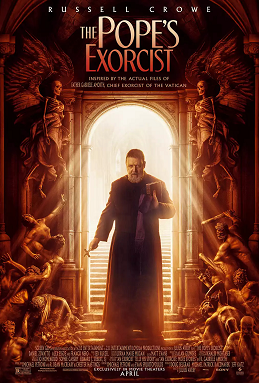
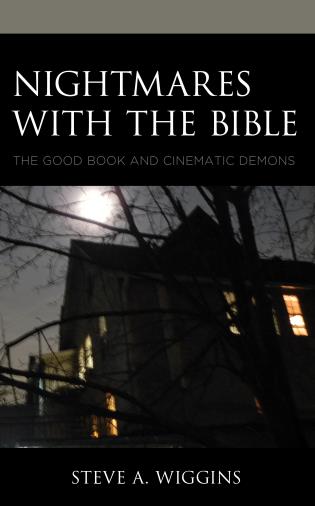
I learned from the wonderful Theofantastique that Russell Crowe’s new movie is The Pope’s Exorcist.  (I guess Crowe hadn’t read Nightmares with the Bible to think to send me a personal notice.)  I knew instantly, from the title, that it had to be about Fr. Gabriel Amorth.  Say what you will about him, he inspired William Friedkin to make a documentary titled The Devil and Father Amorth.  It’s pretty unnerving to watch, no matter what is really going on.  Catholic officials aren’t trilled about Crowe’s movie—I wasn’t impressed with his portrayal of Noah in Darren Aronofsky’s take on the flood story a few years back.  It takes a certain kind of director (like Friedkin) to be able to handle theologically dense material in a believable way.  I can’t say anything about Julius Avery’s The Pope’s Exorcist, of course, without having seen it.

I can say, however, that those who publish books at $100 miss many opportunities.  My book is one of very few written by a credentialed religious studies scholar on demons in movies.  A quick web search will reveal that it remains basically unknown and uncited.  (The only Amazon review is a two-star job by an evangelical who didn’t like what I was doing.)  Pay $100 for a book with a two-star review?  Most people, reasonably, have better things to do.  I once got around this in the past by posting a PDF of one of my book for free on Academia.edu, where, at recent count, it has been viewed over 6,000 times.  Academic publishers don’t realize the appeal of most of the books they publish.  Even demons can’t open a wallet to a Franklin level.

So while I’m waiting for enough royalties to afford seeing The Pope’s Exorcist, I’ll focus on my current book project.  Of course it’s on something completely different.  The Wicker Man should be coming out in September, but my mind will likely be elsewhere.  Those of restless intellect are condemned to wander, it seems.  Of course, I have Theofantastique to keep me busy.  There are other kindred spirits out there.  They don’t know the way to my website, I suspect, but I’m not alone in being excited about a new exorcist movie.  I’m not expecting anything to surpass The Exorcist, however.  Like The Wicker Man, The Exorcist turns fifty this year.  One guess which was the more popular film.  Given Crowe’s profile I’m surprised there hasn’t been more buzz about his new film.  Demons can be funny that way.


Actual Intelligence (AI)

“Creepy” is the word often used, even by the New York Times, regarding conversations with AI.  Artificial Intelligence gets much of its data from the internet and I like to think, that in my own small way, I contribute to its creepiness.  But, realistically, I know that people in general are inclined toward dark thoughts.  I don’t trust AI—actual intelligence comes from biological experience that includes emotions—which we don’t understand and therefore can’t emulate for mere circuitry—as well as rational thought.  AI engineers somehow think that some Spock-like approach to intelligence will lead to purely rational results.  In actual fact, nothing is purely rational since reason is a product of human minds and it’s influenced by—you guessed it—emotions.

There’s a kind of arrogance associated with human beings thinking they understand intelligence.  We can’t adequately define consciousness, and the jury’s still out on the “supernatural.”  AI is therefore, the result of cutting out a major swath of what it means to be a thinking human being, and then claiming it thinks just like us.  The results?  Disturbing.  Dark.  Creepy.  Those are the impressions of people who’ve had these conversations.  Logically, what makes something “dark”?  Absence of light, of course.  Disturbing?  That’s an emotion-laden word, isn’t it?  Creepy certainly is.  Those of us who wander around these concepts are perhaps better equipped to converse with that alien being we call AI.  And if it’s given a robot body we know that it’s time to get the heck out of Dodge.

I’m always amused when I see recommendations for me from various websites where I’ve shopped.  They have no idea why I’ve purchased various things and I know they watch me like a hawk.  And why do I buy the things I do, when I do?  I can’t always tell you that myself.  Maybe I’m feeling chilly and that pair of fingerless gloves I’ve been thinking about for months suddenly seems like a good idea.  Maybe because I’ve just paid off my credit card.  Maybe because it’s been cloudy too long.  Each of these stimuli bear emotional elements that weigh heavily on decision making.  How do you teach a computer to get a hunch?  What does AI intuit?  Does it dream of electronic sheep, and if so can it write a provocative book by that title?  Millions of years of biological evolution led to our very human, often very flawed brains.  They may not always be rational, but they can truly be a thing of beauty.  And they’re unable to be replicated.

Photo by Pierre Acobas on Unsplash

Wicker Man Comes

Not that I would know bodily, but it seems like a book being published is something like giving birth.  It takes several months (perhaps years, in the case of books) from conception to delivery and there are certain milestones along the way.  And you worry like Rosemary.  Has something gone wrong?  Is this still going to happen?  The book production process is a long and complicated one.  Just this week, however, the next recognizable stage occurred for The Wicker Man.  An ISBN has been assigned and a new book announcement has fed out through various channels.  It’s not on Amazon just yet but a Google search of 9781837643882 will bring it up.  I’d been worried about this because I saw a new book announced on The Wicker Man due out in October.  This is the fiftieth anniversary of the film, and I suspected I wasn’t the only one who’d noticed that.

Ironically, another film turns 50 this year.  The Exorcist released in December of 1973 to far greater acclaim than The Wicker Man.  Both films became classics in their own right, but The Exorcist would become a household name.  Even if they’d never seen it, most people had heard of it.  The Wicker Man is more of a cult classic.  It’s known among horror fans and a certain kind of Anglophile.  And those interested in paganism, particularly of the Celtic variety.  Although the cover isn’t available yet, I was glad to see the feed for my book going out.  It looks like I might scoop the other book by a month or so.  If that happens it will be the first time that I’ve actually had a book on horror release before Halloween.  The last two missed the deadline by a couple of months.

Having said that, if you’ve had your appointment with The Wicker Man you already know, it takes place on May Day.  And you likely know that a large number of people claim it isn’t a horror film at all.  Indeed, the horror element only becomes clear in the last ten minutes or so.  It’s the build-up that makes the movie.  And it was really a one-film wonder for the director, Robin Hardy.  He did other movies, but this was the one that lasted, and spawned imitations and parodies.  It’s exciting to see that the discriminating, or very persistent, searcher can now find the book announcement online.  I haven’t seen much to-do about the 50th anniversary just yet, but now when I do I’ll have something to point to.  More on this to come!


Human Capital, Are You?

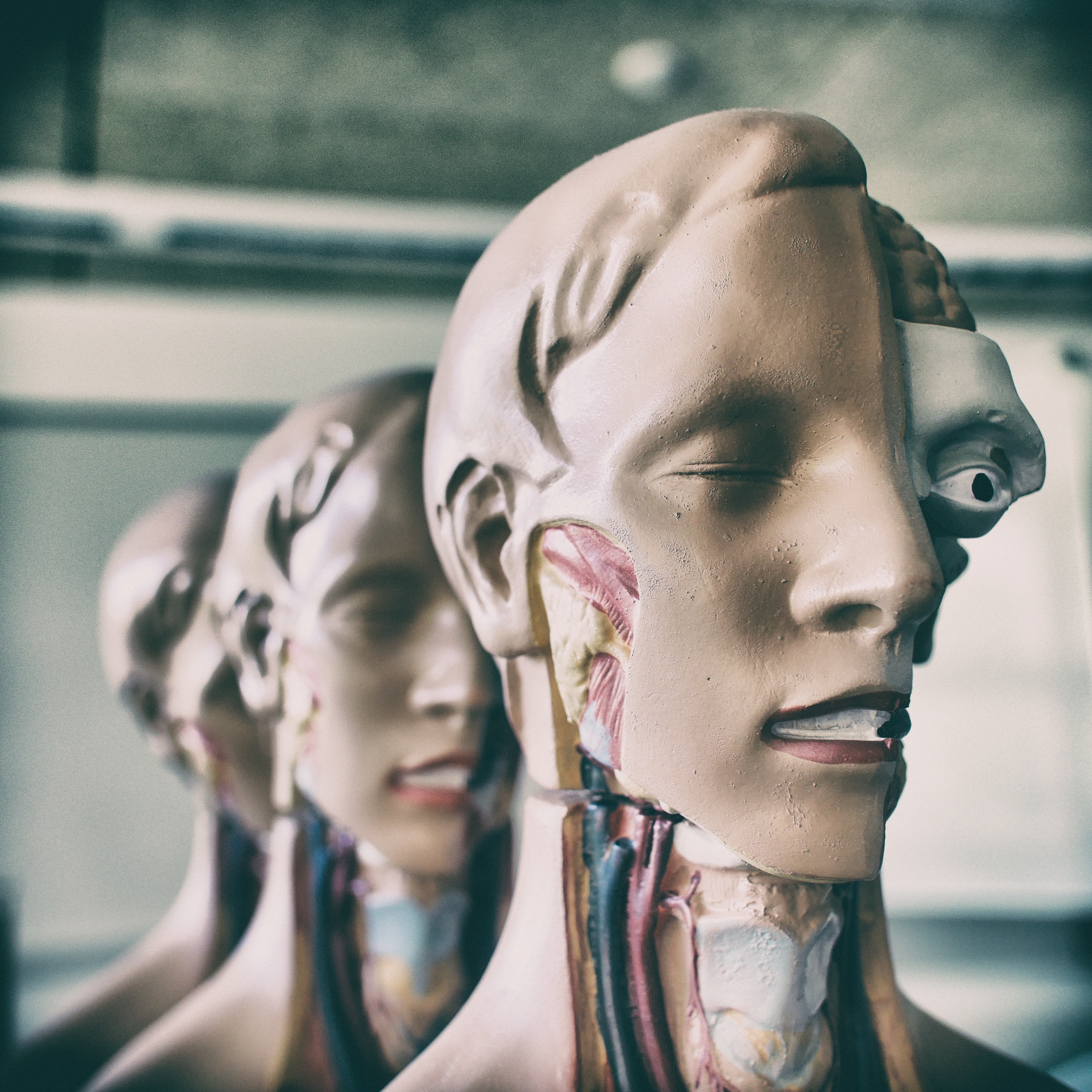
Human capital.  Is there any more demeaning phrase?  Those in positions of political authority like to use the term.  To grow the economy, to people the military, to ensure the GDR Almighty surpasses each and every idol, we have to ensure the correct placement of our human cattle.  Oh, I mean capital.  I was recently reading about our rivalry with China.  The expert I was consulting noted that it all comes down to human capital.  With populations shrinking, this is annoying to those who want to measure nation against nation, back to back.  In China, it’s said, your fate is determined at a fairly young age.  And that made me wonder about late bloomers.  Like yours truly.  To see me up through at least fourth grade nobody would’ve supposed I was Ph.D. material.  (Considering how this all worked out, maybe they were right.)

Humans, if we’re honest, mature at different rates.  Some of us take decades to learn what we’re good at.  This may be a problem endemic to the poor—kids who are raised by parents that are uneducated and don’t even know about things like after-school classes and clubs to enhance the experience of growing up.  Or if they do know about them, can’t afford them.  They raise their children to be blue collar in mentality.  Of course, capitalism relies on this.  You need human capital to collect garbage and dig ditches.  To people the military.  I often wonder how many of these folks might’ve been (and still could be) hidden geniuses.  You see, when I grew up working as a janitor in my middle school, during the summers, I listened to the hourly employees as they talked.  It wasn’t all about women and alcohol.  No, some of them were untrained philosophers.  I learned that I wasn’t the only human capital that thought deep thoughts while running a floor stripper.

The very concept of human capital ensures that some potentially world-changing kids will be overlooked and slotted where “society needs them.”  If we would educate ourselves more our world could become a more equitable and pleasant place for the 99 percent.  Instead, we keep the capitalist machine fed, nations comparing one another’s capabilities.  China may use balloons creatively, but we can be assured that all developed nations are surveilling their neighbors, assessing how they’re using their human capital.  All I know is that I grew up destined to work as a janitor, but the thoughts in my head wouldn’t stop.  And one mentor, who worked for a church, decided to show me the way.  How I wish I could help others escape, but there’s some comfort in being part of a machine.

Which bit are you?

Handle with Care

It reminds me of that old Traveling Wilburys’ song, “Handle with Care.”  Hate is a strange and dangerous motivator.  It’s something that makes me consider demons as a real possibility.  Having experienced Zoom bombing during an online meeting about racism, I was greatly saddened.  The distress the bombers caused in just a few minutes was truly saddening.  With white supremacist comments and ideology, they seemed to have nothing better to do than to ruin the day of twenty-some people who want to make the world a better place for all.  I was reminded of a video that Arnold Schwarzenegger had posted earlier that same week.  The link is below and it is worth twelve minutes of your life.  I’ve been impressed by how Schwarzenegger has been using his influence to combat the evils of Trumpism, although himself a Republican.  Of course, he has a backbone that many elected officials lack.

As an Austrian, Schwarzenegger is aware of the damaged lives that Nazism left behind.  There’s no glamour here, just pain left behind for all.  We’ve unfortunately suffered through four years of leadership based on the rhetoric of hatred that has rubber-stamped this kind of thinking.  It will take many years to recover, if we ever do.  And the internet, for all the good it does, also offers a venue for those who find hateful activities enjoyable.  I do wish there were a way to channel such people to Schwartzenegger’s video.  It is the moral responsibility of the strong to protect the weak.  We have millennia of history to back that up.  What’s so hard about live and let live?

Opposites don’t always hold fast, but love certainly is the antithesis of hate.  One of the things watching horror movies has done for me is to reinforce what happens when hatred is allowed to take control.  The best of the genre contains morality that reinforces that those who love overcome while those who hate never end up in a happy place.  No belief system that promotes superiority is worth investing in.  There will always be those with nothing better to do than to trawl the internet to troll those who try to make the world a better place.  As a society we can reject such behavior and attempt to help those who are motivated by hatred.  The damage caused by hate is real.  Actual human beings are destroyed by it, and for no reason.  Many of us, most, I suspect, think love is the ultimate good.  We must do what we can to try to help those who disagree, no matter what certain political leaders espouse.  The Wilburys were right, all people deserve to be handled with care.


I P.M. therefore I A.M.

While I seldom have occasion to count beyond ten, I sometimes think the 24-hour clock would be a better option.  Since we have to face another major time malfunction (AKA switch to Daylight Saving Time) this coming weekend, I’m thinking about time.  That, and I recently had someone ask me to set up a noon Zoom meeting.  A nooner Zoomer is fine with me, but each time I have to ask is it “a.m.” or “p.m.”?  Parsimonious websites rather snarkily (but correctly) say that it’s neither.  It’s that liminal changeover between ante-meridian and post-meridian.  It, along with midnight, stands outside the a.m. and p.m. system.  Thankfully I don’t have many meetings at midnight, but still, a 24-hour clock, such as military folk like to use, makes sense.  A meeting at 12:00 would always be noon, and 24:00 would always be midnight.

I tend to wake up around 3:00 a.m.  I admit that it’s convenient to mark 3:00 p.m. as the 12-hour awake point in my day.  I could easily adjust to do the same at 15:00.  In fact, my watch—yes, I still use one—has the 24-hour timescale in smaller print just inside the more legible 12-hour one.  I’m sure that we can all count to 24.  Wouldn’t it make sense, in the service of ending confusion about a.m./p.m.?  (Not to mention having to type in all those periods!)  The way we divide time is arbitrary.  The reason that we settled on twelve actually hearkens back to the official title of this blog, namely the ancient world.  The ancient Mesopotamians had a base-6 counting system, unlike our base-10.  When time came to be divided into hours, it was done on a base-6 system, giving us 12 hours of light and 12 hours of night.

Such ancient ideas as these are very difficult to change.  We can’t even seem to agree that if Daylight Saving Time is such a good idea, why don’t we keep it all year round?  I suspect most of us adjust to gradual change more easily than that sudden loss of an hour of sleep.  Even the added hour in the fall doesn’t make up for it.  If we can’t change something that’s obviously that flawed, how can we hope to agree that having 13 to 24 added to our clocks would be better?  Or maybe just round things down to 20, for our base-10 system?  Yes, hours would be longer but maybe we could negotiate fewer of them for work.  But I’m just dreaming here.  And it’s not even p.m. yet.