State and Church

An interesting article by Grace Davie notes how Patriarch Kirill,  the Patriarch of Moscow and all Rus´, has been backing Vladimir Putin in his war of human atrocities against Ukraine.  Why? Both men fear “godless” influence from the west.  Think of it as a “Russia first” policy.  Both believe Russian Orthodoxy preserves the “one true faith,” and so an ecclesiastical leader yet again believes he (aren’t they always he’s?) understands politics even as women and children are killed in the bringing of God’s kingdom on earth.  The distorted theology of imperialistic Christianity has caused untold suffering in the world.  God backed by nukes is an apocalyptic situation, but then the Orthodox don’t really take too much stock in the book of Revelation.

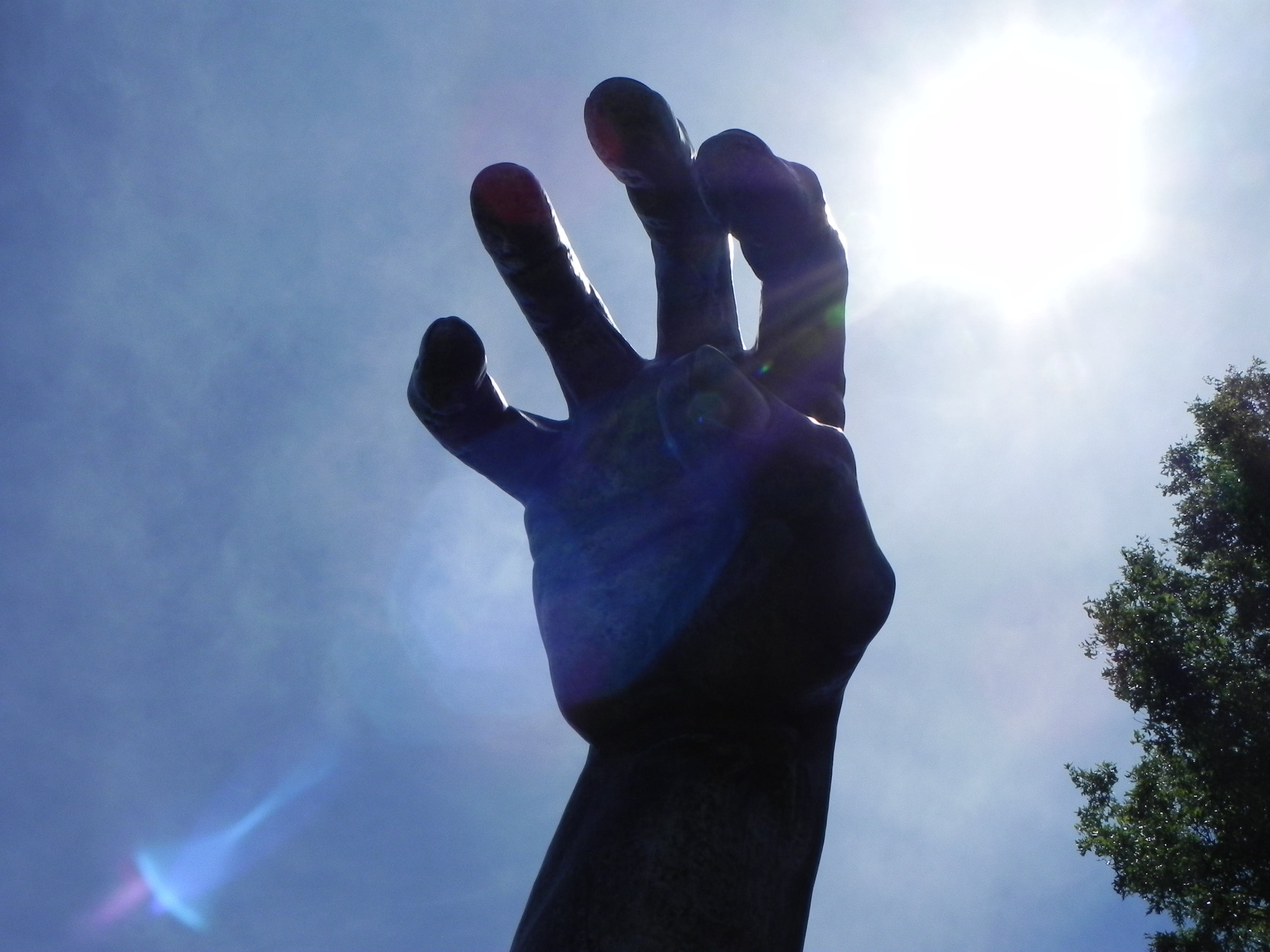
Photo credit: Michael Goltz, via Wikimedia Commons

In the midst of all of this, as well as our own versions of it in America, I wonder where the teachings of a prophet who advocated care for the stranger went.  Too bad he never stated directly, “Love thine enemies.”  That sounds radically leftist, doesn’t it?  No, those who think like this ignore the constant refrain of love in the New Testament to focus on a verse or two that say a man shouldn’t lie with a man.  Where’s Socrates when we need him?  Or even Tchaikovsky?  Religion becomes doubly dangerous when it has political backing.  “Love thy neighbor” becomes “kill thy enemy.”  And you must say your country is the greatest in the world and all others are inferior.  Sounds like something a carpenter from Nazareth would’ve agreed on.

Too much gold in the eye, it seems, can lead to spiritual blindness.  Established churches grow quite comfortable when governments hold them close.  The problem is an ancient one.  Even in the biblical world temple and palace mutually supported one another.  The idea of a country where no church ruled the state was a new one a few centuries back.  If different churches ruled neighboring nations the result was, of course, war.  Davie makes the point in her article that the Ukrainian Orthodox wanted some autonomy, which is the Orthodox way generally.  But the coffers in Russia swell more when you get cuts from all the others.  Churches and other businesses worldwide seem to know that by instinct.  But to back a ruler who has civilians, women, and children murdered to keep the godless out?  If that’s godly behavior then we’d better all get down on our knees.  

Heat Wave

Kim Stanley Robinson’s The Ministry for the Future wasn’t my favorite book read the first half of this year, but reading the headlines about India’s heatwave took me back to it.  That’s precisely the way the book starts out—with an intense, deadly heat wave in India.  As a nation lacking infrastructure in relation to the size of its population, and lying near the equator, India is particularly vulnerable to global warming.  We all are.  As the planet heats up and weather becomes more erratic and extreme, food shortages will appear.  At the moment we’re concerned because Covid and Putin-War have driven inflation to incredible highs.  A trip to the grocery store or gas station is like a horror film.  Meanwhile the planet’s heating up and Republicans are pushing for four more years of Trump environmental degradation.  Can we please open a window here?

Global warming has been challenged by many because of their religious conviction that the world ought to end.  Apocalypse is probably the Bible’s most dangerous teaching.  Speaking only for myself, I didn’t know there was an Indian heatwave until headlines took a break from Putin-War and America’s mass shooting crisis.  And oh, India’s sweltering under temperatures over 110 degrees.  People are dying.  Birds are falling from the sky in mid-flight.  We had a couple days in the 90s around here before the end of May.  Those were some uncomfortable times.  Meanwhile in India it was twenty degrees hotter.

The human ability to ignore life-threatening problems we create for ourselves in service of our theology is remarkable.  Even as experts declare religion is no longer important, it’s slowing killing us.  We focus our resources on making money, as if money will do us any good when we’re the lobsters in the pot.  As a species we’re amazingly capable.  Billionaires can afford their own private spaceships—something most nations in the world can’t spare cash to buy—and we have proven ourselves endlessly inventive.  When it comes to the basics—the need to believe, for instance—we turn a blind eye and pretend it’ll just go away.  Religion scorned is a very dangerous thing.  I once heard a talk by a scientist presenting a rosy technological future.  I raised my hand and asked about religious objections and he mused, “I hadn’t even thought about religion.”  His future was progressive and optimistic.  Robinson’s is quite a bit less so, although it ends by suggesting we might manage to pull through, with only millions of deaths.  As Donovan says, “It’s time to ask yourself what you believe.”


Forgotten Goddess

It’d’ve been nice if someone had told me.  If you’re not a professor, though, you’ve lost your importance.  I’ve only written a book on the subject, after all.  Grousing aside, the headline from the Israeli newspaper Haaretz (“The Land”) read “7,500-year-old Burial in Eilat Contains Earliest Asherah.”  Since my dissertation and first book and several articles were on Asherah, I do still have an interest in the old girl.  I’m curious when new material shows up, even since I wrote my book.  Professors, you see, have the time and resources to keep up with things like that.  When your job is acquiring books in a different field, well, who has the time?  I do keep an eye out for headlines, though.  Skimming a newspaper article now and again I can still manage.

So what’s going on in the resort town of Eilat?  According to the article by Viktoria Greenboim Rich, a rescue operation for expansion going on in the city, led to the discovery of a pre-Israelite burial site.  Among the artifacts discovered was the stump of a juniper tree, upright in what appears to be a cultic setting.  In case your chronology’s even rustier than mine, the Israelites show up on the scene roughly 3,300 years ago.  This sanctuary has been carbon dated to nearly twice that age.  We don’t know a ton about what asherahs (lower case) were, other than that they were made of wood, they stood upright in sanctuaries, and they angered Yahweh.  So was this an asherah that was found?  Are they really that old?

It’s an intriguing question.  Writing hadn’t really been invented that long ago.  There were some rudimentary efforts in that direction, perhaps, but Sumerian, the earliest attested written language, wouldn’t show up for a couple of millennia yet.  That means artifacts are unlabeled and there aren’t any texts to describe what they are when we find them.  Did Asherah have a prehistory that early?  We just don’t know.  The trend even since before I was researching the goddess has been to suggest any upright wooden object found in a cultic context is an asherah.  You can hardly blame archaeologists for suggesting that, since wooden objects don’t survive that well in the levantine climate.  We naturally like to fill the gaps.  If this is an asherah then it would’ve been called by a name we don’t know.  Hebrew hadn’t yet evolved by then, as far as we’re aware.  But why else, so the thinking goes, would anyone stick a tree in the ground before telephone poles (those modern asherim) had even been invented?


At Home Abroad

You would’ve thought it was obsolete.  You see, we have the power to make it end, although the price is very high.  As a Cold War kid, I thought that the next war would be nuclear.  I’d been more or less resigned to that fate by the time I entered high school.  When it didn’t happen I thought maybe mutually assured destruction (right, Dr. Strangelove?) would end war.  Of course it didn’t.  Propagandized as just causes, America intervened in Korea, Vietnam, Afghanistan, and a vague country called “Terror.”  Nukes stayed out of it as we used more old fashioned and nasty ways of killing people.  Now Russia, bristling with nuclear capability, is using that threat to keep others out of its war of aggression against Ukraine.  Still backed by Trump, Putin is killing women and children and threatening to end the world if anyone tries to stop him.

During this war time, several multiple shootings have taken place here in America.  Grocery stores and elementary schools become graveyards even as Americans bray for more guns.  Russia need not invade; we will take care of killing each other, thank you.  Although the pandemic has driven many people to the edge we had this problem long before Covid came along.  Of course, one of the industries to profit from the disease has been the firearm wing.  Nobody feels safe and so they buy more guns, creating a deadly feedback loop.  No other “developed” nation on earth has this level of private gun violence.  The Bible in one hand and the automatic rifle in the other has always proven a deadly combination.

Many of us embrace multiculturalism.  There’s no reason we can’t all get along, accepting others for who they are.  A nationalistic backlash has unravelled this dream.  Violence, domestically generated, if not internationally shipped, has become our hallmark.  There are solutions and they aren’t that difficult to achieve.  Those who bully their way to elected office have already shown their true colors.  Life is cheap when personal aggrandizement is at stake.  Guns do have their fascination.  The sense of power in holding one is palpable.  What if, however, we laid aside our dreams of power for those of the common good?  We want to kill others for being born in a different geographical locality than us.  To think of it selfishly, supply chains and inflation have demonstrated how much we need those from all over the world in order to thrive.  Dreams of power, it seems, quickly become nightmares.


Worth Reaching For

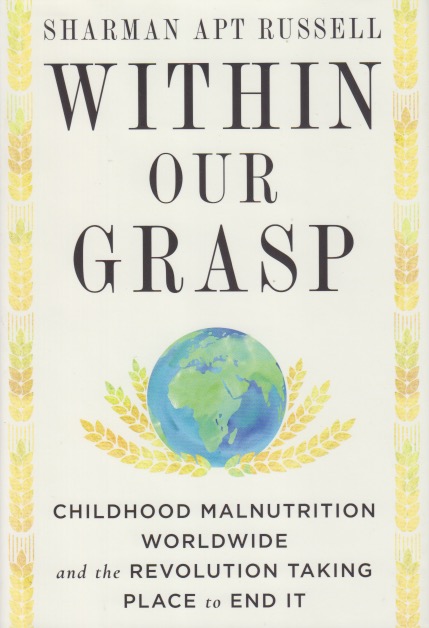
At a recent meeting with a community-building group, the question was raised: what causes can we focus on without triggering the extreme divisiveness that seems to characterize post-Trump America?  There are plenty of things that used to be non-partisan, but that list is growing smaller all the time.  One thing I think we can all agree on is that childhood starvation is a great evil.  Sharman Apt Russell has written an important, and ultimately hopeful book about it: Within Our Grasp: Childhood Malnutrition Worldwide and the Revolution Taking Place to End It.  This is a wide-ranging book with a general orientation toward Africa and a somewhat more specific emphasis on Malawi.  Not limited to that nation, it also addresses childhood nutrition in countries such as India and Vietnam and Brazil.

Russell points out the many developments taking place through the selfless efforts of mostly doctors who’ve seen the effects of malnutrition first-hand.  These individuals aren’t content to let things take care of themselves—their names and organizations are in this book, if you are able to help—and have worked on producing solutions.  One is ready-to-use therapeutic foods (RUTF).  These are inexpensive, fortified compounds that can be distributed to severely malnourished children and very effectively prevent stunting and starvation.  Russell points out that efforts have been made to make such products profitable, otherwise even companies that have some vestiges of social consciousness tend to stay away.  There has to be a way of making money or shareholders just won’t like it, no matter how many children are saved.  Alas, we live in a capitalist world!

A standout, for me, is how much such efforts rely on Non-Governmental Organizations (NGOs).  Governments are often too busy concentrating on power.  We see this world-wide.  Although this book was written before the Russian invasion of Ukraine, one of the things Russell points out is that war is one of the primary causes of childhood malnutrition.   The Putins of the world initiate wars for their own selfish reasons and condemn children to death.  It’s the NGOs that step in and try to make the world a place of a little less suffering.  When I worked in Manhattan this was written on the skyline.  Buildings dedicated to helping were small brick structures huddled next to corporate profit-making giants.  Guess which is dedicated to making the world a better place?  This is a hard book to read at times, but it is ultimately hopeful.  Progress is being made, but we can do more.  And one way to do so is to spread word about Within Our Grasp


Haunting History

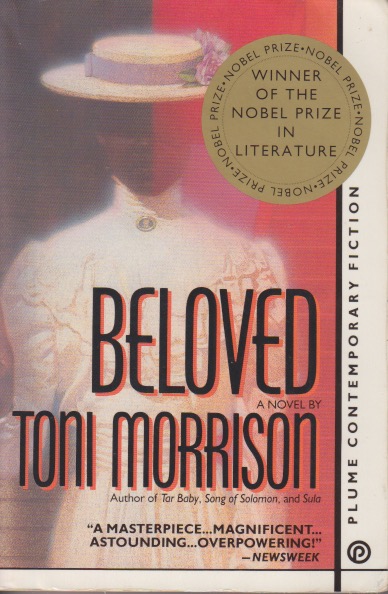
It’s difficult to do without feeling guilty, even if you personally had nothing to do with it.  It does seem that “Whites” have to take the initiative to dismantle systemic racism before any kind of fairness can settle on the world.  Toni Morrison is a great example of why that’s so important.  Beloved is perhaps her best-known work.  Although it involves a ghost it’s not so much a ghost story as it is a haunted story.  Black experience has been one of enforced poverty, after the emancipation proclamation—much like the American Indian experience.  Morrison represents this in a non-accusatory way, but she indicates in her story how the pain and mistreatment persists.  Her work is more important now than ever.  White supremacists are controlling the narrative in much of the country although they are the minority.  They need to read this book.

There will be spoilers here, if you’re even later coming to Beloved than I am.  Sethe was a slave.  The novel is set just after manumission, but she escaped before that.  She had four children and when she was sexually assaulted she realized this could happen to her children and she decided to spare them that fate.  Although she was stopped before she could kill all four, her first daughter, Beloved, was her victim.  This story is about what happens when Beloved returns to live with Sethe and her remaining daughter.  It is a haunting story.  No “boos” or jump startles, it sets up a sad atmosphere of a woman falling apart because of guilt.  Guilt for an event that would’ve never happened if she’d been treated like a human being.

Apart from the schoolteacher and his cohort, the whites in the story are kindly to Sethe.  Her “owner” was a slaveholder who gave his “possessions” respect.  She was saved from hanging after the death of Beloved by a local white man who understood what slavery might do to a person’s mind.  Even so, these kind people think of Blacks as servants rather than as people in their own right.  It’s difficult to read books like this.  That’s one of the reasons that it’s important to do so.  There is a lot to analyze here, much to reflect over.  If we put books like this on reading lists instead of banning them, it would help to bring understanding and sympathy rather than hatred and fear.  The future only improves when we admit our past errors and move to heal the scars we continue to inflict.


Blood Money

The overdose crisis is very real and very sad.  Even so I couldn’t help being stopped and shocked by how economics was brought into it in a recent New York Times article.  Lab-made drugs are cheaper, so dealers pass on the savings to users.  Does anyone else see the problem here?  Isn’t the real drug capitalism?  Or take the Republican acceptance of violence as a legitimate political tool, also highlighted in a recent Times article.  Their blind followers think it’s about saving unborn babies but anyone who’s studied politics knows it’s about the money.  If you can distract the electorate with an emotional issue you can pick their pocket at the same time.  Capitalism smiles on the wealthy.  And only on the wealthy.

I’m not naive enough to suppose we can do without the dismal science, but the more I learn of economics, the more dismal the dismal science becomes.  I was recently reading about the ranching industry in early American expansion and the amount of power concentrated in those who raise animals for slaughter would make the most bloodthirsty of gods smile.  Indeed, Europeans coming to a new country wanted to make it in the image of their lives back home (they were largely successful).  Especially those who raised specially bred varieties of sheep, goats, and cattle.  Since grazers and browsers require a lot of land, the American west appealed to them.  Although big beef and big dairy produce more environmental problems than most big industry does, we let economics make the decisions.  And in economics the big and the selfish always win.

Photo by Tanner Yould on Unsplash

A bit of wisdom comes from the musical 1776 where John Dickinson explains in “Cool, Cool, Considerate Men” that the common person will always vote for those who preserve the (near impossibility) of becoming rich, the myth of capitalism.  The average person lives each day not worrying that they will be struck by lightning.  Those who are often believe it isn’t likely and remain out in a storm.  What are the chances of a poor person actually becoming rich?  In this economic system?  Don’t go outside in a lightning storm.  Americans have been taught to retch at the word socialism despite the fact that it works extremely well in most of Europe.  Instead we proliferate guns and drugs on the free market model and wonder what could possibly go wrong.  Yes, there really is an elephant in the room.  And we’re burying far too many people because of it.


Horror Deprivation

Is there such a thing as horror deprivation?  Life has been so busy that I haven’t been able to carve out the time to watch any horror movies for several weeks now.  That steady diet has given me blog topics and a strange kind of personal comfort in this all-too-scary world.  More than that, it is often a coping mechanism.  I sometimes think more people might read this blog if I “rebranded” it as horror-themed, but perhaps there’s a different way to go about it.  Some writers, with enough shares and likes, have their daily observations become part of the national wisdom.  The rest of us, it seems, are simply background noise.  I’ve also been told blogs are passè and that may be the case.  I have trouble keeping up.  I don’t even have time to watch horror!

As with most things in life, I keep a list of movies I need to see.  Like claws such a list continues to grow unless it’s trimmed once in a while.  A movie is a couple-hour commitment and when even weekends are programmed to the last minute it’s difficult to squeeze them in.  I always welcome the more pleasant weather of spring, but so does the yard.  I’ve always thought, like good haunted house owners, that I would let the yard go.  Here in town there are ordinances, though.  It doesn’t look tidy—right now dandelions exceed the tolerated grass length a mere day after mowing.  Like triffids they pop up and won’t go away.  I could be in, watching a movie.  My credibility’s on the line here!

The pandemic, from which horror movies will arise, led many people to having too much time.  Netflix soared.  For whatever reason, it had the opposite effect on me—is this a special effect?—I had even less time than before.  I had to cancel my Netflix account because I had no time to use it.  Horror is a coping technique.  Real horrors spill from the headlines daily.  Sometimes the antidote is in the poison itself.  The way to be less scared is to watch more horror.  We’re still in the pandemic and Putin decides to start a war.  Republicans confess that Trump tried to take over by force and then backtrack.  Global warming continues apace.  There comes a point when the only therapy is to watch something worse unfold, as long as it’s fiction.  It’s Saturday.  It’s raining.  What can one possibly do?


Tweets from Heaven

What do the ultra-rich know about morals?  I read recently that now that Elon Musk has purchased Twitter for billions and billions of dollars, that he’s going to allow Trump back on because it’s “morally wrong” to prevent him.  Heaven help us when the plutocrats start dictating morals.  One of the odd things about my strange career is that I was an undecided major in college.  I settled eventually on religion, but my transcript shows a restless mind.  One subject that I came back to time and again was ethics.  I want to know what is right.  Shutting up a deranged narcissist who wants to run the country only to enhance his image of himself seems a moral no-brainer.  The case was different before he was elected the first time.  Now we know.  Now we have a responsibility.

Those who can afford to buy the moon shouldn’t make declarations on what is moral.  The church, however, has largely become irrelevant.  “It’s easier for a camel to pass through the eye of a needle,” a famous moralist, whose name is unfortunately forgotten, once said.  The moral compass of the uberwealthy is irrevocably squewed by a massive loadstone known as personal wealth.  Indeed, our very laws are made by the wealthy to protect the interests of the wealthy.  They do this by courting biblicists who seem to have forgotten—what is his name again?  You know, the one who seemed to have a problem with the rich?

Photo by Sharon McCutcheon on Unsplash

Morality has somehow become confused with concerns about other people’s genitalia.  We don’t ask what the wealthy do with theirs—it’s pretty clear what one tweeting resident of Mar-a-Lago has done with his.  Ironically Protestants broke away from the Catholic Church largely because of the sale of indulgences.  The idea that the rich could buy their way out of sins rankled sixteenth-century moralists into saying sola scriptura.  But now they have lost even their solaScriptura, for its part, is unequivocal about one thing—the problem of the rich.  The poor aren’t the problem.  In this new gospel, however, victims are blamed while the powerful rightly rule all.  The divine right of riches.  The wealthy, so misunderstood; the poor are the way they are because they’re lazy.  There’s no systemic cause for anyone not to have as much money as he wants (and it seems they’re generally he’s).  And they have a right to say whatever they want because their word comes down from heaven, echoing out from their private space rockets to the stars.


Shopping Screed

Capitalism is insidious.  Those of us with modest incomes—and I’m quite aware that many, many people are poor—are constantly being bombarded with new schemes to get us to pay a little each time for something that used to be free.  Look, I realize the economy was hit by the pandemic.  We’re all paying for it.  Still, even basic stores you’ve used your whole life now want you to sign up for schemes that will only cost you a dollar each time and which never really pay anything back.  The one that’s got me thinking about this is a drug store.  Like it’s a surprise that you’ve decided to buy something at a drug store.  They get you to sign something you vaguely understand as you’re trying to rush out the door with your prescription and then they send you daily emails telling you how great it’s going to be.

And surveys—the endless surveys!  They sound more neurotic than I actually am.  Did we do this right, and could we have done it better?  It’ll only take a quarter hour of your time.  Each time you stop in.  And please do that daily.  The last time I did one of these surveys for the promise of a prize worth $90, I ordered their version of a fit-bit as my prize.  I’m curious how many steps I take in a day and no, I don’t carry my phone with me everywhere.  The “prize” arrived late and when I charged it up and turned it on (it came with no instructions readable in my native language) it worked for a total of literally 3 seconds before the screen died a pixelated death.  Now that same company wants me to answer surveys weekly and pay an extra dollar each time I come in.  It’s enough to make me want to use the other drug store, but they’ll probably do the same.

The thing is it’s not just pharmacies.  All the stores are doing it.  You shopped here once?  Look what else we’ve got!  Some of us shop for what we need.  We live on a budget.  If you’re going to start charging me for the privilege of shopping at your establishment I’ll have to start going somewhere else.  The items on offer for promotional plans are things I just don’t buy. If you want me to spend more, then reframe your economics and pay me more.   And I don’t have money to just give away.  Have you even taken a look at your last heating bill (thanks Mr. Putin)?  I’ll come to the store again as long as it’s free to shop there and it has something that I actually need.

Photo by Bruno Kelzer on Unsplash

Words and Belief

Why do we care so little for the poor?   Part of the answer is surely the misguided idea of meritocracy—if you merit good you will be successful.  This kind of thinking emerges from the wrong end of a bull.  There may be poor people who are lazy but the vast majority of the poor are those for whom our systems make it impossible to thrive.  It’s very easy to put them out of mind as long as we can keep them out of sight and just let our prejudices do the thinking for us.  The poor are the victims of capitalism.  Loud voices proclaim them to be a drain on the system, despite the fact that many of them work—some multiple jobs—and remain unable to keep up.  Capitalism is kind only to the wealthy.

The Rev. Dr. William Barber is one of the organizers of the Poor People’s Campaign.  The full name is the Poor People’s Campaign: A National Call for Moral Revival.  The initial part is taken from an initiative that Martin Luther King, Jr. started before his assassination.  He was shifting towards a movement meant to address the entrenched unfairness deep in American society.  These nearly six decades on, we are just as deeply entrenched.  Barber is doing amazing work, organizing, speaking, and advocating.  He’s trying to give a voice to the people.  I do wonder, however, if using the word “Revival” doesn’t work against the goals of the movement.

Certain words have been poisoned by their abuse among various religious groups.  Especially among the young.  The word “revival” may fall into that category, calling to mind, as it may, repressed people working up to an emotional fever under the banner of Hellfire and brimstone.  Believing a bit too literally a message that was contained in a book viewed magically.  Names can be important.  Many of the younger generation are put off even by the word “church” since so much hypocrisy (something the Republican party has openly embraced) has come to light over recent decades.  I fully agree that we need a moral revival, we need people to wake up and demand that our government promote the justice it claims to seek.  I do wonder if religion, as previously packaged, has the credibility to do it.  No matter how we take on the task, it’s clear that the poor have been abandoned by the system, through no fault of their own.  And some in the church have begun to find their voice in the Poor People’s Campaign.

Photo by Katt Yukawa on Unsplash

Tax Season

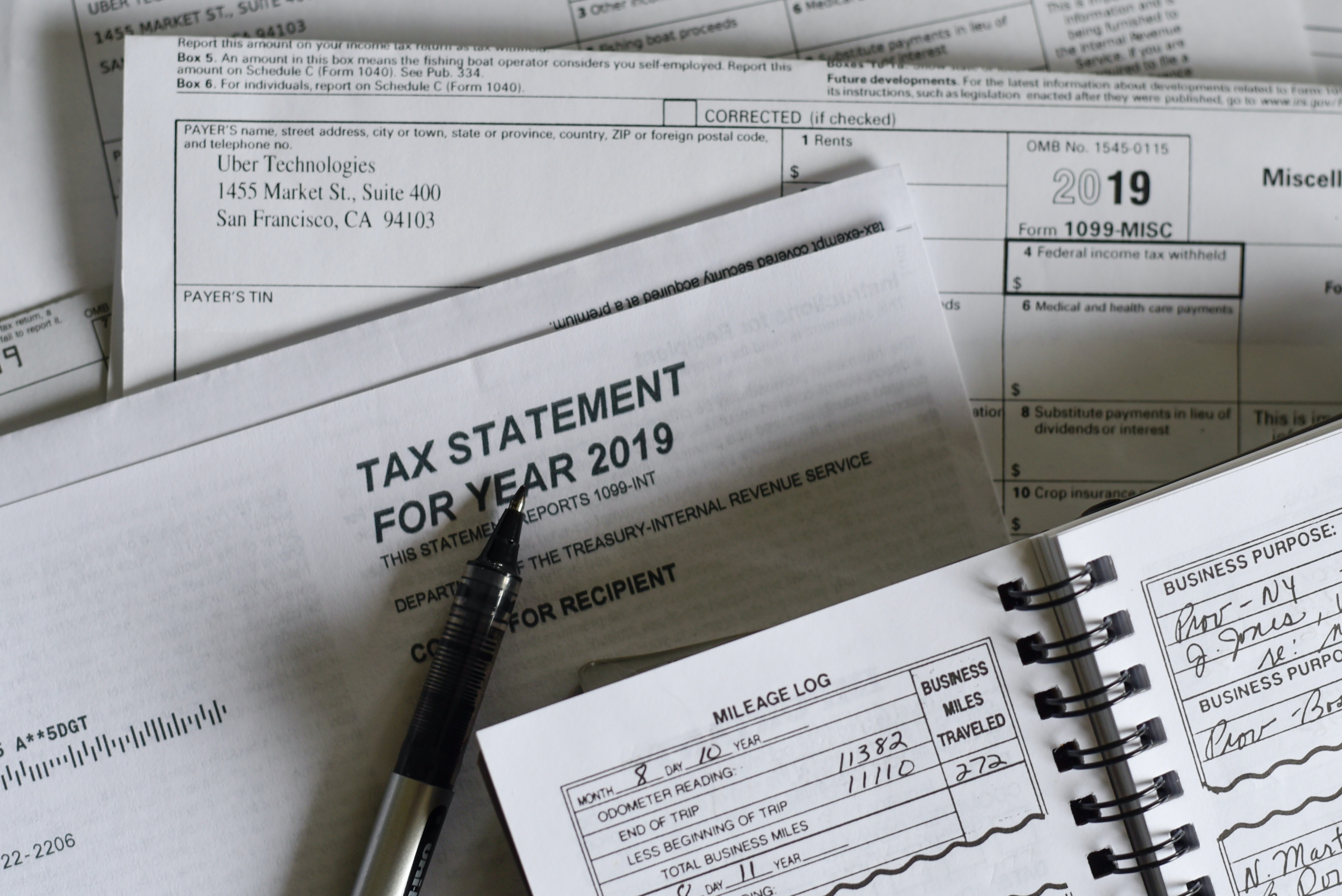
And it came to pass in those days, that there went out a decree from the Internal Revenue Service that all the world should be taxed.  (And this taxing was first made when Penn was governor of Pennsylvania.) And all went to be taxed, every one into his own city. And Steve also went up from Galilee, out of the city of Nazareth, into Northampton, unto the city of David, which is called Bethlehem; (because he was of the county and district of Northampton:) To be taxed with Kay his beloved wife, being great with patience.  Well, not exactly biblical (with apologies to Luke), but this came to me upon having to go to Bethlehem to collect our tax documents from our accountant.  There’s something biblical about living in the Lehigh Valley.

Photo by Olga DeLawrence on Unsplash

I don’t complain about having to pay taxes.  I only wish far less of the money went to pay congressional salaries.  And far less to the military.  Otherwise, I realize that in order for infrastructure to be up-kept, for the many services that make life possible for so many people, those of us who earn enough—even if not exactly flush—owe something to the system.  I’m saddened that the very wealthiest feel they’ve earned the privilege of not paying taxes. Modern-day Herods, I think, ready to kill babies in order to maintain personal power.  Still, those of us who pay participate in the most basic kind of charity.  So we make our annual trip to Bethlehem.

These days many people feel that if they don’t like other people they shouldn’t cooperate with them at all.  Even finding out that a certain Trump has been defrauding the very government which he purported to lead, and has been doing so for many years, doesn’t dissuade some of them.  I think our accountant, who looks gaunt and who doesn’t overcharge, could fairly claim a bit of back taxes that might be due.  Community is an endangered concept.  It’s a place where people support one another, and perhaps even care about others.  When I logon to Nextdoor.com I’m distressed to see the trolling and inappropriate emojis that show up.  The internet makes us all think we’re clever, ready with the snappy comeback.  Even to a recent story about a dead homeless man found in a park.  We need each other.  Society can’t move ahead if everyone keeps everything to themselves.  So it was we drove our rusty, four-cylinder donkey even unto Bethlehem.


1 April

Image credit: Trocche100, public domain via Wikimedia Commons

The funny thing is nobody knows how it got started.  In living memory, and indeed back a century or two—even more—people have considered April 1 a day for jokes and fooling.  Perhaps it was a kind of relief after winter was finally beginning to show its tail, or perhaps it was some distortion of Hilaria, the Roman festival of the goddess Cybele.  Some have speculated that it had to do with switching from the Julian to the Gregorian calendar when many were confused as to what the actual date was.  No matter what its origins are, April Fools has stuck.  It has such resonance that even legislation passed on this date is sometimes questioned as to whether it is serious.  Some locations have grand pranks planned and budgeted.

Nobody, as noted, knows how this got started.  One of my personal favorites posits a biblical origin.  Things tend to go back to the Bible in western culture, don’t they?  This idea takes it all the way back to the tenth generation of the human race: Noah’s flood.  Back in the eighteenth century it was suggested that Noah sent out his first dove before the waters abated on April 1 (this, of course, is based on knowing the exact days of creation—something that was of considerable interest in the seventeenth and eighteenth centuries).  Since the dove was sent on a “fool’s errand”—there was no dry land visible—well, April fools!

With rare exceptions this isn’t a day off work.  It’s not a holiday with any religious implications, despite speculations about Noah and his dove.  It’s really a day highlighting uncertainty.  Practical jokes can, of course, be harmful.  There can be those, such as yours truly, who might be slow to catch on.  Indeed, almost always the victim of a “practical joke” doesn’t find him or herself in an appreciative mood.  I’ve always personally thought the reference was to the weather.  Snow isn’t unusual into mid-April in parts of the northern tier.  In fact received wisdom suggests not planting annuals until May arrives.  April’s weather, in other words, fools.  Around here we’ve whiplashed through March with days in the seventies and others the coldest of the winter (or so it seemed).  Now we’re into the first full month of spring.  The early flowers are out (some of which succumbed to the cold of this week’s weather) making fools of us all.  My hope is that none of us take this day’s unknown-origin holiday too seriously.


Future Ministry

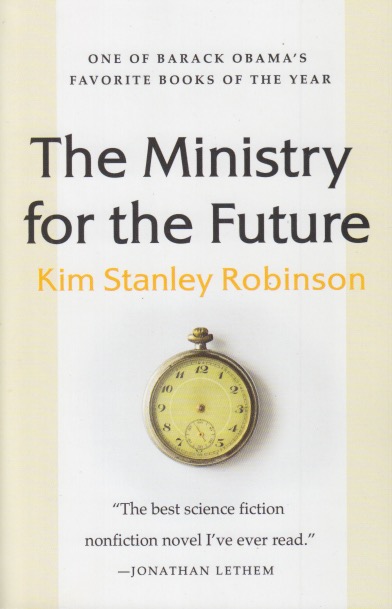
I’ve been on the Green Committee at work almost since I started the job.  Occasionally for Earth Day we’ll have a book discussion.  Usually it revolves around nonfiction books that my press publishes.  This year they selected Kim Stanley Robinson’s The Ministry for the Future.  It’s an environmentalism tale of what global warming may well be like and the political machinations it might take (and the millions of deaths along the way) before we stop burning carbon.  It’s a long and detailed and political story.  Robinson is known as an intellectual science fiction writer and there are sci-fi elements to the book, but its style is realist and its outlook, while ultimately hopeful, is staid.  Even when humans start to move in the right direction.  It’s also a very long book.

Reading it got me to thinking again of a somewhat bewildering truth: environmentalism books tend not to sell overly well and sustained reading, even by supporters, is difficult.  Many of us know that we’re beyond the tipping point for environmental disaster.  The Trump years assured us that it is coming.  One of the elements Robinson makes clear is just how politically entrenched it is.  Perhaps that’s one of the reasons for the despair.  The vast majority of people in the world want a more environmentally conscious government, but plutocracy tends to bring narcissists to the top and the needs of all others are less important.  In Robinson’s version of the story, targeted violence is the only thing that works.  Near the end of the story an interesting idea is raised: the Ministry of the Future (which is a government ministry, not the church kind) concludes a new religion is needed.

The masses of people, you see, are followers.  Religious leaders reinforce the idea that God told their founders—and by extension their followers—the only truth.  Their jobs (and ministries are jobs) include reinforcing those ideas to people who’ve been raised or converted to that particular brand of religion.  A number of New Religious Movements, and even a couple of prescient ancient religions, have been purposely constructed.  The trick is to get followers to accept that the religion is legitimate.  Most western religions around today have been based on the idea that humans can do whatever they want with the planet—even destroy it to force God to return.  I kind of like Robinson’s idea better.  Perhaps that’s why religions form around movies like Avatar.  Not a bad thought, when your job has you reading a sci-fi novel.  A religion saving the earth feels like a novel idea.


Thinking, Critically

A woman—I don’t know her name—photobombed a Russian newscast with a sign telling the Russian people that they’re being lied to.  Detained by police, her whereabouts are unknown.  I admire that woman.  She may pay with her life  in her effort to encourage what is dear to every teacher everywhere: critical thinking.  Many of the world’s problems are the result of the dearth of critical thinking.  There’s no other way to explain the election of Trump and his main squeeze Vlad.  Thick as thieves, the saying goes.  I recently gave a talk to a small group about publishing.  One of the points I was making is that critical thinking is essential in getting to the truth.  Compare sources, use reason, and never trust a snake-oil salesman.

People vote with their feelings rather than with their rational faculties.  Trump openly admires Hitler, as Putin does Stalin.  These should be signs of warning to those who think critically.  The Second World War wasn’t even a century ago and we’ve apparently forgotten all the lessons it should’ve taught us.  In high school we were shown examples of propaganda and told how to avoid it. Now we see it and can’t recognize it at all. Critical thinking is often frowned upon in modern society.  Being comfortable with the status quo is perhaps valued higher than social justice and the necessary work to get us to where it might happen.  It’s easier to hate than to think.  It’s easier to follow than to question what you’re following.  Education teaches us survival skills, and among them are the ability to think through a situation.  Authoritarianism is seldom—I’m tempted to say “never”—the way to a good result.

Perhaps the saddest irony of all is that those who run outlets like Fox News (and its Russian equivalents) are thinking critically of ways to get followers not to.  Realizing that critical thinking will lead to a more fair and equitable world, they decide to keep their positions of privilege by discouraging their followers from engaging with the basic comparison of sources and weighing of facts.  Instead, promoting “alternative facts” and emotionally outraged rhetoric, they are able to stir up crowds to try to take over the government.  Conspiracy theories are easier to believe if you don’t know how to check facts for yourself.  And the internet has made us all experts on everything.  Russia’s narrative about the war is far from the reality on the ground.  Objective observers have seen what is really happening.  One heroic woman in Russia said enough is enough.  In all likelihood nobody in the world will ever see her again.