The Printed Word

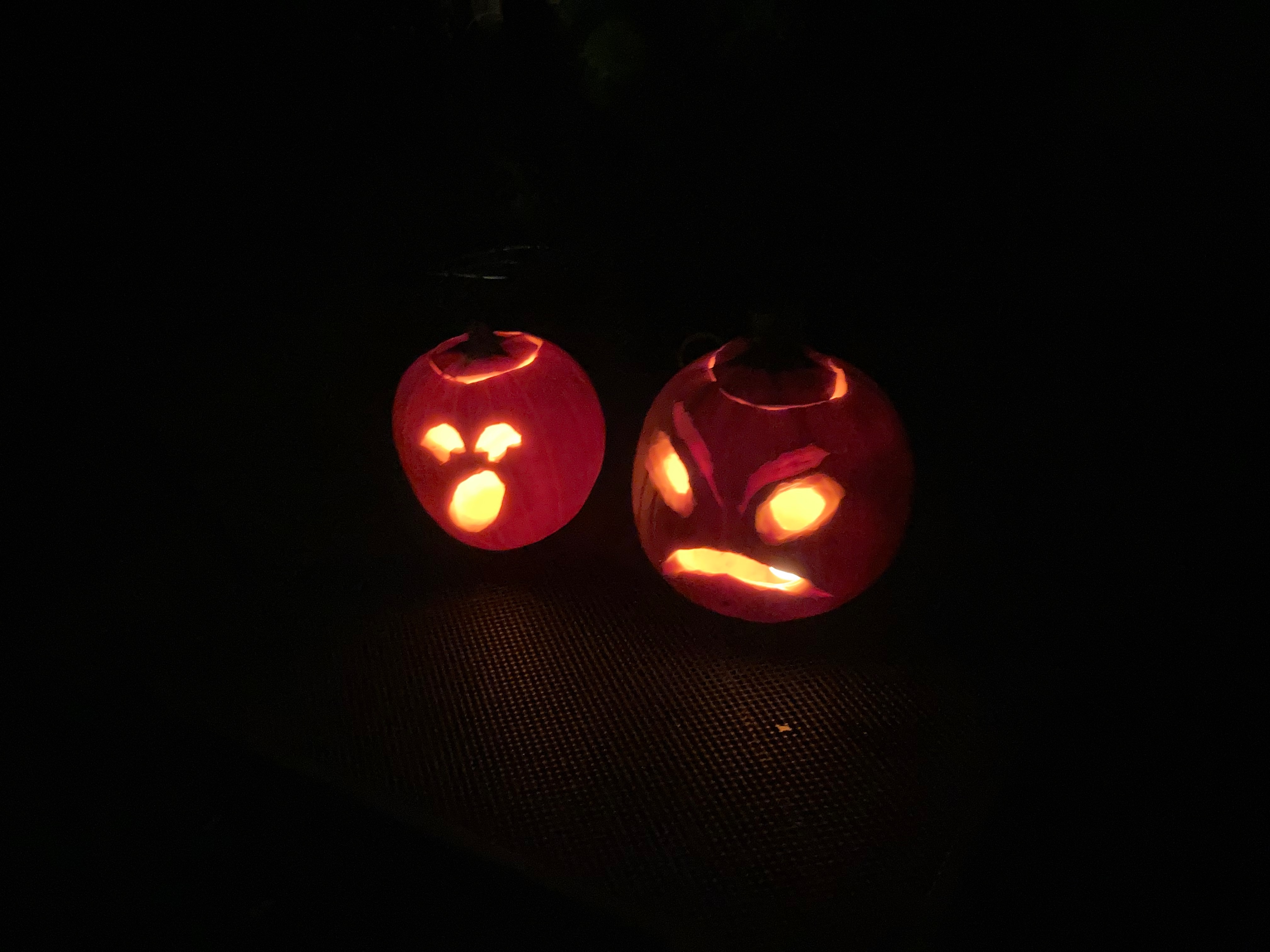
I miss them, newspapers.  Now, I’ve never been a great newspaper reader—I tend to live in my own little world, I guess, and I really have no taste for politics.  I still glance over the New York Times headlines daily (mostly) but that’s not what I’m talking about.  I’m talking about physical newspapers.  The other day we had a family creativity session.  This generally involves painting in some form or other and I realized with chagrin that we had no newspapers to lay down.  Nothing to protect the table top.  The same is true when we carve pumpkins, or do other activities that make you think that you want to protect your furniture.  Newspapers were always there.  We used to line our birdcage with them.  Made papier-mâché out of them.  They were handy to have around.

Josef Danhauser, Newspaper Readers, public domain. Image credit: Österreichische Galerie Belvedere, via Wikimedia Commons

We live fairly close to our means, so we don’t have lots of drop cloths lying about.  (Plastic is so much less feeling than paper.)  We don’t have rolls of butcher paper in our kitchen.  We even use cloth bags for groceries, so grocery bags are at a premium.  Our electronic mania has meant that physical creativity suffers.  I do applaud the saving of trees, but you sometimes just need the disposable broadsheet to catch the drips.  (And when I paint, believe me, there are drips.)  But perhaps this is a symptom of this insipid internet life into which we’ve slipped.  The other day I was searching for an electronic services store.  I’m not even sure what to call them anymore.  I had to go to the physical store (yes, they still make them) to have something looked at.

The website kept telling me a store with a different name was what I was looking for.  All I wanted to know was whether this was an actual store or some knockoff.  If you’ve purchased what are being called “dups” now you know that companies blatantly use other companies ads to sell cheap knockoffs that don’t resemble the product you wanted at all.  This all seems to be perfectly legal.  I guess I’m just nostalgic for the days when you had to have patience and doing things slowly was a sign of good quality.  The 24-hour news cycle has hardly been a benefit, and Trump could’ve never been elected without it.  And if you wanted to paint something, you’d just go to the stack of newspapers that every house seemed to have, and paint over any headlines you wished you hadn’t seen.


Book Stories

I’m a headline browser.  Sometimes a story will make me sit up straight and click.  I was browsing the headlines in Publisher’s Weekly’s daily updates earlier this week.  One of their regular sections is on independent bookstore news.  When I saw “Oil City” and “Pennsylvania” in the same headline, well, I sat up straight.  I grew up very near Oil City, and attended Oil City High School.  One thing I noticed, even as a child, is that the nearest bookstore we knew of was over in Meadville.  (Eventually a B. Dalton’s, or Waldens, I can’t remember which, opened in the local mall that is now a very sad superstructure to visit.)  I would work the summers and after buying my school clothes would beg mom to take me to Meadville so that I could visit the bookstore.  It was a place that made me happy.

I don’t remember a bookstore ever being in Oil City (or Franklin, except a Christian bookstore).  I wish Raven’s End very well.  If it weren’t six hours away I’d drive there this weekend just to support them.  In these times of challenging human intelligence, we need more bookstores.  We need more readers.  That’s one of the reasons, I suspect, that Publisher’s Weekly informs readers of new bookstores opening.  As a young person you tend to accept things the way that they are.  In one of my philosophy classes I learned that this was called “naive realism.”  I also learned along the way that our brains evolved to help us survive, not to discover reality.  We have to work at the latter, and that means reading.

I live in the Lehigh Valley, a community that has had to remake itself after the closing of Bethlehem Steel.  I grew up in the Oil City and Franklin area which would eventually have to remake itself after the closing of Pennzoil and other large, heavy industries.  As I was growing up there I found books, but in department stores like Woolworths, or more commonly, secondhand at Goodwill.  People are changed by the books they read and, given their own devices, most won’t go online looking for books.  After work I tend to shut the computer down and pick up a book to read.  I also try to carve out reading time each morning.  I grew up without easy access to bookstores.  It gladdens me to see one opening in the small town where I began to realize the importance of picking up a book and learning about this ever-changing world.


Rabbit Hole Crawl

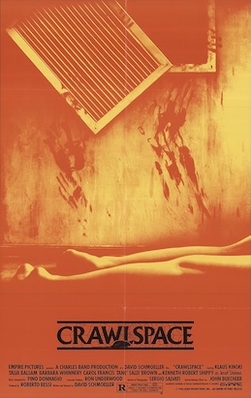
Rabbit holes can be fun.  They can also leave you scratching your head.  David Schmoeller directed some third or fourth drawer horror films, among which is Crawlspace.  Having fallen down the Schmoeller rabbit hole, I found it streaming at the cost of frequent commercials.  Hey, that’s how I watched movies as a kid, so why not?  I was drawn to the movie by Klaus Kinski.  He is arresting on camera and directors knew it.  He was also famously difficult to work with.  Schmoeller apparently tried to get Kinski fired from Crawlspace, but without him it would’ve been a nearly complete waste of time.  That’s because Schmoeller’s story (he also wrote it) doesn’t make a ton of sense, even if it introduces some fascinating themes.  So Gunther (Kinski’s character) is a landlord.  He rents rooms in his house to young women that he murders, after spying on them through the eponymous crawl space.

Why does he murder?  Because his father was a literal Nazi and Gunther has tendencies in that direction.  He’s conflicted, though.  A medical doctor, he saved lives.  He also killed.  Caught up with the God-like power of determining life and death, he explores it at the expense of young women.  And their erstwhile lovers.  And occasional visitors.  Kinski pulls off this double life persona, making him believable.  Even so, the story doesn’t have much other depth.  There’s a lot of crawling around HVAC vents and inventing of insidious ways of murdering and tormenting people.  When Gunther finally loses it and puts on make-up and dresses as a Nazi it’s clear that this is the endgame.  I won’t spoil the ending, but I can say there’s a bit of irony there.

I first became aware of Klaus Kinski through his mesmerizing performance in Werner Herzog’s Nosferatu the Vampyre.  His is one of the best vampire portrayals in all of cinema, in my opinion.  I wonder at the confidence of someone so difficult to work with and yet who appeared in more than 130 films.  I’ve been fired for doing a good job at least three times.  But then, I’m not a professional actor.  At least two of the directors Kinski worked with (Herzog and Schmoeller) made documentaries about how difficult he was.  There were rumors that both wanted him killed.  And yet he made a living acting.  (He was also married, and divorced, thrice.)  I’ve seen him in a handful of films and he does, in what makes it through to the final cut, command attention.  Without him Crawlspace would simply be a hole in the ground.


Zoning In

Born Jewish, and Unitarian by choice, Rod Serling believed in the inherent worth and dignity of all human beings.  Like many people, even Serling believed that season four of The Twilight Zone, which went to an hour format from the usual half, didn’t really work.  Nevertheless, the fourth episode of that season,“He’s Alive,” really should be required watching of every person in the United States.  This episode was written by Serling and it focuses on a young American fascist who’s having trouble gaining a following.  A shadowy figure then reads to him from what sounds exactly like Trump’s playbook, and soon decent people are raging along with him about foreigners and those who are different.  When the shadowy figure is finally revealed, we’re not surprised to learn it is Hitler.

The young man obeys without question, and soon it looks like he could be elected.  He has one of his best friends killed as a martyr to the cause.  He murders an old Jewish man who has cared for him since his youth.  He declares himself made of steel, with no feelings.  And when he ends up dead (everyone knows how Hitler’s career culminated), the spirit of Hitler rises from his body as Serling warns that wherever hatred exists, Hitler still lives.  Now this episode aired in 1963 but it could’ve been 2016, or 2024.  Prescient people, like Rod Serling, knew that mob thinking could be easily exploited.  Even in the first segment after the introduction the instructions are laid out.  Play on people’s fear of those who are different.  No matter how good things may be, people will be unsatisfied.  Add any power-hungry individual and you’ve got the recipe for a fascist overtaking.

The episode made me wonder if we could ever become a just society.  Ironically, that which calls itself “Christianity” these days stands in the way.  In its day, The Twilight Zone was amazingly influential.  It had a great impact on what was to follow and it’s still regularly referred to, even by those who’ve never seen an episode.  If only we’d pay attention to its message.  I’ve been making my way through the entire series, slowly, over the years.  Now and again an episode will really hit home.  I have to admit that I was physically squirming during “He’s Alive.”  It’s not that it is the greatest episode of the series, but its message is extremely timely.  The requirement for a better world is simple, but seemingly impossible to reach.  Treat others as you wish to be treated.


Letting Go

I should’ve known from the title that this would be a sad story.  Kazuo Ishiguro’s Never Let Me Go won the Nobel Prize in Literature, despite being speculative.  It’s only mildly so, but enough that it is sometimes classed as science fiction.  It’s appropriate that a twentieth anniversary edition was released because it is an extended consideration of the price of technology as well as dehumanization.  I’ll need to put in some spoilers, so here’s the usual caveat.  I read this novel because it’s often cited as an example of dark academia and it certainly fits that aesthetic.  It starts out at a private school called Hailsham, in England.  The students are given some privileges but their lives aren’t exactly posh.  Most of their possessions are purchased on days when a truck sells them things they can buy with money they earn by creating art.  They aren’t allowed to leave the school.  Spoilers follow.

The special circumstances of the children are because they’re clones being grown for replacement organs.  The public doesn’t want to know about them or interact with them.  In fact, most people believe they don’t have souls, or aren’t really human.  They’ve been created to be used and exploited until they die, always prematurely.  While this may sound grim, the story is thoughtfully told through the eyes of one of these children, Kathy.  She becomes best friends with Ruth and Tommy, who later become a couple.  Ruth is a difficult personality, but likable.  As they grow they’re slowly given the facts about what their life will be.  They’re raised to comply, never to rebel or question their role.  Most simply accept it.  Kathy, Ruth, and Tommy, in a submissive way, try to get a deferral regarding their “donations.”

I suppose it’s presumptuous to say of a Nobel Prize winner that it’s well written, but I’ll say it anyway.  Ishiguro manages to capture the exploratory friendships of youth and reveals what you need to know in slow doses, all told with a compelling, if sad and accepting voice.  Although the genre could be sci-fi, it’s set in the present, or, more accurately, about twenty years ago.  The technology, apart from the cloning, is about what it was at the turn of the century, or maybe a decade or two before that.  With what we see happening in the world right now, people should be reading books like this that help them understand that people are people, not things to be exploited.  And that Nobel Prizes should be reserved for those that are actually deserving for their contributions to humanity. 


Sad Joy

I sometimes make the mistake of thinking a short book will be a quick read.  Melancholic Joy is a case in point.  Every time I indulge in a book of philosophy I wonder if I missed my true calling.  As my wife is well aware, I’m prone to philosophical musings about the meaning of life although I tend to place myself among the existentialists.  As soon as I saw the title of Brian Treanor’s book it went on my reading list.  It’s short and I thought maybe a week would be enough.  But it wasn’t.  I do hope I can remember much of it.  A word to the wary, the first chapter is very depressing.  Treanor doesn’t sugarcoat the world in his quest on a Life Worth Living.  Those of us who ponder things deeply tend toward melancholy, in my experience.  But stick with it.  There is gold in this book.  Starting with chapter two I was reminded why I took so much philosophy in college.

The world is full of depressing facts.  By the time I was born we’d already devised ways to wipe out the entire human race.  Many, far too many, people live lives of suffering, much of which could be prevented if we didn’t have people like Donald Trump running things.  The political situation is so bad that I’ve disengaged.  Yet still, amid my melancholy, I do feel joy.  You need to parse words carefully here.  Treanor knows that joy and happiness aren’t the same thing.  For those of us predisposed toward melancholy, joy is probably much more common in our lives than happiness.  This book is one that led me to start underlining again.  I do hope to come back to it when my outlook becomes too bleak.  Treanor interacts with both other philosophers and other writers, even some who aren’t always classified as philosophical.  It is a nepenthe.

Some of us think incessantly and can’t help doing so.  It’s a bit difficult to be cheerful if that’s the case.  Melancholic Joy, if I can keep it in mind, may help with that.  There are sections where I had to go back and re-read because my attention had wandered (it happens to us all), but to do so was rewarding.  For anyone who finds many aspects of the world oppressive, and depressing, and who has a philosophical bent, this book is for you.  Just be careful with that first chapter.  Whatever you do, don’t stop there.


Nanowrimo Night

Nanowrimo, National Novel Writing Month—November—has been run by an organization that is now shutting down.  Financial troubles and, of course, AI (which seems to be involved in many poor choices these days), have led to the decision, according to Publisher’s Weekly.  Apparently several new authors were found by publishers, basing their work on Nanowrimo projects.  I participated one year and had no trouble finishing something, but it was not really publishable.  Still, it’s sad to see this inspiration for other writers calling it quits.  I’m not into politics but when the Nanowrimo executives didn’t take a solid stand against AI “written” novels, purists were rightfully offended.  Writing is the expression of the human experience.  0s and 1s are not humans, no matter how much tech moguls may think they are.  Materialism has spawned some wicked children.

Can AI wordsmith?  Certainly.  Can it think?  No.  And what we need in this world is more thinking, not less.  Is there maybe a hidden reason tech giants have cozied up to the current White House where thinking is undervalued?  Sorry, politics.  We have known for many generations that human brains serve a biological purpose.  We keep claiming animals (most of which have brains) can’t think, but we suppose electrical surges across transistors can?  I watch the birds outside my window, competing, chittering, chasing each other off.  They’re conscious and they can learn.  They have the biological basis to do so.  Being enfleshed entitles them.  Too bad they can’t write it down.

Now I’m the first to admit that consciousness may well exist outside biology.  To tap into it, however, requires the consciousness “plug-in”—aka, a brain.  Would AI “read” novels for the pleasure of it?  Would it understand falling in love, or the fear of a monster prowling the night?  Or the thrill of solving a mystery?  These emotional aspects, which neurologists note are a crucial part of thinking, can’t be replicated without life.  Actually living.  Believe me, I mourn when machines I care for die.  I seriously doubt the feeling is reciprocated.  Materialism has been the reigning paradigm for quite a few decades now, while consciousness remains a quandary.  I’ve read novels that struggle with deep issues of being human.  I fear that we could be fooled with an AI novel where the “writer” is merely borrowing how humans communicate to pretend how it feels.  And I feel a little sad, knowing that Nanowrimo is hanging up the “closed” sign.  But humans, being what they are, will still likely try to complete novels in the month of November.


Quarter Day

Some years it sneaks up on you.  The solstice, that is.  The weather remains an area of fascination for me, and not one of infrequent complaint.  The late spring (pretty much all of May and June up until Juneteenth) around here has been rainy and chilly.  Oh, we’ve had hot days sprinkled in, but even this week I had to wear a thermal shirt and fingerless gloves in the morning since there was no sun and the furnace has been off since last month.  The last couple of days, starting, ironically, at Valley Forge, have been getting hot.  And today begins astronomical summer.  I write about the seasons quite a lot.  Having been born and raised in a rainy, temperate zone climate, I grew up accustomed to four distinct seasons.  And we’re now at the longest day of the year.

The quarter days always make me reflective.  Culturally, there’s no real celebration associated with solstices or equinoxes.  The winter solstice falls relatively near Christmas and other winter holidays.  The spring equinox is close to Easter.  The start of summer, which should be ebulliently hopeful with its abundant sunshine, tends to get overlooked.  Some like to say summer is when life is easy.  It does mean mowing the lawn quite a bit.  The grass loves all the rain we’ve had this year.  Waypoints, however, are important.  We divide the year so we might anticipate.  Our agricultural roots focus on planting and harvest.  Even our hunter-gatherer forebears had to follow the food that changed location depending on the prevailing weather.  The seasons are deep within us.

The summer solstice always makes me think of Ari Aster’s Midsommar.  The underlying fear of too much light.  Even here there is a profound message for those able to excavate it.  If things are going well we tend to sabotage them.  Still, I prefer to think of this as a season of hope.  Summer illuminates.  I write this noting the sun’s chasing of twilight outside my window, even before five a.m.  There are still some clouds in the sky because old patterns are difficult to break.  But it is a season of light.  The next quarter day, when we start to realize that the darkness will be increasing until the sister solstice comes to our rescue in winter, is likewise passed over in silence.  By then many will be ready for a respite from the heat that comes with too much light.  Others of us will be thinking of cycles and how they are full of hope and anticipation.


The Valley

Juneteenth seemed a good day to get to Valley Forge.  With all the nonsense going on in the White House, we need to be reminded what this country was founded on and for.  I like to think that we weren’t the only ones there yesterday for that reason.  In fact, in the gift shop I found a book titled America’s Last King.  By the time we left it was sold out.  Like many Americans, I suppose, I only had a vague idea why Valley Forge was important for our young country.  We took a tour that helped explain it.  A tour that some in Washington ought be be required to take.  Valley Forge was a winter encampment—the third in the War of Independence.  George Washington had just suffered two defeats and the British had taken Philadelphia.  His poorly provisioned army set up winter headquarters in this strategically secure hill country.  Inadequately clothed, barely fed, many dying, they planned how to keep their efforts to survive alive.

What happened that winter of 1777–1778 at Valley Forge that kept the United States alive depended on two things, both brought by immigrants.  Let me say that again, in case ICE is having trouble hearing—immigrants saved America.  The young country was in very real danger of defeat.  What turned the tide was an alliance with France (the name Lafayette still looms large here in the east) and the help of Baron Friedrich von Steuben, a Prussian.  Without these foreigners, America would never have survived to become great.  Oh, and Mr. Kennedy, Washington ordered vaccinations at Valley Forge to prevent so many of his troops from dying from small pox, an inconvenient truth.  What emerged from Valley Forge that winter was a more organized, healthier United States Army that would go on to defeat the British so that we could be free two and a half centuries later.

I needed Valley Forge.  Although it was a hot day and the roads are paved, I needed to be reminded what it felt like to be proud to be an American.  Juneteenth is to commemorate the end of slavery.  History shows that many in Washington’s army were of African descent.  It seems that DC has forgotten what America is and what we were fighting for all those many years ago.  It wasn’t to exclude those who were different.  No, it was to pull together to survive.  Our would-be king spends his idle days planning military parades in his honor.  The US Army was born in Valley Forge.  And as an American with ancestors here from Washington’s day on, I really needed that visit to remind me of how America became great.


World History

I don’t doomscroll, but I occasionally fall down a virtual rabbit hole.  One of the truly interesting things about being an editor is reading proposals from other editors.  China’s been a hot topic for the past several years and so I hopped on over to Wikipedia to find out who this Chiang Kai-shek was, after reading a proposal.  I’d heard his name from childhood on, but I’d never read any history of China.  For my entire life it has been a communist country, often with frosty relations to the United States.  One thing led to another and I landed on the page titled Warlord Era.  This sounded like something out of a fantasy novel, so I thought I’d see what that was all about.  When you scroll down to the Warlord profiles section, you find some really interesting stuff.  One of these warlords was a real eclectic guy known as the “model governor.”  Another was a strict Methodist who banned alcohol and dressed like a common infantryman.  Yet another was known as the “most well endowed man in China,” in the southern regions, that is.

Beiyang Army; image credit—unknown photographer. Public domain via Wikimedia Commons.

Now, I’ve never read any Chinese history, but these guys sound a lot less threatening than anyone you’d find in a Mario Puzo novel.  They may have been terrifying in real life; Fidel Castro wore a common soldier’s uniform, but I’d have been frightened had I found him lurking under the bed.  Of course, I’ve never read any histories of Cuba either.  There’s a lot to learn in this world.  I enjoy reading history, but my writing projects tend to direct my non-work reading these days.  I’ve been acutely aware that my time on this fascinating planet is limited and that none of us can learn everything.  It saddens me that world leaders show so little interest in the planet they “govern.”  Even a little reading on Wikipedia should be enough to grease those wheels.

One of the strange ideas that occurred to me once while reading a different proposal was that China conducts business deals with, for example, nations in Africa, in which the United States is not involved at all.  When this thought launched I realized just how parochial the outlook of many of us is.  I lived overseas for three years, but still, the United States, in better and in worse, is my home.  It’s the place I know (or thought I knew).  Where some of my ancestors lived for over two-and-a-half centuries.  As appealing as Canada often seems, my fate appears to be here, along with my heart.  So I don’t doomscroll.  But I do read about China and realize how little I know.


Recession Value

While reading about recessions (am I getting old, or what?), I suddenly got the creepy feeling that our entire lives are unduly influenced by those who think they know what they’re doing.  Financially, that is.  The Great Depression and the Great Recession were both times of economic hardship because the rules capitalism put in place defined us as being in an era of lowered GDP, or gross domestic product.  Why?  Because there were no jobs.  Why?  Those who hold the purse strings (capitalists) had pulled them shut with all their might.  Then, like magic, depression and recession end and everyone tries to get back to business as normal.  To me this seems utterly ridiculous.  They call economics the dismal science for a reason, after all.  The fact is the rules are made by us.

Society is very complex.  This is one reason that people should really think hard about who they’ll vote for.  Leaders who think it’s all simple inevitably lead to disaster.  If I could, I would switch the world economy away from capitalism.  If I were president and were to try this, it would be a very, very slow process.  It would take generations.  Why?  Because this is a complex system.  Sudden changes don’t last.  Of course, to people who believe the universe took only six earth days to create and that a big flood wiped out all the dinosaurs (or maybe some were on the ark), complexity is anathema.  Of the devil.  Well, as they say, the devil’s in the details.

Image credit: I forgot where I found this; if anyone recognizes it please let me know!

And so we suffer through depressions and recessions.  To those of us with feet on planet earth, it doesn’t feel like much has changed.  We still need to sleep and eat and all that, but some “experts” are telling us why we have to pay more at the grocery store or at the fuel pump, and why those at the top of the pyramid seem to be all right, no matter what happens to the rest of us.  And we let it carry on.  Economic systems are simply a reflection of what people value.  The things we value most cost the most (it’s called supply and demand, AKA capitalism).  The most expensive material thing I own is my house, and truth be told, it’s mostly owned by the bank.  But the most valuable actual thing I own is my mind.  It can’t be bought.  And one thing it keeps on telling me is that all of this business about recessions and whatnot is rather silly.


Remembering Holidays

Memorial Day is an important stepping stone to get through the capitalistic year.  Not only does it mark the unofficial beginning of summer, it’s also the first holiday after the long, long drought of March, April, and nearly the whole month of May.  That’s a long stretch of unbroken work.  My ideal holiday may be one where I could hole up in my study with books and endless time to write, but that kind of situation isn’t really realistic.  There’s a lot to do.  Around these parts, however, getting outdoors to take care of those weeds has proven difficult.  Every day since last Tuesday (nearly a full week, as of today) it has rained at least a little.  Sometimes a lot.  And the temperatures dropped on Wednesday, back to early April levels, as if May were vying for the title of the cruelest month this year.

We’ve been making the best of it, getting out to see local attractions while dodging raindrops.  The weeds, I’ve noticed, love this kind of weather.  And I have a visceral reaction to putting on a heavy jacket to go out pulling weeds while watching each passing cloud for a potential downpour.  On the plus side, we have rainbows.  In fact, two nights in a row, about the exact same time, near sunset, we had a rainbow in the exact same spot in the sky.  That’s a sign of hope.  And indeed, the summer takes on a more relaxed atmosphere at work and a few holidays start creeping back in.  Until the stretch of September-October, the second annual drought.  But by then, however, off in the distance I can see the holiday season that starts in November and I know I can make it through to December.

It’s an odd way to live, isn’t it?  Experts talk about how work will be different in the future, but I have a mortgage due in the present, so I step from holiday to holiday, grateful for the time to recover.  With a government trying its best to eliminate benefits to seniors I may have chosen a bad time to reach my sixties.  At least I’m young enough to still pull weeds and push a mower.  (Once the grass dries, that is.)  The main point is not to waste this rare gift of a holiday.  There’s no rain in today’s forecast (but there is for Wednesday, every day through next weekend).  Seeing the sun buoys me up.  And if I can’t have that I can always hope that at least I can have rainbows.


Friendly Fear

I opened my book Holy Horror with an epigraph taken from Apocalypse Now, a movie I recently watched again.  That quote was from Col. Kurtz: “It’s impossible for words to describe what is necessary to those who do not know what horror means. Horror… Horror has a face… and you must make a friend of horror. Horror and moral terror are your friends. If they are not, then they are enemies to be feared.”  I’ve been thinking quite a lot about how you can make any progress in a discussion with anyone who’s already made up his or her mind (i.e., no matter what you say to them they will not take it seriously.  Think your favorite Trump supporter).  People far smarter than I have noted that the only way to combat this unthinking adherence is to get people to think critically.  That may be correct, but to preserve democracy we need a more assured method in the short term.  That of Col. Kurtz.

Apocalypse Now was based on Joseph Conrad’s The Heart of Darkness.  Both contain a vital truth—fear motivates people.  Democrats have been forward-looking in recent decades, but Republicans run on that fear playbook and it’s very difficult to defeat.  That’s because people are afraid.  It’s important to face fears, but to win elections, you need to seed them.  I know whereof I speak when it comes to phobias.  I was so riddled with fear as a young person that at times I could not leave the house.  At other times even the house didn’t feel safe to me.  I had multiple phobias and difficulty talking to other people.  I’ve grown out of many of these fears, but if I’m honest, I know they’re still with me.  I suspect many other people are also afraid.

Strong men (even if personally weak) appeal to the afraid.  They want someone who can protect them.  I tend to think Democrats think many Americans are better adjusted than they actually are.  You want their votes?  Make them afraid.  I’ve been writing books on fear and its many cinematic manifestations for several years now.  I grew up being afraid of everything.  I don’t advocate creating fear, but when a nation decides Hitler would be better than letting young people read, it’s reached a crisis point.  I do wish progressive political leaders would consider my humble observations.  When afraid people herd together and become the mob with torches.  And just such a mob became the mindless followers of Col. Kurtz.  Just saying.


Eschew Stupidity

Dietrich Bonhoeffer was a certified evangelical Christian.  His theology often feels a bit pat to some of us who work in religious studies, but there’s no doubt that Bonhoeffer was a brilliant man.   Bonhoeffer believed in Jesus but resisted Hitler.  In fact, that resistance cost him his life.  My brother recently sent me a Facebook Reels video on Bonhoeffer’s observations about stupidity, which Bonhoeffer believed was far more dangerous than evil.  I shared that video in my feed on Facebook yesterday, and it is well worth listening to.  Stupidity isn’t a badge most people would wear proudly.  We all do wear it from time to time since we’re only human.  The real problem, according to Bonhoeffer, is when crowds start becoming stupid.  We’ve seen it time and again.  We’re living in such a time right now.  The antics coming out of DC right now have thinking people everywhere wondering how this is even possible.  Listen to Bonhoeffer.

Photo source: Bundesarchiv, Bild 183-R0211-316 / CC-BY-SA 3.0, Wikimedia Commons

I don’t take Bonhoeffer uncritically.  Some of us—generally without tons of friends—think critically by default.  (The women in college all broke up with me because “You’re too intense.”  I credit my wife with sticking with me, although she tells me they were right.)  Anyone can learn critical thinking.  The problem is, keeping the skill is hard work.  And the internet doesn’t help.  Whenever anyone makes a claim, personally, my default response is “How do they know?”  Yes, I do look up references.  With my particular brand of neurodivergence, I seldom trust other people to know something unless they’re experts.  (This is something the current administration is a bit shy on.)  I even question experts if their conclusions look suspect.  “Nullius in verba” is written in my academic notebooks.  Something, however, is obviously clear.  Bonhoeffer was right about stupidity.

I’m not sure what an unfluencer like myself hopes to gain by discussing this.  I do hope that folks will listen to Bonhoeffer if they have concerns about my thought process.  My deeper concern is that the church often encourages stupidity.  Unquestioning adherence to something the facts expose as untrue is often lauded.  It makes some people saints.  Churches require followers and often distrust critical thinkers.  That once cost me my job, sending my career into a tailspin.  This was well pre-Trump, but some in authority didn’t appreciate critical thinking on the part of faculty.  (Ahem, that’s what we’re paid to do).  I’m not anti-belief.  Anyone who really knows me knows that I believe very deeply in the immaterial world.  And I know that Bonhoeffer did too, right up to the gallows.


Peace

Mother’s Day should be a time for peace.  In these days when misogyny is in style, it’s an especially important holiday.  The one holiday to explicitly honor women, it’s always been an occasion for reflection for me.  We have 364 days of warring and hatred, and one dedicated to the givers of unconditional love.  I can imagine a different world.  One in which women don’t have to become alt-right to gain positions of authority.  Where compassion and humane treatment would be world priorities.  I can imagine.  Although fathers are necessary too, we have no shortage of men pushing forward their personal agendas.  None of them would be where they are without mothers.  And women are the ones who give us care.  I can imagine a world where Mother’s Day wouldn’t have to feel so politicized, almost polemical.

With all eyes on Pope Leo, I can’t help but think how many treat Mother’s Day like an indulgence.  You know you want to get back to your vices, so why not pay for them in advance?  Celebrate mothers today so we can get back to business as usual tomorrow.  I don’t believe that we’ve lost the ability for transformation.  We can make the world a better place.  Think what it would be like if, before undertaking some cruel action, a person stopped to imagine their mother watching them do it.  Would not the world start to improve?  It is a world where we seem to prefer guns to roses, but it’s also a world with an unwritten future.  Pay attention to your mother.  Maybe things will start to get better.

I believe in the transformative potential of holidays.  We have to take their lessons seriously.  I’m sure I’m not the only working stiff who lives life anticipating the next holiday when things might change for the better.  We have to remember, however, what the holidays teach us.  Not treat them as simply facile days of obligation.  Think of Mom and then get back to the grind.  It doesn’t need to be a grind.  We can learn to cooperate and get along, just like Mom told us to.  Instead of isolating such thoughts to a single day, we could repeat them like a mantra.  I don’t know about you, but looking at the headlines, I could do with a bit of peace and love.  And I still believe that things can, and likely will get better.  And I give the credit to our mothers.