Sodom

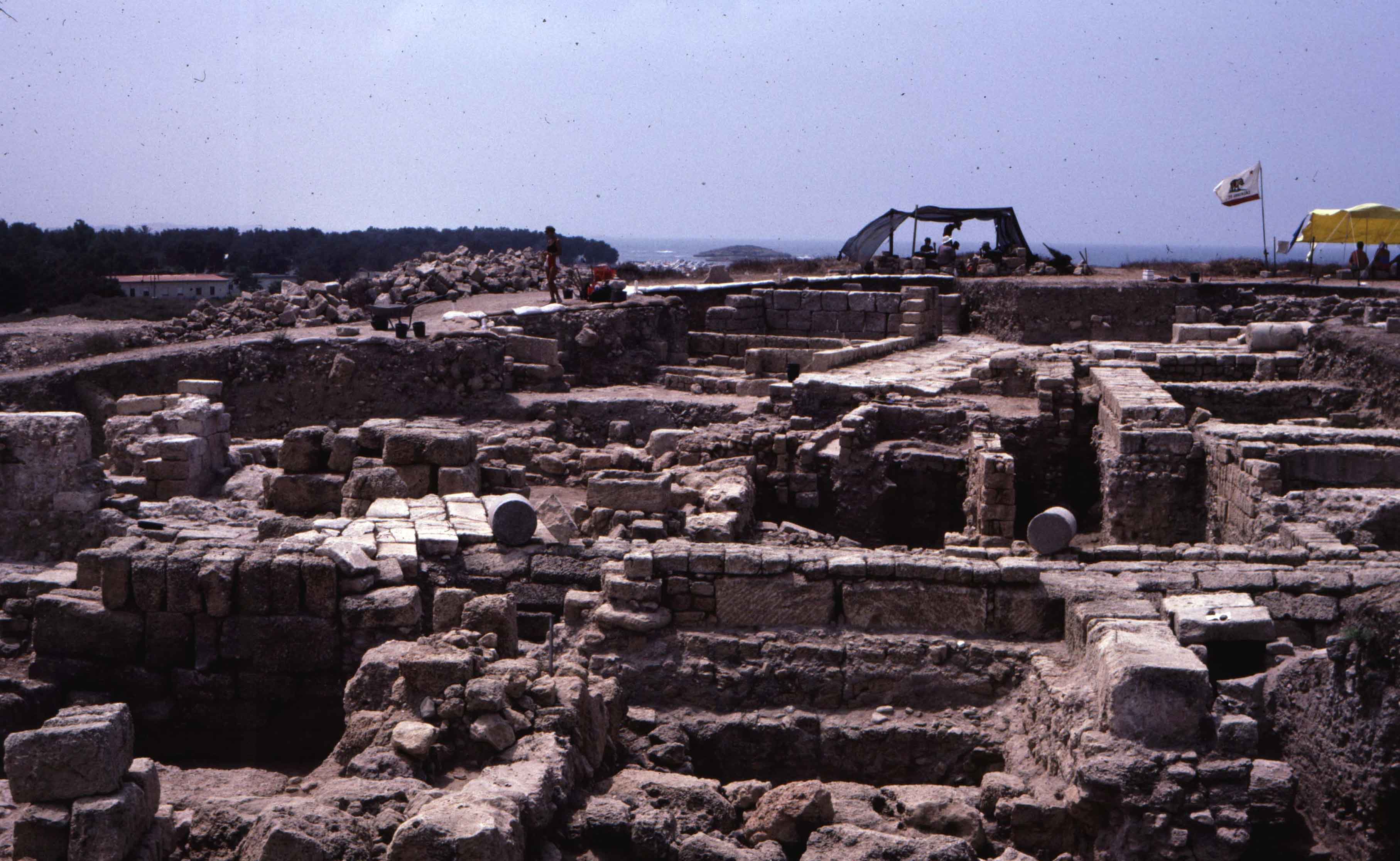
Look!  Up in the sky!  It’s a bird!  It’s a plane!  It’s an asteroid coming to wipe out a city!  One of the cottage industries outside biblical studies is the interest in finding historical events to explain Bible stories.  A few years ago it was proposed, with some degree of probability, that the flooding of the Black Sea by the Mediterranean, validated by archaeology, led to the story of Noah’s flood.  I recently saw a story suggesting that the destruction of Tall el-Hammam by an asteroid about 3,600 years ago might’ve been the basis of the story of the destruction of the cities of the plain, Sodom and Gomorrah  most prominent among them.  The piece by Christopher R. Moore in The Conversation describes the moments of horror—mercifully brief—as the space rock exploded above ground and wiped the city from the face of the earth.

Since this happened near the location of Jericho, the destructive shock waves knocked its walls down, leading to another biblical tale.  I often wonder about these “theories.”  They show just how deeply biblical our society is.  The frame of reference is already there.  People know about Sodom and Gomorrah.  They know about the flood.  They know of naked Adam and Eve and a snake wrapped around a tree.  When a disaster happens in the right region, and before the biblical story was written, it is suggested as the etiology of the tale.  Many have tried to explain the plagues of Egypt using similar methods.  Our culture seems to long for some skyhook on which to hang our biblical hat.  Some indication of why people put such strange stories in the Good Book.

Biblical scholars look too, but with a different perspective.  Etiologies are stories of origins.  Traditionally the Genesis account of the cities of the plain is understood as an etiology of the Dead Sea.  A unique geological feature of this planet, it is, in a word, weird.  The story of Abraham’s nephew Lot seems to explain it.  The article makes a compelling case for a heavenly fireball at about the right time that wiped out a settlement of about 8,000 people.  Genesis wasn’t written yet at 1600 BCE, the time of the event.  Since the impact site wasn’t far from the Dead Sea it seems to fit  the bill for a valid etiology.  None of these events proves biblical stories true, but they do show possible avenues of transmission.  This one definitely has me wondering.
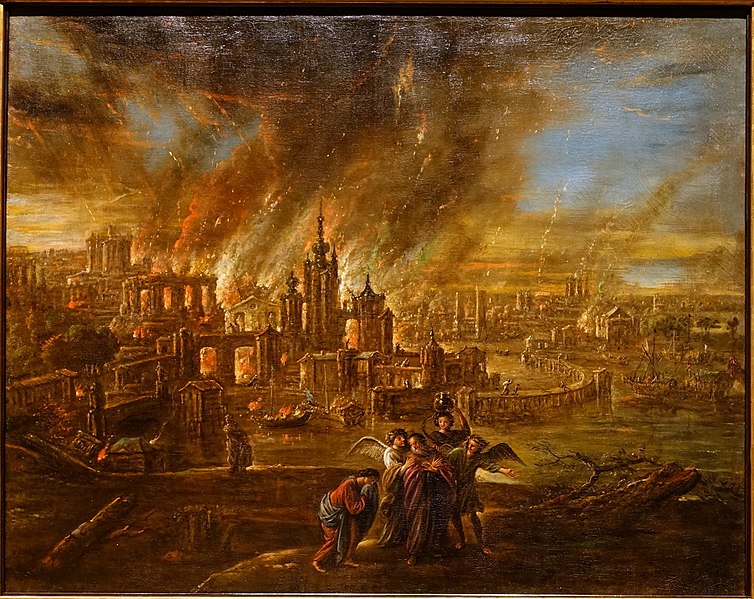
Image credit: Daderot via Wikimedia Commons

Banning Banning

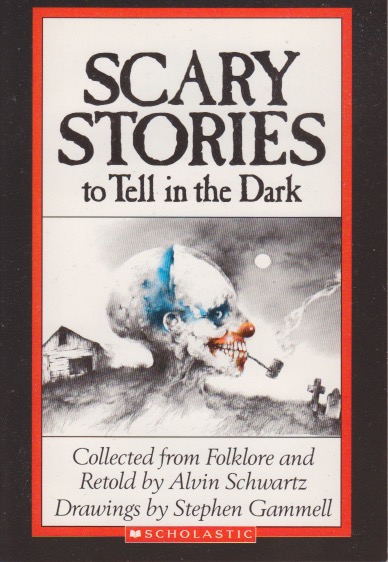
Banned Book Week gets me all aflutter.  There have been years at I’m so busy that it slips by before I notice it, but each year I try to incorporate it somehow into my reading challenges.  This year my book was Scary Stories to Tell in the Dark, by Alvin Schwartz and Stephen Gammell.  Yes, it’s a young readers’ book.  Most banned and challenged books are.  Why censorious adults feel the need to keep ideas out of print is pretty obvious in these Trumpian times.  (Please note, dear Republicans, many Democrats criticize Biden on a regular basis; we do not worship him.  American Marxist my donkey!)  Book censoring only serves fascist tendencies.  Ideas will find a way to be born, regardless.

Scary Stories, of course received a shot in the arm by Guillermo del Toro and his interest in making a movie based on it.  The stories themselves are drawn from folklore—they’re populist, you might say—and reflect what passes around from perhaps less insane times.  As an adult a reader tends not to find these stories frightening.  For one thing, many of them are stories we’ve heard before.  For another, life has already thrown many scary things at us.  Not only that, but we try to ban books to make adulthood even scarier.  You see, folklore doesn’t go away just because children are kept from the books.  These stories find the gaps just as water does.  They get told in the dark.  Instead of trying to censor them we should try to talk about them.

Adults’ own discomfort with ideas such as death and decay often stand behind our efforts to “protect” our children.  Then they reach maturity not prepared for the adult world of sex, exploitation, and dying.  Our modern comfort-based lifestyle tries to shut away the unpleasant aspects of existence.  Books, however, are the food of the imagination.  To ban them is to try to suppress the truths that authors have uncovered.  Growing up in a conservative household, we weren’t subjected to censorship.  I couldn’t afford many books, but my mother never said “No, you can’t read that.”  Some of my early reading faced uncomfortable facts.  I read both Jaws and The Godfather long before I ever saw the movies.  I read Scary Stories to Tell in the Dark as a form of solidarity with young minds.  There are benefits to learning to deal with fear early on in life.  And Scary Stories, even if not so frightening, has an appropriate place in it.


Discount Nightmares

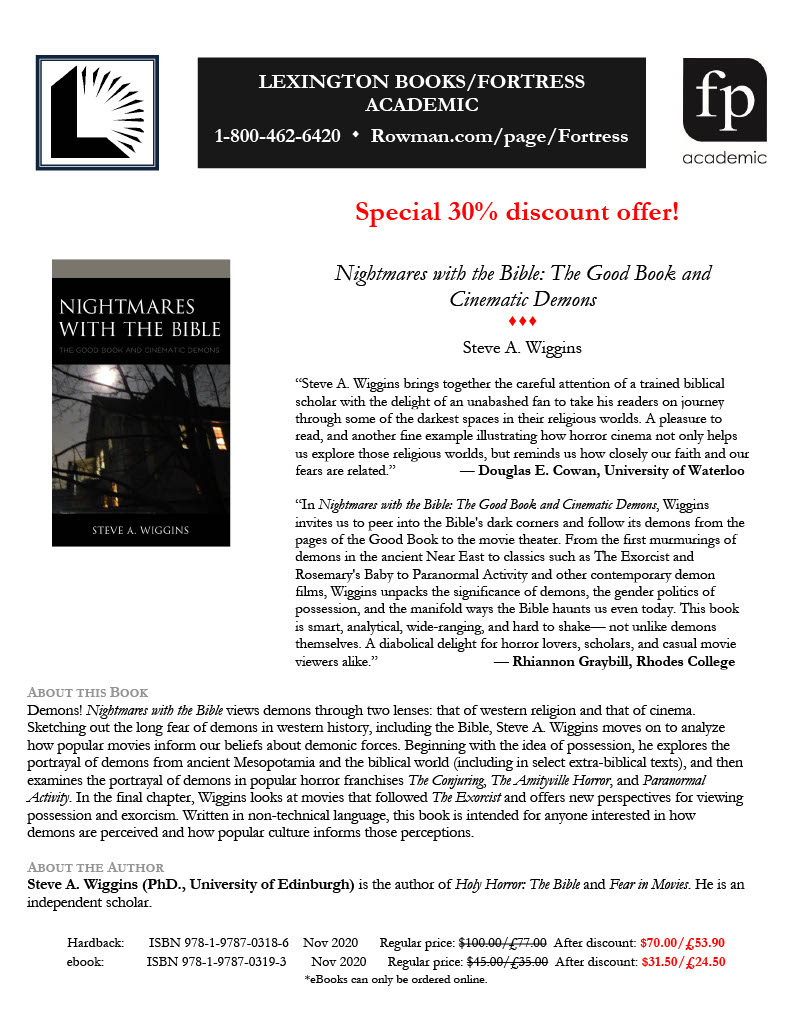
Now that we’re past the equinox it’s officially okay to obsess with monsters, right?  (Any excuse will do.)  Nightmares with the Bible was officially a pandemic book.  Academic publishers (especially) found out that books released in 2020 tended to flop.  People weren’t thinking about much other than the pandemic (or crying about losing an election fair and square).  Books, of course, take a long time to write and a long time to produce—it’s not as simple as it looks.  And if your production schedule falls during a pandemic, well, be prepared.  In the case of Nightmares there was the added burden of price point.  When all you’re thinking about is survival, cashing out a Franklin to read about demons seems hardly wise.

Just yesterday I received a flyer, that I’m passing along to you, for the book.  It has a discount code on it (look at part 2 below) so that the book is merely expensive rather than very expensive. Nightmares is part of a series titled Horror and Scripture.  The series, published by Fortress Academic and Lexington Books, is now coming out with its third volume.  The publisher, starting to recover from the pandemic, is promoting all the books in the series.  You see, Nightmares was not only a pandemic book, it also missed that highly sought-after pre-Halloween release.  Books that deal with horror get a boost during the holiday season.  Ironically the same thing happened with Holy Horror.  Both books came out in December when nobody but Charles Dickens is thinking about scary things.

Academic book pricing is based on a model that’s beginning to crumble.  It’s that capitalistic trope of what the market will bear.  The market is academic libraries, and it has been demonstrating lately that even they aren’t made of money.  I don’t know if libraries get to use discount codes or not—it can’t hurt to ask your librarian.  Fully employed academics, however, will sometimes pay a hefty price for a book they really want or need.  My shelves upstairs are filled with books that were overpriced but were required for the books and articles I wrote when it was an expectation of my job.  My next book, which is now in the negotiation stage with the publisher, will be more reasonably priced.  It will likely have a smaller appeal, but you’ve got to start somewhere.  I sincerely hope I’m through writing hundred-dollar books.  Please pass the flyer along to all your rich friends—it’s just in time for the haunting month of October.


Festive Books

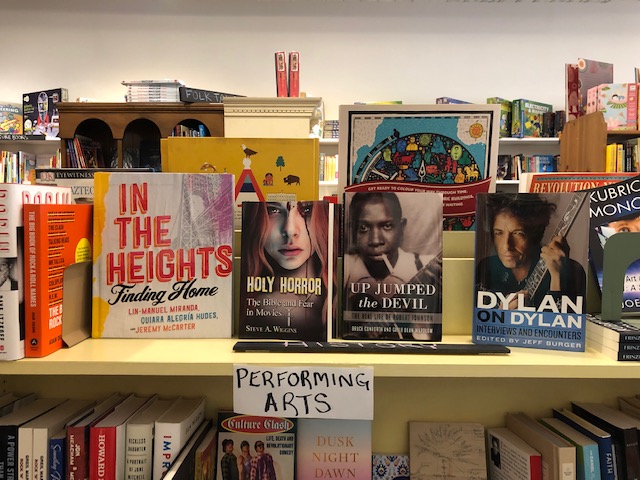
The Book and Puppet Company, a small independent bookstore in Easton, Pennsylvania is unique.  Other bookstores may have puppet shows and other forms of theater.  Others may have the obviously tasteful and intelligent selection of books.  Others offer items other than books.  Book and Puppet is unique in at least three ways.  First, and most (I promise) self-serving, it is the only bookstore in the world with Holy Horror on its shelves.  I know how it got there, which ties into the second unique feature—the Easton Book Festival.  The Easton Book Festival is the brainchild of the third unique element, the store’s owners—Andrew Laties and Rebecca Migdal.  

So let’s piece this all together.  The Easton Book Festival launched in 2019.  Being local to the event, I volunteered to present because Holy Horror had missed Halloween in 2018 when it came out, and it was still technically a front list book.  As with any event that wishes to grow, the Festival was extremely inclusive.  Despite its price point Andy had ordered copies to have on hand to sell.  He assigned me to a panel discussion and even gave me a time slot to talk about the book.  The event was one of the highlights of my true calling—being a writer of books.  Weathering the Psalms was less expensive but more technical.  Holy Horror is for a general readership, although the publisher sees it differently and prices it accordingly.  You have to start somewhere.  In any case,  it was part of a book festival that contains memories that still make me glow.

his year, like many events, the Easton Book Festival (October 16-24) is going hybrid.  As we start to regather, is there any better place to coalesce than around books?  Wouldn’t the world be a better place if that were true?  A recent visit to the shop led to a conversation that seems likely to result in a chance to plug Nightmares with the Bible, the more expensive sequel to Holy Horror.  Well into the writing of my next book, my attention has momentarily turned from demons to more human horrors.  Nevertheless, books are what my lifelong goal has always been.  I thought that I would be writing as a professor, but even editors can make some modest contributions, I hope.  Regardless, since much of the Festival will be online, it’s accessible from the comfort of your chair.  Why not tune in?   In any case, supporting your local bookstore will do nothing but improve society.


Mabon

Given the immense popularity of Halloween, and the attention lavished on the solstices, it’s a little odd that Mabon is so infrequently observed.  Unlike its twin, the Vernal Equinox, the Autumnal Equinox has really only recently been added to the natural calendar observed by Wicca.  The ancient Celts, from whom many Wiccan traditions are drawn, celebrated Samhain, which became our Halloween.  Their other holidays divided the year into seasons, but perhaps the Autumnal Equinox was a little too subtle to merit much attention.  Or it simply fell between their own four-fold divisions of the year.  Starting today, however night will be longer than day, a situation that will last until the Vernal Equinox.  In other words, we’ve entered the dark half of the year.

As someone who enjoys horror, I often ponder the benefits of living in the dark.  Theologically the dark is often cast as evil compared to the light.  We have taken that metaphor and made it literal.  This makes sense, I suppose, given our natural fear of the dark.  The only real predators in the night, however, are now of our own kind.  The dark can also be peaceful, a time for contemplation.  One of the things adulthood has on offer is disrupted sleep.  Many of us find ourselves awake at some point in the night.  We need to become comfortable with it.  I’m not a Wiccan, but I appreciate the naturalness with which Mabon acknowledges the fact that half the year is darker than the other half.  It’s also a harvest-themed holiday, one of the many that stretch to Thanksgiving and on to living off the stored supplies through the winter.

No doubt there is some melancholy associated with Mabon.  The lessening of the light brings a chill with it.  Summer’s ease is at an end and we will need to start layering our clothes and adding blankets back on our beds.  Already it is dark when I begin work, which means the brightest part of the balanced day and night is spent indoors at the computer.  I will need to leave the harvest, so obvious in the fast-approaching October, to others.  Mabon and Halloween aren’t company holidays, but that fact won’t stop the encroaching dark.  There’s a wisdom associated with acceptance and even melancholy can been sweet.  The leaves, while still mostly green, have begun to turn.  The bright songbirds of summer have given away to ravens and crows.  We need to learn to walk in the dark again.  Perhaps it’s time to consider what Mabon can mean.


Thinking Plants

Consider your sources.  As an erstwhile professor I grew accustomed to repeating that, and this was before the internet started up, making claims of all kinds.  Certain news sources—think New York Times, or the BBC—earn their reputations slowly, over many, many years.  That doesn’t mean they don’t make mistakes, but it does mean they’re often on the mark.  So an article on plant consciousness on the BBC is worth considering.  Consciousness is still something we don’t understand.  We have it, but we can’t always say what it is.  Many, if not most, people tend to limit it to humans, but it’s become very clear than animals share in it too.  Why not plants also?  A few years back I read a book by philosopher Thomas Nagel.  He made the argument that human consciousness must come from somewhere, and as we look down toward animals, and plants, what we see are smaller pieces of the same thing.

I’m not stating this as eloquently as Nagel did, but the idea has stayed with me.  The BBC article  notes how plants seem to react to human interaction.  And they seem to communicate back.  We lack the natural range to hear their responses, but some experiments indicate that plants at least communicate among themselves.  Being the BBC, the story reports but doesn’t necessarily advocate this point of view.  Still, it makes sense.  For too long we’ve supposed human beings to be the only intelligent creatures on this planet, taking the arrogant view that animals are automatons with no thinking ability.  To give them that would be to make them too human-like.

That particular viewpoint still exists, of course, but more and more scientists are starting to consider whether consciousness isn’t emergent from, as Nagel put it, smaller building blocks.  I tend to be on the more imaginative end of the spectrum—consider your source here—but it seems to me that plants could well have a consciousness too.  Trees move.  They do it too slowly for our species to notice it, fixated as we are on our own brief time in the world and our human affairs, but that doesn’t mean they don’t move.  It simply means that if we want to see it we need to shift our perspective.  Communication, it would seem, pervades nature.  If it does, isn’t consciousness somehow implicated?  Plants may respond when we pay attention to them.  To me that makes the world an even more wonderful place.


Healing Time

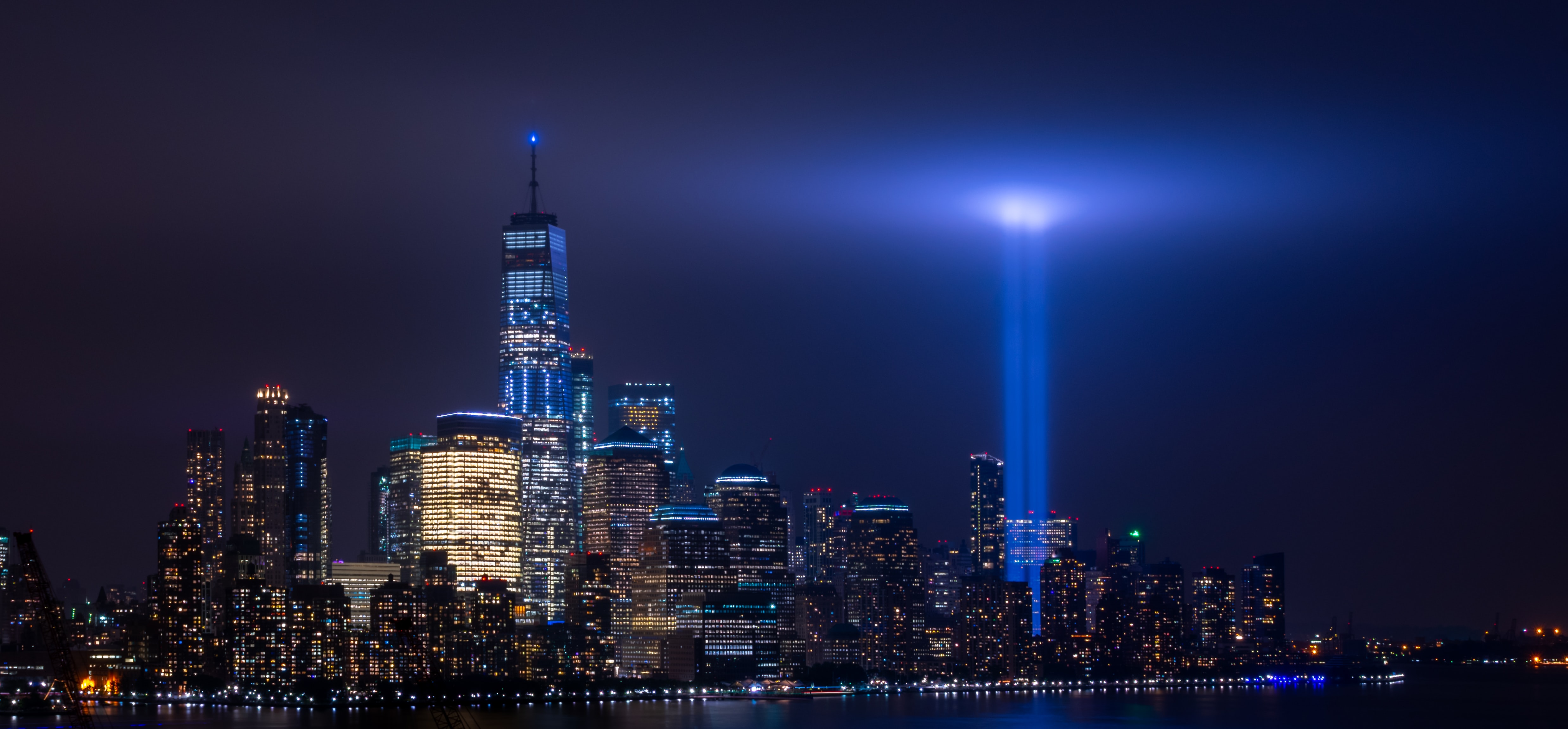
Twenty years ago today I walked into the refectory at Nashotah House after morning mass and wondered why the television was on.  Normally people had their own theological issues to hash out over breakfast, so this was unusual.   When I saw what was happening, I skipped breakfast and went home to my family.  I remember the feeling of shock and terror of those days.  America, I knew, wasn’t the innocent nation it projects itself as being.  We had provoked, but none of that mattered as the isolationism of over two centuries on a mostly friendly continent crumbled.  We were vulnerable.  Living in the woods of Wisconsin there was no immediate danger, but the sense of confusion—and certainly the feeling that a less-than-bright president wasn’t up to handle this—made us all feel weak, even with the most powerful military in the world.

Yesterday the New York Times headlines ran a consideration on whether we’ve emerged better in the ensuing two decades.  Looking at where we are—a deeply divided nation because a narcissistic president that the majority of voters voted against put (and still puts) his ego ahead of the good of the country—the answer seems obvious.  It will take years, if not decades, to heal the damage that one man did.  His putative party (really his only party is himself), seeing his popularity as their means to power, refuse to distance themselves.  We simply cannot move forward.  Not in the midst of a pandemic where Trump followers won’t get vaccinated causing new waves of the virus to surface and thrive.  I’d like to think that on September 11 we might reflect—yes, I know it’s hard work—on how we all need each other.

Photo by Jesse Mills on Unsplash

Little could I have guessed in 2001 that a mere ten years later I would find myself working in Manhattan.  Somewhere in my mind on every day of that long commute I wondered if something might again go wrong.  On the bus I was thrown together with people of every description—well paid and just getting by, women and men, gay and straight, from all around the world—and we knew our fates were linked together.  Differences had to be put aside.  Selfishness has no room on a crowded bus.  That was my introduction to life in New York City.  Those who hear only the poison rhetoric of 2016 through 2020 should try commuting with an open mind.  If we all took the bus, life after 9-11 might’ve turned out very differently.


Ancient Near Ideas

Looking backwards has its issues.  I still think about the Ancient Near East.  My reputation on Academia.edu is based entirely on it.  (From the user stats, nobody’s really interested in my horror writing there.)  Let’s face the facts, though.  If you an expert in a field (mine is Ugaritic mythology, a form of history of religions), you can’t just write things off the cuff for publication.  I need to be very precise and accurate.  I like to think that’s why my articles on Academia get attention.  To do that kind of writing you need time—when I was a professor most of my “free time” was spent reading in that field—and either research funding or an incredible library.  Professional researchers (i.e., professors) get paid to do that kind of thing.  I don’t do it anymore but that doesn’t mean I don’t think about it.

The other day I saw an article about Mehrdad Sadigh.  Although this antiquities dealer operated mere blocks away from where I worked when I commuted to Manhattan, I’d never heard of him.  It turns out that he had (has) a full-scale forging operation right in the city that never sleeps.  He has made a living, allegedly, for years by selling fake antiquities as genuine.  The story is tragic, but it underscores the point with which I began—people are interested in antiquity.  We want to be in touch with the past.  I can attest that there’s nothing quite like the thrill of being the person who unearths something on an archaeological dig.  Touching an artifact than no human hand has touched for two or three thousand years.  Looking back.

Looking back makes it easy to get distracted.  As much as I enjoy and appreciate my friends who still get to do Ancient Near Eastern studies for a living, I sometimes think how it’s good to move on.  Who knows, maybe I have another Ph.D. left in me yet.  Moving on increases the breadth of your knowledge.  Since university jobs are as mythical as the texts I used to study, doing a doctorate for a job is a fool’s errand.  Doing it to learn, however, is something I still heartily recommend.  There’s nothing like immersing yourself into a single topic for three-to-five years so that you come out with more knowledge than is practical about it.  I still think about the Ancient Near East.  I’m still tempted to buy new books that come out on the topic.  Instead, I watch horror and think it might be fun to earn a doctorate in monsters.


Screaming Season

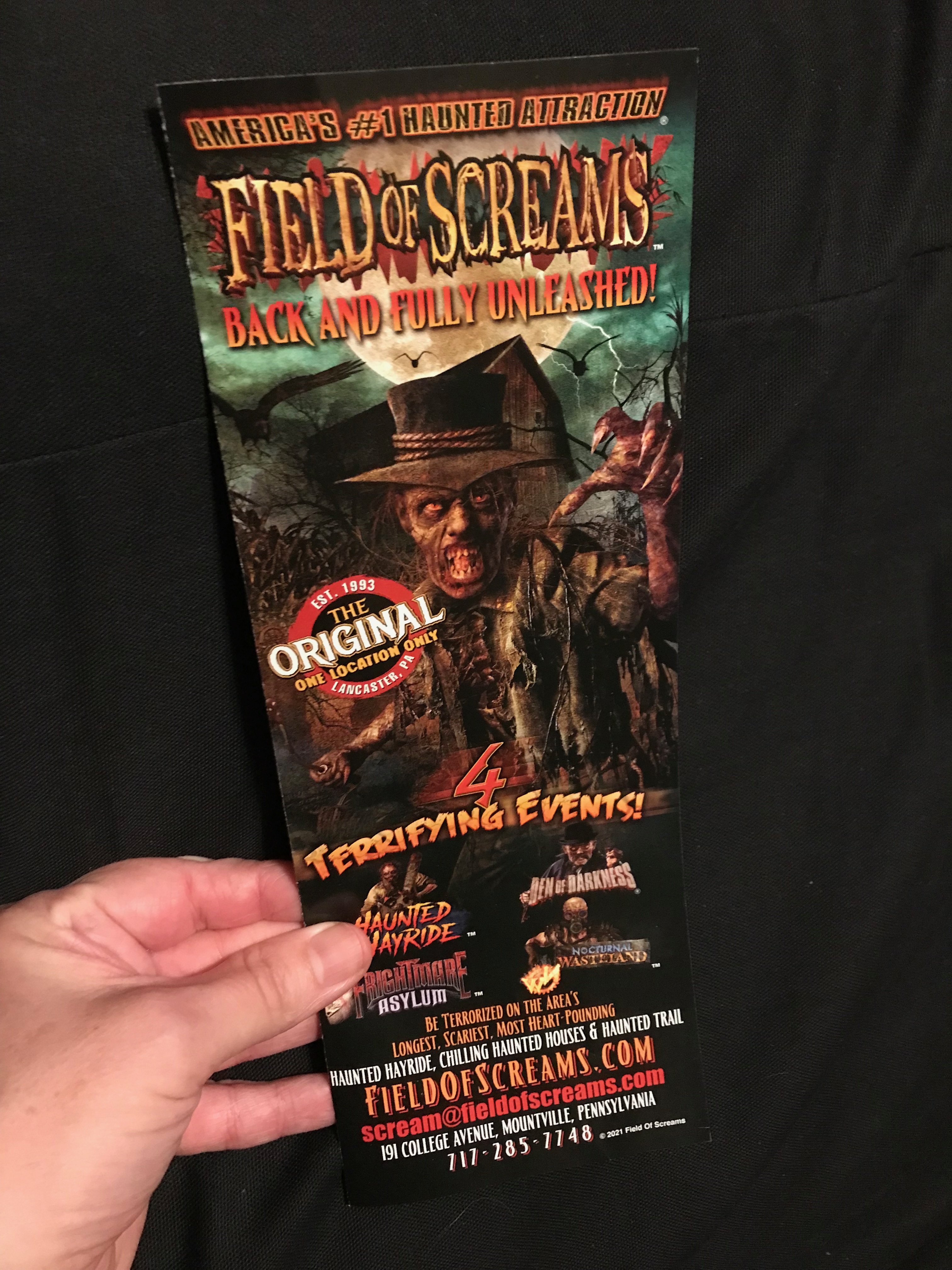
The signs are all around.  The orange and black Spirit Halloween signs are appearing where vacant storefronts stand.  Advertisements for autumnal activities are cropping up.  Brochures broadcasting local haunted festivities now adorn store counters, free for the taking.  I picked up a leaflet for the local Field of Screams the other day although I really don’t like to be in scary situations.  I do appreciate the spooky sense that they generate, however.  This local event runs from early September through early November—the two months enterprising farmers can draw urbanites to their land, cash in hand.  Halloween has been a major money-maker for many years now.  The less doleful minded wonder why, but I think that lots of us are really afraid.  Halloween says it’s okay to be so.

Perhaps it’s the realization that it’s all in good fun and nobody will really hurt you.  I’ve attended a few of these haunted events over the years, but it was more fun to participate in them.  Perhaps it goes back to Nashotah House.  I’m guessing that most of you’ve never been.  Nashotah is a gothic campus, at one time pretty isolated, out in the woods.  Halloween was, once upon a time, a real celebration there.  Our maintenance crew would offer a hayride through farm fields owned by the school, then through the cemetery on campus.  I used to dress in a grim reaper costume and carry a kerosene lamp through the graveyard, awaiting the tractor.  Nobody instructed me to do it, but we all knew it was in good fun.  And I wasn’t the only volunteer who’d pop out from behind headstones.  Students got into the spirit of it too.

These days remembering such shenanigans is more appealing than actually going out at night to have other people scare me.  The last time I went to a haunted maze it was really too unnerving for me to enjoy.  I volunteered instead for a local haunted house in New Jersey.  The run up to Halloween was usually an intensely creative time of designing and fabricating homemade costumes, and thinking of ways to make pumpkins look scary.  Now it’s become a season in its own right.  An important segment of the economy.  I won’t be going to our local Field of Screams, but I will understand those who do.  Changes are in the air.  It’s dark quite a bit earlier these days.  The air is chilly in the morning.  And the local fear fields open this weekend.


Moral Bankruptcy

Last Thursday, apart from being the day after the plumber came, Tropical Storm Ida dumped on us, and the first day of September, the New York Times headlines were disturbing.  I don’t have time to read many news stories in depth, but I glance at the headlines to inject just enough worry into my day.  After discussing the flooding, Afghanistan, and a few other stories a particular quote caught my eye and kicked my gut: “Kevin McCarthy, the House Republican leader, threatened to retaliate against technology companies that comply with the inquiry into the Capitol attack.”  This was a bit much after reading how much suffering is going on in the world.  Republicans threatening retaliation to keep the truth hidden in plain sight.  Is there any term for this but moral bankruptcy?

I simply can’t understand how any moral Republican can hold their head up proud.  I grew up Republican.  I was conservative most of my way through college.  I would never have stood up for a politician of either party that said “I’ll get you back if you tell the truth.”  Lies are the most insidious of acts.  How can you ever believe someone after they establish a reputation of being untruthful?  How can you believe he actually does support your cause?  How can you believe anything he says?  Not only that, but threatening his own fellow Americans for wanting to find out what his party supported on January 6.  There’s a reason the day is known as Epiphany—“the manifestation.”  When truth becomes clear.

A political party that has nothing to offer but lies and violence has become an organ of organized crime.  Perhaps our legislators should be given a dictionary open to the entry titled “perjury.”  We now have Republicans who lie under oath to become Supreme Court justices.  Who try to start rebellions with mobs ready to murder their colleagues and who then sit back and claim the rectitude of God Almighty when it’s over.  What have we come to here?  People were drowning in basement apartments and people were suffering loss of power and damaged homes.  Republicans meanwhile were working up threats of retaliation against people for simply trying to get at the truth.  The plumber did the job he said he would.  Those who projected and tracked Ida told the truth to try to save lives and property.  In the sewers of Washington, however, those loyal to the party vowed to keep their secrets safe. 


A Symphony of Horror

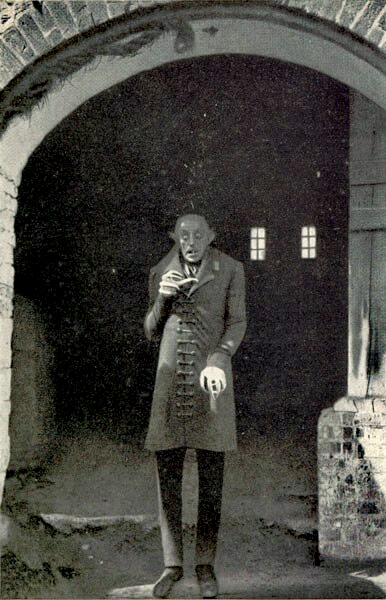
Horror season is upon us.  One could argue that it never left since summer has its fair share of horror when air conditioning is required.  The one horror director my wife seems to like, apart from the departed Alfred Hitchcock (and some would say he’s thriller, not horror), is Robert Eggers.  Eggers’ breakout The Witch worked on so many levels, even for non-horror fans.  The attention to historical detail and the solemnity of his approach and the slow build all helped.  The Lighthouse was moody and profound, with superb acting throughout.  The Northman, his viking epic shot in Iceland, is due out next year.  Rumor has it that his fourth film will be Nosferatu.  Anya Taylor-Joy, it is said, will be returning for it.

Nosferatu has, as of next year, a century of credibility.  F. W. Murnau’s classic, released in 1922, was technically a violation of copyright and was very nearly lost as copies were ordered destroyed.  This now iconic film, despite its subtitle A Symphony of Horror (eine Symphonie des Grauens), appeared before the category of “horror film” was assigned, and so it’s normally not considered as part of the genre.  The original was given a shot in the arm by Werner Herzog’s Nosferatu the Vampyre in 1979.  My long-suffering wife once agreed to watch it with me.  There are parts of the movie that are distinctly disturbing, but it remains one of the best vampire films ever made.  Many would classify it as an art film more than a horror film, just as Murnau’s was considered Expressionism rather than horror.

It remains to see how Eggers will handle this script.  The original plot was based on Bram Stoker’s Dracula, one of the formative novels of the western canon.  The story of an unassuming individual unexpectedly encountering, through a small conspiracy (in the films), the supernatural.  That which we’re all told is not really there.  Many are beginning to wake, after the election of Trump revealed that evil does really exist, to the understanding that not all is as it seems.  It’s hard not to sympathize with the vampire in the movies, particularly when he’s the victim of a curse.  A vampire’s got to eat, right?  The original, of course, made him out as a devil.  That was in the days when selfish bloodsucking was considered evil, not business as usual.  We have a lot to learn from vampires, and I, for one, am eager to see how Eggers will handle Nosferatu.

Image credit F. W. MurnauHenrik Galeen, and Fritz Arno Wagner; Public Domain in the United States, via Wikipedia

Like a Hurricane

Around here we welcomed September in with the remains of Hurricane Ida.  For the second summer in a row, far inland, we’ve sustained hurricane damage.  For storms like this it’s not so much a question of if there will be damage, but rather “how much?”  It was complicated by the paper wasps.  It’s like a 1970s natural disaster movie.  It starts at the end of August.

I was going out to put the recycling bin away (more on this later).  When I opened the garage door I was stung three times by a paper wasp (or maybe two)—twice on the face and once on a finger.  The previous day when I’d taken the bin out there hadn’t been a nest, but 24 hours later, angry waspids were protecting their territory.  I couldn’t even get the door closed.  We don’t have any bug-killing spray on hand since we believe in live and let live.  But I do need to get into the garage.  Due to my weekly schedule I couldn’t get to the hardware store before Friday.  Fine, let the Hymenoptera have the garage.

The next day—actually later that day—Ida began to arrive.  We’ve had extensive roof repairs since moving in here.  We’ve had two-thirds of it replaced entirely.  Then the rain started.  The plumber came before it got bad to replace a cast-iron radiator that we had moved so I could repair the drywall behind it.  While doing that I repaired the ceiling where water from ex-Hurricane Isaias leaked through.  The roofer had patched this part after Isaias, so we thought we were good.  By mid-afternoon there was water dripping from the ceiling again and the repairs I had made crumbled into the bucket set there to catch the water.  So it goes.  Outside the street was closed due to flooding.  I couldn’t get into the garage to check for damage because, you know, wasps guarded the only door (still open).

It used to be that weather was a neutral topic to discuss.  Of course, it’s become politicized now.  Having a climate-change denier in the White House for four years made the topic dangerous to raise.  This area used to never get hit too badly by hurricanes.  Global warming, however, has changed everything.  I got up the morning after wondering where to start.  It was still dark and a cricket had come inside to get out of the weather.  It chirped as I came down stairs.  Everything will be all right.

Our unofficial rain gauge

Classic Plural

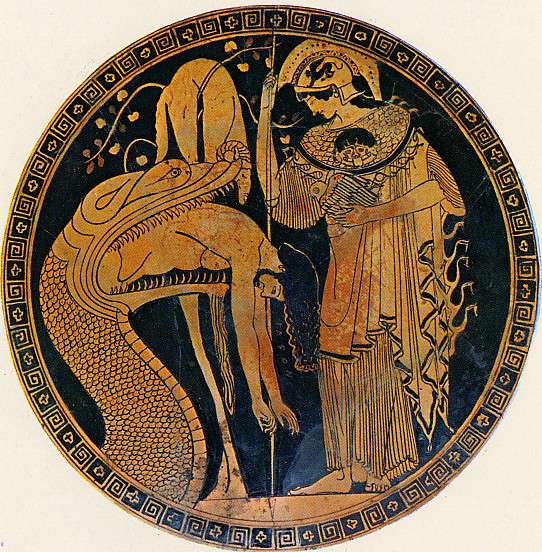
You might think that with our modern lifestyles, looking back would become passé.  Recently an article on Hyperallergic discussed “Ancient Greece and Rome Are Hot in Animation Right Now. Here’s Why.”  The article by Chiara Sulprizio notes that themes central to history—namely, sex and violence—animate ancient mythology.  This allows modern interpreters to explore where we are by looking back.  At the same time, in higher education, such topics and departments are being cut.  The humanities in general have come under fire lately.  Where are we going to learn about such things as the classics if we cut off the only people who spend their time studying such things?  This isn’t the only instance where universities seem to misread what hoi polloi find to be of interest.

The classics have been known as such because of their formative role in our culture.  As this Hyperallergic story shows, they can bring in money (for this is the measure by which all things are assessed).  Again it seems that higher education has followed the way of the dollar, so why not invest in the study of what makes us human?  I guess I’m a bit of a curmudgeon here because it was the humanities that came up with the idea of higher education in the first place.  Universities were places to study theology and law, and even the original concept of “humanities” included arithmetic, geometry, astronomy, and logic.  Only when these topics started to split off into what we would eventually call “STEM” did the humanities begin to suffer neglect.

Looks like a good story

It was, after all, the Greco-Roman world that gave us what we call the classics.  I fully agree that we can’t constantly look back—we’d never move forward then—but our heads turn for a reason.  Understanding what it is to be human seems to be something we’ve grown less interested in since the sterile clean room has given us gadgets and toys we can’t seem to live without.  Living, however, is such a human aspiration.  We want fulfilled lives.  Mythology gives us meaning.  That’s why we keep coming back to it.  In my own lifetime I’ve seen several resurgences of interest in the classics, and experts always seem surprised.  They needn’t be, however.  People have found these stories powerful well before the Greeks and Romans gave them the shapes we recognize.  Many of them go back even further to the early civilizations of the Levant.  The classics have, in other words, earned that name.


Friendly Food

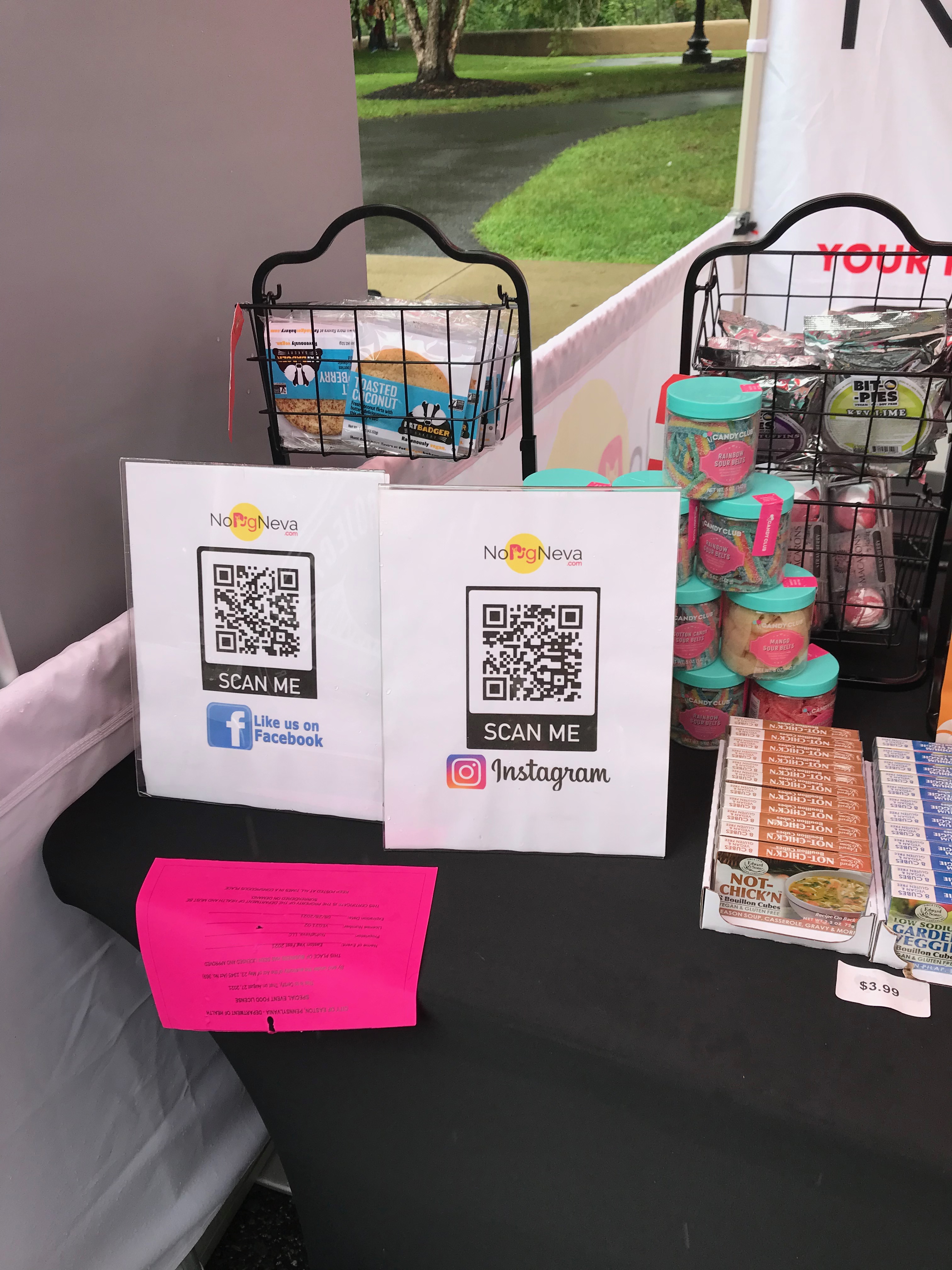
The rain felt like relief after the most recent heat wave.  We’d long planned to attend the Easton VegFest regardless.  Summer is the season for street festivals and it’s always a strange kind of affirmation to find one dedicated to vegans.  And to see so many people at it.  The cities of the Lehigh Valley have quite a few animal-friendly options for eating, and although the VegFest isn’t huge it’s a good place to find others who realize that our food choices matter.  So it was that we came upon the booth for NoPigNeva.  Now, if you’ve ever tried to shop for vegan food—I know there must be a few of you out there—you know how catch-as-catch-can it is.  Around here lots of grocery stores carry vegan items, but what you’re looking for may not be there.  Even WholeFoods in Allentown has a limited selection.

NoPigNeva is a supply company run by black women.  It supports worthy causes.  And it makes finding what you’re looking for essentially one-stop.  I’m no businessman, but I do wonder why, when they keep selling out of vegan stock, stores don’t get their orders refilled right away.  It’s almost as if we don’t want to believe people will buy it.  Vegan food has come a long way even in just the last five years.  I know that when I became a vegetarian almost two decades ago now I felt there was no way to get enough to eat as a vegan.  Options seemed so limited.  That’s no longer the case.  I’m guessing the success of the Impossible Whopper caught everyone (except consumers) by surprise.  Even now, if you order one (hold the mayo, please) you’re pretty much guaranteed it won’t have been sitting on the warming shelf.

There’s big money in the food industry.  I’m not a foodie, although it’s become fashionable to be one.  I do, however, think about whether my food is causing harm.  There is, I realize, no way not to impact the environment or other living creatures when eating.  Lessening that impact, however, and supporting historically oppressed groups feels good.  There is a morality to mastication.  Most animals, it seems, have evolved a fear of being eaten.  Perhaps we’re only starting to understand that breaking chains might have to begin with us.  Any industry (big agriculture) that tries to make it illegal to see where your food comes from is hardly to be trusted.  I trust more those willing to come to a street fair on a rainy Saturday afternoon to show that there is a better way.


Not That Kind

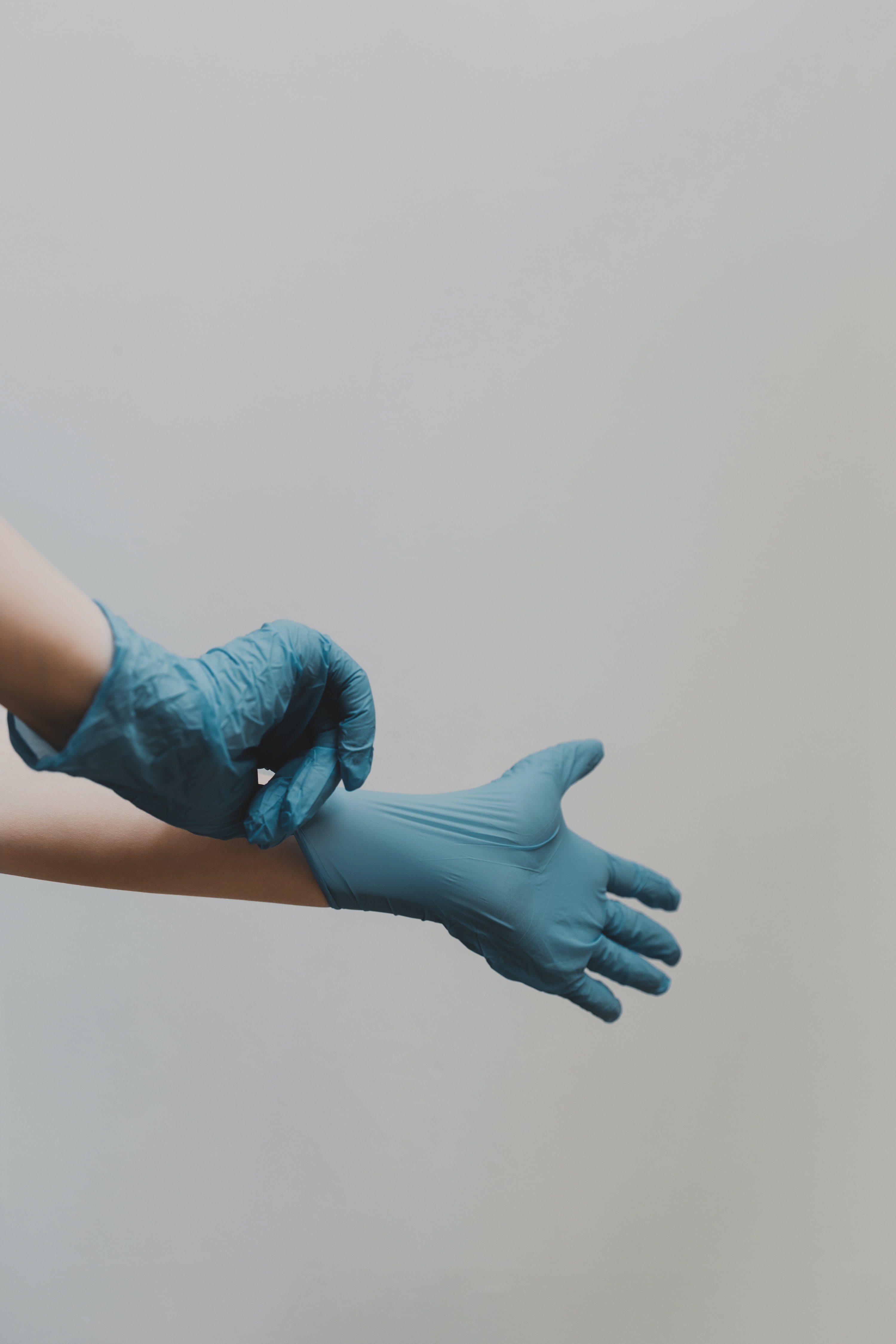
I am not a (medical) doctor.  Nor do I play one on TV.  It puzzled me, therefore, when I received an email addressing me as “Dear Healthcare provider.”  I like to think that maybe this blog does help a person or two from time to time, but I’m not going to dispense medical devices.  The email was telling me where I could order Covid-19 tests in bulk, and it even contained a sell-sheet with facts and figures.  Now I want to see this pandemic over, just like everybody else, but I’m not sure that having my own supply of Covid tests would do anybody any good at all.  Perhaps this is just a continuation of the larger issue of wondering who exactly the internet thinks I am.

One thing the pandemic has done has been to double us down on our reliance on the internet.  It’s difficult to imagine how we might’ve survived without it.  More jobs—many more—would certainly have been lost if we couldn’t have started to work remotely.  In order for any of this to function, however, we have to have a sense of who we are and what we do.  I’m not a professional blogger, of course.  I’ve discovered from my own extended time on the internet that many people just a few years younger than me make a living as “content providers.”  They launch a successful YouTube channel (or maybe two or more), and blog, podcast, or otherwise just dispense their homegrown wisdom into a job.  Some have college degrees, but many don’t.  The ones I see make a better living doing this than several college grads I know.

You are who the internet makes you in these remote times.  Hasn’t most of our reality become remote?  We rely on content that others, or sometimes we ourselves, make.  We get our news here and we find our directions here.  We order the things we need here and the delivery drivers find our addresses here.  Yes, we can even get our medical service taken care of here.  Fortunately I personally haven’t had to talk to a doctor online, but I know people who have.  Personally I find it more reassuring when someone with special training takes a look at the area of concern, and perhaps can touch it and tell me what to do about it.  I’m glad the internet option exists, however.  I just hope that people don’t start thinking I’m that kind of doctor.

Photo by Clay Banks on Unsplash