Father of Yeti

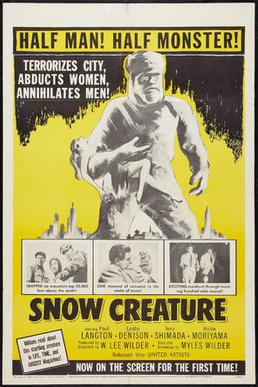
“Always steals women.”  So Subra mutters high in the Himalayas.  Perhaps one of the most unintentionally funny bad movies, The Snow Creature does hold a place in history.  It was the first abominable snowman, or yeti, movie made.  It’s also incredibly cheaply made with a costume that most twelve-year-olds could’ve fabricated better.  As the antepenultimate movie in the “Beast Collection,” I felt obligated to watch it one snowy weekend.  Spouting colonialist and sexist values like a Republican, the story is tedious even at eighty minutes.  But funny at times also.  So a botanist travels to the Himalayas to study plants at 10,000 feet.  His fun is interrupted when a yeti kidnaps the head sherpa’s wife, causing the sherpa to take charge and start to hunt the beast.

The American scientist decides to capture the yeti instead so that he’ll have something to give the foundation sponsoring the expedition.  Leaving behind a female and baby yeti, both killed, he drugs the snowman until a special refrigerated container can be built—gee whiz, Americans can do anything!—to bring the beast back.  And they fly west from Bombay to California, where, when they land the beast is held up in customs (I kid you not).  There’s a debate about whether he’s human or animal and while the debate goes on, the creature escapes.  The hapless police can’t find a seven-foot tall yeti wandering around Los Angeles at night, harassing the women.  Finally they figure he’s using the storm sewers.  They trap him but, alas, have to shoot him.  At this point they completely lose interest in the corpse and exchange meaningless banter as they drive off.

This movie seems to be what the Trump administration wants America to revert to.  Bossing around BIPOC people in their own countries, women being helpless without men to rescue them, and corporations buying what is arguably a human being.  Sounds like a playbook to me.  Also, it was extremely cheap.  What amazed me is that United Artists distributed it.  People must’ve been pretty hungry for entertainment back in 1954.  Having said that, it is worth watching for a laugh.  Now that streaming exists, you can find this free on various services.  If you like very wooden acting, and superior Americans having their way in Asia just because they’re, well, Americans, you might find this a passable way to spend a snowy weekend (wait til winter to watch it; it’ll keep).  Only a word of advice: be sure to lock up your women before you do, because the beast always steals women.


Making More Monsters

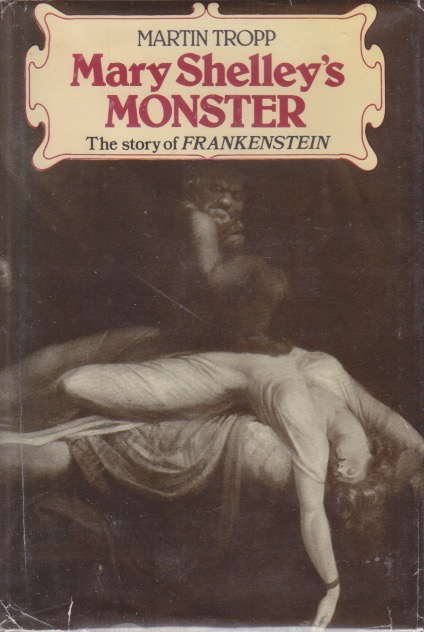
It’s endlessly frustrating, being a big picture thinker.  This runs in families, so there may be something genetic about it.  Those who say, “Let’s step back a minute and think about this” are considered drags on progress (from both left and right), but would, perhaps, help avoid disaster.  In my working life of nearly half-a-century I’ve never had an employer who appreciated this.  That’s because small-picture thinkers often control the wealth and therefore have greater influence.  They can do what they want, consequences be damned.  These thoughts came to me reading Martin Tropp’s Mary Shelley’s Monster: The Story of Frankenstein.  I picked this up at a book sale once upon a time and reading it, have discovered that he was doing what I’m trying with “The Legend of Sleepy Hollow” in my most recent book.  Tropp traces some of the history and characters, but then the afterlives of Frankenstein’s monster.  (He had a publisher with more influence, so his book will be more widely known.)

This book, although dated, has a great deal of insight into the story of Frankenstein and his creature.  But also, insight into Mary Shelley.  Her tale has an organic connection to its creator as well.  Tropp quite frequently points out the warning of those who have more confidence than real intelligence, and how they forge ahead even when they know failure can have catastrophic consequences for all.  I couldn’t help but to think how the current development of AI is the telling of a story we’ve all heard before.  And how those who insist on running for office to stoke their egos also play into this same sad tale.  Perhaps a bit too Freudian for some, Tropp nevertheless anticipates much of what I’ve read in other books about Frankenstein, written in more recent days.

Some scientists are now at last admitting that there are limits to human knowledge.  (That should’ve been obvious.)  Meanwhile those with the smaller picture in mind forge ahead with AI, not really caring about the very real dangers it poses to a world happily wedded to its screens.  Cozying up to politicians who think only of themselves, well, we need a big picture thinker like Mary Shelley to guide us.  I can’t help but think big picture thinking has something to do with neurodivergence.  Those who think this way recognize, often from childhood, that other people don’t think like they do.  And that, lest they end up like Frankenstein’s monster, hounded to death by angry mobs, it’s better simply to address the smaller picture.  Or at least pretend to.


Telling Vision

My wife and I don’t watch much television.  In fact, we had very poor television reception from about 1988 (when we married), until we moved into this house in 2018.  That’s three decades without really watching the tube.  As we’ve been streaming/DVDing some of the series that have made a splash in those three decades, I’ve discovered (I can’t speak for her) that there were some great strides made in quality.  We began with The X-Files, then moved on to Lost.  We viewed Twin Peaks and started to watch Picket Fences, but the digital rights have expired so we never did finish out that series.  (Don’t get me started on digital rights management—the air will quickly turn blue, I assure you.)  Of course, we did manage to see Northern Exposure when it aired, but it should be mentioned for the sake of completion.  These were all exceptional programs.

Netflix (in particular) upped the game.  We watched the first three seasons of Stranger Things (and I’d still like to go back and pick up the more recent ones we’ve missed), and I watched the first episode of The Fall of the House of Usher (I didn’t realize until writing this up that it was only one season, so maybe I should go back and finish that one out too) and was very impressed.  Since we couldn’t finish Picket Fences, we turned to Wednesday.  Now, I was only ever a middling fan of The Addams Family.  I watched it as a kid because it had monsters, as I did The Munsters, but neither one really appealed to me.  Wednesday’s cut from a different cloth.  In these days when escapism is necessary, this can be a good thing.

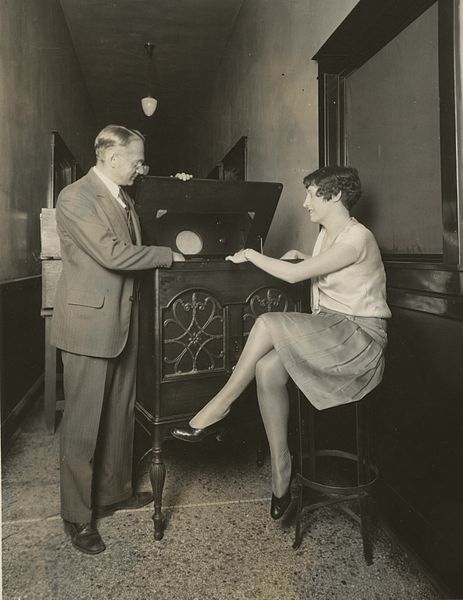
Photo credit: Smithsonian Institution

Like most late boomers, I grew up watching television.  In my early memories, it’s pretty much ubiquitous.  We were poor, and our sets were black-and-white, but remembering my childhood without TV is impossible.  It was simply there.  The shows I watched formed me.  Now that I’m perhaps beyond excessive reforming (although I’m not opposed to the idea), I’m looking for brief snippets of something intelligent to wind up the day before I reboot to start this all over again.  We save movies for weekends, but an entire workweek without a break in nonfictional reality seems overwhelming on a Sunday evening.  It seems that I may be warming up to my childhood chum again.  This time, without network schedules, and limited time to spend doing it, we just may be in a golden age for the tube.


Belting Beltane

Things have been so busy that I forgot that today is Beltane.  That’s all the more ironic because yesterday I’d been on a panel to address the British Association of Film, Television and Screen Studies special interest group on Horror Studies, about The Wicker Man.  Lest you get the wrong idea, BAFTSS did not approach me to talk about my book (which has largely disappeared, as far as I can tell), but another recent Devil’s Advocate author approached them about having a panel featuring recent titles.  This special interest group has a program called Weekday Night Bites where they gather virtually to have speakers talk about horror.  Yesterday there were seven of us, discussing five books, one of which was The Wicker Man.

The theme of the panel was No Safe Space, about place and space in horror.  This meant I spoke briefly about The Wicker Man as folk horror.  As I told the assembled group, I actually interpret Wicker Man as holiday horror—it’s based on May Day, and I didn’t even think to mention that it was today—instead of folk horror.  One of the the hallmarks of the Devil’s Advocates series is that it tries to approach horror films from unexpected angles.  When I first contacted the editor who started the series at Auteur (who has, unfortunately left), he told me that they didn’t have a Wicker Man volume because everyone was pitching it as folk horror.  He wanted to see a different interpretation.  I’d been writing a book about folk horror and decided to give that a try.  The critics liked it, and thus my book was born.  And here it is, May Day, and I’d forgotten all about it.

There was a reasonably sized group present for the discussion and it was a lot of fun.  It reminded me of my Miskatonic Institute for Horror Studies course on Sleepy Hollow two years ago.  Both of these were efforts to stir some interest in my books.  Horror and religion is a new avenue of approach and there are a handful of us working in this area.  The others, it seems, have a knack for getting their books published in places where you don’t have to take out a mortgage to afford them.  I’m more in the group whose books are relegated to the Summerisle of sales.  Either that, or I’m actually Sergeant Howie, unwittingly flying there to help someone I think is in trouble. Who knows?  Anything’s possible on Beltane. 


Saint Francis

With the death of the most saint-like Pope in living memory, it feels a little like fate that I’d seen Conclave just three days before.  Francis was the only Pope I’ve seen, and am likely to see.  He cared for people more than dusty doctrines that still repress.  He laid hands on the sick and genuinely loved human beings.  Given the reactionary world of politics, I suspect his successor will be conservative, but I would be glad to be wrong.  All this seesawing on the way to progress makes me a bit seasick.  And Francis was a man who, from a humble background, understood the necessity of moving forward rather than pretending things always stay the same.  I already miss him.

It was on the rare occasion of being invited to a New York City church to offer a program that I saw him.  Since I’d be staying a couple nights in Manhattan, my wife joined me.  On the way to meet her after work on that Friday, I saw large crowds along 34th Street in Herald Square.  The buzz indicated that the Pope would be going this way on his way out of town.  The police refused to confirm that, but it seemed like a good bet.  I asked Kay, “Do you want to see the Pope?”  We found a place in the crowd (this was pre-pandemic, of course) where we had a good view of the street and eventually the motorcade rolled through, Pope Francis in his trademark Fiat, the window down, waving at the crowd.  And then he was gone.  

In New York City you see motorcades.  I’d seen President Obama’s go by once, on the way to the United Nations, I think it was.  But still, seeing the Pope was incredible.  Not shielded behind bulletproof glass, his care for the nameless crowds felt genuine.  I empathize with those raised in humble circumstances who manage just to survive, let alone become the head of the largest branch of Christianity.  I like to think he was a reluctant Cardinal, and a reluctant Pope.  Conclave is fiction, of course, but the idea of choosing someone who really doesn’t want the job is immensely appealing.  How different from world leaders we’re now burdened with!  Men (almost always) who see themselves as God’s gift to us, clawing at power.  At the same time, Francis, who was a divine gift, actually remembered what Jesus said and did.  The world is poorer for his death but richer for the lessons he taught by example.


Easter Gathering

On Easter I’m thinking of Conclave.  My wife had been wanting to see it and we watched it on Good Friday—a work day, of course, in this “Christian” nation.  In any case, it’s fascinating for a couple of reasons.  One is that, as a drama surrounding the election of a new pope, it draws you in.  The politics and intrigue are, I assure you, quite real within in the church.  People are, in seems, incurably political.  Conclave is fiction, of course.  And in reality, very few people are ever admitted to the chambers where a world leader is elected by those priests who’ve risen to the highest levels of church hierarchy.  This fictional reconstruction may give a window into that.  The other reason that I found it so fascinating is that it was quite a box office success for being a movie about a religious subject that isn’t biblical.  Appropriate viewing for Easter weekend.

There were a few striking scenes.  Here’s the outline, though: a pope has died and Cardinal Lawrence is the deacon in charge of the conclave to elect a new one.  Four main candidates exist—one a staunch traditionalist, one a liberal, one an African who is conservative, and the last a moderate American who has a past.  The pope had appointed a new cardinal shortly before his death and some people think he’d make a good pope, despite his relative youth.  One of the striking scenes is Cardinal Lawrence’s homily to open the conclave.  He preaches against certainty.  Not only is this a powerful scene, for some of us watching he is absolutely correct.  Certainty is the death of faith.  That scene alone is worth watching the movie for.  Go ahead, it’s Easter.

The other striking scene is the twist ending, which I won’t reveal here.  Anyone who’s honest and who’s lived long enough to become a pope has secrets.  Not all of them reach to the level of scandal, but the movie also emphasizes that the pope is also a sinner but must be willing to seek forgiveness.  Indeed and amen.  The problem we face today is that, even and perhaps especially in Protestantism, many people look to condemn sinners without realizing their own faults.  The movie points out that even the holiest acknowledged person within Christendom can’t make any claims to perfection.  If we’d all admit that we’re doing the best we can not to offend deity or fellow human being, perhaps there really would be cause to celebrate this Easter.  Even without a conclave.


Space Rocks

The thing from another world.  No, not the movie, but an artifact.  My recent post about the asteroid sent me looking for something.  When we lived in Wisconsin, we purchased a small piece of a meteorite while on a visit to the Yerkes Observatory.  It is, quite literally, a thing from another world.  The problem is, I can’t find it.  Our house isn’t that big but the fragment is quite small.  I’ve been told our house is like a museum—there are curios pretty much everywhere, and they each have some significance.  But the meteorite: where could it be?  I find that moving is one of the most disruptive activities known to those of us in the “developed” world.  As much as I wanted an organized move, the fact is that you can’t have such a move without taking at least a month off work in advance.

There are things (from this world) that I haven’t found in the six-plus years in this house.  Most often they’re like the meteorite in that I don’t think of them often, and when I do I wonder where I might’ve packed them.  Knowing where they might’ve been packed gives a clue to where they might’ve been unpacked.  And no matter what, some things get lost on every move.  There’s a book I had in New Jersey that is simply not here in Pennsylvania.  I’m sure I packed all our books.  One, at least, did not make it over the Delaware.   The fragment of meteorite, which is unique, is only about the size of a small ladybug.  Where might I have put it?  

That small fragment of rock traveled through the solar system.  It likely came from distances no human has ever gone.  Unimaginable distances.  Only to get lost in a house in Pennsylvania.  If it’s here at all.  Back when it was legal to pick up petrified wood, a family friend gave us two chunks from the petrified forest (for now, a National Park in Arizona).  One of them came to me and I treasured it for years.  I haven’t seen it since we moved to Pennsylvania.  There are boxes that haven’t been fully unpacked.  The squirrels make a mess of the garage every winter and I can’t go in there without feeling I should clean things up first, before emptying out the remaining boxes.  To a squirrel the thing from another world is just one more thing to ignore.  It has no value except for to an aging guy who remembers buying it at the very spot where Edwin Hubble worked and Albert Einstein visited.  Only to mislay it when moving fifty miles from state to state.

Not my meteorite. Image credit: Meteoritekid under the GNU Free Documentation License, via Wikimedia Commons


Mass Market

The mass market paperback.  This may very well be one of the best symbols of my younger years.  One of the largest distributors of mass market paperbacks (Readerlink) has announced that it will no longer distribute them.  It seems that the writing, instead of in readers’ hands, is on the wall.  Mass market paperbacks are the least expensive formats of books to buy.  Publishers have increasingly been tending to push trade size (about 6-by-9 inches)—they can charge more for them.  They don’t fit easily in your pocket, however, and well, they cost more.  Often, as someone who reads in public, I find myself wishing more literary fiction was still produced in mass market form.  Only the best selling authors ever make it down to that size.  I miss being able to stick a book in my pocket.  

The mass market paperback’s story began with railroad books, once innovated by my erstwhile employer, Routledge.  The form we recognize today only really took off in 1935.  When I was growing up, I considered all other formats somehow too big.  My book collection and reading habits began with mass market size.  When we moved to our house a few years back, I repurposed an old dresser as a bookshelf.  The top drawer slots were just tall enough for mass market books.  I discovered that I really didn’t have enough of them to fill that shelf.  Books have grown bigger.  Now, working in publishing I realize profit margins are thin in this industry.  Many publishers need the big sellers to help make up for disappointing sales of other titles.  (You have to have thick skin to be an author, I know from experience.)  They need to stay solvent.

But still, this feels like the end of an era.  Books in this format have been around really only less than a century.  Literacy—reading for pleasure—among the masses hasn’t been around much longer.  Books were expensive and were afforded by the elite, then cheaper forms and formats became available.  The electronic revolution has made much of life more convenient but some of us miss the challenge of having to fold a road map and never really knowing, for sure, where we are.  We’re also the ones who likely have a book in the car.  On the occasions when I don’t, I often regret it.  And one of the ways to encourage people to take books with them is to make them of a size that would sell thousands.  So many, in fact, that they would be given the title “mass market.”


Going Viral

Okay, so there are some pretty big plot holes, but Viral is nevertheless an effective horror film.  The “virus” is actually a parasite spread by blood, which carriers cough in your face, if they don’t kill you first in a fit of parasite-induced rage.  The really scary thing is that this movie was produced before Covid-19 and the government response, as presented in the movie, is somewhat believable.  Nevertheless, it retains its ability to be a story about family and loyalty.  There are some missed opportunities in that regard, but overall it’s fairly well done.  It certainly keeps the tension going and I feel some spoilers coming on so I’ll warn you here.  A Blumhouse production, it seems to have had a reasonable budget.  And there’s a solid attempt to have a storyline with characters you care about.

Sisters Stacy and Emma are trying to adjust to a new school system as news reports increasingly focus on a new, and lethal, virus.  Their California community is the site of the first U.S. outbreak and the initial panic isn’t unlike what happened in 2019.  I’m a little surprised that, given that development, the movie didn’t gain more residual watching.  In any case, a quarantine and curfew are set up, but the teens of the housing development decide to have a party.  Kids will be kids, after all.  Of course, an infected guy is there and Stacy, the older sister, gets infected.  Their parents were caught outside the quarantine zone, so they have to try to survive on their own.  Emma has a new boyfriend—the guy next door—and he urges Emma to leave her sister, but she won’t.  Martial law is declared and “nests” of the infected are being bombed by the government.  Emma and boyfriend manage to survive, but the rest of the town’s a wasteland.

As I say, the implications are the really scary part.  Governments have the mandate to protect the greatest number of people—isn’t that utilitarianism, by default?—and decide to cut their losses and destroy infected communities because there’s no stopping the disease.  Even as the gaps in the story kept coming up, I was asking myself would our government do such a thing.  I could find nothing to dissuade me that it would.  Self-preservation is human nature.  As is might makes right.  Our government, for my entire life, has consisted of the wealthy and one thing we know about those with money is that they’ll do whatever they can to protect their interests.  Oh, and there are a number of effective jump startles as well. But they’re not as scary as the government.


Fabric of Time

I’m not a sewer.  I mean, a person who sews.  I know people who are, though, who are quite distressed that JoAnn Fabrics is going out of business.  In an effort to console such folk, I indulged in an online search for fabric shops that led to a couple of conclusions.  One is that the internet is lousy at clean-up, and the second is that big box stores have ruined the ability to find things, funneling all purchasing to Amazon.  Let’s take these one at a time. 

If you’ve ever searched for a physical store (fabric or otherwise) online, you know that sites like Yelp are full of artifacts.  Stores that closed a long time ago and have never been removed.  In fact, when I commuted to New York City I sometimes walked several blocks on my lunchtime, looking for a store only to learn that it had closed five or ten years ago.  It still beamed happily on the web, though.  I have driven to bookstores that no longer exist, based on their location being proclaimed loudly online.  Regarding fabric, I located directories for Enright’s Fabric Warehouse, in nearby Bethlehem.  Nothing online indicated that they were long out of business.  I street-leveled the address on Google Maps and found a building I’d driven past many times; I’d actually driven by it the day before.  It obviously was a large factory-like building, but it hadn’t been a fabric store in the seven years I’ve lived in the Lehigh Valley.  This isn’t the only time I’ve searched specifically for a company/store with the query word “bankrupt” or “out of business” to find Hal-9000 saying, “I can’t let you do that, Steve.”

The second point.  Big box stories come to town, drive smaller stores out of business, then fold themselves, leaving us all poorer for it.  As big boxes go, I liked JoAnn’s.  Probably because they were failing, they had lots of things besides fabrics that I could look at on family outings.  But the fact is smaller fabric stores (which still appear online as existing) went out of business when JoAnn came to town.  There were two JoAnn stores in the Lehigh Valley.  Smaller places closed, and now we’ll be running around naked before we can find a fabric store willing to sell.  I’ve seen this happen with other industries as well.  There was a fine office supply store in Oconomowoc, Wisconsin when I was at Nashotah House.  Staples came to town and closed them down.  If you’ve been in a Staples lately, you know the writing’s on the wall.  I know we’re stuck with big boxes.  More often we turn to Amazon where a few keystrokes will get you what you need.  Check and mate.


Think

Those of us who write books have been victims of theft.  One of the culprits is Meta, owner of Facebook.  The Atlantic recently released a tool that allows authors to check if LibGen, a pirated book site used by Meta and others, has their work in its system.  Considering that I have yet to earn enough on my writing to pay even one month’s rent/mortgage, you get a little touchy about being stolen from by corporate giants.  Three of my books (A Reassessment of Asherah, Weathering the Psalms, and Nightmares with the Bible) are in LibGen’s collection.  To put it plainly, they have been stolen.  Now the first thing I noticed was that my McFarland books weren’t listed (Holy Horror and Sleepy Hollow as American Myth, of course, the latter is not yet published).  I also know that McFarland, unlike many other publishers, proactively lets authors know when they are discussing AI use of their content, and informing us that if deals are made we will be compensated.

I dislike nearly everything about AI, but especially its hubris.  Machines can’t think like biological organisms can and biological organisms that they can teach machines to “think” have another think coming.  Is it mere coincidence that this kind of thing happens at the same time reading the classics, with their pointed lessons about hubris, has declined?  I think not.  The humanities education teaches you something you can’t get at your local tech training school—how to think.  And I mean actually think.  Not parrot what you see on the news or social media, but to use your brain to do the hard work of thinking.  Programmers program, they don’t teach thinking.

Meanwhile, programmers have made theft easy but difficult to prosecute.  Companies like Meta feel entitled to use stolen goods so their programmers can make you think your machine can think.  Think about it!  Have we really become this stupid as a society that we can’t see how all of this is simply the rich using their influence to steal from the poor?  LibGen, and similar sites, flaunt copyright laws because they can.  In general, I think knowledge should be freely shared—there’s never been a paywall for this blog, for instance.  But I also know that when I sit down to write a book, and spend years doing so, I hope to be paid something for doing so.  And I don’t appreciate social media companies that have enough money to buy the moon stealing from me.  There’s a reason my social media use is minimal.  I’d rather think.


Release Date

July 16.  That’s the release date for Sleepy Hollow as American Myth.  If you’re so inclined, preordering helps to earn a book attention.  (I know it’s pricey, but thanks for considering it for a second.)  This book has been, like most books, a long time in the making.  As my wife will attest, reading the proofs nearly sent me into a spiral this time around.  It wasn’t because they were bad (I only found 7 mistakes) but it was because of my own doubt about how well I’d done this one.  I found myself between elation at some parts, and dread at others.  I really like this book but I spent my proofreading journey anticipating what critics would say.  I do take a few chances in this one and it has what I believe to be an important message.

Writing books is like walking into a library naked.  There may not be many people there, but those who are can see more than you want them to.  I love the Legend of Sleepy Hollow.  I learned a lot about Washington Irving doing this research.  I learned a lot about Halloween—that’s one of my favorite chapters.  I also like the conceit I applied to the book itself as a labyrinth.  And I’m already looking forward to reading more renditions of the myth once the dust settles a little.  Reading the proofs took a good portion of the weekend, as well as after-work time the previous week.  I could focus on little else.  Books, you see, are parts of their authors.  I feel a little bit crazy for even writing them in the first place.

That having been said, I’m chuffed with a July publication date.  The best time for Halloween books to be available is the summer.  My last two Halloween titles (Holy Horror and Nightmares with the Bible) both came out in November or December.  Not that there were angry mobs at Barnes & Noble demanding them at the end of October.  The other deadline I’d set myself was to have this published before Lindsey Beer’s reboot of Sleepy Hollow hit theaters.  I seem to have managed that one by quite a margin; there’s still been no release date announced.  For her, that is.  I just received mine yesterday.  I guess it’s time to start touching base with those good folks in the Hudson Valley who expressed an interest in the project when I first told them about it.  I’m anticipating Halloween already.


Therapy with Books

I’ve been doing this for years and just found out there’s a name for it.  Bibliotherapy is a treatment method that uses reading to deal with anxiety.  It is closely related to writing therapy, which I also use.  Both have been self-moderated, in my case, and both have been part of my way of coping for decades.  I was actually surprised to learn that these are valid methods of treatment that some therapists use.  I knew about journaling (I suppose blogging counts), but the larger picture was never in focus.  We live in stressful times.  We went through a very stressful four years about, let’s see, eight years ago.  This time I’m intentionally using bibliotherapy.  Reading a book (eyes off the screen, please!) is a way of entering another reality for a while.  Already this year I’ve stepped up my reading, as much as work will allow.  (And now, proofs.)

Writing is therapeutic as well.  Both reading and writing engage your mind.  And can remind you that there are other things to life besides headlines.  I’ve been writing a lot of fiction lately.  That doesn’t mean I’ve been publishing a lot of it—that part’s still very difficult for me—but writers do it because that’s what writers do.  And it makes me feel better.  More balanced.  One of the truly difficult things in my life is when I’m on a roll, particularly with fiction, then I have to stop for work.  The whiplash is almost too much some days.  I realize that you can’t make a living out of pouring your soul into words, unless you’re very lucky.  And even then I suppose it might soon start to feel like work.  Maybe some day I’ll find out, but until then reading and writing will see me through.

I know I’m not alone in this.  There are other people out there who spend as much time as possible between the pages and/or with pen in hand.  There’s nothing like it.  These therapies can change your mood.  Give you hope.  Make you feel complete.  And this can happen whether something you’ve written gets published or not.  I admit to having seen therapists from time to time; I probably should do it more.  None of them, however, have suggested bibliotherapy.  It’s something I stumbled onto myself.  That’s probably no surprise.  I bumble my way through life most of the time.  We all know, I suspect, when our brains are firing properly, what makes us feel better.  The shelves that surround me most of every day certainly know.  And there is a name for it.


Call Me AI

Okay, so the other day I tried it.  I’ve been resisting, immediately scrolling past the AI suggestions at the top of a Google search.  I don’t want some program pretending it’s human to provide me with information I need.  I had to find an expert on a topic.  It was an obscure topic, but if you’re reading this blog that’ll come as no surprise.  Tired of running into brick walls using other methods, I glanced toward Al.  Al said a certain Joe Doe is an expert on the topic.  I googled him only to learn he’d died over a century ago.  Al doesn’t understand death because it’s something a machine doesn’t experience.  Sure, we say “my car died,” but what we mean is that it ceased to function.  Death is the overlay we humans put on it to understand, succinctly, what happened.

Brains are not computers and computers do not “think” like biological entities do.  We have feelings in our thoughts.  I have been sad when a beloved appliance or vehicle “died.”  I know that for human beings that final terminus is kind of a non-negotiable about existence.  Animals often recognize death and react to it, but we have no way of knowing what they think about it.  Think they do, however.  That’s more than we can say about ones and zeroes.  They can be made to imitate some thought processes.  Some of us, however, won’t even let the grocery store runners choose our food for us.  We want to evaluate the quality ourselves.  And having read Zen and the Art of Motorcycle Maintenance, I have to wonder if “quality” is something a machine can “understand.”

Wisdom is something we grow into.  It only comes with biological existence, with all its limitations.  It is observation, reflection, evaluation, based on sensory and psychological input.  What psychological “profile” are we giving Al?  Is he neurotypical or neurodivergent?  Is he young or does his back hurt when he stands up too quickly?  Is he healthy or does he daily deal with a long-term disease?  Does he live to travel or would he prefer to stay home?  How cold is “too cold” for him to go outside?  These are things we can process while making breakfast.  Al, meanwhile, is simply gathering data from the internet—that always reliable source—and spewing it back at us after reconstructing it in a non-peer-reviewed way.  And Al can’t be of much help if he doesn’t understand that consulting a dead expert on a current issue is about as pointless as trying to replicate a human mind.


Dangerous Driving

It reminded me of the time my manager fell down into the basement.  It also makes me think I must be neurodivergent.  Yesterday we were helping my brother in New Jersey get some things in order in his house.  He lives about an hour and a half from us and when the GPS showed us our options to get home we decided to go shunpiking.  I find something atmospheric, and maybe a little haunted, about driving along roads next to a river.  We crossed into Pennsylvania just north of Trenton and followed “River Road” home.  This stretch of road, mostly highway 32, is almost impossibly quaint.  I’d driven sections of it before, but not the whole stretch.  It was a pleasant day but we’d just come off of a period of rain and high winds.  The winds were still up, and have been gusting for about a week now.

After somewhere over an hour on this pleasant drive, we saw a motorcycle stopped in the road.  I slowed way down, unsure of what I was seeing (this starts the neurodivergent part), and I saw a man staggering across the road to lay down on the berm.  I could see branches on the road.  Unsure what to do, I pulled up next to him and offered to call 911 (my wife actually suggested that, since I didn’t know what to do. She’s better in a crisis than me.).  By then the people in the cars behind us had gotten out and one of them indicated they had medical training and that help was on the way.  The man indicated he’d been driving his motorcycle and the branch came down on him, or right in front of him—he was pretty dazed and confused.  Not wanting to throw my own ignorance and ineptitude into the mix, I pulled over, and my wife and I got out of the car and started clearing branches from the road.  Kay and I, and by now others, had pretty much cleared the road and, unsure what to do, and since there were many people attending the man, I drove off.

Image credit: Doug Kerr, Attribution-ShareAlike 2.0 Generic license, some rights reserved, via Flickr

That incident made me very reflective.  When I worked at Ritz Camera in Brookline, Massachusetts, one day my manager didn’t see that the cellar door (inside the store) was open.  We heard a scream and a thud and I ran to the door and pulled it back open.  The door had to be held by a hook and eyelet being joined and while I was trying to do that, one of my coworkers brushed past and down the stairs to help our manager.  Later, my co-worker ribbed me for being more concerned about the door than the person.  I was actually trying to help our manager, but in my mind, going down the stairs only to have the door fall on my head made no sense.  It turned out the manager was fine; a trip to the ER showed nothing seriously wrong with her.  I don’t know about that man by the side of the road.  I was only glad that, as my wife noted, so many people had stopped to help.  I just hope he, like my manager, was okay.