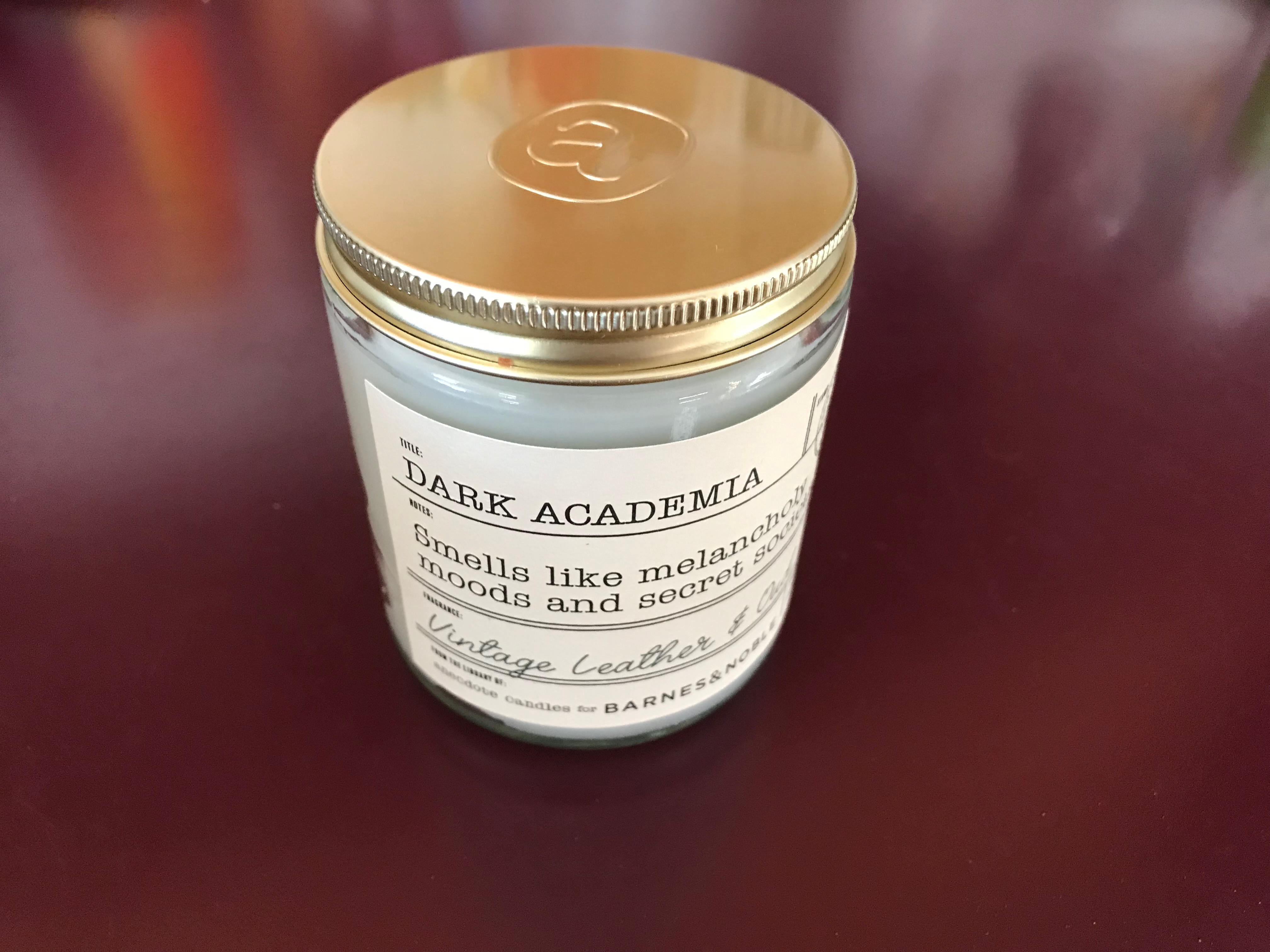
Dark Academia

Dark academia is the new gothic.  It’s all the rage on the internet, as I found out by releasing a YouTube video on the topic that quickly became my most popular.  Still, I was surprised and flattered when Rent. asked me my opinion on the dark academia aesthetic.  You should check out their article here.  What drew me to dark academia is having lived it.  Although the conservatism often rubbed me the wrong way, Nashotah House was a gothic institution with skeletons in closets and ghosts in the corridors.  Tales of hauntings were rife and something about living on a campus isolated from civilization lends itself to abuses.  An on-campus cemetery.  Even the focus on chapel and confession of sins implied much had to be forgiven.  The things we do to each other in the name of a “pure” theology.  Lives wrecked.  And then hidden.

I entered all of this naive and with the eagerness of a puppy.  I was Episcopalian and I had attended the pensive and powerful masses at the Church of the Advent on Beacon Hill in Boston.  I was open to the mystery and possibilities even as I could see the danger in the dogmatic stares of the trustees.  It was a wooded campus on the shores of a small lake.  A lake upon which, after I left, one of the professors drowned in a sudden windstorm.  I awoke during thunderstorms so fierce that I was certain the stone walls of the Fort would not hold up.  Disused chapels full of dead black flies.  Secret meetings to remove those who wouldn’t lock step.  This was the stuff of a P. D. James novel.  Students at the time even called it Hogwarts.  They decided I was the master of Ravenclaw.

Fourteen years of my life were spent there.  I worked away at research and writing in my book-lined study painted burgundy.  Is it any wonder that I find dark academia compelling?  I’ve often written, when discussing horror films on this blog, that gothic stories are my favorites.  Even the modern research university can participate.  Professors, isolated and often unaware of what’s happening outside their specializations, still prefer print books and a nice chair in which to read them.  And, of course, I’d read for my doctorate in Edinburgh, one of the gothic capitals of Europe.   Even Grove City College had its share of dark corners and well-kept secrets.  What goes on in that rarified atmosphere known as a college campus?  The possibilities are endless.  On a stormy night you can feel it in your very soul.

That article again: Dark Academia Room Decor: Aesthetic Secrets Revealed


More Time

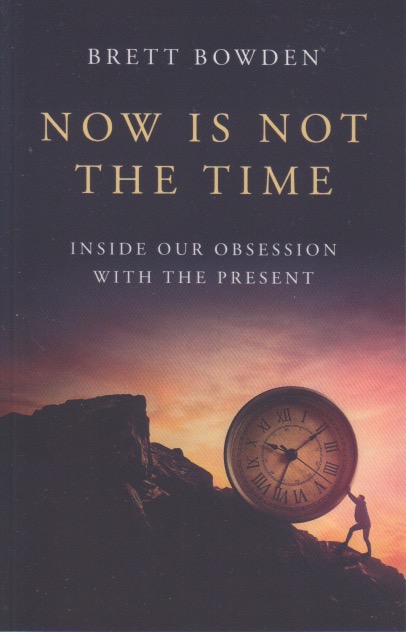
Speaking of time… Time is one of those things that flummoxes me.  A time change, crossing time zones, trying to figure things out on a base-6 system (metric time anyone?).  Confusing.  One thing about time is that we live in it, and so reflecting on it seems a reasonable thing to do.  Brett Bowden does just that in Now Is Not the Time: Inside Our Obsession with the Present.  As an historian, Bowden is experienced at looking back and this brief book is a reflection on why we’re so fixated on now being the most important time ever.  Given recent events, his seems to be a comforting message when looking at the long term of human history, and even longer term of our humble planet’s history.  The present is a blip and the future, at least as far as we know, hasn’t been decided yet.

One of the topics Bowden addresses here is the human propensity to claim and name.  We like to name things and when we do, it implies ownership.  Who but an owner gets to decide on a name?  This leads him to reflect on Eurocentrism, as in the naming of objects, such as Mount Everest, that are very far away and in somebody else’s territory.  We name craters on the moon (which we can’t really just pop over to) and even stars and galaxies.  We’re terribly acquisitive rascals, aren’t we?  We do the same with time—dividing it into eras.  Bowden’s discussion of the Anthropocene debate is quite interesting.  It seems we need a name for the time when people really began changing the planet on a global scale, but geological time ought to hush us up, if we stop and think about it.

As Bowden notes, psychologists and life coaches often encourage us to be in the present.  I think what they mean is that we shouldn’t worry unduly about the future.  That’s good advice.   Something Brett reminded me of is that some cultures, such as those of the Bible writers, view people as moving into the future backward.  It’s like riding on a train facing away from the direction of motion.  We can see the past and we can interpret it.  The future, however, we can’t perceive quite so clearly.  As someone who has studied the history of religions, I tend to agree that looking back is often a source of comfort.  It’s also a source of horror—many bad things have happened, many of them intentionally orchestrated by our species.  But it does serve to ground us in the now.  Even if it’s no more important than what went before or than whatever it may be that will come.


Hiding Kirk

I recently saw—don’t ask where—a U.S. Space Force officer dressed in camouflage.  How fitting for a Trump-era agency.  I should think a Space Force uniform should be all black, maybe with little white dots on it.  Rather like my black lawn furniture that got in the way when I was cleaning my paint sprayer full of white paint.  I often wonder about our love affair with feeling safe.  Perhaps my own phobias have reached such a level that they’ve cancelled each other out.  If I was trying to hide in space, I think I’d try to look small, and dress in black.  Camouflage, which is based on colors found down here, probably wouldn’t do so well for the other planets of our solar system.  Or even the moon, for that matter.  And I personally think I might trust the aliens not to have earth-like issues.  After all, we think it’s okay to let machines think for us.

I grew up quite the sci-fi fan.  I read lots of books in that genre and enjoyed science fiction movies almost as much as my beloved monsters.  I used to watch that show, UFO in the 1970s.  The one with the interceptors with a huge missile on their noses.  I wasn’t really worried about aliens trying to invade.  Perhaps these days I think it might be better than the tedium of daily existence in the 9-2-5 world.  In any case, if we must have a Space Force, ought they not dress for the job?  I’m pretty sure I’ve got some tin foil in the kitchen with which to construct my hat.  Let’s look the part—that’s all I’m saying.

Photo credit: NASA

While all this is going on speculation has been growing about water on Mars.  There’s a good chance we may find it.  (We can always hope that if Elon Musk makes it to the red planet that he will take Donald Trump with him.)  If we are looking for invaders, though, we probably have to go further afield.  That’s alright, dynamic duo, we’ll get along without you.  Perhaps in the interim someone will realize that, dressed in earth green camouflage, our Space Force will surely stand out against the surface of Mars, or wherever they might go.   Unless it’s a planet very much like earth.  That houses intelligent life.  Maybe the beings there feel safe, knowing that their space force—for surely they will have one—is dressed in black.  Or at least, their life really is intelligent.


Locating Yourself

How do you come to where you spend your life?  It could be where you’re born.  I was born in Franklin, Pennsylvania.  Neither of my parents were.  On my mother’s side we had a tradition of wandering.  We eventually moved to Rouseville, a refinery town not too many miles from where I grew up initially, but very different in character.  I knew I wanted to get away.  I lived in Grove City next, only as a student.  For a short while I resided with some friends in the South Hills of Pittsburgh before moving to Boston to attend seminary.  Like many who go to Boston for school, I wanted to settle there.  I did so for about a year after graduation, making a living, such as it was, selling cameras.  My next move was precipitated by love.  I moved to Ann Arbor, Michigan to be with my fiancée, but I’d already been accepted to Edinburgh University, so an international move was imminent.

Roseville

Edinburgh, like Boston, is a spiderweb.  We would’ve stayed if we legally could have, but with a job market for academics already tanking, we headed back over the Atlantic.  My wife was a grad student at the University of Illinois, so we moved first to Tuscola (family there), then Savoy (on the outskirts of Champagne-Urbana).  Meanwhile I commuted to Delafield, Wisconsin, home of Nashotah House.  We eventually moved to Delafield and stayed until I was no longer wanted.  Our move to Oconomowoc was necessary to keep our daughter in the same school.  The possibility of full-time employment drew me to Somerville, New Jersey.  We would stay there until my daughter had a chance to graduate.  Depression convinced me that I’d run out the clock in that apartment, but a financial advisor suggested Pennsylvania, where I was born.  Thus we ended up in the Lehigh Valley.

I’ve liked every place I’ve lived.  If I had my druthers, however, I would’ve ended up teaching at a small college in Maine.  Several friends have moved to Maine as I’ve jealously watched.  The places we spend our lives, at least in my case, are determined by a measure of fate.  Nashotah House was the only job I was offered from Edinburgh.  Gorgias Press was the only job I was offered after the seminary.  Moving to my home state was volitional, of course.  As a couple we’d have been content in Massachusetts, Michigan, Wisconsin, or New Jersey.  Economics, of course, has a heavy hand in all of this.  I sometimes think that, if I could ever retire, moving to Franklin again would be a way of coming full circle.  But then, life is change and we end up, it seems, where we’re meant to be.  Perhaps Canada?


Firebrands

Although I’ve never lived there, I believe I have a fairly good idea of life in Ithaca, New York.  I’ve spent many, many days there over the past few years, often pondering how it is a city that would be an especially good fit for me, despite the fact I’m unhireable at Cornell and Ithaca College has never showed any interest.  It’s a liberal college town where even the street people appear to be educated.  The money of Ivy League students keeps it fresh and evolving.  And the shops in Ithaca Commons are set at eleven.  So it was that a headline in Publishers Weekly some months back caught my eye.  (I’m not behind only on movies, it seems.)  It showed a historical plaque for Firebrand Books, on the Commons.  The story stated that the plaque had to be placed on public land since the owner of the building where Firebrand started has a Christian prejudice against homosexuality.

I suppose I ought to take a step back and give a little history.  Firebrand was established as a feminist and lesbian publisher.  Its offices were on Ithaca Commons, but when the founder, Nancy K. Bereano, retired the press eventually found a buyer in Ann Arbor, Michigan.  (I have also lived in Ann Arbor, but for less than a year.  Likewise, it is the kind of place I felt instantly at home.)  Ithaca, meanwhile, wished to honor its contribution to literature and elected to put up a commemorative plaque.  The objection, however, was based on a particular reading of the Good Book.  (It must be stated that lesbianism is never explicitly forbidden in the Bible.)  To make a statement, the owner forced the plaque to the public domain.

We have a way of letting our prejudices become biblical.  I recently re-read 1 Corinthians—one of the infamous “clobber” texts for any number of people—and realized just how many of the words assumed to refer to “homosexuals” are words of uncertain Greek connotation.  King James, who seems to have preferred the company of gentlemen himself, was apparently not bothered by the text he had translated.  Of course, kings will be kings.  Our concern with sexual behavior is one of the hallmarks of our species.  We’re very concerned about how other people do it, even if it’s no business of ours.  And we consider it one of the highest moral concerns and a source of constant shame.  That was another thing that struck me while re-reading 1 Corinthians.  I wondered why Paul keeps coming back to it.  Maybe he was just being a firebrand.


Alien Invaders

I’ve been pondering genre for some time now.  And since Stephen King assures me (not personally) that Earth Vs. the Flying Saucers is horror, I figured I’d give it a try.  In fact, given the various themes of the movie, I’m surprised I hadn’t seen it before.  The title pretty much gives it away—aliens try to take over Earth with a swarm of flying saucers.  Two scientists figure out how to make their saucers stall, and even though the aliens have a disintegration ray that pretty much destroys anything, the earthlings prevail.  Having summarized it all in less than a hundred words, is there really anything worth comment here?  I think so.

Like many older movies this one makes use of stock footage to fill in action sequences and to keep the budget reasonable.  So there are big guns going off and rockets being launched.  (This was a pre-Sputnik movie and it depicts America having eleven satellites in orbit.)  But the additional footage that stayed with me was a scene of two planes colliding and crashing.  It was clear these weren’t models and the footage was authentic, apart from the flying saucer shooting the planes.  It turns out that this scene was indeed real, and that the pilots of both planes died in the crash.  During an air show outside Spokane, Washington in July 1944 this collision was caught on film by a Paramount news crew and it was reused in this film.  This got me to thinking about war footage—something that really only became possible in the Second World War.  And what we now see today in real time on the internet because the world is wired.

It’s as if those who wage war are fine with it as long as people with a conscience don’t know what happens.  There’s even a phrase used to excuse unspeakable barbarism during combat: the haze of war.  This we know about our species—there’s a tipping point beyond which rationality shuts off and we’re no longer responsible for our behavior.  We also know that war puts people in that zone.  It was fine as long as only surviving warriors were left to tell the stories of their bravery.  Photographing, particularly in motion pictures, combat revealed a much darker truth.  Well, at least in Earth Vs. the Flying Saucers the enemies under attack were fictional.  Except.  Except, some of the casualties were real people whose final moments were caught on camera.  Be sure to get out and vote today, if you’re in the United States.  There’s a party even less understanding than aliens out there, desiring to take over.


A Second Post?

A second post in one day?  Not really.  As much as I’d love to post more, work drains me.  But I also realize I post early and some people may miss my musings because they’re so early.

Enough prologue.  This is simply a public service announcement.  McFarland is offering 40% off when you order two horror books, through the end of October.  Now that Holy Horror’s price is reasonable, you can really make a killing.  To take advantage of this limited-time sale, use the code HALLOWEEN2024 at checkout.

McFarland prices their books reasonably for an academically inclined small press.  And they have a great selection of horror-themed titles.  Check it out!  Back to your regularly scheduled programming.  (I’ll post again in the early morning, as usual.)


Ichabod’s Body

Maybe you’ve noticed this.  When Halloween comes around, the Headless Horseman and the Legend of Sleepy Hollow reemerge.  There’s a reason for that, and I discuss it quite a bit in Sleepy Hollow as American Myth.  Right now there seems to be quite an interest, or maybe I’m just noticing it more.  For example, a local theater where we saw a Poe performance last year is offering a Headless Horseman show this year.  Articles have recently been appearing on Tim Burton’s Sleepy Hollow movie, given that it was released 25 years ago—online discussion, however, is often eclipsed by the Fox television show by the same name.  And before it switched over to Christmas decorations, Michaels had its share of Sleepy Hollow merchandise.  Halloween and the Headless Horseman go together.  (Read the book to find out why!)

One of the tchotchkes I picked up at Michaels was Ichabod Crane’s tombstone.  In the many renditions of Washington Irving’s legend, Ichabod is treated as the protagonist of the story.  Although Tim Burton’s movie wasn’t the first to have Crane survive, besting the Horseman, the old wives’ tales, according to Irving, had him spirited away by the Horseman.  That’s why I found his gravestone so interesting.  The dates on it (1787–1857) indicate, at least according to this recension, that he died at seventy, surely not the victim of the attack that took place around the turn of the century.  If you’re not familiar with the original story, Irving set it “some thirty years since” the 1820 in which the tale was published, putting the events around 1790.  Burton shifted this to 1799, partially, I suspect, because that was two centuries before the release of his movie.

I do wonder where the maker of the Michaels tombstone got their information.  According to their reckoning, Crane would’ve been but three years old in 1790.  Of course, the story never tells us his age.  Since it is intimated that he relocated and became a judge after dabbling in politics, all of which would seem to indicate that he was a somewhat young man at the time of the tale.  To make Sleepy Hollow scary, though, having Crane cut off in his youth would seem to be more in keeping with the spirit of the season.  Of course, Sleepy Hollow is a legend that has become mythic through its many retellings.  Enough of them that someone could write a book about it all (ahem).  And this is the time of year to ponder it.  


National Nightmares

Being drawn into the dream of a madman.  Trump’s dream.  It seems like fiction, doesn’t it?  But, as they say, reality is stranger than.  I didn’t come up with this observation of being drawn into a madman’s dream myself.  It comes from Harlan Ellison via Stephen King.  When asked why he writes what is commonly called horror, Ellison pointed to the things happening at the time: Jonestown, Ayatollah Khomeini, etc., and replied something like the world was being drawn into Khomeini’s dream.  So the United States is being drawn in to the mad dream of Donald Trump.  I believe it’s because many people lack imagination.  There’s a reason I write “horror” stories in my spare time.  I prefer not to live in a madman’s dream.  Even if my stories are read by the few who frequent the journals in which they’re published, they are an attempt at viewing the world through unclouded eyes.

Entirely too much of our collective lives have been eaten up by Trump’s antics.  I was looking for an image on this blog going back some eight years and found, you guessed it, posts about Trump.  And here we are on the precipice again, all to stoke one man’s vanity.  And people ask why some of us write or watch horror?  We tend to treat insanity as if it’s rare.  Any self-aware, reflective person, when alone and honest, will admit that some things we do simply aren’t rational.  We’re not, as Silicon Valley moguls like to think of themselves, Mr. Spock.  (And even he underwent pon farr.)  The evidence of Trump’s manipulations is all over the place, but that doesn’t stop yard signs from popping up like toadstools.

We are far from a “sane” species.  We may wonder why deer step out onto the road and stare blankly into headlights, but we do the exact same thing.  Horror writers tend to be pretty clear thinkers.  I suspect it’s because many of them spend time trying to get into the heads of their irrational characters.  They can recognize the madmen and the dangerous among us.  King’s Twitter posts make no bones about his seeing through Trump.  The latter’s public speeches clearly indicate that his mental capacity isn’t sufficient to be given nuclear codes, let alone the reins of the most powerful country on the planet.  He dreams of his own greatness.  His desires are entirely for his own glorification.  Anyone can see that.  But we are creatures who dream.  And it’s difficult to wake up from a dream, even if it’s a nightmare.


From God’s Mouth

If book banners would actually read the book they claim to protect, the Bible, they would run across the account of Jehoiakim and Jeremiah.  It’s in Jeremiah 36, if you care to follow along.  Jeremiah was not a popular prophet.  In fact, he was often in trouble for speaking what God told him to say.  He wasn’t wearing a “Make Israel Great Again” cap.  In fact, his message was that the kingdom of Judah had to fall in order to be restored.  So in chapter 36 he dictates his message, straight from God, to Baruch, his secretary.  Baruch reads the words in the temple and this comes to the notice of the royal staff.  They arrange for a private reading and it scares them like a good horror novel.  One of them reads the scroll to the king, Jehoiakim, who cuts off a few columns at a time and burns them in the fire.

My favorite part of this story has always been the coda: “Then took Jeremiah another roll, and gave it to Baruch the scribe, the son of Neriah; who wrote therein from the mouth of Jeremiah all the words of the book which Jehoiakim king of Judah had burned in the fire: and there were added besides unto them many like words.”  Many like words.  So we have book banners around the nation trying to stop children from reading.  The hope is they will become unreading adults because reading expands your mind.  Jehoiakim was a book banner—a book burner, in fact.  But the response from God himself is to write the whole thing over and add many similar words.  

The Bible has been, and still is, fairly constantly abused.  What it seems to be is unread, at least by those who use it to stop other books from being read.  I came to believe, while majoring in religion in a conservative college, that if literalism was truly from God there would be no way to stop it.  I took a route unlike my classmates, who tended to go to the most conservative seminary they could find to have their minds further closed.  I figured that if it was true then testing it by reason couldn’t hurt it.  It’s pretty obvious the way that turned out.  I don’t stand with book banners.  This is Banned Book Week.  Read a banned book.  Stand up to those who do the banning.  And if you need something to convince them that their tactics don’t meet with divine approval, point them to Jeremiah 36.


Liminal Time

Considering the number of people who declare autumn their favorite season, the equinox receives pretty slim press.  This year it falls on the 22nd and, as always, it is one of the four quarter days of the pre-Christian European calendar.  Even among pagans it seems not to have had the same level of celebration as the other solstices and equinox.  I sometimes wonder if that’s because things are generally good already in September.  The intense heat of summer is over but the chill of October hasn’t yet arrived.  We stop using the air conditioning and don’t have to turn on the furnace.  It’s the Goldilocks month.  It’s part summer when living is easy, and part fall when the world is beautiful.  Like its fellow quarter days it is truly a liminal time.  

Liminal periods are always good for reflection.  No matter how much I want to savor this time of year, I have a feeling that it always catches me off guard.  There are changes afoot.  Starting Monday it will be dark more than it is light, and that will hold true until the sister equinox visits us in March.  These longer nights have traditionally made room for ghosts and goblins.  If we haven’t begun to store up supplies for winter, now is the time to start.  It’s the season when we all believe in magic, if just a little bit.  I’m one of those people who finds melancholy somewhat lovely.  It’s not depression (believe me, I know!), but a kind of happy sadness that the season itself is ephemeral.  Pretty soon people will be watching scary movies, but not quite yet.

Harvest is a joyful, spooky time.  Those trees that have been green since April now put on their colorful winter coats but soon will spend the colder months bravely naked.  Snow may come.  Fall is a prophetic season, warning us of what might come.  Monsters may be set free from their chains.  And yet there will be cozy indoor holidays when we can hunker down and recollect the year that has just been spent.  There’s a wisdom to seeing the quarter days as the spokes on the wheel of the year.  Like many wheels already rolling it’s futile to attempt to stop them.  They’re moving us to the next place that we’re meant to be.  It’s true that the autumnal equinox falls on a weekend this year, but it does seem to me a natural holiday.  And a time, like all holidays, for reflection.


Slow and Spry

Businesses seem to want to move at light speed.  At least some do.  When I see that happening I think, “their strategy must be to make a fortune quickly so that when the unthought-through idea collapses they can move on to the next thing.  When I hear words like “agile” being tossed around I translate “reckless.”  Just over a century ago my ancestors were scraping out a living farming, and they got along okay.  Our acquisitiveness has outstripped our sense.  I read quite a bit about being satisfied with little.  Of course, I work in the “business world” where such ideas are anathema.  Even universities have decided to jump on the Titanic.  What could possibly go wrong?  My experience at Nashotah House was decidedly mixed.  One thing I always appreciated was the contemplative (i.e. slow) pace of things.  I may not be orthodox but I’m hardly reckless.

Perhaps buying the farm isn’t such a bad idea.  I’m afraid that I don’t have enough practical knowledge to raise my own food, even though I’m a vegan.  You see, for the things you can’t raise in the soil you need to sell surplus so that you can buy things.  Or rent movies.  And that takes business sense.  And businesses want to move at the speed of light.  I may be neurodiverse, but it takes me a while to process things.  I watch older movies.  I read slowly.  I think things through.  I do believe that businesses that last a long time have survived by moving a bit more slowly.  Like a tree.  By thinking things through.  The Vatican has been in business for a couple thousand years and they seem to be doing okay.  I could be Catholic were it not for doctrine.

I’m not the smartest guy around—not by a long shot—but I am a strategic thinker.  Strategic thought can be deep.  And counterintuitive.  And it doesn’t always lead to the desired results.  (I don’t even have a small college post, so that much is obvious.)  I’m content to let people pass me on the highway.  I don’t have to be first to market, as the saying goes.  I’m more in it for the long haul.  It hasn’t landed me wealth or fame, but I can spend a little time writing every day.  I get to watch movies that make me feel good.  I even get a book or two out the door.  Being agile is fine, but only, imho, if you think it through.


In Sheep’s Clothing

Evangelicals supporting Trump must experience some cognitive dissonance when they read Dietrich Bonhoeffer, one of their heroes.  Bonhoeffer, who could easily have remained in comfort in the United States, went back to his native Germany because he was deeply troubled by the fascist regime of Hitler.  Involved in Operation Valkyrie, the attempt to assassinate Hitler, Bonhoeffer was hanged for his faith.  He wrote, “If I sit next to a madman as he drives a car into a group of innocent bystanders, I can’t, as a Christian, simply wait for the catastrophe, then comfort the wounded and bury the dead. I must try to wrestle the steering wheel out of the hands of the driver.”  How far we have fallen!  Now evangelicals support someone with all the signs of being a madman.  A man who has said he intends to dismantle democracy itself, if elected.  How quickly Bonhoeffer and his important work is trampled underfoot by his own.

Some people express surprise that I still appreciate evangelicals such as C. S. Lewis and Dietrich Bonhoeffer.  They were believers who stood by their convictions, but who used reason to do so.  And yes, Hitler had messianic delusions as well.  A poor carpenter once warned of wolves in sheep’s clothing, but then, what did he know?  And can we compare Trump to Nazism?  Have you read the Project 2025 agenda?  An agenda so explosive that the publisher for the book on it (HarperCollins, with a foreword written by J. D. Vance) has put off publication until after the election.  You don’t want people to know what they’re voting for, now do you?  Wolves dressed up like what?  You can’t pull the wool over our eyes.

Photo by Tanner Yould on Unsplash

I have no problems with Evangelicals.  Faith is exceptionally important in people’s lives.  My concern is the weaponizing of religion by political cynics.  They select issues that they know will rile up religious conservatives and use them to glean votes.  One of the oldest tricks in the book—known by every stage magician who’s ever stood before an audience—is misdirection.  Get people to look over there so you can pull a trick over here.  I spent my formative years reading Bonhoeffer, and his reasoned evangelicalism made a lot of sense to me.  Of course, this was when the biggest threat we faced was characters like Richard Nixon and Ronald Reagan.  Now even they are trampled under the iron claws of what has become “conservatism.”  Even Dick Cheney has said he’ll vote for Harris.  If Hitler hadn’t had Bonhoeffer hanged, modern evangelicals, it seems, would’ve done the job.


Not Kid’s Stuff

Sometimes when I go into a bookstore I don’t find anything on my list.  (My list is pretty strange, and it includes many older titles.)  I feel strongly about supporting bookstores, however, and I search for something I would like to read.  So I found Lydia Millet’s A Children’s Bible.  I hadn’t previously heard of it but it was in the speculative section and it wasn’t 400 pages or more.  It turns out that it’s set at an indefinite time but it seems to be not too far in the future, when global warming has really kicked in.  A group of kids whose parents are affluent, but not ultra-wealthy, are spending the summer at a large house on the coast.  You get the sense that this house is a lot further inland than the present east coast.  The parents are childlike in their hedonism, whereas the kids really despise their constant drinking, drug use, and general lack of care.  The kids are independent and try to make their own way, but then a massive hurricane hits.

In the aftermath, the kids run away.  Society has broken down, however, with bands of roving armed men breaking in and taking whatever supplies they want.  They find the compound the children are using, setting this almost as a horror story.  I won’t say anything more about the plot because that might give too much away.  Astute readers know that it isn’t possible to say definitively what a book is about, but I would say this is almost a parable about global warming—it has “parable” written all over it.  Irresponsible adults have let this happen and the children have to figure out solutions.  And yes, there is a Children’s Bible in the story and it plays a part in the plot.  I have to admit the the title is what first caught my attention.

I don’t know Lydia Millet’s other work, but this was not exactly an enjoyable novel, it seems like an important one.  I’m glad to have read it.  The kids in the novel, the older ones, are skeptical of the Children’s Bible when it’s introduced.  Two of the younger kids, see it as providing direction on how to survive in science-versus-nature world.  All of the kids here are incredibly prescient and precocious.  The adults are unable to adjust to the changing world and although the Bible remains with the children it leaves the reader with the haunting question of what comes after Revelation.  This is a book that would benefit from serious pondering.


Book Stages

There are stages to it.  Writing a book, I mean.  One stage, for me, is realizing that you’re writing one.  I started work on Sleepy Hollow as American Myth years ago, without realizing it.  That was followed by the stage of comprehending that I had a book idea and intentionally writing it.  I suspect that, in the throes of The Wicker Man, I thought “I should do a similar book on Sleepy Hollow.”  Devils Advocates, which is an excellent series, however, feeling the strain on academic presses, was moving to hardcover-first releases (the kiss of death).  I started writing the book anyway, hoping that maybe it might find trade interest.  It is still possible that an agent is out there who would’ve moved it in that direction, but I wanted the book out before Lindsey Beer’s movie gets released.  After the book is drafted, the next stage: find a publisher. (Unless you have an agent.)

Since this is my sixth book, I felt confident (a strange, foreign feeling for me) that I could locate a publisher.  I’d done it five times before.  McFarland did a nice job with Holy Horror, but what sold me is that they dropped the price on it.  Many academic publishers continue to raise prices each year, so if you don’t buy a book right away you’ll end up paying a lot for this muffler.  The next stage is waiting to see what the cover will look like.  That wait is over.  Here it is, the cover of Sleepy Hollow as American Myth:

(Feel free to share widely, get everyone all excited!)  I’m currently in the waiting stage.  Waiting for proofs.  Of course, I’ve been working on my next couple of books as well.  You can’t just sit around, otherwise these tomes will never get written.  I haven’t decided which one will cross the finish line first.  If I had an agent they’d be able to tell me which might be more marketable, but since I work alone I’m left to my own devices.  I am bound and determined that the next book will go to a trade press.  I’m trying hard to scrub any whiff of academia from it.  In the meantime, however, I’m enjoying looking at the cover for my current book.  There aren’t a ton of nonfiction books out there on “The Legend of Sleepy Hollow.”  In fact, as nonfiction I know of only one other.  This isn’t what we in the biz call “a crowded bookshelf.”  I’m doing all the pre-publication promo that I can.  I’d be grateful for any shares or likes at this stage.