The Teenth of June

It’s only really when they have no choice.  The Wednesday holiday, that is.  No convenient weekend a day away.  So Juneteenth is actually celebrated on Juneteenth.  I believe in holidays.  I think they’re more than just time off work, and Juneteenth celebrates freedom.  And it reminds us that our African-American siblings aren’t yet truly free.  We still have much to learn and having a holiday to underscore that is important.  Capitalism does a good job of disguising freedom, of course.  Your worth is weighed by how much value you add to the company.  Taking a day off from that is an opportunity to reflect on how daily living could be improved for all.  Juneteenth is a necessary holiday.  We need constant reminding.

I don’t see many African-Americans flying flags on their houses declaring themselves “not woke.”  We prefer to believe we’ve reached perfection already.  Capitalism is great at spreading myths like that.  The basic premise behind it is greed, and people are easily divided into groups because of skin tone.  It’s a dangerous combination.  Somewhere along the way, “justice” came to be a swear word.  Particularly among one political party that has decided power, at any cost, is the sine qua non of human existence.  If that means oppressing others systemically, or if it means invading a neighboring sovereign state because you have nukes with which to threaten the rest of the world, it’s all the same.  Power is far more addictive than any opiate, but we  don’t have any laws preventing those unsuited to holding it from doing so.  Juneteenth uncovers a host of problems still to address. 

Slavery was hard to let go because it cut into profits.  Human beings love wealth more than each other.  Ironically, without others to compare with, wealth means nothing.  If money makes someone happy I have no problem with that, but it has to come with responsibility.  One way to handle it responsibly is to insist that only so much can be had before the surplus goes to insure that all people have enough.  Of course, where Supreme Court justices openly accept bribes we can’t wonder that there are legal loopholes to help the wealthy circumvent their civic duty.  We need constant reminders.  We need holidays like Juneteenth.  We need to give our African-American siblings the same rights and privileges all people should have.  It’s appropriate to celebrate small steps in that direction.  Even if it means giving a Wednesday off of work.


Empowerment

Recommended as a worthwhile contemporary gothic novel, Alix E. Harrow’s The Once and Future Witches is a feminist tour de force.  Set in a world similar, or perhaps parallel, to ours, it follows three witch sisters in 1893.  The sisters are estranged, having been raised by an abusive father, and each has found her own way to New Salem.  The old Salem had been destroyed after the witch trials.  The three find their lives drawn together, not even knowing the others are there.  But there are also still witch hunters.  None worse than Gideon Hill, the leading candidate for mayor.  I’ve long known that books written after Trump are often fairly obvious for the hatred that oozes from political leaders.  This is one such case.  The story is one of female empowerment in the face of constant male opposition.  It goes fairly quickly for a book its size.

It’s an enjoyable read but it grows, well, harrowing towards the end.  You come to like these three very different sisters and appreciate the gifts they offer to their world.  Men, however, make the rules and often they feel that women have no place in making decisions for the public good.  I’m amazed at the number of people who still believe this.  It makes novels such as this so important.  Women with power are crucial examples to present.  The three sisters may cause mayhem, but it is generally good for the city.  When men are in charge, things tend to get repressive.  Sound familiar?

Conveying the gist of a 500-page novel isn’t a simple task so I’ll simply say that this isn’t a conventional witch story.  There’s never a question that witches are good, but capable of doing bad things.  In other words, they are pretty much like all of us.  That’s not to deny that some people become evil and that such people will gain ardent, blind followers.  The characters are memorable and likable in their very humanness.  As far as genre goes, this is a magical realism novel.  As you get drawn into Harrow’s world it becomes believable.  It’s a book that should be widely read and its plea for tolerance must be heard.  I can think of other comparisons—others have also conveyed that an unquestioning religion may become evil unintentionally.  Such conversions aren’t the kind publicly discussed, but they do fit with human experience.  I’ve intentionally left out spoilers since I want to encourage readers.  It certainly has left me thoughtful.


Going Once, Going Twice

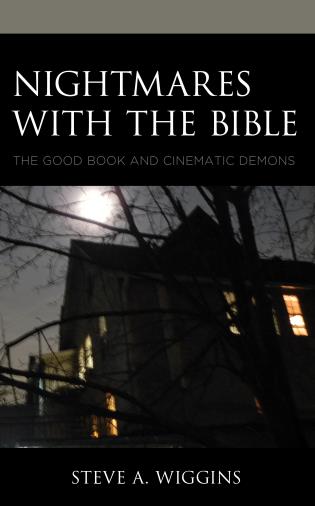
Do you ever get that feeling that you’ve been sold?  One thing I learned early on in academic publishing is that buyouts aren’t that unusual.  I recently wrote about Transaction being acquired by Taylor and Francis, for example.  Just a couple days ago I noticed in Publishers Weekly that Bloomsbury had bought out Rowman & Littlefield’s academic wing.  Then, at a company meeting the buyout was mentioned again.  Finally, I had an email from R & L letting me know.  You see, Nightmares with the Bible was published by Lexington Books/Fortress Academic.  This is an imprint of Rowman & Littlefield.  This means the rights to Nightmares have just been sold to Bloomsbury.  I do hope Bloomsbury has a more progressive idea about paperbacks!  In one of those strange synchronicities (all of this happened on the same day), I’d emailed one of the series editors of Horror and Scripture, asking if the series was still going.

I have no real concerns about being owned by Bloomsbury.  If you haven’t heard of them, it’s probably because they were a small operation until they took a chance on an unknown author by the name of J. K. Rowling.  Suddenly flush with cash, they started buying out smaller presses.  Big fish got to eat too!  Rowman & Littlefield had been buying out other publishers for years.  If you’re an academic you probably remember University Press of America.  Ever wonder where it went?  They bought Rowman & Littlefield in the late eighties and took over their name.  They bought other “assets”: Prometheus, Scarecrow Press, Hal Leonard.  They grew an enormous list of academic titles, now owned by Bloomsbury.

As someone who has knocked around academic publishing for some years now, it seems like this small world is getting even smaller.  Companies buy other companies and sometimes it works out for the benefit of authors.  Sometimes not.  Bloomsbury is only 37 years old.  Rowman & Littlefield was 75.  University Press of America (which first bought R & L, would’ve been 49.)  The younger buying out their elders.  Perhaps it’s because of my career malfunction, but I’ve discovered academic publishing to be a fascinating world in its own right.  Many academics pay little attention to the publisher, especially outside the big-name university presses.  But there are stories here.  I know that before I began working in the industry I’d never heard of Bloomsbury.  Then they bought out Continuum, which had bought out T & T Clark, from my beloved Edinburgh.  Now one of my books is under their umbrella.  And I have to wonder who will be sold next.


Saint Material

Miracles don’t often make the New York Times.  The Gray Lady was reluctant to release stories about verified UFO cases, for crying out loud.  But the story about a twenty-first century saint made me pause.  Well, Carlo Acutis isn’t technically a saint yet (at least he wasn’t at the time of the story), but you can’t become a saint without miracles.  Miracles are difficult situations for which to set up a control group.  Often they involve human beings and we really don’t understand ourselves well enough to say what might be supernatural from time to time.  All we know, at least from the “educated” establishment, is that materialism accounts for everything so miracles don’t happen.  QED.  That’s why I found the account of Carlo Acutis so interesting.  A story about a young person dying from leukemia is always sad, but this report doesn’t end there.

In his brief life, Acutis tried to bring good into the world via the internet.  In this shadowy realm where trolls and hatred thrive, here was a young man trying to spread positive things through this collective of anybody who can afford connectivity.  That does make a remarkable news story in and of itself, but that miracle.  Two, in fact.  Catholic practice is not to assign sainthood without out two very carefully studied miracles.  The Vatican has been involved with science for many decades.  The idea of the Big Bang, after all, derived from Georges Lemaître, a Catholic priest and physicist.  Controls are set up for miracles, and the church even used to use Devil’s advocates to try to disprove miracles in such cases.  Skepticism was an essential part of the process.  In its own way this is the scientific study of miracles.

The miracle that may put Acutis over the top, according to the Times, is a spontaneous remission of a brain hemorrhage after a prayer was made to the young man.  Such things happen and doctors can’t explain them.  We as human beings have no way to determine what actually causes such unconventional healings—miracles—often deemed impossible by medical science.  A saint is as good an explanation as any other.  What’s fascinating here is that this miraculous recovery in all likelihood would’ve been overlooked by the New York Times, had it not been for this pending sainthood case.  Such cases as this aren’t everyday occurrences, but they reflect realities that modern people may be very slow to acknowledge.  They still do happen, whether they make the papers or not.  Perhaps our world would be a bit better if they did get reported a little more often.


Politicking

It was weird seeing my face on a 27 x 40 poster.  When I went to give my campaign speech I was wearing dress clothes that I’d bought at Goodwill.  My “campaign manager” said I did a great job, being witty and somehow confident.  I didn’t win.  Still, my stint in politics was not yet over.  The next year one of the presidential candidates asked me to be his campaign manager.  I took on the job with gusto, and, claiming no credit, I would note that he won.  So where was all of this politicking going on?  At the United Methodist Church Conference Youth Council.  I ran for council secretary one year, and lost.  I kept the poster with my face on it for a few years but the ink faded and the paper was cheap, and besides, I’ve never considered myself much to look at.

Thinking about the resources allocations (I didn’t pay for the poster—couldn’t have if I’d wanted to), I have to wonder about the priorities of the church.  Of course, it was only much later, after I’d gained significant seminary experience myself, that I realized just how political a job “ministry” is.  Yes, I had students while I taught in seminary, already strategizing on how to become bishop.  It was a political game.  Such games are no fun without power.  And money is power.  So maybe the Western Pennsylvania Conference was funding some learning experiences on the impressionable minds of the young.  It just took me a few extra years to catch on.  (Some things never change.)

I dislike politics.  Even now I wouldn’t feel compelled to do anything beyond voting my conscience were it not the clear and obvious danger that we’re in, courtesy of what used to be a conservative political party.  Any party that can’t keep a demagogue from receiving its nomination has embraced fascism and that’s a perilous road to travel as Germany and Italy discovered about a century ago.  My dislike of ecclesiastical politics certainly played a large role in my decision not to pursue ordination.  I’ve been a church insider, and what happens at board meetings?  Politics.  The person in the pew often doesn’t realize just how political religion is.  I learned Robert’s Rules of Order from church meetings.  My nomination to elected office in the organization led nowhere.  I was left wondering if there’s anywhere left that politics don’t apply.  The print on the poster faded.  The very last time I unrolled it, it was completely blank.


Price Drop

Here’s a public service announcement for your Friday.  If you’ve been wanting to read Holy Horror but found the price too high, McFarland has now lowered the cover price to under $30.  Here’s the link: Holy Horror.  Of my non-academic books, this has been my “best seller.”  Since I’m currently shopping around another book, and since agents aren’t interested (at least not any more), I wondered whether McFarland might look at it.  The editor who handled Holy Horror had left, and the new editor responded to my concern about pricing by telling me that they lower prices after a couple of years.  She noticed, however, that Holy Horror had been overlooked in the price lowering process, so voila!  It’s now affordable.

This model, while not the same as trade publishing’s efforts to get primarily front-list sales, seems to make sense.  Too many publishers raise prices year after year, so if you don’t buy immediately you’ll pay more.  McFarland tends toward a paperback first model.  The first couple of years are aimed at library sales—and they do well at those—then they lower for individual purchase.  All I had to do was ask.  Two years ago I asked Lexington/Fortress Academic if they’d do a paperback of Nightmares with the Bible.  That poor book never had a chance.  The editor said they were considering it.  Instead they did the trick that publishers seem to like: decoupling the ebook price from the hardcover.  So you can buy some expensive electrons instead of holding a real book.  So it goes.  I’ve written a museum piece.

It’s a little too soon to say about The Wicker Man.  My experience has been that university presses, particularly British ones, like to raise prices rather than chasing sales.  If you’re reading this blog you know that I’ll market my books.  I even printed bookmarks for Holy Horror at my own expense.  Maybe it’s time to start distributing them again.  What a difference ten dollars can make!  I’m a book booster.  (You might not have noticed.)  I’m glad that McFarland understands that individuals will buy books, even if they’ve been out for a while.  The standard wisdom among academic publishers is “three years and then you’re done.”  If you’re inclined to help prove that business model wrong, you can now get Holy Horror without having to take out a second mortgage.  That’s cause for hope—any writer has the dream that her or his book will keep on selling.  Sharing this information will, it seems, make it wider known. Please pass it on.


The Movie Maker

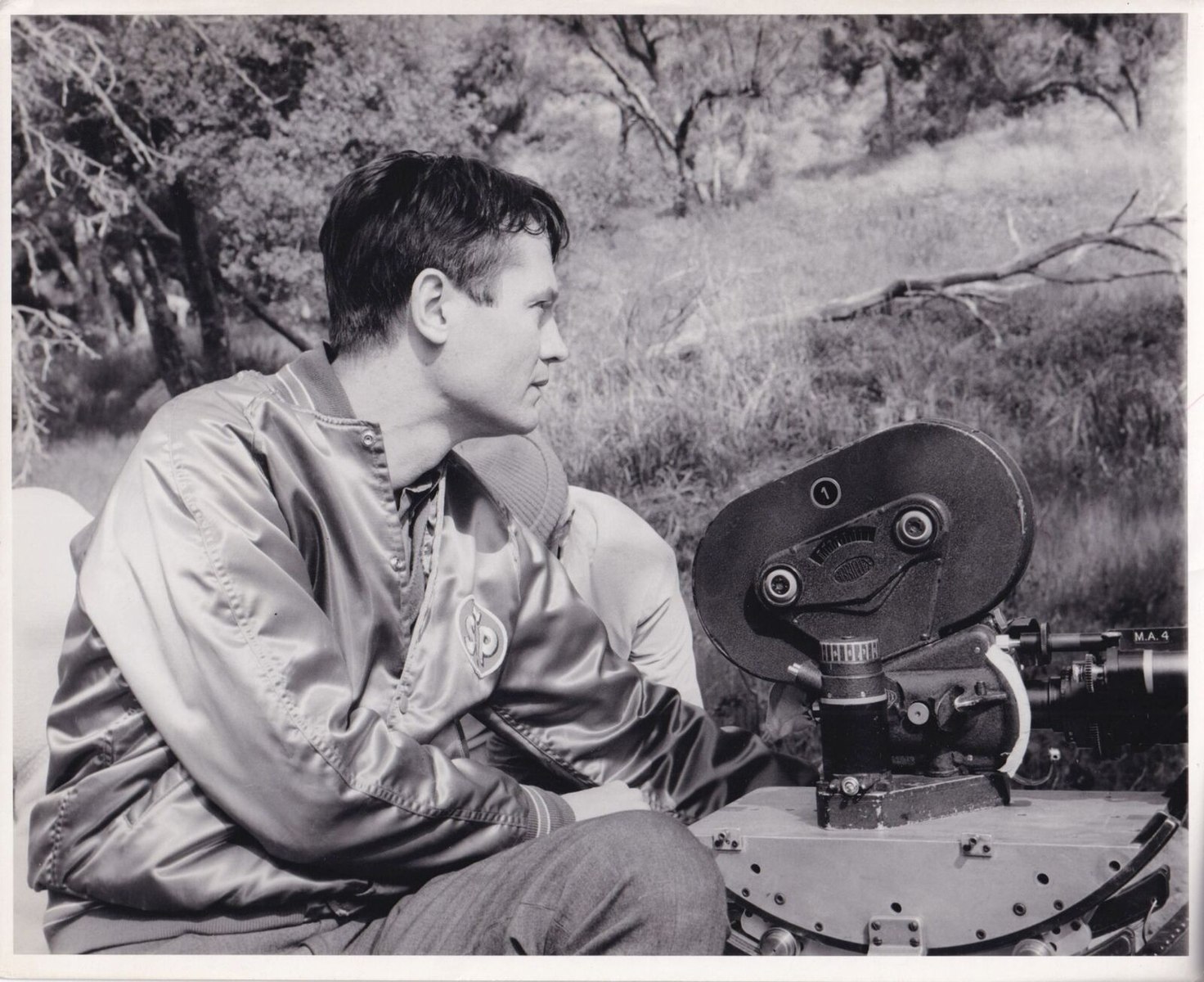
Roger Corman has died.  So passes an era.  I’ve always had an appreciation for the speculative films of the fifties and sixties.  Many of these involved low budgets and content intended to shock.  Or at least excite youngsters.  And Roger Corman was a huge name among directors, producers, and promoters of such schlock.  He entered the realm of horror in 1955 with Day the World Ended.   Attack of the Crab Monsters a couple years later put the focus firmly on monsters.  Producing and directing three or more movies a year, he built a reputation for being cheap and quick, but that didn’t prevent him from creating some good movies.  A film’s producer is the one responsible for overseeing the production.  Often they come up with the ideas of what to film.

Roger Corman, publicity still; public domain via Wikimedia Commons

As the sixties were dawning, Corman produced several films “based on” work by Edgar Allan Poe.  I remember seeing some as a young person and wondering what they had to do with the Poe I’d been reading.  Still, he managed to grace cinema with House of Usher and The Masque of the Red Death.  These are good films, despite limitations.  At the same time, Corman was still producing creature features as well, wracking up an impressive list of nearly 400 produced films.  As an established player in cinema he also took on the role of distributor from time to time.  When The Wicker Man was being ignored in Britain, Corman undertook the role of US distributor, likely saving the movie from total obscurity.

Circling back to Day the World Ended, we’ve become accustomed to believe that some kind of divine or human ending is in the offing.  These ideas get embellished over time, as I suggested in my new piece on Horror Homeroom.  Corman knew that this putative end would get the attention, whether or not there was any truth to it.  Perhaps that was the genius of his work—he knew how to attract attention.  And he wasn’t afraid to do so.  The business of cinema is one of attracting viewers.  Telling stories we want to hear.  We remember reading Poe, and even if the movies differ from the stories he penned, they are nevertheless reminders, reminiscent of what we’ve read.  If there are monsters they are somehow perhaps even more effective for not really being believable.  In short, Corman was a showman.  He made a living doing what he loved.  And he influenced many lives along the way.


Shadow Half

Sometimes you just take a chance on a book you haven’t heard of.  You see, I keep a very active “to read” list.  The problem is that many books on it are a bit on the heavy side and it takes me a long time to get through lengthy books.  Every once in a while I go to a bookstore to browse for a book that’s short and speculative.  It seems that when I was growing up it wasn’t difficult to find fiction under 300 pages.  In any case, that’s how I found Sunny Moraine’s Your Shadow Half Remains.  It was in the “horror” section of a local bookstore.  (Even “horror” sections are now difficult to locate.)  It looked like it wouldn’t take me a month to read.  It was a good call.  It’s what I like in a scary story.

Not too gory and written with literary finesse, Your Shadow Half Remains is a pandemic story.  Well, not literally, but sort of literally.  It was published just this year and the story revolves around a pandemic in which people are infected by looking into each other’s eyes.  Nobody knows for sure how this happens, but people who are infected begin to act violently toward those around them before killing themselves.  Naturally, therefore, survivors begin to isolate themselves.  So Riley moves to a lake cabin where her grandparents got infected and died, but since there’s nobody else around the contagion can’t spread.  She lays in supplies and awaits, well, that’s just it—awaits what?  Her plan is interrupted, however, when she learns that she has a neighbor.  Maybe two.

One neighbor she starts to get to know, but they can’t look directly at one another and can’t really know each other’s motives.  Herein hangs the tale.  People are social creatures and the pandemic (in real life) caused much of its damage in the form of isolating ourselves from one another.  Other people, instead of being companions, were threats.  Especially in the early days when it wasn’t clear how the virus was spreading.  The safest thing was to stay home and avoid others.  It’s that aspect that Moraine really captures here.  A woman set to try to wait this thing out alone, but then, another person complicates things.  And how can you tell insanity from infection apart from insanity brought on by isolation?  Both seem to lead to the same results.  I took a chance on this unknown story, and it was a chance well taken.


Wachet auf

I have a proposition.  Some folks in town have a big “Anti-Woke” (aka, “asleep”) flag on their house, along with various Trump paraphernalia.  Since the Republican Party has largely become reactionary and would, admittedly, still prefer to be asleep, perhaps Democrats should adopt Buddha as a symbol.  I know this would be dangerous in a nation that prides itself as being the city set on a hill, but “buddha” means “awoken one.”  I’m not a Buddhist but I have no problem with it.  The Eightfold Path makes a lot of sense to me.  In any case, a good symbol is something to be cherished.  I think of Gordon Deitrich having a Qur’an in his house, even as a gay man, in V for Vendetta.  Symbols are important.  The anti-woke seem to have forgotten Matthew 24.42 “Watch therefore: for ye know not what hour your Lord doth come.”  The Bible generally advocates wakefulness.

Photo by Mattia Faloretti on Unsplash

Trump-branded Christianity is a strange beast.  Certainly the use of a Buddha symbol would become a cudgel.  Ironically so, for a faith that promotes nonviolence.  The “foreignness” or “not-Christianness” outweighs the positive outlook it entails.  Any religion that advocates violence should reassess its principles.  Buddhism isn’t perfect—no religion is.  The basic ideas of right view, right intention, right speech, right action, right livelihood, right effort, right mindfulness, and right concentration work well enough with Christianity, as Thomas Merton discovered.  For some, however, the Asian outlook (overlooking that Christianity began in Asia) is a deal-breaker.  Strange for a global religion.  Not so unusual for those who prefer to be asleep because Fox News sings them a lullaby.

One of the most stirring Christian hymns is “Wachet auf, ruft uns die Stimme,” based on a Bach cantata.  Perhaps better known as “Sleepers Awake,” the words take their origin from Matthew 25, the parable of the ten virgins.  If I recall correctly, the virgins ready to be woke are those who fare better in this tale.  They’re less concerned with condemning other religions and more interested in being able to wake and trim their lamps swiftly when the time comes.  As I told a friend the other day, I’m an unrepentant idealist.  I do believe that we have it within ourselves to treat all people as having inherent worth and dignity.  The real draw to having Buddha is a symbol would be the introspection.  Instead of telling other people how to live, the principles are applied at home.  Of course, a person has to want to wake up for any of this to work.


Happy Beltane!

They creep up on you, these holidays with no official recognition.  I’ve been so busy that it didn’t even occur to me that today was Beltane—May Day—until my wife mentioned it to me before I headed up to bed last night.  Why is that important?  It’s not a day off work, so why bother?  Well, for one thing it’s the fuel behind my book published in the summer of last year.  Or, according to the Celtic calendar, the fall (just before Lughnasadh).  In other words, this is the first May Day for The Wicker Man.  I should’ve been trying to drum up a little interest, but things have been busy.  Besides, my profile hasn’t grown since its publication.  Nobody even cites it on the Wikipedia page for the movie, although it takes a distinct angle.  So I’ve been busy with other things.

I’ve been trying to find a publisher for my next book.  A couple friends know what it’s about but mostly nobody else because it’s time-sensitive.  Agents haven’t nibbled.  Well, one did.  He had me rewrite the book and then decided he couldn’t sell it after all.  Back to square one.  Even presses that publish mostly non-PhDs weren’t even interested enough to respond to queries.  Nothing like writing a book to make you realize how insignificant you are.  Like Sgt. Howie, I’m caught on Summerisle.  Ironically, I didn’t even think of writing a post for my book today when I was jogging yesterday and a haze over the moon (I know the movie ends with the sun—I’ve seen it a time or two) made me think, “That sky looks like the ending of The Wicker Man.”  Well, when I get back from my jog I have to start right in to work.  And Beltane’s not a holiday in these parts.

May Day used to be celebrated, even in the United States.  Now it’s just disappeared into the haze of work days.  And we don’t have time even to watch movies on work days.  That’s a weekend activity.  Of course, my weekends are full of trying to find publishers.  Two are currently considering my unagented book.  Four have already rejected it.  I’m thinking that I could use a trip to the Green Man with Howie.  At least on Summerisle they know how to celebrate May Day.  Of course, it’s the ending that makes it horror.  And Beltane snuck up on me this year.  Without it, The Wicker Man wouldn’t even exist.


Just Ask

I see a lot of headlines, and not a few books, that puzzle over something that there’s an easy way to resolve: why do evangelicals (I’m thinking here of the sort that back Trump despite his pretty obvious criminal, predatory nature) think the way they do.  The solution is to ask evangelicals who’ve come to see things a bit differently.  I’m not the only one, I can assure you.  Many professors of religion (particularly biblical studies) and not a few ministers came from that background.  If they were true believers then, they can still remember it now.  At least I do.  I was recently reading a report in which the authors expressed surprise that evangelicals tend to see racism as a problem of individual sin rather than any systemic predisposition society imposes.  To someone who grew up that way, this is perfectly obvious.

I’m not suggesting this viewpoint is right.  What I am suggesting is that there are resources available to help understand this worldview.  To do so, it must not be approached judgmentally.  (I sometimes poke a little fun at it, but I figure my couple of decades being shaped by it entitle me to a little amusement.)  I don’t condemn evangelicals for believing as they do—that’s up to them—I do wish they’d think through a few things a bit more thoroughly (such as backing Trump).  I understand why they do it, and I take their concerns seriously.  I know that many others who study religion, or write articles about it, simply don’t understand in any kind of depth the concerns evangelicals have.  It’s only when their belief system impinges on politics that anybody seems to pay attention.

Maybe this is a principle we should apply to people in general.  Pay attention to them.  Listen to them.  Care for them.  Relentless competition wears down the soul and makes us less humane.  Religions, for all their faults, generally started out as means for human beings to get along—the earliest days we simply don’t know, but there is a wisdom in this.  In any case, if we really want to know there are people to ask.  Who’ve been there.  Whose very profession is being shoved out of higher education because it doesn’t turn a profit.  Learning used to be for the sake of increasing knowledge and since that’s no longer the case we see guesswork where before it would’ve been possible to “ask an expert.”  I often wonder about this, but as a former member of a guild that’s going extinct, I simply can’t be sure.


Planetary Thinking

It’s Monday, and I’m feeling like a holiday.  Good thing it’s Earth Day.  Many businesses (who still don’t consider Earth Day important enough to make it a paid holiday) are emphasizing being green these days.  Really, with global warming proving itself no myth it’s just good business to try to adapt to sustainable practices.  Those of us who are vegan find more and more companies offering animal-free options—our dependence on beef is a major environmental hazard.  It’s still a challenge finding shoes that aren’t leather based, but things are improving.  And more and more hybrids and electric cars are on the roads.  We are making progress.  We still haven’t, however, gone so far as to declare a day dedicated to preserving our home an official holiday.

I’m not jaded or capitalistic enough to think our only hope is to find off-world parking.  To raise the future of humanity elsewhere.  It’s just that people fall in line after bullies and bullies only think of themselves.  And who, thinking that an afternoon on the links can be counted as work, would consider giving mere employees a day off?  A day when we might shut down commuting schedules to save power?  A day to rest from the brutality of constant commerce.  After all, a typical weekend consists of a day for chores and a day for church.  (Still, that is, for many people.)  And then back to the office not really feeling refreshed but knowing that you can’t long survive in a pandemic-ridden world without more cash coming into the coffers.  Inflation may be going down but grocery prices aren’t.

From NASA’s photo library (public domain)

A day to celebrate home seems like a no-brainer.  Especially when it comes on a Monday or Friday.  Ah well, we’ll do our best to celebrate it around work, shall we?  We’re moving late into April.  There’s been a bit of sun mixed in with April showers, as is typical around here on this planet.  Days are growing longer and the trees are leafing out.  Spring welcomes us back to the outdoors (after work, of course) where green now predominates over brown and gray.  While we may not have the day off, we can at least take a moment or two to consider how we might be better to our planet.  How we might drive less, use less electricity, generate less waste, spare a few cows.  Who knows, it might become a habit?  If that were to happen maybe every day would become Earth Day.


Eclipsing the Earth

We need a new word.  One for the high an eclipse brings you.  I’m finding myself having difficulty coming down from it.  It seems so mundane to have to do something as ordinary as work after experiencing totality.  We only caught very brief glimpses of the moon over the sun through small breaks in the clouds, but we did get to experience totality.  How do you come down from that?  The next day we had a several-hour drive to get home so that we could all be at work yesterday morning.  What could be more ordinary than that?  And the eclipse happened on a Monday, not an unusual day for a holiday.  Only it wasn’t a holiday, but a “vacation day.”  So was the driving day.  At my age you need a day to recover from all the driving too.

Several friends have posted their amazing photos and videos of the event, so I’ve decided to “release” my video to the wild.  A few explanatory notes: we were in upstate New York, on the shore of Lake Ontario.  It was chilly and we were bundled up (we came home to 80-degree temperatures, which was quite a shock).  The video may seem to have not much happening for the first couple of minutes and this is because electronic cameras tend to “even out” the light (film photography is much better).  When I started filming this it was getting dusky but the phone smilingly tried to make it look like normal daylight.  That wasn’t the case.  (Be patient—drama takes time to build!)

It occurred to me that many people (who had clearer skies) thought totality was all about the moon over the sun.  I take a more Buddhist approach.  The Buddha admonished not to mistake the hand pointing at the moon for the moon itself.  The real experience of an eclipse is what is going on down here on earth.  My video shows how the sun faded, and then went completely dark and back again in a matter of minutes.  My experience of this was quite a spiritual one.  If I’d been looking up I very well might have missed it all.  In other words, being in a cloudy situation, totality was an opportunity to take in what was happening on earth, in real time.  There is a lesson in this.  Life tends to deceive us into thinking the most important thing is the peripheral one.  Experiencing an eclipse is all about being, and living, on earth. 


Eclipse 2024

Eclipses.  They’re fully explainable.  Or are they?  Yesterday’s solar eclipse, with totality within driving distance of many Americans, led to an inexplicable need to see it.  April, we’re told, is the cruelest month and upstate New York is known for its “ever-changing skies.”  I admit I was skeptical.  Together with some friends we arranged to meet near the umbra, in Penn Yan, and to drive from there to totality up on Lake Ontario.  As is typical in New York, the day started out fair, with a few high clouds.  It was chilly, but this is April.  Our destination: Fair Haven Beach State Park.  The location was nice; we arrived early and found a good spot.  The clouds, however, were willful and wanted to remind us, like last week’s earthquake, that we’re not really in charge here.

As the day went on—totality for us was 3:20 p.m.—more and more people came into the park.  To its credit, with what must be a limited state budget, it absorbed many eclipse seekers without any trouble.  By 3:00 the cloud cover was heavy-ish.  Our friends had heard a sponsored eclipse speaker, however.  Totality was nothing like even 99%.  This would be of a different magnitude, even with clouds.  I remember three previous eclipses.  One in school with the pin-hole method where you really don’t see anything, one in Wisconsin after teaching one morning at Nashotah House, and the 2017 which I saw in midtown Manhattan.  None of this prepared me for totality.  Around 3:18 it started to look dusky.  We could catch glimpses (but no photos) of the crescent sun.  Within seconds it was completely dark.  It was another of those transcendent earthly things, like the earthquake three days earlier.

Perhaps I’m getting old enough to realize that you can’t really describe such feelings.  Maybe I’m getting sensible enough to understand such things are called ineffable for a reason.  All the planning, worrying, anticipating, was for this moment.  Yes, there were clouds overhead, but the park was full of cheering people.  They too had come here for something extraordinary and to my surprise I found tears in my own eyes.  I captured no photos of stunning clarity, but I had experienced something I’d heard about since childhood but had only glimpsed in the most crude of facsimiles before.  We were able to experience a kind of rebirth that comes only after night.  Conditions weren’t ideal, but are they ever?  And an encounter with the numinous always comes on its own terms.

The sun, hours before being eclipsed

Craving Stability

As memorable events go, earthquakes are right up there.  Well, we don’t get them often around here, but at 10:23 a.m. yesterday a 4.8 hit about 30 miles east of us, in New Jersey.  The whole house was shaking and it took quite a while to calm back down.  (Me, not the ground.)  The only other time I experienced an earthquake was the Virginia quake of August 23, 2011.  Yesterday’s was much closer and therefore felt much stronger.  It took a few seconds to believe it was even really happening.  Work will do that to you.  Such an event, just 3 days ahead of a total solar eclipse, has an almost apocalyptic feel to it.  And we’d just come off of a punishing super-soaker storm that left puddles in one of our bedrooms.  Those of us out east just don’t get these kinds of things happening very often.  It’s a little difficult to process and it kind of makes me wish I’d gone into geology after all.

Since apparently nobody was hurt, this goes into the category of transcendent earthly things.  Ironically, confirmation came from social media before any news networks had anything to say about it.  Big wheels turn slowly, I guess.  The first minutes after it hit were a time of confusion—did it really happen?  Was that actually an earthquake?  What else could it be?  The same was true after the Virginia quake.  I don’t want to brag about surviving an earthquake if that’s not what it was.  Funny how you want validation, even at a time like that.  Such events remind us that we’re small compared to this planet we call home.  When the earth moves there’s nothing you can do about it.

Ironically, there are no maps detailing the Ramapo Fault line that was responsible for this quake. At least there aren’t any on the web. At 5:58 p.m. we had a 4.0 magnitude aftershock, much briefer than the main event.  An end-of-the-day reminder that we rely on mother earth for just about everything.  Earthquakes are times to call certainties to question.  Time to ask what we really know.  The tri-state area (in this case New York, New Jersey, and Pennsylvania) isn’t particularly susceptible to earthquakes—or isn’t prone to them, in any case.  I grew up in Pennsylvania and never felt one, although a bolide shook my childhood house back in January 1987, I believe it was.  Such reminders serve a purpose and in that sense they’re signs and portents.  We need to listen to the earth.  If we don’t, she will get our attention.  And then we must ponder.

Nothing as bad as this! Image credit: illustration extraite Prodigiorum ac ostentorum chroniconde Lycosthène, public domain via Wikimedia Commons