Colorful Space

Lovecraftian horror translates to film unevenly.  Even when it’s successful, as in Color Out of Space, it really isn’t that close to reading Lovecraft.  “The Colour Out of Space” is among my favorite Lovecraft stories.  To me, it feels perhaps his closest to Poe, and Poe is my personal muse.  I knew that it couldn’t be made cinematic without changing things a bit, and that it would be pretty gnarly.  I was correct on both counts.  In very broad brush strokes, the movie follows the story: a colorful meteorite on an isolated farm begins changing the crops and the people who live there.  Instead of crumbling, however, they are struck by the color and become other.  The mother and her youngest son, for example, are fused together creating one of the most cringe-worthy scenes I’ve watched in a long while.  The movie emphasizes family, even when things go horribly awry.

Defying Lovecraft’s well-known avoidance of focus on female characters, the movie’s focal point in Lavinia accords with Poe’s concern for threats against beautiful women.  She’s the teenage daughter of the family and the film opens with a scene where she uses Wicca to try to heal her mother of cancer.  The love between Nathan (Nicolas Cage) and his wife is movingly shown.  The movie was recommended to me during a conversation about Nicolas Cage in horror.  Maybe it’s because he’s in so many movies in total, I’d never really considered him a scream king, but he’s nailed the role quite capably, with the notable exception of The Wicker ManColor Out of Space is pretty extreme body horror but the movie is artistically done.  You almost don’t mind feeling violated in that way because of the visual appeal of the non-horror focused parts.

The acting is uniformly strong.  In a nod to Lovecraftian fans, Lavinia uses the Necronomicon as the basis for her Wiccan rites.  Some of the scenes seem to reference Evolution and others eXistenZ.  Transforming the action from Lovecraft’s setting in the early twentieth century to the early twenty-first is done pretty well.  The family is isolated when the meteorite prevents electronics, including cars, from working.  The movie does offer some alien creatures, unlike Lovecraft’s basic story.  And these creatures point to a planet with tentacly beings that naturally tie this story into the Cthulhu mythos.  Lovecraft’s own story doesn’t make this move, but of course, the Cthulhu mythos only really developed among his fans.  In all, Color Out of Space exceeded my expectations, even though it was a box office flop. 


Ancient Asherah

It seems like ancient history.  Actually, it is ancient history.  Ancient history with a new angle.  A Reassessment of Asherah is finally available in paperback.  Although my research has moved in a different direction, an author cares for all of their books and Asherah is my firstborn.  My doctoral dissertation originally, what separates it from many proposals I now see as an editor, is that it has a broad topic and some native sense of writing.  I have always eschewed technical jargon.  Academese obfuscates.  And is boring to read.  In any case, being young and naive, at the instruction of one of my doctoral supervisors, I sent it to the distinguished series AOAT (Alter Orient und Altes Testament), published in Germany.  It came out as an expensive hardcover and sold through its only print run.

Years later, evicted from academia, I found a foothold in publishing at Gorgias Press.  The owner of the press did something that even Eisenbrauns couldn’t, he talked what was then Ugarit Verlag into granting Gorgias the rights to republish my out-of-print book.  But he decided to do it in hardcover, so it was still too expensive for most potential readers.  Also, to make this a proper second edition, I added all of the articles I’d written about Asherah as well as the original text of the AOAT version.  If I recall correctly, it sold pretty well for Gorgias.  I moved on to other things.  Weathering the Psalms had been written before my career malfunction, but publishing that made me realize I could still write expensive books with low sales.

Four books further along, all on aspects of horror, a friend did the impossible.  He talked Gorgias Press into publishing a paperback of A Reassessment of Asherah, without my prompting.  For the first time in the thirty-plus years that the book has been available, it is now “individually priced.”  Please keep in mind, though, before emptying out your bank account, that “individually priced” here is still in the academic realm.  It seems the minimum price for books in this category is around $40, which is a bit steep for most of us.  But still, it is a new thing in the academic world.  I do hope that someone more persuasive than me might talk to Bloomsbury about a paperback of Nightmares with the Bible.  That has been, as far as I can tell, the poorest performing of all my expensive books.  It’s also the one that, I suspect, would have some individual readers.


Pan Pandering

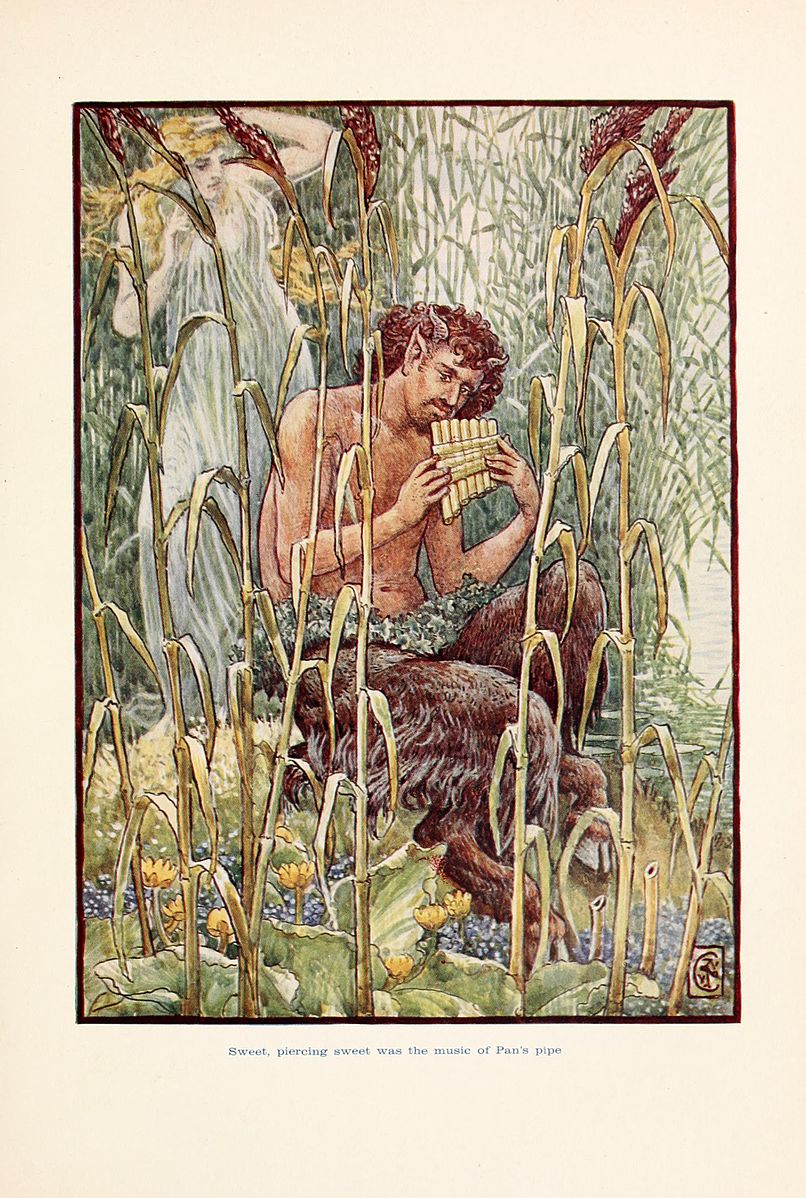
The Greek god Pan has had a rough go of it.  And I don’t mean that his name is a homophone for an essential kitchen item in English.  No, Pan was mistreated by early Christians, made evil, and then good, before finally being largely forgotten.  We’ll start with the bad and move to the good.  As I discuss in one of my publications, Pan was considered evil by medieval Christians for a few reasons, apart from being a “foreign god.”  First, he was associated with nature.  Early Christians weren’t naturalists.  They were looking to escape the world (a trait that continues to be manipulated by politicians even today).  Not only that, but Pan had goat legs and horns.  While horns could be used to represent any deity, including Yahweh, the combination with goat legs suggested Pan might be demonic.

Image credit: Walter Crane, public domain via Wikimedia Commons

Nobody knew what demons looked like.  They are incorporeal, after all.  As I point out in Nightmares with the Bible, the fact that the rarely used Hebrew word for demons is roughly translated to “hairy ones” added to Pan’s sins.  This was a common Hebrew phrase for goats, and over the course of many centuries, when people had the irresistible urge to draw the invisible, they gave Satan the Pan treatment.  Goat lower half and horns on his head.  In many esoteric groups the goat, i.e., Pan, became a symbol of demons.  All of this has a rich and detailed history and it literally demonized Pan.  Yes, he was all for free love, but he was a musician, after all.  Then something interesting happened.  

When the King James Version of the Bible was first printed, the biblical books each began with an illuminated letter.  The book of Psalms began with an L.  This letter was inscribed with an image of Pan.  What the devil was he doing in the Good Book?  Well, by 1611 Pan was considered a type (or foreshadowing, if you will) of the good shepherd.  And we all know who the Good Shepherd is, right?  Not only that but his name, “Pan,” translates to “all” in English.  Since Jesus is “all” to Christians, it was appropriate that he be symbolized by Pan.  This ancient force of nature had gone from being the Devil to representing God.  Indeed, he could, at the same time, be symbolic of both.  Now this is quite an accomplishment for any entity, let alone a rustic god who was never an Olympian.  Pan isn’t much discussed in Christianity today, but he had a fascinating place in its view toward goats, both bad and good.


Digging Again

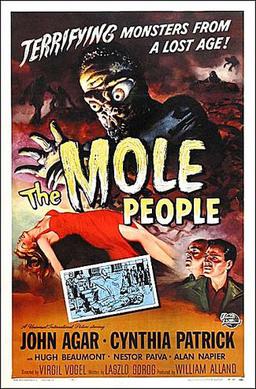
It’s one of those movies that I know I’ve watched before—probably on a sleepy Saturday afternoon—but couldn’t believe I had already seen.  While viewing The Mole People it looked completely new, but in retrospect some of it had seemed strangely familiar.  Had I bothered to check my own blog I’d have noted that I watched it a mere fourteen years ago.  Not that I’d have spared myself again.  I felt like watching monsters in rubbery suits.  Still, as I mentioned in my previous blog post on it, the antagonist are the underground Sumerians.  These Sumerians speak English—a fact that isn’t worthy of remark by the scientists—and express surprise that outsiders can understand them.  Assuming them to be gods because of their bright flashlight, this Gilliganesque story contains, perhaps unintended, social commentary.  The mole people are really the good ones and the “slave revolt” at the end saves our protagonists.

For about the first half of the film they refer to “the goddess of Ishtar” before finally apparently realizing Ishtar is the goddess’s name.  The “eye of Ishtar,” which looks suspiciously like a sideways Star Trek Federation logo, represents where the sun shines down on their ancient kingdom.  (They’ve become albinos from living without sunlight.)  The interesting thing here is that the monsters aren’t the scary part of the plot.  The high priest is.  Elinu is suspicious of the upper worlders immediately and it is he who plots their demise.  He’s also quite willing to depose the king, whom he sees as too weak in his foreign policy.  (In reality the interplay between religion and politics, historically, has been a tug-of-war over power.)  He succumbs to his own plans, however, and the viewer is glad to see the priest go the way of all flesh.

Sometimes billed as science fiction, this is more fantasy horror fare.  It’s literally swords and sandals among the the lackluster Sumerians.  The monsters make it horror, but they aren’t evil, although they do kill one of the protagonists.  To their credit these pre-Civil Rights Act Americans realize that the treatment of the eponymous mole people is unfair.  There is, at the same time, no regret expressed that these scientists have brought the five-thousand-year-old Sumerian civilization to an end.  The Mole People is one of those “so bad it’s good” movies.  Its plodding pace doesn’t make it idea for too sleepy an afternoon, but the story is different than a typical monster flick from the era.  And it is biblically based, as my previous post on it noted.  And a lot has happened in the intervening fourteen years.


Filming the Void

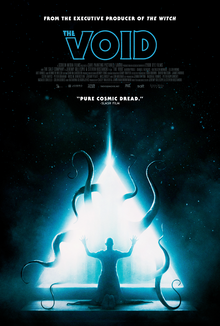
Once you move away from major studios, it turns out that Lovecraftian horror is rather prevalent.  Seeing that The Void was rated higher than many offerings on FreeVee, well, why not.  It was compared to the intellectual works of Benson and Morehead, but to me it matches more closely with Older Gods.  Like many movies in this genre, The Void isn’t easy to follow and having commercial interruptions doesn’t help.  (In movies made for television, directors know to offer cues at specified times to allow for a break.  I’m not sure that those at FreeVee, or Tubi, or Plex, or their ilk, or even Hulu, know how to do this well.)  So there are these mysterious cultists—somehow “new religionists” just doesn’t seem to cut it—who apparently want to bring about the apotheosis of their leader in a rural setting. 

Meanwhile a local sheriff finds a young man fleeing from a couple of guys who are killing people and takes him to the hospital.  This hospital, however, is being closed down and there’s only a skeleton crew there to handle emergencies until it can be decommissioned.  Once the guys trying to kill the young man arrive, the hospital is surrounded by the cultists.  By the way, there will be spoilers—just saying.  It never is adequately explained how these killing guys know who these cultists are, unless it happened so fast that I missed it.  In any case, all trapped in the hospital there’s the problem with a monster that has tentacles (Lovecraftian) that takes over the body of a nurse, then a tries to get a state policeman.  Lots of axes and gunfire, and the numbers in the hospital are reducing.

It turns out that the kindly old doctor is the leader of the cult and he’s trying to raise the old gods so that he can bring his daughter back to life.  The sheriff, who’s been the protagonist all along, knocks said doctor into the eponymous void, leaving only two people alive in the hospital.  It’s not really explained where the cultists, who made it into the hospital, went.  Nevertheless, this is a good example of horror and religion (which is ironically Lovecraftian).  The doctor’s unconventional religion is the cause behind the hospital mayhem, and, apparently the killings being conducted by the interlopers are attempts to stop it.  As a horror film it’s effective, if a bit disjointed.  It seems that there’s still a lot to unpack from films that try to bring Lovecraft’s ideas onto the silver screen, major studio or not.


Pagan Fear

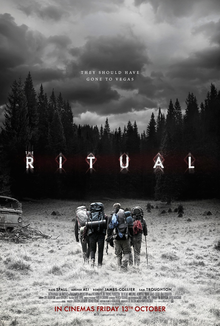
We still fear pagans.  Religion and horror are often tied up together, but when it comes to monsters we trust Catholics and fear pagans.  Of course, when Startefacts recommended The Ritual it was in the context of five pagan horror movies you should see.  I’d seen three of the others, so The Ritual seemed the next logical step.  Four friends are hiking through Sweden to honor the wishes of a fifth friend killed during a robbery.  When one of the them injures his knee, they decide to take a shortcut through the forest where a combination of the Blair Witch Project and Midsommar and Antlers takes place.  After finding a freshly gutted elk in a tree, they take shelter in an abandoned cabin surrounded by runic signs on the trees.  Soon they’re being hunted by a huge creature they can’t see clearly.

The final two are captured by a pagan group that worships one of the Jötnar—the monster that’s been hunting them.  The final boy escapes by getting out of the forest, where the Jötunn can’t go.  The choice of a Germanic monster is a bit different, and the creature design is fascinating.  Jötnar apparently straddle the line between gods and monsters, being a kind of frost giant.  The pagan group sees it as a deity that keeps them safe in return for sacrifices.  Given the number of bodies in the trees, other hikers had decided the shortcut was worth taking in the past.  But still, the pagans are cast as the bad guys.  This is in spite of the fact that the friend whose death started the whole thing was killed in England.

The religious convictions of the English robbers aren’t made clear, but they were raised in a Christian context and are every bit as brutal as the pagans.  In fact, the pagans, although they sacrifice strangers, do try to talk kindly to them (at least if they have the mark of the Jötunn on them).  Not just the pagans are savages.  At least they have a moral reason for what they’re doing, in their own minds.  The criminals are in it only for themselves.  We still fear those of other religions, although they’ve come to their beliefs in a way similar to how we’ve come to ours.  Whether born into it or converted, believers generally come to their conclusions honestly.  In the world of the film, this Jötunn is real.  And, until the end, it protects those who worship it.  So yes, this is a pagan horror film, but it makes the viewer wonder whence the horror really comes.


The Skinny on Asherah

After being removed from academia, my work on Asherah started to receive notice.  You see, I’m not part of some academic dynasty and I never landed that prestigious job that would convince people I had something worthwhile to contribute.  Besides, it turned out that several other scholars were writing books on Asherah at the same time I was.  The subject, however, has proven “evergreen.”  Asherah holds a lot of explanatory power, it seems.  She solves mysteries like an antique Holmes or Dupin.  And the Bible is full of mysteries.  The other day I saw an article by Raanan Eichler suggesting that Aaron’s rod might’ve been an asherah.  This is an intriguing idea.  In case your Exodus is a bit rusty, there are two staffs (or staves, if you prefer) that feature in, well, the exodus.  One belongs to Moses and the other to Aaron.  (Keep in mind that they were octogenarians when they began the trek.) Their stories continue through Deuteronomy.

Tova Beck-Friedman ‘s “Excerpts of a Lost Forest: Homage to Ashera,” Grounds for Sculpture

In the narrative sometimes the stick is Aaron’s and sometimes it belongs to Moses.  It transforms into a snake, it turns dust into biting gnats, it divides the Reed Sea.  In short, it’s the kind of staff you’d see advertised as a miracle-working purchase on infomercials these days.  One of its many features is that it produces water from a rock when it strikes said stone.  The problem is God had told Moses to be a stone-whisperer, not a stone-striker.  Because he hits the rock with the staff he’s barred from entering the promised land.  It seems like harsh punishment for a bit of dramatic flair and I suspect that’s why Eichler suggested that the staff was an asherah.  

Of course, the biblical account doesn’t use the word “asherah” for the staff at all.  Although it accompanies the Israelites through the wilderness, and in some accounts is placed inside the ark of the covenant, it isn’t called an “asherah.”  But being in the ark puts it into the tent of meeting, and therefore later the temple.  And we do find an asherah in the temple later in the biblical story.  The thing about asherim is that they’re never defined in the Good Book.  We simply don’t know what they were.  They were made of wood and they could’ve been poles.  They might’ve been trees or statues.  A rod or staff seems to be a slimmed-down version of a full-blown pillar, so who knows?  Maybe an asherah accompanied Israel from the beginning.  Of course, being outside the academy (my own promised land), I’ll never know for sure.


Small Hops

It was about the cutest thing I’d seen in a month of Saturdays—a baby rabbit.  It was no bigger than my fist and it was looking lost on the sidewalk.  The front “lawn” of the next neighbor’s house is paved and there’s only a wide street in the opposite direction.  Our front lawn has a retaining wall well about the jumping height of the little guy.  I didn’t want it dashing into the street, so I circled around from that direction, but the poor thing couldn’t get high enough to reach our lawn.  It was young enough not to be certain something at least twenty-five times its size meant it harm.  It allowed me to get close enough to scoop it up and put it on our lawn.  It immediately leapt away and sheltered under a bush, before eventually disappearing down a hole that I hoped might be its home.

Besides being a hope-filled chance encounter with the wonder of nature, the incident also caused me to ponder what that leporine brain made of this learning experience.  For human brains, any sufficiently large animal is a monster, and anything even larger is a god.  While there are some bad folks out there, people don’t seem evil to me.  And although we’re certainly not gods, I wonder what that little rabbit thought.  What I was attempting was an act of kindness.  I’m sure it scared the timid tyke—I can imagine being lifted by an enormous creature that I can’t understand and it is a most frightening prospect.  But what if that monster were to set me down just where I needed to be?  Might not my assumptions about it change?

We don’t know what other animals think, yet it’s clear that they do.  Our yard has a fence and we have no dogs, so rabbits tend to like it here.  I often mutter softly and try to avoid direct eye contact and sometimes they let me get fairly close.  I like to think some of the larger ones recognize me, and maybe can tell that a vegan has nothing but their goodwill in mind.  We like to think this about God.  Larger, easily able to harm us, but that somehow being divine also conveys good will.  The bunny incident cast a pleasant glow over the rest of an otherwise anxious day.  It had calmed me and conveyed a sense of appreciation for just how helpful the world of nature can be.  I hope for some tiny rabbits in your life too.


Lilith Be Gone?

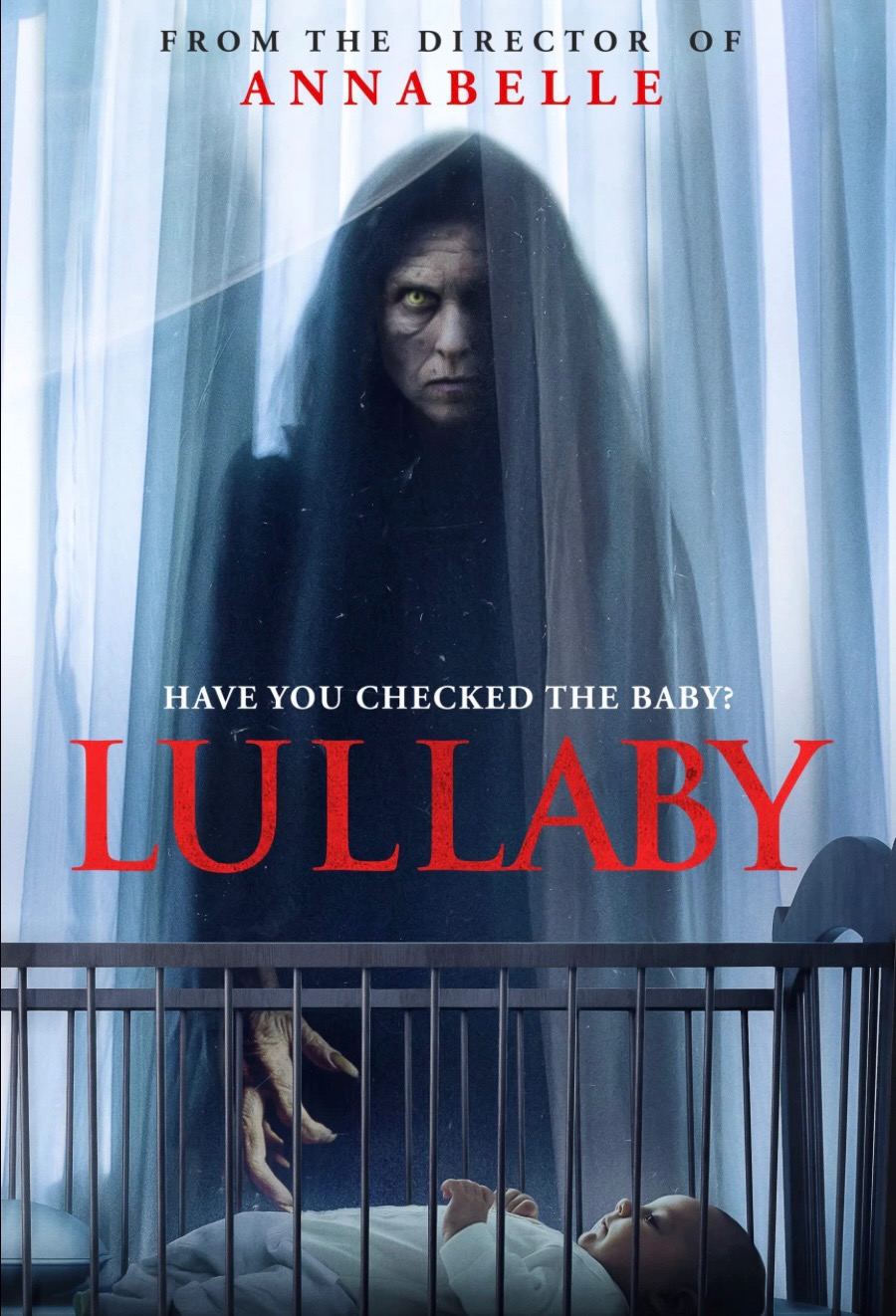
One of those questions it isn’t politic to ask is “Are you Jewish?”  I get asked that once in a while but mainly by Jews.  I’m not Jewish but some people tell me I look like I am.  In any case, as a Bible editor at an academic press, the question of someone’s ethnic affiliation sometimes comes up.  The dilemma is that we can’t ask that.  And it is very difficult to know the answer if someone doesn’t tell you.  The reason that this is on my mind is that I recently watched John R. Leonetti’s horror film Lullaby.  The film was one of at least two that came out with that title in 2022.  And since it deals with Jewish themes, that question naturally comes to mind: is the director, or are the writers, Jewish?  I suspect, from the way all of this plays out that the answer is “No.” Or, if they are, they didn’t do their homework.

Lullaby is a Lilith story.  A young couple—she’s Jewish, he’s a convert for her—have a newborn.  The woman’s sister has sent to them, among other things, a book in Hebrew that contains a Lilith-summoning lullaby.  Lilith shows up and steals the baby but a tattooed rabbi gives the husband some Jewish rituals to combat Lilith.  Apart from the spurious etymology of “lullaby” as “Lilith be gone,” this rabbi doesn’t seem convincing.  His Hebrew handwriting looks as if he might be a first-year student.  And keeping a menorah lit all night is supposed to keep a demon at bay?  Not only that, his assistant can be bribed to regain the cursed book.  All of this begins to look like a gentile trying to direct a horror film in a religion he doesn’t understand.

Religion and horror go naturally together.  I’ve written several posts about Jewish horror that really works.  In those instances, it’s clear that the writers and directors understand what Judaism is.  The solution here is that the convert husband must “really believe” in order to conquer Lilith.  The rabbi tells him to have faith.  The thing is, Judaism isn’t a religion based on having faith—Christianity is.  And taking that aspect of Christianity and using it to try to make other religions faith-based is one of the most common mistakes of those who don’t study religions professionally.  Horror works well with religion when those doing it actually understand the religion they’re trying to portray.  When they don’t, it can end up looking like appropriation of the worst kind.  I watched the movie because it was about Lilith.  What I found was a basic misunderstanding of how religions work.


Balance

Psych!  Yesterday was actually the vernal equinox.  And speaking of psychs, it was about the coldest morning jog I’ve had all winter.  (The equinox itself didn’t occur until 5:24 p.m., which is way it was the 20th instead of the 21st.  And I honestly can’t understand how that works since don’t you need 24 hours for night and day to be equal?  There’s a reason I went into the humanities.)  Interestingly, in the pagan Wheel of the Year, it was Ostara.  And the similarity of that title to Easter isn’t really coincidence.  (By the by, I discuss this to some extent in The Wicker Man, due out in September.)  Easter is, in essence, a spring holiday.  Ēostre, a germanic goddess of spring, seems to have been its namesake. 

First light comes suddenly, for those awake early enough to see it.  I keep a close eye on the diminishing darkness so that I can get out and jog in the twilight.  It will be too dusky to see and then suddenly it’s not.  Sunrise is like an epiphany each day.  From now on light will increase both morning and evening until the summer solstice, or Midsummer.  Between Ostara and Midsummer lies May Day, or, as it was also known, Beltane.  Beltane is the fuel behind The Wicker Man, or so I argue in my book.  Holidays are important.  More of them should be recognized.  If the pandemic taught us anything it’s that most of us probably work too hard.  At any rate, spring is now here.

The mornings are still below freezing, at least around here.  The winter never got very cold and we had very little snow.  Some would argue that it was more like an extended, chilly spring.  The light, however, was missing.  I spend a lot of time awake in the predawn hours.  There’s a stillness to that time that’s a daily gift.  Yesterday was a brief moment of balance.  Soon it will be time to start mowing the lawn and to do the endless weeding of summer.  Those will last until long after the other equinox, awaiting in September.  Climate change has assured us that the weather will be erratic, but the waxing and waning of the light is as old as the spinning of this weary planet.  We’ve entered the light half of the year.  Equinoxes remind us that balance is rare and should be appreciated when it arrives.  It’s worth making into a holiday once more.


All About Blurbs

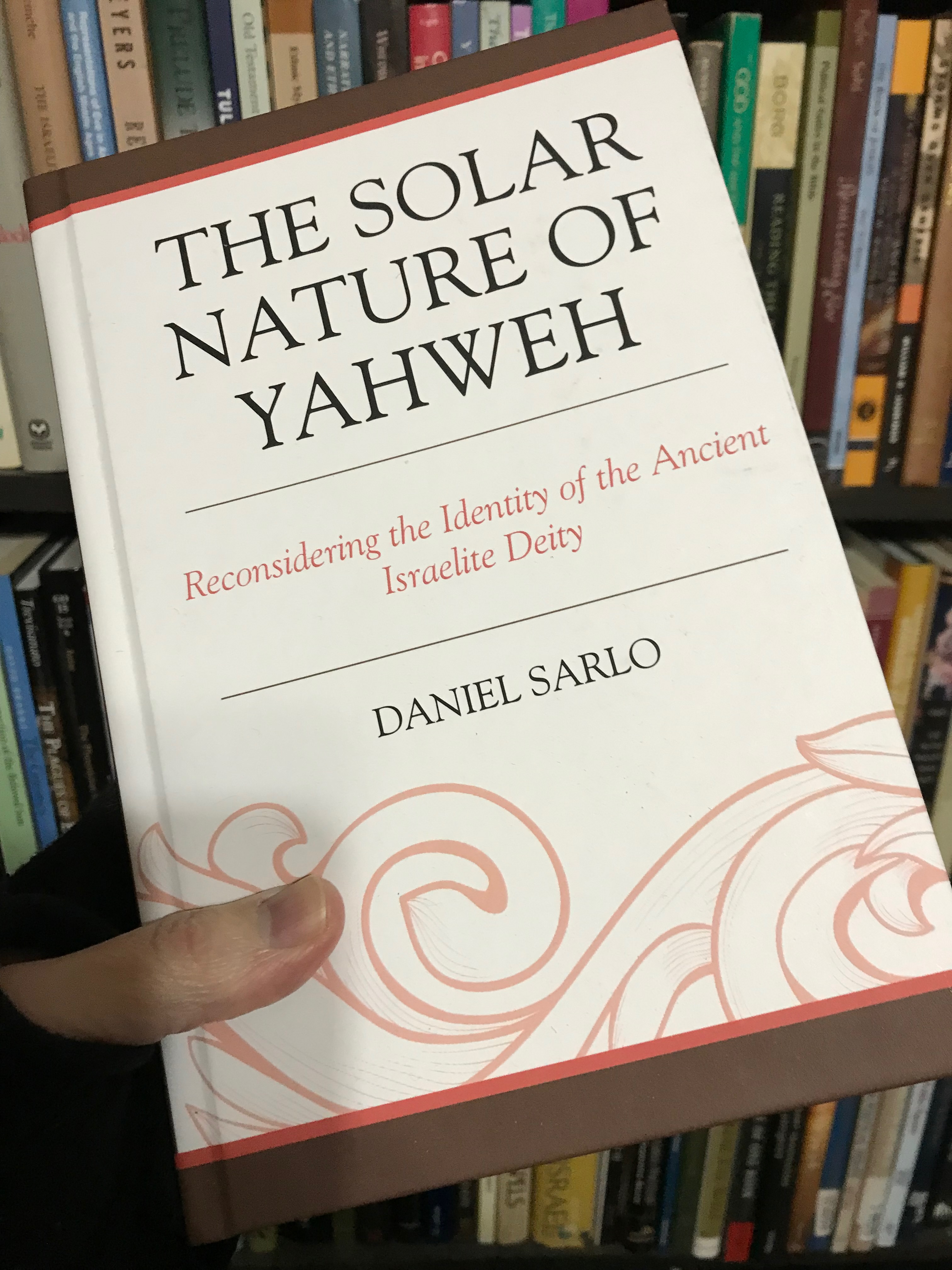
A book recently arrived.  It was unexpected, but when I saw the return address I knew what it was.  My young colleague Daniel Sarlo from the University of Toronto had kindly asked me to blurb his book The Solar Nature of Yahweh.  I’ve known Dr. Sarlo virtually for many years.  He’s engaged me a number of times on issues surrounding my research on solar worship in ancient Israel and Ugarit.  I had a book project in the works on the latter topic when other colleagues suggested going with something biblical for my next book, thus Weathering the Psalms was born.  Books, particularly academic ones, are in constant conversation with one another.  I’ve been writing on horror and religion now for over five years but my material on ancient West Asian religion is just now starting to get noticed.  It’s a funny old world.

One day I stumbled across a blurb lifted off my website for a book from Johns Hopkins University Press.  I was impressed.  First of all, that some author or editor had found my remarks on their book from this blog and that they’d liked them enough to cite them.  Getting blurbs can be a difficult task these days.  Academics are under a lot of pressure and time for such things is at a premium.  The payment is generally a copy of the book.  For some of us, though, it’s a thrill just to see yourself cited at all.  Once you’re no longer an academic you’re easily forgotten.  It has been a number of years since I’ve researched Yahweh and the sun, but someone, at least, still remembers.

Like book reviewing, reading a book for a blurb is one of those things you really can’t talk about pre-publication.  Book production is a slow process.  Like most things in life, it takes a complicated chain of events to lead to something as humble as a printed book.  And you need things like blurbs well before the release date.  As an author you often worry that—even in a field like ancient West Asian studies—your book will be outdated before it’s even published.  Some new find, or new idea might invalidate all that you’ve worked for.  Higher education should be one of the best venues for building humility in a person.  Your great learning is only one example among myriads of other scholars.  It’s a great accomplishment to get a book published in the midst of all that.  And this one, as the blurb indicates, is well worth reading.


For the Eyes

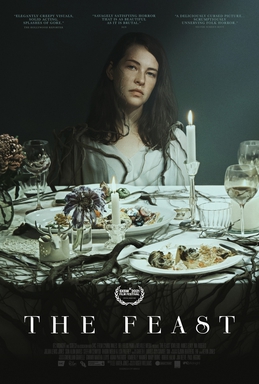
A Welsh horror film?  Lately Euro-horror has caught my attention.  European sensibilities give horror a distinctive flavor, and The Feast doesn’t pull the usual horror tricks.  And reading the subtitles keeps you on your toes.  It’s more a slow build that manages to be unnerving from the start.  A family of four—parents and two boys in their late teens or early twenties—is hosting a feast.  A local girl, Cadi, is hired to help cater the affair.  The family is really seeking to get a neighbor to allow exploratory mineral drilling on her land.  She refuses, horrified when they mention that they’ll only drill on the rise.  The neighbor, aghast, says they know better because they’ll awaken “her.”  The unnamed her is a goddess who is within the rise and who’s been disturbed by the family’s drilling on the land adjacent to their neighbors’ property.

A number of aspects push this beyond Euro-horror.  The goddess, treated as superstition by the family, introduces religion into the horror.  (Cadi, as it turns out, died on her way to the house and the goddess inhabited her body.)  The remote location and role of the countryside also bring this into the folk horror realm.  Having an underlying ecological message, the film is eco-horror as well.  As such it has a positive message, even as all those at the feast, apart from the uncompromising neighbor, die before the evening is out.  Gods will express their wrath.  Although there’s gore, the concept is intelligent and possessed Cady’s unwillingness to speak throughout much of the film adds to the tension.

Horror films with subtitles sometimes don’t work, but The Feast manages pretty well.  Much of the disturbing atmosphere comes from the house.  A modern construction, built over what had formerly been the family’s farm, stands in stark contrast to the natural world all around.  As is often the case in eco-horror, the land is waiting to take its revenge.  It’s a message appropriate for a time when we fail to live up to our own environmental standards, and consider the checks and balances of nature itself as “superstition.”  Maybe a goddess will not awaken and kill everyone at the dinner party, but the wealthy will not be spared, as the movie prophesies.  We share the planet and the earth allows us to survive.  There’s a sense that we deserve to be reminded that living on a finite planet requires careful stewardship of it all.  If you’re going to throw a feast, at least make sure it’s not at the expense of nature.  Some goddesses are best not aroused.


Not Relic

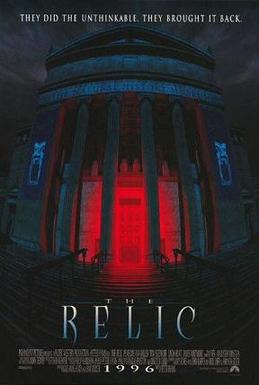
Someone somewhere sometime recommended The Relic to me.  I can’t recollect who, where, or when, so I’m not sure in which direction to point the blame.  (Or maybe they recommended Relic…)  Weekend afternoons are drowsy times, and rather than sleep, I prefer to watch movies.  Those on my wish-watch list don’t often coincide with what’s on the streaming services available to me, so I try to recall those recommended to me at some point.  I mean, The Relic sounds like it should be good: a Meso-American god that’s part lizard, part beetle, and part mammal rampaging through a major museum?  Well, what’s not to like?  Monsters are usually fun.  This one requires hormones from the hypothalamus to survive, so it beheads people to get at their brains.

Now, if you’re not a fan this will sound goofy to you.  The thing is, in the right hands such a film could be very good.  I hear that the novel upon which it’s based is.  Unfortunately the script and the acting don’t really hold up.  The sciencey explanation doesn’t make sense—the evolution from eating certain leaves is too rapid, outpacing even the monsters in Evolution.  And when we learn that the mammal DNA comes from a human, it raises the question of whether indigestion was mistaken for evolution.  Of course, the monster—shown a little too early—is a chimera.  Since it’s part bug and part gecko it can walk up walls, which is admittedly pretty cool.  But the holes in the plot don’t ever really get filled so it’s a lot of running through tunnels in the dark with flashlights.

When I read the description that it involved a god-monster I thought I’d figured out why it’d been recommended.  Religion and horror share gods and monsters, so I thought maybe something would’ve been made of this.  The scenes where the carving of Kothoga is being prepped make no sense—you use carving tools to excavate fossils, not statues—and we learn nothing of this intriguing deity beyond that it was released to eat your enemies brains and when it ran out of brains, it dies.  Of course, it can eat leaves as well.  Ironically and paradoxically, the film makes me want to read the novel to get a fuller explanation.  The combination of gods and monsters is rich territory to explore and when those making a movie credit the audience with enough intelligence to make this work, it might be enough to keep you awake on a drowsy weekend afternoon.  Or it might keep you awake even if they don’t.


Seasonal Viewing

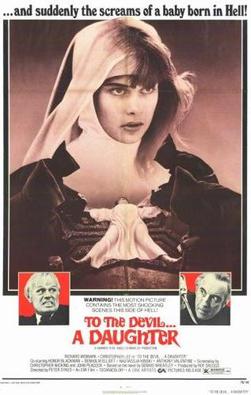
Any movie that begins with an excommunication ought to be good.  Especially with its list of stars you’d think To the Devil a Daughter might’ve turned out better.  Still, it is a good example of religion and horror mingling together.  I’ve never read any Dennis Wheatley novels, but reputedly he didn’t like this film adaptation of his book.  It certainly has a convoluted plot.  So an excommunicated priest has started a new religion that worships Ashtaroth.  He has to baptize a child, now 18 (three-times-six, don’t you see), with the blood of the demon so that she can become his (Ashtaroth’s) avatar.  This is apparently the eponymous daughter to the Devil.  She was baptized initially by her mother’s blood at her birth.

The girl’s father, who survived her birth—unlike his wife—has decided at the last moment to save his daughter.  He appears to be independently wealthy yet he talks an author of occult books into doing the saving for him.  The girl, it turns out, is a nun in this satanic religious order and is only too willing to do what she can to serve “our Lord.”  The way that all of this plays out is confusing and Byzantine, but it does raise a serious question: what if a child is reared in a bad religion?  (And there are some.)  Who has the right to decide if a religion is good or bad?  Children are easily indoctrinated and not too many question the faith in which they were raised.  Yes, we all think the religion we believe is the right one.  The problem is everyone else thinks the same thing.

One of the things this movie got right is that the “heretics” are portrayed as sincerely believing that their religion is for the improvement of the world.  Calling themselves Children of the Lord, they believe Ashtaroth is good.  And a good lord wants what is best for the world, right?  This is the dilemma of exclusive religions that teach only their own outlook can possibly be the correct one.  Otherwise you have to give adherents a choice and another religion may be more appealing.  Or worse, they may reason out that if you’re given a choice that means your own religion is also merely one of many.  Historically religions have gotten around this by valorizing true believers who never question anything.  To the Devil a Daughter isn’t a great movie.  It’s not even a very good one.  Nevertheless, it raises some questions that lie, of course, in the details.


Monster Gods

“I would go to Catholic Church and the saints made no sense.  But Frankenstein made sense, The Wolfman made sense, The Creature from the Black Lagoon made sense.  So I chose that as my religion.”  Famed writer/director Guillermo del Toro said these words.  They’re not exactly gospel but they do demonstrate the connection between religion and horror that is only now beginning to be explored.  Del Toro and I are of the same generation, and some of us in that time frame found meaning in the monsters we saw as kids.  They were coping techniques for living in an uncertain and difficult world.  A world with hellfire on Sundays and often hell for the rest of the week.  Fears of bullies and alcoholic fathers and lack of money.  Fears of an unknown infraction sending you to eternal torment, even if you didn’t know or mean it.

Image credit: Manuel Bartual, Creative Commons Attribution 2.0 Generic license, via Wikimedia Commons

I didn’t choose horror as my religion.  I didn’t grow up Catholic like del Toro either.  I haven’t seen all of his movies, but he does evince a kind of religious devotion to his monsters.  Pan’s Labyrinth was distinctly disturbing.  Pacific Rim was intense.  Crimson Peak is one it’s about time I watched again.  The Shape of Water offered a lovable monster.  Many of these films don’t follow standard horror tropes.  They’re thoughtful, emotive, and often wrenching.  These are, of course, traits shared in common with religion.  I suspect my own attempts to articulate this would benefit from conversation with someone like del Toro.  There’s no doubt that monsters give me the sense of Rudolf Otto’s mysterium tremendum et fascinans.

Religion and horror share a common ancestor.  Fear is an emotion that we apparently share with all sentient beings.  How we deal with it differs.  While a bunny will run away a rattlesnake will strike.  Horror is a way of dealing with fear.  So is religion.  We can’t avoid fear because, honestly, there’s much to be afraid of.  Many choose to believe their clergy, taught by people like me, and assume religion has all the answers.  Others, like del Toro, seek wisdom elsewhere.  When the credits roll at the end, you know it was all just a show.  When you walk out of the church, synagogue, or mosque, you know daily life awaits with its peaks and valleys.  Some may substitute one for the other, while others require the support of both.  And both, as odd as it may seem, can be addressed with conviction.  If you don’t believe me, just ask Guillermo del Toro.