When Darkness Reigns

I recently read an article about the Druids. The fact is, historically speaking, we know little of them. They are mysterious and silent and irrevocably linked in the imagination with the solstices. Cultures throughout the northern climes of the northern hemisphere have always treated the winter solstice with an extreme reverence. It is the day of the year when it seems like light just can’t come in any shorter supply. In the depths of that desperation, offerings are made to ensure that tomorrow, if only by the merest moments, the day will be longer. And so we begin the lengthy climb through frigid days to the point six months from now when light will reign supreme. We don’t know, historically, if the Druids gave the great significance to equinoxes and cross-quarter days that the Celts eventually incorporated into their religion, but we do know that much of the monumental architecture of the United Kingdom and Ireland is oriented toward the sun’s feeblest rays at the winter solstice. Stonehenge, New Grange, Maes Howe, and the list could go on and on. We are waiting for light.

Lawrence Hall of Science; photo credit: Tim Ereneta (Wikipedia Commons)

Lawrence Hall of Science; photo credit: Tim Ereneta (Wikipedia Commons)

The solstice seems to creep up on me these days. I work in a cubicle with no outdoor light visible. I leave for work in the dark and arrive home in the dark. I’m inclined to offer up prayers to Odin while I while away the hours before an unresponsive computer monitor. Business has already shut down in all but the greediest minds by this time of year. It is time to hibernate and await a brighter tomorrow. Even in the darkness there can be light. This weekend I attended a Hanukkah celebration, and looking at the menorah I was struck once again how fervently we seek light this time of year. Of course, Hanukkah is connected with the rededication of the temple after the desecration of the Seleucids, but is it coincidence that the candles are lit near the solstice? Perhaps I’m getting too old to believe in coincidences.

In the ancient apocalyptic mind, light and darkness were bitter enemies. Of course, today we recognize that people generally use eyesight as a primary way of interacting with the world—of keeping us from danger. With our diminished senses of hearing and smell, we feel vulnerable when we can’t see our potential predators. Light is the key to our successful preservation. Today technology has taken the place of ritual. We have artificial lights to help lengthen our working hours. We eschew the limitations of being associated with the earth’s rhythms. We are the masters of our own domain, and we can keep the forty-hour work-week going on all but the most insistent of holidays. Perhaps the wisdom of the Druids needs to be rediscovered. Perhaps only then will natural light really return.
Not Your Grandma’s Moses

Exodus Gods and Kings

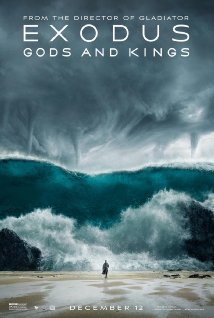
Exodus: Gods and Kings is, in many ways, a startling movie. It didn’t leave me with a strong impression of profundity, but it did make me a bit reflective. The media hype about God as an eleven-year-old boy proved to be merely hype. In fact, the boy deity was one of the most intriguing characters in the film. The role was played respectfully, and God, like a good Englishman, favored his tea. There was nothing comedic about it, however. More troubling was the agnostic Moses, à la Clash of the Titans with its unbelieving Perseus. Moses, even after meeting God, comes across as having little interior life. He hides in a cave and builds an army of terrorists making him seem like Moses bin Laden. He conceals himself while innocent Hebrews are hanged for his crimes (and did they even hang people in ancient Egypt?). When a great storm brews over Memphis, however, it is with a sense of wonder that we ponder at an eleven-year-old doing all this.

The movie plays lightly with the scholarly “explanations” that used to be doled out in seminaries about how one plague led to another. In fact, the character called “the Expert” in the credits is shown lecturing the Pharaoh on the causation scheme of clay churning up in the Nile turning it red, and killing the fish which in turn drove the frogs from the toxic water, but when they died flies came along and the flies spread disease. Then the Expert is hanged. Not so subtle a warning to biblical scholars. In fact, there seems to be a science behind much of the movie that makes miracles less acts of God than acts of nature. Even the drying of the Red Sea is understated. Its return is reminiscent of the Christmas Tsunami of 2004. God is sometimes not there when you’d expect a deity to care.

On the matter of caring, for an age of nones who have concerns for equality, the film was thin on women’s roles, making even the Bible appear to foreground them more. Sigourney Weaver—great in any context—seems only to be there to wish Moses dead. Even Miriam is given scant lines in the movie and no role in the Exodus itself. In Prince of Egypt she at least led her famous song. Zipporah is lovely but shows no sign of being as handy with a flint knife as Exodus makes her out to be. A woman of action. Miriam’s quick thinking saved the infant Moses. Overall, however, the Bible is a guy’s book, and Exodus is a guy’s flick. Opening with the battle of Qadesh on the Orontes is a way to draw men to a Bible movie. Lots of slashing, gashing, and charging horses. And the splendor of Egypt, filmed in Spain and the Canary Islands. Some miracles, it seems, are even impossible for CGI.


The Force Re-Awakens

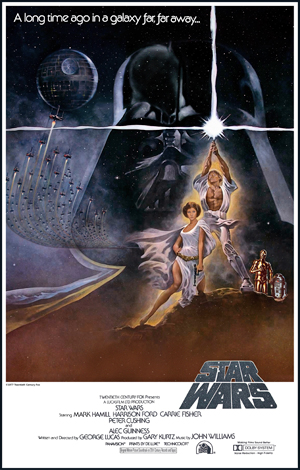
StarWarsMoviePoster1977In a galaxy long ago, in a galaxy far, far away… The year was 1977 and the Joseph Campbell-inspired Star Wars was like nothing we’d ever seen before. The film captured the essence of good versus evil in what, for the time, were realistic scenes in space. Many of us were in awe. Some worshipped. In fact, some six films later, an only quasi-ironic Star Wars religion does exist (Jediism) and its adherents must be buzzing after yesterday’s announcement that a new Star Wars movie will be released next year. What particularly caught my attention was the New York Times article on the event. Peppered with religious language, the trailer review (have we come to this?) by Dave Itzkoff plays on the fact that fans are nothing less than religious about the movies. I have to admit to falling a few movies behind. I’m a lapsed Jediist, I guess.

The new movie, The Force Awakens, will be directed by J. J. Abrams, and that seems to be a prophecy for a positive outcome. It also provides me with a goal; I need to see the episodes I, II, and III that I somehow missed early in the new millennium. Some see, to borrow Itzkoff’s language, the original trilogy as being canonical. The original novelizations—all of which I read as a teenager—were written by various guest writers with names like Glut and Kahn (the latter somewhat prescient for the upcoming Star Trek movies of the time), recording the sacred texts of the nascent religion. Rituals developed, light-sabers were purchased, and imagination became the vehicle for theology.

Behind it all, of course, is the force. This is a deity for a rationalist world. Even today we know that things don’t always turn out the way they should. Juries make the wrong decisions, computers still crash, even even two space shuttles—highly sophisticated though they were—failed and exploded during routine operations. Many find the white-bearded God untenable, but somewhere out there amid the comets and stars, there seems to be a moral force guiding us in the constant struggle of good versus evil. Heaven is still over our heads, although lost in the darkness of space. Less than 90 seconds of film footage have lit up the web with speculation, critique, and yes, reverence. We may have become the consummate secular society, but there is still always room for the force. Indeed, The Force Awakens may contain a not-so-subtle message for those who have ceased to believe that its personified form still exists.


Biblically Literate Ichabod Crane

I’m trying to pace my viewing of Sleepy Hollow, but autumn is never long enough for me. In many ways the FOX series exemplifies the current love-hate relationship popular culture has with the Bible. While its dictates and commandments seem tedious and petty, its prophetic view is so very full of possibilities. The millennium has passed but we’re not weary of the apocalypse yet. Even from the pilot episode with its cringing reference to “Revelations” three or four episodes into season one tidied that book title down to the proper singular and have begun to introduce other biblical characters along the way. Since the conceit of the series involves the four horsemen, the Bible is never far from view. Forensics can’t figure out what’s climbing out of the woods of the Hudson valley, but we already know that the demon is Moloch. Many fingers, I trust, have been scampering across keyboards to investigate this biblical figure.

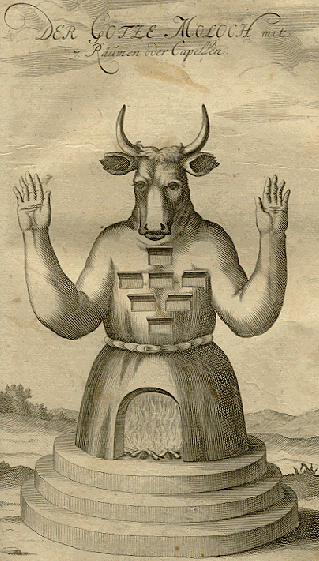
Moloch_the_godMoloch is a “Canaanite” deity. He is also one of the least understood of biblical archenemies. Scant references to making children “pass through the fire” for Moloch have led to widespread assertions of human sacrifice. Others have argued that the passing was just that—kind of like racing your finger through the flame of a candle—to appease the angry god. We don’t know that Moloch was angry. No extended myths about him have survived from antiquity. His name means “king,” an epithet fit for most gods. The vacuum left by the historical records allows imagination to fill in the gaps. Sleepy Hollow does that nicely, and although I haven’t reached the end of season one yet, I have my suspicions that he’ll be showing up for some time to come.

The Bible, viewed so disparagingly because of the ministrations of the likes of Jerry Falwell and Pat Robertson and their intolerant ilk, remains a mystery to many. Let’s face it—it’s a daunting book. Even with onionskin paper, it is a massive undertaking to read it all. Many a spiritual soldier lays slain on the beach-head of Leviticus, and that’s only three books in of the Protestant 66. What Leviticus doesn’t finish, Chronicles will polish off. And yet we have such colorful characters as Asherah, Resheph, Leviathan, and Moloch scattered throughout. Sleepy Hollow has brought back the dead. I regret that I no longer have classes of students to ask about such things, because I too, through the magic of television, am beginning to believe in resurrection again.


Let It Be

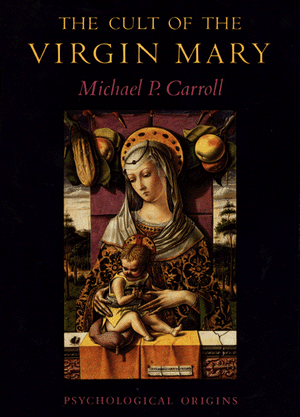
CultOfTheVirginMaryWhy do people pray to Mary? The question is a complex one and answers range from a desire to find some feminine compassion in an angry masculine god to the distinctly Freudian. Michael P. Carroll, in The Cult of the Virgin Mary: Psychological Origins, falls into the latter category. Yes, the book was written in the 1980s, but even then Oedipal complexes and penis envy were deeply suspect. Still, at various points along the way Carroll had me scratching my head and muttering “there may be something to this.” For a few pages, anyway. The problem begins much further back than Mary. To start with, we can’t all agree on what religion is. From there we move to the stage where ancient religions had as many goddesses as gods—even the divine don’t like to be lonely. The heads of most pantheons were male, which likely matched most earthly political systems. Powerful females still existed, at least in mythical realms. Monotheism effectively put an end to that, but before too terribly long, Mary emerged and eventually became almost a goddess.

Indeed, early on in his book Carroll discusses how Mary differs from the goddesses of antiquity, drawing parallels with only Cybele. Mary is the virgin mother completely dissociated from sexuality. Deeper study would reveal some mistakes in Carroll’s reasoning—there were virgin mother goddesses, such as Anat, who might in some ways fill in the gaps. Indeed, arguing for the uniqueness of Mary is kind of a goddesses-of-the-gaps theology. The more we learn the less unique any deity becomes. Still, looking to the psyche to explain Mary is a logical step. Tracing Marian devotion to the ineffective-father family, where a machoism hides a longing for the protective mother, Carroll offers us a Freudian feast of options here. Still, in the light of developments in psychology over the past quarter century, his premise is a bit dated.

We simply don’t know why Mary became such a strong devotional interest in a religion with a masculine Trinity. It would seem that women might be the motive force behind it. Given that half of Christendom was displaced, by default, from the male savior, why would Mary not emerge as the mother all people crave and whom, women know, often soften the harsh decrees of martial law? Delving into the apparitions of Mary from Our Lady of Guadalupe to Fatima and Medjugorje, Carroll finds illusions and hallucinations based on strong females behind each one. Rational inquiry into the deeply spiritual. This, however, remains the proximate cause only. What is really seen can’t be known, except to the seer. And it seems that seers tend to find, amid a religion with an omnipotent man at the top, that it is the mother who appears in times of need. Unless, of course, it is a matter of healthcare where, as government shows, father knows best.


How God Became Male

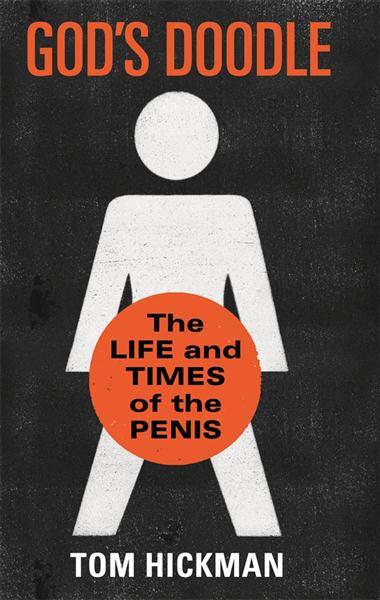
GodsDoodleWhat is gender? Okay, we all know about the mechanics of the thing, but gender is more than just sex. Indeed, it is a psycho-social construct that is difficult to pin down. Sexual reproduction is very common in nature, but we don’t really speak of gender among our fellow animals. Perhaps the decisive factor, in the human realm, is religion. Clearly religion is not the only element, but I often wonder if gender-based commandments didn’t lead many cultures into their current arrangements. The thought occurred to me as I read Tom Hickman’s God’s Doodle: The Life and Times of the Penis. As I informed students in my classes, religion has always shown an interest in sexuality, particularly on providing limitations for it. A recent issue of Christian Century has a cover story about marriage, noting that the widespread prohibitions about homosexual matrimony come from a religion that forbids it. When your stakes are eternal, many people won’t argue.

But I wonder if it goes deeper than that. Gender roles have traditionally been regulated by societies, often on the basis of their religious outlook. Meanwhile, biology, as Hickman reminds his readers, is somewhat more ambiguous. The line between the genders is somewhat of a line in the sand, easily erased. Humans come in a continuum of orientations and biological equipage. Those who don’t match the defined parameters have difficult questions to ponder with a male deity who could think of only two genders. What is a male without a female? Can a male deity exist without a goddess? What, otherwise, is the purpose of a deity’s gender? Wouldn’t a inter-sexual creator may more sense?

Male social behavior has often drawn its entitlement from a bad theology. When feminists first began to raise questions, the orthodox were quick to point out that Jesus was clearly male. As Hickman notes, however, representing him naked on the cross (as crucifixions were historically done) is still rare. Sounds like an effort at keeping the status quo tipped in the favor of one gender that doesn’t want to admit that it slowly morphs into another. We all begin life female, as biologists now understand. Some retain their original gender while males evolve into something different. And with that evolution they tend to make many unsubstantiated claims about the right to make decisions for the other half of the human race. Gender is a lot more complex than many religions would have us believe. Until we learn to treat all people as people, we will still have to ask, and will never adequately answer, how God became male.


The Fate of Goddesses

The goddesses Asherah and Astarte are sometimes confused, even by experts. Astarte, also known as Ashtart, Ashtarte, Athtart, and Astaroth, among other names, is the lesser attested of the two among the Ugaritic texts. Indeed, to read some accounts of the latter goddess, she becomes dangerously close to being labelled generic, the sort of all-purpose female deity embodying love and war, and sometimes horses. In the Bible Astarte lived on to become the bad-girl of Canaanite goddesses. Her corrupting ways were a conscious danger to the orthodox (as much as that is read back into the texts). She became, over time, literally demonized. It seems that originally she, like most goddesses, had a soft spot for humans. Since she wasn’t the one true (male) God, however, she had to be made evil. It is an unfortunate pattern as old as monotheism. One of my original interests in studying Asherah (not Astarte) was precisely that—the obviously benevolent divine female seems to have been chucked wholesale when the divine masculine walked into the room. Why? Well, many explanations and excuses have been given, but whatever the ultimate cause, Astarte lingered on.

IMG_1620

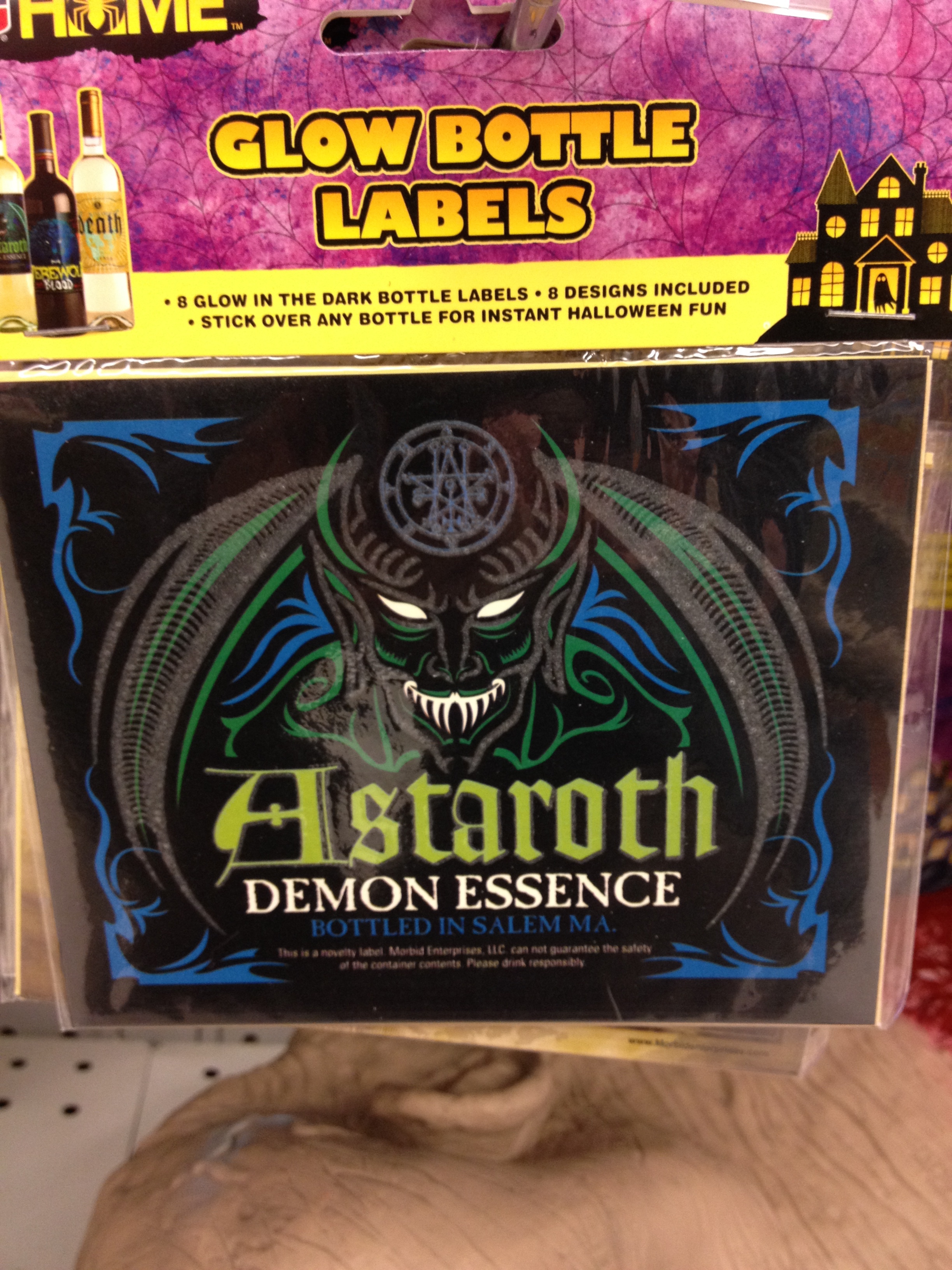
In a local pharmacy the other day, I was looking over the Halloween tchotchkes. Amid the usual assortment of pumpkins, skeletons, and ghosts, I found bottle labels reading “Ashtaroth Demon Essence.” Although I’ve spent a good deal of my life cloistered in academia, I was not surprised by this. I know that in popular culture the goddesses of antiquity live on as supernatural powers, sometimes good, sometimes evil. Astarte, once depicted as the friend to at least some of the humans devoted to her, is now commonly a demonic force. The image on the bottle label, however, was most unflattering. I know, this is just kid’s stuff. Still, as I stood there among last-minute costume seekers and distracted parents, I knew that I was witnessing the influence of ancient religions in an unexpected way. Did any of the goddesses survive as a force for good? How could they when the only god was male?

We know very little about ancient Astarte beyond the fact that she took away some of the luster of the omnipotent (as now conceived) deity of the Bible. A jealous God, as Holy Writ readily admits, visiting iniquity down to the third and fourth generation. (That might explain a lot.) Prior to monotheism benevolence and malevolence could arise from goddesses as well as gods. Compassion, it was believed, was largely a feminine trait. Monotheism decided for the jealous male instead. We won’t find a bottle label for the Almighty, although the accouterment of the arch-enemy are everywhere evident this time of year. And speaking of the diabolical, the Ashtaroth Demon Essence, I noted, was available at a steep discount.


Empire State

Hegemony is a funny word. In studies of antiquity it is commonly found since it denotes the “Leadership or dominance, especially by one country or social group over others,” according to the Oxford English Dictionary. Today it has a vaguely imperialist taint, although it doesn’t necessarily require that one nation actually pillage another’s wealth or resources. The idea that people are, and should be, free is pretty much assumed in developed nations. Or so at least our rhetoric dictates. The word hegemony came to mind, however, as I saw an interview with a corporate leader. He was discussing how his company had budgeted for technology development on an increasing scale, to catch up with current developments, and then leveled the tech expenses off after that so that the business could move into its prime objectives. The reality was vastly different, however. Each year’s budget saw increasing technology costs and it shows no signs of slowing down. Every industry, it seems, will have to keep devoting larger and larger shares of its budget to technology. Hegemony.

It’s not that any one company is solely responsible for our obeisance to technology, so this hegemony has no head. It is the idea of progress gone wild. Last year as I set out for the American Academy of Religion and Society of Biblical Literature annual meeting, a notice popped up on my laptop that a software upgrade was available. Since I file that I required was no longer accessible unless I updated, I clicked through all the agreements and provisos that I can’t understand and began the upgrade. Download and installation time measured in hours rather than minutes and I soon had to interrupt the process to get to the conference. This had consequences that nearly led me to becoming utterly lost in a part of Baltimore I’d been warned to avoid. The gods of technology demand their due. Now, less than a year later, I can’t access certain files unless I upgrade again.

Don’t get me wrong—I’m not a complete Luddite. I enjoy the instant gratification of finding information in seconds through a web search, but I’m not always sure that I can believe what I read. Technology means photos can be manipulated, sounds can be fabricated, facts can be created, all with no basis in reality. I used to have students ask me if such-and-such a fact they’d read online was true. Facts, it appears, are now negotiable. Nobody’s really in charge, it seems. Instead we are lead by the vague idea of progress, a new god with technology as its prophet. Even now I know people who think they never use computers but they drive without realizing their car is full of them, and turn on the television not realizing that the tech is no longer chip-free. Meanwhile those in the technology industry seem to have plenty of extra cash around, while those of us in the humanities ponder whether the ancient hegemonies have really changed at all. Let me look that up on the internet, once this upgrade is through.

600px-Astronaut-EVA


Retro Progress

LittleOrleyIn these days of high technology, remembering childhood might be seen as cowardly nostalgia. When driving my daughter back to college, however, sometimes I need a little nostalgia. So it was that we passed a pleasant couple of hours listening to Little Orley stories told by Uncle Lumpy. Having read ancient history for years, I don’t mind saying that I was a devoted fan of Captain Kangaroo as a child, and Mr. Green Jeans was one of the reasons. Before the Captain, Green Jeans (Hugh Brannum) had recorded a set of radio stories about Little Orley, beginning in 1946. (Lest readers get too driven by nostalgia, I wasn’t around for the original broadcasts.) In the small town of Franklin, Pennsylvania, across the state from where Brannum died, our library had a record of some of the episodes from his radio show. As a child I listened to these tales so much that I still have parts of them memorized to the word. The web brought Little Orley back to me, and now anyone can purchase the tales that I had gone for decades without hearing. Driving through eastern Pennsylvania on an emotionally laden journey, Uncle Lumpy seemed the perfect fare.

A few facets of the program struck me anew. Little Orley stories, for those unfortunate enough never to have heard them, are tall tales about a farm boy that involve all manner of hypostatized natural phenomena. Animals, plants, the moon, clouds, and even pancakes talk and act like humans. Or gods. Orley encounters these all with no hint of surprise, and yet goes to church on Sunday and Wednesday night for prayer meeting. The God in these stories is anything but a jealous deity, sharing the stage with a king of the oceans, lakes and seas that can transform a person to a fish, or with mysterious voices that can make a boy a worm and a worm a boy. Leprechauns gambol through the woods, and snowmen amble about trying to help with farm chores. Stories like these in the Bible are now considered factual, right Balaam? In the 1940s they were standard fantasy for children.

Now we’ve come to an era of biblical literalism that fears and despises challenges to the single God of sacred writ. In Little Orley, however, a message of tolerance (with some notably politically incorrect caricatures) predominates. Orley is time and again in situations where those who are different should be, and inevitably are, treated as equals. Even God gets some help from talking bats who ring the bell to bring the faithful to church when the sexton breaks the bell-rope. Change, I know, is inevitable. As these miles disappear behind me, I can feel it keeping pace, eventually to eclipse me. Progress is good, but sometimes the way ahead is best found by looking back in wonder.


Watchers and (Un)holy Ones

HiddenOnes Angels, demons, djinn, watchers, giants, and a healthy dose of fantasy pervade Nancy Madore’s novel, The Hidden Ones. In this present world where, I’m told, the supernatural is irrelevant, it is pleasant to come across a work of fiction that delves so deeply into the pagan roots of Judaism, Christianity, and Islam. Monotheism does have its own skeletons in its capacious closets. Madore is a novelist who insists on prying open those doors long shut, and spinning a tale that involves first responders, shady military officers, and a band of rather hapless archaeologists. And Lilith. Throughout the story Madore comes up with clever etiologies for stories that will appear in canonical form much later, and at one point I couldn’t help wondering if the screen writers of Noah had read her book. Well, actually, The Hidden Ones is the first of a trilogy, Legacy of the Watchers. I’m sure the next two books will contain many surprises as well.

The Hidden Ones put me in mind of Michael Heiser’s novel, The Facade. Both take on the mythology of the Nephilim, the fallen ones about which the Bible tells us enough only to leave us hungry. The early chapters of Genesis are like that. There’s so much going on that those of us reading it many centuries after it was written are left wondering what the full story was. The writers of the Bible had no compunction to disbelieve in monsters and beings beyond the human ken. Nor does the Bible attempt to systematize them in any sustained way. These creatures just are. As the old saying goes, however, fiction has to make sense—those who write with gods and angels have to make them fit into a system.

No doubt, the uncanny occasionally intrudes upon our rational world. The Hidden Ones presents one such intrusion that, ironically, takes some of the fact of the Bible while leaving the theology suspect. We know that even before the Hebrew Bible was complete ancient scribes were attempting similar things. The book Jubilees, for example, tries to fill in some of the unanswered questions of Genesis, including the watchers and details of the flood. Jubilees, however, never made it into the Bible thus depriving canonical status to the backstory that demonstrates how religion often chooses for ambiguity, leaving it to theologians to bring it all into a system. And novelists. And among those novels that tread where even J, E, P, and D quail, is The Hidden Ones.


Write the Truth

XalliopePublication is a tricky business. Just ask my friend, K. Marvin Bruce. Marvin and I have known each other for years as he’s been trying to break into fiction publishing. I don’t envy him. His novel, Passion of the Titans, was under contract with an indie publisher who eventually reneged on their agreement. What can you do? As a supporter of publishers you don’t want to sue, so the novel is floating around again, looking for a home. Meanwhile, I was flattered to receive in my mailbox a copy of Calliope magazine. Calliope is published by the Writer’s Special Interest Group of American Mensa, Ltd. Marvin’s story, “Initiating an Apocalypse,” won third place in their fiction open. Not only am I pleased for my friend, but I was glad to see his story was about gods. Zoroastrianism doesn’t get much attention these days, but Marvin’s tale is about a hapless professor who wants to start an apocalypse by using Zoroastrian deities. I won’t give any spoilers since I’m sure few people have read the story.

His tale has me thinking of gods in fiction. I suppose mainstream literary fiction avoids deities, but fantasy, science fiction, and horror all make good use of them from time to time. Neil Gaiman’s American Gods made quite a splash, and although Marvin has no hope of becoming a widely recognized name, his novel also features gods. It is a literary incarnation. We like to see gods in some ways limited to human circumstances. Omnipotence rarely makes for a good plot. In many respects the Bible attests to this. If God is omnipotent (which is not a claim the Bible actually makes) why can’t the world be a happier place? Indeed, the solution most fondly groped by theologians is either free will or a version of the Zoroastrian solution: a god who is evil. Enter the Devil.

The Devil is also undergoing a kind of literary renaissance. We find a plethora of books and movies starring the prince of darkness. Despite the panegyrics of rationalism delivered by angry atheists, nothing salves the human soul like a good supernatural entity. Fiction writers have long recognized that. Gaiman was not the first to make the gods do his bidding in literature. There is a likelihood that even Homer knew the appeal. Many people can accept that gods might exist, and they certainly don’t object to stories in which they cavort. Fiction, as literary analysts know, teaches us about reality. The characters may not be literally true, but the fact is that in our minds there is still plenty of room for gods. And, if you one of the rare ones to read Marvin’s story, you’ll see that, true to human experience, deities don’t act as we expect them to. Savvy publishers, it seems to me, would do well to recognize the appeal of the gods.


Pagan Paean

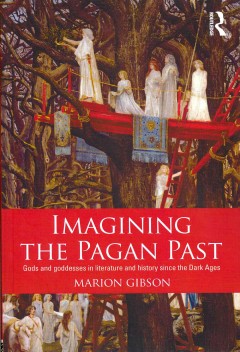
ImaginingPaganPastThe old gods still live. In literature. The modern world with its open spirituality has continued the process of rediscovering ancient deities. Marion Gibson’s Imagining the Pagan Past: Gods and goddesses in literature and history since the Dark Ages offers a glimpse into how British writers since the earliest days have wondered about the gods. Of course, many of those early writers were already Christianized, and treated the old gods as curios that might be placed on an intellectual shelf of bygone days. Some, however, came up with an idea that can still be found, on occasion, among dwellers in the British Isles—the idea that the original British religion was monotheistic. Indeed, some believed that the religion of Noah made its way to Britain, establishing a debased, but yet roughly correct worldview that was only contaminated by Roman polytheism. There are books suggesting, a la Latter-Day Saints, that the lost tribes of Israel found their way to Britain. Joseph of Arimathea planted his staff at Glastonbury, after all. Nothing satisfies like being the chosen people.

Gibson explores both the Celtic gods and the Norse gods. British literature has drawn upon both deity pools to populate a literature with colorful, if sometimes dark, deities. Beyond the literary, many of these gods survived in popular culture throughout the ages. Some of my fondest memories of the UK are driving to prehistoric sites with friends and finding the gods alive and well. As the sun, feeble at best in a British December, sank one afternoon we pulled into Wayland’s Smithy, a neolithic long barrow. I’d never heard of Wayland before. Gibson reveals the story of Wayland, as well as Woden and Thor, as the gods jumble in a Gaimanesque celebration of cultural diversity. Even on hikes to obscure sites the locals often knew the stories of the gods that had once passed this way.

There’s a virtual Sutton Hoo’s trove of information in Gibson’s brief study. At many points I found myself pausing to think, “that’s where that idea came from” as I followed the trajectory of her explorations. Even some of the deities she does not explore found their place in my three short years in the enchanted countryside where pagan Celt met pagan Saxon met pagan Roman, leading to a heady brew from the well-known Diana to Julian the obscure (there is some witchery afoot here). Even that Anglicanism that once circled the globe did not rid itself of this great cloud of witnesses. We keep our deities alive by preserving them in scripture, whether sacred or secular, and we have done so for hundreds of years. And the old gods, in this monochromatic world of science and industry, remind us where the rainbow really originates. Imagining the pagan past is sometimes the most human thing to do.


New Gods

The new gods are the old gods, apparently. Increasingly I feel myself to be in the old category, but I do glance at Wired once in a while in a vain attempt to recapture my decidedly low-tech youth. I was halfway through July’s edition when I saw “Worship More Gods!” near the top of the page. Of course, gods aren’t what they used to be. The short column, Angry Nerd, was on about all the movies out there featuring Greek gods. Classic gods. Although they’ve been around for a couple of millennia or more, they had apparently fallen into the obsolescence pile for a number of centuries, staring around 1700 years ago. When I was in fifth grade I first heard about these gods (okay, I had watched that ridiculous cartoon Hercules—pre-Disney—as a child, but does that really count?). Mrs. McAlevy (and I sure hope I spelled that right!) felt that kids in my redneck little town needed to know about the gods and heroes. It was some of the most fun I ever had in school. I took a reprise class in college, just for good measure. After all, Clash of the Titans had just shown that gold can rain down like that in Danaë’s secret chamber, if you hit that sweet spot. Myth movies have flourished ever since.

Gods

Can we ever have enough of the old gods? There are lessons to be learned there still. It is safe to say that one of those lessons is that we should not act as the gods do. Almost always they do not stand as moral exemplars. Lest we feel too superior on that point, it is worth pointing out that the God of the Bible sometimes pulls some tricks that we would consider a little less than moral, right, Abraham? The role of the gods is to tell us what to do, not to show us. Impossibly high moral standards, after all, are difficult even for the mighty ones to keep. With great power and little accountability, well, we don’t need to have gods to show us what happens.

I’m not intending to put words in the mouth of the Angry Nerd. The point of the article seems to be that we should share the wealth. There are plenty of other cultures out there with very colorful gods (sometimes literally colorful). In the cultures I’ve studied those gods pretty much fall into the same category as my step-father’s mantra “do as I say and not as I do.” Rank hath its privileges. There’s no doubt that the gods provide some good moral guidance—even the deities of the Canaanites seem to have had pretty clean expectations for humankind. But when it comes to behavior, well, let’s just say they don’t behave like a bunch of nerds. These are the frat boys of the universe. We obey because we know it’s dangerous to do otherwise. So in this day of religious sensibility, perhaps having a few more gods wouldn’t hurt. As long as we keep in mind that every deity has his or her limitations.


Call it Civilization

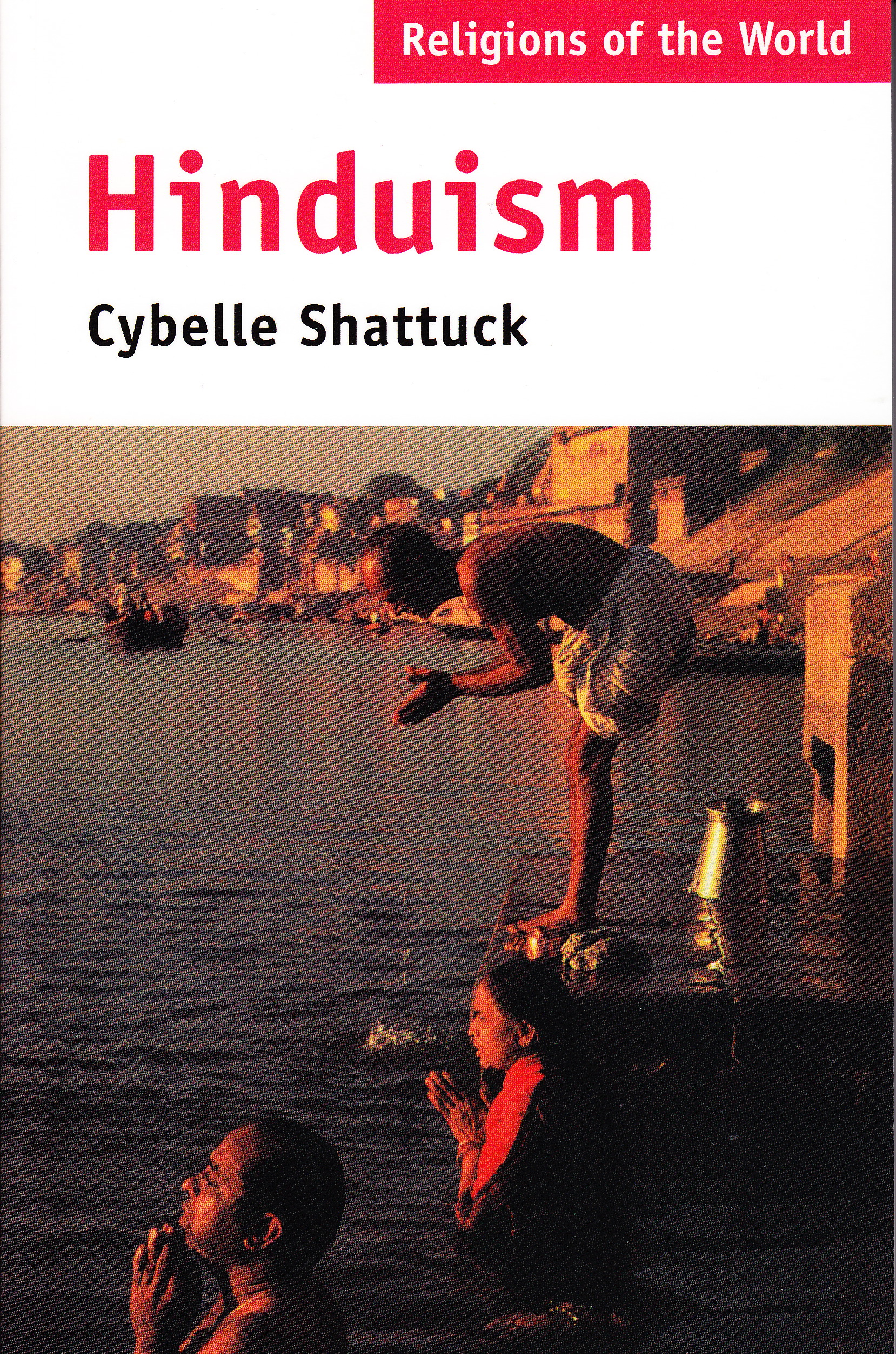
HinduismWhile brushing up on Hinduism by reading the book of that title by Cybelle Shattuck, it once again occurred to me how the concept of religion distorts itself. Prior to the Roman Period, the concept of religion really had no name. In fact, religions were sets of folk beliefs held in common by people of a single culture. These beliefs had many functions: keeping social order, establishing common practice, undergirding a kind of optimism in the face of inevitable death. Since long-distance communication was rare and unreliable, communities separated by more than a few miles soon developed details that fit their own situation and would hardly apply universally. Until they were written down, anyway. In Hinduism—which is in no sense a unified religion—even the “sacred writings” were not held to be authoritative for all people across all places and times. That concept would emerge with Christianity, a religion that would define the term and try to make it stable.

Hinduism is the oldest continually practiced “religion” in the world, as far as we can tell. The religions of the Mesopotamians and Egyptians eventually died out (although they have been revived by some in recent times) but the folk belief—or better, folk practice, of ancient India has continued relatively uninterrupted while new religions from Israel and Arabia changed the rules of the game. Monotheisms quickly demand heresies. A single God would not tell people different truths. Something upon which Shiite and Sunni, Catholic and Protestant, Pharisee and Sadducee all agree. One Lord, one faith, one baptism. By fire.

Meanwhile, even with Muslim and Christian missionaries afoot, Hinduism continued its accustomed continuity. To be a Hindu doesn’t mean worshipping the same god with the same ritual as everybody else. It is a way of living intended to keep dharma and avoid bad karma. And even as trendy westerners stretch themselves into impossible yoga postures, they are participating, at some level, in ancient practices that we call the religion of Hinduism. Shattuck’s brief introduction is a nice little primer that explains this time-honored folk tradition in a way even a believer in religion can understand. There are, it turns out, more things in this philosophy than our universe has ever dreamt of. Or perhaps the one dreaming is really Vishnu after all.


Uisge Beatha

Water is essential for life. Life as we know it, in any case. It is no surprise, then, that many religions incorporate water into their rituals. Last week I posted about the biblical stories of Jonah and Noah, both of which involve acts that were later interpreted by Christians as baptism. Muslims use ritual ablutions as part of their worship tradition. Water is life, after all.

IMG_1392

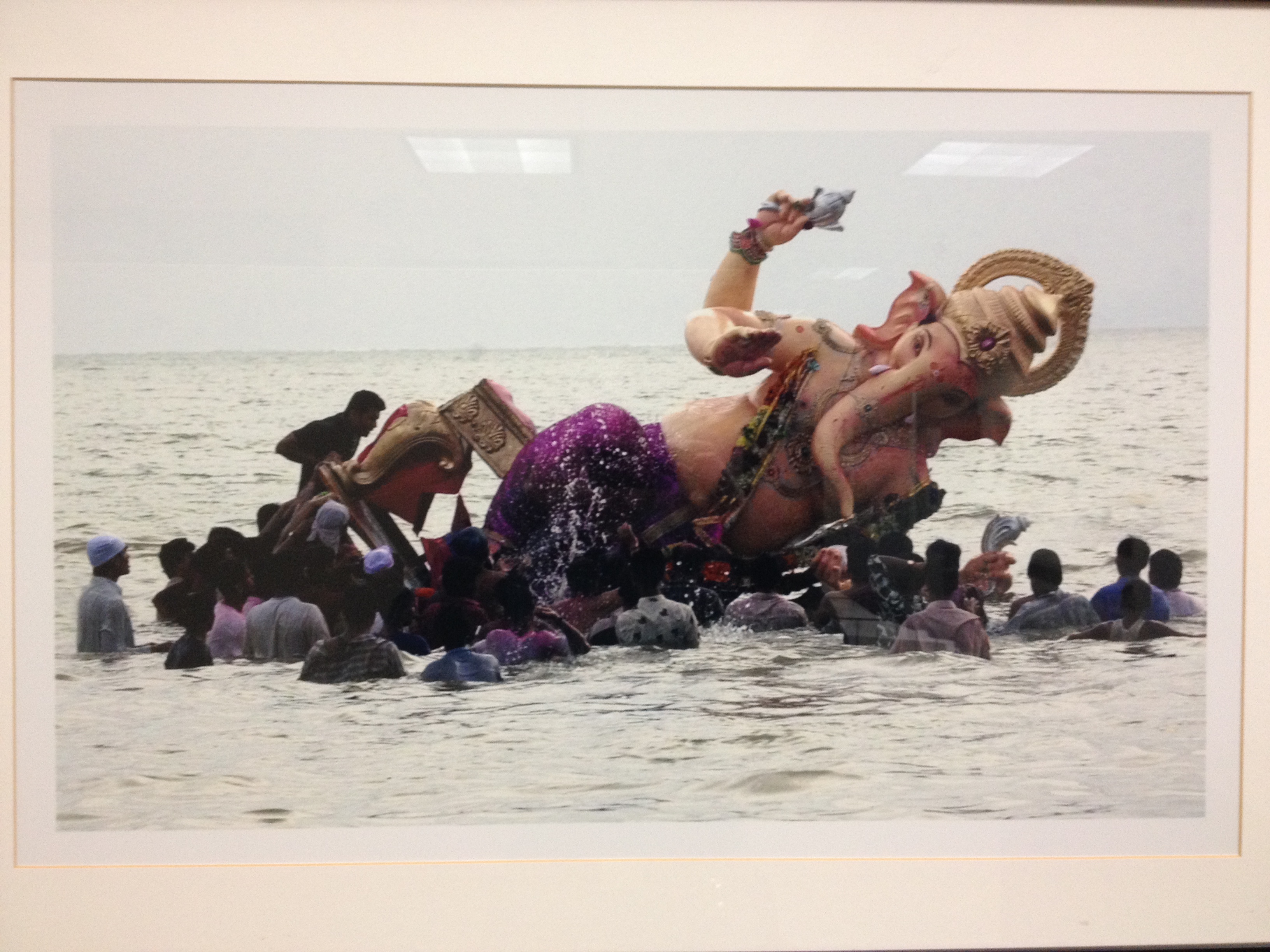
While wandering the halls at work, I notice the various artwork on the walls. One large, framed image has frequently caught my attention: several men are shown carrying a statue of Genesha, the Hindu elephant-headed god, through the water. Coming at this from a Christian background, I wondered what was going on since it looks like baptism. Hinduism, I know, is not a unified religion, but rather a conglomeration of many folk traditions from ancient India—one of the two seats of ancient religiosity. The stories of ancient India are colorful and diverse, and a bit of research suggests that this particular photo is likely the festival Ganesha Chaturthi, commemorating the story of how Ganesha came to have an elephant’s head. Crafted from inert matter by his mother Parvati, Ganesha was posted to watch the door while his mother bathed. Parvati’s consort Shiva returned and not knowing who the boy was, the lad’s refusal to allow anyone to enter led to a war. Eventually the Ganesha was beheaded and to appease his consort, Shiva supplied him with the head of a dead elephant and the boy resurrected. The immersion of Ganesha statues, or Visarjan, takes place as part of the Ganesha Chaturthi, during August or September.

I admit I’m not an expert on Hinduism, so some of the details may be a little off here. What strikes me, however, is the similarity between this story and that of Jesus. Like Ganesha, Jesus was associated with a modest mother, slain, and resurrected. He, too, is associated with ritual baptism. Growing up, we were taught of the many unique aspects of Christianity. We had, we were led to believe, the only resurrecting deity in the world. Our God alone could bring back from the dead, and the way in was through immersion in water. While learning about Ugaritic religion I read of Baal’s death and resurrection. Although stories of baptism haven’t survived, he also battled the sea and came out victorious. Some ideas, it seems, are particularly fit for religious reflection. The details may be unique, but the archetypes are very similar. Religions may be many things, but in the end, unique is a word that must be applied with the greatest of care. In the meanwhile, the next time I read of walking on the water, I will recall that even Asherah was know as “she who treads upon the sea.”