Fruits of the Dearth

Religions developed out of universal concerns. While I can’t hope to compete with the masterful insight of Pascal Boyer, I do have a gut feeling that as soon as humans evolved the ability of foresight we began to worry. Where is that next meal coming from? Will we survive another day? Is there any way to hedge our bets? In ancient times mortality’s unblinking stare would have been much closer to our faces. Even as recently as the Middle Ages death was much more on the mind, much more frequently seen.

One way to ensure survival is to propitiate those gods who control the productivity of the soil. Long before Demeter lost Persephone ancient people mourned the death of gods who ensured fertile soil, hoping against hope that they might come back each spring. I recall the seriousness with which Rogation Days were taken in the Midwest. At Nashotah House the earth itself was blessed. I recall a priest from Central Illinois who gleefully recounted that the University of Illinois crop experiments were always a little skewed because each year he blessed them on Rogation Days, giving Ceres a boost. CPR for mother earth; give us our daily bread.
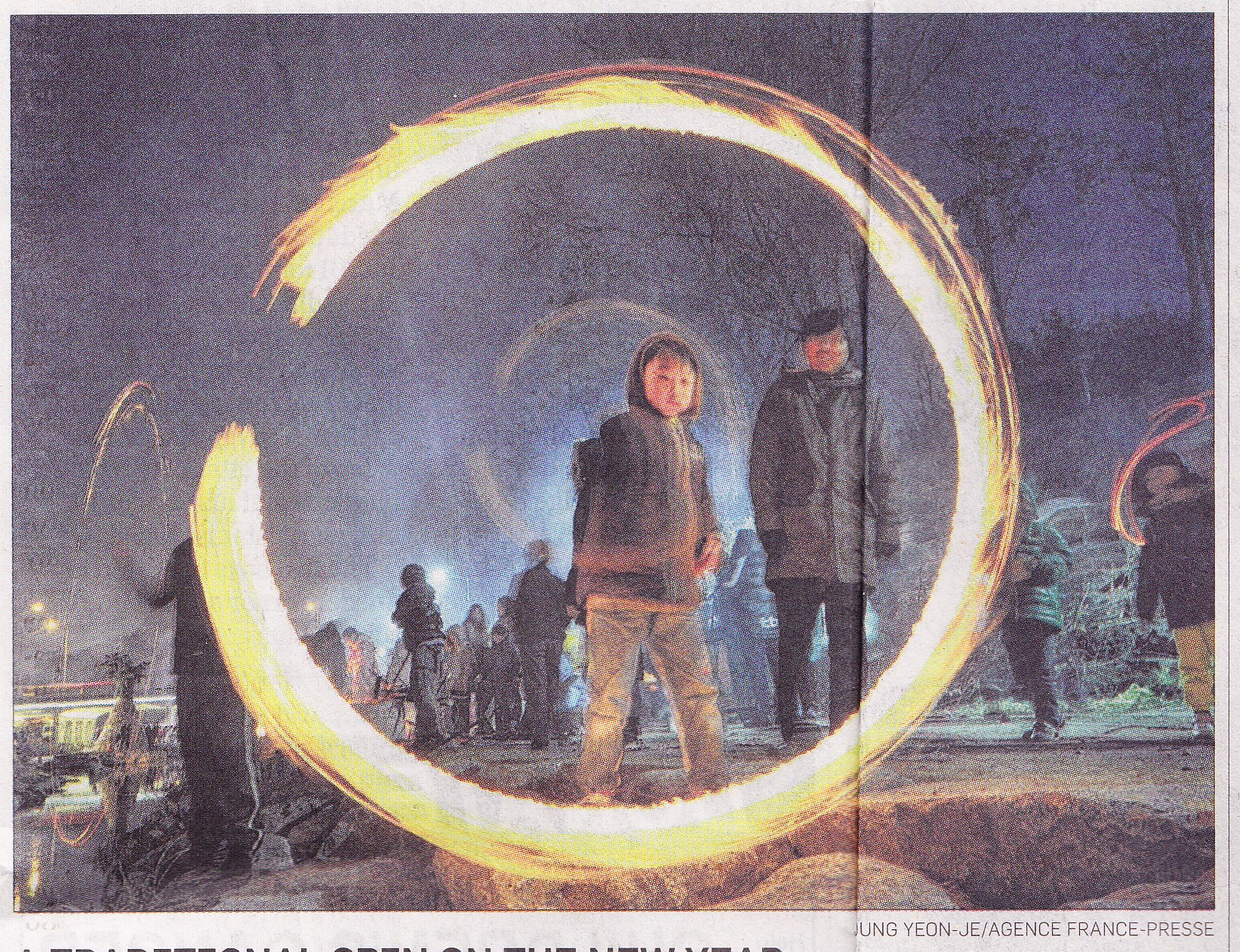
The picture of a South Korean boy spinning a can filled with glowing embers over a field on the first full moon of the Korean New Year reaffirms that concerns are the same everywhere. In our sterilized, indoor, urbanized lives where food is grown, harvested, processed and packaged by others for simple consumption of the vast majority, we have lost one of the most poignant aspects of religion. People pray for survival against the devious plans of terrorists, or the insidious diseases that threaten those who make a living simply moving electrons from place to place. Meanwhile somewhere in a country teetering on the brink of nuclear winter, a young boy swings a bucket full of hope.
Blessed Virgin (Not)

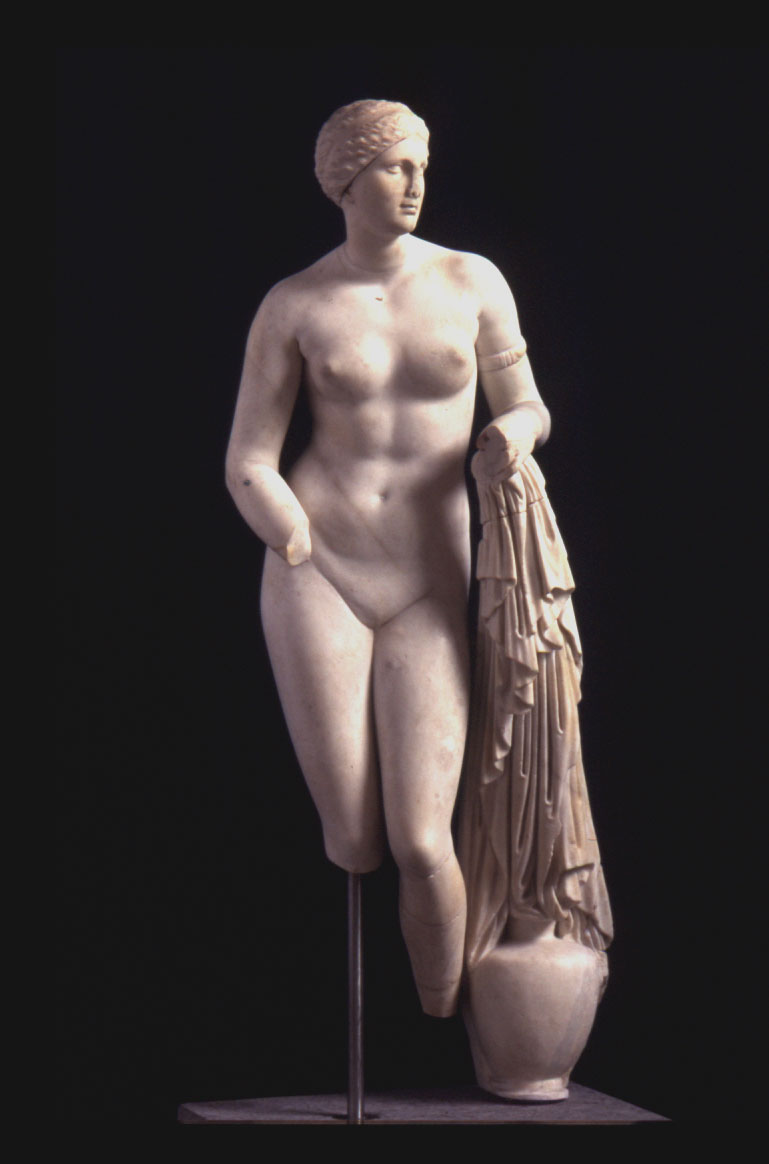
What’s not to like about Aphrodite? Hesiod’s first Olympian, she represents the exuberance of life itself in the pursuit of love. In our patriarchal world her erstwhile consort Cupid has come to represent that strange and compelling force that drives so much of what mere mortals spend their time on. A colleague has pointed me to a new documentary that is being produced on Aphrodite (trailer available on YouTube). In addition to fascinating footage illustrating modern Cypriot rituals to the goddess, the film contains what many would consider a sacrilege: on Cyprus the virgin Mary and Aphrodite are viewed by many as two forms of the same entity.

While the modern, monotheistic sensibility bristles at any notion of shared divinity, it seems perfectly natural that when the “mother of God” was introduced to the island that gave the world its Venus, “its desire,” a mental connection became inevitable. Unlike many “virgin goddesses” of the ancient world, Aphrodite had no false modesty regarding matters of love. Even the mighty Zeus, so powerful that he might be called simply “God,” was unable to resist her draw. Ancient peoples often celebrated the gift of love without the embarrassment that the Victorian Age has so generously bestowed on much of the western hemisphere.

Pressing the point even further, when monotheism emerged the equality of genders became an impossibility. The one god must, by the standards of all human imagination, possess a gender. And since men dominated the societies that embraced monotheism the divine feminine was lost. Orthodoxy replaced humanity, and thus it remained until only recent years when women finally managed to make their voices heard. Aphrodite, unlike Hera, is not under the control of a lordly king. The film by Stavros Papageorghiou offers viewers a chance to see what has been lost by the western world keeping half of the human race silent.


Son of Stone Flies

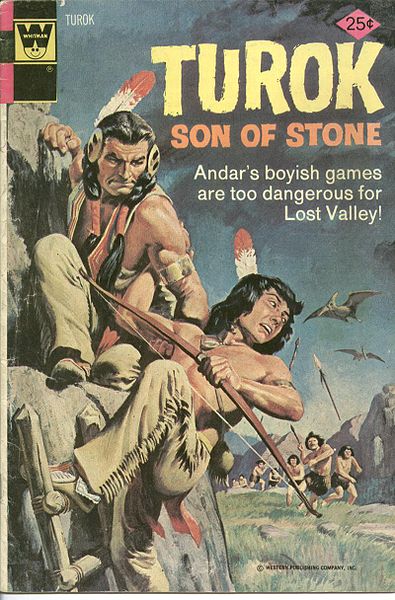
One of my favorite comic books growing up was Turok, Son of Stone. We couldn’t afford as many comics as our friends, but among brothers we’d share our resources and get a fair variety of reading material. Turok belonged to my older brother. It felt so ancient and sophisticated, tinged with primal urgency as Turok and Andar attempted to make their way from the Lost Valley where dinosaurs daily threatened their existence. The comics had a gravitas that even The Valley of Gwangi lacked. In one installment, a scroll-keeper joined Turok and Andar and claimed his sacred scrolls would show them the way free of this accursed valley. Turok doubted this and was rebuffed with “Fools scoff at what they don’t understand!” as their erstwhile companion decisively re-rolled his scrolls for storage in a handy leather pouch.

One pilgrim's progress

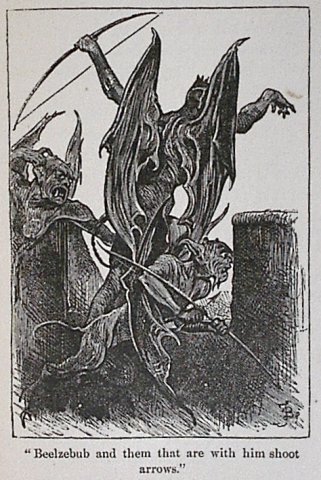
That image comes back to me when I think of how ancient writers sometimes used ridicule to castigate competing religions. It even happens in the Bible. A friend recently inquired into the figure of Baalzebub, the famous “Lord of the flies.” The Bible attributes worship of such a deity to the Philistines, the popular pagan foil of the children of Israel. The Philistines, as we know today, were a sophisticated group of Indo-European settlers on the coast of the eastern Mediterranean who showed up about the same time as the early Israelites were emerging from their “Canaanite” milieu. Since they didn’t practice circumcision and didn’t worship Yahweh, the Philistines were shackled with the worship of ineffectual fish-and-insect deities. (Dagon would never regain his proper significance until he was rediscovered by H. P. Lovecraft many centuries later.)

A different pilgrim's progress

With the discovery of the Ugaritic tablets, the common usage of the term zbl (let’s say zebul, so it can be pronounced) was clarified. Zebul commonly designed “prince.” One of the recipients of this honored title was the deity formerly known as Baal. Baal-Zebul, “Prince-Lord,” the great thunderer Hadad. From the sketchy evidence of Philistine religious practice, it seems the new-comers did adopt some of the gods of their new land, and perhaps among them the lordly Baal. In order to disparage the cafeteria choice of their neighbors’ gods, a biblical writer renamed Baal-Zebul, Baal-Zebub, Lord of the Flies. There have been other explanations for the title, but the lessons learned from our youngest days often furnish our adult interpretative lenses. This explanation makes sense to me, and it reminds me of a bit of wisdom from Turok, Son of Stone.


Return of the Frost Giants

We have ceased believing in the gods, but we still feel their wrath. The recent winter storms encompassing much of the nation demonstrate our arrogance in the face of the uncontrollable. It has long been my contention that the chief god is a personification of the weather. No matter how many HAARPs we put into place or how many satellites we hurl over our heads, the atmosphere remains a chaotic system. Global warming triggers unpredictable weather and extreme conditions. Yet people claim the moderate level of snow in the northeast is proof against the facts. I say the gods are laughing. How quickly we forget the ice ages.

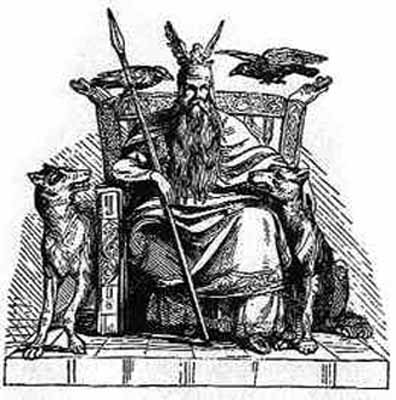
As a child Norse mythology was among my favorite pagan religious systems. Obviously those responsible for naming our weekdays felt the same. The struggles and weaknesses of Odin, Thor, and Loki are far more honest than claims of pristine intention on the part of the majority of gods. The most captivating aspect was the eventual victory of the frost giants at a kind of Ragnarök. In Scotland, so close to the landfall of many a Viking, I took advantage of indulging in Viking sagas and myths. My understanding remains that of a curious layman, but I sense a deep wisdom at work here.

A recent email from a university dean on a particularly treacherous weather morning admonished all instructors that classroom presence was a commodity that paying students have a right to expect. Deans, with their six-figure salaries, are not accustomed to not getting their own way. How hard it is to admit that the gods have bested us! There are those who’ve not bothered to study global warming but nevertheless like to make pronouncements about it. They claim such weather disproves that the world is heating up, despite the global warming models that predict erratic and localized colder weather. We have released the frost giants. The more we mess with them the more dangerous they become. So, what is my solution to the dilemma of too much weather? Well, I’m morally obligated not to say until I receive my six-figure salary.

The little wolf laughed to see such sport


Baal Necessities

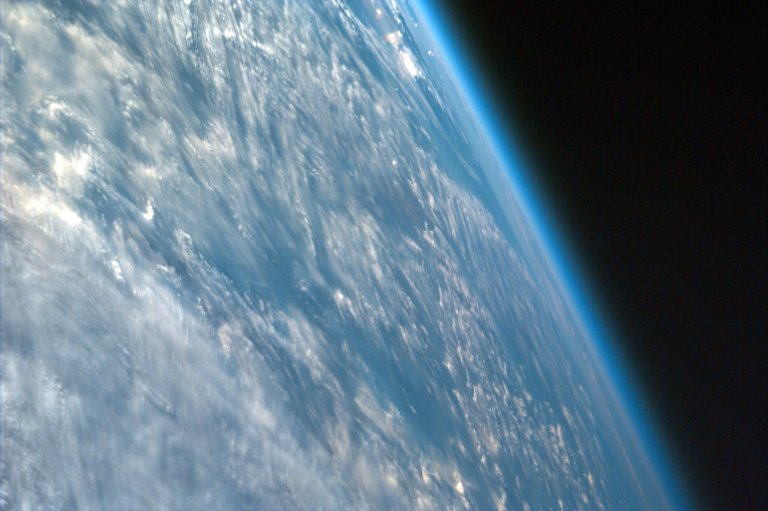
Baal has been on my mind lately, despite the limited time I’m able to dedicate to research. You see, Baal and I share a common interest in weather. One of those people whose moods synchronize with the atmosphere, I have always felt what the sky projects. So when a colleague asked me to lecture his class on the Baal Cycle, I felt it was a kind of catharsis after all the gray skies and snow we’ve had this year. Baal, or properly Hadad, was doyen of the skies. In modern perspective it is often difficult to realize that the seasons and climate of ancient Aram were quite distinct from our own. Whatever came from the sky came from Baal.

In the documentation we have on this god, we find him particularly associated with thunder, lightning, and rain. These were more common in the Mediterranean basin than the snows of the higher elevations. It stands to reason, however, that Baal meted out the weather to the denizens of Ugarit, no matter how wet or cold. Even his daughters’ names reflect their meteorological roles. Thunder and lightning may be the most dramatic expressions of divine power, but nothing makes you shiver like a good snow.

It is difficult not to take the weather personally when my long commute days are permeated with ice and snow. Continuing a pattern initiated last spring semester, my lengthy drive to Montclair has been accompanied by snow each class session I’ve been assigned so far this semester. Even the students have begun to notice. One co-ed asked why it always snows when I’m teaching. Meteorologists may have their naturalistic explanations, but somewhere deep down, I’m afraid that Baal has it in for me. It’s time to go and shovel the front steps again.

A Baal's eye-view


The Triumph of Baal

“Snow weariness” is no strange phenomenon even to those of us who were reared in the legendary snow belt of Lake Erie. Although Buffalo consistently topped our records, months of deep snow burying all the familiar features of our landscape in northwestern Pennsylvania were regular expectations of winter. Snow weariness generally settled in around March when we longed for green pastures and unstill waters. As an adult in generally snow-deprived New Jersey, the weariness sets in much quicker. Attempting to drive on highways with sneophytes is a challenge; before I had my license I had driven in plenty of snow, otherwise I’d have had to hibernate from December through April of each year. Digging out from New Jersey’s third major snow-plop of January, however, the magic seems to have vanished.

Baal was a god who controlled the weather. Some years back I finished a book (still unpublished) on weather terminology in the Psalms. Many psalms are notable for containing archaic imagery and phrasing, leading some scholars to suggest they might have been new, revised “Canaanite” versions of songs originally dedicated to Baal. Perhaps so. The Psalms frequently note the wonder of weather, even occasionally of the snow. Psalm 147 contains the lines:

16 The one giving snow like the wool,
he scatters hoarfrost like the ashes,
17 throwing his rime like crumbs,
before his cold who will stand?

Originally a paean to Baal? Who knows? It’s just that we’re all shivering down here. And Israelites didn’t have to shovel a path to their cars to turn over reluctant engines to get a modicum of warm air circulating before they actually arrived at work.

Once Israel’s monotheism set in, Yahweh took control of the weather, thank you. Even a glance at the Psalms demonstrates the superiority of Israel’s divine weather-maker. From the view down here, however, it looks like maybe Baal has a few tricks still to play. Would Yahweh ever cause a Bible class to be cancelled because of inclement weather?

Dawn in the new snow Baal


New Age Present

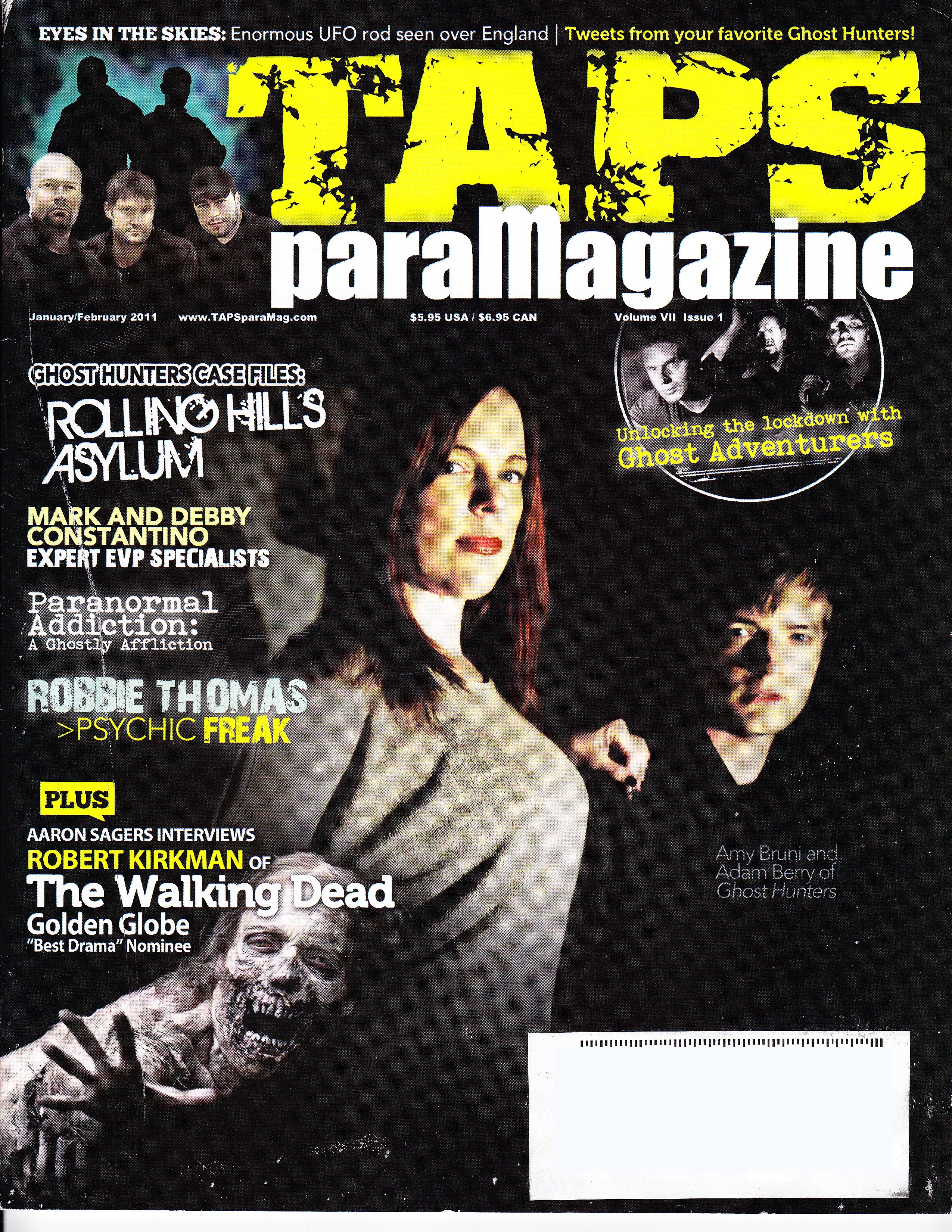
Okay, so I admit I’m curious. As my “six month” subscription to TAPS Paramagazine continues into its second year, itself somewhat paranormal, I get the feeling that I’m witnessing the birth of a new religion. I’ve been in this business long enough to know that new religions are hardly rare, but this one seems an accidental entry into the field. Now ghosts and religion are natural enough as corollaries. Both involve afterlife concerns and the unknown. Having watched TAPS Paramagazine feature fairies, tarot cards, and zombies, however, I wonder if the distinctions are becoming blurred. In this latest issue (January/February) many of the articles make explicit mention of God. God and ghost in the same breath, with the exception of a particularly holy spirit, is an odd combination, given the biblical injunction against mediums.

Spiritualism in the late nineteenth and early twentieth centuries was descried by famous debunkers such as Harry Houdini and accepted by famous intellectuals like Sir Arthur Conan Doyle. It is that liminal area that stays out of the reach of traditional Christianity and Judaism, but strays into the afterlife-prepared psyche. If the dead are out there, they should be able to communicate. Right? And with God’s full approval, so it seems. This latest issue alone suggests that UFOs may be demonic, that clergy may be legitimately interested in ghosts, God may speak through dead children, and that one may become addicted to paranormal investigation. Sounds like a recipe for a New Age mythology. Throwing in light-hearted contributions about the Walking Dead, and suddenly zombies become real as well. Oh, and skunks have a special wisdom.

Traditional Christianity cautions against all of these things (except skunks). When it comes to the supernatural, it claims, there is only one super, supernatural being. The rest are charlatans and wannabes. The Bible certainly does not encourage consorting with ghosts, and yet, in this New Age milieu it is possible to find any remotely spiritual entity touted as proof of reality beyond reality. As Bader, Mencken, and Bader observe in Paranormal America, citizens of this country are inclined to believe. Where does belief lead when there is no pole-star to guide the ship? I sense that we may be steering into uncharted waters. Anyone want to volunteer to be captain? Religions always get to make up their own rules, so feel free to devise your own compass.


Mummery and Divinity

The human psyche is a fascinating study. As an undergrad I stopped just shy of a psychology minor (partially this was due to the place, but also to a haunting feeling that psychologists are often attempting to resolve their own problems). Even as an armchair psychologist there are plenty of human tendencies to note. One that I occasionally mention in this blog is pareidolia, the attribution of significance to random information. Pareidolia often comes in the form of seeing faces, entire people, or even animals, where they don’t actually exist. This has been proffered as the source of belief in everything from ghosts and aliens to God himself. No doubt pareidolia is a strong tendency in the human mind. When my family recently saw Mummenschanz this was again confirmed.

This Swiss mime troupe – pioneers in experimental theater – makes simple objects come to life. The illusion works because of pareidolia. When we saw the show, even the youngest audience members could be heard exclaiming what obviously non-human tubes, slinky-like characters, and shapeless blobs were trying to do. “It wants the balloon!” “It likes that other one!” “It feels sad.” As the various abstract pieces moved about the stage, a laugh was guaranteed if they flashed a simple round orifice at the audience that clearly perceived it as an eye. We attribute intentionality and purpose to objects unvivified without the soul of Mummenschanz inside them.

Prior to the current tour, the last time my wife and I saw Mummenschanz was about two decades ago in Edinburgh. This was long before I’d been introduced to the concept of pareidolia, and, although I enjoyed the show, the more recent experience was more profound for it. Some of the adults present without children left at intermission, perhaps not finding the abstract personalities engaging. Children, however, seemed to comprehend what was going on. This does lend credence to the power of pareidolia to make sense of a bewildering world. When faced with the unfamiliar, we put a human face on it, ascribe it intention, and call it either a deity or Mummenschanz.


Understudy Angels

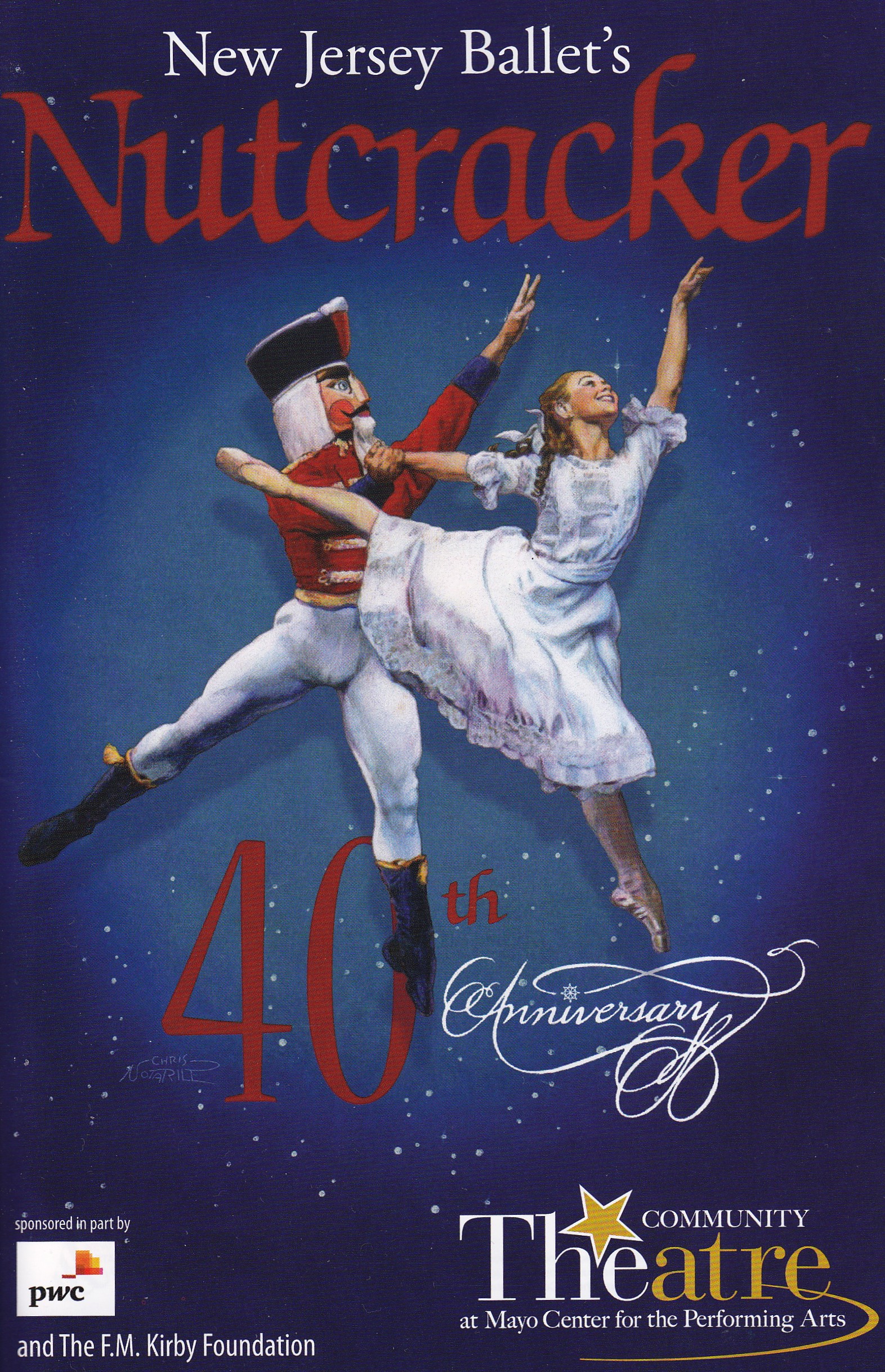
Since moving to New Jersey my family has attempted to sample as much of the vibrant arts scene as we can on our modest income. At times it feels like being a starving man locked in a fine restaurant. So we scrimp, save, and buy the cheap seats when we can. Thus it was on Christmas Eve we found ourselves in the audience for Tchaikovsky’s Nutcracker ballet. I’ve been on this planet for nearly five decades and I’ve never before seen a ballet. I knew the basic story of the Nutcracker: weird uncle gives niece an odd toy, jealous brothers soon break the toy, and the niece has a bizarre, if exceptionally graceful, dream where the toy becomes her escort. Beyond that I didn’t know what to expect. When I looked through the program, I was interested to see that there were angels, snowflakes, clowns, and mice. And there were understudy angels.

Students sometimes ask me what became of the ancient gods. In the cultures surrounding Israel, as well as in early Israel itself, polytheism reigned. Once the Exile had conceived monotheism what happened to the other gods? Did they all get absorbed, Borg-like, into Yahweh? It seems not. Many of these ancient gods continued to eek out their existence as supernatural, yet strictly sub-divinity, beings. We recognize such beings as angels today, and every holiday season they are ubiquitous in store windows and church lawns. It should come as no surprise that with so many angels a few understudies must be necessary.

In popular imagination – (dare I say it?) Christian mythology – angels derive from dead Christians. Many children are taught that if they are good, when they die they become angels wafting through the heavens. This popular doctrine does not match the official teachings of any major branch of Christianity. Angels are different in substance, essence, or whatever else a theologian might care to call it, from humans. You don’t evolve into an angel. Either you’re born one or you’re not. And so it seems we are earth-bound in our existence. No cause to mourn, however; even the gods had to learn how to be angels. We can only hope they had the benefit of many understudies to carry on the tradition.


Ouroboros

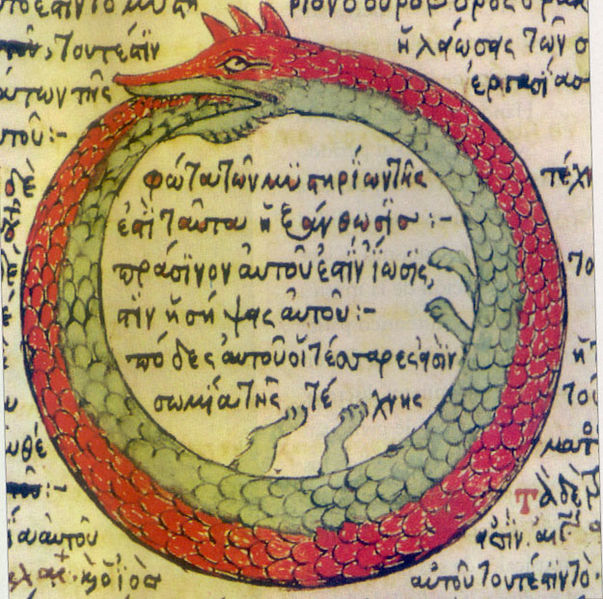
The Science Channel’s program, Through the Wormhole, hosted by Morgan Freeman, has a noble goal: help educate non-scientists with cutting-edge ideas. The series opens with an episode on God: “Is There a Creator?” Interestingly, in our society there are those who turn the question around. Religious folks ask the question: does science really have the answers? It is the classic ouroboros, the snake swallowing its own tail. Perhaps the best way to consider this entrenched issue is to consider its history. Gods emerged as explanatory figures. In the days when the Bible was the oldest known book, it was believable that God had dictated it and therefore the idea of God required no explanation: the ultimate tautology. When extra-biblical material predating the Bible was discovered, a warning bell rang. Most established religions in the western world simply pretended not to hear.

Snake, dragon, whatever.

Neuroscientist Michael Persinger of Laurentian University features in this Wormhole episode, demonstrating his “God helmet.” The principle is that stimulating the specific part of the right hemisphere of the brain that corresponds to the left hemisphere’s region of “selfhood,” a brain will fabricate a presence. While the experiment has promising results, it can’t fully explain God. Other neuroscientists are working on the issue as well. Historically we know that Yahweh was one among a polytheistic entourage of deities. With the stresses and mysteries of exilic existence, monotheism was born. Only one of those many gods survived. By studying the character of Yahweh’s departed compatriots, however, we can learn of the origins of gods as well.

Science entered the picture much later. By the time of truly empirical observation, God was an assumption as certain as ether. When science offered an alternative explanation, religion countered. “I see your Big Bang and raise you one Prime Mover.” And thus it will always go. With no witnesses, alas, no intelligence even yet evolved, our universe began. We can ask the physicist or we can ask the priest. Even if God is discovered and described in the laboratory, with or without a helmet, those standing outside will always believe, with Anselm, that there is an even bigger one somewhere out there.


Resurrection From the Crab

My daughter loves cats. We have, however, lived in apartments since having been forced from our four-bedroom house at Nashotah. That means we’ve been at the mercy of various landlords for our choice of allowable animal comfort. Most landlords disallow cats and dogs, so we’ve gone the route of caged or terrarium pets. Birds, reptiles, and arthropods are fascinating but hardly cuddly. All three taxes share the phenomenon of molting, and once out of their artificial environments they are also all difficult to get back in. Our current non-embraceable companions are hermit crabs.

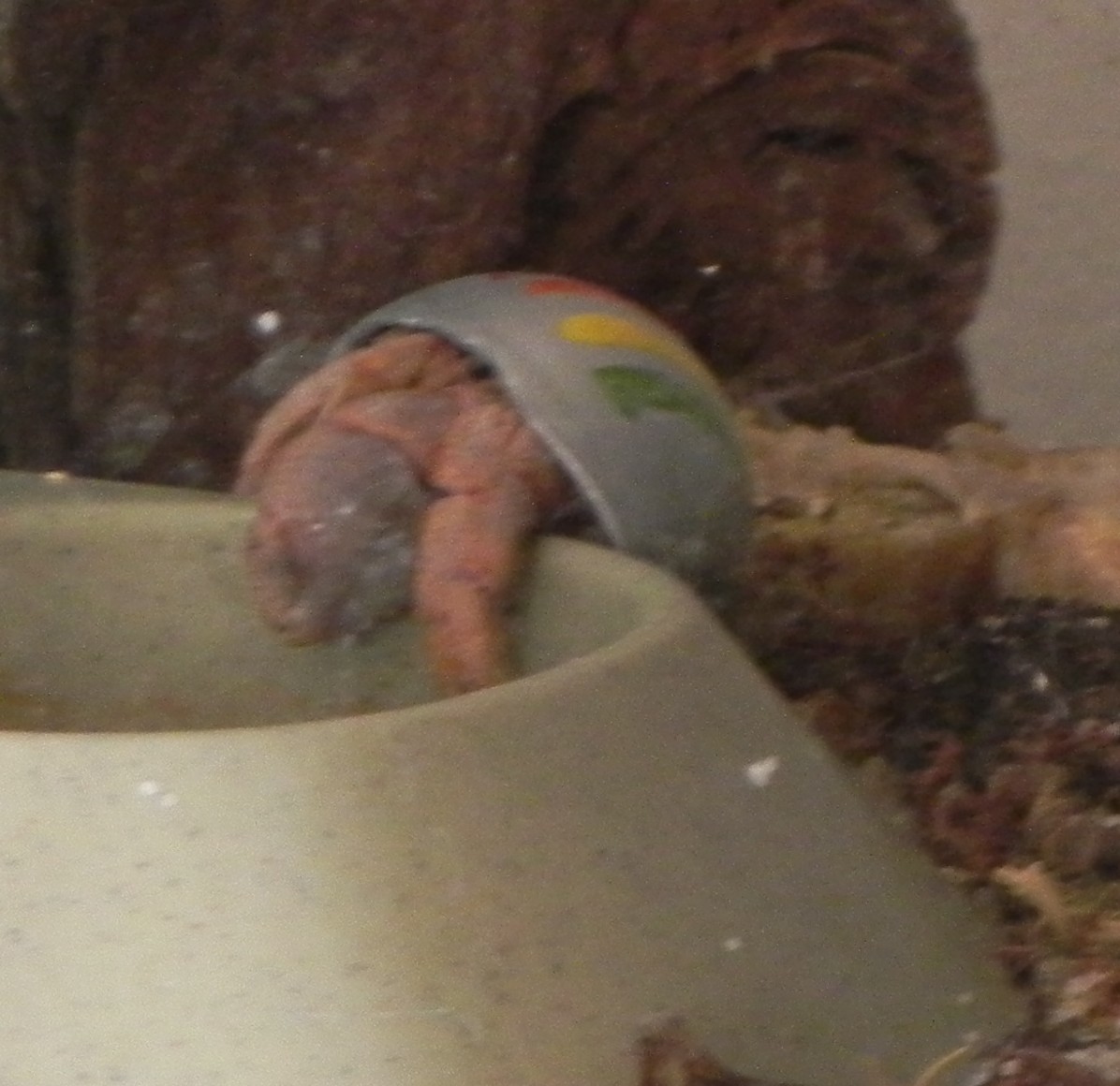
If early Christians had known of hermit crabs, I am sure they would have used them as symbols of the resurrection. (They could have used Baal as well, but that was a non-starter I’m afraid.) Our adventure began in a mall. The salesman told us, in broken English, that they would live two or three years, with proper care. We purchased one and were chagrined when it died shortly after, just when my daughter was hosting her cousin for a week-long visit during the summer. Shocked and tear-stained, we went back to the mall for a replacement crab. Later that week, crab number one (Sparky by name) suddenly reappeared. What we assumed was the corpse of Sparky was only his (or her – I have no idea how to tell) molted exoskeleton. It hung limply out of the shell like a deflated crab, but inside a new incarnation was preparing its epiphany.

This drama has enacted itself many times. This past week Sparky’s companion really died. Since the crabs are not the center of attention during the holiday season, I was the only one with this esoteric knowledge. The pile of legs and vacant shell were a little gruesome, but tucked into the corner of an out-of-the-way aquarium, they attracted no other attention. I resolved to bury the little guy. Today as I prepared to take care of his crustacean cadaver, I was astounded to find him (or her) alive and well and inhabiting a different shell. Resurrection. Our crabs have outlasted their projected livelihoods and are into their sixth year with us. Every time one dies, he (or she) comes back. If they couldn’t use Baal or Adonis, early Christians might well have caught on to the symbolism of the humble hermit crab.

I was dead, but now I am alive


Not As We Know It

According to an article from the Associated Press yesterday, scientists are having to rethink life. Some of us do that on a regular basis anyway, but there is actually cause for this scientific reevaluation. Bacteria have been discovered in Mono Lake, California, that utilize arsenic to sustain life. The article also notes the announcement that the number of stars in the universe has recently been increased on a magnitude of three times the old estimate and that potentially life-bearing planets are regularly on the increase. Seems that we may no longer be alone. No one knows what forms life may take “out there.”

The eye of a lesser god?

I wonder what impact new life forms will have on religion. I suppose there’s not a revelation immense enough to shock a true Fundamentalist from his/her confident “God could do that” outlook, but when we find life not as we know it, does it not affect all of our worldview? Even the definition of life is up for grabs. Is the earth itself alive? Did the animists have it right all along? Does arsenic-based life have a soul once it evolves to hominid status? Would they have equal opportunity housing? When such revelations come to light, I would find it comforting to have Mr. Spock at my side, stating in his flat, unemotional voice, “It’s life, but not as we know it.”

Life was complicated enough to begin with, what with trying to hold down two part-time teaching jobs and many secretive efforts to launch new careers. Religion can’t let go of this information, however, as one of the prime definitions of the divine is as the guy who creates life. Religions such as Buddhism and Jainism – religions that believe taking any life is wrong – will certainly have more work cut out for them. When it is boiled down to its prime components, religion is ultimately concerned with life. Monotheism has no room for a Hades or Ereshkigal. One might only wonder who the gods of the arsenic eaters might be.


Slash of the Titans

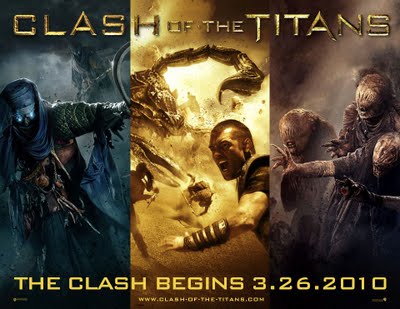
I’m suffering from mythology overload. Last night I watched the mediocre 2010 version of Clash of the Titans on DVD. Since I’ve been grading students papers on mythology non-stop for over a week now, I felt that I needed to see what all the fuss was about. Again. I saw the movie in a theater earlier this year and wrote a post on the post-modern perspective the film has on the gods. To get a better sense of a movie, however, a repeated viewing is awful helpful. The fact is that the public exposure to mythology is often limited to the movies. Students frequently ask if something they saw in the Disney version of Hercules is the way it really happened in the myths. Nothing really happened in the myths.

Meanwhile angry letters have been pouring into the New Jersey Star-Ledger. Rounding out a new losing season, Rutgers University football coach Greg Schiano remains the highest paid employee of the state of New Jersey. Academic voices are feeble, but economics makes people sit up and pay attention. Money talks. Brains are lazy when it comes to rigorous thought. As the collection of heroes gathered in the forest of Calydon to chase the great boar Artemis let loose on the city, the academic world has also chased the glory of the pig-skin. And poor Meleager paid the price of the public outcry when it was over. Even though his team won the biggest college bowl ever.

It is hard to tell the real villain in Clash of the Titans. The writers suggest it might be Zeus, or Hades, Medusa, the “Kraken,” Acrisius, Cephus, or even the “fire priest.” Everybody’s looking for someone to blame. Things aren’t right in Argos. Others blame state legislators, the president of Rutgers University, or the football coach himself. The fact is in both the movie and in the university priorities have been skewed. Nobody is driving except the money, no matter which box office it goes into.

Who's got the pig-skin?


Solstice Now!

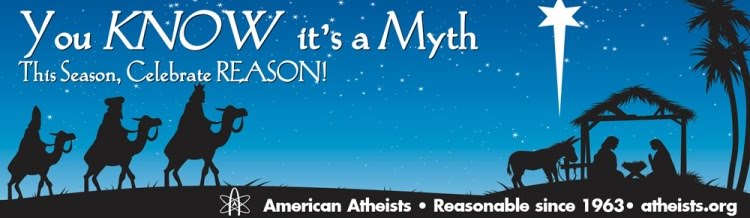
Who owns the solstice? Whoever it is, I wish we could just get it over with. The darkness falls before I step into my 5 p.m. class. It is dark when I drive home. The next morning, leaving for my 8:30 a.m. class, I drive to school in the dark. Back at Nashotah House a colleague once said his wife became “almost pagan” in her yearning to pass the winter solstice and head toward the time of year when light prevails over darkness. My wife pointed out a CNN story concerning a New Jersey billboard sponsored by American Atheists. The billboard, just on the Jersey side of the Lincoln Tunnel into New York, shows the star of Bethlehem, the manger and the wise men. The inscription reads: “You KNOW it’s a myth. This season celebrate REASON.” Naturally, motorists are up in arms. Who owns the solstice?

Before the Thanksgiving leftovers even hit the fridge, Christmas season has begun. Santa always ends the Macy’s Thanksgiving Day Parade, making it official. Since we are capitalists, we do what the red-suited captain of industry says: shop. As long ago as A Charlie Brown Christmas complaints of the commercialization of Christmas have reverberated through the media. Personal properties and billboards enjoin us to “keep Christ in Christmas” and remember “the reason for the season.” Economists tell us to spend more to assist the sluggish economy. Meanwhile the light continues to fade; the days grow darker. Why confuse the issue with religiosity? Why not just spend some money on others, feel the release of endorphins, and be thankful?

Nobody knows when Jesus was born. The church selected December to celebrate the event because the shortest day of the year, for those north of the equator, had long been a time of fervent wishes for the return of light. The first-century Christian rivals, the Gnostics, believed in the continual, literal struggle between light and darkness. When sidelined by Orthodox Christianity, the torch was taken up by those who celebrated Saturnalia, Lupercalia, Hogmanay, Yule, Sol Invictus or any number of other winter festivals. Christmas was a relative late-comer to the celebrations that welcome the resurrection of the sun. So drivers from New Jersey should take it easy. The solstice is everybody’s holiday. I just wish that whoever’s in charge would give us all a little more light.


Towing Jehovah

Back before my blogging days began, one of my relatives was reading a book entitled Towing Jehovah by James Morrow. Given my field of study, I was intrigued by the title, made a note of it, and got on with my life. I was reminded of the story when reading a book on religion in popular culture, so it seemed the time was right to pick it up and see what it was about. First of all, it is a work of fiction, so nobody should get too upset. The premise is that God has died and his corporeal body has to be given a proper burial. Since the corpse is huge and since it has fallen into the ocean, a washed-up oil tanker captain is selected by the angels, who are dying out of empathy, to tow the body to its final resting place. Herein lies the tale.

The book won a World Fantasy Award, and is generally an engaging story. Any lifelong student of religion will naturally find bits to quibble with, but the fantasy author’s heart wants what the fantasy author’s heart wants. The question the book raised in my mind was whether it really said much about religion at all. Sure, there are several great one-liners and quirky observations about how the established religions might react to the death of God, but the book itself intimates that humanity does fine without a God, but it required a God to get it started. It is the story of humankind growing up. When I finished the book, however, I was left with the impression that religion is developed here in spite of God.

God, being dead, is a strangely silent character in the book. Western religions have taught us to suppose God is active, and very vocal. Just tune in any televangelist. In Towing Jehovah, God has become an idol, a prime mover that became the main event. It is a provocative yet somehow respectful treatment of God as an idea. James Morrow is often categorized as a secular humanist, yet his book tows God into the consciousness of a world that already largely ignores the divine. In this sense it remains a paradox. No matter what people say, God just doesn’t go away. The reader, cast adrift, like the corpus dei in the novel, keeps bumping back into God. The concept, once born, will live as long as human consciousness survives.