Dominus Flevit

I couldn’t believe I was actually there. Ever since I was a child I’d read about this place. The city conquered by David and visited by Jesus. The city around which most of the Bible rotated. Jerusalem the golden. One of the perks of working on an archaeological dig was the opportunity for weekend travel, and here I was, amid camels and cars and churches and synagogues and mosques, in Jerusalem. No amount of reading prepares you for such an experience. Suffused with the rich mythologies of three major religions, this city is like a dream. So much had happened here. The church I was attending at the time was only the latest in a long succession that informed me that God himself had actually been killed here and had risen again. The ultimate game-changer. The once in forever event of all time had taken place right here.

Gnu Jerusalem from WikiCommons

But this was not a city at peace, despite its name. There was a bombing the first weekend I was there. Young men and women in military garb carried scary looking weapons openly in public. Even civilian bus drivers wore pistols. Jerusalem had a long history of violence, but that didn’t justify it. If God had really been here—in either Jewish, Christian, or Muslim contexts didn’t matter—how could this city be so prone to terror? In the old city old men sat around hookahs, placidly smoking. Tourists, many bearing crosses, thronged. Jerusalem, however, was also a very political place. The fragile, Christmas bulb-thin peace of the region involved the city being divided up and not being claimed by Israel alone. Even that man driving his goats through these ancient streets knew that.

Trump, to the cheers of evangelicals who want nothing so fervently as the end of the world, has said he’ll recognize Jerusalem as the capital of Israel. This political move of weaponized ignorance will almost certainly lead to war in the Middle East. Another war. An illegitimate presidency leaving a frothing sea of corpses in its wake. Negotiating in this part of the world is like haggling with that street vendor for a pair of sandals. You go back and forth on the price. You act insulted and walk away. You come back and haggle some more. It’s a delicate dance. This is no place for egomaniacs who can’t understand such subtleties. Just ask the last Caligula who wanted his statue set up as a god in this city. Jerusalem is home to too many jealous gods, and those who are self-appointed divinities will only leave the city, the world, in tears.



Home of Cthulhu

Travel by train seems to be so much more civilized than flying. You don’t need to arrive at the airport two hours in advance for the privilege of standing in long lines to be practically strip-searched. You just hop on the train and find a seat. The wifi is free and you don’t have to set your phone on “train mode.” Amtrak isn’t perfect, of course, but it’s not bad. When I’m flying I often wonder where I am. I guess at each large town we fly over, although some natural features can’t be mistaken from the air. The Great Lakes, Grand Canyon, and even Niagara Falls are all pretty obvious. The names of many towns, however, remains unknown from above. On the way from New York City to Boston, each stop is announced, small towns and large. I noted that one of the later latter was Providence.

Providence is, of course, many things to many people. To me it will always be the home of Cthulhu. Yes, I know that Brown University and Providence College are both located there, but higher education doesn’t seem to have a room for me, so I revel in the imagined monsters of H. P. Lovecraft. You can’t help but experience a bit of Lovecraft’s New England on the train. Skirting not far inland, the tracks take you through swampy lowlands with grand houses and dilapidated hovels overlooking them. Miskatonic University, as is widely known, is based on Brown, which Lovecraft never attended. He was a writer keenly aware of place. These tracks take me through the world of his murky water gods on the way to Boston.

The train station in Providence turns out to be subterranean. Well, not really, but it is under the street level with no noticeable distinguishing features. Lots and lots of graffiti cover every concrete surface along the tracks coming into the city. It’s hard to tell from the train, but none seem to make reference to Cthulhu. I thought of Lovecraft’s gravestone with it’s famous epitaph, “I am Providence.” Idling in the shadowy station, unable to see anything of the enjoyable town I recall from my few visits here, it’s easy to suppose that this might be Cthulhu’s home after all. Caught somewhere between civilization and the sea, in the half-light of a late autumn day, buried under what we think is somehow progress, I think perhaps Lovecraft was right. Cthulhu may be dead, but he is dreaming still.


The Deity Electric

The title set me back. “Deus ex machina: former Google engineer is developing an AI god.” The article in The Guardian is surprising in several ways. Firstly, technocrats tend to suggest that since there is no deity, worship of said non-entity is a waste of precious time. Is this, then, an acknowledgement that those of us who’ve spent our lives on religion may have had at least an inkling of the truth after all? Scientific studies have repeatedly shown that religion is an inherent, and perhaps unavoidable, aspect of being human. Whether you call it inspiration or superstition, we think in religious terms. It’s entirely natural. Perhaps it’s evolved behavior. It’s anything but absent.

Another aspect of the article that generates wonder is the idea that we can create God. Yes, analysts have long claimed that we humans made God in our own image. Traditionally, however, the very concept of God was based on the idea that there was something non-human about the deity. Artificial Intelligence, however, makes the hubristic assertion that human intelligence knows enough to create a god. We don’t even know enough to elect a sane person as president. Looking at the wider world—let alone the universe—there is so much we don’t know. Our five senses are limited. There are realities which we have no way to measure. Is is perhaps not dangerous to make a divinity when our own way of looking at the universe is so terribly limited? What if I don’t like the god you build? At least with the old fashioned one we can shrug our shoulders and sigh, “that’s just the God there is.”

Any fulfilled future humanist will need to find an outlet for this need to worship. Can we truly respect a deity whose transistors we’ve manufactured? This Godhead will be, at the end of the day, only 0s and 1s. And what’s more, we will know that. Traditional religions have given us gods from the outside. Some of them are flawed, some are perfect, but they all have this in common—we didn’t make them. The universe imposed them upon us. Throughout history people have attempted, in various ways, to build their own gods. It generally doesn’t end well. It’d be like designing your own parents. They made you what you are and what would you be if you could somehow reverse engineer them into more perfect versions of themselves? Can we invent gods? Oh yes. We do it all the time. But when we set about making one that our disembodied, downloaded consciousness can worship we might want to consider the history of such attempts.


Diverse Colors

After a warm snap, we’re not at peak color here in New Jersey. Some trees have changed, yes, and leaves have begun to fall, but green prevails. While on a walk with my wife—a luxury only available on weekends with my commuting schedule—I spotted a bit of red amid the leaves on a local stream. Litter, and not just the leaf kind, is a bit of a problem in Jersey, but this splotch of red seemed intentional. It was taller than it was wide. It was standing in the middle of a shallow brook. Its placement looked intentional. What couldn’t be discerned from the bank is just what this was. It might be a Buddha. It might be Ganesh. It does seem, no matter how it’s reasoned out, to be religious.

Archaeologists often find objects with no known utility. If an artifact has no practical function such an object is generally deemed religious. For much of human history, before the madness of capitalism, people owned only the necessities. Life was hard and lifespans were short. Accumulating stuff as an end in itself was a luxury only for kings and priests and the relatively few merchants in urban settings. An object found from that time, then, with no known function, must somehow be religious. An object of cultic devotion. Those of us trained in the history of religions would sometimes laugh at this predisposition. Religion is the basket for anything that can’t be otherwise explained. So it seemed with this red statue—it was clearly human-made—standing in the stream. We were walking by a ritual site, perhaps. Maybe it was just a joke.

Then I recalled Ganesh Chaturthi, the ritual submersion of Lord Ganesh that transpired in late August this year. It is a numinously charged season, this descent into autumn. My Jewish friends have just celebrated a new year. Pagans made proper observation of the equinox. Preparations, at least of the commercial kind, are well underway for Halloween. They are all colors. Although spring’s first buds are welcome after a monochromatic winter, soon we transition into the green of summer. We miss the benefits of many colors. At moments like this on the banks of a brook with yellow and brown highlighting the green that remains on the trees, I’m again reminded how wonderful diversity truly is. I am in the presence of a god. It may not be my deity, but I’m not threatened by the difference. Nature is a patient master for those willing to attend to the lessons.


The Name of the Game

I have a confession to make. I’m not a gamer. Just like everyone old enough to be aware in the 1970s, I was amazed at Pong. Television, which had always only been a passive producer of entertainment, could now be interactive. Slower than real table tennis, the game nevertheless easily consumed hours of life otherwise productively spent. I went off to college and left the burgeoning video game market behind. Then in the late 1990s Myst appeared. The new Macs of those days came loaded with action games about dinosaurs stealing eggs. My daughter was fascinated and so I played. Then I lost interest again. That had been family bonding time, so it wasn’t completely wasted. Now we live in a world where, writers tell me, the real money lies not in movie rights to your novel, but game rights.

Kids, developmental psychologists assure us, need to play. It’s how they explore their world. As the human world becomes more and more electronic, games become more a part of virtual life. Some even have plots and genuine character development. A friend sent me a link to a story on Mashable, “Jesus battles the Buddha in fighting game hellbent on offending.” Victoria Ho describes Fight of Gods where deities of all denominations duke it out for dominion. After posting about god novels recently, it seems to me that we’ve begun to enter a time when the divine world hasn’t disappeared, but has transmuted. In this new world while all gods are not exactly created equal, they all have a shot at supremacy. It’s a matter of who can hit hardest.

No matter whether one finds this offensive or not, there is an element of profundity here. Historically religions have made gods of the things we fear. Storms, diseases, wars, and death—all of these have been, and continue to be, represented as deities. Human insecurity is deeply rooted in our psychology. We’re afraid of things we can’t control. In periods of governmental chaos, phobias naturally rise to the level of personal panic. What can we do in the face of such forces? Especially when prominent figures tell us all religious belief is for the weak-minded and feeble? Don’t we have to strap on our virtual armor and hope some powerful divinities are on our side? In such times as this we need our gods, no matter their tradition of origin. For me, I fear I won’t be able to spin this dial fast enough and that strangely square ping-pong ball is going to get past my virtual paddle.


Reason to Believe

Gods, the experts say, are on the way out. Have been for some time. The loudest voices in this arena are the New Atheists who suggest science alone explains everything. Problem is, the gods won’t let go. My wife recently sent me an article from BookRiot. (That’s a dangerous thing to do, in my case.) Nikki Vanry wrote a piece titled “Dallying with the Gods: 16 Books about Gods and Mythology.” Most of what she points out here is fiction, and that makes sense because gods and fiction go together like chocolate and peanut butter. The first book she lists is Neil Gaiman’s American Gods—a book I read years ago and which has subsequently become an American phenomenon. There’s even a television series based on it now. Like Angels in America, only more pagan.

What surprised me most about this list is the books I hadn’t read. Or even heard of. After American Gods, I got down to number 10—Christopher Moore’s Lamb—before reaching another I’d read. Then down to 16, Till We Have Faces, by C. S. Lewis. There are, as Vanry notes, many more. Our experience of the world, as human beings, suggests there’s more to it than what we see. Not everyone would call these things gods, nevertheless there certainly does seem to be intentionality to many coincidences. Things pile up. Then they topple down on you all at once. Seeing such things as the works of the gods makes for a good story. At least it helps explain the world.

Many materialists do not like to admit that humans believe. Call it the curse of consciousness, but the fact is we all believe in things. Even if that belief is as strange as thinking fiction only comes from electro-chemical reactions in a single organ in our heads. Gods often appear in fiction. Frequently they’re in the background. Sometimes they’re called heroes instead of deities. At other times they’re right there on the surface. Such books carry profound messages about believing. It doesn’t matter what the authors believe. Believe they do. And such books sell. As a culture, we may be in denial. What we sublimate comes out in our fiction. There are gods everywhere. Singular or plural. Female, male, or genderless. Almighty or just potent. Reading about them can be informative as well as entertaining. We’ve got to believe in something, so why not gods?


First Look

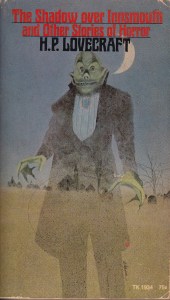
Youth might be described in a number of ways. One, of course, is in biological years. Another may be in exposure to experiences which change your life. There was a time, for example, when you can’t believe you were ever so naive. No matter how youth might be defined, a patina of fond memories tends to cling to images from that time with the passage of years. For me, unsurprisingly, those images are frequently books. I still recall the cover images of books from my tweenage years, and often think that if I found such books in a second-hand store, I would buy them for their ability to conjure past times. One such book comes not from my physical youth, but from my days teaching at the University of Wisconsin, Oshkosh. It was at that time, when the internet was also still young, that I began to try online research into H. P. Lovecraft. I found an edition of his stories titled The Shadow over Innsmouth for sale on a used book website. I was under-employed, but it was cheap and my curiosity inflamed.

Mainly I was interested in what I would now call the reception history of Dagon. Dagon is an ancient Mesopotamian deity mentioned briefly by name in the Hebrew Bible. He is also part of the pantheon of gods borrowed and invented by Lovecraft to populate his eldrich, watery world. I purchased this book for the titular story, where Dagon doesn’t actually appear, but his worshippers do. It is often claimed to be Lovecraft’s best story. As I sat down to read the whole book, however, I was struck by the strangeness of the collection. This edition, from 1971, included such unusual choices as “The Transition of Juan Romero,” “In the Walls of Eryx,” and “The Festival.” Also bundled here was the Houdini ghostwritten “Imprisoned with the Pharaohs.” When I first purchased the book I’d only read “The Shadow over Innsmouth” and “The Colour out of Space.”

As my interest in Lovecraft grew, I acquired other, more representative editions of his work and have consequently read most of his oeuvre. It was that sense of yesteryear, however, that led me back to this browning, aged collection. It was, in truth, the cover. Looking at it brings back that very office in Oshkosh where I sat as I found the edition online for less than five dollars. No doubt, I was younger then. The call of Cthulhu has echoed across the web since then. For me, however, the first exposure will always be a beat-up paperback that I ordered secondhand.


Eclipse 2017

It’s the day after the eclipse. Perhaps it’s because of the internet, but the excitement about this somewhat common event reached a fever pitch. Maybe it was because we all wanted something other than Donald Trump to talk about. Maybe it was because we hoped that the eclipse might have brought about some profound change. In the days before science was a thing, eclipses were divine events. The sky doesn’t darken at noon. It is an uncanny, an eerie thing. The last eclipse—alas, only partial—that I experienced was at Nashotah House. My wife was still a student in Illinois at the time, and without her to remind me, I went about my classes as usual. When I stepped outside the eclipse was already in progress. Nashotah’s quite rural, but the birds and insects were silent. The light was weird. The shadows of the leaves were scooped crescents on the ground. I could understand why pre-scientific people trembled.

These days we know there’s nothing more to life than scientific formulas and a bit of sloppy chemistry. So why do we bother getting bothered about eclipses? The fact is they remain religious in our minds. This is nature acting in a way not normal. Apocalypses generally include the sky growing dark. One of the plagues of Egypt was darkness. In the ancient mind the sun did not so much cause light (the moon could give light too) but it lived in the realm of light. If something blocked the sun that was one thing. If something invaded the realm of light, that was another. An eclipse was such an invasion. Even as monotheism began to take hold, people thought of the sun as a deity. It, after all, directs our lives.

In New York City I wasn’t sure what to expect. I went to street level with a couple of colleagues about 10 minutes before maximum coverage (about 71%) began. Knots of people stood on the corners on the eastern side of Madison Avenue—those who build skyscrapers don’t think of eclipse viewing on the streets below. What struck me most, however, was a kind of peace and awe. Strangers sharing various viewing devices with each other and looking up expectantly. Clouds had begun to move in, and I found myself talking to complete strangers, sharing out the eclipse-viewing glasses my wife had given me. We were participating in a moment of transcendence. Such moments are rare today. No, an eclipse is more than simply the moon moving in front of the sun. It is a human event as well. And one which, in the absence of the sun, brings out the best in us.


The Price of Worship

The wind resistance alone must drive the cost of gas up considerably. Of course, with Yahweh on your side you don’t need to worry about pocket change. We were driving through a sleepy town in the Poconos. A light rain was falling. We came upon a truck advocating not for the usual and expected Christ, but instead for Yahweh. Promising “dramatically affected” lives for those who do so, the implied message on this portable billboard is somewhat ominous. We are apparently being restrained by “non-mortal, non-native beings of ill-intent.” The grammar of the placard confuses things a bit since it seems to suggest that calling on Yahweh will “release restraints on” said non-mortals, and that’s hardly a good thing. I suppose they can’t reveal the nature of these entities without giving away spoilers for drawing the curious in.

This vague, supernatural world presided over by the personal name of the deity seems just a little out of place in Bible country. There’s a kind of literalism about Pennsylvania that I find strangely comforting. It is where and how I grew up. I never encountered God’s personal name—at least not with first-person familiarity—until I attended college. Even then we were encouraged to be careful with its use. The commandment about taking the divine name in vain is just a bit disconcertingly unspecific, considering that it isn’t spelled out in more detail. And who exactly are these beings of ill-intent? They’re all the more frightening for not being named. Demons, I must suppose, but I don’t recall the Good Book saying anything about their restraints being released. This is a new kind of apocalypse maybe.

The thing about the Bible is that it’s everybody’s book. Some modern translations use Yahweh rather freely, opting for the admission that translating it leads only to more questions and “Lord” is obfuscation. Still, it seems awfully familiar. The need to air one’s personal beliefs, in some quarters, is very intense. There’s a passion behind this proclamation that I can’t help but admire. People stop and stare. Some, like yours truly, will want photographs of your vehicle. I suppose that’s the point, nevertheless, not too many people like being stared at. Evangelical culture demands it, as I recall from my youth. Putting your personal beliefs out there comes with a price. Part of that may be reduced gas milage and, consequently, pocket change.


Sweet Tooth

I don’t have a sweet tooth. I count that as a personal flaw, but the fact is I don’t seek out sugary snacks. Still, who doesn’t enjoy a nice chocolate once in a while? My wife and I attended a local chocolate tasting event recently. This was a new experience for me. Being of working class vintage, I tend to look at comestibles in a purely pragmatic way—food is for eating. It shouldn’t taste too bad, and ideally it should be healthy. Between meals I seldom think about eating unless the time stretches too long and hunger kicks in. I’ve read a couple books about chocolate, however, and I was curious what I might learn.

Apart from learning the disturbing fact that much American chocolate isn’t really technically chocolate, it was an enjoyable evening. The proprietors of Carol’s Creative Chocolatez know their stuff. The event began with a history of cacao beans. Native to the Americas in the equatorial regions, it was only after Columbus’s fourth voyage that Europeans discovered chocolate. Indigenous peoples used cacao beans as currency, and chocolate was the food of the gods. Its technical name, Theobroma, means just that. When Columbus appeared, a white man with European garb, and horses (as well as exotic diseases), he was ironically thought to be the returning god of chocolate. Instead, he took the previously unknown delicacy to Europe where various means of preparing it began. Eventually we ended up with the sweet, sugary variety that is considered standard today.

Theobroma plants contain a compound that creates feelings of euphoria. Chocolate, in other words, rewards you for eating it. It’s easy to see why indigenous peoples assigned chocolate its own deity. It’s also perhaps not surprising that what was mistaken for a god became a deadly plague. While Europeans were mostly interested in gold during the early period of exploration, they eventually realized that exotic foods and spices could be almost as good as gold. Chocolate, the food of the gods, could be mass produced and degraded and sold as an addictive treat to children. Such we do with our divinities. If only obesity were the same as obeisance! Instead, we are presented with a treat that tastes good and makes us feel happy. Like most gifts of the gods, it’s best enjoyed in small quantities. Even a little gold will go a long way. And after this evening, I think theology may help to explain the fascination with Theobroma.


Pagan Values

“Pagan” used to be a pejorative term. If we’re honest we’ll have to admit that it is still used that way by many people. All the term really denotes, however, is a believer in “non-Christian” traditions. The classical pagan was someone who’d “never heard of Jesus,” and therefore hadn’t bowed to the obvious truth. In the current religious landscape a pagan is someone who makes a conscious choice to follow different gods. Looking over history, there are plenty to choose from. If you don’t limit yourself to monotheism, there’s no compunction to stop at just one. Paganism is a flourishing religious choice today. Getting over the stigma will require effort for a long time to come, as a video a friend sent me from Heat Street shows.

This video show pagans in the US Army at Fort Jackson. It’s worth the three minutes of your life that it’ll take you to watch it. Pay special attention to what the chaplain says. We’ve been acculturated, through monotheistic lenses, to ridicule those who believe in many gods. We’ve also evolved beyond the stage where E. B. Tylor could inform us that the most natural form of religion is animism and we have to be taught to unlearn it. We’ve also had the natural human tendency to believe in magic laughed out of us. We can’t accept that anything could exist that doesn’t conform to the laws of physics as we currently understand them. One size fits all. And many think even one god is one too many. As the chaplain says, religion takes on a whole new meaning when your job is asking you perhaps to sacrifice your life for others. You need to allow belief to thrive. The military is coming to grips with paganism.

Belief systems aren’t necessarily rational. I’m reminded of this whenever someone comments that, Mormons, say, believe strange things. I think of what Christianity asks of us and realize it’s only a matter of distancing. All religions ask their adherents to accept the unbelievable. To the great frustration of materialistic reductionists, it is human nature to accept a spiritual world. We are conscious beings and we see intention in the world. Apart from the Whitehouse, the universe seems to be filled with intelligence. We may call it different things. The labels may come in foreign languages. Deep down, however, we all know the feeling. We can teach ourselves to ignore or deny it, but believing is as natural as breathing. If the Army allows pagans—and there’s more than just a few—we should open up both our eyes and our minds. Entire worlds await those willing to do so.


Wonders and Signs

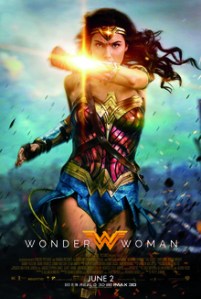
Raised by a woman who would be perhaps classified as a “single mother” these days—she was technically married except for a very brief time just before my step-father came along—I have always had great appreciation for the power of women. She didn’t have super-powers, but she raised three young boys largely single-handedly without the help a young woman has a right to expect. Wonder Woman, when I saw her on television, struck me as a very different kind of female. Strong, yes, but clearly there for men to look at. But then again, I didn’t have the benefit of Patty Jenkins’ Wonder Woman. I left the theater speechless. Apart from a few sniffles my wife didn’t have much to say until about an hour later. It’s that kind of movie.

I’ve seen many superhero movies. In fact, heroes are almost custom-made for the big screen. Comic books are basically storyboards already, and the colors and action are the very definition of spectacle. Wonder Woman, however, complicates the tale of the hero fighting for justice and truth. She fights instead for peace and love. Never supposing she’s anything but capable of defeating the evils of war, she doesn’t take orders from men. She actually shames an elderly, heavyset general for not being on the field of battle where, he acknowledges, others will die for the cause of the armistice. It’s a world inverted. Yes, the men are drawn to Diana, and can’t help but be awed by her. They don’t control her, however. She’s the first out of the trenches and she requires no man’s help when combatting the enemy.

Perhaps the most striking thing about the movie is the respect it to shows to women. Only one nude body appears in the film, and it’s male. I suspect I wasn’t the only man present made uncomfortable by the curious female gaze and the assessing questions of the goddess. Women are made to sit through countless movies as the subject of the male gaze. The embarrassment here is a reminder that making women sexual objects is the normal expectation. What if the roles were reversed? When Wonder Woman fights she is largely defensive. Men want to destroy her. She responds by declaring love will overcome war and owning her role as the “God-killer.” This is a movie with substantial subtext. It challenges the paradigm of men’s rule as wise and beneficial. A god may have to die, but the world is a better place for it. We could use some inversion about now.


Bull

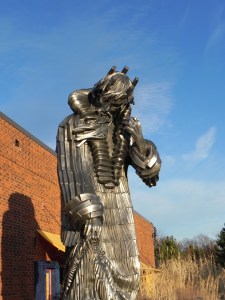
Bulls have long been symbols. If I write “that’s bull” your mind will likely fill in the missing implied word. In ancient times the king of the gods, El, was known as “bull El”—probably for a very different reason than the veiled scatological reference above. Bulls were powerful and, to those in settled, agrarian societies, necessary for life. Of course, they can turn on you and kill you with little thought. Even in our high-tech, urbanite world, we keep our bulls at hand. “Charging Bull,” a golden calf if there ever was one, is a famous Wall Street statue erected to the glory of mammon and greed. On May 7, to celebrate International Women’s Day, a statue called “Fearless Girl” was placed in front of “Charging Bull.” Our symbols require some reevaluation. In a kind of Trump-up, another artist placed a statue of a dog lifting its leg on the girl, according to the Washington Post.

We creative types can be sensitive about our work. Apart from writing I’ve dabbled in drawing, painting, and sculpting, although few have seen the results. I know that the space around an artwork is part of the art. I’ve posted before about Grounds for Sculpture, one of my favorite places in New Jersey. The idea of a sculpture park is that the context of the image is important. Statues show up fairly frequently in New York City. The ever-changing art along the pedestrianized part of Broadway in Midtown keeps the walk to work interesting. Interacting with art is performance. At the same time, the respectful viewer knows, artists are making a statement. Placing a girl before a charging bull says so very much.

“Fearless Girl,” unlike the great lummox she faces, is temporary. Nevertheless, the statement she makes is loud and clear. Wall Street might more aptly be named Ball Street for the amount of testosterone that surges through the place. Men erected a system to keep women out of positions of power. And even when a small symbol of female resistance is placed, some man has to have a pug pee on her. I wonder what our society’s become. We’re hardly agrarian any more, yet we still feel “bullish” about things. When’s the last time anyone used “girlish” as a compliment in a business context? “Fearless Girl” will be allowed to stand until February. The pug is temporarily gone, but will be back. When the girl goes the pug will follow. All that will be left in Bowling Green Park will be bull.


One Size Fits All

The divide between religion and science is often artificially widened by one side or the other. Of course the divide’s artificial—both science and religion are human constructs, after all. This is illustrated well in the sense of wonder in an article titled “True Story Of Volcanic Eruption Told By Aboriginal People For 7,000 Years” by Robin Andrews on IFLScience!. The very concept that a scientifically verifiable event survived in oral tradition for thousands of years completely unbalances those accustomed to think that the ancients were superstitious dupes who looked to the gods to explain everything. What’s often not realized is that the gods were an early version of science. Think about it—ancient people observed their environment for cause and effect. They couldn’t use the empirical method because it hadn’t been invented yet. That didn’t mean they were unsophisticated.

We look at the pyramids and wonder. How could such archaic people construct such advanced monuments? The rudiments of science actually begin to appear in the human record very early. Our species is a curious lot. The explanations for the close observations tended to be mythological. Gods are great for filling gaps. What we don’t see is any conflict between knowledge acquired by reason and ideas conjured by imagination. They fit together nicely. Human brains evolved that way. Belief is a strange thing—it influences reality, at least on a quantum level, but somehow it must be denigrated when compared to “pure science.” A large part of the blame, of course, has to go to those who had learned to take the Bible literally, particularly beginning in the eighteenth century.

The Bible had a disproportionally influential role in the founding of European empires. From the regular Roman under Constantine to the Holy Roman under Charlemagne, what became Catholicism informed political structures. In the British Empire, ever vacillating between Catholic and Protestant, the Bible played a major intellectual role. Real problems developed, however, when the idea of science alone took over. This was after Newton, Galileo, and Darwin. None of these lights suggested religion had no place. The real issue isn’t vanquishing, but finding proper balance. No matter how well calibrated our instruments may become, until we learn to detect “spirit” we have to admit that science can’t replace religion. Such harmful ideas as eugenics and behaviorism indicate that we need a balance and not a slam dunk. Who knows? Some of even the Bible may be true. Unless we learn to admit we don’t know all, those sitting around the fireside telling stories should be given credibility regarding what they’ve seen.


Superstar Detective

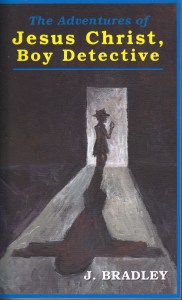
One of the reasons I accept reading challenges is that they take you places you otherwise wouldn’t go. Not all the books I read for the Modern Mrs. Darcy 2017 challenge make it onto this blog (to find the full list you need to see what I post on Goodreads.com), but some I can’t help but talk about. My wife had noticed a book that ended up in her Christmas stocking and for which I had admitted curiosity: J. Bradley’s Jesus Christ, Boy Detective. Now, Jesus is no stranger to fiction. In fact, he appears in lots of books as either the main character or as fulfilling some supporting role. In some books you have to really squint to find him. In others he’s obvious. In Bradley’s novel he’s a bit of both.

There’s a good bit of theology going on in the background of Jesus Christ, Boy Detective. As the title suggests, Jesus functions through a new incarnation in the body of a, well, boy detective. With some assistance from a criminal uncle and Saint Peter, he investigates bizarre murders and other crimes. There seems to be an ulterior motive, however, since he’s trying to get his father to own up for all the suffering he’s caused humanity. That’s right, this book is a modern theodicy.

Theodicy is a word for considering how a single deity can be both all powerful and all good. Since there’s plenty of suffering in the world we all experience, the question naturally arises: why doesn’t God do something about it? Theologians are fond of reminding us that we can’t see the bigger picture. It’s like global warming—it’s easy not to believe since we only live a few decades and the climate takes a lot longer than that to react to our pouring toxic stuff into the ecosystem. Maybe, theologians say, we have to suffer because we don’t see everything. Only God does. The boy detective disagrees. The deity in this story is truculent and culpable. A strong-willed divinity. If he doesn’t sound familiar, take another look at the Bible. I don’t know if J. Bradley has any theological training—I don’t even know his first name—but it’s clear that he’s down here with the rest of us wondering how all the pieces fit. And where there are clues it’s not a bad idea to call in a detective.