Flighty Thoughts

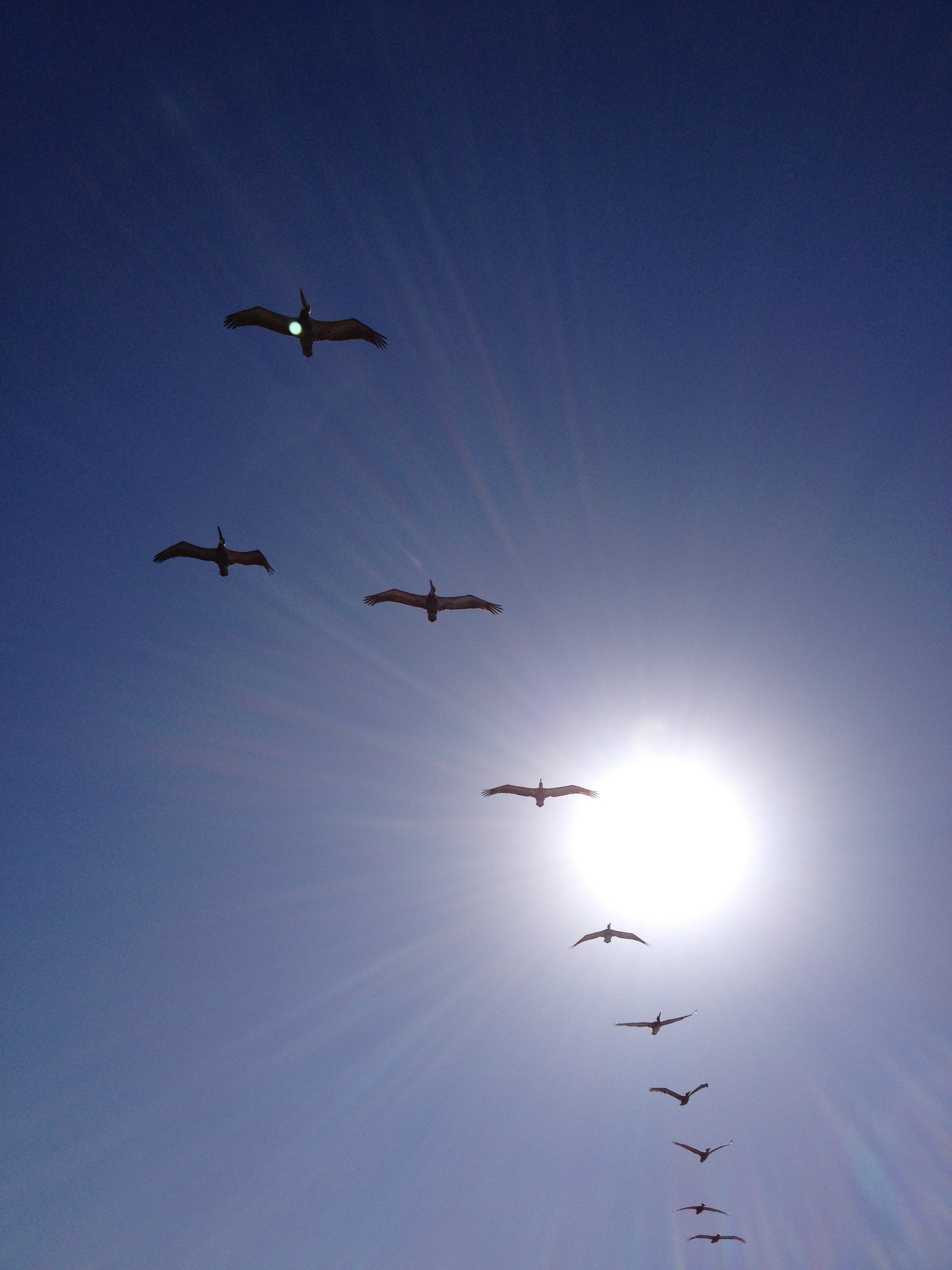
Life, domain, kingdom, phylum, class, order, family, genus, species.  My apologies if I’m bringing back bad memories of high school biology, but I’m doing an experiment.  It has to do with the class level.  (I have to confess that this has become more complicated since high school since there are a lot more of them than I remembered.)  Specifically, I was thinking of those of us with backbones (which seems to exclude many congressional Republicans these days), namely fish, amphibian, reptile, bird, and mammal.  I read somewhere—I can’t recall where; I seem to be reading all the time—that the only other order of animals that human beings see every single day, apart from other mammals, is birds.  I suppose some of this depends on location, but it seems to be true even for landlubbers who don’t work in zoos.  I’ve been watching, however, to see if I do see birds every day.

I work in an office with two windows, one facing south and another facing west.  There are trees outside the west window and during spring, summer, and fall birds are abundant.  Yes, I see them every day.  Winter, however, is a bit more dicey.  Songbirds famously either migrate or retreat into more sheltered places for the season.  The other day, during a cold snap, I got to thinking I hadn’t seen any birds at all.  The only thing that rescued the allegation was that I remembered I saw some birds that I startled out on my jog, before it was fully daylight.  The rest of the day I keep my peripheral vision on alert for any motion outside my windows.  Late in the day I saw a crow dart between two trees.  I do see birds most days, but I’ll be keeping a watch this winter for birdless days.

It’s not that I want to prove this author wrong—I can’t even remember who s/he was.  No, this experiment is driven by pure, naked, curiosity.  I’m pretty sure that the author wasn’t writing in a literalist tone (that’s more of a problem with my wiring).  The point that was being made is that people pay special attention to birds since they are so prevalent in our world.  They’ve adapted from conditions of arctic to desert and they can get around many obstacles that might prove troublesome to our class, even bats.  I know that I rarely see amphibians, reptiles, or fish.  Certainly not on a daily basis.  So birds do seem to be top of the class, and, so far, I have seen at least one every day since reading this from a fellow mammal.


Learning Curve

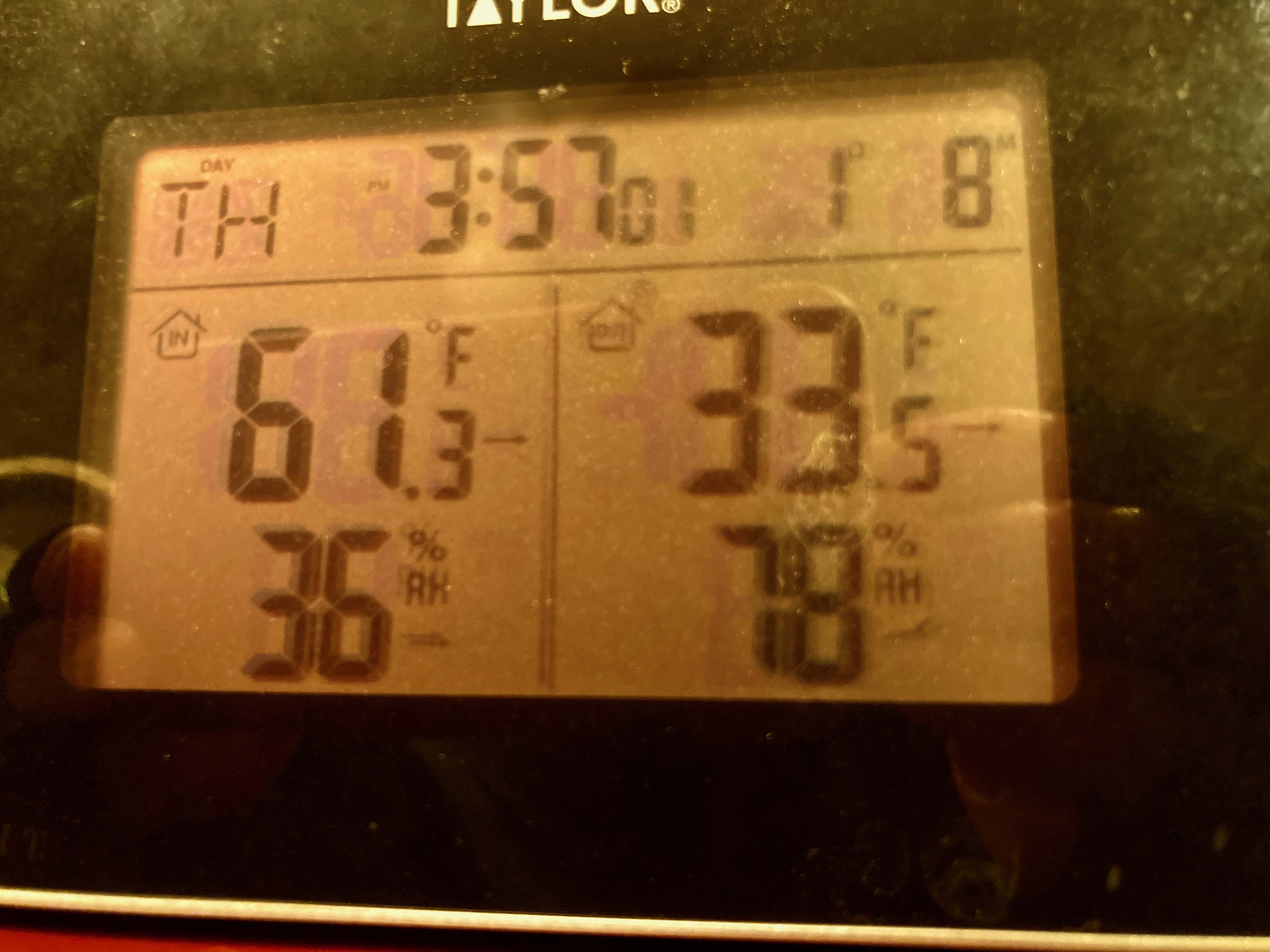
There’s a learning curve to cold weather living.  Now, I need to define cold weather as when you have to turn on the heat.  Around these parts that generally happens mid-October.  We keep our house chilly not because we unduly enjoy shivering, but for two good reasons: it costs a lot to heat a house and it doesn’t benefit the environment to do so with too much zeal.  The cost aspect goes without saying.  It costs more to live in the colder seasons.  At night our thermostat is set to 62.  That’s fine as long as you’re in bed under tons of blankets, but I’m a habitually early riser.  Most of my writing is done before work, when the house is at its chilliest.  I bundle up with several layers of pajamas, a stocking cap, and fingerless gloves.  The part that requires relearning each year is the exercise bit.

Before going out for a pre-work jog, I do some light calisthenics.  I can’t really do these in my pajamas, though, because they can raise a sweat, even in winter.  Besides, I have to go jogging later, so I need to get my exercise clothes on.  Every year I have to remind myself, when do I make the switch?  I don’t enjoy stripping off my warm clothes to put on some chilly ones so I tend to put it off until the exercise mat starts to call loudly.  As the sun rises later and later, as the solstice approaches, jogging gets later and later (with a slight reprieve when we pointlessly end Daylight Saving Time).  There comes a point when I have to start work before my jog.  I can never remember when that happens—November?  December?  It will mean altering my routine, particularly if I have any early meetings.

I used to wonder why, in older films, especially those set in Europe, people were shown sitting around their houses in woolen suits and vests, full-length dresses with shawls.  As a homeowner with a low thermostat, I had an epiphany.  They did it to keep warm.  Europeans often describe American houses as “overheated.”  I haven’t had any European guests lately, but I doubt they’d say that about our place.  Our daytime temperature is 64.  Outdoors, that’s getting to be jacket weather.  My European colleagues don’t mind wearing puffy vests and jackets on Zoom meetings.  Heating a house in Europe is much more expensive than it is in the colonies.  In the dead of winter it’s not unusual for me to be wearing five or six under-layers during the day, and fingerless gloves at work.  The thing is, I need to relearn this each year.  Winter’s on its way, so I’ll do my best to be a good student with my chilly lesson.


October’s Poetry

October is a beautiful, melancholy time of year.  Edgar Allan Poe died on October 7.  Two years ago today, my mother died.  This was brought home to me forcefully yesterday.  A colleague had invited me to address her class at Princeton Theological Seminary about Weathering the Psalms.  I had vacation days that have to be used up or lost, so I took the day off.  My wife and I drove to Princeton, a town we know well.  When we lived in Somerville, about 15 miles north of there, we’d visit Princeton not infrequently.  I wasn’t really familiar with the seminary grounds, however.  My colleague informed me that her class, on the Princeton Farminary (where a program in ecology and theology is housed) would be meeting in a barn so I should dress appropriately for the weather.  A cold front had come through, so I went for the tweed and turtleneck combo.

So we set off on a beautiful drive along the Delaware.  The leaves aren’t at peak yet, but there was plenty of fall color as we navigated our way toward Frenchtown, where there is a bridge across the river.  The GPS also told us this was the way to go.  On River Road, still in Pennsylvania, a flagman refused to let us on the bridge, although the signs did not say it was closed.  He impassively waved us on.  The GPS insisted we “return to the route.”  We soon found out why.  The next crossing is seven miles further down, along winding roads with a 25 mph speed limit.  The drive was beautiful, but suddenly I was going to be late for my appointment.  The new route added 45 minutes to the estimated travel time.  After uttering some choice words about unplanned bridge closures on a road where there are only a very few ways to emulate Washington’s crossing, we eventually arrived.

The weather beautiful, if a little chilly, the class decided to meet outdoors.  I hadn’t forgotten how much I love teaching.  It was brought back to me with force.  With the trees reminding us that winter is not far off, and the students eagerly asking questions, I felt at home for the first time in many years.  It was a temporary shelter, I knew, but it was a kind of personal homecoming.  Carefully avoiding the Frenchtown bridge, we drove north, crossing to River Road at Milford.  If the GPS had known that to go forward you sometimes need to go backward, it would’ve sent us to Milford that morning.  We arrived home tired but glowing from a day out of the ordinary.  As I put my tweed away that evening I found a pencil from the the funeral home where I last saw my mother in the pocket.  It had been the last time I’d worn this jacket, two years before.  October is a beautiful, melancholy time of year. 


Hello September

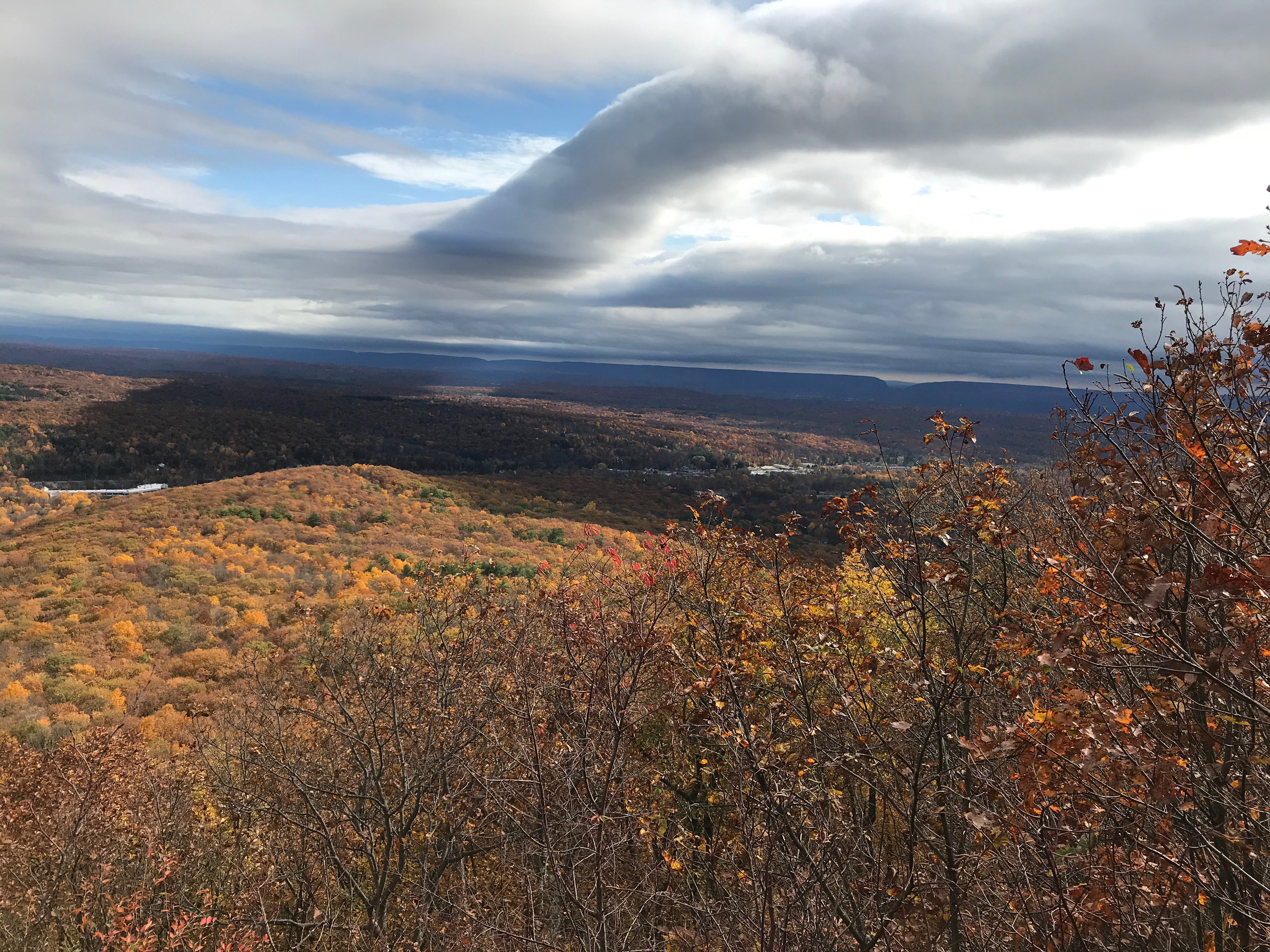
Labor Day is as early as it can possibly be this year and as late as it can possibly be next year.  We live in a time of extremes. In any case, it’s our hello to September and our goodbye to summer.  Since I still think of weather quite a bit, I’m reflecting on how most of the month of August around here has felt like autumn.  A month that I normally think of as consisting of hot dog days as summer reinforces its grip has been one of chilly mornings requiring long-sleeved jogging togs, and even fingerless gloves indoors for a morning or two.  July was hot and rainy.  The kind of hot that saps your strength and energy.  August felt like relief after that, but now we greet September, wondering what might lie ahead.  Many of the trees around here have already started to change, which looked a little odd when it was only August.

A couple weeks ago

Autumn has always been my favorite season, as it is for many people.  It is poignant, however.  Summer has its endless lawn mowing, but trades that off with not requiring a jacket to be outdoors and plenty of sunshine.  More than that, even traditional capitalistic businesses tend to slow down a bit in the summer, if for no other reason, because many employees take vacation time and everything has to put on the brakes a little.  Because we work at breakneck pace for the remainder of the year, this more relaxed season is a welcome respite.  We know, as nights grow cooler and longer, that it is time to put that away for another year.  It’s a season of transitions which is what makes it so melancholy.  Work starts to feel more serious after Labor Day, but the holidays are at least within grasp.  Halloween is really the next on the list.

I sometimes wonder if I’ll ever be able to retire, and if I do, if these day off holidays will be so important to me.  I’ve been interested in studying holidays pretty much all of my professional life.  Never really a fan of the capitalistic ethos, after being thrown into that world I quickly learned to look at holidays as stepping stones to get me through the year.  The first four months are rough.  They do have holidays sprinkled here and there, but March and April and most of May are holiday free zones.  That’s one reason the more relaxed fit summer is welcome.  The pace picks up again tomorrow, but for today, at least, we have one last ounce of summer to live.


Cut-Rate Black Lagoon

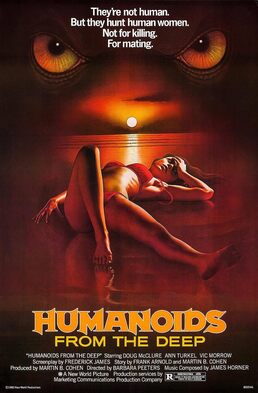
I stumbled upon Humanoids from the Deep while looking for a different film on Tubi.  I had to make a quick decision (don’t ask) and I saw that Humanoids was a Roger Corman movie and figured I knew what I was getting into.  In a sense I was, but B movies can surprise you sometimes.  As the story unfolded my first thought was “this doesn’t look like a Corman movie.”  Indeed, the direction didn’t come from Corman but from Barbara Peeters.  But that wasn’t the end of the story.  What is said story?  Well, it’s a kind of ecological Creature from the Black Lagoon, but with a bit more of a disjointed plot.  A large cannery wants to open in Noyo, California and the local fishermen all like the idea except the American Indians.  Pollution has been driving off the fish and the cannery will make things worse.  From the beginning humanoid creatures have been stalking the town at night.

The creatures start killing the men and raping the women.  The female scientist brought in speculates that a certain hormone intended to grow larger salmon faster had leaked and coelacanths that had been eating the modified salmon became humanoid and felt the need to reproduce with human women.  The creatures were inspired by the Gill Man but have ridiculous tails that give them a kind of Barney vibe.  During a local festival the creatures attack the town en masse and a real melee breaks out, but the creatures are defeated with a combination of high-powered rifles, gasoline on the water set ablaze, and a kitchen knife.  It’s all a bit of a mess.

Apparently Corman felt the movie wasn’t exploitative enough and hired another director to spice it up a bit, having it edited together without the director’s knowledge.  To complicate things, a second, uncredited director had already been involved, so the film has three.  That might help to explain why the story doesn’t really hold together.  As a cheap creature feature it’s not horrible.  It borrows ideas from Alien, Prophecy, and Jaws (and apparently Piranha, which I’ve never seen).   It turns out to be rather nihilistic when it’s all said and done, but the creatures, apart from the tails, aren’t that bad.  There are a couple of legitimately scary moments.  Those of us who watch Corman movies might know to expect some deficiencies, but I was caught off guard by some of the cinematography and even some of the acting.  Not bad for a movie picked with only a few minutes to decide.


Re-Ruins

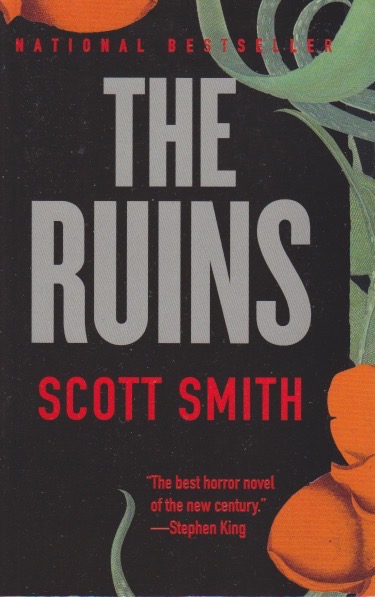
I discovered Scott B. Smith’s The Ruins after having seen the movie version.  The film is scary but the book is scarier.  I wrote about the movie last year, so I won’t worry about spoilers here.  I will say that even with its bleak ending the film has a happier resolution.  If you read my post, and remember it, the following summary may not be necessary, but here goes: two couples and two friends vacationing in Mexico set off in search of one of the friends’ missing brother.  They travel to a very remote location and discover that the missing brother is dead.  Worse, that he was killed by the natives for trying to escape a vine-covered ruin.  The vine is carnivorous, and, unlike in the movie, clearly intelligent, and sentient.  It tricks the young people into harming themselves and then it begins to eat them.  It especially preys on open wounds, but it can smother a person if it so desires.

The book is full of tension.  Although a couple of injuries take place early on, it’s over halfway through before someone actually dies.  And the others don’t follow quickly.  The narrative asks probing questions about ethics and mercy.  When (if ever) is it okay to kill someone who clearly has zero chance of survival?  Is it still murder?  Complicating things, for me, was the fact that I couldn’t remember clearly how the movie ended.  Eventually it came back to me, but this is one of those cases where the film and book, although with the same writer, diverge a bit.  The characters are clearly sketched here but defy expectations and stereotypes.  And it is sometimes the case that you aren’t sure who might be telling the truth and who might be trying to protect themselves through prevarication.

An effectively written novel, it had me looking askance at plants from time to time.  We have a quite aggressive vine in our yard that seems determined to be the Trump of all the plants.  I suspect someone planted it long before we moved in, unless it’s simply a successful exploiter of happy happenstance.  I’ve tried uprooting it every year, but I can’t seem to get to the brain of the operation.  It’s easy to believe that if plants were sentient, and could move a bit faster than they tend to, that such a scenario as in The Ruins might unfold.  The question remains whether the local Mayans simply can’t eradicate it or if they might indeed have some worshipful regard for it.  The two may end up being nearly the same thing as human power is unable to tell nature what to do.


Water Lady

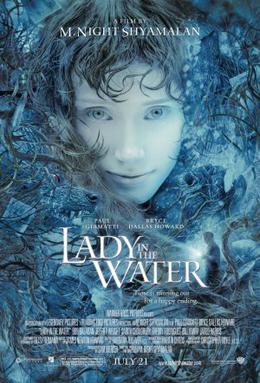
Being creative poses the very real threat of being misunderstood.  I can’t help but think that some of this was going on in M. Night Shyamalan’s The Lady in the Water.  Initially cudgeled by critics, it nevertheless seems to me that the perceived arrogance is overstated.  I generally like Shyamalan’s movies.  I think he does horror quite well, and I thought that maybe there’d be some horror elements here.  There were a few, but the story is kind of long and rambling, kind of like the stories I told my daughter at bedtime.  The movie begins by laying out a legend of a narf (water nymph) who will bring the world peace.  She is attacked by a scrunt, the monster in the film, but has to deliver a message to humans and has to be protected by the maintenance man at an apartment complex in Philadelphia.  And complex is right.

Since this isn’t a widely-known story, we have to be told, in pieces, by a number of the ensemble cast.  A lot of it is unbelievable, even for a fantasy movie.  At the same time, it contains a good message and I get the sense that this is why Shyamalan made it.  He does have an important role in his own movie (which is why it is said to be arrogant), but the style is reminiscent of his other movies.  The scrunt seems like a good idea for a monster and a couple of the attack scenes veer briefly into horror territory.  There’s even an element of Scream when Bob Balaban’s character explains (incorrectly) why he will survive an encounter with the scrunt.  The story has some likable elements but when so much of a fantasy world is being revealed piecemeal it’s sometimes hard to keep your focus.

Based on a bedtime story Shyamalan told his own children, it does resemble that genre of story.  Personal.  When my daughter was small, I made up nighttime stories for her pretty much on a daily basis.  They had a kind of rambling, plodding nature to them.  I made up creatures, as in this movie, and, as Balaban says, kept it family-friendly.  Classic stories do tend to follow a trajectory that is well known to literary scholars.  Something entirely new thrown into that area will sometimes emerge  beaten up.  It wasn’t a waste of time to watch The Lady in the Water.  Not one of Shyamalan’s best, it is nevertheless a film that makes you think a little while afterwards.  And that seems to be what it was intended to do.


Watching Watching

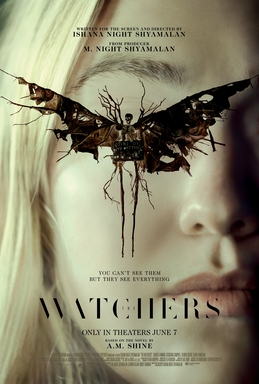
Dynasties exist in many professions.  Some of us grow up where there’s no succession, but for those who do the results can be good or bad.  I’m thinking in the case of Ishana Night Shyamalan it will be good.  I have not seen all of her father’s (M. Night Shyamalan) movies, but I have seen enough to know that he has considerable talent but also sometimes misses the mark.  That’s how I felt after watching The Watchers.  I didn’t know anything about it (including the director or producer) before watching it, but it only took a few minutes before I began thinking that it was like an M. Night Shyamalan movie.  Like his work, it is intelligent and intriguing.  And, in this case, slightly off the mark.  The story is a little too involved, and it may remind you, at points, of The Village (one of my “old movies” that I still go back to now and again).

Mina, an American living in Ireland (never explained), gets trapped in a forest from which no one ever escapes.  Now, this part was scary if you’ve ever been lost in the woods.  (I have been and it still terrifies me.)  These woods are inhabited by watchers—in lore known as fairies, among other things.  A professor had built an observation deck where he could observe them.  The only way a human can survive in the woods is to stay inside the shelter at night.  Mina’s car breaks down in the woods and she comes across three survivors.  They’ve been in the shelter for months and since it is in the middle of the woods, there’s no way to get out before sunset, when the watchers will kill you.  Now, were the premise of the film to have stopped there, it might well have been believable.  The story gets deeper (but I won’t give it away), straining credibility a bit.  There’s a little too much stuffed in.

Does it work as a gentle horror movie, in the Night Shyamalan vein?  Yes.  It satisfies an itch on a rainy or snowy weekend.  Too many unanswered questions remain.  The setting in Ireland makes sense, given the fey plot, but why is Mina American?  Why is her sister Lucy also in Ireland (or is that just a visit at the end)?  Why didn’t [redacted: spoiler] watch the video long ago and leave?  Other questions also haunt.  Why did the professor shoot twice?  And more.  Still, having a source of Night Shyamalan movies for more than one generation seems like a good thing to me.  And I really want to know where, exactly that forest is located in real life, with or without the fairies.


Thinking of Home

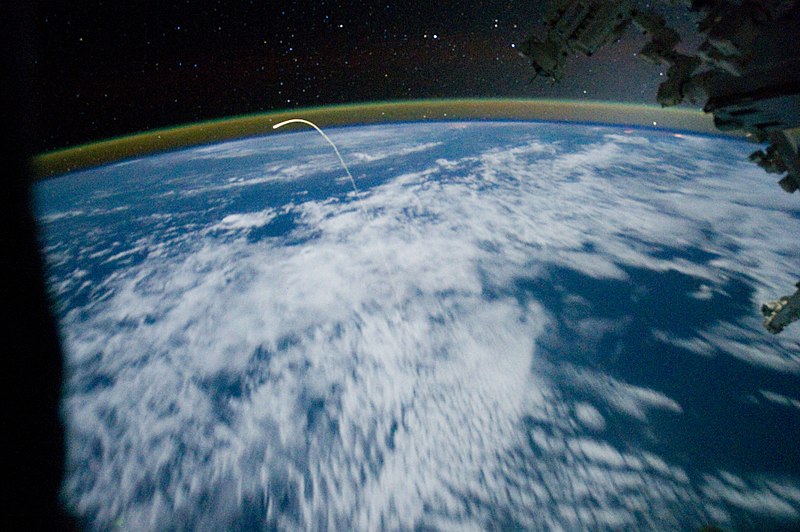
The earth, and even life on it, will, I’m confident, outlive our petty desires for money and being the king of the hill.  Scientists are getting tantalizingly close to demonstrating something that many of us already know—life exists elsewhere.  Chemical signatures of life appear as close as Venus and as far as K2-18b.  I suspect our universe is full of life.  And life is more than just rationality.  We’re creatures driven to survive and that level of will appears to be universal.  As Ian Malcolm says, “Life will find a way,” or something similar.  Earth Day should be a celebration but under too many Republican presidents it has become a plea to please stop intentionally harming our planet.  I grew up in that distorted religion known as Fundamentalism.  I learned that the destruction of the world was necessary to force God’s hand with the second coming.  The planet was here to exploit and waste since he’ll be back any day now.

Unlike many of my cohort, I decided to learn more about that perspective.  The more I learned the more shocked I became.  A warped and twisted message had been passed along as Gospel truth, and that the care the creator bestowed upon creation was merely a smokescreen to hide Jesus’ return.  I still believe we are not capable of completely destroying the planet.  Life will continue with or without us.  Life is persistent and hopeful.  That doesn’t mean we shouldn’t take care of it.  Earth Day has become a rallying point for those who see the world sensibly.  We have so much wonderful life on this planet.  In our arrogance and in our tendency to take mythology literally, we have assumed the worst.  Why not take care of what we were given?  Jesus may not come back, but perhaps the Lorax will.

There are ways to live sustainably on this planet.  It does mean that some of the richest will need to surrender some of their wealth and power.  We need to learn the habits of requiring less and appreciating more what we have.  Like most people born into the world in this era, I struggle against the desire for new things.  Novelty is natural to such curious creatures as ourselves.  But there are other such curious creatures too.  They have a place here, even as those which seem to have no curiosity do.  It’s a planet big enough for all of us.  We just need to be sensible about it.  And remember the earth today and be thankful for our home every day.

Image credit: NASA/ISS Expedition 28, public domain from Wikimedia Commons

Around Us

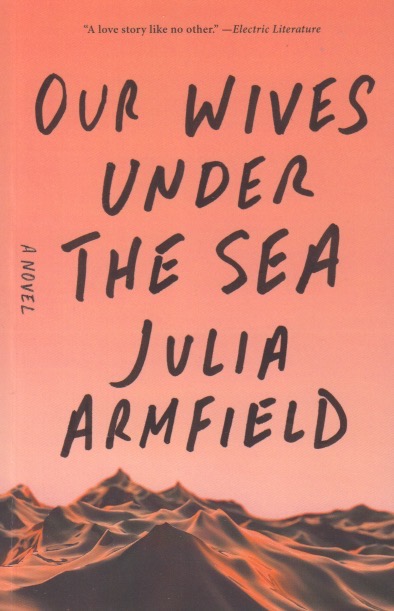
Our Wives Under the Sea is a gentle, but chilling horror story by Julia Armfield.  Two women are married and one of them is a marine biologist being sent on a submarine to explore deep ocean life.  A planned three-week voyage becomes six months and when the sub finally surfaces again, Leah, the biologist, has “come back wrong.”  She’s transforming.  Something happened to her under all that water.  Told alternately by Leah and Miri, the story is one of loss and mourning and lack of any reasonable explanation.  Haunting, in a word.  The writing is exceptional.  And probing.  I quite enjoyed this book.  I can’t recall how I first heard about it—it was published in 2022—but I knew I wanted to read it even then.  The sea is that way.  Moby-Dick, cited in an epigraph, has always been my favorite novel.  One of my early reading memories is Rachel Carson’s The Sea Around Us (also cited here).  The story is a winner.

There’s something about the ocean.  We, in reality, know little about it.  Penetrating the crushing depths requires a well-funded science, something we’ve moved away from in favor of personal greed.  Life takes unexpected forms deep under the surface, even as we deplete the resources we can reach—over-fishing and consuming.  We’re never told what it is Leah and her crew-mate see so far down.  We all know of lantern-fish (lately in the news) and other sub-surface terrors.  We don’t know the potential life we might discover if we only cared to look.  The company that sent Leah down, however, is as shadowy as the government.  Promising help but not answering the phone when you call.  Yes, this is a haunting book.

Mostly, however, at least in my reading, it is about coping.  We attach our lives to others and when something changes them we have to try to adjust, because love is that way.  Caregivers understand.  The novel evokes both the endless draw of the ocean and its mystery.  Even as a child I wanted to live on the stormy east coast, preferably in Maine.  I wanted to be near the water.  As my mother was in her final decline, one of her dearest wishes was to return to the ocean.  She’d spent a fair bit of her childhood in New Jersey and always felt the draw of the sea.  She was no swimmer, but just being near the ocean was something she loved.  And that has passed down, it seems, to my generation.  Fearful yet drawn.  It is the dilemma that can lead to effective horror stories that make you both think and feel.


Craving Enchantment

I really want to know, but just can’t figure out, how to write like Katherine May.  My wife and I read her book Wintering and now have added Enchantment.  In many ways I seem to be like May; we may be different shades of neurodivergent, but I understand what she says.  Indeed, at one point in Enchantment she talked me down from a writer’s dilemma that had me worked up for days.  But I can’t write like her.  I have times when my rhetoric for a blog post or two might come close, but I have tried to sustain it for an entire book, so far without success.  My background was perhaps too sullied by academic writing, although May is also an academic, so I may simply be making excuses for lack of talent.

That’s too bad because Enchantment is meant to improve your outlook.  Subtitled Awaking Wonder in an Anxious Age, it consists of life lessons the author learned during the pandemic.  I often, if I allow myself in this constant struggle for my time, experience the sense of wonder May describes.  I enjoy walking in the woods, watching heavenly bodies, staring into a river or pond, and trying to draw lessons from such things.  Lately, however, I find myself rushing through them because I have something else I have to do.  Daily, it’s the 9-2-5, of course.  That schedule overloads my weekends with things that have to be done even if I want to spend time appreciating the enchantment I can find, if I have the time.  Sorry, I’m letting the anxious part take center stage.

This is a wonderful book.  I admire the way that May is able to face down her own struggles with grace and remain open to possibilities.  I found such things much more readily when I was at Nashotah House.  There were moments between classes and there were semester breaks.  We lived in the woods.  By a lake.  There was wonder there, for the taking.  Having a young child to introduce to the wonders of nature definitely helped as well.  Children force you to see through new eyes (it’s not a surprise that May has a young son when writing).  Too quickly we grow up and let capitalism tell us what to do.  It takes so much from us and gives so little.  I’m looking out my window at nature, as I write this.  I know it has enchantment to offer.  I also know that work begins in fifteen minutes.


CSI: Backyard Edition


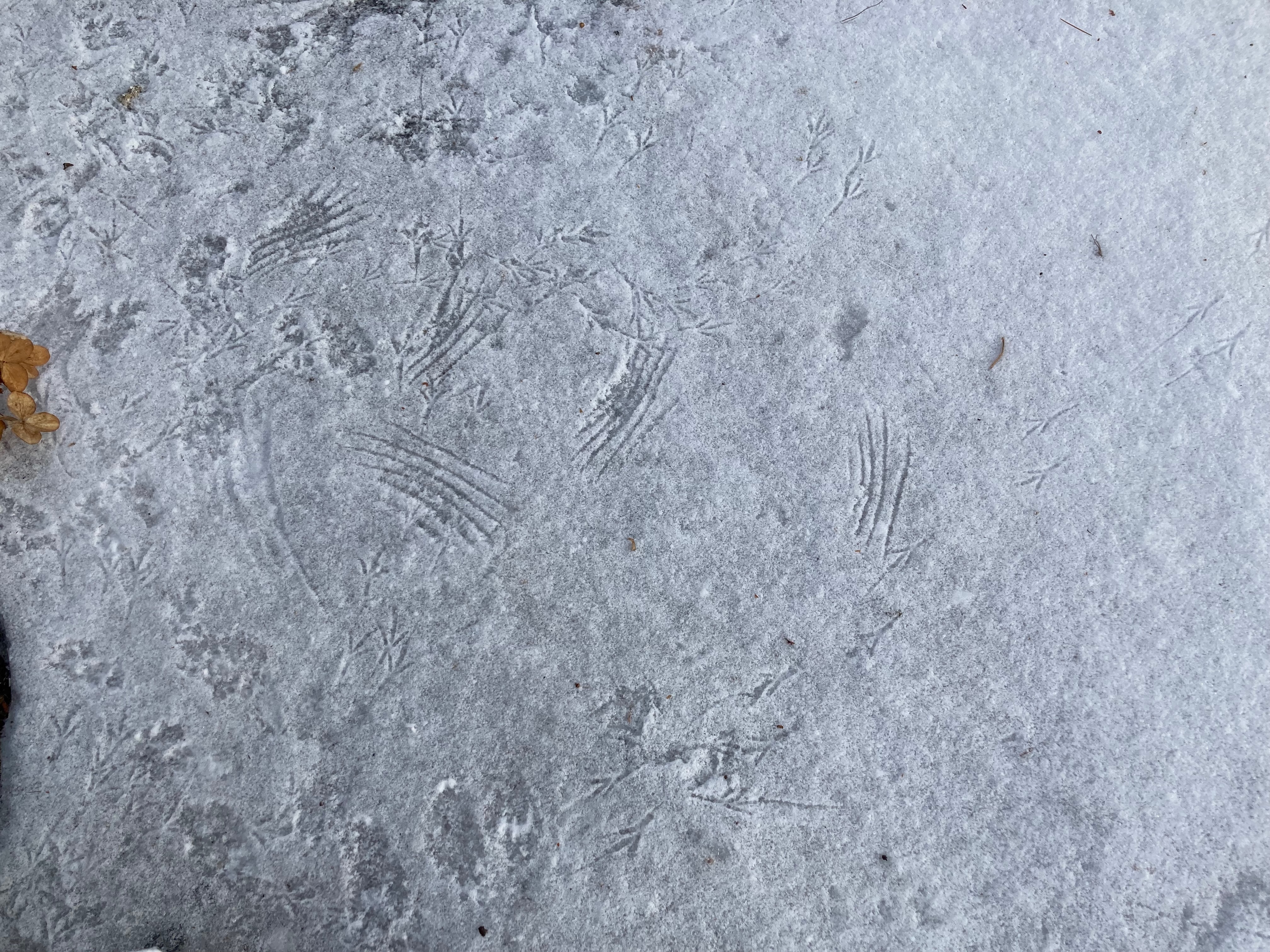
Dateline: January 24.  Location: Backyard.  It was clearly a crime scene.  There were prints in the snow.  Blood.  Signs of a struggle.  The marks hadn’t been there the evening before, so I knew I was looking at a recent offense.  Two indentations in the snow, about 10 yards apart.  Too far for a small animal to have leapt.  A third impression, closer to the second.  Clear feather imprints in the snow.  Earlier on the day in question, I had observed a hawk in the white pine across the street.  Two angry blue jays strafed the interloper, but he appeared unintimidated.  He fluffed his feathers and surveyed the area, including, I presume, my back yard.  In his own time he left, in an unmarked flight.

In the morning, rabbit tracks.  The first impact had been violent.  Debris had been raised from under the snow blanket and scattered toward the southwest.  No footprints leading away from the site.  This led me to conclude the victim had been lifted into the air.  But why the second impact site?  There had been a struggle.  The victim, presumably of the Lepus genus, had tried to make a stand.  The second impact site had bits of blood toward the west.  Neither of these first two scenes of investigation bore any indicative hints to the identity of either the victim or the perpetrator.  I did not have the means to test the blood.  No tracks led from either impression.  The third site clearly involved a struggle.

Impressions of feathers, spread at least two-thirds of a meter across, remained clearly visible in the snow.  Between these wing prints evidence of a scuffle.  Perhaps an argument ensued.  No feathers or fur remained on site.  I had to piece this together before the snow began to melt.  What I am labeling site 1, the initial strike, was near a bush under which rabbits are frequently observed to rest.  A hawk, confident of its ability, swooped down in the night and apprehended the rabbit.  The victim fought back, enforcing an unscheduled landing.  Site 2.  Blood was drawn.  Site 3 was an easy rabbit’s leap from site 2.  Perhaps the rabbit escaped.  The wing and claw marks on the snow suggest that the victim did not survive this third attack.  No solid physical evidence could be recovered.  It was just too cold outside to go and look personally.  I am not paid enough to do that kind of work.  Or I could have it backwards.  Site 3 could be the initial strike, but my reconstruction seemed more likely  Either way, the backyard would, however, never feel safe again.


Burn Out

The Los Angeles fires are terrifying.  In my case, I can’t help but think of the Peshtigo, Wisconsin fire of 1871.  I read two books about it, the first because my daughter, in late elementary school in Oconomowoc, heard about the fire in class.  Embers of October by Robert W. Wells is one of the scariest books I’ve ever read.  After we’d safely moved out of Wisconsin I read Denise Gess and William Lutz’s Firestorm at Peshtigo.  Frightening stuff.  I feel for those suffering from the Los Angeles fires.  America is particularly vulnerable to such things since, according to books I read when writing Weathering the Psalms, the western half of the nation exists in, for the most part, a perpetual drought.  (Those who live in Seattle may disagree.)  Rain doesn’t fall evenly across the country.  I grew up in the relatively moist eastern part (we get a lot of rain), but even here fires are a possibility.  We had a very dry October, and a very dry May the year before.

Image credit: Mike McMillan/USFS, public domain as a work of the US government, via Wikimedia Commons

Global warming will only increase the problems, I fear.  Too long too many people in power haven’t taken it seriously enough.  The weather is a large, extremely complex phenomenon that we still don’t understand.  I sit shivering at my desk on a cloudy January day looking at weather apps that tell me it’s sunny outside.  One thing we do know about it is that if we tamper with it in one place, it affects the weather everywhere.  What if, instead of posturing and fussing with people who live in other countries, with larger entities trying to control them, we all turned our attention to that sky we hold in common?  Trying to understand its needs and temperaments?  Realizing that if crops fail in one country there will be shortages everywhere?

The fires aren’t just Los Angeles’ problem.  Large nations posturing about who has the biggest leader has proven ineffective time and again.  We need cooperators and collaborators, not nationalists.  Embers of October, especially, paints a Hell on Earth.  One that couldn’t be escaped by many of the people in this small town that was utterly wiped out by a natural disaster.  Such things should be required reading.  Instead, small-minded people ban books claiming ignorance is bliss.  Trying to avoid a metaphorical Hell, they introduce a real one here on earth.  And yet, some use even this to divide people against each other.  And people who have no will to help one another is Hell indeed.


Eating Conscience

Elections notwithstanding, people—at least many of them—are becoming more accepting of those of us who are different.  Or so it seems on the ground, in some places.  A couple of weekends ago we attended the s’MAC DOWN in Bethlehem.  In case you’re not from the Valley, s’MAC DOWN is an event where hundreds gather to compare vegan macaroni and cheese prepared by area restaurants.  I don’t think that when I was younger—and vegan could’ve been considered a protected category—that there would’ve been a healthy line to get into such an event.  But there was just a couple weeks back.  Even after those who paid extra had been already allowed in and had been given a complementary glass of wine.  It helps, as my family reminded me, that mac and cheese is something people tend to like in general.  Being a vegan myself, I do miss cheese the most but vegan alternatives are getting better all the time.

People are slowly becoming aware that industrial farming of animals simply isn’t sustainable for our environment.  It’s one of the largest pollution-generating capitalistic practices.  It contributes to global warming as well as deforestation.  And how many e coli outbreaks and animal diseases leaping to humans will it take until we realize we’re going about this all wrong?  I became a vegan because it’s very clear that animals suffer as they’re being “processed.”  I don’t want to be part of that.  I understand that others differ in their opinions, which is one of the reasons I don’t write about this often.  But attending events like this can be an eye-opening experience.

It’s safe to say that if eaters didn’t know, they wouldn’t be able to tell that this food was vegan.  Things have come a long way on that front.  Cheese and milk are fairly easy to substitute.  (As is meat, it turns out.)  Butter goes without saying because people warmed up to margarine decades ago and some margarine makers are now putting “vegan” on their packaging.  I’ve been vegan going on a decade now.  There are still places you can’t eat without violating your principles, but events like the s’MAC DOWN show that even non-vegan restaurants are willing to give it a try.  And by and large they do it well.  Of the nine samples we had (in compostable cups with compostable “plastic ware”) there was only one I really didn’t care for.  A couple would’ve been very difficult to pin down as vegan at all.  And then there was the fact that hundreds of people had paid to give this a try, and not all of them were young folks.  It’s good to feel accepted, even when eating by my conscience.


Life Plant

If your backyard is like mine, you’ll find The Ruins scary.  It’s pretty scary even if your plant-control skills are better than mine.  There’ll probably be some spoilers here, so I’ll say upfront that I recommend the movie.  If you’re wanting to see it fresh, well, you might want to pick up here afterwards.  Two couples vacationing in Mexico befriend a German who’s off to find his missing brother, last known to have visited an obscure archaeological site.  When the group arrives, they discover that the local Maya, who don’t speak Spanish or English, try to prevent them from approaching the pyramid.  Once they touch the vines growing all over it, the locals kill anyone who tries to leave.  It takes the group a few days to learn that the vines are carnivorous, and if you get a wound, they will invade your body through it.  It gets pretty gnarly.

Plants, we are coming to learn, share some form of consciousness.  They move (slowly by animal standards, but they do).  And they can quickly “consume” such things as say, oh, paving stones, that have been deployed to control them.   In a matter of maybe three weeks crab grass had nearly completely covered such stones that I laid out to try to reduce the amount of mowing the yard requires.  Plants exemplify the tenaciousness of life.  They can far outlive humans, or any other animal.  Being rooted in the earth has its benefits, it seems.  The Ruins has been described as ecological horror, and I would agree with that.  One thing, though.  Ecological horror often makes it clear that humans “started it.”  Here, the plant grows in one location only, kept under strict control by the locals.

Although the movie didn’t rock the critics, I thought the acting was good and the premise well laid out.  This writer knows how to put his protagonists at the edge of a cliff and then throw rocks at them.  The tourists are all likable people, but they’ve stumbled upon something dangerous, inadvertently, and they have to try to survive amid plants that seem to have a kind of sentience as well.  Somewhat like Triffids.  This is a very tense story.  There’s a bit of gore as well, so be warned.  Nevertheless, it’s not a gross-out for gross-out’s sake.  The larger story is intelligent and it even raises several ethical issues along the way.  And it seems to suggest that if you’re planning to travel to Mexico, stick with the well-touristed ruins rather than trying to discover some new ones.