The Greens

It would take a lot to make me open a website called “Business Insider.” Despite spending far too much time on the internet, my regular sites are few and my ability to find interesting stories often depends on my wife, daughter, or friends pointing out to me what they’ve found. I knew nothing, for instance, of the dress whose color flummoxed the world for a few days. Someone sent me the link and I pondered how strange the world wide web has become. There was a deeper issue, however, and another friend sent me a story on Business Insider to underscore the point. The piece, by Kevin Loria, is entitled “No one could see the color blue until modern times.” At first I scoffed. Blue is my favorite color, and I’ve always been able to see it. Then I read the piece. (It is a bit frightening in the context of a publication called Business Insider, however.) Beginning with yet-to-be prime minister William Gladstone (when is the last time a world politician knew his or her classics?) scholars began to notice that ancient writers such as Homer did not reference blue. Apart from ancient Egypt, most ancient cultures lacked a word for the hue (and remember when you read it in the Bible you are seeing the words of a frustrated translator). Did they even notice blue? The paucity of ancient records may be to blame. But then, Loria looks at modern experiments.

People who live in particular environment develop the ability to distinguish shades of colors that are difficult for the computer-bound to appreciate. For example, Loria cites an experiment in Namibia where members of the Himba tribe could not distinguish blue from green. They could, however, pick out a very slightly different shade of green with ease. In a world surrounded by greenery, knowing subtle differences is important. And we only pay attention to what is deemed important. Scientists have known for a very long time that we are flooded with sensory information incessantly. With our five basic senses an overwhelming amount of data bombards our brains constantly. Those who survive in this world have to determine what is truly significant.

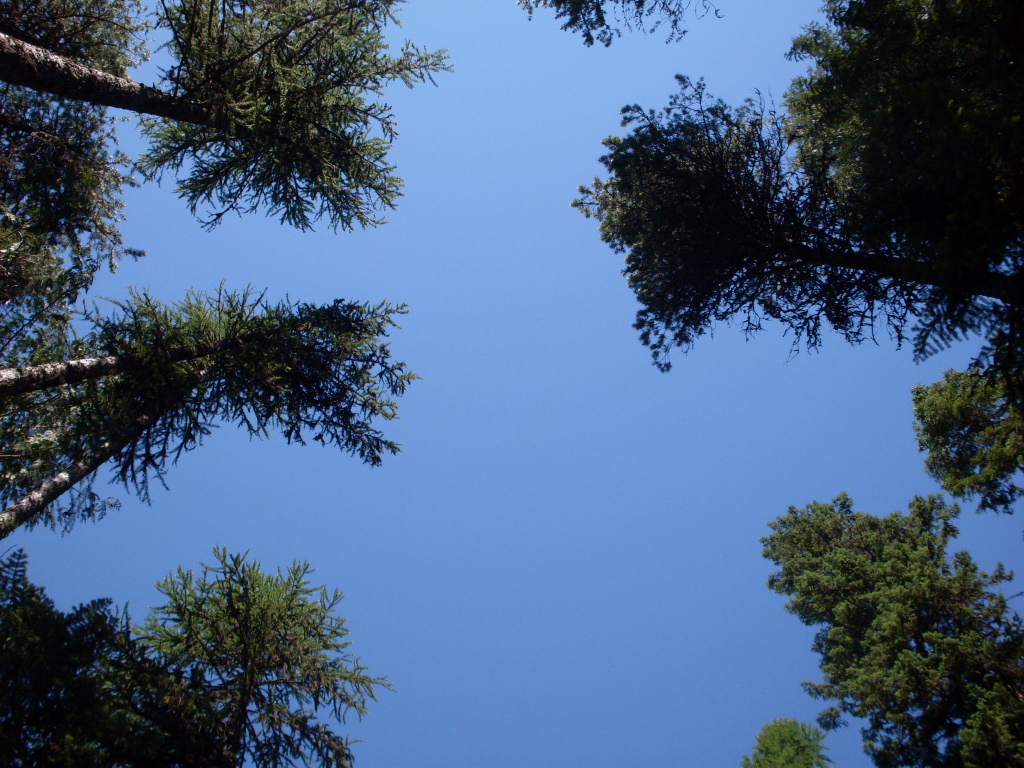
Stepping back to apply this to societies as a whole, I find myself in a distinctly Tillichian mood. What is of ultimate importance? If our society is focused on lucre, it would seem that we, like the Himba, should be able to detect thousands of shades of green. Instead, we find a world full of color. I’ve been working in Manhattan for over three years now. While interesting, I have to admit that much of the city looks gray to me. Even the green on the rare dollar bills that come my ways seems surprisingly subdued. We notice color because it is important to our survival. Artists who work with color in unexpected ways are often under-appreciated for their talent. Those who splash color flamboyantly are accused of being garish. Amid it all, I turn my eyes toward the sky whenever possible. In my youngest days I learned its color is blue. And there is no other color I would rather perceive.

SDC10629


Addam’s Evve

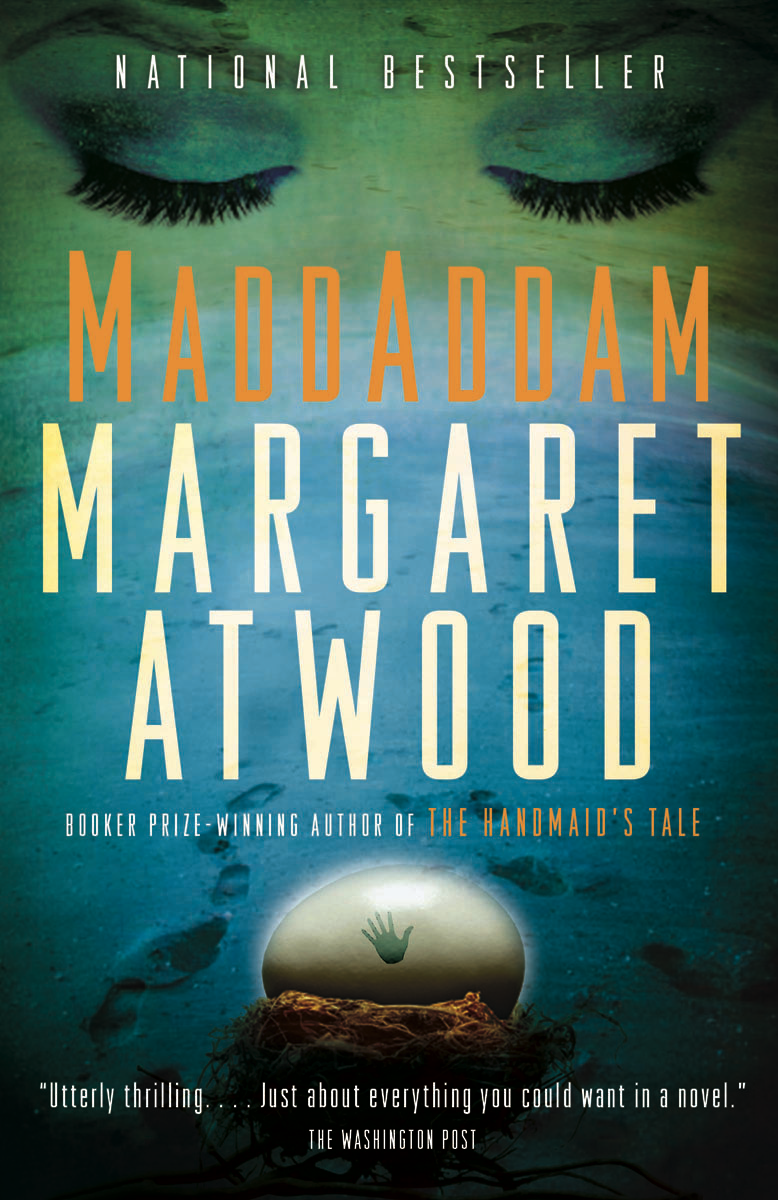
MaddAddamDystopias can be optimistic. I just finished reading Margaret Atwood’s MaddAddam, and came away from it strangely at peace. The third of its eponymous trilogy, the story takes place in a future that is simply a continuation of where we are at the moment. Things have gotten pretty bad—most of humanity has been wiped out, genetic engineering has taken dreadful liberties with creatures human and non, and corporations have fulfilled their dreams and have taken over at last. The few good people left are tormented by those society has made into sociopaths. Global warming has proven the naysayers false, and yet, despite all this, there is room for hope. Tying together the various strands from the previous two books, Oryx and Crake, and The Year of the Flood, MaddAddam is probably the most eco-conscious trilogy on the planet.

Apart from the many obvious biblical allusions (I often wonder what it must be like to miss so much, for want of familiarity with holy writ), the book also introduces a fully functional faux church. Atwood can be at her best when taking on the charlatans of piety. Cynical and calculating, “the Rev,” father of two of the ensemble cast, is everything a televangelist is, and more. Indulging in all that he denies his flock, even Elmer Gantry would have trouble keeping up. The Church of PetrOleum represents the most damaging of industries in a world already suffering the consequences of the greenhouse effect. Corporations make it rich while the Rev takes out his personal issues on his wives and children. Instead of being on the side of paradise, the church introduces chaos.

Through the gloomy scenario she’s foreseen, Atwood is able to see glimmers of a future that has possibilities. The protagonists are the members of a commune of a green religion, earth-centered and bearing a resemblance to both Wicca and monastic Christianity. That spiritual tradition, an offshoot of more established churches, is seen as dangerous by the corporations. And with good reason. Despite what televangelists tell us, spiritual truth is not on the side of big business. Jesus was no trickle-down economist. Reagan was no messiah. Corporate greed leads to blocking laws to clean up our world. We do not have control over what geneticists are doing, and, in fact, most of us have no idea what we’re eating or wearing any longer. Or what it is they’re packaging our food in. We are the consumers. Taught always to consume more. And the more that we are told to consume is the very planet that gave us life. My hat is off to Atwood, who still seems some possible cause for hope.


Sporting Chance

IMG_0997

I didn’t watch the SuperBowl last weekend. In fact, I haven’t had television service for over two decades now. I don’t really miss it too much since I don’t have time to watch TV (the commuting life leaves time only for sleeping and working, except on weekends). Still, for special events, I think, it might be nice to see things live. (My wife raises this point every time the Olympics roll around. I seem to recall them being every four years, but now it seems they’re seasonal, and about twice as frequent. Could it be that advertising revenues are really that important? Maybe I missed that, not having television…) Even when I have managed, over the last couple of decades, to pull the SuperBowl onto a fuzzy, snowy screen, it was for one major reason—the commercials. I wonder what that says about a society? I now spend precious weekend time watching commercials on YouTube, sometimes having to watch a commercial for the privilege of watching a commercial. The substance without the fluff of the actual entertainment.

So it was that I saw the Mophie commercial about the apocalypse (here’s the link, in case you’re as entertainment-challenged as I am). So as the world comes to an end, the weather goes even more wonky than we’ve already made it go, Fortean fish fall from the sky, dogs walk their owners and priests steal plasma television sets. Then the punchline, God’s cell phone dies and the end of the world ends. It isn’t the shock of seeing an African-American God—Morgan Freeman led the way there with Bruce Almighty—but rather the technique, the divine delivery, if you will, that is the shock. Not even God is anything without his cell. (I wonder when we’ll see a Latino woman as God? Dogma came close, but not quite.) Is the smartphone really not the deity here?

God, it seems, has become a null concept. I don’t mean because of different racial or gender presentations, but I do mean that the concept itself is completely up for grabs. God, according to Anselm of Canterbury, is that being greater than which nothing can be conceived. In fact, God seems to be that which people worship, more of a Tillichian ultimate concern. A wired world should, in theory, be a world headed toward peace and equality. If we know what’s going on everywhere, shouldn’t we be doing our best to ensure that it is fair and just? The truth of the matter gives the lie to such optimistic musings. I would hate to confess just how much my phone bill is every month. Even without the “triple play” (no television) it is the biggest expense after college tuition and rent. And it goes on, in saecula saeculorum. When I pull out my smartphone, I gaze upon the face of the Almighty. And perhaps that’s a good thing, because how else would I entertain myself without television?


Duck Overboard!

Moby-DuckI remember the moment precisely.  I was in Santa Barbara, California on a campus visit for Routledge.  I stopped into the university bookstore to see which of our/their books were being used.  From the cover of one of popular books in the general reading shelf stared a friendly yellow duck.  My thoughts went, as they often do, to my daughter back home.  The cover copy explained that this was the true tale of a bunch of “rubber” ducks lost at sea and the captivating story of how they ended up in diverse places.  I bought it for my daughter since rubber duckies had been a kind of childhood theme, and when I saw it on her shelf recently I also grew curious again.  I’ve always been fascinated by the sea, even applying for jobs at the Maine Maritime Academy just to be near the water (and in Maine). 
 
Of course I’m referring to Moby-Duck by Donovan Hohn.  It wasn’t really as cute and cuddly a book as I thought it might be—that duck on the cover sure looks happy—but it was far more important.  As Hohn explains, he was a teacher captivated by the story of a cargo container holding plastic (not rubber) bath toys falling into the Pacific Ocean on a crossing from Asia.  The ducks (and frogs, turtles, and beavers) spread out as far as Alaska and points south on the west coast of the US, and some perhaps made it back east.  Some were even reported in Maine (but Hohn came to doubt they are the right ones).  So he set off on several ocean voyages to follow the trail of the toys.  He has left us a moving and thoughtful memoir of the journey, and also much more.
 
The oceans are incredibly polluted.  As Hohn points out at several points, entire cargo containers—sometimes several at a time—tumbling into the ocean and being left behind is not uncommon.  Add to that the trash, particularly the plastic, that otherwise makes its way into the ocean, in some places forming islands of garbage so large that they can be spotted by satellites, and I begin to grow truly alarmed.  Hohn learns about plastics and how toxic they might be, as well as how thoughtlessly they are hurled into the oceans.  Not written as an environmental manifesto, Moby-Duck—literate, witty, and very human—nevertheless narrates how a father came to see the world through the eyes of parenthood.  And some of what he finds is truly frightening.  My takeaway?  Little things matter.  Immensely.  That, and we need to clean up our act before it’s too late.  No bath will wash away the stains we’re still in the process of creating.