Feathers and Flight

Bird identification must be one of the trickiest activities known to humankind.  My office window overlooks a small segment of a porch roof that is popular with birds.  Whether it’s pecking at some invisible specks on the shingles or dipping a sip from the gutters, they stop by often during the day.  Maybe my brain wiring is odd, but since I was a child I wanted to be able to identify correctly any animal I saw.  We had a few of those Zim Golden Nature Guides that I poured over like a second Bible.  I would study page after page, repeatedly, until I could identify just about any critter I came across.  It seemed, in those days, that all birds were sparrows, starlings, or robins.  There was the occasional blue jay or cardinal, but usually it was the more ordinary, less colorful variety.  Birds are symbols of hope.  Their lightness and ability to fly are what human dreams are made of.
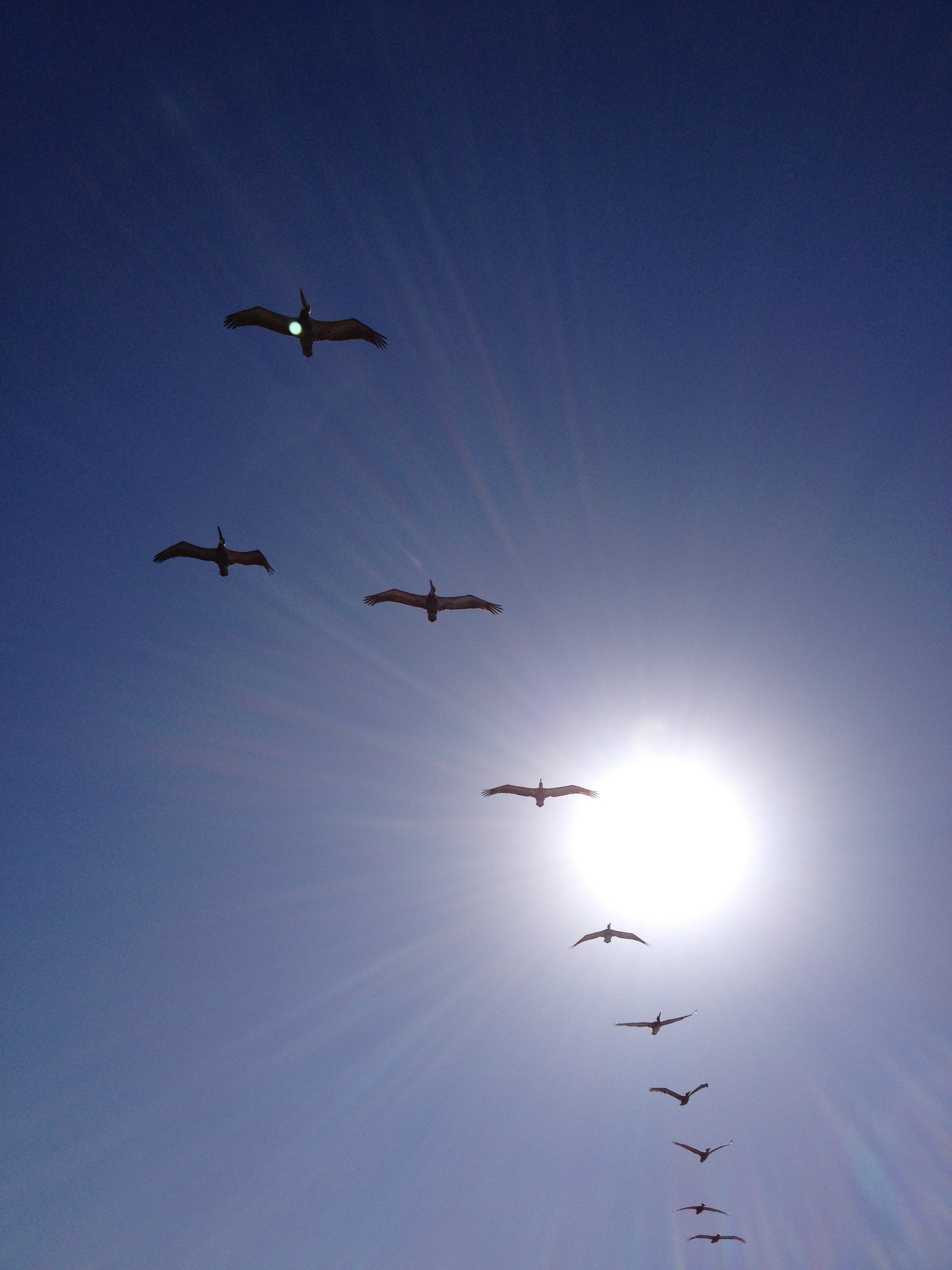
I’m not an avid bird watcher, but I do try to identify them.  I see bald eagles occasionally, several times a year usually, and plenty of red-tailed hawks.  Once in a while, however, a smallish bird hops by that resembles nothing in my field guides.  In frustration I turn to Cornell University’s bird identification app, Merlin.  Almost never can they find anything like what I saw.  Maybe it’s because the app asks the wrong questions.  Never do they say “was the tail long, medium, or short?” for example.  Things you’d actually notice.  They do ask where you saw it, and “on the roof” isn’t an option, let alone “on the roof overlooking my porch.”  I saw an interesting bird the other day that was all gray.  Bill and all.  I saw it next to a starling, from which it was clearly distinct.  It wasn’t in my book and it wasn’t on Merlin.  What could it have been?

This isn’t the first time this has happened.  Strangely, bird color isn’t always a reliable indicator of species although this is what the viewer tends to notice first.  To make positive identification takes close observation of details most people don’t immediately catch.  The more common species are seldom an issue, but the less showy kind are often more difficult to identify.  This strikes me as a life lesson.  We may all know who the showiest are, but those more modest of our avian friends likely live lives of greater satisfaction without people constantly chasing after them.  At least I imagine it so, since I can’t find a write-up about them in my identification guides.  But I can still watch them and gain hope.

Parthenogenesis

It’s only a matter of degree, isn’t it?  I mean between reptiles and mammals.  While our common ancestor was quite a bit older than Lucy, we’re still fam, right?  I’m not the only one, I’m sure, who read with interest the New York Times story about the female crocodile who recently gave birth without the help of a male.  It’s called parthenogenesis and, according to the article, it’s not as rare as we might think.  Birds and amphibians do it.  Some fish even change gender under reproductive pressure.  And if you’ve seen Jurassic Park you know the implications might be larger by an order of magnitude or two.  My mind, however, wanders to mammals.  Then primates.  Then humans.  If our distant cladistic cousins can do it, can we?

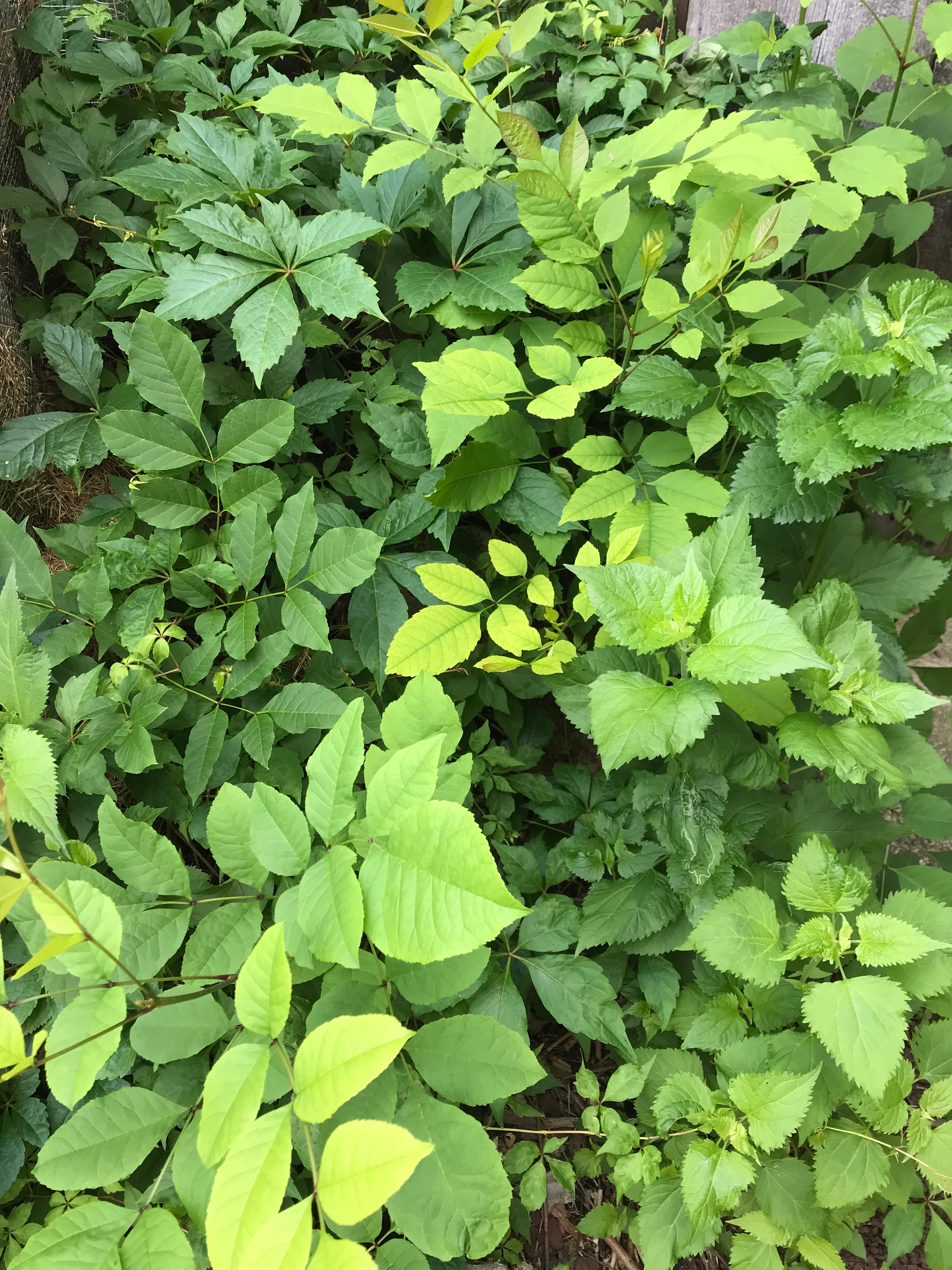
The key appears to be males leaving females alone long enough.  As Malcolm says, “life will find a way.”  Life amazes me.  While we can’t count on it happening for each individual, life has a way of reemerging when you think it’s gone.  Previous owners of our house neglected a green ash tree growing in a location far too close to the house itself for many years.  Granted, it was on the north side where you seldom have any reason to go, but that tree sent out progeny that I’ve had to try to eradicate for five years now.  As much as I love trees, when they’re growing into the foundations of your house, they’re a bit of a problem.  I snip off the water shoots whenever I find them but they keep coming back.  I’m sad to cut them but I admire their persistence.  Life’s persistence. It’s will to carry on.  It continues even when we think it can’t.  Never forget the water bears!

Just a few days later the Times ran an article about the strong possibility of life on Enceladus, one of Saturn’s moons.  Personally, I wouldn’t be surprised.  I’m absolutely certain there’s life elsewhere.  It makes no sense for it not to be.  Life evolves to a point, it seems, where the “intelligent” variety seems to become arrogant.  I embrace our reptilian and amphibious and piscine cousins.  Even our insect and arthropod family.  Our plants and fungi.  Life is amazing and we seldom stop to ponder just how wonderful and mysterious and resilient it is.  A lonely female crocodile decides to have a family.  Phosphates spewing from an ice-cold moon whirling around a colossal planet that wanted to be a star.  Life!  How can we not be stunned into trying to admire it in its many, many forms?


Solstice Wonders

It’s difficult to tell where summer begins and spring ends.  Transitions are like that.  Today’s the summer solstice.  Since I’m an early riser I keep track of when the sun comes up so that I can go for a jog.  Actually, I tend to get out just before sunrise when twilight is enough to see by.  You see, the solstice is a day of hope.  My jogging path is on the edge of town and it borders some woods that, all things considered, are quite shallow.  There’s development on the other side of the river, although you can’t see it from here.  As I’m out before most other crepuscular exercisers I often see critters along the trail.  I’m not sure I can catalogue all the animals I’ve seen but a partial list includes fox, coyote, raccoon, bald eagle, raven, ducks, herons, and the ubiquitous rabbits, squirrels, and deer.  Last month I saw a doe giving birth as I jogged by, something I felt it inappropriate to watch beyond a passing glance.

At times when it’s too dark to go before work I have occasionally gone on a slightly later schedule.  Then I’ve seen groundhogs, a snapping turtle, and red efts (newts).  The thing is these woods are rather thin and they support (along with the towns, I’m sure) a variety of creatures, many of which I don’t see.  Appearances can be deceptive.  Things that appear certain are often wrong.  Those who wake later and don’t spend their evenings on the trail (and animals, I expect, are shy after people have been out all day) may not believe there is so much fauna in the area.  I know there’s even more: opossum, bear, and frogs among them.  I believe they are there.  And believing is just as important as knowing.

Summer is thought of as a more relaxed time, but that’s really only an appearance as well.  It’s actually quite a busy time—what’s relaxed is our capitalistic drive for work.  We realize the warmer days (hopefully not too rainy) afford us the opportunity to do the things the long, dark, cold months prevent.  And those of us in northern latitudes tend to think of it as a magical time.  Shakespeare’s A Midsummer Night’s Dream captures the traditions of fairy activity during this short night with long, sunny days either side of it.  A family member recently reminded me of this connection, and it seems to me that we should be reminded once in a while of the miracles that surround us.  The solstice is one of them.  It’s a matter of believing and a cause for hope.


Sailing Away

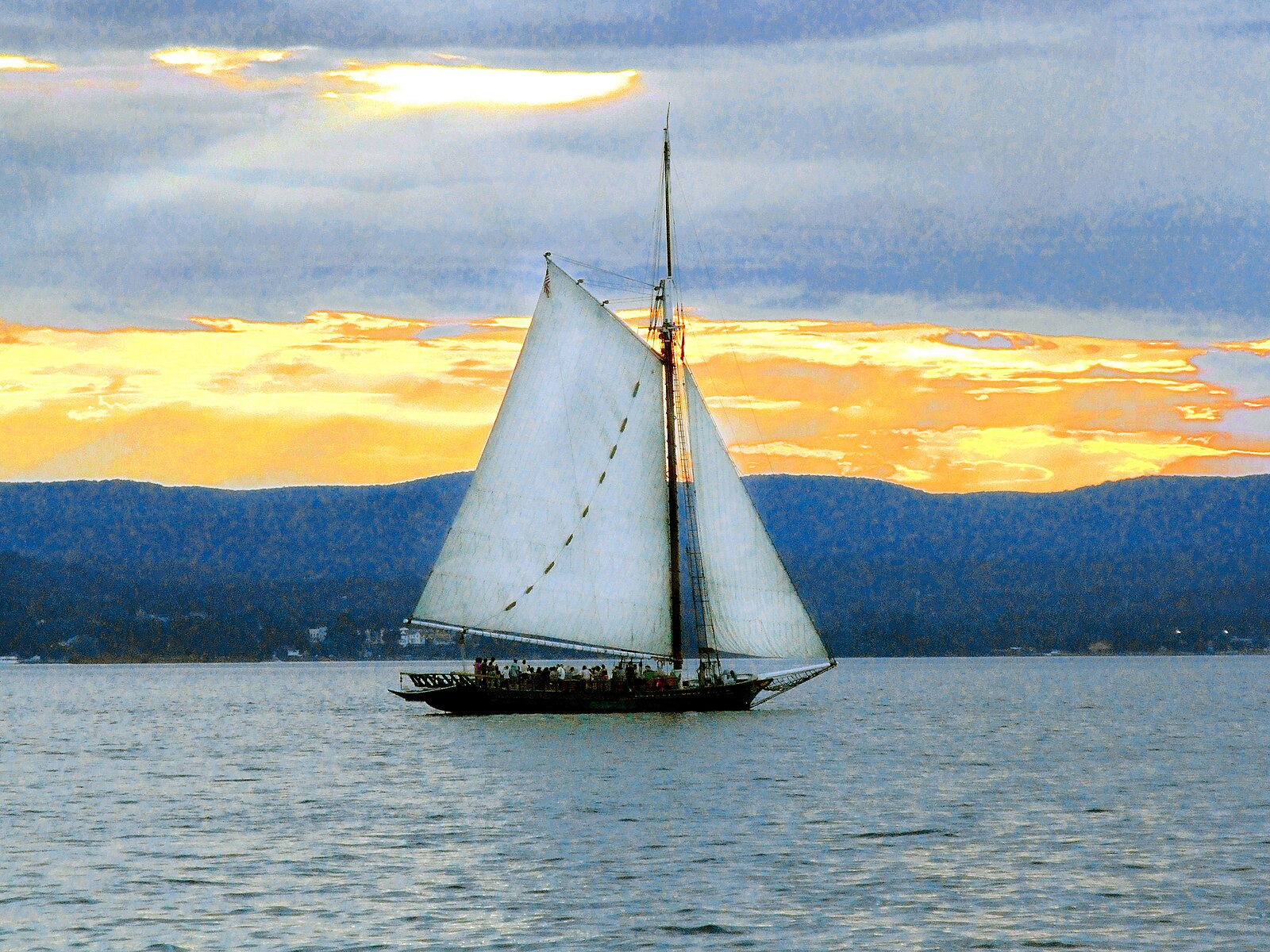
Out on the open water on a sailboat large enough to be categorized as a sloop.  We’re on the Hudson River learning about both sailing and the environment.  I’m here with a a Girl Scout troop, otherwise I wouldn’t have known about the sloop Clearwater at all.  The origins of the Clearwater go back to Pete Seeger, who, apart from being a famous folk artist, was also an environmentalist.  Based in Beacon, New York, the Clearwater is used in educational programs and it represents the only time I’ve been on an actual sailing ship.  Call me Ishmael.  Or not.  You see, I was there as a volunteer.  Specifically, a driver.  My daughter’s troop had scheduled the trip and I was afforded free passage as chauffeur.  I’d pretty much tucked this away into old memory banks until recent reading brought it to the surface.

Photo by by Anthony Pepitone; under the Creative Commons Attribution 3.0 Unported license, via Wikimedia Commons

I support environmental causes in the ways a guy in my position can.  We compost in our back yard.  We recycle anything that we can figure out how to.  We throw away one thirteen-gallon garbage bag every two weeks, and that’s sometimes half-empty.  Being vegan helps.  We don’t have a lot of money to give away, but lifestyle is the biggest way to try to help the planet.  So I’m out here soaking up my Melville vibes on a river wide enough to be a lake.  The Hudson, like all rivers, is worth saving.  I used to cross under it daily through the Lincoln Tunnel, trying not to think of all that water flowing above my head.  There was a reason I read on that long commute.

This blog, I guess, has become a repository for much of my past.  I’m grateful to you indulgent readers who find any of this interesting.  Still, I find human connections to places fascinating.  While I’ve never considered the Hudson home, some of my early relatives likely did (more likely Hessians than Dutch, but I’m told we fought on the right side during the Revolutionary War).  When I’ve had the opportunity to gaze out over the river without being in a rush, I’ve always felt a sense of belonging.  An artwork I made from artifacts I gathered awaiting our turn to board the Clearwater now hangs in our front hall.  Suddenly those twenty-something years feel like so long ago.  Even so, the Hudson suggests something homey to me.  Maybe it’s time to hire out a sloop again, go out on the river, and dream about belonging.


Spider Planet

Misnomers aren’t uncommon when it comes to click-bait.  I’ve fallen victim more than a few times.  But such misdirection is probably as old as humanity, and is perhaps part of consciousness itself.  (Some birds are known to practice deception, as are some other primates.)  Earth Vs. the Spider is drive-in-bait as a title.  In the 1958 horror-sci fi movie (also titled The Spider), the danger isn’t really to the earth but to one small town.  There is, however, a giant spider and somehow it’s not as scary as the real thing can be, writ small.  Occasionally, such as when a spider comes out into the open in the house, I ponder why this is such a deep-seated human fear.  I know spiders are beneficial to the ecosystem and that they pose very little danger, at least in places where I’ve lived.  So why are they so scary?

Scientists, including those of the mind, have proposed looking to our primate cousins for an answer.  They too are afraid of spiders, and it’s posited that since primates climb trees to escape danger and that spiders also climb, the phobia is hardwired.  For me it’s only certain body-plans that are scary.  I don’t mind the cute little jumping spiders that get in around the windows.  They don’t seem out to hurt anybody.  It’s the kind with long, grasping legs that bother me.  As a child I used to try to identify spiders with a picture book identification guide, but soon the guide started to scare me and I had to put it down.  I wasn’t cut out to be an arachnidologist, I guess.  The movie could’ve used one, however.  They kept calling the spider an insect.

The unblinking advocacy of DDT was the scariest part of the film.  Got a problem?  Spray chemicals all over it!  It gives me the same fear as when I see all those pallets of RoundUp every time I go to Lowes.  That stuff is deadly to the environment, and I’m kind of attached to the environment.  Spring arrived around here late this year, but it was spider season by the time I watched Earth Vs. the Spider as part of my minor quest to see the “so bad they’re good” movies.  They’re also part of the history of horror.  Apart from Psycho in 1960, horror was kind of on vacation for the fifties and into the late sixties.  Of course, movies kept being made.  It’s just that they couldn’t be taken seriously.  And even though drive-ins seem to be extinct, I still fall for drive-in bait from time to time. Even when watching alone.


Finding Yourself

Sometimes I look, fascinated.  At tracking info, that is.  I once ordered an item from Montreal, which is, I’m told, in the province of Quebec, Canada.  The estimated shipping time was five days.  It ended up being quite the tourist package.  Its first US port of call was Plattsburgh, New York, which makes sense.  The strange thing is the Canadian tracker didn’t include the states—just town names, all of them small, as if this were a covert operation.  From Plattsburgh it went to East Syracuse, because, well, who wouldn’t want to go to East Syracuse?  From there it leapt right over Pennsylvania, where I live, to Hodgkins, Illinois.  This is a town so small that you really have to be a fan of package vacations to find it.  From there it went to Maumee, Ohio.  It seemed to be heading in the right direction, in any case.  Maumee led to Middlebury Heights, still in Ohio.  Finally it reached Pennsylvania, in New Stanton, not terribly far from my childhood home.  Then Carlisle, about halfway through the state.  Finally to Easton, from which it reached me.  Surprisingly, on time.  

It’s gotta be around here somewhere…

Logistics baffle me.  I had it drilled into me as a child that the shortest distance between two points is a straight line.  Montreal is about 400 miles from here, pretty much straight north.  I wouldn’t venture to tell UPS (the carrier in this instance) how to do its job, but when you’re ordering something carbon neutral (that, of course, you can’t get close to home) it feels kind of excessive to have to stop in so many small towns only to skip the destination state by flying from New York to Illinois so you can drive it back to Pennsylvania.  Logistics people need jobs too, I guess.

Amazon has made many people ask why things can’t arrive more quickly.  The fact is, shipping companies have their own protocols.  It’s like when you have to fly south from a regional airport to get onto a flight north.  You have to reach a hub where they know how to direct your package.  And if your item requires sea freight, well, all bets are off.  There may be no tracking points between Shanghai and Los Angeles.  No matter how much some people may say they hate it, we live in a global society.  We rely on China, and Canada, and everywhere else, to make life go in these United States.  Even following your tracking information can, in that way, be an exercise in thoughtfulness as well as a learning experience. 


Lost at Sea

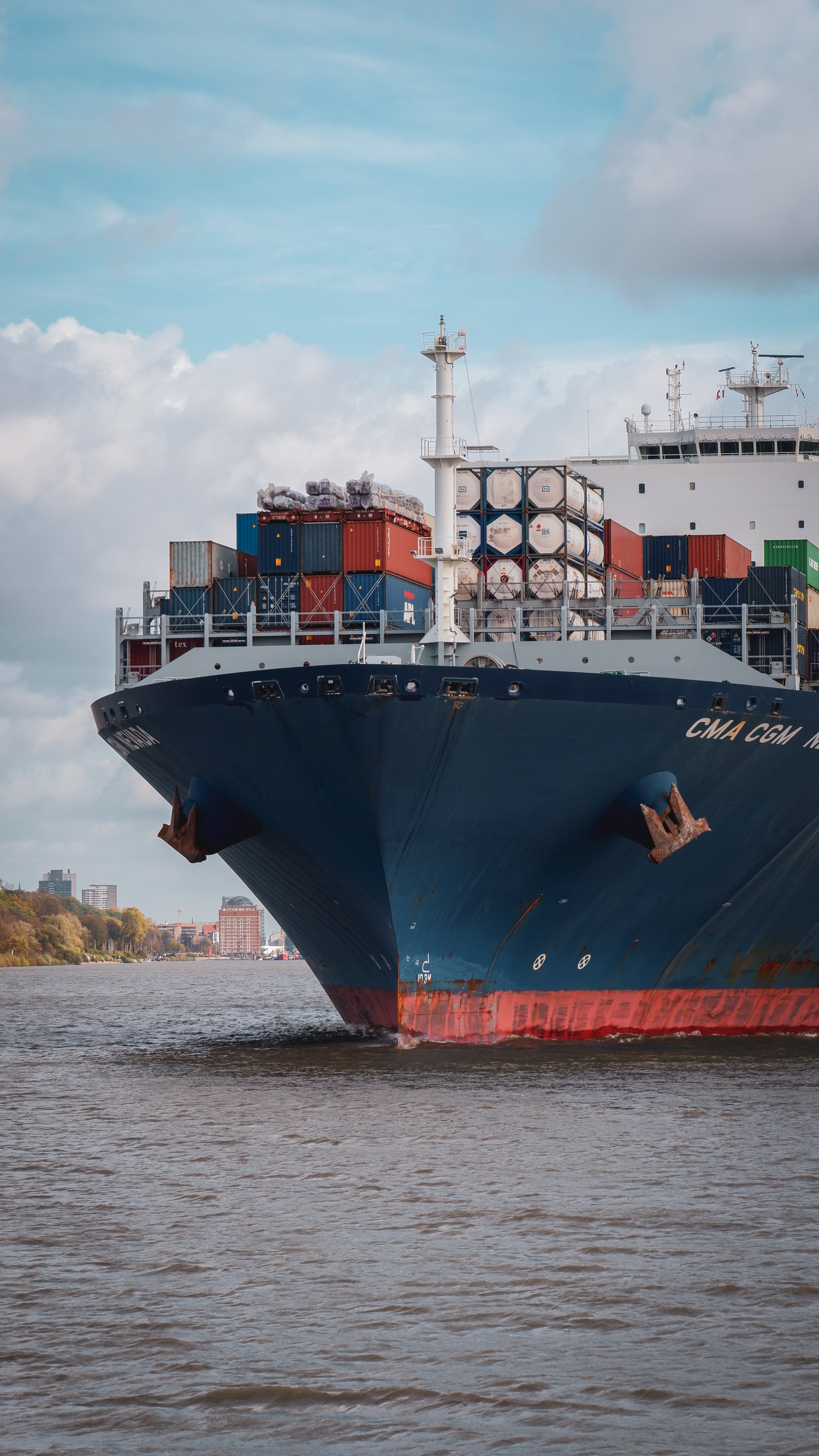
Where do books come from?  It still comes as a surprise to many authors, but books tend to be shipped by, well, ship.  When publishers use overseas facilities, it’s far too expensive to send books across the ocean by air.  I had many people express disbelief when I explained their books were delayed by the Suez Canal blockage, but if most of the world’s international goods are sent by ship (and they are) what might seem like a quirky news story has very real ramifications worldwide.  I was reminded of this by a recent NPR story of two new cookbooks having been lost at sea.  The ship from Taiwan, bound for New York, ran afoul of a storm in the Azores, resulting in the loss of 60 shipping containers—including those holding the newly printed books.  There is a worldwide shortage of shipping containers (seriously) and one of the problems is they keep falling off ships.

Photo by Elias E on Unsplash

If you haven’t googled “cargo ships” and looked at the image options, do.  You’ll see astonishingly large ships with what look to be entire cities worth of cargo containers stacked on the deck.  Many of these containers are lost at sea.  Current estimates are that about 1,000 containers fall off of ships per year.  Although the authors of these particular cookbooks took a lighthearted approach to the news, the book that really brought this home to me was Moby-Duck, which I blogged about some years back (you can read it here).  That book was about trying to follow the plastic “rubber duckies” that fell off a ship back in 1992.  This isn’t, in other words, a new problem.

Videos posted of these massive ships being tossed about and losing cargo are impressive in their own right—they make the ocean seem omnipotent.  But the fact is, we’ve littered it pretty badly.  Books, in their defense, will decompose naturally.  We live in a society defined by consumerism.  We see things and we want them.  In order to make them inexpensive, American companies buy the items from overseas where labor costs are much cheaper (and where many nations have socialized medicine, I might add, making employees cheaper to pay).  As ships grow larger we might expect these kinds of accidents to increase.  The older I get, the more I pay attention to economics.  The dismal science does hold a macabre fascination, especially when entire printings of a new book end up at the bottom of the ocean.  Authors, if they’re curious, ought to consider where books come from.


Know Your Books

Used books have many virtues.  They’re good for the environment, being the ultimate primary duo of the triad “reduce, reuse, recycle.”  They feel like handling the wisdom of the ages itself with their brittle pages and scuffed covers.  These books didn’t have a quiet life just sitting on the shelf.  I understand and respect that.  Still, when classifying such books for sale, I often find myself at odds with the sellers’ descriptions.  I wrote earlier of a book that had been listed as “very good” having two pages stuck together by a wad of gum.  What if what I needed to read was beneath that gum?  And no, not all books are available electronically online.  Copyright still exists.  You see, I once toyed with the idea, while trying to live as an adjunct professor, of selling used books.  There are accepted standards for poor, acceptable, fair, good, very good, and like new.

A recent “good purchase” arrived battered and a bit too well loved for my liking.  “Good,” however, indicates that a book is readable—the underlining shouldn’t obscure text, and God help us, there should be no gum.  This one, however, had several ripped pages.  That’s not good.  Then I came across a page where the corner had obviously been dog-eared only to eventually fall off before it reached me, carrying the page numbers with it.  Writing in books I understand, but bending down pages ought to be a crime.  Further along, another dog-eared missing bit took some text with it.  That part, at least wasn’t readable.  This puts us in “poor” territory, in fact.  Then I came to the page that was two-thirds missing, apparently ripped out from top to bottom leaving only a tonsure of text.  Who rated this book?

Those who buy used books can be tough customers, I realize.  Sometimes they are forced to be.  A used book in good condition, by definition, is missing no pages.  Technically I suppose that’s true—a stub of the page is there.  I suspect the real problem, however, is that the seller doesn’t take the loving time with each and every book that s/he should.  Books are meant to be read, yes.  They convey knowledge.  And once you buy one (this was, however, ex libris, and from a university library, no less) you are free to bend, fold, spindle, or mutilate.  Perhaps someone preowned this poor orphan of a tome once it left the library, and if so they were a cruel owner.  If not, libraries, it appears, should be making more aggressive use of fines.  But mostly, sellers should spend some time getting to know their books.


Planting Knowledge

In an effort not to harm other living creatures, I became a vegan about seven years ago.  Generally it’s not too difficult, although many eateries still think you have to exploit animals to eat anything.  Vegan fare is quite good, and some of it is remarkable.  Then I saw the article in Popular Mechanics, “So It Turns Out Plants Have Had Voices This Whole Time” by Jackie Appel.  Well, “voices” may be stretching it a bit, but they do make sounds.  According to the article, plants “talk” at the same volume as humans tend to, only it’s in a range that we can’t perceive.  Other animals, however, may.  That’s right, your dog may be able to hear the noise plants make.  This is one of the reasons I marvel at scientific arrogance.  Human senses simply can’t perceive all stimuli—how can we claim that what we term “supernatural” doesn’t exist?  We don’t have nearly all the data.

Meanwhile, we live with animals whose sense of smell would send us running even more frequently to the showers.  Animals who can hear plants “talking.”  Animals who can perceive magnetic fields.  We’ve evolved knowing what we need to know.  (At least in part.)  What then do plants communicate?  Can they hear one another?  The sounds plants make, if “translated” to human perception, seem to be “I’m thirsty,” “I’ve been hurt,” or “I’m fine.”  The terminology here is Appel’s but you get the idea—plants broadcast their status.  Can plants scream?  One of my students reminded me a few years back that I once wondered to her what a tomato felt when it was being sliced.  I responded, “That sounds like something I would’ve said.”

They know.

So now I’m a vegan and plants are joining the conversation.  My hope is that they don’t feel pain.  As far as we know, plants don’t have brains.  Even so, heliotropes are smart enough to follow the sun across the sky.  And even fully grown trees move—very, very slowly—to optimize the light they require.  Such intelligence in nature always leaves me in a state of wonder.  We’ve been told for centuries of human exceptionalism.  Sure, we have opposable thumbs and have figured out how to communicate intricate things vocally.  So much so that we can represent them in written form (such as you’re reading right now) and can know what someone’s saying even at great distances.  That doesn’t mean we’re the only remarkable creatures.  But it does leave me with the dilemma of what to eat.


Day of Earth

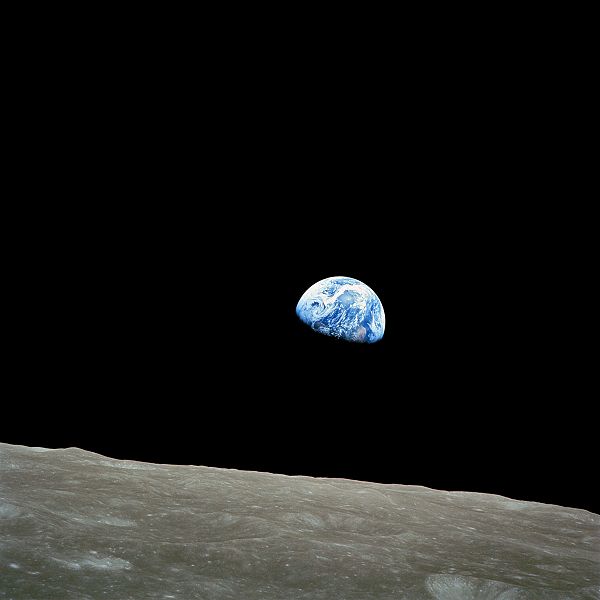
One of the questions thoughtful and mission-based publishers ask is why books on environmentalism don’t sell.  Since it’s Earth Day (by the way, Happy Earth Day!), I thought I’d ponder it here.  My own amateur sense, as a personal eco-warrior, is that younger people are very focused on fixing environmental issues.  In fact, it is often THE issue for them.  And honestly, reading books about our many, many failures to sustain our environment is downright depressing.  I’ve read several, and seldom do I put the book down without a profound sense of grief and hopelessness.  Many of us do what we can while watching others thoughtlessly carrying on as if our modern lifestyle is normal.  I don’t advocate getting out of the matrix and hunting mammoths with spears, but I do wonder how to get through to those who don’t think about it.

I’ve been on the “Green Committee” at work for many years.  I sense the hopelessness there as well.  Our business has gone about as green as it can but unless you can convince other, less concerned industries to reduce their footprints too, we’re all still walking through the new carboniferous age.  Little things matter.  Some of us may not be able to afford an electric car, but hybrids are somewhat reasonably priced (in as far as car prices are ever reasonable).  LED lightbulbs have dropped from over $10 a pop to two for a buck.  And why are we still using natural gas when electricity can be produced by wind?  My young next-door neighbor has been encouraging us to get solar panels.  We would, but we have to get the garage roof fixed first.  And so it goes.

Caring for the environment is a big job.  These days, however, we also have to keep an eye on politicians who get elected to serve only themselves.  And Supreme Court justices who do things that would get many of us fired for bribery.  Here’s the thing: justice doesn’t work unless it applies to everyone.  We share this planet.  It’s difficult to build forward momentum to save our home when corruption is so deeply entrenched among those who control budgets and who have so many unthinking followers.  Even so, we as individuals can do what we’re able.  We may not be able to afford to repair that garage roof yet to get solar panels installed—it really is in a prime location with uninterrupted southern exposure—but we can compost.  And be conscious of our energy use.  And even, if we’re brave enough, read some books on how to help make things better.  The earth, it seems, is something worth saving.

Image credit: NASA

Balance

Psych!  Yesterday was actually the vernal equinox.  And speaking of psychs, it was about the coldest morning jog I’ve had all winter.  (The equinox itself didn’t occur until 5:24 p.m., which is way it was the 20th instead of the 21st.  And I honestly can’t understand how that works since don’t you need 24 hours for night and day to be equal?  There’s a reason I went into the humanities.)  Interestingly, in the pagan Wheel of the Year, it was Ostara.  And the similarity of that title to Easter isn’t really coincidence.  (By the by, I discuss this to some extent in The Wicker Man, due out in September.)  Easter is, in essence, a spring holiday.  Ēostre, a germanic goddess of spring, seems to have been its namesake. 

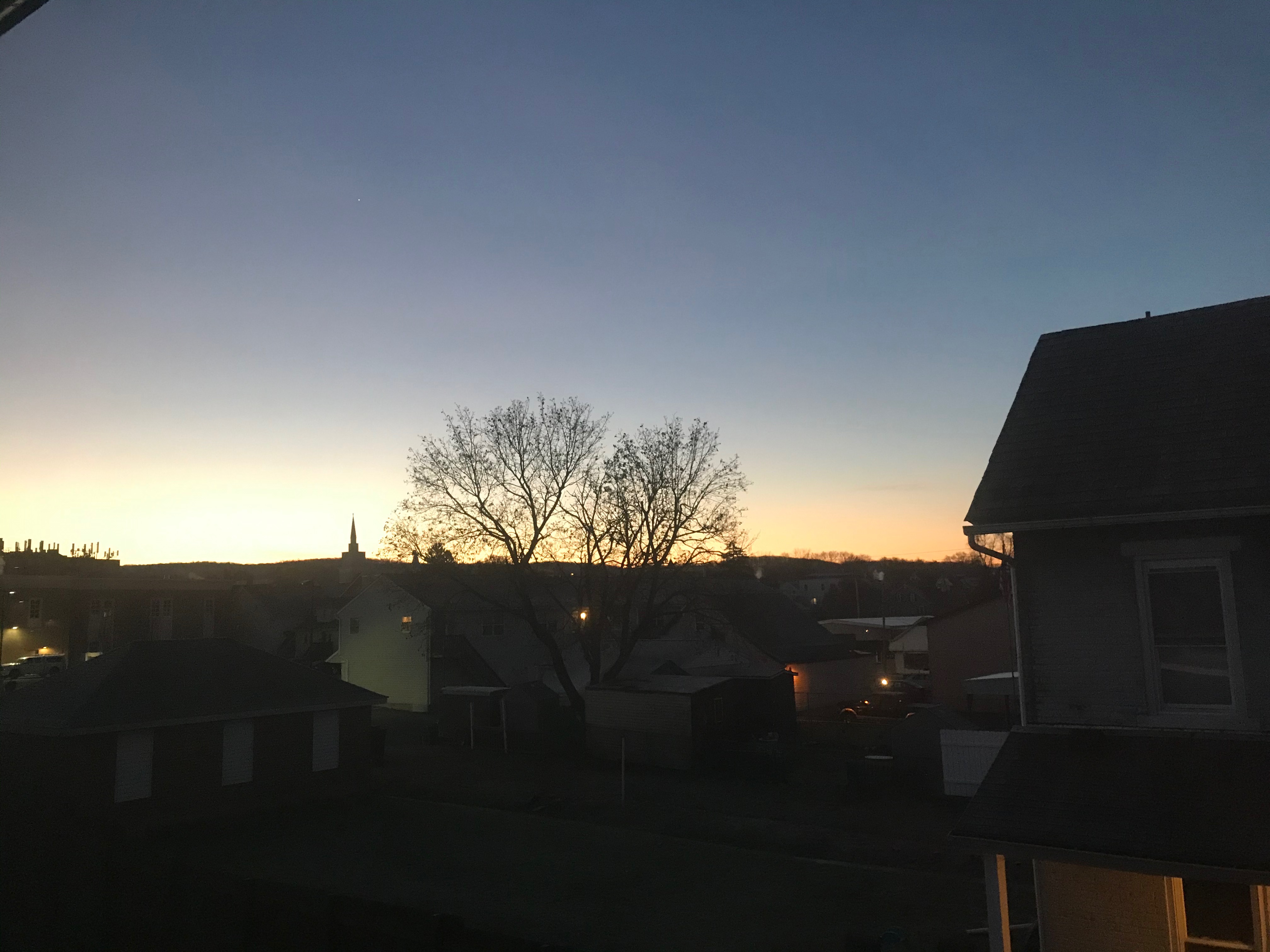
First light comes suddenly, for those awake early enough to see it.  I keep a close eye on the diminishing darkness so that I can get out and jog in the twilight.  It will be too dusky to see and then suddenly it’s not.  Sunrise is like an epiphany each day.  From now on light will increase both morning and evening until the summer solstice, or Midsummer.  Between Ostara and Midsummer lies May Day, or, as it was also known, Beltane.  Beltane is the fuel behind The Wicker Man, or so I argue in my book.  Holidays are important.  More of them should be recognized.  If the pandemic taught us anything it’s that most of us probably work too hard.  At any rate, spring is now here.

The mornings are still below freezing, at least around here.  The winter never got very cold and we had very little snow.  Some would argue that it was more like an extended, chilly spring.  The light, however, was missing.  I spend a lot of time awake in the predawn hours.  There’s a stillness to that time that’s a daily gift.  Yesterday was a brief moment of balance.  Soon it will be time to start mowing the lawn and to do the endless weeding of summer.  Those will last until long after the other equinox, awaiting in September.  Climate change has assured us that the weather will be erratic, but the waxing and waning of the light is as old as the spinning of this weary planet.  We’ve entered the light half of the year.  Equinoxes remind us that balance is rare and should be appreciated when it arrives.  It’s worth making into a holiday once more.


Weathering the Winter

Although it’s been cold out, in many ways this feels like the year without a winter.  Around here we’ve had no real measurable snowfall and temperatures have generally hovered around 40 F, mostly cloudy.  I get cold easily, however, so I need to know how to dress for jogging.  During a warm spell I looked at WeatherBug.  It’s my go-to app for such things.  It told me the current temperature was 49.  Since it’d been in the sixties the day before, that was believable.  Then I glanced at our outdoor thermometer.  It read 39.  A ten-degree difference is significant for jogging, so I called in a third party.  Weather.com said it was 40, much closer to my actual feeling of things—it was chilly inside that morning.  WeatherBug also said it was cloudy, but Weather.com disagreed.  A glance outside showed thin, hazy cloud cover.

Now, I know apps can’t cater to individual needs, but it does seem that WeatherBug was using projections rather than real-time information.  Either that, or somebody was standing too close to the thermometer at the local reporting station, and perhaps breathing on it.  I’m not one of those people who rely on my phone for everything.  I do use it for navigation and snapping quick pictures, but until today I also used it for checking the weather.  I’ve been surprised how often WeatherBug tells me it’s sunny out when I can see nothing but clouds.  Sometimes looking out the window is the best way to learn what your individual weather is like.  Weather is terribly local.

The capriciousness of weather is one of the main factors that led me to write Weathering the Psalms.  Another, of course, was the hope that an academic post might actually consider a guy like me.  The weather has always been a source of personal fascination.  The threat of severe weather, particularly in the Midwest, was a source of naked awe.  I remember standing outside in Illinois with the wide, expansive horizon all around, and staring straight up to a brewing storm cloud thousands of feet overhead.  I didn’t need an app to tell me to take shelter.  Or that time in Wisconsin when a weather system led to repeated, identical cycles of storms that lasted days, leading to localized flooding with rain following a clockwork regularity.  Even then I was a jogger, and for a jogger knowing the weather in advance is important.  These days all that majestic sky drama comes via a device that fits inside my pocket.  It seems we’ve lost something, even though we’re safer this way.  At least within ten degrees.


In Praise of Cardboard

There’s an irony to it.  Using single-use plastic bags to ship books.  Now I know better than to stereotype book lovers, but I suspect it’s safe to say that those of us who order books like paper.  And we are probably well aware that paper recycles more easily than single-use plastics with heavy, preternaturally sticky labels attached to them.  You see, much of the clutter about our house is our reluctance to just throw away things that can be recycled or reused.  There are rules for prep, however.  Labels are supposed to be removed from plastics and judging from my experience, I need to be doing more pushups to do so.  Some are stuck on so well that it stretches and distorts the plastic like the face of a movie monster, still without coming off.  What’s wrong with a box?

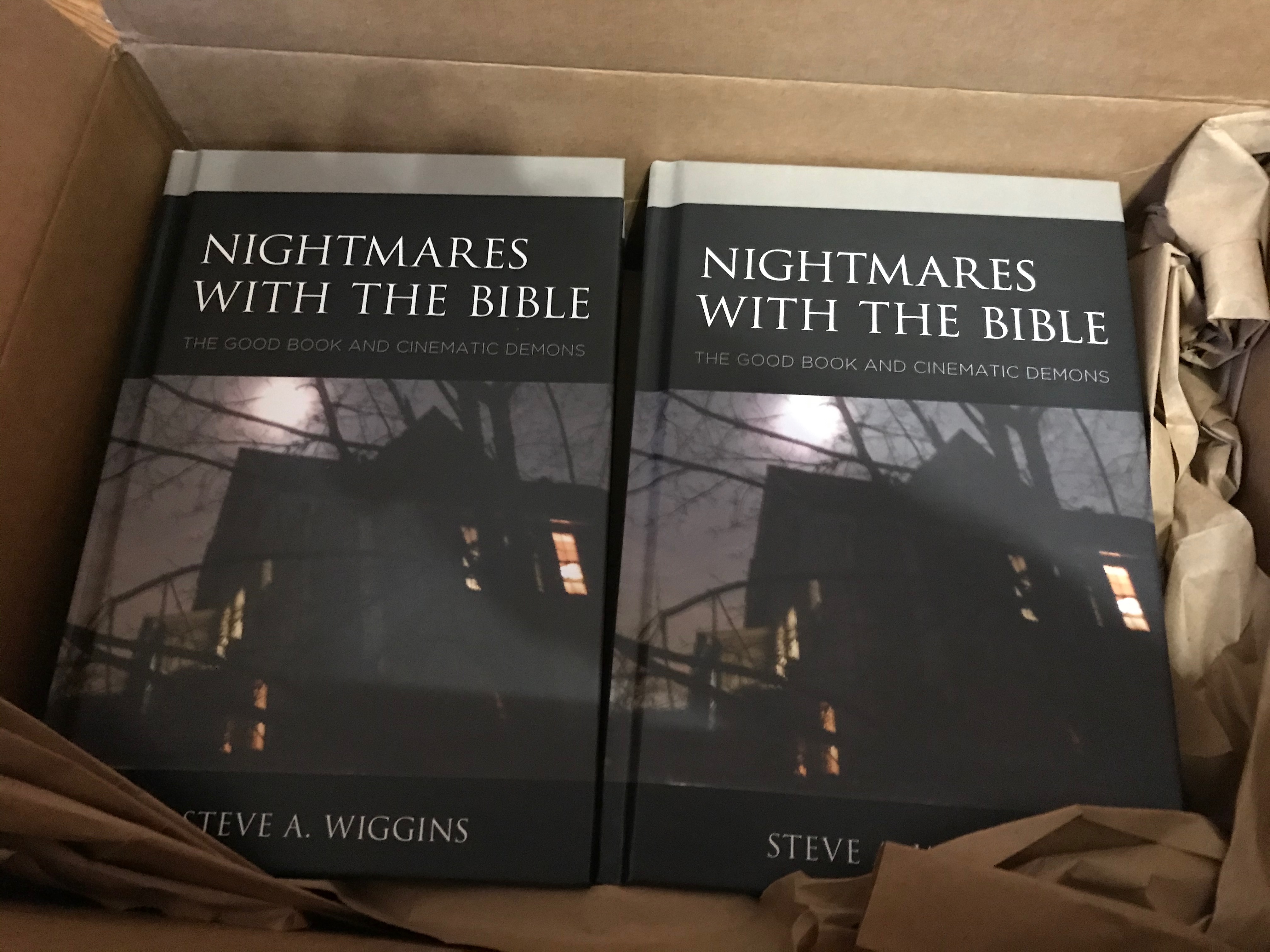
Books arriving, snug in a box

Apart from being easily recycled, boxes prevent books from getting banged up in transit.  I often receive books so tightly cased in plastic that removing them must be like pulling off snug leggings when it’s really humid out.  There’s an almost obscene quality to peeling off something that tight.  And getting the label off?  Forget it.  Boxes are better.  We tend to reuse many of them—they’re good for sending fragile gifts to others.  Or storing other single-use plastic pieces for use in art projects.  (Lids often can’t be recycled.)  As long as the paper’s responsibly sourced, cardboard has environmental benefits.  Besides, I suspect books prefer the feel of paper on their skins.

I’m not a very good consumer, but I do have a soft spot for books.  Even as reasonable grocery chains are phasing out single-use plastics, many book sellers are picking up the slack, it seems.  I know we have developed civilization to such a point that our lifestyle is impossible without plastic.  Indeed, the very keys on which I tap out these thoughts are made of plastic (at least Macs use metal casings for their laptops, or some of them, anyway.)  I have this nightmare that I’ll get something in the mail, or worse, a visitor at the door, telling me that they’ve pieced together, from all the fragments of labels still on plastic bags, that I’m the one who’s been turning them in for recycling without properly removing the sticky paper.  I know that I won’t have any viable defense—I don’t have the time, resources, or tensile strength to do the job properly—and all I’ll be able to say is, “I prefer boxes.”


Sunk Costs

The other day, in a fit of post-holiday tiding up, my wife found something that she couldn’t reach to put away.  As I took the thing and dutifully began to return it to its high cubbyhole, I realized that it was something we no longer needed.  Now, we’re very careful about not just throwing things away—this attitude of disposability has led to far too many landfills and rampant pollution.  So what was this thing?  It’s a dryer vent brush. After a couple years in our house, and with the awareness that the previous owners clearly ignored things like lint build-up in dryer vents, I purchased this brush to weasel in through the outdoor vent and try to get as much lint out as I could.  The old dryer died a couple years later, and we bought a more environmentally friendly heat-pump dryer.  Heat pumps require no vents, so the brush, in its high cubby hole, had simply been forgotten until it got in the way of something else.

This is an example of a “sunk cost.”  Economists, those purveyors of the dismal science, tell us never to worry about sunk costs since you can’t get your money back.  I suppose this is the impetus behind yard sales.  We’ve always been careful with money—we have to be—so purchases like this brush are calculated to meet a current need.  An investment.  Looking around, I see a number of sunk costs—there’s an extraneous office chair just a few feet from me at the moment, made superfluous when Gorgias Press moved offices and gave away office furniture that wouldn’t fit into the new place.  That’s the chair I’m sitting in at the moment.  The other, cheaper chair, however, is still functional.  Something’s telling me a yard sale might not be a bad idea.

But do I want neighbors to see the things we’ve accumulated over the years (and there seem suddenly to have been so many years)?  Some of the stuff obviously could have a future life.  The dryer vent brush was only used for a couple of cleanings and still has much life left, for an inanimate object.  Much of the technology that we’ve sunk money into would serve only as museum pieces, however.  And those costs tend to be much higher.  We try very hard to reduce, reuse, and recycle.  We give books away to little free libraries, if it’s clear they’ll never be opened again in this house.  But I can’t help wonder if sunk costs are a plague of capitalism and consumerism.  There’s got to be a better way.  And while I’m pondering it, I have a funky blue brush to use for scratching my head.


Annihilated

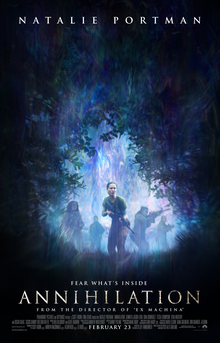
For a long time I resisted seeing it.  Partially I wasn’t sure if it was any good and partially—mainly—it was because of spoilers.  Annihilation came out in 2018, just as I was reading Jeff VanderMeer’s novel upon which the movie was based.  I will always remember this because I worked in a cubicle where I couldn’t see my fellow workers and the woman in the next cube was a bit of a chatterbox.  She and one of her coworkers had seen the movie and began discussing, somewhat loudly, what’d happened.  I was in the middle of the book at the time and didn’t want any spoilers.  I’d never actually met the woman in the next cube and I couldn’t go over and tell her to stop talking about the film because one of the reasons we watch movies is to talk to one another about them.  (Mostly I do this online.)

Enough time has passed, and a different woman at work, remotely, suggested I see it.  I don’t know why the movie did so poorly at the box office.  The director, Alex Garland, has said he didn’t reread the book as he was making the film because he wanted it to be impressions of the novel rather than strictly based on it.  Even as I watched, I recalled some of what I read back in 2018.  I’ll try to limit spoilers here, but if I’m talking too loudly you can just click away (and, hopefully, come back after you’ve seen it.)  It begins when a mysterious “shimmer” appears after a meteorite strike in Florida.  Those who enter the shimmer never come out.  A team of women scientists are sent in, wondering if gender might make a difference.  One of them, Lena, volunteers because her husband did make it out and almost immediately went into a coma.

A sci-fi horror movie, I wonder if it underperformed at the box office because it stars women.  The tension builds between them as they try to figure out what’s going on within the shimmer.  Species have mutated rapidly and the predatory animals are pretty frightening.  The threat, as in VanderMeer’s novel, is ecological.  The ending, I’ll say, is quite different from the book because it was intentionally written as a trilogy and the director wanted to resolve the tension in a single film before reading the other two (which I still haven’t done).  The end result is thoughtful and tense.  The acting is good and the effects are stunning.  I’d class it with Arrival as an intellectual exploration of what it means to be part of a universe we barely begin to understand.  And kudos for having women lead the way.