For the Eyes

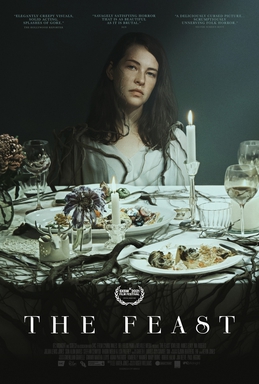
A Welsh horror film?  Lately Euro-horror has caught my attention.  European sensibilities give horror a distinctive flavor, and The Feast doesn’t pull the usual horror tricks.  And reading the subtitles keeps you on your toes.  It’s more a slow build that manages to be unnerving from the start.  A family of four—parents and two boys in their late teens or early twenties—is hosting a feast.  A local girl, Cadi, is hired to help cater the affair.  The family is really seeking to get a neighbor to allow exploratory mineral drilling on her land.  She refuses, horrified when they mention that they’ll only drill on the rise.  The neighbor, aghast, says they know better because they’ll awaken “her.”  The unnamed her is a goddess who is within the rise and who’s been disturbed by the family’s drilling on the land adjacent to their neighbors’ property.

A number of aspects push this beyond Euro-horror.  The goddess, treated as superstition by the family, introduces religion into the horror.  (Cadi, as it turns out, died on her way to the house and the goddess inhabited her body.)  The remote location and role of the countryside also bring this into the folk horror realm.  Having an underlying ecological message, the film is eco-horror as well.  As such it has a positive message, even as all those at the feast, apart from the uncompromising neighbor, die before the evening is out.  Gods will express their wrath.  Although there’s gore, the concept is intelligent and possessed Cady’s unwillingness to speak throughout much of the film adds to the tension.

Horror films with subtitles sometimes don’t work, but The Feast manages pretty well.  Much of the disturbing atmosphere comes from the house.  A modern construction, built over what had formerly been the family’s farm, stands in stark contrast to the natural world all around.  As is often the case in eco-horror, the land is waiting to take its revenge.  It’s a message appropriate for a time when we fail to live up to our own environmental standards, and consider the checks and balances of nature itself as “superstition.”  Maybe a goddess will not awaken and kill everyone at the dinner party, but the wealthy will not be spared, as the movie prophesies.  We share the planet and the earth allows us to survive.  There’s a sense that we deserve to be reminded that living on a finite planet requires careful stewardship of it all.  If you’re going to throw a feast, at least make sure it’s not at the expense of nature.  Some goddesses are best not aroused.


Natural Wonder

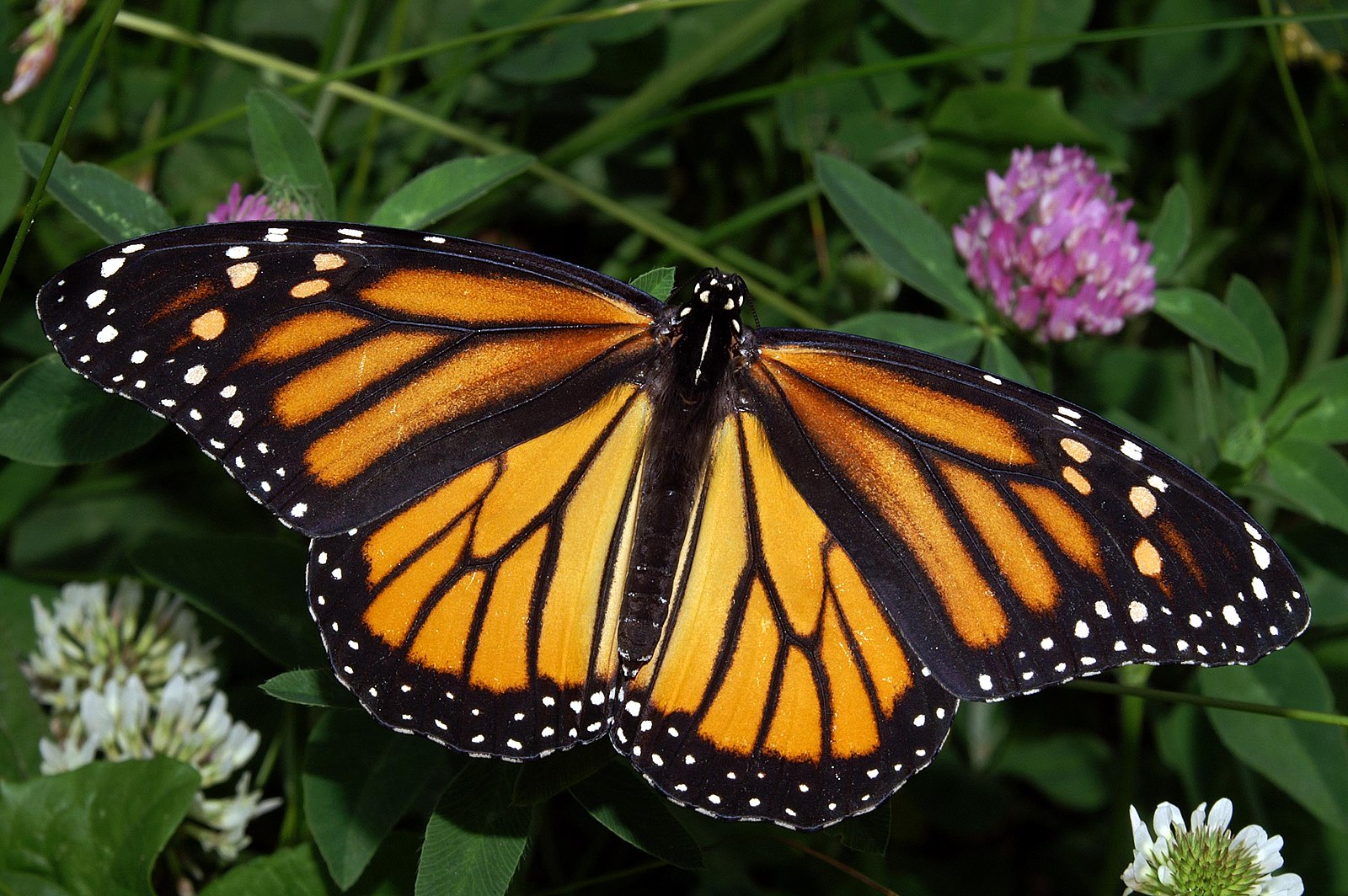
I recently heard a talk about monarch butterflies that left me in awe, once again, of nature.  These remarkable insects have been in the news because of declining numbers—largely because of global warming, it seems.  We’ve only begun, however, to learn how remarkable they are, even with the head-of-a-pin-sized brains.  You might wonder why I’m discussing butterflies in November, but it’s not the first time I’ve done that.  Besides, global warming has made it relevant.  So what about monarchs?  Perhaps the most remarkable thing is that they migrate.  And to do so it takes about four generations.  This deeply embedded behavior shows an intelligence in nature that we’re reluctant to grant.  Still it’s clearly there.  I live in Pennsylvania and we have monarchs around here and they can be found as far north as southern Canada.

Photo credit: Kenneth Dwain Harrelson, via Wikimedia Commons, GNU Free Documentation License

These monarchs around here aren’t the ones who left their overwintering spot in Mexico.  The earliest ones we see up here may have flown in from the Carolinas or the Midwest, where they may’ve been born.  As adults they feed on flower nectar, but to be born they require milkweed plants.  Monarchs only lay their eggs on this one plant family.  The milkweed contains a toxin that they’ve evolved to eat and that toxin gives them a really bad flavor.  That’s why birds tend not to eat monarchs.  So they reproduce in northern locations until environmental cues change the late season eggs.  These late season generation produces the butterflies that will migrate.  Instead of hanging around sipping nectar, they find south (they can tell time and they only fly on days with a south wind) and make their way to one specific area in Mexico to overwinter.  They don’t eat at that stage.

In the spring, hungry, they following blooming desert flowers north.  They follow the food supply, birthing new generations to carry on, until they reach the latitude they prefer.  So some stay around here, eating and reproducing until the cycle begins again in the autumn.  It might seem like a lot of extra work (consider what we do in the office all day and try to criticize) yet it demonstrates the remarkable intelligence of nature.  That migrating generation has to know to fly south and they have to be able to find direction.  Once there, and ready to return, their offspring’s offspring will (we suspect because of other species) know where their great-great-grandparents lived and they head there over three generations.  All of this is being endangered by global warming, however. Because one species thinks of itself alone as remarkable.


Religion in the Air

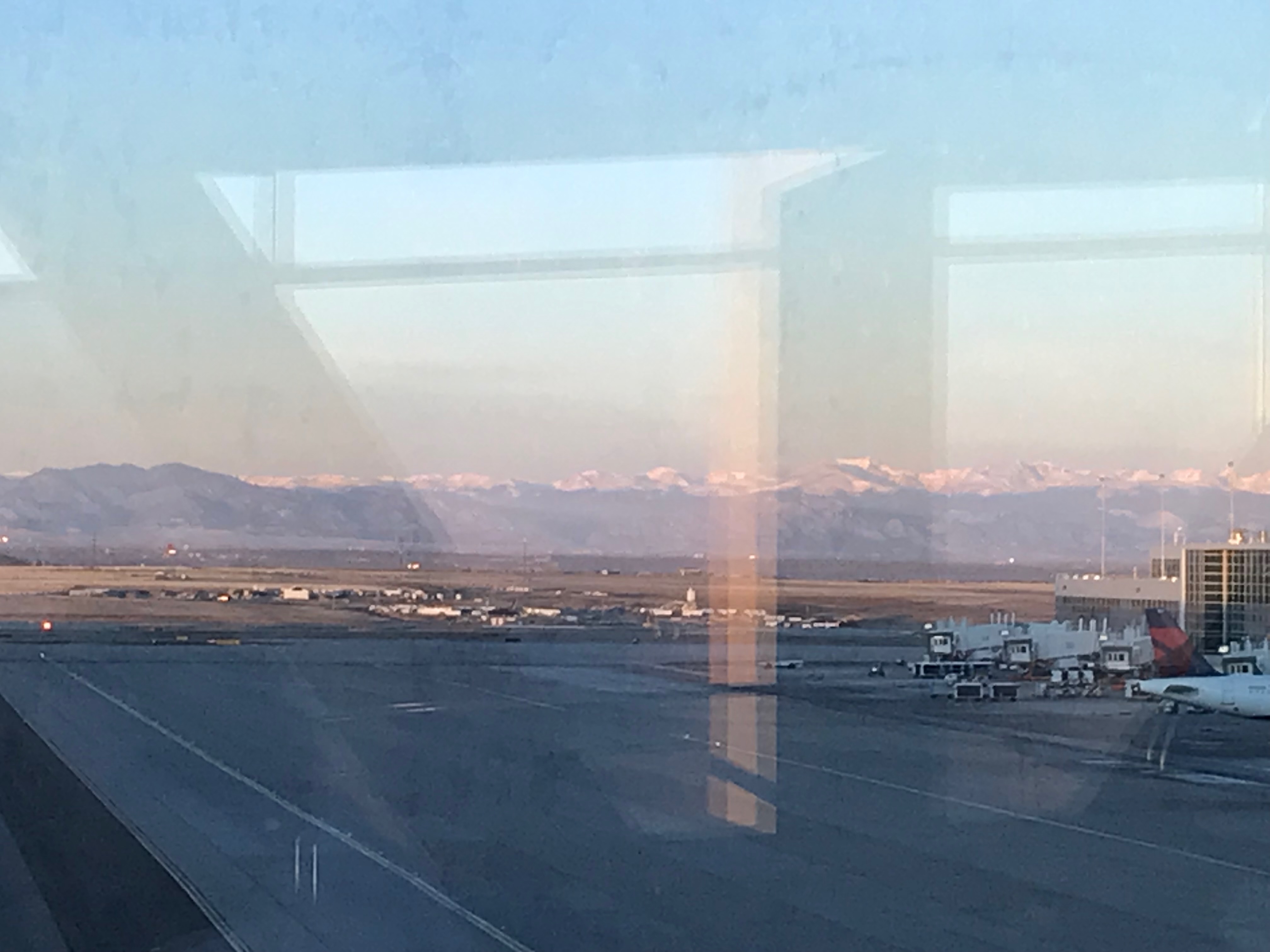
There’s a physicality to it.  Being in Denver, I mean.  My hotel was a mere four blocks from the convention center and the short walk inevitably found me huffing and puffing.  My first night there it had me wondering if something was wrong—should I call a doctor?  I jog on a regular basis and try to stay healthy and so I’m not used to being winded by an inconsequential walk.  My second scheduled meeting saw me with a seasoned scholar.  He pointed out as we slowly made our way to the seating area that the altitude was probably to blame.  The mile-high city does lack the oxygen more abundant down where we lowlanders dwell.  I often wonder if my first trip here was beset by altitude sickness.  I met a colleague at the conference, on his first trip here, who had the same non-Covid symptoms I had all those years ago.

We’re used to our own air.  The familiar atmosphere we breathe each day.  Taken out of that context we’re not exactly fish out of water, but we’re not exactly not either.  The combination of back-to-back meetings, the effort it takes to walk around city center, and the constant chill in the air during my time there dissuaded me from exploring.  Or even finding places to eat.  I started to worry that they’d recognize me at the Chipotle where I ordered carryout the first three nights in the city.  I know there must be other places to get some good, vegan options, but it was always dark by the time I was done with work and I was still waking up on Eastern Time.  On the positive side, I didn’t get sick this time.  And I would really like to explore the place further.

Many years ago, on a family driving trip from Wisconsin to Idaho, we drove through Colorado on the way home.  High above Denver, in the Rockies—driving through Rocky Mountain National Park—I told my wife I felt strangely elated.  “It’s like a religious experience,” I said.  Perhaps it was the physicality of that altitude, mountains spread out before us, that led to that brief moment of rapture.  It’s so closely related to that acrophobia that whispers the warning not to fall off the edge of this globe when you’re so high in the air.  Even now as I’m heading home from Denver when I’ll be even higher in the sky for a few hours, I reflect on what it means to be a physical being enveloped by the air.  And I’ll appreciate with wonder the planet of mountains, endless plains, and eroding hills on which I live, and I’ll be thankful for every breath.


Shatner’s Space

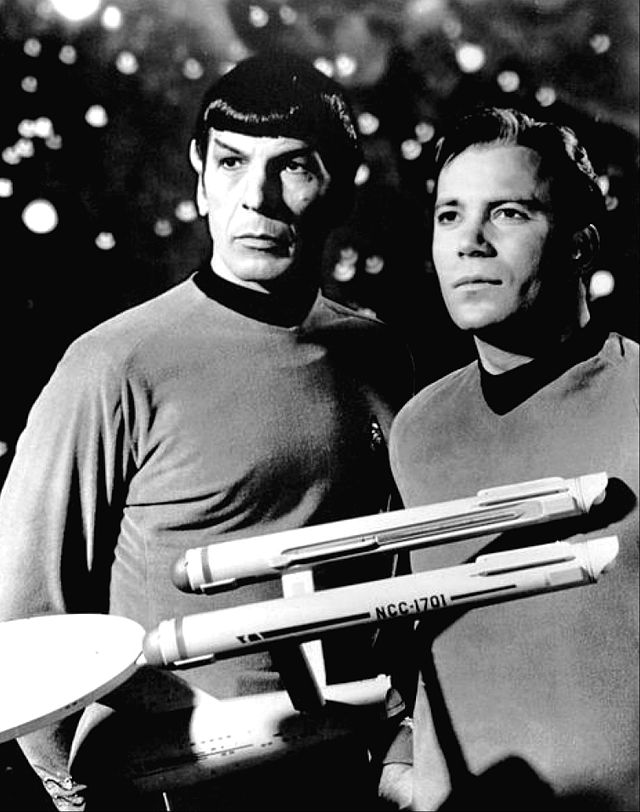
We constantly underestimate the power of fiction.  It’s difficult to break into getting fiction published.  It wasn’t always that way.  When the pulps were still a thing often it took a thimble of talent and a handful of persistence.  Publishers were looking for content and those with typewriters were clacking away as fast as they could.  Ding!  Carriage return.  These days it’s harder.  This came to mind in thinking about William Shatner’s trip to space and his subsequent reaction.  As several news outlets said in anticipation of Shatner’s new book, the experience made him feel profoundly sad and not a little cold.  So much empty space and we still haven’t figured out how to travel fast enough to reach our nearest neighbors.  We don’t even know if we’ll like them when we meet them.

Others, in defense of space exploration, were quick to counter Shatner.  He’s not a real astronaut, after all, having spent nine decades earth-bound.  Or so they said.  But I think I understand, as a fellow land-lubber, where he’s coming from.  We’ve only really got one chance on this planet, being the only creatures evolved enough to type, to capture our thoughts—our essence—in words that can be preserved.  And wildlife statistics are showing an alarming decrease in other animals since the 1970s.  If we’re all that’s left and we can do no better than to elect fascists, well, stand me with Captain Kirk.  We look to the skies and see, well, empty space.  And besides, we need to get home because it’s supper time.

Image credit: NBC Television, public domain via Wikimedia Commons

The reason Shatner got a free ride to space was, of course, fiction.  Star Trek captured the imagination of my generation and those with actual science ability started to put that kind of future together.  Today we can talk to computers and they still mishear us, often with laughable results.  But if writers of fiction hadn’t been available the show would never have succeeded and what would a Canadian actor have had to do?  Maybe a crime drama or two?  And even those require writers.  It seems to me that we should be encouraging fiction writers with talent.  Believe me, I’ve read plenty who really haven’t got it (often in the self-published aisle) but I know firsthand how difficult it is to get fiction noticed.  It’s like, to borrow an image, being blasted off into a dark, cold, empty space and looking at the blue orb below and wanting to be home for supper.


Green Pagan

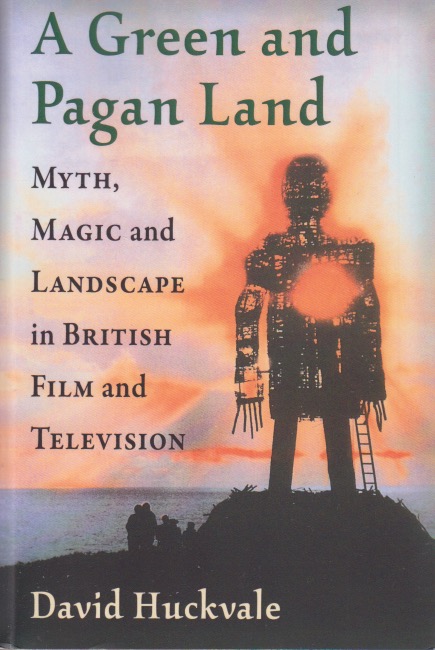
The folk tradition doesn’t encompass folk horror only.  I’ve been working on The Wicker Man, one of the initial folk horror classics, long enough that I sometimes need to remind myself of that.  Of course, it was the cover image featuring said movie that drew me to David Huckvale’s A Green and Pagan Land: Myth, Magic and Landscape in British Film and Television.  The descriptive subtitle more or less informs the reader what the book is about although it reaches further than that.  Huckvale also interprets novels, short stories, and classical music pieces according to landscape.  And sometimes it ranges beyond Britain, especially to other Anglo-Saxon cultures.  Richard Wagner, for example, plays a prominent role in one of the chapters.

Having written about popular media myself, I’m aware of how such issues can easily arise.  A movie too good not to discuss falls out of the precise range you’ve set for yourself.  And no matter how much media you can consume there will be tons more that you could, had you the time, add to your experience of it.  This book looks at mostly British media with an eye toward the pagan landscape.  That doesn’t always mean horror, but sometimes it does.  Huckvale always has interesting things to say about the media he addresses.  Whether the pieces go back to Arthurian legend or to more recent fictional pasts, the landscape has a role to play.

Indeed, folk horror is generally defined by landscape.  That makes sense considering that it’s all around us.  Many people in urban settings may have to struggle to find it.  Indeed, when they want to get away they head for it.  In Britain—and anywhere in which invasion has taken place—the earlier pagan ideas are imprinted on the land.  In Britain they’re perhaps more obvious; think of Stonehenge.  As later interlopers modern people see them and wonder.  And then we create stories—literary, musical, or visual—about the experience.  I’m so used to reading about folk horror that I’d finished the book before I realized it wasn’t really the focus of the entire thing.  While I don’t live in a major city, I too have blinders on for much of the time.  I’ve got a book deadline and I wanted to read this before making final revisions.  I’m glad I did.  There were places where I was just in the backseat, along for the ride, but there were also chapters where The Wicker Man was a crucial component.  And it reminded me of why I enjoyed living in that landscape for a few years.


After It’s News

We live our lives by the news cycle.  It tells us what to think about and worry about, often beyond our local, daily concerns.  And sometimes we forget about yesterday’s headliners.  If you’re curious about whatever became of actual Hurricane Ian, I can tell you.  He’s been hanging around here.  Oh, he’s a mere shadow of his former self, becoming just a low-pressure system sitting off the Atlantic coast between New York and Philadelphia.  And spinning, and spinning, and spinning.  Around here we haven’t seen the sun since last Thursday.  The rain has been intermittent, but yesterday it was pretty much all day and he’s set to continue dominating the skies here at least through today.  Your typical hurricane, if there is such a thing, just keeps moving until it reaches unpopulated areas and nobody cares any more.  This one has been a long-term guest.

With the first few days of lassitudinous rain we had maybe an inch.  Rainfall spat and sputtered and sprinkled.  Yesterday it began to really come down and as I write this it’s too dark to tell but I can hear it splashing on my windows.  The toadstools popping up in the yard are impressive.  As has been the wind and below average temperatures.  I’m wearing my winter-level protection and dodging raindrops on my morning jogs.  Some days I’ve had to delay them for the water.  Not too many other people are out taking their exercise, I notice.  The Weather Channel’s taken to calling it just a low-pressure system, but we’re on a first-name basis now.  Ian is still very much a thing.  At the end of “daylight” yesterday the rain gauge read about three inches.

The thing about these “unusual” storms is they’re becoming the norm.  Global warming has been affecting us for years now, even as we deny it exists.  Our summer around here was very hot and very dry.  The dry was okay by me, but the heat prevented any outdoor work or play for a good deal of the time.  Days when you’d stay inside and try your hardest not to move.  We had maybe one or two days of transitional weather then boom, straight to November.  The leaves around here are still mostly green although they’ve been starting to change more readily now that October’s arrived with December in it’s train.  Forecasters tell us, like Annie says, the sun will come out tomorrow.  Around here we sure hope that’s right.  I wonder what else is happening hidden behind the news?

Not Ian, but you get the picture

Tuning Up

Climate change is marked by its erratic behavior.  I can relate.  Nevertheless, one of my favorite things in the whole wide world is the slow transition of summer to winter.  Autumn includes that honeymoon time between air conditioning and furnace when you have perhaps a month of reasonable utility bills.  After that hot summer we had around here, this weekend showed why we call it “fall.”  I awoke yesterday morning only to feel the indoor temperature slipping into winter range.  (Seriously.  The furnace isn’t on yet.)  It was 41 degrees outside, a full five degrees lower than projected.  There’s a subtle insidiousness to morning chills.  I tend to wake around three or four, but that’s not the coldest part of the night.  No, that comes just before sunrise.  Morning connoisseurs know that.  It’s always coldest before the dawn.

Weather forecasting is a dicey business, not for the faint of heart.  When it’s getting uncomfortably chilly, a degree or two can make a difference.  You see, I get out of bed, throw on some lounging clothes, and go into another room where I won’t disturb anybody.  That means if I underestimate how cold the house will be, I’ll spend some time shivering until those who awake on normal schedules get up.  That, or I have to wear a jacket indoors.  I’m not above that, of course, but it’s only September.  Honeymoon time.  Global warming doesn’t mean it’s going to be hot all the time.  So all of this has me thinking about winter already.  It’s only September and I’m already wearing fingerless gloves.

I’m extremely sensitive to cold.  I attribute it to a case of mild frostbite I had as a teen.  The cold didn’t bother me so much before then.  My brother and I, dutifully awaiting the school bus, stood for the required half hour or so at the bus stop.  It was bitterly cold and there was no bus shelter.  When we were finally allowed to head home the pain was incredible.  My extremities are still chilled at the slightest suggestion.  On all but the hottest days my feet can count on being cold.  The  morning skies were a beautiful blue yesterday, suggesting that the predicted cloudiness of the previous night had not performed, allowing full radiational cooling.  Yes, global warming is real and all of us alive today will be dealing with it for the remainder of our time here on earth.  That doesn’t mean it’ll always be hot outside.  It does mean the honeymoon may be over. 


Is It That Time Already?

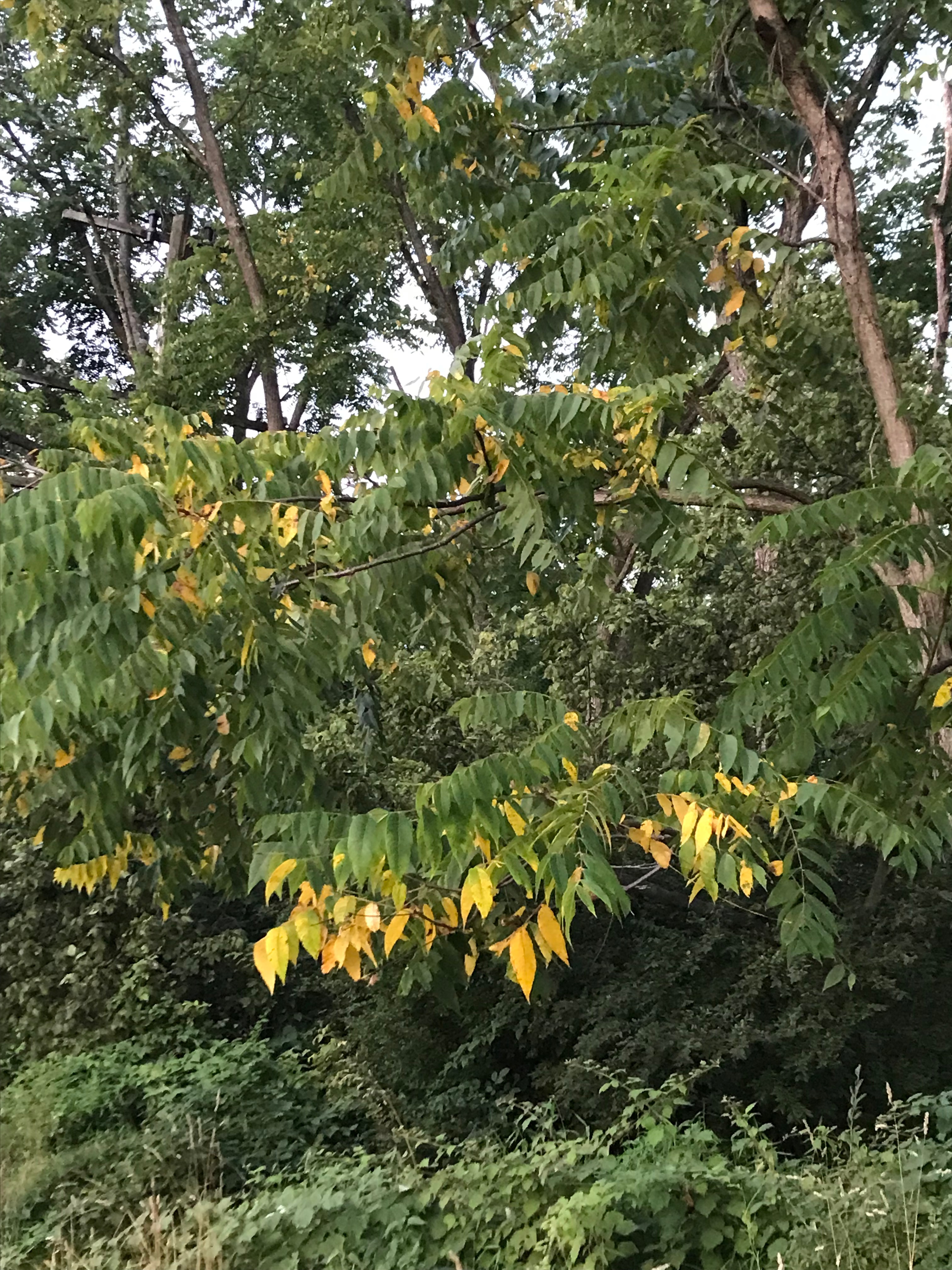
Maybe it’s just me, but August seems to be the new October.  If any of you are experiencing the heat wave that’s (oddly enough) like global warming, my apologies.  Around here—and local is what we all are—nights are cool enough to require blankets after our very hot July.  In fact, I need long sleeves and long pants in the mornings, it’s so chilly.  By mid-afternoon I’m starting to roast, but the grass is brown and that October feeling is in the air.  Or maybe it’s just that I’m awake at odd hours and the perspective from this time of day is somehow prescient.  Who knows?  As I try to sneak a jog in before work I see the walnuts have already gone yellow.  And I wonder.

We idealize the weather of our youth.  That sense of oughtness sets in early.  This is the way the weather should go.  We’ve been pouring greenhouse gasses into the atmosphere, however, for all of my life and before.  The warning signs have been around for decades but somehow liars with false hair convince us that any progress ought to be reversed.  I wonder if he’s been outside lately.  The planet is constantly changing based on the larger picture.  It has been doing this for eons, well before our species evolved.  Thinking it was created for us distorts our thinking.  The real question is whether we’ll be able to adapt.  I can’t say the prognosis is rosy, given how we’re constantly trying to kill those who live just across that mountain range, or that wide river.  We can’t seem to coexist.

I like October.  Still, I can’t help but think of all the things we didn’t get done this summer because it was too hot to be working outside.  Or we couldn’t get contractors to return our calls.  Seasons change as the atmosphere tries to adjust to all the chemicals we cough out.  October and its monsters seem to arrive earlier each year.  I’ve been feeling it for weeks already.  Seasons are really negotiations.  Around here, in this temperate zone, we spend most of the year with the furnace on, taking the edge off cold mornings and trying to keep this drafty house habitable for about six months of the year.  Everything’s constantly in flux and we simply try to adjust.  Not even the sun will last forever.  But for now I see the signs of harvest season beginning, and I feel the change in the air.  And I can sense October just around the corner. So goes August.


Flower Power

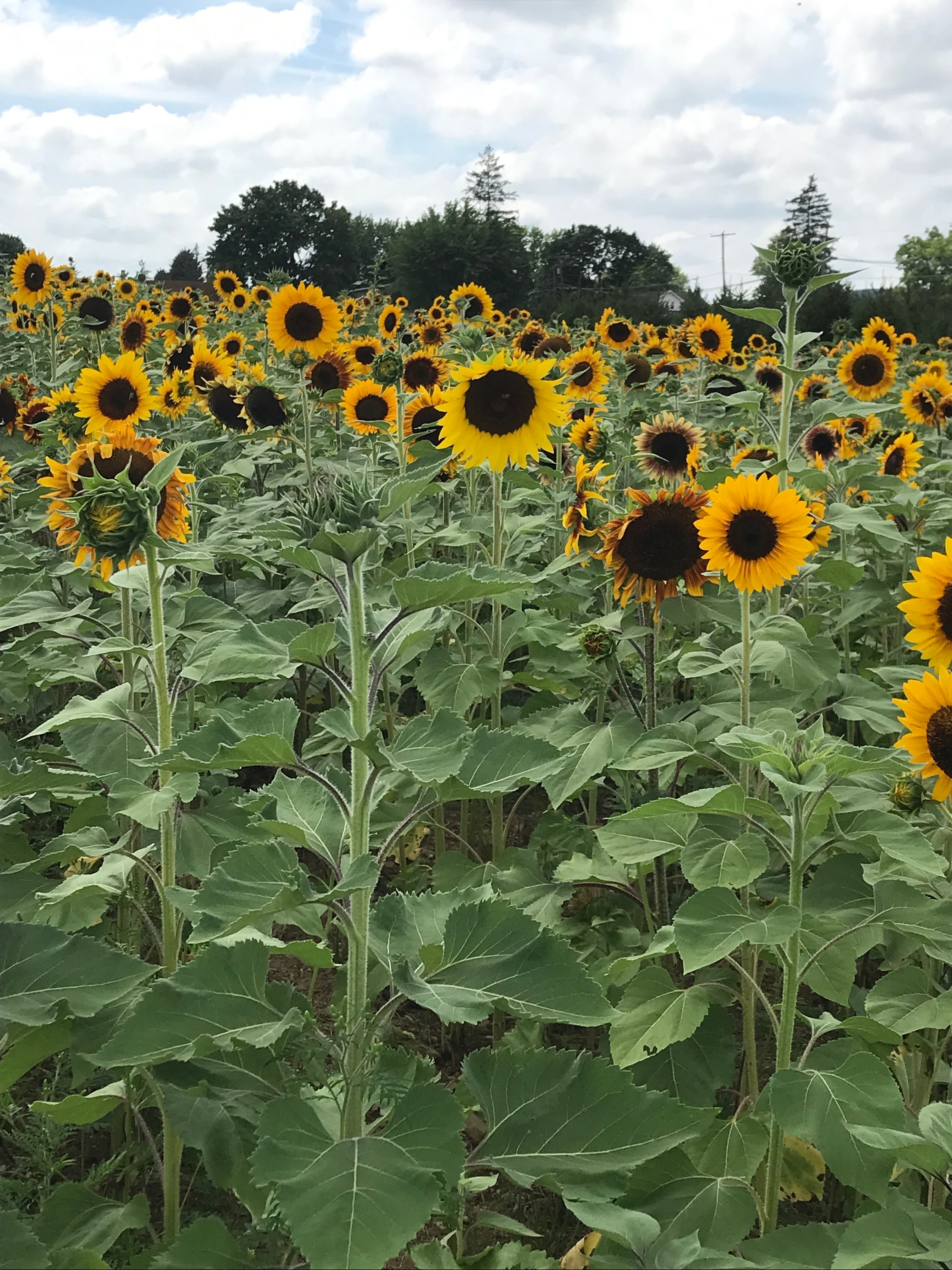
Why do we find flowers so attractive?  Often what separates weeds from desired plants are the flowers.  (Not always, though, as the much maligned dandelion can attest.)  The bright colors clearly help.  Intended to entice pollinators, flowers offer many natural attractants—nectar, intricate patterns, stunning colors—that draw both insects and humans to them.  Summer is the time for weekend festivals, and thus we found ourselves at Yenser’s Tree Farm for their Sunflower Festival.  Located near Lehighton, it’s in some pretty territory.  At this time of year it’s dedicated to sunflowers.  Perhaps all the more poignant this particular year, given that the sunflower in a national symbol of Ukraine, lots of people were there a warm Saturday afternoon.

The Helianthus genus is actually part of the daisy family.  What we call the “flower” is what botanists call a “false flower” because the head of a sunflower consists of many tiny flowers surrounded by a fringe that has petals like other flowers.  In other words, a sunflower is a cooperative venture.  The name “sunflower” either derives from the disc head looking like the sun, or by their trait of heliotropism.  The buds, before blooming, track the sun across the sky.  Most remarkably, at night, typically between three and six a.m., they turn back east anticipating the sunrise.  This speaks of an intelligence in nature.  There is a scientific explanation, of course, having to do with changing growth rates in the stems that allow a kind of swiveling effect.  To me it seems to indicate plants are smarter than we give them credit for being.  Not having a brain doesn’t mean you can’t be amazing.

The tiny flowers in the head are arranged in a spiral that follows a Fibonacci sequence.  I can’t even follow a Fibonacci sequence, so I’m glad to cede intelligence to our plant friends.  How can they anticipate where the sun will rise?  It’s the anticipation that’s heavy with significance.  Sure, using the word “anticipate” is to ignore the garden sprinkler analogy of snapping back once you’ve reached the end of your trajectory, but even so, when a seed bursts from its pod it has to figure out which way is up.  Plants move, to give themselves the advantage of sunshine.  We plant flowers because we want to be near them, admire them.  Plants provide food and oxygen, and we offer nutrients, at least in theory, when we decompose.  We’re all part of an intricate system, and we benefit when we turn to face the sun.


Bushkill

Waterfalls are fairly plentiful in this part of the country.  Although they’re not the Rockies, the Appalachians are mountains, and mountains lead to waterfalls.  Niagara is an outlier, of course, where one great lake drains into another.  In the area around Ithaca and Watkins Glen, in New York, there are great falls where the water, through the eons, has eroded the softer rock to flow down to sea level.  While most of the waterfalls in Ithaca are free, you have to pay to get into Watkins Glen.  The waterfalls cascade down into Pennsylvania as well, where the geology is similar, where the bedding planes of ancient seas left layer after layer of rock washed away by yet more water millions of years later.

Bushkill Falls, like Watkins Glen, is privately owned.  Deep in the Poconos, it offers a shaded walk around what has been called “the Niagara of Pennsylvania.”  When we went, it had been mostly a dry summer.  Still, there’s a draw to all that water.  Like Watkins Glen, there are stairways to ease the access among tourists; there are those who might be inclined to sue should they lose their footing.  There were lots of others there the day we went.  Many speaking languages other than English, deep in Trumpian, xenophobic territory.  In nature we’re all just human.  Water washes and water erodes.  Water smooths out rough edges.  There are many parables in water.  It makes life as we know it possible.  It flows to the lowest point, creating incredible beauty as it tumbles over many different types of rock that make up the crust of the earth.  There’s a wisdom in water.

The red trail, around the outline of the several waterfalls, has 1276 steps to descend and climb.  Going down the stairs at the start of your journey assures that you will need to climb at the end.  The air is full of negative ions around breaking water.  Positive feelings are created.  Perhaps people should live near waterfalls.  It’s difficult to imagine hatred thriving in such a place.  I recall a family walk, back in some troubled times, when my older brother led us all to a waterfall hidden deep in the western Pennsylvania woods.  The tension and strife melted away.  We probably all knew that it wouldn’t last, but at the time the present was all that mattered.  Water is so basic, but so unbelievably wise.  Paying attention to such things is worth the price of admission.


The Birds and the Bees

Our house came with a wood-plank fence surrounding the yard.  This is a dog neighborhood and just about everyone has a fenced in yard to keep their dogs in check.  It’s more the birds and bees that have me worried, though.  The fence, which is in need of some attention, is bare pine stained redwood.  As the stain fades carpenter bees find it irresistible.  These insects are great pollinators and we don’t like to gas any creatures just doing their evolutionary job.  Painting that fence will be a summer-long project and one that requires far more sunny weather than we tend to get around these parts.  So we have a fence with several carpenter bee homes.  (These are ubiquitous insects in this area, with lots of people complaining about them.  We have, however, the only wooden fence in the neighborhood.)

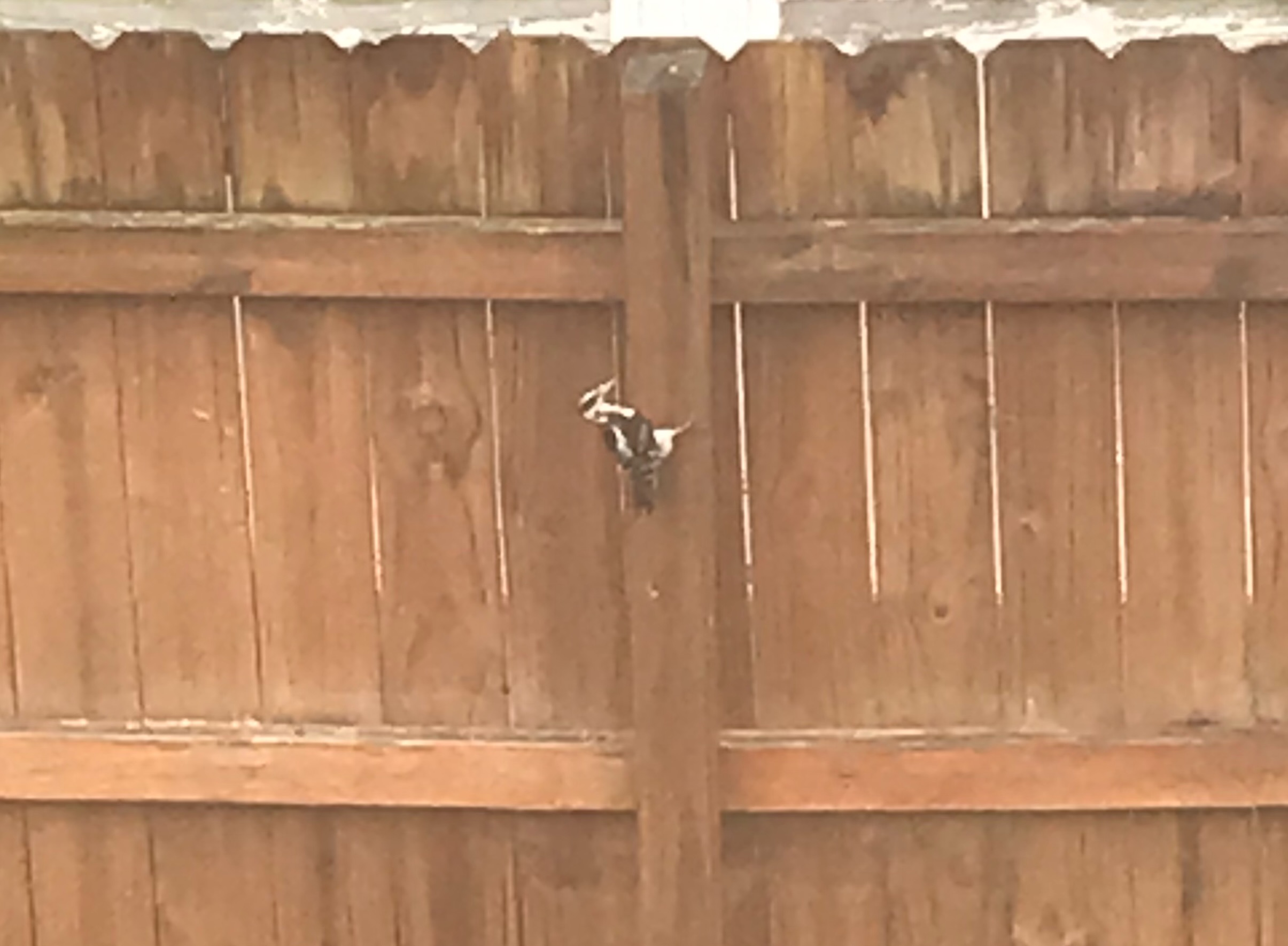
The other day I heard a knocking while I was working.  I looked out the window to see a downy woodpecker, well, pecking at the site of one of the carpenter bee homes.  This industrious little fellow had three holes in the post by the time I got downstairs to startle him or her away.  Now, you have to understand that this is a large fence.  We didn’t put it up but we have to keep it up.  Then I thought, “I was worried about the carpenter bees.  Why should I be worried about the woodpeckers?”  Holes can be patched, and fences can be painted.  I hope the neighbors don’t mind a white fence.  In any case, I left the woodpecker alone after that.  Besides, I can’t be outside all day long—I have a day job.

Over the next several days the pecker became a regular visitor.  I’d be working and then I’d hear a now familiar knocking.  I decided to watch once.  I keep a pair of binoculars in my office because I see lots of birds that I want to identify—there’s a park across the street.  At the risk of the neighbors thinking I was spying, I trained them on Downy.  It was amazing how effective its bill is on a four-by-four.  It quickly cleared a hole, stuck its beak in, and pulled out a fat carpenter bee grub.  Down it went.  A centimeter to the right it repeated the procedure.  Carpenter bees, which are so territorial when building their nests, seem to have forgotten their young.  Perhaps it’s for the best.  This bird was one well-fed flier.  And I’d finally learned what they mean about the birds and the bees.


Tree Owners

I hated to do it.  I always feel guilty afterwards.  I’d never have made it as a lumberjack.  We had a problematic green ash tree that someone might’ve planted long ago, or which may’ve been a volunteer that nobody really paid much attention to.  Prolific, although cultivating the seeds is difficult, in nature they spread rampantly.  This particular tree was in a sheltered corner of the house, in an outdoor nook created by a neighbor’s fence adjoining the one that goes around our yard.  (Fences are a big thing in this neighborhood.)  The branches were overgrowing our neighbor’s fence, getting under the eaves spouts on our house, and providing squirrels with access to the roof, which had previously been denied them.  The roots were getting into the foundations of the house and there are at least seven smaller green ashes that require constant cutting back, in that same corner.

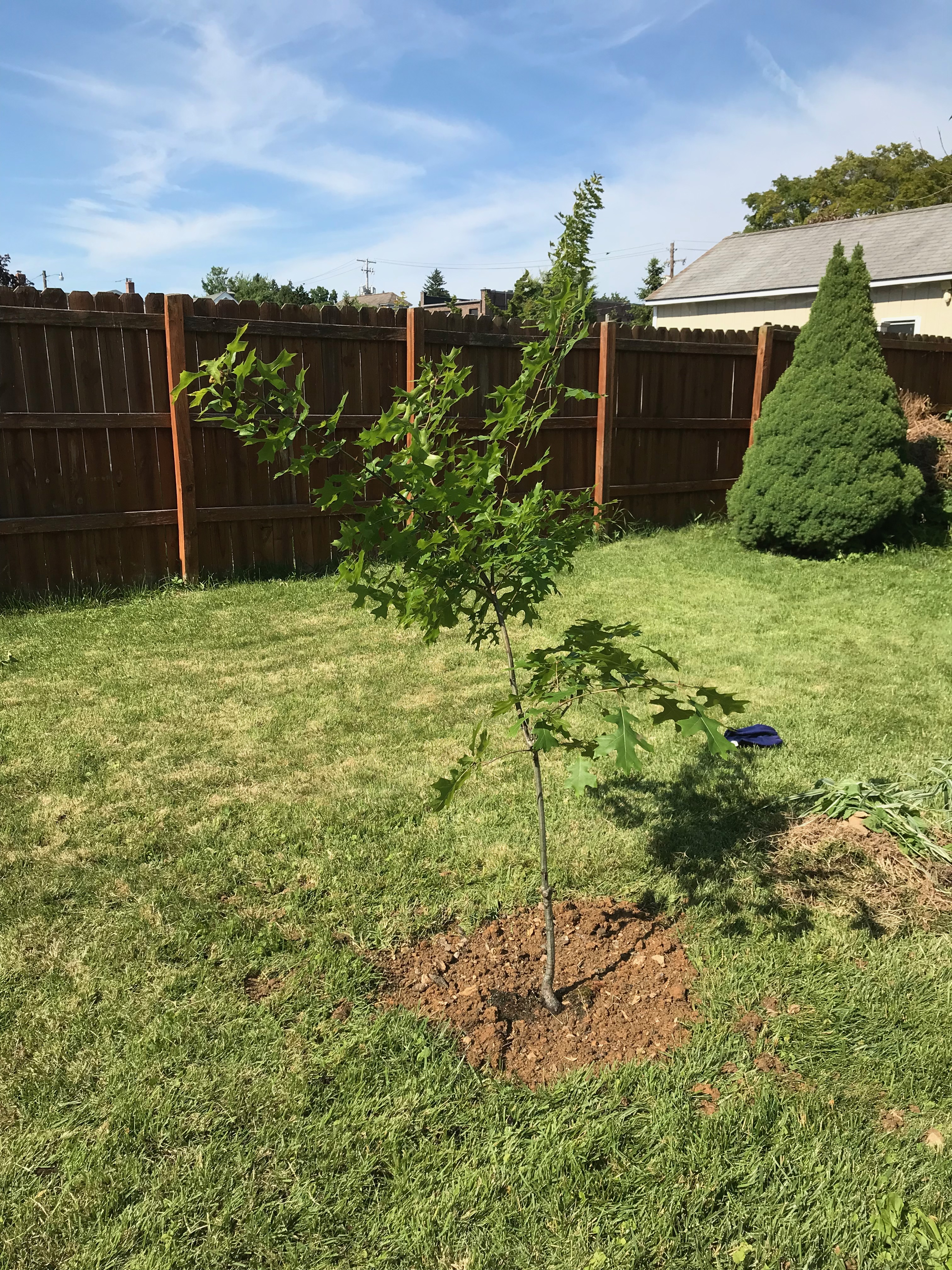
Cutting trees down goes against my principles.  I’ve had to do it a few times and I’ve never felt good about it.  It was yard-waste haul-away, which rarely comes, and the sun was shining like it rarely does.  It was time.  All told, it took a few hours.  The sky looks naked in that corner now.  The green ash is a beautiful, but unruly tree.  We decided to plant a scarlet oak instead.  Edge of the Woods nursery in Allentown sells only native plants.  They recommend oaks for their benefits to the ecosystem.  There’s an optimism about planting a tree that will, hopefully, long outlive you.  It can’t replace that troublesome green ash, but future owners of this house will hopefully appreciate its shade. 

Digging up the yard to transplant this tree made we want to do the same thing again.  And again.  There’s a reason the story of Eden is set in a garden.  It feels natural to be around plants, particularly those that don’t make us itch, or sneeze, and that don’t prickle us with thorns.  A place of trees and cultivated shrubs and flowers.  Yard work dominates my free time for at least half the year, so making it something worth the labor seems a reasonable thing to do.  Trees own the planet in a more righteous sense than humans do.  Many live longer than we do and give back so much to the environment.  I’ll worry about our little tree.  The woman at the nursery said that trees thrive by pushing back against the wind.  It was more than a tree we planted; it was a parable.


Lost Civilizations

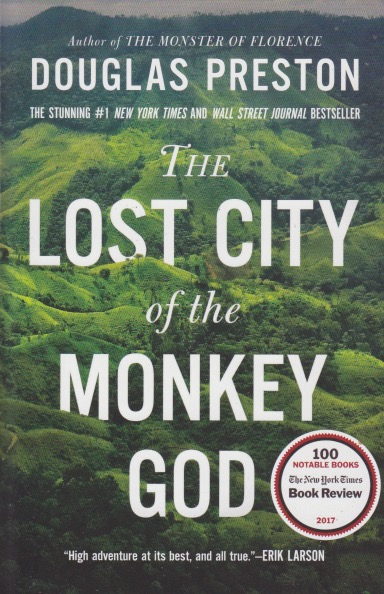
At the rate rain forests are being decimated for our lust for beef, it seems amazing that there are any unexplored regions left at all.  That’s what makes Douglas Preston’s account of visiting the fabled Ciudad Blanco, a lost Honduran city, so compelling.  Like most intelligent people, Preston is ambivalent about the discovery he chronicled.  The pristine jungle he encountered had to be cleared, at least in part, to allow for exploration of a lost civilization.  But what an adventure it was!  The danger of drug lords, a volatile government, large poisonous snakes, and ruins discovered by lidar combine in a true tale of danger and fascination.  As with Rudolf Otto’s description of the holy, this is something that fascinates and terrifies simultaneously.  And it’s controversial.

The Lost City of the Monkey God crosses several boundaries.  It discusses not only “Indiana Jones”-style archaeology, it involves one of the last unexplored places on earth.  It doesn’t sugar-coat the genocide initiated by Europeans—in fact, Preston describes some of the diseases in graphic detail—and he doesn’t excuse the guilt.  The book also addresses global warming and the possibilities of a global pandemic (the book was published in 2017).  Preston contracted Leishmaniasis while in the jungle and notes that as the globe warms up, it is making its way north.  The descriptions aren’t for the faint of heart, nor are his descriptions of the politics of treatment.  The first part of the book, describing the people and the set up of the base-camp show Preston’s chops as a thriller writer.  His encounter with a fer-de-lance had me checking the floor in the dark when I got up in the morning.

The civilization of the city, now known by the more respectable title City of the Jaguar, was unknown.  It was not Mayan.  The city was likely abandoned because of disease brought to the Americas by Europeans.  Even so, his description of the society in which the ruling classes keep their power by displaying their own sanctity that the average person doesn’t question rang true.  Societies from the beginning have used that playbook.  Convince people that the gods (or God) has revealed certain things that they (the ruling class) understand, and everyone else falls in line.  We see it even now as the messianic Trump following falls for it yet again.  This is a quick read, written much alike a thriller.  A few years ago I read Preston’s engaging Dinosaurs in the Attic.  I’m thinking now that some of his thrillers should also be on my list.


Closed System?

Photo credit: NASA, public domain

Nothing is wasted.  Not in nature.  Maybe that’s the true economy of life.  We humans come in and make our habitat in our own image and then start throwing things away.  I’m no great fan of yard work.   I would just as soon let nature take its course, but if it did I’d soon have no place to live.  Trees find their way into the cracks in the foundation and those flaccid white roots we see dangling from the ends of weeds can insinuate themselves into tiny places and slowly expand.  Buildings left without maintenance soon begin to crumble.  I’m reminded of this every time I visit Bethlehem Steel.  Weather, plants, even the occasional raven, slowly tear down what human hubris has built.  And it doesn’t stop there.

We set up a composting area for all those weeds, yes.  A place where we could make our own soil.  After three years it was pretty full and when I went to cut back the ever-growing trees and vines, I learned the bees had claimed our pile for their own.  Not happy to see me poking around their home—not happy at all—they began to hover aggressively.  I got the message.  Nothing is wasted, not even compost.  

Our species is in love with petroleum products.  We can’t live without plastic.  Looking at all the plastic litter around is evidence enough of this one-sided affair.  Our plastics cause so many problems.  They do break down, but never go away.  They get eaten.  Undigestible, they can slowly poison animals.  Whatever isn’t recycled becomes part of us.  Nothing is wasted.

Yard work monopolizes my weekends from May through October.  This year it started in April.  I had to mow the lawn in November.  Really only four months to make it through without the endless cycle of birth, growth, death.  Those who are worried that nature won’t recover from our foolish species haven’t paid close attention.  Even as we live here the seeds find every crevice and life, life is irrepressible!  Scientists try to tell us life is unique to this planet, but looking at its tenacity, how can that possibly be the case?  The tardigrade can survive extreme dehydration, very high pressure, very low pressure, radiation, air deprivation, and starvation.  It seems like the perfect space traveller.  We try to make the world in our own image.  We like to think our version of the world is the one to endure.  Nothing is wasted.  Nothing short of human hubris.


Heat Wave

Kim Stanley Robinson’s The Ministry for the Future wasn’t my favorite book read the first half of this year, but reading the headlines about India’s heatwave took me back to it.  That’s precisely the way the book starts out—with an intense, deadly heat wave in India.  As a nation lacking infrastructure in relation to the size of its population, and lying near the equator, India is particularly vulnerable to global warming.  We all are.  As the planet heats up and weather becomes more erratic and extreme, food shortages will appear.  At the moment we’re concerned because Covid and Putin-War have driven inflation to incredible highs.  A trip to the grocery store or gas station is like a horror film.  Meanwhile the planet’s heating up and Republicans are pushing for four more years of Trump environmental degradation.  Can we please open a window here?

Global warming has been challenged by many because of their religious conviction that the world ought to end.  Apocalypse is probably the Bible’s most dangerous teaching.  Speaking only for myself, I didn’t know there was an Indian heatwave until headlines took a break from Putin-War and America’s mass shooting crisis.  And oh, India’s sweltering under temperatures over 110 degrees.  People are dying.  Birds are falling from the sky in mid-flight.  We had a couple days in the 90s around here before the end of May.  Those were some uncomfortable times.  Meanwhile in India it was twenty degrees hotter.

The human ability to ignore life-threatening problems we create for ourselves in service of our theology is remarkable.  Even as experts declare religion is no longer important, it’s slowing killing us.  We focus our resources on making money, as if money will do us any good when we’re the lobsters in the pot.  As a species we’re amazingly capable.  Billionaires can afford their own private spaceships—something most nations in the world can’t spare cash to buy—and we have proven ourselves endlessly inventive.  When it comes to the basics—the need to believe, for instance—we turn a blind eye and pretend it’ll just go away.  Religion scorned is a very dangerous thing.  I once heard a talk by a scientist presenting a rosy technological future.  I raised my hand and asked about religious objections and he mused, “I hadn’t even thought about religion.”  His future was progressive and optimistic.  Robinson’s is quite a bit less so, although it ends by suggesting we might manage to pull through, with only millions of deaths.  As Donovan says, “It’s time to ask yourself what you believe.”