Smaller Wolves

It was in Maine.  In 1987.  I can’t remember how Paul and I found this place to camp.  I don’t remember making reservations, but we drove along in his 1968 VW Beetle, unpacked a tent along a  rutted logging road, and set up camp for the night.  We were there to try to find moose.  In the middle of the night we were awakened by howling in the woods.  We were many miles from any other humans and nobody knew where we were.  Were there wolves in these woods?  Paul turned to me.  “Wolves don’t attack people, do they?” he asked.  I said no.  He pulled out a very large knife.  “I was in the civil air patrol,” he explained.  “You know what to do with this, right?  If a wolf bites your arm, cut your arm off and run away.” Not the best advice.  As we drifted off to sleep we were awoken again by furious sniffing outside the tent.  The next morning we saw no moose but found tracks all around our temporary home.  We convinced ourselves they were wolf tracks.  They were actually tracks of coyotes.

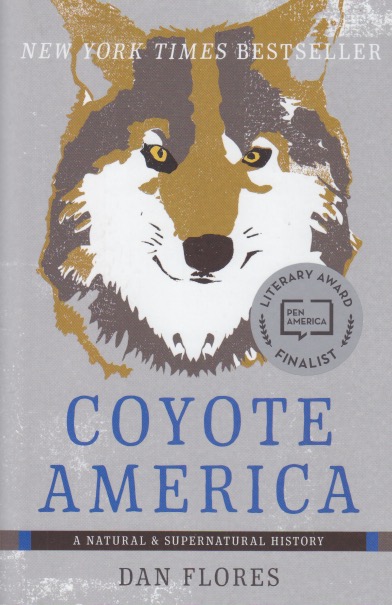
Most people in America have a coyote story to tell.  I can’t recall how I learned about Dan Flores’ Coyote America: A Natural and Supernatural History.  I’ve always been drawn to nature writing, but it was probably the “supernatural” that caught my attention.  This is a fascinating book with a rollercoaster ride through emotional responses.  Flores makes the case that Coyote was the first god of America.  Indian mythology is full of this character and his antics.  But the heart of the book focuses on the many decades of efforts—still ongoing—of the government to eradicate coyotes.  Millions of them have been killed for spurious reasons, largely because the government pays attention to ranchers who pay a lot of money to be minded.  Coyotes naturally find their balance in nature, which we insist on disrupting.  One of their survival strategies has been to move east.  Even moving into cities.

I’ve heard coyotes in Wisconsin, and I saw at least one while out jogging in the early mornings there.  Since moving east I’ve not spotted any, but they are, I know, here.  I’m largely on the side of nature, but the first ever documented adult human wolf fatality took place in another place I’ve camped, Cape Breton Highlands National Park in Nova Scotia, in 2009.  Reading this made my human pride rear up—we don’t face predators well.  The book goes on to touch on how I, and many others my age, learned of coyotes—through Wile E. in animated form.  This book is difficult to read in many parts, but it is an absolutely mesmerizing journey through many lenses of what it means to be American.  Whether you’re canine, or human.


Normal Paranormal

One of my favorite televisions shows of all time is The X-Files.  I didn’t watch it when it originally aired, but eventually got a hankering to see it on DVD.  There are many reasons to like it, including its originality and the dynamics between Mulder and Scully and the sense that governments really do hide things.  As I rewatch episodes I see how much religion plays into it as well.  This post is actually not about the X-Files proper, but about a place in Bethlehem I recently discovered.  I’m not a preachy vegan, but I do like to support the establishments who make such lifestyles as mine much easier.  It was thus that I discovered Paranormal Pizza in Bethlehem.  I wondered about the name, figuring that it was paranormal that you could have non-dairy, non-meat pizza at all.

To celebrate Earth Day we decided to check it out.  The menu has a set of fixed items, each named after an X-Files character.  I was glad to see that I’m not alone in my appreciation of the show.  The pizza’s very good, and I’m sure the college-age crowd that was there would agree with me.  I did wonder how many of them knew the X-Files.  Is it still a thing?  Maybe recent government disclosures have brought it back into the public eye.  Hey, I’m a Bible editor, about as far from the public eye as you can possibly get.  Vegan pizza on Earth Day, however, just felt right.

Foodiness seems to be trending.  A great many options are available in the land of plenty.  Still, I know that vegetarians and vegans in developing countries exist, and many of them for similar reasons to me.  They know animals think and feel.  We promote the myth that they don’t so that we don’t have to feel guilty about exploiting them.  It seems to me that many of our world-wide problems would start to vanish if we realized we can evolve out of being predators.  Cashews and almonds can become cheese.  Soy beans and wheat can become meat.  And peanuts are about the best food ever, in any form.  Then there’s the natural fruits and veg.  Industrial animal farming is perhaps the largest polluter of our planet.  Yesterday was Earth Day.  I was eating a pizza made from wheat, tomatoes, and cashews.  These ingredients might seem a bit unusual.  Paranormal, even.  But that’s precisely the point.  I won’t be waiting until the next Earth Day to go back for more.


Love Your Mother

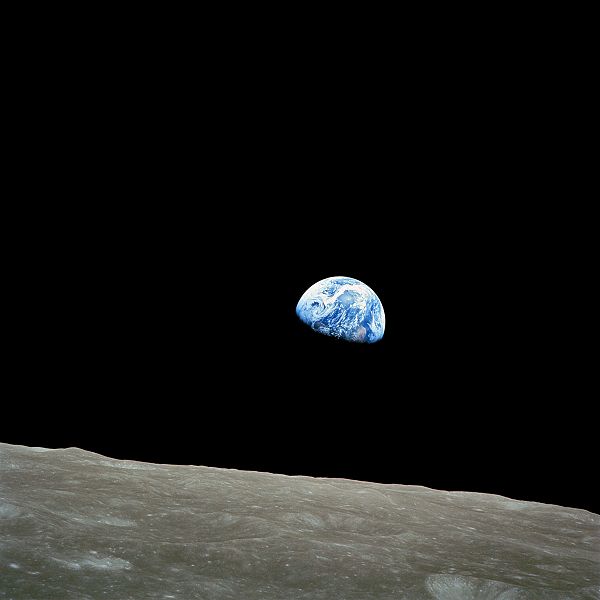
It’s not exactly a birthday, for we don’t know when exactly she was born.  We choose April 22 to think of our mother—the mother of us all.  For many of us concerned about the environment, not only is today Earth Day, but April has become Earth Month.  To me one of the saddest aspects of our environmental crisis is that certain sects of Christianity are largely responsible for it.  Religion working against the betterment of humankind.  So it was in the beginning, is now, and hopefully we won’t have to finish the triad.  Granted, religions help us to keep our mind on spiritual matters.  The problem is when such things become dogma and the real needs of real people are ignored so that a fervently desired fantasy can be lived out by destroying our planet.

In response there are what have been called “deep green” religions.  It’s difficult to gain a critical mass, however, when many of those who think deeply about the environment have left religion out of the equation.  It seems to me that we’ve got to make peace with our evolved tendencies toward religion in order to have any meaningful discussion about this.  Meanwhile global warming continues.  It does so with the blessing of a kind of Christianity that sees this world as expendable and exploitable based on an idiosyncratic reading of Genesis.  Even though all the evidence points in the opposite direction, we have networks (here’s looking at you, Fox), owned by billionaires who know you can sway Christianity simply by kissing your hand to the moon.

It’s my hope that this Earth Day we might start to think about how to integrate some deep green theology into the kind that sees no room for green in the red, white, and blue.  The self-convinced have no desire for conversation about this and those already certain that religion is nothing but superstition tend to agree.  Since antiquity, however, the wise have realized that progress comes from the middle ground.  Politicians, in their own self-interest, have stoked the fires of division and hatred, knowing that they get reelected that way.  Mother Earth, I suspect, is rolling her eyes.  She will survive even if we succumb to our own mythologies.  We need to learn to talk to one another.  We need to accept that we evolved to be religious.  We need to look for middle ground while there’s still dry ground on which to stand.  It’s not exactly a birthday, but it is a holiday that should be taken seriously. It’s only right to love your mother.

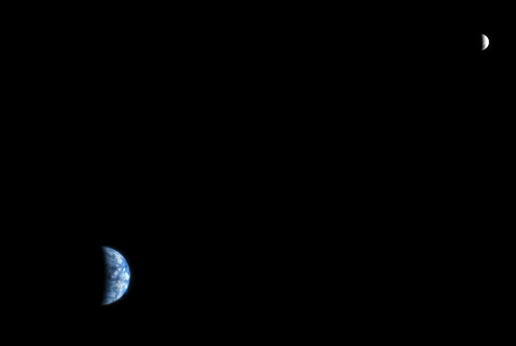
From NASA’s photo library

Easter Weather

The weather doesn’t always cooperate for holidays.  Easter is, at heart, a celebration of spring—life after death.  Around here this holiday has been accompanied by fits and starts in warmer weather and instead of warmer it’s actually colder again.  Just a week ago there was snow in the air.  Life’s that way; you don’t always know what to expect.  I guess I’m still in hibernation mode.  No matter the season, there never seems to be enough time to sleep.  As a youth I always attended sunrise services on Easter.  These days I regularly rise before the sun, so as long as I’m capable it’s like every day is Easter.  But with work.  Even on what many recognize as Easter—which overlaps with Passover this year—the Orthodox feel we have it too early, what with the Julian calendar still being in effect.  It’s all a matter of how we look at time.

As much as I hate mowing, I admire the exuberance of grass.  It’s ready to welcome the longer days by stretching toward the sun.  Drinking in the plenteous rain.  The dandelions have already begun to spread, opening their yellow eyes to all and sundry passing insects.  Easter is a time to reflect on life returning after winter.  And I can’t help but think of those in the southern hemisphere for which Easter falls in the autumn.  The theology fails to match the seasons as life springs up just as winter is about to set in.  The Christian viewpoint is a northern one, keyed to our seasons.  The weather doesn’t always observe the prevailing theology.

Around here Good Friday was a fine, sunny day.  Like most of the fine, sunny days it was a work day.  Now it’s a chillier Easter, the Saturday between being a mix with some rain.  When I was young—eagerly awaking for sunrise services, which I often had a hand in designing—I marveled at how the weather often seemed to cooperate.  Now as I think back, I remember coming out of Good Friday services into the incongruous sunshine and finding many an Easter still bearing an unseasonal chill.  Weather is, of course, a local and global phenomenon.  One person’s chilly Easter is too hot for someone further away.  And for yet others the onset of autumn.  Globalism has taught us to look further, to think in terms of how others might be experiencing this world.  Easter seems an appropriate time to do just that.


April Says

I can honestly say that it wasn’t on my bucket list to mow the lawn while it was snowing.  Friday would’ve been better—sunny and sixty—but I have a 925 and I had a meeting after work I couldn’t get out of.  Saturday it rained all day, which, I know, grass loves.  Sunday was the only opportunity left in the weekend, and with stocking cap and gloves on, I went to mow.  Snow started to fall.  It must be April.  I’ve always believed that “April fools” has an origin in the weather.  I can’t prove it, but it seems just when you think it’s safe to go without a coat, suddenly winter.  Back when we lived in Wisconsin we took a family fun trip to Wisconsin Dells for my wife’s birthday in April.  It snowed.  We rode the famous ducks and then played mini-golf amid squalls.  April fools.

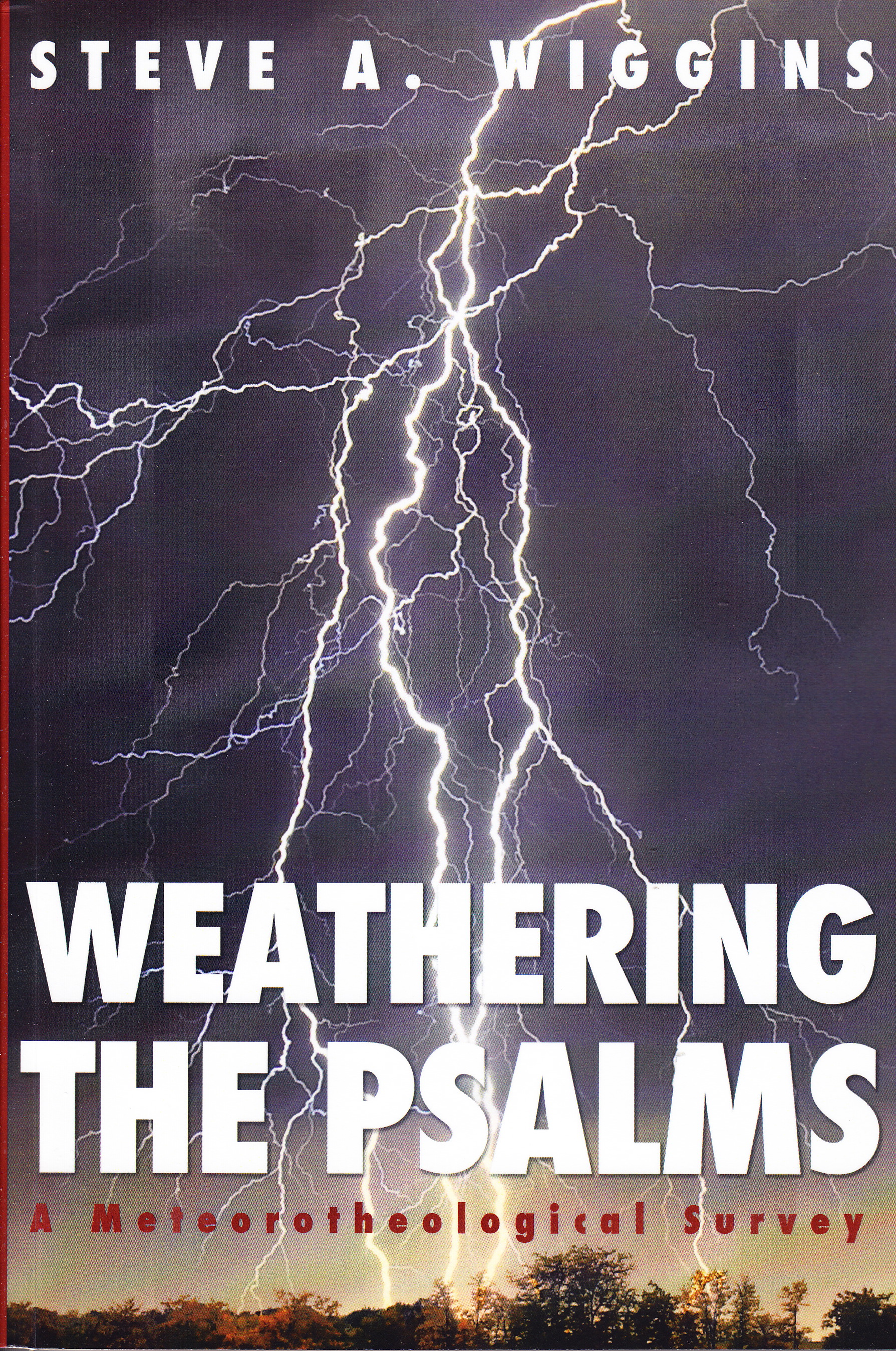
The weather influences many aspects of life.  Why it’s considered a neutral topic I don’t know.  It’s kind of like talking about God.  The only thing we all agree on is that we can’t control it.  Well, we can certainly influence it.  Global warming sets strange weather patterns into motion.  It was in the seventies less than a month ago.  (Which is why grass was unruly just as April began its double-digits.)  Then there’s all the rain.  See what I mean about God?  Divinity and weather were in mind as I worked on Weathering the Psalms.  I still wrestle with how these things relate to each other in the human psyche.  We do tend to think the weather is somehow a judgment or blessing.

My family knows I complain about it religiously.  And mowing isn’t my favorite activity in any weather.  It was late November and I was still mowing.  April (which fools) seems to be a little too soon to be starting that all over again.  Committing at least one day of every weekend until nearly next Christmas to cutting grass.  It’s a long-term commitment.  I suspect those who benefit (monetarily, for we all lose, existentially) from global warming probably don’t mow their own lawns.  They probably have their private jets that don’t need to be jump started because that worrying idiot-light on the dash is on again and they’re afraid to use it.  It’s life in a different key.  Still, we all share the weather.  When it affects crops, or swamps New York City, we’ll all be bound to notice.  Enough grumbling.  It’s time to get the weed-whacker fired up while the icicles start to form.  April fools.


Spring Forward

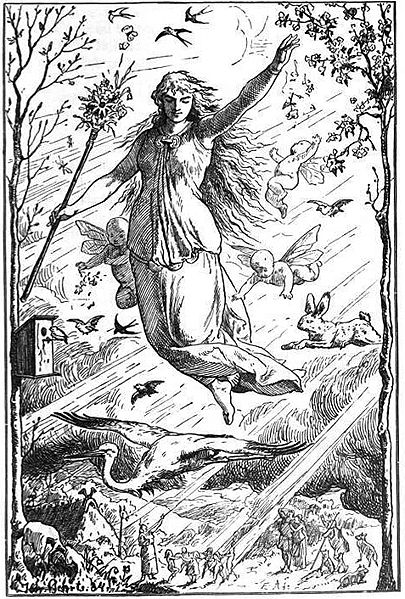
Spring officially arrives in the northern hemisphere today.  Days will be longer than nights for six months after this and many pagans will be celebrating Ostara.  Named after Ēostre, the goddess who apparently gave Easter its name, Ostara is an amalgam of the various equinox feasts and observations of antiquity.  The ancient Celts, as far as we know, held four particular holidays that fall roughly halfway between the solstices and equinoxes, with February marking Imbolc and Beltane yet to come in May.  We don’t know that they celebrated the equinox, but we don’t know that they didn’t either.  Equinoxes are a bit difficult to measure precisely with the sun’s position overhead, but we know the clever folks responsible for Stonehenge and Maes Howe could do such things, even in antiquity.

Ostara, maybe

According to Bede the Anglo-Saxons had several feasts for the goddess Ēostre.  Luckily (from his perspective), Christians had Pascha (Easter) some time near the equinox.  It’s late this year, however, since we just had the full moon (the “Worm Moon”) on Friday.  Easter is the first Sunday after the first full moon after the vernal equinox.  So today we’ve got Ēostre.  We know little of her beyond Bede.  Ancient Germanic peoples, like the ancient Celts, didn’t keep extensive written records.  Their religions, based on what we know of most ancient religions, were likely lively affairs.  Spring is a celebratory season and already buds and blossoms are appearing around here.  Goddess or no, there’s a feminine wonderment about the season.  It’s difficult not to feel at least a little hopeful.

Ancient deities have long been a source of fascination.  Eclipsed by an aggressively political Christianity, many of them vanished without leaving us many traces at all.  The human mind seems inclined to create gods to explain this strange but wonderful world we inhabit.  It’s clear that it wasn’t made just for us.  The birds and insects, and even the elusive reptiles and amphibians, are beginning to reappear.  Many mammals and some birds rough it through the cold hoping to emerge again into the warmth of spring.  We’ve had some warm days already, but there are likely more cold ones to come.  As the pagan gods, as Ēostre remind(s) us, transitions come in fits and starts.  Setbacks are part of progress.  Many of us believe the moral arc of the universe tends toward what is good and right.  It may take a long time to arrive, but the equinox, in its very name, bears the clue.


Future Ministry

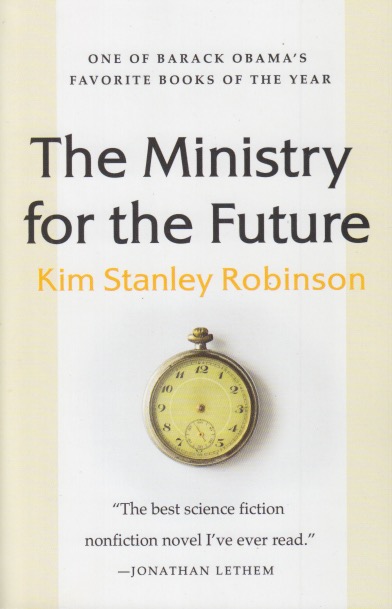
I’ve been on the Green Committee at work almost since I started the job.  Occasionally for Earth Day we’ll have a book discussion.  Usually it revolves around nonfiction books that my press publishes.  This year they selected Kim Stanley Robinson’s The Ministry for the Future.  It’s an environmentalism tale of what global warming may well be like and the political machinations it might take (and the millions of deaths along the way) before we stop burning carbon.  It’s a long and detailed and political story.  Robinson is known as an intellectual science fiction writer and there are sci-fi elements to the book, but its style is realist and its outlook, while ultimately hopeful, is staid.  Even when humans start to move in the right direction.  It’s also a very long book.

Reading it got me to thinking again of a somewhat bewildering truth: environmentalism books tend not to sell overly well and sustained reading, even by supporters, is difficult.  Many of us know that we’re beyond the tipping point for environmental disaster.  The Trump years assured us that it is coming.  One of the elements Robinson makes clear is just how politically entrenched it is.  Perhaps that’s one of the reasons for the despair.  The vast majority of people in the world want a more environmentally conscious government, but plutocracy tends to bring narcissists to the top and the needs of all others are less important.  In Robinson’s version of the story, targeted violence is the only thing that works.  Near the end of the story an interesting idea is raised: the Ministry of the Future (which is a government ministry, not the church kind) concludes a new religion is needed.

The masses of people, you see, are followers.  Religious leaders reinforce the idea that God told their founders—and by extension their followers—the only truth.  Their jobs (and ministries are jobs) include reinforcing those ideas to people who’ve been raised or converted to that particular brand of religion.  A number of New Religious Movements, and even a couple of prescient ancient religions, have been purposely constructed.  The trick is to get followers to accept that the religion is legitimate.  Most western religions around today have been based on the idea that humans can do whatever they want with the planet—even destroy it to force God to return.  I kind of like Robinson’s idea better.  Perhaps that’s why religions form around movies like Avatar.  Not a bad thought, when your job has you reading a sci-fi novel.  A religion saving the earth feels like a novel idea.


Going Green

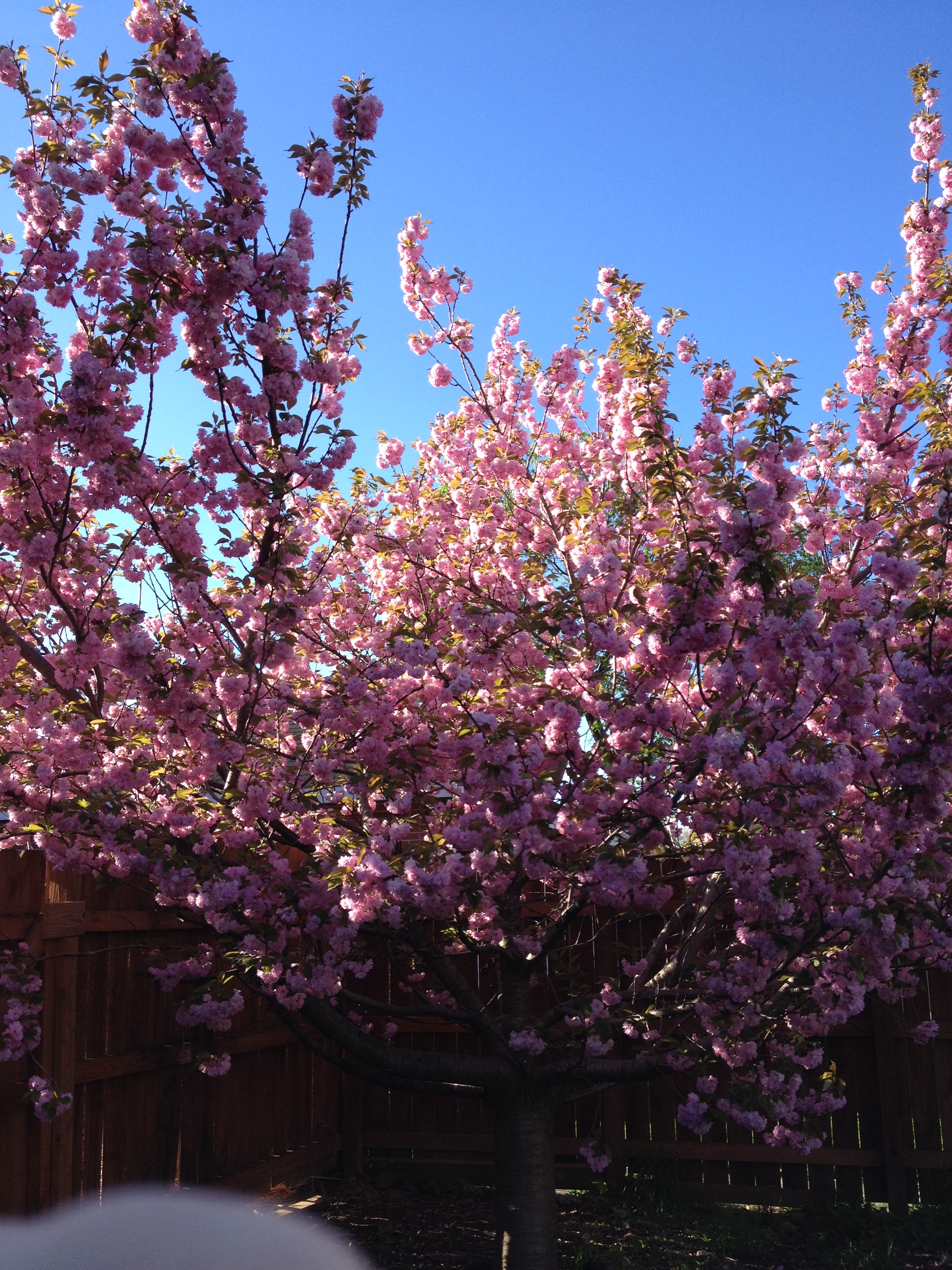
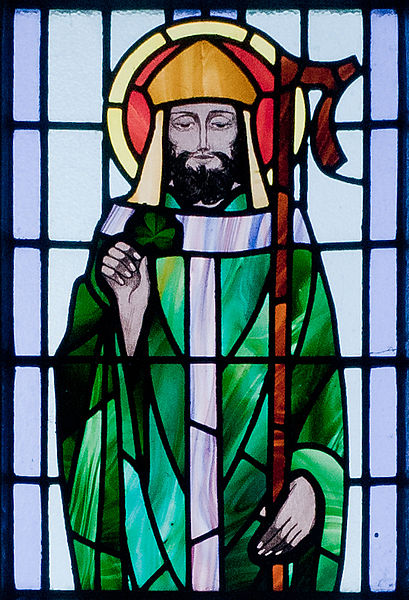
It’s easy to get eager at this point in the year.  A month and a half after Groundhog Day, we’re at St. Patrick’s, and just a few days from the equinox itself.  Around these parts we’ve had some warm weather after last weekend’s bomb cyclone and most of the snow is now gone.  We’re ready for progress.  We’re tired of winter and huddling indoors.  The crocuses are defiantly open although the warning saying in Wisconsin went “three snows on the crocuses.”  St. Patrick’s green is the fecund green of spring.  Although nobody gets them off from work, the seasonal holidays are signs of hope.  It doesn’t matter which season into which we’re transitioning, there’s beauty ahead.  It’s the kind of change many people enjoy.

Look closely at a flower.  (If the crocuses aren’t up yet in your area they will be soon.)  Open and inviting, it offers insects what they need in return for a bit of cross-pollination.  Yesterday I saw my first wasp looking for a place to build a nest on our house, reminding me to be careful opening doors now because no transition is completely smooth.  Spring is hope in season form.  As much as we may appreciate winter with its pristine chill, spring reminds us that food is soon to be available from the bosom of the earth itself.  The songbirds, now back in force, have been eagerly anticipating it.  They are the heralds of transition, the little winged messengers of assurance.

Photo credit: Andreas F. Borchert, Wikicommons

It’s time to step outside and breathe deeply.  The muddy smells of a thawing earth blend with the first fruity hints of buds beginning cautiously to open.  The transition’s not straightforward.  There will be setbacks and chills yet to come.  Nevertheless, the die is cast—St. Pat waves his clover as if to say “This is what lies ahead, as brown becomes green.” Our world tilts as it spins and brings us the delight of seasonal changes.  Saints and birds and flowers must agree on this, even should they differ on the details of what is needful.  It’s a day for celebration, even though it’s a Thursday, a work day with perhaps a respite—after hours of course—to have some fun.  Green is about to reappear.  We wear it today to encourage the timid plants, yes, we need hope.  We look around the world and know that hope is what we really all crave.  


A Little Fuzzy

Animals don’t obey the law.  As I observed just a few days ago on this blog, they don’t recognize indoors or outdoors.  And they certainly don’t respect private property.  Conflicts are sure to arise.  Mary Roach turns her impressive writing skills to address this, and related issues in Fuzz: When Nature Breaks the Law.  I’ve read an academic book on this subject as well, and I have to say that one wasn’t as much fun.  Roach has a way of bringing the humor out of even potentially trying subjects such as how do we scare carrion birds away from human corpses?  How do we eliminate pests that we’ve accidentally introduced?  (Think of rabbits in Oceania.)  How do we stop birds from getting sucked into jet engines?

Although the book handles these with a light touch, as with most of Roach’s work, it also raises some serious issues.  Solutions to introduced species can involve poisoning that also kills native species it’s designed to protect.  Genetic engineering may have (likely will have) unforeseen effects.  What is a dominating species to do?  We have laws about ownership, after all, and we expect them to be obeyed.  Squirrels, for example, won’t care that you just had to have a sink replaced at great expense.  They’ll gnaw their way in anyway, creating a new crisis right on top of the old one.  Deer cross highways, their brains not yet evolved enough to interpret what a car is—they’ve only been around for just over a century.  (The cars, not the deer.)  They sometimes cross runways too.  (The deer.)  We like animals well enough in the wild— in fact we long to see them.  When they get into our space, however, our rules don’t apply.

As long ago as the Bible, and perhaps before, the question arose of punishing animals.  If your ox gores someone what should you do with it?  I’m not sure Homo sapiens are the best species to be making such decisions.  We’ve shown colossal poor judgment (think of Trump and try to disagree).  We’re actively destroying our own environment, the terrestrial equivalent of defecating in our own fishbowl.  What gives us the right to punish other creatures who are more in tune with what nature tells them to do?  Perhaps the biggest takeaway from all of this is that we may try to make the rules, but the rest of the planet responds to what we might call a higher power.  I’m glad that writers like Mary Roach can show the fun side of it all.


Thinking about Thinking

I’ve been thinking about thinking quite a bit.  My lifelong fascination with religion is part of this, of course.  So when someone pointed out Bridget Alex’s article “The Human Brain Evolved to Believe in Gods” in Discover, I had to ponder it.  The idea, here supported by science, is that people evolved survival traits that lent themselves to religious belief.  That religious thinking was a byproduct that eventually took on a life of its own.  Evolution works by giving a reproductive advantage to one trait over another—which is how we get so many types of dogs (and maybe gods)—and those that disposed people to be religious did just that.  Elaborate religions evolved from these basic traits.  Alex suggest there are three: seeing patterns, inferring intention, and learning by imitation.

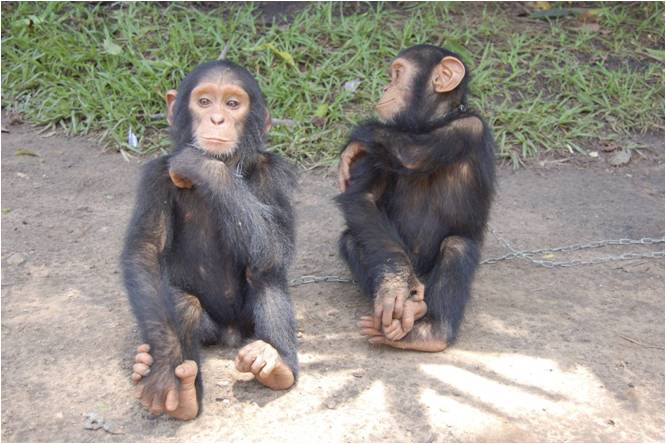
While there’s a lot of sense here, the reductionism doesn’t ring true.  The need to explain away religion also seems uniquely human.  Ironically, the idea that we are somehow special compared to other animals derives from a biblical worldview from which science has difficulty divorcing itself.  One of the greatest ironies of the science versus religion debate is that scientific thinking (in the west) developed within a worldview formed by Christianity.  Many of the implications of that development linger, such as the supposition that animals can’t have consciousness, or “souls.”  We watch a chimpanzee in an experiment and deduct points when they don’t do things the way a human would.  We thus confirm the biblical view in the name of science and go home happy.

Photo credit: Afrika Expeditionary Force, via Wikimedia Commons

I have no doubt that people evolved to be religious.  There are certainly survival benefits to it, not least group building and shared purpose.  I do wonder that science doesn’t address the elephant in the room—that we have limited receptors for perceiving specific stimuli, such as light and sound, but that there are other phenomena we don’t perceive.  We build instruments to measure things like x-rays and neutrinos and magnetism, but we don’t sense them directly.  How can we possibly know what we might be missing?  I suspect the real problem is we don’t want to admit willfulness into any other part of the universe.  Humans alone possess it.  Some scientists even argue that our own sense of will is an illusion.  It’s not difficult to believe that we evolved to be religious.  It’s also not difficult to believe that we pick up hints of forces that have yet to be named.  An open mind, it seems, might lead to great rewards.


Squirrel Wisdom

In a dangerous world prey animals have evolved to over-multiply.  That’s clear from watching the gray squirrels from my office window.  There’s a stand of maybe a dozen pine trees across the street, and some days it’s like the bark itself is crawling, there are so many squirrels chasing each other.  Especially when mating season begins.  Of course, squirrels get into everything.  We have a problem with them in our improperly sealed garage.  They have a biological need to gnaw and really animals don’t share the human concept of indoors versus outdoors.  They don’t understand that we want them outside, not in.  This leads to my love-hate relationship with squirrels.  I’m usually on the side of the prey, but they can be a real nuisance.  Still, they’re cute and furry and they take their chances going, well, outside.

So the other day there was a kind of love fest, a Woodstock of squirrels, if you will, in those pine trees.  The sun was out and the hormones must’ve been raging like a high school Friday.  A few minutes later I glanced outside and couldn’t see a single one.  A blur of wings caught my eye as a red-tailed hawk landed on a branch.  All the squirrel play had ceased.  Where there had been dozens just moments ago, not a single individual could now be seen.  The hawk seemed in no hurry, lazily flapping from branch to branch, swiveling its head around, watching.  It might not’ve been in a squirrel mood that day, or the prey might’ve been too well hidden.  Or maybe they knew if you play the game right, predators will just go away.

The squirrels’ conflicting urges both had to do with survival.  In a way from which we could learn, they seem aware that the group outweighs the individual.  Something about their level of consciousness gives them a deep wisdom.  We tend to call flighty individuals among our own species squirrelly, or we can say that we’re feeling squirrelly about something.  Rodents, however, are smart.  In fact, they understand some things better than humans do.  After all, there are so many of them because our species has killed off most of their predators, just as we’ve done for deer.  There’s a reason there’s so much road kill.  Watching the abundance of squirrels it becomes clear that they’re in tune with the ways of nature.  They have to chew or their teeth will grow too long.  And they definitively don’t know the differences between outdoors and in.  Still, they deserve our respect, even if they’re occasional nuisances.


Earth Haunting

I’m still not sure what I saw.  I’m not even sure how I learned about it (it was likely either Theofantastique or Horror Homeroom), but In the Earth is a very strange film.  I can’t say it’ll be on my shelf of favorites—there’s a little too much Wolf Creek here for that—but I can say it’s something I’ll be thinking about for some time.  Body horror isn’t my favorite, but I do like to remind myself periodically of the dangers of going into the woods.  Released just last year, In the Earth is a pandemic-response film that critics say is funny (I kind of missed that aspect, I’ll admit) about a scientist and a ranger who are journeying into a particularly fecund woodland outside Bristol for research.  Martin, the lead, has an ulterior motive in that the researcher already in the woods is a former girlfriend.

Martin heads out with Alma, the ranger, and they fall into a trap set by Zach, and I suppose the humor comes in Zach’s constant observations that Martin’s wounds have gotten worse and require backwoods surgery.  The couple escape Zach (who’s clearly deranged) after he drugs them and poses them in odd clothes to propitiate the spirit of the woods.  They find their way to Olivia (the researcher/former girlfriend) and her research station only to learn Zach is her ex-husband.  And here things get weirder.  To communicate with the earth, Olivia first used an old ritual book that includes the Malleus Maleficarum and additional material.  This ancient book tells how to decipher the language of the earth through the use of light and sound with the aid of a runic standing stone that’s on no map.

Religion plays a major part in the horror here.  Olivia and Zach both want to sacrifice Martin at the runic stone.  Anyone who can watch this without seeing echoes of Abraham and Isaac probably has fewer religious nightmares than I do.  Martin, they all say, is so innocent and straightforward.  Alma keeps on trying to get Martin out of the woods but either Zach or Olivia, or the forest itself via a toxic cloud of mushroom spores, prevents them.  There are so many flashing strobes and intercut images from the spores and oddly disturbing sounds to make out what really happens at the end of the film, but one thing is clear.  Zach and Olivia have taken a religious text too literally and doing so leads them to sacrifice the innocent.  Almost biblical, no?


Energized

I grew up in Pennsylvania, but there’s a lot I don’t know about the commonwealth.  (I do know that it’s a commonwealth rather than a state.)  My parents weren’t educated—neither one finished high school—so I didn’t have a lot to go on at home.  I recently learned that it is the second largest energy producing state in this somewhat tenuous union.  Texas is, of course, first.  I suspect this is because the Keystone State is old.  Not because it was one of the original thirteen colonies (which it was), but because the Appalachians around here are ancient and abundant in coal, oil, and natural gas.  And speaking of natural gas, the state houses of congress are dominated by Republicans.  The state motto should probably be “Burn, baby, burn.”  Given the number of Republicans, it is also one of the most corrupt states.

Even in the rural parts where I grew up, it was clear that energy was a huge part of our history.  The petroleum industry began in Pennsylvania.  Col. Edwin Drake’s well at Titusville is still producing.  The oil fields here are shallow (speaking of the GOP), however, and the interest shifted to Texas where, well, everything’s bigger.  Growing up, refineries were a familiar sight.  One of my vivid childhood memories is witnessing a refinery fire.  I was too young to really understand.  My brothers and I were outside playing when it started to snow in the summer.  It wasn’t really snow, it was hot ashes falling from the sky from a refinery fire about five miles away.  We later drove out to see the huge vats melted like wax, charred and rusted under what had been an industrial paint facade.  Petroleum companies are like that.

My second hometown of Rouseville lived under constant threat of a refinery fire.  The small town of about 800 was completely dominated by a Pennzoil refinery that took up much of the valley.  We trembled whenever the refinery sirens went off.  My life may have been shortened by breathing in all those toxic fumes.  Big petroleum comes with massive costs.  We know that alternative sources of energy are available, but we have very rich people who stand to lose some of their vast fortunes if we move away from fossil fuels.  There’s much about Pennsylvania that I don’t know.  I’ve lived here longer than in any other state.  And I, for one, would like to see this fascinating commonwealth work for the betterment of the world it inhabits instead of rewarding the bad behavior of the wealthy.


Carton Thoughts

Did you know they’re recyclable?  Milk cartons, that is.  In our vegan efforts we switched to non-dairy milk years ago.  Unfortunately the plant-based milk industry doesn’t use gallon containers, so we buy the 2 quart (sometimes smaller) paper cartons.  Our community has a pretty good recycling program, but it doesn’t include cartons.  They are perfectly recyclable, however.  I’m saving them up to mail to the places Carton Council lists.  We can reduce waste, if we have a will to do so.  I know people who live in states with no recycling programs.  These states tend to lean red.  The world, however, doesn’t belong to anyone.  We need to learn to pick up after ourselves.  Take a look at the Carton Council webpage.  Sign their petition.

A large part of the problem is that we’ve allowed ourselves to be convinced that happiness involves consuming.  Our entire capitalist system is based on consumption.  We over-package what we consume, comestible or not.  There’s the ubiquitous plastic wrap, the box, the inner lining.  Often you can’t find the item you need in a local store so it has to be shipped.  All that wrapping.  All that waste.  One of the things environmentalists know well is that people quickly lose enthusiasm for saving their only planet.  The topic is depressing and overwhelming.  We’ve been living like there’s no tomorrow for at least half a century now.  Small steps can help, however.  Paying to ship recyclables afield isn’t the perfect solution, but it feels better to be doing something.

Economics is called the dismal science for a reason.  At the root of it, it seems, is that we’ve valued money above humanity.  And our environment.  One thing that Christianity got right, before it was sold, is that we should think of others.  Capitalism sees others in terms of assets or liabilities.  If our actions harm others—including the unborn that evangelicals are so concerned for—shouldn’t we be doing something about it instead of sitting around waiting for a miracle?  Some containers simply can’t be recycled.  Some devices can’t be made without rare earth metals.  Some jobs requite on-site workers and the travel they expend.  Not all goods are found where they’re needed.  But we can stop wasting perfectly good recyclable materials.  Clothes returned to online retailers often end up in the trash.  Why can’t what is sold also be given away if returned?  At least the needy could keep warm.  Maybe it’s possible to make that dismal old science smile by taking care of the resources we have.


Love Letter

One of the more insidious things about religions is their claim to exclusivity.  The belief than any religion is the “only true religion” is bound to run up against the fact that there are many religions in the world, most of them sincerely believed.  We have much to learn from religions outside the one (if any) we were raised in.  I’ve known about Thich Nhat Hanh for quite a few years now.  One of his books was published (perhaps republished) by Routledge.  As their religion editor I was familiar with it, but as he was not “my author” (that’s the way publishing works), I didn’t contact him.  One of the most famous Buddhist religious teachers, Thich Nhat Hahn strives to transcend religion, which seems like a noble goal.  His Zen approach is simple and important.

This book’s title, Love Letter to the Earth, indicates what it is.  A reflection on environmental sensibility, it includes literal love letters to the planet.  Arguably it is probably a book best read in small batches with time to contemplate between each reading.  Although some aspects are clearly Buddhist, there are also noticeably Christian elements as well.  Christian spiritual leaders, such as Thomas Merton, knew there was no inherent conflict between Christianity and Buddhism.  Thich Nhat Hanh is also remarkably prolific, having written over 150 books.  World religious leaders need to take a lesson here concerning speaking out about environmental justice.  Certainly there are those who will disagree with aspects of his theology, as reasonable and important as it is.  The message is larger than that.

This book is based on the truth that we are all made of this universe and we contain within ourselves that universe.  The earth is our mother, understood by Nhat Hahn in an almost, if not literally, literal way.  While this isn’t news it is nevertheless profound.  When religions are used as excuses to attack the earth they cease to be true in any sense.  Those who don’t buy that perverted outlook are being condemned by those who do.  The earth is our home and it is our responsibility to preserve it not only for our own sake, but that of all creatures.  Thich Nhat Hanh does without being judgmental.  He instead calls for a religion that takes other religions as part of a non-conflictual belief system.  Religion starts wars.  Wars, of course, come at great cost to the planet, quite apart from the human suffering.  There is much wisdom in this slim book which would benefit many to read.