Energized

I grew up in Pennsylvania, but there’s a lot I don’t know about the commonwealth.  (I do know that it’s a commonwealth rather than a state.)  My parents weren’t educated—neither one finished high school—so I didn’t have a lot to go on at home.  I recently learned that it is the second largest energy producing state in this somewhat tenuous union.  Texas is, of course, first.  I suspect this is because the Keystone State is old.  Not because it was one of the original thirteen colonies (which it was), but because the Appalachians around here are ancient and abundant in coal, oil, and natural gas.  And speaking of natural gas, the state houses of congress are dominated by Republicans.  The state motto should probably be “Burn, baby, burn.”  Given the number of Republicans, it is also one of the most corrupt states.

Even in the rural parts where I grew up, it was clear that energy was a huge part of our history.  The petroleum industry began in Pennsylvania.  Col. Edwin Drake’s well at Titusville is still producing.  The oil fields here are shallow (speaking of the GOP), however, and the interest shifted to Texas where, well, everything’s bigger.  Growing up, refineries were a familiar sight.  One of my vivid childhood memories is witnessing a refinery fire.  I was too young to really understand.  My brothers and I were outside playing when it started to snow in the summer.  It wasn’t really snow, it was hot ashes falling from the sky from a refinery fire about five miles away.  We later drove out to see the huge vats melted like wax, charred and rusted under what had been an industrial paint facade.  Petroleum companies are like that.

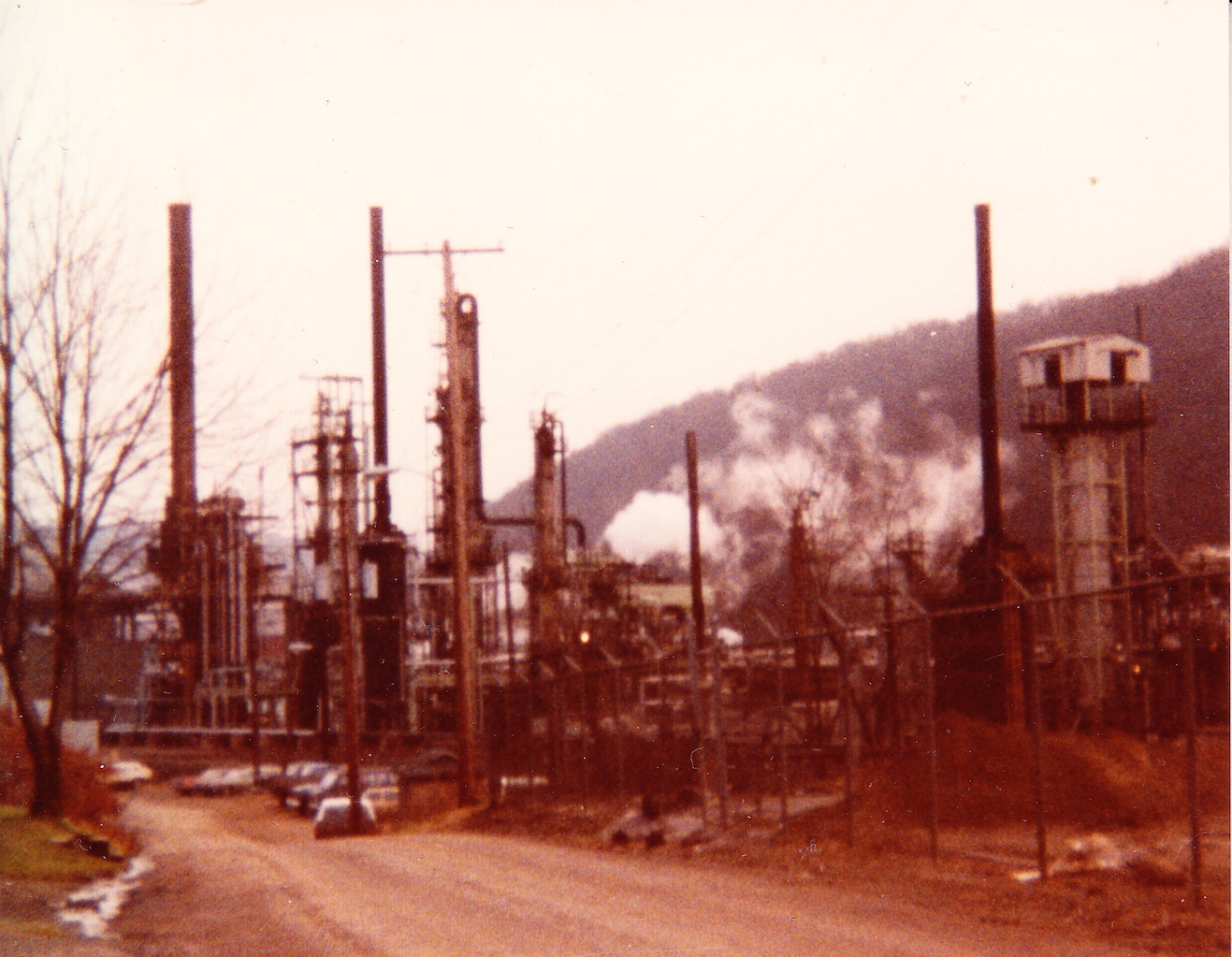
My second hometown of Rouseville lived under constant threat of a refinery fire.  The small town of about 800 was completely dominated by a Pennzoil refinery that took up much of the valley.  We trembled whenever the refinery sirens went off.  My life may have been shortened by breathing in all those toxic fumes.  Big petroleum comes with massive costs.  We know that alternative sources of energy are available, but we have very rich people who stand to lose some of their vast fortunes if we move away from fossil fuels.  There’s much about Pennsylvania that I don’t know.  I’ve lived here longer than in any other state.  And I, for one, would like to see this fascinating commonwealth work for the betterment of the world it inhabits instead of rewarding the bad behavior of the wealthy.


Carton Thoughts

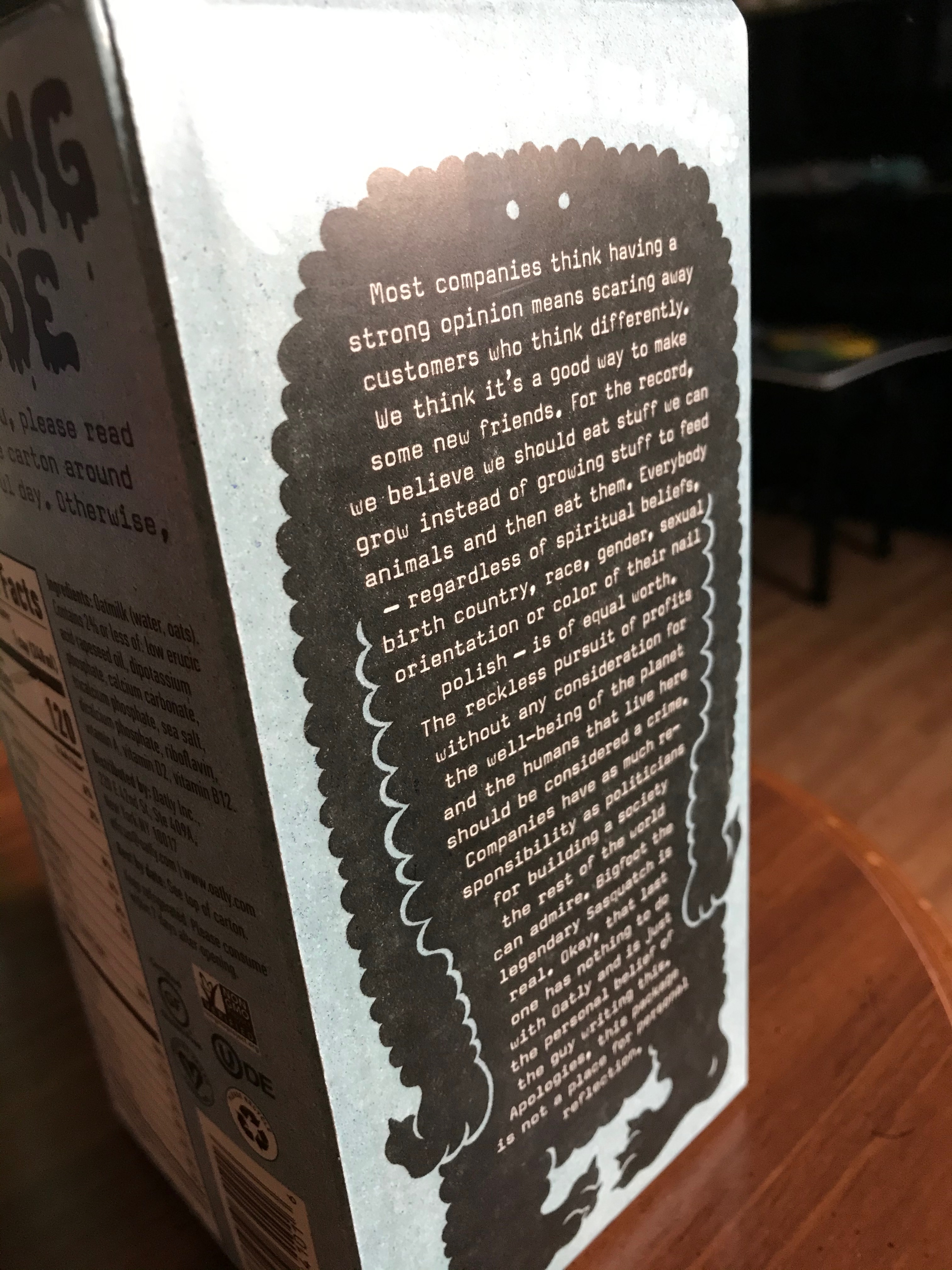
Did you know they’re recyclable?  Milk cartons, that is.  In our vegan efforts we switched to non-dairy milk years ago.  Unfortunately the plant-based milk industry doesn’t use gallon containers, so we buy the 2 quart (sometimes smaller) paper cartons.  Our community has a pretty good recycling program, but it doesn’t include cartons.  They are perfectly recyclable, however.  I’m saving them up to mail to the places Carton Council lists.  We can reduce waste, if we have a will to do so.  I know people who live in states with no recycling programs.  These states tend to lean red.  The world, however, doesn’t belong to anyone.  We need to learn to pick up after ourselves.  Take a look at the Carton Council webpage.  Sign their petition.

A large part of the problem is that we’ve allowed ourselves to be convinced that happiness involves consuming.  Our entire capitalist system is based on consumption.  We over-package what we consume, comestible or not.  There’s the ubiquitous plastic wrap, the box, the inner lining.  Often you can’t find the item you need in a local store so it has to be shipped.  All that wrapping.  All that waste.  One of the things environmentalists know well is that people quickly lose enthusiasm for saving their only planet.  The topic is depressing and overwhelming.  We’ve been living like there’s no tomorrow for at least half a century now.  Small steps can help, however.  Paying to ship recyclables afield isn’t the perfect solution, but it feels better to be doing something.

Economics is called the dismal science for a reason.  At the root of it, it seems, is that we’ve valued money above humanity.  And our environment.  One thing that Christianity got right, before it was sold, is that we should think of others.  Capitalism sees others in terms of assets or liabilities.  If our actions harm others—including the unborn that evangelicals are so concerned for—shouldn’t we be doing something about it instead of sitting around waiting for a miracle?  Some containers simply can’t be recycled.  Some devices can’t be made without rare earth metals.  Some jobs requite on-site workers and the travel they expend.  Not all goods are found where they’re needed.  But we can stop wasting perfectly good recyclable materials.  Clothes returned to online retailers often end up in the trash.  Why can’t what is sold also be given away if returned?  At least the needy could keep warm.  Maybe it’s possible to make that dismal old science smile by taking care of the resources we have.


Love Letter

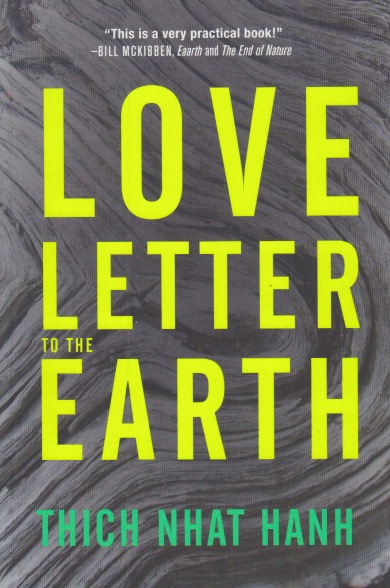
One of the more insidious things about religions is their claim to exclusivity.  The belief than any religion is the “only true religion” is bound to run up against the fact that there are many religions in the world, most of them sincerely believed.  We have much to learn from religions outside the one (if any) we were raised in.  I’ve known about Thich Nhat Hanh for quite a few years now.  One of his books was published (perhaps republished) by Routledge.  As their religion editor I was familiar with it, but as he was not “my author” (that’s the way publishing works), I didn’t contact him.  One of the most famous Buddhist religious teachers, Thich Nhat Hahn strives to transcend religion, which seems like a noble goal.  His Zen approach is simple and important.

This book’s title, Love Letter to the Earth, indicates what it is.  A reflection on environmental sensibility, it includes literal love letters to the planet.  Arguably it is probably a book best read in small batches with time to contemplate between each reading.  Although some aspects are clearly Buddhist, there are also noticeably Christian elements as well.  Christian spiritual leaders, such as Thomas Merton, knew there was no inherent conflict between Christianity and Buddhism.  Thich Nhat Hanh is also remarkably prolific, having written over 150 books.  World religious leaders need to take a lesson here concerning speaking out about environmental justice.  Certainly there are those who will disagree with aspects of his theology, as reasonable and important as it is.  The message is larger than that.

This book is based on the truth that we are all made of this universe and we contain within ourselves that universe.  The earth is our mother, understood by Nhat Hahn in an almost, if not literally, literal way.  While this isn’t news it is nevertheless profound.  When religions are used as excuses to attack the earth they cease to be true in any sense.  Those who don’t buy that perverted outlook are being condemned by those who do.  The earth is our home and it is our responsibility to preserve it not only for our own sake, but that of all creatures.  Thich Nhat Hanh does without being judgmental.  He instead calls for a religion that takes other religions as part of a non-conflictual belief system.  Religion starts wars.  Wars, of course, come at great cost to the planet, quite apart from the human suffering.  There is much wisdom in this slim book which would benefit many to read.


Global Swarming

It’s a veritable horror trope.  The swarm, that is.  We fear being overwhelmed by vast numbers of apparently innocuous insects or arachnids, although they are much smaller than us.  It’s their logistical superiority, and perhaps their utter disregard of personal space.  Summer at Nashotah House was the time of the earwigs.  They came out in such numbers that no room in the house was safe from them.  There was a horror element to pulling your toothbrush out of the holder only to find one hanging onto the place you were about to put your fingers.  Or opening the refrigerator to find that one had crawled into the butter.  Any time you picked something up you might find an earwig under it.  They would crawl up the walls and across the ceiling.  Other places on campus would be overrun with ladybugs or black flies.  It was in the woods, after all.

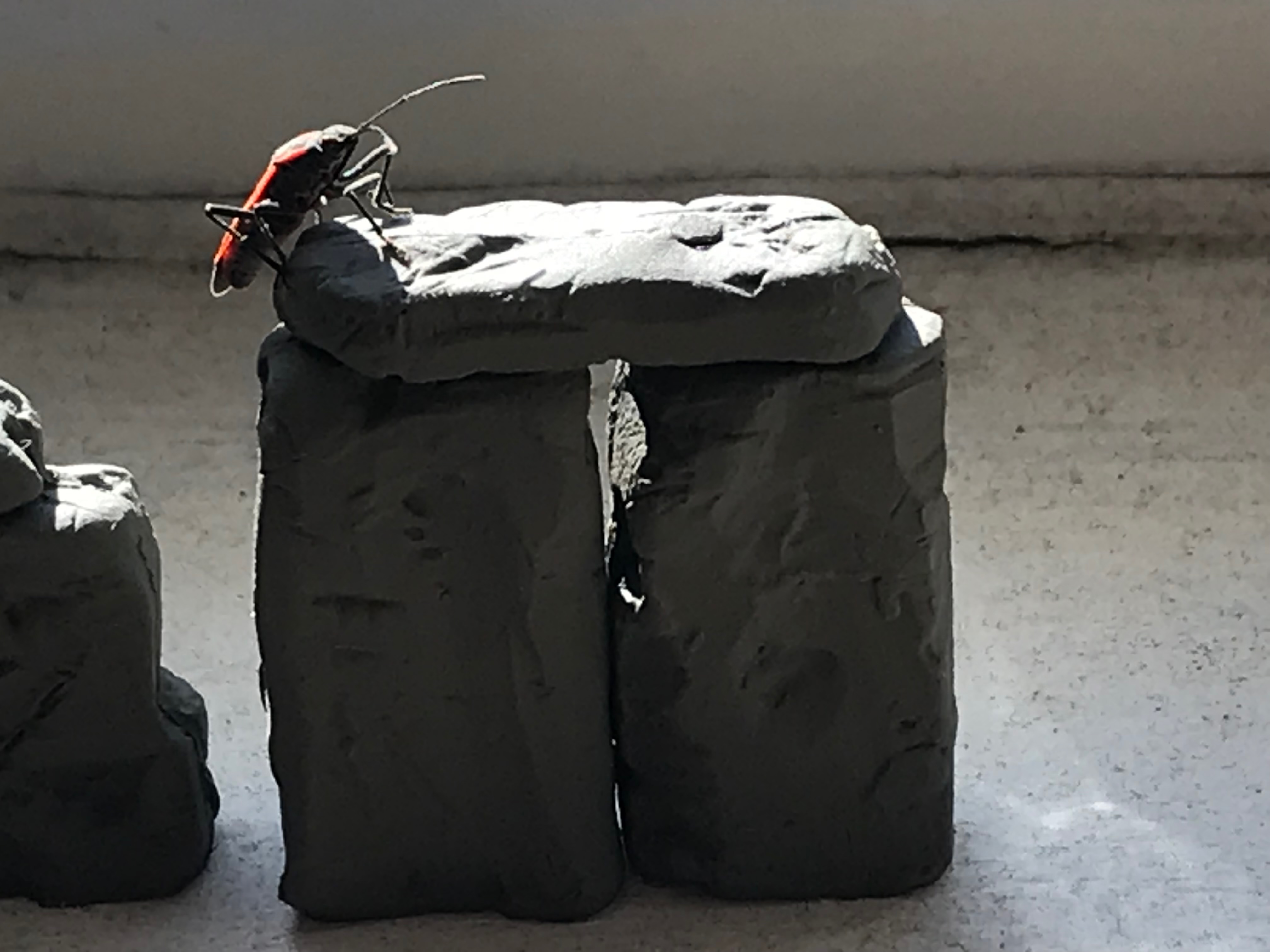
Most places we’ve lived since then have had their native bug that gets in, often in numbers.  Our current nemesis is the box elder bug.  Although harmless, it is a true bug in every sense of the word.  I’m Buddhist in my desire not to kill and there are too many to catch and take them back outside.  Fortunately they’re pretty localized—they like my study, probably because its southern exposure means it gets sunshine even into December.  We’ve had some cold days but November has been experiencing global warming and the box elder bugs, clueless, wander all over the place.  Most of them are near the end of their life and die after poking around for a few days.  Others are quite frisky.  Some remind me of horror movies from the fifties.

I have one of those desk set Stonehenge models.  I don’t have the space to set it up fully, and the die for the model was obviously done with poorly sculpted clay, so it takes some imagination to think the trilithons resemble those of the actual site.  When I noticed a box elder bug crawling over one, however, it took me back to Tarantula and other such films where the menace wasn’t just a little old bug, but a huge one.  Our monsters these days have shrunk, however, and fear comes in small packages.  Box elder bugs are harmless but annoying.  Of course, they’re still out this year because we’ve warmed the place up for them and even in November they, well, swarm.


Steel Industry

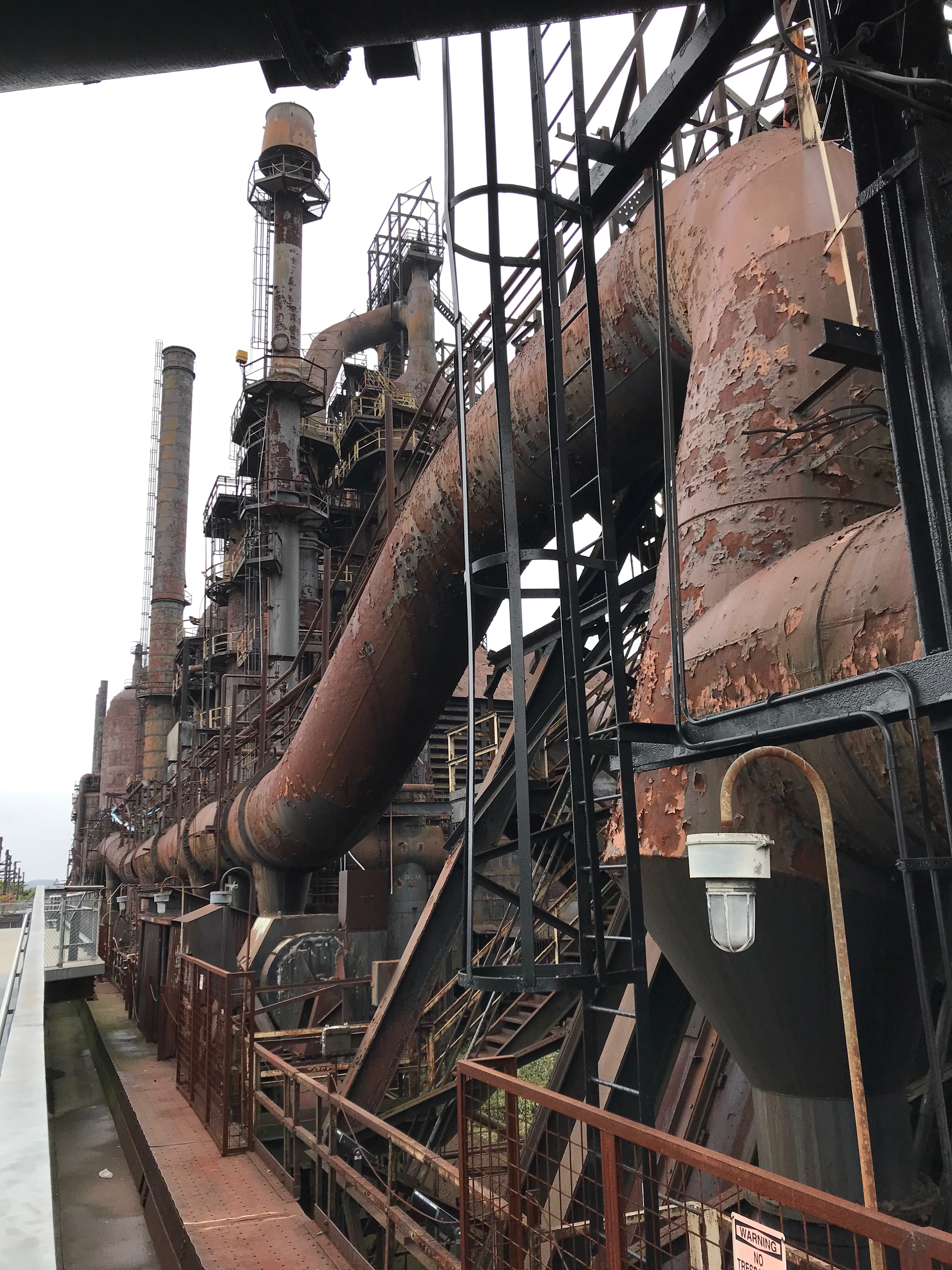
It was a building on Broadway, just south of Times Square.  I don’t know the name of the building or remember what business it may have housed, but I did notice on my quick walks through Manhattan on my way to the bus that it was being renovated.  The facing had been removed and an exposed I-beam bore the words Bethlehem Steel.  From coast to coast, and even to ships at sea, Bethlehem Steel was a major supplier.  Today the factory is still.  There’s a poignancy about such giants falling.  The world as we know it was largely constructed from the products of the still impressive, rusting reminder of days of glory.  No doubt the air is healthier to breathe and the noise level much more suited to humanity, but standing here next to this behemoth it’s easy to fall into a reverie.

I grew up near heavy industry.  Nobody in my family was directly involved, but my hometown had a steel mill just across the river and my next hometown housed an oil refinery.  Both are closed now and the area has been in an economic depression that has lasted for decades.  Industry on this kind of scale requires workers willing to sacrifice much in order just to survive in an industrial world.  Over 500 workers died over the years at the Bethlehem Steel plant.  Factory life involved dangerous jobs with machinery containing material at over 3,000 degrees, and single pieces of equipment that could easily crush a person beyond recognition.  Workers were in some sense expendable as the collective, the nation, grew.  The factory never shut down, running all through the night, seven days a week.  The profits were enormous.  So were the costs.

Global warming was well underway as the greenhouse gases belched into the sky.  Bethlehem Steel wasn’t the only polluter, of course.  Heavy industry, industrial farming, individual cars—we seem to be determined to poison the air we breathe in order to make money.  If the pandemic has taught us anything it’s that we’re all connected.  Rising prices and supply chain breakdowns have underscored that we all depend on each other worldwide.  Climate change has already assured that disruptions will continue and likely worsen.  There’s a kind of autumnal beauty in desolation.  These great steel stacks stand rusting and silent beneath a leaden but too warm sky.  Actions have consequences, and those that affect many create ripples that become waves.  We have created monsters but we can’t control them.


Mabon

Given the immense popularity of Halloween, and the attention lavished on the solstices, it’s a little odd that Mabon is so infrequently observed.  Unlike its twin, the Vernal Equinox, the Autumnal Equinox has really only recently been added to the natural calendar observed by Wicca.  The ancient Celts, from whom many Wiccan traditions are drawn, celebrated Samhain, which became our Halloween.  Their other holidays divided the year into seasons, but perhaps the Autumnal Equinox was a little too subtle to merit much attention.  Or it simply fell between their own four-fold divisions of the year.  Starting today, however night will be longer than day, a situation that will last until the Vernal Equinox.  In other words, we’ve entered the dark half of the year.

As someone who enjoys horror, I often ponder the benefits of living in the dark.  Theologically the dark is often cast as evil compared to the light.  We have taken that metaphor and made it literal.  This makes sense, I suppose, given our natural fear of the dark.  The only real predators in the night, however, are now of our own kind.  The dark can also be peaceful, a time for contemplation.  One of the things adulthood has on offer is disrupted sleep.  Many of us find ourselves awake at some point in the night.  We need to become comfortable with it.  I’m not a Wiccan, but I appreciate the naturalness with which Mabon acknowledges the fact that half the year is darker than the other half.  It’s also a harvest-themed holiday, one of the many that stretch to Thanksgiving and on to living off the stored supplies through the winter.

No doubt there is some melancholy associated with Mabon.  The lessening of the light brings a chill with it.  Summer’s ease is at an end and we will need to start layering our clothes and adding blankets back on our beds.  Already it is dark when I begin work, which means the brightest part of the balanced day and night is spent indoors at the computer.  I will need to leave the harvest, so obvious in the fast-approaching October, to others.  Mabon and Halloween aren’t company holidays, but that fact won’t stop the encroaching dark.  There’s a wisdom associated with acceptance and even melancholy can been sweet.  The leaves, while still mostly green, have begun to turn.  The bright songbirds of summer have given away to ravens and crows.  We need to learn to walk in the dark again.  Perhaps it’s time to consider what Mabon can mean.


Like a Hurricane

Around here we welcomed September in with the remains of Hurricane Ida.  For the second summer in a row, far inland, we’ve sustained hurricane damage.  For storms like this it’s not so much a question of if there will be damage, but rather “how much?”  It was complicated by the paper wasps.  It’s like a 1970s natural disaster movie.  It starts at the end of August.

I was going out to put the recycling bin away (more on this later).  When I opened the garage door I was stung three times by a paper wasp (or maybe two)—twice on the face and once on a finger.  The previous day when I’d taken the bin out there hadn’t been a nest, but 24 hours later, angry waspids were protecting their territory.  I couldn’t even get the door closed.  We don’t have any bug-killing spray on hand since we believe in live and let live.  But I do need to get into the garage.  Due to my weekly schedule I couldn’t get to the hardware store before Friday.  Fine, let the Hymenoptera have the garage.

The next day—actually later that day—Ida began to arrive.  We’ve had extensive roof repairs since moving in here.  We’ve had two-thirds of it replaced entirely.  Then the rain started.  The plumber came before it got bad to replace a cast-iron radiator that we had moved so I could repair the drywall behind it.  While doing that I repaired the ceiling where water from ex-Hurricane Isaias leaked through.  The roofer had patched this part after Isaias, so we thought we were good.  By mid-afternoon there was water dripping from the ceiling again and the repairs I had made crumbled into the bucket set there to catch the water.  So it goes.  Outside the street was closed due to flooding.  I couldn’t get into the garage to check for damage because, you know, wasps guarded the only door (still open).

It used to be that weather was a neutral topic to discuss.  Of course, it’s become politicized now.  Having a climate-change denier in the White House for four years made the topic dangerous to raise.  This area used to never get hit too badly by hurricanes.  Global warming, however, has changed everything.  I got up the morning after wondering where to start.  It was still dark and a cricket had come inside to get out of the weather.  It chirped as I came down stairs.  Everything will be all right.

Our unofficial rain gauge

Starting September

The deep green of late summer has been starting to brown at the edges.  The process is a slow one, but it’s urged along by the Halloween decorations beginning to appear in the stores and the spooky offerings showing up in various media.  Our second pandemic summer is winding down.  Autumn has always been my favorite season.  I like summer’s relaxed attitude.  Even winter’s chill is something I anticipate.  But autumn is so visceral that it’s spiritual.  Autumn catches in my throat.  I sniff the air expectantly.  I know the ghosts and ghouls are on their way.  I won’t feel so strange for watching horror movies when the season demands it.  Already light is scarce before work in the morning.  In order to accommodate my daily constitutional I’ve had to shift to the streets of our town where there’s a bit of artificial light at 5:30 a.m.

September has crept up on us under the guise of several heat waves and hurricanes crossing the country.  The season of scares is about upon us.  I have to admit to feeling a thrill when seeing orange and black in stores and on front lawns.  Halloween lights have begun to appear on some front porches and the candy has begun to spill out in grocery stores for those who want to shop early.  Outside, even with the heat waves and hurricanes, early morning declares that fall is on its way.  As early as August, like a squirrel I begin to horde away my autumnal reading and viewing.  Books and movies to see me through to what seems like the home base of spring when shivers cease and light begins to grow again.  Every year I tell myself I’ll be ready this time.  Every year it stuns me in its wonder.

The transitional seasons, unfortunately, are most under threat from global warming.  The periods between the extremes of heat and cold get foreshortened, making them even more precious.  I have to believe Halloween is capitalism’s attempt to sell autumn.  It’s a season of feeling, of pure emotion.  I almost fear its coming since I know it can’t last for nearly long enough.  There’s a beauty to the decline, and my migratory instincts for the classroom kick in.  If only it could be so forever.  Summer’s heat underscores autumn’s relief.  There’s treasure hidden here, even if it’s only temporary.  September is finally here.  And with it comes hope.

Things to come

Durable Goods

So you bought something that worked.  It was a simple thing, but you bought it many years ago.  Then something happened and the thing got broke.  (This could be just about anything here, so please bear with me.)  You go to replace said item that worked so perfectly for your needs, only to find fashions have changed and your item is no longer in style.  In fact, not even Amazon has anything like it.  Or eBay.  What is one to do?  This recently happened to me again—it doesn’t matter what the item is—and I once again reflected on how changing styles make it difficult to live a life not encumbered by having to keep up with change.  Some things need not change styles to be functional, but they do nevertheless.  And trying to replace them with exact duplicates can be difficult.  Perhaps the solution is to buy two of everything.

The speed of change is amazing.  Head-spinning, in fact.  Having studied ancient history, I often ponder how civilization got along with minimal change for well beyond a lifespan of an individual.  Or generations, even.  Take pottery, for example.  Innovation was so slow with pottery that—along with its extreme durability—it can be used as a means of dating events in antiquity.  There was very little improving an ancient bowl.  Its shape was functional and served its purpose well.  Why change it?  When it was discovered that, say, a rim, made spillage a little less common, that innovation spread and stayed in place for centuries.  Until perhaps someone discovered a spout would make for easier pouring.  Again, no other “improvements” for centuries.

Today things change, it seems, just for the sake of change.  I tend not to replace things unless they really aren’t functional any longer.  (That’s how I can afford to buy books, I guess.)  My car is old.  So is our furniture.  To me it seems more eco-friendly to keep things than to be constantly throwing them away to upgrade them.  Then something breaks.  If that particular item was an impulse purchase in some forgotten store in another state decades ago, good luck trying to replace it.  It may be out there somewhere on eBay, I suppose, but hours spend searching for that purchase that was almost an afterthought shouldn’t take hours and hours, and it likely will be even more expensive than anticipated if actually found.  Such is the nature of fashion.  Some durable goods are just fine the way they were.


Friendly Food

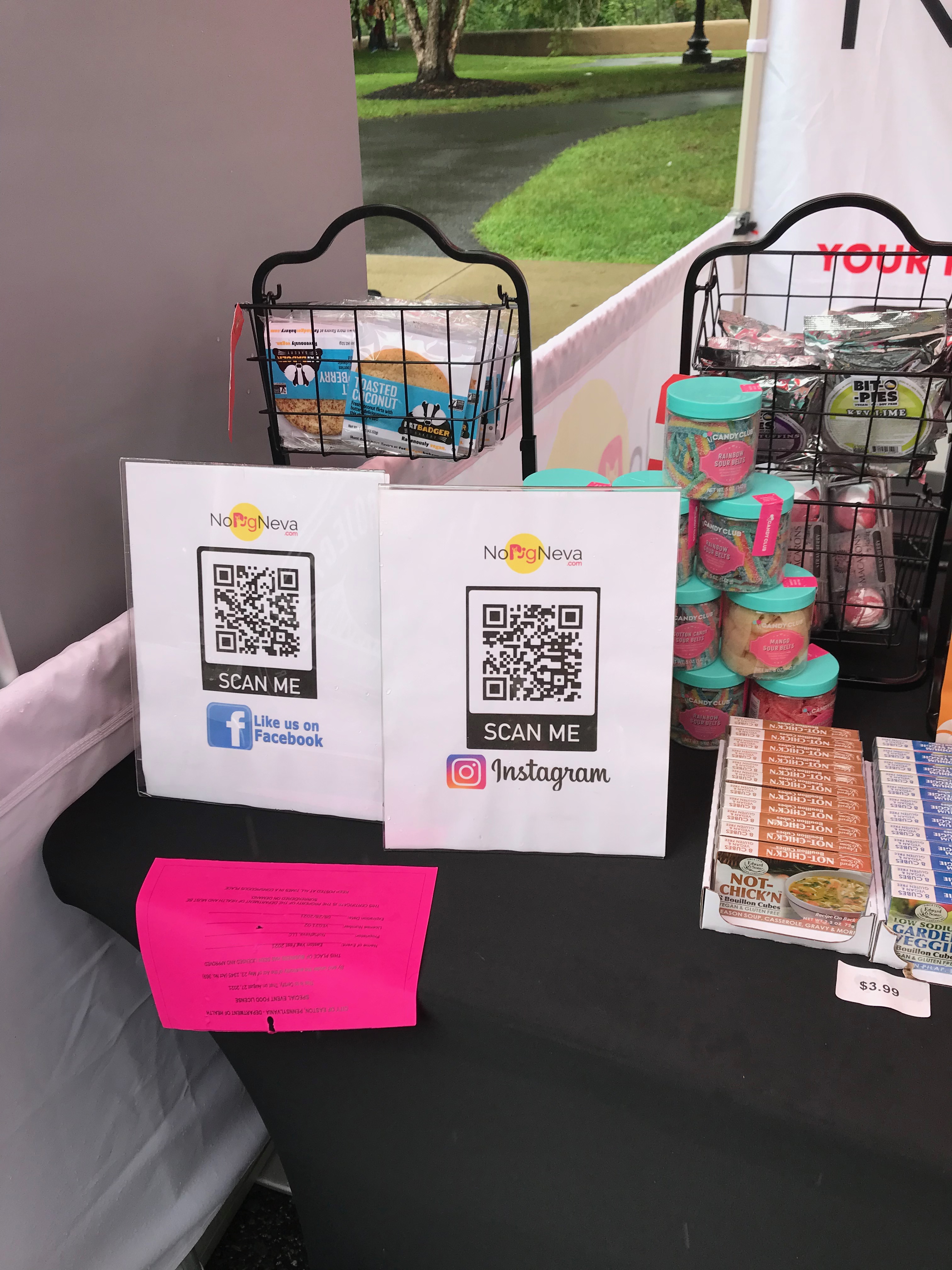
The rain felt like relief after the most recent heat wave.  We’d long planned to attend the Easton VegFest regardless.  Summer is the season for street festivals and it’s always a strange kind of affirmation to find one dedicated to vegans.  And to see so many people at it.  The cities of the Lehigh Valley have quite a few animal-friendly options for eating, and although the VegFest isn’t huge it’s a good place to find others who realize that our food choices matter.  So it was that we came upon the booth for NoPigNeva.  Now, if you’ve ever tried to shop for vegan food—I know there must be a few of you out there—you know how catch-as-catch-can it is.  Around here lots of grocery stores carry vegan items, but what you’re looking for may not be there.  Even WholeFoods in Allentown has a limited selection.

NoPigNeva is a supply company run by black women.  It supports worthy causes.  And it makes finding what you’re looking for essentially one-stop.  I’m no businessman, but I do wonder why, when they keep selling out of vegan stock, stores don’t get their orders refilled right away.  It’s almost as if we don’t want to believe people will buy it.  Vegan food has come a long way even in just the last five years.  I know that when I became a vegetarian almost two decades ago now I felt there was no way to get enough to eat as a vegan.  Options seemed so limited.  That’s no longer the case.  I’m guessing the success of the Impossible Whopper caught everyone (except consumers) by surprise.  Even now, if you order one (hold the mayo, please) you’re pretty much guaranteed it won’t have been sitting on the warming shelf.

There’s big money in the food industry.  I’m not a foodie, although it’s become fashionable to be one.  I do, however, think about whether my food is causing harm.  There is, I realize, no way not to impact the environment or other living creatures when eating.  Lessening that impact, however, and supporting historically oppressed groups feels good.  There is a morality to mastication.  Most animals, it seems, have evolved a fear of being eaten.  Perhaps we’re only starting to understand that breaking chains might have to begin with us.  Any industry (big agriculture) that tries to make it illegal to see where your food comes from is hardly to be trusted.  I trust more those willing to come to a street fair on a rainy Saturday afternoon to show that there is a better way.


Moral Compass

Where have all the morals gone?  Well, not exactly song-worthy, but it is a question I think about a lot.  You see, I work in publishing.  Publishing, above all, is a business.  People make their livelihood at it, and so they have to find a market that pays.  Money and morals don’t mix well.  A recent New York Times story pointed out that the political polarization that’s tearing America apart is reflected in bestsellers.  Political nonfiction bestsellers have topped the charts since Trump was unfortunately elected.  Books both pro and con have flooded the market.  What’s this got to do with morals?  Well, I believe publishing should be in the business of educating.  If you’re going to publish nonfiction, it should be material that doesn’t cause more problems than it helps solve.

When I look at a book, after checking the title and author, I next look at the publisher.  Some publishers are conservative, and that’s fine.  That’s what they do.  Most, however, consist of highly educated professionals who realize the severe, and continuing damage that Trump caused.  These publishers, however, will produce pro-Trump books if the numbers look good.  There’s gold in them thar hills!  I often have these scruples working for an academic press.  Some ideas are clearly distorted.  I’m no elitist—I’m still pretty much working-class all the way down to the bones—but education reveals when something very bad (fascism) is happening.  Others see it too.  Still, the temptation of all those dollars… it’s a real pressure, almost like being at the bottom of the ocean.  There’s money pressing on us and we want it.

The gray lady story bothered me.  Instead of publishers looking out their windows and seeing the political grand canyon of this nation, they see profits.  This is business, after all.  Just business.  Is there any such thing?  Morality informs the way you live, the choices you make.  Do I promote education, reflection, and sound reasoning or do I promote a very real 2024 threat of a man who leads by refusing to lead?  After elected Trump immediately began campaigning for his next term, loving the rallies, the cheers, the adulation.  Who doesn’t want to be worshiped?  But is that what we want to see three Novembers from now?  I remember the shock the morning after election day 2016 in New York City.  I see the damage four years of environmental degradation caused just when the effects of global warming were becoming obvious.  I see women demeaned.  I see voting rights quashed.  And now I look at the bestseller list and wonder where the morals have gone.


Being Prey

Since we’ve thought our way to the top of the food chain, I suspect we’ve forgotten what it’s like to be prey.  All our top predators are pretty much under control—so much so that when a lion, tiger, or bear kills a person it makes the news.  Even sharks are in decline.  This thought comes to me while on my morning constitutional I spy with my old eye young rabbits.  Lots and lots of rabbits.  During the summer they appear in such profusion that I suspect most of us don’t stop to look at them any more.  We don’t really eat them any more (and besides, I’m a vegan), so what use are they too us?  They’re here to be prey animals.

A lot happens in the dark.  I’m an early riser and sometimes I hear the animals cavorting in the night.  Sometimes I find what’s left of a bunny in the back yard—evidence that someone was hungry during the wee hours.  What must it be like to be a food animal?  Rabbits have a reproductive biology that permits a doe to become pregnant before she has born the litter she’s already carrying.  This seems to be evolution’s way of ensuring survival for creatures so often eaten.  Emotional ties between parent and child must be passing at best.  When I see the young out on their own I often wonder how they can care for themselves at such a tender age.  Of course the average lifespan of the eastern cottontail is only 15 months with merely a quarter of the population making it to two years.  After that they may have one more year.  They rarely ever die of old age.  No time for emotional attachment.  Either that or it’s brief but very intense.

We take a fairly long lifespan for granted.  It’s sometimes difficult to realize that for most of human history life expectancy—for those who survived childhood (not many)—was the forties.  For women it was more likely the twenties.  Young couples started families early and kept the kids coming.  We were not exactly prey, but like the rabbits we had to learn to say goodbye too soon.  We’ve thought ourselves to not only the top of the food chain, but to the point of prolonging our lives so much that deaths can be utterly devastating.  I look at the rabbit nibbling the overgrown grass in my backyard and smile.  The only yard nearby without a dog, I like to think they feel safe here, even if just for a little while. From the perspective of prey, every second counts.


Reduce, Reuse

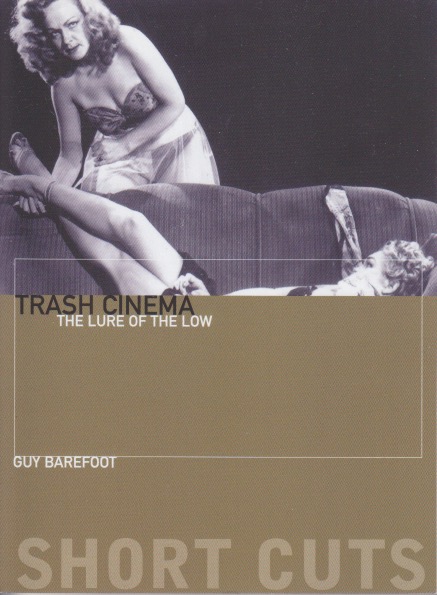
Today’s trash day in my neighborhood. I suspect I’m not alone in having a soft spot for bad movies.  Perhaps it’s because I don’t like to see things wasted.  That, mingled in with my dislike of A-list culture where the people with all the advantages get all the notice.  I appreciate those who struggle.  Maybe that’s why I picked up Guy Barefoot’s Trash Cinema: The Lure of the Low.  That, and because I’ve read other books in the Short Cuts series and found them intelligent and informative.  And yet again, many horror movies are considered “trash”—indeed, Barefoot mentions quite a few of them—which makes me curious.  You see, even back when I was a grad student it was still thought, among some, that film wasn’t sufficiently intellectual to justify academic treatment.  The fact that media now dominates culture gives the lie to that assertion, especially since so many cerebral movies exist now.

In any case, Barefoot takes the subject seriously, using great care to define “trash.”  Given that the series stipulates brief books, this isn’t a comprehensive treatment, but it has a big takeaway for me.  Trash is simply what the majority of people don’t want.  As our landfill crises show, it never really goes away.  (We began composting when we bought our house, and the amount of trash dropped precipitously.  Food scraps can also become something useful.)  There are any number of reasons a producer or director might attempt trash—it’s quick and cheap, it shocks viewers, or it says something about our society.  Yes, even trash can teach us about ourselves.  Really, there’s a value to keeping things and trying to find the beauty where others see only garbage.

From my youngest days experiencing cinema (it was a rare treat then), I realized this was a powerful medium.  I still remember movies I saw as a child, imperfectly no doubt, even today.  And they still speak to me.  Some of them are great and others were almost forgettable.  Some are like gems while others seem like trash.  That doesn’t mean they shouldn’t be watched, however.  A great number of trash films have become cult classics.  They may not reach the esteemed halls of academy award winners, but they are sometimes honest efforts without the money behind big studios.  I tend to root for the underdog.  Having said that, I haven’t seen most of the films discussed here.  Another way of looking at it is that my wishlist has grown.  


Weather rules

One of the observations that prompted me to write Weathering the Psalms concerned the disruptive nature of storms.  Power outages was pretty common in that part of southeast Wisconsin where we were living at the time.  Downed trees could block rural access—more limited than the alternate routes of cities—for hours.  There was clearly a sense of being at the mercy of nature and it was disruptive to the human schedules and lives we’ve constructed.  The tornado warning we had a couple of days ago reminded me of that aspect.  While radar saves lives by giving advanced warning, it also makes it difficult to concentrate on work when you’re told to take shelter.  As far as I’m aware HR doesn’t have a tornado policy.

Having lived in the Midwest for a decade and a half, I came to be aware of the difference between a tornado watch and a tornado warning.  While my phone was showing a watch, another family member’s was showing a warning.  My evening plans were replaced by standing at the window looking west.  The worst of the storm passed us but as long as the weather was threatening there was little else we could do.  Eventually all devices agreed that this was a warning and we should take shelter.  The storm eventually passed, leaving my tightly packed plans for the day in tatters, even though our actual house was fine.  That’s the nature of the weather that makes it so interesting.  As much as we like to think we’re on top of it, we’re really all potential victims.

Weather is more powerful than humans.  We have to change our plans according to its whims.  And climate change is making it more extreme.  Even with the evidence all around us deniers still try to block legislation that takes steps to preserving our planet.  Those who wish to destroy it for theological reasons don’t stop to think that doing so is about as selfish as you can get—something that the Bible really doesn’t promote at all.  One thing about the weather: although it is very different from place to place, we’re all in it together.  It can be very disruptive, yes.  It reminds us that we and our human plans are temporary.  When we’ve managed to do ourselves in, or have abandoned this planet to find a more hospitable one we can ruin, the weather will remain.  Majestic storms will come and go, whether or not there’s anyone here to see and appreciate them.


EBW

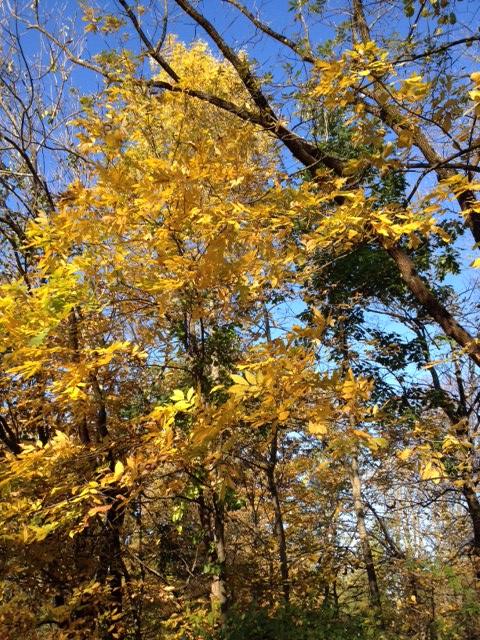
Nashotah House was a strange place to begin (and end) a teaching career.  Not only did you see students every day, but as faculty you were required to eat and worship with them twice a day.  (You were grudgingly permitted to have supper at home, with family, if applicable.)  You got to know students, and sometimes their families, well.  I suppose that was the point.  We had a lot of students from Texas, and one year a student spouse said she cried all the way home when she found her first colored leaf on the ground.  Granted, Wisconsin winters could be cold.  Even here in balmy Pennsylvania we have to use the furnace from October through May, leaving only four months of the year without artificial heat.  And even September can get pretty chilly.  I was thinking about this student spouse when I started to see the walnut trees turning yellow in July.

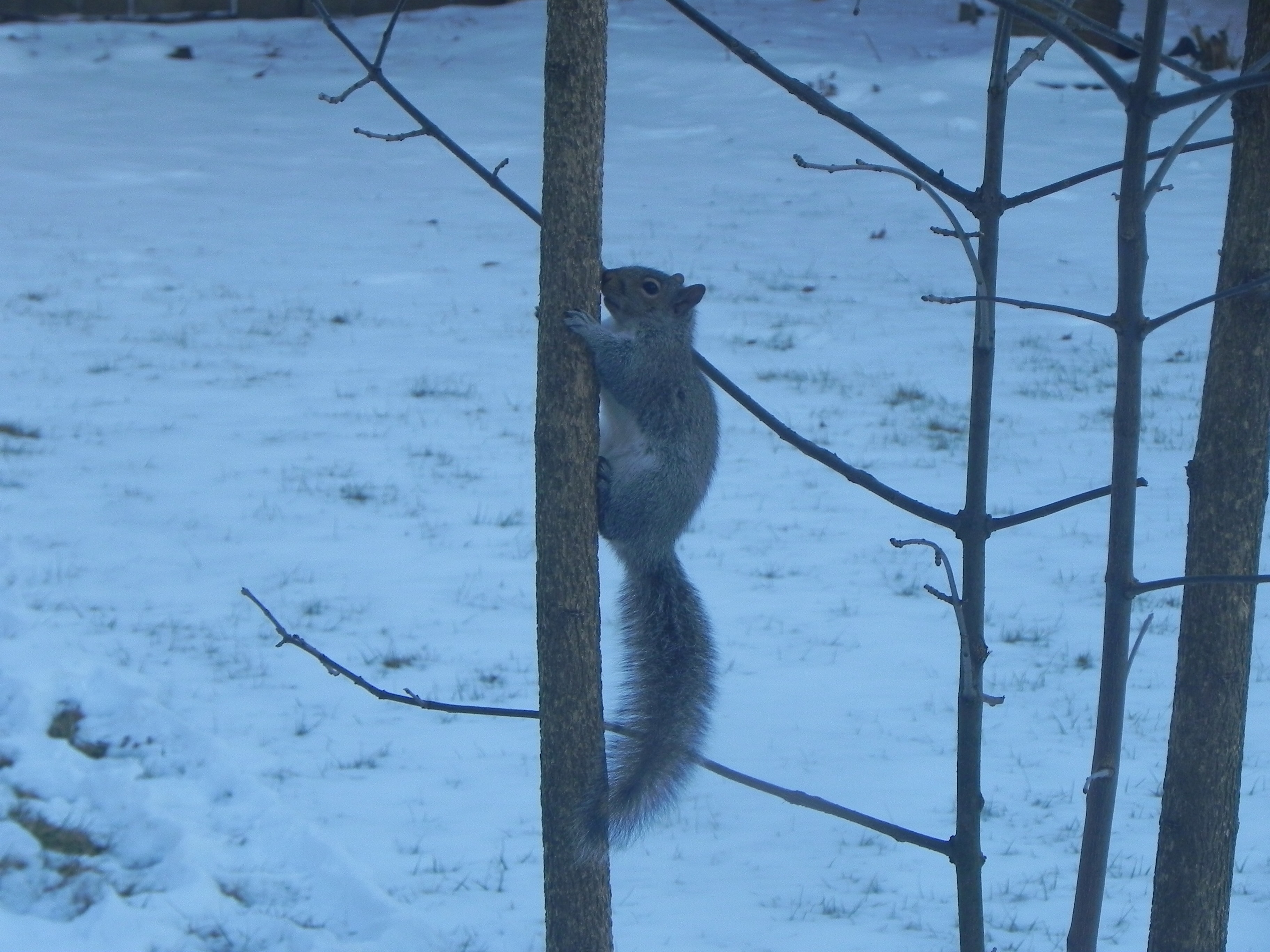
Yes, each plant has its own rhythm.  Not all of them need all their leaves until October or November.  Walnuts, however, are an interesting species (or whatever the plural of species is).  The walnuts you eat are probably of the Persian or English walnut variety.  Here in the United States, the Eastern Black Walnut is perhaps the most common deciduous tree east of the Mississippi, but since the nuts are hard to crack they aren’t grown commercially.  Squirrels worship them.  The EBW (do I really have to type out Eastern Black Walnut again?) is famous for its use of allelopathic chemicals.  Some people say it poisons the soil, but more specifically, allelopathic plants distribute chemicals into the soil that favor the growth of “friendly” species and inhibit others.  Yes, plants are quite smart.  The EBW is also wise in its use of the squirrel.  These ubiquitous chewers disperse the nuts widely.  It isn’t uncommon for me to find one on my porch when I go out for my early morning constitutional.  

The air is beginning to feel cool once in a while in the early mornings.  Like the walnut trees and the squirrels, I think I’m at the very early stages of feeling autumn coming on.  We’re still many weeks away from the colors of fall, harvest, and Halloween, but the wheel of the year is still turning.  It never really holds still.  We have the languorous month of August ahead, with its long, warm days and summertime activities.  The walnuts stand as sentinels, however, reminding us that nature is ever restless and ever inclined to change.  I don’t weep to see the changing leaves, but I do marvel at how nature seems to plan ahead for autumn, even in the midst of summer.