Crafting Magic

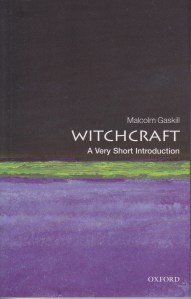
There’s a disingenuousness about an extremely wealthy white man claiming he’s the victim of a “witch hunt.” Such super-slurring devalues the many thousands of lives lost in actual witch hunts, most of them female. Regular readers of this blog know that I’ve long been fascinated by witches, and since I have so little time, Very Short Introductions are appealing. Malcolm Gaskill’s such introduction on Witchcraft is a surprisingly sensitive book that manages to touch on many important aspects of those who spend time thinking. The relationship between religion and science, for example. Witches force that question in various ways. The main takeaway, however, is another that the witch-in-chief would do well to take to heart—we must learn from history. History may be the key to human survival.

Gaskill has an unnerving balance when it comes to witch hunts. In places his attempts at objectivity can appear a little cold—history has demonstrated that the numbers of people killed in Europe’s witch madness aren’t as high as often claimed. Still, the loss of over 100,000 lives to propitiate our collective fears is tragic. This little book crams a lot of information in and it carries an appropriately warning tone. We don’t really understand what witches are, and we do still live in a world where hunts for them take place. Our psychies, ever so rational, crave magic. Societies from earliest times feared as well as desired it. Our belief in witches, and witchcraft, betrays quite a lot of what it means to be human.

This quick study isn’t all about witch hunts, though. It also explores the world of witchcraft, both in ancient and modern times. From Mesopotamian diviners to Wiccans, “the craft” has always been with us and is believed in by a surprisingly large number of people in industrialized societies. Magic, of course, generally leads to unexpected results. And the metaphor of its power over our imagination is forgotten at a terrible price. As Gaskill makes clear, the “witch” can be a stand-in for the other—the other religion, the other nationality, the other we fear and, now with government sanction, drive out or destroy. There is no magic to a wealthy man buying the presidency of the nation. There is, however, a culpability, a reckoning, if you will, that must attend abuses of this metaphor. The GOP has become a party of familiars in this compact with the Devil, it seems. That’s just a metaphor. But then again, metaphors can sometimes truly be magic.


Taming Shakespeare

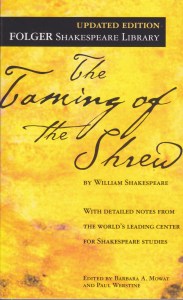
It hardly seemed credible, from what I heard in high school, that anyone would read Shakespeare if it weren’t required. I’m not completely naive, but I do wonder if we insist on introducing kids to the Bard before they’re ready for him. The real stumbling block is the unfamiliar words from the Elizabethan period. With enough regular reading they’re less of an obstacle to adults. Or should be. Or not to be. In any case, one of this year’s reading challenge books required that I read The Taming of the Shrew. I’d never read it before and kind of shied away from it because of the chauvinistic theme—Katherine has to be “tamed” by Petruchio so that her poor, sweet sister Bianca can be married. The overall theme is biblical—Rachel can’t be wed before Leah, so Laban declares. The play’s a comedy at the expense of women.

Those who know Shakespeare better than I question whether the playwright’s motives were as undeveloped as all that, but it is in keeping with the time. That’s not to excuse such patriarchal thinking, but we can’t rightfully blame people for thinking in the terms of their time. Yes, we now realize (except on Pennsylvania Avenue) that women and men deserve equal treatment. We are all human beings and should be treated as such, not as if one gender were somehow more important or better than another. In the Tudor Era, however, that idea had not yet caught on. The Taming of the Shrew contains clues as to why.

Perhaps the most reviled part of the play is Katherine’s closing speech as to why women should be subjected to men. Her reasoning is distinctly biblical. Indeed, the edition of the play I was reading took pains to point out the biblical allusions in the speech—primarily to letters of the New Testament. The fear, unaccountably real after all these centuries, is that we might go back to such thinking. The Bible, after all, doesn’t change much. The most conservative of society still read it in the King James, although the Bible Shakespeare’s contemporaries knew best was the Geneva translation. And, like the schoolchild reading Shakespeare, such conservatives need a little help with the language since words have changed their usages over time. They also may need some assistance realizing that not only words evolve, but so does our understanding of what it means to human. It’s not women who need to be tamed, Mr. Shakespeare. No, it’s quite the opposite.


Secularcist

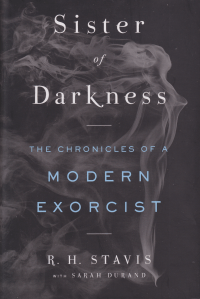
It should be fairly obvious that I’ve been researching demons lately. In the current political climate, it feels like a natural thing to do. Where there are demons, there are also exorcists. Many times those who write books on their experience in this realm will lapse into something along the lines of, “If there are demons, then Catholicism has to be true. All of it.” Or something like that. I have to admit that reading the better written accounts makes me start to think that way. R. H. Stavis’ Sister of Darkness: The Chronicles of a Modern Exorcist is another approach altogether. A secular exorcist, Rachel Stavis doesn’t use the time-worn rituals of movie fame. And her book offers an interesting rationale for her exorcisms—she sees entities.

I have often wondered if “growing up” isn’t largely teaching ourselves to discount what we perceive as children. I’m sure I’m not the only kid who was told there are no such things as monsters but didn’t fully internalize that “fact.” Besides, some things are worse than monsters. In any case, Stavis states that she sees entities and it’s clear from the book that she does indeed believe this. This isn’t for show. She describes various types of demons and how she learned to exorcize them. It’s a fascinating account. Her explanations won’t convince everyone, and her answers of where demons come from remain somewhat vague, but her clients swear by her methods. And she’s upfront about wanting her work to increase the good in the world by banishing evil.

I know many Christians who’d be ready to stone a pagan even for such a good deed as exorcizing a demon. Stavis doesn’t belittle any religion, however, and leans a bit toward Wicca herself. As I read I imagined what a reader convinced of the rectitude of one and only one religions would say. Only Jesus can drive out demons? (Judaism had, and still has exorcists, as do some sects of Islam.) Since a demon is a Christian monster, only a Christian can drive it out? One of the more interesting facts of the history of exorcism is that it was, in the Middle Ages, sometimes an interfaith exercise. The three major religions represented in Europe (the Abrahamic triad) recognized that any of the three could drive out demons. Each welcomed the help of the others. We’ve gone backwards since then. We haven’t again yet reached the stage where we realize that anyone doing good is on the side of good. Even demons, it seems, are conservative these days.


Latter-Day Scouts

Physically strong, mentally awake, and morally straight. And prepared. That’s what Boy Scouts are supposed to be. My attempts to become an Eagle Scout were about like my attempts to become a priest—fraught with peril from the beginning. As a child I wasn’t physically strong, for one thing. The runt of the litter, I was scrawny and often sick. Mentally awake remains a reasonable goal, as does morally straight. Such are the realities of life. Then why are the Mormons parting ways with the Scouts? In a recent Washington Post story by Samantha Schmidt, the Latter-Day Saints are formally separating from the organization now known as Scouts. Whether it’s because they now allow girls to join, or if it’s because they’ve openly permitted gays, the Scouts are no doubt becoming accommodationistic in the eyes of some. In a pluralistic world it’s the only way to survive.

Girl Scouts, on the other hand, have historically not raised the question of sexual orientation. When the social dynamics of a society disadvantage girls, it’s natural that an organization to help build confidence and positive self-attitudes should exclude boys. They have no official affiliation with any religious group. I didn’t realize until reading this article that Mormon boys were automatically part of the group formerly known as Boy Scouts. It fits the image, though. If you’ve ever been on a Boy Scout retreat, however, you know that image and reality aren’t the same thing. I dropped out of Troop 3 after frequent leadership changes frustrated me from getting beyond Tenderfoot. Besides, church was taking over more and more of my life at the time. I guess I was headed for morally straight. Our troop, after all, met in a church basement.

This is about symbolism, of course. To be a Boy Scout meant you were making an effort to be good. In fact, it was kind of hard to grow up thinking you could be good without that guidance. Boy Scouts, they used to say, helped the elderly across the street. Apparently what they do behind closed bedroom doors raises the specter of morality. When I was a kid the issue seemed to be more the mentally awake aspect. The Scouts I knew were like everybody else. There was no special purity there. I never knew anyone who made it all the way to Eagle. The Boy Scout law was like a twelve-step program: trustworthy, loyal, helpful, friendly, courteous, kind, obedient, cheerful, thrifty, brave, clean, and reverent. I wasn’t a Mormon, but the church had proved itself a rival. Especially for the reverent part.


For Mothers’ Sake

We try to be practical for Mother’s Day. I take my wife out to eat every year, but since we both work and Monday always comes earlier than we expect, we usually go on Saturday. It’s kind of a moveable feast for us. The patriarchalist nightmare of the past two years in this country makes it all the more important to celebrate our mothers. Our nation needs to be reminded that without women none of us would be here. When my wife chose an Afghan restaurant I didn’t shirk, although I had to admit I wouldn’t have considered cuisine from Afghanistan if the choice were mine. It would never have crossed my mind. The restaurant was nicely appointed, and busy. One the walls were posters with photos of the mountainous country and its people, stamped with the words “Free Afghanistan.” I realized Mother’s Day is about liberation.

New Jersey, apart from being the most densely populated state, is also the most diverse. Ethnic food here takes on a depth that leaves our days in Champaign-Urbana in the dust. I’d never even heard of an Ethiopian restaurant, let alone eaten in one, before moving here. And each of these diverse countries represented by their food has a story, often involving oppression. Mother’s children everywhere want to be free. The only reason they aren’t is that bullies exist in every language. You can’t go into the swamp any more without being overwhelmed by them. Such men—and they tend to be male—want to assert their control over others. They forget, it seems, that they have mothers.

I struggled to find a way to classify the food I was eating. Years of Euro-centric training led me to place it between the “Middle East” and “Far East,” which, skewed as it is, reflects that Afghanistan falls along the silk road from China to Turkey. Elements of West Asia blend with those of East Asia on my plate. There’s no war here—simply a harmony of tastes that should remind us that we’re all human. We all have the same need for sustenance and we all have mothers. If we thought of the fact that when we harm another we harm that person’s mother, we’d be appropriately ashamed of oppressing anyone. We would come to realize that the secret to being civilized human beings lies in honoring all our mothers.


Good Book Gone Bad

The Bible is a book of horror. This isn’t the main point in Holy Horror, but the fact is terror is never far from the surface in the Good Book. My days as a young scholar of the Bible were defined by the works of feminist scholars. One of the influential books of that generation was Texts of Terror by Phyllis Trible. Not hiding behind a masculine orthodoxy, she looked at how various biblical stories appeared from the eyes of female readers. There is indeed terror everywhere. The evils of slavery condemn that hideous loss of agency when one human being becomes considered the property of another. Women, before the feminist movement began, were taught that the Good Book demands this perverted social structure. They are indeed, in the eyes of its patriarchal world, property.

Important as this realization is, the terrors of Scripture go deeper. Even overlooking the genocides—the numbers make it difficult to take in the horrors of the individuals classed as faceless victims—there are multiple accounts of gruesome murders and violence in the Bible. Wars were an annual expectation. Diplomacy was often considered religious compromise. “Us verses them” mentality led to constant conflict. When it came to executing one another, the denizens of the Good Book could be quite inventive. No doubt women and foreigners were poorly treated on a daily basis, but when left to their own devices with divine voices in their heads, the men of Holy Writ knew how to terrorize one another quite effectively.

Even after the message of Jesus of Nazareth, which included love and care and compassion, the Bible goes on to close with the violent visions of Revelation. Perhaps it’s not appreciated so much in the present day, but the Apocalypse had a difficult time making it into the Good Book. Unfortunately the reasons weren’t that it was a book of horror, but the very fact that its status was debated should give us pause when hiding behind the rhetoric of a canon with its door slammed shut. The Bible contains some high, soaring words of noble thoughts and divine consolation. God can be an empathetic lover. With its status, in toto, as a book of divine revelation we have to pay serious attention to the fact of its participation in the genre of horror. Much of this is in the backstory of the films I discuss in Holy Horror. Others may have already explored this dynamic of Scripture, but it’s often a Good Book gone bad.


Exorcising Theology

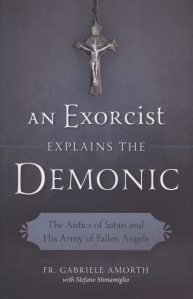
Among those curious about exorcism, the name Fr. Gabriele Amorth requires no introduction. As “the Vatican’s chief exorcist” (a claim the book makes), Fr. Amorth was known for conducting many deliverances and for teaching a new generation of exorcists. Looking for an entryway into his perspective, I read An Exorcist Explains the Demonic: The Antics of Satan and His Army of Fallen Angels. That a priest in Rome should be conservative was no surprise. What was truly astounding about this account was how unquestioningly the exorcist accepted nearly everything to do with Roman Catholicism. His reading of the Bible is quite literal. His understanding of the Virgin Mary as the Mother of God offers no nuance. Demons are fallen angels and, somewhat surprisingly, he uses “Devil” and “demon” interchangeably. For a hierarchy so thoroughly parsed, this was a bit unexpected. Encountering these explanations, much of what I’d recently read in Matt Baglio’s The Rite made sense. Baglio’s protagonist studied in Rome when Fr. Amorth was still active.

Much of the book felt like a lecture from the 1950s. Sex, drugs, and rock-n-roll can all lead to demonic possession. And it turns out to be quite pervasive. Many people, saints and sinners alike, are possessed and don’t even know it. This is truly, according to the priest, a “world with devils filled.” The book begins with a Catholic, if literal, interpretation of Jesus’ role in the salvation of humankind (although the masculine pronoun is preferred throughout). Not only that, there’s no question that women can or should be exorcists. This is something that priests alone can handle. And he even goes far as to point to Eve (who literally existed, one gets the impression) as an example of how women are more easily tempted than men. Reading this brief tractate was like stepping back into a world that even antedates that of the Republican Party. Not decrying science, however, Fr. Amorth suggests medical explanations can account for some of what sufferers deem as possession. Those who think they are in trouble with demons should first go to a psychiatrist. If the problem can’t be solved, it’s time to call in the men in black.

Another area of concern is his outlook on other religions. African and East and South Asian belief systems are coded as possibly satanic. This universe is a strictly Catholic one. Having noted that, a strong undercurrent of love pervades the book. It’s clear that Fr. Amorth was a priest motivated by care for others. His theology may have been hopelessly medieval, but his heart was in the right place. And, if the accounts are to be believed, he was quite good at expelling literal demons. Some of the metaphorical ones, however, seem to have remained firmly in place.


Upstate Goddesses

Goddesses give you connections. Here in Ithaca, all kinds of specialty shops abound. University towns are like that. This one had lots of goddesses. Ever since writing my dissertation on Asherah I’ve been interested in female divinities. Part of the reason for this is that I fail to understand how many men don’t see the power of women in their lives and insist that men should rule. Goddesses remind us that women have as much to contribute as do men, and they should be honored and respected just the same. Deities, after all, are projections of humanity. In any case, I found myself in a shop with many goddesses. The proprietor noticed my interest and struck up a conversation. This was ironic because where I live no one asks about my academic background; I have to travel to find interested takers, I guess.

She told me of an upcoming conference that would like to hear my thoughts on the topic of Asherah. Since my book on the goddess has been plagued with high prices, it remains hidden down three or four pages on Amazon, while lower priced dissertations easily float above it. My conversation with this stranger brought out that I had planned to write on other goddesses. A friend had done his dissertation on Anat, so I began working on book on Shapshu, the Ugaritic goddess associated with the sun. Some cultures made the sun male, the people of Ugarit, however, knew the true nature of brightness. I was going to make an academic career of goddesses.

Every great once in a while an academic will ask me about Asherah. Chances are their book or article will fail to cite my work, but they do seem to know to make queries. In my hopes to get a job beyond Nashotah House I followed the advice of colleagues to write a biblical book before finishing another book on “pagan” deities. In the career vicissitudes that followed, goddesses had to fall by the wayside. Although there can be money in deities, as this shop in which I stood proved, they aren’t really a marketable commodity in the realm of making an academic living. Now that I’ve found my way back to writing books again, perhaps I’ll return to my goddesses. That brief encounter in an Ithaca store resurrected some of the fascination of learning about the inner lives of divine women. The need to remind the world, it appears, has only become greater since I first wrote about Asherah decades ago.


Body Count

While I’m privileged and proud to have been part of one of millions protesting over the weekend with our nation’s youth, I can’t help but be a little reflective. Why does our world continue to shortchange women? You see, I had the honor to be a man invited to march in Washington, DC on January 21, 2017. I was there the day before, when the devil in the red hat assumed control. Helicopters were buzzing all over the place, flying low and dramatically over the scene. There were some small riots, to be sure, and I saw police action up close. The day of the march itself, however, all was peaceful. Including the skies. The helicopters were home, their blades drooping listlessly. The women marched. Few paid attention.

It’s hard to tell how many people there are when you’re in a crowd on the streets. There’s no stadium seat numbers to guide you. The National Park Service, which has metrics for counting visitors, probably knows best. As we thronged toward the capitol building we asked an NPS officer if they had any estimates. She nodded. “We’re estimating it’s 1.3 million.” When the headlines squeaked the next day all they said was “hundreds of thousands.” The White House was saying maybe 500,000. Of course, this was now the era of fake news. Nobody worth their testicles could say that the Women’s March drew more than a million to the capital, but it did. Because it was led by women, we have to scale the numbers down. It’s a trick employers use all the time.

This past weekend’s rallies and marches are being noticed by a reluctant press. Official estimates in DC are at a million. The Washington Post noticed that Metro ridership was “far behind” the Women’s March. Women are finding their voices. They were cheated out of the first female presidency by an electoral college that forever will bear the badge of shame for electing a candidate who lost by three million popular votes. People don’t like to be cheated. Women, who throughout history have been the victims of unfair policies upholding male privilege, are half of the human race. They number in the billions. Those who steadfastly hold to Trump—who’ve abandoned their tribe—have the right to be heard as well. They, however, must listen to their sisters. This is not about fiscal conservancy. This is not about unborn babies. This is about the most basic human right of all. We march because this is about the numbers. Women are equal to men. And we will march until the numbers are counted as they actually stand.


Hope for the Future

I’m standing in a haunted place. There was an act of violence here this week. Gun violence. A man died in this restaurant where I sat with my wife and had lunch just a couple of months ago. I’m in Princeton for a rally organized by a teenager. We’re here to tell the government we the people want sensible gun control laws. The website said they were expecting 500. Five thousand turned out instead. Princeton’s not the kind of town where you expect gun violence. Affluent and privileged, it’s the kind of place many of us go to get away from real life for a while—they’ve got the best bookstore around and you can still find DVDs at the Princeton Record Exchange. You don’t expect people to be shot dead here.

America’s perverse affair with firearms goes hand-in-hand with its refusal to ensure adequate treatment for the mentally ill. We give them firearms and wonder what could possibly go wrong. We elect the mentally deficient to highest office in the land and instead of reining him in, the GOP reigns with terror. They have shown time and again that they prefer NRA money to our children. They have sold out. And the word appropriately used to describe such a party good manners prevent me from inscribing on this blog. Republicans, true republicans, need a new party. Instead they refuse to call this aberration in Washington what it truly is. Thousands took to the streets yet again this weekend. This was my fourth rally or march since January of last year, and hey, government—they keep getting bigger.

“Woe to the inhabiters of the earth and of the sea! for the devil is come down unto you, having great wrath, because he knoweth that he hath but a short time.” So saith the Good Book. It’s a book the Republican Party has forgotten how to read. Especially the “evangelicals” who’ve betrayed their saintly name. While I’m here in Princeton, a few hours away in the sullied capitol of this once reasonable nation, half a million are on the march. And just as women led the way last January we’re being shown the truth that anyone can lead better then old white men. And the fact that the organizers of these protests are high schoolers, I am inclined to leave the last words to the prophet Isaiah, whom, for any Republicans who might be reading, is in the Bible: “The wolf also shall dwell with the lamb, and the leopard shall lie down with the kid; and the calf and the young lion and the fatling together; and a little child shall lead them.”


Hypocrisy, Defined

Things look pretty Stormy in DC. I suspect my Republican background is showing when I say I don’t condemn sex workers. If they’re not exploited and they like what they do, hey, a job’s a job. The evidence, of course is that Trump had an affair with Stormy Daniels when his wife was recovering from the birth of their son. And hush money was paid right before the election. This is public knowledge. What I find interesting are the responses that Republic congressmen have been giving journalists. In a recent story in the Washington Post, various congressional leaders of the GOP were asked if Obama had been caught in such a situation would they have pursued impeachment. “Of course,” they answered. When asked why this didn’t apply to Trump, they simply shrugged. There’s a word for that.

Hypocrisy may seem like an old-fashioned notion these days. Indeed, when I was growing up I frequently heard it from Fundamentalist pulpits. It was considered, along with lying, to be about one of the worst sins possible. Now Fundamentalists are lined up behind Trump (who’s lined up behind Stormy apparently) and saying all of this is just fine. The Lord’s will is being done. Moderate Evangelicals are scrambling to find a new label for themselves, for their vaunted title has been taken by a party that will condone anything as long as rich white men benefit. Cheat on your wife while she recovering from giving birth? That’s the new Fundamentalist way! Congressmen, it seems, don’t want people to look too closely into such things. My, there’ve been a spate of recent retirements lately, haven’t there?

I grew up and grew away from Fundamentalism. Although it seems counterintuitive, this sharped my moral sense considerably. Poll after poll shows that actual morality, according to Fundie standards, is more often lived by liberals than conservatives. Divorce rates are lower, for example, and we tend not to own guns. So, even when the skies over the Potomac are growing stormy, the elected officials of God’s Own Party smirk and say, “Doesn’t the Bible command you ‘Love thy neighbor’?” They take it literally, of course. And it’s just fine that the leader of the free world exploits women. Many of these same people gathered to condemn Bill Clinton for loving his neighbor in the blue dress. Hypocrisy was a bad thing back then. “I did not have sex with that woman,” became a mark of national shame. Now presidents brag of grabbing women by their private parts and the Republican Party claps its hands and says, “Hypocrisy? Never heard of it.” Does it look like another storm to you?


Lent Presidents

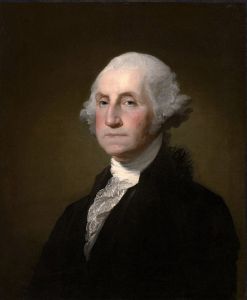
Surely it’s appropriate that President’s Day falls in Lent this year. We as a nation, if we are wise, will repent of the horror we’ve elected upon ourselves. Those ashes on our foreheads remind us that sins come on a national scale as well as an individual. Any nation touting supremacy is in need of Lent, even if it’s founder’s day. Especially if it’s founder’s day. It’s difficult to believe that either George Washington or Abraham Lincoln would’ve truly thought the United States better than other nations. Having a secure and free place to live wasn’t an exercise in supremacy, but in the belief that people should be able to govern themselves. An Easter, if you will, of beliefs.

Symbolism is a major part of any religious holiday. The eggs, rabbits, and butterflies of Easter all represent something just as the burnt palms from last year’s Palm Sunday do. George Washington never chopped down the cherry tree—that was a story made up many years later. It was, however, a symbol to represent a truth. To represent a president who couldn’t bring himself to lie. The fact-checking statistics show that the current incumbent of Washington’s chair lies over five times a day. Listen closely here, for this is symbolism—yes, he did chop down the cherry tree. Where do you think those ashes on your forehead have come from?

An administration where supremacy is daily in the news is surely a sign of trouble. This President’s Day a national S.O.S. goes out, but to whom can supremacists call for help? They are already the greatest in their own minds. Supremacy was the hubris of Rome that eventually ensured its fall. The belief that the Roman male was the most supreme human template possible—far above women, slaves, and foreigners—was held until the day the Vandals and Visigoths came to the door. Preoccupied with its own greatness, it was an empire unable to see the symbolism clearly on display all around it. By that point it had become a “Christian nation”—a state with God’s own blessing on its white males and their entitlements. The insanity borne of excessive pride was no stranger to the seat of the emperor. Less than fourteen-hundred years later a new government would form. It’s leader so full of integrity and dignity that the common person believed he couldn’t cut down a cherry tree without telling the truth. And this year his birthday falls in Lent.


Spectral Parable

1692. The Enlightenment is reaching toward full swing. In what will become blue Massachusetts, women are condemned for being witches. The proof to make such a conviction is difficult to obtain without resorting to “spectral evidence.” The Republicans of the era, who would otherwise reject such obvious speculation, greedily swallow the fake news by the mouthful. This is just the kind of smoking musket they’ve been seeking. Spectral evidence can’t be reproduced in court because it’s supernatural. Anything can be fake news if you bluster loudly enough. Even the judges, one can imagine, could put the accusations made against their own wives and selves into that category. The Devil, they say, is a shape-shifter.

Menelaus had Proteus pinned. The water god also known as “the Old Man of the Sea” could change shapes at will. Shifting from tree to snake to lion to water, Proteus couldn’t escape Menelaus’ grasp. At last the Old Man had to reveal the truth. Such is the nature of evidence. Speculative ideas are as easily built as walls to separate countries—easier, in fact. With a certain amount of braggadocio anything is believable. They say there are still mammoths roaming in the Russian steppe. Did Watergate really happen at all? Isn’t this evidence just spectral? Meanwhile we’ve got all these women here waiting to be hanged—shouldn’t we just get on with it?

The rule of law, I heard in a discussion in Jeff Bezos’ boathouse one summer, is inevitable. Once the concept takes hold it won’t be undone. At the far end of the table I disagreed. Nobody liked what I said, and I took my solace with Cassandra. Who reads Greek mythology any more anyway? The greatest minds of Massachusetts Bay Colony, even those with Harvard educations, admitted that what was seen in adolescent visions of the night was just as real as what happened in the cold light of day. What do you think we are—gullible or something? Meanwhile the Old Man of the Sea gave his name to an adjective most useful for white men in authority. The rule of law, indeed the concept of Truth itself, is a most protean entity. Like water it can be a man or it can be a god. It all depends on your perspective. A fox can be as dangerous as a lion. Proteus even changed into a pig when the need became great. What say you, judges of Oyer and Terminer? Do you accept the evidence or not?


Frankenstein and Co.

Authors, I expect, don’t anticipate that their work will be annotated. Since I deal with annotated Bibles on a daily basis, I often ponder that the anonymous writers—we know of few biblical writers with any degree of certainty—had no idea that they were writing the Bible. Nor did they realize that some day many people would make their livelihood from interpreting that book. Among the interpreters are annotators. When my wife gave me Mary Shelley’s Frankenstein for Christmas I was at first puzzled. I have a copy of Frankenstein already. In fact, I read it again just last year. Then I realized it was an annotated edition: Annotated for Scientists, Engineers, and Creators of All Kinds. Edited by David H. Guston, Ed Finn, and Jason Scott Robert, the book contains the original text and an introduction, as well as the said annotations. Like a typical study Bible, it also contains essays. The editors joke that it’s kind of like a Frankenstein monster itself.

The “value added” material isn’t all about science. In fact, quite a lot of it has to do with human relationships, and particularly women’s rights. Mary Shelley was an early feminist and her novel shows what goes wrong when men try to reproduce without women. Another recurring theme that, amazingly, had never dawned on me while reading Frankenstein was the Adam and Eve story. Victor Frankenstein, like God, creates a man. Then he creates a woman. Well, almost. Afraid what might happen should his creature find a companion too companionable, he destroys the second creature before she’s finished. The biblical parallels are nevertheless there.

Originally subtitled The Modern Prometheus, the novel was based on pre-Christian myth as much as on Holy Writ. Nevertheless, the Bible suffused British culture in the nineteenth century just as it has continued to overwhelm American culture to the present day. We ignore it at our peril. Morality in science is a major focus of the essays in this volume, but I wondered how many scientists might be enticed to read a piece of feminist fiction in order to learn some ethics. The largest ethical conundrum we face in the United States is that so few people read for personal growth. Spending time with a book is a sacred activity for those committed to the principles of literacy. Frankenstein isn’t a prefect novel; the pacing is pretty slow even for a gothic masterpiece. There are loose ends left hanging. The protagonist is often insufferable. Still, as the editors and annotators have demonstrated, there’s much to learn from this old story. All it takes is the willingness to read and deeply reflect. And perhaps read the annotations.


A Concept

Pardon me for being perplexed in public. You see, things aren’t as clear cut as they used to be. In the world in which I grew up Evangelicalism was good and Satanism was bad. Very bad. It still has the ability to scare people straight. A recent NBC story my wife sent me titled “Satanic Temple challenges Missouri’s abortion law on religious grounds,” by Corky Siemaszko, shows how the GOP has turned the tables on this equation. The Christian Right has utterly aligned itself with the pro-life camp. Most people would agree, I suspect, that abortion shouldn’t be the first choice of birth control options, but life comes with many unpredictable circumstances. There are times abortion is the most humane option and the burden falls almost entirely upon women. It’s not an issue on which men are competent to decide.

The evangelical posturing on the issue—which has, by the way, changed in recent years—has placed the weight fully on women. A rutting male, like a bull elephant in musth, can hardly be responsible, so the thinking goes. Or, to put it more politely, boys will be boys. Women suffer on the tusks of this tautology; it’s no wonder Satan has horns. Only women conceive, so men can make the laws and feel empowered by a male god who, you know, understands where they’re coming from. Missouri Satanists are striking back. The problem is the state requires women to be presented with indoctrination that says life begins at conception before electing for an abortion. Does life begin at conception? The Bible says “no.”

Biblical science was primitive. Ancients understood there was a connection between sex and pregnancy, but infant mortality rates ran very high. Life, in the biblical view, started at first breath. Spirit, breath—the very word for “soul” in the Bible—was the marker of life’s origin. The Bible may not advocate abortion, but in a world where few children made it past five, there was a shortage of surviving progeny. So it turns out that in Missouri Satanists are actually advocating the biblical view while the Evangelicals are violating the constitution by misreading it. Life begins at conception isn’t a scientific premise, it’s a theological one. A theological one on which Christians disagree. And Satanists. In their efforts to keep men on top of women, the Christian Right has no support from the Good Book on the matter of conception. Of course, why read the Bible when you can get what you want by quoting only your favorite verses? After all, God, they say, is a “he.”