Mrs. Jesus

First we learned that Yahweh was married. Then we hear, “like father, like son.” A Galilean tempest in a Wonderland teapot. A papyrus fragment from centuries after the fact implies Jesus might have been married and the media smells blood. The scholars who translated the materials tried very hard to demonstrate that their efforts indicated nothing about the historical Jesus, but that doesn’t sell newspapers, magazines, and website hits. Jesus being married does. Spying an article about this in the Chronicle of Higher Education recently, I pondered why this might be. Why the great fuss over Jesus’ potential marriage? This is not an easy fabric to unweave. Americans have been routinely taught to idealize Jesus in order to underscore his divinity. A man without warts, no faults, perfect hygiene, completely symmetrical. His unwed nature is silent testimony to male superiority—when God chose to incarnate, he picked a masculine template. And for a man to need anything is a sign of weakness. If some Coptic Gnostic suggests that maybe Jesus had a weakness after all, well, that’s scandal enough to sell a million copies right there.

Theologians are quick to say that God is really beyond gender, but we sexual beings are so, well, focused on our biological packaging that we just can’t conceive a deity any other way. American culture thrives on the concept of a personal relationship with God. It is difficult to have a relationship without assessing the sexual roles. More than reproduction, our sexuality defines how we interact with others. By recasting Jesus as a married man, the whole dynamic is thrown off. Girls who are taught to uphold the virginal Jesus as an ideal man would now have to create room for the other woman. Boys would no longer have to consider the monastery. Overestimating the impact of marrying off Jesus in this country might well prove impossible.

The Chronicle takes a bemused look at the issue, as befits a disaffected, intellectual publication. For most Americans the relationship can never be so diffident. Scholars may find it funny, but we are vastly outnumbered. Like a divine paternity test, ink analysis of the papyrus fragment is out at the lab. If it’s just another forgery, life goes on much as before. The fact is, as has been stressed all along, all that can be potentially proven is that some people in the fourth century thought Jesus had a main squeeze. People have wondered that for centuries, with or without a papyrus to spark discussion. We are sexual beings, and like Xenophanes’s horses, our gods must look like us or become like the shadow over Innsmouth.

“And I think the couch should go over there!”


Fall Silent

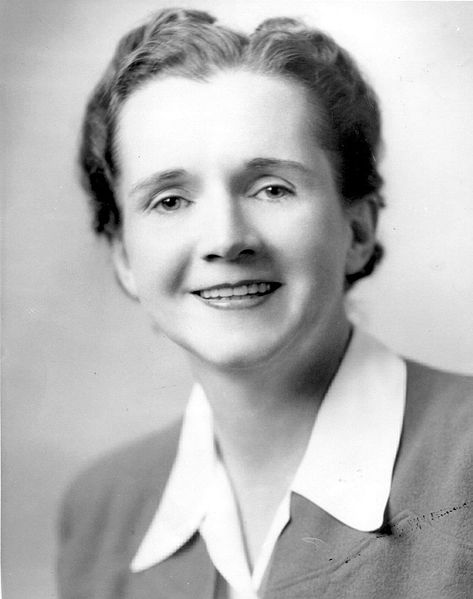
Some books impact an individual profoundly. Others are powerful enough to influence an entire society. Rachel Carson was the author of both. Tributes to the fifty year landmark of the publication of Silent Spring have appeared this month, and although the players have changed, the plot remains the same. Bryan Walsh’s tribute in Time a few weeks back captures the essence of the situation: an environmental danger is discovered, “industry” will at first deny it, then attack the science, and then try to frighten the population with the inevitable escalation of costs. Sometimes common sense wins, but only after a long tantrum by those whose main desire is personal enrichment.

Silent Spring is credited with starting the ecological movement. Until the early 1960s the world seemed vast enough to absorb our filthy, toxic run-off. We were only on the cusp of understanding that the world is much smaller than we had ever imagined. Disney had not yet published the theme song that would get through to the American imagination. We had yet to stand on the moon and look back at just how tiny our troubles were in an infinite universe. Using pseudo-religious backing, industries often claim the planet was made for us. In truth, we evolved to adapt to this planet. The sad story after sad story of those who’d figured out how to line their pockets at the expense of the health, and often the lives, of others constitutes an ignoble hall of shame. Rachel Carson, who truly deserves the title of prophet, was considered the enemy of progress. Better living through chemicals—who hasn’t heard the phrase?

The science behind DDT, which nearly drove the bald eagle to extinction, is not the culprit. The radium that rotted the teeth, mouths, and jaws of young women employed to paint it on watch hands, had always been radioactive. The coal still burning under Centralia suffers from properties properly discovered by science. In case after case we find greed running away with the science. Science unlocks the secrets of our universe, but it also gives ideas to those who are always looking to make a buck. It may be that Rachel Carson knew she was slinging stones at giants when Silent Spring was published. This one biblical metaphor might come in useful for those who are able to see the larger picture. We’ve only got one planet and if we want it to survive we’ve got to make it last. Giants should come to fear the disadvantaged who know how to use slings, whether with rocks or words.


Parsing God

Being married to a Girl Scout leads to many benefits beyond just the cookies. Not that cookies are unimportant, of course. Having been a Boy Scout briefly back in the 1970’s, I recall three-finger salutes, rambunctious meetings, and the occasional camping trip complete with the rabbit coming out of the hole, going around the tree and then something else. I’m sure there was a Boy Scout pledge, but I can’t remember it. Like most group activities, Boy Scout meetings served mainly to remind me of my own inferiority, and so my mind does not often enjoy visiting those places. Having attended a few Girl Scout meetings over the years as my daughter was growing up, I heard the Girl Scout promise a few times, and was a little surprised that the phrase, “To serve my God” has remained unaltered, even with the changing face of the population. When I attended an event hosted by the Elks, the civic organization, the presenter began by explaining the rules for who might join. It too, is limited to theists. The reason for such admission requirements has me pondering if there was a time God was an endangered entity in the United States. If not, why insist on this proviso?

I’ve been reading about religion’s role in society. Something that those who seek primarily the deep, personal and experiential aspect of religion may not realize is that religion is a form of social order. Scientific knowledge about God, if God be incorporeal, non-material, and beyond space and time, is impossible. Religions don’t prove God’s existence, but they serve to reinforce the sanction of the sacred for human society. They have an essential role in that drama. By limiting membership to believers organizations such as the Elks are merely asserting their belief in the working of the system. Of course, from the beginning those who do not believe risk little by claiming they do believe.

But what of the doubter, who may be the truest believer of all? Some Girl Scout literature has a footnote, parsing God: “The word ‘God’ can be interpreted in a number of ways, depending on one’s spiritual beliefs.” Belief is a form of commitment more than a mental certainty. In the Hebrew Bible belief was not as strong a suit as obedience; and thus it had been for the history of organized religion. Starting perhaps as early as Jeremiah, a shift began to take religion more toward a matter of internal commitment. In the face of utter loss, Jeremiah (or one of his fans) suggested that belief was more important that unthinking obedience. Belief is very subtle but vitally powerful. Lives are staked, and sometimes lost, on it. So while you’re enjoying another cookie, try parsing your belief. Me? I’m still trying to figure out when that rabbit goes back in the hole.


Dearly Beloved

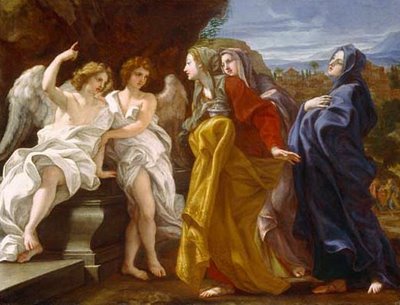
Coptic Christians have been in the news recently. In a late push to be known as the radical orthodox, it seems, the Copts have arrested the headlines. Tensions in the Middle East appear to have shifted to this ancient group and the media finds itself fascinated by them. In an unrelated development, a Coptic papyrus fragment appears to mention Jesus’ wife, according to CNN’s Belief Blog. Naturally, people are curious (read “upset”) at this revelation, although it is not history, just tradition. For decades, perhaps centuries, scholars of Christianity have noted that Jewish guys Jesus’ age would have been, by all social expectations, married. Celibacy was not really an option in the first century of the common era, and yet, no one explicitly mentions Jesus’ wife. This causes a larger crisis for divinity, because once Jesus was recognized as divine what would you do with a wife? She would complicate things (or at least theology).

The female divine is certainly as ancient as the male divine, culturally speaking, if not older. Despite cartoons of Cro-Magnon man dragging Cro-Magnon woman by the hair, all indications are that early people revered the feminine mystique as life-givers. Naturally, this equates to a kind of divinity. Only when society grew to be dominated by politics, no matter how primitive, did the male usurp the role of life-giving image-of-god-bearer. The male part in procreation was upgraded to being the creator, and the female relegated to a mere receptacle. Male gods alone could create universes, and women were downgraded to incomplete men. Still, in the myths around Israel (and perhaps within Israel as well) gods were married. The divine principle included both genders, although in an unequal distribution of power.

Fast forward twenty centuries and we have movements that encourage young women to consider Jesus as a kind of chaste lover. That’s a little hard to do if he was married—issues of adultery, at least in fantasy land, cause a real complication. The fact of history is that we possess very little of Jesus’ biography. Depending on how we parcel out the Gospels, we know only about one year’s worth (or three very scant years) of his life. Many personal details are left out. The Bible is clear that he had brothers and sisters, and even some of their names are preserved. We know his parents and find out that he was a cousin of John the Baptist. The relationships likely continued from there into other connections, but they weren’t central to the story the Gospel-writers wanted to tell. Adding women always complicates a male religion. Only non-gendered religions can be truly universal.

So this newly translated Coptic fragment comes from centuries later when it would seem natural that any Jewish man of the time would have been married. What was his wife’s name? Here’s the beauty of the revelation: for that, we can still offer the consolation, “fill in the blank.”

Rounding up the usual suspects?


Last Call

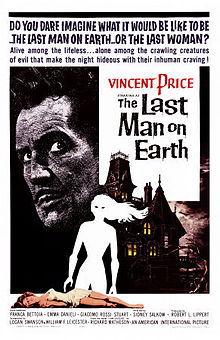
A believer in equality across media, I decided to balance out my recent viewing of The Last Woman on Earth with its chronological sequel, The Last Man on Earth. I have seen I Am Legend a time or two, but I have not yet read the Richard Matheson novel. Knowing that the first cinematic attempt at the story was the Vincent Price version, I was curious to see what the last man and the last woman had in common. Not surprisingly, it was a church. The story has been around long enough that spoiler alerts are superfluous, so here goes: basically, vampires have taken over the world. Somehow Robert Morgan has survived and spends his days hunting vampires and whiling the nights away with jazz and booze. As the opening sequence rolls, the camera lingers on a church where the marquee reads “The End of the World.” Of course, in a quasi-literalist sense this is true. Robert is the only non-infected person left. He is eventually located by the infected-but-inoculated crowd and chased down to be staked to death at the altar of a church. The culmination is strikingly similar to The Last Woman on Earth where the final scene also involves a death at the altar in a church.

The noticeable difference, however, revolves around gender. There is very little in the way of sexual suggestibility in The Last Man. Even the scenes of Robert with his wife are chaste and emotional distant. The appearance of Ruth does not even tempt him after three years alone. The Last Woman, however, revolved precisely around this axis—one woman, two men. The sexual tension is the fuel that moves this entire movie along. Of course, the 1960s became the decade of the sexual revolution, but even so the female is decidedly an object in Last Woman. Even in The Last Man, the woman leads to Robert’s death. She was sent to betray him, and although she changes her mind and attempts to save him, it is in vain. Robert dies in her arms. This fear of female power has never dissipated. How many women have been elected president since the 1960s?

While maybe not the heart of the matter, religious constructs may be the lungs or stomach of the situation. Although current religious thinking often insists on equality of the sexes, a tremendous cultural freight placing women in an inferior status continues to weigh heavily on our cultural mores. The largest Christian body in the world still denies women access to the priesthood. Even the idea of denying access underscores just how deeply this sentiment runs. The movies of the early 1960s had neither the budget nor the cultural support to suggest that things should change. Indeed, in both Last pictures the message was that the world had ended already—why bother trying to change anything at this late stage? The final shot, the stolid interior of a church, underscored the message: the status quo has the sanction of the divine.


Liberating Science

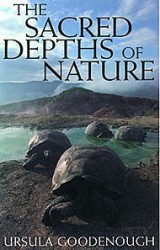
The fact that prominent scientists occasionally take time from their busy schedules to fire off a broadside against religion and religious believers freely bare their fangs at science shows that we need some efforts at reconciliation. I am reminded of schoolyard bullies when specialists in either realm make claims of exclusivity. Religion and science are both here to stay, and they’d better learn to get along. I just finished reading the remarkable little book The Sacred Depths of Nature by biologist Ursula Goodenough. While declaring herself a non-theist, Goodenough, the child of a Methodist minister, preserves a profound respect for the sacred in a concept she calls “religious naturalism.” Her brief book, which a colleague compared to a daily devotional, contains more good sense than all the enraged professionals bellowing at each other from either side of an unbreechable gulf. Uncompromising in her science, Goodenough is not suspicious of the human religious impulse, but embraces it in the expressions of nature. It is an approach I found liberating and amazingly conciliatory. It lacks the territoriality of Stephen Jay Gould’s Non-Overlapping Magisteria (NOMA) and preserves the integrity of the human person in all its complexity.

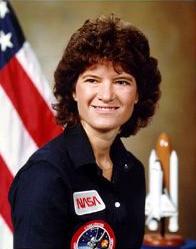
The day I finished the book the headlines of the paper announced the premature death of Sally Ride, another woman who moved science in the right direction. Ride’s sister is a Presbyterian minister, while Ride herself was a physicist as well as the first American woman in space. Aboard the space shuttle Challenger, she made history also as the youngest American in space. Typical of the imperialist national attitude that unfortunately still reigns supreme, space had been tacitly declared a man’s world. Sally Ride shattered that glass ceiling at 17,500 miles per hour. Even so, change seems to have decelerated once again to far below sub-orbital speed. Religion is partly to blame. A deep component in our culture, religions in the western world have traditionally asserted male superiority. Even those who claim God to be sexless can’t really conceive of a big person without some gender. The day after her death and the headlines had shifted from mourning to astonishment that she was gay.

The loss of Sally Ride is a loss to science, for she was in the heaven formerly occupied by God, showing women the way. I am, however, comforted by the efforts of Ursula Goodenough to keep the dialogue open. Too often, it seems, that conflict is the cost of disagreement. One of the observations of astronauts is that long periods confined with the same small coterie of people lead to inevitable disagreements. The question facing us all—for our planet is not so large after all—is how we will choose to deal with differing worldviews. It was declared that science would eventually bury religion, once reason had taken hold and superstition had run its course. Although the grave was dug, it has never been filled. Maybe we should all read the sensible approach of Goodenough and just be glad that we’ve all had a chance to be here at all. And remember Sally Ride as a fearless explorer, a hero rather than a spectacle.


Double Exposure

Back when I was teaching full time, one of my favorite television shows was Northern Exposure. In fact, the fictional town of Cicely, Alaska, had quite a lot in common with Nashotah House. Both were populated by quirky characters in a relatively remote location. Both were small, insignificant places with visions of grandeur. Both were effectively run by conservative forces that liked to imagine themselves as benign or downright noble. Both distrusted outsiders with ideas that might challenge the status quo. One of my favorite characters was Maggie O’Connell, the woman in a man’s world who refused to let the male establishment set the limits to what she could do. A strong woman character whom the men all respected served as an antidote to daily life at the seminary. My wife and I liked the program so much that we even stopped in the town of Roslyn, Washington, where the outdoor scenes were shot, a couple of times on our way out west.

We don’t have television now, so we have to watch Northern Exposure on DVD. While at a hotel recently, however, the name of Janine Turner on the television made me look. I had known that the actress portraying Maggie O’Connell was a political conservative in real life, but here she was advocating an “anyone but Obama” type campaign or some such nonsense. I felt as if I’d been sold a false bill of goods for all these years. Like Margaret Thatcher, Turner believes in socially conservative causes. Margaret Thatcher, that contradiction of a woman who felt that females belonged in the home, had undue influence on a once great Britain. Where was the woman who played such an ardent feminist in a male world? How could anyone pretend that kind of passion in front of a large audience for six years and spent her real life trying to deconstruct a cause that has everyday ethical implications? It’s all an act.

Women have been relegated to positions of lesser prestige for millennia for the crime of caring for their offspring. Men have been free to abandon responsibility and seek selfish ends, if so inclined. No matter what our gender, we pursue in life what is most meaningful to us, and it amazes me when strong women support a structure that has consistently shown itself interested in keeping them down. Vaunted as a show where diverse characters come into constant conflict but always “strive to accept their differences and co-exist,” Northern Exposure displayed depth without eschewing what is laughable about the human condition. Real life, I suppose, it is much more like the small town of Rosyln, Washington. For a few years it was an out-of-the-way tourist stop where actors could play characters they really didn’t believe in while living in a fictitious town where everyone at least attempted to tolerate everyone else.

Do you recognize this character?


Friday the Sixth

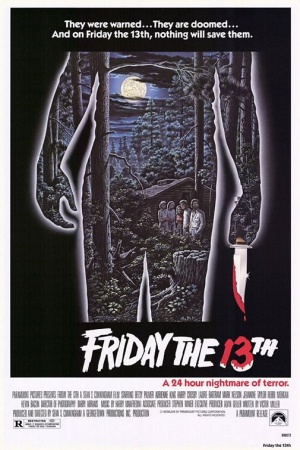
I tend to run behind on the movie front.  In some cases, decades behind.  I have never been a fan of slashers, although I did take a date to A Nightmare on Elm Street in the staid, dry town of Grove City while in college.  We broke up shortly after.  Still, I have a soft spot for “the classics,” and Friday the 13th has spun enough sequels to qualify.  “Jason” is a household name for the heartless serial killer, and the movie is set in New Jersey.  And it was hot outside and lazing on the couch trying not to stick to myself seemed about as much of a challenge as I could handle. Besides, a week from today is Friday the thirteenth. Now that I’ve finished with the excuses, here is a declarative sentence: I finally got around to watching Friday the 13th.  After many other films I’ve seen, I have to say that it didn’t really qualify as scary.  You know in advance that the counselors, by rote, must by killed in what are supposed to be shocking ways.  Shadowy corners and rainy woods and aluminum canoes are to be avoided, if the movie and its successors have taught us anything.  Nevertheless, the religion and scary film equation still applies.  And a strange kind of throwback to an unexpected classic (the literal kind).

The religious element comes in the form of the stock crazy local named Ralph.  Ralph warns the kids that they will die and says he’s been sent by God to warn them.  Of course they don’t listen.  If they had, there would have been no movie. As a child I was always offended by the caricature of the religious crazy, but I have come to see that this stock character is itself a symbol of fear.  Although ubiquitously laughed off, the person passionately driven by religion is indeed a potential danger to society.  In the days of my innocence we had little hard data upon which to hang such fears.  In the post-9/11 world it seems there are far too many sky-hooks for that purpose. Some of those sky-hooks are a little closer to the ground, but they inspire fear nonetheless. I’ve known all along that one of the reasons I watch scary movies is to give myself some advance warning of what might go wrong.  Not that it would help in any real way, but sometimes avoiding the shock by anticipating the worst seems like the only human thing to do.

What about the literal classic that I mentioned? Beowulf falls outside the Greco-Roman period, but is clearly a classic of English literature.  (Spoiler alert for anyone even more behind the times than me—) The only thing scarier than Grendel was, of course, Grendel’s mom.  So in Friday the 13th, the killing is done by Jason’s mom.  Like Grendel, Jason dwells underwater and surfaces to pull down his victim(s).  Like Grendel’s mother, Jason’s mother is decapitated by a sword (actually, a machete in the modern version), on the shore of the Crystal Lake.  After the mother’s death the child (Jason/Grendel) is resurrected.  Whether it was intentional or not, there is a lot going on here. The sacrificial mother is an inherently religious theme although many formal religions make it a male prerogative. The death of the mother brings the son back to life.  I wonder how Christianity might have differed if instead of three male deities, there had been a divine mother.  In such cases resurrection of the son comes only at a very steep price. Just like watching Friday the 13th on a hot summer night.


Think Again

Within a few blocks of my office is Midtown are at least three temples related to the New Thought movement. New Thought has been variously interpreted, but generally it is considered a religious movement, challenging, as it does, the very perceptions of reality itself. New Thought is usually traced back to Phineas Parkhurst Quimby, a nineteenth century American philosopher and inventor. A watchmaker by trade, Quimby came to believe that mind had ultimate reality and New Thought opined that the divine is true human selfhood, and what we call God is ubiquitous. One of the corollaries of this outlook is that the mind is capable of healing the body. A woman who was a patient of Quimby took his ideas and developed them further. Mary Baker Eddy would eventually found the Christian Science movement. Although the Mother Church of Christian Science is in Boston (and is a somewhat imposing building), over on East 43rd Street in New York stands the First Church of Christ, Scientist.

New Thought was noteworthy in that many of the leaders of the movement were women. Unburdened from traditional Judeo-Christi-Islamic ideas of paternal divinity, New Thought had no use for male-centeredness. One of the early leaders of the movement was Emma Curtis Hopkins. Originally a disciple of Mary Baker Eddy, Hopkins split off from Christian Science and began to organize the New Thought movement. One of her followers was Ernest Holmes, the founder of Religious Science. While based in Los Angeles, Religious Science had roots in New York where Holmes spent some of his younger years. Holmes would eventually write The Science of Mind and his followers would become recognized as another New Thought “church.” While on a lunchtime errand I came across the Religious Science center on East 58th Street, just a few blocks from its kin down by Grand Central.

Theosophy is probably better classified as an esoteric religion rather than New Thought. What ties them together is their beginnings in the late nineteenth century in the Northeast. Helena Blavatsky and Henry Steel Olcott began meeting in New York City and the movement grew out of their mutual interest in the religions of antiquity and the far east. The Theosophical Society moved its headquarters to India with a main US office in Wheaton, Illinois. Nestled between the Church of Christ, Scientist and Religious Science, an office of The Theosophical Society sits quietly on East 53rd Street.

One brief lunch hour will take you past all three. These New Religious Movements attest to the vitality of religious thought. Some of them continue to try to combine science with the world of the mysterious, spiritual universe in which we find ourselves. The obituary for religion was written long ago, but a stroll through Midtown on lunch hour will show it was certainly premature.


Cabin Fervor

It’s a sure sign that work is growing overwhelming when I’m too tired to watch my weekend horror movies. Well, I decided to fight back the yawns and pull out Cabin Fever this past Saturday night. I’d seen the movie before, and I’m not really a fan of excessive gore. The acting isn’t great and the characters aren’t sympathetic, yet something about the story keeps me coming back. In short, a group of five teenagers (it always seems to be five) are renting a cabin for a week when they get exposed to a flesh-eating virus. They end up infecting just about everyone in the unnamed southern town before they all end up dead. It doesn’t leave much room for a sequel, but that hasn’t stopped one from being made. One of the unfortunate victims of the virus is torn apart by a mad dog. The locals, fearing their safety, decide to hunt down the surviving youths.

On the way to the now gore-smattered cabin, one of the locals mutters that they’ve been sacrificing someone—a natural enough conclusion when body-parts are scattered around, I suppose. He says, “it ain’t Christian.” Well, yes and no. Sacrifice is at the putative heart of Christianity, although human sacrifice (beyond infidels and women) was never part of the picture. As is often the case with horror film tropes, the victim who has been dismembered is a woman. The guys whose deaths are shown are all shot. Now, I have no wish to attribute profundity where it clearly is not intended, but there does seem to be a metaphor here. Our society and its staid religion tolerate the victimization of some over others.

One of the hidden treasures of the best of horror movies is the social commentary. George Romero made an art form of it in Night of the Living Dead and its follow up Dawn of the Dead. Many other writer/directors have managed to do it quite effectively. We can critique our world when hidden behind the mask of the improbable. While the commentary for Cabin Fever may be entirely accidental, I still find a little redemptive value in it. That, I suppose, is the ultimate benefit of social commentary—it is true whether intentional or not. Is there a larger message here? I wonder if the fact that when women are victimized no one survives is pushing the metaphor a little too far. It’s hard to say; I’ve been working a little too much lately.


Help from the Friend

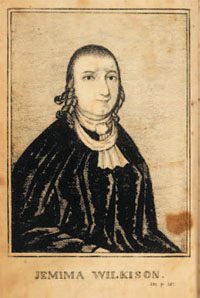
Being unconventional does carry certain risks. I first learned of the Publick Universal Friend, born Jemima Wilkinson, from Mitch Horowitz’s Occult America. There are many things, I imagine, worse in life than being labeled “occult,” but the Publick Universal Friend seems to have been more eccentric than occult. The “Friend” of her chosen moniker was a mark of her Quaker roots. The Quakers, while never among the most numerous of Christian sects, are infrequently considered occult. Two U.S. Presidents were Quakers, as is that friendly face smiling at you from your breakfast cereal box. What Jemima Wilkinson did that pushed her over the edge into the unconventional was actually the fault of her father: she was born female. In the 1770s religious leadership was nearly unanimously male. 

Wilkinson underwent a near-death experience that, like John Wesley some 70 years earlier, led her to believe that she was born to some higher purpose. Quakers, or Friends, generally eschewed excess showiness and the Publick Univeral Friend liked to make her presence known. She rode a white horse into Philadelphia and rode around in a carriage with her own logo, a kind of evangelical branding, if you will. Eventually tiring of the criticism of city folk (Publick Universal Friend was strictly platonic, advocating absolute celibacy), she moved to a region of New York that would eventually become the birthplace of several distinctive American religions. She settled near Keuka Lake and formed a community called Jerusalem.  New York and Pennsylvania would eventually harbor many utopian groups.  Both states were (and are, to a large extent) rural and it was a fairly easy matter to locate unclaimed real estate and establish a little bit of heaven here on earth. 

The message of Publick Universal Friend was peace and friendship, nothing too radical.  If preached by a male it would have been considered gospel. In fact, in a less darwinian world it might actually work.  The pull of nature on some people is too strong.  On others it is too weak. Maybe it is the legacy of having been born in a state that began as a “holy experiment” by William Penn, but I find it sad that the Publick Universal Friend has been nearly forgotten. Perhaps the Friend will have the final laugh. It seems that a young man named Joseph Smith might have been influenced by her in the days before writing up the Book of Mormon. As I’m sure Joseph Smith learned in the town of Carthage, we can all use a Friend who encourages us all to get along.


Problematizing Noah

As I continue to Tweet the Bible, I’ve been working through the story of Noah. Considering the number of children’s items imprinted with the friendly, smiling Noah and Mrs., and the cute, predatory animals they’re taking aboard their private yacht, the utter belligerence of the story is frequently lost. There is one seriously peeved God behind this. “And it repented the Lord that he had made man on the earth, and it grieved him at his heart,” Genesis 6.6 states. And it only gets worse from there: “I will destroy man whom I have created from the face of the earth… for it repenteth me that I have made them.” Indeed, the wrath of God is emphasized more than the wickedness of the humans that have spawned it. No matter what is done, it seems, God will still be in a rage.

The truly striking aspect of this account comes, however, when Noah is instructed on whom to save. “Thou shalt come into the ark, thou, and thy sons, and thy wife,” verse 18 dictates. Men first. Now, we cannot judge a product of the past against standards of the present day, but it is quite clear why many women find the biblical text less-than-friendly. Even the animals are explicitly paired from the start do not receive the radical disjointing that the women receive from the men. If the purpose is to procure a new generation, arguably pregnant women could have done that with the men treading water above the remains of Eden. If survival is the point of the story, as the saying goes, ladies first.

The flood story is a complex account of a deity with anger management issues and a preference for the company of men. Although theologians may say with a wink that God has no gender, clearly the Bible begs to differ.

Humans and animals alike are victims of the divine wrath, and even though humanity survives the flood can the relationship with deity ever be the same again? How do humans face a creator turned destroyer, knowing that they will never really please him again? The weight of such divine displeasure is surely greater than all that water pressing our ancient cousins into fossils on the primeval sea bed. I think back to all the children’s toys with the happy little animals and a smiling Noah and I know they resemble the biblical version only in the most fleeting of fashions. Yet the myth lives on.

What shape is your ark?


No God for Women

A friend recently asked me to write a post on the feminine image of God. Specifically, she noted that images of God tend to be overwhelmingly male, even today. Having written a book on the goddess Asherah, and being very interested in gender equality issues, I was intrigued by this request. Growing up male it seems natural in our culture to find representations of God as a man. It stands to reason that in a culture more open to feminine experience we should find female images of God. They are, however, still lacking. This combination of improbable facts kick-started some ideas about both religion and culture. To begin at the beginning, although the Bible makes passing references to God as either non-gendered or even female in rare places, clearly the predominant metaphor is masculine. The third-person masculine singular pronoun (i.e., “he”) is almost always used for God, beginning in Genesis 1 and running straight through. The Judeo-Christiani-Muslim deity is decidedly male in his demeanor. All three religions developed in circumstances of male social dominance.

Enter the 60’s (1960’s, that is. C.E.). Women were able to begin expressing their needs without the whole weight of a social McCarthyism bringing down the girth of the government upon them. Instead of finding feminine traits to the god of the Bible, interest in goddess worship revived. Now, serious scholars disagree on just how much a role the goddess played in the development of monotheistic religions. The end result, no matter how you parse it, is pretty masculine. Therefore some women found the goddess to be more conducive to fulfilling their needs. Problem is, there never was, historically, a goddess monotheism. There were always goddesses, plural. Without the unifying force of a single, female deity societies just never fully coalesced around a single, strong image of feminine deity. Some have tried to put Asherah in that role, but she was defined by her husband El and shared the stage with Anat, Shapshu, Ashtart, and a host of other potent females. In a world of two basic genders, monotheism favored the male.

Are there female images of god? Undoubtedly there are. There will be a great deal of difficulty finding them because Christianity very quickly invented the idea of heresy (something Judaism fortunately lacked). This assured that the “orthodox” voice would always be the loudest in the shouting match that we call religion. This situation has had two millennia to ferment and brew. Theologians (mostly male) early on stated that God really has no gender. After all, a male god does imply a lady somewhere in the wings—otherwise human maleness is really superfluous, theologically speaking. Rather than embrace castration, let’s just keep god male, the thinking seems to go. Religions are conservative by nature. They may breed radical free thinkers, but natural selection comes to their rescue by reinforcing the bearded, chastely clothed, divine father. Until society is ready to embrace true equality, however, religion will continue to privilege the big man upstairs.

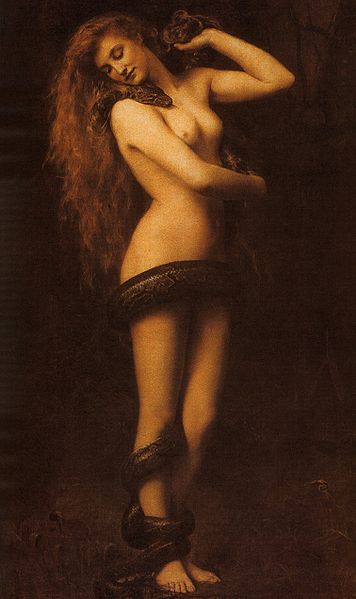
Monotheism’s bete noir?


Free Tea

I first became aware of The Town Hall, I have to admit, through the Christopher Guest mockumentary A Mighty Wind. In the movie, three aging folk groups are brought together for a concert in Town Hall to honor the memory of one of their early promoters. When I began to walk past Town Hall on my way to work, I grew curious about its history. This curiosity was piqued by the scriptural quotation engraved on the façade: “Ye shall know the truth and the truth shall set you free.” New York City is an architect’s smorgasbord and I am often intrigued by the little gems I spy here and there. I discovered that The Town Hall was originally a political venue built by The League for Political Education, an organization sorely needed now. Built because of the need for a public space to discuss the Nineteenth Amendment (which the League supported), Town Hall was originally a venue to keep the public informed.

The Nineteenth Amendment—which the Tea Party seems to have overlooked, along with much of what we recognize as democracy—was drafted by Susan B. Anthony and Elizabeth Cady Stanton. It took congress only four decades to ratify it. Women were finally given the right to vote. Stanton was noted for her suffrage activities, including the production of The Woman’s Bible. The idea that an entire half of the human race should share the rights of the other half seems to have required a building erected to educate the public. Of course, there were moments when even The Town Hall couldn’t bear the words spoken on stage, as when Margaret Sanger was arrested for speaking about contraception there in 1921. I suspect there were Tea Partiers in the audience.

The same stage also provided a venue for Edna St. Vincent Millay to have her poetry reading breakthrough. Richard Strauss and Sergei Rachmaninoff performed there, as did any number of other greats. Truth may take many forms. Certainly human equality is as basic a truth as can be found. Art and poetry are equally as parsimonious, in the formal sense of the word. These things that we value are the very aspects of culture that the Tea Party would like to curtail. Thankfully there have been believers in the truth in the past who have been willing to construct monuments to sanity. And I can’t help but think that there would be even more of them if we still had a League for Political Education to help promote the truth. Without it, as it says in stone, we can never be truly free.


Stormy Weather

The privileging of one literature over others is problematic. Of course, the entire industry of biblical studies is built around such preferential treatment. And so is a large share of Christianity. I’ve just finished reading William H. Jennings’ Storms over Genesis: Biblical Battleground in America’s Wars of Religion. For someone who has taught Genesis before there wasn’t too much new material in here, but it strikes me as a very good primer for those who wonder about why the issues of gender inequality, global warming, and evolution remain firmly entrenched in evangelical minds, and therefore, our society. Just the first three chapters of Genesis, as Jennings points out, have led to the much of the irrational, at times inane, arguments that just won’t go away. Tea Party kinds of issues.

At the base of it all is the concept that Genesis somehow represents the way the world is supposed to be (rather than the way it actually is). As if seconding my choice of bus reading, The Economist recently published an article on Glen Rose, Texas. I’ve known about Glen Rose since I was a child. There, in a bizarre twist on the Flintstones, locals claim human and dinosaur footprints intermingle in a nearby creek bed. As the article points out, some locals see this as evidence of young earth creationism—seems Fred and Wilma missed the ark along with Dino. For decades paleontologists have tried to explain that the “human” tracks are actually dinosaur tracks as well. Given their size and stride, if they were human Adam must’ve been a giant. Despite the science, the myth persists. Even the article in The Economist doesn’t give the scientific answer.

It would be difficult to find a book more influential than Genesis. It would also be difficult to find one that is less scientific. Anyone who has studied ancient societies knows that they delighted in telling outlandish stories to explain the origin of the world. After all, there were no eyewitnesses. No channel 11 helicopters hovering overhead to bring you the story live. It all comes from mistaking a good story for a good book. In an era when evidence of evolution literally abounds, we still have nearly half the population of this technological nation trying to make room for the Valley of the Gwangi. Jennings may not hold the answers to all the problems Genesis raises, but if people would read Storms over Genesis, we might be able to afford a little more energy to solving global warming rather than running from dinosaurs in Texas.