Lost Purpose

In a move that demonstrates its love of Inquisitions, the U. S. Conference of Catholic Bishops is officially investigating the Girl Scouts. Seemingly forgetful of the fact that a bunch of unmarried men with a record of protecting pedophiles is not above scrutiny itself, the Catholic Church now seems to think it has the right to police other organizations. The concern these men show for what goes on in other people’s underwear is beyond perverse—WWJD indeed? Both my daughter and my wife are Girl Scouts, and so I know it is not a perfect organization. I also know that it lives up to its goal of offering girls the chance to gain self-confidence and become empowered women. Women who are not trodden under the heavy feet of doctrine are tied to stakes and burnt, in good old-fashioned Christian charity. And why the fuss among our Roman companions? They’re afraid because of demonstrably false allegations that Girl Scouts “associates with” organizations to which the church also objects.

I was a Boy Scout for a few years. Already in those days jokes of homosexual leaders—and a few actual cases—were de rigueur. Where was the Catholic Church? Yet this year alone they have made strident moves against their own nuns and now, again, against the Girl Scouts. Where two or three women are gathered together, the Catholic bishops will begin to pick up stones. Better not read what Jesus is scribbling in the dirt. Some of my readers have problems with my biblical interpretation. I will now ask if anyone can produce a biblical prooftext for the church’s mandate to oversee the organizational structure of secular, non-profit, non-religious associations. What does the Bible say about that? Clearly what the Bible does allow sexually favors men. Where your testosterone lies, there will be your heart also.

All of this belies a lost of purpose for the church. Like the empire whose epithet it shares, the Roman Catholic Church is perceiving paranoid threats from every quarter. The purpose of Christianity, at least according to a guy called Jesus, was to help the poor and underprivileged and to love all people. Even those who crucify you. Now the message the headlines declare is that any organization offering women sexual autonomy will be investigated by the bishops. It matters not whether any allegations have a basis in fact. Christianity’s purpose? To assert male authority. To prevent any organization of women from achieving confidence or equality. To subjugate an entire half of the human race to the will of a single man. Does that sound like the true purpose of religion to you?


Genesis Gender-Bender

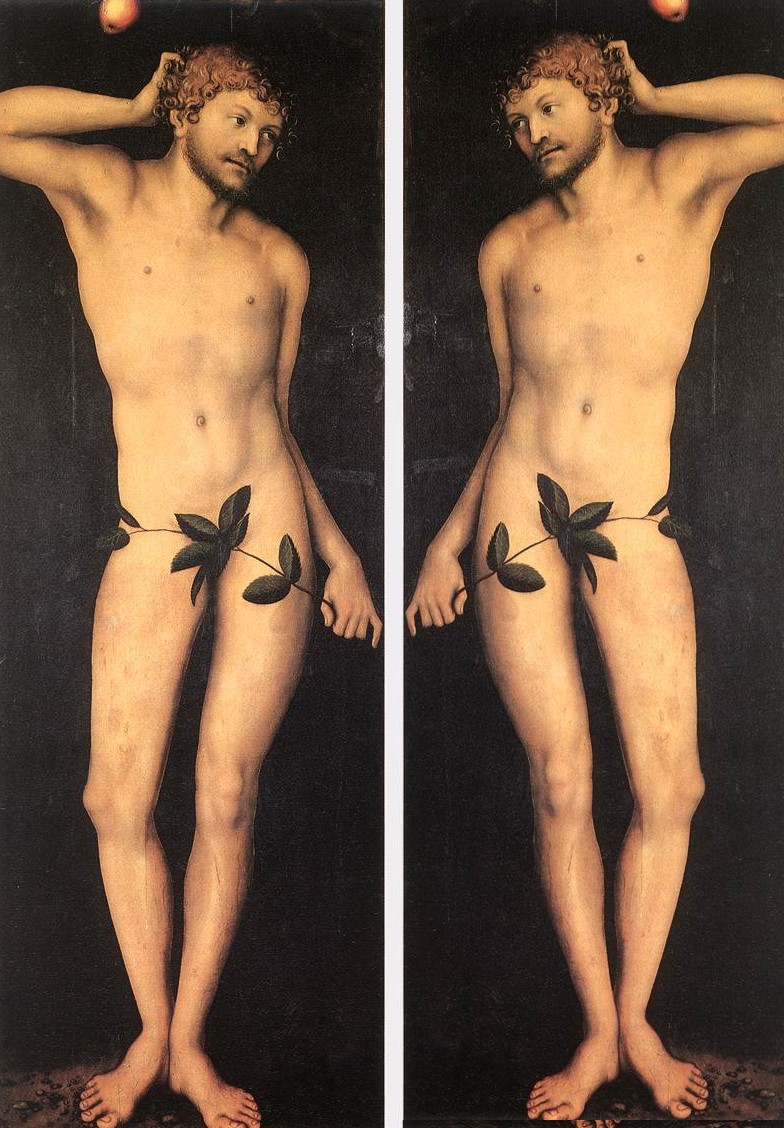
“Male and female created he them; and blessed them, and called their name Adam,” so reads Genesis 5.2 (5.2a, for those sticklers among the crowd). Long ago I lost track of how many times I’d read Genesis. It has a privileged place in the Bible partially because of our modern method of reading books. We assume that the beginning should be read first and that it should lay the groundwork for what follows. The Bible, however, was compiled over centuries and the story may begin at Genesis, but not all that follows is in agreement with it. “Called their name Adam” sent me scurrying back to dust off my Hebrew of the Bible. The King James Version, after all, was translated from manuscripts that are sometimes inferior to many that have been discovered since then, including the Dead Sea Scrolls. Maybe this was one of those strange Elizabethan passages, for after all, Queen Elizabeth I did have a bit of a reputation. To my surprise, however, “their name” remains plainly in the Hebrew, suggesting that the first couple were both Adam.

Since just a verse later Adam and Adam have a son called Seth (and since the genealogies seldom mention their women at all), presumably Adam here means Eve. Literalists beware! The creation story in Genesis 1, as opposed to Genesis 2.4b, pictures the genders created simultaneously. Women and men together are humanity. The second creation story offers Adam a generous dollop of primacy; he gets to be first and even gets to name the animals and the wife; he is the lord and master of his domain. And people refer to eating the fruit as a fall! Now at Genesis 5 we have humanity reunited in the person of Adam, the bi-gendered representation of humanity.

Of course Adam is a play on words. The Bible begins with humanity as a joke. Adam is just one syllable short of the word for “ground” (adamah), and so Adam is the original groundling, or earthling. Yet Adam is never given as a proper name until Eve appears. It is only with the creation of woman that man becomes man. I suspect that may be the underlying of logic (if it is even right to call it such) of the plural, “their name Adam.” It might be easier just to recognize that the Bible doesn’t give us the endpoint of the discussion of human nature, but the starting point. There are those who insist that the Bible has all the answers. In my experience it is primarily full of questions. And the questions require both female and male to answer them. Otherwise, humanity is indeed a joke.

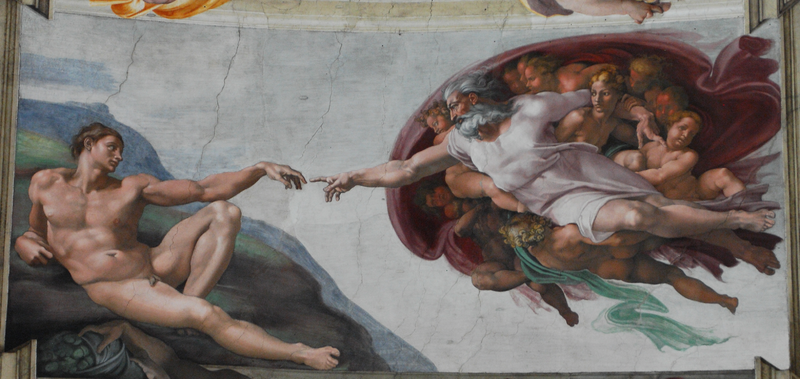
“Adam, I’m Adam”


Supernatural or Supernormal?

For anyone who’s honest, a person has to confess to doing weird things every now and again. Often we don’t even know why we do them. Those who write about our animal cousins after observing them closely offer a storehouse of explanations. Much of our behavior derives from our evolutionary heritage. In Supernormal Stimuli: How Primal Urges Overran Their Evolutionary Purpose Deirdre Barrett presents a most cogent case for why humans take things to the extreme. Everything from sex to overeating to television to our attraction to the young to why we kill each other in conflicts may be explained by the incredible attraction of supernormal stimuli. Beginning with the bird and bee studies of Niko Tinbergen, Barrett explains how we are often simply acting out eons’ old patterns that sometime prove to be destructive when left unchecked. The way to escape from them, she notes, is to become aware of them.

A bird will often favor an exaggeratedly large and crudely patterned egg over her own. Leopards will sometimes attempt to raise baby monkeys after eating their parents, because the babies are so cute. Thousands of citizens will prefer to watch athletes on television while eating unhealthy food rather than exercising themselves. Why? Supernormal stimuli have an immeasurable biological draw, and humans are in no way exempt. Tinbergen, the eventual teacher of Richard Dawkins, saw this as one of the dangers of Christianity. By separating humans radically from animals, religion presents us with false reasoning as to why we act the way we do. Science explains, religion makes up excuses.

The most poignant aspect of Barrett’s fascinating study has to do with war. Territorial animals make frequent displays of force that, in humans, translates to war. There does seem to be a biological basis for the male predilection for aggression. As Barrett notes, “Women throughout history have said—as do contemporary ones in Israel and Palestine—that a group of mothers could sit down and hash out in one afternoon an agreement that has eluded male rulers for years.” If men could lay down their posturing and be willing to let others have a fair share of the goods, life might be more amenable to all. It’s not all bad news, however. Nature endows us with endless curiosity as well. Is that not what brought you to this blog? I hope that curiosity extends to Deirdre Barrett’s Supernormal Stimuli and we will all learn to overcome the baser parts of natural selection.


Rite and Wrong

Anyone who’s never had anything very weird happen to her or him, raise your hand. Hmm, I thought so. Strangeness, whether prevalent or simply a unique event, is part of life. It is when we turn to explanations that the religious side of the equation suggests itself. Now I have a confession to make. When Borders was going out of business last year, I was in mourning. Those last poignant hours in my favorite bookstore I wandered the aisles picking up the books left behind by others, many of which I would not have otherwise purchased or read. One of those books was The Rite by Matt Baglio. I had seen the hype for the movie, and although the idea of possession terrifies me I’m not sure there’s anything here that can’t be explained by the likes of Carl Sagan’s Demon-Haunted World. Still, riding through the flickering lights of the Lincoln Tunnel on a bus on a gray and rainy morning, literal shadows of doubts creep in.

There is no doubt that events happen to us that seem to defy explanation. There is also no doubt that the enormous wealth of Christian mythology taken literally by Baglio defies all but the most gullible of readers. The problem is the black box. Nobody sees what goes on inside the locked chamber where the exorcist practices his art. Yes, it is a manly enterprise since the Catholic Church won’t admit of women priests. This was one books that left me tottering between what I know to be true and that shadowy place where doubts dwell. It is utterly certain that our perspective helps to determine what we see. A priest in a stuffy or chilly closed-off room believing a demon lurks therein will see the signs in the behavior of the victim. Throughout the book I kept pondering how so many possessed people lived in heavily Catholic Rome while in locales with more mixed religious traditions the phenomenon is rare.

Perhaps the most disturbing part of the story is the fact that Baglio readily admits: most of the possessed are women. In a religion where women have been marginalized as a matter of course from the early days, can this really be a surprise? And when the exorcist, a celibate priest, experiences sexual arousal how else can he interpret it but as demonic? The human mind is a fascinating system, capable of launching a body into stunning, adrenaline-induced feats of strength and endurance. It conjures gods and demons. And it can make a grown man cower on a dark and windy night with stories of possession racing through his head. I had a difficult time believing much of what I read in The Rite, but I do think perhaps it is now time to make a date with Carl Sagan. Lighting a candle in the dark is a very human thing to do.


Bleak Visions

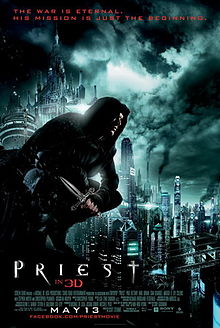
The day was leaden and rainy. Hopes for seeing the sun over the next several days dim. I had been warned about this, but once my mind has settled on vampires, they’re hard to resist. The reviews said Priest, as a movie, was full of cliched dialogue and predictable outcomes. This is true. But still, it is perhaps the most religious vampire movie ever made. While some have doubted my analyses of Underworld and other vampire films, Priest is set in a Pullmanesque world dominated by a church that has lost its belief in vampires. In fact, the civilized world, in scenes reminiscent of Blade Runner, owes ultimate allegiance to the church. Based on the graphic novels by Hyung Min-woo, the post-apocalyptic world of Priest presents an over-industrialized society where humans live in walled cities (ironically, Jericho has no walls). Vampires, more fierce than any Count, even by fifteenth-century standards, rip humans to shreds, but have been forced into reservations by the warrior priests. Their weapons are cross-shaped, but there is otherwise no reference to Jesus in the movie—only an amorphous “God.”

Despite the endless tropes, “a vampire killed my brother,” “the Priest is her father,” and endless chatter about the nobility of sacrifice, the movie is strangely compelling. Visually it maintains the appeal of a place somewhere between Planet of the Apes and the Book of Eli. And something appeals about priests who are willing to fight evil rather than sit around arguing about whether women should be allowed to join the movement or not. Keeping with modern proportions, we see only one female priest and none among the Monseigneurs, but she is the one who actually stops the vampires. And these are vampires that have evolved into the blind, naked denizens of the night who kill, apparently, for the sheer joy of it. The only article of faith the church can muster is, “if you go against the church, you go against God.”

I wonder if anyone in the world of religions is tracking how society perceives them. Religions once stood for our noblest aspirations, and our humblest weaknesses. Like bad caricatures from the movies, religious organizations don’t shy away from the desire for ultimate power. In His Dark Materials and in Priest, the church is content with nothing less than total domination. This is not missionary zeal, but good, honest power-lust. Not all religions are like that, of course. Still, there are those who perceive them that way. Maybe it is my own insecurity, or maybe it is the fact that I’m seldom convinced I have the answers, but I can’t help but feel the thrill of justification at the rebel who maintains conviction to the ideals s/he holds deeply. It takes no backbone to enforce obedience when might is on your side. But only those who have faced the vampires personally know who the real enemy is.


The Price of Religion

Gender is a religious construct as much as a biological one. The study of religion has brought me face-to-face with the reality that religion appeals to many women and to those who would manipulate them. Lately I’ve taken to reading the memoirs of women who’ve discovered the abuse their faith has doled out to them and who’ve taken moves to reclaim their lives. This past week I read Deborah Feldman’s Unorthodox: The Scandalous Rejection of My Hasidic Roots. As someone who has spent much of his life reading and re-reading the Hebrew Bible that gave fuel to the Mishnah that gave fuel to the Talmud that gave fuel to the Hasidic movement, I found Feldman’s narrative gripping. Some branches of Judaism, like some branches of Christianity, try hard to separate themselves from society. Their cloistered lives become secretive, and often by the standards of secular culture, incomprehensible. While reading this wrenching account of sexual domination, I kept wondering why Feldman didn’t try to escape. At the same time I already knew the answer.

I was raised by a religious mother who found her faith both a source of rules and a source of comfort. Unaware that religion can be a trap, women are frequently its victims. In a society that still refuses to give females equal opportunity for earning a living, is it any wonder that religions offer alternative routes that equally entrap? How do you appeal to a higher power when that higher power is, by biblical definition, male? Who will help you out when the largest religious structures in the world are male constructs? Yes, lately some religions have opened themselves to female leadership, but almost always at the cost of splitting off of factions that claim seniority and sanction from the beginning, when, they claim, only men ran this show. Deborah Feldman was trapped in a religion where her life, down to her hair and clothes and reading, was programmed by male expectations. In this continuum between religions we find the same progression in a series of degrees where men make the rules.

Many who read Unorthodox, I suspect, will see it as a condemnation of Hasidic Judaism. It is not. As Feldman makes clear, she has retained her Jewish identity, but she has let it evolve into a place where she is finally free to express herself. Gazing over the religious landscape, I see this as a place that many women find themselves. The very religions that had formerly held them down, however, continue to be male preserves. Even if women may join the club of bishops, clergy, or rabbinate, they do so with the constant reminder that they are only invited guests in what was once a masculine world. The world of men never voluntarily relinquishes its grip. As long as people are considered in the image of God they will always be by default male and female only as an afterthought. To conceive it any other way would be very unorthodox indeed.


Honor Thy Mother

Earth Day should be an international holiday. Perhaps the most disturbing attribute of some varieties of Evangelicalism is their tendency to read the “Be fruitful, and multiply, and replenish the earth, and subdue it” of Genesis 1 to be a mandate not tempered by a literal reading of Genesis 4. As I noticed when tweeting the text yesterday, Genesis 4.11 has God say to Cain, literally, “And now art thou cursed from the earth, which hath opened her mouth to receive thy brother’s blood from thy hand.” Her mouth? What is this if not a biblical affirmation of Gaia? The earth, according to Genesis 2, is literally the mother of Adam. Yahweh is the male element, the fingers molding the dirt (those who have ears, let them hear), while the womb of this bizarre conception is the earth itself. She has a mouth to receive the blood of Abel. The planet beneath our feet, according to the Bible, has not only a mouth, but also hands (Psalm 89, for those who doubt). It is our duty to grasp these hands and save our mother from ourselves.

In the spirit of the day, I decided to fix that pesky leak in the bathroom sink yesterday. We rent, of course, and our landlord—the nicest I’ve ever known—can be a bit slow when it comes to non-emergencies. I fixed the kitchen sink a year or two back, so I stuck my head under the cast-iron monster, baptized by the drips that continued to appear above my head from pipes far older than Methuselah, to see what I could do. After trips to every hardware store in the area, watching bemused DIY experts scratch their heads at photos on my phone of the Byzantine arrangement under my sink, I finally had to admit defeat and reassemble the old faucets again. The drips that fall are Gaia’s tears.

When I was in college I learned of Pascal’s wager. A philosopher who liked to hedge his bets, Pascal deduced that if God exists then our eternal fate relies on our obeying him (always him). If God does not exist, we have lost nothing by behaving ourselves, Pascal concluded. While many Evangelicals find that reasoning attractive, they do not apply it to their mother planet. If God is not coming back any day now, we’d better take care of the planet that sustains us. If God does show up, against all odds, what have we lost? Watching the plants burst back into life after a gray and dank winter, who can help but wonder at it all? Literal or not, the earth is so maternal that we should all pay her the reverence she is owed. Even if it means being a literalist for a day.

NASA's picture of our mother.


Nun Such Luck

It hardly seems to be news anymore when the headlines read “Vatican orders crackdown on US nun association.” Religions are largely characterized as men telling women (and milquetoast men) what to do. Perhaps because of our evolutionary, simian respect for the alpha male, most followers will resist pointing out inequities in the system just to have a smoother ride. The all-male Vatican is reportedly worried about how nuns of the Leadership Conference of Women Religious might be distorting the masculine teachings of holy mother church. No matter how much science the Vatican supports, it just can’t get over the idea that when God is found out there he will have not only a human face, but a human penis as well. The Associated Press article states that the Congregation for the Doctrine of the Faith—that is the organization of the Inquisition, my dear readers—found grave errors of doctrine among the ladies. Sounds like time for an auto-da-fé, n’est-ce pas?

Somewhere on its long and weary trek, the control of fellow humans for the sake of God has slipped into the rut of control of fellow humans for the rush of power. The Catholic bishops are worried about abortion (and other healthcare options for women). The Bible says nothing about abortion, considering life to coincide with the first breath. The chosen people did not have a conception of how conception worked (you can’t see the sperm or ova without a microscope, no matter how divine they may be) and so life began and ended with breath. The only reason to push the origin of life to conception is so that men may control women’s sex lives. These decisions are made by sexless men who wear dresses behind inscrutable walls of power. When nuns start seeking fair treatment for women it quickly becomes heresy.

I don’t mean to single out the Roman Catholic Church here, since many religions proclaim male superiority—loudly or softly. Back in ancient times when goddess worship was taken as seriously as the cult of male gods, a few religions did exist that gave women a position equal to, or sometimes even above, men. The priests of Cybele, for instance, had to undergo ritual emasculation. Strangely, religions with celibate priesthoods today leave their men intact, perhaps as a loophole for sin. I wonder how much more women-friendly official theologies would be if only eunuchs were allowed to serve as pastors. It is, as Genesis famously states, sin that “is crouching at the door,” and therefore it is better to remain gendered and pray not to be led into temptation. Perhaps we have something to learn from history yet.


Latin Goddesses

Armed with her shield and trident, as if blending those ancient rivals Athena and Poseidon, Britannia sits proudly atop buildings and plinths of the United Kingdom. She is an hypostasis of the island itself, and as Britain catapulted toward empire status, the goddess was adopted as her protector. She even appears on the coin of the realm. Literally. Across the Atlantic Ocean, those coming into New York City via boat (and occasionally jet) see the familiar green lady standing in the harbor. Generally called the Statue of Liberty, the woman is actually Libertas, another Latin goddess, the personification of freedom. She too has appeared on the coinage of her adoptive nation, although she has been replaced mostly by the more human heads of state and symbols of civil religion. In Great Britain, Charles Darwin appears on the reverse of the ten-pound note.

I’m sure that Britain and the United States are not the only nations to honor goddesses in their national mythology. Whenever nations want to display what is truly noble and to symbolize their highest aspirations, they choose goddesses. Ironically, some of the nations to do so hold a stringently Christian view of themselves, as if Yahweh were battling it out with an old, divorced spouse. Civil religion, however, should not be confused with doctrinal belief systems and dogma. These insidious agitators have forged the weapons with which religions daily clash. Masculine religions brook no rivals.

As Britannia sits in my pocket, and Libertas reigns in my head, I think of the nations run with male agendas and their goddess consorts. The temples to Britannia and Libertas are in the Square Mile and on Wall Street, for lucre always assumes the superior position in any relationship. I fondly recall the days when goddesses had actual power. Of course, the skies have always been empty, with the exception of our imaginations, but once the belief that protective goddesses were there gave humans cause for hope. Maybe they grew a little ambitious now and then, but the Latin goddesses always had the best interest of their patrons in mind. Have we outlived our need for goddesses? That will only happen when mothers and nature’s best protectors are no longer necessary. The Latin goddesses will long outlive our civilization.


One of Us

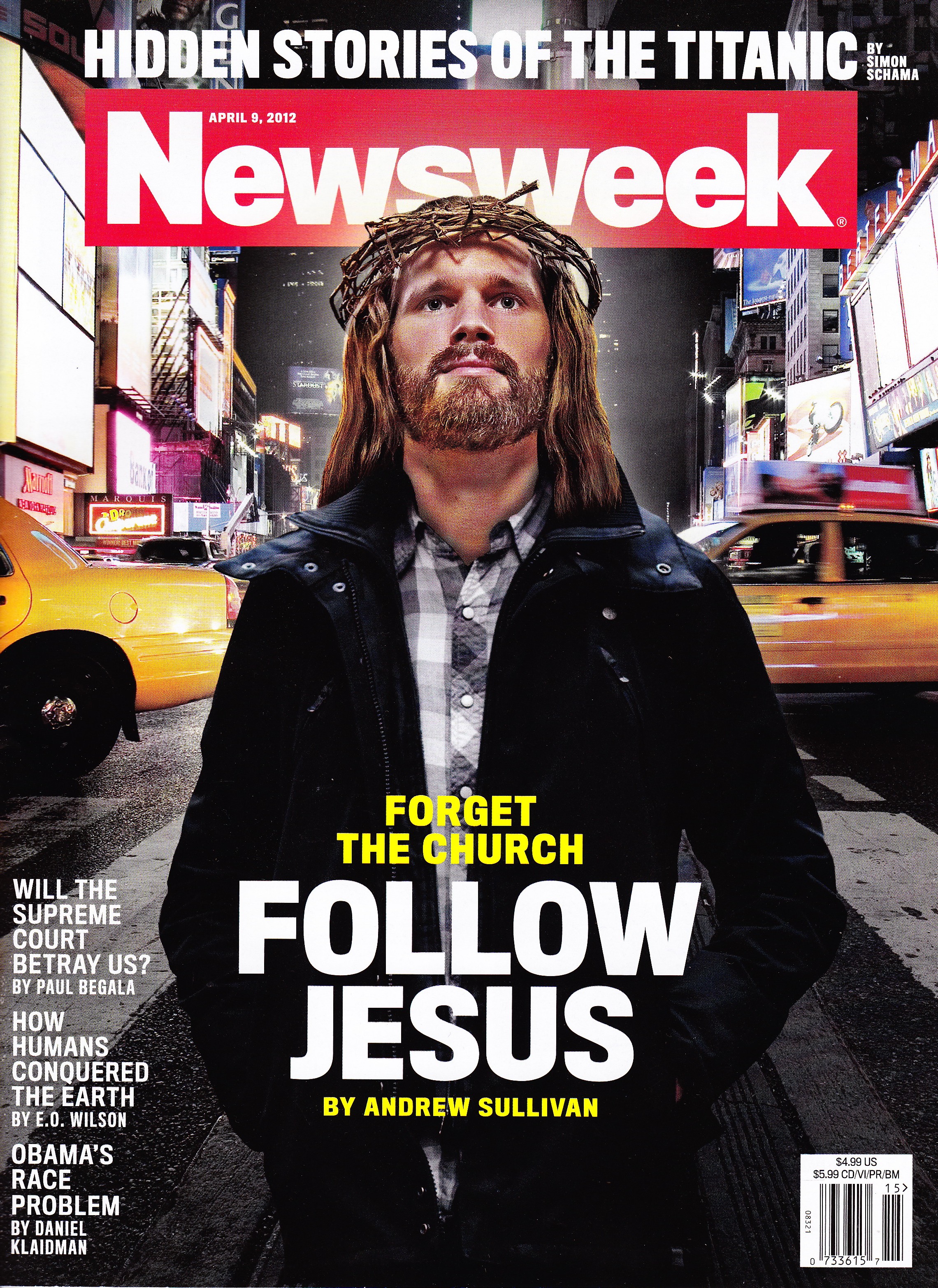
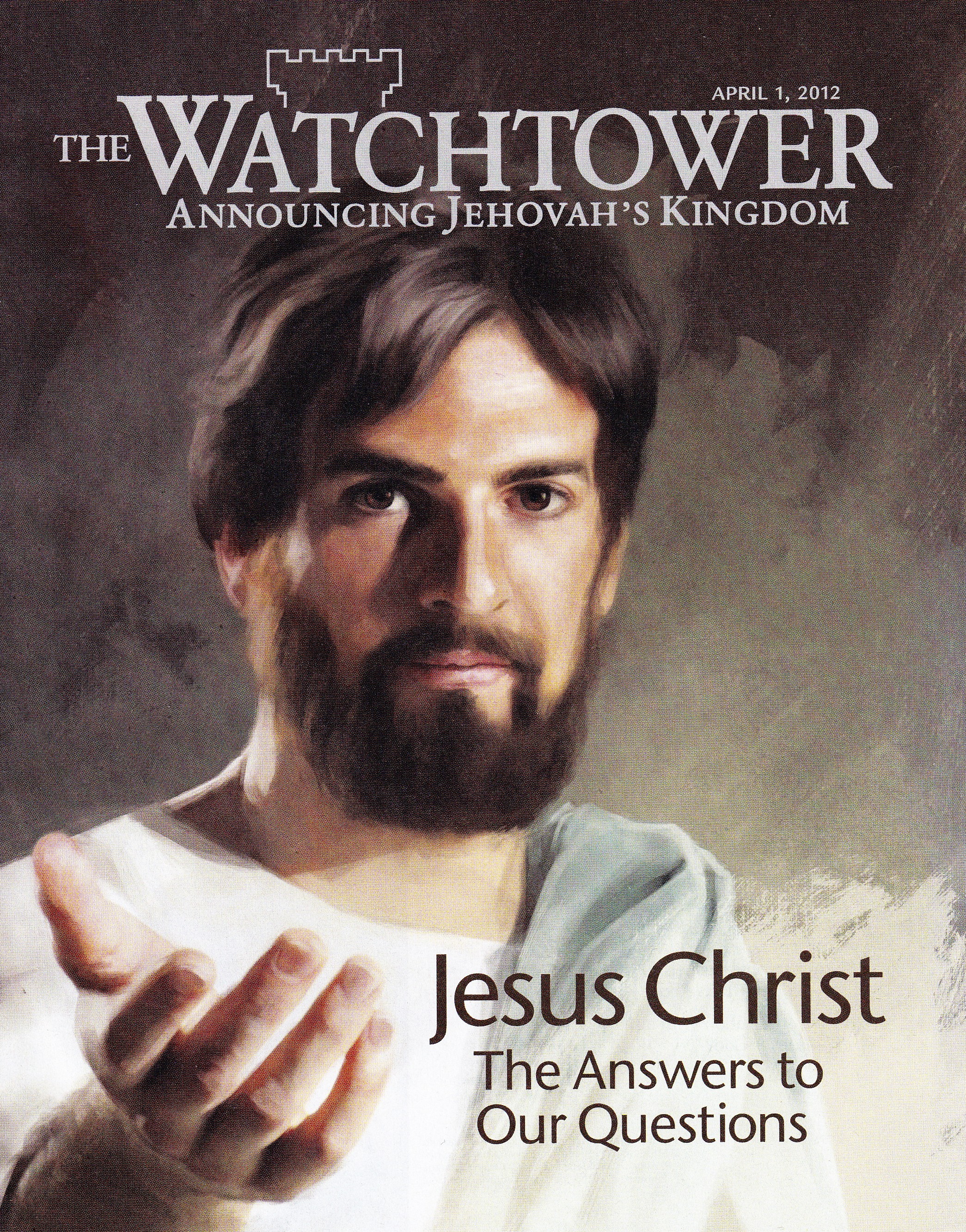
I suspect quite a few people are thinking about Jesus today. He does seem to be in the public consciousness with appearances on both Newsweek and the Watchtower. Newsweek, I have to admit, was an impulse buy. I’m flying to London today and I wanted something light to bring on the plane, so why not take Jesus along? I’ll have to report on the contents later. What caught my attention was the contemporary, very Caucasian Jesus standing in what appears to be Times Square. Since I walk through here a couple times a day, the immediately striking aspect is how unremarkable this would be. Perhaps that’s what the cover artist was going for, but people who think they’re Jesus—or at least a close approximation—are hardly rare. It seems that many of them are interested in running for president. Many others run Megachurches. Very few live on the streets.

My Jehovah’s Witnesses friends stopped by recently. I used to chat with them when I was unemployed, but I’m no longer home during missionary hours. This edition of Watchtower also features a very Caucasian Jesus, but one who wears his hair in a style no first-century Jewish man would have. He has been stripped of his own faith heritage just as surely as the blue-eyed Jesus on Newsweek. The funny thing about Christianity is the chimera they make of the human half of Jesus. This is one part of the Bible nobody wants to take literally. Does Jesus need to look like us to effect salvific results?

It is often said that beauty is skin deep. One has to wonder just how profound faith is as well. People seem to be better at believing what they see. When it is time to consider what God might look like, we inevitably consult a mirror. Where is the comfort in an all-powerful being that looks like he’s not one of us? Well, maybe we could ask women what it’s like. For all the variables in Jesus’ appearance, he’s always male. Funny, so are the people who profit most from promoting his brand. Maybe my ideas are just taking a flight of fancy. The rest of me is on a flight as well. And I have no idea what the captain looks like.


Strixology

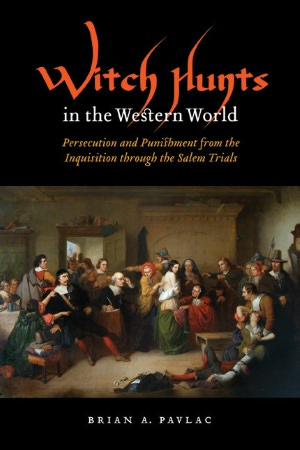
One of the fascinations of parenthood is learning to see things through the eyes of a young person again. When my daughter was fascinated with dinosaurs, I found myself learning such tongue-twisters as micropachycephalosaurus (I spelled that without looking it up just now) and struthiomimus just to remain conversant with her. (That, and I never really grew up.) When she took a childhood interest in insects, I found myself picking up bugs that would have sent me running just a few short years before, in my bare hands, to take them home to show her. All of this is by way of introducing my current continuing interest in witch trials. My wife (and consequently our daughter) is a direct descendent of the Towne family that included three innocent women accused as witches in the 1690s—Rebecca Nurse, Mary Easty, and Sarah Cloyce. When my daughter found out, the next long weekend from school we drove to Salem. I’ve been reading about witches ever since. I recently finished Brian A. Pavlac’s excellent Witch Hunts in the Western World. Well, as excellent as any book about such a gruesome topic can be. In the course of reading it, an unexpected connection dawned on me.

Many of those accused of witchcraft in the early modern period in Europe were accused of killing babies. The vast majority of them were women, often midwives. Those so accused had their bodies stripped and examined in public venues, generally only to have confessions tortured out of them later, under the eyes of male magistrates. The church had given credence to the superstition that witches actually existed and were in league with the Devil. Suddenly as I read, I heard the echo of a familiar refrain that comes from modern witch hunters. Those who, like the magistrates of old, are men; men telling women what they may or may not do with their bodies. Who draw their self-righteousness from their religion and who claim that birth control is of the Devil. Who accuse women of killing babies. Texas begins to sound like the rebirth of the Holy Roman Empire. In all of Europe that was where the most women were slaughtered, in thousands, by men who burned with the zealotry of a religion that had lost touch with reality.

Time spent on history is never wasted. At times we seem to have come so far, but then I look back over my shoulder and see the suchomimus of unbridled male fantasy closing fast. We have worked hard to bring equality to all people, but at the start of yet another millennium, we are still measuring the worth of humans by the gonads they carry. Based on outdated views from a book that was once meant to be inspirational. Sadly, the legacy often left by religion is only a residue of superstition. The reasoning behind the witch hunts of yesteryear and those of today is the same—the desire to control the behavior of others. It is the cocktail of religion and politics that inebriates those who crave power. What was true then remains true today. In the words of Pavlac, “A history of the Middle Ages shows the intensifying entanglement of magical thinking with political power, which produced the European witch hunts.” Substitute “Modern Day” for “Middle Ages” and “Planned Parenthood” for “European” and see if you can’t find a pattern.


Paradise by Half

Some times the Bible is best taken in small doses. I’m no technical guru, but I do know that Twitter doesn’t always display the Bible bits I type in daily. Perhaps in some far distant future civilization that has learned how to recover “data” from fried pieces of digital storage devices, the Bible will be woefully incomplete. Maybe not woefully, depending on whose point of view sees it. Reading over passages worn smooth by timeless repetition, it is sometimes difficult to notice the harsh undertones. My twittering is up to Genesis 3 now, the infamous Garden of Eden episode. Over the last few days I’ve tweeted, “And the Lord God called unto Adam and said unto him, Where art thou? And he said, I heard thy voice in the garden, and I was afraid, because I was naked; and I hid myself. And he said, Who told thee that thou wast naked? Hast thou eaten of the tree, whereof I commanded thee that thou shouldest not eat? And the man said, The woman whom thou gavest to be with me, she gave me of the tree, and I did eat. And the Lord God said unto the woman, What is this that thou hast done?”

The weary “blame it on the woman” trope aside, several things stand out. God seems to be interested only in Adam. Perhaps the divine Dad wants to take his boy aside for a man-to-man chat, but it seems more likely in the context that Eve is simply irrelevant. Even Adam’s response is completely void of Eve, “I heard,” “I was afraid,” “I hid.” For a man about to shove the blame off onto his significant other (sorry, Tea Partiers, nowhere does Genesis say Adam and Eve were ever married), he is strangely circumspect about his recondite female. Even God sounds surprised, “Who told thee that thou wast naked?” Hmmm, who else is there in the Garden? Adam suddenly abandons the first person singular and begins his response with, “The woman whom thou gavest…” Blame anyone but Adam. The tragic disappearance of Eve until blame is to be attributed should warn us that the remainder of the Bible will not be a happy book.

The first chapters of Genesis have a lot of uncovering going on. God, like a detective in a CSI drama, tries to uncover the mystery of the naked man. When man is found naked he blames the woman, not even bothering with her name. Much is revealed here. Coming as it does as the first biblical story of human interaction, this tale sets the stage for all subsequent developments. From this point onward, with rare exceptions, the story will be a male narrative. Women will be assigned to, literally, support roles. Is it any wonder that women gather to protest against women’s rights, when under the thumb of such teaching? I suggest that what is required is even more uncovering. If we examine the bare facts of the Bible, we might be able finally to get to the root of this problem. That root lies deep in the literal interpretation of mythology.

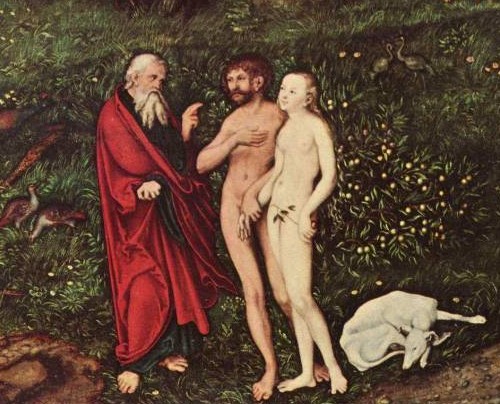
Who's missing?


The Afterthought

This week I finished Genesis 2 on my venture to tweet the Bible, and even before reaching the famous snake scene in Genesis 3, I blushed. Not in a good way. Reading each word of the text in King James English (ironically, technically Elizabethan English), it becomes clear just how androcentric the text is. As a reader with sensitivity to historical eras, it is important not to judge the past by present standards. Nevertheless, it is difficult not to be offended at the assumed male primacy that had begun to be dismantled, only to be propped up again by sacred writ. As soon as people began to realize that sexual dimorphism did not equate to sexual dominance, the Bible came into the hands of the laity and there, beginning in Genesis 2, became the prooftext that women were made for men. Note: “for Adam there was not found an help meet for him. And the Lord God caused a deep sleep to fall upon Adam, and he slept: and he took one of his ribs, and closed up the flesh instead thereof; And the rib, which the Lord God had taken from man, made he a woman, and brought her unto the man. And Adam said, This is now bone of my bones, and flesh of my flesh: she shall be called Woman, because she was taken out of Man.”

One of these things is not like the others...

This passage is, of course, very familiar. Too familiar. Accompanying the ready availability of the Bible was the concept of divine writing. To a society of chamber pots and horse manure in the streets, the idea that God could write a book was sensible enough. The problem is, as our sophistication grew, our biblical sense couldn’t keep pace. Centuries later with probes soaring beyond our solar system, rovers on the moon, and space stations circling the planet, we still believe God wrote a book. And since God is male, the man’s point of view is normative. Of course, no one knows the reason for the story of Adam’s rib, but there is no doubt that ancient society, at least in this instance, was hopelessly patriarchal. It is society that determined which words would be considered sacred. The tale they chose matched their worldview.

The problem is that worldview gave an excuse to a patriarchal tour de force that has lasted for dozens of generations leaving women in their biblically predetermined place. There may be no sin as insidious as literalism. Those who cling to the King James do so only with special pleading, for anyone who has studied Hebrew (or any foreign language) knows that translation is an inexact science. Even Genesis 1 with man and woman created the same day, both in the image of God, still lists man first. Ironically the literalists miss the humor of a God who thinks man will be satisfied with the animals. Presumably all the animals were guys at this point, although the Bible literally doesn’t say. No religion that claims victims has the right to declare itself universally true.


Attack of the 50-Foot Women

A society will be remembered by its lowest common denominator. At the mention of the Roman Empire many people immediately think of the decadence of that once mighty power in decline. Rome ruled the world at one time—or so it seemed—but Nero had his fiddle and Caligula favored his horse Incitatus as a senator (today we’re more accustomed to seeing asses in government than horses). The madness of Napoleon. The insanity of Hitler. Mighty powers crumbling under their own weight. Walking through Times Square is an education. Recently a fifty-foot woman appeared, looming over the heads of commuters, tourists, and the homeless. Unlike the classic 1958 sci-fi flick, this woman is apparently happy, smiling broadly, and nearly naked. She is an advertisement for Sports Illustrated’s soft porn swimsuit edition. Stories above us all, she pulls back her hair and, if she weren’t a fantasy, I’m sure she’d be chilly dressed like that in a New York winter.

We’re talking lowest common denominator here. As I man I can’t help but to understand the appeal. Advertisers know it too. At the corner of 42nd and 7th, there is another fifty-foot woman, apparently nude, sitting in an office chair for Go Daddy with a QR card across her torso offering to those who would scan her, “See More Now!” It is difficult to be judgmental when advertisers are using basic psychology to sell their products, and studies have shown that men are very easily aroused by visual images—our juvenile imaginations never do grow up. But women this large? In 1958 Nancy Fowler Archer was salaciously considered a monster, but the producers knew teenage boys would watch in fascination. Such simple creatures.

There is a disturbing subtext here. Men are weaker than they pretend to be, but that doesn’t bother me much. Vulnerability is where humanity is most authentic. The problem with the fifty-foot women in Times Square is the message to American society that women are a commodity. They, like everything else in Times Square, can be purchased and owned. They exist solely for the pleasure of men. I am not a prude, but I do believe that such blatant shows of the female body for sale bear as a subtext “mene mene tekel upharsin.” A society that cheapens its women in such a forum is creating the standards by which a hopefully more advanced future will remember it. Standing beneath the open thighs of the fifty-foot woman on my way to work, I am profoundly sad. This is Rush Limbaugh’s American Dream writ large.


Ashes to Ashes

It was just a small blurb in the paper. Down at the bottom of page 17, it could have been easily overlooked. “Alleged witch killed by being set on fire” the small headline stated. And the date was 18 February 2012. This sad incident took place in Nepal. The story notes that “Each year hundreds of women in rural Nepal are abused after being accused of being witches.” Just last week, to the scorn of many, Cologne, Germany reopened the case of Katarina Henot, a woman burned as a witch 385 years ago. Katarina Henot was declared innocent because of the efforts of a priest to raise awareness of the persecution of women around the world. Five days after the story hit the news, Theganidevi Mahato was burned to death in Nepal. Although some called the action in Cologne a publicity stunt, it was anything but. We need to put names on those we continue to allow society to brutalize. Katarina Henot and Theganidevi Mahato, separated by 385 years and many, many miles, both died for the insanity that equates tragedy with women.

How blithely the word “witch-hunt” spills off the tongue. Each time we invoke it, the very phrase trails the ghosts of many thousands of women made to pay the price for society’s paranoia. The answers to why such tragedies occur may never be fully understood, but the events are preventable. The key is education. Even in the most advanced culture in the world, as we like to style ourselves, we heap contempt upon education, claiming that teachers barely work and that professors get paid for doing nothing. We have fallen into the fallacy that one size fits all—not all jobs can be measured by the wicked, black dip-stick of the oil industry, or the quick-cash-and-crash of the stock exchange. Education is a lifelong process, and as the political ridiculousness we constantly hear reminds us, lessons must be endlessly repeated until they sink in. Too many people think it is just easier to burn witches.

Witch-hunts arise when societies are stressed. Scapegoating is one of the most unfortunate legacies religion has left us. Evidence points to the scapegoat as being earlier than the Bible, although it takes its characteristic form there. We hear how the sins of the people were transferred to the goat on a day not so different from Ash Wednesday, to be symbolically born away where the animal would die instead of us. Somehow we’ve come to believe that burning the representative of our neuroses will somehow cure our society. Does it? Has it ever? This day as millions of Christians contemplate their sins and wear ashes on their heads, I suggest that we think of the women whom religion has allowed to become its victims. Whether due to the superstition of a remote village in Nepal or the irrational fear of “civilized” Europe with the blessing of the church, we’ve let scapegoating go too far. And those who’ve been killed are not the nameless females of forgotten times, but are the Katarinas, Theganidevis, Marys, and Rebeccas who were just as human as their neighbors.

What are their names?