Thanking Teachers

Those who know me personally are often surprised to hear that my high school gym teacher was one of the most influential people in my life.  It is true.  He, and a handful of others I can still remember by name, set me on the path of knowing that I should be a teacher.  It is a very important profession, habitually underpaid.  To hold the future in your hands is a responsibility like no other.  I complained, like all kids do, about having to go to school.  Once there, however, I was fascinated by the learning.  I still am.  I think of those women and men who really wanted to mold young minds.  Who knew they’d never be paid as well as their peers, but who had a message worth preserving.

I suppose I’m thinking about them because I recently watched Dead Poets Society again.  It’s a poignant thing to do since Robin Williams’ death, but the movie makes a powerful statement about teachers.  Knowledge, once planted, grows.  I don’t name people on this blog unless they say I can, and although I’ve connected with a few high school teachers through Facebook, I don’t bother them in retirement.  I can say, though, that one English teacher, my German teacher, a couple history teachers, a math teacher, and my gym teacher made significant impacts.  The math teacher, of course, helped me realize that my thinking process veers in quite a different direction from equations and proofs.  Ironically, now I tend to think that way and often think I could’ve done it, but I needed several years for the ideas to settle into place.

Thinking of them by name may not be a daily occurrence, but in my actions I live out what they taught.  I’m not sure what leads a young person to pursue a teaching career, but clearly some of them have gifts that make them influential in lives long after the classroom relationship ends.  The young mind is receptive in the way that a more experienced one tends not to be.  Even as we reach our teens the natural confidence of youth seems to take over for many.  We might still, however, listen to those with more experience.  Teachers, under-paid and often having to take summer jobs to makes ends meet, are almost as influential as peers.  The twenty years of my life from the age five on were under the sway of teachers.  Time set aside for learning.  It wasn’t nearly long enough.

Old Ghosts

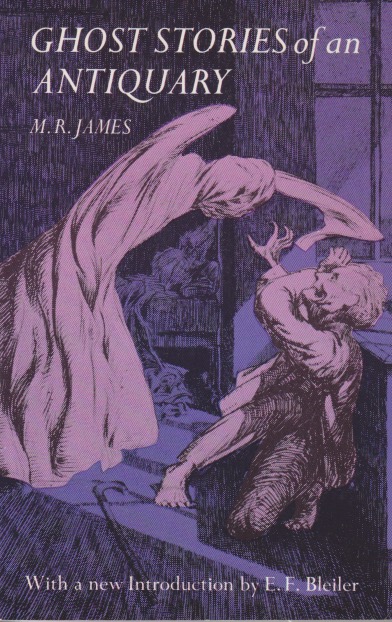
As someone who reads about ghost stories, as well as ghost stories themselves, I’ve long been aware of M. R. James.  His Ghost Stories of an Antiquary is regarded as a classic in the ghost-story genre.  Sometime in the haze, I recollect it was years ago, I found a copy at a used bookstore on the sale rack.  Something I’d been reading about ghost stories lately made me decide to read it through.  Now James was an actual antiquary.  He was also an academic at Cambridge University.  His tales are erudite, generally focusing on some ancient secret that releases ghosts, or sometimes monsters, after the individual who discovers the antiquity.  The stories are varied and inventive, but not really scary to the modern reader.  They assume a different world.  One in which antiquaries were monied individuals—often university men—who have both servants and leisure time, rarities today.

I found myself constantly asking while reading, how could they get so much time off?  How did they access such amenities that they could even get to the places where the ghosts were?  James’ world is both textual and biblical.  It’s assumed the reader knows the western canon as it stood at the turn of the nineteenth century.  The Latin, thankfully, is translated.  James, it is said, was a reluctant ghost-story writer.  A university employed medievalist, he had academic publications to mind as well.  Nevertheless he managed to publish five ghost-story collections.  Clearly the idea seemed to have had at least some appeal to him.

The aspect I find most compelling here is that an academic could admit to such an avocation.  While it’s becoming more common these days among the tenured, I always felt like I was walking the eggshell-laden pathway to academic respectability.  I was, after all, at a small, haunted seminary that few outside the Anglican communion knew about.  It was risky to admit being drawn to anything speculative.  Come to think of it, although I read novels while I was there I don’t recall reading many, if any ghost stories.  It was scary enough to be about on campus at night, particularly if you were going to the shore of the small lake to try to photograph a comet alone.  There were woods punctuated by very little light.  On campus ghost stories were fine—the librarian even showed me a photograph of a ghost in the archives—but off-campus such things could never be discussed.  I was an antiquary without any ghost stories. James showed the way.


Short-Changed

Time often feels short.  When we back it up against the pencil marks on the doorpost we find it seems to shrink with its own passing.  It is nevertheless relentless.  This shows especially with daily tasks, such as the posts on this blog, which leave enormous piles of writing behind.  I used to print every entry I wrote but I had to stop because there were too many.  There are now well over 4,500 of them and yet time keeps going and each day demands its sacrifice.  It’s that way with other daily tasks too.  It’s staggering, for example, to think of just how much food you eat in a lifetime.  It makes sense of why we struggle against that middle-age bulge.  Little bits add up.  I suspect that’s why the news can feel overwhelming at times.  It just keeps piling on.

If I’d chosen to study journalism—I really didn’t know what it was, despite being co-editor of my high school newspaper—I might’ve reached the point of being paid for my writing by now.  Even with my published fiction stories (and two of my nonfiction books) no money has ever changed hands.  I know from editorial board meetings that journalists expect pay for what many of us give away for free.  Writing is funny that way.  The best way to improve is to practice, and so I spend time each day writing blog posts, as well as content for books and articles and fiction stories.  As I said, there’s quite a pile.

Time is relentless.  It’s also in short supply.  The marking of each passing day with writing is a reminder of just how quickly the sand slips through the glass.  Other tasks go neglected for writers, which is, I expect, why we appreciate being paid for our work.  But just imagine if we were paid for reading.  What if every book read brought in say, in today’s economy, $1,000.  Would we be a more literate society then, valuing the work of writing?  For nonfiction editorial boards note the difference between professors, who are paid to do other things (and paid pretty well, considering), and journalists who live by the pen.  I have another job, helping other writers get published.  I suppose that means I have less time to do my own writing.  Time and writing are engaged in a complex dance which, when viewed from a distance, may look beautiful.  And when the dance is done you’ll find another piece of paper to add to the pile, regardless of whether it has monetary value or not.


On Campus

It’s still the pandemic and I don’t get out much.  It seems prudent and only a little paranoid.  I had the opportunity to meet someone from Lehigh University recently.  The interesting thing is, I’ve become shy about going onto college campuses unless invited.  I can still usually pass for a professor (the beard and glasses help, along with a natural disheveledness) and I behave well in public.  Still, universities are all about belonging.  If you’re an alum you can come in.  You’ve paid a lot of money, and, the thinking goes, hopefully you’ll pay more.  Of course you’re welcome!  The last time I visited Boston University I remember thinking how small it was compared to my younger memories of wider corridors and more welcoming faculty.  Many ways exist for measuring how we grow.

When offered the chance for a quick stroll around Lehigh I had to say yes.  Like Syracuse University, it’s set on a hill.  From downtown south-side Bethlehem you need to walk up.  Even growing up in Pennsylvania I didn’t hear much about Lehigh.  The western part is dominated by the University of Pittsburgh and the eastern by Penn.  In the middle there’s Penn State.  There are actually many colleges in the commonwealth, about 140 if you separate out branch campuses.  Still, I was struck by the classic feel to Lehigh’s campus.  As you come down the hill it grows more modern, but I always like the older buildings.  Something about their solidity is comforting.  How’ve I been here nearly four years and not found it?

My host pointed out one of the libraries and suggested I stop in before leaving campus.  I had a mask and a minute so I did just that.  There’s a danger to stopping into libraries.  It’s too easy to fall in love in them.  I could see myself whiling away the hours there.  I spent plenty of hours in my own undergrad library, even though it wasn’t nearly so nice.  The only bad thing about visiting campuses is that I eventually have to face the exile from them I feel each and every day.  Many people can’t wait to graduate and get away.  Some of the rest of us never want to leave.  I suppose it’s an artificial environment, but if a small segment of the population can make it work, I wonder why we can’t get more of the world to emulate it.  I may not get out much, but I like to make those rare trips worth the effort.


Highest Education

The average church-goer is often impressed with the idea of seminary.  The thought that someone could devote three years of their lives to theological minutiae in order to take a job with long hours and substandard pay, is mind-boggling.  Having been a seminary creature for so many years, however, makes me wonder if many church folk realize that seminaries are businesses.  Non-profits, yes, but businesses nonetheless.  This is a trait that they share with other institutions of higher learning.  Customers pay money for a good or a service (I’m not sure which) in the form of a degree.  If a student can’t cope academically, they’re often “grandfathered”through because, well, it costs a lot of money and you deserve to get what you paid for, right?

This business concept of higher education is dangerous and is primarily prevalent where governments do not support education.  Schools have to raise money and if alumni don’t give, well you have to raise tuition.  And the more somebody pays the better case they have for getting their degree.  Seminaries, however, also suffer from generally low-income alumni and sponsoring churches needing clergy.  (It’s not difficult to get accepted into most seminary programs.)  Only when a candidate is a serious problem will they tend to be weeded out.  And congregations get the results of such a system.  My level of cynicism probably results from having gone through seminary and then having taught at one for many years.  At no point have I been ordained.  In fact, even churches facing clergy shortages have shown no interest.  Call it sour grapes.

To me, however, the crisis in higher education is the result of business practices being applied to education.  The two don’t mix.  In a world where job options are limited for those too weak to dig and too proud to beg, ministry has some appeal.  You can be considered a community leader and an expert in the relatively innocuous arcane area of “theology.” And most of the people you serve will have no idea what seminary delivers, or doesn’t.  I attended events for seminary administrators offered by the Association of Theological Schools—the seminary accrediting body.  I learned that they too are under pressure to approve unless there’s a serious problem.  Even heads of accrediting bodies have to eat.  So we let the system churn on as it has since the earliest universities turned out educated clergy.  And we don’t stop to think what all of this means.

Tradition

The Network

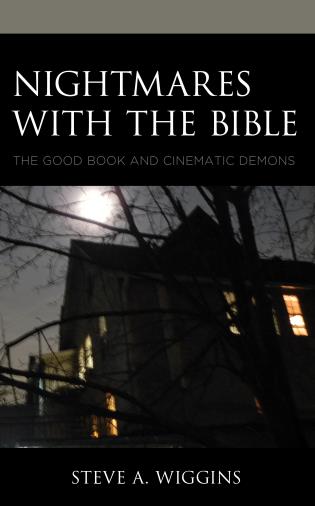
Although it’s not NBC, the New Books Network has quite a reach with academics.  That’s why I was glad they accepted my pitch for an interview about Nightmares with the Bible.  The interview is now live and can be heard here.  The experience of getting the interview made turned into quite a saga with my pitch going back to at least November, and acceptance coming early in January.  The actual interview was over a month ago and it was posted only yesterday.  I’m not naive enough to think it will boost the sales of a hundred-dollar book, but maybe a few more people will become aware of it.  Even in academia there are too many books published for all of them to get notice proportionate to the work that goes into writing them.

Some publishers are of the opinion that editors shouldn’t try to be authors.  Obviously I disagree on that particular point.  Author-editors share the ups and downs and know what it’s like to put in the work only to have a book disappear.  I haven’t received any royalties at all for Nightmares.  I have no idea how many copies have sold.  Many writers publishing into the teeth of a pandemic fall into the same category.  While trade books—including fiction—did remarkably well during the height of Covid-19, academic books languished.  Nightmares is, of course, its own kind of hybrid.  A monster, if you will.  Written for educated laity it’s packaged and priced for the academic monograph market.  That’s why I pitched it to NBN.  I’m glad to see the recording is now available.

Nobody writes this kind of book to get rich.  I’ve had friends ask me why I bother.  Believe me, that question occurs to me too.  Some of us have something to say but the auditorium’s empty.  The Bible’s at a low point outside a specific cross-section, and that cross-section generally doesn’t pay attention to horror.  Of course, that’s another reason I do this.  Bringing opposites together offers the world, even the staid academic world, something new.  Horror is at last being taken seriously by literary and cinematography scholars.  Some biblical scholars are realizing that apart from comforting words of love, and towering demands for justice, the Bible itself contains plenty of horror.  When unlike things mix, monsters are born.  I’m grateful to the NBN for taking a chance on my book.  If you’ve got some time, and the inclination, you can listen in here.


Continuing Ed

I recently took a course.  It was an adult enrichment class, offered through a local community college.  It wasn’t for credit and it had only a modest fee.  The topic doesn’t really matter here—it’s something I’ve written about from time to time—but it’s the taking of a class that’s important.  As much as I believe in lifelong learning, finding time to take a class during my busy schedule is a major feat.  Were it not for my family urging, insisting even, that I sign up I would’ve probably let it go.  I’m glad I didn’t.  Like many such classes, I suppose, the other class members were mostly retirees.  It does me good to see people remaining curious in their post-work years.  Some people disparage community colleges, but I value any educational institution that commits to truly educating people.  Not all of them do.

Some religious institutions focus more on indoctrination.  Indeed, the word “indoctrination” includes the very word “doctrine.”  Such places often use faculty who went through schools who manage accreditation because accrediting bodies have to handle religion with kid gloves.  (The course I took wasn’t about religion.)  Religious institutions are quick to cry “Persecution!” should their lack of rigor be pointed out.  Freedom of religion is a double-edged sword.  A society without it ends up killing a lot of people for what they believe, but societies with it get taken advantage of by predatory religions.  When your faculty can claim the title “doctor” it’s easy to believe that you equal a Yale or Harvard.  Even when the faculty degrees are from religious institutions accredited by those who fear offending the religious.

No, my course was offered through a community college.  It was a non-credit course (I really can’t afford one of those in either time or money) but it was an opportunity to learn.  It was also a Zoom course which is good because I don’t think I should be out driving too late.  I sometimes wonder if a local community college might be interested in such a course on religion and horror.  Not for credit, of course.  If anyone would sign up for such a class.  I’ve been researching and writing on the topic for several years now, but religion’s that kid on the playground nobody wants to play with.  Partially, I suspect, because some religions make up their own rules and then go on to damage society by them.  Or because it’s kind of embarrassing in our secular world.  Maybe I should take a class on how to make such a topic appealing.


Search and Research

Woe to those who live to research but who have no professorship!  I have been prone to research since about high school, driven by the need to know.  Almost Wesleyan in my need for certainty, I have always been inclined to check things out.  It took college and a doctorate to teach me the necessary research skills.  It took years of teaching for me to learn how to frame questions on my own.  And it took years of being shunned by the academy to realize that as I’ve been pursuing my personal research agenda that I lack the time to fulfill it.  I’m a slow learner.  Yet I can’t give it up.  The thought process that led to Holy Horror was a kind of epiphany.  I could write a book without reading every last thing about the subject.  The problem, however, would always be time.  I’ve read an awful lot about horror media and I’m only beginning to scratch the surface.

I’m not totally naive.  Okay, I’m pretty far along on that path sometimes, but I want my readers to know that I understand movies and television are made for money.  It’s a business, I know.  But I’m an artist at heart and I like to think the creators are fond of their characters.  Writers are advised to drown their darlings, to put their protagonists on a cliff and then throw rocks at them.  And I also understand that money can make you do even worse to them.  Of course, I’m still thinking about Dark Shadows.  For me it’s been a rediscovery of my childhood.  And just how much time I’d need to make sense of just one television series with a five-year run.  There’s far more information on the web on Dark Shadows than I was able to find in print on Asherah for the years of my doctorate.

And the expense involved.  Plus, it’s only early April and the lawn needs mowing!  I’m still wearing a heavy jacket some days but the grass is always greener.  Period.  What a time to fall into a research reverie!  I need a sabbatical but they don’t have those in the 925 world.  And I need a professor’s salary to be able to afford the media required.  The Dark Shadows series alone has over 1200 episodes.  House of Dark Shadows introduced the fear of the cross to my understanding of Barnabas Collins.  My world has been shaken and to settle it I need research.  What I have, however, is work starting in just a few minutes.

Now watch this, for time is fleeting

The Campus Library

Perhaps it’s an odd kind of nostalgia.  Many people can’t wait to be done with school and get on with “life.” Some of us remain fixated at the learning stage and society used to shuffle us into colleges and universities where we could be safely ignored.  One of the refrains in the very long song that is this blog has been the lack of a university library.  Although I’ve tried to get to know the academics in the Lehigh Valley really only one has made an effort to befriend me and when I was asking him about library access he actually did something about it.  Such acts of kindness are rare and require a kind of thinking that takes into account the circumstances of the academically othered.  I’ll be forever grateful.

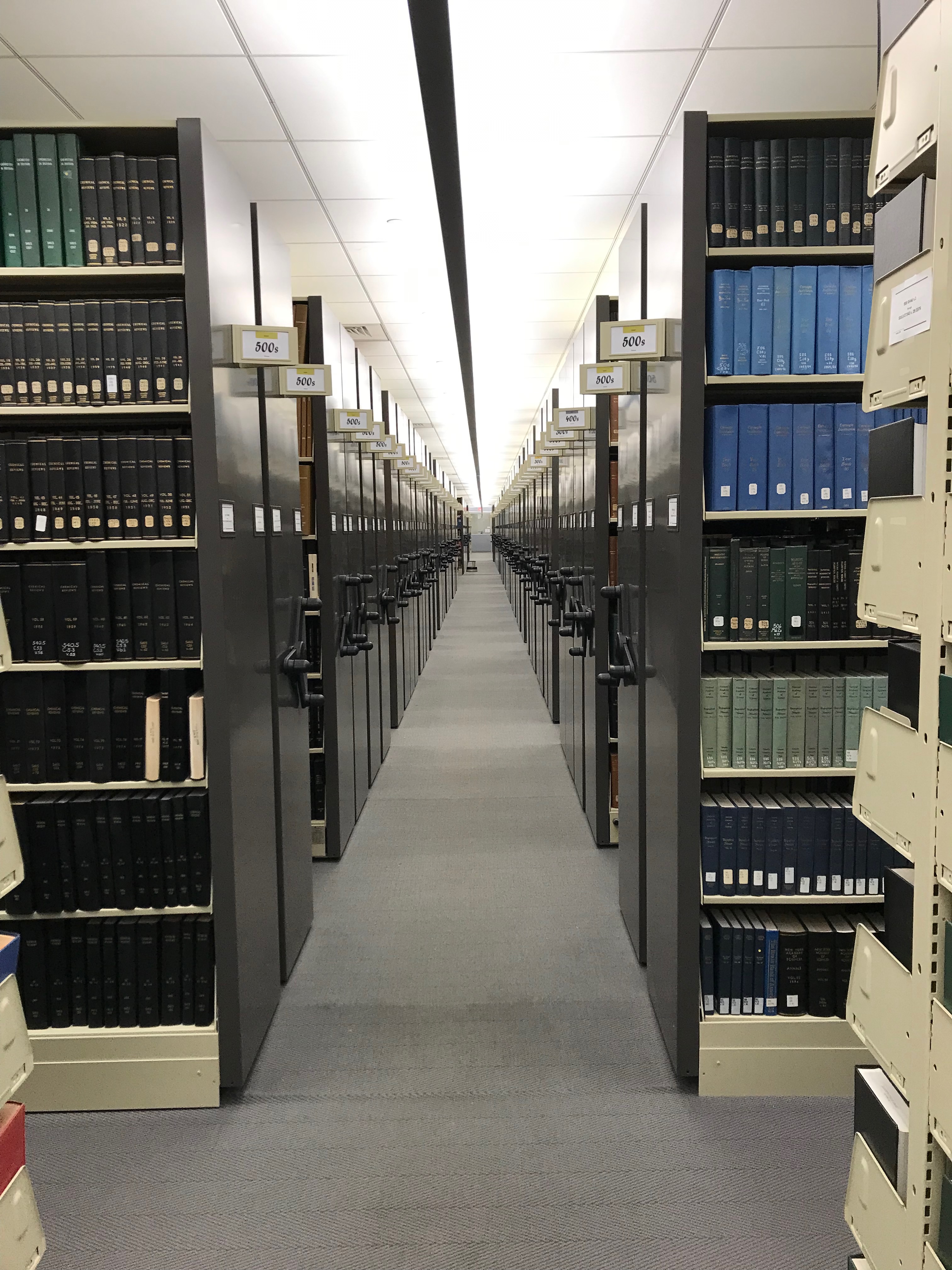
It’s been a long time since I’ve been in a college or university library.  Many are protective and/or restrictive, as if knowledge is only for those academically employed.  I had to look up a couple of references for an article I was writing.  My colleague checked with his institution and yes, I was welcome to come in and use their collection.  The night before going to campus I had a series of nightmares of various librarians barring my attempt to get to the books.  I’d been trying to get there (in real life) for weeks.  Between family work schedules, the occasional weekend blizzard, and the library being closed for spring break, it ended up taking about six weeks to find the time to drive there, negotiate parking, and look up the references.

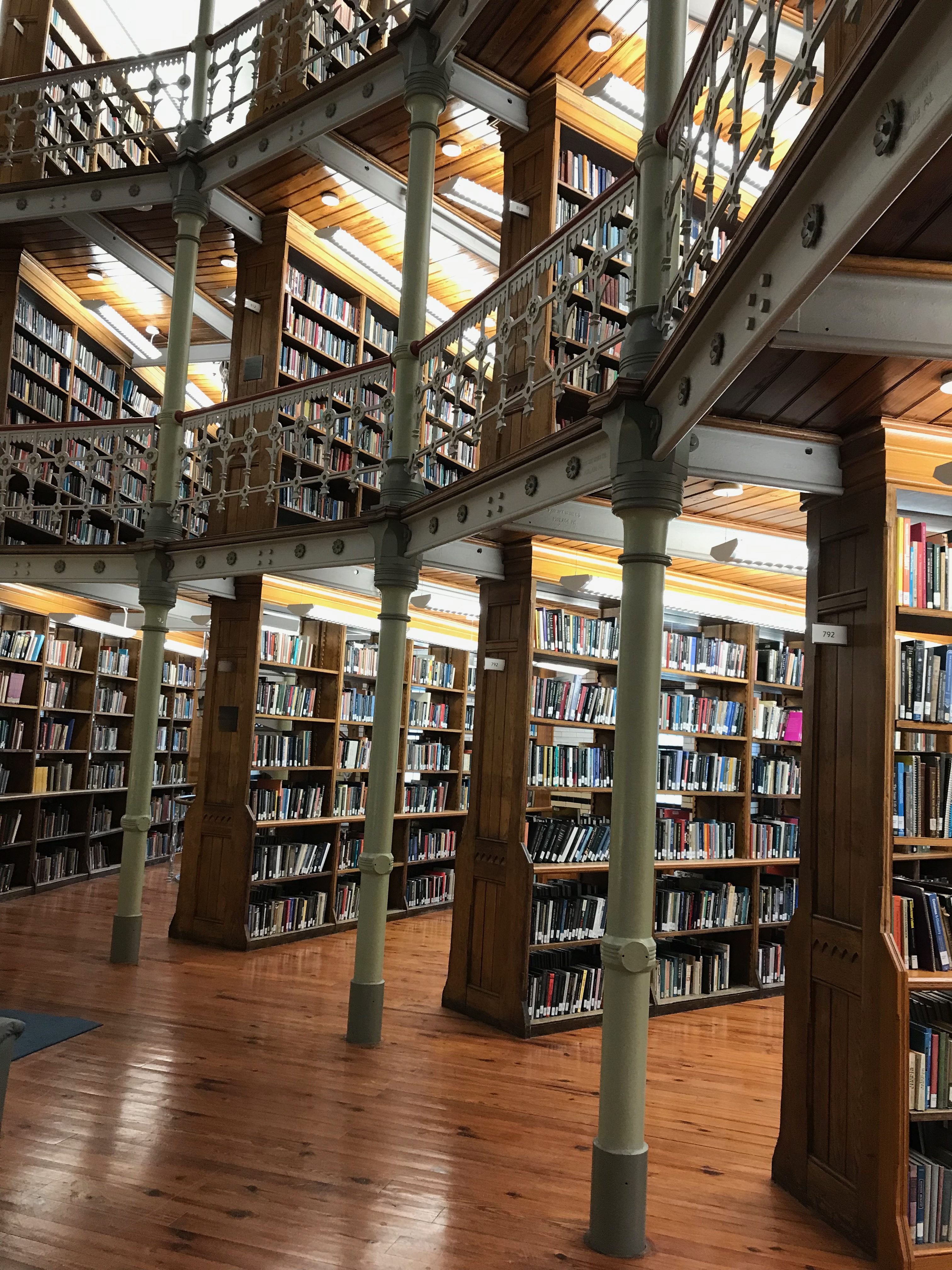
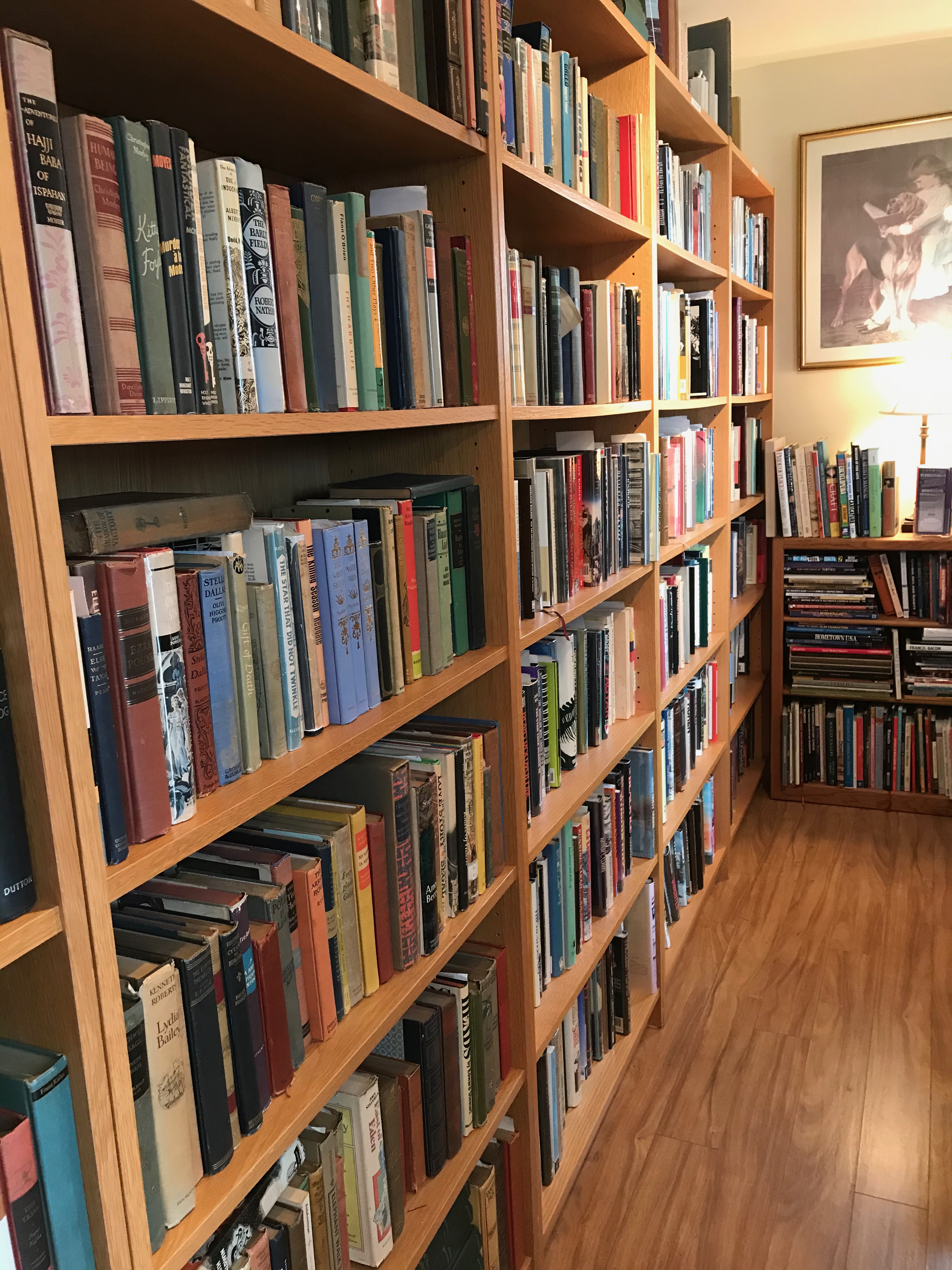
Everyone has a place they belong.  Mine has unwaveringly been the college campus.  It is home to me, even if it doesn’t recognize me.  I’d almost forgotten the feeling of being let loose in the stacks.  It was a Saturday morning and there was almost nobody else there.  As early as Grove City College I cherished the feeling of spending time in the library.  Few other students were hanging out there, but those of us who belong on campuses know that being surrounded by books is the only place that will ever feel like home.  Having looked up my references I wished that I had more to do.  I’d been to both the Dewey and the Library of Congress sections and, being a weekend, I had much else to do.  Stepping back out onto campus I was filled once again with a poignant nostalgia.  Getting to where you know you belong is a lengthy journey.


Look It Up

Say you remember something, but imperfectly.  Maybe it’s from years ago.  You have distinct recollection of a word or two, but other details (author’s name, publisher) escape you.  In the case of a book maybe you remember the cover.  If a journal article you’re out of luck there.  Not even Google can help you.  (I use Ecosia regularly, because they plant trees, but sometimes you just need to google.)  This happened to both my daughter and myself recently.  She was trying to remember a childhood book and I was trying to recollect an article I’d read while working on my dissertation.  And although I remember Edinburgh very well, that was, uh, three decades ago.  I tried searching different combinations of key words, but there’s just too much stuff on the internet.

One of the strange features of ancient Near Eastern mythology is that it’s extremely popular online but not in academia.  Departments have been closed down.  Smart people left unemployed.  But just take a guess whose websites come up first when you google a god?  After Wikipedia, it’s often fan and fantasy material for page after page.  Universities haven’t figured out how to monetize this interest, so it remains the purview of those who’ve read a book or two (or done a lot of web surfing) and have popularized the deity.  If universities offered courses that caught people where they lived, there’d be a steady audience.  That fickle lover academia, however, is quite coy.  In my daughter’s case it was fairly easy for my wife to locate the title and bibliographic details.  My case was a little harder.

Most sources I consulted on my dissertation are in my book, A Reassessment of Asherah.  (It is available in PDF form for free on Academia.edu).  Back in the day, I made extensive bibliographies.  I pulled it from the shelf and ran an index card down through the entire bibliography.  Apparently I hadn’t listed it there.  Or I was remembering the title incorrectly.  There’s a distinct possibility that I imagined it.  When you’re an active researcher you keep ideas current by going over them time and again.  I can still remember some individual articles that were used to make a point some thirty years ago, but those beside the point have somehow vacated my gray matter.  In the end I never did find the reference.  Perhaps some day, like bread cast upon the water, it will come back to me.  Like said bread, it too will likely be soggy by then.


Not Really New

It’s called the New Books Network.  I have no idea what its stats are, but it is a place to get word out about your book that the academy has apparently overlooked.  I pitched Nightmares with the Bible to them some months ago and I recently had an interview about it.  I’ll keep you posted when it appears.  I suppose those who read this blog for the horror content sometimes think I may’ve forgotten about it.  The fact is I think of horror every day but there’s more to my psyche than just that.  This blog is a romp through part of what’s on my mind.  Sometimes it’s the quotidian horror of everyday.  At times it’s full of curiosity and wonder.  Sometimes I just trying to figure out how to work this thing.

So with the New Books Network.  I found out about it from an interview I heard with the guy who started it.  Funny—one interview leads to another.  He encouraged those listening to pitch their books.  I don’t have an institution to support mine, or students to have to buy a copy (and I’ve received zero royalties for it), so I figured what’ve I got to lose?  It was quite a nightmare (speaking of which) to arrange a time that worked for both interviewer and interviewee.  I think we rescheduled about half-a-dozen times, but then finally we both had a few free minutes together to chat.  Perhaps it’s a good thing I’ve been reading about the Devil.  

This was actually my third interview about this book.  Perhaps it’s a measure of how small the impact it’s had has been that I can recall each one so precisely.  You’ve got to start somewhere, so why not here?  The last question asked was about the next book.  I do hope I have a few more left in me.  I started writing early but publishing late.  Just because you write doesn’t mean people will read what you produce.  I find writing the most hopeful avocation ever.  Like a sower with his or her seeds, broadcasting them across the air, hoping they’ll land legible.  If there’s anything worth reading here there’s always the possibility it’ll be discovered someday.  That’s optimism with a glass half empty!  In any case, check out the New Books Network.  There are hundreds of books there to learn about.  And, I suspect, many authors who’d like the world to know what they’ve written.


Underestimated

Under-printing, ironically, can create great demand.  Books are generally under-printed because publishers don’t see much of a market for them.  Back before the days of inexpensive print-on-demand (POD, in the lingo) books may not have even existed as electronic files.  Often a publisher won’t print a book unless it anticipates that it can make back its costs.  If they think it won’t sell that well, they’ll print just enough.  And they might even melt down the typeset plates to reuse them for other books.  I’m not sure if that happened in the case of a book I’ve been looking to consult, but something has made this under-printed book extremely rare.  It’s not on Internet Archive.  WorldCat shows it in only two libraries world-wide, the nearest one over 3,000 miles away.  Its price used (and there seems to be only one copy) is $46,000. I can’t tell you what it is because you might buy it before I can.

For the purposes of my research, this is actually the only book on this particular topic.  (The subject isn’t even that obscure.)  The book is cited everywhere this topic is mentioned, and at least one person on Goodreads has actually seen a copy of it.  I have to conclude that all those who cite it must live within driving distance of one of two libraries worldwide.  For the rest of us the book is simply inaccessible.  As an author this is one of the worst fates imaginable.  Even if some price-gouger is selling a copy for $46,000 the author gains nothing from it.  Royalties are null and void for used book sales.  The only profiteer is the person who happens to have found a rare book (from the 1990s!) and is determined to ensure only the most wealthy will be able to purchase it.

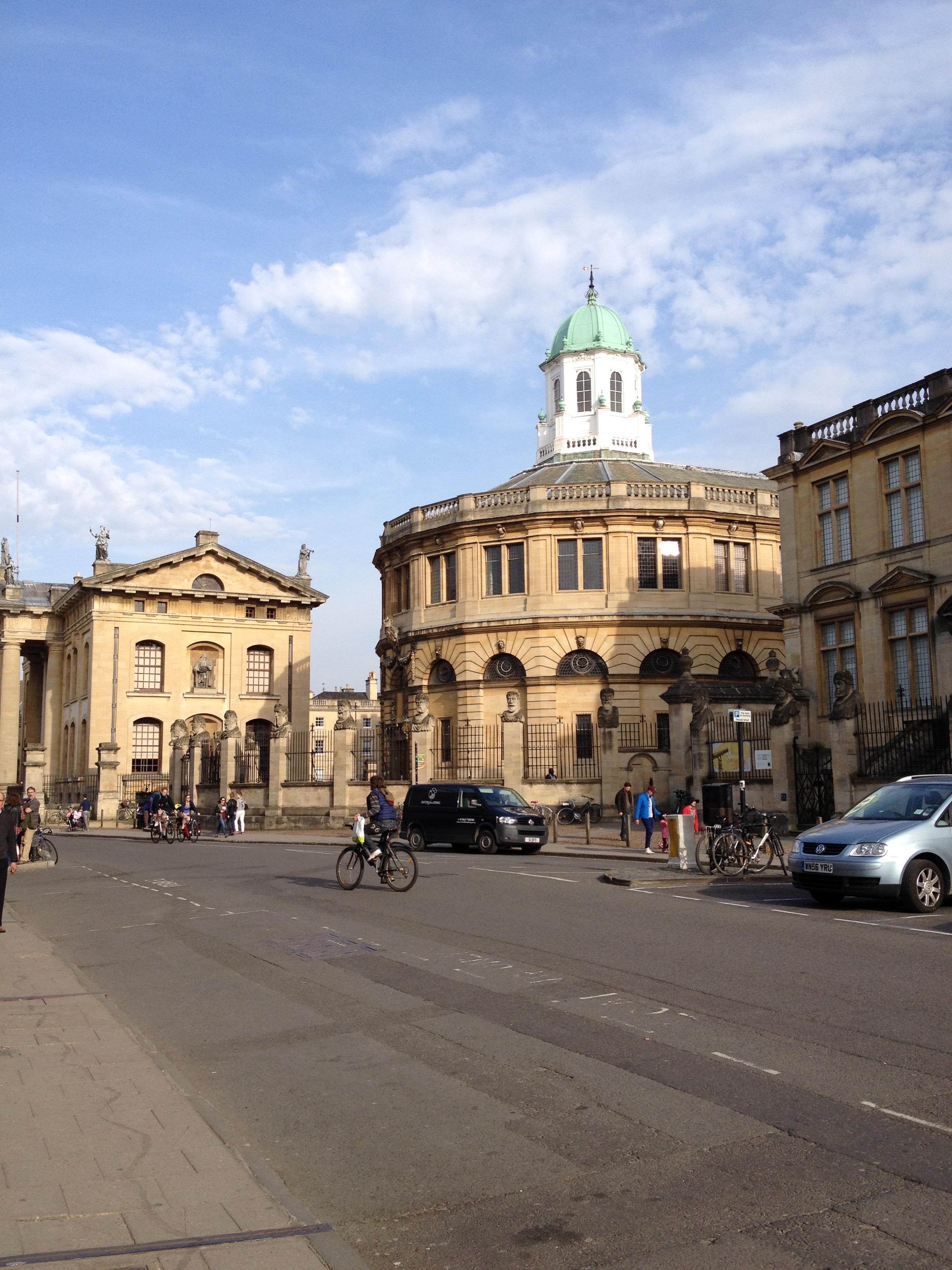
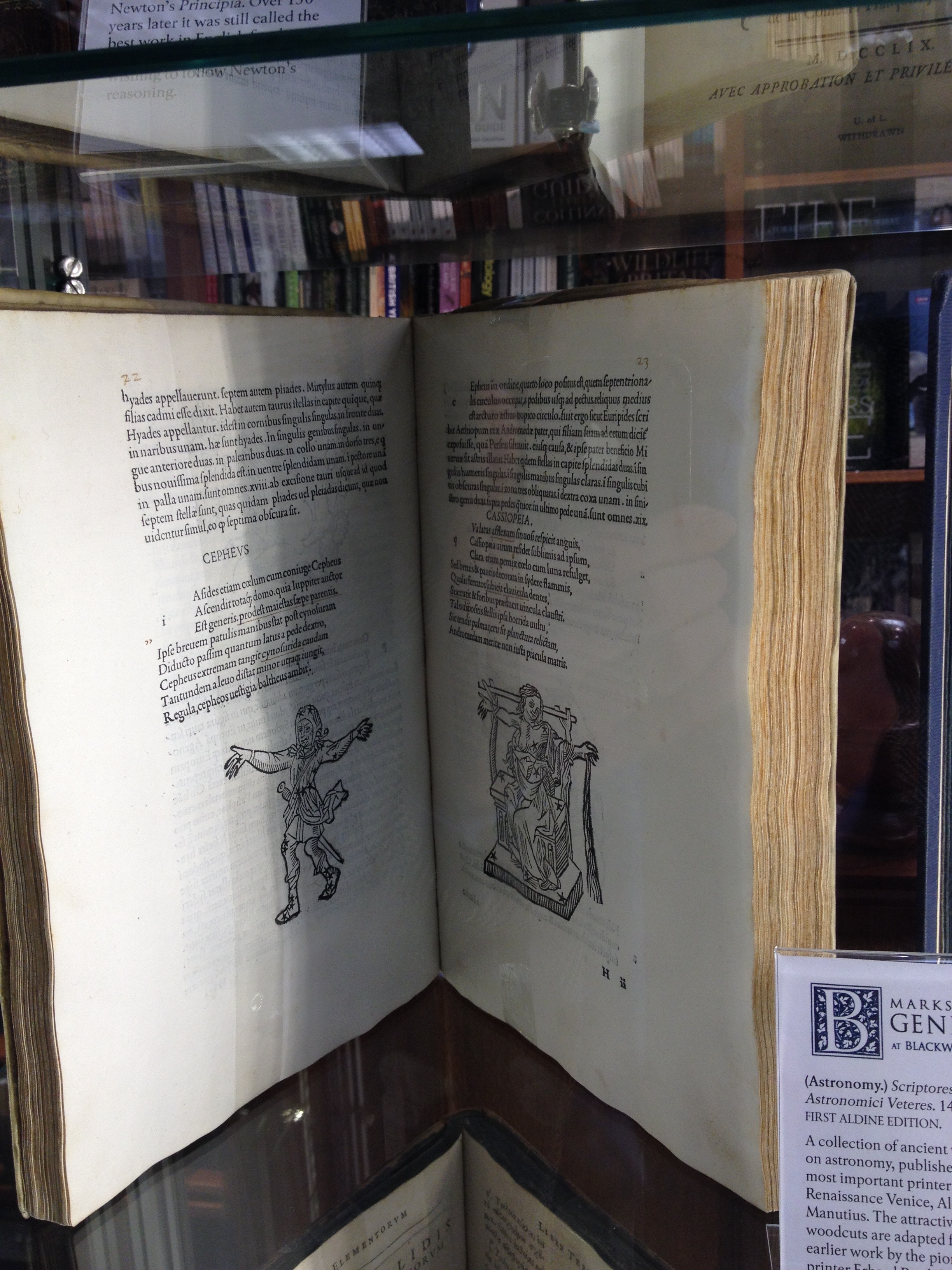
I’ve known people who sell used books online.  Those who want to move books try to undersell the unfortunate under-printed title by pricing a bit lower than the competition.  There is no regulation, however.  You can charge whatever you like.  The funny thing is, if someone eventually forks over $46,000 for this book, and then has it appraised (it is a paperback from the 1990s), its actual worth is probably at most in the hundreds of dollars.  Back when we watched the Antiques Roadshow we always knew that the poor person who brought in a book would be disappointed in the appraisal.  Last time I was in Oxford I saw rare books from the 1400s for sale for far, far less than $46,000.  I only hope that my books, as obscure as they are, are never deemed that expensive.  And I would encourage publishers to print a bit more generously, for the sake of knowledge.


The Archive

Publishers hate it, but I bless its holy name.  The Internet Archive is a major boon for “independent scholars.”  If you’re not familiar with it, the Archive is a repository of scanned books.  It doesn’t contain everything, of course, and some publishers have tried to sue, but it operates like a library.  You set up a free account, and if you just want to look up a reference in a book they have, you can “borrow” it for a while, check your reference, and then return it.  All without leaving your home.  Internet Archive really took off during the pandemic.  You couldn’t get to the library and some of us research as long as we breathe, so here was a solution without breaking the bank.  The bank, ah, there’s the rub.

The reason publishers hate Internet Archive is that it makes content available for free.  Working in publishing, I understand the concern.  Publishers have to make money off their books—they are businesses, after all.  And if somebody scans it and makes it free online, your sales are undermined.  But are they?  Now, I can only speak for people like myself, but if a book is directly relevant to my research I will buy it.  Reading online is a last resort. My library is full of books bought for that reason.  Once in a while, though, my research leads into areas I don’t intend to come back to.  Or I remember reading something in a book long ago, back when I had library access with interlibrary loan, and I can’t afford to buy the book just to look up that reference.  Well, Internet Archive to the rescue.  Publishers don’t often turn their mind to independent scholars since we’re not prestige authors.  Waifs of the academic world.

That’s one reasons I don’t feel bad blogging about Internet Archive.  Most traditional academics pay no attention to my blog.  If I were hired by Harvard that would change overnight.  Those of us who skulk in the shadows of the ivory tower don’t mind getting by with freebies like Internet Archive.  And some part of us, even if we work in publishing, applauds such ventures as SciHub.  I do not suggest visiting SciHub, however, and I’ve never done so myself.  Its software automatically scans your hard drive for content that it can add to its huge repository.  It’s not safe.  The idea stands behind Open Access as well.  Knowledge should be free.  But even publishers have to eat.  And those in ivory towers have everything to gain by keeping their edifices pristine.


First Books

It was back in the day when I believed a book was the final word.  Remember those times?  (I have a suspicion that many Republicans really are longing for the days of simple answers: “Smith wrote it in History of Everything so it must be true,” and such.)  You’d read a book assigned in college and assume that since the author wrote a book s/he (but generally he, in my day) must be right.  If college really caught on, however, you’d start comparing sources.  Still, there was that one book that got you started thinking in a new way.  Back in the day when I believed a book was the final word I read J. Alberto Soggin’s Introduction to the Old Testament.  I remember the context well: Harrell Beck’s intro course at Boston University School of Theology.  We were given a list of texts and allowed to pick.  I chose Soggin.

Reading that book I realized for the first time that ancient Israel had borrowed from its even more ancient neighbors.  The fact that I’d attended Grove City College and majored in religion without ever having been introduced to the idea says volumes.  (Some parties, it seems, have always preferred to suppress information.)  I followed it up with Helmer Ringgren’s Israelite Religion.  I was hooked.  If we knew that there were ancient sources, and if we knew their languages and their cultures, why hadn’t it been obvious to the general public?  I started on a doctorate to uncover the truth since I couldn’t find courses on it at seminary.

We didn’t take many books with us to Edinburgh, but Ringgren was one.  By then I’d begun to realize that introductions weren’t really research books.  I spent my years digging deeper and deeper into ancient West Asian culture.  If it’d been possible I’d be there still.  Soggin and Ringgren, I realized by this point, were clearly biblical scholars, and not students of the specialized field that’s still called Ancient Near Eastern studies.  But still, their books had started something.  My copy of Soggin has followed the socks in the dryer, and I now realize the politics of introductory texts (if you believe it’s innocent you may be happier remaining in your bliss).  Still, I owe a debt of gratitude to those scholars who wrote in accessible words aimed at the novice.  Time has passed and nature has begun its own tonsure process, but this fallen monk has learned that many books are the only way of getting to the truth.


Just Curious

I’m constantly reminded of the dangers of it.  Interdisciplinarity, I mean.  We all know the cliched image of the myopic professor unable to function in the world because he (and it’s normally a he) has spent all his time on one subject.  Such people do exist, and they are generally institutionalized.  (What else can society do with them?)  More recently, however, the emphasis in higher education has been on interdisciplinary pursuits.  Many modern doctorates span two areas and many modern professors show themselves as adept at activities beyond their “day jobs.”  It is difficult, however, to be an expert in more than one thing.  In my own case, I had interdisciplinarity thrust upon me.  I’m therefore constantly being reminded of how tricky it can be.

While hot on the trail of a new angle recently, I found what I thought was the only book on a subject.  (All these years and am I still so naive?)  I started reading only to discover that the topic had been explored many times before by scholars, beginning in the decade I was born.  Clearly, if I wish to speak intelligently on this topic I should go back and start at the beginning.  So it is with interdisciplinary work.  Ironically, the book I was reading was itself interdisciplinary, demonstrating that old Ecclesiastes was right all along.  

My own research journey has been one of restlessness.  Others have seen this more clearly than I have.  Once at the Nashotah House bookstore I had a discussion the the manager about rocks.  This particular woman was certainly smart enough to have been on the faculty, and she saw things those of us that were didn’t.  I concluded by saying I didn’t know why I’d been so taken by geology to which she replied, “If it wasn’t geology it would be something else.  You’re curious.”  She knew me better than I did.  My curiosity about geology was deep and intense.  (It still is.)  I realized suddenly, it seems, that I knew too little about the very ground upon which I walked all day.  What could be more basic than rock?

On my desk

If anyone bothers to look at my full list of publications it quickly becomes clear that geology is absent.  I never became an expert, but I still read about it and pick up interesting rocks.  A small piece of rose quartz with a fresh fracture face stopped me in my tracks one very cold morning recently.  I’m sure plenty has been written on the subject.  The safest thing, however, is to become an expert on one thing.  Safest, but dullest.