Ignoring or Ignorance?

As someone whose career has always been about the Bible, I’ve noticed that many intelligent people are naive.  They seem to believe that since they’ve outgrown the need for religion that it doesn’t exist among the majority.  I guess that’s another way of saying their thinking tends toward elitist.  The vast majority of people in the world are religious.  Among the elites, since about the sixties, there’s been the fervent belief that religion will die out in the face of science.  That hasn’t happened, of course, and it’s not likely to.  In the meanwhile, the idea persists and replicates itself and religion is ignored until people fly jets into towers or elect Trump or commit some other extremely catastrophic act.  There’s then usually a flare up of interest that dies down when the danger is past.

I wasn’t very socially aware in the sixties.  I was quite religious, though.  The religious, although always in the majority, constantly talked about being under threat of extinction.  There was, even then, a paranoia about being discounted.  Some of the elites realized that by pretending to be religious themselves they could make use of those numbers.  In other words there are forces, not from any divine source, keeping the interest in religion high.  Only the naive ignore it.  That’s one of the reasons it distresses me to see institutions of higher education cutting religion programs.  It plays into the worst sort of elitism to ignore the vast majority of the human population.  Meanwhile, subjects that bring in cash thrive.

Should we look away?

Growing up in an uneducated environment may have been a hidden blessing.  It can sometimes instill a lifelong desire to learn, even if your outlook is discounted.  I’ve always believed in education, and when it wasn’t, or isn’t, available I tend to self medicate by reading.  Reading about religion is always a learning experience.  There’s something profoundly human about it.  Acknowledging that something greater than ourselves is out there, whether you want to face it as divine or natural, seems wise to me.  I think we all know it’s there.  How we choose to respond to it, however, differs widely.  We’ve had glimpses of what the universe would be like if humans were the most puissant beings out there.  The results, based on the headlines, aren’t terribly encouraging.  I see these things and say something, but it’s ever so easy to ignore someone whose career has always been about the Bible.


Serious Horror

Academically, horror has historically had a difficult time.  It’s one of those genres that people have already made up their minds about (even academics), and therefore nobody talks about this Bruno.  Nevertheless it’s still there and it has a tremendous impact on our culture.  Who hasn’t at least heard about Jaws or The Exorcist?  Some of us are renegades with little to lose, and have taken to subjecting horror to academic study.  So I was delighted to find the recently launched website HorrorLex.  Check it out.  I have no idea who Lupe Lex is, but s/he has a clever website that I’ve only begun to explore.  It lists academic works on horror and is a great resource for those who wonder why professors so seldom talk about it.  They do, and here’s proof.

The website has an alphabetical index of horror movies that will take you to a remarkably full bibliography of sources on any particular film.  If you’ve got grad students working in this area this is a resource they should know about.  It’s an example of what can be done to grow knowledge without a paywall.  Publishers, who have to make money off everything, often give bibliographic aids to those who subscribe.  On HorrorLex, you can simply take a look and find a whole swarm of information.  If you’re like me, it may also be a place where you’ll start to feel a little less alone.  As an editor I’ve been open to academic books on horror and as an editor you’re always pleased to find websites where those books will be made known.

At least half of the research journey is discovering what’s already been published on a subject.  One of the things I’ve missed most about academia is access to bibliographic databases.  Trying to build a bibliography from an individual account on JSTOR and searches on Amazon is somewhat hit-or-miss.  A focused source like this is a real service, especially if it’s shared widely.  You can share this post, or you can use your own means to get the word out, but please do it, no matter how.  This is a real service that’s being offered and the website is attractive and cleverly designed.  I know that I’ve learned quite a bit from my somewhat brief (being a working stiff) visits to the site.  If you’re researching a horror film, this is a resource you shouldn’t overlook.  Go ahead, you can always trust a werewolf!


Out of Hades

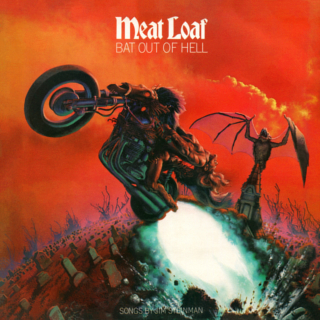
They went together naturally, like chocolate and peanut butter.  Just about seven months ago Jim Steinman died.  Then yesterday, Meat Loaf.  They were both born in 1947 and together they made one of the best selling albums of all time, Bat Out of Hell.  I’m saddened by the loss of perhaps the only truly Wagnerian Rock performer.  After I discovered Bat Out of Hell, raising some eyebrows among those who knew me as a kid, I was hooked.  I bought all the Meat Loaf and Steinman collaborations.  Not only was Meat Loaf’s voice big, it was also sincere.  It was easy to believe the stories he was singing to us, no matter how fantasy-prone they might’ve been.  Once I start listening to one of his albums I end up going through them all.

When we become aware of music helps to define it.  I became aware of Bat Out of Hell during my Nashotah House years.  Still fearful from my evangelical upbringing, I wondered what students might think when they came over.  (Nashotah is a residential campus, and this was largely before the days when faculty were fearful of being alone with a student.)  As strange as it may sound, for a best-selling album, I was unfamiliar with any of the songs before I bought it.  I’ve never been much of a radio listener.  I agonized quite a bit before finally buying the CD.  I quickly came to see why it was so popular.  More than anything, it was the sincerity of Meat Loaf’s voice.

That music saw me through some dark times.  Attending mass in the mornings and listening to Meat Loaf at night proved an effective elixir.  The longer I was at Nashotah the more I came to associate it with the titular geonym.  Eventually Bat Out of Hell II came out.  I was less slow about acquiring it.  The third one appeared only after my teaching career ended.  When things went south at Nashotah, I decided that I would perform some symbolic actions during my departure.  There was nobody there to witness any of them—no person is indispensable to an institution and you’re soon forgotten.  The last thing packed from our on-campus house was the stereo.  I went back alone to get it and the few last-minute belongings from well over a decade in a place of torment.  Just before leaving campus for the last time I cranked the stereo up and played “Bat Out of Hell” at full volume.  An era has come to an end.


Getting Used

Unknowing is a blessing in disguise sometimes.  There is so much to learn and, regrettably, little time outside work to do it.  Books are my life.  I work in publishing, so I know a passable amount about the book business.  I have much still to learn.  To support my research, which doesn’t include a university library, I often have to purchase academic books.  I know quite a bit about academic book pricing (hint: what the market will bear), and I know that it’s assumed academics have university professor-level salaries.  The “independent scholar” is as much a ghost as the next revenant.  So I buy books used.  The best clearinghouse I know of is Bookfinder.com.  They list other sellers who have the book and facilitate your buying of it.  I strongly suspect they take a small cut.

While looking for an obscure book (it pains me to say, for I met the author), I wondered if Amazon’s used copy had the lowest price.  So I went to Bookfinder.  The Amazon copy was there, along with seven comparably, slightly lower, priced other copies.  Reading the descriptions, I realized these were different vendors hawking the exact same copy of the book.  Some of the description wording was oddly specific and that led to this epiphany.  Down at the bottom was a lone seller some $4 to $5 dollars cheaper, selling the book directly.  Navigating to this page I discovered it was the self-same book—the same physical book being marked up by the other vendors.  Each reseller along the way, with wider reach, stopping at Amazon with the widest reach, was charging a finder’s fee for this same object.  It was available directly from the seller.

Used books are a thriving business.  Many publishers these days are focusing on “the electronic future,” scratching their heads that people are still reading paper.  What will happen to walking into that impressive library?  Have you ever walked into someone’s impressive iPad or Kindle?  It looks the same no matter how many electrons you add.  The internet has been taken with the photo of the late Johns Hopkins humanities professor Richard Macksey’s library.  Would it be possible to have walked in there and not been impressed with the obvious love of books?  As a Hopkins professor I doubt he had to resort to used books much, but I kind of think he probably did anyway.  Bibliophiles are like that.  A first edition is a thing of beauty forever.  And so I find myself on Bookfinder and I’m willing to give them a cut just for the privilege of holding a coveted book.

Richard Macksey’s home library. Credit: Will Kirk/Johns Hopkins University

In the Name of

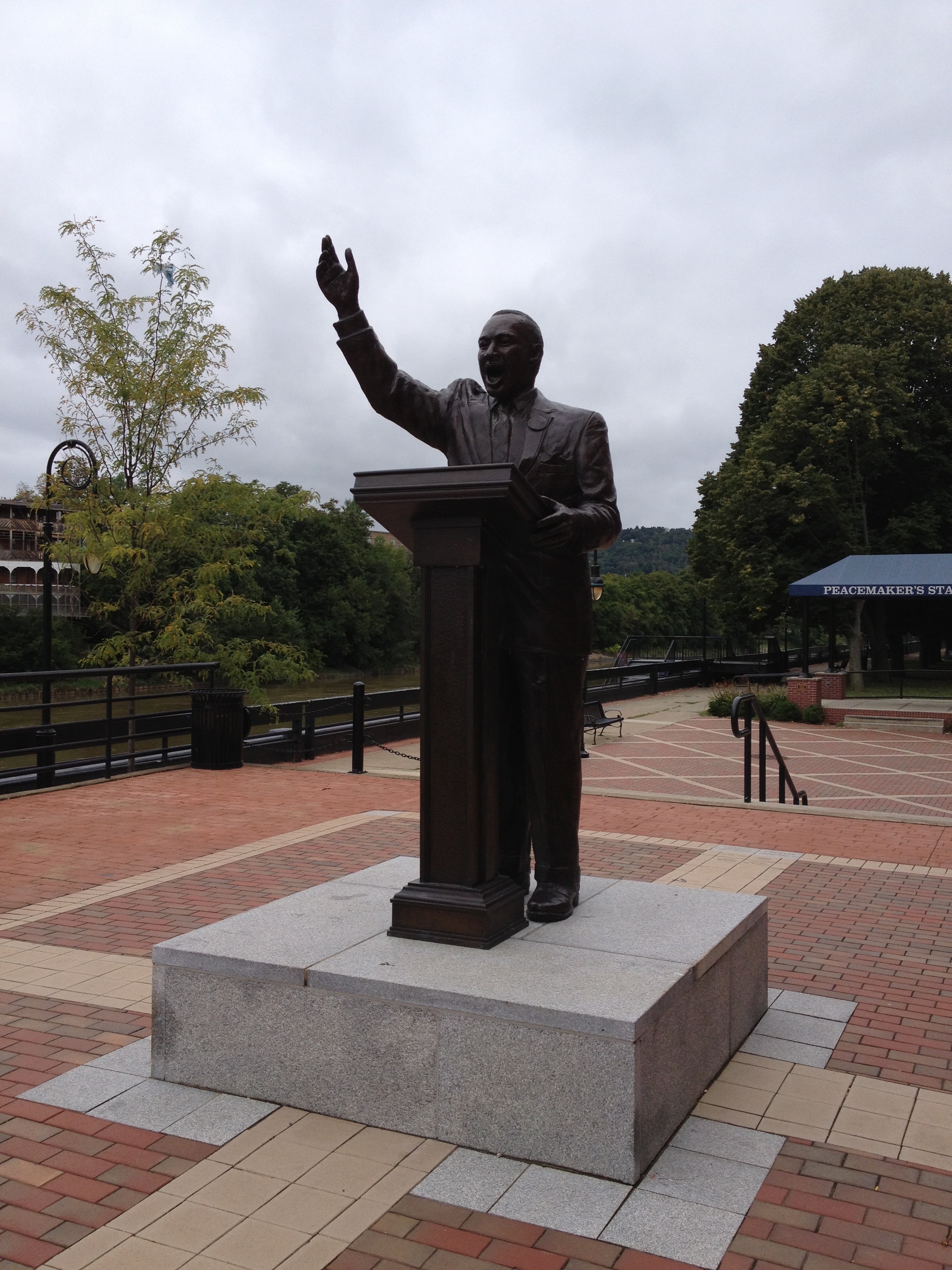
I recently heard someone who’s obsessed with honorifics opine that we should never mention Martin Luther King Jr. without his full titles.  I think I understand the reason, but I was reminded of my wife’s experience in Edinburgh.  Being Americans we assumed that “Doctor” was the preferred title of academics.  While tying up a letter for one of the higher ups in the medical school, she saw he’d signed himself “Mr. Gordon.”  She corrected this to “Dr. Gordon.”  When she gave it to him to sign he lamented that she’d demoted him.  The highest honorific, beyond the exalted “Professor,” was the humble “Mister.”  I’ve never forgotten that story.  University folk are all about titles.

I made the mistake of addressing my advisor as “Doctor” when we first met.  “Professor,” he corrected me.  In the British system, at least at the time, a department had only one “Professor,” the rest being “Lecturer” or “Senior Lecturer” or “Reader.”  The latter three were all addressed as “Doctor.”  The Professor alone had that singular title.  As my wife discovered, on beyond Professor lay Mister.  I’m a pretty informal guy.  When I was teaching I did insist that students call me “Doctor,” in part because I was young (I finished my doctorate at 29), and I’m small in stature.  And soft-spoken.  So that students didn’t take to calling me “son”—some at the seminary were old enough to have been my father—I kept the boundaries clear.  If I ever get a teaching post again I’ll insist students call me by my first name.

This day is about Martin Luther King, Jr.  He was a remarkable man who accomplished amazing things in the horribly racist America in which he was raised.  Unfortunately Trump has ushered in a renewed era of racism and our Black brothers and sisters find themselves still having to fight for fair treatment.  This reflects badly on the white man, as it should.  Still, to rely on titles is to play the white man’s game.  We honor each other more deeply, it seems to me, when we recognize that titles are, by their very nature, means of asserting superiority.  We offer our personal names to those closest to us, to those who humanize us rather than seeing us as an office.  Honor is important.  Titles can lead to better jobs (but not necessarily).  They can lead to higher pay (but not always).  We honor Martin Luther King, Jr. today by recognizing his great accomplishments and by realizing we all still have much work to do before we all really have names.


Higher Learning?

I was reading, as one does, about a mental institution.  In the last century they were often called, rather insensitively, “lunatic asylums.”  The neurodiverse were often shunted away so that the rest of society could get on with business as usual (as if that’s sane).  There were any number of reasons sought for such individuals thinking differently.  The source I was reading had a short list and I was surprised to see on it, “over study of religion.”  It really said nothing more about it but it left me wondering.   First of all, it brought Acts 26.24 to mind: “Paul, thou art beside thyself; much learning doth make thee mad!”  Religion, from the very start, it seems, had the reputation of driving people insane.

Image credit: Published by W. H. Parrish Publishing Company (Chicago), public domain, via Wikimedia Commons

As someone who’s spent well over half a century thinking about religion, reading about religion, and analyzing religion, I can see Festus might’ve had a point.  This way much madness lies.  I don’t think religion evolved to be thought about.  It was largely a fear reaction to being, in reality, rather helpless in a world full of predators and other natural dangers.  Although we’ve managed to wipe out most of our large predators, we’re still under the weather, as it were.  We can’t control it, and what messing around we’ve done through global warming has made it less hospitable to our species and several others.  And also the small predators, those that evolve quickly, such as Covid-19, are now the real challenge.  Facing fear was the real evolutionary advantage of religion.

Being story-telling creatures, we made narratives about our belief systems.  Then we started taking those stories literally.  Believing too seriously, we used those stories as a basis for hating and killing those with different stories.  We still do.  Can anyone deny Festus’ accusation?  I’m sure religious mania has, historically, led to some institutionalizations.  It was kind of a trope in the seventies, for example, that too much Bible-reading could lead to criminal behavior.  It’s not difficult to see why those trying to classify what might make an individual off balance might look to religion as an explanation.  Nationally, and very publicly, we can see strident examples of this promotion of irrational ideas on a daily basis.  Many of the large mental institutions have been closed down and many of the neurodiverse have been turned out to the streets.  Ironically, it is often the religious who try to care for them.  Understanding religion, it seems to me, might be a great public good.


The Mystique of Research

One thing that many people may not understand about research is that those trained in it are basically learning how to find stuff out.  It doesn’t matter what the subject is, research is a matter of learning what’s available to help you understand that particular subject.  Typically it involves becoming familiar with the classic “standard books” on the topic then branching out.  Even the internet, however, has its limitations when it comes to trying to find out what’s available.  My curiosity extends far beyond the religion I often blog about.  I write about religion because I’ve studied it all my adult life.  When I discover a new area of interest, or rediscover it, I often wonder how to get the salient books on the topic.

Amazon isn’t a bad place to start, but they don’t have everything.  I’ve run searches on its powerful algorithms that come up with no results.  Bookfinder.com is great for locating out of print material, but it also depends on you knowing what to search for.  WorldCat and Google Books also help.  The one thing you really need, however, is time.  Research requires a lot of time.  You find a book on the subject and read.  Then you look up the sources the author used.  Search the names of other authors to find out what they’ve written.  Watch publishers’ catalogues for the new books they’re producing.  Read journals to see who’s writing on what.  It’s like a never-ending treasure hunt.  It’s beguiling and addictive.  But it’s limited to few full-time—those who are paid to find things out.  The rest of us make what time we can.

Prior to the internet we had, it seems, a lot more certainty.  Much of that certainty was false, but it was nevertheless firmly believed.  Many people despise researchers because they challenge what we’ve always believed about the world.  As if the truth were known x number of years ago and hasn’t changed at all since then.  We want things to stay the same—we want our wallets in the same place we’ve always put them so we can find them when we need them.  Then your told there’s new, virtual currency but you have to mine it.  I know many people who don’t even own computers.  Research opens new worlds, but not all people are natural explorers.  Some prefer to stay close to home and near to the certainties they learned growing up.  Others are restless and have to learn more.  And perhaps go places where we don’t even need our wallets.


Come In

It feels good.  To be invited, that is.  Like many people I know how rare it can be.  When teaching at Nashotah House, invitations were scarce.  It’s a small seminary, not widely known.  Besides, the internet was in its infancy then and a great many people (including the seminary dean) were suspicious of it.  Few invitations came.  None for peer review opportunities, none for interviews.  I was invited to the Ugaritic Tablets Digital Edition project (for which I wrote a successful grant application) but that was because I met one of the lead editors while my wife was studying at the University of Illinois.  It’s strange, but nice, to be invited to things now.  It still happens rarely, but when it does it has two things in common: the invitations come closely spaced in time, and they have to do with horror.

Photo by Stella de Smit on Unsplash

This past week two invitations came.  One was to review an independent horror movie for Horror Homeroom and the other was to have an interview on the New Books Network.  Since this is the internet and since the internet’s endlessly self-referential, I’ll be writing about them both in more detail, directing you to the end results when they arrive.  It just feels good to be included.  I didn’t have many academic mentors at Nashotah House.  I’m a first-generation college-student; I didn’t know what academia would try to do to a person.  I had no idea what a “post-doc” was.  I did publish an article a year and write a second book which, I understood, was the key to getting hired by a “real school.”  I had a few interviews, but I’m demographically challenged, I guess.

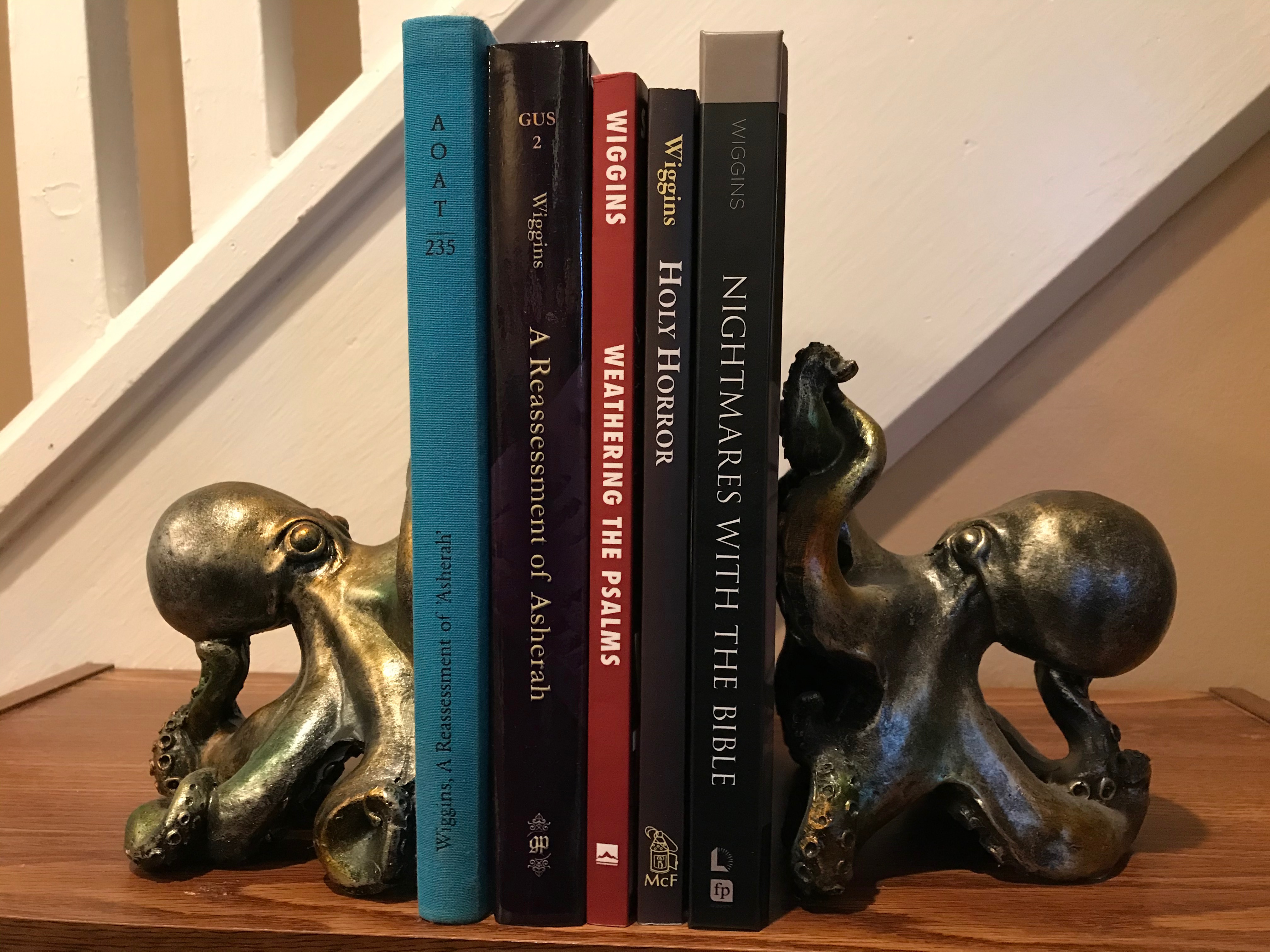
Weathering the Psalms was written at Nashotah House but it has only led to one weekend church program.  My books on horror, written post-academe, have managed to get some small measure of attention.  It always struck me as ironic that, although raised among the theology crowd I never really found acceptance among them.  Those who know there’s something to horror, however, are a welcoming crowd.  The other day I was listening to Alice Cooper’s Welcome to My Nightmare and realized, whether intentional or not, the invitation was sincere.  It remains one of the formative albums of my life.  As a child the only invitations I had were altar calls.  I responded to many.  As an adult I’m still inclined to say “yes” when someone invites me in.  Rarity only adds value.


925

Sometimes you just know.  One of the things I know is that nine-to-five schedules are killers.  Literally.  I grew my permanent teeth as a teacher.  Before that I had been set on being a minister.  Something they have in common is that neither profession relies on a nine-to-five schedule.  The hours are much longer than a forty-hour work week, but they’re flexible.  If you’re not in class, or in church, or a committee meeting, or your office hours, you can dash out to the store if you need to.  You can shut your eyes for a few minutes if you didn’t sleep well the night before.  As long as you get your work done adequately, nobody really bothers you about your time.  My initiation into the nine-to-five, in my mid-forties, was a shock from which I’ve never quite recovered.

A few years into this unnatural territory, my nine-to-five (925 is quicker to type) evolved into the commuting variety.  I didn’t live terribly near New York City, so that meant catching a very early bus.  I’m a morning person, so that’s not really a concern.  The problem is that my brain’s not a 925 brain.  Like one of my professors, I still awake at 1:30 (having gone to bed about five hours before) with an idea that won’t let me go.  When that happens you have to put on heavy layers of clothes against the night’s low thermostat and make your way downstairs to the computer.  By three a.m. your body’s in the fully awake commute mode.  Thing is, you’ve got a 925 day in front of you.  When I was teaching I’d be able to snooze again before even my eight o’clock class (I was never one to object to the early shift) began.

The idea behind the 925 is an atavistic throwback to pre-internet days.  Pre-pandemic days.  Days when you had to be watched to ensure you were working.  When you had to sit in a cubicle where nobody and everybody can see you.  If you’re not staring at your screen or not in a meeting you’re not working.  So this antiquated thinking goes.  Teachers and ministers don’t hold to regular hours.  They identify with their jobs—the very definition of “professional.”  If it’s what you’re born to do you don’t complain.  And if you happen to awake at 1:30 with an idea that just has to be expressed, those who pay you will understand if you yawn a time or two the next day when, ideally, you won’t be stuck staring at a screen.


Another Article

Some insecure people feel the compulsion, but really don’t know why.  Speaking strictly for this insecure person it’s because (I think) I’ve been ignored most of my life.  I didn’t cause trouble so teachers seldom paid me any mind.  (I’m pretty good about obeying rules.)  I was a middle child with less than a year at youngest status.  I was abandoned in a house at the age of one for God knows how long when my father went out on a bender.  Who knows?  In any case, this piece isn’t really about any of that.  It’s about the compulsion to write articles.  I don’t know why I keep volunteering to do this.  They get me nowhere.  You’re not paid for them, and you get little exposure.  I seem to be addicted to appearing in print.

This blog is purely an electronic phenomenon.  It exists nowhere in print.  I post on it every day in the hope that, like a Pioneer probe, it will connect with somebody who comprehends.  As a non, but erstwhile, academic I am not compelled to write.  In fact, it sometimes complicates things.  (If you believe that freedom of written expression exists you’ve never read a publishing contract.)  So print publication appeals to me.  I had an email from a volume editor the other day and I couldn’t place the name.  I opened it to read that the volume had been accepted as I was struggling to remember what I promised I would write for him.  I had to do an email search to locate the chain.  So that’s what I said I’d do! (The previous article I’d committed to I remembered well, since the proposal was long overdue.) 

Print publication, you see, takes a long time.  An erstwhile editor (likely an academic), gets an idea.  They wrestle with it a while and then write it down.  Pitch it to a publisher.  The in-house editor has to pitch it to the editorial board.  Often after peer review.  It can, in my defense, take months—plenty of time to have forgotten I said I’d contribute.  Then the book has to be written.  That part can take years, but in edited collections many hands make light work.  After the disparate pieces are finally cajoled in (one editor had to keep after me for four months), the editor, well, edits them.  Then they finally get sent off to the publisher.  The production process takes about a year.  The volume comes out and you get a congratulatory email or two, and then it’s forgotten.  I’m not sure why I do it, but I’ve been published by university presses for taking these on.  When I was teaching I couldn’t seem to get their interest.  Now that I’m writing about horror they’re starting to notice.  But then, that’s how monsters behave.


Behind Science

Science and religion have been sparring partners for a few centuries now, and I believe this is a generational conflict.  The child, science, arguing with the parent, religion.  You see, religion is all about worldview.  As secular as secular scientists declare themselves to be, their worldview was likely formed by their religious heritage.  Religion can’t be teased out of culture.  Here in the western world modern science was born in a fully Christianized cultural landscape.  That’s not to say that Judaism and Islam didn’t contribute, but European culture was based on some basic Christian ideals.  Creatio ex nihilo, for one—creation out of nothing.  Another aspect is that Occam’s razor accounts for the world we see.  This was a philosophical concept born of the Christian worldview.  And the list could go on and on.

Scientists, focusing on their specializations, generally don’t sit back to think about the origins of their basic cultural presuppositions.  Many of them came directly from their religion.  Ever since college I’ve tended to think back to presuppositions, and question them.  How do we know we know?  Epistemology is as useful as it is disturbing.  And if we discover that the basis for what we know was locked into a worldview we can no longer accept, what does that say about the underpinning method?  Our science is based on the idea that the world is rational because a benevolent deity wouldn’t make it absurd.  Would he?  And why are we still referring to the deity as a male?  Indeed, we still think of him as a human.

It’s difficult to get beyond our basic cultural propositions.  Religions such a Buddhism promote the idea that change is the only constant, yet the science in countries of the east is borrowed from the concepts of the west and its monotheistic sub-structure.  We tend to think that if humans can’t sense it, and quantify it, it doesn’t exist.  So it is that many scientists become atheists, but without perhaps questioning the cultural presuppositions that have led to the scientific outlook in the first place.  Some will go as far as saying philosophy is a waste of time when philosophy is the framework of all rational thinking.  And that’s not to forget that there’s emotional thinking as well.  The big picture is complicated by philosophers writing in lingo that the rest of us can’t understand.  And even they have presuppositions.  Maybe it’s time for me to go back to school and examine them again.


Rel Stud 101

There’s no such thing.  Religious studies, that is.  I first heard this a decade ago while working as religious studies editor for Routledge.  My supervisor stared at me with such knowing eyes that all I could do was nod.  I figured that since I’d spent my entire career in religious studies I’d probably know if it existed or not.  I’ve heard the statement a number of times since then and have come to realize that what it means is this: unlike other academic disciplines, religious studies has no single, central topic of study and no agreed upon methodology.  It consists of scholars trained in a variety of fields looking at different aspects of religion from different perspectives.  There’s even little agreement as to what religion is.

Religious studies is an outgrowth of biblical studies.  Studying the Bible was a long preoccupation with Jews and Christians.  Long before there were universities there were places you could study the Good Book in depth.  When enough time had passed history of Christianity and theology were added to the mix.  It was only fairly recently, about the late nineteenth century, that scholars of Christianity began to wonder about other religions.  The earliest religious studies were Christians studying other faiths.  Now, of course, religious studies exists in a number of universities and colleges (but by no means all of them) and nobody really stops to think how this came to be.  Students are very interested in religions, but as a major it offers few career options (yours truly is a case in point).  It’s a discipline under duress.  Pretty stressful for something that just doesn’t exist, isn’t it?

My suspicion is that many who entered this limbo started out as I did—a curious Christian wanting to know as much as possible about what I’d been taught.  You learn to think along the way, with somewhat predictable results.  Sometimes it takes years to dawn on you.  In other words, I doubt that many entered this field consciously thinking “I want to learn religious studies as a discipline.”  Like a pitcher plant, however, once you fly in there’s no way out.  Instead we have to find tools to study this strange and slippery environment into which we’ve fallen.  Otherwise we’ll simply be digested.  I made it through three degree programs in this field without ever encountering this idea that apparently has been long known.  Numbers are declining, which makes those of us in here how long our odyssey might continue.  If it even exists.


Degrees of Separation

For some reason lost in the fog of weblandia, I get The New York Times, “The Morning” delivered to my email.  By carefully not clicking the links I can get my day’s worth of fear and paranoia for free.  Not all the news is bad, of course, and I’d be glad to pay if circumstances had been different.  After giving all the sorrow that’s fit to print, “The Morning” ends with an Arts and Ideas section.  By then I’m usually cradling my head in my hands but I look up to see the positive side of humanity.  The other day the article on the Metaverse included this line: “In its simplest form, the term — coined by Neal Stephenson in his 1992 novel ‘Snow Crash’ — describes an online universe that people can share together…” and I realized probably the closest I’ll ever get to the Gray Lady.

I am, as many of my regular readers know, Neal’s brother-in-law.  He mentions me in the acknowledgements to Snow Crash, something that was discovered by someone at work fairly recently, and which probably did more for my stature than my many long hours daily.  When it comes to degrees of separation, fate, I suppose, plays a role worthy of the Joker.  Neal hadn’t written Snow Crash yet when I met his sister.  Her somewhat unlikely friendship with me eventually led to our marriage and it was in the context of a family gathering that the conversation Neal mentions in Snow Crash took place.  Outside publishing, and in particular academic publishing, acknowledgements are seldom read.  I always read them, though, looking for unusual connections.  I’m often rewarded for doing so.

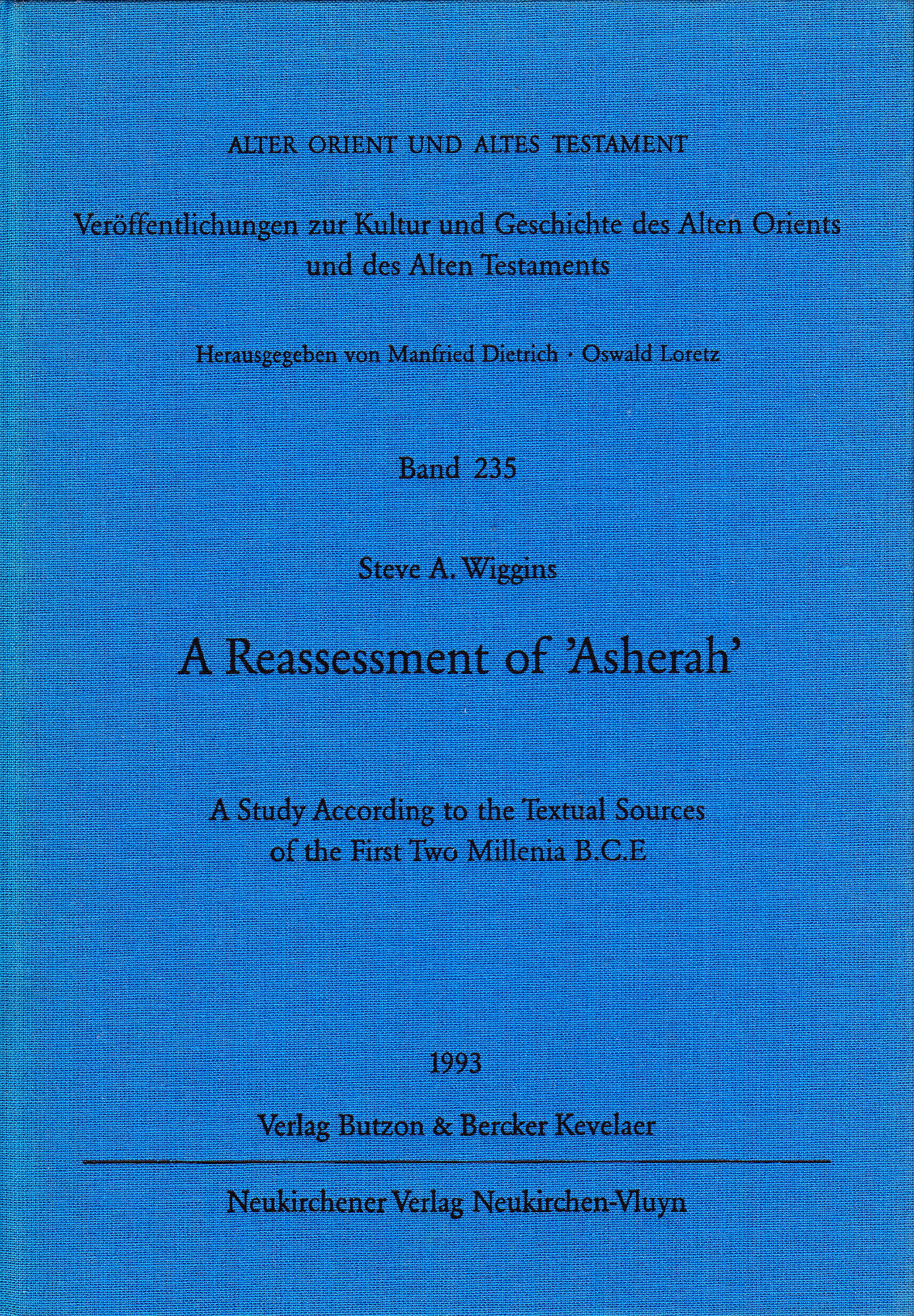
Asherah was, unbeknownst to me at the time, undergoing a resurgence of interest.  My Edinburgh dissertation was published the same year as a more prominent one by Cambridge University Press.  Just a year later, another came out.  Then another.  The internet was really an infant in those days and we learned of such things through printed resources and printed resources are always in arrears by months, if not years.  Of the many Asherah books mine had the distinction of being the most expensive.  Some things never change, I guess.  Suffice it to say, Asherah was on my mind as Neal and I drove to the store to pick up some baby supplies.  I had nothing to do with his coining the word or idea “Metaverse”—he’d already worked that out.  It was Asherah that ended up in the novel.  I was on my way to a short-lived romance with academia at the time.  Family, however, is so much more than degrees of separation.


A Day with Books

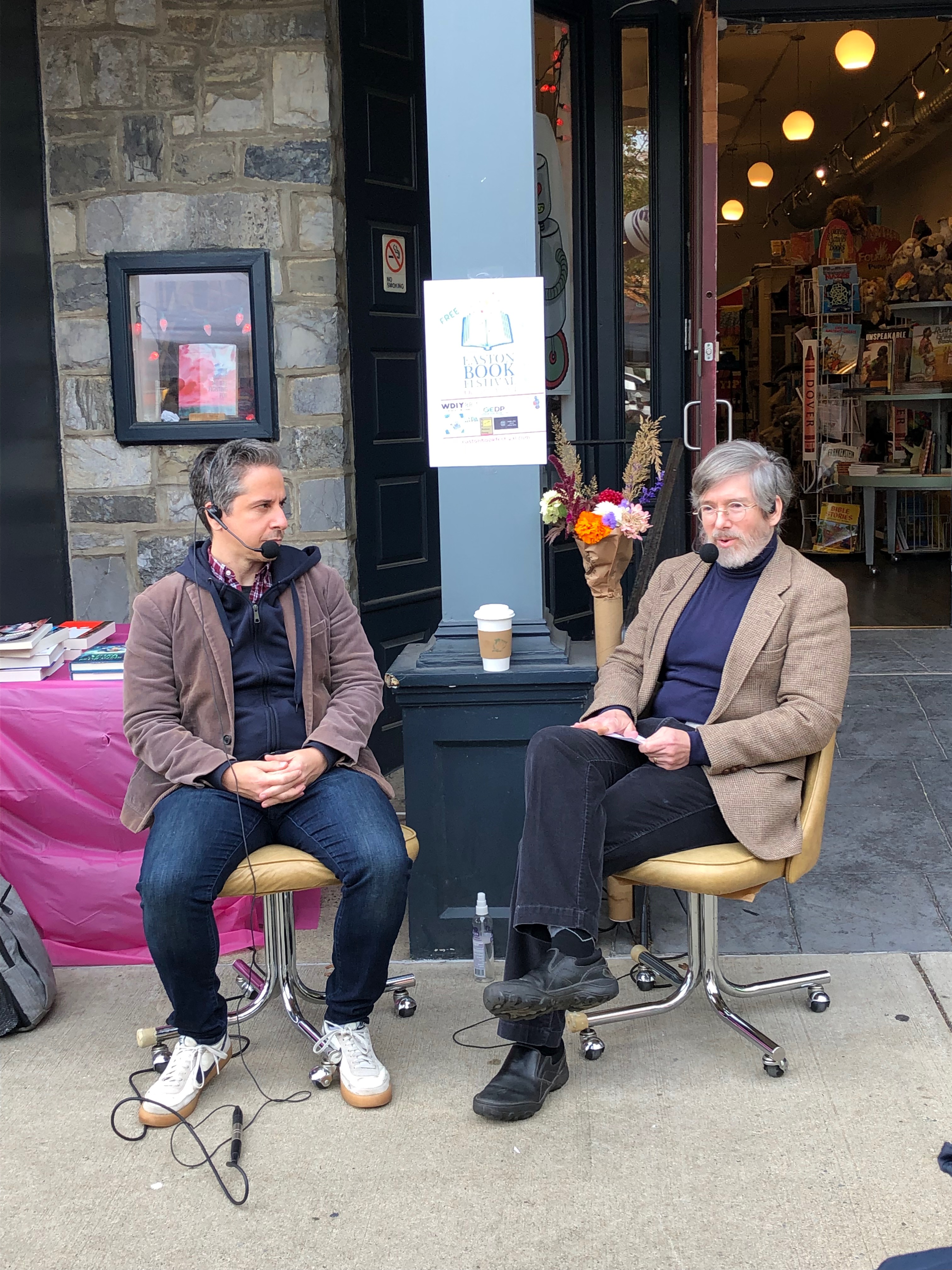
A day with books.  Is there any better kind of day?  Before I lapse into poetry I want to put in one more plug for the Easton Book Festival.  Today is the last day for this year, but keep an eye out for next October.  And you can still catch the videos from this year’s session on the Festival website.  Writers can be skittish creatures, you see.  We spend time alone and try to get our thoughts into words.  We don’t always have regular gatherings.  That’s what makes book festivals, well, festive.  I didn’t want to appear in person to plug Nightmares with the Bible—it’s too expensive.  As a friend said, “What’d you do to make it that expensive?”  I was glad, however, to be in person to interview my friend and colleague Robert Repino.  The interview will be posted on the Festival website.

An unexpected pleasure is finding acquaintances that you didn’t know were writers.  As I said, some of us spend most of our time alone.  And even for someone who spends so much time with words it’s difficult to describe the species of euphoria that talking about books evokes.  It makes me wonder why we don’t do it more often.  Since the pandemic is still with us—the pandemic that interrupted the natural progression of the Book Festival, which began in October 2019—in person events were held outdoors.  It was a bit on the cool side yesterday, with some sprinkles of rain, but few sensations match spending a day outdoors in October.  If you’re not in this area, please support your local book festival.  If you don’t have one, maybe talk with your independent bookstore owner.  It can happen.

As I’ve mentioned before, many of us who write make very little money at it.  When people ask why we do it, pointing to events like the Book Festival supply the reason.  Call it fellowship, or communion, or just a gathering of the hive mind, but finding the other book lovers in your community is a worthy way to spend a Saturday.  Book and Puppet has the distinction of hosting the event, with support from Lafayette College and a few local sponsors.  It’s also the only bookstore in which I’ve seen my actual books on the shelf.  I know it’s a sacrifice to order stock that moves slowly.  Halloween, however, is nearly here and that’s the crowd for whom I tend to write.  Why not spend a day with books?  It’s the best kind of day.


Skin In

It took me back to my younger years.  Tanya Krzywinska’s A Skin for Dancing In: Possession, Witchcraft and Voodoo in Film.  Wide ranging and insightful, this book was a delight to read.  Published in 2000, it discusses many movies that I watched in the eighties and which had somehow managed to be overrun by other stimuli since then.  I like to think that, even if recall isn’t instant, that we never truly lose the books we’ve read or movies we’ve watched.  (Some we may wish to forget, but that seems a sure way not to achieve that goal!)  As her subtitle says, Krzywinska’s book analyzes possession, witchcraft, and voodoo.  Since there are so many examples of these the discussion has to be selective, but she’s got a keen eye for choosing evocative films.

As any of my regular readers know (both of you!) I don’t really review the books in my “reviews.”  I limit myself to about 500 words and I don’t like to give spoilers.  A Skin for Dancing In would require quite a few words even to summarize.  Krzywinska covers demonology, possession, sacrifice, paganism, witchcraft, voodoo, and more, in several movies.  What really struck me in reading this was that she comes to a similar conclusion to what I’ve found—people learn about these things through film.  Scholars tend not to write much about such things (although this has improved somewhat since the turn of the millennium).  The average person doesn’t read academic books, and since culture has become “rational” there’s not much talk about such things from discoursing heads.  Still, movies.

These topics make for great movies.  One of the points I’ve made in my own work is that what we know about demons comes from the cinema.  It seems that we should pay close attention to what movies tell us.  They’re the “public intellectuals” that many academics want to be.  A Skin for Dancing In is a good example—it’s compelling, if a little academic, but very hard to find.  It’s difficult to lead public discussion if your book is limited to university libraries and those who have access to them.  Of course, you don’t need a talented scholar to tell you how to watch a movie, but I was reminded here of many films I thought I had forgotten.  And what’s more, I have a deeper understanding of how they fit into the larger world of cinematic possession.  This is one of those books I wish I’d found sooner.