O Levels

Out jogging last week, I was thinking about a harsh interview I once had.  It was in Manhattan.  The woman interviewing me made no attempt to hide her disdain.  I’m not sure if it was for me personally or what I represent.  She did not smile at all, not even for the usual niceties.  She asked me whether I was better at speaking or writing.  I said they were about equal.  “No,” she briskly corrected.  “Which is it, one or the other?”  This came to me while jogging because I was reflecting that public speaking and writing are really the only two things I’m any good at, and I have worked on both for my entire life.  These years later I still can’t say which is stronger.  That was appreciated by my students and fellow scholars in my teaching career, if reviews are anything to go by.  I like to communicate.  (My wife might say too much so.)

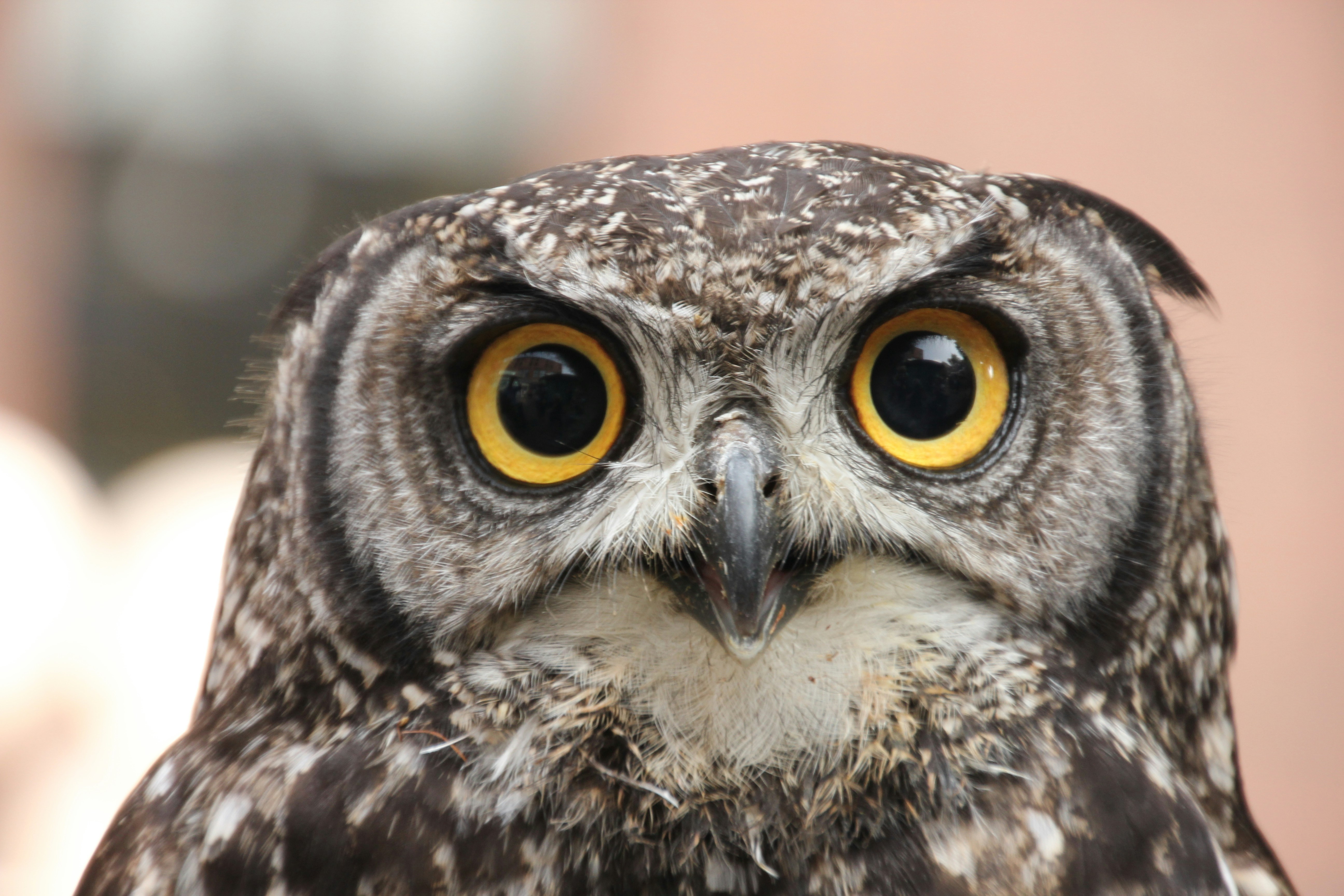
Owls are difficult to spot in the wild.  Just last week I’d seen only my second in some sixty years.  This was a screech owl.  It’s not unusual to hear them when jogging at dawn.  This time my right ear picked up on it more than my left as I jogged past a grove of trees.  I looked but saw nothing.  The trees were budding and some had small leaves already.  I reckon I’ve seen my fair share of bald eagles.  They’re large and they’re pretty obvious when they’re in the area.  Owls are more secretive.  Good at hiding.  I reached the end of the path and turned around.  As I reached the stand of trees, now on my left, it screeched again and I saw a blurred flapping of wings as it disappeared in flight.  I couldn’t identify this owl in a line-up, but then again, that’s not something I’m good at. The voice is distinctive, however.

The person hiring is a bald eagle.  Bold, aggressive, and sometimes literally bald.  I’m more like that screech owl.  Their public speaking is distinct and isn’t really a screech at all.  I can’t speak for their writing ability.  Life is our chance to come to know ourselves.  We may think we have it figured out in our twenties, but each score of years makes you question past assumptions.  Two things I always thought would be part of my career—public speaking and compelling writing—have both fallen by the wayside.  At least professionally.  What we say to others has an impact.  Especially if we’re eagles.  All things considered, however, I would rather be an owl.

Photo by James Toose on Unsplash

Dark Smile

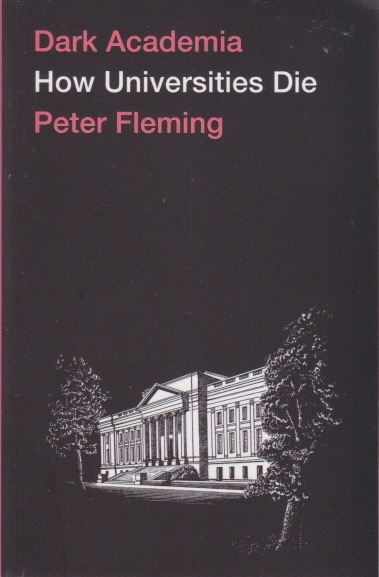
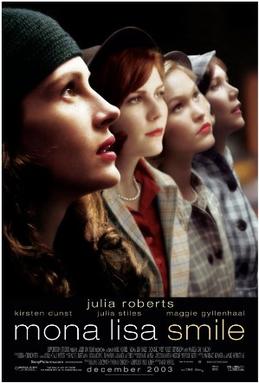
Romance.  It’s not the same thing as Romanticism, but it’s often part of drama.  It can, and often does, feature in horror.  Tender feelings toward someone we really love seem to be a human universal, even if social structures don’t always support such feelings.  Maybe I’m trying to make excuses for why I watched Mona Lisa Smile, but there is an underlying reason.  More than one expert considers it an example of dark academia.  I was curious, and honestly, it’s easier to get my wife to watch dark academia than it is horror (for that I’m on my own).  This was a film I’d heard about many times, but hadn’t watched any trailers for, so I wondered what it was all about.  In short, Wellesley.  One of the seven sisters.  But more than that—women struggling for equality in the 1950s.

A fictional Katherine Ann Watson takes up a post teaching art history at Wellesley, back in the day when a doctorate wasn’t required.  In order to demonstrate her expertise to her very well prepared students (I never, in nearly 20 years teaching, had students show that level of eagerness for any subject) she introduces them to modern art.  Traditional Wellesley isn’t prepared for that.  Moreover, she encourages them to develop careers of their own in a period when the MRS degree was still a main reason for women to attend college.  Watson’s own life isn’t without romance; a boyfriend back home in California and another professor at Wellesley both vie for her affections.  Some powerful students, however, make her life difficult and despite her popularity as a teacher, the administration allows her to remain, but with severely clipped wings.  She decides to fly instead.

Amid all the social commentary, a darkness remains.  A large part of it is patriarchy, but academic politics—driven by money—is the main culprit.  As Watson is essentially forced out, her students see her off with a display of camaraderie, making this, in some ways, quite similar to Dead Poets Society.  There were a few triggers for me.  Years ago I was indeed called into the Dean’s office and handed a letter to read.  While not nearly as dramatic as either Dead Poets Society or Mona Lisa Smile, I had students demonstrate their support for me as I was forced out.  Katherine Ann Watson seems to have had better prospects than John Keating, but both movies remind us that academic politics are dark indeed.  Even if it’s couched in the genre of romance.


Craving Enchantment

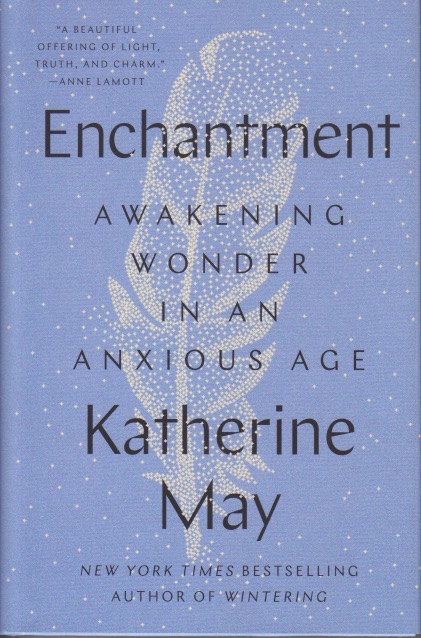
I really want to know, but just can’t figure out, how to write like Katherine May.  My wife and I read her book Wintering and now have added Enchantment.  In many ways I seem to be like May; we may be different shades of neurodivergent, but I understand what she says.  Indeed, at one point in Enchantment she talked me down from a writer’s dilemma that had me worked up for days.  But I can’t write like her.  I have times when my rhetoric for a blog post or two might come close, but I have tried to sustain it for an entire book, so far without success.  My background was perhaps too sullied by academic writing, although May is also an academic, so I may simply be making excuses for lack of talent.

That’s too bad because Enchantment is meant to improve your outlook.  Subtitled Awaking Wonder in an Anxious Age, it consists of life lessons the author learned during the pandemic.  I often, if I allow myself in this constant struggle for my time, experience the sense of wonder May describes.  I enjoy walking in the woods, watching heavenly bodies, staring into a river or pond, and trying to draw lessons from such things.  Lately, however, I find myself rushing through them because I have something else I have to do.  Daily, it’s the 9-2-5, of course.  That schedule overloads my weekends with things that have to be done even if I want to spend time appreciating the enchantment I can find, if I have the time.  Sorry, I’m letting the anxious part take center stage.

This is a wonderful book.  I admire the way that May is able to face down her own struggles with grace and remain open to possibilities.  I found such things much more readily when I was at Nashotah House.  There were moments between classes and there were semester breaks.  We lived in the woods.  By a lake.  There was wonder there, for the taking.  Having a young child to introduce to the wonders of nature definitely helped as well.  Children force you to see through new eyes (it’s not a surprise that May has a young son when writing).  Too quickly we grow up and let capitalism tell us what to do.  It takes so much from us and gives so little.  I’m looking out my window at nature, as I write this.  I know it has enchantment to offer.  I also know that work begins in fifteen minutes.


Cloistered

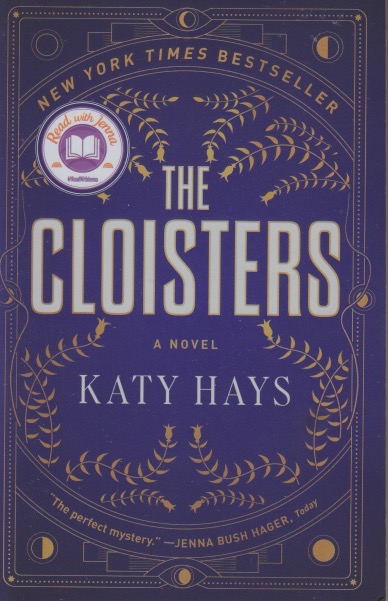
Free will.  I’ll go on the record as a proponent.  Any kind of determinism gives me the willies.  At times, however, it does feel as if we’re merely pawns.  Katy Hays deals with the concept of fate, and the occult world of tarot, in The Cloisters.  The writing is quite compelling and the story moves along at a good pace.  It follows Ann, a graduate from eastern Washington who wants to get away from the town where her father was killed.  She accepts the offer of a summer program at the Met in New York City, but because of a mix-up ends up at the Cloisters instead.  I’ve never actually been to the Cloisters, but this novel makes me want to go.  At this museum of Medieval and Renaissance art, Ann works with Rachel, another assistant, Leo, a gardener, and the curator, Patrick.

Rachel has been at the Cloisters for some time and Patrick, her boss, has become enamored of tarot decks and their history.  He’s been seeking perhaps the oldest complete deck known and has come to believe that perhaps the cards do have the ability to tell the future.  Ann befriends Rachel.  The two begin to make discoveries, particularly Ann, but Rachel, who is independently wealthy, manipulates her, taking advantage of the fact that Ann never wants to return home.  Then Patrick is poisoned.  I won’t reveal whodunnit here, but the last half of the book has several twists that make you reassess whatever conclusions you may have drawn.  It’s a fascinating story, well told.

This novel is another example of dark academia.  Much of it takes place in the library of the Cloisters and Patrick holds a Ph.D. while Rachel is a graduate student.  Ann is about to enter a doctoral program.  All of them have some fairly dark secrets in their lives.  And all of them are driven.  The story has elements of social commentary as well, particularly concerning how life in New York City will drive people to extremes when the competition makes this necessary to survive.  Although three of the four commit crimes, they are all likable people.  Three of them are academics as well.  All four are quite intelligent.  I was drawn into this tale from the start and even as the darkness was revealed couldn’t bring myself to dislike any of the characters.  Some novels have antiheroes that you just can’t feel for.  The Cloisters moves in the other direction, and it does make you wonder just how much choice you actually have and how much is left to fate.


What You Believe

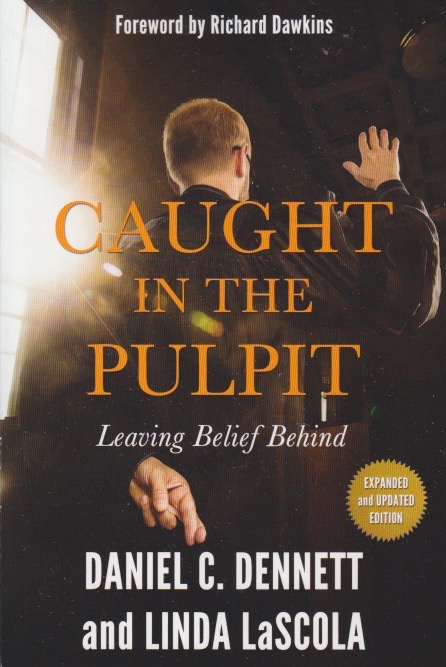
This is an important and frustrating book.  I just can’t figure out if the black-and-white thinking is disingenuous or if it was really believed.  I don’t mean about the subjects of Daniel Dennett and Lisa LeScola’s Caught in the Pulpit.  I wonder that about the near-arrogance of the model they propose while exploring the very real problem of, as their subtitle says Leafing Belief Behind (for clergy).  You see, I’ve read, and even walked a little way with the “new atheists” (my private beliefs are private but one thing I will say is that beliefs constantly change for anyone who seriously seeks the truth.  If you want to know them, get to know me).  This book, which explores clergy and other religious folk who’ve lost their faith, addresses something very real and very important.  It’s just that the framing feels wrong.  I appreciate that the authors exhibit such sympathy for their subjects—it is difficult to change the religion in which you were raised.  But it it’s not black-and-white.

Apart from the “either/or” outlook, there’s also the fact that what many people interviewed lost was not so much a belief in God as it was a belief in the Bible.  These are different things.  No doubt, our love of Bible has caused quite a lot of damage.  Since many believe the Bible to be a magic book, losing that particular lens can make things blurry.  I guess that’s what I missed in this book—a sense of blurriness.  Scientism is a belief system just as fundamentalism is.  Interestingly, I keep coming back to something that should be obvious to scientists—our brains did not evolve to learn “the truth.”  Our brains evolved to help us survive.  There is much we still don’t know.  What’s wrong with being humble about it?  Perhaps it’s sour grapes since I was ousted from a religious career just when this study was taking place, but I didn’t qualify because I believed.  Not that they’d have found me, in any case.

Many clergy, I know, do not believe what their congregations think they believe.  As you go into theological education some things are revealed that it is in nobody’s best interest to broadcast.  It might be good, however, if it weren’t atheists trying to lead the charge.  I was pleased to see Dennett himself suggest this in the book.  I was also glad to see him admit that “the new atheists” do not struggle with the very real issues raised by theological education (whether in formal settings, or through private reading).  There is a very real disconnect here, and this book serves a valuable function in bringing it to public attention.  What’s missing is a solution.


Imagine Monsters

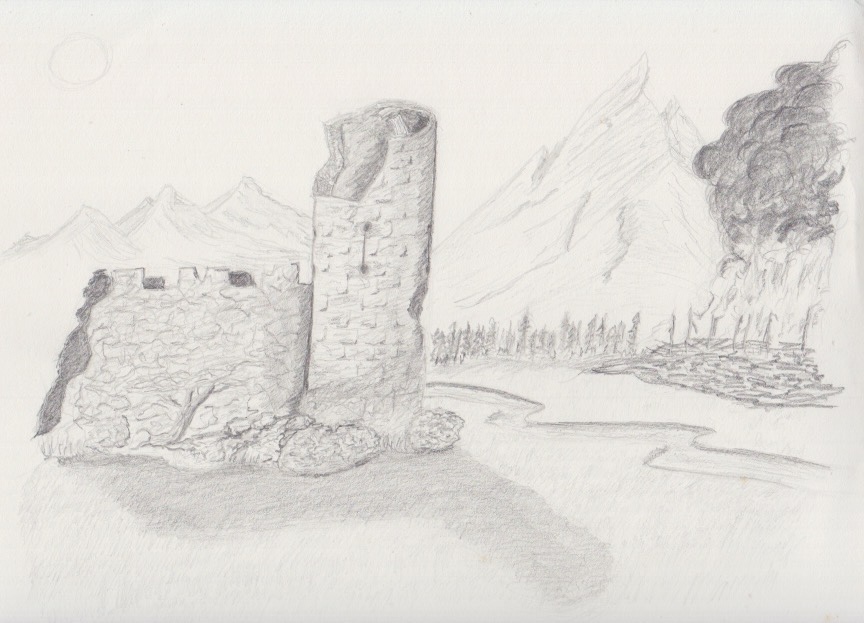
Adulthood is where you begin to recognize the folly of growing up.  Like most people, when I “matured” I was ashamed of things I made as a child and, regretfully, threw them away.  This came back to me recently as I was thinking of a sketchbook—actually a scrapbook that I repurposed in my tween years.  I love to draw.  I don’t do it as much now as I’d like (thanks, work!), but I was encouraged in it by art teachers throughout school who thought I had a little talent.  The sketchbook, however, was only ever shown to my brothers, but mostly only looked at by me.  This particular project was where I was making up monsters.  As with my writing, I’d never taken any drawing classes, but I had an active (some say overactive) imagination.  (That’s still true.)  

In any case, a discussion with my daughter brought back memories of this book I’d discarded by the time I went to college.  I still remember some members of the menagerie I’d concocted.  Even now that I’ve seen hundreds of monster movies, most of those I’d fabricated as a child have no peers that I’ve seen.  These weren’t monsters to be incorporated into stories—they were purely visual.  Although, I can say that my first attempted novel (probably around the age of 15) was about a monster.  I got away with being interested in monsters in high school, but college was a wholesale attempt to eradicate them.  Even so my best friend from my freshman year (who left after only a semester) and I made up a monster that lived in the library.

As an academic, until very recent years, monsters were off limits.  If you wanted to be sidelined (and in my case it turns out that it wouldn’t have mattered) you could explore such outré subjects.  Now it turns out that you can get mainstream media attention if you do (as a professor, but not, it seems, as an editor).  I’m sitting here looking back over half-a-century of inventing monsters, with a sizable gap in the middle.  The interest was always there, even as I strove to be a good undergrad, seminarian, and graduate student.  Now I can say openly that monsters make me happy.  I can also say, wistfully, that I’d been mature enough to keep that sketchbook that preserved a part of my young imagination.  It was tossed away along with the superhero cartoons I used to draw.  And the illustrations of favorite songs, before music videos were a thing.  Growing up is overrated. 

A surviving drawing, unfinished

Dead Darlings

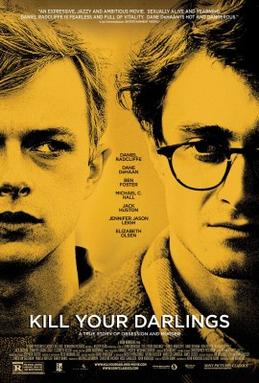
The thing about being a writer is that there’s no one size fits all.  I watched Kill Your Darlings because it is an example of dark academia, or so it’s sometimes presented.  I have read some Beat Generation writers, but the movie made me feel very ignorant of that aspect of American counter-culture.  The movie is based on true events and such things as coincidences of writers always makes me feel terribly alone.  In case you don’t know the story (I didn’t) Allen Ginsberg came under the influence of Lucien Carr at Columbia.  Carr had been surviving at the university by the writing of his one-time lover David Kammerer.  Carr introduces Ginsberg to William S. Burroughs and Jack Kerouac, and the four (excluding Kammerer) kick off what would become much of the Beats.  Carr, however, kills Kammerer and Ginsberg, who has become Carr’s lover, must decide what to do.

Ginsberg grew up in a broken home, as did Carr.  I could relate to their feelings of loss.  Of course, the Beats relied on drugs and alcohol and sex to write, breaking the rules of institutions like Columbia.  Now that I’ve written my “million words” (and more), posted for free on this blog, I think back to my literary friends.  Both in high school and college I knew guys (I was awkward with girls) who dreamed, or at least talked, of becoming writers.  Over the years this pool has dried up.  Seminary and doctoral study were too focused to find those who really wanted to write.  Academic books, maybe, but not forms of self-expression.  Now, I’ve never used drugs, nor have I wanted to.  I write nonfiction books that are creative forms of self-expression.  Naturally, they don’t sell.

Many of us who write were raised in broken homes.  With tattered dreams we set out to try to make something of our lives in a hostile world.  My behavior in college wasn’t exactly conventional, as any of my roommates could attest.  It often appeared that way on the outside, even as poems rejected from the literary magazine were called “too depressing.”  So I pursued an academic career, but there was, whether anybody saw in or not, always a wink in my eye.  The same is true of my writing since.  This blog scratches the surface.  There’s a huge pile of fiction, and yes, poems, underneath.  They may someday be found, but I do have my doubts.  Movies about writers will do this to me.  Even if they don’t really fit my tastes in dark academia.


First Tower

In these days when daring to think feels dangerous, R. F. Kuang’s Babel: An Arcane History feels dangerous to read.  Good literature is like that, even if it’s uncomfortable to read as a “white” man.  A fantasy largely set in Oxford, it’s based on the premise that languages, when placed next to one another, engraved in silver, have enormous power.  The power to run an empire.  This is a post-colonial story, and I took comfort in the working class support, for their own reasons, of exposing the very dangerous world of capitalism.  With its “human capital” as we’re now being called by businessmen.  But I digress.  Four students, three from abroad, are brought to Babel, a tower in Oxford that houses the Royal Institute of Translation.  Their use of their native tongues helps build immense power in this Oxford tower.  Power that fuels Britain’s imperial goals.  But all is not well in academic paradise.

Slowly three of the four scholars come to realize that their home countries are being exploited for purposes of yet further exploitation.  The wealth always flows back to England, and even the small emoluments it offers to those other nations cannot negate the fact that the end goal is British superiority.  The protagonist is Chinese, taken from poverty to live in academic luxury, in exchange for what was his birthright—his linguistic ability.  It doesn’t end well.  This is not a happy novel.  But it does highlight something we seldom consider; our language ability is truly an amazing thing.  We try to convey a fraction of what’s going on in our heads to another person, and that person has some ability to understand it.  And languages are ways of thinking.  I used to tell my students that all the time.  It’s more than just words.

This is also a fairly long book.  As with most fairly long books, you’re left feeling it once the story concludes.  Even though language allows us to communicate, it’s sometimes uncomfortable to hear what someone else is thinking.  We don’t have to be woke to realize that Black, or Asian, or indigenous experience is quite different from what we call “white.”  And such voices deserve to be heard.  We live in a time when white men don’t like to be told that they’ve participated in oppressive behaviors.  Probably most of them (for I believe people are generally good) are not intentionally evil, but they participate in a system which can be.  And often unthinkingly so.  Thus these days thinking feels dangerous.  And this book will make you do so, nevertheless.


Low Stakes

Elsewhere on this website I refer to myself as an “unfluencer.”  This quasi-serious attempt at humor does bear a kernel of truth.  It’s difficult to get your voice heard on the internet.  By the time I began blogging, vlogging had already become a thing and people prefer watching to reading.  (I do have a few YouTube videos out there, but they take an awful lot of time to put together and I’m kinda busy trying to write obscure books.)  The reason I mention this at all is to make a point.  People sometimes wonder why a guy who has a doctorate in religious studies wastes his time with horror.  There’s a good reason.  People will pay attention when the stakes are low.  Is horror important?  I think it is, but most people don’t.  Genre fiction is easily dismissed as being off in fantasy land, despite the growing number of voices suggesting we should be paying attention to how it influences (unfluences?) religion.

Those who delve in such blue collar things sometimes grow to be taken seriously.  I suspect—since I wouldn’t know—that it’s a matter of sticking with it long enough, and producing enough content that people have some standard for comparison.  And the interesting thing is, you often notice fascinating features along the way.  While working on my next book the other day, I realized a major gap in the study of history of religions.  I can’t say what it is here, of course, because someone without a 9-2-5 may scoop me.  But the gap is clearly there.  And I would never have noticed it if I weren’t spending my time writing about low-stakes monsters.

I’m a blue-collar thinker pretty much through and through.  Talking it over with my brother the other day, I realized that despite the years and years of higher education, I was brought up working class and I look at the world through those lenses.  When I was actually a professor that began to change, but in retrospect, I think that’s why my students liked what I did in the classroom.  I wasn’t some child of privilege handing down tired observations meant to impress other children of privilege.  I’m just a peasant trying to figure things out.  I can point to no highly educated forebears—neither of my parents finished high school.  No, I have been fortunate enough to have clawed my way through three higher degrees only to realize that people only listen if the stakes are low enough.  And I’m alright with that since I get to spend the time with my beloved monsters.


Bibliographer for Hire

Why is bibliographer not a job?  Why can’t a person make a living categorizing knowledge?  I ask this because I see YouTube videos of people saying your job should be what you enjoy doing.  What if you enjoy creating bibliographies?  You see, my research methods are a bit unconventional.  They kind of have to be since I have no institutional support for my writing, and yet I want it to be intelligent and informed.  That means I have to locate my own sources and inevitably, when I’m compiling a bibliography, I’m happy.  Even if it means ferreting out obscure sources and trying to learn where something was originally published, I’m still at the top of my game.  (Yes, this is one of those things that the longer you’ve been doing it, the better you get at it.  These days it means learning to engage the internet for research.  Since it’s more of a money-making venture geared towards entertainment, that can be tricky.)

I remember those days of typing out bibliographies by typewriter, smearing White-Out all over, or trying to use that ribbon stuff that was supposed to be able to type over mistakes.  My friends and fellow students hated bibliographies.  Secretly, and perhaps perversely, I was enjoying myself.  You see, a bibliography is gathered knowledge.  When I finish reading a nonfiction book, particularly one where I want to do further reading myself, I go through the bibliography.  I want to know the origins of ideas.  There’s an irony here since my last few books have featured quite a few of my own ideas supported by what I’d read.  And I know that unless I provide a precise footnote, anyone who might read my work might wonder “how I know” what I’m writing.  It’s increasingly becoming one of those “pay attention to your elders” sort of thing, I guess.

But the bibliographies I could compile!  The really tricky part when writing The Wicker Man was the word limit.  I know authors who struggle bringing the bibliography down to required length, and I feel for them.  I really do.  You see, a bibliography is a record of what it took to get me to write this book.  These are the things I was reading, pondering.  Or found along the way.  There’s an art to a bibliography as well.  Some topics seem to attract authors with last names beginning with a certain letter, for instance.  Or others seem to have a dearth of another letter.  I may be the only person who finds such things fascinating, but can’t that be a paying job?  It is most interesting work, and categorizing knowledge is a full-time job.  If only it was a paying one.


Major Drum

We don’t get out much.  Live shows can be expensive and these cold nights don’t exactly encourage going out after dark.  Living near a university, even if you can’t officially be part of it, has its benefits, though.  Over the weekend we went to see Yamato: The Drummers of Japan.  Our daughter introduced us to the concept while living in Ithaca, a town that has a college or two, I hear.  These drummer groups create what might be termed a sound bath, that is profoundly musical while featuring mainly percussion.  Now, I can’t keep a beat for too long—I’m one of those guys who overthinks clapping in time—but that doesn’t mean I can’t appreciate those who can.  The timing of the members of Yamato was incredibly precise, and moving.  At times even funny.  It’s a show I’d definitely recommend.

This particular tour is titled “Hito No Chikara: The Power of Human Strength.”  Now this isn’t advertising their impressively well-toned bodies, but is a celebration of human spirit under fire from AI.  The program notes point out some recurring themes of this blog: to be human is to experience emotion, and to know physical limitations, and to be truly creative.  Would a non-biological “intelligence” think to wrap dead animal skins around hollowed out tree trunks, pound them with sticks and encourage hundreds of others to experience the emotions that accompany such things?  I live in a workaday world that thinks AI is pretty cool.  Humans, on the other hand, can say “I don’t know” and still play drums until late in the night.  We know the joy of movement.  The exhilaration of community.  I think I can see why they titled their show the way they did.

Bowerbirds will create nests that can only be called intentionally artful.  Something in biological existence helps us appreciate what they’re doing and respond in wonder.  Theirs is an innate appreciation for art.  It spans the animal world.  Japan is one of many places I’ve never been.  I’ve never played in any kind of band and you don’t want me setting time for your pacemaker.  If a computer keeps such precise timing we think nothing of it.  It’s part of what humans created them to do.  When a group of people gets together, stretching their muscles and working in perfect synchronicity, we sit up and take notice.  We’ll even pay to watch and hear them do it.  Art, in all its forms, is purely and profoundly biological.  And it is something we know, at our best, to appreciate with our emotions and our minds.


Trouble on Campus

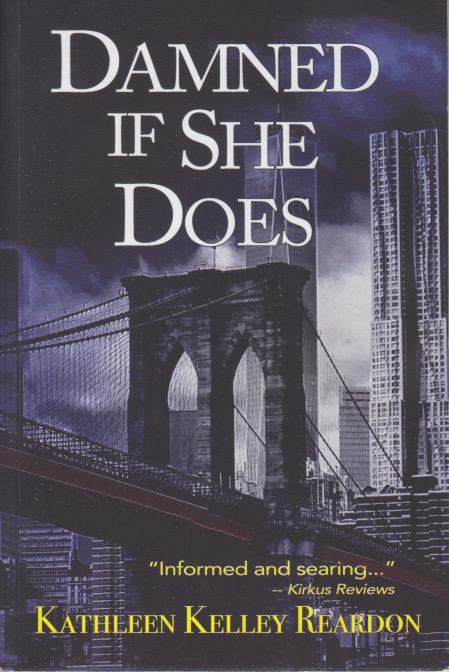
I know what it’s like to have a story living within you.  Academics writing novels don’t always qualify as Dark Academia, but Kathleen Kelley Reardon’s Shadow Campus does.  Continuing my current kick of that genre, I eagerly read of the skulduggery taking place at the fictional Pacific Coast University and found myself nodding with recognition.  Higher education is highly political.  I have to wonder if where two or three are gathered politics will inevitably be in their midst.  Perhaps thus it has always been, but it seems to me that when universities decided to model themselves on corporations, it grew much worse.  In any case, Meghan Doherty is a business professor up for tenure.  Her only family is an estranged brother in Connecticut.  Then one night someone attempts to murder her on campus and make it look like a suicide.

Shamus, her brother, flies to California to see her in the hospital and soon begins to suspect things are not as they seem.  I don’t want to give away too much here, in case you want to read it too.  I can say that sometimes life on campus is like this.  I’ve made the claim to have lived Dark Academia, and I’ll stand by it.  After the unpleasantness at Nashotah House, I was hired for a year as a replacement professor at the University of Wisconsin Oshkosh.  I really enjoyed teaching there, apart from having to leave my family in Oconomowoc; I stayed with a former Nashotah House student to whom I’m eternally grateful.  The department chair and colleagues liked me.  I was a good fit.  There was talk of making this a full-time position for which I’d be the inside candidate.  Then one of the other professors began to dislike me (long story).

I was called into the department head’s office and told that my eight courses for the next year had been reduced to one.  Permission to hire had been granted, but it had to be a specialist in women’s studies.  I was welcome to stay on as an adjunct, of course.  I’m a blue-collar guy and I recognize a boot when I see one.  And that was only the second time something similar had happened to me, and it wasn’t the last.  I’ve paid my dues to academia and yes, it is often dark.  So I enjoyed reading Reardon’s fictional account of underhanded dealings at Pacific Coast.  In my own experience guns were never brandished, but then, you can’t have it all.


Finding the Source

I need to know the origins of things.  Call it a sickness if you will, but I’m compelled to trace things to their source.  This is why I went on to earn a doctorate, and it’s a trait that hasn’t left, despite my career malfunction.  My interest in origins was recently reawakened by the citation, in a book, of a source that was incomplete.  I turned to the internet, of course.  I found the source, reprinted on a Tumblr page, for which I was grateful, but there was no proper citation there either.  Instead, a link to another webpage, which itself consists of yet another link.  Even after pages of googling, I was no closer to finding the source.  This is why I miss libraries.  You were there with books, some of them centuries old, looking at the source.  Outside the academy this rarely happens.  Particularly when you work 9-2-5.

The internet age is one of taking someone else’s word for it.  That’s why it’s important to establish credibility.  The website where I found the information—the top ranked site on both Ecosia and Google—had old books as the background, but no “about” page.  Who had put this information here and where did s/he get it?  The item I was looking for was from the 1700s.  I don’t have a print copy lying around and I was wondering what the source was—a book?  A journal article?  A newspaper?  An actual archive?  And why can’t Google find it in a library?  I know the source actually exists because I also found it referenced in a reputable print book, but one with inadequate citation.  Some of us were cut out for this kind of thing.  Constitutionally researchers.  But you have to work to live.

One of the greatest pieces of advice ever is to stay curious.  It helps keep a mind active, even a 9-2-5 one.  I’ll keep looking for this mysterious source.  I’ll check out likely references in the bibliography.  I’m sure that other people have the same compunction not to take someone else’s word for it.  Particularly not an anonymous poster on some website.  Especially in this day of AI lies.  One of my high school teachers once said that a reputation for being trusted is something you earn by lifelong cultivation.  If people know you are a reliable source, they will believe the things you say.  Anonymous information can be helpful from time to time, but without knowing the source I always remain skeptical.  And curious.


Old Movies

Something strange is happening.  (“How’s that new?” you might well ask.)  There seems to be a bifurcation taking place in my brain, what techies might call “partitioning.”  Specifically it regards what I think of as “old movies.”  By this I don’t mean movies from the sixties or before.  No, I mean movies I saw some time ago, often on DVD or even VHS, sometimes in theaters, that became part of my standard repertoire.  I imagine most cinephiles have certain films to which they keep coming back.  But for me, the “old movies” are those I haven’t blogged about.  Also, they predate streaming so, in that sense, they are “old.”  You see, I’m not a very internet-savvy thinker.  It took me quite a few years to figure out I could link my posts with other posts on my own blog so that in the rare event that someone might want to read more they could click on the links like you do on Wikipedia.  (Now that you’re here, stay a while!)

Photo by Denise Jans on Unsplash

This blog was started in 2009.  For most of its history it has been daily.  I didn’t automatically start blogging about movies, though.  For a few years I tried to tie all my posts into religion, widely conceived.  Then, kind of establishing my own “brand,” I started writing about less ethereal topics.  Including movies that don’t have religion in them.  By far most of the movies I discuss on this blog are first-time films for me.  Occasionally I’ll go back and address one of my “old movies.”  This occurred to me the other day when I went to link to Tim Burton’s Corpse Bride.  I thought I’d posted about it, but it’s one of my oldies, so I hadn’t.  I don’t even remember when I first saw it.  If feeling nostalgic, I’ll look backward, as an historian is wont to do, but it doesn’t happen often.

Since we can’t see ahead in our lives with any real clarity, I didn’t anticipate this blog focusing on darker themes. When I started, finding a position back in academia seemed like a possibility.  For me this blog is therapy, but this is as good a place as any to talk about movies, and most of mine fall into an ill-fitting genre called “horror.”  Even among these, my “old movies,” like The Exorcist, The Amityville Horror, Sleepy Hollow, or even Paranormal Activity, which now more or less define my research, were missed out for having been too old (having been seen too long ago).  Most of the movies discussed in the past few years here have been streamed.  Many of them are easily forgotten.  But the old ones, they’re stuck, apparently for good. Such is the power of old movies.


Upstate

Unrequited love is sometimes tragic.  Other times it’s merely sad.  People are attracted to places.  Or at least the idea of places.  I was born in Pennsylvania, but to a wandering family.  I keep looking for roots—my tribe.  I didn’t know my father well growing up, but my mother’s family, before taking on that rootless search for greener pastures, was from upstate New York.  For several generations.  I’ve tried many times to land a teaching post somewhere upstate, but in vain.  Even when I knew the people in the department and had been to campus, like that time at Syracuse University.  It was raining when I visited, back in my Routledge days.  I was taken by what I experienced there, never to be welcomed myself.  My family was from a bit further north, around Albany, the head of the Hudson Valley.

At the time I wasn’t aware that my childhood hero Rod Serling was born in Syracuse.  My daughter was at school in Binghamton, which is where Serling grew up.  That I knew.  Nor did I know that Dan Curtis, creator of Dark Shadows—that other childhood staple—had gone to college at Syracuse.  Something about upstate.  I’ve remarked to my family that when traveling in this part of the country I catch glimpses of familial facial features in some strangers.  A passing glance suggests that they might be distantly related.  My unknown tribe.  Economics, however, have always kept me away.  Even when I explained in my cover letters that I felt that special connection my applications were summarily brushed aside.  Probably by folk who knew who their tribe was.  Probably from somewhere else.

In this world of internet loneliness, we long for connection.  We lived in Wisconsin for over a decade.  The only people I really got to know were those I knew from Nashotah House.  And this was even with years of involvement with the PTO, serving on the building committee, and even being president one year.  People were busy even back then.  I was thinking perhaps I’d found my tribe in Wisconsin. But then…  The move to New Jersey put me close to my ancestral state, but not in it (my mother was born in Jersey).  Economics, that dismal science, dictated that a move had to be back to Pennsylvania, where I was born among strangers.  Our nation is one of many tribes, including those we sought to exterminate to steal their land.  We have plenty of space, but we value economics over belonging.  You may buy the presidency, but you can’t buy your tribe.