Finding a Spot

Sometimes you’re not born among your tribe.  I live where I’ve moved out of economic necessity, not where my family’s located.  My family’s not quite sure what to make of me anyway, so I seek my tribe.  At first it was among the United Methodists, but when I was in seminary they let me know what they really thought of me.  The Episcopalians seemed more welcoming to my academic aspirations and my doctorate led me to believe my tribe was those who studied ancient West Asian religions.  I wrote papers, led conference sections, knew people.  When I had to step out of academe, however, they tended to fall away.  (Ironically my most-read work, according to Academia.edu, is my dissertation, revised edition.  It has had over 8,000 views.)  I still have many scholar friends, but I’m clearly no longer part of the club.

That’s why I turned to horror (as a field of study).  I was seeking my tribe.  I wasn’t at all sure Holy Horror would get published.  I was encouraged when The Journal of Religion and Popular Culture published “Reading the Bible in Sleepy Hollow.”  Then I discovered other academics (still not part of the club) were studying religion and horror.  Ironically, it was people on the horror side, rather than the religion side, who made me feel most welcome.  In the meantime, I wrote some horror stories (still do) but the fiction publishing tribe seems to be at war against the rest of the world.  You can’t breach their bulwarks.  I’ve been trying for a decade and a half.  So I continue to write books that move more toward horror, and move away from religion.  Still, hard-core horror fans don’t really pay much attention to my books, still I try, but as an outsider.

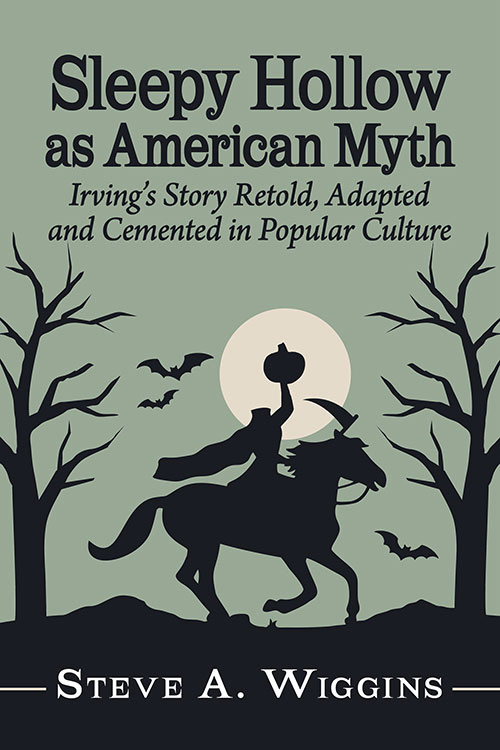
Since Sleepy Hollow as American Myth is in production, I’m working on my next projects.  I’ve been indulging in fiction again, where I’d really rather be, for a host of reasons, but unless I succeed as a double agent, I’ll remain unpublished.  My tribe, I think, would welcome more nonfiction like I’m writing.  These books haven’t been selling well, but they may eventually get referenced.  Now, many years after the fact, the ancient West Asian studies tribe cites my work and asks me to contribute more.  I’m afraid that island was abandoned years ago, former tribe-mates.  I was lonely and so I rowed across the ocean into horror territory.  If you’re looking for a tribe too, I’ll be glad to try to introduce you around.


Writing Academic

One of the things that Stephen King detests (or at least detested back in the seventies) was academic literary criticism.  Perhaps you’re more normal than King or I, but if you read such things you find yourself immediately sucked into a world where the writer seems determined to demonstrate their erudition by splicing together words that shouldn’t really sleep together and then throws theory at you until you fall off the cliff.  It can be a frustrating experience for the reader, even as the writer is granted tenure for it.  One of these days I’ll learn my lesson.  Buying books by academics is dicey prospect.  I’m drawn in by the ideas, and the early pages, then I’m soon in the deep end remembering that I never learned to swim.

Is it really fair, I wonder, to begin a book—the first one or two pages impossibly engaging—then start winging ponderous, theory-laden words at the reader?  Your publisher paid for an attractive, inviting design and the reader, lured like a child to a candy store, thinks this will be sweet.  Then the sugar coating wears off and you’re faced with another 253 pages of clawing at words you recognize, hoping to make some sense out of what seemed, and still is, an engaging idea.  This has happened to me multiple times.  I live between worlds.  Even when I was an academic, however, I eschewed theory-heavy language.  I had nothing to prove, other than the point of my article.  And to prove a point, it seemed to me, people have to understand what you’re trying to say.

Higher education is in crisis mode.  Among the various fields you can study, the humanities are under especial scrutiny.  Have you read a book by an English professor lately (present company excepted!)?  Although their title is “English” you can be left wondering what language it actually is that they’re writing.  And they are capable of plain speaking.  Those first two pages demonstrate that.  They are capable, but are they willing?  I begin to understand Mr. King’s reservations.  I’ve run into books even in the field in which I have a doctorate that I can’t understand.  I find myself tentatively cracking open the Oxford English Dictionary to see if perhaps I’ve misunderstood the connotations of that word for my entire life.  I don’t mind a challenging read now and again.  At the same time, I mourn the loss of something beautiful when I can’t make out what the author seems to be saying.  Perhaps such books should come with warning labels.  I suspect Stephen King would have a good turn of phrase for what such a label should say.


Eves and Holidays

If you stop in to this blog for reading about horror movies, don’t worry, there’ll be plenty of that to come.  One thing everyone who knows me knows is that I believe in holidays.  Capitalism has been killing us for centuries, but since I began having to do a 9-2-5 job, I feel the grim reaper’s approach more steadily.  Day after day after day being eaten up by work and leaving so little time to be who I really am.  I invest a lot in holidays because they break, if only temporarily, capitalism’s death-grip around our throats.  And today is Christmas Eve.  Not technically a holiday, I’ve worked for employers who, Scrooge-like, don’t consider this a paid day off.  You want to mentally prepare for Christmas (the only paid holiday in the season), you cash in a vacation day.

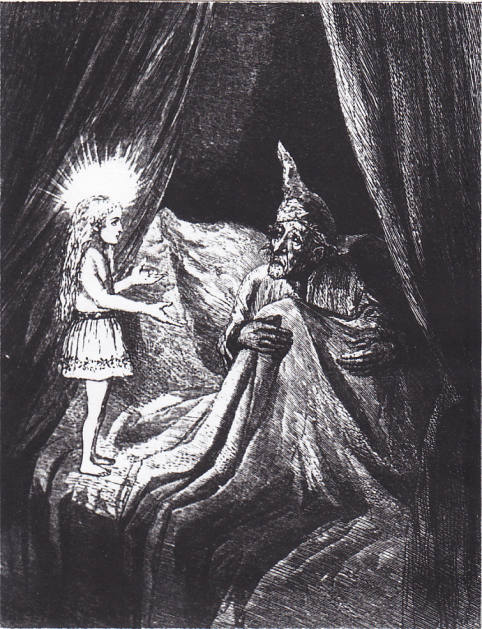
Image credit: Sol Eytinge, Jr., The Ghost of Christmas Past. Public domain via Wikimedia Commons

As influential as Charles Dickens’ A Christmas Carol is, late capitalism simply doesn’t get  the message.  Studies show, consistently, that work in this era is more efficient when workers have more time off.  Now, I’m not so naive as to realize that some professions require work on holidays.  After all, I trained for ministry for many years, and Christmas is always a work day in that profession (even if nobody comes to church).  Emergency workers of all sorts have to be at least on call for holidays.  Police can’t assume citizens will behave just because it’s a holiday.  But such professions, I profoundly hope, have other payoffs.  I entered a profession (professoring) partially because of the division of time.  (And it is one of the few things I’m very good at.)  People should have fallow periods.  Why is Christmas Eve still a work day?

Scrooge is clearly still in charge.  I, for one, will not shed a tear when capitalism dies.  I’ll predecease it, I’m pretty sure, but even so, I welcome a world where people’s needs come before the plutocrats’ profits.  A friend of mine always insists on saying that we don’t live in a democracy but a plutocracy.  Seeing the election results last month only confirms that he’s right.  As I recently wrote here on this blog, the howling is most fierce before the new dawn.  And lasting change must take place slowly.  Sudden shifts only lead to more sudden shifts.  Stable growth is slow.  I’m sure influential people don’t read this blog, the humble musings of an unfluencer, but if they do, there’s a simple plea here.  Consider the holidays.  Read Dickens, and have the courage of your convictions afterwards.  And yes, a blog post (unpaid) will appear on Christmas.


Philosophical Thoughts

Please don’t read too much into this!  I read a lot of professors who spend their careers trying to understand a previous scholar’s thoughts.  I suspect this happens quite a lot in philosophy, but it fits pretty well in religious studies also.  And I wonder, what of those intellectuals where were grappling with pure ideas?  Did they know they’d become adjectival?  In other words, did Immanuel Kant know that he was Kantian?  Or was he just writing stuff, trying to explain how he understood being in the world?  Now scholars dedicate themselves to understanding Kant.  Or in more recent times, Derrida, Lacan, and Bakhtin, or whoever’s the flavor of the day.  The ones who were too busy being Derrida, Lacan, and Bakhtin to figure out what someone else was saying about things just wrote.

Image credit: Portrait of Immanuel Kant by Johann Gottlieb Becker, 1768, public domain via Wikimedia Commons

I often wonder about how higher education has shifted the way we do scholarship.  It’s not really a place to test out ideas that the world can evaluate, but more a place where specialists can discuss possibilities and what someone else might’ve thought of something.  I guess that’s why I tend to think of my last four books as being non-academic.  I’m not using the tired formula of reacting against what some theorist has said about my subject.  I’m simply observing and drawing inferences.  Maybe it’s because I wasn’t raised in an academic environment.  I remember reading Nietzsche for the first time.  How he didn’t footnote.  How he didn’t argue against what some prominent others had said.  He simply wrote.  And he did so brilliantly.

Perhaps it’s yet another example of having been born early enough.  Tech has made it remarkably easy (for those without families to feed) to become writers.  No agent or editor required.  And things like Book-Tok can make those who publish outside the Big Five famous.  What would Kant have done?  That’s a nice Kantian question.  In fact, the whole reason I began this post was that I’d run across James C. Taylor’s A New Porcine History of Philosophy and Religion on my shelves.  Just seeing it reminded me of the Kantian pig refusing to lie to an axe-wielding maniac.  That got me to thinking of Kant and what it must’ve been like to see him being Kantian.  I’m no expert.  I took a lot of courses in philosophy and religion back in the day, but I have a book about philosophical/religious pigs on my shelf.  Somehow I suspect Kant wouldn’t have appreciated his page in this book, even though it gave me philosophical thoughts to start the day.


Academic Publishing

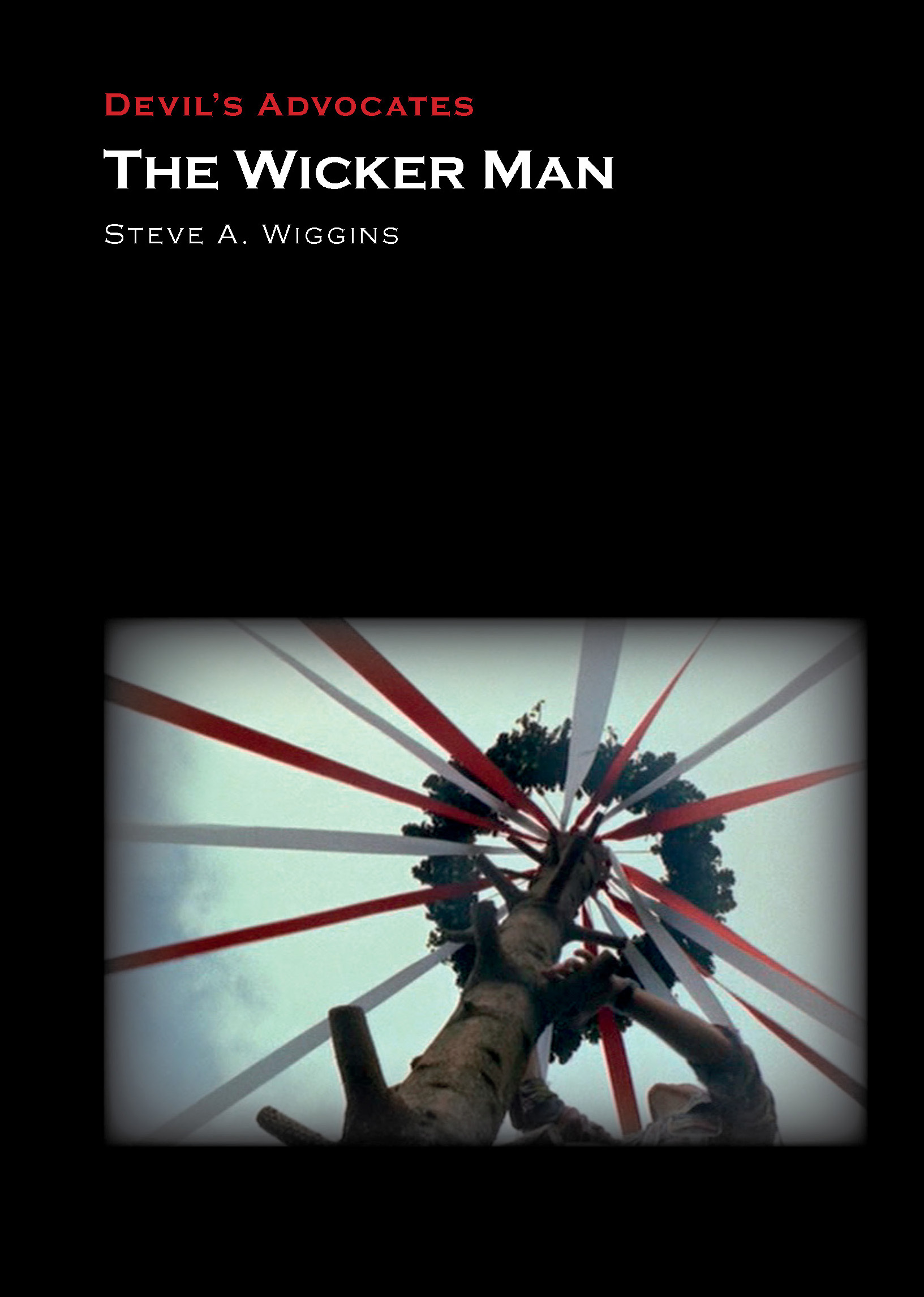
I had lunch with a friend a couple months back.  He is one of the few people who’s read The Wicker Man (the Devil’s Advocate version).  Not many reviews appeared and no royalties at all have yet followed its publication.  The funny thing is, when I search for reviews I notice that the book is “for sale” on far more websites than copies actually sold (I’m assuming).  You see, one of the best-kept secrets in publishing (both trade and academic) is the number of copies sold.  Publishers are terrified of poachers after their authors, and don’t advertise actual sales figures.  For an author only the royalty statements reveal just how many (or few) copies ever made it to the hands of potential readers.  We’re all adults here; we know that not every book purchased is read.  I do wonder if there has been any interest in this little book at all.

My friend actually went and watched the movie because of my modest little book.  The film The Wicker Man is widely known in certain circles, but it is still a movie with a cult following.  Horror fans know it, of course, with some declaring loudly that it’s not horror.  It gets referenced all the time in more mainstream media.  I occasionally read quirky little books like Your Guide to Not Getting Murdered in a Quaint English Village.  I wasn’t surprised to see The Wicker Man (the movie) referenced there.  As I discuss in the book, it’s even the subject of a Radiohead video for their song “Burn the Witch.”  Beyond a few academics, however, nobody’s really interested.

My friend suggested a topic for a new book for me to write.  I didn’t have the heart to tell him that, barring a teaching post coming my way, I’ve given up writing books for academic presses.  I’m pleased McFarland accepted Sleepy Hollow as American Myth, but the crude cost-benefit analysis that I do tells me writing books for academic presses, without library access, is always a money-losing venture.  Remember those old Guiness Book of World Records paperbacks?  I recall seeing, as a child, the least successful author listed.  Of course I don’t remember his name.  I now know that at least that record hasn’t been broken.  Not officially, but when books cost so much to write… Academic publishers are facing hard times but I don’t see the wisdom in pricing your books so that nobody can afford them, just to scrape in a few university library sales.  Not to sound as mercenary as a Hessian, but what’s in it for me?  Certainly not tenure or groundskeeper Willie’s retirement grease.  I’m not paid like a professor. Right now, though, I’m wondering if maybe I’ve broken that record after all.


Those Who Know

I felt a little bit odd being asked.  A local school invited me to be consulted on classroom decoration.  I took a total of one class in interior design as an undergrad and that hadn’t been my highest collegiate grade.  So why were they asking me, of all people?  Let me put this into context for you.  It was in Wisconsin.  I’d been the Academic Dean at Nashotah House for a few years and had served for a few on the Parent Teacher Organization, one as president.  While at Nashotah I’d been tasked with making the three classrooms more appealing—choosing paint colors and replacing drapes that had been falling off their hooks since I’d arrived a decade ago.  But I believe the real reason that I was asked for a consultation was that I was a professor.  Yes, a professor of Hebrew Bible, but a professor nonetheless.

Such requests, no matter how mundane, ceased immediately when I had to take a job in publishing.  People don’t turn to an editor as an expert.  (Not even most academic authors—trust me on that.)  We like to put people in neat categories.  Boxes.  Professors are smart, so when we need advice we seek them out.  Whether or not they know anything about the topic.  I was even assigned to teach accredited courses in fields that I’d never studied.  It was a heady feeling, I have to admit, being treated like my position qualified me to speak on “ships and sails and sealing wax” and everyone listened.  What has always struck me as odd is how abruptly this stopped.  Even among church folk.

When I was teaching I was frequently asked to address adult education classes on Sunday mornings.  I had arcane knowledge that priests and ministers wanted me to share.  Once I began working as an editor I had someone from a church in Princeton contact me to ask if I could recommend someone else to do such a course.  They were somewhat taken aback when I suggested that I had some expertise in the area.  I’ve even had other academics, in the same field in which I taught, react with total surprise that I know something about the discipline.  I have a sneaking suspicion that the ease of categorizing people has been substituted for actually getting to know someone.  It’s easier to call, or email, the local university—or even, in my experience, a small, obscure seminary—to find the expert you want to consult.  You’d like to think that we might be able to ponder a little more deeply.  But trust me, you don’t want to ask me about interior design.


Mind the Gap

One of the general rules for writers is not to engage in too many platforms on social media.  There are a few reasons for this advice, the largest one being time.  Social media can easily become a time sink.  And time on social media is time not spent in writing.  Another reason, also related to time, is that becoming proficient in various platforms takes time.  And again, time spent on social media…  This has been on my mind because when people find me on various media they sometimes (not often) want to engage in discussion.  They often don’t use email.  They want me to join their favorite app or platform, and that’s where conversation breaks down.  I don’t use many platforms.  Those that I do use I do sparingly.  I’m still on Twitter, but I’m trying to move that following to Bluesky.  (I’m glad for followers/friends there!)  And I’m on Facebook, but I only check it once a day.

I don’t do this to be difficult.  I work 9-2-5 and after that I’m too exhausted to learn new platforms.  The first hours of the day (and it starts early for me) are spent writing.  There’s simply no more time for additional platforms.  The largest culprit is Academia.edu.  I suppose that’s because much of my pre-horror work is posted there.  People want to discuss it, but on their terms.  The thing about producing content—whether for this blog or for YouTube—is that it takes time.  And I’m just a working slob.  Those folks you see doing this professionally (there are professional bloggers and vloggers and podcasters) are paid for what they do.  Some of us rely on a full-time job for that.

Most of the people who reach out want me on a chat platform.  I prefer not to chat.  Or text.  Long-form writing has less opportunity for creating misunderstandings.  If you can’t take the time to say what you really mean, thoughtfully, doesn’t that open the door to hastily scrawled, easily misunderstood comments?  Communication breaks down.  I’m very flattered people are discovering my work.  I’ve been at this for decades now.  Like anyone who researches and writes, I’m very happy to learn someone, anyone is interested.  I’ll respond briefly on Facebook, and more fully to a comment on this actual blog.  Email is probably the best way to converse without devolving into mere chat.  I seldom use my phone, so all I humbly request is to meet me where I am.  I’ll get back to you, but I prefer long-form.  Tell me what’s on your mind.

Photo by LUM3N on Unsplash

Being Somebody

I am deeply honored, and a little puzzled, to have been recently selected to appear in Marquis Who’s Who.  It came out of nowhere. (Actually, LinkedIn.) As far as I can determine, inductees are chosen for having an impact.  In my case that means having stuck with it for so long—about 15 years of being a professor, 15 years of being an editor, and 15 years as a blogger (with some overlaps).  I’ve not seen the bio that will appear, but I suspect it will say little of my fiction writing, but it may mention the nonfiction books I’ve had published.  From my perspective—and I told the interviewer this—my life has been a long series of struggles and not giving up.  When you’re raised in difficult circumstances the temptation to give up is all around.  But I would be disingenuous if I didn’t point out that my siblings also pushed through as well, and I’m proud of who they’ve become. Three of them are over sixty.  Maybe Who’s Who should be a family thing.

All of us depend on those around us.  Although I tend to work alone—my blog, my books, most of my YouTube videos, these things I do largely by myself—I have the support of my family, both birth and marriage branches.  I have friends, the vast majority of them remote and seldom seen.  They support me in quieter ways and if you’re one of them, you know who you are.  Nashotah House, it is true, discarded me like a used diaper.  They also, however, gave me my professional start.  I was also tossed aside by the University of Wisconsin Oshkosh, Gorgias Press, Rutgers University, and Routledge, all in their own ways and for their own reasons.  I would not be who I am, however, were it not for all of them.

I don’t mean for this post to sound like I’ve just received an Emmy or anything, but the situation has made me quite reflective. And humbled.  I work hard, and I have worked and struggled for many decades now.  I’ve received very few awards along the way, so this is like a bolt from the blue.  I doubt it will make any difference in my day-to-day existence.  I still work 9-2-5, struggle to meet unexpected expenses, and write.  Always write.  But being chosen is a rare feeling for me.  I suspect that’s true for most people who are, like me, just trying to get by with what they’ve got. We get by.  We face four rough years ahead, but we’ll get through them, because we’re all in this together.  Everybody’s somebody who deserves the notice of others.


Dark Academia

Dark academia is the new gothic.  It’s all the rage on the internet, as I found out by releasing a YouTube video on the topic that quickly became my most popular.  Still, I was surprised and flattered when Rent. asked me my opinion on the dark academia aesthetic.  You should check out their article here.  What drew me to dark academia is having lived it.  Although the conservatism often rubbed me the wrong way, Nashotah House was a gothic institution with skeletons in closets and ghosts in the corridors.  Tales of hauntings were rife and something about living on a campus isolated from civilization lends itself to abuses.  An on-campus cemetery.  Even the focus on chapel and confession of sins implied much had to be forgiven.  The things we do to each other in the name of a “pure” theology.  Lives wrecked.  And then hidden.

I entered all of this naive and with the eagerness of a puppy.  I was Episcopalian and I had attended the pensive and powerful masses at the Church of the Advent on Beacon Hill in Boston.  I was open to the mystery and possibilities even as I could see the danger in the dogmatic stares of the trustees.  It was a wooded campus on the shores of a small lake.  A lake upon which, after I left, one of the professors drowned in a sudden windstorm.  I awoke during thunderstorms so fierce that I was certain the stone walls of the Fort would not hold up.  Disused chapels full of dead black flies.  Secret meetings to remove those who wouldn’t lock step.  This was the stuff of a P. D. James novel.  Students at the time even called it Hogwarts.  They decided I was the master of Ravenclaw.

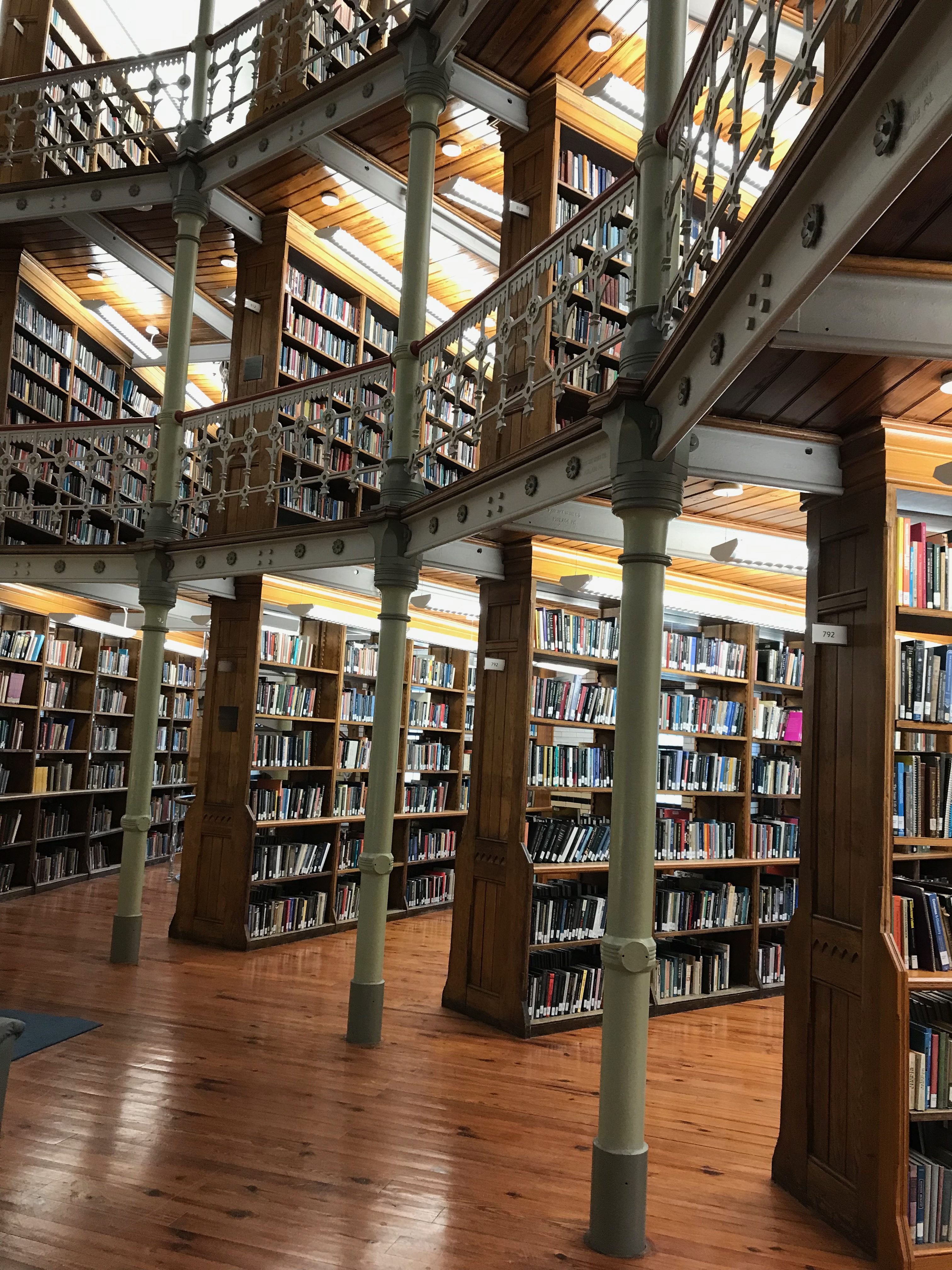
Fourteen years of my life were spent there.  I worked away at research and writing in my book-lined study painted burgundy.  Is it any wonder that I find dark academia compelling?  I’ve often written, when discussing horror films on this blog, that gothic stories are my favorites.  Even the modern research university can participate.  Professors, isolated and often unaware of what’s happening outside their specializations, still prefer print books and a nice chair in which to read them.  And, of course, I’d read for my doctorate in Edinburgh, one of the gothic capitals of Europe.   Even Grove City College had its share of dark corners and well-kept secrets.  What goes on in that rarified atmosphere known as a college campus?  The possibilities are endless.  On a stormy night you can feel it in your very soul.

That article again: Dark Academia Room Decor: Aesthetic Secrets Revealed


Prophetic Cookie?

I have no idea if they really exist in China, but the Chinese fortune cookie is ubiquitous in the United States.  I’m assuming that China isn’t tracking them to know where Americans eat, but I do often wonder about what’s inside.  Many years ago I noticed that the “fortune” aspect had dropped out.  Predictions weren’t made any more and your typical cookie had an anodyne, but sometimes witty reflection in it.  They might’ve been called “aphorism cookies.”  Well, that all changed for me after a meal that included said cookies.  I was surprised to see an actual prediction, and, not only that, but one that was strangely apt.  It reads, “You will make important academic connections in March.”  Considering that academics make up a minuscule part of the population, that seems oddly specific, doesn’t it?  And with a date—March.  This differs qualitatively from “Leadership is action, not position.”

There are other future-oriented prophecies in cookies, of course.  “You will become known for your generosity.”  (Gee, that’s nice.)  Or “A short vacation is in order for you.”  But I’ve decided to hang onto this academic fortune to see if it might come true.  I do have many, many academic connections, of course.  That’s part of my job.  And I was an academic myself in my palmier days.  But what seems strange to me is that many people reading “academic” in a fortune would automatically dismiss it, I suspect.  An important academic connection, no less.  Knowing a professor, from my experience, often doesn’t help in getting you anywhere.  I value their friendships, of course, but it hasn’t sold more books.  Or got me that teaching job I still covet.

Will the cookie prevail where other measures have fallen short?  I have to wait a few months to find out.  And more importantly, I have to remember this fortune.  I can, I suppose, put it on my bulletin board amid the Sleepy Hollow and other mementos and hope that half a year from now that I’ll recollect this little post, and that little cookie.  Of course, if someone offers me a job at a local college in March I’ll consider the deal sealed—the cookie was wise.  If nothing apparently happens, however, I’ll still have to wait beyond that to see if something emerges from my many daily interactions with academics.  Maybe one of them will truly be listening.  That’s the thing about predictions—they’re as much interpretation as they are prognostication.


The Publishing Self

One of the things I noticed while researching Sleepy Hollow as American Myth was that many resources on the legend were buried in self-published editions of the “book” itself.  And other material about the legend was from self-published sources.  This lack of serious attention was behind my writing of the book.  Clearly the story is an integral part of American Halloween and Halloween is a big business.  Why aren’t mainstream publishers interested?  (I tried several agents but nobody seemed terribly drawn to the project.)  In any case, my thoughts today are about self-publishing.  Some of these self-published books aren’t even listed on Amazon, which is pretty amazing.  I even found one that apparently lacks an ISBN!  The author’s website (the only place it can be purchased) lists it as out of stock.  Self-publishing must require vigilance in order to be a way to make a living.

The profits from self-publishing are likely better than publishing with an academic press.  (Unless, of course, you’re given the rare trade treatment.)  If you’ve ever tried to find a publisher, the urge to self-publish is understandable.  The publishing world tends to be cliquish.  The same names keep coming up time and again.  If you’re friends with one of them, well, you can get in the door.  And mainstream publishing, surprisingly, doesn’t really like new ideas.  Most publishers prefer to keep on acquiring titles in the vein of one of their successes.  “More like this,” you can imagine them saying in their sleep.  New ideas are untested and may flop.  Bestselling authors seldom flop and those who imitate them often get a seat at the table.  The rest are left to self-publishing, or perhaps academic publishing.

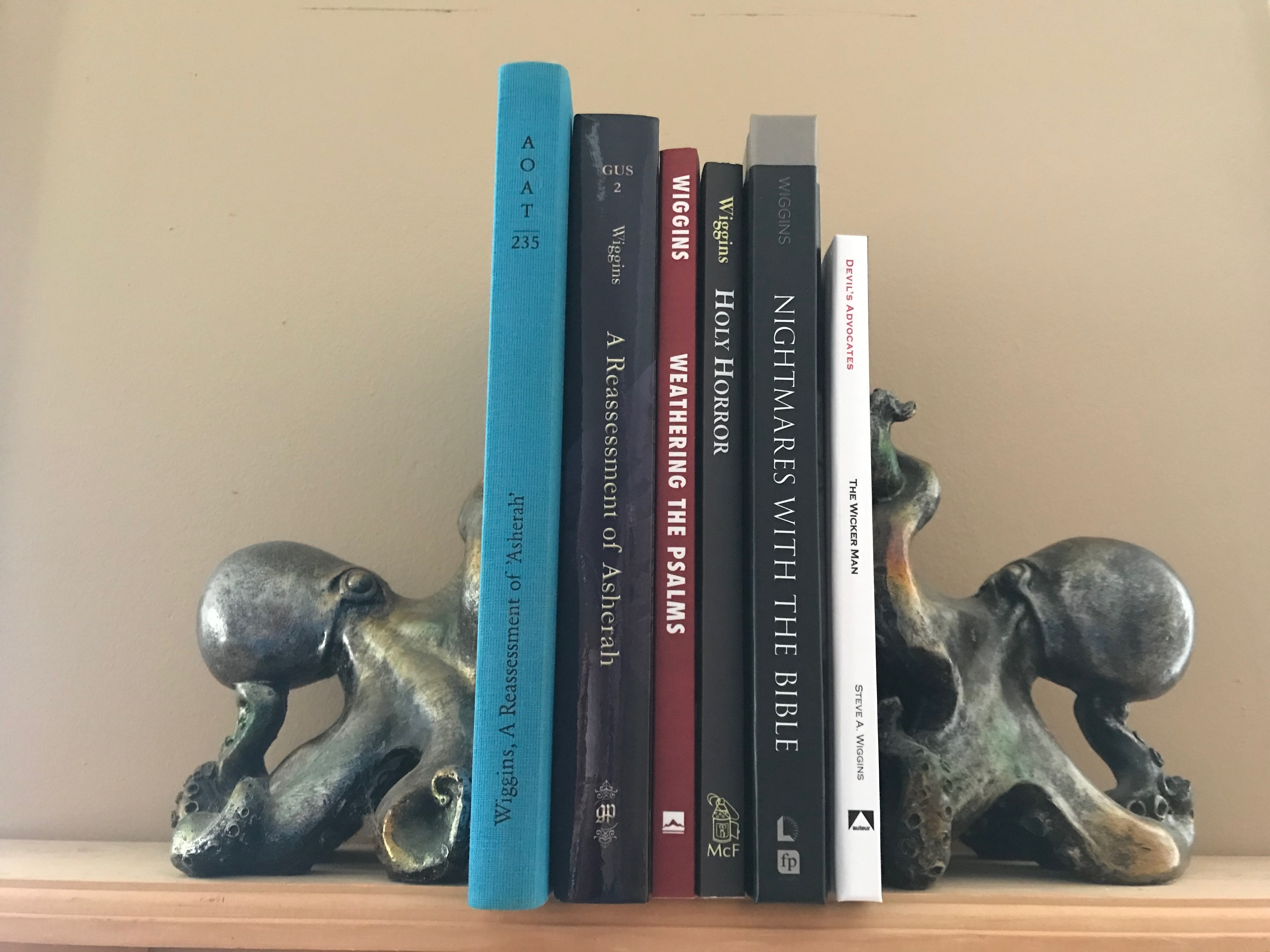
I’ve read many self-published books and most of them have led to disappointment.  You see, a book is better if someone reacts against it.  The problem in mainstream publishing is the reaction against is generally a rejection and that means even if you improve you still have to publish yourself.  I was sorely tempted to self-publish a book before Holy Horror.  Having found a publisher for that book somewhat painlessly (the agents weren’t impressed with it either), led me to keep on going.  Nightmares with the Bible and The Wicker Man were both series books, so again, fairly straightforward.  Sleepy Hollow as American Myth followed the track of Holy Horror.  Written not for a series, I tried to find an agent, failed, and again turned to McFarland.  At least they’ll publish it in paperback.  I’m still discovering self-published books on Sleepy Hollow that I missed in the writing of my book.  For all its faults, academic publishing at least generally offers a good bibliography.


Dictionary Dreams

“Lord, now lettest thou thy servant depart in peace.”  Thus begins the venerated Nunc dimittis, familiar from so many years of chanting evensong at Nashotah House.  It comes to mind when I’ve reached a milestone I never dreamed of attaining.  One that makes me feel as if I’ve accomplished my life’s work.  Strangely, it didn’t occur when my name ended up in a study Bible’s front matter.  But a friend recently sent me a note that immediately brought old Simeon’s words to mind.  I have been cited in the Oxford English Dictionary.  My book Weathering the Psalms is quoted (in the web version) under “simile.”  I have no idea how examples are selected for the OED.  It used to be scraps of paper sent in by astute readers, but I suspect things have changed.  How my obscure book ended up there, I haven’t a clue.

There’s an irony here as well.  Like most academics clueless about publication, I initially proposed Weathering the Psalms to Oxford University Press, assuming they published such things.  It was turned down on the basis of a reviewer—one or two I know not—that I later met at a social function, where he was clearly embarrassed.  I really just wonder how the OED found the book to cite in the first place.  In terms of copies sold, it has been my most successful book, but that’s not saying much.  As far as I can tell, it’s only sold less than 400 copies (the royalty statements don’t have the total and I haven’t received a check in years).  I guess all things in the world are connected, whether we notice it or not.

Those who know me personally are aware that validation is a huge thing for me.  I suspect that is true of most people who grew up in difficult circumstances and who managed—and this is never a certain thing—to pull themselves out.  Having been fired from my long-term teaching post (where I was working on this book) only made me want to prove myself more, I guess.  Insignificant things like getting a Choice review for one of my books (which continues to sell poorly) and having that behemoth of a dictionary notice that I used a fairly common word in a fairly common way do tend to release the endorphins.  It’s like maybe someone noticed that I’ve passed this way.  Maybe there was a reason for trying to capture the Wisconsin thunderstorms in a book about the Psalms.  Maybe there’s a reason each working day there concluded with the Nunc dimittis.


Second One

Twice in a week.  I heard (actually read) a term I’d never encountered before.  It’s one of those rare beasts—an “academic meme.”  It means nothing to most normal citizens, but it has already achieved currency in academia and on various web platforms.  What is it?  “Reviewer 2.”  Or “Reader 2.”  If that means nothing to you, you’re normal.  If you wonder, however, what this is about, read on.  (Since my posts average two readers, it seems, this is an appropriate topic.)  When universities and/or editors do their jobs, they rely on peer review.  The idea is simple enough—two recognized experts (sometimes three or more) are asked to read a dissertation, an article, or a proposed book.  They then provide their opinion.  “Reader 2” (or “Reviewer 2”) has become shorthand for the one that torpedos a project.

Getting academics to agree on anything is like the proverbial herding of cats.  Academics tend to be free thinkers and strongly individualized.  (Perhaps neurodivergent.)  I know from my nearly fifteen years of experience that the most common results when you have two reviewers is two different opinions.  Often polar opposite ones at that.  One suggestion for the origin of “Reader 2” is that some editors, or dissertation committees, wanting to spare an author’s feelings, put the positive review first, followed by dreaded “Reader 2.”  Others suggest that it’s just a meme and that over time (internet speed) the meme came to mean “Reviewer 2” was harsh and mean spirited.  The thing is, once a meme is out there it’s difficult to stop.  Now, apparently, a generation has made “Reader 2,” well, a thing.

This has been floating around for a while, apparently.  I only heard it recently and it occurred to me that I’m missing out in the new academia mystique that the internet has created.  My most popular YouTube video is one I did on “dark academia.”  I wasn’t aware this is a hot topic among the internet generation.  There is a good dose of the unknown regarding what goes on within those ivory towers where the majority of people never go.  My own experience of academia was gothic, as I explain in that video.  I have a follow-up ready to record, but outside academe finding time with a 9-2-5 and a lawn that needs mowing and weeds that just won’t stop growing, well, that’s my excuse.  Whether it’s valid or not will depend upon your assessment, my two readers.


Unique?

Is it embarrassing, or simply confirmation?  It used to be considered embarrassing to show up at an event dressed identically to someone else, if it wasn’t intentional.  It was considered, in some way, a slight on your personal expression.  This happened to me while still commuting when another employee and I had worn a very similar shirt for an event at work.  (He was more embarrassed than I was, for the record.)  What often feels more embarrassing to me is when I notice something I’ve never seen anybody else write about, get it all written up, and then discover that someone posted something similar on the internet someplace.  It has happened more than once—indeed, many times.  I feel embarrassed for not having known about the observation, no matter in how an obscure virtual a corner it was kept.

Perhaps these are just growing pains for the terminally curious.  Some of us constantly observe things we find curious, and start to connect the dots.  Someone else might’ve gone over this conundrum before, the way you pick up a waiting room magazine only to find the crossword puzzle already done.  What gives me hope in such circumstances are twofold facts: that someone else has spotted this confirms my observations, and that my interpretation is different from theirs.  My great fear, however, is that someone might think I’ve plagiarized.  This is a mortal sin for academics.  I would simply note that many of us read lots of stuff without noting where, and that I would remember if I intentionally lifted an idea from something somebody else pointed out.

I’m sure there are many examples of this on this blog.  Apart from posts that reflect an experience unique to yours truly, that is.  It’s getting tricky to say anything that hasn’t been said.  A recent newsworthy event occurred that called for comment from someone with my background.  By the time I’d scrawled a first sentence about it, others had written, and posted, full articles conveying what I would’ve had to say about the thing.  Embarrassing.  It has also made publishing much harder.  Even small, independent publishers in the non-academic sector only consider books sent from agents.  And agents are nothing if not aloof.  Too many submissions from too many wannabes.  Is there anything unusual, remarkable, here at all?  I’d say it’s my perspective.  Others can string words together.  Others can even buy the same cheap shirt that I purchase.  But they don’t see it from my angle.  Of that I’m certain.  Ask anybody else who’s made a similar observation.  They’ll confirm it.


Is That Cookie Free?

I offer free editorial advice here, from time to time.  Not many academics, I expect, pay any notice—what have they to learn from a mere editor?  Still, it’s a public service, so here goes.  It really pays to do your research.  I don’t mean about the topic of your book, but research into what publishing is and how it works.  Some authors, for example, think that if they pay an Open Access fee their book will get bells and whistles that other mere monographs won’t.  They underestimate how much it costs to print a book, especially when they’ve already undercut their own sales by making it available for free online.  There some basic business sense lacking here.  There’s a free cookie but then there’s also giving away the whole box.  Who’s going to buy what’s free?  (There are good reasons for Open Access publishing, but wishing for special favors isn’t one of them.)

I make no claims to be some kind of publishing guru.  I tend to think of myself as a guy who got lost along the way, career-wise.  But I’ve learned that I wish I’d known more about publishing when I was teaching.  I see the same rookie mistakes over and over and over again, made even by senior scholars sometimes.  I remember, however, when I was teaching.  It never even occurred to me to find out anything about publishing.  In the academic’s eyes, publishers are there to serve up what researchers discover.  To a point that’s true, but publishers vary quite widely in their tolerance for the purely academic exercise.  You see, you actually have to sell books to stay in business, and if your research to too obscure, well, I guess you could try to find some Open Access funding.

One of the things that amazes me about the biz is just how many academics assume that editors are menial workers in the larger enterprise of getting their important ideas in print.  My time in publishing has been an education in itself.  I may not have time to keep up with Ancient West Asian studies anymore (the draw is still there, but it’s a terribly expensive habit).  Horror’s a bit easier to handle since you really have only about two centuries to cover, rather than four millennia.  But I can’t help but muse on what a missed opportunity presents itself when a free cookie is passed up.  It’s far easier to stay wrapped in that academic shell than it is to try to break out and discover what is freely offered.  Strange how the world works sometimes. Have a cookie…