God, As a Hobby

Just as I was awaking from a night of loud fireworks and multicultural bonhomie, my wife showed me a full-page ad in the New Jersey Star-Ledger. A red, white, and blue page entitled “In God We Trust,” the ad wants nothing more than to convert the nation to conservative Christianity. It is sponsored by Hobby Lobby after all. Dividing the quotes that spangle the page into “Founding Fathers,” “Presidents,” “Supreme Court Justices,” “Supreme Court Rulings,” “Congress,” “Education,” and “Foreign Opinion,” prooftexted quotes are given inadvertently showing by their grasping nature that America is a godly country. The Hobby Lobby is not known for its critical reading of either Scripture or history. George Washington, Thomas Jefferson, and Benjamin Franklin, Deists all, are quoted at the height of their rhetoric, making it seem as if they were evangelicals out to build a Christian nation.

new doc 10_1

When I was growing up, there were no Hobby Lobby stores in my area. Although I was a religious child, I would have found it a bit odd that hobbyists were not focusing all their attention on the weighty matter of eternity. Instead, making money seems to be the name of the game, and once you’re comfortably over-compensated the Lobby part of the name comes to play and God reenters the picture. We all know that the Hobbyists wish to have the Bible right next to the capital, if they can’t get it prominently placed in the Oval Office. Policy (the ad cites all three branches of government, as well as education) should be based on the Bible, although we think of ourselves as a land of opportunity. Opportunity for whom?

Starting with a quote ripped from the context of Psalm 33 (“blessed is the nation whose God is the Lord”), the ad doesn’t exegete this at all. Nationalism as we know it did not exist when this Psalm was penned. The author had what would become Judaism in mind, not evangelical Christianity. But then, appropriation of other peoples’ pasts is kind of a hobby. Pick and choose. Take what you find attractive and leave the rest behind. It works for history as well as for the Bible. After all, it doesn’t take historical probity to lobby the government. All that’s required is a surfeit of money. And the best way to achieve that, it seems, is to take up a hobby rather than trying to think through the issues with a mind honed by a solid education in Bible and history.



Only Takes a Spark

Fireworks have been the main event for Independence Day celebrations ever since I was a child. The fourth of July is a day for playing with fire. As a child I remember spending the meager allowance I had on sparklers and snakes. I haven’t seen one of those ash snakes for decades now, but the impression they made remains strong. A plug of some kind of carbonish material—you’d light the top with a match and it would flame and hiss and start to grow into a long, twisting exoskeleton of ash. They left a blackened circle on the sidewalk, and when they were cool enough you could try to lift the fragile snake in your hand, but it almost always broke apart before blowing away in the breeze. We also wasted our money on smoke bombs with their multi-colored smoke, but we never had actual firecrackers. Given the trouble we could make with an ordinary roll of caps, that was probably a wise decision on our mother’s part. All of this, however, was just a prelude to the fireworks.

As I sat under a cloudy sky last night wondering why every July fourth seems to rain, it occurred to me that fireworks are a violent form of celebration. Indeed, they are designed to imitate the sounds of battle—before the nuclear age—and we all know the thrill of when the loud, bright burst of pure light sends a shock wave through you. It is like a canon rocking your soul. Like many stirring experiences, fireworks had religious overtones from the beginning. Invented in China, fireworks were used for religious festivals. They were believed to be effective at driving away evil spirits and bring good fortune. Pyrotechnics, however, clearly have military applications as well. It is this strange nexus between religion and violence that makes, I suspect, fireworks displays so compelling.

IMG_2287

The local display here in Somerset County, New Jersey, was impressive for a region without large cities. I couldn’t help pondering the strange aesthetics of contained violence as the colorful explosions took place over my head. Illusions, I know. We always talk afterward about whether some of them are meant to represent anything. Did you see a smiley face, the United States, or even New Jersey? It depends on your angle of view. Is this a religious display or a celebration of violence? Looking around at the amazing diversity of peoples gathered here in this park with me, I feel strangely satisfied. I hear languages I don’t understand, and see people from all over the world here for a good show. Although thousands of us try to get to our cars at the same time, spirits are positive, for the most part, and all go home in a celebratory mood. Maybe the ancient Chinese were right and these pyrotechnics do drive away evil spirits after all.


High Places, NJ

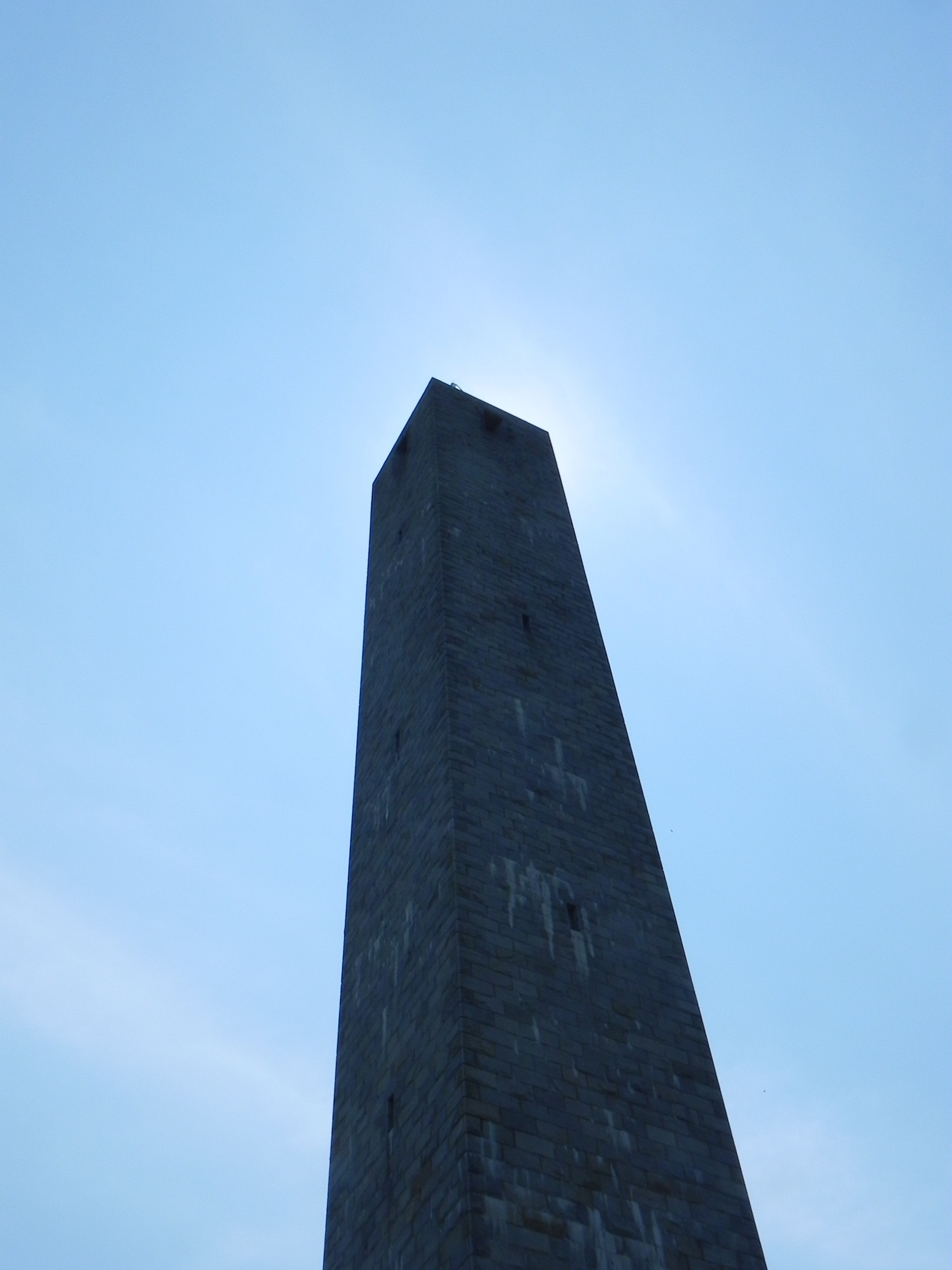
The “high place,” in the Hebrew Bible, was a source of constant vexation to the “orthodox.” Scholars have long puzzled over what was meant by the term, the assumption early on being that they were geographically the highest points around. Although that interpretation no longer holds the sway that it once did, the concept of the high place has remained. I suspect that’s because there’s something mystical about being at the highest point around. July 3 was a rare holiday for everyone in the family, so this year we headed to High Point State Park. High Point is the geographical highest point in the state of New Jersey, up near the New York border. It’s not as high as the mountains you might see in the western part of the country, but at the top there is a panorama that gives unbroken visibility in 360 degrees. Except for the tower.

DSCN5093

Towers are just as biblical as high places. They are very human and always contain at least a small element of hubris. Nature may have said thus far and no further, but we can go higher. And those of us with the inexorable will to climb, must go up. The view from the top isn’t very good since the windows are steamy and the mildew makes you a little leery of getting too close, but the climb is intensive, even for those used to stairs. Nevertheless, a kind of light-headed giddiness attends standing at a point higher than which you cannot go. I pulled out my altimeter to discover we were 1690 feet above sea level. In New Jersey you can’t get any higher. Were there angels up here? How close to Heaven were we? Towers are irresistible as the mythical builders of mythical Babel knew. And although we couldn’t see Manhattan from here, I knew that just across the river taller towers stand.

DSCN5109

One World Trade Center stands at a symbolic 1776 feet, higher than we were at the moment. It was, after all, the requisite holiday to celebrate independence that brought us here in the first place. The vistas that we could see, however, were relatively undeveloped, a rarity for the state of New Jersey. If we had the time, we might have been able to get out into nature itself instead of these structures that humans build to mask the fact of our own limitations. Maybe that’s what high places were all about in the first place. Every day I walk past the Empire State Building on my way to work. I can see it if I find an office with windows. Over my head up here, on the very top of New Jersey, I see a bird soaring. I think of Melville, and Ahab, and Manhattan. Slowly I begin my walk down to lower places.

DSCN5099


Father’s Day

DadI’m not completely stupid.  I know that the Father’s Day ads with which I’ve been peppered all month are nothing personal.  They’re intended to tug at the sentimental heartstrings and get me to spend some money on dear old Dad.  As one of the generation for whom computers were a new household commodity well after college was over, I know that I’m part of a fairly large demographic of middle-age users.  I do wonder, when I see these ads, how many other readers ponder the fact that their fathers have died and that Father’s Day is an occasion as much of mourning as it is of celebrating.  While I know, dear reader, that you’re not my therapist, my father died many years ago after a lifetime of separation from my brothers and me.  I can’t claim to have known him, except in unguarded moments looking into the mirror at the blue eyes he contributed to my genetic code, along with other aspects I can only imagine.
 
Father’s Day can, of course, be a day to honor the memory of, as well as buy things for, dad.  Holidays, however, aren’t really holidays without the changing of hands of lucre.  Although I never tried to think much about it, I never spent a Father’s Day with my father.  I know I’m not alone in this, but many are the days when I believe I would have benefited from a bit more instruction than I received on that front.  “Majoring in religion is not the best career choice,” might have been one of those nuggets I could’ve done with hearing.  The women in my family seemed  to think it was okay.  Even one of my dad’s ancestors was a clergyman.  I like to think that fathers might be able, in some cases, to see farther than their sons.  Call it male bonding.  Call it being a man in a post-patriarchal world.  Call it confusion.
 
I’m all for honoring parents.  I also tend to think people are basically good and that by far the majority of people try to do what they think is right.  They may not have much with which to work, but they try.  I can also think of better ways of honoring them than spending money.  Maybe we could try restructuring society so that those who start out with little might have resources available to move ahead.  If some father’s child has obvious gifts, might we not offer a way for that child to use them and thrive?  As a father myself, I can think of nothing that would make me happier than to see my child have better prospects than I’ve had.  Instead I see a society of one-percenters encouraging us to spend a bit more since, after all, fathers measure their worth in stuff.  The stuff that really matters, at least for this father, include those no longer here as well as those who are yet to inherit.


Work Weekend

It’s a Saturday and my wife’s at work. She’s worked five days already and will still be at work tomorrow. I’m lazing in bed until 5 a.m. when I hear the neighbor’s alarm clock from upstairs. An hour later I see him headed to his car, dressed for work. I think about the concept of weekend and how it apparently means nothing any more. Well, I’m not at work, so it must mean something, but it’s not what it used to be. Don’t get me wrong—when I was a professor I gladly worked through weekends. Indeed, I was working pretty much all the time. I was paid to be a thinker, and I can’t shut this thing in my head off. My current job, however, is a 9-to-5 with expectations of more, but not entailing any extra compensation. Overtime? You lucky one, you’re “exempt!” And don’t forget to take your laptop home, in case something comes up in the middle of the night. (I do read the timestamps on my emails.)

The weekend is a religious idea. Ideal, even. We have the biblical concept of the Sabbath to thank for our free Saturdays, when they come. Christian beliefs about resurrection to account for Sundays. Days originally set aside for worship. Time off work is worship now. When else will we get the laundry done? Groceries bought? Floors swept? I leave before six each day and arrive home near seven at night. To keep up my Manhattan lifestyle I have to awake before four and head to bed at eight. If I had an extra minute to access my memories I might think this a little odd. I used to have time to write books. Where did that go? Vacation time? You have to be at the airport two hours early so you can be frisked for a plane that’s inevitably late. You get five days off, and two will be spent traveling. Work waits for no one.

1912_Lawrence_Textile_Strike_1

I guess it’s no surprise that those who argue that we should abolish religion have jobs that either they love or that don’t require weekend hours. They have time to examine this gift horse minutely in the mouth. You know, we don’t have to have days off. In olden times, or even today on farms, the concept of a weekend is only academic. Those whose jobs are just work to keep an imprisoned soul in its weary body are, after all, expendable. Perhaps I’m just too weak. The occasional three-day weekend rejuvenates me to a degree that’s almost frightening. I wonder why we can’t add holy Fridays to our list of days to worship. There is a price to be paid for neglecting time to reflect. I can’t imagine Pharaohs and kings wanting to grant any more time off, however. We all know who we’re really working for, and it’s not the one who gave us our weekends in the first place.


The Land of Who?

“Parochial” is a name we small-town types dread. Growing up with television, which gave us a magical view into New York and California, as well as other cosmopolitan locales, we could easily feel the accusations of being small-minded and unsophisticated. Although I never wanted to move to the New York City area, I did decide to get away to Boston, then Europe, to be educated. I didn’t want anyone accusing me of being an intellectually challenged rustic, just because of where I happen to have been born. People around my home town, however, aren’t as closed minded as portrayed. Well, not always. You see, apart from conferences where some institution or corporation foots the bills for hotels, I tend to stay in more reasonably priced places when I travel. Even on the road I can’t sleep in, so I find myself chomping at the bit for the breakfast area to open in the morning. Sometimes I’m the first one there.

On a visit to my hometown in the not too distant past, I happened into a breakfast conversation in media res. A local back in town for a holiday weekend was vociferating his views in stentorian tones that could be heard down the hall. The television in the breakfast room, as always, was on. Apparently a story had been shown that teed this old-timer off. His daddy had been a local policeman and he just couldn’t understand why blacks were rioting about unfair treatment at the hands of the police. I cringed as I filled my coffee cup. “They ought to be gassing them and reading their rights later,” he lamented. An older couple, also returning to the area from their home in Baltimore, seemed to agree. I tried to find a corner out of earshot. Unsuccessfully. I could barely hold in my indignation. We were all Caucasian here—what did any of us know of racial profiling, deep-seated prejudice, or being prisoner in our own country? “Why don’t they just stay home?” he said. Home, ironically, of the free.

DSCN4676

I could see that he was elderly and afraid. The media—likely Fox news—had instilled a kind of terror in him that could only be assuaged by reliance on force. The world his daddy knew. I was also reared here. It was pretty much a white town, but some of my best friends growing up were the few African-American kids in my school. My small-town mother taught me not to judge anyone by the color of their skin. The hotel I’m staying in is run by an Indian family. The local stores now reveal a healthier mix than that in which I grew up. I wanted to tell this fellow parochial patron that we need not be afraid if we only seek justice. The region in which I grew up has become more homogenized, and I believe we’re all healthier for it. Until, however, civil rights are truly rights for all, we need to stand with those who’ve been clearly wronged, even if at personal cost. That’s something I learned growing up in this small town.


Mother for a Day

In a world set on tearing itself apart because of its differences, there is one thing every single person has in common. We all have a mother. In societies enamored of domination and competition, we take one day out of the year to stop and remember those who gave of themselves so that we could live. We place this day on a Sunday, the most passive of days when it will not interfere with regular business. We give chocolates, flowers, fruit-baskets, and then go back to the same usual grind come the next day. At the risk of gender stereotyping here, I do wonder how much wisdom we must miss by relegating our mothers to the background.

Growing up, we all know, is inevitable. We need to release ourselves “from the apron strings” and learn to cope in a hostile world. Not only do those overseas, different from us, wish us harm, but even our neighbors become our competitors and although friendly, we look for a way to find our advantage. Motherhood is a reminder that there is another way. Families, at least ideally, are built on cooperation. A willingness to set aside our own personal agenda for that of those for whom we care deeply. Used to be that the largest families (before family became a weapon used by religion) were those best placed to succeed. You had a set of people who shared a common mother, who united in a cooperative venture. Capitalism has little room for such a dynamic. It’s “each man for himself.”

Although churches around the country will mention mothers in their services today, Mother’s Day is a secular holiday. Hindus, Buddhists, Muslims, and Mormons all have mothers. Many religious groups, however, do not. Just last week some Roman Catholic women were ordained as priests here in New Jersey. Of course, the “mother church” disowned them, as priesthood is a male prerogative. Mother’s Day is not on the church calendar. It grew out of the Civil War with the sad realization that, left to their own devices, men will make wars that pit brothers against one another. Although I am stereotyping again, I have a hard time imagining a mother who would do such a thing. Mother’s Day should be an opportunity. Not only should we thank or remember our mothers, we should take to heart what motherhood means. I can’t help but believe the world would be a better place for it.

DSCN1941


Google Me This

Technology frequently flummoxes me. Although I use it daily, it changes more swiftly than I can hope to. Working for a British company, for example, my computer seems to be a loyalist. It supposes that it is in the United Kingdom even as it sits on my desk in New York. I’m told this has something to do with a mystical key called an “IP address.” When I search Amazon, prices come up in pounds. When I google something, I’m told that European laws restrict certain searches. And, interestingly, I discover that Google’s icons of the day have a British theme.

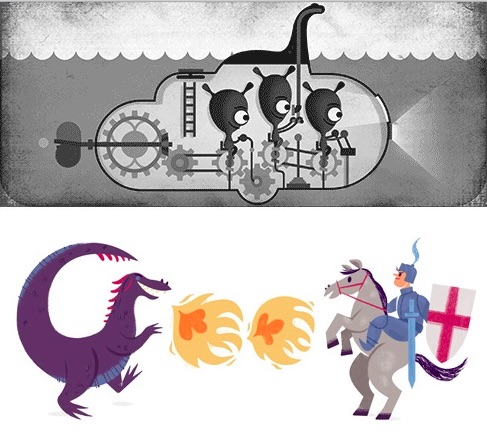
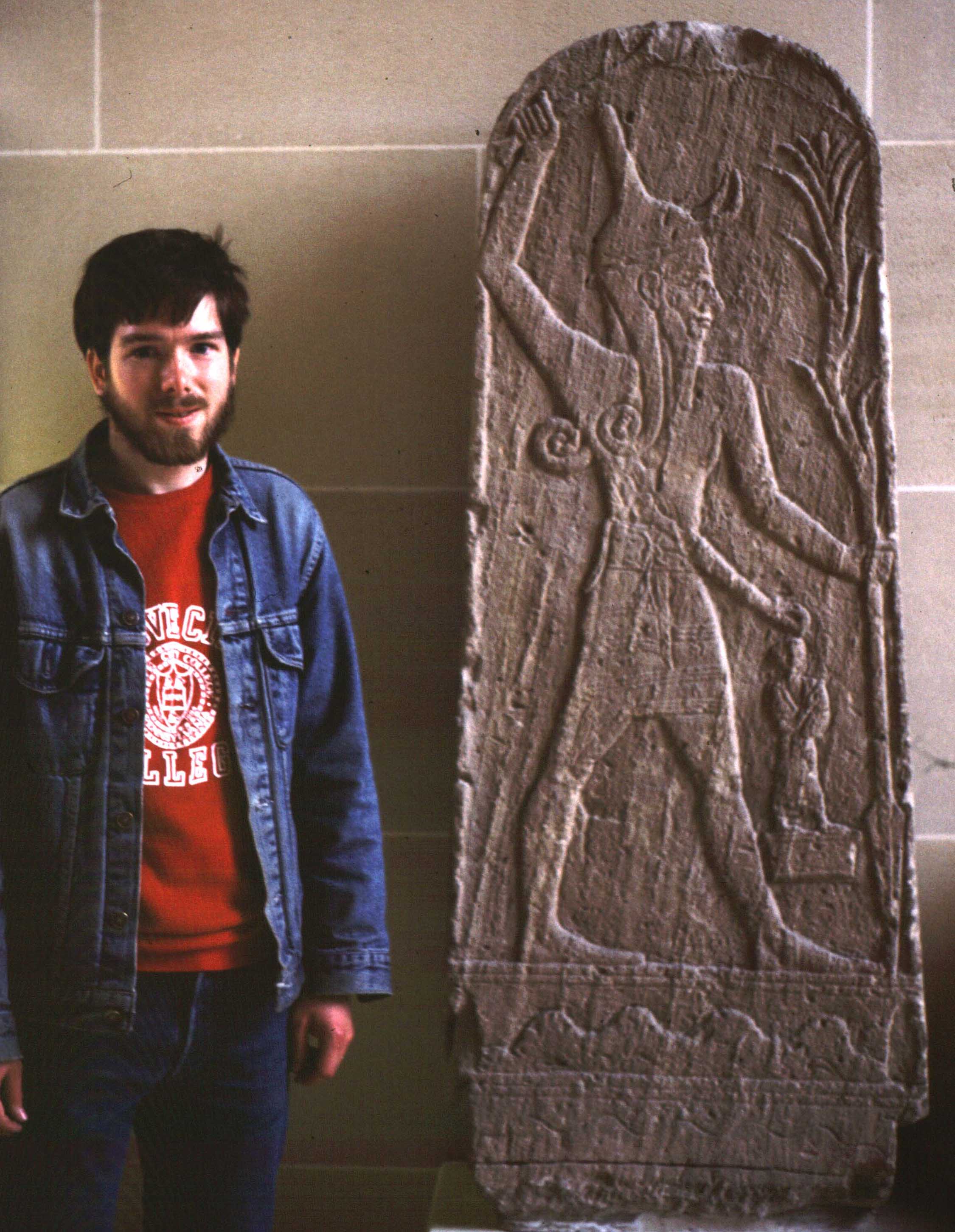
GoogleI’m assured Google is a fun place to work. One of those enlightened companies that believes reducing stress and increasing enjoyment of employees leads to good results. Were that all companies so enlightened. In any case, the famous Google logo is often decorated with a commemoration of the day. This past week, two such icons appeared on my UK searches. The first commemorated Nessie with something like the 81st year of her appearance. The icon puckishly showed Nessie to be a fake, a submarine actually piloted by aliens. Later that same week, on St. George’s Day, a dragon appeared on the icon. I began to wonder about this reptilian connection. If lake monsters are real, many make the claim that they must be plesiosaurs, their dinosaur cousins that most resemble them. St. George, clearly a character cut from the same cloth as Hadad, slays a dragon—an equally mysterious reptile.

We tend to associate dragons with evil, although in world mythology they appear equally as often as harbingers of good. Human interaction with reptiles has always been fraught. Somewhere along our evolutionary track we must’ve shared a common ancestor with them. Even today some responses, such as fight or flight, are referred to as those occurring in the “reptilian brain.” In Genesis 3 the serpent slithers in. According to Revelation, at the other end of the canon, the snake is still there at the end. It was only happenstance that Nessie and George’s unnamed monster appeared in the same week, I suppose. Nevertheless, there is a deep connection between them and us. We can’t seem to get away from them, even should we flee across the ocean.


Worth Saving

Once we speed past Easter/Passover, holidays start to fall by the wayside as we try to get back to the serious business of either finishing up school for the year or, in a more pedestrian view, just plain business. Holidays interrupt the flow. Break the continuity. Stop and start. That’s why those of us on the working end of the spectrum appreciate them so much. Nevertheless, what should be the most important sacred day of them all is just another work day. Today is Earth Day. Recognized by no major religion (what religion wants to shake the status quo of business that brings in lucre?), Earth Day is a chance to pause and think about the undermining that we dole out to our long-suffering planet. We are nearing the point, many scientists warn, where climate change will become unreversible. We’ve had years, indeed, decades of lead time, during which the wealthiest nation in the world has been digging the grave the fastest. Even the popular media has been sending its subtle hints: anybody wonder why flood stories predominate in this climate? Think about it.

Reading books about environmental degradation is a depressing exercise. The size of the task is overwhelming and we’ve lost the ability even to reach our own government officials who are nevertheless impotent before big business. We can try to plant a tree, pick up trash, or recycle our plastics, but the destruction is taking place on an industrial scale. Ironically, as we go about making our own planet uninhabitable, scientists are beginning to believe that there is life on other planets. Some of us have suspected that all along. And if they come here that must mean we have something worth preserving. My guess is that it is nothing big business can provide. We can be so much more than consumers.

IMG_3528

Businesses are like all of the selfish motives we’ve had to suppress congealed into an anonymous venture in which none have the ultimate responsibility. Driving at night with the headlights off. I have worked for companies that have wanted to be seen as environmentally friendly. None of them, however, have taken the step of making Earth Day a recognized holiday. A moment of silence. A requiem for a dying planet. The draw of profit is just too strong. The old adage is that if a business is not growing it’s not healthy. Instead of ensuring that the only planet we can reach will be able to sustain us for a few more years, we want to go out with our pockets full. And where, I wonder, to we plan to spend all that money?


Pacific Rim

Pacific_Rim_FilmPoster

Pacific Rim is a movie that once again brings monsters and religion together in the cinema. Since I’m generally late seeing movies, I won’t worry too much about spoilers here, but in case you’re even later than me here’s the gist of it: giant monsters from outer space (properly an interplanetary portal) are emerging from the Pacific Ocean to take over the earth. These radioactive, dinosaur-like aliens are called Kaiju. Although they can be taken down with conventional weapons, the most effective fighting tool is the Jaeger, a colossal robot piloted by two humans acting as the two hemispheres of the brain. These humans must “drift”—share their brains—in order to control these massive machines in unison. Lots of action and destruction, of course, ensue. We later find out that dinosaurs were an earlier invasion of these same aliens, but that our environmental degradation has made the atmosphere much better for them, and this time they’re back for good.

The resistance is led by a mysterious marshal named Stacker Pentecost. Pentecost, of course, is the festival celebrating either the giving of the Torah (Jewish) or the giving of the Holy Spirit (Christian). In either case, it is a holiday celebrating God’s plan for humanity. As Pentecost leads his beleaguered and shrinking army of jaegers against the Kaiju, scientists Geiszler and Gottlieb disagree about how to conquer the beasts. Gottlieb swears, “Numbers are as close as we get to the handwriting of God,” while advocating the predictive elements based on the statistics of the attacks. Science and religion have come to an uneasy truce here. As Geiszler seeks a Kaiju brain to drift, he observes some of the masses in Tokyo praying to the fallen beasts. A blackmarket dealer in Kaiju remains explains that they believe the Kaiju have been sent by God. Pentecost unwittingly concurs when he declares it is time to end the apocalypse.

Pacific Rim, like most Guillermo del Toro films, is a complex movie. There is also more than a sprinkling of H. P. Lovecraft here. The worship of the Kaiju keyed me in to the fact that these were the old gods, come to earth, under the sea, from space. As the first category 5 Kaiju swims past the camera, I couldn’t help but think of Cthulhu. Although Kaiju is Japanese for “monster,” it even sounds like his sacred name. We fear that which is larger, stronger, and unknown to us. When that fear becomes reverence we are on the brink of worship, and our monsters have become our deities.


Happy Disruption

IMG_1567

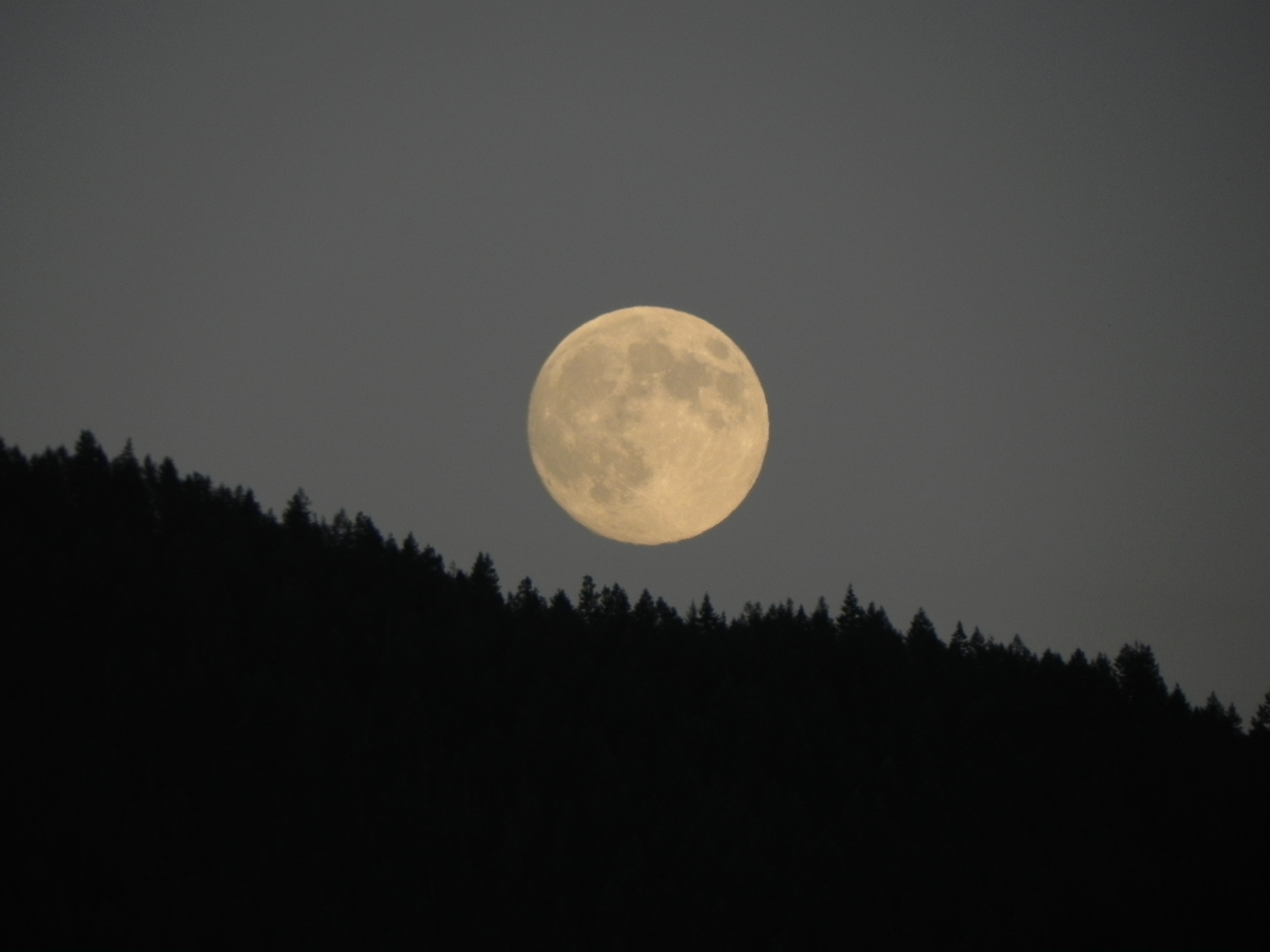
Last night’s full moon shone brightly, announcing the grounding of the date of Easter, obviously associated with Passover. Unless one has a natural sense of the progressions of the lunar calendar, Easter can always seem a matter of guesswork. It fall on the first Sunday after the first full moon after the vernal equinox. It is one the many transitional season holidays. All holidays are intended to be disruptions from the normal flow of time. Of course, business is the natural enemy of holidays, except for Christmas, and, increasingly, Halloween. The usual business calendar eschews disruption, and there are no days off associated with the Passover-Easter complex. A little thing like death and resurrection shouldn’t stand in the way of turning a solid profit. Still, the point of holidays is their disruption of normal time.

My own time faces disruption this week with a business trip to England. Funny how often these seem to be demanded about this time of year. My usual blog posting patterns will surely be disrupted as time zones zip up across the Atlantic. Disruption will become endemic. Disruption without the celebration. Ritual experts tell us that Passover, the basis for Easter, was a development from an even earlier pre-biblical rite. People have always found a way of marking the more obvious transition of seasons, the planned disruption of daily life.

Routine becomes comfortable, no matter how inherently uncomfortable it may be. I awake before 4 a.m. each day with many others whose lives are dictated by bus schedules and economic necessity. No matter how many years I’ve been doing this my body objects to the early hour that draws me from the comfort of sleep. It is a disruption. Now my disruption is about to be disrupted and I’m wondering what is holy about any of this. Time, which always comes in limited quantities, seems best spent with those we wish to celebrate. Our own private holidays. But business and resurrection don’t sit comfortably together. True religion and money are, it seems, inherently at odds. As I pack my bag and turn to the east, I look at my calendar and wonder when the next true holiday will arrive.


Middle Eastern Idol

As the Passover-Easter complex of holidays approaches, our stern, scientific face turns toward the more human sensibilities of religion and its impact on our lives. PBS recently aired the Nova special The Bible’s Buried Secrets (originally aired in 2008) and when a colleague began asking me about it I figured I’d better watch it. As an erstwhile biblical scholar there wasn’t much here that was new to me, but one aspect of the program bothered me. Well, to be honest several things bothered me, but I’ll focus on one. When referring to the gods of the Canaanites, among whom the program readily admitted the Israelites should be counted, they were invariably referred to as “idols.” The problem with this terminology goes back to an issue I frequently addressed with my students—the term “idol” is a way of demeaning the gods of a different religion. Implicit in the word is the assumption of the monotheistic worldview and its attendant problems.

The Bible’s Buried Secrets seemed to adopt an overly optimistic view of the monotheistic religions sharing the same god while everyone else worshipped idols. The view is as fraught as it is simplistic. Historically Judaism, Christianity, and Islam are certainly connected. Each recognizes in the others a glimmer of its own theology and outlook, but the concept of deity has shifted somewhat at each development. Judaism and Islam are rather aniconic, especially compared to many varieties of Christianity where images are allowed, or even encouraged. It is difficult to grab the attention of the magazine-reading public with an image of invisibility on the cover. It should come as no surprise that some Jews and Muslims believe Christian images to be, well, idols.

An idol moment?

An idol moment?

The word “idol” is by nature pejorative. Ancient people were sophisticated polytheists. That statue that represented a deity was not thought to be that deity in any absolute sense. Rituals assured the ancients that they were instilling some aspect of divinity into the statues they used, making them sacred in the same way a Christian consecrates a church building. What’s more, it is natural for people to seek a visual focus for its devotion. It is difficult to conceptualize the Almighty as a person without giving it (often him) a body. Islam, especially, has been adamant that this can’t be done, and looking back at Christian practice it is sure to see idols abounding. As the holy days begin for our vernal celebrations, we should perhaps use the opportunity to rethink such religious vocabulary since every orthodoxy is someone else’s paganism.


A Kind of Lunacy

I can never keep track of the vernal equinox. Actually, I have the same problem with the autumnal equinox and both solstices. I think it’s because when I was growing up I thought they always came on the 21st of the month. That’s a nice, regular interval. Our months, however, are not natural. Were they to follow the moon (whence we get the word “month”) they would be about February length. The moon’s phases, however, do not keep to human time. In actuality, a month is approximately 29.53 days. Various emperors throughout history added days to their months, making our jumble of 365.25 days a mix of mostly 31-day periods, with some being 30, and February alone holding out at 28. Or 29, depending. All of which is to say, I didn’t realize spring was here until the day was mostly over. Here in the northeast it was snowing, and the celestial dome was occluded. That was a shame since it was also the day of a solar eclipse. I consoled myself by realizing that even if it had been sunny I was in the wrong location to see the eclipse, so I wasn’t missing much.

DSCN3762

So spring subtly appeared this year. Not only was the day an eclipse day, for some, it was also a “supermoon” day. That is to say, the moon was at its closest point to earth at the time, making the eclipse a truly spectacular one, if you could see it. All of these astronomical machinations on the event that sets the date for Easter has developed a new kind of mythology. According to The Guardian, some minority of clergy have seen this event as initiating the apocalypse. Of course, eclipses are by their nature local events. The vernal equinox occurs every year, and the first Sunday following the first full moon of the equinox will be Easter. We get a supermoon (or perigee-syzygy of the Earth-Moon-Sun system) about every 14 months, so this is hardly rare. But then, the moon has always been the locus of mythology.

Ancient peoples knew the phases of the moon intimately. As the main source of non-artificial light at night, it was a boon to those without electricity, or even gaslight. Without physics to provide a mechanism, stories developed to explain the ever-changing status of our nearest neighbor. Some of those tales took on religious elements, and many religious calendars remain lunar. The vernal equinox, however, is a solar event. From now on the days will get longer until the summer solstice, a day of celebration and mourning, as we move back into the days of declining light. Each of these celestial events comes with its own religious freight, and it seems, dissenting clergy notwithstanding, that so it shall carry on for many moons to come.


Coming of the Green

For many years I actively attended to the calendar of saints while at Nashotah House. Although we celebrated Mardi Gras, we never seemed to celebrate St. Patrick, although he does hold a place on March 17. I suppose most people were too busy wearing black to attend to the green. I always, however, donned some verdant vestment for the day, and we usually had leprechaun gifts left behind for my daughter. After leaving Nashotah, I discovered that many universities scheduled spring break around St. Patrick’s Day. This wasn’t because of any love of the Irish or of liturgy, but because campus damage was so bad after the heavy drinking of that day, that many schools decided to let that be somebody else’s problem. St. Patrick isn’t particularly associated with alcohol, but even a quick walk by the bars of New York City demonstrates that the saint has found a home among the inebriated.

Little is known of the historical Patrick. He was associated with Lough Derg, an island of which was said to contain Purgatory. The lake also boasted a sea serpent, which may give some background to the legend associating Patrick with the banishing of snakes from Ireland. The shamrock story is likely apocryphal, but there’s no denying the brilliant green of the Emerald Isle, so the tradition developed of wearing his favorite color to commemorate the day. The traditions of Patrick grew by accretion. The Irish belief in wee folk gave legs to the leprechaun connection and, I’m told, heroic drinking might lead to the seeing of the same. One reason his day might have been downplayed liturgically is that it has become an unlikely cultural holiday. Those of us with some Irish ancestry run into some pretty high numbers.

The myth of St. Patrick is more powerful than his history. This may be a lesson for us even today. The stories we tell of our cultural heroes need not be grounded in fact in order to be meaningful. Over time the religious of many faiths have grown more and more literal to demonstrate their devotion. This is a risky proposition. We know little of the life of Patrick, or even of Jesus and other various religious founders’ lives. Their followers have been free to fill in the blanks for many centuries, building meaningful legends. I have no idea if Patrick of Ireland liked green. He may have found snakes charming. Upon an intemperate evening he may have seen leprechauns dancing about his parlor. It is less the tale that is important than it is what one might choose to learn from it.

StPat


Holi Daze

It’s pretty white out there. For many parts of the eastern United States it has been a season of snow on snow on snow (why does that sound familiar?). The wisdom back in old white Wisconsin was there’d be three snows on the crocuses. This year the crocuses have remained buried, even in New Jersey. Judging from the number of people not driving, it looks like most people had a snow day yesterday. The color white has often been treated as a symbol of purity in various religions, but today is also the celebration of Holi, a Hindu festival of color. I’m no expert on Hinduism, but I do find the concept of a day of color to be immensely appealing. Anthropologists trace its roots to some fertility festival, but the fact is, we could all use some color right about now.

DSCN5027

Winter technically lasts, in this hemisphere, until the vernal equinox. Religions around the world have festivals to celebrate this slow turning of the seasons, and the lengthening of days. A long while back I wrote a little book on the holidays. In it I tried to find the basis for various holiday colors. We all know red and green clash, but when we see them together we think of Christmas. Black and orange make a standard Halloween combination, and red by it self suggests St. Valentine, while green alone gives St. Patrick his identity. A more recent addition is black and silver for New Year. Easter, coming in the spring, however, is a celebration of color. We don’t dye the eggs just one hue—it has been a long winter and we celebrate its close with a burst of color. Even the staid old Episcopal Church reverences the liturgical seasons with distinct colors. In other words, colors mean something.

Years ago a friend recommended Jasper Fforde’s Shades of Grey (this was before Fifty Shades of Grey took over the world). It quickly became one of my favorite novels. It’s all about color. Apart from a few years under the influence of a friend with a strong personality, I’ve always been a subdued haberdasher. I tend to wear understated colors because I don’t like people commenting on the way I look, or, even for that matter, looking at me. I enjoy public speaking, but having someone single me out on the street or the bus has always felt distinctly uncomfortable. Still, I think we may have lost something that Holi has retained. Color exists to be celebrated. And shared. It is so important that commerce and trade apparently stopped last week to figure out the color of a certain dress. I may not be a Hindu, but I think I might wear my brightest shirt today to welcome color back to the world.