Chris-myth

Mythology is beyond any single individual. I was reminded of this recently while discussing Joseph Campbell with a colleague. Joseph Campbell was an unconventional academic who exploded to public prominence largely through the immense influence of Star Wars, the original episode. George Lucas had famously latched onto Campbell’s Jungian use of archetypal imagery as the basis for good story-telling, and thus, by extension, good movie-making. With his books written at a level that is accessible to the average reader, Campbell assured his fame in a world starved for mythology. Others have interpreted mythology quite differently, but often more quietly. The fact is, mythology is alive and well in our culture. We simply fail to recognize it.

Joseph Campbell, mythographer

We are in the midst of the Christmas season, a period of intense mythopoeia in modern American culture. As can be seen in the Christmas Complex essay under the Full Essays section of this blog, the growth of Christmas characters and stories has been intense over the past several decades, and it shows no sign of slowing. Although not everyone will recognize Heat Miser or Zwarte Piet, many cannot imagine Christmas without Frosty the Snowman or Jack Frost, although they are not specifically associated with the holiday. This is the nature of mythology – it grows to encompass the many concomitant features of its immediate culture. Northern European and northern American experience of Christmas includes the snows of winter, so they become part of the Christmas myth.

While many this year, and every year, protest leaving the “Christ” out of “Christmas,” they fail to recognize that the snowballing Christmas myth has rolled far beyond the control of Christianity. The origins of Christmas predate Christianity, and the birth of Jesus is yet another element that has adhered to the mythology of the winter solstice. As the days grudgingly grow longer, and light begins to return into the chillingly crystalline days of January in the northern part of the northern hemisphere, mythological souls everywhere breathe a sigh of relief. Our fear of the long, dark, cold night is primal and very deep. C. S. Lewis, another mythographer, at least got it right with the Narnian concept of winter without Christmas being a kind of hell to northerners. The mythology of Christmas in the southern hemisphere is another complex mythopoeia in the making. How it grows will be an interesting exercise in the ongoing human quest for meaning as summer’s heat is just beginning.

C. S. Lewis, mythographer
O Tannenbaum

Today we put up our Christmas tree. As we drove home with it strapped to the roof our car yesterday we felt like pariahs since everyone else in New Jersey seems to have collected their tree a week or two before Thanksgiving. I have spent too long among Episcopalians to appreciate such eager chomping at the bit. At Nashotah House Christmas trees were discouraged until about Christmas Eve, since a hearty Advent celebration was considered a sign of true piety. Well, with a small child in those days, we didn’t care to deprive our daughter of the childhood anticipation of Christmas, so we received the ugly stares due to those so uncouth as to set up a tree a week in advance. Now people think we procrastinate to wait until the weekend before Christmas to set up our interior conifer.

A few years back I wrote a book on holidays for teenagers. I haven’t found a publisher yet, but I did quite a bit of research that I’d rather not waste. Sometime soon I will post the Christmas section under Full Essays. It is chock-full of traditions and facts and impressions about Christmas and what it has come to mean to us today in the United States, but since today is tree day for us, I thought I’d start out with a little of the story of the humble Christmas tree:

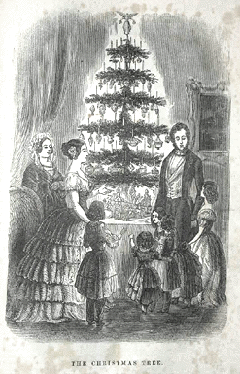
The modern use of Christmas trees can be traced directly back to Germany in the 1500s. The earliest written reference comes from 1570 when a fir tree was set up in guild houses and decorated with apples, nuts, pretzels, and small things for kids. On Christmas Day the kids of the guild members could come and take the hanging gifts. The apples may go back to plays in the Middle Ages with Adam and Eve; sometimes plays of the Garden of Eden had apples hung on a fir tree. A tradition says that Martin Luther, the monk who started the Protestant movement (the Reformation) was walking home one winter night when he saw the stars twinkling through the branches of the pines. He set a tree up in his house, the story goes, lit with candles, to try to recreate the effect.

We do know that the Christmas tree (originally Tannenbaum) was a German invention. Until the 1800s it was almost completely limited to Germany. Candles were used to light the trees – talk about your obvious fire hazard! Royalty from other European countries were presented with Christmas trees as a novelty in the 1800s. Soon other well-to-do families started to set them up. An engraving of Queen Victoria in England with a tree from her German husband Prince Albert captured the public imagination and Christmas trees became the rage in England. Charles Dickens took over and the rest is history.

A Christmas Tree primer


Holidays Through Kids’ Eyes

A trite truism we are often subjected to states that Christmas is really for the kids. As I suggested earlier in this blog, adults also see the benefits in a holiday break, and many adults experience Christmas like kids. But how do children experience the holidays, really?

Two unrelated news stories this week demonstrate the breadth of childhood holiday experience. Last week an 8-year old boy in Massachusetts was sent home from school for a drawing. The teacher asked the students to make a Christmas drawing (a bit of December dilemma there!), and this boy drew Jesus on the cross. Well, that could be a simple holiday mix-up, an Easter Bunny in Santa’s sleigh. The problem arose when the boy said it was himself on the cross, with x’s for eyes. The boy’s father reported that they had recently visited a Catholic shrine with obvious crucifixes, and the boy seems to have thought Christmas was somehow associated with death.

A second story comes from Tennessee where a 4-year old boy was picked up outside, drinking beer and wearing a stolen dress from under a neighbor’s Christmas tree. After being treated for his condition, the boy was released to his mother who said that he was trying to get arrested to be with his father in jail. Christmas is family time, after all.

Perhaps the warm and cozy stories of animals placidly staring into a mysteriously glowing feed trough are the stuff of adult fancy. Maybe these children see the holidays in their unmasked guise — wish fulfillment in a world that is just not what it should be.


Happy Whatever

Over the past couple months I had been interviewing for a position at the Tanenbaum Center for Interreligious Understanding in Manhattan. Although I did not get the position, I still recommend the center for those who are dealing with religious conflict. One of Tanenbaum’s concerns is the “December dilemma.” The month of December is dominated by the celebration of Christmas, and many people are barely hanging onto sanity awaiting those few days off near the end of the year to catch their breath before jumping back into all of it again. Yet, with the continual mixing of cultures and traditions that makes America such an interesting place, other traditions have difficulty competing with Christmas. Well, it is hard to compete with such a capitalistic holiday, one that is based around getting stuff.

There has been a movement afoot in recent years to mash the December holidays together. One such movement is the celebration of Chrismukkah, albeit somewhat tongue-in-cheek. Hanukkah naturally falls around the usual time of Christmas, and Kwanzaa was created to add yet more texture to the month. Despite all this, Christmas is still predominant. As I tell my students, the mindset of America as a whole (not demographic or even factual, but perceptual) continues to be Protestant Christian. Apart from Kennedy all of our presidents bear this out. And Protestants, although they don’t care much for the “mas”part, are big Christmas fans.

A Dickensian Christmas

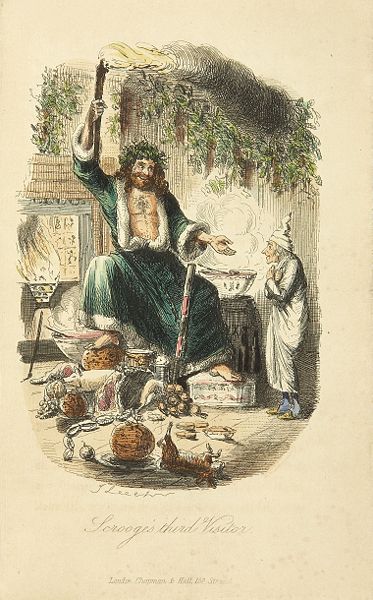
A few years back I wrote a book for tweens that examined the roots and traditions of the major American holidays. (So far publishers haven’t been impressed.) One of the facts I learned about Christmas is that its celebration as a major holiday is a recent phenomenon. Before the nineteenth century Christmas was barely noted in America at all. In the wake of Charles Dickens and his influential stories, Christmas became an institution that celebrated family and home and goodwill. Eventually it grew into a major commercial holiday and everyone wanted to get in on the fun. Now we have a largely secular Christmas and other religions are eager to join in the non-confessional part of the holiday. Everyone would like to have Christmas day off work (except the clergy), and those who don’t have it feel lonely, I’m sure. I don’t see the reason for the big fuss about whose holiday it is. Christmas is symbolic of peace and togetherness, and no matter what it is called or who claims ownership, this is by far the superior path over religious fear and hatred.


Special Babies

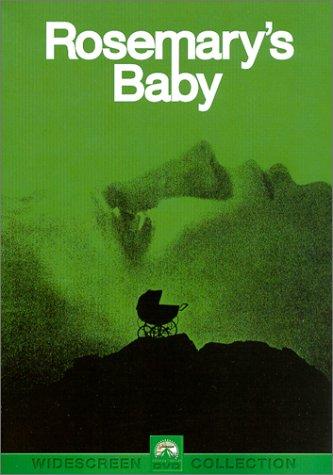
Roman Polanski has been in the news quite a lot lately. While I haven’t been following the story, his name is perennially associated with Rosemary’s Baby in my mind. In my youth I feared this movie and made no attempt to watch it until I reached my 40s. Like other works conceived by Ira Levin it features a threat to what we value most; the original Stepford Wives is still almost too scary to watch. While Rosemary’s Baby remains a good psychological thriller, the counter-Christmas theme became quite evident the last time I viewed it. I won’t worry about spoilers since the movie was released in the 1960s, but if you’re still waiting to watch it and want a surprise ending, you might want to turn to another post at this point!

The 1960s were times not only of a strong counter-culture but also a period of fear. Many popular evangelists were warning of the coming of the Antichrist and the Time article entitled “Is God Dead?” is featured in the movie itself. Although it is unclear until the end, upon first watching, who fathers Rosemary’s baby, the child-spawn of Satan is presented with many of the trappings of the first Christmas as Rosemary herself makes the discovery. In fact, Christmas comes as Rosemary is pregnant, and the film carefully accentuates the contrast between Mary and Rosemary. The suffering of the expectant mother still makes the film difficult to bear at points.

As Christmas nears in this very commercial and recession-ridden season, many lawns are sporting “Keep the Christ is Christmas” type displays. Isaiah is being taken out of context and the Religious Right continues its attempt to make Christmas a political petard. Babies represent new beginnings. And while Rosemary’s baby was born six months after (diametrically opposed to) the celebration of the birth of Jesus, in both cases the infant represents a radical change. Any human parent knows that babies are special and that knowledge demonstrates that a young Roman Polanski recognized a theme that would scare audiences for at least forty years.


Highway Homiletics

“Over the river and through the woods to grandmother’s house we go,” is an assertion to be taken literally in my case. Crossing the Delaware River and trekking through the forests of Pennsylvania are the only means to reach my childhood home from New Jersey. Each time I make the trip I am amazed at how strident the highway preaching along the way has become. Signs on both the interstates and the backroads announce the truths of a certain vociferous brand of Christianity that maintains that everyone must think that way or spend an eternity in hell. Having experienced this kind of fear-driven faith firsthand, I can’t protest too much without being labeled a hypocrite, but some of what I observed over the river and through the woods leapt out at me anew this Thanksgiving.

Firstly it seems that Jesus saves big rocks. Several large, obtrusive boulders worthy of the land time forgot bear the message that Jesus Saves. Locally this form of homiletics can be as persistent as the Trust Jesus notes spray-painted on just about every interstate overpass between here and Illinois. A religiously aware lumber company in rural Pennsylvania hosts a sign declaring, “Read, Heed, Live & Obey the Bible!” When I think of lumber, I think of 2-by-4s and of their standard use of knocking sense into others who look at things differently. This sign said more than its owner might have intended. A few miles down the road I read, “Why not try Jesus? If you don’t like Him the Devil will always take you back.” The assumption, naturally, is that anyone reading the sign is already devil’s food.

One of the great things about freedom of religion and freedom of expression is that such messages declare their writers’ fervent beliefs, but they hold no force beyond the rhetorical. Having met many sincere believers in other faiths over the years, I do wonder what kind of good news such non-negotiable advertisements really send. Some of the writers, I believe, are railing against the godless world they see around them (although the number of churches along these backroads would seem to testify to religion a-plenty) while others can’t accept any form of any religion that differs from their own, even if it be a different flavor of Christianity. Perhaps it is time I put up a sign advocating a vegetarian version of Thanksgiving — no turkey need die for anyone’s sins. In some religions such a message is considered trustworthy indeed.


Robots vs. Ancient Deities

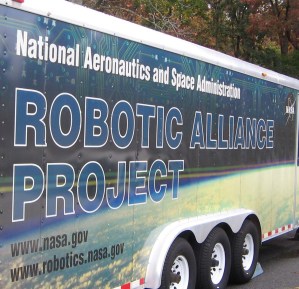
NasaRob

Yesterday I found myself at my first ever robotics competition. As a scholar more familiar with the offering recipes for long extinct mythological deities than with the practical application of computer technology, I felt a little out of my league. I had gone to support the local high school robotics team, and, well, robots and Halloween seemed a natural combination.

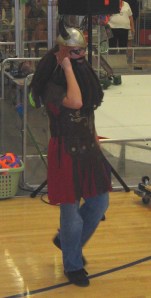
The first thing that stood out was the large NASA van parked in front of the school. Fidgeting over finding a job at the moment, I realized that the money is far more forthcoming for practical enterprises than reading ancient history. It is, literally, for rocket science. So I was crammed into high school gym bleachers with other aging parents, surrounded by kids smarter than I’ll ever hope to be, watching robots compete in exercises too complex for the average Republican. There was rock music blaring and yes, nerdy people dressed like science fiction movie/television characters. I was really feeling lost when I spied the character below.

DrJim

I had no idea that Dr. Jim of the Thinking Shop had relatives in the robotics field! As I saw the bearded Norseman approaching me, I was strangely reassured that there might be a place for me here after all. Religion and NASA do share an interest in celestial realms, and if my generation has been capable of producing kids this smart, there may be hope for the future yet.


Halloween All Year

Despite the obvious consanguinity with the Dawn of the Dead, I am not a mall person. Last week, however, I had a job interview and I discovered that most of my white shirts would be appropriate garb only for the undead, so my wife forced me to look around the local mall for some new apparel. As we walked down the interior boulevard crowded with people younger than us, we couldn’t help overhearing the conversation of some young women behind us. “Yeah, it’s so cool! He’s a vampire; he’s got fangs and everything!” And they weren’t discussing Edward or Lestat, but a (presumably) flesh-and-blood beau one of them knew. Yes, Halloween season is upon us again.

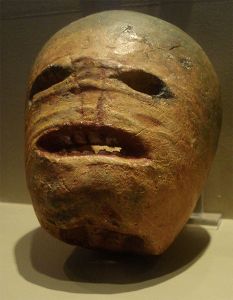
An early Celtic turnip Jack-o-lantern
(An early Celtic turnip Jack-o-lantern)

I loved Halloween when I was growing up. Despite the innate conservatism of my family, we always enjoyed dressing up, trick-or-treating, and being just a bit scared. When I reached college, however, I discovered that Halloween was perceived by many to be satanic, and I had to dig deeply into the past to argue that it came from Christian tradition and was, itself, nothing to be afraid of. Still, my friends looked at me askance. When I reached Nashotah House, a perfectly Gothic setting for the twilight of the year, I discovered that despite the theological conservatism there, Halloween was a time-honored tradition. My first year there while driving home after picking my wife up from a conference in Madison, I drove the familiar road into campus only to see a single, ghostly white face float across the road in front of us. I was so astonished I pulled the car to a stop to look back and could just make out several of the students I knew, dressed fully in black cassocks and cappa negras, only their faces showing, painted white. They stood alongside the lonely road and “floated” across it as slowly approaching cars rounded the bend. (I guess that, being potential priests, they were not too concerned with eternal consequences of metal meeting mere flesh in the dark of night.) On the campus, until the takeover by a Fundamentalist administration, All Hallows Eve was a bone fide sacral event.

The reason for Halloween’s popularity, I believe, is that deep down people really are frightened. At some level we know that we aren’t really in control of our lives and we seldom have a say about them ending. Halloween, with its dark Celtic origins, is the acknowledgment that it is acceptable to be afraid. Each year as more and more elements appear beyond our control, our pantheon of Halloween specters grows. One of our neighbors’ houses has a fake cemetery in its front yard. One of the headstones reads “The Stockmarket / 2008.” Even with the economy dipping and reeling like a drunken bat, lawns sport larger, more expensive and expansive Halloween displays. Halloween represents the pulse of fear than animates religions. We should all be afraid!


The Life Is in the Blood

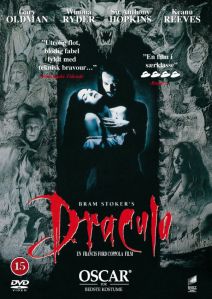
Finally, after a couple of decades, I got around to watching Francis Ford Coppola’s Bram Stoker’s Dracula. As viewers know to expect of a Coppola film, the cinematography is stylish and artistically exaggerated. It has been even more years since I’ve read Stoker’s novel, the book that gave birth to the modern vampire, but I am pretty sure that the many oblique references to the Bible count among the film’s innovations. Coursing like an artery through the movie is the phrase “the blood is life,” taken from Leviticus 17. I’ve posted earlier concerning the biblical outlook that life is equated with breath, and so it is. The Bible does not always remain consistent on this point — natural enough for a book with multiple authors living centuries apart. Blood and breath obviously share crucial functions in maintaining life.

Stoker

Ancient peoples believed in a world peopled with unusual, quasi-supernatural beings, including blood-drinkers and nocturnal baby-snatchers. Theirs was a world of harsh realities where death was more closely observed than it tends to be in many parts of the world today. The fascination, often coupled with religious underpinnings, continues to engage our imagination today, as can be seen in any given Halloween season or on el Día de los Muertos.

Whether el chupacabra or Bela Lugosi, the fascination with mythical creatures of the night that thrive on the life-source of others is a concept never far from religionists. No matter how many stakes we pound through undead hearts, the unholy bloodsuckers continue to show up in our theaters and on YouTube. A childhood penchant for Dark Shadows books has recently been reactivated in the restless gray-matter in my head. As the days grow shorter and shadows become an increasing element of daily experience, I marvel at how the human imagination parodies our daily experiences, dressing them up in fanciful garb to parade about with the other ghosts of October. What is perhaps even more unusual is that money is still to be made in this business of selling the parasite. How else can we explain Buffy and all her cohort? The life is indeed in the blood.


Fallen Angels

When did angels become cute? This is one of the ranking mysteries of religious studies. In ages past, way back before monotheism, most people in western Asia believed in a plethora of deities, sub-deities, and heroic characters. A cosmic continuum of animal-to-human-to-superhuman-to-divine seems to have characterized their universe. They had little reason to suspect that anyone or anything more powerful than a human might be “cute!”

The first angels mentioned in the Bible, cherubim, are today often associated with Hallmark and Valentines: cute little nude boys with wings playing with their bows and arrows. In the world of the Bible, however, cherubim were not so tame. I tell my students to think of sphinxes when they read “cherubim” — scary hybrids of human and lion or ox and eagle. These creatures were intended to be guardians of the very throne of God; they had to be scary.

Your garden-variety angel was indistinguishable from a human being. They had no wings, halos, or — (gasp!) — harps. The reaction to angels by the people of the Bible was essentially that of a visit of a stranger, a stranger who sometimes said weird stuff about what the big guy wanted you to do.

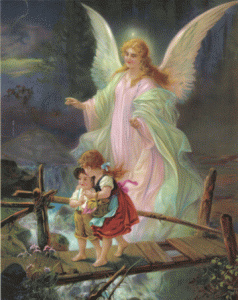
But somewhere along the line, angels had an extreme makeover. They became winged, effeminate people who could save your life or that of your puppy. They became guardians of human interests and loves. In so doing they lost the awe and majesty of being the Frankensteins of the supernatural world. Is this what a fallen angel really is?

A cheap copy of this popular image hung in my room as a child.

A cheap copy of this popular image hung in my room as a child.