On a Jet Plane

So I’m heading to England.  Not for pleasure—this is a business trip.  Long ago, back when I worked for Routledge, I discovered that I dislike business travel.  Unlike vacation planning where the possibilities spread out beautifully before you—for this is free time and you decide—business travel is, like Peter was told, “thou shalt stretch forth thy hands, and another shall gird thee, and carry thee whither thou wouldest not.”  Indeed.  Business travel is at the whim of the man, and you can’t really look forward to the sights, the relaxation, or even being given the choice of where to go.  You’re on assignment.  Or consignment, I can’t recall which.  The carefully honed routine with which you hold back the chaos of the world is blown apart.  It begins with the red eye.

You see, companies don’t like you to make your own travel plans.  You might chose a flight that’s pennies more expensive than some itinerary that routes you through Albuquerque at four a.m.  It’s not like you’ve got anything better to do, right?  And since you’re exempt, we’ll take your Sunday, gratis.  Where’s your team spirit?  As I’ve grown older, I’ve become a creature of habit.  The hour of the typical red eye is when I get up to write.  That can’t be done in an airport, or on a plane, where everyone can see you.  No, this is a private thing.  Everyone else must be asleep.  Most of them, preferably, in another house.  So I’m flying to London and catch a late-night bus to Oxford.

Part of my worry, dear readers, is you.  As this blog approaches its tenth birthday, I’ve been in the habit of posting daily for many years.  Mostly at the same time—weekends and commuting days are exceptions, of course—and when you’re changing time zones you might do well to have Rod Serling with you.  I can’t figure them out.  British hotels, also, do not offer wifi in their rooms unless the boss wants you to pay extra for it.  And considering the mandated flight behavior, that’s best just taken off the table.  So, as I prepare to leave before sunrise on one of the longest days of the year, I don’t know if or when I’ll get to post over the next few days.  I won’t even know what time it is.  Like pay toilets, charging for internet access ought to be criminal these days.  But opportunities to take money are everywhere.  And those of us who travel for business always rely on the kindness of capitalists.


On Target

Time, especially weekend time, is a non-renewable resource.  Since I barely have enough time as it is, I do my best not to squander it.  Yesterday we had to visit our local Target—we don’t buy at WalMart because there’s an ethics even to shopping these days.  When we got inside it was obvious that a lot of people had the same idea.  I’d never seen Target so crowded, and I’ve been in one on a Christmas Eve.  We had only a small basket of purchases, so before long we headed for the checkout and saw an enormous line.  Not being afraid of tech, we went toward the self-checkout and found that line long as well.  Long and not moving.

Soon it became clear that all the registers were down.  Store employees were handing out free bottled water and snacks, like airports used to do with cancelled flights.  We were in for a good long wait.  When we finally reached the register, which had started to come back online, the manager was helping those trying self-checkout.  Since the system was still not really functioning, you could check out one item at a time—after several tries, each time requiring the manager to enter his pass-code—and pay for it and restart the process for the next item.  We asked about the outage.  He said it was global, all Target stores were down.  “You’ll have a story to tell,” he said.  My mind was actually going toward technology and its limitations.  How much we rely on it.  Without tech this blog would not be.  A lot of famous people would be unknown.  How would we find our way from point A to point B?  Or look up a phone number?

The internet is beguiling in its ubiquity.  We use it almost constantly and it’s always there for us.  So we’ve come to believe.  In addition to spreading the tissue of lies that is the Trump administration’s agenda of using post-truth as a means of power, it must be supported by a whole host of experts—those 45 routinely dismisses as irrelevant.  Clouds were gathering outside, and I had a lawn yet to mow before the day was out.  Indeed, my wife and I had intended this to be a quick trip because weekends and sunshine are a rare mix.  As we bagged our six items and thanked the manager, we could see the line still snaking the length of the store.  Had we more time we might’ve come back another day.  Instead, we had briefly fallen victim to something that an old-time punch register might’ve solved.  And a time when the pace of life itself was just a bit slower.


The Lagoon

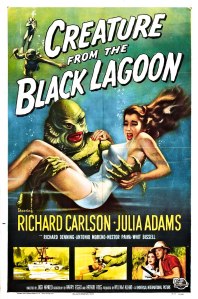
My current book project has me watching The Creature of the Black Lagoon again.  One of the Universal monsters—indeed, arguably the last of them—the Gill-man fascinated me as a child.  There was a strange contradiction here.  The creature had evolved in the Devonian Era and remained unchanged into the 1950s.  But the movie opens with a voiceover of Genesis 1.1.  There’s a mixed message here, appropriate for scriptural monsters.  Watching the film again brought back many of the innocent perceptions of youth, as well as the trajectory of my own life.  I don’t often get to the theater to see horror movies anymore, but at the same time the Universal monsters aren’t quite the same thing as modern horror.  As a genre it had to evolve.

Strangely, as a fundamentalist child, the evolution aspect didn’t bother me.  I was after the monster, you see.  The backstory was less important.  Growing up, at least in my experience, means that the backstory becomes more essential.  It has to hold together.  There are, of course, inaccuracies in the story—many of them, in fact.  Still, within the first three minutes Genesis and evolution are thrown together in a happy harmony that belied what I was being taught at church.  The Gill-man is a monster mainly for being a creature out of time.  When modern humans invade his lair, he defends his territory.  The story might’ve ended there, had he not spied Kay.  He doesn’t so much want to kill her as get to know her better.  For a movie posthumously rated G, it has a body count.  Five men die but the Gill-man apparently just wants to evolve.

There’s been a recent resurgence of interest in Creature from the Black Lagoon with both the publication of The Lady from the Black Lagoon and the death of Julie Adams this year.  The Gill-man seldom shows up in the same billing with Dracula or Frankenstein’s monster, or the Wolf-man.  He’s a bit more inaccessible in his watery abode.  Both cold and hot-blooded, he represents how science and Scripture might get along, at least on the silver screen.  The film holds up remarkably well, if a modern viewer can handle the pacing.  Underwater filming was pretty new back in the day, and watching humans swim in many ways suggests the truth of evolution in its own right.  These aren’t the childhood observations of the movie, but rather the reflections of a guy wondering if there might not be some hidden wisdom in the monsters of yesteryear.


Identified or Not

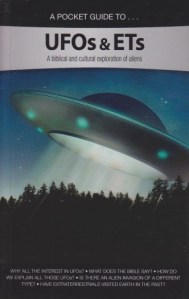
Okay, so this will require some explanation.  It came about like this: I was in a used bookstore.  (This in itself requires no explanation, of course.)  I noticed a slim book, cover out, called A Pocket Guide to UFO’s and ETs: A biblical and cultural exploration of aliens.  Biblical?  I picked it up only to discover it was from Answers in Genesis.  Please note: I do not buy books or paraphernalia of Fundamentalist groups unless I can get it used.  I don’t want to support this particular weirdness in any way.  Well, the money for this used book was going to support a used bookstore and not a religious aberration, so I figured it would be good to see what the Fundies have to say about a topic that seems to have started to engage public interest again.

The book begins by helpfully pointing out that if there’s life on other planets the Bible doesn’t mention it.  And since the only way it could’ve got there is by evolution—for surely the Almighty would’ve said something about it in his book, if he’d invented it—the whole idea is a non-starter.  Evolution, as everyone knows, is a satanic idea meant primarily to challenge the Bible and secondarily explain the diversity of life forms on earth.  And since earth is the only planet the Bible recognizes, it is the only one with life.  So, UFOs, it stands to reason don’t exist.  Well, that’s not quite fair.  They do exist but most can be explained away and those that can’t may well be demonic.  Since there can be no aliens, and since some sightings can’t be otherwise explained, then demons—which the Bible does mention—must be responsible.  They (demons) can also explain why other world religions exist.

There’s plenty in here to offend just about everyone apart from the Answers in Genesis crowd.  The screed spends quite a bit of time knocking down ancient astronaut ideas, and taking Erich von Däniken to task.  Science is useful in explaining how pyramids were built, but not in how the rock used to build them was formed (it takes far too long to make limestone the old fashioned way; God simply used a variety of different rock types to make the one inhabited planet more interesting geologically).  And those UFO religions?  Inspired by demons, no doubt.  In fact, even reading a little book like this could lead you to become interested in the subject, so be careful!  In fact, the safest thing of all (and I’ve only got your well-being in mind) is to leave it on the shelf.


Time Off

Perhaps you’ve noticed it too.  Time away from work has an utterly different feel from time on the job.  Those rare individuals who really love their professions probably feel differently about it, but a timid free spirit since childhood, I’ve always noticed a difference.  And it has become more pronounced as time’s gone on.  Recently I cashed in a vacation day near a national holiday (Memorial Day) so that I could drive across the state to see my mother without feeling utterly wiped out from a twelve-hour drive on a regular weekend.  As I slipped back into work mode on Tuesday the change was palpable.  Time was no longer my own.  I tend to work well over eight hours daily—the telecommuter must prove his/her worth—and something about the quality of the time itself was decidedly unlike that of the previous four days (two of which had been spent driving).

That quality, of which we’re not encouraged to speak, is the feeling of freedom.  More precisely, auto-determination.  Okay, I’ve read enough philosophy to know this is just an illusion, but work with me here.  Few and exceptionally fortunate are those who find careers they love.  What the rest of us love is time off work.  Time when we can decide what to do.  How long to sleep.  When to cut the grass rather than waiting until the bell rings at 5 p.m. and the inevitable afternoon rain begins.  Perhaps best of all is going to bed knowing that the next day you don’t have to get up and report for duty.  I’m not dissing employment here, I’m just noticing something.  What I’m reaching toward is a concept of sacred time.  Unstructured time in which creative types thrive.

Early in life the concept of summer was instilled in my soft and malleable psyche.  It said once May was over you have three months to do whatever before facing regimentation again.  I grew to appreciate this schedule.  To love it, in fact.  It was part of why I decided higher education was the best vocational fit for someone of my particular disposition.  Every year when June rolls around I still feel it, like a migratory bird.  The reality, however, is the quality of time changes on Monday morning.  It slows down and feels more like sandpaper than silk.  I can see there’s a holiday just a month away, if I can only reach it.  And it is, perhaps with a dose of unintentional irony, call Independence Day.


Tyranny of Plants

Notwithstanding what I wrote yesterday, there is a tyranny of plants.  Specifically those which make up lawns—in my case, mostly weeds.  A friend recently reminded me that weed is just a name for a misplaced plant, and I confess that I’m fine with weeds but neighbors may not be so open-minded.  Non-conformity is still a virulent stigma.  If an observer from outer space were to observe us during the spring and summer, they might well conclude that we were in the service of our yards.  The irony here is that yard care is perhaps the ultimate sign of success.  You have really made it if you can keep it neat and trim.  And you’ve excelled beyond that if you can pay someone else to do it for you with their tractor full of buzzing implements.

Because I’m concerned about fuel consumption, we purchased a reel mower when we bought our house.  I never mowed the lawn as a child.  First we rented, and when a stepfather came into the picture he didn’t let the kids mow.  (It wasn’t to be kind—it was a control thing.  If he saw a snake he’d race across the yard to dismember it.  More than once I’d be out playing only to find snake suey, with flies.)  College at Grove City involved carefully manicured lawns done by others, and after grad school we lived on campus at Nashotah House where the students cut the grass.  From there it was back to renting.  In other words, I never had the opportunity to learn how to mow lawns.  My lines aren’t straight, and I’m tempted to sneak out at night, when the grass is high, and leave crop circles at which the neighbors might wonder.  I don’t like being a slave to plants.

The reel mower is like pushing the grim reaper in a baby carriage.  Or at least it must seem so from the perspective of the grass and weeds I call my lawn.  The suddenness with which constant lawn care becomes a major concern has tightened my focus on the fealty we owe to ground cover.  We’ve had a break from the rain for a couple days and after work I find myself pushing that mower like a deadly thurible, releasing the scent of newly shorn grass.  Our particular town retains the right to fine those who let the grass get too long.  As I go along cutting back both grass and weeds indiscriminately, I wonder at the biblical nature of even this.


Leggo My Lego

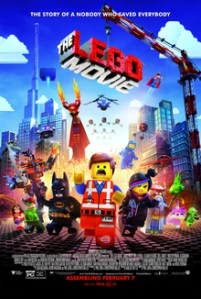
Given my proclivity to seek the profound in what is often considered the banal, I have been mulling over The Lego Movie.  Before you cast the first brick, yes, I know this movie is five years old and I know that it has sophisticated intertextuality with other movies and sly humor.  I use banal in the sense that Legos are, quite literally, plastic and they don’t work well in conveying the human form.  Our overactive psyches help here, and we give the characters their necessary humanity, but this is a movie for kids, even with its Trump-like President Business forecast some two years before the last election.  With all of that being said, and the word “forecast” already being used, my “Bible radar” zeroed in on the prophet in the movie, Vitruvius.

Vitruvius is based on a combination of Tiresias, the blind prophet, and any number of biblical characters who forecast the future.  Dressed like Moses, but named after a Roman author and architect, Vitruvius utters the prophecy at the beginning of the film and returns as a character that combines Obi-Wan Kenobi and the prophet Samuel.  (I said there was sophisticated intertextuality.)  Whether any of this is intentional is difficult to say—well the Obi-Wan part is pretty obvious—but it plays into the common view of prophets.  One of the points I make in Holy Horror (which deals with a different genre of movie) is that people understand biblical ideas through the lens of pop culture.  Prophets, through that lens, tell the future.  In the Bible itself they don’t do that very much, but since the New Testament reads itself into the Hebrew Bible (more intertextuality) the idea became pretty fixed that prophets told the future all day long.

Ironically, Vitruvius—a name that sounds like “virtue”—was famous for describing perfect proportions.  Indeed, Leonardo da Vinci’s “Vitruvian Man” sketch is based on this idea.  As ideas go, this is a false one against which many of us struggle our entire lives.  There is no perfect, Platonic human body.  Yes, certain people are attractive, but genetics and circumstances make us who we are.  And some of us grew up without Legos, but despite that deficiency we came to know the product.  The Lego characters aren’t in any sense of Vitruvian proportions.  Witty and intertextual, they’re made of plastic and they encourage us to buy for our children.  And one wonders whether Vitruvius is a prophet or a hidden symbol of that word’s homonym.  Let the building begin.


Q

If you haven’t spent much of your precious time attending to theories of how the gospels were written, you might not be familiar with the dilemma I’m about to describe.  A brief primer: Matthew, Mark, Luke, and John were not eyewitnesses of the events described in their gospels.  In fact, each of these books is anonymous—the titles were only added on later.  Despite their New Testament order, Mark was written first and Matthew and Luke borrowed from it rather extensively.  Mark is the shortest gospel and Matthew and Luke also share material that’s not in Mark.  Since John was written much later (and doesn’t have these common stories), scholars proposed many years ago that Matthew and Luke used a source—in German Quelle—that no longer exists.  This is called “the two-source hypothesis.”  As scholars are inordinately fond of abbreviations, Quelle is known as simply Q.  Other than in explanations like this you’ll never see it referred to by its full name.

So here’s the dilemma: many websites don’t allow for a single-letter search.  If you’re wanting to learn about Q, and you know no scholar worth their s (by which I mean salt, of course) who will spell it out, how do you search for it?  The same might be said for J, E, D, and P, who, along with R, put together the Pentateuch, but at least there you can search for phrases involving more than one letter.  You see, scholars existed before the internet and its search parameters.  Books and articles used to be written on paper, and the former had indexes, so looking up your sources—single letter or not—was fairly easily.  With electronic searching, it has become more difficult.  That’s not to say that single-letter searches can’t be coded—they can—but apart from biblical scholars and their alphabet soup of sources, apparently most people don’t want single-letter options.

This is the trouble with specializing in ancient things.  The internet was originally designed for academic and military purposes—serious stuff.  But then, like everything else in the world it became commodified.  Like a once pristine countryside it has billboards plastered everywhere after one’s Gelt.  (Scholars also like to throw in random foreign words to show how smart they are.)  And when it comes to searches, why enable atomistic, single-letter searching when it won’t end up in the sale of something?  In any case, my search did not end successfully.  I eventually gave up.  And in the light of the ever-shining internet, I’ve opted for the one-source hypothesis.

It must be in here somewhere…


Not from Nazareth

The world just doesn’t feel safe any more.  I’d better give a little context as to why.  You see, I just learned that what I thought was the work of carpenter ants is actually that of carpenter bees.  I never knew such things existed!  This still might not give you the thrills you were hoping for, so here goes a true story: when I was maybe six or seven my mother took my older and younger brother and me to a place in the woods where we could run around and holler and not bother anybody.  We had our dog there too, as well as our grandmother.  After a while my brothers started a game—throwing a stick to see who could get to it first, me or our dog.  I was running along, stepped on a stump, closely followed by the dog, when a swarm of angry yellowjackets flew out.  I was wearing shorts at the time and received multiple stings on my bare legs.  We didn’t think our dog would survive; he was completely covered.  So I have a thing about bees.

My phobia isn’t as bad as it used to be.  I’ve been stung many times since, and it always feels like an insult as well as a bad memory.  (I still don’t wear shorts, except on very rare occasions, when the bee quotient is zero.)  Believing in turning the other cheek, I’ve even captured and released bees from the house rather than killing them.  Still, to this day, when I get a haircut if the woman pulls out a set of clippers you have to pry my fingers from the naugahyde when she’s done.  Anything that sounds like buzzing near my ears sends me into spasms of terror.  Please pardon the graphic fear.  It’s heartfelt.

I used to have nightmares about killer bees.  I still worry about them a lot, and wonder that if, instead of a wall, we might put up a massive, small-weave net this side of Texas.  I don’t know how high they fly, but we should try to do something, don’t you agree?  Now I’ve learned that bees can eat you out of house and home, literally.  The carpenter bee, to the untrained eye, looks like a bumblebee.  They’re big, heavy-bodied insects that can crawl through three-eighth-inch holes, perfectly round the insect guy tells me.  They’ll eat and mate, and release their larva, ready to grow stingers, into the world of my back porch.  They appear to enjoy the global warming, judging by their numbers.  Maybe it’s a good thing we settled not far from Nazareth because a friendly carpenter might soon come in handy.


Cool Cash

The seller’s market is the place to be in a capitalist society.  Last year, when we were looking for a house, it was a seller’s market.  Our realtor said he’d never seen inventory so low and staying so low.  We found a domicile we liked, but it was older and had obviously (only after moving in) been neglected.  The previous owners, it was clear, had simply let things go (and they were younger than us, and had no excuse).  When we asked for a new roof they had flat-out refused.  With no other options (our lease was about to expire) we agreed to take it on anyway.  We’ve been having the roof done in installments—and if you’ve been getting the record levels of rain that Pennsylvania has, you know our decision was, in a literal way, short-sighted.  Ah, capitalism!

So, just after I noticed the piles of sawdust that the web tells me are carpenter ants, the refrigerator died.  Of course.  I tried to keep cool.  We don’t have what the overlords call “liquidity.”  Our cashflow is dammed at the source, as it were.  A new major appliance was not a welcome addition to the fixer-ups that appear nearly every day.  The first warning was that my soy milk was room temperature when it splashed on the cereal yesterday.  All of this made me reflect on how much we rely on our appliances, our modern conveniences.  When talking to my mother later in the day, I realized that as recently as her generation not everyone had a refrigerator.  You could live without one.  You could also live without a dishwasher, believe it or not!  

The whole episode of packing the food in ice sent me on a Calvino-esque reverie of what we keep in the refrigerator.  There are foods that must be kept cool or they’ll spoil, foods that are better if they’re kept cool but can be left at room temperature, foods that you prefer to drink cold but can be kept anywhere, and items which are technically not food.  Considering the state of our kitchen, there are also foods that you keep on top of the refrigerator because no amount of cupboard space is ever enough.  As the carpenter ants make their free lunch of our porch, we have to throw away food for which we paid because an appliance has come to the end of its life cycle.  And since it’s a holiday weekend we’ll pay for a more expensive replacement unit because it’s on a holiday sale.  For unlike my soy ice cream, I lack liquidity.


Price of Learning

Holy Horror, as some are painfully aware, is priced at $45.  Even those of us in publishing have lessons we must learn, and one of them is that writing a trade book involves more than just a “friendly narrator” style and non-technical language.  It also involves a subject the public finds engaging (or at least what a literary agent thinks the public will find engaging).  Holy Horror throws two apparently disparate topics together: horror films and the Bible.  The fans of each don’t hang out in the same bars—the fans of the latter, in some circles, don’t go anywhere near bars!  My thinking was that this juxtaposition was odd enough to qualify as trade, but I also knew that you have to work your way up to that kind of readership.  That’s why I’m on Goodreads, Twitter, and Facebook (followers and friends welcome!).  It’s not like I’ve got tons of spare time, but platforms must be built.

Book publishers face a dilemma: they have to sell books, but as I’ve noted before, they must do so profitably.  There are people like yours truly who’ll occasionally pay essentially a dollar a page (or at least a two-page spread) for a book that’s essential to their work.  As the capitalists grin, it’s “what the market will bear.”  I never thought of myself as a market.  To me, knowledge is priceless.  The effort that it takes to write a book is truly unimaginable to those who haven’t done it.  Obstacles exist almost from the inception.  Getting the resources you need, unless your employment comes with a free library pass, involves sacrifice.  I still look at other books I must read priced at about $45 and groan—how can I justify the expense?  It’s a strange club to which to belong.

My mother asked about Weathering the Psalms: “Is it the kind of book you get money for?”  In theory, yes.  I’ve yet to see any kind of profit from it since the tax forms you need to file for royalties cost more than the actual checks contain.  At least it’s not vanity publishing.  And you truly learn what it means to rob Peter to pay Paul.  It has nothing to do with gentiles.  Publishing is the price you pay for following your curiosity.  My books are very different from each other, a fact that comes with an invisible price tag that has little to do with money exchanging hands.  Well, maybe it does.  And maybe it does have something to do with gentiles.  Or maybe it’s an appeal to a higher power.  In a capitalist nation we all know what that is; herein lies holy horror.


Linking In

Like many in the internet age, I have most of my “connections” online.  It’s somewhat of a rarity to be invited, for example, to connect on LinkedIn by someone I actually know.  I remember the early dissemination of information from that network—it was strictly for people you really did know in real life, because they could help or hurt your career.  I took that seriously for a year or two, but it became clear that this was another Facebook with a more professional cast.  I’ve been told of authors who try to build their online platform by adding thousands of connections on LinkedIn.  The website, however, is not intended as an advertising venue.  It has, however, become one.

I’m not denigrating LinkedIn.  I’ve found two jobs through it and I’ve had recruiters reach out to me because they found my profile there.  For a religionist that can be quite flattering.  Academia and society tend to tell you that such a skillset is okay but basically useless.  Having others who know the wide diversity of human employment these days can be a sign of hope.  Nevertheless, advertising has crept into LinkedIn.  I’m not talking about the frequent invitations to go professional on the site, which will only cost a small fee that will suddenly show up on your credit card bill when you least expect it and thought you were in the clear.  No, I’m talking about connections contacting you to do gratis work for them.  Advertising their book, or their services.  Letting others know, they ask, that they can provide this or that service.  (Just to be clear, I’m not referring to people who contact me personally because we have an actual connection!)

For those of us working stiffs not in a position to hire anyone—professionally or personally—this is another symbol of how any form of communication becomes commodified.  Fully over half of my email is soliciting money in one form or another.  Hearing from an actual person with an actual message for me is so rare that I’m stunned to find one in my inbox.  Capitalism just doesn’t know when to let go.  And it doesn’t have a good read on what little I actually do buy.  Underwear (and just using that word will color the tailored ads I receive for weeks) vendors seem to think I’m concerned about the fashion of garments others don’t see.  The books Amazon suggests, based on a solid track record, are generally far off from my interests.  What hope do those who don’t know me have of selling me their wares through LinkedIn?  The dream of connection without cash changing hands nevertheless remains alive.

Old school connectivity


Dandy Lions

O great—just what I need right now.  I knew lawn care would soon become a necessary avocation after buying a house, but this I did not expect.  Over the weekend I found myself pulling up dandelions that were growing out of cracks in the front steps.  Since we compost, I laid them out on a slab, figuring when they dried out I could make them into more soil.  (From which more dandelions will grow, I know, but still it just feels right.)  I came back a day later to find that the dandelions had returned to the vertical position.  Zombie dandelions!  They apparently couldn’t stay dead.  Now, I’ve been writing about demons for the past several months and I’d forgotten about zombies.  Well, I did post about resurrection on Easter, but my short-lived digression left me unprepared for this.

Really, the persistence of life is a sign of hope.  Perhaps dead zones, such as morality in Washington DC, will someday come back to life.  There’s hope for a tree, Job tells us, even if cut down.  These dandelions were a message for me.  Don’t give up.  Prior to religion being hijacked by theology it was a system intended to make life better for people.  Human beings were more important than heretical thoughts.  You help those who need it, regardless of what they believe.  Or don’t believe.  That was the point behind resurrection, I suspect—we can rise above all this dirt in which we find ourselves.  There’s a nobility to it.  Then again, fear trumps hope just about every time.  The dandelions are rising and we have no hope of outnumbering them.  

The ancients feared the dead coming back.  It’s a primal phobia.  All those things we buried with tears we hoped would stay the way we left them.  Life, as Malcolm says, will find a way.  Politicians, it seems, will find a way around it.  Call it executive privilege or whatever you will, the end result is the same.  The yellow-headed fuzzies will threaten you even when uprooted and left to dry in the sun.  Now, our lawn isn’t pretty.  Grasses of different varieties contend with weeds I’ve never seen before for scarce resources.  I’ve never minded dandelions.  They don’t ask much, only they now seem to be demanding the right to come back from the compost.  And if we let that happen, all hope is lost.


Thoughts While Flying

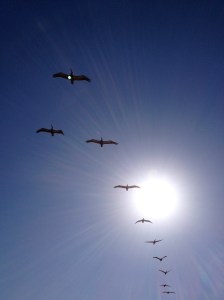
Uh-oh!  I seem to be airborne.  All that’s in front of me is concrete.  If I don’t do something, my exposed hands will hit first.  Tuck, and try not to hit your head.  Still, on impact the first thing I do is look around to see if anyone saw that.  It’s embarrassing to trip and fall, especially when you’re old enough to be avoiding that sort of thing.  I jog before it’s fully light out, however, and the sidewalks can be uneven.  Just in case anyone’s watching my Superman impression, I immediately climb to my feet and resume my pace.  I’ll be sore tomorrow.  As a jogger since high school you’d think I’d have this worked out by now, but you’re never too old to learn, I guess.

The amazing thing to me is just how much you can think in those fleet seconds that you’re actually in the air, about to hit the ground like a sack of old man.  That’s exactly what happened, though, from the split second I felt my toe catch in an unseen crack and felt my balance give way.  Taking additional steps while trying to straighten back up sometimes works, but my top-heavy head was too far out of sync and my feet were sure to follow.  Your memory of such things goes out of body and you watch yourself comically flying, without the grace of a bird, toward an unforgiving substrate.  Such is the fate of the early morning runner.  I don’t have time to do it during the day.  What if someone emails and I don’t answer?  They’ll think I’m slacking off.  Remote workers!

Despite the occasional spills, I’ve always enjoyed this form of exercise.  In the post-Nashotah House days while still in Wisconsin I’d sometimes do nine miles at a time.  Whenever I’ve moved to a new place I’ve gotten to know the neighborhood by jogging around.  Even if it’s not fully light you can see plenty.  (Although the cracks in the sidewalk aren’t always obvious.)  I tend to think about these things as life lessons.  Parables, if you will.  One of the deep-seated human dreams is that of flying.  Birds make it look so easy, and fun.  A human body feels so heavy when it impacts the ground.  I suspect that’s why we find gymnasts so fascinating to watch.  As for me, I’m just a middle-aged guy in sweats and wearing glasses.  And even as I head home I’m already thinking how remarkable the number of thoughts are in the few seconds while in flight, somewhere over the concrete.


In Praise of Paper

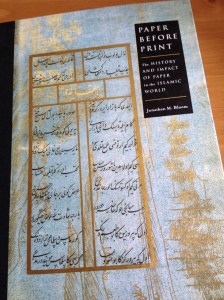
I’m working on embracing the electronic age.  No doubt it’s convenient.  And fast!  Publishing is, and always has been, a slow industry.  As connoisseurs of anything know, quality takes time.  This brings me to my paean to paper.  I generally write these blog posts on a computer.  That makes sense since they have to go onto the web and to do so they must be keyboarded.  Many of them start, however, on paper.  Sketching and free-flowing lines can become ideas, yet to draw on a computer you have to buy specialized (and expensive) equipment and software (which costs even more) to use it.  You’ll lose months of you life learning how to use said software.  In the end you’ll probably have forgotten, what?  I forget.

The other day I ran into an author who wanted maps.  In an electronic age the easiest way to get maps is to take them from the web.  Google Maps seems innocent enough.  Only it’s covered by copyright, and commercial use requires permission.  As I went through the whole permissions process I was thinking of tracing paper.  Copyright covers the execution of ideas, not the ideas themselves.  Coastlines, rivers, and mountains added through the miracle of tracing paper become the copyright of the maker.  (Don’t try this by rewriting written words through tracing paper—that doesn’t work.)  Tracing paper’s old school.  The illustrations in many older books used a similar technique.  In A Reassessment of Asherah all the illustrations were ones I drew by hand.  You can do that on paper.  The only investment is a single sheet and a pencil.  A scanner can handle the rest.

Technologists like to espouse that there’s no such thing as a page.  Authors, they aver, must learn to write without references to page numbers.  Avoid the words “above” and “below” to refer to something discussed elsewhere in the text.  This “format neutral language” (for it has to have a fancy name) is intended to ease the reading experience for the ebook.  With my Kindle software, however, there are still pages.  Don’t we call them webpages?  Don’t we bookmark both our place in Kindles and on the web?  Why then can’t we have our page numbers?  Have you ever tried to make your laptop into a paper airplane when you’re bored?  It’s often hard for progressive creatures like ourselves to admit that maybe we have had it right the first time.  Maybe reading and paper need each other.  A future without paper will be very sterile indeed.