Verb Choice

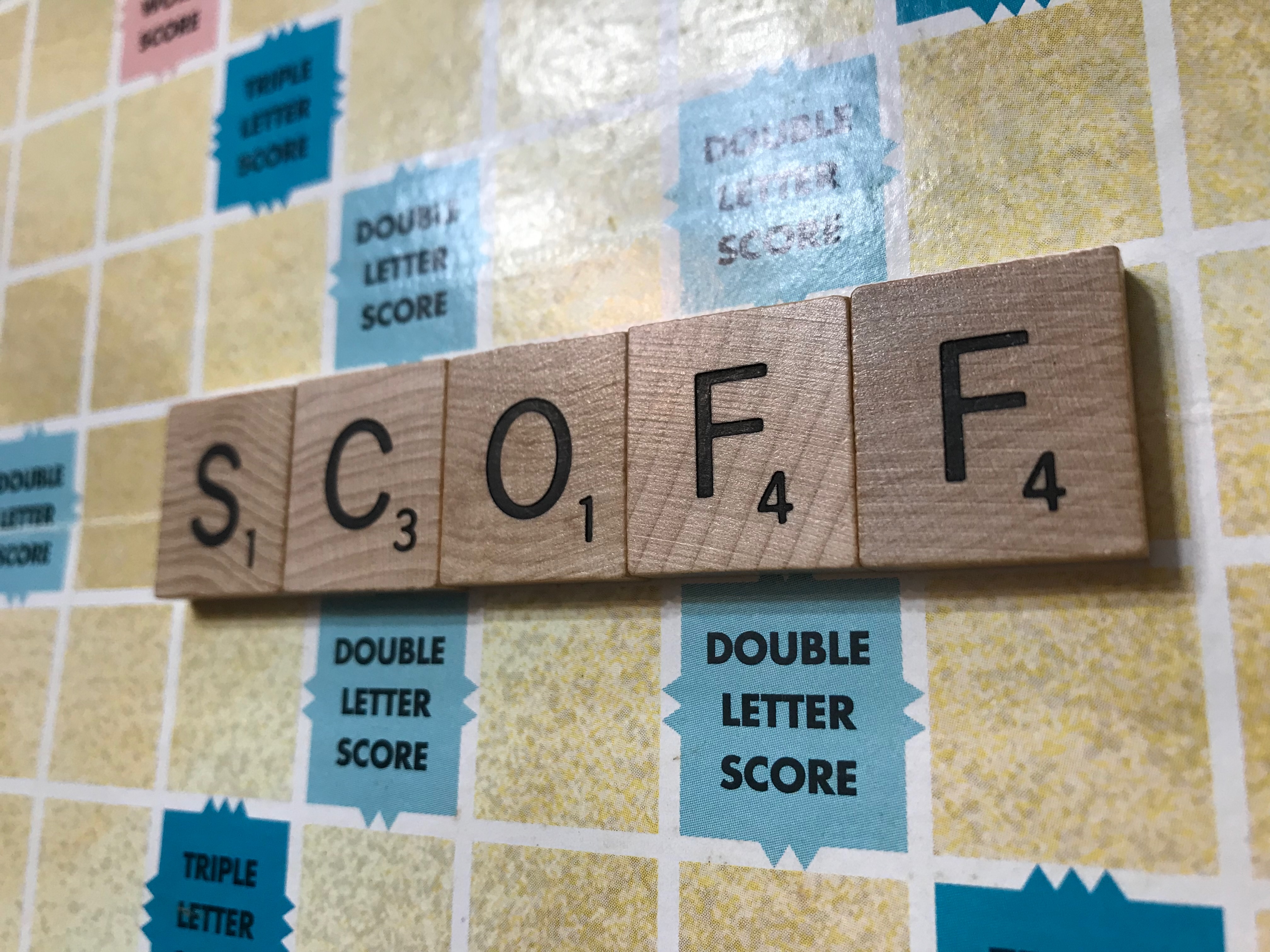
I can’t remember who started it.  Somehow, though, when I watch movies on Amazon Prime, the closed captioning kicks in.  I generally don’t mind this too much since some dialogue is whispered or indistinct.  I also presume some kind of AI does it and it makes mistakes.  That’s not my concern today, however.  Today it’s word choice.  Humans of a certain stripe are good at picking the correct verb for an action.  I’ve been noticing that the closed captions often select the wrong word and it distracts me from the movie.  (Plus, they include some diegetic sounds but not others, and I wonder why.)  For example, when a character snorts (we’re all human, we know what that is), AI often selects “scoffs.”  Sometimes snorting is scoffing, but often it’s not.  Maybe it’s good the robots don’t pick up on the subtle cues.

This isn’t just an AI problem—I first noticed it a long time ago.  When our daughter was young we used to get those Disney movie summary books with an accompanying cassette tape (I said it was a long time ago) that would read the story.  Besides ruining a few movies for me, I sometimes found the verb choices wrong.  For example, in Oliver (which I saw only once), the narrator at one point boldly proclaims that “Fagan strode into the room.”  Fagan did not stride.  A stride is not the same thing as a shuffle, or a slump.  Words have connotations.  They’re easily found in a dictionary.  Why do those who produce such things not check whether their word choice accurately describes the action?

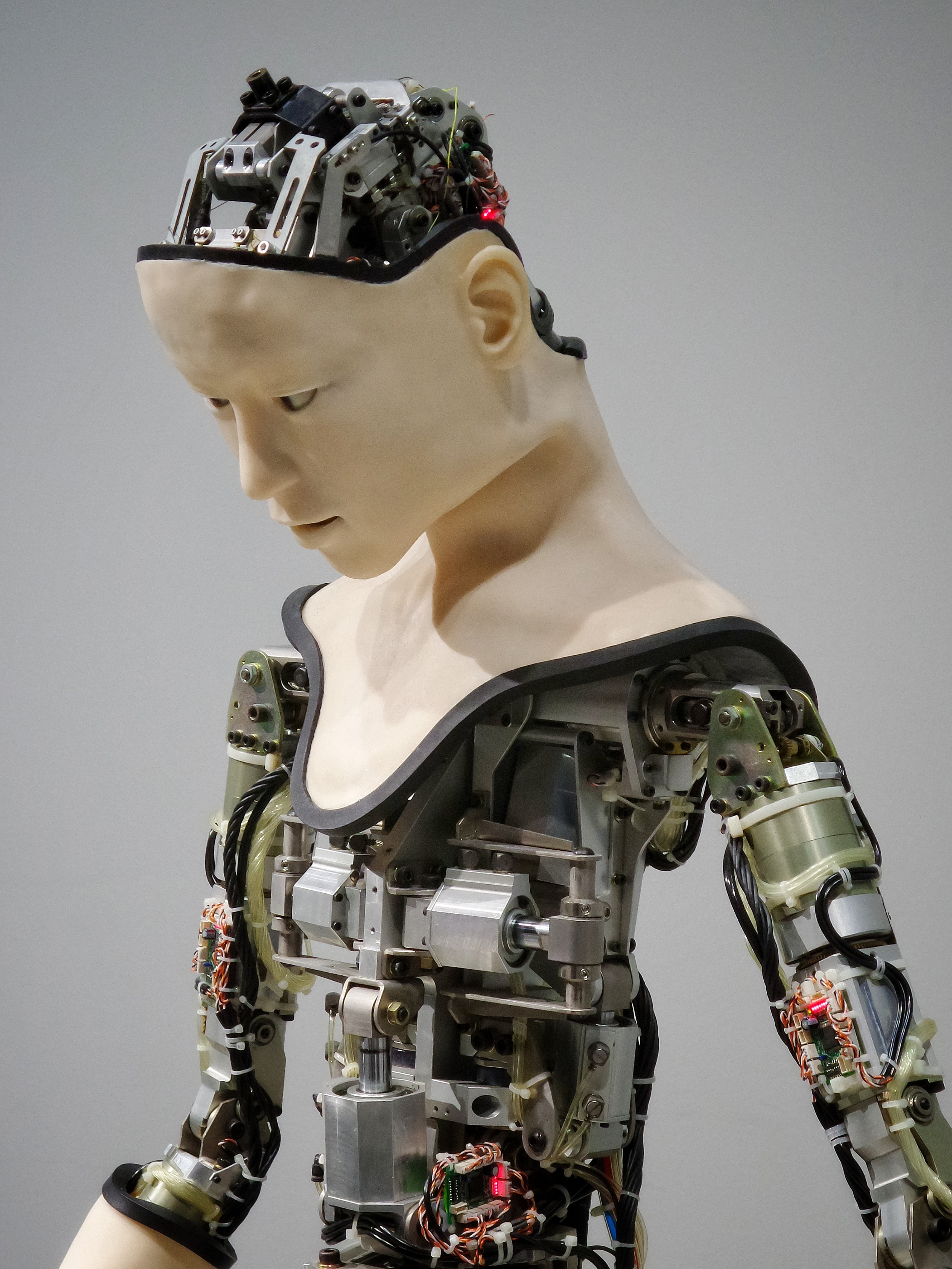
So when I’m watching my weekend afternoon movies, I want the correct word to appear in the closed captioning.  Since the nouns generally occur in the dialogue itself, it’s the verbs that often appear off.  Another favorite AI term is “mock.”  Does a computer know when it’s being mocked?  Can it tell the scoff in my keystrokes?  Does it have any feelings so as to care?  AI may be here to stay, but human it is not.  I’ve always resented it a bit when some scientists have claimed our brains are nothing but computers.  We’re more visceral than that.  We evolved naturally (organically) and had to earn the leisure to sit and make words.  Then we made them fine.  So fine that we called them belles lettres.  They can be replicated by machine, but they can’t be felt by them.  And I have to admit that a well-placed snort can work wonders on a dreary day.


Web Dark

I know, I know.  My hours are odd, but I’m not the only one awake at this time.  So home alone one weekend—hands slapping sides of face, mouth gaping open—I decided to go grocery shopping at six, when the store opens.  It was a frosty morning and I hadn’t yet shaken the chill from getting out from the covers and throwing on clothes before the thermostat fully awoke.  I checked the store website.  Hours: six to eleven.  Off I drove.  Not trusting any kind of authority, really, I was glad to see several cars in the parking lot.  I gathered my reusable bags and approached.  The sliding doors weren’t welcoming that morning.  I tried the other side since sometimes they lock the south doors until later.  Same results.  Then I saw the hours: seven to eleven.  Trust no one.

I had an hour to wait and the car was still cold.  I drove back home, pondering the unreliability of the web.  At least with a phone book you could take a big, thick tome in and point to the ad—“it says six a.m.!”  Websites are, of course, not always updated.  Maybe the six a.m. opening was a pandemic thing.  (I’m still waiting for the web to tell me the pandemic is over.)  Somebody, however, didn’t bother to update the website.  And I was shivering.  Steam coming out of my ears would’ve been welcome to warm my fingers at this point.  Now, I know that neglected things fall apart.  Abandoned houses can have trees growing through them, for goodness sake.  But if you’re a colossal food chain can you not pay to have your website updated?

Broken links lie scattered like glass shards across the internet.  The other day I tried to check out an independent small publisher only to land on the entry page to a porno site.  The publisher had gone under and the domain name sold.  Look, all I want to do is get groceries and get back home so that I can get my weekend activities underway.  I may be on my own for the day but that doesn’t mean I’m planning to waste my time.  Instead I have to go back home, back the car into its slot, unlock the back door (which is friendly), put my hands on the radiator for a few minutes, and then turn around, go out, and try again.  I suppose I could use the time to surf the web, but honestly, I don’t really trust what I might find there.


Upon Further Occlusion

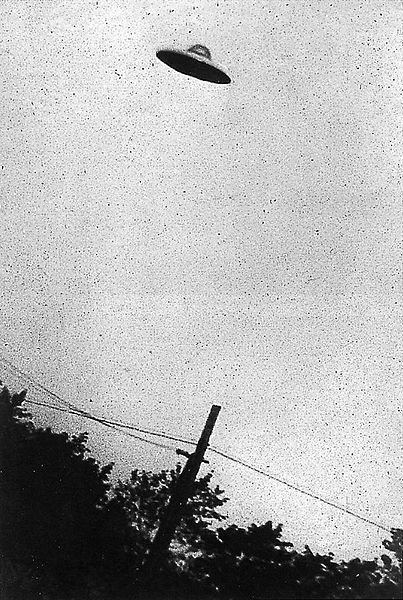
Admittedly the source is GBN, but the headline is irresistible: “Nasa ‘quietly funding’ theological conferences amid ‘demonic’ UFO fears.”  Essentially an interview with Nick Pope (no relation to “the Pope”), the story posits that NASA has been spending on theology because of fears that UFOs might be demons.  Nick Pope is a recognized ufologist, but the story doesn’t state where he acquired the information on NASA’s spending habits.  Pope did work for Britain’s Ministry of Defence, and has had a long-standing interest in UFOs.  And some US congressional members have stated that they believe said UFOs are demons.  I’d still like to see some documentation, however, before accepting that NASA’s paying for conferences in a discipline that’s on decline in academia.  Seems a little difficult to believe.

It also seems like this would be a more exciting theological conference than the one I attend.  Perhaps even stranger than UFOs is the use of the word “theology.”  In British English the word tends to mean what “religious studies” means in these (still) United States.  American English understands theology to be a distinct part of religious studies—the discipline that is occupied with philosophical questions within a specific tradition.  The one probably most familiar is Christianity, where historical theology and systematic theology are often on seminary curricula.  I’ve noticed more and more Jewish and Islamic theology cropping up in recent years.  I always take pains to say I’m not a theologian (in the American sense).  Maybe it would just be easier to consider UFOs.

Image credit: George Stock, public domain via Wikimedia Commons

There’s no doubt that theology gave us demons.  One of the points I was trying to make in Nightmares with the Bible is that that’s not entirely true.  Demons came first, and theology later.  People have, historically, always believed there were other entities that behaved with intelligence.  Generally they were more powerful than mere humans.  It was really only around the time that Christianity began that such entities were coded as purely evil.  Those who posit that UFOs are demons really aren’t up on their theology, which makes me wonder what kinds of conferences NASA is spending its money on.  If it is.  This seems plausible because the government often spends on things that are unexpected.  I personally would like to see a bit more of it funneled towards education, but I’m just one voter.  In any case, if there are such conferences, and if they’re British style theology, please put me on the mailing list.


Castle Dreams

It’s a real problem.  If you’re a passionate collector you eventually run up against the space issue.  A New York Times piece tells how a couple that collects puzzles had to buy an Italian castle to house their collection.  I appreciate their passion, but I operate on a more modest budget.  We bought our house going on six years ago.  Like many people raised in poverty, I’m a bit of a packrat.  When you’ve experienced a life of not being able to afford things, you tend to keep everything.  That’s an economic reality.  You spent money on this and you don’t want to waste it.  Add to that the passion of a collector and you could have a real problem.  Castle-sized.

When we were searching for houses the market was poor.  It still is.  Although a recent trip to Somerville, where we used to live, revealed massive amounts of new apartments—we were literally stunned—buying a house remains difficult.  (But all those apartments!  When we moved to Somerville in 2006 there were only a few units available, so I guess that was before it became popular.)  And we specifically needed a house where you could keep books.  (I do periodic purges and end up feeling full of regret afterwards.)  Our house has a large garage with storage space.  Not an Italian castle, but the principle is the same.  Only our garage has been taken over by aggressive squirrels.  We can’t yet afford to have the roof rebuilt (with solar panels because we have beautifully unimpeded southern exposure); we can’t lay up books where squirrel and mildew doth corrupt, so I guess we might have to consider a castle down the road.

My escape fantasy would probably be Ireland, however.  They speak English there and they have castles.  And Scotland’s just across the way.  Although I spent my doctoral years in Edinburgh, my ancestry leans more toward Ireland.  And Germany, but although they have castles I’m not sure I can revive my German well enough to get along there.  No, Ireland might be the best choice for my castle-buying dreams.  Of course, those of us who grow up poor do dream of castles.  I read about them in books.  And books beget books—this seems to be an inescapable law of nature.  I do wonder if Irish castles have problems with squirrels, though.  If I’m going to make this work it’s going to require quite a bit more money.  And thought.  It’s a real puzzle.

Photo by Reid Naaykens on Unsplash

Sticky Thoughts

It’s a common problem.  You need to stick two things together.  Perhaps you don’t have welding or soldering equipment lying around the house so you buy some glue.  Now, I don’t know if you’ve been in an adhesives aisle recently, but the choices are overwhelming.  Not only that, but ephemeral.  I mean the bonding action has improved since I was a kid, but the problem is I can’t use glue fast enough.  Like the old-fashioned White Out, you open a container and use it as quickly as possible because it’s going to dry out.  I was reminded of this when I needed to stick some fabric to plastic (don’t ask).  I tried some Elmer’s left over from when my daughter was in middle school sometime in the second Bush administration.  That didn’t work.

Then I found a bottle of Gorilla glue.  The problem is that it sticks to itself.  So much so that I couldn’t get the bottle open.  I could see there was some liquid life in there, but the top half of the contents seemed to have congealed and clung to itself.  That wouldn’t work.  I eventually found a tube of plastic glue and since one of the pieces for my project was plastic, I figured that’d work.  Still, it made me wonder about the conscience of those who make adhesives.  Surely they must know the mindset of, “oh, I’ve got lots of stuff to fix, so I better buy a reasonable size bottle.”  Only, the fixing comes at widely spaced intervals and the glue can’t last that long.  Various Crazy Glues are the worst.  They’re one-time openers, just like White Out.

My most recent trip to the adhesive aisle brought a moment of clarification.  Although I try to reduce waste, one company (not a sponsor), was selling little, tiny tubes of Crazy Glue.  Single-use units.  And you get six/eight per shot.  That works for quite a few applications.  Still, I’ve got a number of half-full (I’m an optimist) bottles of various glues that can’t seem to get over themselves.  I guess the lesson we’re to take home is buy in small quantities, even though the unit cost is higher.  You can always buy two, no?  Things don’t break at convenient times, unfortunately.  You run to the closet to see what glue you’ve got.  Then you drive to the store to get some that’s not all gummed up in the bottle.  It’s a dilemma.  Just like that nagging question of why someone’s trying to stick cloth on plastic.


Not The Sting

Why do we make the decisions we do?  Watch the movies we do?  I have to confess that for me a number of strange factors combine to make for some weird choices.  For example, Invasion of the Bee Girls is difficult to explain apart from compounding oddities.  One is that Amazon Prime auto-suggested it too me (for free).  Yes, I have a history of watching bad movies and this definitely fits that bill.  Fuzzy-headedness during my weekend afternoon slump time probably played into it.  Along with the fact that I’d been researching bees and that brought the movie The Wasp Woman back to mind.  Wasp woman, bee girls?  It’s free and I’m not going to be able to stay awake otherwise.  The movie is about what you’d expect from a low-budget 1970s sci-fi horror film.  It did make me think I should read about movies before I watch them rather than after.

Nevertheless, I’m trying to develop an aesthetic for bad movies.  If you’re a regular reader you’ll know that I have a fascination with Ed Wood and his films.  I even read a book about him and also read a book on why it’s okay to like movies that we tend to label as bad.  No matter how you parse Invasion of the Bee Girls, it’s bad.  The acting, the writing, the plot.  Still, some of us have a taste for films from the seventies—it’s kind of a nostalgia trip since I was really only becoming aware of the odd world of science fiction about then.  Nicholas Meyer, who wrote the initial screenplay wanted his name removed after he saw the changes that’d been made.  That should be telling you something.

Meyer, while not a household name writer, did pen some good detective stories about Sherlock Holmes, and wrote, uncredited, both Star Trek II: The Wrath of Khan and Fatal AttractionInvasion of the Bee Girls has a somewhat salacious plot that fits the Zeitgeist of the seventies of which I was unaware, growing up.  The seventies were my sci-fi high point, it was good escapist material for someone living in a situation less than ideal for day-to-day living.  I watched, for example, Killdozer about that time and thought it was great.  Now that streaming is how we watch, the amorphous internet has a record of what we’ve seen and then recommends products for us based on our record.  I really thought we outgrew being tracked all the time.  Little did any of us know that it was only getting started in high school.  And as long as you have a penny to spend, those who track us will try to figure out how to take it.  You could get stung.


A Footnote

I was recently compelled to use footnotes.  I don’t mean the clever asides that capable writers sometimes utilize to spice up subjects by making points off topic.  No, I mean the kind with author, date, title, city, publisher, page number.  I deal with footnotes daily—it’s an occupational hazard.  As a recovering academic I’m trying to get away from using footnotes on everything from grocery lists to daily meeting reminders.  Cite your sources!  That’s the kind of rhetoric that’s pounded into the heads of bright young people, often preventing them from learning to think for themselves.  At this stage of my life a footnote is more often trying to find someone who agrees with what I’ve observed for myself.  Hmm, did anyone ever say that before?  If so, where?

My concern goes down to the level of cities.  Yes, cities.  Standard format requires you cite the city in which a book was published.  This ridiculous pre-internet artifact had a purpose originally, but I have worked for two international publishers and I can tell you two related, and perhaps contradictory points: employees can tell which office a book is from: New York or London.  And unless you work for said publisher there is almost no way for you to know.  So if a publisher has offices in a dozen cities, you need to write a dozen of them in your footnote.  Does this sound like a rational thing to do?  Don’t get me wrong—it’s important, very important to cite the publisher.  But it’s not like there are a ton of presses around with the exact same name.

There’s a move among some reference experts (refperts, if you like) to do away with the city in footnotes.  It’s a reasonable guess that Cambridge University Press is pretty widely recognized.  And that Cambridge is located in Cambridge.  Or course, there’s a Cambridge in Massachusetts, and I hear there’s a university there as well.  In any case, if you don’t know where a publisher’s located, there’s a remarkable invention called the internet where you can look it up!  Pedanticism comes naturally to academics, I suppose.  Had I not been one I would probably have had no reason to write such an anal post as this.  Still, there’s a larger point: when is one able simply to assert what one knows?  I frankly don’t remember the page on which I read most facts I point out in my writing.  Often I notice them myself and recognize them as facts when there’s good, solid evidence.  Of course, I really should footnote that.  If I can remember in which city the appropriately named Random House is located.

How do you footnote this?

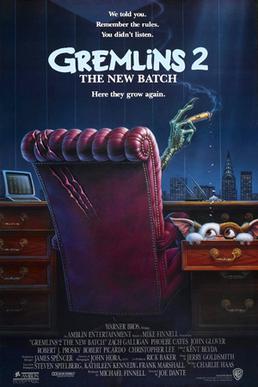
Drac Ops

Just don’t ask, okay?  Like most things in my life, I discovered Dr. McNinja way past when it was popular.  Who knows?  Maybe it’s still popular.  I’m not the best judge of that kind of thing.  I’ve read a few graphic novels in recent years, generally when someone lends them to me, or when a movie I like is based on them.  Now, the thing about Dr. McNinja is that it started out as a webcomic.  People younger and more with it than me have shown me other people younger and more with it than me making a good living web cartooning.  They don’t have 9-2-5s and they live, going by their videos, in nicer houses than I do.  So when someone suggested I look up Dr. McNinja I found an old-looking website saying it was no longer online.  The author had published it in book form.

Even though I work in publishing, I find it difficult to tell if a book is out of print.  We live in that strange purgatory where IP (intellectual property) can be kept on life support until copyright expires without ever really having to print more books when they run out of stock.  They’re never truly out of print.  I’m guessing that’s what happened when on Amazon you see that only used copies are available.  So which McNinja to select?  The one with a cover that riffs off Plan 9 from Outer Space, of course.  That movie keeps coming back into my life.  It’s one of Fox Mulder’s favorites on the X-Files.  In any case, I was hardly prepared for the amazingly creative imagination that Christopher Hastings has.  If you start with Operation Dracula! From Outer Space you’re entering the story in media res, as the academics say.

I confess to liking Teenage Mutant Ninja Turtles when it first came out.  These days the exoticism of eastern Asia is frowned upon by academics, but it’s still there in Christopher Nolan’s Batman Begins, so why not?  In case you’re wondering, there is a reason behind all this.  I can’t tell you at the moment, however.  I can say that if you’re looking for a wild, wild story with lots of unexpected twists and turns, Dr. McNinja will not fail to win approbation.  I’m dithering on whether to go back and start from the beginning—these print volumes are becoming collectors’ items, it seems.  And no matter how much fun it is, reading graphic novels always feels like cheating to me.


Strangers

Okay, so I like to think that I’m a reasonably intelligent person.  I can drive a car.  I’ve read over two thousand books.  I have been blogging for nearly a decade and a half.  Why can’t I figure out this password thing?  My brother has a blog on WordPress too.  His posts are quite different than mine, but I always like to read them since we think a lot alike.  Anyway, I wanted to leave a comment on a recent post he wrote.  You’d think that’d be easy since this blog is also hosted on WordPress.  (I’m the one who suggested WordPress to him.)  When I went to post the comment I received a dialogue box basically asking “and who might you be?”  When I gave my web credentials it wanted a password, but it wasn’t clear which password it wanted.

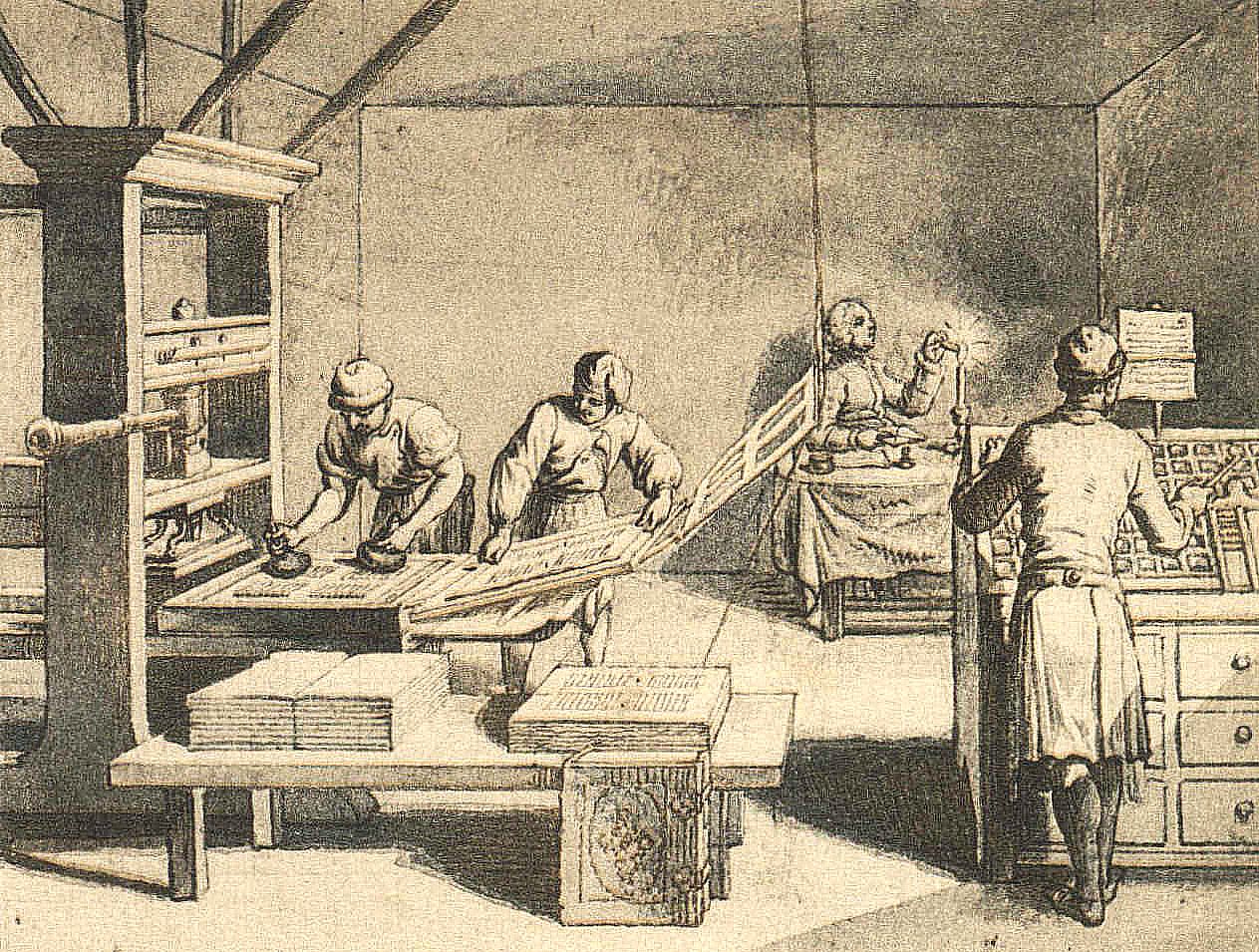
An actual word press; image credit: DANIEL CHODOWIECKI 62 bisher unveröffentlichte Handzeichnungen zu dem Elementarwerk von Johann Bernhard Basedow. Mit einem Vorworte von Max von Boehn. Voigtländer-Tetzner, Frankfurt am Main 1922, public domain via Wikimedia Commons

Like most human beings alive today I have more passwords than atoms in a typical tardigrade.  With a brain over sixty, trying to recollect them all in an instant, well, let’s just say that ain’t happenin’.  As I laboriously lumber through all relevant passwords (I’m pretty sure they don’t want all the unique ones I use at work, in addition to my private accounts), it rejects each and every one.  You see, WordPress is funny.  My own account, now 14 years old—maybe that’s the problem—those teenage years!—doesn’t recognize me at times.  Indeed, on my own blog (and I have a paying account) it sometimes blinks its virtual eyes and says, “and who might you be?”  I try not to take this personally.  I mean, we’ve only known each other for years.  And all I want to do is put a supportive comment on my brother’s blog—we share the same surname, and even the same web host.  What could be so difficult about that?

I’m pretty much logged into my WordPress account constantly.  I post every day.  There’s over 5,300 mini-essays of about 400 words.  That’s over 2 million words.  Is this relationship really so one-sided?  I’m trying hard not to let my aporripsophobia get the best of me here.  Just tell me which password you want!  And, if I can use it to log into my own WordPress account, why won’t it work for the WordPress accounts of family and friends when I want to make a comment?  We’ve been together for so long, do you really not know me any better than this?  Hey, I think I need a private moment with WordPress—you can check out my brother’s blog while you wait…


Not so E-Z

Paying for someone else’s mistake.  That’s what technocracy brings.  We’ve used E-Z Pass for years.  We first got initiated in Pennsylvania although we lived in New Jersey at the time.  In those days we were taking lots of trips from New Jersey to upstate New York, for which you generally have to drive through Pennsylvania.  Hey, we’re a tri-state area.  One of the ironies my wife and I noticed is that you have to pay tolls to get out of New Jersey, but not to get in.  That’s not a scientifically-verified fact, just a pedestrian (or vehicular) observation.  Since I’ve got more things on my mind than I know what to do with, we set the account to auto-replenish.  When funds get low, it automatically refills.  Nifty, huh?!

For some reason I can’t even remember the card on which this system was based had to be reissued.  Like most people I can’t remember all the auto-renews on any given card, so when I get a notice that there’s a problem, I update immediately.  So let it be with E-Z Pass.  See, there—wasn’t that easy?  But apparently not.  The day after I updated (and given that transactions are instantaneous these days, what, me worry?) we happened to drive to New Jersey.  My wife had four work-related trips to our neighboring state over the next two weeks.  Then the violations started arriving.  From New Jersey E-Z Pass.  I’d spoken with a rep from Pennsylvania E-Z Pass the day before and he assured me everything was set up correctly.  But New Jersey plays hardball.  They won’t even talk to you until you’ve received the violations by mail—weeks after the fact.

Any violation comes with a $30 surcharge.  I needed to speak to a person since NJ’s E-Z Pass menu doesn’t offer an option for “If our system has screwed up and your being charged for it, please press 666.”  The message immediately says there will be a forty-minute wait to speak with a representative (PA E-Z Pass picks up on the first ring, just sayin’).  Forty-minutes of muzak turned into an hour.  My phone died.  I recharged and tried again.  Another hour passed.  Finally I called at 8 a.m. the next morning—there’s still a forty-minute wait, but it’s only forty minutes.  I finally spoke with a truculent rep (if you’re already out of sorts by 8:40 a.m. perhaps it’s time to look for a different job) who told me I had to set up an account for NJ E-Z Pass—they don’t have truck with PA E-Z Pass—and check it seven-to-ten business days later to see if the charges had cleared.  E-Z Pass really isn’t that easy.  Keeping a pocket full of quarters might save you time in the long run.


Out There

While Amazon Prime includes a few A-list horror movies, those that it does I’ve already watched.  Since I can’t afford to pay for this habit, I watch what’s free.  That brought me to the horror comedy There’s Nothing out There.  Written and directed by a twenty-year-old guy, it’s kind of what you might expect.  Its main claim to fame, apart from being a low-budget monster flick, is that it anticipates Wes Craven’s classic Scream.   The latter is famous for being so self-aware.  One of the characters keeps telling the others what happens in horror films and, of course, those things happen.  Although There’s Nothing out There is silly, one of the characters does exactly that.  In the funniest moment in the movie he looks directly at the camera and says “It’s a distinct possibility” in response to one of the girls asking “So you’re saying we’re in a movie?”  Craven didn’t borrow that, but then, Scream is a landmark.

So what’s it about?  There are seven young people who head to a cabin in the woods.  Actually, it’s a regular house, and quite a nice one at that.  The three couples are there for sex but the single guy (Mike) is the horror expert and gets on everyone’s nerves.  He’s right, of course, that there is a monster on the loose.  A slimy green thing with a huge mouth full of pointy teeth, has fallen from space into the neighborhood and it slimes the guys, digesting them, and tries to mate with thee girls.  And if it shoots lasers into your eyes you become its servant, helping out with its mission.  The kids are picked off, of course, with Mike surviving along with one of the couples.  Before they can stop the monster a plumber also gets eaten.

Horror comedy is a strange genre.  It tends to work because there are elements of humor in much of horror.  It’s not all blood and gore—the best examples use that sparingly, in any case.  And horror comedy doesn’t really frighten since it’s pretty clear that it’s being played for laughs.  Sometimes such movies venture into the bad realm—there’s a reason some movies are free on Amazon Prime—but at times they actually have quite a bit to offer.  There’s nothing scary about There’s Nothing out There.  It’s the kind of movie that tends to grow into a cult classic over the years, however.  And while it’s not A-list material, it’s still worth watching for free.


Through the Woods

The thing about appreciating bad movies is that it’s difficult to be disappointed.  On a recent weekend I’d watched a horror film that didn’t sit well with me (or maybe it was the last night’s supper), and I decided I needed to see something else.  Something that was free on my streaming service.  I’d read about Transylvania 6-5000 someplace, but I couldn’t remember where.  The list of stars won me over: Jeff Goldblum, Ed Begley Jr., Jeffrey Jones, Geena Davis, Michael Richards—why don’t more people talk about it?  Because even for a comedy it has trouble working.  Well, a horror comedy, to be precise.  Emphasis on the comedy, which tries too hard.  I couldn’t get over the fact that this was a tall guy movie—Goldblum, Begley, Jones, and Richards are all over six feet tall.  Usually other actors literally have to look up to them.

Even though it’s a groaner, it’s not without worth.  It was filmed in what used to be Yugoslavia when it was rare for anything to come from behind the Iron Curtain.  Set in Transylvania, it wasn’t too far off.  (Transylvania is located in Romania, of course.)  Some of the performances aren’t bad, Davis’ vampire nods to Frank-N-Furter in Rocky Horror, and Carol Kane is fun to watch as Lupi.  The male roles are generally the problem.  In case you’re wondering, the plot is that two reporters—Goldblum and Begley—are sent to Transylvania to find a story.  The locals laugh at them, insisting Transylvania’s a modern country with no monsters.

When the classic monsters do appear, they all have rational explanations.  There are riffs off vampires, werewolves, Frankenstein’s monster, swamp monsters, and the mummy.  There’s even a mad scientist.  The problem is the movie really doesn’t give itself over to either comedy or horror.  There are ways to make that combination work.  And, as with C.H.U.D., the title put me off.  I didn’t know until reading about it later that it was also a riff, but from the Glenn Miller song “Pennsylvania 6-5000.”  I’d never heard the song before and was unfamiliar with its title.  Rudy De Luca, the director, had worked with Mel Brooks and perhaps if they’d collaborated on this one the results might’ve been better.  So, it’s a bad movie.  That doesn’t mean it isn’t worth watching.  Movies like this sometimes serve as an homage to the monsters with whom we grew up, and who even met Abbott and Costello in their own lifetimes.  Just be prepared not to take it too seriously and not to laugh too much.


Worthy of Note

I admit it.  I use Wikipedia quite a lot.  When I was teaching I wasn’t one of those professors who said “Don’t use Wikipedia,” but I did say that if students used it they should look up the references and make sure they were legitimate.  Wikipedia is quite an achievement—a place to go to find out about many things, but not everything.  This leads me to an observation that I hope isn’t uncharitable: there are a lot of underwhelming pages on the website.  Anyone can edit it, of course, but I see quite a few pages of academics that have no more than a short paragraph of an (often) unremarkable bio, followed by fewer books than I’ve written.  And they have an encyclopedia entry.  It makes me wonder what it takes to be noteworthy.

I know quite a few Wikipedia page subjects.  Most of them are nice people.  Their greatest accomplishment is having landed a university post—maybe that’s enough to make someone noteworthy these days.  I haven’t managed to do it.  But many have.  And most of them don’t have their own pages.  I’m a realist about things like this.  My books don’t sell enough copies for anyone beyond you, dear reader, to recognize me.  This blog hasn’t had a million hits yet (it’s halfway there, in any case) and I can’t seem to retain followers on Twitter, or X, of whatever it is this week.  But then again, I don’t expect to be on Wikipedia.  Some people that I think should be aren’t.  Popularity shouldn’t be the measure of importance.  (That works both ways.)

It used to be that I’d run across Wiki pages with a header saying that a subject didn’t seem noteworthy enough.  Sometimes such warnings were even for publishers—those of us who write need to find outside information about publishers, no matter how small.  I don’t see those warnings much any more.  I suspect Wikipedia is so large (over six-and-a-half million pages) that constant policing would be necessary.  And how would it feel to have someone put a page together for you only to discover later that you’d been removed for just being too ordinary?  That’s gotta hurt!  Everyone, it seems to me, is notable.  All people should be paid attention to.  I suppose the rank and file of all of us would clutter Wikipedia endlessly, but I still do wonder how it is that surviving in academia is enough to make a person essential to know about, beyond their faculty webpage.


Intimate Thoughts

Although I haven’t had much time to devote to my fiction writing—I’m finishing yet another nonfiction title—I do have a Twitter account for my pseudonym.  I’ve always found it ironic that that Twitter account, which gets very little attention from me, has gained well over twice as many followers as the account in my real name.  On both accounts I follow back, but few notice the account where I post more often.  Strange.  Lately I’ve noticed that my pseudonym account has been getting attention from what seem to be cyber-prostitutes.  I’m not sure if that’s the proper name, but these users purport to be young women and they direct message you with solicitous intent (at least online).  Needless to say, I don’t respond.  It does make me wonder if that’s why Twitter is now known as X.

Social media has given new license to strangers, of course.  For a while there I accepted any invites I received on Facebook (publishers look at how many “followers” or “friends” you have on social media).  Many of these people I don’t know.  One, in particular, happens to be online quite early in the morning and has tried to video call me a few times on Facebook.  Those who do actually know me are aware that I spend less than five minutes a day on Facebook.  I post my post, check my notifications, and move on to other things.  In other words, anyone who knows me would never try to video call me through Facebook.  There are other ways to reach me.  I do have a blog, you know.  Social media has mediated a level of intimacy that I’m not ready to engage.

What am I doing here?

For all my daily shooting off at the fingers, I’m a pretty private person, really.  I’m shy—who knows? Maybe even on the spectrum—but also social.  Working in publishing I know that those who have the power to promote your book (and price it so mere mortals can afford it) want you to have internet exposure.  I guess that means some people will take it as an invitation to try to get sexy with you, or to call you at what is, in reality, the middle of the night.  I want people to get to know me first.  As much time as I spend writing, it’s a mere fraction of how I spend my days.  Intimacy should be reserved for friends.  At least I believe so.  Those who know me well know my pseudonym and its real-life counterpart.  For when I have time for that sort of thing.


Nuts and Bolts

It all began with an innocent laugh at the local hardware store.  It was Saturday morning, around 8:30 and I had to get some nuts and bolts.  Literally.  From those neat little trays that separate out individual pieces that may be the last place on the planet you can spend just a dime.  These local stores have an honor system with little bags on which you write down how many of which piece you took and the price.  Also a dying breed, these bags are made of paper.  One other guy was there doing something similar and when I picked up my bag, another clung to it and slipped to the floor.  He laughed.  Then apologized.  He explained that he seldom made it through the day without some aspect of Murphy’s Law taking place.  I let him know I didn’t take his laugh wrongly and that I knew Murphy’s Law, perhaps too well.

He then told me that he thought he’d write a book about it.  A novel, he said, like the book of Job.  My ears perked up.  Only this time, he suggested, God had to treat Job so that only bad things happened and used Murphy’s Law so that they would turn out good.  Every good thing God wanted to do would have to appear evil at first.  I encouraged this stranger to write this book.  I meanwhile couldn’t believe that I was having a conversation about Job with someone I didn’t know in a town where I’m still a bit of a newbie.  Do I have “former Bible professor” written on my forehead?  Even when I’m wearing a mask they seem to be able to tell.

Job, according to William Blake

But seriously, although I don’t get out much any more throughout my life I’ve had strangers approach me with religious issues for conversation.  Often at the strangest times.  I wonder if this happens to other people.  You can’t assume someone will know the book of Job, or what it’s about.  You can’t know that a stranger won’t take such a story idea the wrong way.  Me, I was counting out nuts and bolts.  Perhaps I was there to build my own Frankenstein’s monster.  Or some evil device to end the world.  Would Job calm me down or rile me up?  As it was, I was glad for the diversion.  8:30 on a Saturday morning is well into the day for me, having been awake for over five hours already.  And I’m glad to have an innocent laugh from a stranger.