Con-Ception

Sometimes you see something so often it become invisible. I pass by a local cemetery every day, and it wasn’t until a friend from out of town came to visit that I knew of the irony of its iron gates. Immaculate Conception Cemetery is one of several Catholic cemeteries in the area. In a deeply symbolic gesture, most cemeteries are designed as the ultimate gated communities. One of the great thrills for the young is to hang out in graveyards at night to test their mettle and for boys to impress the girls and each other with their bravery. But this can lead to vandalism issues. I remember how distressed I was, upon visiting a cemetery in upstate New York on a genealogical trip, to find a family marker for several of my ancestors heartlessly toppled over. I wrote to the cemetery custodian (people still used letters in those days), and the next time I visited, it was, to my utter relief, repaired. Part of my past had been restored.

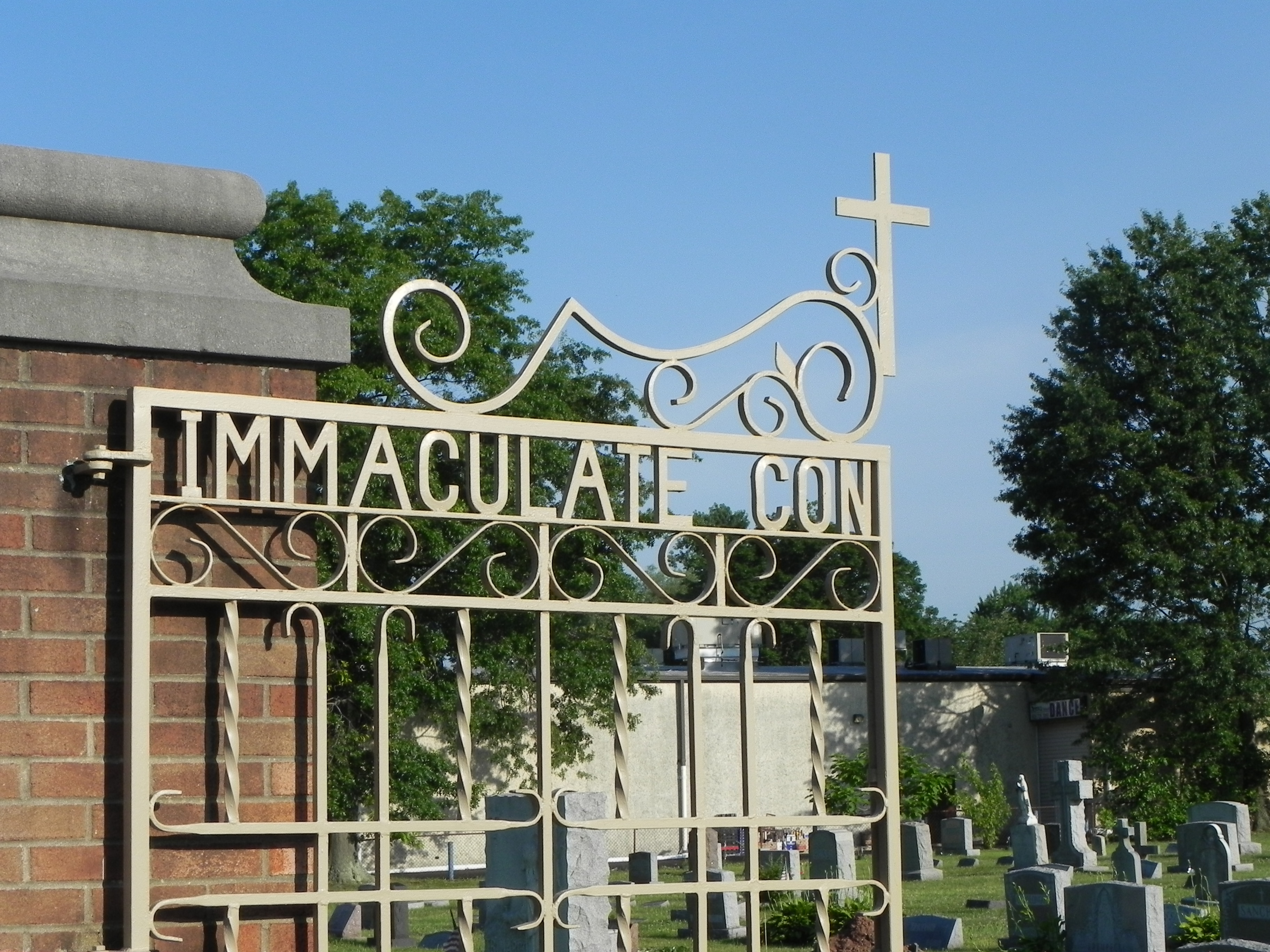
None of this, however, was what my friend pointed out. When the gates to the Immaculate Conception Cemetery are opened, the left hand gate reads, “Immaculate Con.” My curiosity aroused, I walked over the next morning to look. Indeed, “Immaculate Con” standing just beneath the cross. The right hand gate, cross-less, reads “ception Cemetery.” Without treading the road to Inception, I stood before the openly inviting gates with some wonder. Is there something deeper to this Immaculate Con? Is there something the church wants to tell us? Were the iron-mongers insinuating something covert? Or is it just the giddy over-imagination of yet another overstimulated religionist?
DSCN3298

Surely this is just the case of pragmatic spacing and pacing. The dead lie here in faith that they are counted among the chosen. Across town is a cemetery where, I noticed some years before, one half contains headstones facing east and another half has headstones facing west. Those facing east are inscribed with Roman letters, those toward the west with Hebrew. The Jewish and Christian dead lie next to each other, facing opposite directions.

Cemeteries say, despite their silence, volumes about what we believe. We put our dead out of our midst, but our cities grow and consume our necropoli, forcing us to face our beliefs yet once again. Do our deepest hopes and fears, tied so intimately with our mortality, make us who we are? We will all face death at some time. When we face the iron gates before the pearly ones, what will we see? If the gates are open, it might be that we’ll read, with our undead eyes, “Immaculate Con.”
Sweet Morality

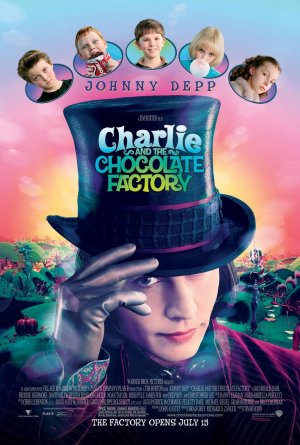
CharlieandtheChocolateFactory When I saw Willy Wonka and the Chocolate Factory as a child, I had never heard of Roald Dahl. Although I enjoyed the movie, it was never a favorite. Like any kid I liked candy, but I’ve seldom been motivated by sweets. I discovered Roald Dahl when my daughter was young, and read for the first time his somewhat more disturbing original version of the story. Tim Burton has a reputation for going back to the roots of beloved childhood characters and revealing their darker sides. When his Charlie and the Chocolate Factory came out in 2005, the appeal went beyond sweets, for this was a modern, if sinister, morality play. While rewatching the movie recently a number of what should’ve been obvious religious motifs suggested themselves. The first came when Charlie Bucket is shown in the main chocolate processing room reaching for a candy apple. Violet Beauregarde steps in and snatches the apple from the tree in a defiantly Evesque move. She later receives her punishment by being transformed into a fruit.

Augustus Gloop receives a strange, chocolatey baptism is what might otherwise be the waters of life. After all, the Oompa-Loompas are shown bowing down in worship to a cocoa bean in a flashback. When Veruca Salt attempts to catch one of Willy Wonka’s nut-sorting squirrels, in a rather disturbing scene reminiscent of Ben, the squirrels pin her down and carry her to the garbage chute. She is carried in classic cruciform style, emphasizing the martyrdom she receives at the hands of her indulgent father. Even Mike Teavee undergoes a kind of resurrection after being atomized and projected into a television.

A friend once told me that the characters in the film represent various deadly sins. Augustus Gloop easily falls into gluttony, and Violet Beauregarde is an emblem of pride. Veruca Salt clearly represents greed, and Mike Teavee is full of wrath. Willy Wonka is part devil and part god in the film, doling out just punishment in a seemingly unfeeling way, while rewarding the few instances of virtue. Deprivation forges virtue in Charlie Bucket demonstrating how clearly the movie is in the realm of a morality play. With its horror film tropes and forays into the truly strange, Charlie and the Chocolate Factory is an example of how morality persists even in the vision of those often considered completely secular. Without it the movie becomes just another excuse to overindulge in sweets.


Suit Yourself

I guess I’m going to have to sue myself. In this litigious society I have few options left. Instead of understanding and forgiveness (some of the positive motivations that religions have encouraged) our culture is controlled by those parsing out the finest particles of the law, seeking violations, and making somebody else pay for their mistakes. Money makes everything better. It is like the new God. I have to sue someone for this coffee I spilled on myself.

You see, I’m an early riser. I’m not really a coffee addict—I have a cup first thing in the morning, something I’ve been doing since college, and that’s generally it. Still, that first jolt is helpful in the waking process. I shlep around in my Edinburgh University sweatshirt for a pajama top. I like to be reminded of my post-graduate days in Scotland, and I appreciate the irony that my PhD never got me anything but this comfy shirt. This morning, laptop humming on my, well, lap, I baubled my coffee and spilled it all down my Edinburgh sweatshirt. It seared my skin, but I couldn’t jump up because of the laptop and any sudden moves would only slosh more of the hot liquid onto my burning chest. My mind immediately went to Liebeck v. McDonald’s, where the fast food giant was sued for selling hot coffee. I don’t know about you, but I’d almost rather suffer a burn than to drink tepid coffee. But somebody has to be sued, right? The question is: whom? Mr. Coffee for making my morning cup so hot? JSW for making my Edinburgh sweatshirt so absorbent? The unnamed pottery house in England that made the mug that wobbled in my sleepy fingers? Or maybe God for making the morning so early? If there’s anyone to blame, it’s me. Oops—I’ve admitted culpability, so I’ll have to sue myself.

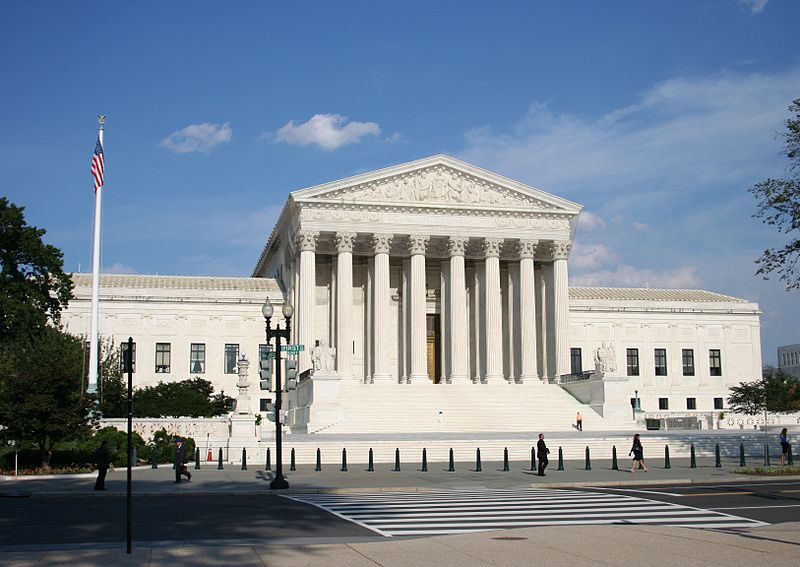
800px-SCOTUSbuilding_1st_Street_SE

For a society in love with the Bible, we’re far bigger on lawyers than forgiveness. Of course, the Bible is a pretty legalistic book. You can’t get very far in the Pentateuch without figuring that out. Only with the Bible it often isn’t a matter of suing; the stakes are considerably higher. Disrespecting parents can get you the death penalty, and mixing plant and animal fibers can get you expelled. Thumbing through my concordance I don’t see anything about coffee. I do see that I might be unclean for a day, but that’s okay because the Sabbath’s nigh. In any case, I’m too busy dreaming about what I’m going to do with all of that money.


God has Left the Theater

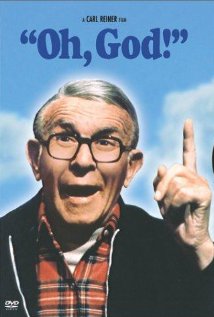
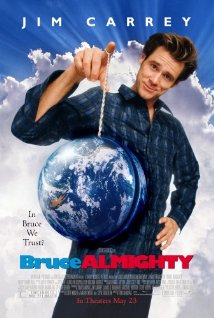
When teaching religion at the University of Wisconsin Oshkosh, I realized that an effective way to engage students was through popular culture. I could assign them just about any choice of movie and have them look for the religious themes of whatever class in it for a short paper. Of course, most went for the low-hanging fruit, over my teaching years, and I eventually had to ban movies with obvious religious themes or premises. One of those movies was Bruce Almighty. In a fit of nostalgia, I recently rewatched it. Never a big Jim Carrie fan, I nevertheless always enjoyed Bruce Almighty—it was such an improvement over those truly dreadful Oh, God! movies that were so popular in the late 70’s and early 80’s. I never found George Burns funny, and he made for an awfully feeble God. Everyone was buzzing in the new millennium when God was portrayed by a black man, Morgan Freeman. Still, we await a director who dares cast a female God. Patriarchy runs deep.

BruceAlmighty

One of the features that movies portraying God run up against is showing a believable omnipotence. The powers granted to mortals always seem so petty. Theodicy is always raised in these kinds of movies—why people suffer if God is good and all powerful—and since movies rely on directors and writers rather than theologians, they often leave the answer at the doorstep of free will. Human suffering is our own fault. In our society we can’t have a movie that actually pins the blame back on the divine, because that wouldn’t be funny. And movies where people meet God are almost always comedies. But Bruce Almighty is actually a bit more sophisticated than it seems at first. That is best seen in the outtakes perhaps, where Morgan Freeman seems to care more about people than George Burns did. Of course, my memory on the older movies is hazy. They were considered slightly blasphemous three-and-a-half decades ago. Today they seem tame.

OhGod

Why do movies with God in the cast rake it in at the box office? A couple of reasons suggest themselves. As humans, we like to place ourselves in the role of the divine to consider what we would do with unlimited power. Who wouldn’t, like Bruce Nolan, at least include their own satisfaction in the package? I think, however, there is a deeper, more serious reason. We do genuinely wonder about God’s motivation. Most of us don’t have the training to know how to grapple with the often incomprehensible arguments that theologians make. Even when we do, they still make no sense. Our movie gods appeal to us because they are so terribly Freudian—made in the human image. We can’t conceive of a god who’s not like us, so we at least make the situation funny. If we can’t achieve omnipotence, at least we can hope for a few laughs.


Heaven Forbid

Cars can be a nuisance—they consume resources, pollute the environment, and have a habit of being very expensive to repair. We’ve been pretty good about taking our car in for its regularly scheduled Toyota check-up. Since the garage is several miles away and my wife and I both work, it is often a matter of the one who can most easily work from home the day of the car doctor appointment taking it in. Our Toyota dealer has in-store wifi for those who can’t live without the internet. For some of us, work is almost exclusively internet. So it was that I drew the short straw and dutifully drove out to the dealership. I was pleased that my VPN connected so easily; this was going to be a snap. I was working happily away when I had to find somebody on a university website. I googled the name and clicked. I received a forbidden website message (copied below) explaining tersely: “Block reason: Forbidden Category ‘Religion’.” I tried again on the Society of Biblical Literature website—same message.

ForbiddenReligion copy

Now I can understand workplaces blocking pornography sites, and even Facebook (I found the latter to be blocked at Toyota some time ago, but I’ve never tried the former), but religion? I am a religion editor. How am I to work when I can’t access websites that contain the word “religion”? The more I pondered this—I could still check my email, and do VPN-type work with files from the office—the more it bothered me. On the television in the background inane daytime talkshow hosts were interviewing someone who’d written a book about God. How many more businesses out there are biased against internet religion? That means my blog is blacklisted along with the scantily clad and overly chatty. I fully support the disestablishment clause, but I also subscribe to the freedom of religion. Smirks aside, there is a serious undertone to all of this.

I have no desire to be proselytized at work. I also agree that it is the right of others to expect the same. Sometimes, however, a little religion might help work go down like a poppinian spoonful of sugar. One time when I worked for Ritz Camera in Brookline, Massachusetts (I seem to have a knack for working for businesses that are on the way out), I had a tough day. Some of our customers could be quite abrasive, and since the customer is always right, we had to take personal insults with a smile. One lunch-hour I told my manager that I needed to recoup my moxy (I didn’t use those words). I ducked out the door and stomped to the first church I could find and asked if I could just sit in the pew for a few minutes. The church secretary, a complete stranger to me, said “of course.” Ten minutes later I returned to work collected and able to face more unreasonable customers for the rest of the afternoon. Maybe it wasn’t religion, maybe it was only the calm of sitting in what some believed to be a sacred space, but my capitalist company got better performance out of me that day because of it. Ironically, at Toyota, my religion editing is cast in with the tax collectors and prostitutes. Only the tax collectors, I’m pretty certain, are always permitted to work.


Divine Election

Jesus, it seems, has given up appearing on tortillas and hedgerows to start endorsing political candidates. Of course, this is not really new news. Rick Santorum, Herman Cain, Rick Perry, and now Anna Pierre, candidate for mayor of North Miami, all claimed their campaigns were endorsed by the Almighty. Seems that God isn’t that great at picking winners. Anna Pierre, according to a story on NBC, came in last in the polls. Is it any surprise? Jesus always did have a soft spot for the underdog.

pierrejesus

American culture is an odd mix of secular and religious. We seem to want it both ways. Citizens like to believe that they are autonomous in their daily lives, free to choose their non-religious professions and pass-times, and on Sunday God takes over for an hour or two. Charged up on religious conviction, we want society to become more sacred, less trashy. But we still want to watch Fox at night. This disconnect has long fascinated me. No matter how many times God loses the election, a new crop of candidates will spring up with divine endorsements. The electorate, at least a significant part of it, will mindlessly follow along. Perhaps we prefer to believe in a deity whose hand is too short to save. Perhaps omnipotence is best left to boasts rather than belief.

The divine approval of a candidate has become so hackneyed that it has become almost the starting point for political contests. Where do you go after you’ve invoked the highest trump in the deck? Whose word means more than the Lord’s? In the heat of the campaign when policies and platforms just don’t sway the masses, who else can you trust? Often those who play such tactics consider those of us on the liberal side of the spectrum to be cynical. Theirs is religion in the service of the higher good, apparently. We wouldn’t want to be thought of as cynical, now, would we? Otherwise we might note that although Jesus may save, it seems that he certainly can’t vote.


Bing Spring

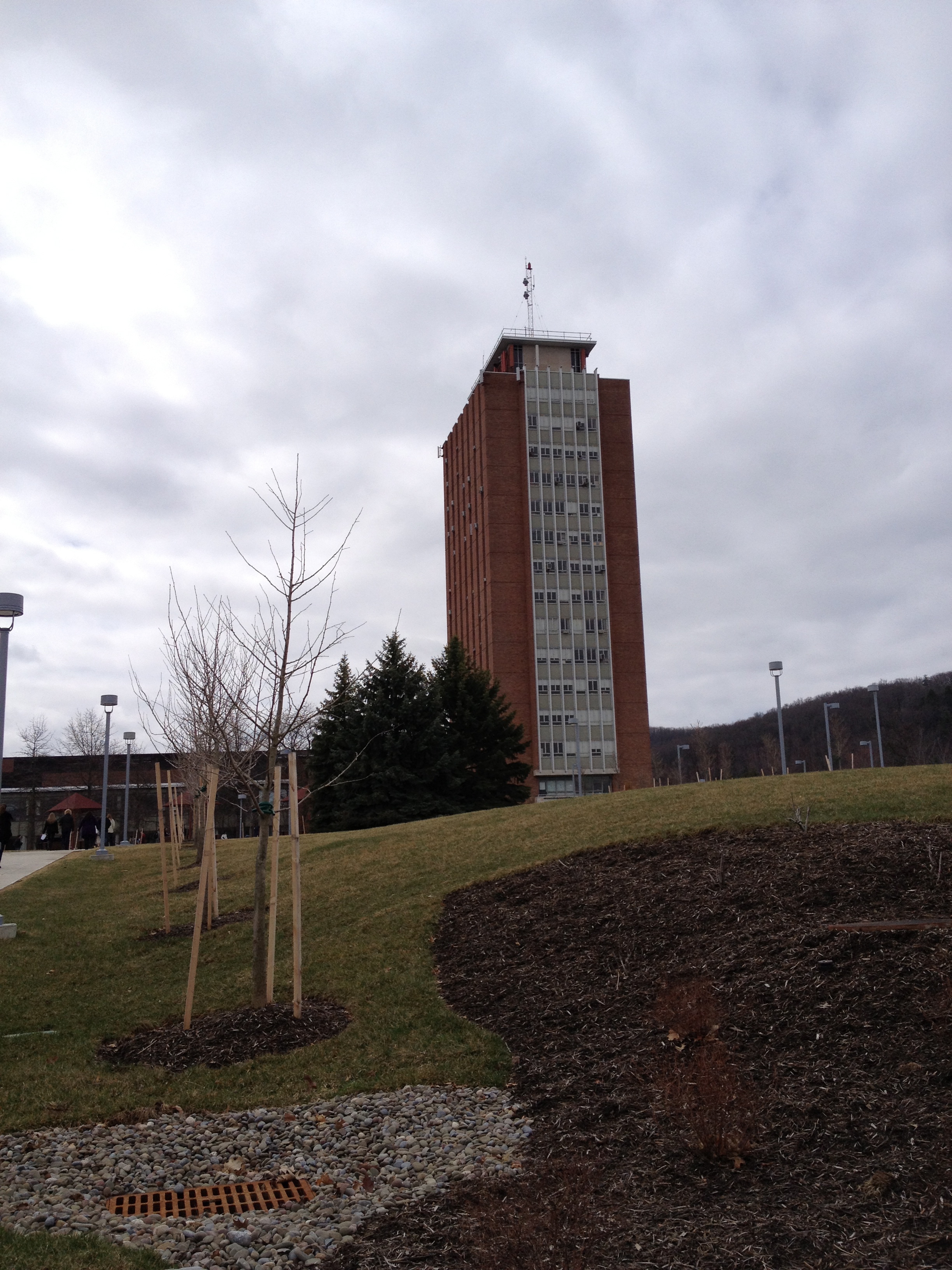
Binghamton University is, like most institutions of higher education, home to many rituals. Back around a century ago, anthropologists were convinced that religions began as a set of inchoate rituals that coalesced into primitive belief systems. Although most anthropologists today see this as an overly simplistic analysis, I found a recent story on Binghamton’s website an example of a nascent religion. It has to do with placating, or perhaps defying, the weather gods.

Like most good rituals, Stepping on the Coat has a practical pedigree. According to Bing’s own archives, the ritual began the year that I was born. An undergrad that year, overwhelmed by an April snowstorm, removed his coat and stomped on it. The snow stopped. As befits a scientifically inclined institution, this was initially chalked up as coincidence, but the same result occurred again the next year. Stepping on the Coat seemed to be a cure for late season snowstorms. In this year of lazy, lingering winter, many people—some of them not even students—must be seeking a cure for unseasonable weather. Perhaps Binghamton University students a half-century ago stumbled (stamped?) upon the solution. In the whimsical tributes given on the BU magazine webpage, the sacred and the profane are never very far apart.

Binghamton in spring

Binghamton in spring

I have done considerable research on the weather and its sacral implications. Most of my research has never been published, but the overarching idea, I believe, is sound. Our human perceptions of the divine are focused on the sky. Nietzsche declared that God is dead, but that death only really occurred when we penetrated our atmosphere and landed on the moon. Even then, looking up, we saw only blackness beyond. Infinity hangs, like Damocles’ sword, above our heads. We may pollute our skies, we may shut them out with artificial walls and ceilings. We may even punch through them with rockets. But our gods are up there, somewhere. And they are the ones who dictate our weather. The human response is up to us. Do we sit inside and complain, or do we stomp the coat in defiance of an uncaring deity? Binghamton is a green university, so that even amid the burgeoning religion of coat-stepping, there is a real awareness that when the weather goes awry in this industrial era, we know where the blame truly lies. As humans, however, our religious inclinations will insist that we continue to step upon the coat and claim the whole earth as our prize.


Duck and Cover

Although it is the twenty-first century, I’ve never had cable television. From my youngest days watching muddy black-and-white that sometimes revolved in a dizzying array up and down the screen, I’ve always considered television as a basic, constitutional right. You shouldn’t have to pay for it. Not far from New York City, even before digital boxes were required, analogue signals were so weak and unreliable that I just gave up on television all together. Except when I stay in a hotel. After a day out doing whatever a family does when not at home, we’ll stumble into a hotel room and flip on the TV. I am amazed at home many uncouth, self-made individual reality shows are on. Last hotel stay, I watched a show about heavily bearded guys in the Yukon trying to catch some lampreys so the dogs wouldn’t starve that winter. When they were about to shoot a moose, I switched channels to watch a family of over-fed, heavily bearded bayou store owners making turtle soup and sipping it from the very shell of the martyred terrapin. Manhattan felt like a slap in the face Monday morning.

200px-Duck_Dynasty_Promo

All of this is preamble to the fact that I’ve never watched Duck Dynasty, a show featured in this week’s Time magazine. Another heavily bearded family (I’ve had a beard since 1988 and it hasn’t landed me a reality show yet; how about Unemployed PhDs in the Land of Prayer?), now rich off of making duck calls and a reality show, are apparently one of the highest rated programs on the binary airwaves. The article, by Belinda Luscombe, makes the point that the Robertson family is a born-again clan whose religion is almost as important to them as shooting ducks. She notes that patriarch Phil grew up in extremely humble circumstances, and that his faith in the Lord doesn’t waver. People across the country are fascinated. The ducks, I presume, are nervous.

I am fascinated by this national obsession with hard-time, simple folk. From Ice Road Truckers to Dirty Jobs (not done dirt cheap), this country of sitting-behind-a-desk-staring-at-a-numbing-computer-screen culture is hungry for the authentic. The lived existence of those who face difficult times and get out of them with homespun ingenuity. The duck hunters whistle all the way to the bank. I grew up in humble circumstances, and to my recollection it was anything but glamorous. I’ve never seen Duck Dynasty, but Luscombe’s article reveals the hidden demon in the room as Phil Robertson laments his children building bigger houses and moving away from the Sears and Roebuck-toilet paper ways of his youth. The internet doesn’t help you much when you’re in the outhouse and the last catalogue arrived a decade ago. I wonder what would happen if more of us led meaningful lives. Would we still need the television to remind us that out there, far from the urban centers that define our civilization, godly duck hunters haunt the swamps of Louisiana? Would we even need television at all?


Heavy Metal

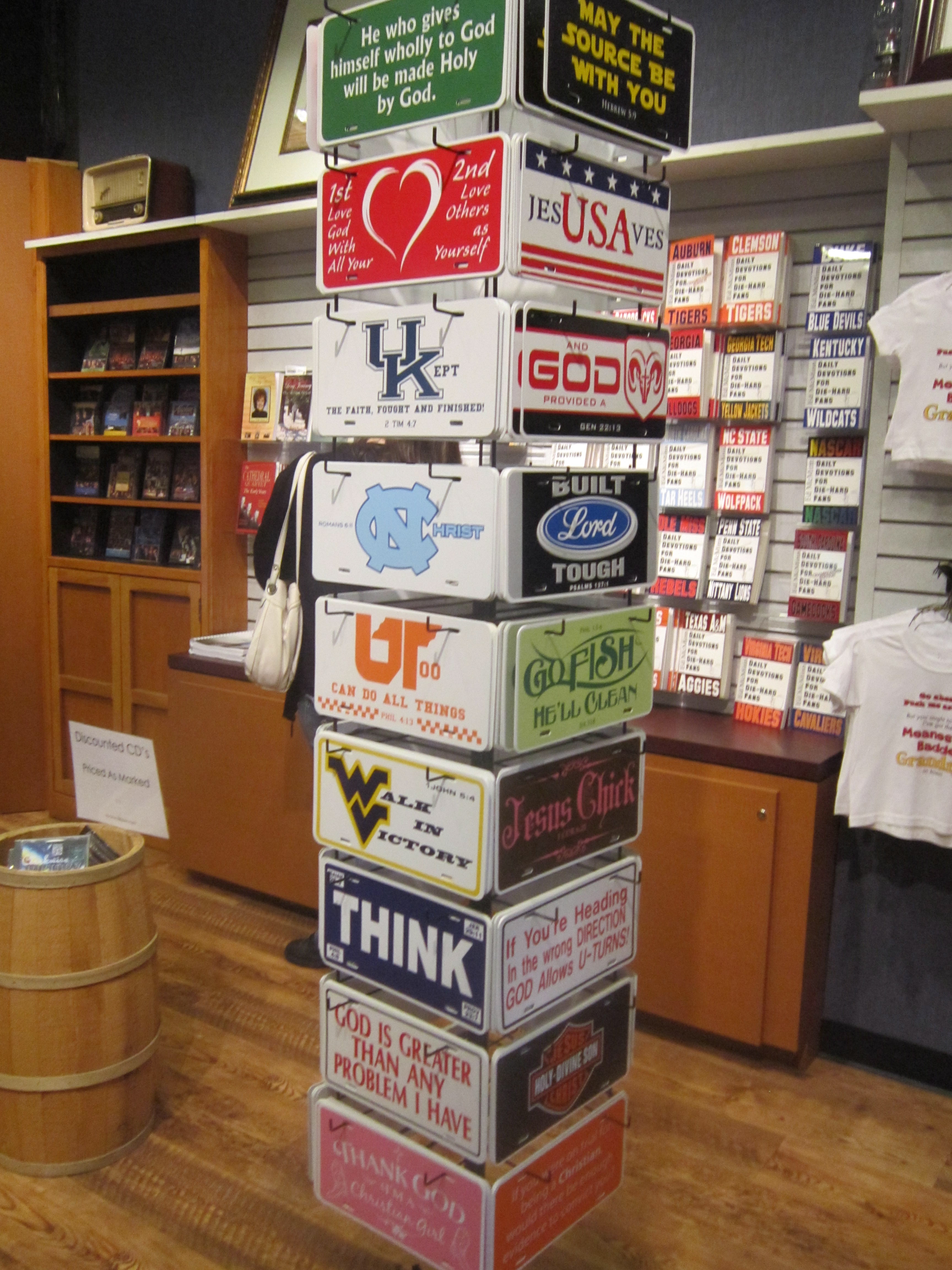
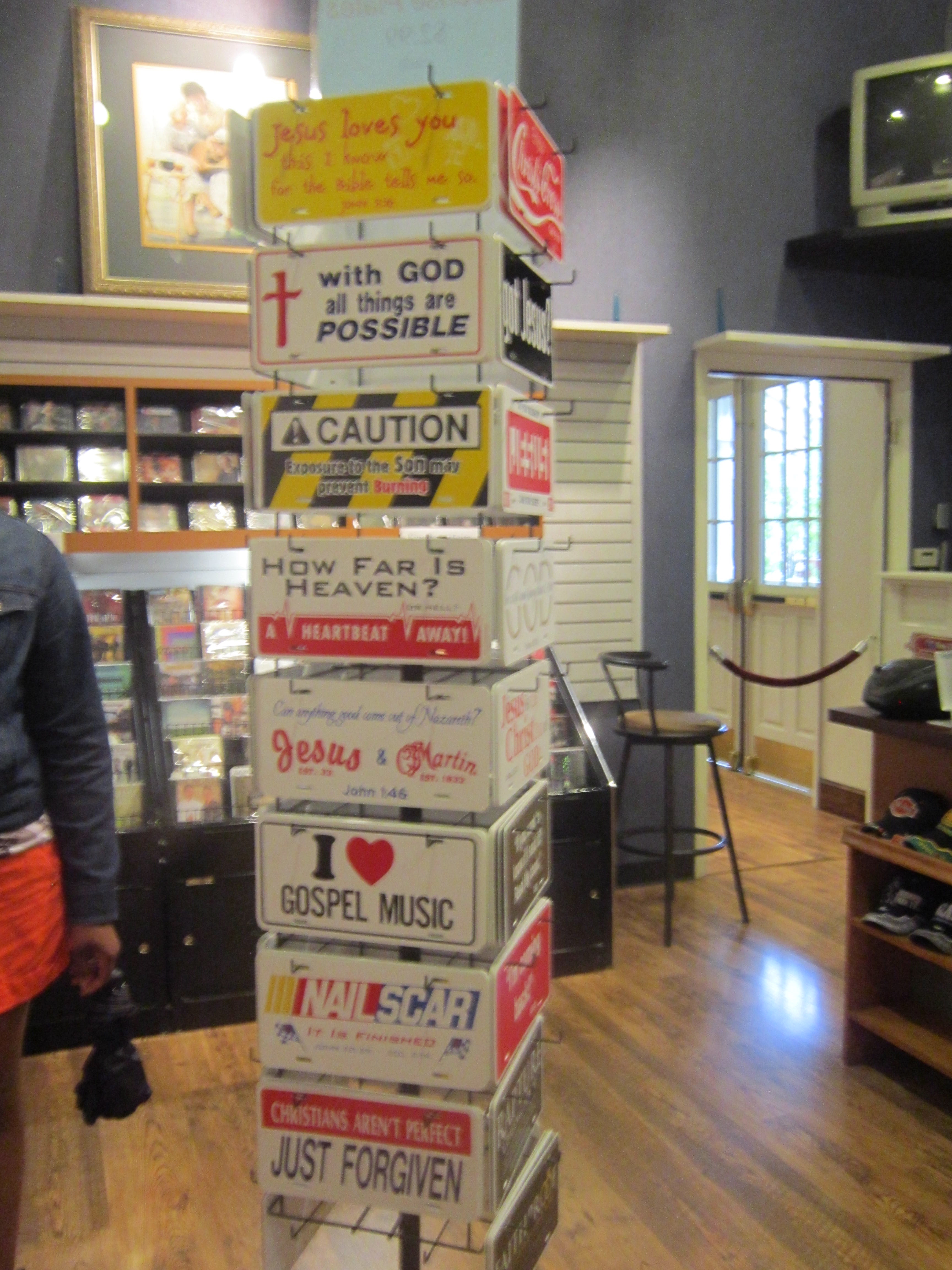
“I drive my car, it is a witness. My license plate, it states my business.” Only the hardcore may be able to place this quote from Daniel Amos’s impressive 1984 album Vox Humana. Even when I moved away from Christian rock after college, I kept Daniel Amos in my head—this is truly inspired artistry. Pop culture and religion courses have become a standard offering in religion departments over the past few years. We are, even as secular as we may be, a very religious society. When my daughter’s high school music program went off on its biannual concert tour, this year they headed south. On the itinerary: Dollywood. I came near to Gatlinburg, Tennessee on the trip I made to South Carolina to see my father for the final time, but I did not stop. I am told, however, that Dollywood is something to see. In one of the gift shops, my daughter snapped a couple of photos for my blog that draw all these disparate thoughts together.

IMG_1213

What we put on our cars is what we want the world to know about us without ever seeing us. This makes cars a perfect evangelistic tool for both the shy and the aggressive. The car becomes a tract. A statement that this vehicle is driven by an evangelical. I’m not sure it makes me feel any safer on the road. How many times have I been rudely cut off in traffic only to find a Jesus fish winking at me from the bumper of the offending car? Sometimes swallowing a Darwin amphibian. Religion speaks more loudly behind the wheel than it does from the pew. In the stress of traffic, what do we really believe?

IMG_1215

Cars are also the ultimate tools of self-assertion. Human beings, with little natural armor or predatory equipment, surround themselves with metal and accelerate themselves at velocities that nature never intended. We feel godlike behind the wheel. That metal box in front of us, driving too slowly, or having just pulled some stupid maneuver, is not a person. It is a thing. And those who choose to declare their faith on that object are under constant judgment. Well I know the evangelistic pressure to witness—fundamentalists are expert at manipulating guilt. Put these plates on your car and the world will know what you really are. But be careful. It’s not how you say, but how you play that will express what you truly believe.


Backyard Wisdom

From where I was sitting, the robin appeared to be asleep. It was an overcast and chilly spring morning, so I had to admit that I was a little envious. Our back yard is divided from the neighboring landlord’s property by a kind of picket fence with square-topped stanchions every ten feet or so. The robin was sleeping on the stanchion closest to an old maple tree. A wiggle of movement caught my eye. Further down the fence, maybe seven or eight pickets back, sat an impatient gray squirrel. It was sitting up on its haunches, and flashing its bushy tail in an obvious attempt to draw attention to itself. The robin sat, implacable. The squirrel looked around like a nervous commuter who will be late for work. It hoped a picket or two closer. Up on its haunches, looked around, jiggled its tail. Still the robin sat. The squirrel turned toward the maple tree and reared back, preparing to jump. It was too far. The squirrel turned back to look at the bird. The robin, flapping its wings a time or two, hopped into the air and landed on a picket two further down beyond the stanchion. The squirrel climbed onto the now vacant spot and leapt into the tree. The robin flew back to its original post.

This little exchange brought home to me once again the intelligence of animals. I don’t know what was going through the minds of these two different species, but they obviously both wanted to be at the same place at the same time. Perhaps some moral imperative passed in unspoken form between them. The squirrel needed to be close enough to make the leap into the tree, and the robin was clearly comfortable where it was sitting. Something had to give. I don’t know if robins peck on squirrels when nobody’s looking, but the rodent, larger than the bird, was obviously cautious. In the end, a compromise was reached and each ended up where they wanted to be.

More than a show of intelligence, I also saw this as a parable. I imagined how differently it might have worked out if the robin were a Christian and the squirrel a Muslim. Would there be any giving way? Any acknowledgement of the need of the other? A few wing flaps, a little leap to the left, and the squirrel found its sanctuary. The robin simply returned to where it was. They both wanted the same sacred space. They didn’t raise voices or argue—the whole exchange was terribly polite. Behavioral biologists often suggest that we can learn much by watching animals. As I watched what must have been only a minor incident in the backyard world of robins and squirrels, I felt as if two of the great teachers of our many religions were enacting a parable for humankind. If only we would pay attention.

IMG_0675


Ancient of Days

I’ve never been one to deny my age. I think of myself as a rather young 50 since my brain still reacts like an 18-year old’s much of the time. I try to keep as fit as my job allows, and the only thing I really overindulge in is books. But I am 50, and that means the AARP has had me in their cross-hairs for the last couple of years. The phone rang the other day and I was foolish enough to answer it. The young man on the other end of the line asked me if I could hear him okay. I almost hung up; if someone doesn’t identify him or herself in the first sentence, I know they’re wanting me to contribute to something. Instead, I tried a new tactic: “you’re not coming in very clear,” I fibbed, hoping that he would offer to call back and I wouldn’t answer. Instead, he adjusted the volume. It was the AARP calling with a survey. My hearing is still pretty keen—without it, walking across Manhattan in rush hour everyday would be downright dangerous. Nevertheless, my encounter with AARP made me think of a recent conversation I had about death.

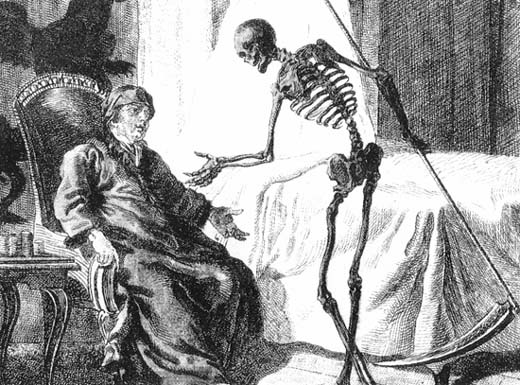
I am not afraid of death. As long as I can remember, I have never really feared it. Not that I want to go anytime soon, but perhaps because of my childhood fears of Hell, I believe I might have contributed enough to the treasury of merit (like the AARP, or Social Security) to get me out of a few scrapes. I attended mass nearly every day for twelve years at Nashotah House—that has to count for something! My conversation partner the other day was incredulous; “how can you not be afraid of death?” I’m not sure what comes after, if anything, but I’ve always tried to keep on the good side of the divine. Those questionable things I’ve intentionally done were all executed with good reason, or so it seemed at the time. If they were truly naughty, I’ve asked for forgiveness. And if there’s nothing after life, well, I feel like I could use the good long sleep of annihilation for a while.

Several books I’ve read recently have been advocating reincarnation. I’m not sure that it makes sense, but sometimes I wonder. The idea is a bit more frightening than death itself, in many ways. So many things I don’t want to go through again—sorry Friedrich, but I guess I’m one of those who says no to exact repetition—so much physical pain and mental anguish. I can see why Buddhists want to break the cycle. Although, if I’m reincarnated as a human being, and a literate one, I might be able to get a few more books read next time around. Perhaps that’s the silver lining. Or perhaps that’s why I should just hang up the phone if the caller doesn’t tell me who it is in the first sentence.

"I'm not quite dead yet..."

“I’m not quite dead yet…”


Paging Dr. Asimov

Who remembers Rock ’em Sock ’em Robots? Plastic “robots” in the boxing ring trying to knock each other’s block’s off was a form of entertainment for kids of the ‘60s before such things as humanoid robots actually existed. So when Boston University’s alumni magazine had an article about dancing robots, I had to see what was up. As regular readers will know, I’ve been exploring some of the problems with reductionism lately. This idea, that humans and animals are just fleshy machines, breaks down when we try to design robots that can do some of the most basic of human activities. Sometimes we dance and we don’t know why. Apart from Wall-e’s dance with Eve, robots have trouble getting the concept. Graduate student John Baillieul notes that this isn’t about “some high school guy who had trouble getting a date, so you get a robot. The ultimate goal is to understand human reaction to gestures and how machines may react to gestures.” Having actually been a high school guy who never even got to the prom, I’m wondering how depressed our robots get when the fem-bots all look the other way.

Rockem Sockem

The reductionistic outlook suggests that we can eventually program robots to respond as humans would, responding fluidly to situations, allowing them to over-ride their “instinct,” which, the article implies, equals programming. We have no idea what instinct is. It is something all biological creatures have, from the heliotrope following the sun to the human dancing her heart out. Do we want machines to replicate our most intimate emotions? Even our most reliable chip-driven devices sometimes freeze up or rebel. My car has recently got the idea in its mechanistic brain that the right-hand side rearview mirror should be rotated as far to the right as possible. We bicker about this all the time when I get in to drive. Well, machines know best. They, after all, are the shape of the future.

So programming robots so that they can react in real time to non-verbal cues, like all sentient beings do, is a desideratum of our mechanistic Weltanschauung. Notes Rich Barlow, the article’s author, “bats, for example, camouflage their motions so that they can sneak up on insect prey, a fake-out familiar to anyone who’s tried to swat a pesky fly.” My question is who is the pesky fly in this robot-human scenario? Who acts irrationally and unpredictably? Isn’t our instinct to smash the fly a result of our annoyance at it landing, yet again, on our sandwich with its dirty feet? And what is that stupid dance that it does when it’s all over our food? Reductionism must, by definition, reduce instinct to the level of a kind of genetic programming. Even this aging blogger, however, knows what it is to dance without knowing why. He also knows what it feels like when your date goes home with somebody else, something to which he’s not convinced that we want robots calculating an “instinctual” response.


Human Show

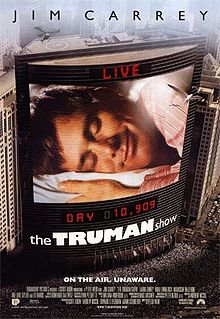
TrumanshowAt least a decade had passed since I watched The Truman Show. Jim Carrey has gone on to achieve an over-the-top kind of fame, but Truman is a thoughtful movie that raises several troubling questions. It is also one of the films of the 1990s that shamelessly cast an uncaring god (the not so subtly named Christof) against the goofy, but serious Truman Burbank. The movie is old enough not to worry about spoilers, so a quick run-down might refresh other hazy memories. Truman is the star of a show where a massive set that includes an entire island has been built around him. The vision of Christof, an unwanted baby is recorded from birth in an artificial, “perfect” world that revolves around him. Until he begins to notice events that, in the real world, would be paranormal. Objects falling from a clear sky, dead people reappearing, fake sets under construction. Determined to learn the truth, he faces his fear to escape by literally walking through a door in the sky.

Christof is “the creator.” From his base in the sky, he looks down on Truman as his star “son” grows to a Christ-like 30 years of age. He is protected from all harm, yet terrified of anything that might aid his escape from the ante-world he inhabits. When he slips the cameras and begins to make his way across the water, Christof, still not wanting to relinquish the ruse, throws a storm at Truman’s sailboat, striking it repeatedly with lightning. “Hit him again,” he growls to his crew. “Again!” It is difficult to watch as the loving god is angered to the point of destroying his only son. When Truman literally reaches the end of his world, he walks on the water to reach the stairway to heaven. Metaphors are flying thick and fast. Christof breaks in as a voice from the sky to convince Truman that his life will be perfect if he continues to pretend that reality is only what it seems to be. His devoted fans cheer as Truman ascends and walks through that door into another reality.

Many books on the theology of film have appeared over the past decade as it has become clear that people are very much affected by what they see on the screen. Our brains resonate with what we are seeing to such a degree that movies participate in our perceptions of reality. In an increasingly secular world, we have come to distrust our gods. This truth has echoed through many movies in the past several years. Although not living up to the hype, The Clash of the Titans—the remake—had classical heroes disputing the power of the gods. Truman doesn’t go that far. We are never informed about what life after the delusion is like. The hole in the sky is black. We know that on the other side, our world, there will be terrible disappointments and tremendous sadness. It may be that there will be no gods at all on this side of the studio. Although showing its age a little, The Truman Show still speaks volumes about the religious experience.


Guidance

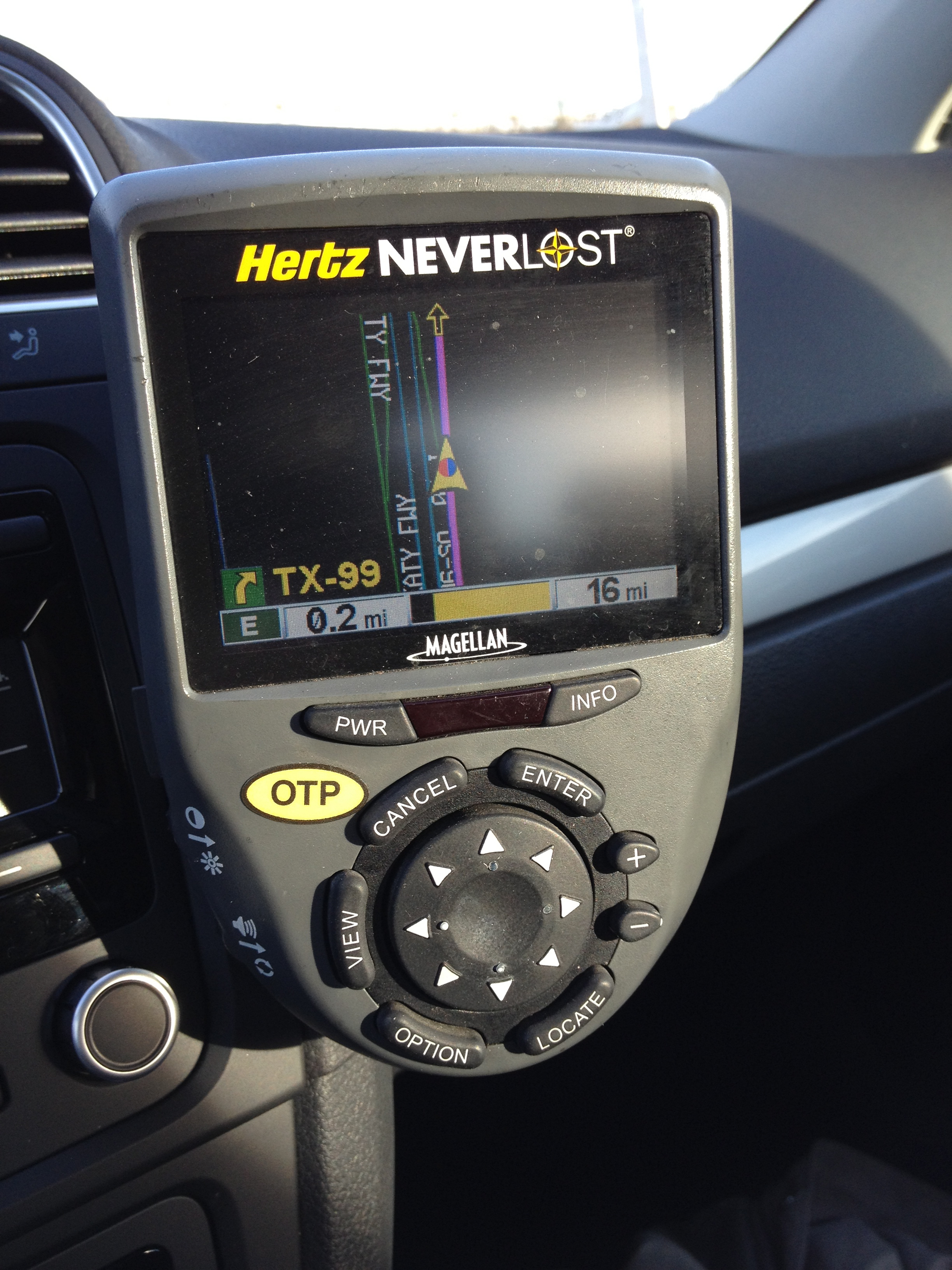
My relationship with Shiri is a love-hate relationship. Shiri is what I called my “Neverlost” GPS in my rental car in Texas. My iPhone has a female voice called Siri, so I figured my talking navigator must be her electronic kin of some sort. Finding my way around has been a lifetime vocation, but it is job most of us are never paid to do. I learned the trade using maps and the occasional compass. What a God-like feeling to look down at a map and visualize it from way up in the sky—it’s a kind of power-rush. Seeing the country, state, or city laid out below you, knowing that you want to travel particular roads based on traffic, tolls, or scenic beauty. Shiri and I had our first argument just after I disembarked in Houston. I’d never been to Houston before, and, being parked in a concrete bunker of a parking deck, Shiri was a little groggy and unclear about where she was when I spelled out that I wanted to go to Austin, avoiding major highways and tolls. Do I turn left or right out of the garage? She still hasn’t decided.

Shiri likes highways. Not a fan of urban driving, I’ll take a smaller road if possible. My first appointment wasn’t until the next day anyway. I can’t help attributing personality to Shiri. Was that a hint of disappointment in her cheerful voice as my driving made her recalculate the route yet again? Shiri has trouble determining if I’m on an interstate or a parallel access road. She sometimes sees roads that the naked human eye can’t discern. We fight, but she does eventually get me there. I have a feeling that she crawls into the back seat and weeps when I lock the doors and stagger to my hotel. It’s not that I don’t love Shiri, but she doesn’t respond quickly enough to real life conditions. A “slight left” across four lanes of rush hour traffic is purely academic to her. To me it is impressions of my fingers deeply embedded into the plastic of the steering wheel.

Shiri doesn’t understand that Houston’s many toll roads only accept EZ Tag and, being a visitor, I don’t have said tag. On the way to the airport—do I really have to see George Bush again?—she keeps trying to steer me onto roads that state “EZ Tag Only.” Texans are swearing at me as I suddenly change lanes and Shiri doesn’t help by repeating “At soonest opportunity, make a legal u-turn.” Shut up! Shut up! Where is the airport? I should be able to see it by now. Did I really leave the hotel two hours ago to travel this forty miles into… where? Is that a tumbleweed? When I see the Hertz rental return sign I break into spontaneous prayers of thanksgiving. I poke Shiri’s power button and leave without saying goodbye.

But now, a thousand miles away, secure in my own home, I miss her electronic voice.

IMG_0590


Call it the Blues

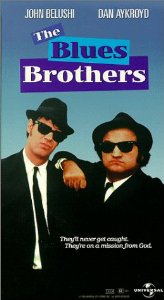
BluesBrothers

Coming back to The Blues Brothers after a couple of decades proved to be a kind of personal enlightenment. Of course I remembered “We’re on a mission from God,” as a catch-phrase, but in the intervening years I’d forgotten what that mission was. The movie is, as it were, backstory for the Saturday Night Live sketch in that show’s halcyon days. Watching the movie as an adult I was astonished at how positively religion is portrayed. Jake and Elwood’s mission is to save their childhood Catholic orphanage. Although there are a few laughs at the expense of religion, the movie as a whole is a redemption story with a surprising lack of irony. Released from prison where he was doing time for trying to do the right thing, Jake has an authentic religious experience and from that point on, the mission is unquestioned. In a self-sacrificial move that lands the whole band in prison, the Blues Brothers pay the taxes owed and save the orphanage. They are doing time for saving poor children.

I reflected on how, since 1980, it has become difficult to find mainstream movies that are so positive toward religious values. Not coincidentally, the 1980s saw the tragic Reagan years when religion and politics blended to the permanent detriment of religion being taken seriously. Since that time the cynicism has grown considerably. We are constantly reminded of it as conservative pundits force “Christianity” into a more and more reactionary mode, condemning all that reason has finally released from the dark ages. This is religion which thrives in the darkness of ignorance and fear. And it has coopted the very definition of religion itself. It is hard to imagine a “mission from God” being taken half as seriously today as it was when Jake and Elwood, although personally irreverent, nevertheless take the ethical call so seriously.

Today the “mission from God” is to protect one’s personal investments. Shut out those who require special consideration or those whose lifestyle differs from that which is putatively biblical. Anyone who dares step out of line is, in this enlightened era, condemned to the outer darkness. The Blues Brothers always wore dark glasses. While initially a branding gimmick, even this has symbolic value in the public view of religion. After all, Roman Catholic Sister Mary Stigmata gives them a sound thrashing for their profane language. But they find the truth in a black, evangelical service. There is a tolerance here—the neo-Nazis end up buried in their own grave—that has since vanished. The dark glasses hide something vital. The only time they are removed in the movie is to deceive. I wonder, I just wonder if with the glasses removed Jake saw a future for which the only prudent response was to hide once again.