Paranormal Prophets

At the suggestion of a friend, I watched The Mothman Prophecies last night. Very loosely an updated version of the collapse of the Silver Bridge in Point Pleasant, West Virginia, the movie both satisfied my monster movie habit and my interest in things biblical. As a monster flick, it was satisfying in maintaining tension, never clearly showing the creature. As a representation of prophecy, it falls into the camp of Nostradamus.

Reports of the “mothman” began in 1966 and continued over the next year. It was reputedly seen near the Silver Bridge, the artery that connects Point Pleasant with Gallipolis, Ohio. After the tragic collapse of the bridge, resulting in nearly 50 deaths, the paranormal prophet was never seen in the area again. While in West Virginia last year, a friend introduced me to a couple from Point Pleasant who stopped into her store. They looked a little embarrassed when the mothman came up in conversation.
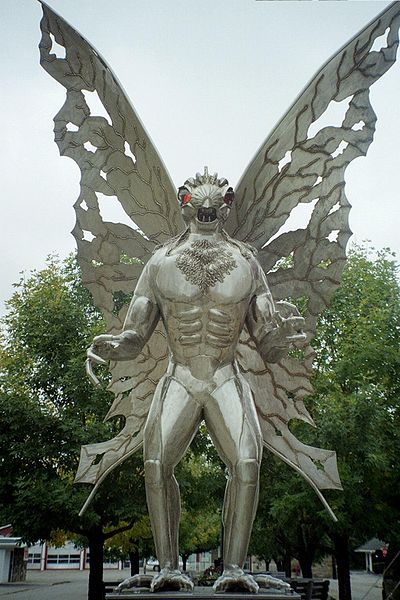
Point Pleasant's mothman statue from WikiCommons

Prophecy, in the vernacular, refers to predicting the future. Although some biblical prophets correctly intimate future happenings, mostly the image of prophets in the Bible is that of effective speakers. Prophets are individuals who participate in the reality of the world by adding their powerful words to the mix. If their words regard a future event – fairly rare in the Bible – they affect the outcome because their words have influence in the world. It is a supernatural view of the spoken (or written) word, to be sure, but it is a long cry from predictive ability. It is a matter of perspective.

Interestingly in the movie, Alexander Leek, the specialist on mothmen (apparently there are many), suggests that they see farther because they are higher in the sky than humans. In other words, it is indeed a matter of perspective. Certainly the mothman must go down as one of the oddest cryptids sighted. I give them no credence as prophets, but I will think twice before driving over bridges from now on.

Jesus Friends Me

From Jesus' Facebook profile


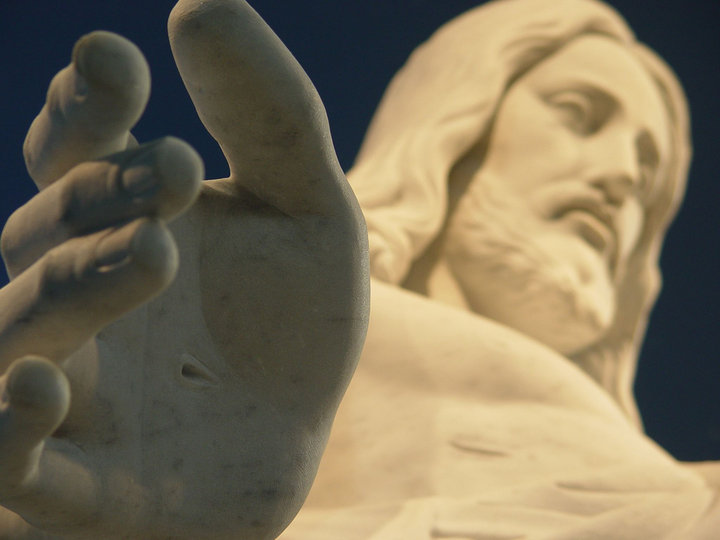
Jesus has a Facebook page. Given the circumstances it is highly doubtful that he set it up without some help from his friends. I went to the page to check out his friend list, but apparently he’s not accepting invites. Over 125,000 like the page, however. I wondered if it might be a stunt, since when I found Facebook they insisted that you could only sign up with your real name. While there is no doubt that this is a stunt, it turns out that it is considered an evangelistic tool wielded by a John 3:16er. On his info page, Jesus writes, “Please invite your friends to ‘Like’ (love) Jesus Christ,” an upgraded “honk if you love Jesus” if ever I read one. If you read the comments on his wall, it is clear that some people believe Jesus himself really reads his own page. It doesn’t mention the car accident.

A Rutgers student once told me about the “six clicks of separation” phenomenon on Wikipedia. Apparently, no matter how obscure a page you’re on, just six link clicks can get you to the page on Jesus. Don’t get me wrong: with his impact and importance Jesus certainly should have a Wikipedia article. There can be little doubt that anyone else can claim his level of influence in both the Dark Ages and Twentieth Century America, now creeping into the Twenty-First. The sad part is, those who constantly link to Jesus have latched onto a chimera grafted together from disparate sources. And they are his followers on Facebook.

I wonder who has the audacity to speak (type) for Jesus. Who is it that believes they have the deep insight into who Jesus was – deep enough to speak for him? WWJT? Technology speeds along and fans of Jesus fear he may be left behind. By making your Facebook admiration for Jesus public, I suppose, a kind of “witnessing” is going on. It would seem to me that a better way to show support for Jesus would be to care for others, the poor, the disadvantaged, the lonely. Feed the hungry, provide healthcare to the sick, offer justice to those who have been treated unfairly. If a friend invitation came from this faux Jesus, who would be inclined to accept it?


Random Faces

A friend recently sent me an issue of the Annals of Improbable Research that featured an instance of pareidolia on the back cover. Pareidolia, or the brain’s tendency to read patterns in random input – especially faces or human forms, has been a subject addressed on this blog before. Nevertheless, the phenomenon has continued to find wider exposure on the internet, and its implications continue to grow. The Cheezburger folks who brought us LOL Cats now have a site dedicated to pareidolia entitled “Happy Chair is Happy.” The question is not so much why we see faces everywhere, but what do we do about it.

Photo credit: C. Vittore, K. Tribble and D. Savala, Ann. Improbable Research

Perhaps the most prevalent uses of pareidolia in natural phenomena (human-made objects are often funny or uncanny, but the faces may be there by intentional design) revolve around the supernatural. Would-be ghost hunters find what looks like a face in a window or shadowy corner and interpret it as a disembodied spirit. Religious believers of various faiths find the faces of their founders or leaders in natural noise. A tract I saw as a child told the heart-wrenching story of a woman who’d given up hope. She randomly took a photograph of her garden and when she developed it (this was back when film was actually still in use), she found the face of Jesus in among the leaves. Her angst alleviated, she went on to face life with a fresh sense of possibilities.

We often see what is not really there. On a visit to my niece last year, while waiting in the car outside her dorm, I saw a shadow on the wall that looked exactly like the recently deceased Michael Jackson. The shadow was cast by security lights through a bush, but the face was unmistakable. To test my observation, I asked my niece – who knew nothing of the fleeting rock star on the side of her building – if she could see it. Immediately it became obvious to her. An epiphany of Michael Jackson may be a religious event, or at least a supernatural one, to some. In reality it was a temporary arrangement of leaves aligned just right to catch a security light to form a public icon. Putting faith in pareidolia is a very haphazard source of security. However, if it helps someone deal with the stresses and strains of life, what harm is there in seeing Jesus (or Michael Jackson) where he really isn’t present?


iPriest

I don’t own an iPad or an iPhone. I even have to confess to being bored with the internet on occasion. Perhaps my interests are too antiquated for the electronic age. So when I saw that an Italian priest had developed an application to allow priests to celebrate Mass I knew that the brave, new world had attained a heretofore unfathomable high. Instead of laying a missal on the altar, priests can now “double click” to the appropriate rubric with an iPad next to the body and blood of Jesus Christ.

Of course, the temptation to surf the net during Mass must be overwhelming at times. When I look out over my university classes and see a sea of laptops, knowing that university wi-fi is everywhere, I am sure they are somewhere far, far away from Numbers or 2 Chronicles. Perhaps they are checking out what is going on in Mass? A couple years back iBreviary came out for those who need the daily offices on the fly. Convenience and worship, however, were never intended to go together.

I spent this morning in a used bookstore. Some of my favorite places are among old books. The knowledge they hold doesn’t freeze up on you or crash. And often it is easier to find since you don’t have to search for exact terms in an ocean of information so vast that even intellectual whales couldn’t navigate it. Upgrades on iMass are expected to be available soon. The content, however, will remain the same as that rolling off the press in hardcopy after Vatican II. How long will it be before virtual communion is available so that commuters can partake without ever taking their hands off the wheel?

In the name of the unix, linux, and holy mac


Joltin’ Jesus

Jesus has been having a hard time lately. Just last month he was hit by a car, and on Monday night lightning struck a second time. Literal lightning. A touchdown-style Jesus in Monroe, Ohio, formerly six stories tall, received the paragon of divine punishments in a Midwest thunderstorm. Struck by lightning, the fiberglass and plastic foam savior melted leaving only an eerie, Lovecraftian idol of a steel frame behind. The statue had adorned the Solid Rock Church in Monroe since 2004. According to MSNBC many motorists said that America needs more symbols like this; God apparently disagrees.

Former Touchdown/Quicksand Jesus

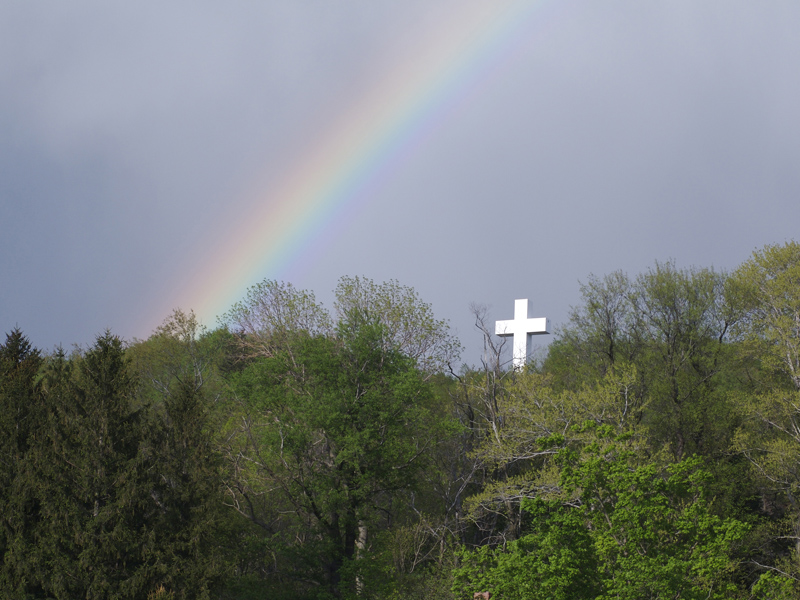
Obtrusive religious symbols dot many high hills and adorn many quotidian highways as signs of the donors’ faith. Lawrence Bishop, horse-trader-cum-pastor, and his wife Darlene made a substantial investment in this eviscerated Touchdown Jesus sculpture. As a camp counselor in my youth, I slept in the shadow of the great steel cross of Jumonville in southwestern Pennsylvania. The 60-foot tall cross is lit at night and is visible in three states. The monolithic cross always seemed incongruous with the blackened roasted weenies and gooey banana-boats we managed to choke down. Staring at its gleaming whiteness by night was an epiphany to many.

With the rainbow seal of approval

When my wife and I lived in Scotland some years ago, a terrific wind-storm blew through. In itself that was nothing uncommon, as any Scot will tell you. Wind gusts in this storm reached about 140 knots (160 mph), causing widespread damage. In an interview on the BBC, the sexton at one of Scotland’s cathedrals (time has robbed me of the details) recorded seeing the wind topple a statue of Jesus atop the building. He quipped, “I looked up, saw Jesus coming down, and ran for my life!” Although the exact location escapes me, the words have taken on an unexpected significance as icons crash down all around me. The demise of “Quicksand Jesus” is simply one further reason to avoid trusting in anything less than solid rock.


Mystery of Mystic

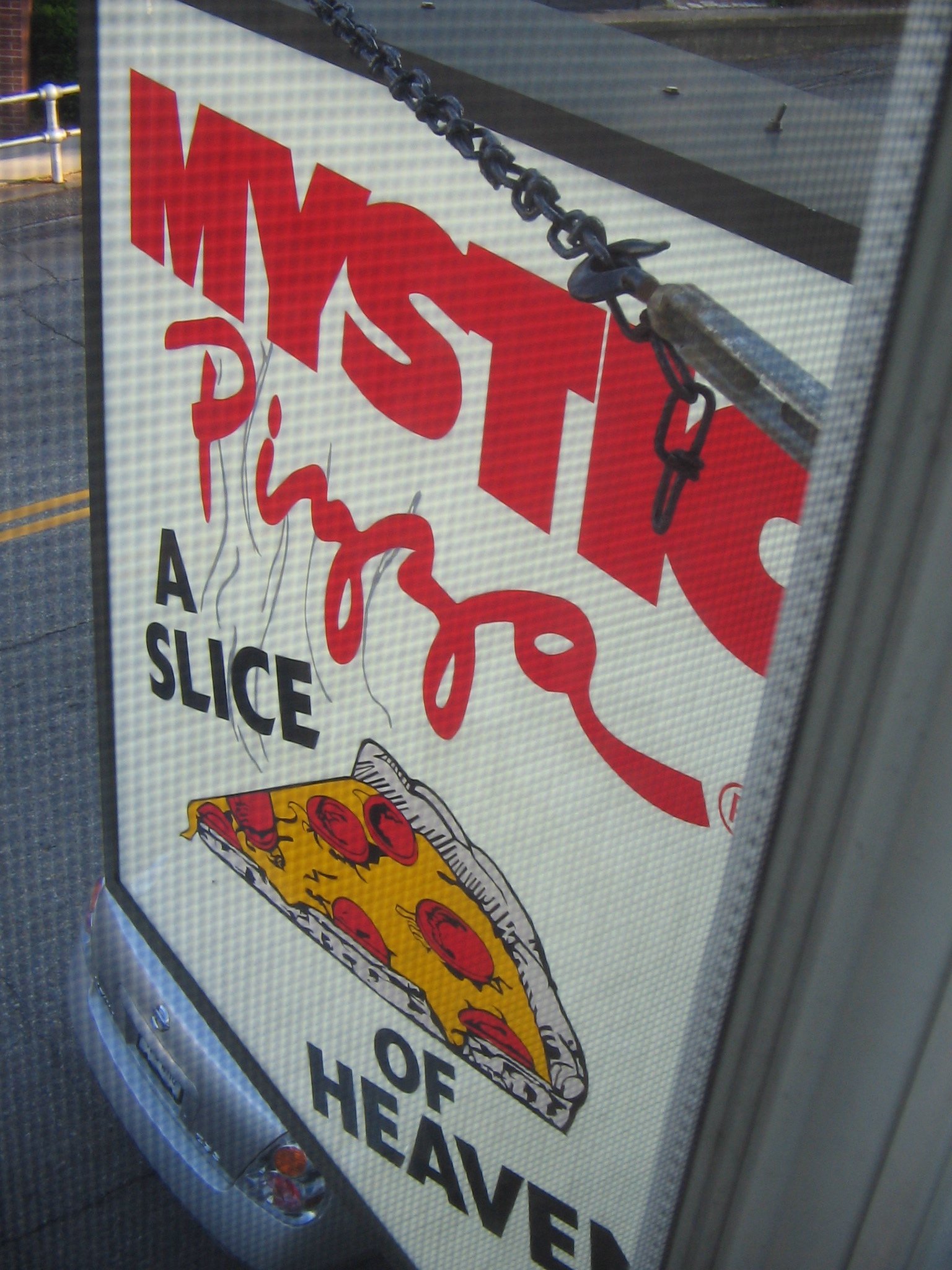
Ever since my school days at Boston University, even before a movie made the town famous, I wanted to visit Mystic, Connecticut. Perhaps it was the draw of the name that evoked foggy harbors and suggested the possibility of some kind of enlightenment. Perhaps it was because Mystic is near the gray waters of the north Atlantic that so captivate me. Perhaps because I am innately attracted by the sense of place. Whatever the reason, since we needed a break from my perpetual quasi-unemployment and my wife’s demanding hours, we have come to Mystic at last. Since traffic was exceptionally heavy, we haven’t had a chance to explore much beyond Mystic Pizza, now an iconic stop for all visitors.

She wasn't there

Curious about the name with its quasi-religious overtones, I tried to find in the town’s literature some hint of its origin. Nobody knows for sure. Like many “American” toponyms, however, Mystic likely derives from native American roots. The suggestion has been made that it means “great river whose water is driven in waves” (missi tuk). To the colonial ear ever alert for religious significance, this may have become “Mystic.” The true origin of the name may never be known.

Religious enthusiasm among early European colonists and their scions further west often inspired quasi-spiritual toponyms. Devil’s Tower and Devil’s Lake (Wyoming and Wisconsin, respectively) had no associations with the dark lord, but rather were locations of spiritual significance for the native populations. Grasping for a way to express this, the best evangelical Christianity could come up with was “Devil.” At least Mystic sounds much less diabolical. As we explore this town I will, by dint of natural disposition, keep an eye open for the religious implications. If I, perchance, uncover the true origin of the name, my readers will be the first to know.


Life Without Dragons

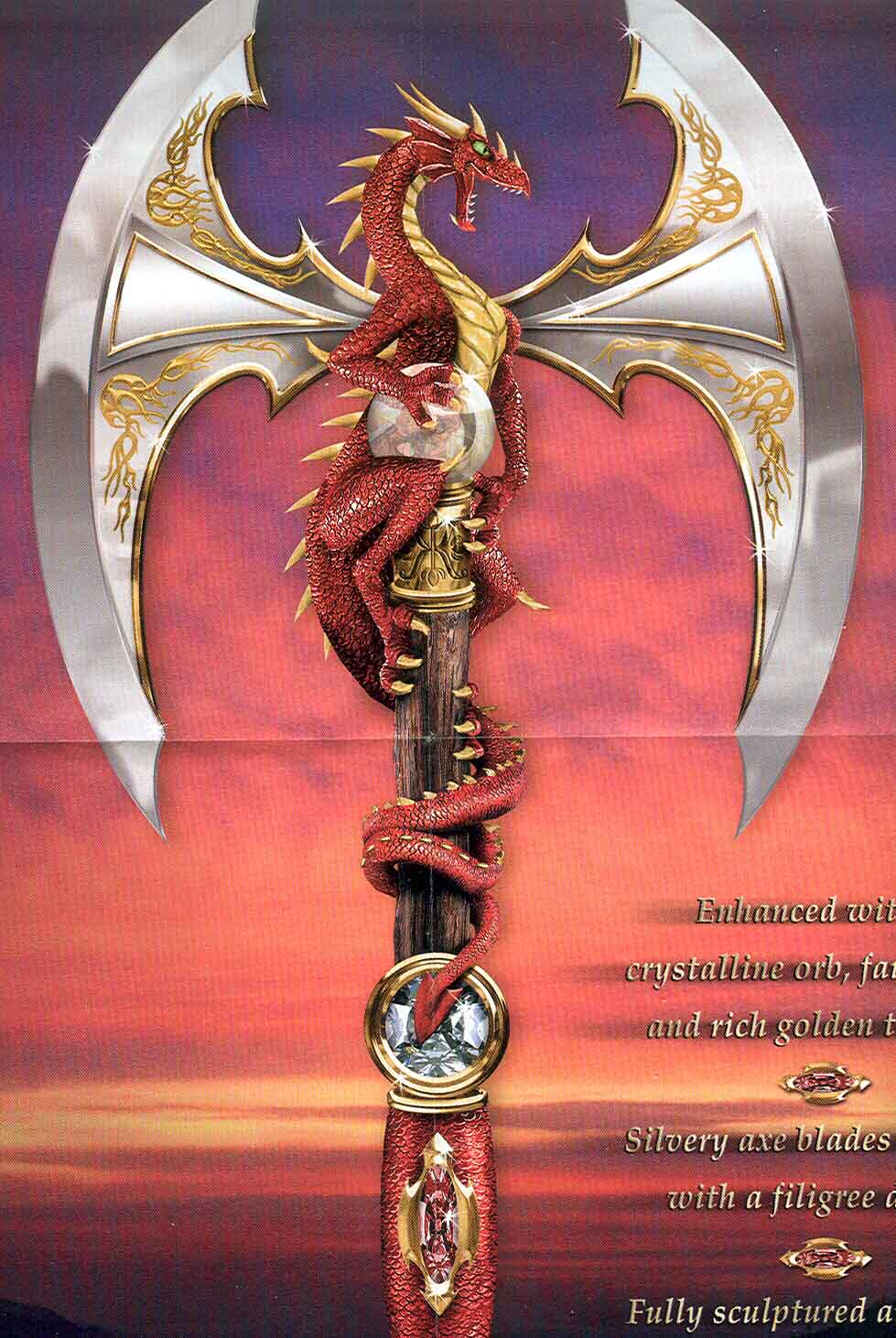
Every now and again, the great cosmic spheres align in their eternal turning and something just right clicks into place on our little planet. Such a juxtaposition must have recently occurred, for just when my worry about dragons had been reaching a crescendo, I received an offer for “dragon bane,” a beautifully crafted double-axe in the Minoan tradition, for only $39.99. The double-axe, or labrys, actually predates the Minoans, probably originating in ancient Sumer. The dragon predates even that.

Labrys dragon style

I’ve posted on the origin of dragons before, but of all mythological creatures dragons are perhaps the most tenacious. In various guises they reappear when we thought that they were gone. They are among the most ancient of feared creatures. Representing the untamed, indeed untamable areas of life, the dragon is the perfect symbol of chaos. Dragons are the disorder against which gods always struggle. Metaphorical dragons are always more troublesome than physical ones.

Although the idea of being a sword-swinging hero out to vanquish the forces of evil is an appealing one, I know that I won’t be purchasing this collectable. I have too much respect for dragons to see them slain by gods or mortals. What would life be without our dragons?


Strawberry Fields Forever

For beings dwelling on the surface of our planet, we tend to live far from the earth. I was reminded of this yesterday when my family went on our annual strawberry-picking venture. Each year we drive out to a remote farm that has pick-your-own strawberries and fill too many baskets because we just can’t stop ourselves when nature offers such obvious bounty. On the years when I can visit the northwest with my in-laws, one of my favorite pastimes is huckleberry picking. The two berry experiences differ vastly; one is a cultivated, planned layout of particular strains of red berries, the other is a forage-and-hunt search for wild purple berries that haven’t been stripped by the grizzlies. Both, however, put me intimately in touch with the earth. Trousers muddy from direct contact with the ground, fingers stained from the delicate fruit juices newly plucked from the plant – it is an earthy enterprise.

At such times it is evident how religions began. I don’t pretend to comprehend the whole complex phenomenon of the psychology of religion, but in those rare moments I share in the ancient art of survival. Finding your own food, body pressing directly on the earth with no cushion or blanket or furniture between. These moments must reflect our earliest ancestors’ daily life. When times of hardship came and food could not be found, they could only watch as members of their group died an agonizing death from hunger. Would they not call out to the powers beyond themselves, the unseen providers who alone could assure a steady supply of food?

In is no surprise that the first instances we find of religion in any developed form are strongly agricultural. Gods of rain and “fertility” abound. The ancient voices can distinctly be heard: we truly are helpless to create our own food. It is an echo that fades with each passing triumph of human control over our environment. When we can force nature to do our bidding – irrigating huge tracts of waterless land, feeding pesticides and growth enhancers into the very soil, even starting to create life itself in the laboratory – where are the gods? They have stiff competition indeed. So when I hold that strawberry in my hand, organically connected to the very planet that gave birth to us all, I feel that I have tapped into the roots of religion itself.


Monday Morning of the Soul

Western society is much indebted to the Hebrew Bible and the culture it has engendered. Nowhere is this more evident than the now hallowed concept of the weekend. Most of our time increments are determined by the movements of celestial bodies – the sun marks our days and years, the moon keeps our months rolling along. But the seven-day week is a bit of an anomaly. We know that the ancient Babylonians experimented with the seven-day idea, but it was the Hebraic concept of the Sabbath that provided us with a regular day off.

Ancient agrarian societies knew no “days of rest.” The old saying, often attributed to nineteenth-century American farmers, states that your cows require milking, even on the Lord’s day. Life in ancient times, for most individuals, was a daily slog, repetitive, long, and repetitive, of struggling to survive. The idea that you could take a break from survival to relax and not work simply did not equate. A break from survival is the same as death. When ancient priests – city-dwellers, no doubt – decreed that Saturday was a special day because even the Almighty needs a little Miller-time, well, the idea caught on. Society, once it had become sufficiently urbanized, could allow one day off a week.

Fast forward to the Christian contribution. Early followers of Jesus were Jewish and therefore already sold on the Sabbath concept. The resurrection, they asserted, took place on Sunday, so it was appropriate to worship on that day as well. A two-day worship minimum had been established. To many ancient folks this looked like laziness with a religious blush. Nevertheless, it caught on. Now many of us in a leisure-based society, with white-collar work that usually can handle being put off a couple days without immanent starvation or over-lactation, live for the weekend. Constraints of doing it for “the man” are off, we are free to be who we really are. Two-sevenths of the time, anyway.

Religions have given the world special gifts. As another dreadful Monday morning forces us out of bed early and focuses our eyes on a distant Friday afternoon, we should remember to thank Judaism and Christianity for their combined worshipful sensitivities. If it weren’t for them, we would have endless weeks of Mondays.


What’s in a Name?

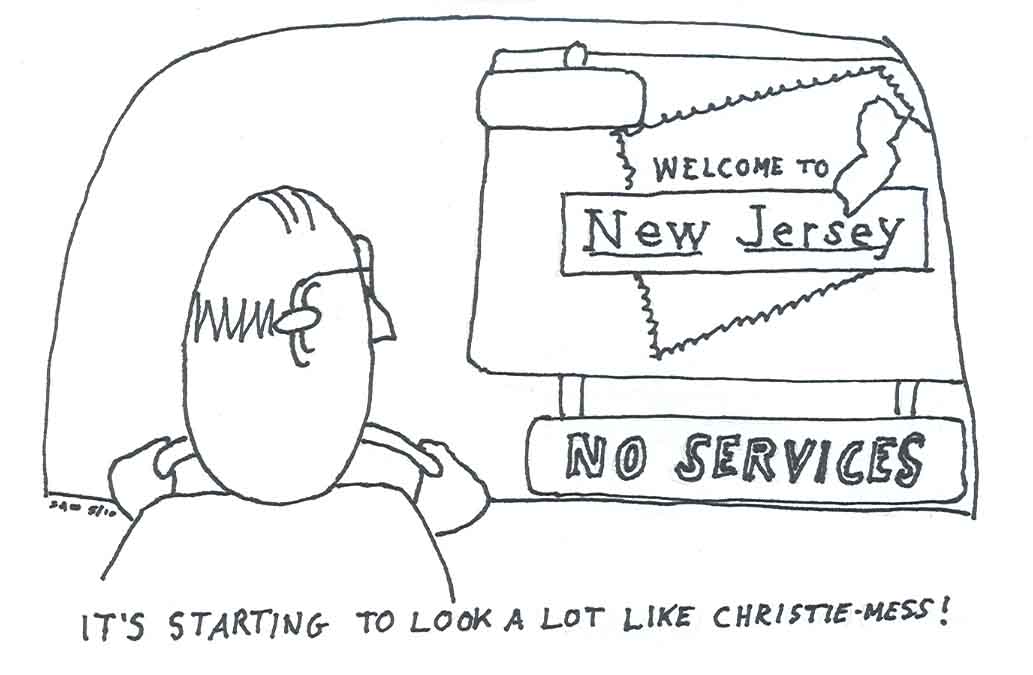
Two of my readers sent me an article yesterday about Lord Jesus Christ, the Massachusetts man who was hit by a car. Lord Jesus survived the brush with death this time. Clearly the angle on this story is the human interest aspect instead of the courtroom precedent or the political scope of its ramifications. In our minds, if we’re honest, we’ll admit that we’ve already come up with a profile for a man named “Lord Jesus Christ.” We’ve already judged him and determined his motives in legally taking such a name. This is a book to be judged by its cover.

From a purely semantic point of view, the victim’s name would probably have more impact with the definite article: The Lord Jesus Christ. As it is, the name differs only in degree from the thousands of Chrises out there, of either gender, or the many Hispanic men named Jesus, or those Anglos with the surname Lord. Not to mention all those Joshuas. Our names are the labels that others immediately use to prejudge us, although mostly our names come from our parents, or sometimes spouses. We are known through life by tags branded on us by parents who have no idea who we will become. As the non-adopted step-son of a second father I changed my name and I know the baggage that goes with such a change. The burden became so great that I reverted to my birth-name after college. I felt like I had been living a lie for much of my youth. What’s in a name?

Our injured man with the newsworthy name has not yet become the savior of the world. Some religious folk are offended by his appellation, yet most of us would be flattered by someone naming their child after us. Why not aim high when it comes to names? If we are to be judged by our verbal moniker, why not select one that states our point of view? With religiously motivated terrorism on the ascendant, however, it gives me pause to think about Lord Jesus Christ being run down. A man was injured here, while crossing the street. It could have been anyone. If it hadn’t been for his epithet, the story would not be national news. More than anything else, this may reveal the significance of the name.

A message from on high?


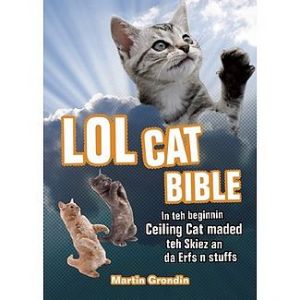
LOL Cat Bible Commentary, Part 1

It was bound to happen. Here is the first installment of the LOL Cat Bible Commentary.

Genesis 1.1 Oh hai! In teh beginning Ceiling Cat maded teh skys an teh Urfs, but he no eated them.

In teh beginnin
In teh beginnin ub teh dai — Ceiling Cat nawt wurk at nite, cuz datz wen
Basement Cat come owt to do ebil stuffz.
Ceiling Cat
Ceiling Cat writed da Bible. He’z the mos smartess an strongess kitteh ever. An him reely good — he no eat other kittehs fud, an he nebber jumpz on another kitteh in da middul ub teh nite (but for hoomuns dis ok).
maded teh skys
But first him taked a nap. Den Ceiling Cat maded teh skiez so him had place to liv. An den him putted a hole in da ceilin so him kood peep down on teh Urfs. Wait, him nawt maek teh Urfs yet! Ai sowwy, plz to furgive? Kthx.
an teh Urfs
K, nao Ceiling Cat maek teh Urfs. Urfs is where the hoomuns howse iz.
Ceiling Cat no maek teh udder Urfs, jus da wun wif da howse.
but he no eated them
Ceiling Cat can has a hunger after awl taht wurk, Aifinkso! But him no eated teh skiez, cuz den him fall owt, an den dere no moar kittehz to wurk on da Urfs. An him no eated teh Urfs howse, either. Him wanted to maek teh birdiez an teh moal an teh fishiez. An him also want to maek teh hoomuns for to maek his fud.

1.2 Teh Urfs has no shayps an has darwk fase, an Ceiling Cat roed invisible bike ovah teh wawters

Teh Urfs has no shayps
Cuz Ceiling Cat nawt evur maded a Urfs befoar. Him not no wut Urfs shayp iz!
an has darwk fase
Ceiling Cat can to seez in teh darwk, but dere nawt eny shayps to seez. The Urfs has dawrk fase liek teh howse wif no elec…elek…elekt…wif no lytes.
roed invisible bike
Liek him wuz dreemin. Invisible bike is hawrd to be finded in teh dawrk, but Ceiling Cat maded it an him finded it.
ovah teh wawters
Ceiling Cat nawt liek to get him feetz wet, so him no rided teh bike thru taht wawter. Wawters has see monsturs an stuffs.

1.3 At furst, has no lyte. An Ceiling Cat sez, “I can has lite?” An lite was.

At furst, has no lyte
Ceiling Cat nawt need lyte, but him noes taht hoomuns will to need lyte for to maek noms.
An Ceiling Cat sez
Ceiling Cat has to tawk to himself cuz of monokittehism. No udder kittehs arownd yet, not ebben Basement Cat.
I can has lite?
Ceiling Cat reely wanted a cheezburger. But him needed a hoomun for to maek cheezburger. So him has to maek teh lyte for to get noms.
An lite was.
Nao him can to see howse an da Urfs he maded. Den him maded lolz an udder stuffz, but first him taek moar napz.

(Translated into LOL Speek by the world’s greatest CATS! Fan Kthx)


Friday’s Wednesday

The ultimate stag party?

Mythology never ends. Many people live by it today under its name “religion,” and many in the ancient world endlessly recycled their gods until they ended up looking rather unrecognizable from their earlier forms. I was, therefore, intrigued when a friend asked me about Herne the Hunter. Herne is a mythological character about whom I had not heard. The earliest reference to the stag-antlered deity comes from William Shakespeare, and he has been co-opted by the Wiccan community, nicely tying together many of this week’s posts. So, whence Herne?

Shakespeare seldom invented ex nihilo, but rather adapted. Herne, already an established character, was a wrongly accused poacher who was hanged from a great oak in King Richard II’s England. He had been magically revived after a near-death experience earlier in life and had been crowned with fantastic antlers at that time. The horned head has reminded some Celtic mythologists of Cernunnos, a horned chthonian god attested in mainland Europe but not found in the British Isles. Yet others, by virtue of his being hanged on a tree and the similarity of his name to the epithet Einherjar, suggest Herne may have evolved from Wotan, or Odin himself. Woden was involved in the “Wild Hunt” episode of northern and central European mythology, and since Herne is a hunter, well, isn’t the connection obvious?

Such tales as this are instructive of the way that religions evolve. We know very little of the true origins of the story, but later versions become canonical. The present-day version is perceived to be “historical” and all others are merely coincidence or happenstance. Today Herne is a typical ghost story of Windsor Forest, and those who report seeing him say he still wears his supernatural horns. Those who want to discover his origins are left with a handful of books by publishers of the occult and hundreds of unanswered questions.


Bible Myths

The Bible is the most quoted book never read. That is, many people love to quote it without actually reading it all – yes, even Chronicles and Leviticus! The result is that the Bible itself has become a thing of mystery, a magical source of divine power with which the strong may subdue the weak, or by which politicians might win the most powerful office in the free world. The Bible is more dangerous than any weapon its believers may construct, for it is the source of the mandate, the writing that is so much more than ink and paper.

Over the years so many myths have grown about the Bible that it has become a mythical creature. Students often approach those of us who teach the Bible with amazing stories that defy explanation, or sometimes, that are just fun. This past week a student paper waxed eloquent on how the Bible physically describes Satan. It does not. The Bible tells us very little about what anyone looked like! One Bible myth that I have tried unsuccessfully to substantiate or debunk over the years, however, continues to elude me. It is the story of Psalm 46 in the incomprehensibly influential King James Version.

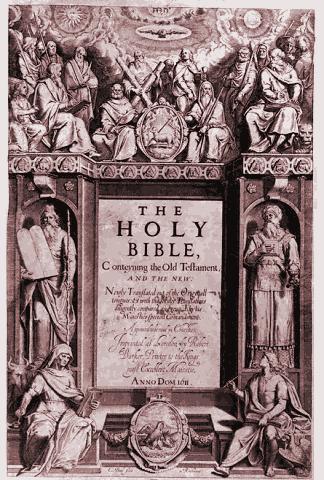
The KJV was completed in 1611, and William Shakespeare died in 1616. There is no evidence that Shakespeare was among those with any responsibility for translating the Bible, but his influence in England in his own lifetime was enormous. Many years ago a student informed me that Shakespeare made his way into Psalm 46. The forty-sixth word of the KJV translation is “shake.” Counting from the end of the psalm to the forty-sixth word from the end, one finds the word “spear.” So the gematria of the psalm give us the name of the putative translator. This story has all the signs of an apocryphal account of a Bible reader with too much time on his or her hands. If the story is true, I would love to see documentation. Otherwise it is one more monument of the power of book that few dare to read.

More than the sum of its parts