Museum Life

Allentown is the third largest city in Pennsylvania after Philadelphia and Pittsburgh.  Here in the Lehigh Valley it abuts Bethlehem and is just a few miles from Easton.  Getting an early jump on Memorial Day this year my family visited the Allentown Art Museum.  My daughter had been there before and let us know that it’s not huge, but certainly worth seeing.  They do have a Rembrandt among their collection, and a few Medieval pieces, including a tapestry that I could swear I saw on a book cover once.  In any case, I would recommend it.  We’re still fighting with rain around here, so it was a great Friday diversion.  We’re museum people, and I’ve pursued creative outlets my entire life.  I like to look at those good enough to be on public display.  As I told my family, when I was young I was curious about art and checked out books from the library on the great masters so that I could learn to identify paintings I hoped some day to see.  And as a bonus, the Allentown Art Museum is free.

One of the features of the facility is a personal library designed by Frank Lloyd Wright.  The books on display aren’t his actual books (I don’t think), but being a book person I had to look over the titles.  Washington Irving was well represented.  Since Sleepy Hollow as American Myth will be out shortly, I was curious to see if they had The Sketchbook of Geoffrey Crayon, Gent.  This is the book in which “The Legend of Sleepy Hollow” first appeared.  It seems they have all of Irving’s books because I did indeed find the Sketchbook.  Such an unexpected connection was a bonus on what was already an enjoyable visit.  I wandered out into the paintings again and found Tompkins Harrison Matteson’s “The Return of Rip Van Winkle.”  As I discuss in the book, “Rip Van Winkle” is also in the Sketchbook.  Not for the first time, I’d made a personal connection with art.

Visiting art museums always leaves me in a liminal space.  For a while my soul was mingling with those of others driven by creativity.  I’ve made a few art works myself over the years but I’ve really had no training.  I did take a drawing and painting class in college, but I kept none of my output.  I enjoyed making it, however.  My daughter asked why I don’t do more and the issue always comes down to time.  Work takes the lion’s share and now weed control (they love the rain) takes most of the rest.  And writing, of course.  That’s why I need to go to museums.  To become fully human again.


Gothic Novelties

I’m a sucker for a good gothic novel.  Dilapidated houses on the moors, suggestions of ghosts, the kind of encompassing darkness that enfolds you.  Women facing a man’s world just as Victoria took to the throne.  Hints of the supernatural.  So when offered a review copy of Kate Cherrell’s Begotten, I jumped at the chance.  Gothic it is, that I’ll give you that.  Perhaps I’m getting more discriminating in my tastes, but the classics are hard to beat.  I’m particularly fond of Jane Eyre and Wuthering HeightsBegotten’s not up to that level, of course, but I found the pacing slow and the narrator difficult to sympathize with. It has the kind of ending that sets me off, as I’ve written about before. (No spoilers here!)   Given that I’ve never succeeded in having a novel published (not for not trying), I am impressed.  

Novel writing is difficult.  Let me qualify that—good novel writing is difficult.  It’s more than simply stringing a story out over two-hundred-plus pages.  There are so many things to keep in mind.  That element you introduced on page 50—was it necessary?  Does it show up again in some significant way?  Secondary or tertiary characters that you introduced; will readers wonder about them after they depart the story?  Have you given them too much emphasis and therefore you need to provide them with a proper send off?  Do the characters sound like they fit in the time-frame you’ve chosen into which to set the story?  The history element is crucial for me.  A book set in the early nineties that has characters using the world-wide-web is suspect.  Or in the case of a gothic story, did Victorians express themselves that way?

I’m struggling writing my current novel.  I’ve completed seven others, some of which have hung together better.  A wise man once told me that to write a novel you should write 100,000 words and throw them away.  Or maybe it was 200,000.  Or five.  In any case, I passed that benchmark decades ago.  The novels I think worth publishing are those I’ve gone over a few times, polishing and editing as I go.  Maybe someday they’ll be ready to face the blue pencil, but until then I keep working at them, making them as worthy of a reader’s time as possible.  Not all writers do this kind of intensive revision.  Tales with unreliable narrators are often very hard to pull off convincingly.  But I know what it’s like to have a story living inside you bursting to be spilled on paper.  And if it’s gothic, that can cover a host of sins.


Scholars and Villains

Having read M. L. Rio’s novella Graveyard Shift, I turned to her debut novel, If We Were Villains.  It must be a heady feeling having your first novel become a bestseller, but reading it confirms why.  Rio came to my attention because of dark academia.  This novel is written as realism, so there’s really no speculative material.  At least not directly.  It’s the story of seven friends at the Dellecher Classical Conservatory.  They are the fourth-year students majoring in acting and they are essentially a Shakespearean troupe.  Dellecher only puts on Shakespeare plays, so much of the story is built on the Bard.  There may be some plot give-aways below, and I think this is a book you might want to read—so be advised.  I’ve continued to read Shakespeare beyond high school, mostly sticking to his better-known plays, so this was enjoyable to me.

The crisis begins when the largest and strongest member of the troupe—the leading man—becomes offended by not getting assigned the role he feels entitled to.  He begins acting out against his classmates, bullying them onstage so they can’t call out his bad behavior.  To make things more interesting, one of the troupe is his girlfriend and another of the women is his cousin.  Since they all value what they do so much, and it’s their last year, nobody wants to challenge him.  Until it gets out of hand.  Although Dellecher is exclusive, there’s quite a lot of partying that takes place.  Drinking and drugs seem freely available.  One night when the leading man is drunk, he takes out his hostility on his troupe-mates but is found nearly dead in the lake by dawn’s first light.  And then things start to spiral.

Dark academia is a genre that explores the dark part of higher education (and sometimes secondary education).  I think that most people, even if they enjoyed college (as I did) saw there were tenebrous aspects to it.  This particular genre focuses on those negatives, but not to the exclusion of the very real draw of continued learning.  Since college is when many people receive their first taste of independence, and what passes for adulthood, many emotions come to the fore.  Love, jealousy, fear, and passion among them.  These are powerful motivators and much of our lives are spent learning to control them so that we can live together as a productive society.  This novel, like much dark academia, lingers in those places where unresolved emotions and unchecked bullying collide.  All with a Shakespearean touch.  Classic.


Making More Monsters

It’s endlessly frustrating, being a big picture thinker.  This runs in families, so there may be something genetic about it.  Those who say, “Let’s step back a minute and think about this” are considered drags on progress (from both left and right), but would, perhaps, help avoid disaster.  In my working life of nearly half-a-century I’ve never had an employer who appreciated this.  That’s because small-picture thinkers often control the wealth and therefore have greater influence.  They can do what they want, consequences be damned.  These thoughts came to me reading Martin Tropp’s Mary Shelley’s Monster: The Story of Frankenstein.  I picked this up at a book sale once upon a time and reading it, have discovered that he was doing what I’m trying with “The Legend of Sleepy Hollow” in my most recent book.  Tropp traces some of the history and characters, but then the afterlives of Frankenstein’s monster.  (He had a publisher with more influence, so his book will be more widely known.)

This book, although dated, has a great deal of insight into the story of Frankenstein and his creature.  But also, insight into Mary Shelley.  Her tale has an organic connection to its creator as well.  Tropp quite frequently points out the warning of those who have more confidence than real intelligence, and how they forge ahead even when they know failure can have catastrophic consequences for all.  I couldn’t help but to think how the current development of AI is the telling of a story we’ve all heard before.  And how those who insist on running for office to stoke their egos also play into this same sad tale.  Perhaps a bit too Freudian for some, Tropp nevertheless anticipates much of what I’ve read in other books about Frankenstein, written in more recent days.

Some scientists are now at last admitting that there are limits to human knowledge.  (That should’ve been obvious.)  Meanwhile those with the smaller picture in mind forge ahead with AI, not really caring about the very real dangers it poses to a world happily wedded to its screens.  Cozying up to politicians who think only of themselves, well, we need a big picture thinker like Mary Shelley to guide us.  I can’t help but think big picture thinking has something to do with neurodivergence.  Those who think this way recognize, often from childhood, that other people don’t think like they do.  And that, lest they end up like Frankenstein’s monster, hounded to death by angry mobs, it’s better simply to address the smaller picture.  Or at least pretend to.


Playing Sleepy Hollow

In my teenage years I wrote a short play or two.  I haven’t done it since.  I’ve read plenty over the years but my fiction takes the form of short stories and novels—narrative fiction.  Playwriting, and scriptwriting, take a special talent.  One time-honored way to doing this is to utilize source material.  One of the points that I make in Sleepy Hollow as American Myth is that movies, in particular Tim Burton’s Sleepy Hollow, inspired a number of other movies and even novels, both narrative and graphic.  Others saw the potential this short story could have.  I spend some time in the book going over the various adaptations and the innovations they make.  The point is that “The Legend of Sleepy Hollow” has become an American myth.  Anyone who examines its long history can see the impact that it has had on the American imagination.  And on Halloween. 

Christofer Cook’s The Legend of Sleepy Hollow is a two-act play, adapted from Washington Irving’s story.  Some of it is taken directly from the story, but as most of those who have adapted the story know, it requires some help to become a performance.  Cook’s play is an interesting take on the story.  I’m not sure what other sources Cook may have seen and/or read, but there are some elements here found elsewhere that have become part of the tale.  For example, a duel between Brom Bones and Ichabod Crane.  I’ve seen that in other treatments, and it seems logical enough, given the circumstances.  Irving, however, it is not.  Perhaps the most surprising shift Cook makes is that the famous horse chase takes place with both Ichabod and the horseman (named Hermann Von Starkenfaust) on foot.

Had I known of Cook’s adaptation before submitting my manuscript, I would’ve been glad to have included it in my book.  Many movies have their own scripts that they use to bring the tale to life on stage and screen.  This only underscores my point—myths are endlessly adaptable and capable of serious transformation.  Some elements of the story we now assume to be part of the original were added many years after the story was written and its author had died.  Yet we all tend to expect these things.  Nobody has the final word when it comes to what happens to Ichabod Crane.  Washington Irving assured that in his story.  Those who come after bend, twist, and stretch the tale in new and fascinating directions.  This little play is one such and would be, I suspect, great fun to see.


Around Us

Our Wives Under the Sea is a gentle, but chilling horror story by Julia Armfield.  Two women are married and one of them is a marine biologist being sent on a submarine to explore deep ocean life.  A planned three-week voyage becomes six months and when the sub finally surfaces again, Leah, the biologist, has “come back wrong.”  She’s transforming.  Something happened to her under all that water.  Told alternately by Leah and Miri, the story is one of loss and mourning and lack of any reasonable explanation.  Haunting, in a word.  The writing is exceptional.  And probing.  I quite enjoyed this book.  I can’t recall how I first heard about it—it was published in 2022—but I knew I wanted to read it even then.  The sea is that way.  Moby-Dick, cited in an epigraph, has always been my favorite novel.  One of my early reading memories is Rachel Carson’s The Sea Around Us (also cited here).  The story is a winner.

There’s something about the ocean.  We, in reality, know little about it.  Penetrating the crushing depths requires a well-funded science, something we’ve moved away from in favor of personal greed.  Life takes unexpected forms deep under the surface, even as we deplete the resources we can reach—over-fishing and consuming.  We’re never told what it is Leah and her crew-mate see so far down.  We all know of lantern-fish (lately in the news) and other sub-surface terrors.  We don’t know the potential life we might discover if we only cared to look.  The company that sent Leah down, however, is as shadowy as the government.  Promising help but not answering the phone when you call.  Yes, this is a haunting book.

Mostly, however, at least in my reading, it is about coping.  We attach our lives to others and when something changes them we have to try to adjust, because love is that way.  Caregivers understand.  The novel evokes both the endless draw of the ocean and its mystery.  Even as a child I wanted to live on the stormy east coast, preferably in Maine.  I wanted to be near the water.  As my mother was in her final decline, one of her dearest wishes was to return to the ocean.  She’d spent a fair bit of her childhood in New Jersey and always felt the draw of the sea.  She was no swimmer, but just being near the ocean was something she loved.  And that has passed down, it seems, to my generation.  Fearful yet drawn.  It is the dilemma that can lead to effective horror stories that make you both think and feel.


Mass Market

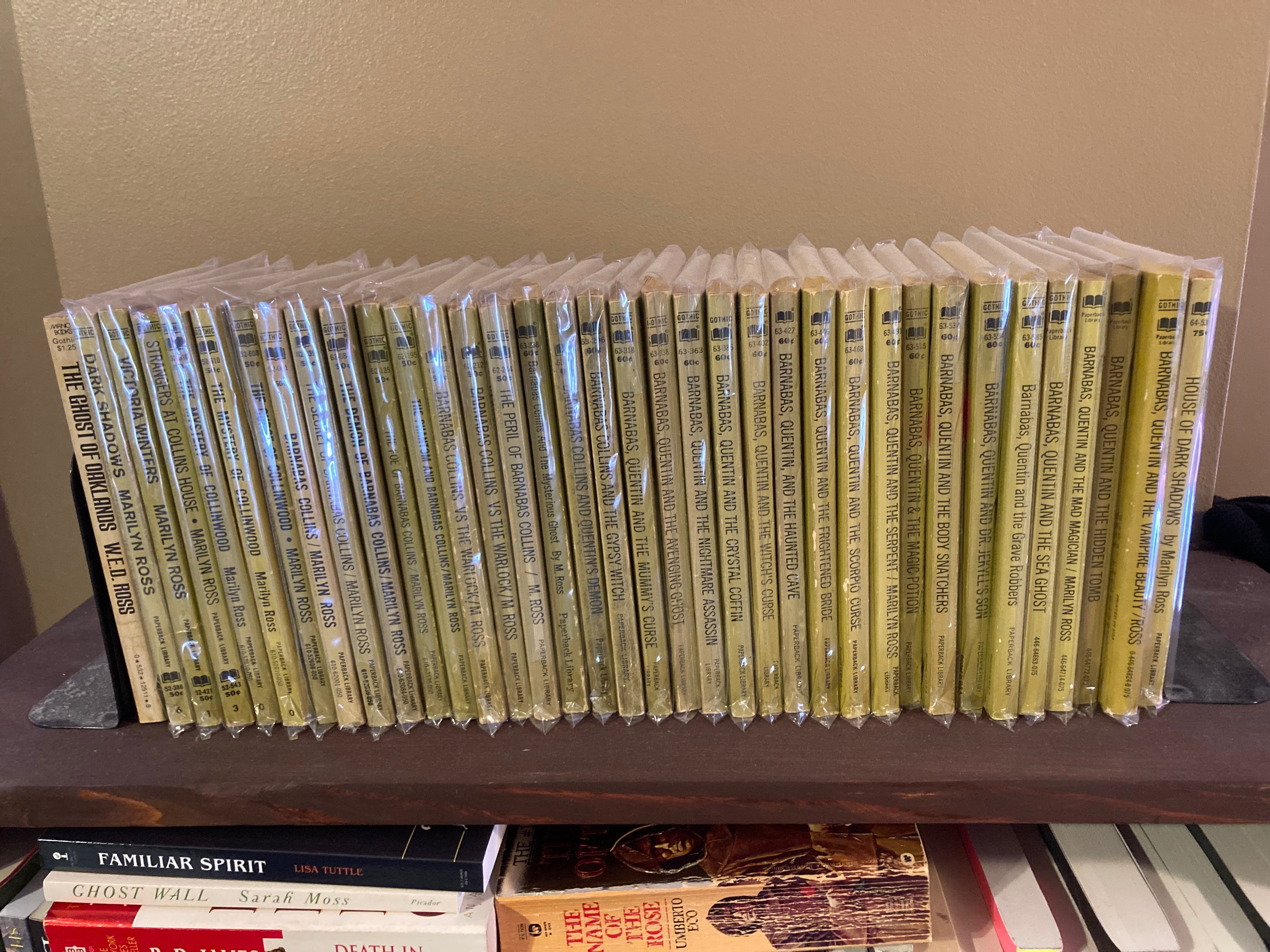
The mass market paperback.  This may very well be one of the best symbols of my younger years.  One of the largest distributors of mass market paperbacks (Readerlink) has announced that it will no longer distribute them.  It seems that the writing, instead of in readers’ hands, is on the wall.  Mass market paperbacks are the least expensive formats of books to buy.  Publishers have increasingly been tending to push trade size (about 6-by-9 inches)—they can charge more for them.  They don’t fit easily in your pocket, however, and well, they cost more.  Often, as someone who reads in public, I find myself wishing more literary fiction was still produced in mass market form.  Only the best selling authors ever make it down to that size.  I miss being able to stick a book in my pocket.  

The mass market paperback’s story began with railroad books, once innovated by my erstwhile employer, Routledge.  The form we recognize today only really took off in 1935.  When I was growing up, I considered all other formats somehow too big.  My book collection and reading habits began with mass market size.  When we moved to our house a few years back, I repurposed an old dresser as a bookshelf.  The top drawer slots were just tall enough for mass market books.  I discovered that I really didn’t have enough of them to fill that shelf.  Books have grown bigger.  Now, working in publishing I realize profit margins are thin in this industry.  Many publishers need the big sellers to help make up for disappointing sales of other titles.  (You have to have thick skin to be an author, I know from experience.)  They need to stay solvent.

But still, this feels like the end of an era.  Books in this format have been around really only less than a century.  Literacy—reading for pleasure—among the masses hasn’t been around much longer.  Books were expensive and were afforded by the elite, then cheaper forms and formats became available.  The electronic revolution has made much of life more convenient but some of us miss the challenge of having to fold a road map and never really knowing, for sure, where we are.  We’re also the ones who likely have a book in the car.  On the occasions when I don’t, I often regret it.  And one of the ways to encourage people to take books with them is to make them of a size that would sell thousands.  So many, in fact, that they would be given the title “mass market.”


Seeing the Forster

The thing about exploring dark academia is that its recognition is fairly new.  It seems that the “concept” emerged only ten years ago and the longer that it’s around the more sources it gathers, like a dust bunny growing under the bed.  I’ve never read E. M. Forster before, although I’ve seen movies based on his novels.  He was an interesting chap, trying out sci-fi (or at least dystopian fiction) as well as his literary novels.  Maurice was not published during his life because it explored homosexuality.  Forster was gay when it was technically illegal, and this novel reveals much of the struggle faced by homosexuals during the early decades of the twentieth century.  The novel has been cited as an example of dark academia, I suspect because much of the early part takes place in Cambridge.  Although it has a happy ending it’s not an easy novel to read.

Quite apart from the hideous paranoia of society at the time towards any kind of homosexuality, Forster’s style was, for me, difficult to decipher.  I know this is my issue, and not his.  His use of British expressions underscored for me how difficult it is to understand idiom in another culture.  At more than one place I was unsure what the speaker meant because the British slang used was so different from what I encountered living in the UK in the early nineties.  Not that the story is difficult to follow.  It is movingly written, demonstrating the torment of those who realized their orientation as they faced in an intolerant society.  Maurice even tries to “cure” his homosexuality, but efforts fail.  There is a darkness here, appropriate for dark academia.

Forster died in 1970, just when homosexuality was beginning to be understood not as a sickness, but a disposition.  It’s not a choice, and as the animal kingdom tells us, it’s certainly not limited to human beings.  The novel makes note of the fact that Greece, the origin of much of western culture, approved and promoted homosexual relationships.  Maurice is told that he could move to France of Italy where such relationships were not illegal.  There’s no question that the societal stance toward homosexuality was based on particular understandings of biblical texts, some now thoroughly discredited by biblical scholars (Sodom was not destroyed for homosexuality as biblical intertexts clearly show).  Generations of people, including Forster, were put through lives of torment in order to keep a prejudice alive.  Academia may be dark indeed.


Late Shift

M. L. Rio is best known for If We Were Villains, a book I have on my shelf but haven’t read yet.  She’s one of those rare PhDs who can write, and her punchy, irreverent style has a way of drawing you in.  Graveyard Shift is actually a novella (a cynic would say a way to get you to pay a full novel price on a piece a bit too short to qualify), so it’s a quick read.  It’s a little difficult to classify, genre-wise.  The copyright page suggests thriller, which means not-quite-horror, but with elements of it.  Taking place over one night (and just over 100 pages), its the story of how a college student journalist and her friends crack the case of a mysterious shallow grave they discover one night at their usual hangout, behind an abandoned church, Saint Anthony the Anchorite.  Edie, the journalist, has to find a story to headline the next day’s edition, and the grave provides it.

The story involves mushrooms and rats, sleep deprivation, and lots of smoking.  Still, it’s a well-crafted tale that holds your interest.  Of course, I noticed the centrality of the church to the story.  It’s so much a part of things that the disparate group of friends identify themselves as Anchorites.  An anchorite is essentially a hermit—a monk who prefers not to live communally (cenobites, a name taken up by the Hellraiser franchise, are monks in community).  Of course, the friends aren’t monks, just young people in a college town who like to be out at night, and maybe solve mysteries.  The church is both a focal point and a kind of vector in this world where unusual activities take place after dark.  It shouldn’t be a spoiler to say the friends solve the mystery and begin to help address one another’s problems.

I like brief books.  I don’t mind moderately long novels—when they start getting over 400 pages I get a bit anxious.  I have to admit that Goodreads has made me conscious of how many books I read in a year.  And since I like to blog about books, it also helps to finish them in a timely way.  Besides, escapism is especially important at the moment.  If you like stories about college kids, under-employed professors, bartenders and others who manage to eke out a living before family and mortgage change everything in your life, you’ll probably like this one.  It’s not really a horror story, but it’ll keep you turning pages, which is what books of any size are meant to do.


A Different Lord

I just wanted to learn the basic outline of Lord Byron’s life without having to commit to the hundreds of pages most of his biographies boast.  Something brief, but authoritative.  Something for which I could be sure the author was vetted.  I hadn’t read any of the Writers and their Works series before.  It gets good reviews and here was the story of Byron in less than 100 pages!  I was excited to get started.  Then I discovered this is mostly about his poems rather than his life.  It contains 21 pages of biography and 60 of poetic analysis.  I really should’ve checked more reviews.  I’m not really into poetic analysis.  I know that those of us who create tend to think of our creations as extensions of ourselves.  I’ve made 3-D art (kind of like sculpture), I’ve drawn, I’ve painted, I’ve written.  These are parts of me that exist in the world.  But really, I just wanted to know what Byron’s life was like.

Actually, I did learn the answers to some of my questions.  Although a “lord,” he didn’t inherit much wealth.  Indeed, the opposite.  His eventual wealth came from his poetry.  This is nearly an impossible dream these days, of course.  His fame brought the spotlight onto his personal life and politics.  A man who easily “fell in love”—he was a Romantic, after all—he had affairs and his politics weren’t those of the majority.  He left England at the advice of a friend, never to return.  He was friends with Percy Shelley, which is common knowledge.  As he made a home, actually several homes, in Europe, he continued to earn good money for his poems.  He was famous and feared, it seems.  Although the book doesn’t describe it, he gave the world its Byronic hero.

I haven’t read much of Byron’s poetry.  That style of writing has never appealed to me.  The poetic life, however, is of endless interest.  Shelley drowned on a boat trip home after visiting him in Italy, and Byron was present at the cremation.  (And I got yelled at in the New York Public Library for trying to snap a picture of the fragments of Shelley’s skull that were on a special display.  Byron had been there in person, of course.)  A few short years later Byron also died while helping to plan and finance the Greek war for independence.  Still, there is more I’d like to know.  But probably not enough to read a biography of several hundred pages, though.


Cuckoo’s Roost

John Wyndham is someone I discovered through movies.  Often considered a science-fiction writer, his works cross over into horror, particularly on the silver screen.  Many years ago I read Day of the Triffids and, having seen Village of the Damned, wanted to read The Midwich Cuckoos.  It was a pretty long wait.  I kept thinking I might find a copy in a used bookstore, but it never happened.  When I saw a reprint edition I ordered it with some Christmas money.  There are some horror and sci-fi elements to the story, but there’s also a bit of thriller, as it’s called now, thrown in.  The book is quite philosophical because of the character Gordon Zellaby, a Midwich resident who keeps thinking about what is happening in terms that don’t match the expectations of other, more prosaic thinkers.  In case you’re not familiar:

Midwich becomes unapproachable for a period because an alien ship (the sci-fi part) has covered it.  Everyone in the village is asleep for a couple of days.  When they awake, generally no worse for wear, they soon discover that all the women of childbearing years are pregnant.  They all give birth about the same time to children that look eerily alike and have bright golden eyes.  The officials know this has happened but adopt a wait-and-see attitude.  Meanwhile, the locals get on with things but they discover these new children develop about twice as quickly as humans do and they can control people with their minds.  They also have collective minds so that their brainpower is quite above that of Homo sapiens.  Zellaby makes the connection with cuckoos—birds that lay their eggs in the nests of other birds and after they hatch shove the other chicks out of the nest.  Indeed, this is a story about what if cuckoos were humanoid aliens who tried the same thing with people.  Told with a British stiff upper lip.

The story slowly unfolds and gets scary as it grows.  I saw the movie quite a few years ago and the details were lost on me, so I was learning as I read.  I suspect that it differs from the book quite a bit.  Perhaps it’s the Britishisms that make this story less of a horror tale.  There’s a kind of jocularity to the style, at least for a good bit of it.  The serious issues of how governments and individuals interact is raised and discussed to a fair extent.  Even though the book is fairly short, there’s a lot going on here.  But now I need to watch the movie again.


Release Date

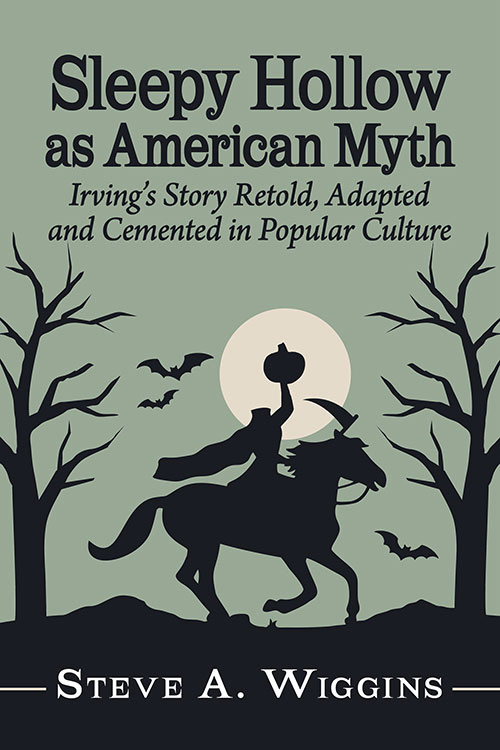
July 16.  That’s the release date for Sleepy Hollow as American Myth.  If you’re so inclined, preordering helps to earn a book attention.  (I know it’s pricey, but thanks for considering it for a second.)  This book has been, like most books, a long time in the making.  As my wife will attest, reading the proofs nearly sent me into a spiral this time around.  It wasn’t because they were bad (I only found 7 mistakes) but it was because of my own doubt about how well I’d done this one.  I found myself between elation at some parts, and dread at others.  I really like this book but I spent my proofreading journey anticipating what critics would say.  I do take a few chances in this one and it has what I believe to be an important message.

Writing books is like walking into a library naked.  There may not be many people there, but those who are can see more than you want them to.  I love the Legend of Sleepy Hollow.  I learned a lot about Washington Irving doing this research.  I learned a lot about Halloween—that’s one of my favorite chapters.  I also like the conceit I applied to the book itself as a labyrinth.  And I’m already looking forward to reading more renditions of the myth once the dust settles a little.  Reading the proofs took a good portion of the weekend, as well as after-work time the previous week.  I could focus on little else.  Books, you see, are parts of their authors.  I feel a little bit crazy for even writing them in the first place.

That having been said, I’m chuffed with a July publication date.  The best time for Halloween books to be available is the summer.  My last two Halloween titles (Holy Horror and Nightmares with the Bible) both came out in November or December.  Not that there were angry mobs at Barnes & Noble demanding them at the end of October.  The other deadline I’d set myself was to have this published before Lindsey Beer’s reboot of Sleepy Hollow hit theaters.  I seem to have managed that one by quite a margin; there’s still been no release date announced.  For her, that is.  I just received mine yesterday.  I guess it’s time to start touching base with those good folks in the Hudson Valley who expressed an interest in the project when I first told them about it.  I’m anticipating Halloween already.


Therapy with Books

I’ve been doing this for years and just found out there’s a name for it.  Bibliotherapy is a treatment method that uses reading to deal with anxiety.  It is closely related to writing therapy, which I also use.  Both have been self-moderated, in my case, and both have been part of my way of coping for decades.  I was actually surprised to learn that these are valid methods of treatment that some therapists use.  I knew about journaling (I suppose blogging counts), but the larger picture was never in focus.  We live in stressful times.  We went through a very stressful four years about, let’s see, eight years ago.  This time I’m intentionally using bibliotherapy.  Reading a book (eyes off the screen, please!) is a way of entering another reality for a while.  Already this year I’ve stepped up my reading, as much as work will allow.  (And now, proofs.)

Writing is therapeutic as well.  Both reading and writing engage your mind.  And can remind you that there are other things to life besides headlines.  I’ve been writing a lot of fiction lately.  That doesn’t mean I’ve been publishing a lot of it—that part’s still very difficult for me—but writers do it because that’s what writers do.  And it makes me feel better.  More balanced.  One of the truly difficult things in my life is when I’m on a roll, particularly with fiction, then I have to stop for work.  The whiplash is almost too much some days.  I realize that you can’t make a living out of pouring your soul into words, unless you’re very lucky.  And even then I suppose it might soon start to feel like work.  Maybe some day I’ll find out, but until then reading and writing will see me through.

I know I’m not alone in this.  There are other people out there who spend as much time as possible between the pages and/or with pen in hand.  There’s nothing like it.  These therapies can change your mood.  Give you hope.  Make you feel complete.  And this can happen whether something you’ve written gets published or not.  I admit to having seen therapists from time to time; I probably should do it more.  None of them, however, have suggested bibliotherapy.  It’s something I stumbled onto myself.  That’s probably no surprise.  I bumble my way through life most of the time.  We all know, I suspect, when our brains are firing properly, what makes us feel better.  The shelves that surround me most of every day certainly know.  And there is a name for it.


Cloistered

Free will.  I’ll go on the record as a proponent.  Any kind of determinism gives me the willies.  At times, however, it does feel as if we’re merely pawns.  Katy Hays deals with the concept of fate, and the occult world of tarot, in The Cloisters.  The writing is quite compelling and the story moves along at a good pace.  It follows Ann, a graduate from eastern Washington who wants to get away from the town where her father was killed.  She accepts the offer of a summer program at the Met in New York City, but because of a mix-up ends up at the Cloisters instead.  I’ve never actually been to the Cloisters, but this novel makes me want to go.  At this museum of Medieval and Renaissance art, Ann works with Rachel, another assistant, Leo, a gardener, and the curator, Patrick.

Rachel has been at the Cloisters for some time and Patrick, her boss, has become enamored of tarot decks and their history.  He’s been seeking perhaps the oldest complete deck known and has come to believe that perhaps the cards do have the ability to tell the future.  Ann befriends Rachel.  The two begin to make discoveries, particularly Ann, but Rachel, who is independently wealthy, manipulates her, taking advantage of the fact that Ann never wants to return home.  Then Patrick is poisoned.  I won’t reveal whodunnit here, but the last half of the book has several twists that make you reassess whatever conclusions you may have drawn.  It’s a fascinating story, well told.

This novel is another example of dark academia.  Much of it takes place in the library of the Cloisters and Patrick holds a Ph.D. while Rachel is a graduate student.  Ann is about to enter a doctoral program.  All of them have some fairly dark secrets in their lives.  And all of them are driven.  The story has elements of social commentary as well, particularly concerning how life in New York City will drive people to extremes when the competition makes this necessary to survive.  Although three of the four commit crimes, they are all likable people.  Three of them are academics as well.  All four are quite intelligent.  I was drawn into this tale from the start and even as the darkness was revealed couldn’t bring myself to dislike any of the characters.  Some novels have antiheroes that you just can’t feel for.  The Cloisters moves in the other direction, and it does make you wonder just how much choice you actually have and how much is left to fate.


Proofing Yourself

Some publishers give you advance warning.  Many do not.  As a struggling writer, after I submit one manuscript I move on to the next project, knowing proofs will eventually come.  The thing is, I’m obsessive.  When I’m in the middle of a project I can think of little else, thoughts of it leaking into other activities throughout the day.  I’m in the middle of one such project, as I have been for at least three months now.  Then the proofs came.  If you write books you know that proofs always come with deadlines.  You need to drop everything and prioritize them.  I read many academic books with tons of errors, and I think I know why.  If proofs come at an inopportune time, you read them as other required activities (I’m looking at you, 9-2-5) permit.  For me, it’s difficult to let go of my present project.  My current fascination.

The proofs for Sleepy Hollow as American Myth arrived yesterday.  I’m excited for this book.  I have hopes of reaching out to local magazines and pitching stories about the Legend this autumn.  But I’m red hot into a new project.  My mind is of an age where there’s no guarantee that I’ll remember precisely what I was thinking if I lay aside my present project for a week to read the proofs.  Indeed, the last two weekends have been so busy with other things that I haven’t had time to watch any horror movies at all.  Just yesterday I awoke at 4 a.m. feeling hopelessly behind already, a feeling that lasted all day.  Then at 4 p.m. the proofs arrived. ( For context, 4 a.m. is late for me.  I’ve been waking up later due to that pointless ritual of annual time changes which, like everything else, the government can’t seem to get right.  In any case, proofs trump all.)

My time is extremely regimented.  I had to drop all committee work at our local faith community because the meetings were all in the evening, scheduled for after when I’d normally be asleep.  I wake early to write and read before the snowplow of the 9-2-5 throws me off the road for another day.  Everyone who talks to me feels that they don’t have time for what’s important any more.  The proofs are here and I’ll get them back by the deadline.  I’ve never been late once told when they have to be in.  My accountant tells me that anything that leads to royalties, no matter how small, counts as a second job.  I hope this one sells well enough to make it feel like that.  In the meantime, please don’t come knocking because I’ll pretend I’m not at home.