Thankful Time

Thanksgiving’s late this year, for which I’m thankful.  I must be nearing retirement age because I really could use a little more time off.  Of course, I’m a big fan of holidays and I wish our late capitalistic system might throw a few more bones to the dogs.  Autumn is always my favorite season.  In September I feel the migratory urge of the classroom, but that’s an unrealized desire now, so I set my eyes on Labor Day and Indigenous Peoples’ Day.  Some of the more progressive employers give the latter off.  From there I can see Halloween, although it’s often a working day.  Still, it’s Halloween.  It’s yet a long stretch from there to Thanksgiving, but if I’m careful with my vacation days I can take a few long weekends as stepping stones to this four-day weekend.

I’m not being sarcastic or facetious at all.  I don’t believe I could survive the calendar year without the holidays and I am deeply, deeply grateful for them.  Capitalism seems to have a death grip on the idea of people as “assets”—a brand of thinking that should be buried with a stake through its heart.  People are people and we work for a living.  We don’t sell our souls for health care and a roof over our heads.  The internet has increased productivity immensely, but most companies are reluctant to consider the costs of overwork.  When you can check your work email from 6 a.m. to 9 p.m., for those of you who can stay up late, don’t you think that a few more holidays might prevent burnout?  Do assets burn out?  Engine parts have to be replaced when they wear out.  Why are we so slow to learn the lesson?

Today we reflect on the things for which we are thankful.  Even in difficult times there are many.  I’m thankful to live in a world with books in it, for one.  On those rare days off I read, trying to catch up with an ever-growing stack of intellectual stimulation.  And I try my best to contribute to literary life, although my books appeal to few.  I’m thankful for hope.  Without it this last year would’ve been impossible.  And I’m thankful for family and friends, whether actual or virtual.  This is an interesting world that I’ve come to inhabit.  The more I learn the more there’s left still to learn.  And with Thanksgiving so late this year, Christmas is less than a month away.  I look ahead and I’m thankful.


Suitable Genre

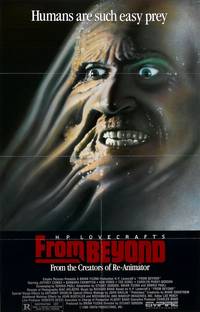
As I muse over genres, it seems that “low-budget Lovecraftian horror” might be an—ahem—suitable one.  This is perhaps because Lovecraft has trouble being taken seriously as a literary writer and his stories are so easily parodied.  I watched Suitable Flesh unaware that it was a Lovecraftian (low-budget) movie.  I’ve seen quite a few of these over the years and they can be pretty fun.  This one was somewhat enjoyable.  Based on Lovecraft’s “The Thing on the Doorstep,” it’s a body-swapping, possession fest that involves two psychiatrists who have been friends forever but who both become victim of a nameless possessing entity.  It took some adjusting to believe Heather Graham in her lead role here—she doesn’t strike me as the Lovecraftian type.  She does seem to enjoy her role, nevertheless.

Lovecraft famously didn’t write many women.  He was xenophobic and a racist.  He didn’t much enjoy being married.  Modern films (and even novels) based on his works tend to redress this situation, sometimes creating a little disconnect with the white-male Lovecraftian universe.  Still, the story is fun.  Dr. Elizabeth Derby (Graham’s character) encounters a young man whom she supposes is schizophrenic.  In actuality, his body is being taken over by an entity that had possessed his father.  While possessed, the patient begins an affair with Dr. Derby and that leads to her also being a target of possession.  Although not considered a comedy it does seem that part of the story has an inherent humor about it.  Some consider it camp.  Lovecraft’s mood is difficult to translate to film.

Although cinema existed during Lovecraft’s lifespan, his writing wasn’t influenced by the possibility of film conversion.  The monsters are too enormous and the concepts too broad.  The real fear here, apart from the gross-out effects, is that of losing your identity.  The whole centers around a psychiatric ward where the supernatural events aren’t really accepted by the science that reigns.  People end up dying because the supernatural is inadmissible.  In this aspect, it shares some of the overarching concepts of some great horror.  The Exorcist, for example, derives a great deal of its energy from the fact that modern people have great difficulty in accepting that a demon could actually exist and science doesn’t seem to be working.  There are plenty of other examples of this.  Lovecraft’s stories bring us close to this realm, although Lovecraft himself was an atheist.  Maybe that’s one of the reasons his works are difficult to translate to film.  Or maybe something larger is going on.


Still Sleepy

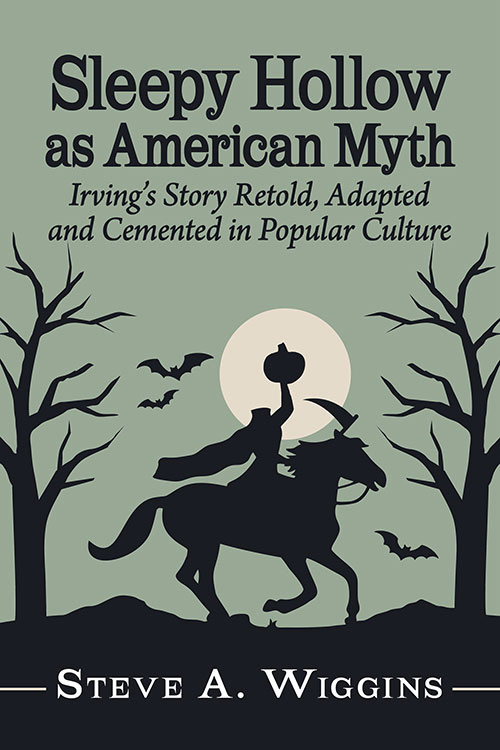
One thing I quickly learned when beginning work on Sleepy Hollow as American Myth was that the story hadn’t really been studied too much by those with academic training.  There are some exceptions, of course.  Another thing I swiftly picked up is that many people who wanted to write on the legend chose the method of publishing the public domain story with a variety of annotations, essays, and other additions, to make a salable book.  Often these are self-published and not always immediately obvious to the researcher as to whether they contain anything important or not.  I had not run across Christopher Rondina’s Legends of Sleepy Hollow: The Lost History of the Headless Horseman until well after my manuscript was submitted.  I found it in the bibliography of a ghost-hunter version of Sleepy Hollow that wasn’t even published by the time I was going into production.  (It doesn’t even have an ISBN.)

I do have to say that Rondina’s variety of this composite genre isn’t bad.  He includes Washington Irving’s story and expands it with an introduction, and brief chapters considering any historical background that there may be.  He also adds a chapter on modern media of the story that includes one television adaption that I failed to find for my book.  Interestingly, after I’d written the manuscript I discovered Joe Nazare’s similarly annotated version, also with a number of the media I’d analyzed in it.  I’d actually corresponded with Nazare earlier, having discovered his website.  Not wanting to discuss what my book was about until after I sent it in (others have more time to write, perhaps, than I do) I didn’t mention our common interest and didn’t discover his annotated version until it was too late to include as a conversation partner.

Self-publication has perhaps become inevitable since standard publishing is difficult to break into.  And the internet gives anyone the ability to self-publish without too much effort.  It does, however, make doing research a bit more difficult.  I determined early on that I could not review every annotated version of Irving’s story.  I selected a few of the most promising and moved on.  Both Rondina and Nazare had interesting things to say about the tale, and it’s a pity that they weren’t discoverable until after the fact, at least to me.  I like to give credit where credit is due, but any ideas that seem similar to these two sources in my book will have to stand as examples of convergent thinking on the part of fans of the “Legend of Sleepy Hollow.”  I know there are many other fans out there and I hope they find the resources they need to understand the story just a bit better.


Premature

The last, for me (but actually the third), Roger Corman Poe Cycle film is The Premature Burial.  Released the same year as Tales of Terror, it departs from the other Poe films in not starring Vincent Price.  Indeed, this is because it was originally not an American International film, but was later brought into the fold.  This particular story by Poe doesn’t have the superstructure of this film at all.  Indeed, Poe’s tale is spare, beginning with reported events of premature burial and ending with a first-person fictional account.  The movie does have a quote or two from the story, as well as the elaborate preparations that the narrator, in the movie the protagonist Guy Carrell, undertakes to be able to escape his mausoleum.  In the movie Carrell has to be an aristocrat, so as to afford such a fancy contrivance.

Although the screenplay was written by Charles Beaumont, a frequent Twilight Zone contributor, it lacks pacing and contains some improbabilities.  The theme of grave-robbery is also prominent and doesn’t fit well with what actually happens in the plot.  Since the movie is over sixty years old it’s safe to say that it involves a twist ending.  The marriage—missing in Poe—of Emily Gault to Guy is a ruse to get the family fortune by murdering Guy by fright.  Emily exploits his fears of premature burial (his father suffered catalepsy)  to lead to his own premature burial.  The grave-robbers, however, visit Guy that night, not realizing that he was only catatonic.  Guy then takes his revenge, only to be shot by his sister when he attempts to kill an innocent family friend.

Fitting for the Victorian era, Poe used the theme of premature burial in a number of his stories.  “The Premature Burial” is the tale that contains Poe’s famous quote, “The boundaries which divide Life from Death, are at best shadowy and vague.”  This remains true even going on two centuries later.  Accounts of Near Death Experiences (NDEs) complicate our simple binary of life and death.  The movie is, of course, coded as horror and is part of the suggestive string of interpretations that cast Poe as a “horror writer.”  Corman had been growing a reputation as a director of horror (but he, like Poe, worked in other genres) and it was this recasting of Poe into what was developing into a mature cinematic genre that partially solidified the writer’s reputation.  Premature Burial isn’t the best of the series, but I do feel as though I’ve accomplished something by finally having watched all of them.  Or have I?


Won’t Tell

This one is pretty darn close to too tense to read before bed.  I don’t remember how I found out about Ivar Leon Menger’s What Mother Won’t Tell Me.  That’s usually a pretty good sign that I found it in a bookstore.  Those are still places to linger while trying to find something a bit different.  This one is a page turner, but also one that I’m not quite sure how to classify.  It may be horror but the “monsters” are all humans.  I almost don’t want to describe the plot because it is so exquisitely suspenseful.  When I’m reading to get sleepy, I often find myself trying to grasp pieces of a story that are floating away like dandelion fluff, unable to put them back together.  Then I know it’s time to close my eyes and re-read a paragraph or two tomorrow.  That never happened with this one.

I think I can say this much without giving it away: Juno lives on an isolated island in a lake with her parents and younger brother.  The parents warn them of the murderous strangers who are seeking them—the father was a states’ witness against a powerful criminal family—so the children must never be seen on the island.  If anyone happens to come, they must hide and remain quiet until they leave.  They have to practice drills in case this ever happens.  It gets pretty creepy, from nearly the first page.  I would also advise against reading the back cover copy, since it will give some of it away.  I tend not to read the copy until after I read a book—you just never know what they might let slip.

This is a story about perseverance and discovery.  Discovery that is full of tension.  It’s a reminder of how precarious childhood is.  There are plenty of twists in the story and chapters generally end with information that creates a tension that the next chapter will only partially resolve.  The end result is a story that pulls you along and is pretty chilling.  I’m not sure if I’d call this horror or not.  If there’s a good case for a thriller being a separate genre, this could be useful as evidence.  Even if it’s not horror, it is likely to appeal to many who read in that genre.  There’s nothing speculative about it.  Perhaps that’s why the story scares in the way that it does—this could happen.  What happens?  Like mother, I won’t tell you either.


Personal Publishing

I recently joined the Greater Lehigh Valley Writers Group.  I haven’t really met any other members yet, although I know one from another local community.  By my reckoning, this is the fourth writers’ group I’ve joined and I do hope it leads to some friendships.  I like talking about writing.  I read Blurred Lines by Scott Christian because he’s a person I recently met and he kindly gave me a copy.  A collection of poems and stories, it’s a small book but a deeply personal one.  I guess that’s one reason that I like talking about writing with other people—it is deeply revealing.  There are those who write as a job, and there are those who write because they must.  This book falls into the latter category.  Some of us are compelled to write down what we experience, whether it be in poetry, fiction, or fact.

Self-publishing can be a way of expressing what the publishing industry suppresses.  I once told a group that it’s a little disturbing how much power publishers have in determining what people can read.  I write “can” intentionally.  Only the biggest in the industry have the financial wherewithal to get books into bookstores (where readers congregate like bees on a warm day in October) where they’ll be laid out on tables and priced to move.  Like many others, I began my writing in academia.  It took some time before I realized that academic prices are a deterrent to readers.  Breaking out of that mold is also difficult.  At the same time, publishers have resources to devote to marketing that an individual seldom has time for, or the reach to accomplish.  So it goes.

Another review of Nightmares with the Bible has appeared (this one in Catholic Biblical Quarterly).  While not glowing, it does recommend reading the book, despite the fact that the publisher has no interest in paperbacking the series and it takes a great deal of motivation for even me to spend that much for a book.  Yes, I can understand self-publishing.  It is a writer’s chance to get their voice heard.  Even some famous authors—Mark Twain comes to mind—had to get their start by paying to have their books published.  Some of us write because we can do no other.  We have thoughts and feelings to share.  And I keep joining local writers groups looking for the rare person who will talk to a stranger about that most intimate act we call writing.  Reading such a book is a very personal thing to do.


Short Story

I often reflect on how little I know.  No matter how much I read there is more to be read.  Works worthy of time but sacrificed to circumstance.  I was recently reading a short story by Poe that I’d never read before.  As others have noted, Poe was a prolific author of a great deal of forms—poems, a novel, letters, a scientific treatise, literary criticism, and, of course, his stories.  I came to know his stories through cheap collections available in my small town, mostly not along the lines of those Poe himself selected.  Indeed, editions of his own chosen works, such as Tales of the Grotesque and Arabesque, before the advent of internet-based publishing, were difficult to come by.  Original editions cost many thousands of dollars.  Poe isn’t alone in this category—short stories are an unusual genre.

I know from personal experience that finding a publisher for a collection of such stories is nearly as difficult as finding a publisher for poetry.  Publishers are looking for money, of course, and like Poe, all writers produce stories that interest some but not others.  The novel is safer, and even today’s amazing writers have to find success as novelists before publishers will offer volumes of their short stories.  Tis a pity, really.  I have many volumes of short stories on my shelves, including some of Poe’s, but for some reason publishers tend to cram such volumes so full that they become unwieldy.  Intimidating almost.  It leads to that feeling of existential dread that I felt approaching War and Peace—would I indeed survive to finish it?  (I did, but that is such a Poe-like question I had to employ it.)

The short story is an important literary form that is singularly difficult to publish.  I have managed to find homes for about thirty such pieces, but many more have failed to move even just  the internet critics.  Those that have been published have brought no income at all.  In Poe’s day, an author attempting to make a living could not afford to give away their life’s blood.  Indeed, Poe’s older contemporary Washington Irving struggled with pirated copies of his works being sold overseas (he spent a great deal of time in Europe).  Like Poe, Irving excelled in the short story, or sketch.  We’re often at the mercy of editors who select the stories for us, making them available.  I suspect there’s much that we miss by not stepping outside their personal tastes regarding what to include.  Or, just as importantly, exclude.  Some day, perhaps, I will have read all of Poe’s short stories.  Until then, I’ll find them when necessary.


Ichabod’s Body

Maybe you’ve noticed this.  When Halloween comes around, the Headless Horseman and the Legend of Sleepy Hollow reemerge.  There’s a reason for that, and I discuss it quite a bit in Sleepy Hollow as American Myth.  Right now there seems to be quite an interest, or maybe I’m just noticing it more.  For example, a local theater where we saw a Poe performance last year is offering a Headless Horseman show this year.  Articles have recently been appearing on Tim Burton’s Sleepy Hollow movie, given that it was released 25 years ago—online discussion, however, is often eclipsed by the Fox television show by the same name.  And before it switched over to Christmas decorations, Michaels had its share of Sleepy Hollow merchandise.  Halloween and the Headless Horseman go together.  (Read the book to find out why!)

One of the tchotchkes I picked up at Michaels was Ichabod Crane’s tombstone.  In the many renditions of Washington Irving’s legend, Ichabod is treated as the protagonist of the story.  Although Tim Burton’s movie wasn’t the first to have Crane survive, besting the Horseman, the old wives’ tales, according to Irving, had him spirited away by the Horseman.  That’s why I found his gravestone so interesting.  The dates on it (1787–1857) indicate, at least according to this recension, that he died at seventy, surely not the victim of the attack that took place around the turn of the century.  If you’re not familiar with the original story, Irving set it “some thirty years since” the 1820 in which the tale was published, putting the events around 1790.  Burton shifted this to 1799, partially, I suspect, because that was two centuries before the release of his movie.

I do wonder where the maker of the Michaels tombstone got their information.  According to their reckoning, Crane would’ve been but three years old in 1790.  Of course, the story never tells us his age.  Since it is intimated that he relocated and became a judge after dabbling in politics, all of which would seem to indicate that he was a somewhat young man at the time of the tale.  To make Sleepy Hollow scary, though, having Crane cut off in his youth would seem to be more in keeping with the spirit of the season.  Of course, Sleepy Hollow is a legend that has become mythic through its many retellings.  Enough of them that someone could write a book about it all (ahem).  And this is the time of year to ponder it.  


Nightly Entertainment

A list of most gothic recent books, I believe it was, that suggested The Night Circus by Erin Morgenstern.  It’s a big book—over 500 pages—so I decided I’d wait until autumn to get underway.  It ended up taking most of September and half of October to finish it.  Since I prefer to start fresh, I had no idea what it was about.  A night circus, of course, as the title indicates.  It is set in the late Victorian period, although I’m not sure all the turns of phrase in the book were current at that time.  There may be a few spoilers in the description, should you want to go out and read this yourself first.  I mention that because something that only becomes clear near the end is a pretty good starting place for giving an idea of what the story’s about.

A very old man (who doesn’t look or act old) is a very accomplished magician (not the stage variety).  One of his students becomes very proficient and the two begin a rivalry that involves each setting a protege against that of the other.  It is a contest, we eventually learn, to the death.  The younger magician selects a daughter he didn’t even know he had, while the original teacher selects a young man without prospects.  The battleground on which these two duel is the eponymous night circus.  Each tries to outdo the other in creativity and wonder.  The circus is open only at night (hence the name) and is fueled by actual magic.  A cast of characters gets introduced, and they’re very well drawn.  In my experience of reading the book, they drew me back in because you pretty much liked most of them and with magic involved, well, you never know.

The novel was gothic in the Victorian setting and in the sense that there is an ancient contest underway here that interrupts into the then present.  There aren’t spooky castles, however, or really even damsels in distress.  The women characters are all strong and resilient.  The writing is lively and the resolution is satisfying.  The real draw for this book is the writing and the complex story that doesn’t overwhelm or leave you feeling too lost.  It’s a magical realism with boundaries and offers a good message that magic is all around, if we only open our eyes to it.  It’s a good book to get lost in for a few weeks.  I appreciated the fact that the villains weren’t the focus and the violence was mostly implied.  It kept me turning pages, gothic or not.


Them Apples

Although I’ve had this book as long as I can remember, I’d never read it.  Not the whole way through, until now.  As I kid I read Ray Bradbury when I could.  I’m sure I read a story or two in Golden Apples of the Sun, but I didn’t approach the entire collection.  I was drawn in at this late age by “The Fog Horn.”  This is the story that lay behind The Beast from 20,000 Fathoms, that classic of Harryhausen, the other Ray.  It’s been years since I’ve seen the movie, but the story was on my mind and I kept going.  Some of Bradbury ages well, while other stories, not so much.  The designation of his tales also changes over time.  As Stephen King says in Danse Macabre, Bradbury didn’t so much write science fiction (as the cover of this edition declares), even if the people occasionally get into rockets.

I realized as I read just how much my early writing style was influenced by Bradbury.  My stories were vignettes like these, not as accomplished, of course, but without lots of violence.  And with horror elements.  But it kept coming back to me how Bradbury’s characters, even the time-traveling ones, are stuck in the button-down forties and fifties.  I naturally overlooked this as a child but all these decades later and the strict binaries of, for example, men’s and women’s worlds, comes through on every page.  When women are the main characters, they’re usually not very flatteringly drawn.  The same goes for caricatures of races, although Bradbury is sympathetic he also uses stereotypes.  And many of the stories in this collection are just about everyday events, not a speculative element in sight.  Maybe I did try to read it through as a kid, but lost interest.

Writers struggle against irrelevance.  Those who look to the future sometimes get it right but often don’t.  And some reflect a present that we’d rather not acknowledge.  Of course, when I’m writing fiction I tend not to think in these terms.  The story simply takes you over and you can’t help being a refugee from the year in which you were born.  This is especially evident when Bradbury casts a rosy lens back toward childhood years.  As a child myself I had no idea that Bradbury was a time traveler from the twenties and thirties.  His childhood was nearly over by the time my mother was born.  It was a different world.  Some of his stories managed to transcend time and its for those that I keep reading him.


Waking Poe

It’s personal and it’s deep.  My appreciation for Edgar Allan Poe, that is.  I’ve read a few biographies of him over the years, but my engagement with him feels more like that of a boon companion.  Still, I learn a lot from looking at him from different angles.  (And yes, he will be in my forthcoming book.)  Jonathan Elmer’s In Poe’s Wake: Travels in the Graphic and Atmospheric caught my attention but I can’t remember exactly how I heard about it.  This was a case where the back-cover copy won me over, noting as it does, that Poe’s image is everywhere.  Still, I approach things as an historian.  How did this lead to that?  And I must confess that I’m not a great fan of heavily theoretical work (I see plenty of it).  As soon as I see Deleuze, my eyes begin to glaze over.  Do we have to go there again?

All of which is to say Elmer’s book is erudite and, at times, quite academic.  I learned a lot from it, particularly the first two chapters.  Much of the rest of it was a bit too theoretical for my plebeian tastes, but I was still learning as I went.  I hope.  I guess I was thinking it would be more of a history of how Poe ended up, for example, on the cover of Sgt. Pepper’s Lonely Hearts Club Band.  Or how the Baltimore Ravens got their name.  Or even how the Ultima Thule daguerreotype became so ubiquitous.  These may well be impossible questions to answer, even as some of us are fool enough to rush in and try.  In academia, the theoretical is a much safer approach.  It impresses Deans and others in the department.

I occasionally listen to famous people talking about fame.  How it destroys some people and obliterates aspects of others’ lives.  Poe was reasonably well known during his lifetime, but not famous on the level that, say, the internet can instantly make you.  Or even TikTok.  Even back within my lifetime (which, I gather, is about the same as Elmer’s) Poe’s influence has grown dramatically.  His was a household name in my childhood, at least among a certain type of reader.  It wasn’t unusual to find people who’d never heard of him.  I suspect that is also true today, but Poe looms large over October and even the New York Times nods in his direction when the days grow shorter.  Like most writers, Poe isn’t who we think he is.  Elmer’s book does indeed explore his wake, and it is one that continues to cause waves over the centuries.


Victorian Inspiration

Some stereotypes hold the truth.  Since we couldn’t afford a vacation this summer, we arranged a couple of our versions of “staycations.”  For us that means driving some place a couple hours away, staying in a hotel for a night or two, and exploring a new place for the weekend.  We’ve done that to explore the Lancaster area and a couple of times to the Poconos.  When possible, and affordable, we like to stay in unusual places rather than the typical hotel.  For example, around Lancaster we try to book a caboose at the Red Caboose.  Since those are expensive over the weekend, typically we have to take a vacation day or two to do them before the weekend proper sets in.  On a trip to the Endless Mountains region, we stayed at the Victorian Charm Inn in Towanda.  This is a converted ten-bedroom house from the late Victorian era.  Not a typical hotel, it’s an inspiring place to stay.

What I mean by stereotypes is that such places inspire me to write in their genres.  After staying in the Red Caboose, I typically write fiction about trains.  I’d been on a gothic kick when we stayed at Victorian Charm and indeed, it inspired gothic writing.  Not that we could’ve afforded it, but when we were looking for a house, I really wanted to buy a Victorian.  We looked at a couple but neither one had been well kept up.  I thought they would inspire my writing.  Perhaps it would get old, living in such a house and reading Poe and other Victorian writers, but I wonder if it might have led to more gothic stories.  The fiction I do write tends to draw from my experience of living in various places.  Victorian mansions have a feel to them.

Writing is mostly a matter of discipline, rather than inspiration.  All writers, I suspect, crave inspiration.  I know that I do.  When I awoke to a thunderstorm in a Victorian mansion I experienced something that had never happened to me before in real life.  It made me wonder what it would’ve been like to have been able to live in such a place.  The cracked plaster, the faded elegance.  The nooks and alcoves.  An honest-to-goodness fainting couch.  And who knows?  Perhaps a ghost or two.  Our house was built in the Victorian Era, but by those of much more modest means.  It is an inspirational place to write, but it’s also the place associated with work.  That’s why, in stereotypical behavior, we need to get away on the occasional staycation.


Seasonal Poe

The more I read of and about Edgar Allan Poe, the more convinced I become that he wasn’t as associated with horror in his own mind as he has become.  As one of the earliest American writers, he has become the icon of those who wrote on the dark side.  His contemporaries—Washington Irving, Nathaniel Hawthorne, and Herman Melville—did as well, but it was Poe who became iconic.  On a recent trip to Michaels to take in the seasonal ambiance, Poe’s presence was difficult to ignore.  I wasn’t prepared to shoot a photo-essay (I’m not sure how they feel about such things in a store, in any case) so I didn’t photograph all the pieces.  “The Raven” is frequently referenced, with typewriters with the poem emerging and large, ominous black birds about, but Poe himself also appears.  There are, of course, painted busts of Poe.

But Halloween has grown more whimsical over the years.  Arguably for my entire life it has been primarily a children’s holiday, but many have noticed that those of us who grew up with Halloween have retained adult interest in it.  Part of this is no doubt commercial since the captains of industry have learned people will spend more on Halloween than any other holiday except Christmas (I do discuss this in my forthcoming book).  And indeed, the Headless Horseman appears quite a lot as well.  Irving, however, isn’t there on the ground.  Poe is.  The whimsical part comes through in showing the humor of the season.  For example, although Poe is shown in the noble bust format, he’s also portrayed (fully clothed) on the toilet.

Finally, there were figurines of a fanciful tombstone of Poe.  They even got the dates correct.  Now, there’s more to be said regarding the comparison with Irving.  You can find the Headless Horseman on the toilet as well (along with Dracula).  You can find the Horseman in bust format as well.  When it comes to tombstones, however, the fictional Ichabod Crane shows up alongside the nonfictional Poe.  That casts a certain light on Irving’s most famous story.  I’ll save that for another post, however, since authors are expected to repeatedly plug their books.  I left Michaels strangely reflective.  Poe-themed merchandise is fairly typical any given year, but since we’re having our first Halloween party in some years, and since I’ve been exploring Poe’s range as a writer, this clear abundance of Poe as an icon gave me pause.  As if I were coming within view of the melancholy house of Usher. 


Return to the House

I’ve read Shirley Jackson’s The Haunting of Hill House before.  It might’ve been before I started this blog, or it might’ve been before I started writing about the books I’d read.  Either way, when I search for a post on it, I don’t find one.  This is a classic novel in the genre, but I found it rather sad both times I’ve read it.  Eleanor is such a compelling, abused and discarded character.  But in case you’re unfamiliar with this psychological horror story, here are the basics: Hill House is haunted.  A professor, Dr. John Montague, somewhat hapless, decides to gather a couple of sensitives to try to investigate the hauntings.  He plans to write a book about it.  The two women he invites, Eleanor and Theodora, both had some psychic or Fortean experiences.  The owner of Hill House insists that a member of the family be present, so Luke, a carefree young man, joins them.

The house “manifests” in various ways, but the occurrences while they’re there, center on Eleanor.  Eleanor lives with her domineering sister after having been a caregiver for her dominating mother.  She’s never been able to develop her own self, and she desperately wants to be accepted.  She’ll lie to make that happen, but not maliciously.  In fact, she’s quite childlike.  While the half-hearted investigation takes place, the others begin to suspect Eleanor may be behind the events, or some of them.  Then John’s insufferable wife arrives with her pretentious friend.  Eleanor acts out, doing a foolhardy stunt that leads the others to dismiss her from the house.  The story is creepy, but, like Mary Shelley’s Frankenstein, more like sad.

I decided to re-read it as autumn began to be felt in the air, and I had read a couple other of Jackson’s novels that I remembered better because they were more recent in my experience.  Quite often this story is compared to Henry James’ The Turn of the Screw, another ambiguous ghost story involving a young lady who wants to be accepted.  These characters are compelling in a  Poeseque kind of way.  Critics complained of my using Poe’s observations in Nightmares with the Bible, but these stories, by a woman and a man, are further exhibits in the case.  They add a poignancy to the events because even as we’ve made some progress in women’s rights we still have a long way to go.  No one doubts that Jackson’s writing is laced with metaphors.  None of her characters can be considered “normal.”  And yet, it’s the house that brings it all out.  It’s a story worth pondering again.


The Paw

Okay, in the spirit of my epiphany that commenting may apply to short stories as well as to collections, I thought I’d muse on W. W. Jacobs’ “The Monkey’s Paw.”  Somewhat like Washington Irving, as a writer Jacobs was known primarily for this story.  Like “The Legend of Sleepy Hollow,” this tale has taken on a life of its own.  I recently read it for the first time, and I wasn’t exactly sure how it would end.  I knew the basic premise: somebody ends up with an exotic monkey paw that grants wishes, but the wishes, as is often the case, turn out poorly.  There’s a kind of morality to such stories, of course.  People shouldn’t rely on wishes for their happiness and any windfall has its consequences.  What makes this a horror story isn’t the magic, however.  It’s what we expect to see because of it.

Image credit: Maurice Greiffenhagen illustration from The Lady of the Barge, 1902; public domain via Wikimedia Commons.

If you haven’t read the tale yourself, it goes roughly like this: an older couple and their working age son have a guest stop by their hovel of a London home.  The guest served in the British Army in India and it was there that he acquired the eponymous paw.  He sadly tells his friend that no good can come of it and they should destroy it (they snatch it from the fire when the friend tosses it there).  Of course, they don’t really believe it will work.  The son suggests they wish for 200 pounds, to pay off their house.  He then leaves for work.  Later a stranger stops by to tell them that their son has been killed in an accident at the factory.  Denying responsibility, they nevertheless offer 200 pounds to help with the hardship.  The grief stricken mother then insists they wish their son would come back.

This is prime real estate for horror, of course.  The son had been badly mangled in the machinery at the factory.  I won’t spoil the third wish, and besides, you’ve probably read it before.  The story has been retold countless times, with changed settings but always the same message—be careful what you wish for.  Jacobs was able to make a living from his writing.  This is increasingly a rarity today, of course.  Nevertheless some eight decades after his death, outside the circle of literature scholars, he’s known for one short story.  Prior to reading it I couldn’t have even told you who wrote it.  This isn’t a bad way to make a mark on the world.  Those of us who write often put much of ourselves into our stories, and to have even one of them remembered would be an honor indeed.